



Abstract
Sociologist Cory Albertson examines the implications of the HBO television series Looking and its attempt to accurately depict the lives of gay men by showing heteronormative ideals being maintained and challenged in romantic relationships.
When HBO sent out a press release announcing Looking, its new half-hour series about “gay men seeking fulfillment in love and life,” the mainstream press struggled to classify it. The show was dubbed the “gay Girls” and the “gay Sex and the City”—comparisons to HBO’s other successful shows about urban (and in both cases female) friends navigating romantic relationships.
Comparing Looking to Girls and Sex and the City both feminized the gay characters and implied that their relationships as depicted would (nay should) resemble the heteronormative ideal which espouses meaningful, intimate sex and coupled (preferably of two people with the same race and class background), monogamous relationships with an eye towards marriage.
For more than a decade, queer activists and scholars have critiqued the heteronormative turn reflected in some manifestations of LGBT activism, especially with regard to the fight for marriage equality. Historically, they note, sexual and gender non-conformity embodied a spirit of rebellion, in stark contrast to current movements that seem to be more about falling into step with the status quo; what queer historian Lisa Duggan has dubbed “homonormativity.” In Terrorist Assemblages, scholar Jasbir Puar refers to the queer subject that can be folded into the contemporary nation-state apparatus as the “exceptional homosexual.” Looking is situated between a history of active resistance and a future of conformity, simultaneously challenging and perpetuating both perspectives.
Image courtesy of HBO
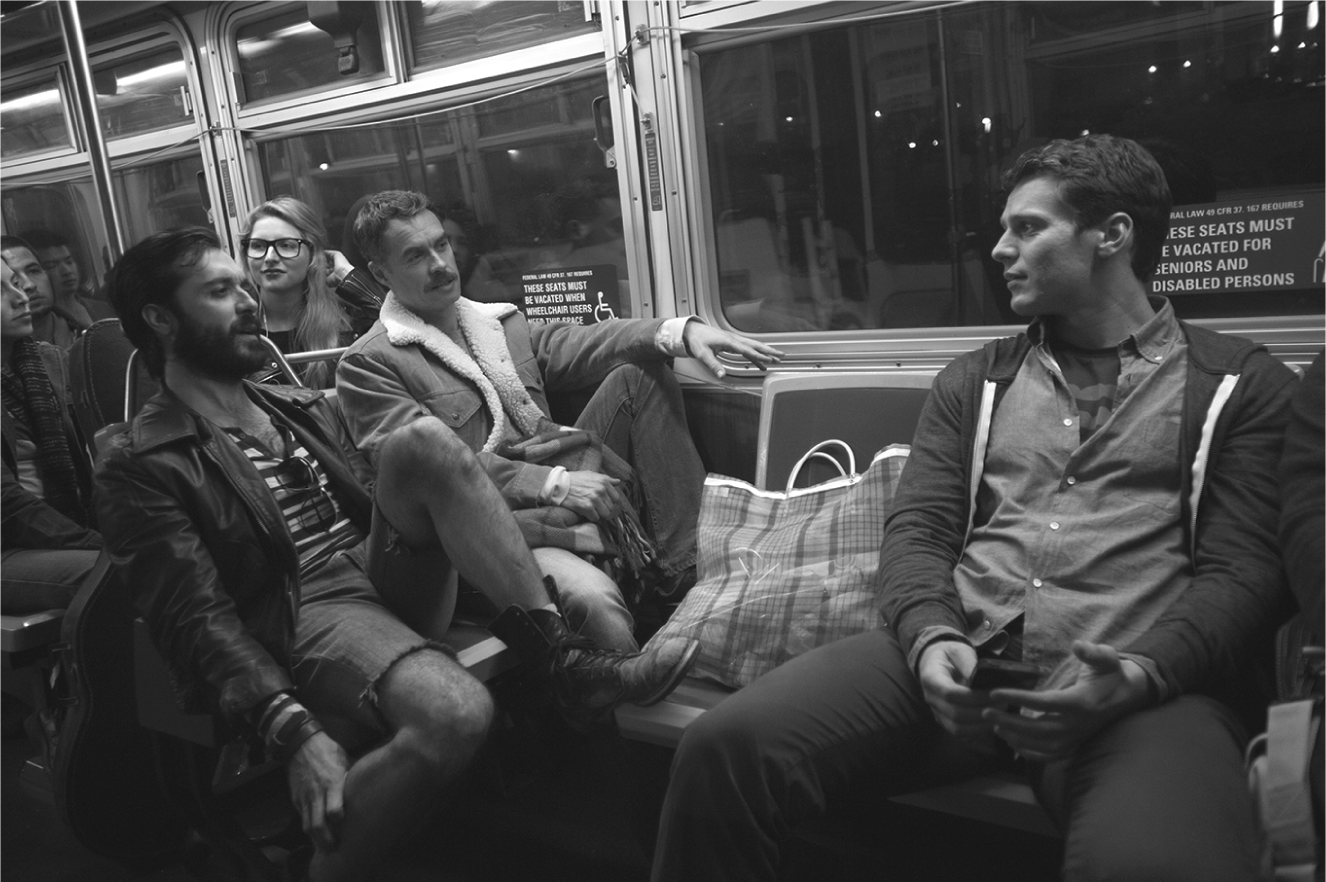
Looking is situated between a history of active resistance and a future of conformity, simultaneously challenging and perpetuating both perspectives.
Set amid the backdrop of San Francisco, America’s “most unaffordable city,” Looking follows three gay men—Patrick, Agustin and Dom—united in their friendship, supporting each other through struggles of money, work and, most importantly, romantic relationships. Patrick, a 29-year-old “W.A.S.P.” video-game designer, met Agustin, a 31-year-old Latino American struggling artist, in college and they’ve since become roommates and best friends. Dom, a white waiter on the cusp of 40, came into the fold after he and Patrick met in a one-night-only hook-up that has since developed into a platonic friendship. While the thread of their friendship threesome provides the show’s emotional consistency, it’s their respective romantic and sexual relationships that capture the sociological eye.
Stretching Relationships?
In cities like San Francisco, the subway becomes the great equalizer, meshing folks of all backgrounds into one cramped space. It’s there on his way home after a failed date with a fellow white, upper-middle class man, that Patrick meets Richie, a 20-something Mexican-American barber. Noting Richie’s class, Agustin tells Patrick he’s “slumming” by dating him. Further complicating Patrick’s blossoming relationship with Richie is the former’s intimacy with his rich, white British boss Kevin, which eventually becomes sexual and emotional. Here, Patrick—the character least comfortable with himself—symbolizes the contemporary gay community’s slippage between homonormativity and resistance: challenge convention and create your own relationship regardless of differences in class, race, and background, or become the “exceptional homosexual,” staying within one’s social sphere which is expected by family, friends and society.
Unlike Patrick—who serves as the angsty, emotional core of the show—Agustin and Dom tend to self-assuredly advocate against heteronormative convention, if not always clearly practicing what they preach. Dom pointedly tells Patrick to “stop giving a shit what anyone thinks” and shows this by visiting a bathhouse and frequenting a gay hook-up app to find no-strings-attached sex with 20-something men. He eventually develops romantic feelings for a financial partner helping him to back his dreams of opening a restaurant, showing a desire for meaningful sex.
Dom’s fluidity between showing no qualms at enjoying sex outside of a romantic relationship and then showing capability of and wanting to attach meaning to his sex practices eschews the heterosexual ideal of sexual intimacy. Still, Dom’s prevalence of hunting younger men only for sex perpetuates the stereotype of the predatory hypersexual gay man. Accordingly, what are we to make of it when Dom, reflecting on this depiction, exclaims, “God, I’m such a cliché”? Here, Looking teeters between critical engagement with stereotypes and pandering to them.
Image courtesy of HBO
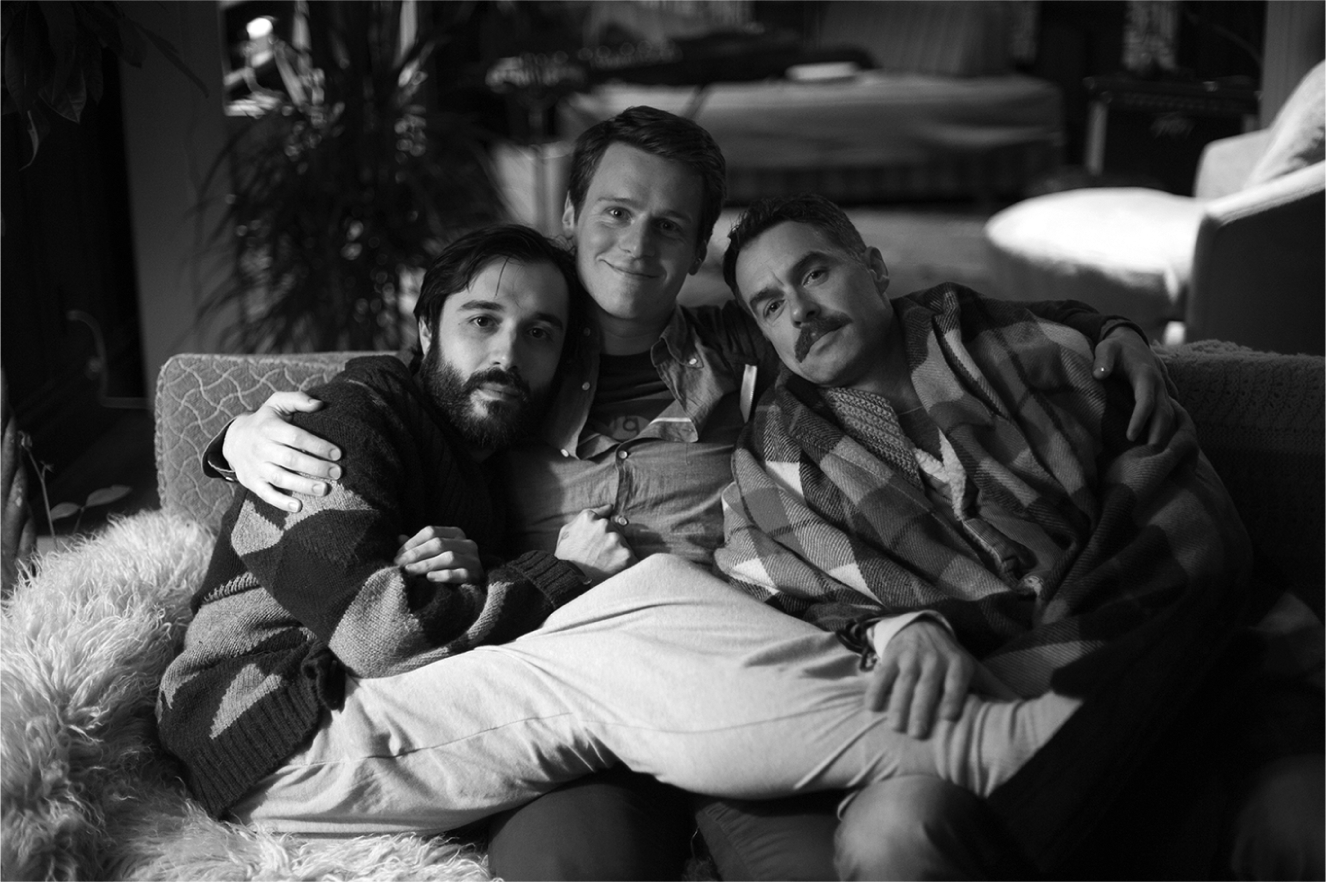
Agustin too challenges heterosexual ideals but within the context of his three-year committed relationship to Frank. When Agustin moves in with Frank, the fears of routine heteronormative domesticity—depicted by eating dinner at home and laying on the couch watching TV together—surface. In reaction, Agustin coaxes Frank into threesomes, justifying his position to Patrick with the claim that, “all relationships end up opening up in the end.” After one particular threesome, Frank says to Agustin, “So, are we one of those couples now?” The scenario simultaneously uses hypersexuality to challenge monogamy as a heterosexual ideal, while also casting sexual fluidity and open relationships as the “other” and something worrisome.
Looking teeters between critical engagement with stereotypes and pandering to them.
Where Looking fails thoroughly as a social breakthrough show, is in this idolization of monogamous coupledom: a citadel of heternormativity that, until recently, was a defining site of queer challenge. For all the depictions of threesomes, non-emotional hook-ups, and even being single, all three lead characters ultimately espouse monogamous coupledom as their ideal. (In this regard, the show does indeed follow uncritically in the steps of Sex in the City).
From being harangued by his friends for browsing the dating website OKCupid to his relationship with Richie, Patrick yearns for (and briefly achieves) such coupledom. Agustin and Frank’s seemingly open relationship, shown in their dalliance in threesomes, eventually contributes to Frank kicking Agustin out, showcasing a belief that anything other than coupledom doesn’t work. And Dom, who seems entirely comfortable with non-emotional sex, also eventually shows longing for the relational commitment with his financial partner cum boyfriend.
While coupledom reigns supreme, marriage—the sine qua non of heterosexual ideals regarding relationships—is, surprisingly, not portrayed as coupledom’s end point. Agustin and Dom never even engage with the topic. Patrick hesitantly says he “thinks” he wants to get married and then immediately frustrates the notion’s fairytale tendencies when he mentions observing his heterosexual sister who he believes married due to outside, societal pressure. “And now we’ve gotta’ deal with that pressure,” he remarks. At one point Patrick expresses critique about marriage as the path to assimilation when he notes that his mother would be happy if he got married because he would then be “just like everybody else.”
Image courtesy of HBO
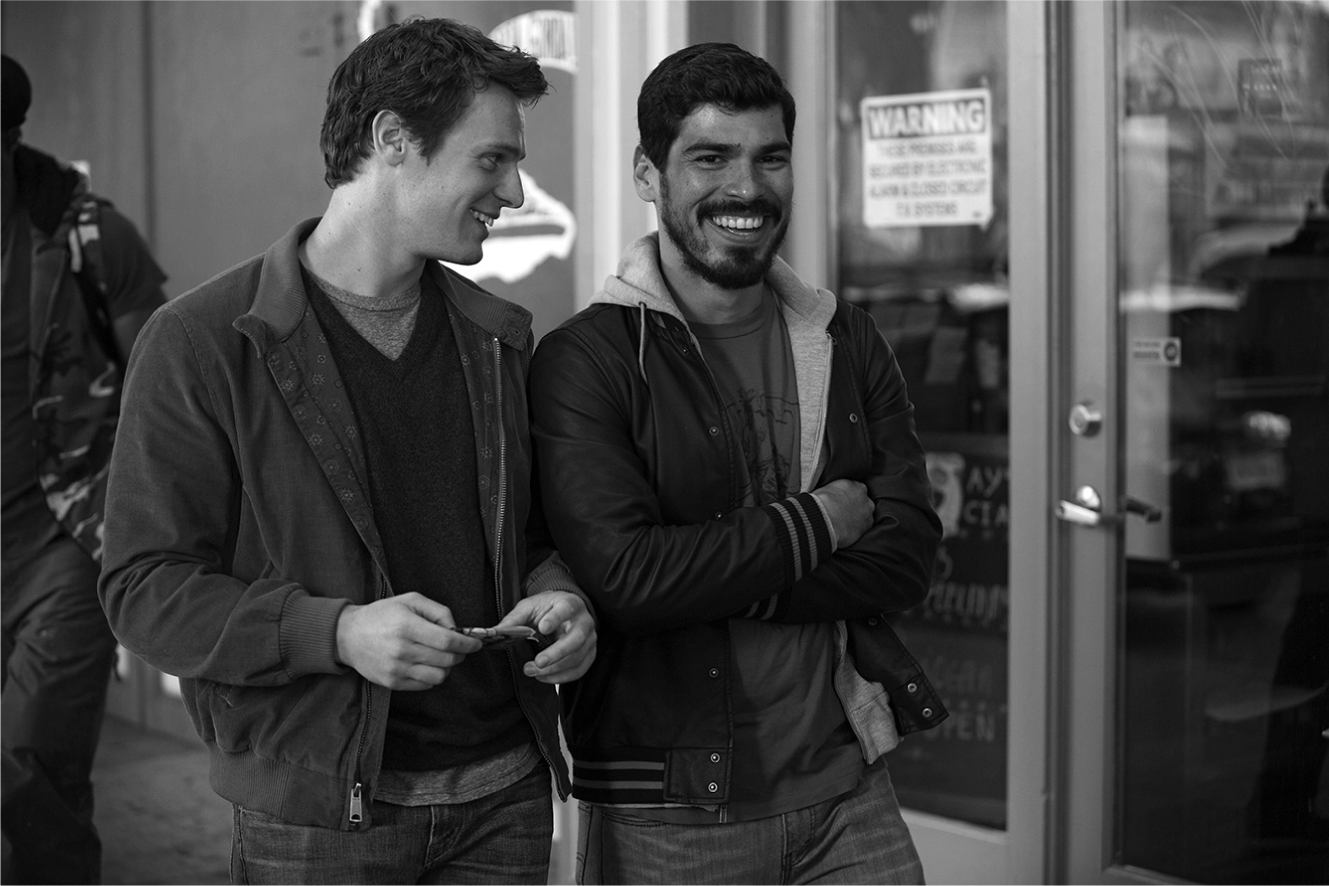
Where Looking fails thoroughly as a social breakthrough show, is in the idolization of monogamous coupledom: a citadel of heternormativity that, until recently, was a defining site of queer challenge.
Adaptable but not Conforming?
What the depictions of Patrick, Agustin and Dom’s relationships do best is challenge stereotypes that group gay men into feminine and masculine roles. Most telling are the discussions of sexual positions—a heterosexual marker often used to situate gay men as more masculine or feminine. Patrick and Richie’s first sexual encounter is only implied with both of them seen naked in bed the next morning. This smartly skirts society’s insistence to immediately label one the “top” (the masculinized penetrator) or the “bottom” (the feminized receiver).
In their first depicted sex scene, Patrick receives oral sex from Richie. Then in the following scene when Patrick and Richie are out for breakfast, Patrick wants to split the bill while Richie says he’s “got it.” By paying for breakfast, Richie partakes in a traditionally masculine expectation made even more important given his lower class. Further blurring their roles, Patrick, later in the same episode, tells Richie he wants to “bottom” for him in the future, but then immediately after the confession “tops” Richie. Richie ultimately dismisses such labels as “top” and “bottom” stating they are “for people on websites” and that “you gotta’ be adaptable,” espousing a decidedly non-heteronormative mantra of sexual fluidity.
In the end, Looking provides enough markers of homonormativity for the show to resonate with a broader heterosexual public. At the same time, it does offer some disruption of these idealized forms. If nothing else, the show blurs lines. While Looking is timid at best in offering a critique of heteronormative ideals, the show does capture some of the tensions and complexities in the lives of gay men. By depicting its characters as negotiating newfound rights and acceptance (albeit granted by the heterosexual community in power), and striving for, but never fully becoming, the “exceptional homosexual” Looking reflects the complexities of contemporary queer politics and the tensions between conforming and resisting. Patrick sums up the notion (and Looking) best when he remarks about himself and his friends, “I don’t know if [any] of us are very good at being who we think we are.”