




Abstract
Economist Guy Standing explains how millions of people are in the precariat, and in defining this emerging class, points to the dangerous political and social consequences as well as the exciting progressive revival that this class could produce.
In his 1944 classic The Great Transformation, political economist Karl Polanyi described the social upheaval that accompanied the rise of a national market system. According to Polanyi, in order to make way for market rationality, mechanisms of collective reciprocity had to be dismantled: the economy had to be dis-embedded from society. This led to chronic inequality and insecurity. To overcome the consequent threat to civilization, the state had to re-embed the economy through new systems of regulation, social protection and redistribution.
Since the 1980s, a global transformation has been unfolding in a manner analogous to the dis-embedded phase of Polanyi’s Great Transformation. The construction of a global market system is a painful process and has given rise to a global class structure that is quite unlike what prevailed for most of the twentieth century.
The defining conditions of the precariat produce a general consciousness of relative deprivation and a combination of anxiety, anomie, alienation and anger.
We can now talk of a plutocracy or oligarchy striding the world with their billions—global citizens without responsibilities to any nation state. They are the top 0.001 percent. Next is a larger elite that possesses millions. Below them on the income scale the old salaried class has splintered into two groups: the salariat, with strong employment security and an array of non-wage forms of remuneration, and a small but rapidly growing group of proficians. The latter, which includes small-scale businesses, consists of workers who are project-oriented, entrepreneurial, multi-skilled, and likely to suffer from burn-out sooner or later.
Illustrations by Corey Fields
Traditionally, the next income group down has been the proletariat, but old notions of a mass working class are out-dated, since there is no common situation among workers. The earlier norm of this diminishing male-dominated class was a lifetime of stable full-time labor, in which a range of entitlements called “labor rights” was built up alongside negotiated wages. As the proletariat shrinks, a new class is evolving—the precariat.
Who are the Precariat?
One defining characteristic of the precariat is distinctive relations of production: so-called “flexible” labor contracts; temporary jobs; labor as casuals, part-timers, or intermittently for labor brokers or employment agencies. But conditions of unstable labor are part of the definition, not the full picture.
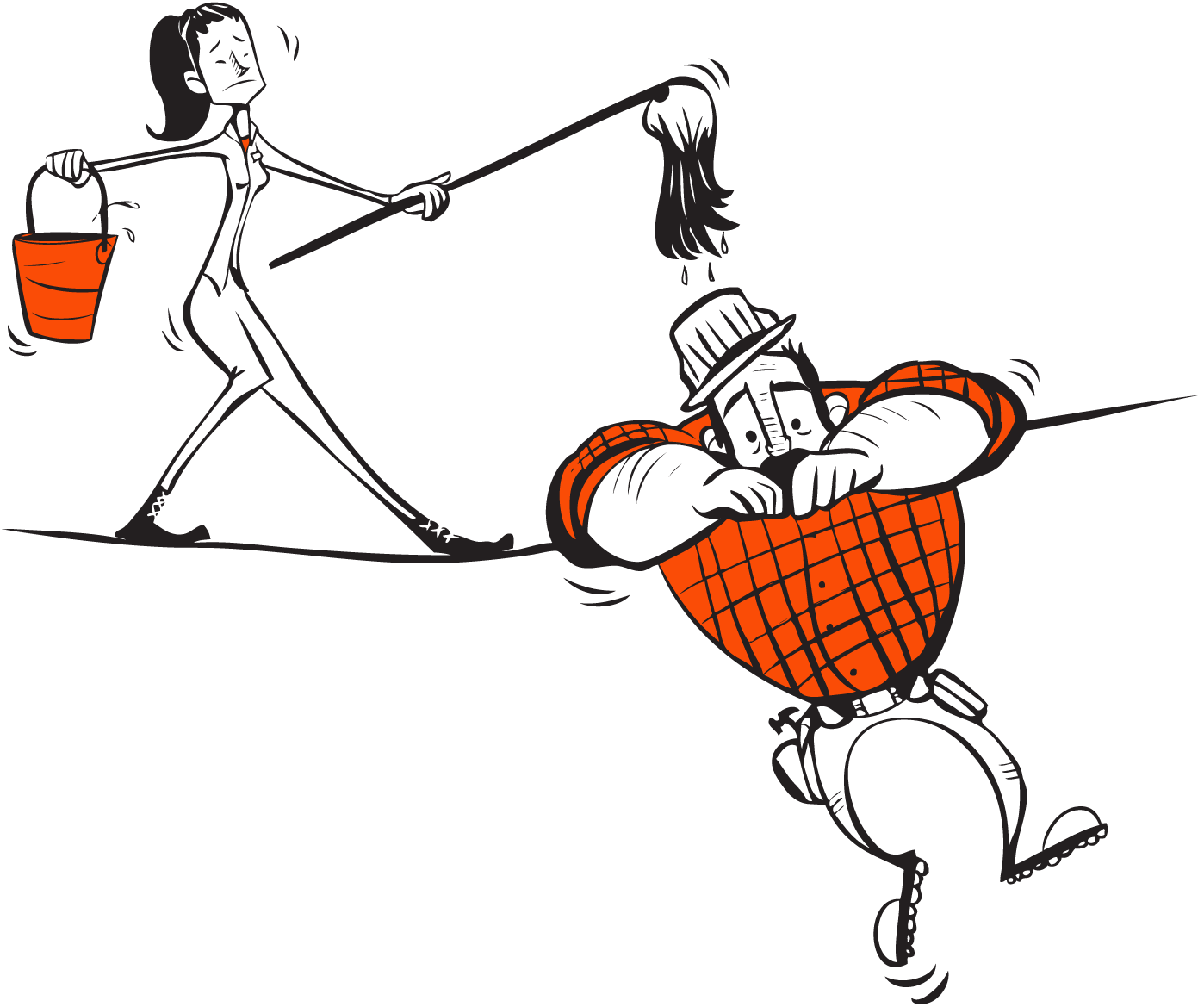
More crucially, those in the precariat have no secure occupational identity; no occupational narrative they can give to their lives. And they find they have to do a lot of work-for-labor relative to labor, such as work preparation that does not count as work and that is not remunerated; they have to retrain constantly, network, apply for new jobs, and fill out forms of one sort or another. They are exploited outside the workplace as well as in it, and outside paid hours as well as in them.
This is also the first working class in history that, as a norm, is expected to have a level of education that is greater than the labor they are expected to perform or expect to obtain. This is the source of intense status frustration. Few in the precariat use their full educational qualifications in the jobs they have.
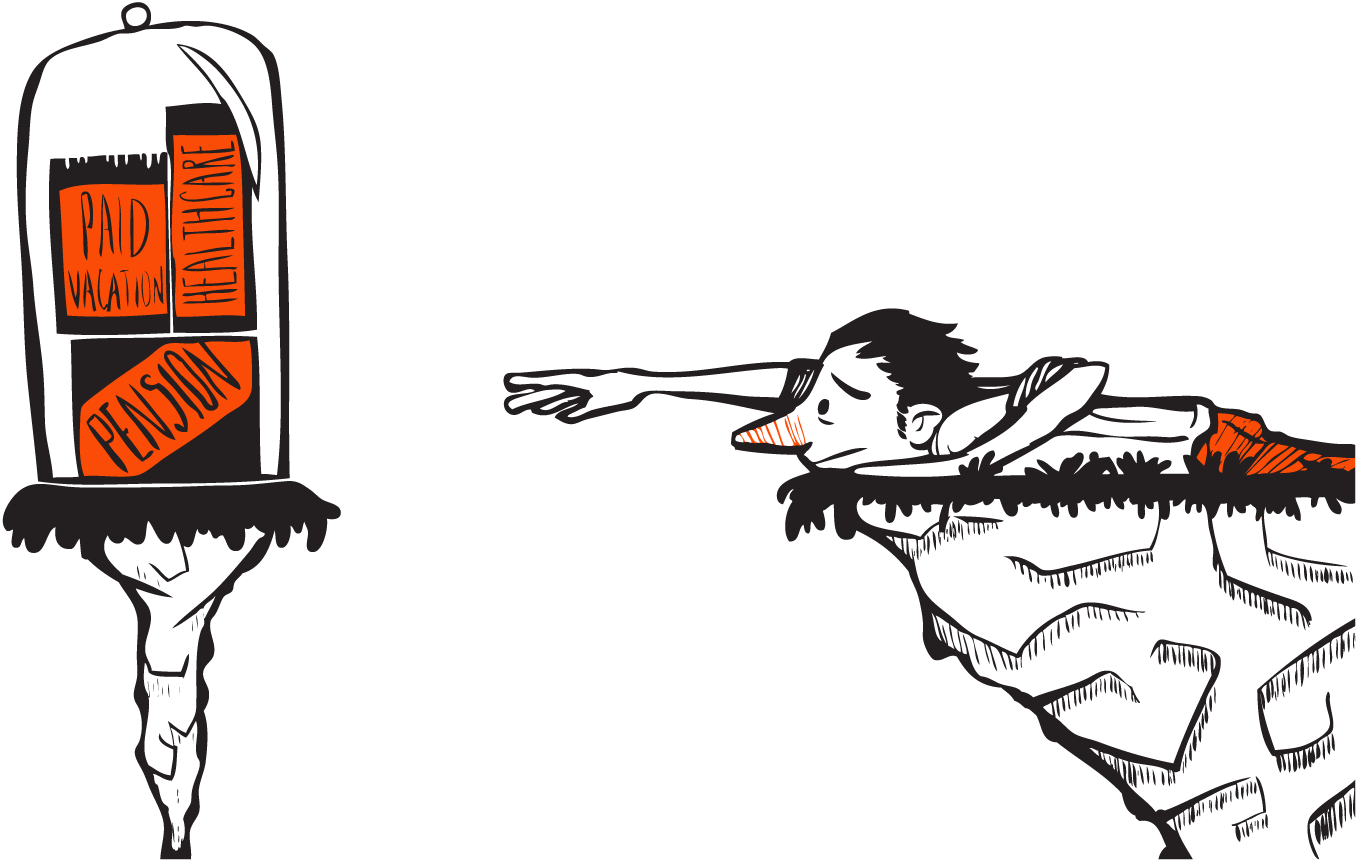
Another characteristic of the precariat is distinctive relations of distribution. They must rely largely on money wages, without non-wage benefits, such as pensions, paid holidays, retrenchment benefits and medical coverage. The precariat has lost those forms of remuneration and has no prospect of regaining them. This loss of non-wage benefits is understated by conventional income statistics and indicates an even greater increase in income inequality than it typically reported.
The precariat also lacks rights-based state benefits, such as unemployment benefits, as well as private benefits gained from investments and contributory insurance plans. Because the wages of the precariat are increasingly volatile and on a downward trend, the overall result is that they live on the edge of unsustainable debt and in chronic economic uncertainty.
The precariat is additionally defined by distinctive relations to the state: they are losing rights taken for granted by full citizens. Instead, they are denizens who inhabit a locale without civil, cultural, political, social and economic rights, de facto and de jure. They are supplicants, reduced to pleading for benefits and access to public services, dependent on the discretionary decisions of local bureaucrats who are often inclined to moralistic judgments about whose behavior or attitude is deserving.
These three defining dimensions produce a consciousness of relative deprivation and a combination of anxiety, anomie (despair of escape from their precarious status), alienation (having to do what they do not wish to do while being unable to do what they would like to do and are capable of doing), and anger.
A Class Divided
At present the precariat consists of three factions, which is why it has been a class-in-the-making, not yet a class-for-itself. In other words, it is a class divided by hostilities within. The first faction consists of those who have fallen into the precariat from old working-class families or communities (or lower middle-class, in the United States). Those in this group lack high-level schooling and tend to feel a sense of relative deprivation by reference to a lost past. Their predecessors had employment security, pensions to anticipate, and so on. They tend to want that past.
The precariat is the new dangerous class, because all elements in it reject mainstream political establishments.
They are Atavists. As such, they are vulnerable to the messages of populists and even neo-fascists who blame current economic conditions and increasing insecurities on migrants and minorities. Across Europe and elsewhere, this group, particularly men, are voting for ugly nationalistic, xenophobic and racist agendas.
A second faction in the precariat consists of migrants and ethnic minorities who feel they are denied a sense of home, a viable present. They may be called Nostalgics. Mostly, they keep their heads down and put up with insecurity, concentrating on survival. But when policy changes threaten even that, they rebel in days of rage (as in Stockholm in 2013) or join some fundamentalist cause out of misplaced zeal to recover a sense of identity. They are the ultimate denizens, denied rights everywhere.
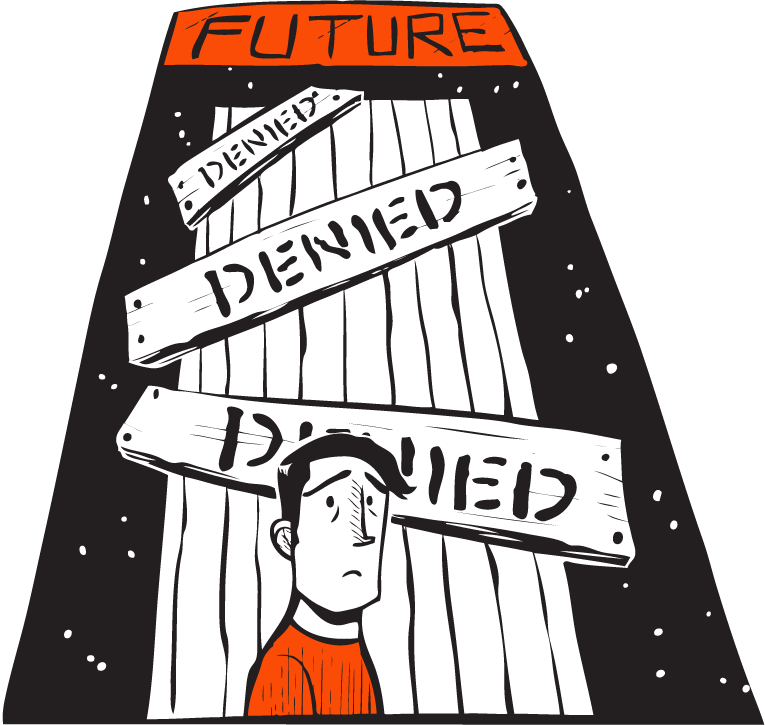
The third faction in the precariat consists of the educated, mostly young but with some older members as well, and some in the salariat who worry about their offspring drifting into the precariat. This group experiences relative deprivation by being denied a future, an attractive way of building a life of dignity and fulfilment. But they do not listen to neo-fascists; they look to recover a “future” and aspire to create a “good society” based on progressive values of equality, freedom and ecological sustainability. This group includes leaders in the Occupy Movement, the indignados, and other social protest movements of recent times.
A Dangerous Class
At present, the precariat is still divided into these three factions. But partly as a result of the extraordinary number of mass protests and occupations since 2011, there has been a gathering sense of common recognition, a feeling of identification as belonging to the precariat or being at daily risk of joining it. And at least among the third group, there is a growing feeling that they are not just victims of unstable and insecure living, but can be active in coalescing around a new progressive politics.
The precariat’s main struggle is for a redistribution of the key assets of economic security, control over time, quality space, real liberating education, financial knowledge and financial and other capital.
Intuitively, this part of the precariat wants to become strong enough and united enough to struggle for a transformative agenda designed to abolish itself through overcoming the insecure conditions that define it. More generally, the precariat is the new dangerous class because all elements in it reject mainstream political establishments. Many have not been voting in national elections. This does not mean they are politically apathetic, merely that mainstream political parties and politicians have simply not understood their situation or needs and aspirations.
For a transformation to occur, the precariat must triumph in three overlapping struggles, one for Recognition, which it is rapidly achieving, one for Representation in all agencies and institutions, and one for Redistribution.
The distributional struggle is not like the socialist project that took shape a century ago. It is a struggle for the redistribution of the key assets or resources needed to create conditions for personal development and work in a socially and ecologically sustainable “good society.” The key assets are economic security, control over time, quality space (including an enriching commons), real liberating education, financial knowledge, and financial and other capital.
These assets are even more unequally distributed than money incomes. The precariat has no security, has no control over time, is crowded into impoverishing space and is losing the commons (the immediate cause of the occupation of Gezi Park in Istanbul, for example). It is subject to commodifying schooling, has no access to financial knowledge and is denied any share in the growing concentration of wealth through capital. Accordingly, actual inequalities are further under-stated by conventional statistics.
The numerous mass protests and occupations since 2011 have been the actions of primitive rebels, symbolising a time when the emerging class has more unity around what it is against—chronic insecurity and rising inequalities—than around what it wants. But through those protests, the development of a common recognition has moved the precariat closer to being a class-for-itself. As such, it is now ready to struggle for new forms of representation and for emancipatory redistribution.
There are encouraging signs that the precariat is re-engaging in democratic politics. After the neo-liberal dystopia of endless labor and endless consumption, the future is back on the agenda. The precariat could be the vanguard of a new progressive era.