



Abstract
Jeff Manza reviews three recent books and their takes on the coming (or current) class war so many believe is tearing America apart.
Keywords
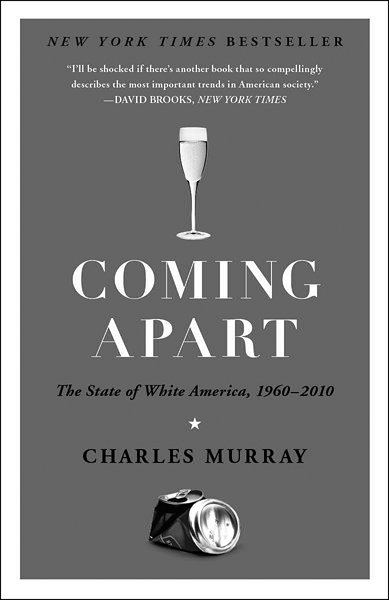
Coming Apart: The State of White America, 1960-2010 by Charles Murray Crown Forum, 2013 432 pages
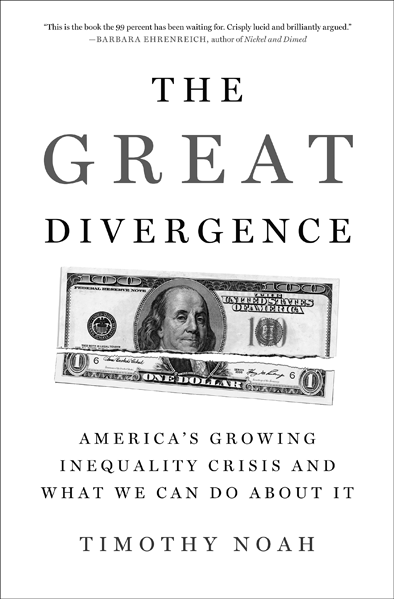
The Great Divergence: America’s Growing Inequality Crisis and What We Can Do About It by Timothy Noah Bloomsbury Press, 2013 288 pages
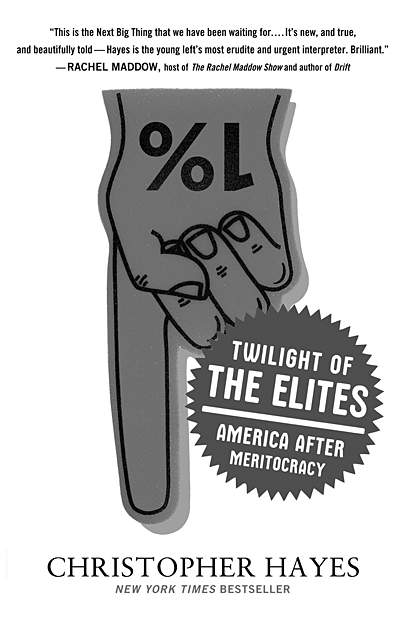
Twilight of the Elites: America After Meritocracy by Christopher Hayes Broadway, 2013 304 pages
When Republican presidential nominee Mitt Romney denounced the “47 percent of the people… [who] are dependent upon government, who believe that they are victims, who believe that government has a responsibility to care for them,” he came close to declaring war on the bottom half of the population. With these words, Romney gave top-of-the ticket approval to those who would condemn the “takers” dragging down the American economy. They were, he suggested, incapable of understanding the precious value of the “makers,” the so-called “job creators” at the top.
Charles Murray’s widely discussed account of the decline of the white working class in America provides a lengthy brief in defense of Romney’s position. Murray is a libertarian writer and political scientist who has a long held an appointment at the American Enterprise Institute. He is best known for Losing Ground, his 1984 attack on welfare, as well as for his widely-discussed books on the heritability of IQ and criminality. Both of the latter books have been roundly attacked as racist screeds. Perhaps these attacks have worn Murray down: in Coming Apart, he focuses his fire almost exclusively on white Americans.
Conservative intellectuals have hailed Coming Apart as a monumental, tragic account of the social and cultural decline of America. The book places societal ills squarely at the doorstep of white working class men, a sizeable chunk of Romney’s takers.
Murray builds his narrative by drawing two contrasts: the first is between America in November 1963, on the eve of the Kennedy assassination, versus the America of today; the second is between the white working class of today, versus the “new elite” (defined by level of education and occupation in a handful of professions and creative fields). In 1963, robust white working communities and families (some still with a non-working adult female) took pride in their work, volunteered in their communities, stayed married, and went to church. Today, Murray notes, these same families are often broken by separation or divorce, headed by an adult male who may have a spotty employment record, with children failing and dropping out of school. They are likely to live in a decaying inner-ring suburb with neighborhoods marked by high-levels of distrust, uneven religious attendance, and low levels of civic engagement.
In Murray’s view, the takers are bringing down the makers, but he fails to consider the reverse.
The second contrast he draws is between these white working class families and the new, high-earning white elite (generally defined as educated people earning at the 95th percentile of the income distribution). This elite is hardworking, resides in intact families that provide ambitious children with every opportunity money can buy. Most strikingly for Murray, this new elite essentially retains the values that look like those of a much wider range of Americans in 1963. Murray’s loathing of this new elite, in spite of their appropriate lifestyles, is palpable throughout the book: he periodically refers to them as “overeducated elitist snobs” (“OES”). While the OES, according to Murray, generate economic growth, they are increasingly disconnected from, and unaware of, the erosion of working class values and are therefore doing nothing to prevent it.
Both of the contrasts Murray draws are facile, as are the statistical and second-hand ethnographic evidence that Murray wheels in to make his case. The resulting analysis is often contradictory and sometimes utterly ridiculous. For example, Murray’s claim that the American elite was “more open” and “heterogeneous” in 1963 than it is today flies in the face of all previous sociological analyses. Most importantly, all of the statistical contrasts between then and now are presented without controlling or adjusting for major historical changes in the economy. Readers are seldom reminded of the sharp contraction in jobs and the precipitous decline in wages for non-college educated men that occurred between 1970 and 2010. He does not consider the possibility that these shifts in the labor market explain the “coming apart” of white America as well (or better) than a supposed cultural decline.
Meritocracy reigns everywhere, but it does not everywhere produce the same bad outcomes as those found in the United States.
To press his cultural values case, Murray offers two sources of evidence. The first is a statistical analysis of differences (such as marriage, work, religion, crime) between the new elite and the bottom 20% of white families in terms of income. The second is an ethnographic comparison between a fictional “Belmont” (resembling Belmont, Massachusetts) and a fictional but sometimes real place called “Fishtown” (the real Fishtown being a mostly white working class neighborhood in Philadelphia). Fishtown appears to have been selected in part because Murray stumbled on an unpublished University of Pennsylvania sociology dissertation, completed in 2002, that contains some vivid interview data and ethnographic observations on the real Fishtown that, when selectively invoked, can be made to fit with his overall narrative, providing colorful examples about lazy, white working-class men.
The statistical portraits Murray draws contain few surprises. Communities like Fishtown, for example, have high divorce rates and reduced employment among men compared to 40 years ago. What is remarkable, however, is the complete lack of attention Murrays pays to the contexts in which these trends have developed. He writes as if individual-level decisions and an individual’s moral commitments alone account for broad societal outcomes. His is a vision of social life in which individuals make active choices—in this case working class whites—that undermine traditional values, families, and communities. To put it another way, Murray wants to reverse the causal arrow that points from economic shifts to harms to working class families and individuals by asserting that moral decline in these families and communities is harming American society. In his view, the takers are bringing down the makers, but he fails to consider that the makers may be bringing down the takers.
In the concluding section of the book, Murray admits that he has few suggested solutions, though he’s certain that the situation for poor and working class families would be much worse with a European-style welfare state. But no evidence is presented for this claim, and even a cursory glance at the data would challenge the view that Europe’s working class is worse off than America’s.
If there is one thing that Murray gets right, it is that much has changed in the American class structure over the past three decades. But the causes and effects of these changes are open to interpretation. In our post-Occupy Wall Street media environment, the long neglected pattern of rising inequality and economic insecurity for working and middle class America—the flip side of the new class war—has finally become a story worth reporting. But have liberal journalists done any better than conservatives in getting the story right?
Timothy Noah and Christopher Hayes, unlike Murray, appear to take social science seriously. At the center of both of these studies is the path breaking work of economists Thomas Piketty and Emanuel Saez, who pioneered the use of tax return data to document the very large proportion of income going to the top 1 percent (and fractions of 1 percent) of all Americans .
Noah, formerly a staff writer at Slate and now at The New Republic, has produced the best summary of the inequality debates written for a general audience. Rather than focusing exclusively on the Piketty and Saez thesis—that sharp increases in income shares going to the wealthy few are the primary cause of growing inequality—he deftly expands the focus to include a place for the roles played by social, technological, and economic shifts over the last thirty-five years in exacerbating inequality and reducing social mobility.
Noah argues that while the increasing share of income and the amount of wealth held by those at the very top is crucial, the stagnation or decline of working and middle class wages—relative to their college-educated peers—is also key. Declines in wages and jobs for the non-college educated (rather than rising wages for all college-graduates) have driven recent trends in inequality. While the mean share of income going to the college-educated is inflated by those at the very top, at the median, college graduates have done far less well in recent years.
One of the unusual features of Noah’s The Great Divergence is that it also includes an impressive chapter on social mobility, dissecting evidence about the limits of mobility when the growth of the college-educated fraction of the population has stalled. Christopher Hayes turns an even sharper critical eye to the role of education in providing an ideological basis for contemporary inequality through the notion of “meritocracy.” A journalist at The Nation and now host of a prime-time MSNBC show, Hayes takes as a point of departure German sociologist Robert Michels’ famous claim that “who says organization says oligarchy” and paraphrases the line as “who says meritocracy says oligarchy.”
Hayes has two central indictments of meritocracy. On the one hand, while it claims to offer the only sure pathway to upward social mobility for the talented children of the working class, the institutions that meritocracy spawns can be all too easily gamed by privileged families to advantage their children. Noting recent trends in upper-middle class family life, where elaborate preparation for the meritocratic struggle often begins before kindergarten, Hayes asserts that meritocratic success inevitably becomes self-sustaining over-time. On the other hand, in relentlessly promoting brilliance and achievement, the American meritocracy has produced a generation of greedy and ruthless strivers who, he says, lack the moral compass of the older elite. The “best and the brightest” are fraudulent (such as Enron executives or teachers cheating by correcting their students’ test), incompetent (such as the bright people around Vice President Dick Cheney who led the U.S. into a disastrous war in Iraq and provided intellectual justifications for torture), and greedy (such as CEOs seeking salary grabs, setting investment banking practices, or securitizing subprime mortgages).
In reconstructing the history of meritocracy, Hayes provides a valuable service. But his account fails to cast a sufficiently wide comparative-historical lens to support the conclusions he draws. Some version of meritocracy reigns nearly everywhere, but it does not everywhere produce the same bad outcomes as those found in the United States. International comparisons quickly remind us that public policies in other nations can and do generate meritocratic systems that do a much better job of providing equality of opportunity while simultaneously capping the rewards for the winners. Education-based meritocratic social systems are not the problem, but rather how and in what ways they are implemented.
Noah and Hayes, unlike Murray, appear to take social science seriously.
Nor does Hayes’ succeed in his argument about the sources of corruption among elites, as he fails to offer a convincing account of why meritocratic institutions have produced a bumper crop of cheaters who are constantly striving to get ahead (as compared to the old elite that was more restrained). Sociological accounts of cheating are straightforward. One explanation is that rising inequality increases incentives for elites to cheat, since the stakes have grown so irresistibly high. The other explanation is that financial deregulation and other forms of regulatory breakdown have simply made it easier for elites to advance their material interests than in earlier eras. Cheating per se is not the crux of the matter. Many people cheat on their taxes, but only the super-rich can benefit from quasi-legal offshore income sheltering schemes. So are elites really necessarily more corrupt than their less well-off brethren? I am skeptical. Yes, CEOs claim as much salary and other rewards as they can get away with, but they are not so different from the rest of us.
Barack Obama’s victory in the 2012 presidential election has blocked, at least for now, the adoption of the kinds of policy measures, such as the renewal or expansion of Bush-era tax cuts, that would have furthered the gains at the top. However, after a remarkably limited compromise on taxing high earners in early 2013 and policy stalemate on all other fronts, there is little sign that anything in the near future might reverse these trends. In particular, the policy shifts that will help working class families start to see higher wages seem far off at the present. The critically important task of keeping public interest and attention on the causes and consequences of rising inequality will continue for the foreseeable future.