



Abstract
Timothy Stacey, Josip Kešić, and Jan Willem Duyvendak on Saving Liberalism from Itself and The Return of the Native.
Saving Liberalism from Itself: The Spirit of Political Participation Timothy Stacey Bristol University Press, 2022
In years to come, the past decade will be characterized as one of revolt against liberalism. With the election of Barack Obama in 2008, liberalism appeared to reach new heights. But the year also marked what, to many, seemed like the beginning of the end. Election after election around the globe saw the rise of pundits, politicians, and parties, from across the political spectrum, that promised alternatives to liberalism’s broken promises. Soon enough, illiberal politicians dominated political discourse: Wilders in the Netherlands. Modi in India. Trump in the United States. Orban in Hungary. Bolsonaro in Brazil.
Many academics sought to diagnose this groundswell in real-time, as events unfolded. Their diagnoses often focused on material shifts, like issues related to the economy or migration. It’s easy to see why these explanations enjoy such wide support. They make the cause, and thus the solution, feel tangible. But what if liberalism’s decline is not as simple as opening or closing spigots of money or people? Our recent books argue that liberal politics as usual is no longer telling stories that people want to hear. Together, these books help us understand how liberals lost the capacity to make politics meaningful, how nativists took hold of the narrative, and how to revivify liberalism for the next generation.
The Return of the Native: Can Liberalism Safeguard Us Against Nativism? Jan Willem Duyvendak and Josip Kešić, with Timothy Stacey Oxford University Press, 2022
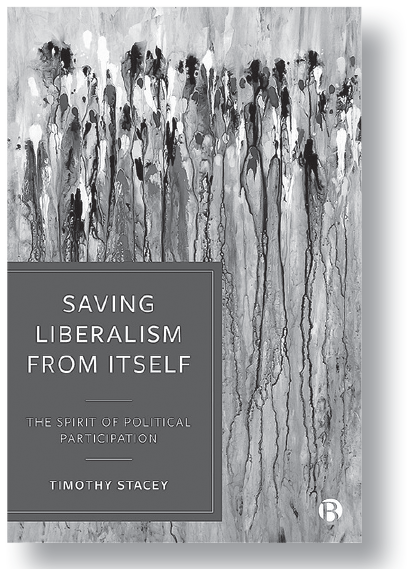
Saving Liberalism from Itself: The Spirit of Political Participation argues that liberalism, at least as it has been delivered politically, suffers from a meaning deficit. The book understands liberalism, broadly, as the mission “to secure equal dignity for all regardless of background.” It argues that liberalism may well offer the fairest system of government, rationally speaking, but it fails to carry people with it emotionally. The problem is that liberalism achieves equal dignity by making political decisions at a layer removed from people’s emotional lives. Emotion is a powerful means of propelling political engagement and action, and liberalism has failed to provide the same kind of spark that its detractors have been igniting. Drawing on theories from the study of religion, the book argues that while humans are capable of rational thought, rationality alone doesn’t motivate them. Instead, people are inspired by myths, rituals, magic, and tradition. Amid rapid economic and demographic changes, liberally oriented politicians have failed to create a symbolic universe that binds people to liberal ideals at an emotional level.
In this regard, Saving Liberalism isn’t too far from many of liberalism’s reactionary critics: liberalism has failed to provide people with a sense of meaning and orientation. Where it crucially differs, however, is that it does not treat these shortcomings as intrinsic to the liberal mission, and thus sees no merit in reviving some lost, pre-liberal past. On the contrary, the purpose of the book is to articulate the deep wells of cultural meaning that liberally oriented people draw from as they build solidarity in their communities.
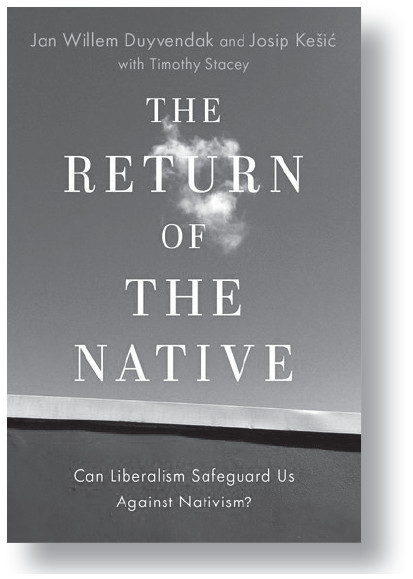
The crisis of liberalism is also the focus of The Return of the Native: Can Liberalism Safeguard Us Against Nativism? This book looks at how liberalism is attacked and undermined by the moderate and far right. While the book incorporates broadly Western European and North American contexts, it also offers a uniquely Dutch focus that makes it stand out. The Netherlands has long been perceived as being at the forefront of political liberalism. As such, it was hubristically seen as a desert of nativist rhetoric. In contrast, this book asserts, what we learn from the Dutch case is that not only does liberalism, at least on its own, fail to safeguard against nativism, but that liberal ideals themselves get used by nativists.
The Return of the Native’s central argument is that the many apparently disparate right-wing reactions against liberalism today, from anti-Black racism to Islamophobia and populism, in fact share a common thread: nativism. Drawing on the work of the American historian John Higham, it defines nativism as “an opposition to an internal minority that is seen as a threat on the grounds of its foreignness.” The nativist reasoning runs as follows: in excessively embracing liberal principles such as multiculturalism and tolerance, liberalism neglects and undermines the interests and identity of those deemed the core of the nation (the “natives”).
Yet, while with one hand asserting that these liberal ideals have undermined national culture, nativists use the other hand to claim these same principles as markers of what makes them distinct from “backward” foreigners. In order to justify this identity (and their overall politics), nativists rely on various narratives of the past. For example, the Narrative of Perpetual Tolerance (“we always have been liberal”) emphasizes the presence of multiple religions throughout the centuries to prove the point that their harmonious coexistence reveals a progressive spirit that is considered quintessentially Dutch. The Narrative of Accomplished Progress (“we cannot become more liberal than we have”) conceives Dutch culture as the pinnacle of a historical process of progress culminating in a congratulatory self-assessment as the most advanced of all societies. In addition to a nostalgic image of the past, the Narrative of Rebirth (“make us (read: whites) great again”) invokes an apocalyptic image of the present and future in which White Europe will disappear unless the natives reinstall their past dominance. While the Dutch context is particularly illuminating in bringing these narratives to the foreground, they can be observed in a number of other Western contexts.
The book shows that such narratives, as with nativism in general, are not only employed by the moderate and extreme right but also by some center-left politicians. The prevalence of these narratives in public discourse, we argue, shows both their insidious ability to spread and the importance of taking them seriously. These narratives about the historical rootedness of national identity, as well as the nativist discourse of immigrant threat they are part of, are delivering precisely the emotional spark that Saving Liberalism finds lacking in contemporary liberal politics.
Culture plays an important role in shaping what people consider politically possible and desirable.
The book closes by drawing on these insights to offer an alternative political approach. Rather than focusing on purely economic improvements, it argues that it is important to learn from nativists’ emphasis on meaning without reproducing their exclusionary attitudes or discourses. People are drawn to narratives that help them place the present in the context of a past they are inheriting and a future they are building. But rather than simply spinning such narratives from on high and wooing people with them, the truly empowering approach is to facilitate spaces in which people can come together across differences to tell their own stories and collectively construct grand narratives. These narratives are most robust when they are forged amid, and tied to, tangible improvements in wellbeing.
Saving Liberalism goes some way to exploring how such narratives develop. The book stresses that just because liberalism as politically delivered is lacking in emotional resonance does not mean that liberally oriented people themselves lack myths, rituals, magic, and traditions. It explains the importance of these “spirited” elements to people building solidarity at the grassroots and details their shape and content. It introduces us to myths of people in states of utter powerlessness who, through their community, have found collective strength and, with this, hope. It describes rituals of face-to-face interactions in which people learn that it is possible to create an atmosphere of genuine care in otherwise highly instrumental political meetings. It shows us how people find magic in the power of the collective to stand up to big business. And it explains how people consciously make tradition by weaving together diverse cultural inheritances in aid of a shared future.
Although one book focuses on political discourse and the other on social interaction, both show how political systems’ stability and sustainability depend on more than economic growth or raw demographic trends. Culture plays an important role in shaping what people consider politically possible and desirable. Crucially, both books demand that we resist the urge to merely sit back and analyze. Culture is not something given that must be conformed to. Rather it is something that we can, and must, actively remake.