




Abstract
Introduction:
Keeping a contamination free environment in the laboratory has commonly been achieved by one of two ways: a flame or a biosafety cabinet (BSC). However, it has been frequently observed that these two practices have been combined, where a heat source has been used within the BSC. As flames require flammable gasses and cause hot air to rise, it was hypothesized that these could lead to a loss of BSC containment, as BSCs rely on unidirectional downflow air.
Objectives:
The objective of this study was to determine whether BSCs can maintain containment when a heat source is operated within the work area.
Methods:
Several heat sources (Bunsen burner, High Heat Bunsen Burner, Spirit Lamp and Bacti-cinerator) were placed within two sizes of BSCs (4-foot and 6-foot), and smoke was used to visualize airflow disturbances, air cleanliness was measured by particle counting , and aerosol microbiological testing was conducted to ascertain containment. The risk of introducing a flammable gas into a BSC was also calculated.
Results:
Large flamed Bunsen burners were found to have the most detrimental effects on the ability of the BSC to maintain containment, especially in the center of the work area, while the smaller heat sources were more variable. Containment was completely lost in the 4-foot BSC, whereas the 6-foot BSC was capable of maintaining containment in only a few conditions. The BSC was also calculated to be able to maintain the required volume of flammable gas needed to operate the burners, not taking into consideration unintended leaks.
Conclusions:
Overall, it was determined that BSCs cannot operate safely and reliably while housing a heat source, as it could cause unexpected contamination of the work or the worker, or BSC ignition or explosion.
A biosafety cabinet (BSC) is a ventilated enclosure that is an essential piece of lab equipment for many procedures. They are the primary source of contamination removal and prevention, and they are heavily relied upon for protection of the user (personnel), the experiment (product), and the room and building (environmental). All 3 types of protection are known as containment. BSCs use specifically directed airflow to control and entrain aerosols and particulates, and HEPA filtration to capture them, removing them from the airstream.
BSCs are grouped into 3 classes depending on their level of containment and physical characteristics. The largest class is Class II. By definition, a Class II BSC must provide containment with the 3 types of protection (personnel, product, and environmental) and have a front-access opening with inward-flowing air, HEPA filters, and a motor/blower system. 1 The inward-flowing air provides personnel protection, while the supply HEPA filter provides unidirectional downward-flowing contaminant-free air for product protection and environmental protection through the exhaust HEPA filter (Figure 1). Class II is then split into 5 BSC types: A1, A2, B1, B2, and C1. The most common type found in laboratories worldwide is the Class II type A2 cabinet, sometimes referred to as a “recirculating”-type cabinet, as it has a portion of the air (∼70%) recirculated within the BSC (Figure 1). This cabinet has a minimum 100 feet per minute (FPM) intake air through the front-access opening.
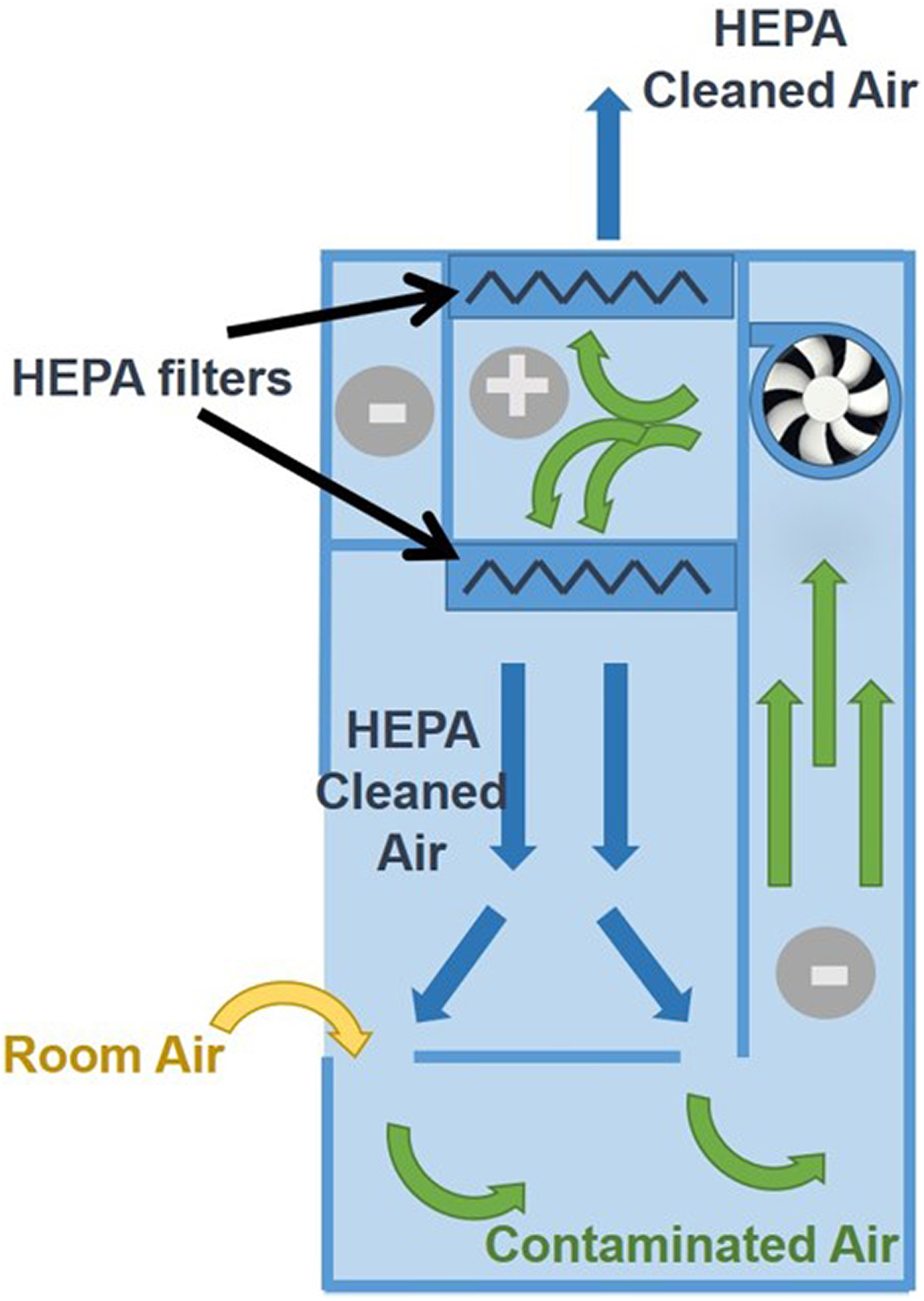
Sideview diagram of a Class II type A2 biosafety cabinet.
Since these cabinets rely on strict airflow patterning and direction, any disturbance in that path may compromise containment. In many microbiological studies, a flame is commonly used for sterilizing tools during routine practices. This technique works well and has been widely used for decades, if not centuries. However, the flame will create hot air, which rises, counteracting the downward-flowing air within the work area of the BSC and creating turbulence. Turbulence can allow for the possibility of a contaminant to be transferred into or throughout the BSC. The amount of turbulence and how strongly if will affect containment is currently unknown. Here the amount of turbulence in both a 4-foot- and 6-foot-wide Class II type A2 BSC is demonstrated, as well as the level of containment retained as a result of housing 4 standard types of laboratory heat sterilizers during BSC operation (Figure 2). Similarly, some burners require a flammable gas. Whether a flammable gas is safe within a BSC will also be addressed.
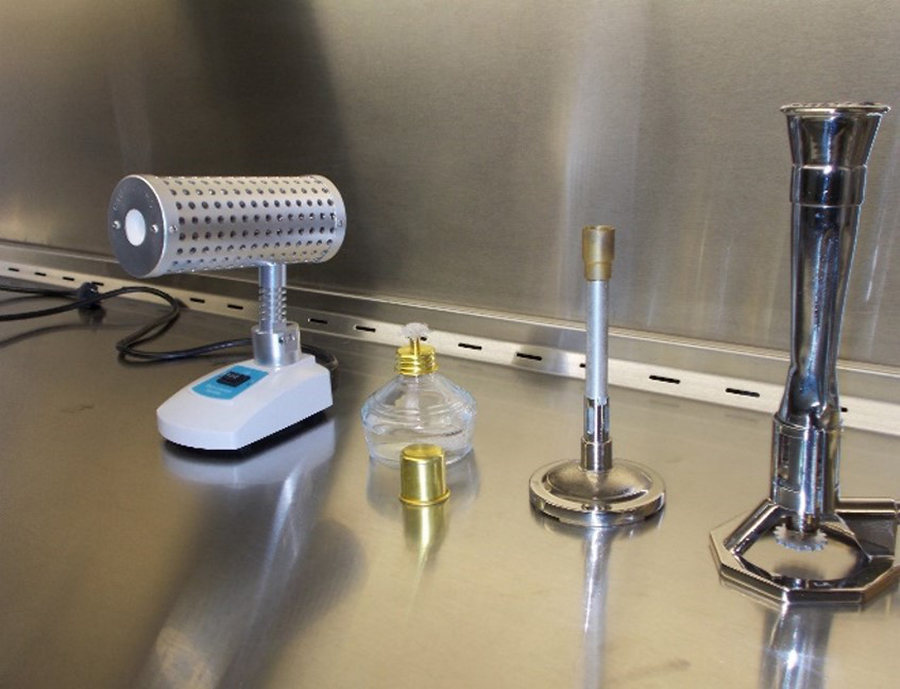
Heat sterilizers. From left to right: the Bacti-Cinerator, spirit lamp, standard Bunsen burner, and high-heat Bunsen burner.
Methods
Smoke Visualization
To visualize airflow patterning within a Class II type A2 six-foot-wide BSC (Baker SterilGARD SG604; The Baker Company, Sanford, ME, USA), a Rosco Fog Machine (Model 1700; Rosco, Stamford, CT, USA) was outfitted with a 4-inch hose and attached to a 6-foot PVC pipe with holes drilled every 2 inches to provide a uniform curtain of smoke throughout the entire worksurface. The pipe was mounted just below the supply HEPA filter diffuser near the rear wall of the work area.
Airflow was then visualized under normal operating conditions and with each of the 4 heat sources shown in Figure 2: a standard Bunsen burner, a high-heat Bunsen burner, a spirit lamp, and a Bacti-Cinerator electric furnace.
Particle Counting
The worksurface of a 6-foot Class II type A2 BSC (Baker SterilGARD SG604) was split into 6 locations (A-F as shown in Figure 3) of common heat source placement. Locations A and B were along the backwall, C and D were on the horizontal midline, and E and F were along the front intake grate. A, C, and E were placed on the front to back center line, and B, D, and F were 6 inches off the sidewall.
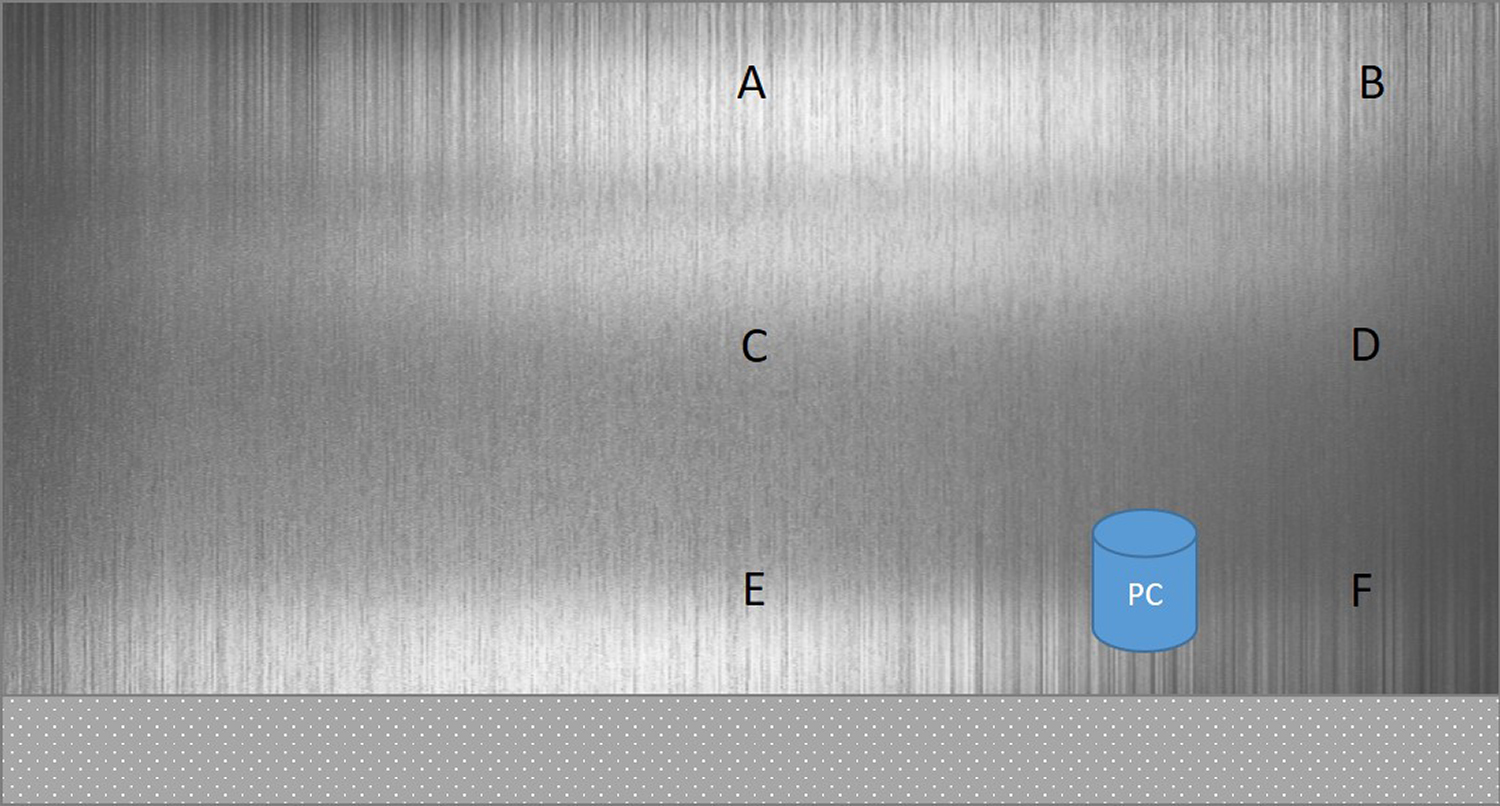
Heat source placement within the worksurface of a 6-foot biosafety cabinet (A-F). Particle counter nozzle placement shown as a blue cylinder.
The nozzle of a MetOne (Grants Pass, OR, USA) particle counter (Model A2408-1-115-2) was placed 6 inches inward from the front intake grill 6 inches off the work surface, in between heat source placement locations, as denoted in Figure 3. Particles 0.3 μm and 0.5 μm in size were measured at standard operating conditions with no heat sources and then with each heat source in each location. The number of particles was then compared to the International Organization for Standardization (ISO) standard classification for air quality (EN ISO 14644-1) to determine if the BSC could continue to maintain ISO Class 5 air. 2
Aerosol Microbiological Challenge Testing
The containment capability of the BSC was tested using microbiological aerosols as described in NSF International Standard 49. 1 Two sizes of BSC were used for these experiments: a 4-foot-wide and a 6-foot-wide Class II type A2 BSC (Baker SterilGARD SG404 and SG604, respectively). Testing was split into 3 types: personnel, product, and cross-contamination testing. The collision nebulizers contained a slurry of Bacillus subtilis var. niger spores and tryptic soy agar petri dishes were placed as directed in the standard. 1 After proper setup, the bacteria were nebulized into 1-μm droplets 3 with the BSC running in the standard operating configuration or with the heat sources in location A, B, C, or D for the product and personnel testing. Only locations B and C were used for the cross-contamination testing. After the tests were conducted, all petri dishes were covered and placed in a 37°C tissue culture incubator (Baker Cultivo Ultra Plus). Results were read after 24 hours of growth, and pass/fail was determined.
Results
Flammable Gas Calculation
Since the most common flame sources within a BSC require natural gas or propane to function, the amount of gas a BSC can handle safely should be addressed. A BSC will have a hot motor/blower over which flammable gas can flow during standard operation. Using the formulas previously calculated for volatile chemicals (Equation 1,4,5 where ER = emission rate in mL/min, Qi = inflow velocity, MW = molecular weight, LEL = lower explosion/exposure limit, SG = specific gravity, SF = safety factor expressed as the denominator of a fraction), we can determine that 10 and 20 mL/min of natural gas or propane, respectively, can be emitted into the airstream of a 4-foot Class II type A2 BSC and stay within 10% of the LEL. By comparison, propane is known to be released from its tank at 0.12 mL/min. This is well within the safe range.

Similarly, the autoignition temperature for propane is 504°C. NSF International Standard 49 dictates that a motor/blower must not exceed 150°C (NSF International, 2014). Therefore, the motor/blower does not become hot enough to cause spontaneous ignition, even in the presence of flammable gas within the BSC. However, this does not take into account any potential sparks, faulty gas lines or valves, cracked or leaky tubing, and so on, all of which would circumvent these calculations and cause an explosion.
Smoke Visualization
During standard operation, smoke should be seen flowing in a steady, unidirectional pattern from the HEPA filter diffuser down to the worksurface as a smooth curtain (Figure 4A, Supplemental Video S1). When heat sources were placed in the work area, disturbances could be seen of varying severity. The high-heat Bunsen burner showed the greatest fluctuations, as shown in Figure 4B and Supplemental Video S2, followed by the standard Bunsen burner (Figure 4C, Supplemental Video S3). Much smaller disturbances were observed with the spirit lamp and Bacti-Cinerator, where the flame was observed to shift to horizontal (Figure 4D,E, Supplemental Videos S4 and S5, respectively).
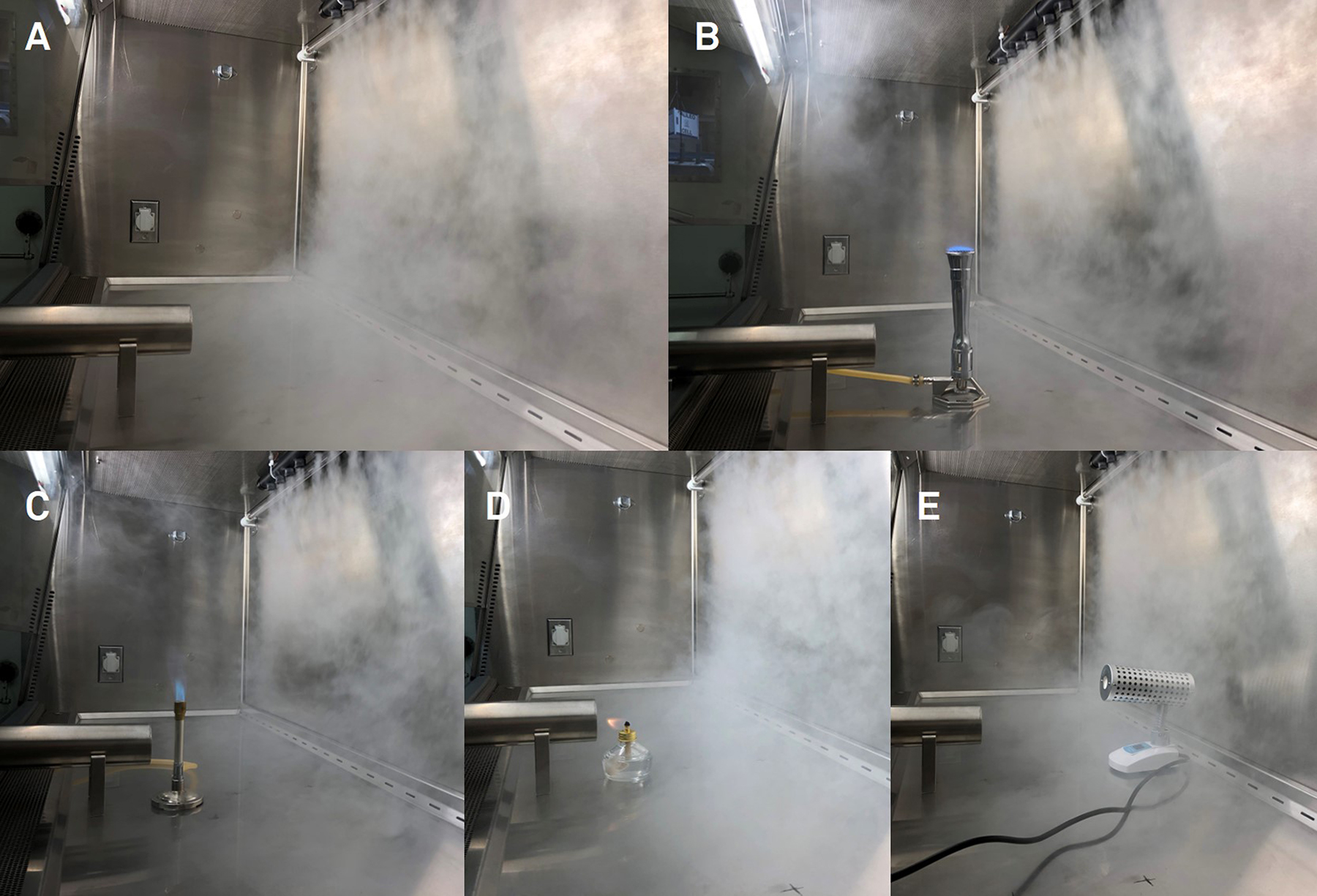
Smoke visualization of airflow disturbances by heat sources within a biosafety cabinet. Shown are (A) normal operation, (B) high-heat Bunsen burner, (C) standard Bunsen burner, (D) spirit lamp, and (E) Bacti-Cinerator.
Particle Counting
Under standard operating conditions, a Class II type A2 BSC should maintain ISO Class 5 air. 1 Disturbances in the airflow may allow for contaminating particles to enter the work area through the front-access opening. Particles of 0.3 and 0.5 μm were measured at the front-access opening with the heat sources placed in each of 6 locations described in Figure 3. As seen in Table 1, many of the locations were able to maintain ISO Class 5 air (white), but both styles of Bunsen burners failed to maintain this air quality at the center location C as well as along the front-access opening, location E (gray bolded values). The high-heat Bunsen burner also failed at the other front-access opening position, location F. The taller flames seemed to affect the momentum air curtain and intake airflow much more strongly than the small spirit lamp flame or Bacti-Cinerator, allowing more particles to enter the BSC work area.
Particle Counts Measured at 0.3 and 0.5 μm at Each Location.a
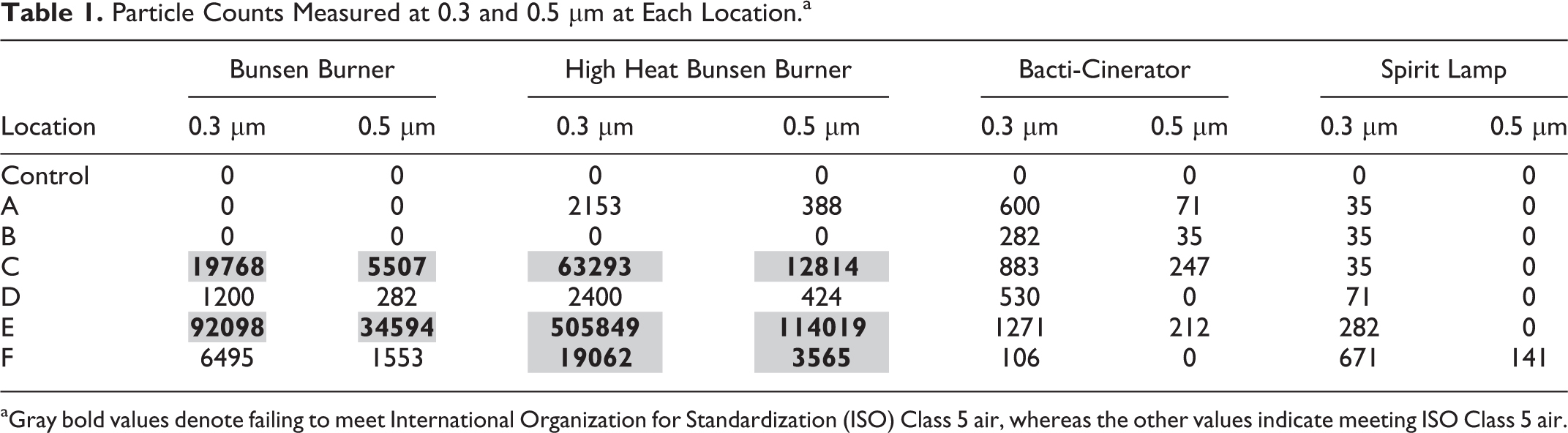
Gray bold values denote failing to meet International Organization for Standardization (ISO) Class 5 air, whereas the other values indicate meeting ISO Class 5 air.
Aerosol Microbiological Containment Testing
To test full biosafety containment, the cabinet was subjected to aerosol microbiological testing as outlined in NSF International Standard 49, which is broken down into 3 specific tests: the personnel protection test, the product protection test, and the cross-contamination test. 1 Each test has a specific configuration for placement of the nebulizer and air samplers, concentration of bacterial spores within the nebulizer, and pass/fail criteria. A passing result of all 3 tests is required to claim adequate containment. All 3 tests were conducted in both a 6- and 4-foot-wide Class II type A2 BSC (Baker SterilGARD SG604 and SG404, respectively) for each of the 4 heat sources, in each of the back 4 locations (A, B, C, and D, shown in Figure 3). Overall, it was apparent that the 6-foot BSC had a greater capability to overcome the microbiological challenge in the presence of heat (Table 2), whereas the 4-foot BSC could not (Table 3). Three of the heat sources were able to maintain containment in at least 1 location in the 6-foot BSC: the Bunsen burner at location A, the Bacti-Cinerator at location B, and the spirit lamp at locations A, B, and D (Table 2). None of the heat sources were able to maintain containment within the 4-foot BSC (Table 3). As shown in Tables 2 and 3, certain locations were more prone to failures, especially location C, the direct center of the work area, or the most commonly used area of a BSC. Interestingly, locations A and B failed in every location tested in the 4-foot BSC, as well as 10 of 12 tests in location C and 7 of 8 tests in location D (Table 3).
Aerosol Microbiological Containment Testing Results for the 4 Heat Sources in a 6-Foot Class II Type A2 Biosafety Cabinet.a
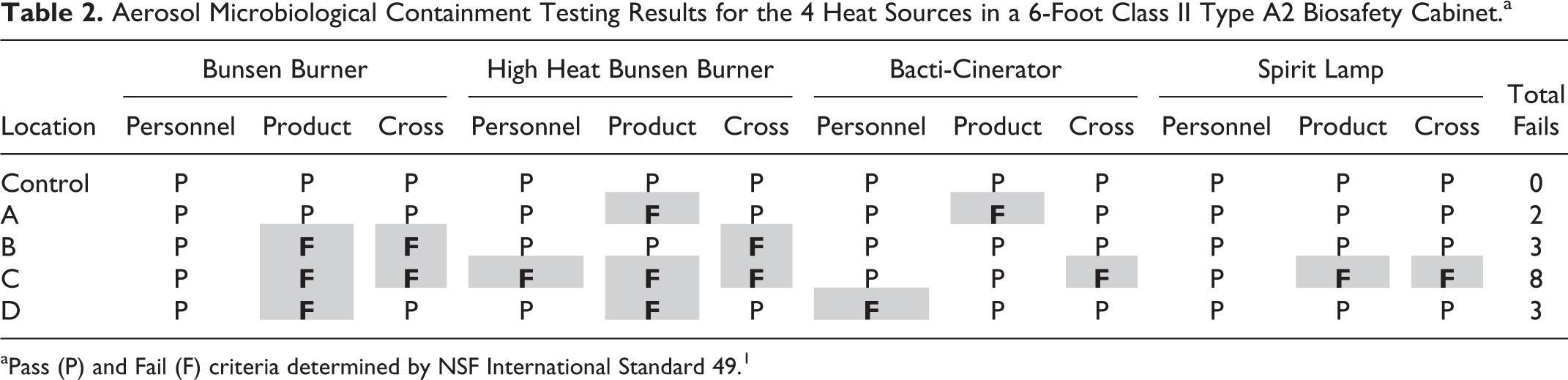
Pass (P) and Fail (F) criteria determined by NSF International Standard 49. 1
Aerosol Microbiological Containment Testing Results for the 4 Heat Sources in a 4-Foot Class II Type A2 Biosafety Cabinet.a
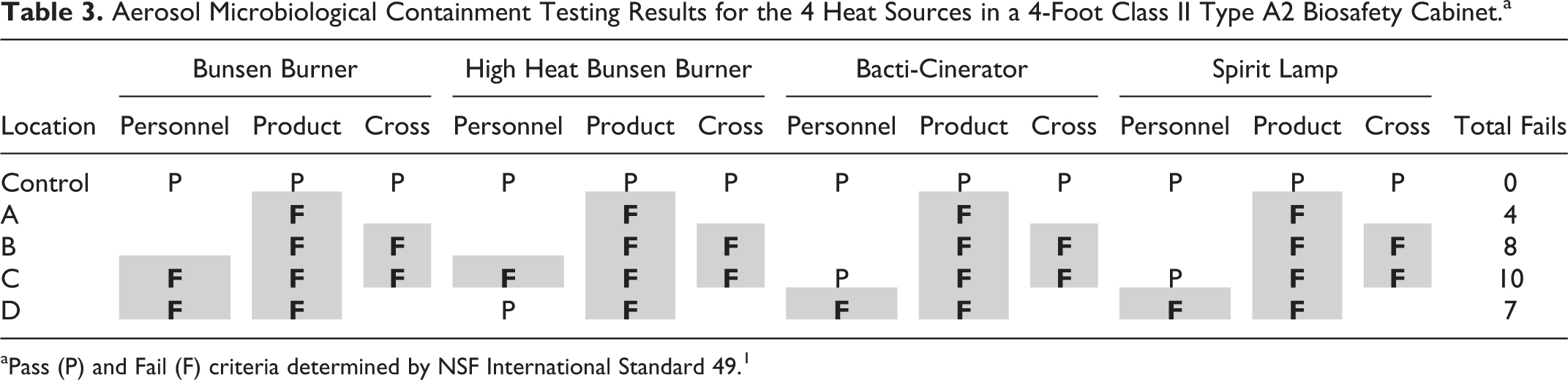
Pass (P) and Fail (F) criteria determined by NSF International Standard 49. 1
Conclusions
The primary engineering controls (PECs) known as biosafety cabinets protect against contamination of the user (personnel protection), the experiment or work being done (product protection), and the laboratory or facility (environmental protection) through the use of HEPA filters and specifically controlled airstreams. Any disruption in this airflow allows for potential contaminants to enter the BSC or travel throughout the work area within the BSC, also known as cross-contamination. Heat sources, such as flames, cause air to rise, counteracting the standard downflow air needed within the work area. Contrasting airflow directions lead to eddies, swirling, and the potential to move contaminants from one area to another within the BSC.
While calculations revealed that the BSC under standard operation would be able to handle a surplus of flammable gas being supplied to the burners, it is not advisable to use flammable gasses within a BSC due to the risk of unintended sparks or gas leaks that may occur, leading to unintended ignition and potential explosion.
Smoke visualization revealed large vortexes that moved throughout the whole work area, especially with large flames (Figure 4, Supplemental Videos S2-S6). Smaller heat sources had variable results, where sporadic upward currents of air could be seen leading to inconsistent contamination control. At times, the smaller burners had rapidly waving and horizontal flames.
Similarly, the use of a particle counter to determine if the BSC maintains ISO Class 5 air showed that both Bunsen burners with larger flame heat sources could not maintain ISO Class 5 classification, while the smaller heat sources (Bacti-Cinerator and spirit lamp) could (Table 1).
However, when tested more stringently in accordance to NSF International Standard 49 aerosol microbiological testing, differences with heat source placement throughout the BSC work area (Figure 3) were made apparent. It was also noted that BSC size, or nominal width (4 vs 6 feet), made a large difference in whether the cabinet could overcome the heat disturbances created by the burners. As shown in Tables 2 and 3, the heat sources in almost all locations caused a loss of containment by failing at least 1 of the 3 tests: personnel, product, or cross-contamination. Interestingly, the most common placement for a burner (center of the work area, location C) was prone to the most failures. Moving the burner to the center position along the back wall (location A) resulted in the least amount of failures and even maintained containment with the Bunsen burner and spirit lamp in the 4-foot BSC (Table 3).
Due to the highly variable results from location to location and between burner types, using a heat source within a BSC cannot be recommended. There are too many instances where containment may be lost, as well as the potential for unintended spark generation or leaked flammable gas to lead to explosion.
Footnotes
Authors’ Contributions
All authors contributed equally to this work.
Ethical Approval Statement
The work presented here is original work and has not been submitted or published elsewhere.
Statement of Human and Animal Rights
Individual participation was on a voluntary basis and no animals were involved in this project.
Statement of Informed Consent
Not applicable.
Declaration of Conflicting Interests
The authors declared the following conflicts of interest with respect to the research, authorship, and/or publication of this article: This study was approved by The Baker Company.
Funding
The authors received no financial support for the research, authorship, and/or publication of this article.
Supplemental Material
Supplemental material for this article is available online.
References
Supplementary Material
Please find the following supplemental material available below.
For Open Access articles published under a Creative Commons License, all supplemental material carries the same license as the article it is associated with.
For non-Open Access articles published, all supplemental material carries a non-exclusive license, and permission requests for re-use of supplemental material or any part of supplemental material shall be sent directly to the copyright owner as specified in the copyright notice associated with the article.
