




Abstract
Formaldehyde fumigation is the most widely used method for terminal decontamination of biosafety cabinets in the UK. International standards define volumes of Formalin and water to be used for an effective fumigation. However, no published information is available showing that these levels are appropriate or effective. Studies have been undertaken to optimize the volumes of fumigant required to achieve 6 log reductions of bacterial spores within 2 sizes of biosafety cabinet. The tests have shown effective cycles can be achieved using significantly lower levels of fumigant than are recommended within the European Standard for biosafety cabinets and UK guidance. There is clear evidence of stratification of the fumigant within the cabinets with the time taken to achieve a 6 log reduction depending on the position within the cabinet and the local relative humidity.
Introduction
The use of formaldehyde for fumigation dates well over a century1,2 and over the past 5 decades has become the preferred method for biosafety cabinet decontamination to provide a sterile environment after accidental spillages and prior to servicing and maintenance.3 –6 Annex G.7 of the NSF/ANSI Standard 49, recommends that 0.30 g/ft3 (11 g/m3) of paraformaldehyde is used for all Class II (A1, A2, B1, and B2) cabinets (NSF/ANSI Standard 49, 2014). 7 While direct application of validated surface disinfectants can be effective for easy to reach surfaces in particular working areas, gaseous fumigation is the most effective method to ensure complete decontamination of biosafety cabinets and filters.8 –11 While there are now a range of systems that can be used for this purpose, formaldehyde still represents the most cost-effective and independent method, allowing for the use of simple, low-cost, nonpropriety equipment.5,8,12
The current European standard for biosafety cabinets (BS EN 12469:2000) describes a method of formaldehyde fumigation using liquid formalin (40% w/v) and water. It quotes values of 60 ml/60 ml formalin and water, respectively, per cubic meter (m3) of cabinet volume. However, there is no reference provided on the development and validation of these volumes. The fumigant levels often referenced for whole room fumigation in the UK are taken from old Public Health Laboratory Service (PHLS) guidance, 13 which recommended 100 ml formalin to 900 ml water for 28.3 m3 (1000 ft3). There is a clear disparity between these 2 sets of recommendations and work undertaken at Health and Safety Laboratory (HSL), which only used 60 ml of formalin with 1140 ml water to achieve effective cycles in a 35 m3 test chamber. 8 In light of the recommendations for rooms, the values stated within the BS EN 12469:2000 standard seem to be high. However, it must also be considered that this method of fumigation relies on the formation of condensations layers on surfaces, and the relationship between volume and quantities of fumigant cannot be assumed to be linear.
Formaldehyde has recently been reclassified as a 1B carcinogen within the EU, and there are moves to restrict its use as a biocide. 14 Hence, limiting exposure and reducing the volumes used has become more critical, and the primary aim of this study is to evaluate whether reducing the volumes of formaldehyde used for decontaminating biosafety cabinets can still ensure an effective decontamination. Additional work has also been undertaken to explore the impact of layering effects within the cabinet and its impact on the effective decontamination of all possibly contained surfaces.
Time course studies were undertaken to gain a better understanding of the death kinetics caused by formaldehyde fumigation. These were performed in Class III biosafety cabinets to allow for direct access to the biological indicators (BIs) using gauntlets (long thick rubber gloves attached to cabinet), giving the option for samples to be taken throughout the fumigation process. While Class III biosafety cabinets are not directly comparable to Class II cabinets, they are sufficiently similar in volume and surface area to standard Class I cabinets designed according to BS EN 12469:2000 in that both cabinet systems comprise of a simple “box” enclosure with double exhaust HEPA filters on top. So, the decontamination strategy for Class III and Class I biosafety cabinets is somewhat similar, whereas Class II biosafety cabinets require extra consideration of additional surface area under the work area, rear side air flow ducts, and the large exhaust plenum space on top of the cabinet. Thus, this work covers both cabinet types (Class I and Class III) used within PHE’s high containment laboratories. The sampling methods described in the following allowed for direct numeration of the recoverable spores from the BIs, from which log reductions could then be calculated.
Fumigations were also undertaken using a fan within the cabinet to investigate the kinetics when the formaldehyde vapor was uniformly distributed. It was envisaged that consistently mixing of air inside the exposure chamber during fumigation would aid uniform fumigant and relative humidity (RH) distribution during fumigation. As a result, this may improve decontamination times for contamination on the cabinet floor where less fumigant condensation may occur and deeming longer exposure times to achieve the required efficacy.
Materials and Methods
Test Chambers
Two free-standing Class III biosafety cabinets with recirculating ventilation in an independently ventilated containment level 2 (CL2) laboratory were used for this study, with the primary work being undertaken in a 0.59 m3 volume cabinet (Cabinet A, Figure 1A) and additional tests being undertaken in a larger 0.87 m3 volume cabinet (Cabinet B, Figure 1B). Both cabinets were fitted with gauntlets to allow for access to the work area for recovery of test samples and measurements of temperature and RH conditions. The inlet and extract filter units were not sealed, as would be normal during fumigation. Access to the gauntlets was minimized during the test cycles and work undertaken in a controlled manner to reduce any pumping effects and positive pressurization of the cabinet, which could lead to loss of fumigant. At the end of each test cycle, the cabinets were vented overnight.
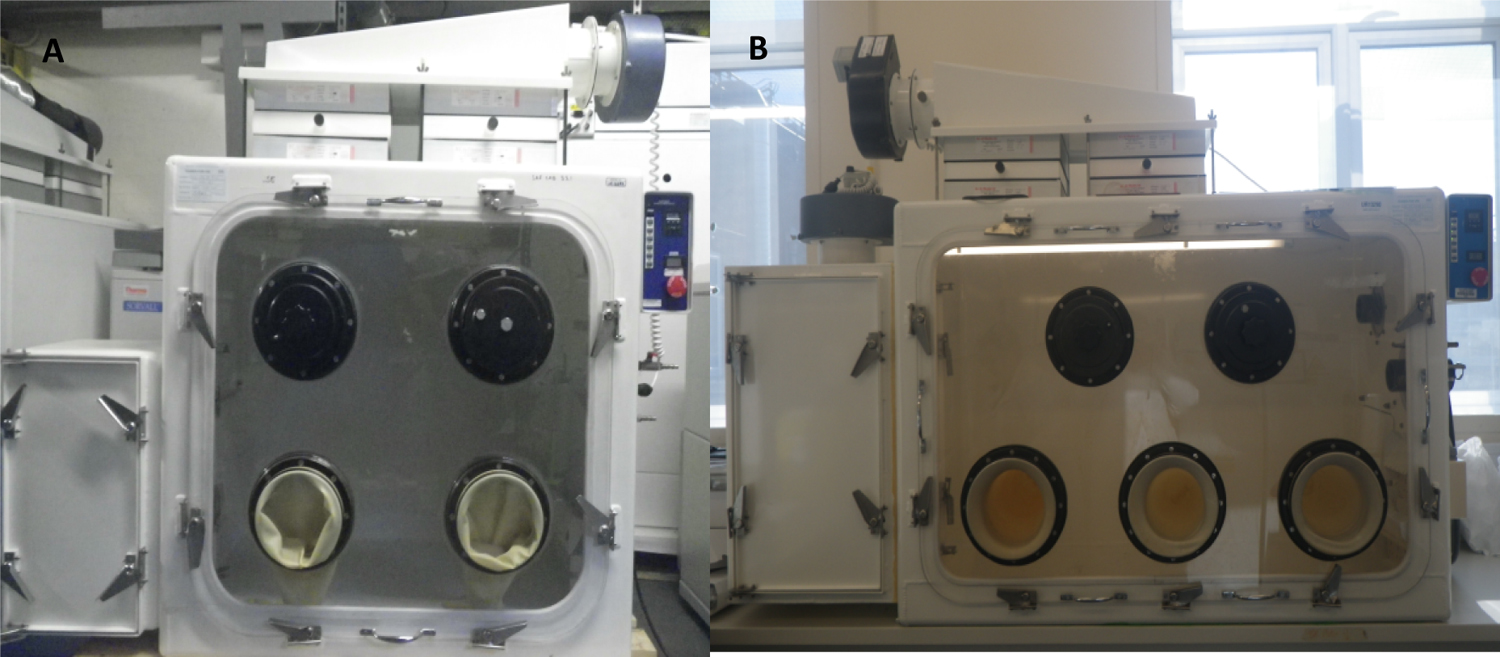
Test chambers: (A) Cabinet A (0.59 m3) and (B) Cabinet B (0.87m3), in which the study was undertaken.
Biological Indicator Coupon Preparation
A spore stock suspension (8.75 × 10⁹ spores ml–1) of Bacillus atrophaeus (NCTC 10073) previously produced at PHE Porton Down 15 was used to produce BIs for this study. An adjusted 1.0 × 10⁹ spores ml–1 stock suspension in sterile distilled water was heat shocked at 60°C for 30 minutes in shaking water bath (Grant OLS200, Grant Instruments Ltd, England) to kill any vegetative cells and cooled to room temperature, prior to storage. A working spore suspension of 1.0 × 10⁸ spores ml–1 was produced when needed and stored at 4°C. BIs were prepared on the day by inoculating the center of each sterile coupon with a 10 µl working stock suspension droplet containing 1.0 × 10⁶ spores ml–1. Coupons were placed in an incubator immediately to dry at 37°C for 1 hour and used within 6 hours of preparation.
Stainless steel coupons (8 mm × 12 mm × 0.45 mm, Grade 316, Cherwell Laboratories Ltd, UK) were used as BI carriers. Coupons were cleaned prior to use as follows: washed in 300 ml of 5% Decon 90 (Decon 90, UK), rinsed with copious running water, additional rinse with demineralized water (×5), washed (×5) in 100 ml of 70% IPA (VWR, UK), dried at 50°C for an hour, followed by autoclaving as the final step.
Formaldehyde Vapor Generation
Formaldehyde vapor was generated by boiling off varying mixtures of 40% formalin solution (w/v) (SLS, United Kingdom) and equal volumes of tap water, using a thermostatically controlled fumigation pot (boiling pot) (Protosheet Engineering; model: P1-04). Each cycle was run for 6 hours, reflecting the minimum cycle time recommended for biosafety cabinets. 16 Fumigant condensation was visible on the cabinet night door (front viewing panel door) within 5 to 10 minutes, and the mixture completely evaporated after 10 to 15 minutes from the point of switching on the fumigation point.
Viable Spore Recovery and Enumeration from Coupons
To determine the initial loading and viable recovery from the Bis, they were each placed into a 30 ml glass universal container containing 5 ml PBS + 0.1% Tween 80 and 4 sterile glass beads (3 mm in diameter, VWR). Samples were processed according to the method described in Pottage et al.
17
If no spores were recovered through this process, the remaining sample volume was filtered through a cellulose nitrate membrane filter (pore size 0.2 µm, 47 mm diameter, CNMF, SLS, UK), which was then placed on a trypticase soy agar (TSA
Test Cycles
Historical validation work undertaken at PHE Porton has indicated that for Class III biosafety cabinets, made to BS 5726:1992, effective cycles could be achieved using 17.5 ml of 40% formalin and 17.5 ml water per m3 of cabinet volume. This was based on validation using 17.2 ml/m3 (15 ml formalin/15 ml water) formalin concentrations in a large cabinet (0.87 m3), and this was then set as the minimum level for use in all Class III biosafety cabinets within PHE Porton site, even if the cabinet sizes were lower.
This concentration was used as the base line level in this study, adjusted for the volumes of the test cabinets, and is less than a third of that recommended in BS EN 12469:2000. The primary tests were performed with Cabinet A (0.59 m3), of which the internal volume is less than the model used for the historical validation work. Hence, tests were undertaken using the recommendations from that work, namely, the minimum 17.2 ml/m3, in which the minimum equivalent fumigant volume for Cabinet A was calculated as well as subsequent half and quarter volumes (Table 1). A second set of tests were also undertaken with Cabinet B, which has an internal volume of 0.87 m3, with the recommended 17.2 ml/m3 (15 ml/15 ml) formalin concentrations, then with comparable lower volumes as used with Cabinet A, adjusted for cabinet volume (Table 1).
Calculated Theoretical Formalin Concentrations Used Per Cabinet Space.
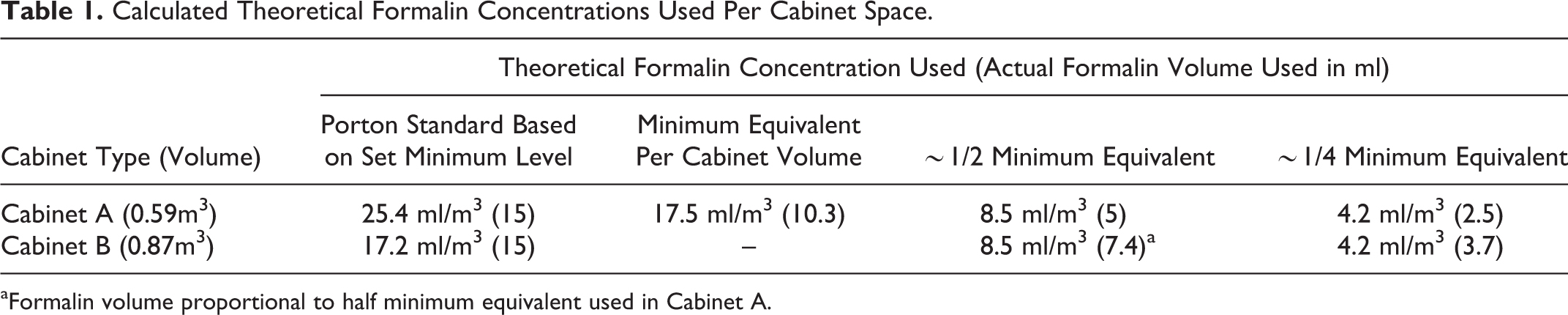
Formalin volume proportional to half minimum equivalent used in Cabinet A.
Tests to Evaluate Fumigant Levels
Sufficient BIs contained in an open 90 mm sterile petri dish (VWR International, UK) were placed at the center of the cabinet floor to allow removal of BIs in triplicate at 15 minutes, 30 minutes, 60 minutes, 120 minutes, and 360 minutes after the boiling pot was started. Prior to operation of the boiling pot, 3 BIs were removed as positive controls at the start of each cycle. All samples were processed as described previously at the end of the test cycle. This was repeated 3 times for each configuration of fumigant volume and cabinet size, producing 9 samples per formalin volume and time point.
Stratification Tests
Having identified an effective fumigation cycle for Cabinet A, tests were undertaken with BIs placed at cabinet floor level, middle level (∼45 cm from cabinet floor), and at high level (∼80 cm from cabinet floor) as close to the cabinet ceiling as practical (∼9 cm below primary extract filters). Sterile 90 mm petri dish lids held in place with clamp stand were used as BI supporting bases at middle and high level inside the exposure chamber. At floor level, BIs in the petri dish lids were just rested the cabinet floor and not help by the clamp stand. Each supporting base was positioned centrally in the cabinet approximately 48 cm from left and right side walls. Calibrated temperature and RH meters were located at the same points. Fumigations were then run using the 17.5 ml/m3 cycle, with triplicate BIs placed at each platform level. Three runs were undertaken as before, and then 3 were undertaken with a small AC axial fan (119 × 119 × 38 mm, Part No 4650Z, RS Components, UK) operated to continuously to mix the air within the cabinet (measured flow rate ranging from 904 to 928 L/min with an average of 928 L/min) during the fumigation cycle.
Results
The average log reductions achieved at each time point for the differing fumigant volumes are illustrated in Figure 2 for Cabinet A (0.59 m3) and Figure 3 for Cabinet B (0.87 m3). Test results in the smaller cabinet, A (Figure 2), show that a >6 log reduction in spores was achieved within 30 minutes using the PHE standard 15 ml formalin/water volumes (25.4 ml/m3). Test results using PHE’s minimum equivalent formalin concentration per cabinet volume and half the concentration (17.5 ml/m3 [10.3 ml] and 8.5 ml/m3 [5 ml], respectively) show that both fumigations achieved a 6 log reduction within 1 hour (Figure 2). Results also show that while a ∼5.5 log reduction can be achieved within 2 hours with using a quarter of the minimum equivalent concentration (4.2 ml/m3 [2.5 ml]), an extended 4-hour exposure period was necessary for a >6 log reduction. Viable spores that may remain attached to the coupons after processing were not detected for the 25.4 ml/m3, 17.5 ml/m3, and 8.5 ml/m3 formalin concentrations after the processed coupons were immersed and incubated in nutrient broth. However, results with 4.2 ml/m3 formalin showed that 3 out of 9 BIs were positive post 48-hour incubation, after 2 hours exposure, but no positives (0/9) were recovered after 6 hours exposure post 7-day incubation.
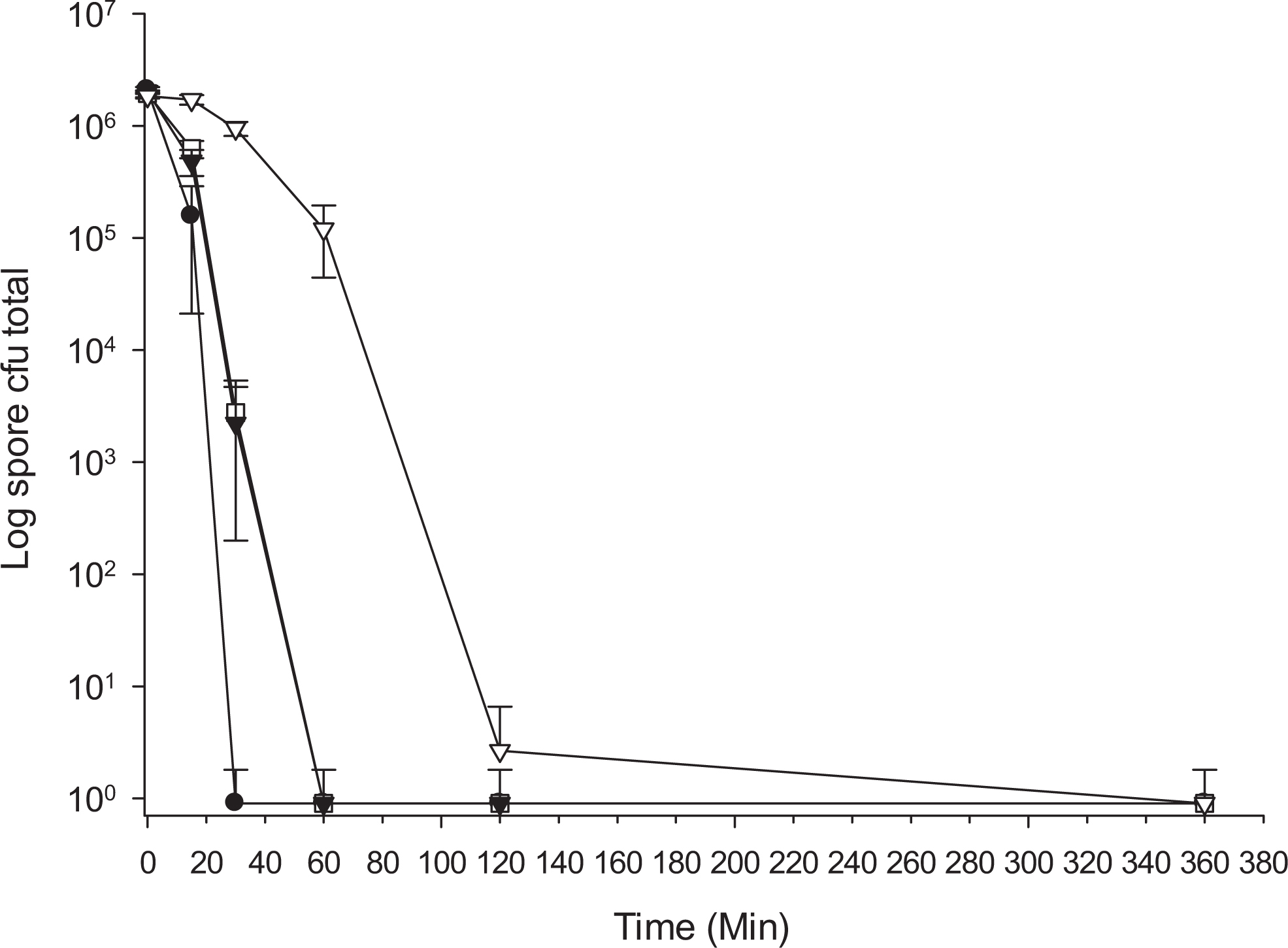
Bacillus atrophaeus spore recovery (n = 9) over a 6-hour fumigation period with a range of formalin volumes within Cabinet A (0.59m3). (•) 25.4 ml/m3 formalin, (□) 17.5 ml/m3 formalin, (▴) 8.5 ml/m3 formalin, (▵) 4.2 ml/m3 formalin.
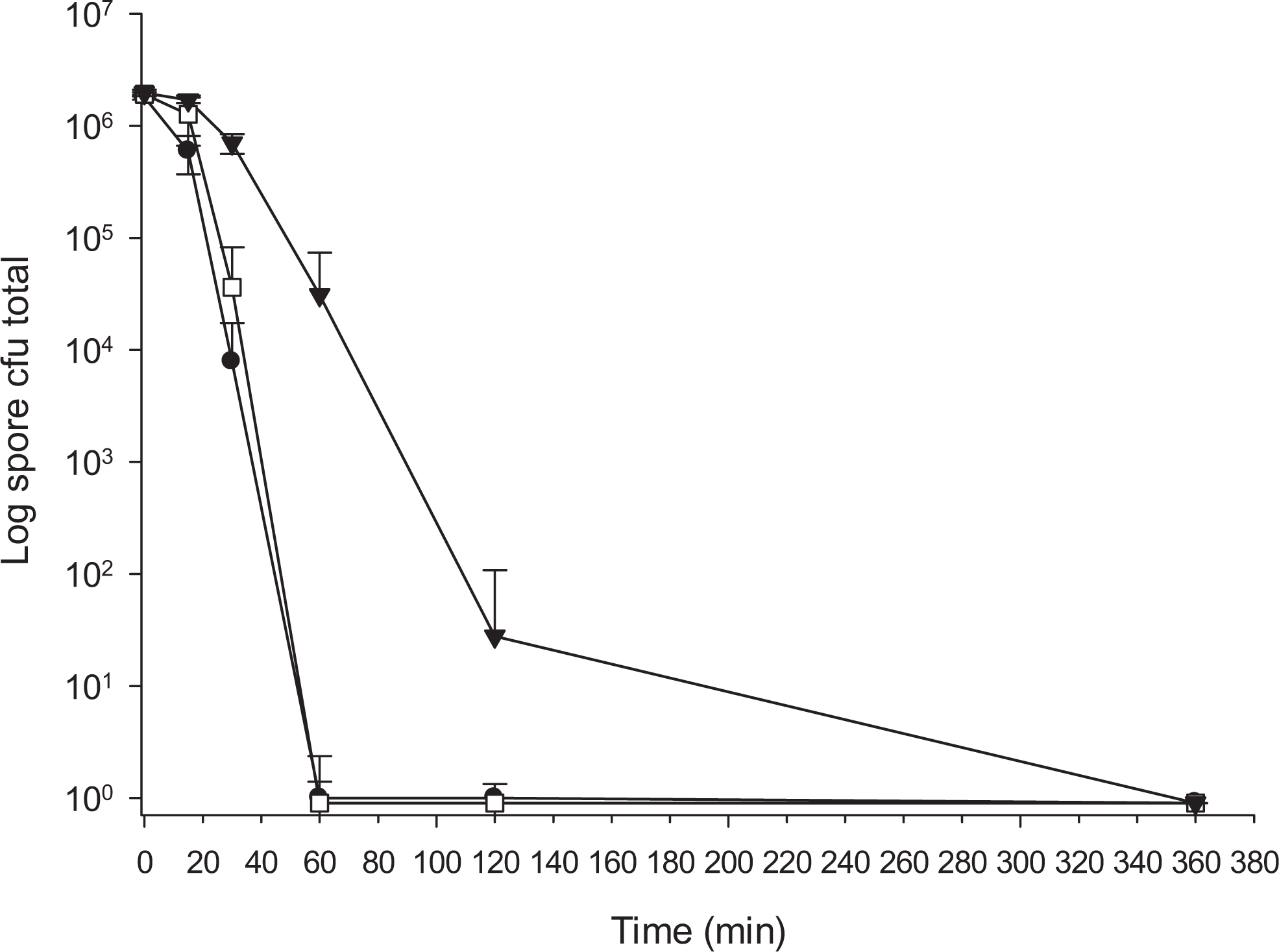
Bacillus atrophaeus spore recovery (n = 9) over a 6-hour fumigation period with varying formalin concentrations within Cabinet B (0.87 m3). (•) 17.2 ml/m3 formalin, (□) 8.5 ml/m3 formalin, (▴) 4.2 ml/m3 formalin.
For the larger Cabinet, B (Figure 3), >6 log reductions were achieved within 1 hour for the calculated PHE minimum (17.2 ml/m3 [15 ml]) and equivalent half (8.5 ml/m3 [7.4 ml]) formalin concentration, with the lowest volume (4.2 ml/m3 [3.7 ml]) again requiring the full 6 hours of exposure. Similar to Cabinet A, the incubated coupons placed in 10 ml broth after processing exposed to the PHE standard and half recommended formalin volumes showed no growth after 1 hour exposure within 7 days incubation. With a quarter of the formalin volume, viable spores were again recovered from 3 of 9 BIs tested at 2 hours of exposure, and a full 6-hour exposure was needed to achieve >6 log reduction.
Figure 4 shows the recoveries from both Cabinets, A and B, using half the recommended formalin concentrations (8.5 ml/m3 [5 ml] and 8.5 ml/m3 [7.4 ml], respectively). The results are similar in kinetics, with >6 log reduction achieved within 1 hour (Figure 4).
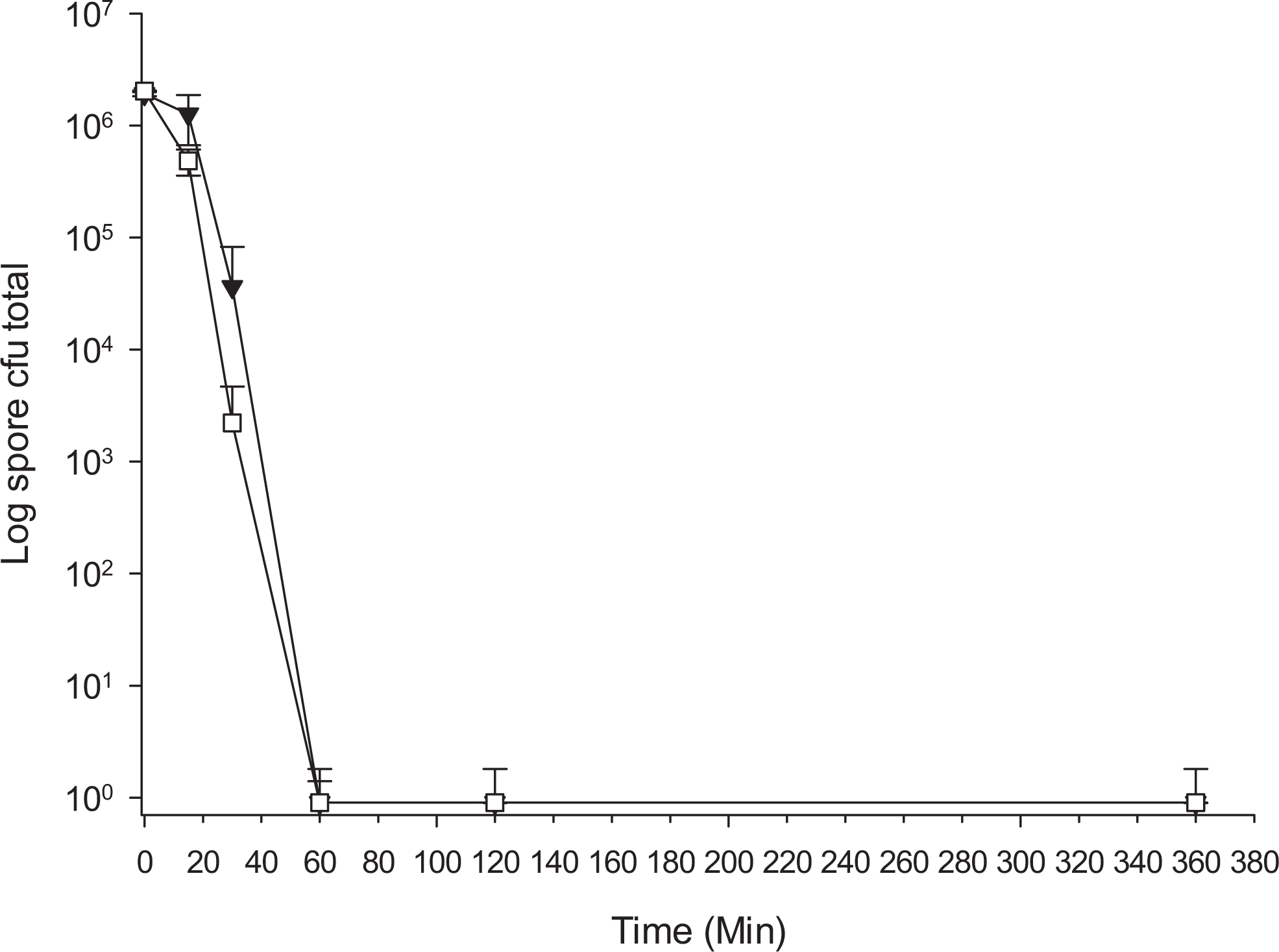
Bacillus atrophaeus spore recovery (n = 9) over a 6-hour fumigation period with half calculated formalin concentration, (□) 8.5 ml/m3 (5 ml) formalin in Cabinet A (0.59 m3) and (▴) 8.5 ml/m3 (7.4 ml) formalin in Cabinet B (0.87 m3).
The log reductions achieved when investigating the BI position within Cabinet A and the effects of a mixing fan can be seen in Figures 5A and 5B. Without the mixing fan (Figure 5A), a 6 log reduction was achieved on the floor after 1 hour, in line with the cycles described previously (Figure 2). However, at the midlevel, this was achieved after 45 minutes, and at a high level it was achieved after 30 minutes (Figure 5A). The results in Figure 5A provide a more detailed spore kill kinetics in static air inside the cabinet chamber, showing that the time required to achieve a >6 log reduction throughout is dependent on how long it takes to achieve this reduction at cabinet floor level. The introduction of the mixing fan reduced the 6 log reduction time to below 45 minutes in all positions (Figure 5B).
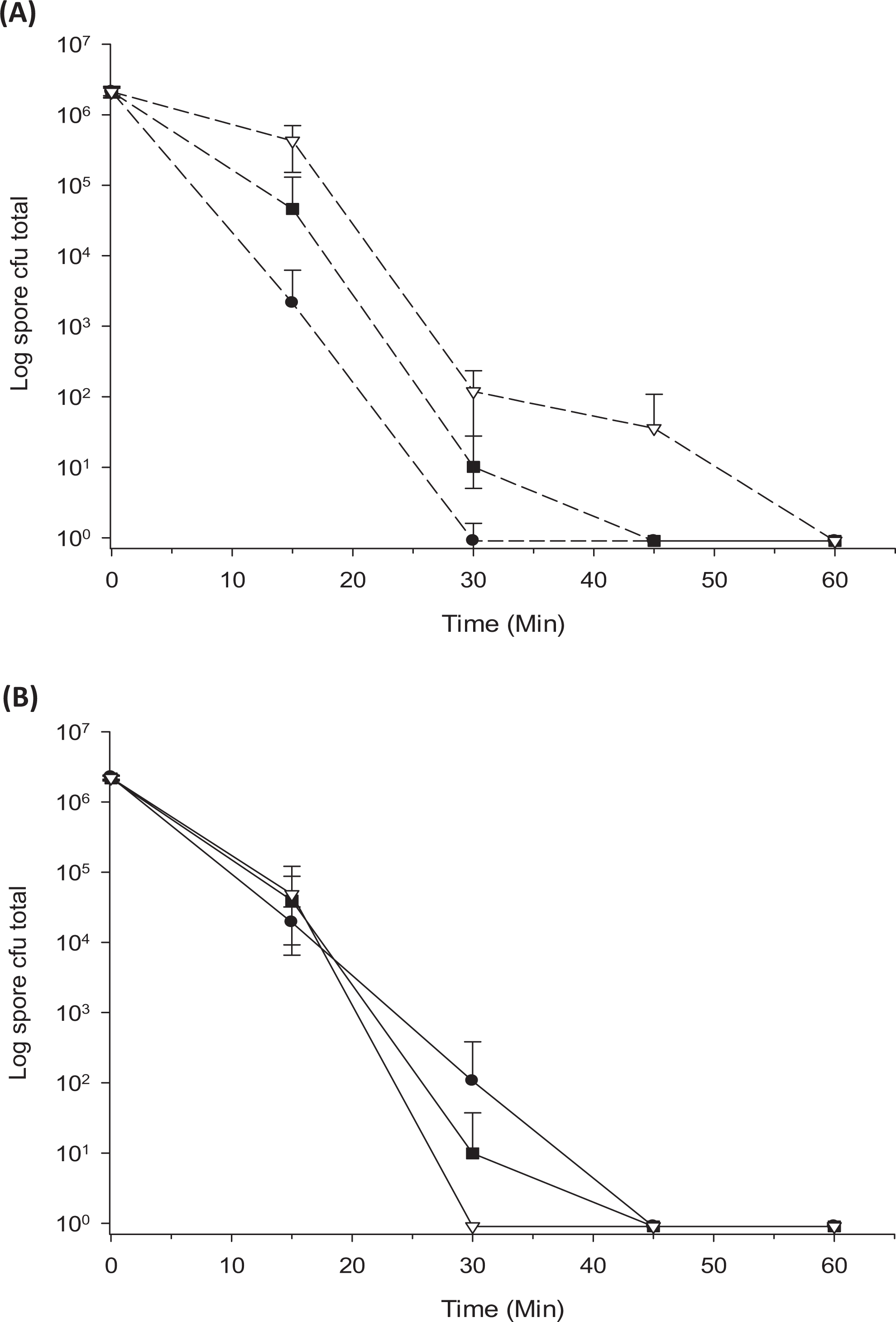
Bacillus atrophaeus spore recovery (n = 9) over 1-hour exposure period to 17.5 ml/m3 formalin at varying heights: (•) high, (▪) middle, (▵) floor level in 0.59 m3 Cabinet; (A) in static air (fan OFF), indicated by dashed lines, and (B) in fan mixed air (fan ON), indicated by solid lines.
The average temperature and RH reading for each configeraions can be seen in Figure 6, and it can be seen that for the floor postion in the unmixed condition (Figure 6A), the RH never reaches the 80% mark. With the mixing fan running, all positions recorded >80% RH (Figure 6B). During the cycles with the fan in operation, the fumigant condensation was evenly distributed across the cabinet; without the fan, there was condesation stratification within the cabinet with more condensation witnessed on the higher surfaces, decreasing on the lower surfaces. The recorded average temperature was slightly increased at the highest level compared to the middle and floor levels, with the greatest difference observed at floor level with the fan off (2°C) compared to 1°C with the fan on. However, the temperature was always >23°C at all levels.
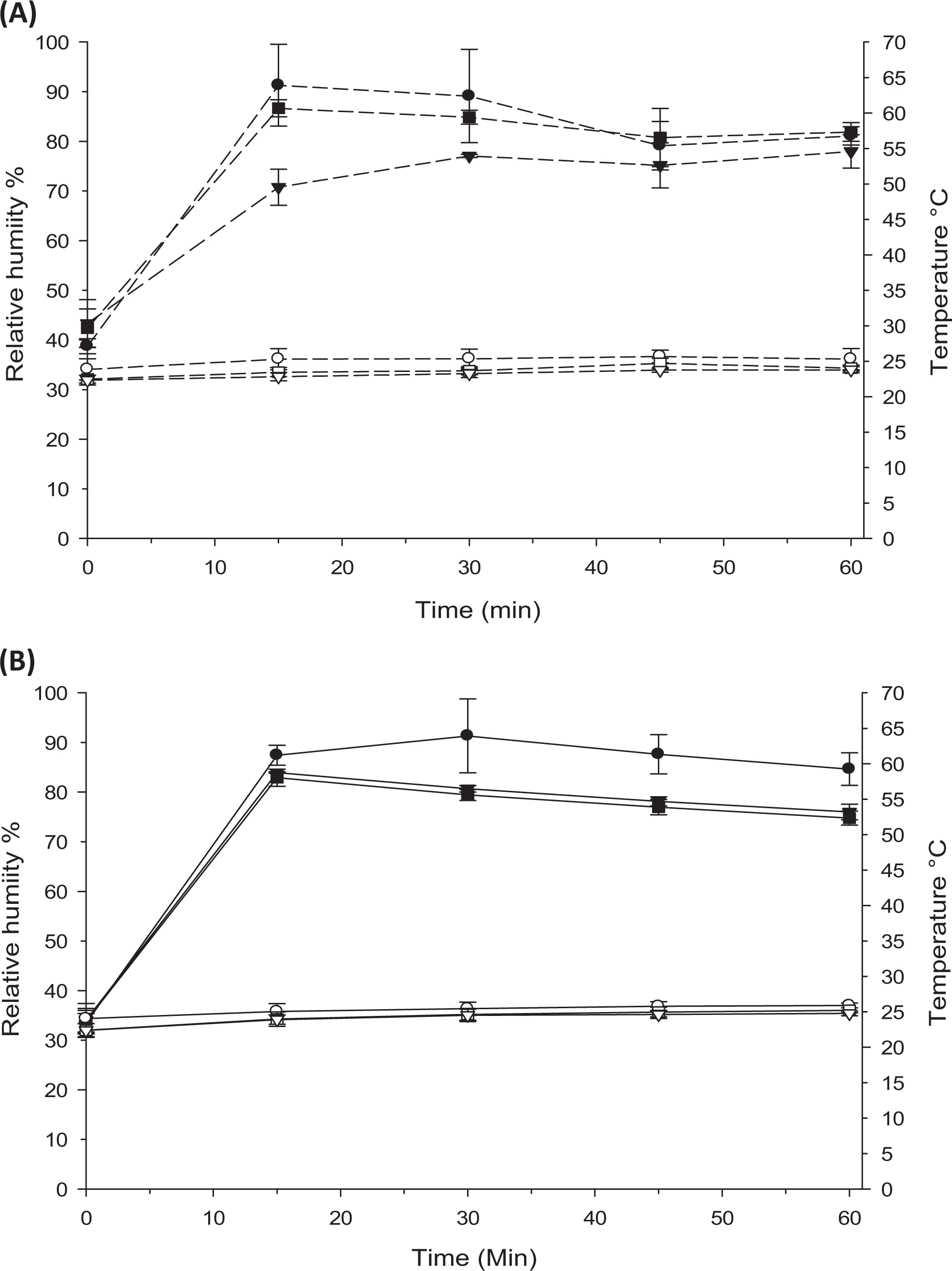
Relative humidity (RH) and temperature profiles (n = 3), over a 1-hour fumigation period (A) in static air (dashed lines, fan OFF) and (B) in fan mixed air (solid lines, fan ON), at varying heights in 0.59 m3 cabinet chamber. Black filled symbols represent RH at: (•) high level, (▪) middle level, and (▴) floor level, whereas white symbols represent temperature at: (^) high level, (□) middle level, and (▵) floor level.
Discussion
The standard method for formaldehyde fumigation of biosafety cabinets in the UK recommends that 60 ml of formalin and 60 ml of water are vaporized and held for 6 hours to ensure an effective disinfection (BS EN 12469:2000). In this study, we have shown that vaporizing formalin amounts as low as 4.2 ml/m3 (with equal volume of water) can produce a >6 log reduction of bacterial spores within 60 minutes and quicker if a mixing fan is used. When comparing the cycles in the 2 test cabinets, using the largest volume of fumigant (15 ml/15 ml), >6 log reductions are achieved more quickly in the smaller cabinet (Figure 2), reflecting the higher ratio of fumigant to cabinet volume and therefore deposition onto surfaces. However, when looking at comparable volumes of fumigant, adjusted for cabinet size, the results (Figure 4) show good correlation. This would indicate that that there is a degree of scalability in the process and that fumigant volumes can be calculated by means of the cabinet volume. It was noticeable that with the lowest volume of fumigant, the time taken to achieve the >6 log reductions in both cabinets (Figure 2 and 3) was increased and only confirmed after the 6-hour point. But this is the minimum recommended exposure period, and often cabinet fumigations are carried out overnight, thus giving a longer exposure period.
Pottage et al 18 have shown that the effectiveness of fumigation cycles can be affected by the agent and its presentation, that is to say, presence of protective layers such as bloods or salts. For this reason, fumigation should be seen as the final step within a process of decontamination, and a degree of caution should also be applied to the results achieved using standard BIs.19 –22 As such, while the very smallest volumes of fumigant achieved >6 log reductions within 6 hours, using a more aggressive cycle that can achieve the same reductions in 2 hours should give a degree of additional assurance. This approach would still allow for significant reductions in the volumes of fumigant used.
Previous studies8,23 –25 have demonstrated the effective use of low formaldehyde concentrations in larger chambers, than the cabinets used in this study, namely, whole room fumigation. The concentrations used in the reviewed studies range from 0.6 to 2.5 mg per liter (mg L–1) of the exposure chamber (1 mg L–1 is equivalent to 2.5 ml/m3 of 40% formalin), and these were shown to be effective against bacterial spores. In contrast, using the BS EN 12469:2000 recommended (60 ml/m3 or 24 mg L–1), the theoretical formaldehyde concentration generated in Cabinets A and B would be 10.2 mg L–1 (25.4 ml/m3 [15 ml formalin]) and 6.9 mg L–1 (17.2 ml/m3 [15 ml formalin]), respectively. So taking into consideration of the low levels previously shown been to be effective for room fumigations,8,24,25 the recommended levels in the cabinet standard are 3 to 5 times higher.
Results in this study show that >6 log reductions were achieved within 6 hours (Figures 2 and 3) using a quarter of PHE’s minimum recommended concentration as indicated in Table 1 (4.2 ml/m3, ∼1.7 mg L–1), which equates to 7% of the BS EN 12469:2000, 60 ml/m3 (24 mg L–1) recommendation. This demonstrates that effective fumigation can be achieved within a Class III biosafety cabinet using reduced volumes of formalin. Results in Figure 4 also show that the efficacy achieved with reduced amount of formaldehyde for fumigation is translatable to different sized chambers. Therefore, an evidence-based approach can be used to validate the formaldehyde fumigation process of a cabinet to reduce the required amount of formaldehyde needed, therefore reducing potential exposure to the workers within the laboratory.
Current practice of formaldehyde fumigation in the UK generates vapor from formalin, which in combination with the boiling of additional water creates a vapor that condenses on the surfaces of the chamber being fumigated. This study demonstrates that this approach can be used with decreased formalin volumes, but an increase in surface area within a cabinet could lead to the necessity to increase the volume of formalin to ensure all surfaces are contacted and the fumigation is effective. When working within any class of biosafety cabinet, it is advisable to limit the amount of equipment and material left in place prior to fumigation. This, among other reasons, limits the amount of things that require decontamination at the end of a procedure, with samples bagged and removed from the cabinet prior to fumigation. Following this rule, there will only be a small increase in the surface area within the cabinet during fumigation in comparison to an empty cabinet. While this study does not investigate the decontamination of a Class III biosafety cabinet after normal use, it identifies that a reduction in the recommended volumes of formalin will still provide an appropriate final step in the decontamination and make safe procedure of the cabinet.
The use of a boiling pot within a small cabinet will lead to a significant degree of mixing during the initial phase of the fumigation due to convection currents. However, once the fumigation pot has turned off, the level of mixing would be significantly reduced. Once the heating element had cooled, there would be static conditions. Due to the low volume of fumigant being used for this work, the fumigation pot will have only been operated for a short period of time, and it is noticeable that under the unmixed condition, the RH level stays below 80% at the floor position throughout the test (Figure 6A), corresponding to the slowest kill rate within the chamber. Conversely at the high level, where consistently higher RH was achieved, the inactivation rate was found to be the highest. This is consistent with literature findings showing that effective log 6 reductions were achieved with high RH levels between 60% and 90%.3,5,11,25,26 The introduction of a mixing fan gave more constant RH levels throughout the cabinet (Figure 6B), peaking above the 80% RH level during the initial phases of the cycle. The log reductions achieved are more constant, and the trailing effect seen at the floor level is removed (Figure 5B). As such, this suggests that the efficacies achieved with each varying formalin concentration in Figure 2 could be improved with the introduction of a mixing fan. But the minimum hold time for formaldehyde fumigation is recommended to be 6 hours, and as Figures 2 and 3 indicate, >6 log reductions were achieved well within this period. It is plausible the enhanced sporicidal efficacy with increasing RH is due to the fact that formaldehyde readily condenses on surfaces at RH levels >63%. 27 The high sporicidal efficacy achieved at the high level in correlation to consistent >80% RH levels (Figure 5A) is strongly linked to the increased condensate build-up on surfaces at this level, thus increased microbial surface contact and moisture conditions responsible for enhanced spore swelling and penetration of fumigant. 28 Conversely, excess build-up of condensation at such high RH levels is known to cause formaldehyde repolymerization on surfaces, leaving behind a paraformaldehyde residue.11,19,27 Therefore, surfaces must be adequately wiped down with water or a neutralization process with ammonia carbonate (or bicarbonate) employed to prevent potential human exposure to leaching formaldehyde gas. The temperature levels recorded throughout the fumigations show little difference between the floor and midlevel positions but are constantly higher at the highest level. This was the case for both the mixed and unmixed conditions.
The importance of RH within the formaldehyde fumigation is well recorded, but guidance is not clear. Current UK guidance 16 states that the optimum level of RH is greater than 35% but less than 80%. The Biosafety in Microbiological and Medical Laboratories (BMBL) states that RH should be controlled to an operational level of 80%. 29 The RH levels achieved within these tests reflect those recommended by the BMBL, and the most effective log reductions were achieved at RH above 80%.
All tests in this study were carried out within empty biosafety cabinets, so presence of equipment such as centrifuge or small incubators will increase the surface area, thus increasing the area that formaldehyde needs to condense on to be effective. Further studies may be needed to validate the lowest effective amounts of formalin/water seen in this study within a cabinet containing additional equipment. Nonetheless, this study provides evidence that effective Class III and/or Class I biosafety cabinet fumigation can be carried out with less formaldehyde generated over a shorter period of time, thus reducing the potential of operator exposure and environmental release of a toxic chemical. This reduction of formalin should also be based on an assessment of the cabinet’s volume and surface area. Furthermore, the introduction of a mixing fan into the cabinet can be used to further reduce the time required for decontamination. Therefore, a review of current recommended formalin levels within the BS EN 12469:2000 cabinet standards would further contribute to a positive approach in mitigating the hazardous risks associated with formaldehyde use for decontamination.
Footnotes
Declaration of Conflicting Interests
The author(s) declared no potential conflicts of interest with respect to the research, authorship, and/or publication of this article.
Funding
The author(s) disclosed receipt of the following financial support for the research, authorship, and/or publication of this article: This work was supported by PHE Grant-In-Aid funding. The views expressed in this manuscript are those of the authors, not those of PHE or other funding source. © Crown Copyright. Public Health England, 2017.