




Abstract
The increasing demand for adaptive apparel solutions tailored to the needs of the aging population and individuals with disabilities is a key driver in the advancement of intelligent and electronic textiles (e-textiles). These sophisticated materials integrate sensing, actuation, information processing, and artificial intelligence to create dynamically adaptive apparel that caters to individual human needs. Unlike simple, passive adaptive apparel, e-textiles enable real-time physiological monitoring, facilitate adaptive thermoregulation, enhance mobility, and support communication. This review provides a comprehensive and systematic analysis of emerging technologies in intelligent and e-textile designs, presented through a functional approach to adaptive apparel. Illustrative applications include apparel-based textile sensors for real-time electrocardiogram (ECG) monitoring, actuated textiles for movement and mobility assistance, and smart textiles capables of translating sign language into spoken language. Furthermore, the review identifies emerging machine learning applications that can be integrated directly onto wearable devices to predict future fall events and deliver personalized health feedback. The paper also addresses critical challenges in the manufacturing design of e-textiles, such as ensuring comfort, washability, durability, data privacy, cost-effectiveness, and a strong focus on user-centered design, to ensure they can withstand the rigors of daily use. Besides, this review underscores the importance of multidisciplinary research that synergistically combines textiles, electronics, and human-centered design principles to develop ethical and environmentally responsible products. Finally, this review aims to guide the creation of inclusive wearable technologies that empower vulnerable populations, alleviate caregiver burdens, promote social integration, and ultimately contribute to equitable solutions for aging and disability.
Keywords
Introduction
The global population is aging dramatically. The United Nations projects a significant increase in older adults: by 2030, 1 in 6 people will be aged 60 or over, rising from 1 billion in 2020 to 1.4 billion. This trend will accelerate, with the 60+ population doubling to 2.1 billion by 2050 and the number of individuals aged 80 and above tripling to 426 million in the same period. Consequently, the proportion of the world’s population over 60 is expected to nearly double from 12% in 2015 to 22% by 2050 A.D. 1 These groups face unique challenges- declining physical capabilities, chronic health conditions, and social exclusion- that demand innovative solutions to preserve autonomy and dignity. Traditional adaptive clothing, though beneficial for basic needs like ease of dressing, lacks the dynamic responsiveness required to address evolving physiological and environmental demands.2–5 Intelligent e-textiles-fabrics integrated with sensors, actuators, and decision-making algorithms-represent a paradigm shift in adaptive clothing. Unlike conventional e-textiles, which passively monitor or display data, intelligent systems actively respond to user needs.6–10 For example, temperature-regulating garments adjust insulation based on real-time biometric feedback, while AI-driven compression sleeves assist mobility-impaired users during rehabilitation.11–13 These technologies bridge gaps in healthcare accessibility, social participation, and safety, yet their potential remains underexplored in aging and disability contexts.14,15 Current literature predominantly focuses on technical advancements in smart textiles.16–22 (e.g., material innovation, energy harvesting) or generic wearable applications (e.g., fitness tracking).23–25 Few studies address the specific needs of aging and disabled populations,13,26,27 such as:
This review paper fills this gap by critically analyzing intelligent e-textiles tailored for aging and disability support. This review defines ‘intelligence’ in wearable technology as the seamless integration of real-time sensing, adaptive responsiveness, and user-centric design crucial distinction from traditional, static wearables. Synthesizing innovations across seven application domains, from fall prevention to social communication, we evaluate their practicality, inclusivity, and ethical implications. Therefore, this literature review explores the diverse applications of smart textiles and wearable technologies in adaptive clothing, highlighting their impact on empowering individuals with innovative, personalized solutions.
Review methodology
Summary of selected papers for review.

This careful selection process not only consolidates existing knowledge but also identifies gaps in literature and highlights the potential innovations and practical applications in the field of disability that the aging population supports. Figure 1 illustrates the general structural methodology and the different steps to carry out systematically such a comprehensive review paper. Review methodology employed in the comprehensive analysis of intelligent and e-textiles for adaptive apparel.
Terminology and definitions
To ensure conceptual clarity, this review adopts the following definitions for technical terms central to adaptive clothing and assistive technologies: (1) Smart Textiles: Fabrics embedded with passive or active functionalities (e.g., sensing, actuation) that respond to environmental or physiological stimuli. Examples include temperature-regulating phase-change materials (PCMs) and moisture-wicking fabrics.
48
(2) Wearable Electronics: Non-textile devices (e.g., smartwatches, fitness trackers) worn on the body to monitor health or enhance functionality. Differentiated from e-textiles by their rigid form factor.
49
(3) E-Textiles (Electronic Textiles): Textiles are integrated with electronic components (e.g., circuits, sensors) to enable advanced functionalities like biometric monitoring or wireless communication. Examples: ECG shirts, sign-language gloves.50,51 (4) Adaptive Clothing: Garments designed with user-centric modifications (e.g., magnetic closures, adjustable seams) to address physical, sensory, or cognitive challenges faced by aging or disabled individuals.
38
(5) Assistive Devices: Non-clothing tools (e.g., smart canes, exoskeletons) that complement adaptive clothing to enhance mobility, communication, or independence.
39
(6) Intelligent E-Textiles: A subset of e-textiles incorporating AI-driven adaptability (e.g., machine learning for fall prediction) to dynamically respond to user needs.6–8
Interrelationships: • E-textiles are a subset of smart textiles, distinguished by embedded electronics.
9
• Adaptive clothing may incorporate intelligent e-textiles for enhanced functionality (e.g., self-adjusting compression sleeves).10,11 • Assistive devices often synergize with wearable electronics (e.g., GPS-enabled smart canes paired with e-textile belts).12,14
Smart textiles and wearable electronics application in adaptive apparel
Smart textiles are developed by embedding wearable technologies into fiber, yarn, fabric, or clothing. They can integrate components like sensors, actuators, communication modules, and data processing units directly into the textile structure, enabling them to sense, react, and adapt to stimuli or user needs. 37 The textile and flexible electronics fields enable the seamless integration of electronic components into clothing. For example, more natural and comfortable smart clothing than other wearable devices can cover a larger area for extensive monitoring. Various biosignals, including those from heartbeat and muscle contractions, can be derived from biological events.38,39 Wearable electronics are designed to be seamlessly integrated into clothing, accessories, or worn directly on the body (e.g., on the skin). These devices often include sensors, processors, and communication interfaces for monitoring, data collection, or providing feedback to the user, distinct from traditional portable electronics.
Human biosignals are categorized into bioelectrical, biomagnetic, biochemical, biomechanical, bioacoustic, bio-optical, and bio-thermal types, as illustrated in Figure 2. Bio-signals differ based on how and where they are generated. They include electrical (e.g., ECG, EEG, EMG), magnetic (e.g., MEG, MCG), biochemical (e.g., glucose, lactate), biomechanical (e.g., BP), acoustic (e.g., PCG), optical (e.g., OPG), and thermal signals. The integration of smart textiles and wearable electronics into adaptive clothing represents a transformative advancement in addressing the unique needs of aging individuals and those with disabilities. Innovative materials and systems enable functionalities beyond conventional clothing, providing critical support in health monitoring, mobility assistance, fall detection, and overall comfort and safety.41,42 Wearable electronics further enhance these textiles by embedding sensors, actuators, and communication modules that improve connectivity and user interaction to increase independence and quality of life and foster inclusivity and dignity for underrepresented groups.43,44 Types of biosignals in the human body. Adapted from
40
© 2022 by the authors. Licensed under CC BY 4.0.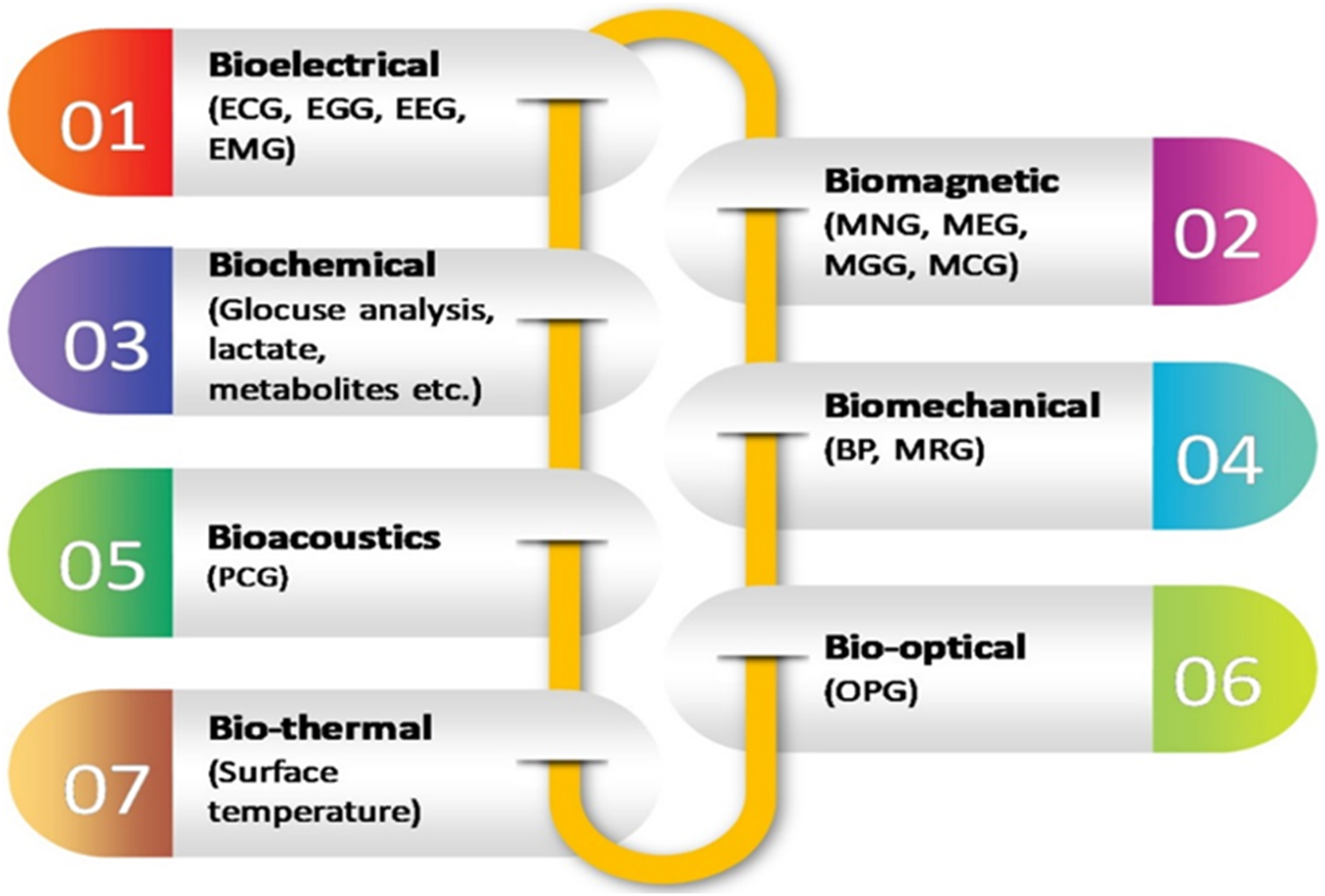
Monitoring health and real-time health status
Smart textiles and wearable electronics have brought about a revolution in adaptive clothing, particularly in the context of health monitoring and real-time tracking of health status. Here, “real-time health status” means the continuous and immediate monitoring of a person’s physiological parameters using smart textiles and wearable electronics. This enables the timely capture of vital signs (e.g., heart activity via fabric sensors) for early detection of health changes and proactive healthcare management.40,45–47 By utilizing smart clothing for physiological monitoring, it becomes possible to identify health concerns early on, shifting the focus from traditional treatment methods to a preventative approach.37,48 Smart textiles and wearable electronics have revolutionized adaptive clothing, particularly in health monitoring and real-time health status tracking.40,49 These technologies offer continuous, non-invasive monitoring of vital physiological parameters, providing valuable insights into an individual’s health condition.50,51 One of the primary applications is in electrocardiogram (ECG) monitoring.49–53 Smart garments are equipped with flexible fabric sensors that can detect the electrical activity of the human heart, offering a comfortable alternative to traditional external electrodes. For instance, a smart garment was developed to detect the electrical activity of the human heart for ECG monitoring, bringing a textile-based alternative to traditional external electrodes.
50
This allows continuous cardiac monitoring without compromising the wearer’s comfort or mobility. Innovative clothing systems also enable the monitoring of various other health parameters, including muscle activity, stress levels, heart rate variations, and even heart failure risk prediction.
54
“Kymira,” an innovative textile company, has created a prototype t-shirt that monitors cardiac activity to identify potential heart attack risks.
55
This garment uses Bluetooth technology to send heart rhythm data to a smartphone, enabling the detection of irregular rhythms that may lead to sudden cardiac arrest. Despite these advancements, the product is unavailable to consumers, and pricing information has not been disclosed. Furthermore, “HealthWatch”
56
introduced a shirt equipped with 15-lead ECG sensors, enabling medical professionals to monitor cardiac conditions remotely. These ECG shirts from HealthWatch enable remote cardiac monitoring for elderly patients with arrhythmias, reducing hospitalization needs. The garment, made of synthetic or cotton, incorporates specially designed electrocardiogram sensors woven into its fabric. These sensors capture vital signs and transmit the data to a monitoring device via Bluetooth. According to the manufacturer, the product can be cleaned in a home washing machine; however, it is essential to note that the item is currently in a demonstration phase, and no independent evaluations are available in the marketplace. Another research study uses washable silver-printed textile electrodes for extended ECG monitoring,
57
as shown in Figure 3. These electrodes reportedly had a surface resistance of 1.64 Ω/sq and maintained signal quality comparable to standard Ag/AgCl electrodes, even after ten wash cycles. In a related study, textile-based electrodes for ECG measurements were used to examine how electrode size and textile pressure affected signal quality.
58
Additionally, research has been conducted to explore how textile substrates with integrated chemical sensors can be employed to study metabolic disorders. Washable silver-printed textile electrodes for extended ECG monitoring. Adapted from.
59
© 2020 by the authors. Licensed under CC BY 4.0.
Blood pressure measurement has been achieved through various wearable devices and sensors integrated into textiles. These include cuffs and other wearable devices that can continuously monitor blood pressure.60,61 Integrating pressure sensors into fabrics allows for noninvasive and constant blood pressure monitoring, which is particularly beneficial for patients with cardiovascular diseases. Figure 4 illustrates a representative healthcare-oriented smart t-shirt with various sensing capabilities, including monitoring body temperature, blood pressure, and activity levels.
55
This prototype incorporates a blood pressure sensor directly into the fabric. A three-axis accelerometer enables ongoing analysis and recording of cardiac, pulmonary, activity, and sleep data over specified periods. The manufacturers assert that this garment is suitable for machine washing, allows for breathability, and is not heavy. However, it is important to note that specific removable components must be detached before laundering. Healthcare e-textile system prototype design for blood pressure monitoring. Reprinted from.
55
© 2022 by the authors. Licensed under CC BY 4.0.
Monitoring blood glucose through smart textiles has become an ongoing research area. While continuous glucose monitoring (CGM) systems are widely used, there is a growing interest in developing non-invasive alternatives using wearable technologies.
62
However, this literature review suggests that more research is needed to validate the efficacy of smart textiles in blood glucose monitoring. Further, innovative e-textiles show great potential for monitoring vital signs to provide comfortable and continuous health-tracking solutions. For example, the quality of one’s sleep is intricately linked to physical and mental well-being. Researchers led by Samy et al.
63
developed a bed sheet with an integrated pressure-sensing array, as shown in Figure 5(a). This innovation allowed for the identification of a patient’s sleep stages. Through complex calculations utilizing data from both breathing patterns and leg movements, which were extracted from pressure mapping results, an accuracy rate exceeding 70% was achieved (Figure 5(b)). Moreover, this system offers unparalleled non-invasiveness and comfort compared to conventional sleep monitoring techniques. An individual’s gait patterns can reveal information about their age, injuries, and various locomotive and neurological conditions. Many research studies have also been conducted to develop scalable gait analysis methods. One approach involves the creation of customized smart insoles, as illustrated in Figure 5(c),64,65 which gathers gait information through embedded pressure-sensing arrays. This data is then processed and wirelessly transmitted to external display systems. The insole wearer’s gait patterns can be determined by comparing the collected data with stored reference information. Further research has explored the broader applications of wearable technology in health monitoring. For instance, Ishak
66
conducted a study that developed an intelligent cushion. By analyzing dorsal muscle pressure patterns, this cushion could identify 11 distinct sitting positions with a high accuracy of 98.1%. This technology aims to promote proper posture and discourage slouching. Smart textiles are applied to human beings. (a) An innovative bed sheet for pressure mapping during sleep. (b) An innovative insole integrated with a pressure sensor array for gait analysis, (c) a smart glove with strain sensors, interconnections, resistors, controllers, and a wireless communication system, (d) application of the smart glove for interpreting sign languages, (e) photograph of a textile wristband with a PEDOT: PSS electrode, and (f) the recorded ECG patterns during resting (left) and exercise (right) of the tester. Reproduced from.
67
© 2019 Wiley.
An overview of the current progress in smart clothing in monitoring health and real-time health status.

Smart textiles have the potential to revolutionize the field of adaptive clothing by offering unprecedented levels of comfort and temperature regulation. By integrating advanced sensors and actuators into the fabric, these garments can intelligently respond to changes in the wearer’s environment and physiological state. 80 For instance, temperature sensors can detect fluctuations in body temperature and trigger the release of cooling or heating elements within the fabric. This dynamic thermal regulation ensures optimal comfort, whether the wearer is engaged in strenuous physical activity or simply relaxing indoors. Additionally, smart textiles can adapt to changes in humidity levels, preventing excessive sweating and discomfort. By providing personalized climate control, these innovative garments enhance the overall well-being of individuals with diverse needs. 81 Smart textiles and wearable electronics are poised to transform how individuals with disabilities communicate and connect with the world. By incorporating advanced communication technologies into adaptive clothing, these garments can empower wearers to express themselves and interact with others more effectively. For example, smart gloves equipped with sensors and actuators can translate hand gestures into spoken language, enabling individuals with speech impairments to communicate their thoughts and feelings. 82 Furthermore, built-in communication devices and sensors can facilitate seamless connectivity with caregivers, emergency services, and smart home systems. These features can enhance safety, independence, and quality of life for individuals with disabilities. E-textiles with conductive fibers enable reliable data transmission and interaction with smart devices.
Figure 6(a) shows a novel wireless network architecture utilizing metamaterial textiles to connect implantable medical devices. Comparative analysis of traditional wireless communication methods: radiative, relay-based, and metamaterial-enabled (Figure 6(b)–(d)). Simulated magnetic field distribution and transmission coefficient, highlighting the significant enhancement provided by metamaterial textiles for deep-tissue implants (Figure 6(e)–(f)). Figure 6(g)–(h) shows an experimental demonstration of a metamaterial textile network and full-wave simulations validating the substantial improvement in wireless implant-to-implant communication within a computational human body model. Comprehensive analysis of transmission coefficient as a function of textile length and implantation depth, revealing the versatility and effectiveness of metamaterial textiles in various implant scenarios (Figure 6(i)). Besides, seamless communication and connection of smart textiles have the potential to foster social inclusion. It helps to break down barriers and empower individuals with disabilities. For example, smart textiles can be designed to display messages, emotions, or alerts, allowing nonverbal communication.
84
Additionally, they can integrate haptic feedback systems, providing tactile sensations that enhance social interaction. To facilitate wireless communication, smart textiles can utilize various technologies, including wireless communication, which enable data transmission between devices using radio waves, Bluetooth, or Near-Field Communication (NFC). By transmitting data wirelessly, smart textiles can connect to smartphones, computers, and other devices, enabling remote monitoring, control, and personalization.85–87 Near-Field Communication (NFC): NFC allows for short-range communication between devices. This technology can be used to share information, trigger actions, or unlock devices, providing a convenient and secure way to interact with smart textiles. Figure 7 illustrates a remote health and fitness monitoring system leveraging wearable sensors. E-textile technology captures real-time body data during personalized rehabilitation and various physical activities. This data is then wirelessly transmitted via Bluetooth to smartphones, home systems, and healthcare facilities for comprehensive analysis.
88
Metamaterial-enhanced wireless implantable networks. (a) Schematic of a wireless network using metamaterial textiles to interconnect implantable medical devices. (b–d) Comparison of wireless communication methods: radiative, relay-based, and metamaterial-enhanced. (e and f) Simulated magnetic field distribution and transmission coefficient for a deep-tissue implant with and without a metamaterial textile. (g and h) Experimental setup and simulation results demonstrate enhanced wireless transmission using a metamaterial textile network. (i) Transmission coefficient as a function of textile length and implantation depth. Adapted from
83
© 2022 Springer Nature. Licensed under CC BY 4.0. Schematic overview of how e-textiles can be integrated into different industries. Reprinted from.
88
© 2022, with permission from Elsevier.

Display technologies are also essential for enhancing the functionality and aesthetics of smart textiles. Among the most promising display technologies for smart textiles are electrophoretic displays (EPD), organic light-emitting diodes (OLEDs), and light-emitting diodes (LEDs). 89 E-ink displays are known for low power consumption and high readability in various lighting conditions. They can display information, notifications, or personalized messages on smart textiles.90,91 OLEDs offer vibrant colors, high contrast, and wide viewing angles. They can be integrated into smart textiles to create dynamic and visually appealing displays. LEDs are energy-efficient and durable, making them suitable for various display applications. They can create simple displays, indicators, or ambient lighting effects in smart textiles.
Assisting and enhancing the mobility of individuals
Smart textiles and wearable electronics have significant potential in adaptive clothing, mainly assisting and enhancing mobility for individuals with disabilities. These technologies offer innovative solutions to improve accessibility, comfort, and functionality in apparel. E-textiles and smart clothing can incorporate assistive technologies directly into garments, addressing the physical and social barriers faced by individuals with mobility disabilities.
92
Smart textiles can provide personalized support and monitoring for users with mobility challenges93,94 by integrating sensors, actuators, and communication devices into fabrics. For instance, smart textiles can be designed to sense body movements, adapt to environmental conditions, and even communicate with other devices to enhance mobility assistance. One interesting application is the development of programmable smart textiles that enable multimodal motions and shape-shifting abilities. These textiles, constructed using knitting, weaving, or adhesion techniques with fluid-powered artificial muscle fibers (AMF), can undergo diverse shape transformations, including elongation (up to 65%), area expansion (108%), radial expansion (25%), and bending.
95
Such capabilities could be particularly beneficial for adaptive clothing, allowing garments to adjust their shape and fit according to the user’s needs and movements. Moreover, unidirectional weaving sheets can be engineered to produce various types of movement, as shown in Figure 8A. By restricting one surface (either upper or lower) with sewing thread, the sheet’s elongation can be converted into a bending motion. When pressurized, the sheet curves toward the constrained side.
95
Capabilities of unidirectional weaving sheets. (A) Shape programmability by sewing thread to produce shape-shifting structures. (B) Compression sleeve for a finger. (C) Another weaving sheet and its implementation as a forearm compression sleeve. (D) Another compression sleeve prototype made of an AMF type M, acrylic yarns, and a Velcro strap. Adapted from.
95
© 2022 Springer Nature. Licensed under CC BY 4.0.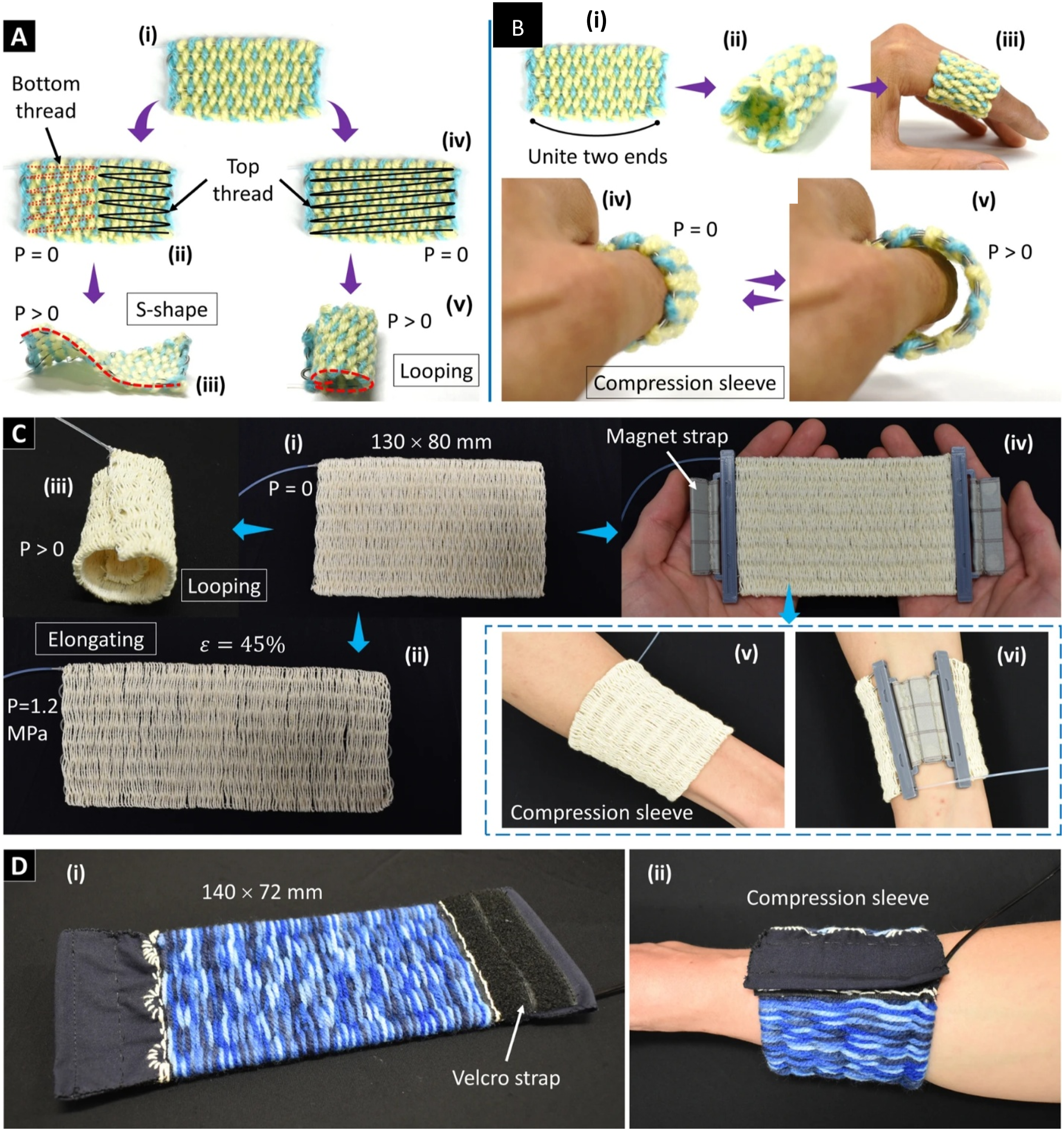
Figure 8A highlights two examples where the weaving sheet forms an s-shape by constraining half of the top surface and half of the bottom surface, and alternatively, restricting the entire surface results in a looping motion. The unidirectional weaving sheet can also function as a compression sleeve by joining its ends to create a cylindrical structure, as indicated in Figure 8B. This sleeve can envelop a human index finger and apply compression force, used in massage therapy to alleviate pain or enhance blood flow. It can be adapted to fit other body parts such as arms, thighs, and legs. Figure 8C showcases another version of the unidirectional weaving sheets constructed from a single AMF and cotton yarns. This sheet can achieve 45% area expansion (at 1.2 MPa) or produce a looping motion when pressurized. This sheet was utilized to develop a compression sleeve for the forearm by attaching a magnetic strap to its ends. An additional compression sleeve prototype for the forearm is displayed in Figure 8D, where the unidirectional weaving sheet was fabricated using AMF type M and acrylic yarns to generate a more powerful compression force. Research in the smart textile field has focused on various applications, ranging from wearable health monitoring systems to adaptive clothing designs. Using a comparable method, Phan et al.
95
employed a single artificial muscle fiber (AMF) to transform a piece of ordinary, passive fabric into an active structure with four legs (Figure 9A). It further exploited the simplicity and adaptability of this fabric reconfiguration technique by creating two additional bio-inspired shape-changing structures (Figure 9B–D). These structures were converted from passive fabric sheets into active, controllable ones through the strategic placement of AMFs. Inspired by the Monarch butterfly, Phan and others created a morphing butterfly structure using butterfly-shaped cotton muslin fabric with a long AMF attached beneath its wings. When the AMF is pressurized, the wings curve upward. Mimicking the Monarch butterfly, both wings of the robotic butterfly flap in unison, controlled by a single AMF. Unlike Smart Bird (Festo Corp., USA), this flapping demonstration was not intended for flight. They also developed a fabric flower (Figure 9D) featuring two layers of petals, with five petals per layer. A single AMF was attached under each layer, following the outer edges of the petals. Initially, the flower was fully open, with all petals extended. Upon pressurization, the AMF induced the petals to bend, causing them to close. Separate AMFs independently controlled the two layers, while the five petals within each layer curved simultaneously. Fabric reconfiguration to produce shape-morphing structures. (A) Sticking an AMF to the passive fabric sheet’s boundaries turns it into a controllable four-legged structure. (B–D) Another two examples of fabric reconfiguration that turn the passive fabric butterfly and flower into active ones. Non-stretchable fabric: plain-woven cotton muslin. Adapted from.
95
© 2022 Springer Nature. Licensed under CC BY 4.0.
Another interesting application is the development of smart materials with integrated actuators that can change shape or provide support as needed.94,96 For example, smart textiles could be used to create adaptive clothing that adjusts to accommodate body position or movement changes, making it easier for individuals with mobility impairments to dress and undress independently. Smart textiles are also being explored for their potential to create intelligent personal protective equipment (PPE) for individuals with mobility challenges. 97 Smart PPE systems combine wearable computing and smart textiles to gather sensor information and automatically generate context information to protect the wearer’s health status. This could be particularly beneficial for individuals with mobility impairments who may be at higher risk in specific environments. Researchers are also investigating the use of smart textiles in developing assistive technologies that can be directly incorporated into clothing. 98 The Wearable Bits project, for instance, aims to create a co-design toolkit for wearable e-textiles, allowing users to be more involved in the design process of smart clothing that meets their specific mobility needs. 99 In the field of footwear, smart textiles are being used to develop intelligent shoes that can provide enhanced support and monitoring for individuals with mobility impairments.100–102 These smart shoes can incorporate sensors to track gait patterns, pressure distribution, and other mobility factors. Additionally, integrating optical fibers into textile structures has opened new possibilities for smart textiles in mobility assistance. 103 Optical fibers can be used for sensing and communication within the fabric, potentially allowing for more sophisticated monitoring and control systems in mobility-assistive clothing. In general, the applications of smart textiles for assisting mobility are diverse and promising. From health monitoring and adaptive clothing to intelligent PPE and assistive technologies, smart textiles are paving the way for innovative solutions to improve the quality of life for individuals with mobility challenges. We expect to see more sophisticated and user-friendly smart textile applications as research advances. However, despite the increasing use of innovation in wearable technology, smart textiles integrated into assistive devices face several challenges, including power supply, durability, and comfort. These issues are critical for such technologies’ widespread adoption and effectiveness in healthcare and daily life applications. Power supply remains a significant challenge in smart textiles for assistive devices. Traditional batteries are often bulky and uncomfortable, limiting the wearability of these textiles. Researchers are exploring various energy harvesting techniques to address this issue. For instance, biomechanical energy conversion methods such as piezoelectric nanogenerators (PENGs), triboelectric nanogenerators (TENGs), and magnetoelastic generators (MEGs) are being investigated to harness energy from body movements. 24 Additionally, thermoelectric generators (TEGs) for body heat energy conversion and biofuel cells (BFCs) for biochemical energy conversion are promising avenues for self-powered biomonitoring textiles. 24 These technologies aim to provide sustainable, environmentally friendly, and pervasive energy solutions for distributed on-body electronics in the Internet of Things era. 104 Durability is another crucial challenge, as smart textiles must withstand regular wear, washing, and maintenance while retaining their functionality. Integrating electronic components and sensors into fabrics poses significant technical challenges regarding resilience to routine maintenance. 105 Researchers are developing more robust materials and integration techniques to ensure the longevity of smart textiles in assistive devices. This includes exploring new methods of embedding electronics into textile structures and developing protective coatings to shield sensitive components from environmental factors and wear.106,107 Comfort is paramount for assistive devices, often worn for extended periods. Smart textiles must maintain traditional textiles’ inherent comfort and flexibility while incorporating advanced functionalities. This requires careful consideration of material selection, textile structure, and the placement of electronic components. Researchers are focusing on developing lightweight, breathable, and flexible smart textiles that can seamlessly integrate into everyday clothing without compromising user comfort.96,107 Unfortunately, power supply, durability, and comfort challenges are interconnected. For example, efforts to improve durability through protective coatings may impact the comfort and flexibility of the textile. Similarly, pursuing more efficient power sources must balance the need for lightweight and comfortable designs. This interconnectedness highlights the complexity of developing smart textiles for assistive devices and the need for interdisciplinary approaches. 108 As the field progresses, it is expected to see more advanced solutions that balance these competing demands, ultimately leading to more effective and user-friendly smart textile-based assistive devices.109,110
Comfort and temperature regulation in adaptive apparel
Smart textiles are revolutionizing how we experience clothing, offering innovative solutions for comfort and temperature regulation. These intelligent textiles can dynamically adapt to the wearer’s needs and environmental conditions by integrating advanced sensors and actuators into fabrics. One of the most promising applications of smart textiles lies in developing adaptive clothing. These garments are designed to regulate body temperature, keeping the wearer warm in cold conditions and cool in hot environments.111–113 Smart textiles can adjust thermal properties by monitoring the wearer’s core and ambient body temperatures. For instance, they can release stored heat when it’s cold or dissipate excess heat when it’s hot. In addition to temperature regulation, smart textiles can also enhance comfort by managing moisture. Moisture-wicking and quick-drying materials, often incorporated into athletic wear, efficiently transport sweat away from the skin, keeping the wearer dry and comfortable. These fabrics can also help reduce skin irritation and infection risk, particularly in high-intensity activities. 114 Integrating advanced materials and technologies into smart textiles opens exciting possibilities for creating personalized and adaptive clothing solutions. As the field continues to evolve, it is expected to see even more innovative and comfortable garments catering to individuals’ needs. 115
Several prototypes have been developed exploring thermoregulation. When exposed to increased temperature, a wearer’s skin produces sweat, raising the humidity level on the inner surface of the textile. For example, Figure 10(a) and (b) demonstrate how the inner surface of the Nafion flaps absorbs this moisture, causing them to expand. Figure 10(c) illustrates how the increased humidity triggers a separation between the hydrophobic and hydrophilic components within the Nafion structure. Nafion readily exchanges hydrogen ions with water molecules, forming numerous channels that facilitate rapid swelling and equilibrium. The outer surface, exposed to a less humid environment, swells less than the inner surface. This differential expansion leads to an upward bending of the flaps, opening the pores. The extent of bending is directly related to the humidity difference across the film, with a maximum limit determined by the material’s absorption and expansion capabilities. Figure 10(d) and (e) demonstrate the response of the Nafion flaps in dry and humid conditions (32°C, 90% RH), respectively. The samples were kept at a constant high humidity (approximately 90% RH) for 5 h, maintaining the open state of the flaps. Comfort, a subjective experience influenced by various factors, is paramount in clothing design. Temperature regulation plays a significant role in achieving optimal comfort. The human body has intricated mechanisms to maintain its core temperature within a narrow range. When exposed to heat, the body responds by sweating to dissipate excess heat. Conversely, the body conserves heat in cold environments through shivering and vasoconstriction.
116
Recent studies and current products show that smart clothing and fabrics could help with aging. However, these items must be comfortable for the wearer, made more comfortable to wear, easy to use, and acceptable for older adults to be helpful. Data privacy is also of significant concern, as data breaches could impact their privacy and freedom. Despite these challenges, there are many promises that smart textiles will be used to care for the aging in the future.
42
(a) Schematic of a Nafion sheet with openable flaps inspired by human skin’s thermo-adaptive properties. (b) Reversible swelling, bending, release, and recovery behavior of a single Nafion flap. (c) Water transport mechanism within Nafion. Nafion sheet with (d) closed flaps (left) and (e) open flaps (correct) in response to humidity and temperature changes, where this dynamic behavior enables rapid, reversible, and power-free adaptation to the wearer’s comfort. Adapted from.
116
© 2017 Springer Nature. Licensed under CC BY 4.0.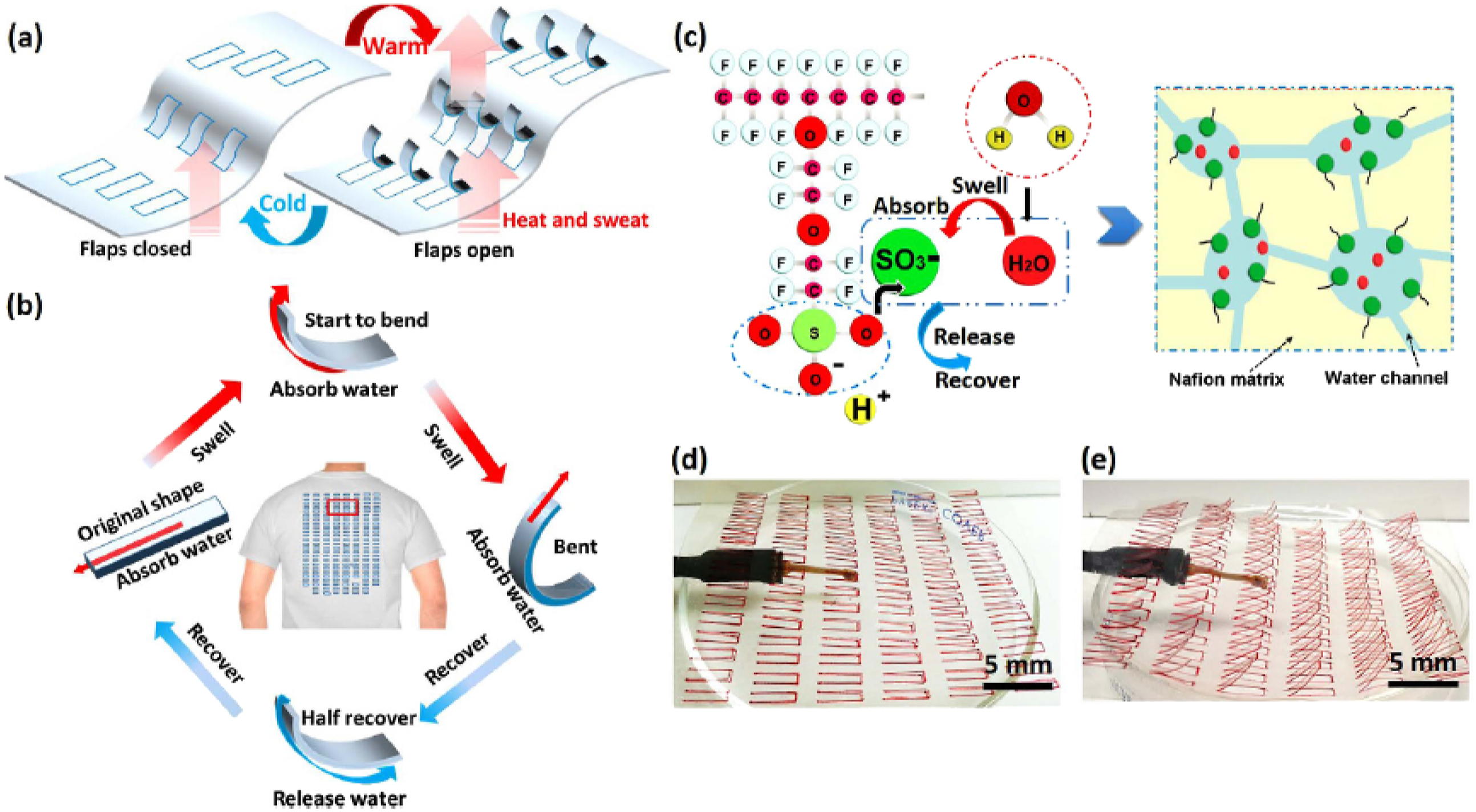
Adaptive technologies
Clothing is crucial in assisting or hindering the body’s thermoregulation efforts. Traditional clothing often struggles to adapt to fluctuating environmental conditions and individual needs. On the other hand, adaptive clothing is designed to adjust its properties to optimize comfort dynamically. By incorporating innovative materials, sensors, and actuators, adaptive clothing can actively respond to changes in temperature and humidity. 117 One of the key strategies employed in adaptive clothing is using phase-change materials (PCMs). These materials can absorb and release heat, effectively buffering temperature fluctuations. By integrating PCMs into fabrics, adaptive clothing can provide thermal comfort in both hot and cold environments. Additionally, smart textiles can incorporate temperature sensors and actuators to regulate heat transfer and ventilation, allowing the garment to adapt to the wearer’s specific needs. 118 While Phase Change Materials (PCMs) offer reversible passive heating and cooling, their integration into textiles presents challenges. Organic PCMs exhibit low thermal conductivity, hindering their ability to transfer heat effectively. This limitation results in slow heating and cooling rates, compromising the PCM’s responsiveness to environmental fluctuations. 119 Furthermore, these materials are prone to supercooling during solidification. This phenomenon lowers the crystallization temperature of PCMs, leading to latent heat release at a reduced temperature. Consequently, PCMs exhibit a wider operational temperature range. As a result, PCMs necessitate a more significant temperature differential between heating and cooling cycles. 120 Furthermore, adaptive clothing can utilize advanced textile technologies to enhance moisture management. By incorporating moisture-wicking and breathable fabrics, these garments can efficiently transport sweat away from the skin, keeping the wearer dry and comfortable. Additionally, some adaptive clothing can regulate humidity levels by adjusting ventilation or releasing stored moisture.121,122 In general, comfort and temperature regulation are essential considerations in the design of adaptive clothing. 123 By understanding the body’s thermoregulation mechanisms and leveraging advanced textile technologies, designers can create garments that provide optimal comfort in diverse environmental conditions. Thanks to smart textiles and wearable technology used in adaptive clothing, it leverages advanced technologies to enhance comfort and regulate body temperature. By integrating innovative materials and intelligent systems, these garments can dynamically respond to changing environmental conditions and individual needs. 124 One key technology driving adaptive clothing is PCMs. PCMs can absorb and release heat during phase transitions, such as melting and solidification. When integrated into fabrics, PCMs can effectively regulate body temperature by absorbing excess heat during periods of high activity and releasing it when the body cools down. While PCMs like paraffin wax offer thermal buffering, they have limitations: low thermal conductivity (delayed heat transfer), leakage risks, added weight/bulk, and environmental concerns. This section contrasts PCMs with alternatives (e.g., conductive heating, moisture-wicking fabrics) and discusses trade-offs in energy efficiency, comfort, user safety, and sustainability. Future directions include hybrid systems and AI-driven designs to improve thermal responsiveness and mitigate PCM drawbacks
The fundamental principles of incorporating phase change materials (PCM) into textiles are presented in Figure 11(a). Figure 11(b) outlines three methods for integrating PCM into textile products. This thermal buffering effect helps maintain a comfortable microclimate around the wearer. Another promising approach involves the use of innovative fabrics. Conductive materials, such as carbon nanotubes and silver nanowires, can be incorporated into fabrics to create functional textiles that can sense temperature changes. By monitoring the wearer’s body temperature and environmental conditions, these smart fabrics can trigger adaptive responses, such as activating heating or cooling elements, to maintain optimal comfort. Ventilation systems are another important aspect of adaptive clothing. Built-in ventilation channels and porous fabrics can improve airflow and enhance breathability. These systems can be designed to respond to changes in activity level and environmental conditions, ensuring that the wearer remains comfortable, even during intense physical exertion. By combining these technologies, adaptive clothing can provide many benefits, including improved thermal comfort, enhanced performance, and reduced fatigue. As research and development advances, it is possible to create even more sophisticated and innovative adaptive clothing solutions. a) Basics of incorporating PCM in textiles (b) schematic illustration regarding how to incorporate PCM in textiles. Adapted from.
124
Copyright © 2023 by American Chemical Society.
Thermal and moisture management
Comfort is a paramount concern in wearable technology, particularly in adaptive clothing. A comfortable garment can significantly enhance the user experience and encourage long-term adoption. Several key metrics, including thermal, moisture management, and tactile comfort, contribute to overall comfort. The thermal comfort metric assesses the balance between heat production by the body and heat loss to the environment. Factors like ambient temperature, humidity, air velocity, and clothing insulation influence thermal comfort. Smart textiles can regulate temperature by adjusting insulation levels, activating cooling or heating mechanisms, and optimizing ventilation. Moisture management comfort refers to how well clothing or materials can handle sweat and other moisture. It includes features that help wick away sweat from your skin, keep you dry, and promote ventilation. This is important for comfort, especially during physical activities or warm weather, as it helps prevent that sticky, uncomfortable feeling when sweating. Essentially, it’s about staying dry and comfortable.
125
Imagine you are wearing a breathable shirt while jogging on a warm day. The shirt wicks away sweat from your skin, allowing it to evaporate quickly, keeping you dry and comfortable instead of feeling sticky and clammy. Natural systems have evolved efficient strategies for moisture transport and collection. These systems inspire the development of directional moisture-wicking fabrics.
126
This moisture transport and collection mechanism is observed in various natural systems, including the wings of desert beetles and butterflies, cactus spines, spider silk, and the leaves of rice plants and Strelitzia reginae, as illustrated in Figure 12(a)–(f).127–131 This phenomenon, characterized by an abrupt, directional change in wettability, has been observed in various natural systems, including desert beetles, cacti, and spider silk. It is known as Janus wettability and has been applied to textiles using hydrophobic and hydrophilic fibers. Janus textiles with asymmetric wettability (e.g., hydrophobic/hydrophilic layers) enable one-way moisture transport, critical for sportswear. A moisture vapor transmission rate (MVTR) of >5000 g/m2/24 h ensures breathability, reducing skin irritation.
132
In the study by He and colleagues, a coiled yarn structure was fabricated using polyethylene terephthalate (PET) fibers. These fibers were immersed in a solution containing ferric chloride (FeCl3) to introduce a conductive coating. Subsequently, the FeCl3-coated fibers were exposed to pyrrole vapor, initiating the chemical polymerization of pyrrole to form polypyrrole (Ppy) on the fiber surface. A schematic representation of this process is provided in Figure 12(a).
134
Previous research within fiber-based temperature sensing has explored the integration of noble metals, such as platinum (Pt)
135
and gold (Au),
126
into polyimide (PI) substrates. These structures, often referred to as ‘electronic fibers’ or ‘e-fibers’,136,137 are typically fabricated using microfabrication techniques (Figure 12(b)). Notably, these sensors have been successfully incorporated into textile fabrics through conventional weaving processes, as illustrated in Figure 12(c). Bioinspired moisture management systems: (a) The beetle’s overswings exhibit a textured surface with peaks and troughs. (b) High-magnification imaging reveals a hierarchical structure of flattened hemispheres arranged in a hexagonal pattern, like superhydrophobic surfaces.
131
(c) Water droplets on butterfly wings demonstrate directional adhesion, rolling outward along the radial-outward (RO) direction. (d) The wing surface features fine lamellar stripes stacked stepwise along the RO direction.
130
(e) The cactus spine comprises three distinct regions: a barbed tip, a grooved middle section, and a base with hair-like trichomes.
133
(f) Fog droplets are captured on the barbs, transported along the grooves, and absorbed by the trichomes.127–131
Trung and colleagues developed a method to produce graphene oxide (GO) gel fibers. They employed a wet-spinning technique, where liquid crystal GO, synthesized in deionized water, was extruded into an acetic acid bath. To explore their potential in textiles, these fibers were integrated into wearable structures (Figure 12(d)) to monitor both body and environmental temperatures. The research demonstrated that these temperature-sensing fibers maintained their sensing accuracy even when subjected to strain during wear. This resilience was attributed to the inherent flexibility of the reduced graphene oxide (rGO) fibers, characterized by a porous structure with voids between stacked rGO layers. This unique architecture allowed the sensors to accommodate external strain with minimal changes in their electrical resistance. 138 Utilizing single-walled carbon nanotube (SWCNT) films, Shang et al. developed a process for creating yarns through a relatively simple twisting technique, as depicted schematically in Figure 12(e). 139 Using a specialized winding apparatus, an alternative method involved encasing a PET yarn with silk fibers. The composite was then treated with a coating of ionic liquid ([EMIM] Tf2N) and CNT gel, followed by a layer of PDMS as illustrated in Figure 12(f). 134
Tactile comfort
How the fabric hand feels against the skin plays a crucial role in comfort for the wearer (Figure 13). Tactile comfort arises from the sensory experience of skin interacting directly with a fabric. This sensation is primarily influenced by the fabric’s surface properties and the skin’s sensitivity to touch.
143
Soft, smooth, and breathable materials promote tactile comfort. Smart textiles can adapt their surface properties to optimize tactile sensations, such as adjusting texture or providing gentle vibrations. Moving comfort is also essential because restricting movement can lead to discomfort and fatigue. Adaptive clothing can enhance body movement comfort by adjusting fit and providing support as needed. For instance, smart fabrics can stretch or contract to accommodate different body positions or activities. Figure 14 shows that tactile comfort fabric has a mix of different textures. It combines some roughness, softness, and how it feels when you touch it. Fiber-based temperature sensor structures and fabrication methods. Reproduced from,
126
©2020 Wiley. (a) Coating process for fiber-based sensors and their integration into woven fabrics. Reproduced from,
140
© 2016 Wiley. (b and c) Microfabricated electronic fiber sensor structures and their integration into textiles via commercial weaving. Reproduced with permission,
141
©2010 Wiley. (d) Thermal drawing process for fiber sensor fabrication. Reproduced with permission,
138
©2006 Wiley. (e) Twisting process for yarn sensor fabrication and yarn structure. Reproduced with permission,
139
© 2013, American Chemical Society. (f) Wrapped yarn structure for temperature and pressure sensing yarn structures. Reproduced with permission
142
©2019 Wiley. Factors affecting tactile comfort. Adapted from
144
© 2023 Wiley. CC BY 4.0.

Other comfort metrics can determine the comfort properties of adaptive smart textiles. Smart textiles have different ways to keep you comfortable. One crucial aspect is breathability, which helps prevent sweat from getting trapped and keeps you feeling cool. These fabrics can manage airflow and moisture, creating a pleasant temperature around your skin. Additionally, some smart textiles are treated to resist germs and odors, making them particularly good for things like workout clothes.
Prevention and fall detection of people with disabilities and aging
Smart textiles and wearable electronics have shown significant potential in fall detection and prevention for people with disabilities. These technologies offer innovative solutions for monitoring and enhancing the safety of vulnerable individuals. One of the primary applications is the development of fall detection systems using smart textiles. A novel approach utilizes smart textiles and machine learning techniques to detect falls and determine their orientation.
145
This system achieves high accuracy (98%), sensitivity (97.5%), and specificity (98.5%) in fall detection while also classifying falls into 11 different categories, including various fall orientations and daily activities. This level of detail can be crucial for understanding the impact of falls and providing appropriate interventions. Another application focuses on remote monitoring of elderly individuals in indoor environments using the Internet of Things (IoT) and mobile-based applications.
146
This innovative framework employs real-time monitoring through open-source cameras and wearable devices, utilizing pose recognition and object detection methods. Such systems can be particularly beneficial for older adults living alone or in residential nursing homes, allowing caregivers and clinicians to monitor their health status more effectively and maintain closer communication with family members. Smart textiles are also being developed to incorporate multifunctional sensors for human-machine interfaces.
147
These multimodal electronic textiles can bridge the gap between wearing comfort and traditional wearable electronic devices, facilitating natural human-machine interactions. This technology has potential applications in monitoring and assisting individuals with disabilities, providing them with more intuitive and comfortable ways to interact with their environment. A wearable smart vest is utilized for the distant observation of physical activity and respiratory metrics. This garment represents an advancement of the design introduced in smart textiles,
148
incorporating enhancements in exercise tracking and user-friendliness for elderly individuals. Like the fall detection system, the smart vest employs a distributed processing architecture of multiple elements (Figure 15(a)–(f)). In a study by Wang et al.
149
various technologies for elderly care, including smart clothing, were analyzed and categorized into three main groups: (1) real-time vital sign monitoring, (2) indoor positioning, and (3) activity recognition. The researchers suggested expanding smart garments’ typical data collection capabilities, which usually focus on vital sign monitoring and activity or motion tracking. They proposed incorporating a “positioning” function specifically for geriatric applications. This additional parameter was deemed valuable due to the heightened risk of illness and falls among older adults. The authors concluded that including positioning data would be a beneficial enhancement to existing innovative garment technologies for elderly care. Monitoring body posture and activity is crucial for effectively assessing geriatric patients. Lin et al.
150
investigated these aspects by developing a smart vest incorporating real-time posture tracking and emergency alert systems.
151
The researchers employed the technology acceptance model to evaluate the vest’s practicality and adoption among elderly participants. Their findings demonstrated exceptional applicability and favorable acceptance of the garment. Smart vest: (a) Components; (b) device connection; (c) smart vest interior detail; (d) push button power on detail; (e) detail of the indicator LED; (f) detail of the charging process. Adapted from.
152
© 2021 by the authors. Licensed under CC BY 4.0.
Flexible sensors are crucial in wearable smart textiles for people with disabilities. 153 These sensors can be used for physiological parameters, pressure, and motion detection. Their softness, bendability, and stretchability make them ideal for integration into clothing worn by individuals with mobility issues or other disabilities, allowing continuous monitoring without discomfort. Innovative fabrics and interactive textiles are being developed for personal health management, protection, safety, and healthcare applications.94,96 These technologies directly integrate sensors, actuators, energy sources, and communication capabilities into clothing, enabling health monitoring and emergency response applications. For people with disabilities, these advancements can provide continuous health monitoring and rapid response in emergencies, including falls. Smart textiles are not limited to fall detection but also encompass many functionalities. These include aesthetic appeal, comfort, soft textile displays, smart, controlled fabrics, color-changing designs, wound monitoring, and protection against extreme environmental conditions. 153 Such versatility makes smart textiles particularly suitable for addressing the diverse needs of people with disabilities. Smart textiles have shown promise in fall detection systems, but they face several challenges in ensuring accurate detection across various situations. First is sensor integration and reliability. Smart textiles for fall detection often incorporate accelerometers and other sensors to detect sudden movements and changes in orientation. 154 However, integrating these sensors seamlessly into textiles while maintaining their reliability and durability remains challenging. Ensuring consistent sensor performance under different wearing conditions and over extended periods is crucial for accurate fall detection. Second is fall detection systems, which minimize false alarms and missed detections. Song et al. 155 highlights the importance of combining multiple detection methods, such as Sum Vector Magnitude (SVM) and Activity Signal Magnitude Area (ASMA), to improve accuracy and reduce both false positives and negatives. However, balancing sensitivity and specificity across various fall scenarios remains difficult. The third challenge would be distinguishing falls from other activities. Innovative textile systems must accurately differentiate falls from daily activities like sitting, lying down, or rapid movements. Mezghani et al. 144 demonstrate a system that can classify falls among 11 activities with 98.5% accuracy. However, maintaining this level of accuracy in real-world scenarios with diverse user populations and environments is challenging. The fourth challenge is falling orientation detection. Identifying the orientation of a fall is crucial for understanding its impact and providing appropriate assistance. Mezghani et al. 153 presented a novel approach using non-linear support vector machines to determine fall orientation. However, ensuring accurate orientation detection across different body types and clothing styles remains challenging. The fifth is the cross-contract interactions. While not directly related to smart textiles, Xue et al. 155 highlighted the challenges of detecting vulnerabilities in systems involving multiple interacting components. This concept can be applied to innovative textile fall detection systems involving interactions between wearable sensors, ambient sensors, and data processing units. Ensuring accurate fall detection across these interconnected components presents a significant challenge. The last challenge is the standardization and performance metrics. As the field of smart textiles for fall detection evolves, there is a need for standardized testing protocols and performance metrics. Brew et al. 156 presented a study assessing the accuracy of a smartwatch-based fall detection algorithm, which could serve as a reference point for evaluating innovative textile systems. However, developing comprehensive standards that account for the unique characteristics of textile-based sensors remains a challenge. Based on the above argument, while smart textiles offer promising solutions for fall detection, addressing the above challenges is crucial for developing reliable and accurate systems. Future research should focus on improving sensor integration, refining detection algorithms to minimize false positives and negatives, and establishing standardized evaluation methods for innovative textile fall detection systems.
Rehabilitation and therapy
Smart textiles and wearable electronics have shown significant potential in rehabilitation and therapy applications, offering innovative patient monitoring, treatment, and recovery solutions. These technologies revolutionize healthcare by providing non-invasive, continuous, and real-time data collection and feedback. E-textiles equipped with sensors can gather, process, and digitize data on human body motion in real-time.
36
This capability is handy for assessing patient progress during rehabilitation exercises and providing feedback to patients and healthcare providers. For instance, smart garments can monitor muscle activity, joint angles, and movement patterns, allowing therapists to track recovery and adjust treatment plans accordingly-research by Mordon et al.
157
focused on developing and applying light-emitting fabrics for photodynamic treatments (PDT) in both in vivo and in vitro settings. Their study reported consistent light emission from light-emitting fabric (LEF) devices designed for dermatological applications. In the case of in vitro (CELL-LEF) uses, these devices illuminated 96-well culture plates. Electrotherapy is another area where smart textiles are making significant strides. Interactive textiles integrated with electronic devices can be used to improve blood circulation and promote wound healing.
36
These e-textiles can deliver controlled electrical stimulation to specific body areas, potentially accelerating healing and reducing pain in rehabilitation patients. Rymarczyk et al. introduced a system for monitoring lung ventilation and cardiac activity through a wearable garment.
158
The researchers employed various algorithms and image analysis techniques to observe changes during measurements. These models were applied to examine the heart, lungs, and skin. The primary objective was to improve the speed of tomographic data collection using reliable algorithms. In a separate study, Wang et al.
159
devised nanomesh organic electrochemical transistors for medical and fitness monitoring. PEDOT: PSS was deposited onto the mesh structure via spray coating. This fabrication method yielded active electronic components. These devices were designed to be active on-skin electrodes for capturing electrophysiological signals and are compatible with standard electrophysiology recording systems. The researchers demonstrated the capability to amplify local ECG signals simultaneously directly on human skin, achieving a significant signal-to-noise ratio of 25.89 dB. Smart and functional textiles are also being developed for active medical applications. Advancements in wearable electronics and material research have enabled the creation of medical textiles with higher levels of functionality.
160
For example, smart bandages and medical stockings can now incorporate sensors and actuators to monitor wound healing progress or provide compression therapy for circulatory disorders. Smart textiles offer a comfortable and discreet solution for long-term data collection in physiological parameter monitoring. These wearables can track vital signs such as heart rate, respiratory rate, and body temperature, providing valuable information for patients undergoing rehabilitation or those with chronic conditions.36,161 Smart textiles are also being explored for their potential in physical therapy and movement assistance. Actuators embedded in e-textiles can provide tactile feedback or even assist in movement, which could be particularly beneficial for patients with mobility impairments or those recovering from stroke.36,162 Furthermore, integrating smart textiles with communication devices and data processing units allows for remote monitoring and telemedicine applications.162,163 This capability is especially valuable for patients’ undergoing rehabilitation at home, as it enables healthcare providers to monitor progress and provide guidance remotely. Smart textiles have revolutionized communication for individuals with speech impairments. Innovative gloves have been created to translate sign language into speech (Figure 16(a)). This technology facilitates the conversion of American Sign Language gestures into audible words (Figure 16(b)) using a mobile interface (Figure 16(c)).
164
In another application, an advanced automated Joule heating system was engineered using Ti3C2Tx MXene textile, a 2D transition metal composed of carbides and nitrides. This textile operates at low voltages to provide thermotherapy, offering therapeutic benefits and antimicrobial properties for wound care (Figure 16(d))
165
. Intelligent wound dressings have been developed to deliver medications with precise dosages and timing (Figure 16(e)). One such design incorporates drug-releasing fibers woven into a central electrical heating element encased in a layer of temperature-responsive hydrogel. (a) An innovative glove as an assistive therapy for sign-to-speech translation and communication. PCB, printed circuit board. (b) Generated electrical signal patterns from American Sign Language hand gestures and their letter representations. (c) A mobile user interface for sign language translation. (d) A Ti3C2Tx MXene textile featuring self-controllable joule heating for thermotherapy and killing bacteria surrounding a wound. (e) A smart wound dressing textile for drug delivery with tailored dosage and medication time administration. (f) Compared to controls, there is a threefold increase in granulation tissue deposition in a wound bed with drug-releasing textiles. (g) A TENG textile based on the weaving of ionically conductive organized fibers can generate an electric field and accelerate wound healing. (h) Immunostaining images of CD34 expression in the wound region after 14 days in control and gel-textile TENG conditions. (i) An integrated textile system consisting of power supply, display, and information-input modules. Scale bar, 2 cm. Reproduced with permission from.
166
© 2022 Springer Nature.
This hydrogel contains antibiotics and vascular endothelial growth factors. Studies have shown that this technology enhances healing rates for diabetic wounds (Figure 16(f)), potentially opening new avenues for diabetes treatment through innovative textile solutions. 167 Smart textiles capable of electrical stimulation, such as self-powered textile TENGs and e-sleeves, offer comfort and personalized, continuous electrotherapy. This therapeutic approach using TENG smart textiles has effectively accelerated wound healing (Figure 16(g) and (h)). Therefore, from adaptive clothing and health monitoring to sensor integration and self-cleaning fabrics, these technologies have the potential to revolutionize the field of rehabilitation. 168 Researchers have also created smart textiles capable of capturing energy from the surrounding environment to provide continuous power to therapeutic devices. In this context, a textile system was engineered incorporating smart-textile-powered supply components, display units, and information-input modules. 169 The system utilized photovoltaic smart textiles for energy collection and zinc-ion battery fibers for energy storage (Figure 16(i)), though the energy conversion efficiency remained limited. However, data security, accuracy, and widespread adoption must be addressed for smart textiles to reach their full potential in this domain. 110 In conclusion, smart textiles and wearable electronics transform rehabilitation and therapy practices by offering personalized, data-driven, and continuous care solutions. 170 As research in this field advances, it is expected that even more innovative applications will be seen in the future that enhance patient outcomes and improve the efficiency of rehabilitation processes. This indicated that smart textiles offer numerous possibilities for improving clothing and equipment used in physical rehabilitation and therapy for people with disabilities.
Enhanced safety
GPS and location tracking
Smart textiles and wearable technologies are emerging as promising solutions to assist disabled and aging individuals in their daily activities, particularly in GPS and location tracking. Several research efforts have explored this domain, offering innovative approaches to enhance the quality of life for these populations. The Assist Ease smart wheelchair, as described in another study, 172 incorporates GPS technology and other advanced features to improve mobility and daily task management for people with disabilities. This solution achieves about 90% accuracy in health monitoring and location tracking, providing a comprehensive approach to assistive technology. Similarly, the smart walking glove has been proposed 171 to combine GPS technology with a microcontroller to help visually impaired individuals navigate their environment more confidently and allow their loved ones to keep track of their location. Remarkably, while GPS technology is commonly used for location tracking, Li et al. 172 presents a contrasting perspective. It demonstrates that even when GPS is disabled, an attacker can track a person’s location using a smartphone’s magnetometer sensor. This raises important considerations about privacy and security in developing smart textiles and wearable technologies for vulnerable populations. Generally, integrating GPS and location-tracking technologies in smart textiles and assistive devices shows great promise in enhancing the independence and safety of disabled and aging individuals. However, as these technologies evolve, addressing potential privacy concerns and ensuring that the benefits outweigh any risks are crucial. Future research should focus on improving these systems’ accuracy, reliability, and security while maintaining user-friendliness and affordability. 173
The emergency response
Smart textiles have emerged as a promising solution to enhance the quality of life for disabled and aging individuals, particularly in emergency response situations. Research in this field has focused on developing innovative technologies that can be integrated into everyday clothing to aid and support. One of the primary applications of smart textiles for emergency response is fall detection and prevention. The MATUROLIFE project, for instance, has explored the development of ‘smart’ footwear with embedded assistive technology to support well-being and independence in older adults. 174 This research involved interviews and co-creation activities with older adults from eight European countries, resulting in priorities and concept ideas for footwear that could enable independent aging. Innovative clothing systems have also been designed to address older users’ physical and cognitive limitations. This multi-purpose, protective clothing layering system can promote independence, well-being, and participation in healthy exercise for active aging individuals.175,176 Such systems can incorporate sensors to monitor vital signs and detect sudden changes in health status, triggering alerts in emergencies. Integrating ubiquitous computing and the Internet of Things into everyday objects has opened new possibilities for smart textile interaction surfaces. A study involving 90 people of various ages found a solid willingness to use smart textiles as input devices in home environments, with age not being a decisive factor in evaluating their usefulness. 177 This suggests that smart textiles could be widely accepted across different age groups for emergency response applications. Smart textiles can be crucial in managing health emergencies, mainly falls, for frail older people aging alone. Research has shown that mobile phones are often used to seek help in such situations, with family members and neighbors being the first to respond. 178 Smart textiles could enhance this process by automatically detecting falls and alerting caregivers or emergency services. Ambient Assisted Living (AAL) systems have been developed to support older adults in their homes. These systems integrate ambient monitoring, behavior recognition, and feedback mechanisms to support wellness self-management, home security, and energy management. 179 Smart textiles could be incorporated into such systems to provide continuous monitoring and immediate emergency response. Older adults’ acceptance of smart home healthcare systems is an important consideration. A conceptual model based on the Technology Acceptance Model (TAM) has been proposed to test both technological and human factors influencing older people’s behavioral intention in accepting smart home healthcare technology. 180 This research can inform the design and implementation of innovative textile solutions for emergency response, ensuring they meet the needs and preferences of older users. In conclusion, smart textiles offer significant potential for improving the day-to-day activities and emergency response capabilities of disabled and aging individuals. These technologies can provide crucial support and enhance independence, from fall detection in footwear to comprehensive AAL systems. However, it is essential to consider user acceptance and preferences when designing and implementing these solutions to ensure their effectiveness and adoption.
Technologies behind smart textiles and wearable electronics
This section delves into the fundamental technologies that enable smart textiles and wearable electronics to function. It explores the key components and materials that allow these systems to sense, respond, and interact with the user and their environment. These technologies are crucial for the development of adaptive clothing and assistive devices, providing the necessary infrastructure for their advanced functionalities.
Fiber materials and fabric constructions
Smart textiles leverage advanced fiber materials and innovative fabric constructions to achieve their functional goals while ensuring wearability and comfort. Conductive fibers, such as silver-coated nylon, are widely used in health monitoring applications due to their excellent electrical conductivity (e.g., surface resistance of 1.64 Ω/sq) and durability through multiple wash cycles. For instance, ECG monitoring garments like the HealthWatch shirt incorporate silver-coated nylon fibers knitted in a 1 × 1 rib structure to maintain consistent skin contact and reliable signal acquisition. Carbon-based fibers, including those integrated with carbon nanotubes (CNTs) or graphene, are employed in strain-sensing applications, such as smart insoles for gait analysis (Figure 5(b)), where flexibility and sensitivity are paramount. Shape-memory alloys (SMAs), such as nickel-titanium (NiTi) fibers, are utilized in compression sleeves (Figure 6B) to provide dynamic support, adapting to body movements for enhanced mobility assistance. Phase-change materials (PCMs), such as microencapsulated paraffin wax embedded within polyester fibers (Figure 9(a)), play a critical role in thermal regulation, offering passive heating or cooling to maintain comfort for elderly users. Fabric construction techniques significantly influence the performance of smart textiles. Knitted structures are favored for their inherent stretchability, making them ideal for motion-tracking garments like smart gloves (Figure 5(c)). Laminated textiles combine multiple functional layers, such as moisture-wicking surfaces with thermoregulative membranes (e.g., Nafion sheets in Figure 8), to address complex user needs. Advanced 3D woven architectures enable the integration of fluid-powered artificial muscles (AMFs), allowing garments to morph shapes in response to external stimuli, as seen in shape-shifting prototypes (Figure 7A). However, these design choices involve trade-offs. While silver-coated fibers provide high conductivity, they may compromise fabric flexibility, impacting wearer comfort. Conversely, carbon nanotube-based textiles offer a balance between mechanical robustness and pliability. Breathability is another critical factor; knitted fabrics typically exhibit higher moisture vapor transmission rates (MVTR >5000 g/m2/24 h) compared to their woven counterparts, making them suitable for applications requiring prolonged wear, such as sportswear or rehabilitation garments. By carefully selecting materials and construction methods, researchers can optimize smart textiles for specific applications, balancing functionality, durability, and user comfort.
Sensors and actuators
Sensors and actuators are the core components that provide smart textiles and wearable electronics with the ability to perceive and react sensors and actuators. Sensors gather information from the environment or the user, while actuators enable the system to respond through movement or other actions.
Sensors
Sensors are the fundamental building blocks of smart textiles, enabling them to interact with their environment and gather valuable data. Seamlessly integrated into the fabric, these devices can detect and measure a wide range of physical quantities, including temperature, pressure, humidity, strain, and bio-signals. 181 Smart textiles, a fascinating intersection of textile engineering and electronics, have emerged as a revolutionary technology that can transform various industries, from healthcare to sports and fashion. At the heart of these intelligent fabrics lie a diverse array of sensors capable of detecting and measuring various physical and biological parameters. 182 These sensors, seamlessly integrated into the fabric, empower smart textiles to interact with their environment and provide valuable insights into the wearer’s health, performance, and surroundings. In the following sections, we will discuss the intricacies of different types of sensors used in smart textiles, exploring their functionalities, applications, and underlying technologies. Sensors form the intelligent backbone of smart textiles, enabling them to perceive and respond to their environment. These miniature devices, often seamlessly woven or printed into the fabric, act as the sensory organs of these intelligent garments. 183 They can detect and measure various physical and biological parameters, including temperature sensors, thermistors, thermocouples, pressure sensors, and piezoresistive sensors. 184
Sensor categories
Sensors in intelligent e-textiles are classified into three functional categories based on their application: mechanical sensors, which detect physical forces such as pressure, strain, or vibration (e.g., piezoresistive carbon nanotube-coated fibers for joint motion tracking in arthritis patients
64
and triboelectric pressure sensors in smart insoles for gait analysis
68
; biomedical sensors, which monitor physiological parameters like heart rate or glucose levels (e.g., silver-based ECG electrodes for cardiac monitoring
59
and non-invasive sweat sensors for glucose and lactate detection
185
; and environmental sensors, which measure external conditions such as temperature, humidity, or UV exposure (e.g., Janus textiles with asymmetric wettability for humidity management
131
and TiO2 nanoparticle-coated fabrics for UV radiation detection.
186
These categories collectively enable adaptive clothing to address diverse challenges faced by aging and disabled populations, from mobility assistance to health and environmental safety. Piezoresistive sensors rely on the change in electrical resistance of a material when subjected to mechanical stress. They are commonly used in wearable devices to detect pressure and acceleration. Due to their small size, these sensors can be woven directly into fabrics and gloves (Figure 17A). When the fabric is stretched, the sensor inside elongates, squeezing a hollow tube filled with liquid metal and increasing the sensor’s electrical resistance. Another example is a dual-core microfiber sensor with a stretchy microtube filled with liquid metal. This sensor can detect strain after being wholly cut (Figure 17B). These microfibers were sewn into a glove to capture hand gestures and monitor respiration rate by measuring changes in capacitance. Instead of using conductive fibers, some researchers coat regular fibers with conductive materials. For instance, a wearable silk fabric was created by charring regular silk fibers, resulting in a stretchy strain sensor. This sensor could withstand significant stretching and repeated use. Similar charring methods were used in other studies to create pressure sensors and other electronic textiles. A popular technique is dip coating, where a conductive layer is applied to the surface of a fabric. This method has been used to create various pressure-sensitive e-textiles.
186
Another type of textile-based strain sensor uses elastic fabric as a base with conductive yarn woven into the fabric in specific patterns. This sensor can detect the bending and rotation of human joints.
139
Beyond pressure and strain, textile sensors can also detect other environmental factors. For example, a breathable and machine-washable pressure sensor was developed using triboelectric nanogenerators (Figure 17C). This sensor uses two types of yarn that generate a voltage signal when they come into contact due to applied pressure. These yarns can be knitted into a pressure-sensing glove. Researchers have also created humidity sensors using flexible yarns coated with a dielectric layer (Figure 17D). As the yarns absorb moisture, the sensor’s capacitance increases. This moisture-sensing ability can manage sweat and body temperature (Figure 17E).
130
Another type of humidity sensor uses twisted silk yarns that contract in response to moisture changes.
187
E-textiles can even be designed with multiple sensing capabilities. For example, a silk composite sensor can measure temperature and pressure (Figure 17F). This sensor uses a layer of carbon nanotubes embedded in silk fibers to detect temperature changes and the space between two sensor fibers to measure pressure. Other researchers created a temperature-sensing e-textile by depositing a special type of graphene on a polypropylene fabric.
139
Beyond temperature and humidity, e-textiles can detect specific light wavelengths, such as UV radiation, to monitor environmental exposure. For example, textiles coated with WS2 quantum dots or titanium dioxide nanoparticles exhibit UV-responsive properties, enabling real-time detection of harmful UV levels (e.g., >10 mW/cm2 UVA/UVB) for skin cancer prevention.
81
These sensors, often integrated into hats or sleeves, alert users via LED indicators or smartphone notifications when UV exposure exceeds safe thresholds (Figure 17G). E-textile sensor categories and applications. (A) Mechanical sensing (stretchable piezoresistive sensors for motion tracking); (B) biomedical sensing (ECG electrodes for cardiac monitoring). Reproduced with permission,188,189 ©2018, American Chemical Society. (C) Environmental sensing (humidity-responsive yarns for moisture management). Reproduced with permission,
190
©2020 Elsevier. (D) Environmental sensing (Yarn-type humidity sensors),
187
© 2019 Wiley. (E) Smart Janus textiles for moisture/thermal management,
130
© 2019 Wiley. (F) Silk composite temperature sensors,
139
©2019 Wiley. (G) Wearable UV photodetectors,
186
©2020, American Chemical Society. (H) Biomedical sensing biosensing textiles for chloride ion and pH sensing,
185
© 2020 by the authors. Licensed under CC BY 4.0. (I) Integrated e-textile sensor patches for sweat analysis
191
Copyright © 2019 Licensed under CC BY 4.0. (J) Glove-based fentanyl detection sensors
192
; (K) Enzyme skin-cancer biomarker sensors,
193
© 2019 Elsevier, and (L) Colorimetric gas-sensing threads,
194
© 2019 Licensed under CC BY 4.0.
This sensor could be placed on the back of a finger to detect light. In addition to physical sensors, there is a growing field of chemical/bio/electrochemical sensors made from textiles. These sensors can detect biomarkers in sweat and other bodily fluids and external environmental chemicals. Since most e-textiles are worn close to the skin, they offer easy access to sweat. One example is a sweat sensor from conductive thread coated with a special dye to detect chloride ions and pH levels (Figure 17H). Another sweat sensor patch uses a specially treated silk fabric to detect six different health markers in sweat (Figure 17I). This patch can be integrated with electronics to transmit the data wirelessly. Another method for creating sweat sensors involves printing electrodes directly onto a glove to measure various sweat components. 194 These wearable sensors can also detect external chemicals for environmental, forensic, or military applications. For instance, a glove-based sensor has been developed to detect fentanyl, a dangerous drug (Figure 17J). This sensor can detect fentanyl in both liquid and powder forms. Similarly, textile-based sensors have been created to detect nerve agents, pollutants, and explosives. 193 Chemicals under the skin can also be detected using bandage-based sensors with tiny needles for skin cancer screening. Even textile-based sensors can detect enzymes associated with skin cancer (Figure 17K). Finally, wearable sensors can detect chemicals in gas form. One example is a color-changing fabric sensor that uses dyes to detect ammonia and hydrogen chloride gas (Figure 17L). 194
Actuators
Actuators convert electrical or chemical energy into mechanical energy, enabling smart textiles to respond to external stimuli or internal commands. Thermal actuators use heat to generate movement. They can adjust clothing temperature, provide targeted heat therapy, or activate shape-memory materials. 138 Shape Memory Alloys (SMA) materials can change shape in response to temperature changes. They can be integrated into smart textiles to create adaptive clothing that adjusts to the wearer’s needs.81,195 Thermoelectric materials can convert heat into electricity or vice versa. They can regulate temperature and generate power for wearable devices. 196 Electroactive Polymers (EAPs) can change shape or size in response to an electric field. They can be used to create soft, flexible actuators for various applications, such as wearable robotics and haptic feedback devices. Pneumatic actuators use compressed air to generate force and movement. They can inflate or deflate garments, providing support or cushioning. Microcontrollers and microprocessors serve as the brains of smart textiles, processing the data collected by sensors and controlling the various functionalities of the garment. These tiny computers, often powered by low-power microprocessors, enable complex operations such as wireless communication, data storage, and actuator control. As technology advances, it is expected that even smaller and more powerful microcontrollers will emerge, further enhancing the capabilities of smart textiles.
Conductive materials
Conductive fibers are integral to the functionality of adaptive clothing, enabling diverse applications through their unique material properties. Silver-coated yarns, such as silver-coated nylon or polyester, are widely utilized due to their high electrical conductivity (1–10 Ω/cm) and mechanical flexibility. These fibers are particularly effective in health-monitoring garments, such as ECG electrodes (e.g., the HealthWatch shirt, 197 where low skin-electrode impedance ensures reliable signal acquisition. Their durability is notable, retaining conductivity after more than 10 wash cycles, making them suitable for daily wear.198,199 However, challenges include higher costs and potential stiffness compared to non-metallic alternatives. Carbon nanotube (CNT) fibers offer lightweight, flexible, and mechanically robust solutions with high strain sensitivity (gauge factor >50). These properties make them ideal for strain-sensing applications, such as smart insoles for gait analysis in mobility-impaired users, 168 and for thermal regulation through Joule heating in adaptive textiles. 138 Their compatibility with standard weaving and knitting processes enhances practicality, though scalability remains a consideration. PEDOT: PSS-coated textiles, conductive polymers with inherent flexibility and biocompatibility (∼1 S/cm), are employed in thermoregulation and motion tracking. For instance, PEDOT:PSS wristbands provide stable ECG monitoring during physical activity, 199 while stretchable circuits printed onto spandex blends aid in rehabilitation therapies. A limitation is their sensitivity to humidity, necessitating protective coatings for long-term stability. Graphene-based fibers leverage high thermal and electrical conductivity for applications like temperature sensing and energy harvesting. Reduced graphene oxide (rGO) fibers, for example, monitor body and environmental temperatures with minimal drift, 137 while integration with triboelectric layers enables self-powered sensors in safety vests. 168 MXene-textile hybrids, known for ultrahigh conductivity (∼10,000 S/cm) and hydrophilicity, excel in emergency signaling and thermotherapy. MXene-coated fabrics facilitate self-powered wireless alerts for fall detection 137 and provide localized heat therapy for conditions like arthritis. Designing adaptive clothing involves balancing trade-offs between comfort and functionality. Silver-coated fibers, while highly conductive, may compromise breathability, whereas CNT and graphene fibers prioritize mechanical resilience. Scalability challenges persist for MXenes and graphene due to costs, whereas silver and PEDOT:PSS is more commercially viable. By aligning material properties with specific user needs- such as durability for rehabilitation or breathability for sportswear- researchers can optimize the performance and usability of smart textiles. 200 Conductive materials are the essential components that enable the flow of electrical signals within smart textiles. These materials, seamlessly integrated into the fabric, form the neural network that empowers smart garments to sense, process, and respond to their environment. Conductive fibers, often made from carbon, silver, or copper, are woven or knitted into the fabric, creating a network of electrically conductive pathways.201,202 These fibers can be as thin as human hair, ensuring flexibility and comfort while maintaining excellent electrical conductivity. Conductive inks, on the other hand, offer a versatile approach to creating conductive patterns on fabric. These inks, typically composed of silver nanoparticles or carbon nanotubes, can be printed onto fabric using various techniques, including screen printing and inkjet printing. This enables the precise placement of conductive elements, such as electrodes and circuits, on the fabric surface. Metallic yarns, composed of metal threads, provide another way to introduce conductivity into textiles. Yarns can be woven or knitted into the fabric, combining aesthetics and functionality. While metallic yarns may not be as flexible as conductive fibers or inks, they can provide robust electrical connections and durability. 203
Nanotechnology
Nanotechnology, manipulating matter at the nanoscale, is revolutionizing smart textile technology. 204 Nanotechnology enhances adaptive clothing by addressing hygiene, durability, and infection control critical for aging and disabled populations with compromised immunity or limited mobility. Recent advances include silver nanoparticle (AgNP)-embedded textiles, which exhibit broad-spectrum antimicrobial activity (>99% reduction in Staphylococcus aureus and E. coli within 1 h, reducing infection risks in wound-contact garments for diabetic patients. 206 ZnO-coated fabrics provide UV protection and self-cleaning properties via photocatalysis, degrading organic pollutants under sunlight, ideal for wheelchair users exposed to outdoor environments.205,206 For self-cleaning, TiO2-functionalized fibers leverage superhydrophobicity (contact angle >150°) to repel stains and bodily fluids, minimizing laundering needs for incontinence-prone elderly users. 207 Emerging innovations like graphene oxide (GO)-chitosan nanocomposites combine antimicrobial action with biodegradability, addressing sustainability concerns.208,209 These nanotech solutions are tailored to adaptive clothing’s unique demands, balancing functionality, comfort, and safety for vulnerable populations. Researchers and engineers can create innovative materials with remarkable functionalities by incorporating nanomaterials into fabrics. One of the key applications of nanotechnology in smart textiles is the development of self-cleaning and antimicrobial fabrics. 210 Silver nanoparticles, for instance, exhibit strong antimicrobial capabilities, effectively hindering the proliferation of bacteria and fungi. This property renders fabrics resistant to odor and infection. These nanoparticles can be integrated into the fabric fibers during production or applied as a coating to finished textiles. Additionally, nanotechnology can bolster the durability and functionality of smart textiles. By adding nanomaterials to the fabric, it is possible to improve its strength, flexibility, and resistance to wear and tear. For example, carbon nanotubes, which are exceptionally strong and lightweight, can be incorporated into fibers to create high-performance fabrics. In addition to enhancing physical properties, nanotechnology can also be used to improve the electrical conductivity of smart textiles. By incorporating conductive nanoparticles into the fabric, it is possible to create flexible and wearable electronics that can monitor vital signs, track physical activity, and deliver treatments for various applications. 211
Benefits, challenges, and future perspectives of E-textiles in adaptive apparel
Benefits of E-textiles in adaptive apparel
Smart and e-textiles are revolutionizing assistive technology, offering many benefits for individuals with disabilities, as summarized in Figure 18. Integrating electronics and sensors into clothing and equipment could enhance independence, facilitate communication, and improve overall well-being. Smart and e-textiles can be beneficial for people with disabilities.
For instance, smart textiles can monitor vital signs, detect falls, and adapt to individual needs, empowering users to live more independently and safely. Additionally, e-textiles can provide communication channels for those with limited verbal or motor skills, promoting social interaction and expression.
212
The integration of e-textiles into adaptive clothing is continuously creating new avenues in the lifestyle of disabled individuals. These novel textiles, embedding electronically operated components directly into the fabric, promise a multitude of benefits to meet physiological and functional needs that traditional clothing cannot even begin to address. However, the best of all is the independence they promise. For people who depend on some sort of help to perform simple tasks, clothing fitted with sensors or feedback objects can help them manage health and comfort on their own.
213
For example, garments that measure vital signs or bodily posture will alert users or caregivers to the emergence of health problems in real time, eliminating the need to monitor and supervise almost constantly.
214
E-textile is making independence but bringing safety to life as well. Adaptive clothes could sense unusual movement like falls or seizures and generate an alarm, which is an added advantage to people suffering from mobility restrictions or chronic illnesses.
215
It also assures users and families that there is a sense of security at home. As if that is not enough, personalized, tailored clothes and responsive solutions are offered through e-textiles. These may be in the form of heating elements, pressure sensors, or automatic adjustments based on your body movements. However, this personalization does not stop at increasing functionality but also ensures much better comfort, which is so essential in adaptive wear. Most of the time, the technology in these e-textiles is incorporated deeply into the fabric to allow such clothing to perfectly appear like regular clothing. Of course, that’s very important for the dignity of users, their self-esteem; that issue is whether a person is going to wear smart clothes that visibly look or feel “medical”. One brings confidence and social inclusion to such users. Finally, the interactive capabilities that e-textiles may provide-such as touch-responsiveness or voice-activated system types-make these technologies particularly useful for users with some kind of sensory or motor impairment. Those would allow greater internalization of the person into his or her garments for the broader world, thereby making such users more engaged and empowered. This new type of e-textile is expected to transform adaptive clothing from the perspective of acquiring functionality, comfort, and technology to be more supportive of people with disabilities in their daily lives. Figure 19 illustrates a potential future application of wearable e-textile sensing technology in eldercare. This innovative technology can accurately track movements, physical activity, and vital signs. Continuous monitoring of these parameters can help ensure the safety and well-being of the aging. A key goal for the future is to develop smart wearables that can precisely sense body positions and transmit real-time data to processing and extraction modules. This data would then be relayed to a central control unit and uploaded to a cloud-based platform for advanced analysis The E-textile system monitors elderly activity, tracking movements such as sitting, lying, climbing, walking, bending, and falling
88
. © 2022 Elsevier. Licensed under CC BY 4.0.
E-textiles also offer a promising approach to assist with healthy aging. Inertial sensors like accelerometers can be integrated into textiles to track activity, monitor physiotherapy exercises, and detect falls. Fabric electrodes, on the other hand, can be used to measure biosignals like ECG, EMG, and EEG, enabling heart rate monitoring, muscle activity tracking, and brain signal analysis, as illustrated in Figure 20. While significant progress has been made, further research is needed to improve the integration of sensors and electrodes into textiles, enhance signal quality, and develop user-friendly garments that seamlessly incorporate these technologies.
216
A recent study demonstrated that washable, reliable textile-based electrocardiogram (ECG) electrodes can be embedded in textile (bra) clothing made with PEDOT:PSS coated textile and conductive sewing threads as shown in Figure 20(a).
217
The system allows real-time electrocardiogram (ECG) monitoring with wireless communication directed to a smartphone and an online cloud service. The study showed that even after 50 standardized washing cycles of the textile-based electrodes the ECG’s signal quality and low skin-contact resistance remain useful for persistent use as an easy-to-use and stylish health monitoring system. Another study has developed a prototype of an easy-to-use electronic sleeve (e-sleeve) that incorporates screen-printed dry electrodes arranged in customizable arrays directly on everyday fabric as shown in Figure 20(b).
218
The design of the e-sleeves took place with input from users, ensuring comfort, function, and durability for muscle stimulation for functional tasks like hand opening in stroke rehabilitation. The device also withstood continued bending of the fabric, and could be washed or wiped, enhancing the potential for wearable healthcare applications. Figure 20(c) shows another research that brings an interesting development in the use of wearable electronics in functional textiles in an e-textile-based surface electromyography (sEMG) suit.
219
This system made use of stretchable conductive textiles as electrodes and interconnects in an athletic compression garment consisting of both garment and stretchable conductive textiles. This allowed for muscle signals to be captured during the movements of the body. The fabrication and assembly process is quick and easy using laser cutting and heat-press lamination, making it a fast prototyping option that can be done in a standard research environment without the need for specialized textile or garment manufacturing equipment. The materials have proven durable against wear and can hold up against strains similar to what is experienced in clothing, and are also washable by a washing machine. As the pilot provided sEMG signal quality similar to conventional adhesive electrodes, but with the advantage of being more comfortable, longer lasting, and reusable. The embedded electronics in the system included signal conditioning, amplification, digitization, and real-time processing to estimate the level-of-effort to weight- or buoyancy-resist elbow and knee flexion/extension tasks. In addition to this type of system being easily re-configured, it has some potential to be extended to other electrophysiological sensing application. E-textile technologies for assisting healthy ageing (a) ECG electrode sewn in bra,
217
@2018 MDPI Licensed under CC BY 4.0. (b) FES electrode embedded in the sleeve,
218
@2018 MDPI Licensed under CC BY 4.0. (c) Subject wearing the final sEMG suit showing arm sleeves, shorts, and calf sleeves and the image of the assembled sleeve. Reproduced with permission from Nature [Scientific Reports, © [2022] Springer Nature Limited.
219
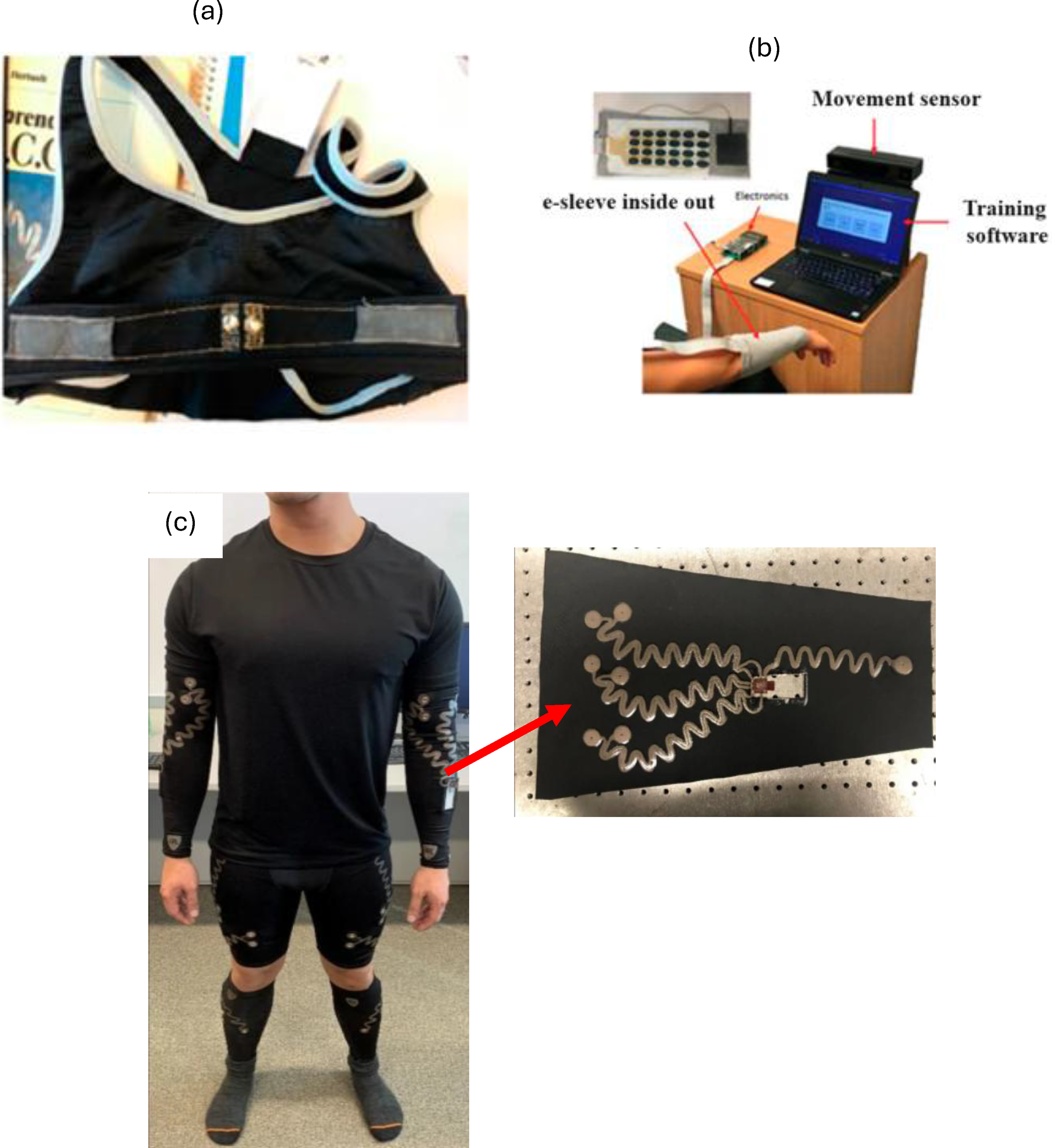
Challenges of E-textiles in adaptive apparel
The widespread adoption of innovative e-textiles faces several challenges. Technological limitations, such as battery life and durability, hinder their practical application. Furthermore, the high development and manufacturing costs can limit accessibility for individuals with disabilities. Privacy and security concerns also arise from collecting and storing personal health data, necessitating robust measures to protect sensitive information. Lastly, user acceptance and adoption require careful design, user-centered development, and education to ensure seamless integration into daily life. 114 Despite these challenges, the future of smart and e-textiles holds immense promise. Advancements in materials science and manufacturing techniques will lead to more durable, flexible, and comfortable textiles. Integration with artificial intelligence and machine learning will enhance data analysis, enabling more accurate and personalized support. Seamless integration with assistive devices and healthcare systems will create a comprehensive care ecosystem. Moreover, a strong focus on user experience and design will ensure these technologies are intuitive, comfortable, and aesthetically pleasing. 220 To fully realize the potential of innovative e-textiles, addressing ethical considerations and establishing clear regulatory frameworks is crucial. By prioritizing user needs, fostering collaboration between researchers, designers, and healthcare professionals, and investing in research and development, it is possible to create a future where these technologies become accessible, affordable, and seamlessly integrated for individuals with disabilities. To conclude, e-textiles can improve the functionality and usability of adaptive clothing for people with disabilities. However, there are issues concerning durability, comfort, ease of washing, power efficiency, and cost. Integrating these factors without compromising aesthetics creates further challenges. The lack of uniform standards for design from an all-encompassing perspective also inhibits progressive change. Solving these problems needs experts from different fields, including material science, engineering textiles, design, and healthcare. Research aimed at developing robust and flexible e-textiles designed for varying disabilities would be more effective. This approach could shift the focus from mere innovation to real-world application.
Prospects of E-textiles in adaptive apparel
E-textiles have the potential to revolutionize the lives of individuals with disabilities. As technology advances, e-textiles will become more functional, personalized, and integrated. Advancements in materials science will enable the creation of more durable, flexible, and comfortable e-textiles. AI and ML algorithms will enhance data analysis, enabling personalized support and real-time monitoring. 221 E-textiles will seamlessly integrate with other technologies, such as Internet of Things (IoT) devices and assistive technologies, to provide comprehensive solutions. To ensure the ethical and responsible development of e-textiles, robust data protection measures and clear ethical guidelines must be established. Developing innovative materials like conductive fibers and stretchable electronics will create more durable, flexible, and comfortable e-textiles. Smaller and more efficient electronic components will allow seamless integration into clothing, reducing bulk and improving aesthetics. By incorporating AI and ML algorithms, e-textiles can analyze vast amounts of data to provide personalized support, such as adaptive clothing that adjusts to environmental conditions or health needs. E-textiles can also continuously monitor vital signs, detect falls, and trigger alerts to caregivers or emergency services, enhancing safety and independence. E-textiles can connect to the IoT to share data with other devices, enabling remote monitoring and control. Integration with assistive technologies, such as wheelchairs and prosthetics, can create more comprehensive and personalized solutions. To ensure the responsible and beneficial use of e-textiles, robust data protection measures must be implemented to safeguard sensitive personal information. E-textiles should be designed to be accessible to people with diverse abilities and needs, considering factors like cognitive impairments and sensory sensitivities. Clear ethical guidelines should be established to address potential ethical concerns and ensure the well-being of users. In general, E-textiles hold immense potential to revolutionize the lives of individuals with disabilities. As technology advances, e-textiles will become more functional, personalized, and integrated. Advancements in materials science will enable the creation of more durable, flexible, and comfortable e-textiles. AI and ML algorithms will enhance data analysis, enabling personalized support and real-time monitoring. E-textiles will seamlessly integrate with other technologies, such as IoT devices and assistive technologies, to provide comprehensive solutions. To ensure the ethical and responsible development of e-textiles, robust data protection measures and clear ethical guidelines must be established.
Conclusions
Smart textiles and wearable technologies with advanced sensors represent a significant leap forward in meeting the diverse needs of aging populations and individuals with disabilities. This review highlights their transformative potential across various applications, including real-time health monitoring, adaptive mobility assistance, and AI-enhanced safety systems. These innovations offer the promise of improved quality of life and greater independence, potentially reducing reliance on caregivers and healthcare systems. However, the widespread use of these technologies faces considerable hurdles. Technical limitations, particularly concerning the durability of materials through regular use, remain a key obstacle. Economic factors, such as the high cost of advanced materials, can limit accessibility. Social considerations, including the need for discreet and aesthetically pleasing designs to ensure user acceptance, are also crucial. Furthermore, robust data security measures are essential to protect sensitive health information transmitted by wireless systems. Overcoming these challenges requires a concerted interdisciplinary effort. Future research should focus on developing sustainable and durable materials with cost-effective manufacturing processes. Design innovation must prioritize user needs and preferences to foster acceptance and reduce potential stigma. Collaborative efforts involving material scientists, engineers, designers, clinicians, and policymakers are vital to establish supportive regulations and ensure equitable access. Ethical considerations must be at the forefront of development. Balancing technological capabilities with user-centered design, affordability, privacy, and cultural sensitivity is paramount. Ensuring inclusiveness in AI-driven personalization through diverse datasets is crucial to avoid bias. The broader societal implications of intelligent e-textiles are substantial. These technologies have the potential to democratize healthcare through remote monitoring and enhance social inclusion through assistive communication devices. By fostering collaboration among stakeholders, these innovations can move beyond specialized uses to become fundamental tools for building an inclusive society that values the dignity and autonomy of all individuals. In conclusion, realizing the full potential of smart textiles in adaptive apparel hinges on integrating innovation with empathy. Through collaborative, ethical, and sustainable practices, we can transform these technologies into a powerful force for global empowerment.
Footnotes

Funding
The authors received no financial support for the research, authorship, and/or publication of this article.
Declaration of conflicting interests
The authors declared no potential conflicts of interest with respect to the research, authorship, and/or publication of this article.