




Abstract
Previously, glove-integrated communication based on gestures, hand movement and finger touch had a complex operating system and an active power source was needed. This paper introduces batteryless and maintenance-free interface gloves. Our solution is based on passive ultra-high frequency (UHF) radio frequency identification (RFID) technology, comprising four electro-textile antenna parts and three RFID microchips (each with a unique ID). The three RFID microchips have unique IDs, which can be activated by the gentle touch of the human finger and used to control the surrounding technology. The aim is to evaluate the reliability of different conductive materials and microchip attachment methods. The antennas are fabricated from two different materials: a stretchable and a non-stretchable commercial electro-textile. Further, two types of microchip attachment methods are used with both antenna materials: a conductive silver epoxy and embroidery with conductive multifilament silver-plated thread. The developed interface gloves are tested by six users in a home and in an office environment, where they achieve 93–100% success rates. Especially those glove interfaces with the antennas fabricated from the non-stretchable electro-textile and the antenna-microchip interconnections embroidered with conductive thread showed good read ranges (80–110 cm). The gloves also show practical functionality, when tested with a mobile reader in practical identification and access control application. These results are very encouraging, especially when considering that the interface glove, being maintenance-free and cost-effective, promises versatile and interesting applications for customizing user-friendly augmentative and alternative communication solutions, easy controlling of ambient assisted-living applications, and providing simple identification and access control for increased safety and comfort.
Keywords
Speech and communication problems are widespread. Alternative and Augmentative Communication (AAC) refers to supplement or replacement of spoken communication for people who cannot communicate by speaking. The currently used high-tech AAC solutions can be grouped as follows: eye-gazing or tracing and head-pointing systems, touch-activated systems, breath-activated systems, and mechanical or electromechanical systems.1,2 Furthermore, noninvasive and invasive brain–computer interface solutions are constantly being developed, since those solutions might allow AAC users to control external devices by modulating their brain signals.3–5 Despite the versatile solutions, several user groups have difficulties accessing the currently available high-tech AAC solutions, which are often restrictive for users who are physically or cognitively impaired.2,6 Thus, even better solutions are needed.
For instance, with an interface glove, physically impaired users with voluntary finger movement could operate devices and ambient assisted-living applications, such as lighting and “call for help” requests. By converting hand gestures using the sign language alphabet to speech and/or text, the technology would lower the communication barrier between the hearing-impaired and hearing people. Further, an interface glove could provide simple identification and access control without keys or ID cards, which would increase comfort and safety. In previous studies, there have been interesting glove-integrated communication systems, such as a tactile sensing glove system designed to interact wirelessly with the surroundings, 7 a wearable tactile interface based on finger Braille 8 and a communication solution for deafblind people through a smart finger Braille glove. 9 Further solutions include a communication glove with wireless sensors to detect different finger gestures, 10 an interpreter glove for people with speech impairment disability through an audible speech-producing software, 11 an intelligent glove for deaf and mute people, 12 a hand-gestures-translated-into-speech glove solution, 13 and finally, for visually impaired people, a hand Braille glove. 14 All the above introduced gloves, while being successful solutions, have a complex operating system, and an active power source is needed for their operation, which means they require maintenance that limits their practical functionality. Further, due to the complex electronics needed, they are quite costly.
When integrated into gloves as an “interface glove,” passive radio frequency identification (RFID) technology also enables customized AAC and environment-controlling solutions to address the needs of various users. Recently, passive RFID-based systems have been installed into footwear and into different types of gloves, for example, for activity monitoring, interactive learning, and for assisting in routine work tasks.15–18 The properties of passive ultra-high frequency (UHF) RFID technology make it an especially attractive solution to be seamlessly integrated into clothing. Passive UHF RFID tags communicate wirelessly with RFID readers, and they have a working range of several meters. Each RFID tag has a microchip, that is, an RFID integrated circuit (IC), which has a unique ID. As this technology is fully passive, it does not require any onboard power source. Instead, the tags are powered directly by the reader, which can be an external reader or integrated into a mobile phone. The tags respond to the reader by backscattering the received signal with their unique ID.
Now, we are establishing an interface glove solution, which comprises four electro-textile antenna parts and three RFID microchips (each with a unique ID). A specific microchip, and thus a specific ID, can be activated by simple finger movements, and then used as a digital input. Our passive UHF RFID technology-based solution draws all its needed power from an RFID reader, and the glove itself is extremely light and flexible. RFID tag antennas have been successfully integrated into different types of gloves for identification and access control.19,20 Further, the first prototype of an interface glove 21 had a success rate of 98% in an office environment. However, as the prototype was fabricated from copper tape, it was not a textile-based flexible solution, and thus not suitable for practical use. Further, the design was not optimized to be used near the human body. The main advantage of the solution presented in this paper is its passive nature: There is no need for a battery in the glove. Further, the cost of an RFID IC is only a few cents, which makes the glove very cost-effective. In this paper, the objective is to evaluate the usability of different electro-textile materials and microchip attachment methods. We study fully textile-based battery-free interface gloves, present the new system design and the fabrication methods and materials used, test the fabricated interface gloves in two different environments with a fixed RFID reader and a mobile RFID reader, and evaluate the interface glove’s read ranges in practical use situations.
Interface glove
The design of the developed two-part passive UHF RFID antenna is illustrated in Figure 1. Compared with the first version, presented elsewhere, 21 the antenna length of both parts is similar, in order to improve the read range of the glove-integrated tags. The antennas were integrated into a normal cotton-based glove. As shown in Figure 1, the antenna was separated into two parts, where Part A has an attached UHF RFID microchip, and they were firstly attached on the middle finger, ring finger, and the little finger on the glove, as presented in Figure 2. Part B of the antenna was then attached on the thumb of the glove only, as presented in Figure 2. The index finger is left unused because we only targeted three inputs from the user in this study, but adding another IC would be straightforward.

Antenna design with dimensions.
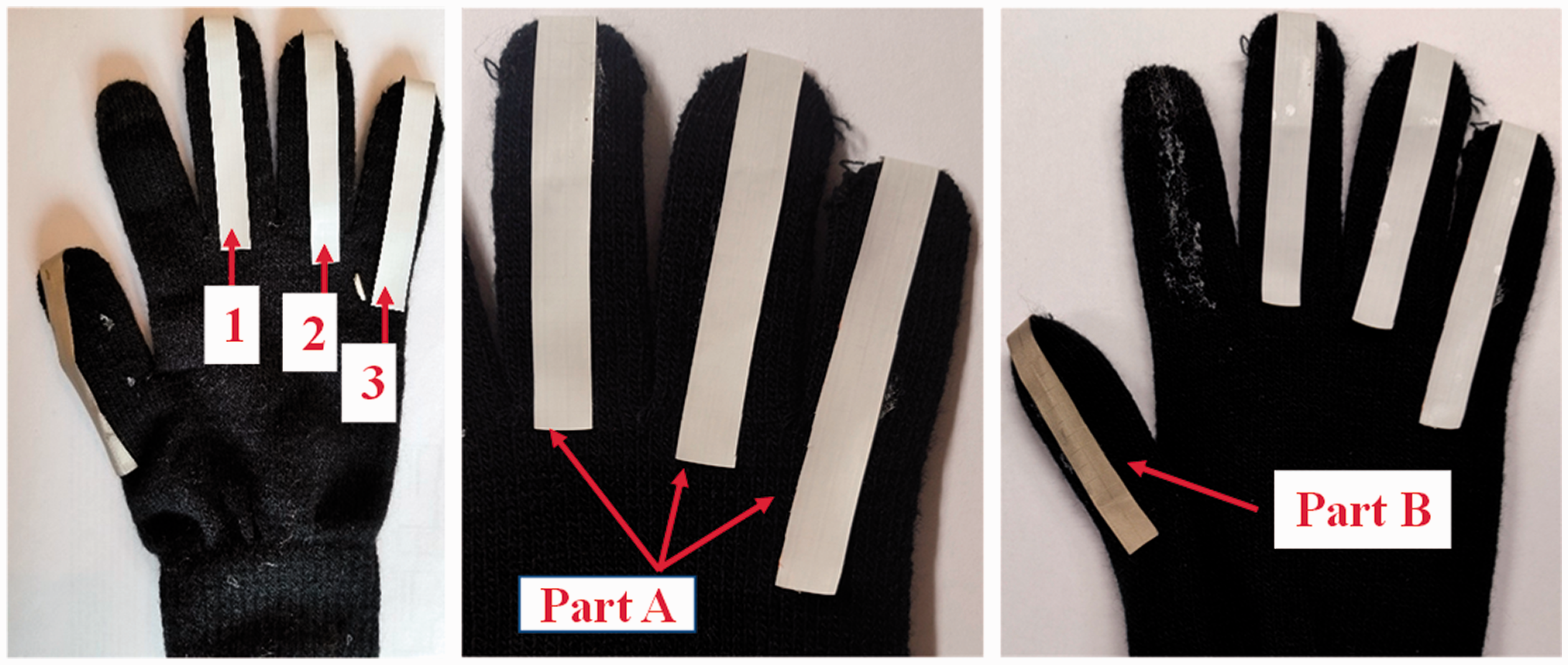
Top side of the interface glove (fabricated from non-stretchable electro-textile) showing also the number of each finger (left) and antenna parts (A and B) integrated in fingers and thumb, respectively (middle and right).
The tag antennas integrated into gloves were fabricated from two different conductive textile materials. The properties of both materials are presented in Table 1. The tag antennas for the first type of glove were fabricated from a stretchable electro-textile (Less EMF stretch conductive fabric, presented in Figure 3), and the tag antennas for the second type of glove from a non-stretchable electro-textile (Less EMF Shieldit Super fabric, presented in Figure 4). The silver-based stretchable electro-textile is Less EMF stretch conductive fabric (Cat. #A321), with a thickness of 0.4 mm and a sheet resistance less than 1 ohm/square. According to the manufacturer, this material can be stretched to a maximum of 200%. The non-stretchable electro-textile, nickel-plated Less EMF Shieldit super fabric (Cat. #A1220), has a thickness of 0.17 mm and a sheet resistance of 0.07 ohm/square. Both antenna materials were attached to the gloves with normal textile glue. We used a NuSil MED-2000 adhesive silicone. This glue is one part solvent-free silicone. The adhesion property is good, and it remains flexible after applying on the substrate. The stretchable electro-textile is conductive from both sides, while the non-stretchable electro-textile material has only one conductive side, which was attached to the glove with the textile glue.
Properties of stretchable and non-stretchable electro-textile materials

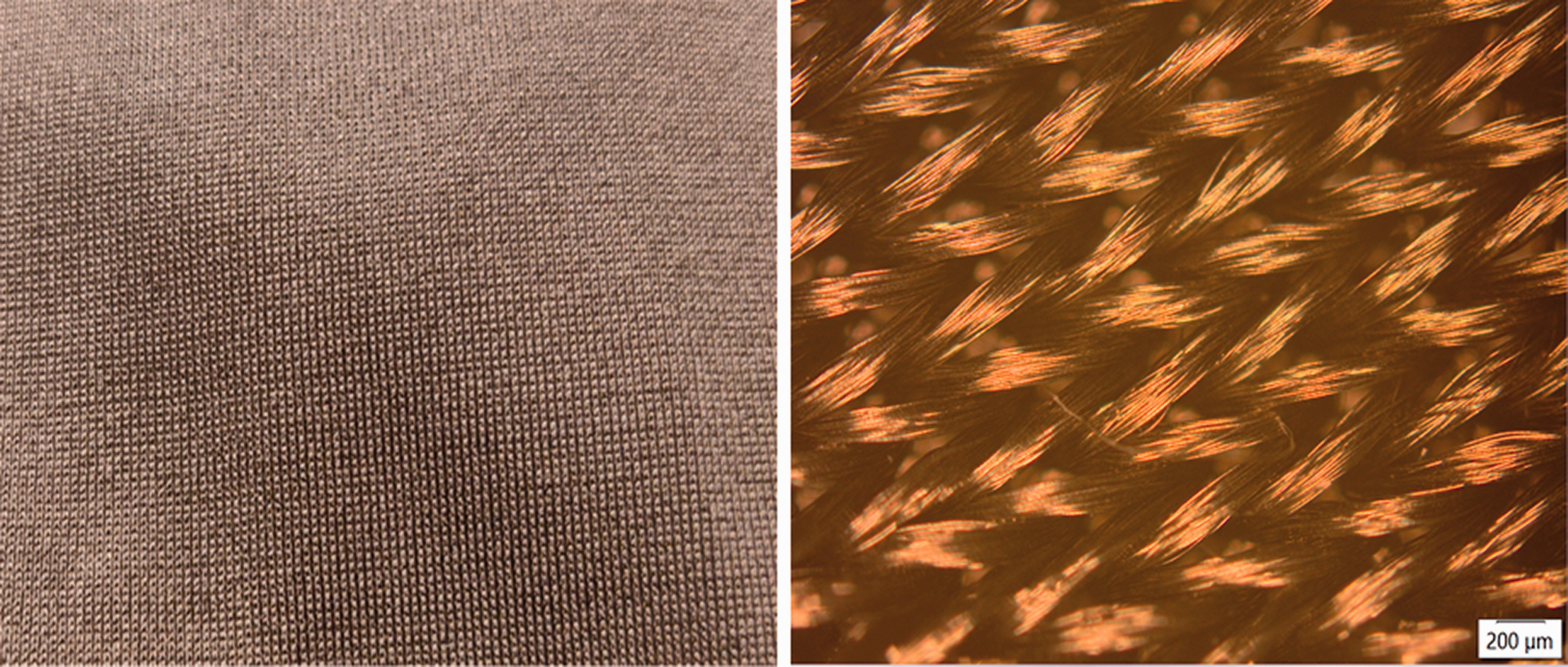
Stretchable electro-textile in a picture (left) and in a microscopic view (right).
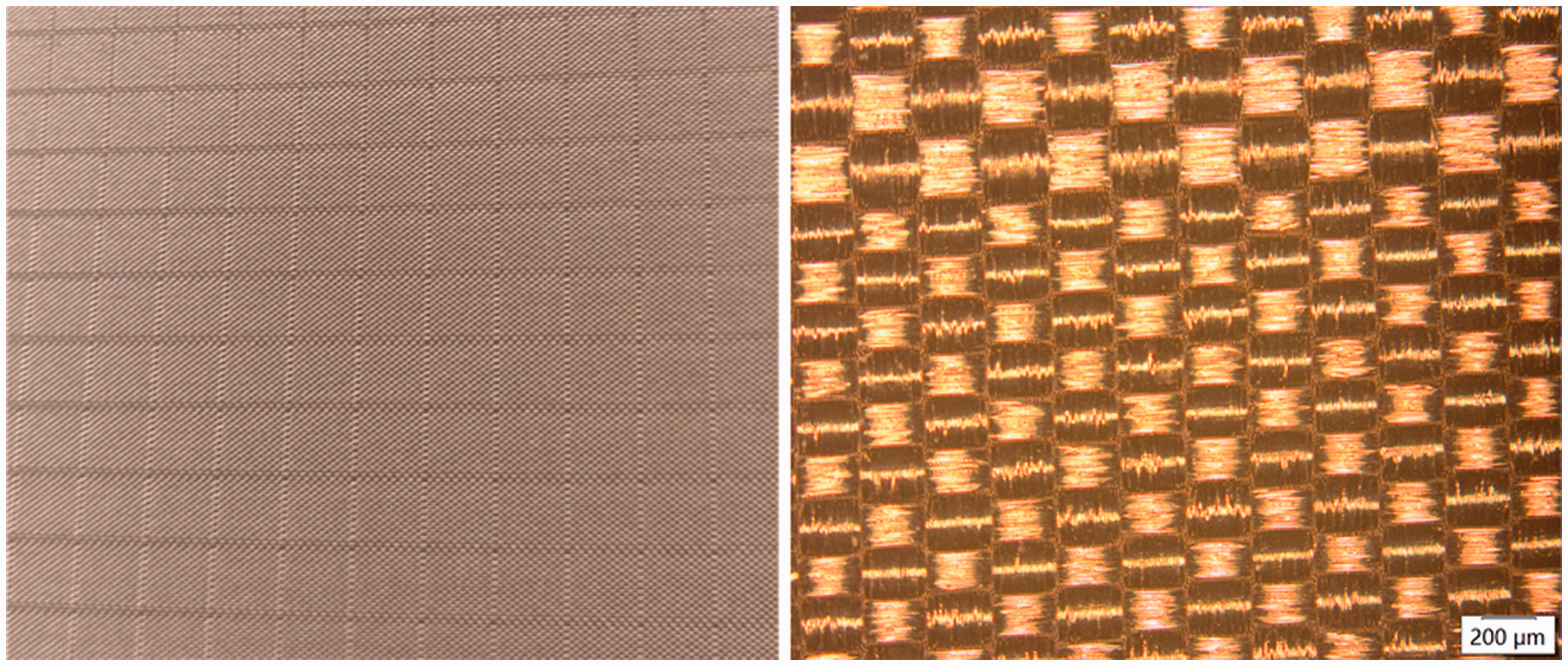
Non-stretchable electro-textile in a picture (left) and in a microscopic view (right).
Further, two types of IC attachment methods were used in both antenna materials: The ICs were attached to the antennas either with a conductive silver epoxy (Circuit Works CW2400) or by sewing with a conductive multifilament silver-plated thread (Shieldex multifilament thread 110f34 dtex 2-ply HC), which has a resistance of 500±100 Ω/m and a diameter of 0.16 mm. The IC (NXP UCODE G2iL RFID IC) has conductive copper pads for simple attachment, as shown in Figure 5 and Figure 6. The wake-up power of the IC is −18 dBm (15.8 µW). The ready interface gloves are shown in Figures 5 and 6.
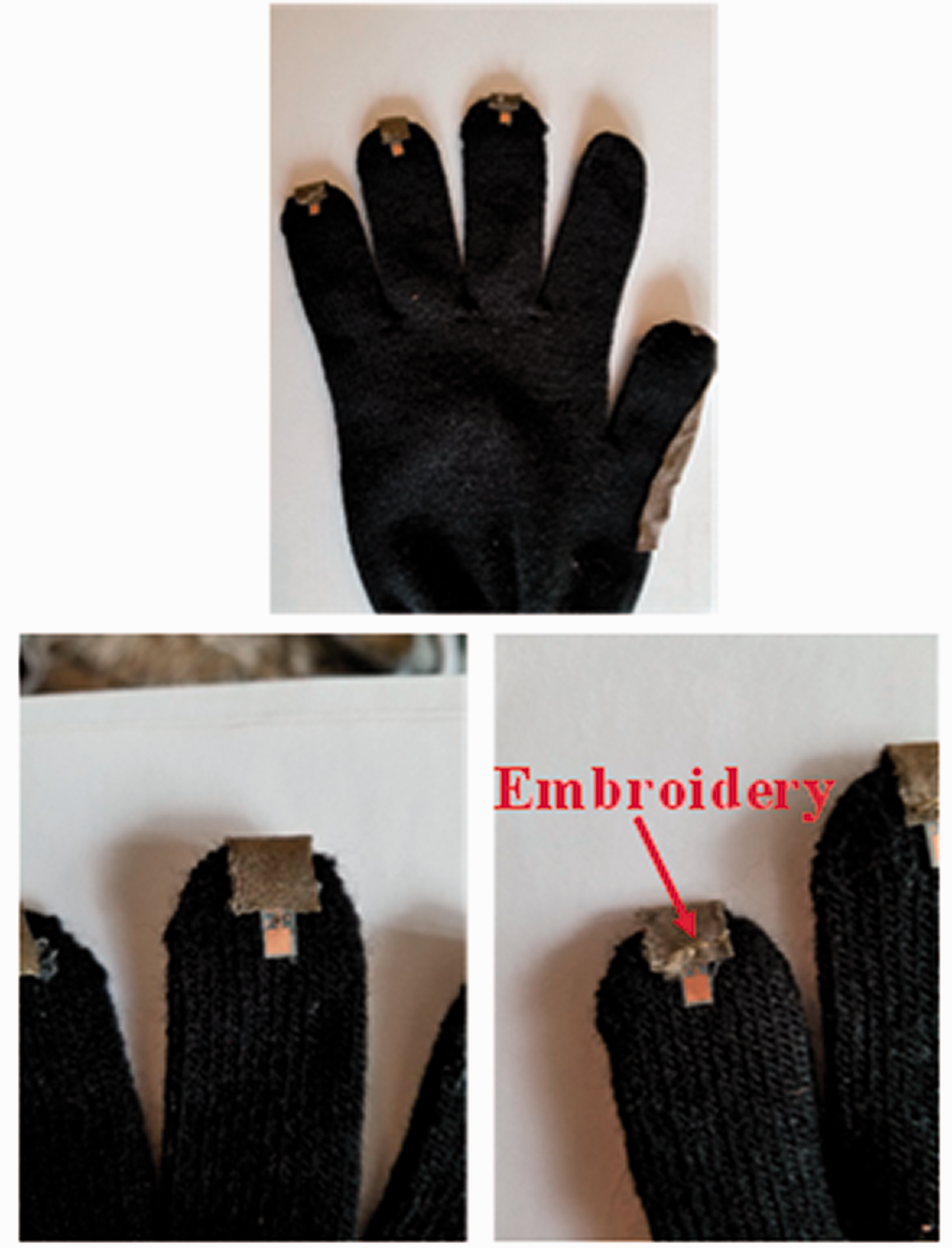
Interface glove from stretchable electro-textile: palm side of the glove (top), glued integrated circuit (IC) attachment (bottom left), and embroidered IC attachment (bottom right).
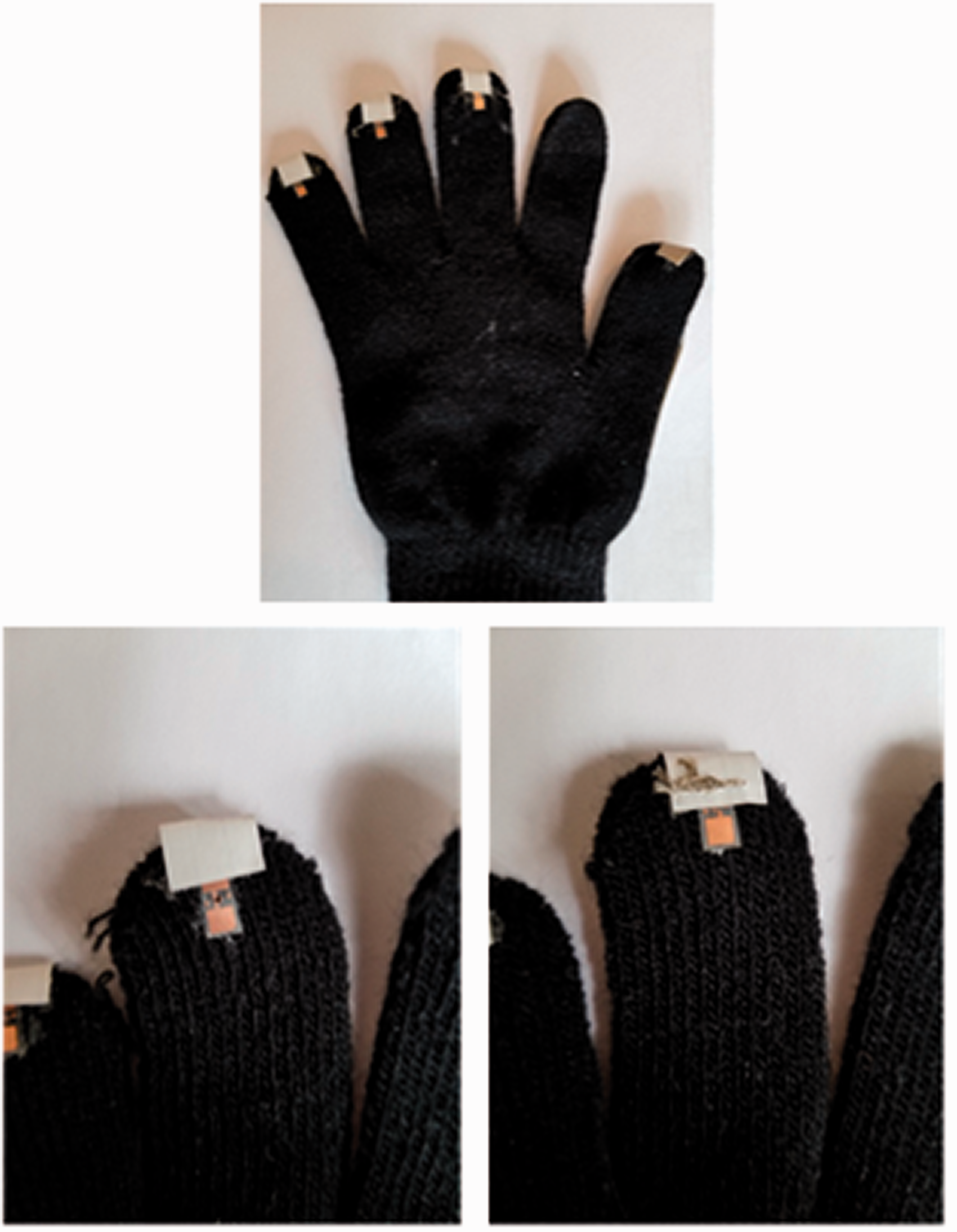
Interface glove from non-stretchable electro-textile: palm side of the glove (top), glued integrated circuit (IC) attachment (bottom left), and embroidered IC attachment (bottom right).
The tag antennas have two parts (A and B). The tag antennas were initially not readable because the two parts of the tag antennas (A and B) were not connected, which means none of the ICs were readable by RFID readers. When the B part of the tag antenna glued on the thumb of the glove touches any of the other three antenna parts (the conductive pads of the ICs) attached to the fingers of the glove, the touch creates an electrical connection between Part A (IC pad) and Part B of the tag antenna. If the tag antenna Part B touches the IC pad on the tag antenna Part A, the IC can be activated with a simple and gentle touch of the fingertip. Thus, the corresponding IC can be detected by RFID readers and recorded as an input for any desired application.
Test setups
The system evaluation setup included the glove interface, a circularly polarized RFID reader antenna, which was attached to a ThingMagic M6 RFID reader through a connecting cable, and specific testing software. The reader operates at the European standard frequency range (865.6–867.6 MHz) and the power used was 28 dBm.
The testing software was initially developed for evaluation of a table-integrated passive RFID system and has been described with details elsewhere. 24 It uses ThingMagic Mercury API tools to control the M6 RFID reader and filters the received microchip IDs, so that no other RFID tags nearby will disturb the performance of testing software. The software shows random orders (1,2,3) on the screen of a computer and the user responds to the ordered input by touching the fingers (1,2,3) respectively. If the ordered input is returned correctly by the user, a green circle appears on the screen. Otherwise, a red circle shows that a wrong output has been saved. The outputs are saved as (1) for a right input and (0) for a wrong input in an Excel sheet.
Two female and four male test subjects participated in the evaluation of the developed interface gloves, which were tested in a home and in an office environment. The participants were selected from two groups: (1) people who are familiar with the glove interface technology (our colleagues from the university) and (2) people who are not familiar with the glove interface technology (also our colleagues from the university). Further, the glove interfaces were tested in a home environment and in an office environment (tested by our colleagues from the university, all of them familiar with the glove interface). The aim is to measure the read ranges and evaluate the success rates of the interface gloves manufactured from different materials. Out of the six people, four were familiar with the system, while two were new to the system. First, each person measured the maximum read range for the glove, which is the read range where the glove still showed reliable performance. For evaluation, each tester received 100 random orders (order 1, 2, or 3: meaning touch finger 1, 2, or 3 with thumb, respectively, as presented in Figure 2) from the testing software. The results were saved in a right/wrong format. If there was no input given within 5 s, the input was also counted as an error. A random test setup in a home environment is shown in Figure 7. As can be seen, the environment is very open and there is no furniture near the measurement setup. Further, there were only the test subject and the assisting researcher present during the measurements. A random measurement setup in an office is shown in Figure 8. As shown, there are electronic items including laptops and mobile phones close by. There are metallic and wooden furniture and people are moving around constantly.
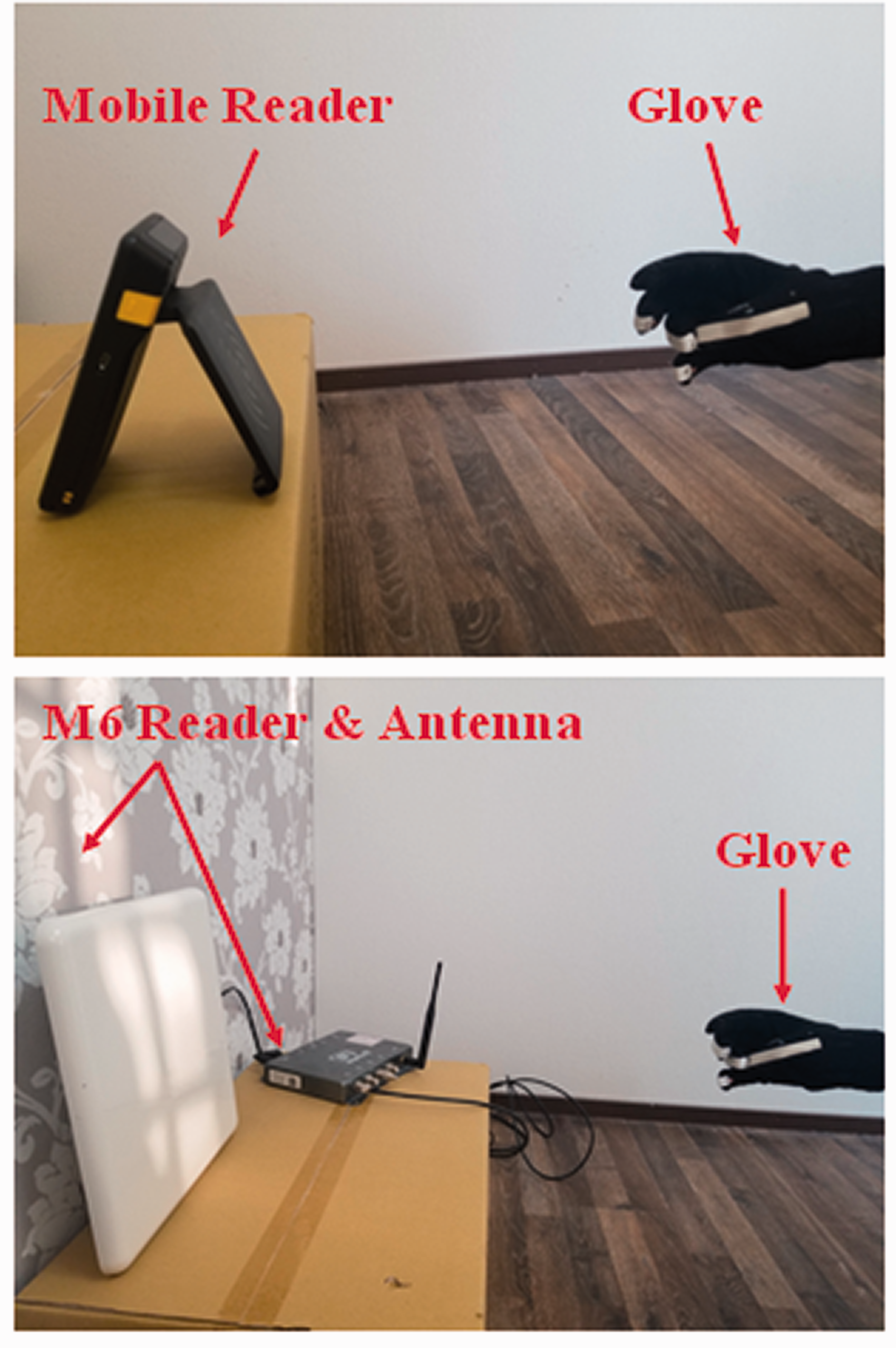
Test setups in a home environment: read range measurements with a mobile reader (top) and system evaluation with a M6 reader (bottom).
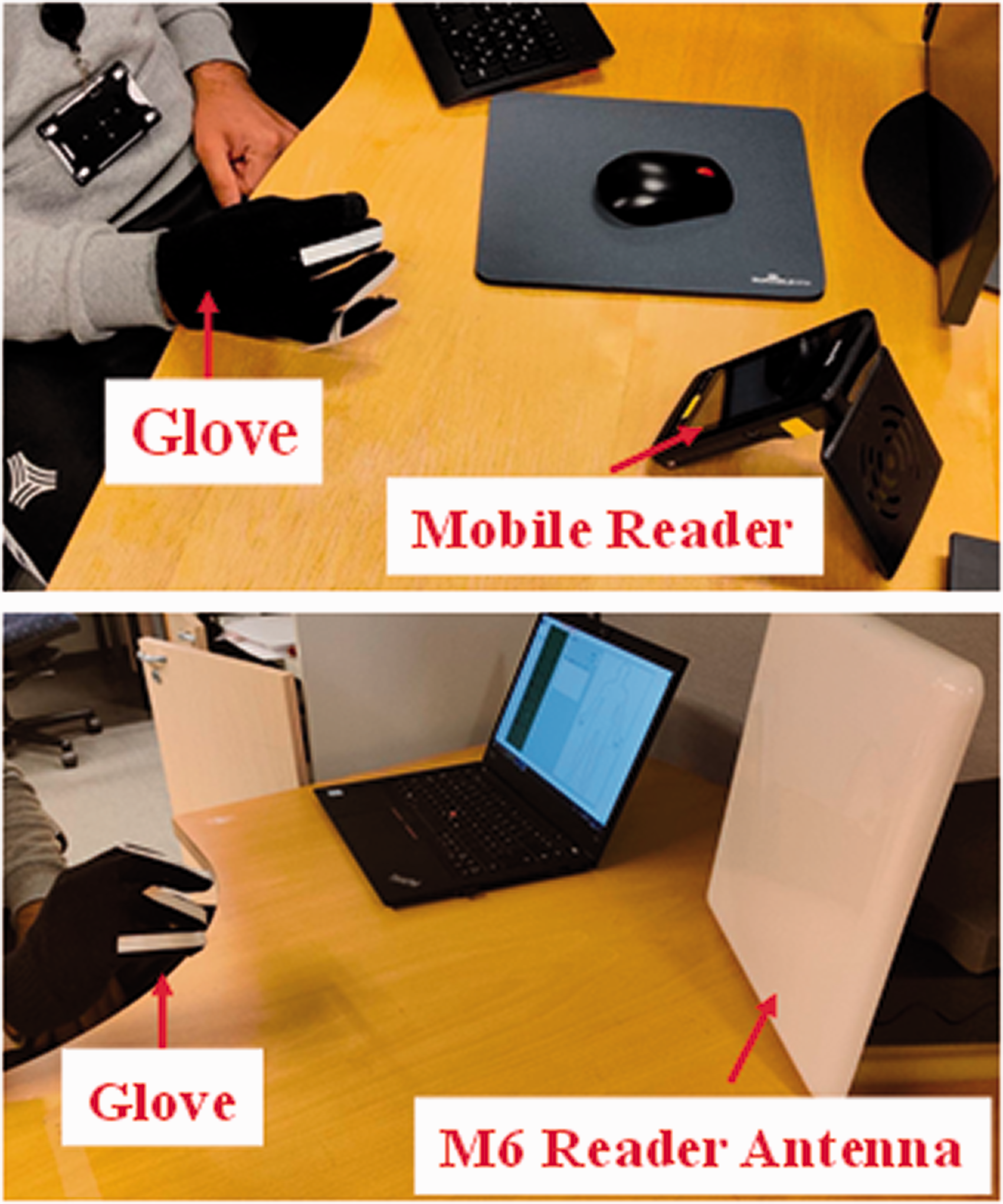
Test setups in an office environment: Read range measurements with a mobile reader (top) and system evaluation with a M6 reader (bottom).
Our goal is to make the system fully mobile, which requires a mobile RFID reader. Thus, in order to evaluate the read range of the glove for practical future applications, the read range was measured in both environments using a handheld RFID reader (Nordic ID Medea), as presented in Figures 7 and 8. These measurements were carried out by three people. The reader measures the tags at 866 MHz, which is the European center frequency for UHF RFID systems, and then communicates with any background system though Wi-Fi. As the reader is handheld and thus mobile, this user interface can be easily transferred together with the person using it.
Results and discussion
A read range threshold of 55 cm was selected for practical reasons, as the user needs to be able to stand a minimum of 20 cm from the reader antenna in all positions, according to the reader manufacturer. Further, a success rate of 95% (means 95% of orders completed were rightly completed by the user and accepted by the software) was selected, as in a previous study focusing on hand gesture recognition, 25 the results returned a success rate of more than 96%.
The measurement results of the interface gloves with antennas from stretchable and non-stretchable electro-textiles are shown in Table 2 and Table 3, respectively. As can be seen, the gloves showed overall success rates of 94–98% and 93–100% in the home environment and the office environment, respectively. Thus, most of the results were successful, according to the threshold of 95%. The read ranges of the gloves, when measured with the M6 reader, were 40–80 cm and 65–110 cm, in the home environment and in the office environment, respectively. Thus, most of the results were successful according to the threshold of 55 cm. According to the results, there was no difference between the testers who were familiar with the systems and those who were not familiar with them. The read ranges in the office environment were longer than those in the home environment, most probably because of the multipath radio waves’ reflection from metallic furniture, computers and other surroundings. The read ranges were also longer for the gloves that had non-stretchable electro-textile antennas, which is due to the lower resistivity of the conductive textile. Further, the read ranges were longer for the gloves that had embroidered antenna–IC interconnections, most probably due to the better and more reliable electrical connection. In a previous study, it was reported that embroidered antenna–IC connections are reliable, as the wireless performance of the tag remained the same after harsh stretching. 26 Further, glued antenna–IC interconnections also showed suitable reliability. 26 In the case of challenges, the reliability of antenna–IC interconnections can be increased, for example, with an epoxy coating. 27
Measurement results for gloves from stretchable electro-textile
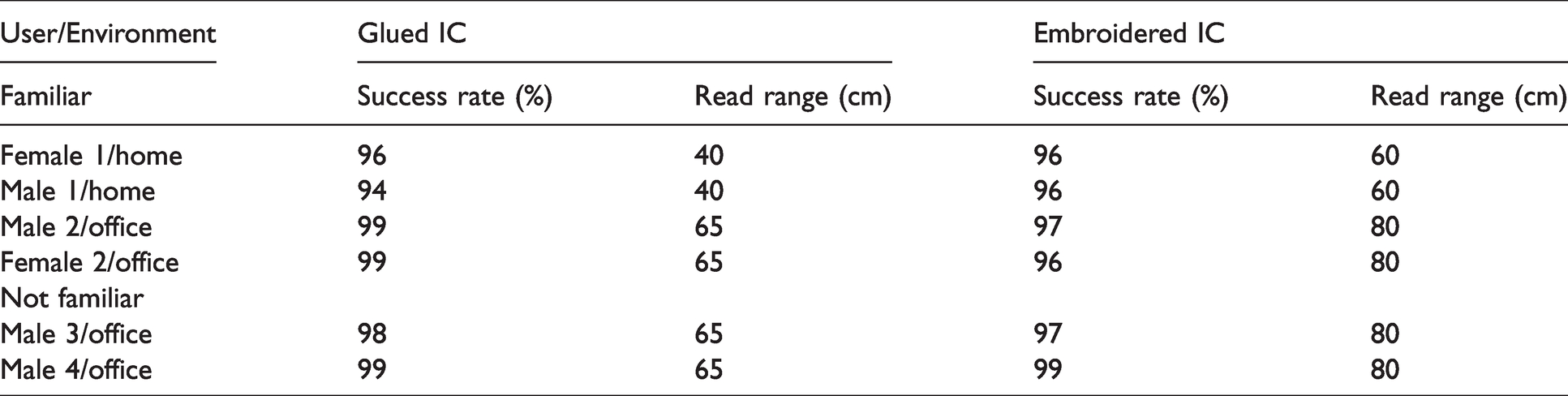
Measurement results for gloves from non-stretchable electro-textile
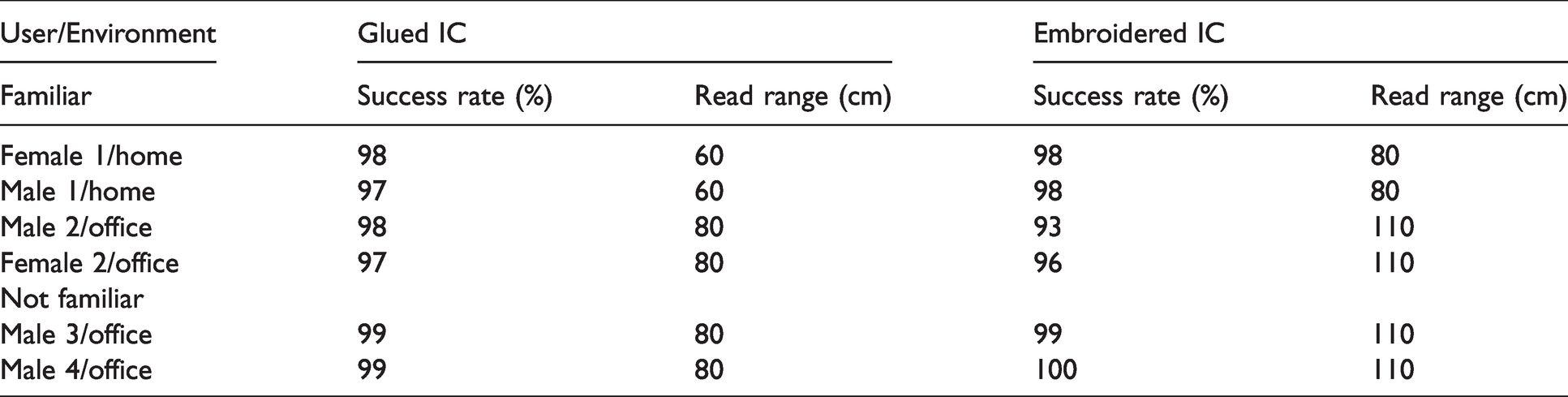
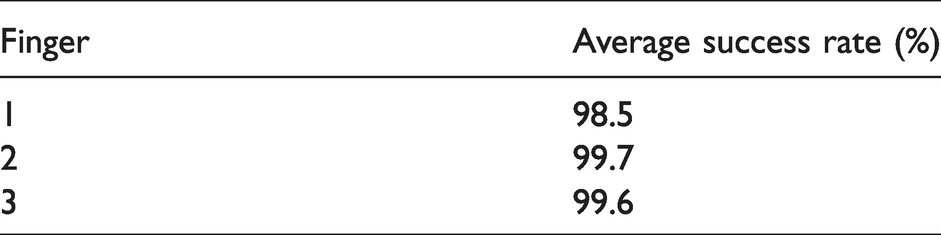
Table 4 presents the overall success rate of each finger separately for all the gloves. This is an average of the collected data from the four users in the office environment (which includes people who were familiar and people who were not familiar with the gloves). The presented data validate that the fingers (1–3) are all showing excellent success rates. Further, the gloves have no electronics or antennas inside. Thus, the gloves feel like normal gloves. When testing these first prototypes, the users had no problem while performing the given task. Initially, a detailed introduction and demonstration of the glove (how does it work) was given to the users. They straightforwardly used the glove for testing and had not really encountered any problems. Thus, the gloves are easy to use. We fabricated two pieces of each type of glove, and both gloves in each case showed similar performance. As Table 4 presents, the results for each finger of the gloves and the success rates were above 98%. Thus, we can conclude that the stability of the gloves is good.
Average success rates of fingers 1, 2 and 3 for all glove interfaces
These initial results indicate and provide important evidence for the further product development process of the next prototype: We are able to select the antenna material for the next prototype. Further, we know that the read ranges are longer for the gloves that have embroidered antenna–IC interconnections, and thus we can select embroidery (a very cost-effective fabrication method, as the conductive thread only costs about 1 euro per gram and is already a standard fabrication method used in cloth manufacturing) for the next prototypes.
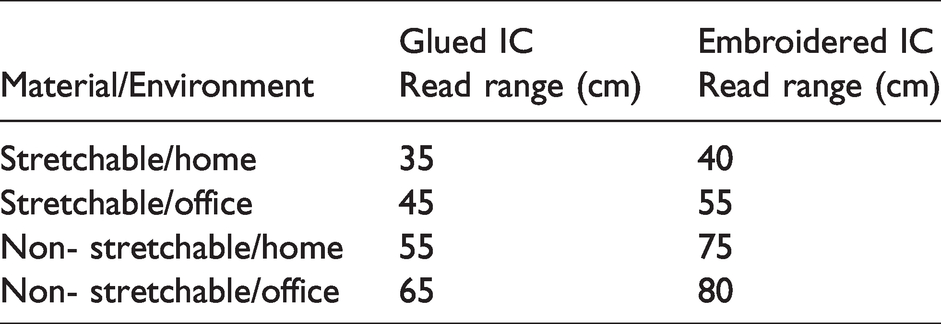
The read ranges measured with the mobile handheld reader for all types of interface gloves are shown in Table 5. The maximum distance at which the reader can detect the input from the interface glove has been marked and measured on the floor. Three users tested these gloves and the measurement results were similar for all of them. As can be seen, the read ranges were between 35 and 80 cm, while longer read ranges were again measured in the office environment. These read ranges can be considered suitable for many practical applications.
Read ranges with handheld reader
Finally, as shown in Figure 9, a practical use situation evaluation of identification and access control was carried out. A mobile reader was fixed on an office door at 30 cm from the user. The door was given an access code of 231, which was given by the specific glove (only the identified person can access the reader, identification) in the right order (the right finger movements needed to be done, access control). The mobile reader identifies middle finger (digit 1), ring finger (digit 2) and little finger (digit 3) because each IC has a unique ID. The mobile reader application connects the ID to the digit and gathers the sequence of the digits. The mobile reader is connected to a background system through Wi-Fi and can thus be used for opening the door with the right sequence of IDs and resulting digits. Two people tested the door system successfully, which supports the idea of utilizing this glove for practical use with the mobile reader.
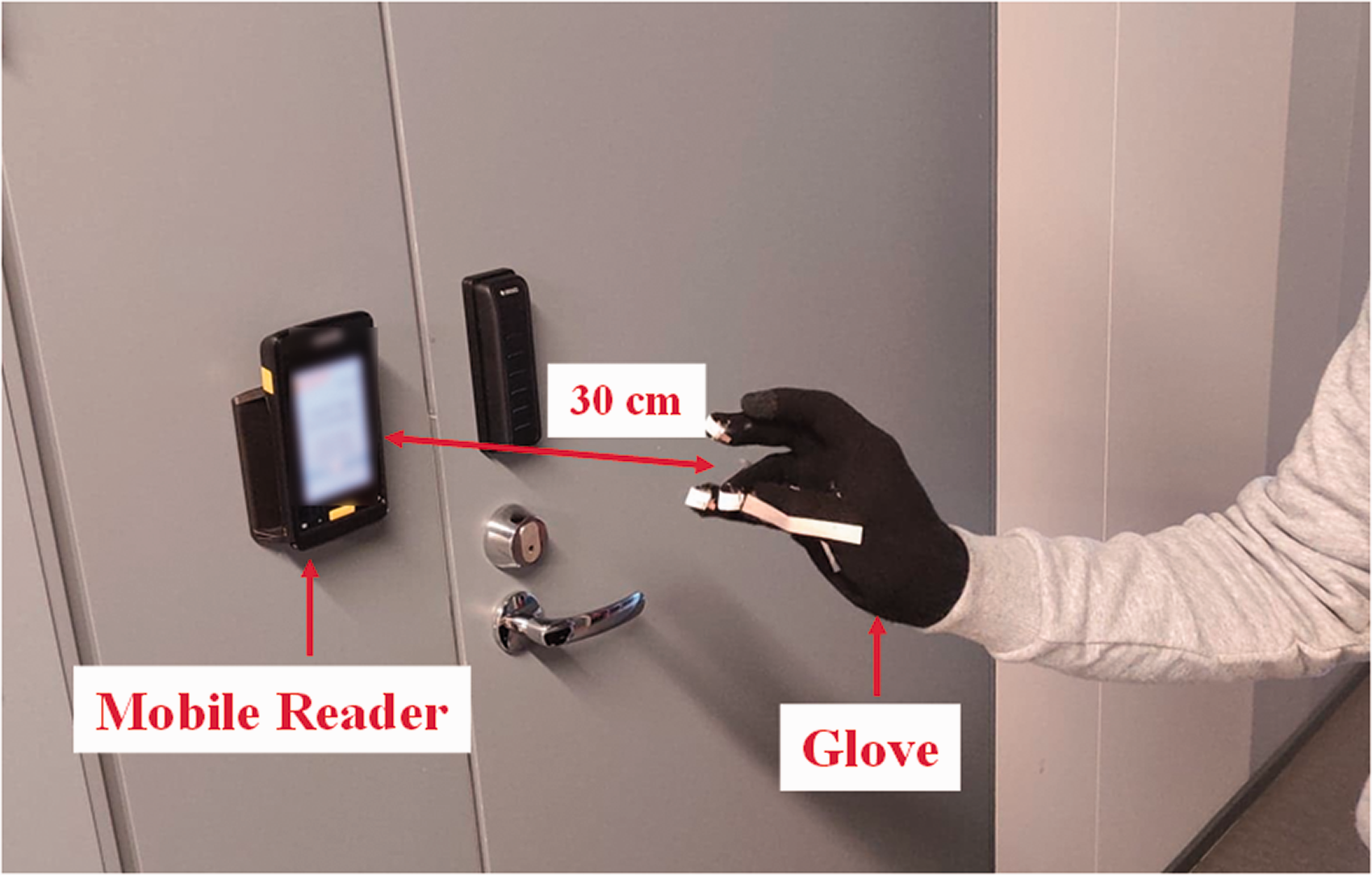
A user interacting with the mobile reader to access the door.
Future work
The next prototypes will be fabricated using embroidery with conductive thread as the IC attachment method. Further, we will be testing different antenna designs to improve the read ranges of the developed gloves. As the next step, we are integrating more ICs in different parts of the glove to enable versatile finger movements and hand gestures to be detected and classified as the desired inputs. In addition, statistical analysis on the difference in results, considering participants’ familiarity with the technology and different user environments, will be part of the evaluation of the next glove interface prototype. In the future, our goal is to use the glove with a mobile phone-integrated UHF RFID reader, which will make the system fully mobile, as it will be both powered and controlled through the mobile phone. Further, the glove-integrated user interface will be able to take advantage of any auxiliary or external technology, which can be connected to the system through the mobile phone’s Bluetooth or Wi-Fi connection.
These interface gloves have countless applications in several fields. This type of intelligent glove could be used to improve work efficiency and safety—for example, in replacing paper and pen by using hand gestures for writing simple notes, or by accessing doors by giving the right password with the identified person’s work glove. Further, we imagine this glove to support people’s independence by enabling simple control of ambient assisted-living applications, such as controlling lights and temperature or asking for help. Most importantly, we see communication possibilities for people with speech and language problems. This glove could, for example, be used as a sign language translator for deaf people, as well as to translate gestures into speech through a mobile phone for deafblind people. The healthcare sector has many applications which will become more fun and easier to handle with these gloves, for example, when considering playful physiotherapy exercises for children. With the help of our user interface and personally designed software, people could overcome communication participation restrictions related to physical limitations.
It should be noted that the final versions of these glove interfaces need to be washable, or at least they need to endure moisture. Previous studies about the washing reliability of these ICs and RFID tags fabricated from the same electro-textiles and conductive thread28–30 have made it obvious that the electro-textile and embroidered antennas, as well as the RFID ICs, need a protective coating to shield them from moisture and mechanical stresses caused by a washing machine. For example, an epoxy coating has been found to be well suited for shielding the RFID tag ICs and antennas from moisture and detergent. 27 Thus, this will be tested with the next prototypes.
Conclusion
In this paper, we introduced a passive UHF RFID-based interface glove, using a cotton glove and tag antennas from two types of electro-textiles. Further, both conductive glue and embroidery with conductive thread were tested for antenna–IC interconnections. The developed glove interfaces were evaluated in a home environment and in an office environment by six test subjects. According to the results, the gloves showed high success rates (93–100%) for finger movement detection, as well as read ranges of 40–110 cm and 35–80 cm with an external RFID reader and handheld RFID reader, respectively. According to the results, there was no difference between the testers who were familiar with the systems and those who were not familiar with them. The read ranges in the office environment were longer than those in the home environment, as a result of the multipath radio waves’ reflection from metallic furniture, computers and other surroundings. The read ranges were also longer for the gloves that had non-stretchable electro-textile antennas, which is due to the lower resistivity of the conductive textile. Further, the read ranges were longer for the gloves that had embroidered antenna–IC interconnections, most probably because of the better and more reliable electrical connection.
These first results are very encouraging, particularly when considering that the glove-integrated user interface, being a seamless part of the cloth and functional without an onboard power source, promises versatile applications for assistive technology in communication and in ambient assistant living. Further, it offers comfort and safety for versatile work environments. The fundamental strengths of the interface gloves implemented here remain within its passive nature and cost-effective, simple implementation into gloves. As the electro-textile materials can be easily integrated into different types of textiles, the fabrication of such interfaces can be carried out during normal glove manufacturing processes. Our goal is to make the system fully mobile, which requires a mobile RFID reader. The most convenient solution is to integrate the reader into a mobile phone, which can be kept 50–100 cm away from the user. Further, for people with different disabilities, when the mobile reader is attached to a bed or to a wheelchair, the user will be able to use this glove to communicate from a different room, different floor, or even a different building. We are next aiming to achieve longer read ranges (∼1 m) and above 96% success rates for our next-version prototypes in all use environments.
Footnotes
Declaration of conflicting interests
The authors declared no potential conflicts of interest with respect to the research, authorship, and/or publication of this article.
Funding
This work was financially supported by the Finnish Cultural Foundation, the Academy of Finland (decision numbers 294534 and 332168), and Jane and Aatos Erkko Foundation.
