




Abstract
The study examines flax fiber waste as a possible environmentally friendly material for thermal insulation panels given the rising need for sustainable building materials. The research examines 25 panels manufactured with different panel designs, fiber blends, binder types, thicknesses, and densities for thermal conductivity. The tested samples had a thermal conductivity range of 0.029 W/K to 0.325 W/K. Good insulation panels had conductivity values below 0.05 W/m·K. A power law link between bulk density and thermal conductivity was found, therefore emphasizing the considerable effect of substance compaction on insulation characteristics. The research includes biobased binders—Arabic natural glue 40%, for instance—that improve insulation performance along with reflective surface levels (aluminum foil). The modified sample achieved the lowest thermal conductivity of 0.0298 W/m·K by combining an air bubble layer, sprayed paraffin 6%, and an aluminum foil layer, just ahead of commercial products like fiberglass (0.04–0.055 W/m·K) and mineral wool (0.035–0.05 W/m·K). This sample shown a 148% rise in thermal resistance from what other checked panels showed, highlighting the value of multilayered alterations in increasing insulation performance. These results highlight how flax fiber reinforced composites could be used for heat insulation. Regarding thermal insulation, this study offers a different way of using flax fiber waste. The results provide important information on finetuning material composition and production methods to meet energy efficiency criteria in building while reducing environmental impact.
Keywords
Introduction
The development of environmentally friendly thermal insulation solutions has been much improved by the rising demand for sustainable building materials. Often sourced from natural fibers, recycled materials, and agricultural byproducts, these products have great environmental advantages and can lower energy loss by as much as 50% over conventional insulation materials. 1 Among these, natural fiber composites like sisal, jute, and flax combined with epoxy resin provide good results in lowering heat transmission and improving thermal comfort. 2 The use of organic fibers including date palm wood, flax, and hemp in building materials offers low-cost and environmentally friendly solutions for present building projects. 3 Lightweight heat-resistant concrete panels produced from recycled materials and natural fiber cement boards made from rice husk have been recently developed; they offer much better thermal performance and structural integrity.4,5 Furthermore, of note are coconut fibers, chip panels, and recycled cellulose; all show decent thermal performance while also helping sustainability.6,7
Sustainable insulation still depends on biobased and reused components. Hybrid textile composites, lime hemp concrete, and agricultural waste panels help to solve important energy efficiency and environmental issues. 8 Thermal simulations point to corresponding performance to polyurethane, therefore underlining their suitability for modular roof panels and also hedge panels, since they have been explored as polyurethane core replacements in sandwich panels. 9 Likewise suitable for indoor use and providing great thermal stability, wood chip-based panels have energy efficiency comparable to that of mineral wool. 7 Textile waste reuse has also gained momentum, with strong thermal and mechanical properties of nonwoven insulating materials produced from cotton, wool, and polyester textile waste that support circular economy objectives and lower environmental impact.10,11 Emphasizing their versatility, hybrid fiber panels—including flax and hybrid basalt/flax foam core sandwich panels—that have shown structural and thermal performance appropriate for construction and transportation uses have flexural modulus values from 5.1 to 9.8 GPa.12,13
Although progress has been made, more study is required to tackle the multifunctional features, cost effectiveness, and scalability of green materials. Important points of focus are improved moisture resistance, fire safety guarantee, mechanical qualities and recyclability enhancement, cost effectiveness and scalability optimization. Overcoming these obstacles will unleash the entire power of ecofriendly materials, therefore rendering them in several uses practical replacements of traditional materials.14,15 Flax based panels of 30 mm thickness, for instance, have thermal resistance R values of 1.5–2.0 m2·K/W, hence they are fit for use in walls and partitions. 16
Several variables materially impact the thermal resistance of designs for fiber panels. Higher density improves porosity, so reducing thermal resistance would be from less air content; lower density compromises structural integrity, however. Natural fiber composites have ideal densities between 200 and 500 kg/m3.17,18 Disruption of heat transfer and efficient entrapment of air both increase thermal resistance especially when fibers are random or stratified.19,20 Biobased binders ensure structural stability without much affecting thermal performance by retaining porosity better than synthetic options.21,22 For wall and partition uses, panels of 20–50 mm thickness are ideal since greater thickness improves thermal resistance. 23 By aiming at the balance between panel strength and thermal resistance, fiber to binder ratios—such as 70:30 and 80:20— help to achieve this. Too much binder content lowers porosity, so higher fiber reduces it by boosting air trapping and hence insulation. 24 Composite insulation panels have to be created and enhanced for sustainable building uses. Looking at qualities like thermal and acoustic performance, material composition, and environmental efficiency, research has investigated several angles of these panels.25,26
The study on environmentally efficient thermal and acoustic insulation based on natural and waste fibers emphasizes the dual benefits of using waste materials in construction, reducing environmental impact while enhancing insulation properties. 27 Additionally, the characterization of multifunctional panels from jute fibers for interior wall coverings shows significant improvements in both thermal and acoustic insulation, making them a viable option for interior applications. 28 Experimental and finite element analysis on the thermal conductivity of burnt clay bricks reinforced with fibers provides insights into enhancing traditional building materials with natural fibers, improving their thermal performance. 29 Furthermore, the analysis of the thermal parameters of hemp fiber insulation highlights the effectiveness of hemp fibers in providing thermal resistance, making them suitable for use in building insulation.30–33
A significant gap exists in utilizing flax fiber waste for thermal-resistant panels in building insulation. While flax fibers are recognized for their sustainability, their application in insulation materials remains underexplored compared to other agricultural fibers. This study focuses on developing thermal-resistant panels from flax fiber waste, evaluating factors such as fiber blending, density, binder type, thickness, and surface coatings to enhance insulation efficiency. Through systematic investigation, it aims to establish flax fiber waste as a viable and sustainable alternative for building insulation, contributing to energy conservation and environmentally responsible construction practices. The originality of this work lies in its innovative use of flax fiber waste, exploration of bio-based binders, integration of multi-layered insulation systems, and comprehensive optimization of material parameters.
Despite the growing body of research on natural fiber-based insulation materials, significant gaps remain in the optimization and practical application of flax fiber waste for thermal insulation. Previous studies, 34 on flax fiber-based thermal insulating slabs, have demonstrated the potential of flax fibers in insulation applications. However, these studies primarily focused on large-scale applications or the mechanical properties of the materials, with limited emphasis on optimizing thermal performance through material composition and surface modifications. Similarly, explored the thermal properties of lightweight insulation made from flax straw but did not address the integration of bio-based binders or reflective layers to enhance insulation efficiency. 35 Furthermore, while AOS (Alfa Olefin Sulfonate) has been used as a surfactant in various applications, its role in improving the thermal insulation properties of flax fiber panels has not been thoroughly investigated. 36 This study addresses these gaps by, optimizing the composition of flax fiber panels using bio-based binders and foam agents, incorporating reflective layers (e.g., aluminum foil) and air bubble sheets to reduce radiative and convective heat transfer, and systematically evaluating the thermal performance of the panels in comparison to conventional insulation materials. The novelty of this work lies in its comprehensive approach to enhancing the thermal properties of flax fiber waste panels, offering a sustainable and cost-effective alternative to traditional insulation materials. By addressing both scientific and practical challenges, the study advances the field of sustainable building materials and offers a viable, eco-friendly alternative to conventional insulation products.
Material and methods
Material
The experimental research plan aims to develop a sustainable and eco-friendly method for building insulation by utilizing flax fiber waste as the primary material for thermal-resistant panels. Two distinct types of flax waste are utilized in the production of panels, each contributing specific characteristics and percentages. The first type, known as Flax Machine Tow, is composed of shorter fibers derived from the hackling process of long flax fibers. These fibers typically measure between 5 and 10 cm in length and have a fineness ranging from 10 to 30 microns. Additionally, flax machine tow contains approximately 5% shives, making up a significant portion of the total flax straw. The second type, referred to as Flax Waste, encompasses other residual materials generated during flax processing, including dust and unusable fibers. These fibers are shorter than 8 cm, with a finer texture varying from 5 to 20 microns. Similarly, flax waste contains about 20% shives but constitutes a smaller overall proportion, typically around 5–10% of the total flax straw. This category showcases a diverse range of fiber lengths and fineness, underscoring its variability.
Types of matrix
Various adhesives were employed in this study. Arabic natural glue, a complex mixture of glycoproteins and polysaccharides, is composed of polymers of arabinose and galactose and is soluble in water. Unsaturated polyester polymer is composed of two chemical components blended in a proportion of one hundred parts of unsaturated polyester to a single part of hardener. (MEKP, or methyl ethyl ketone peroxide), serving as a low-viscosity polymeric thermosetting substance. The foam agent used in this study is Alpha Olefin Sulfonates (AOS), which are produced through the sulfonation of alpha-olefins, typically using sulfur trioxide. This process is followed by alkaline hydrolysis, resulting in a mixture of alkene sulfonates (62%), and hydroxy alkane sulfonates (38%). Additionally, paraffin oil, a hydrocarbon compound with the general chemical formula CnH2n + 2, is used. Paraffin oil belongs to the group of alkanes and contributes to the foam’s properties. The bubble sheet has a thickness of 0.4 cm and a bubble density of 2.25 bubbles/cm2, while the aluminum foil sheet features a reflective finish, a thickness of 10 microns, and a density of 2.70 g/cm3.Local companies provided fibers and chemical materials.
Panel fabrication
Panel fabrication consists of several stages, starting with the cleaning and mixing of raw fiber materials and culminating in the formation of the final sample, which meets specific size, thickness, and mold requirements.
37
As shown in Figure 1(a), the fibrous material undergoes mechanical cleaning a,b,c. Panels fabrication process.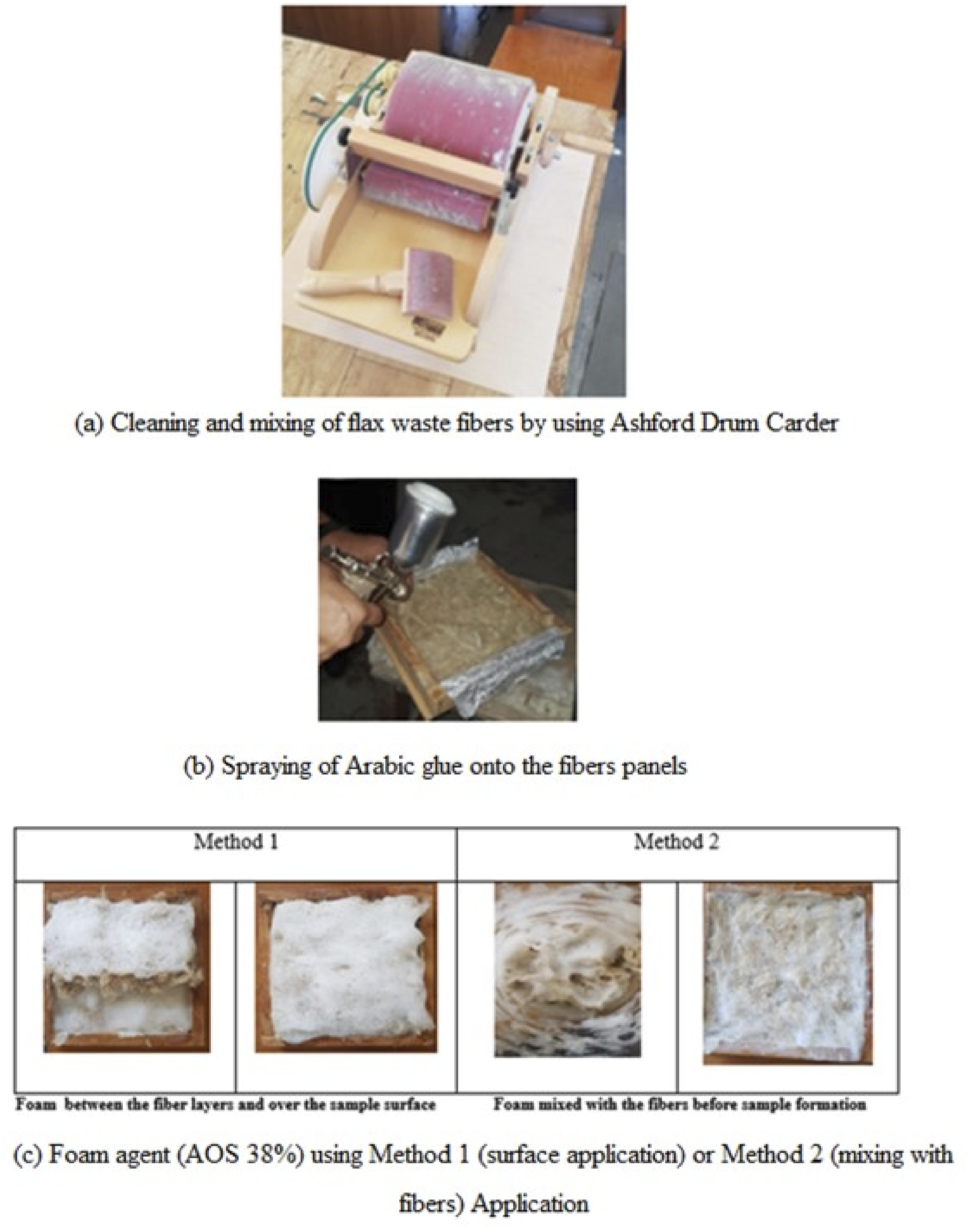
A hand carding device, as shown in Figure 1(a), is a manual tool used for aligning and cleaning fibers by detangling and separating them. It typically consists of two wooden paddles with fine metal teeth that grip and straighten the fibers when brushed against each other. This is achieved by passing the fibres between differentially moving surfaces covered with card clothing. It breaks up locks and unorganized clumps of fiber and then aligns the individual fibers to be parallel to each other. This process helps to remove impurities improving the uniformity of the flax fiber waste before further processing. The carding action enhances fiber separation, making it suitable for textile or composite applications requiring well-dispersed fibers. Fibers are thoroughly blended before being evenly spread into a thin layer on a 20 × 20 cm frame to achieve the desired panel thickness. The continuous process of opening and laying the material ensures uniform fiber distribution, promoting consistent thermal resistance throughout the panel. The resin spray method allows for precise control over the binder content, effectively balancing thermal and mechanical properties.
A light adhesive spray (Figure 1(b)) was applied over the initial layer to ensure even coverage without oversaturation, and it was allowed to partially dry to a tacky state to stabilize the fibers. Additional fiber layers were added, with glue sprayed between each one. This layering and gluing process continued until the desired thickness was reached, with periodic light compression applied to enhance bonding and ensure compactness. Finally, the completed structure was dried at 80°C in an oven and cured in a well-ventilated area at 24oC. Three distinct samples were carefully prepared, with each sample designed to incorporate varying parameters to evaluate specific performance criteria.
Two different methods were employed to prepare the panel samples. A foam was created by stirring a mixture of 38% Alfa Olefin Sulfonate (AOS) and water in a 25:75 ratio. The foam was then combined with the fibers, as illustrated in Figure 1(c)
Method 1, applying foam on both sides of the sample
Foam is applied to the top and bottom surfaces of the flax fibers separately. Thus, the foam adheres to the fibers from the outside, forming a panel structure when dried or set. The foam forms a layer on the surfaces, encapsulating the fibers. This method may result in a more uniform distribution of foam on the panel’s surface but potentially less penetration into the fiber core. The panel might have stronger bonding on the surfaces but less foam integration throughout the structure and have a smooth and consistent foam layer on its outer sides.
Method 2, Mixing fibers with foam before forming the panel
Flax fibers are thoroughly mixed with the foam to create a homogeneous mixture. This mixture is then spread or formed into a panel shape. The foam is more integrated throughout the structure, ensuring better distribution within the fibers. This method provides stronger internal bonding and more consistent mechanical properties across the thickness of the panel. The panel appears less uniform and more textured, as the foam is embedded within the fibers rather than coating the surface. Method 2 is expected to yield a panel with lower thermal conductivity because of the uniform foam distribution, enhancing its thermal insulation properties. Method 1, while effective for surface insulation, might result in less optimal performance due to higher thermal conductivity in the core region.
Modified guarded hot box design
Several methods exist to measure thermal conductivity, each with its advantages and limitations. These methods can be categorized into steady-state, transient, and comparative techniques.
38
Each hot box setup consists of two sealed rooms maintained at constant temperatures: a cold environmental chamber and a warm metering chamber. The test specimen or panel is installed between these two rooms. By assessing the heat flux between the rooms, we can determine the specimen’s overall thermal resistance, which includes the air film resistances on both the cold and warm sides. The thermal performance of the tested samples, under both steady-state and dynamic conditions, was evaluated using a modified guarded hot box that adheres to the EN ISO 8990 standard. This hot box comprises two chambers: a cold chamber equipped with a cooling system to maintain low temperatures and a hot chamber for high temperatures. A sample material is placed between the two chambers. Modifications were made to the standard design to enhance insulation and reduce heat losses, which typically arise from 3D heat dissipation and overall system losses. Figure 2 illustrates the layout of the hot box setup.38,39 Sketch of setup for measuring the thermal resistance.
The following heat balance must be verified:

The heat transfer components in the system are defined as follows: Φ in represents the heat supplied to the metering chamber to maintain steady-state conditions. Φ 1 accounts for the heat flow from the hot chamber to the external environment through the box walls, while Φ 2 describes the heat passing directly through the support panel. Bypass losses are characterized by Φ 3 , which refers to heat transfer from the metering chamber to the cold chamber via the support panel, and Φ 4 , representing heat flow from the metering chamber to the external environment due to the same panel. Lastly, Φ 5 signifies the heat loss caused by bypassing through the specimen. Once ϕ S is obtained, the simple division for the specimen area, A S , and the difference between the temperatures of each side of the system, ΔT, gives the specimen thermal transmittance.
To reduce heat loss, the interior walls of the box were insulated with 25 mm of glass wool, effectively minimizing heat flow (ϕ1 + ϕ2 + ϕ3 + ϕ4 + ϕ5). The thermal resistance of the box’s walls was increased to limit heat loss, and heat flow at the panel/box interface was addressed by applying airtight insulation tape and additional framing along the perimeter. The total thickness of the box walls measures 100 mm, and both chambers of the hot box have external dimensions of 300 × 300 × 600 mm. The thermal conductivity measurement of flax waste panels using the modified hot box method is minimally influenced by surface roughness, as the panels do not strongly reflect radiated heat within the closed hot room setup. While surface roughness can alter heat transfer by affecting contact area and thermal resistance, its impact is negligible in this context due to the dominance of conduction through the bulk material rather than surface interactions, as observed in methods like
Research indicates that surface roughness primarily affects thermal contact conductance at interfaces, especially when two solid surfaces are in direct contact.
Thus, while surface roughness is a critical factor in thermal contact conductance at direct interfaces, its influence diminishes in methods like the modified hot box, where bulk material properties and internal structure play a more significant role. Addressing the reviewer’s concern, the roughness of the panel surface does not substantially alter the thermal conductivity measurement in this experimental setup. The focus remains on the intrinsic thermal properties of the material rather than surface characteristics.41–43
The box was placed in a controlled laboratory environment, allowing for accurate regulation of the hot chamber’s temperature. At the beginning of the experiment, the hot chamber was heated to the desired temperature, after which the sample was placed inside the box. The cold chamber was maintained at 24°C. This temperature differential between the two chambers created a heat flow through the sample (ϕ in ). The heat flow across the panel was generated by sustaining a temperature difference (ΔT) between the cold chamber temperature (T0 °C) and the hot chamber temperature (T1 °C), which was continuously recorded for 1 hour.
The thermal conductivity (k) can be calculated using the temperature difference and known material properties. The standard formula is: • q is the heat flux, • A is the surface area of the material, • ΔT is the temperature difference between the hot and cold sides, • d is the thickness of the material.

Thermal conductivity calculation
The thermal conductivity (k) of the panel was calculated by evaluating the heat transfer process from a hot room (heated to 60°C) to an adjacent cold room (initially at 24°C) through the panel. 38 Initially, the two rooms at the same temperature (T0) are separated by a circular panel. During the experiment, the hot room is heated to T1°C, over (t) seconds and kept at this temperature throughout the test. As heat flows through the panel, the temperature in the cold room gradually increases and stabilizes at T2°C.
The parameters used for the calculation include the following: • Panel diameter (D): Measured in meters. • Panel area (A): Surface area in square meters (m2). • Panel thickness (d): Measured in meters. • Hot room temperature (T1): The constant temperature achieved in the hot room during the test • Heating time (t) to reach temperature (T1): Time in seconds for heating the hot room. • Cold room temperature (T2): Initially 24°C, increasing to a stable value due to heat transfer through the panel.
Calculation: (1) Determine the Mass of Air in the Cold Room. Calculate the mass of air present in the cold room using standard air density and the room’s volume. (2) Calculate the Heat Transferred (Q) to the Cold Room. Measure the amount of heat energy transferred to the cold room as the temperature rises from its initial value to T2. (3) Compute Heat Flux (q) Through the Panel. Calculate the heat flux, which represents the rate of heat transfer per unit area of the panel. (4) Apply Fourier’s Law to Determine Thermal Conductivity (k). Use Fourier’s Law of Heat Conduction, which relates heat flux to thermal conductivity, temperature difference, and panel thickness, to compute the thermal conductivity of the panel. (5) The panel porosity was calculated by equation (3).

Plan of experimental work for studying the effect of absorber parameters of flax fiber waste panels on thermal resistance
The specifications of the different samples.

*Precision spacers made of the same material were used to maintain a consistent 1 cm spacing between the panels. These spacers were positioned at the edges and center during assembly to ensure uniform spacing throughout the experiment.

Plan of experimental work.
Results and discussion
The thermal conductivity coefficient (k) of flax fiber mixed with glue panels can be determined using various theoretical models, each with its assumptions and applicability. A common method is the Rule of Mixtures (ROM), which estimates (k) by considering the volume fractions and individual thermal conductivities of the flax fibers and the glue matrix. However, the ROM often oversimplifies the composite’s microstructure, leading to inaccuracies, particularly in non-isotropic materials or those with unevenly distributed fibers. It neglects factors such as fiber orientation, interfacial thermal resistance, and microstructural complexity, resulting in potential overestimates or underestimates. 44 More advanced models, such as the Effective Medium Theory (EMT) and Maxwell-Eucken models, provide more realistic predictions by accounting for the shape, orientation, and distribution of fibers within the matrix. These models are more accurate than the ROM, particularly for composites with well-dispersed fibers and low to moderate fiber volume fractions, although they may still encounter difficulties with highly anisotropic materials or complex microstructures. 45 Numerical methods, like finite element analysis (FEA), offer the highest precision by simulating heat transfer through the detailed microstructure of the composite, incorporating factors such as fiber orientation, interfacial effects, and porosity. However, these methods require significant computational resources and detailed input data. While they can interpret experimental data from hot and cold room methods and consider the composite’s microstructure, they often rely on idealized assumptions that may not align with real-world conditions. 44
Experimental validation, using techniques like hot and cold room methods, remains essential for refining and validating both theoretical and numerical models, as it provides direct measurements of thermal conductivity that account for all influencing factors. In practice, a combination of experimental measurements and numerical simulations offers the best approach for accurately determining the thermal conductivity of flax fiber-polymer composites, with theoretical models like ROM and EMT serving as supplementary tools for initial estimates or conceptual understanding.
45
Figure 4 illustrates the structure of the fibrous panel. This textile fiber thermal insulation panel consists of fibers positioned between upper and lower surfaces, bonded together by a suitable binder that secures the fibers in the space between the two surfaces. The arrangement of these fibers determines the panel’s porosity.
46
The fiber assembly structure.
All three modes of heat transfer—conduction, convection, and radiation—operate simultaneously to move heat from a hot room to a cooler one through insulating material. The effectiveness of insulation hinges on its capacity to minimize each of these mechanisms, thereby reducing the overall heat flow through the panel. Understanding these processes is essential for designing more efficient thermal insulators.
Effect of the hot room temperature on the thermal performance of insulation panels
The thermal performance of flax fiber insulation panels was evaluated under varying hot room temperatures (T1). Figure 5 illustrates the relationship between the cold side temperature (T2) and time for different values of T1 (30°C, 45°C, and 60°C). Initially, the cold side of the panel (T2) is at room temperature (24°C), while the hot side (T1) is set to a higher temperature. The temperature difference (ΔT = T1 – T2) creates a driving force for heat transfer through the panel, governed by Fourier’s law of heat conduction. The value of T2 versus time.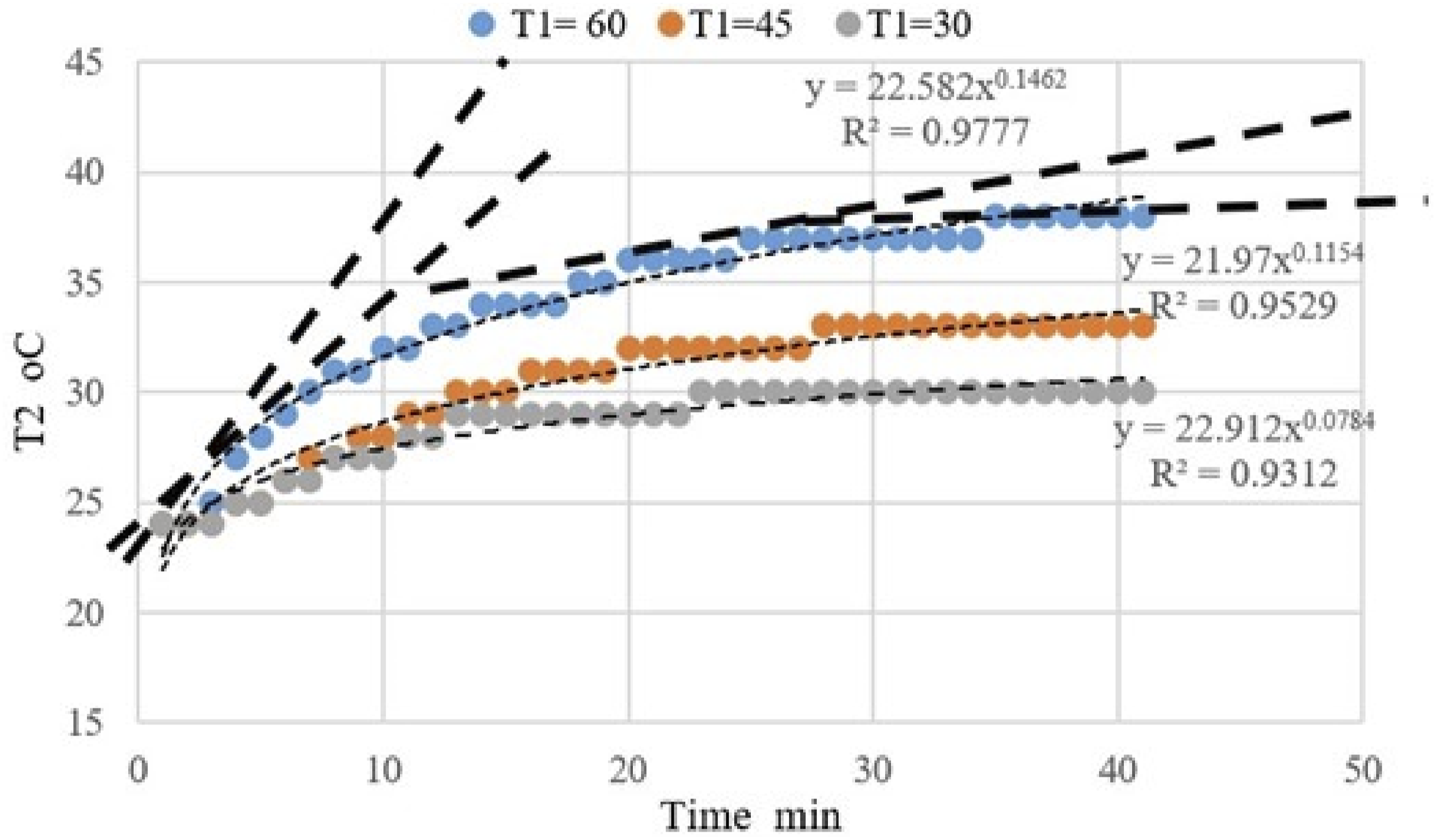
As heat flows from the hot side to the cold side, T2 begins to rise. The rate of this increase is initially rapid due to the large temperature difference, but it slows over time as T2 approaches T1. This results in a nonlinear relationship between T2 and time, as shown in Figure 5. The panel’s thermal resistance delays the rise in T2, with higher resistance resulting in slower and smaller temperature increases.
Figure 6 shows the linear relationship between T1 and final value T2 under steady-state conditions. The equation T2 = 0.703 T1 (R2 = 0.99) indicates that 70.3% of the temperature effect on the hot side is realized on the cold side, reflecting the system’s efficiency in heat transfer. This linear behavior is consistent with Fourier’s law, where the heat transfer rate is proportional to the temperature gradient. Effect of T2 versus T1.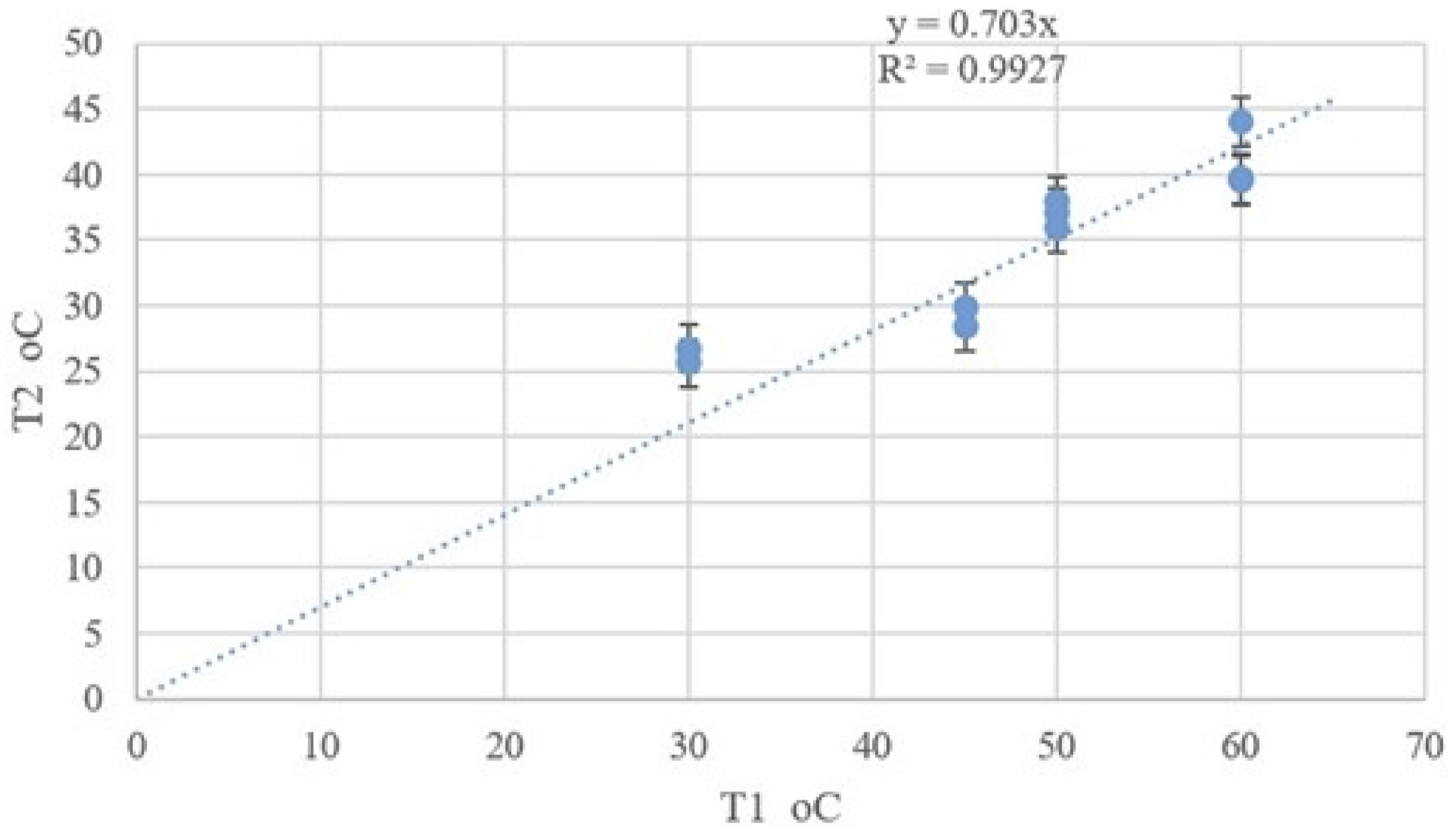
The impact of (T1) on thermal conductivity can be attributed to the substantial volume of air within the flax fibers. As the average temperature increases, the kinetic energy of the air molecules rises, enhancing convective heat transfer. This mechanism varies significantly with temperature, alongside heat transfer by conduction. For porous or fibrous panels, higher temperatures may lead to increased heat transfer through the air trapped within the pores, as the thermal conductivity of air also rises with temperature. The thermal conductivity of fiber insulator panels measured using a modified hot box setup changes with variations in the temperature at the hot side due to the temperature-dependent nature of heat transfer mechanisms. As the temperature rises, molecular vibrations within the fibers intensify, enhancing conduction, while radiative heat transfer becomes more significant due to the porous structure of the material. Additionally, intrinsic thermal properties of the fibers, such as density and specific heat capacity, can shift at higher temperatures, further influencing conductivity. Air gaps and voids within the panel also play a role, as changes in air behavior at elevated temperatures impact overall heat transfer. These combined factors explain the variation in thermal conductivity with temperature changes in such setups.47–49
Results of measuring the flax waste samples.

Analysis of the different panel parameters on the thermal conductivity of flax waste panels
Effect of panel density
The influence of panel density on thermal conductivity and insulation properties is essential. Optimizing density is fundamental for balancing thermal conductivity with mechanical strength.
The measurement of thermal conductivity in flax waste panels using the modified hot box method is primarily influenced by the structure of the panel, as these panels do not significantly reflect radiated heat within the enclosed hot room setup. When the sample weight is held constant and the panel is composed of nonhomogeneous tufted short flax fibers, the heterogeneity of the fiber distribution plays a crucial role in the heat transfer behavior, particularly in the modified hot box method. In this case, the tufts of fiber create localized high-density areas surrounded by low-density air spaces, which can considerably impact thermal conductivity (k) due to both conduction heat transfer and air movement.
The non-homogeneity of the fiber distribution in these tufted panels enhances heat transfer within the air spaces, thus contributing to the measured thermal conductivity in the modified hot box configuration. The combined mechanisms of convection, conduction, and radiation through the panel render thermal conductivity less reliant on the overall weight of the panel and more a function of the panel’s structure.40,42,48 The thermal conductivity (k) of fiber insulating panels is dependent on the fiber distribution and packing density of the material.
Specifically, the thermal conductivity (k) of the flax fiber panel is influenced by the orientation of pores and fibers, which governs how heat is conducted through the material. Consider the following: (1) Effect of Increased Pore Areas on Thermal Conductivity • When thicker panels are used (with constant weight), the fibers are distributed over a larger volume, resulting in increased porosity. • This leads to a greater number of air pockets, which serve as thermal resistances. However, if the pores are large and interconnected, heat can be transferred more readily by convection or radiation, thereby increasing k. • This explains why extremely high-porosity materials may exhibit unexpectedly high (k) values due to air movement. (2) Influence of decreasing pore volumes (By Incorporating More Fibers Per Unit Volume) • When panel thickness is reduced while maintaining constant weight, the fibers become denser. • This decrease in large air pockets leads to reduced porosity. • Increased fiber-to-fiber contact enhances solid-phase heat conduction, resulting in lower (k).Consequently, denser materials typically exhibit lower thermal conductivity compared to porous ones.
Figure 7 shows the increase of the bulk density of the sample reduces its thermal conductivity. The high R2 (0.88) suggests that bulk density strongly influences thermal conductivity and that the relationship is well-modeled by the power-law function. Thermal conductivity versus sample density.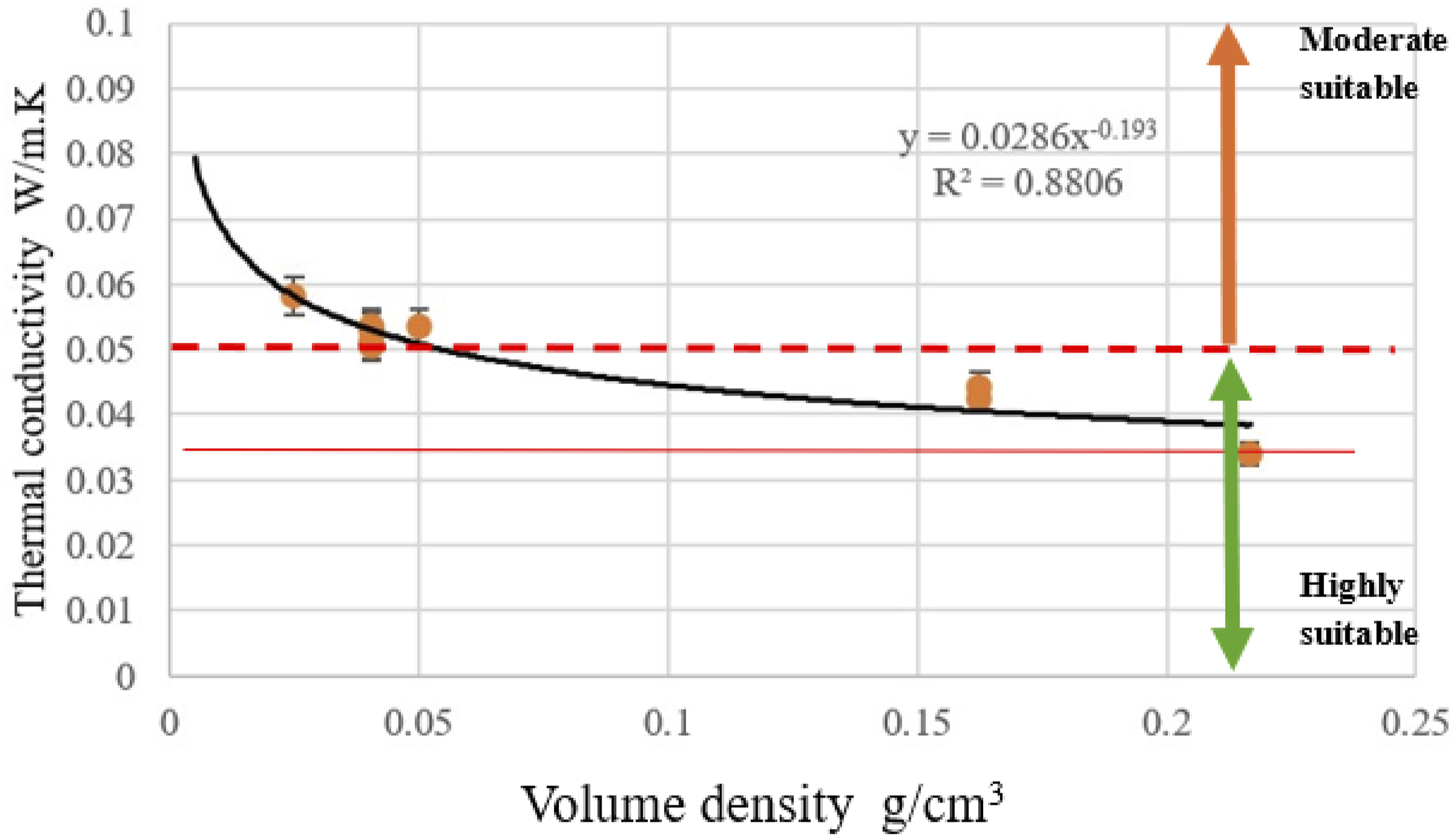
The relationship between bulk density and thermal conductivity in flax waste panels is crucial for optimizing their thermal insulation properties. As bulk density increases, the material becomes more compact, which reduces the amount of air trapped within the fibers. Since air is a poor conductor of heat, higher bulk density results in lower thermal conductivity. This phenomenon can be attributed to mechanisms such as air trapping, where flax fibers naturally entrap air within their structure, enhancing insulation. Additionally, an increase in bulk density reduces the overall porosity of the material, minimizing void spaces that could facilitate heat transfer. Thermal bridge mitigation also mitigates thermal bridging by providing fewer pathways for heat to travel. To optimize manufacturing, it is essential to enhance bulk density to achieve the desired thermal conductivity while also balancing other properties, such as weight and structural strength. While increasing bulk density can improve thermal insulation, it may also impact the panels’ structural integrity, necessitating careful consideration during production.50–53
This trend can be further explained by the fact that lower bulk densities lead to a more porous material, which results in more air pockets. Although air has low thermal conductivity, excessive porosity can create pathways for convective heat transfer, thereby increasing overall thermal conductivity. In contrast, as bulk density rises, the fibrous structure compacts, reducing voids and improving insulation properties. 54 This compaction decreases effective thermal conductivity by minimizing heat transfer pathways and improving insulation properties.
Effect of panel porosity
The increase in thermal conductivity with porosity observed here, Figure 8, is likely due to the nonhomogeneous distribution of tufts, which creates localized fiber-rich conductive paths. The modified hot box method may have enhanced this effect due to its inclusion of convection and radiation, making it different from standard steady-state tests. Thermal conductivity versus sample porosity.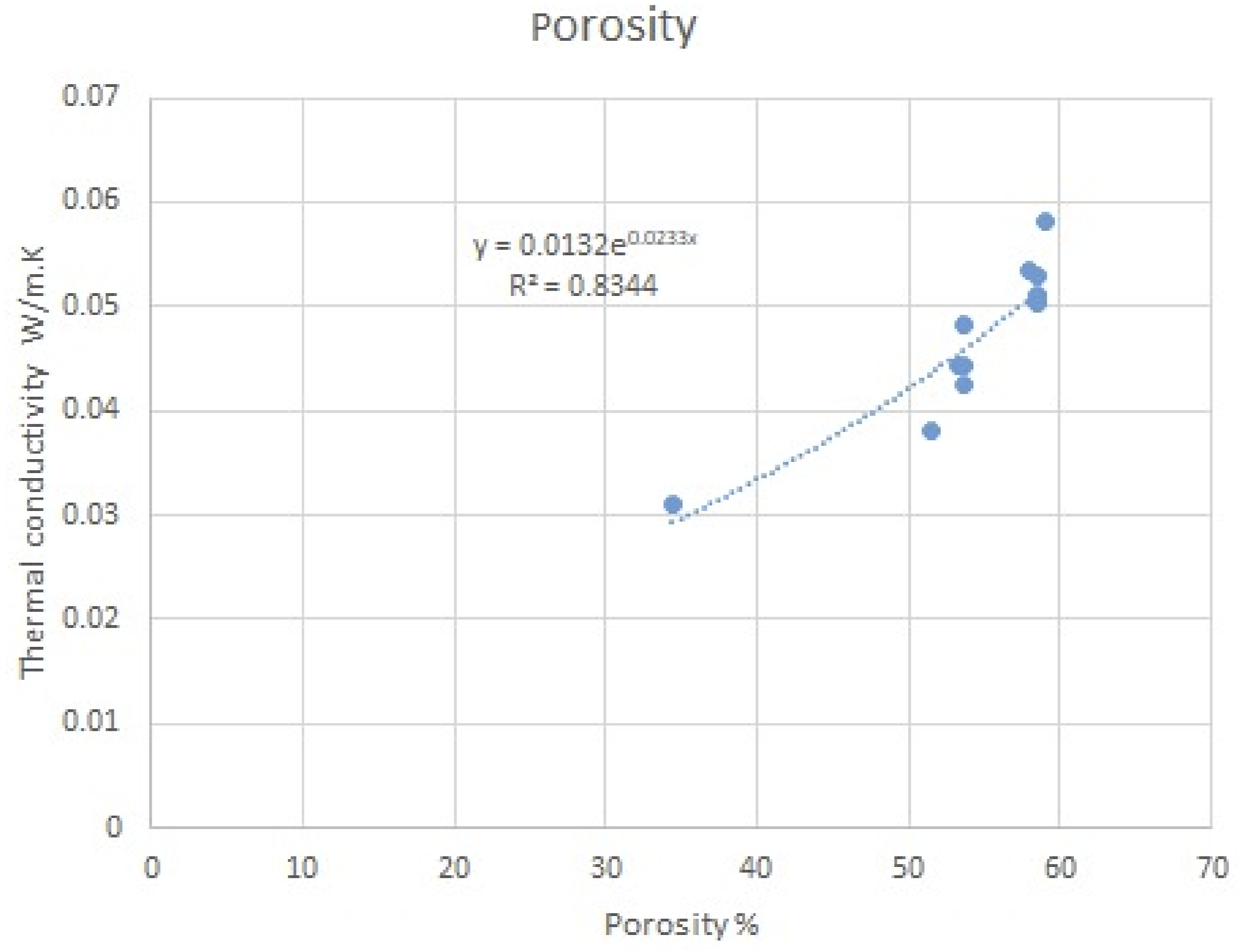
The presence of tufts creates areas with varying thermal resistance, potentially leading to localized heat buildup and elevated apparent thermal conductivity values. Additionally, air convection within the test chamber could interact with these heat pathways, affecting the measurements. The non-uniform fiber distribution may also impact surface heat interactions, altering the rates of radiation absorption and emission.
Effect of binder type
The study investigated the use of three types of binders as shown in Figure 9, which were used in the panel fabrication process: Arabic natural glue, unsaturated polyester, and a foam agent (AOS 38%). Each binder type was evaluated for its impact on thermal conductivity and insulation performance. • Arabic Natural Glue: This bio-based binder has a thermal conductivity ranging from 0.1 to 0.2 W/m·K, depending on its composition and moisture content. It helps maintain porosity while ensuring structural stability, making it suitable for insulation applications. • Unsaturated Polyester: This synthetic binder exhibits thermal conductivity values between 0.2 and 0.3 W/m·K.
55
While it provides stronger mechanical properties, its higher conductivity may reduce insulation performance. • Foam Agent (AOS 38%): When mixed with the fibers before panel formation, this binder creates a uniform porous structure that traps air pockets, resulting in lower thermal conductivity. Effect of the binder type.

To calculate the expected thermal conductivity of the panels, the series model was applied, as heat flows perpendicular to the fibers (through the panel’s thickness). The formula used is:
For panels using Arabic glue, the calculated thermal conductivity (kpanel ) was 0.0505 W/m·K, closely matching the measured value of 0.051 W/m·K. For panels with unsaturated polyester, the calculated value was 0.0534 W/m·K, while the measured value was 0.0507 W/m·K. The slight differences between the experimental and calculated values can be attributed to factors such as fiber orientation, tuft size, manufacturing processes, porosity, and moisture content.
The flax waste sample ID 25, prepared using Method 2 (where the foaming agent was mixed with the fibers before panel formation), exhibited the lowest thermal conductivity among the tested samples. This suggests that it is the most efficient thermal insulator. The enhanced performance is due to the uniform distribution of foam within the fiber matrix, which creates a consistent porous structure that reduces heat conduction pathways. Additionally, the foam’s ability to trap air pockets, known for their low thermal conductivity, further improves the panel’s insulation properties.
In general, foams like AOS 38% are recognized for their low thermal conductivity because they effectively trap air within their structure. The performance differences observed in this study highlight the importance of binder selection in designing insulation solutions. While natural materials like Arabic glue and synthetic polymers like unsaturated polyester can deliver comparable insulation, foam additives may require optimization of manufacturing techniques to maximize their insulating properties. 56
Compression and compaction
Thermal conductivity is affected by the mechanisms through which heat moves within a material. Manufacturing processes, such as compaction, play a critical role in enhancing thermal resistance by minimizing air gaps. 57
The results, Figure 10, indicate that as the thickness of the fibrous panel increases, its thermal conductivity also increases. This is due to a combination of denser fiber packing, reduced air pockets, and more efficient heat transfer through the material. Understanding this relationship is crucial for optimizing the thermal insulation properties of materials, ensuring that the desired balance between thickness and thermal resistance is achieved in practical applications. Effect of sample thickness on the thermal conductivity.
Based on the measured data of thermal conductivity (W/m K), the classification of the samples for their suitability as thermal insulation panels is as follows, higher density can enhance the flax fiber material’s contribution to thermal conductivity, overriding the insulating effect of air pockets. The method for forming the flax waste fiber and binding material begins with flax fiber waste in the form of opened tufts. A light adhesive spray is initially applied to ensure even coverage without oversaturation, allowing it to partially dry until tacky, which helps stabilize the fiber tufts. Additional layers are then sprayed with glue, and this process is repeated until the desired thickness is achieved, ensuring that the fibers retain air within the tufts. After the panel dries, compressing the sample to increase its density may deform the fiber tufts but keeps the air pockets intact within the final panel.
The morphology’s influence on thermal conductivity during the consolidation stages is a key consideration. The observed reduction in thermal conductivity indicates that the insulating effect of the air pockets remains significant, even at higher densities. By maintaining a balance between fiber material and air content, the insulating efficiency of the flax/glue composite panel is enhanced, making it suitable for thermal insulation applications. 58 Thinner samples may be preferable due to their lower thermal conductivity. Choosing the appropriate type of fiber flax panel thickness based on the specific application requirements can optimize the thermal of the building while also benefiting from the environmental advantages of using natural materials.
Effect of flax waste fiber-to-machine tow blending ratio
The structure of flax fibers typically contains more void spaces and air pockets, which further enhances their insulating properties. Additionally, blending waste material with flax machine tow fiber reduces the overall thermal conductivity, as the low conductivity of flax fiber offsets the higher conductivity of the waste material.
Assessing different ratios of flax waste fiber-to-machine tow blending Ratio, to find the optimal balance between structural integrity and insulation performance.
Figure 11 illustrates that as the proportion of flax fiber in the blend increases, thermal conductivity decreases. This suggests that flax machine tow panels exhibit lower thermal conductivity compared to the flax waste panel used. The results indicate that a higher proportion of flax fiber in the composite panel results in reduced thermal conductivity, thereby enhancing its effectiveness as an insulating panel. This refers to longer, high-quality flax fibers with uniform properties and lower density. These fibers are more effective in reducing thermal conductivity due to their structural integrity and ability to create interconnected voids within the panel. Flax waste materials typically include a mix of shives, shorter fibers, and other by-products of flax processing. Such materials are denser and less porous, which increases their thermal conductivity compared to pure flax fibers. These findings indicate that increasing the proportion of flax fibers in the blend enhances the thermal efficiency of composite panels, rendering them suitable for building insulation applications. This improvement is primarily attributable to the reduced thermal conductivity associated with higher flax fiber content, as these fibers exhibit low intrinsic thermal conductivity and effectively disrupt heat conduction pathways. Consequently, flax fiber waste and flax machine tow waste, blends are valuable components for high-performance thermal insulation panels. Effect of the blend ratio on the thermal conductivity.
Air bubble sheet effect
Incorporating an air bubble sheet into thermal insulating fiber panels can significantly influence their thermal conductivity, enhancing their overall insulation performance. The introduction of air bubble sheets creates additional barriers to heat flow, effectively increasing the thermal resistance of the panel.59,60 Figure 12 shows the effect of using an air bubble sheet inside the structure of a panel on thermal conductivity. Effect of use of layers of air bubble sheet on thermal conductivity.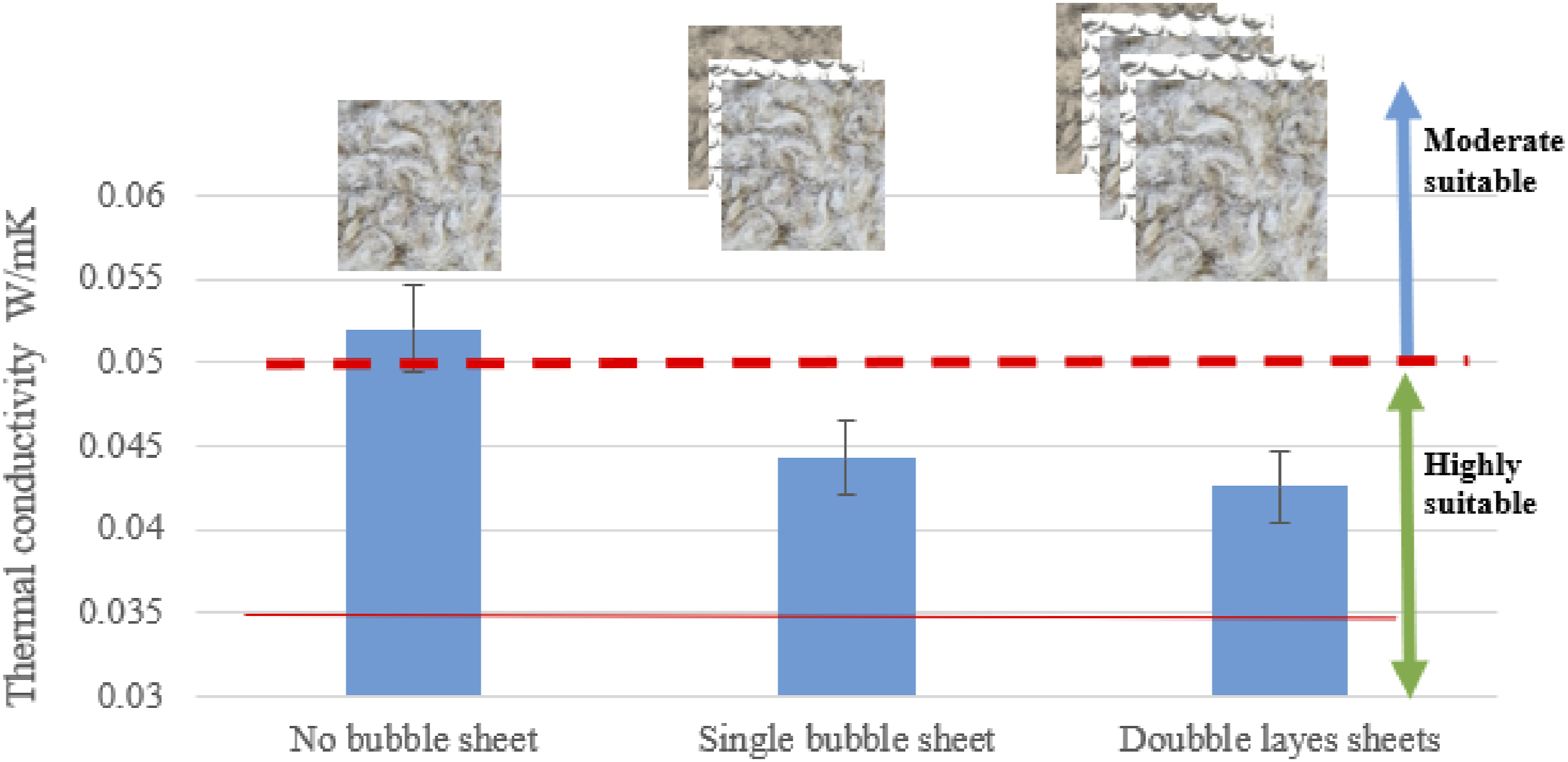
Normal Sample has the highest thermal conductivity of 0.052 W/m·K. Adding one layer and two layers of bubble sheet reduces the thermal conductivity to 0.044 W/m·K and 0.042 W/m·K respectively. Bubble sheets work by trapping air in their bubbles. Air is a poor conductor of heat, so trapping air within the layers of the bubble sheet reduces the overall heat transfer. The effect of adding a second layer is minimal, suggesting that a single layer is sufficient for effective thermal insulation. A single layer of bubble sheet is enough to lower thermal conductivity, while adding more layers may not result in a proportional decrease.
Flax waste panel covered by aluminum foil
The effectiveness of reflective or protective coatings in enhancing resistance to radiative heat transfer.
As shown in Figure 13, covering the flax waste completely with an aluminum foil sheet further reduces thermal conductivity. Incorporating random pieces of aluminum sheet into the flax waste reduces thermal conductivity. Aluminum sheets, while good conductors themselves, can disrupt the continuity of heat flow through the flax waste. The presence of these random pieces creates air gaps and reflective barriers, which help to reduce the overall heat transfer. The full-face cover provides a more uniform and continuous barrier, enhancing the insulation effect. In hot room, radiative heat transfer becomes more significant, especially in low-density insulating materials. Radiation occurs through the pores and can elevate the effective thermal conductivity. Effect of the aluminum foil layer on thermal conductivity.
The aluminum sheet reflects radiant heat and the air gaps between the flax waste and the sheet contribute to reducing conductive heat transfer. These findings illustrate how incorporating aluminum sheets into flax waste enhances its thermal insulation properties by disrupting heat flow and introducing reflective barriers. 61
Classification of samples
The thermal conductivity values of the tested samples, ranging from 0.0298 W/m·K to 0.325 W/m·K, demonstrate the potential of flax waste fiber panels as effective thermal insulation materials. Panels with thermal conductivity below 0.05 W/m·K (e.g., Samples 4, 5, 6, 7, 10, 11, 12, 13, 14, and 15) are highly suitable for insulation applications, as they minimize heat transfer and meet the performance standards of commercial materials like mineral wool (0.035–0.05 W/m·K) 62 and expanded polystyrene (0.035–0.040 W/m·K). 63
In contrast, panels with thermal conductivity above 0.1 W/m·K (e.g., Samples 3 and 9) require further optimization to improve their insulation performance. These findings are consistent with previous studies on natural fiber-based insulation materials, such as hemp fiber insulation (0.04–0.05 W/m·K)
33
and luffa fiber panels (0.04–0.055 W/m·K),
28
which highlight the importance of material composition and fabrication techniques in achieving low thermal conductivity
Further improvement of thermal insulation
Compares the thermal conductivity values of modified flax waste samples
The above experimental plan indicates the sample’s thermal insulation of flax waste varied depending on several factors. A blend of these strategies, tailored to the specific material and manufacturing process, would improve thermal insulation properties best. However, to fully utilize their potential, further improvement in their thermal insulation properties is essential. By exploring various methods such as a combined approach.
The value of thermal conductivity of modified flax waste absorbers in comparison with existing insulation panel.
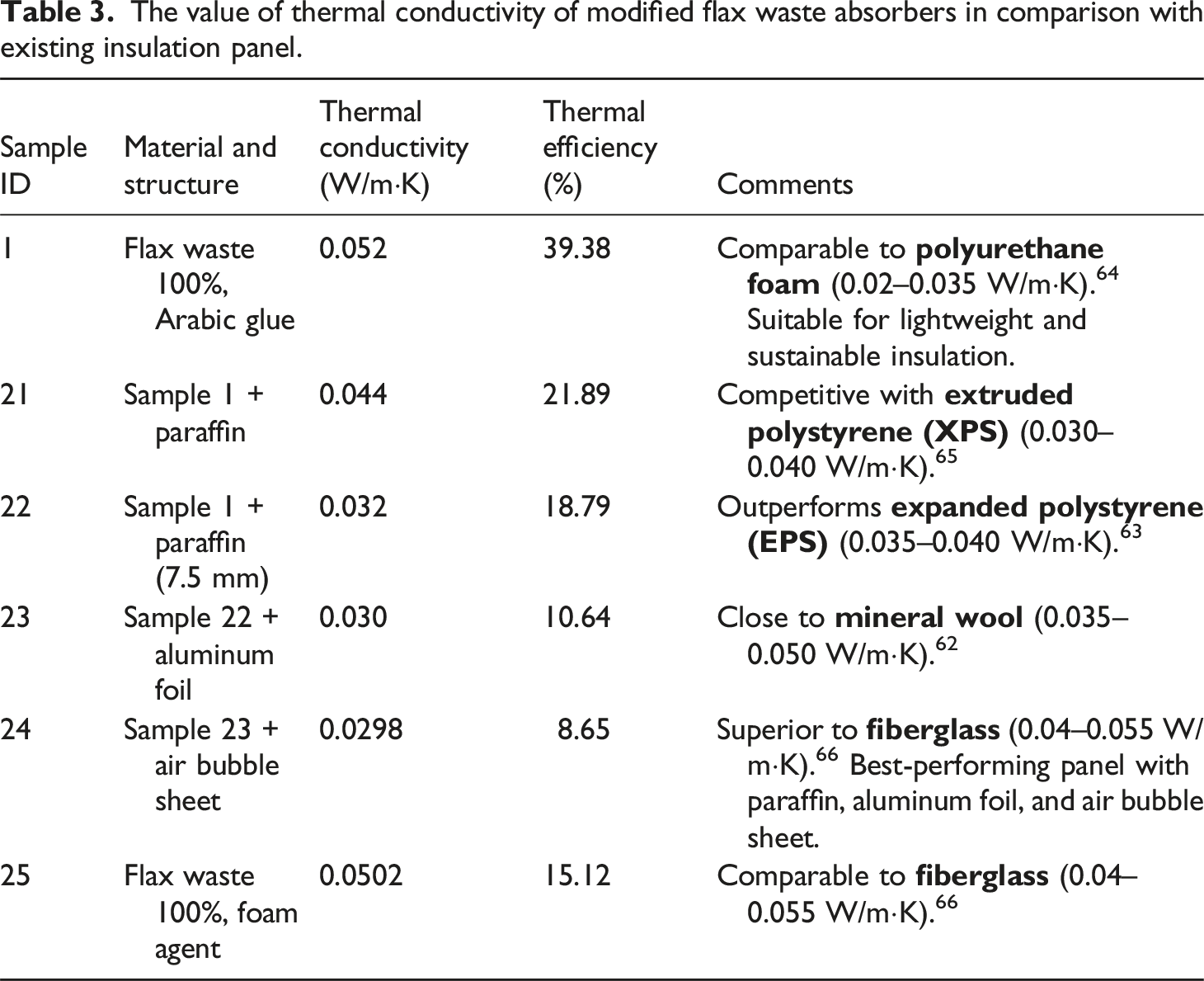
Further improvements are observed in Sample 22, where the thickness is reduced to 7.5 mm with sprayed paraffin, resulting in a thermal conductivity of 0.032 W/m·K. This value is slightly better than that of Expanded Polystyrene (EPS) (0.035–0.040 W/m·K), highlighting the benefits of reduced thickness for improved insulation.
Sample 23, which includes sprayed paraffin and an aluminum sheet (7.5 mm thickness), achieves a thermal conductivity of 0.030 W/m·K, aligning it with Mineral Wool (0.035–0.05 W/m·K) and further enhancing its insulation capabilities. The best-performing panel, Sample 24, combines sprayed paraffin, an air bubble sheet, and an aluminum sheet (7.5 mm thickness) to achieve a thermal conductivity of 0.0298 W/m·K, outperforming Fiberglass (0.04–0.055 W/m·K) and demonstrating superior insulation performance.
These modified flax waste samples present promising alternatives to commercial insulation materials, offering a balance of thermal performance, sustainability, and cost-effectiveness. Notably, the thermal resistance of Sample ID 24 is 148% higher than that of Sample ID 21, and its thermal conductivity matches the range of 38% Alfa Olefin Sulfonate (AOS) (0.020–0.035 W/m·K), underscoring its potential as a high-performance insulation material.
The thermal conductivity of expanded polystyrene (EPS) ranges from 0.035 to 0.040 W/m·K, while extruded polystyrene (XPS) ranges from 0.030 to 0.040 W/m·K, both of which are higher than the 0.0298 W/m·K achieved by the modified flax waste panels (Sample 24), demonstrating their potential as a sustainable and high-performance alternative to conventional polystyrene foam for insulation applications. 63
Heat transfer efficiency of modified flax waste absorbers
Thermal insulation panels are materials designed to reduce the transfer of heat between different areas, playing a crucial role in maintaining desired temperatures in various applications. They are used in buildings, appliances, and industrial settings to improve energy efficiency, reduce energy consumption, and lower operational costs. The value of heat transfer efficiency in the case of textile fiber insulation panels depends on their application. In insulation, the goal is to reduce heat transfer (i.e., low heat transfer efficiency), which means the material should act as an effective barrier to minimize heat flow. Heat transfer efficiency is typically expressed as a percentage, indicating how well a system performs relative to its ideal (lossless) heat transfer potential.
Textile fiber insulation panels achieve low heat transfer efficiency, ensuring maximum thermal resistance. Figure 14 shows the relation between the heat transfer efficiency and the modified panel’s thermal conductivity, which is highly correlated with panels’ thermal conductivity R = 0.93. The improved design of flax waste thermal conductivity panels thermal conductivity and heat transfer efficiency.
Designing thermal resistance panels from flax waste holds significant importance in promoting sustainability and energy efficiency. Utilizing flax waste not only reduces environmental impact but also transforms an otherwise discarded resource into a valuable material for insulation. The thoughtful design of these panels enhances their functionality by optimizing fiber arrangement, ensuring uniform distribution, and integrating natural binders. These design improvements contribute to superior thermal insulation performance, making the panels effective in minimizing heat transfer. As a result, they serve as an eco-friendly alternative to conventional insulation materials, supporting the broader goals of green building practices and contributing to a more sustainable future.
Conclusion
This study demonstrates the potential of flax fiber waste as a sustainable and cost-effective material for thermal insulation panels, offering a viable alternative to conventional insulation materials. By building on existing methodologies—such as the use of bio-based binders (e.g., Arabic natural glue) and reflective layers (e.g., aluminum foil)—and introducing innovative modifications like air bubble sheets and sprayed paraffin, we optimized the thermal performance of flax fiber panels. The modified sample (Sample 24), incorporating these enhancements, achieved a thermal conductivity of 0.0298 W/m·K, outperforming commercial materials like fiberglass (0.04–0.055 W/m·K), mineral wool (0.035–0.05 W/m·K), and polystyrene foam (EPS: 0.035–0.040 W/m·K; XPS: 0.030–0.040 W/m·K). This highlights the effectiveness of the proposed approach in creating a consistent porous structure and reducing heat conduction pathways.
The proposed methodology can be directly applied to the development of eco-friendly insulation panels for building applications, offering a balance of thermal performance, sustainability, and cost-effectiveness. However, further research is needed to optimize manufacturing processes, improve moisture resistance, and ensure long-term durability. Scaling up production and conducting field tests will also be essential to validate the practical applicability of these panels in real-world construction scenarios. By bridging the gap between existing methodologies and innovative modifications, this study provides a sustainable solution that aligns with the growing demand for energy-efficient and environmentally friendly building materials.
Footnotes

Funding
The author(s) received no financial support for the research, authorship, and/or publication of this article.
Declaration of conflicting interests
The author(s) declared no potential conflicts of interest with respect to the research, authorship, and/or publication of this article.