




Abstract
This study is aimed at the development and evaluation of carbon nanotube (CNT)-based planar heating systems for integration in automotive seats featuring ventilation channels to allow for an enhancement in energy efficiency, safety, and user comfort. Employing roll-to-roll (RTR) manufacturing techniques and advanced carbon nanotube coating technology, this research was successfully able to produce thin, flexible, and durable heating pads. These heaters are much more efficient than traditional wire heating systems, reducing energy consumption by up to 49%, with quick and uniform heating capabilities. The experiment was conducted by manufacturing two planar heating sheets (back sheet and bottom sheet). The experiments were conducted through stability and durability performance test evaluation, heat generation performance evaluation, and comparison analysis with third-party samples. Through the tests, consistent thickness, high precision, and uniform heat distribution were confirmed, indicating safety. The comparison with a third-party sample showed that the back and bottom sheets have a higher power consumption efficiency per unit area of about 45 % on average. Thus, the planar heater sheet developed in this study can be applied to various smart heating product development fields.
Introduction
The automotive industry is crucial to the global economy, driving production, exports, jobs, and technological innovation. The global monetary value of the automotive industry was estimated at around 2.8 trillion dollars in 2022. 1 Besides boosting international trade movement, the sector also provides considerable momentum for the global economy and technology through the ripple effect of electronic, capital, research, and innovation throughout the supply chain. 2 The rapid change in the industrial era allows us all to have faster transportation means. In addition, people around the world have long fantasized about environmentally friendly cars and self-automobiles.
Given the premise described, how industries like automotive interiors, particularly seat materials, can develop at the same time as automotive manufacturing becomes more and more clear. First, the automotive seat must meet the requirements of comfort and safety. For example, ventilated seats are available in summer and heated seats are available in winter, cutting off the vehicle heating supply, anaerobic oxygen in the vehicle, reducing the driver’s alert, and causing fatigue. 3 On the other hand, the hot air emitted from the heater during winter use causes facial dryness, and long-term use and ultraviolet light can cause wrinkles and black spots on the face. 4 At present, ordinary metal heaters are used in the seat, which has a safety hazard and is likely to have fire. This requires a certain material to separate the surface layer of the seat from the heater, so that the metal heater becomes the intermediate conductor, which increases the user’s use concern and maintenance cost. Compared with the traditional heating seat, there are many disadvantages such as high cost, and heavier manufacturing costs, which will directly increase the overall production cost of automakers. With the development of electric vehicles and autonomous driving, it is a major challenge in automotive engineering to derive better solutions to maximize battery life and user comfort and safety.
Portable heating devices like electric blankets have seen growth, yet energy-efficient car seat heaters remain a challenge. Advanced seat heating systems with body monitoring sensors will provide the ground needed to assess such things as body posture, micro-movements, and temperature changes in a highly accurate fashion, which can thus provide safety for users and make reductions in both the required amount of data and the associated costs.
The growing global attention on energy-saving technologies has increased owing to rising energy prices and environmentally friendly pressures. The efficiency of Carbon nanotubes (CNT) technology could be great, and it remains an ideal eco-friendly material for heating applications. 5 From the infallible consumption reduction to the uniform heating provided by infrared heating, CNT-based planar heaters provide a suitable option in electric vehicle seat heating systems, architectural inner heating, and residential heating. 6
Thus, this research combines smart fiber technology and a CNT coating process for application in automobile seating that improves occupant safety and comfort while enhancing automobile manufacturers’ cost-cutting and profitability. In addition, the aim of this research was to develop a planar heated automobile seat based on CNT technology with integrated ventilation channels to improve energy efficiency, safety, and user comfort, and this research presented an automotive seat system based on CNT heating technology that aimed to improve heating efficiency, optimize energy management, and enhance user comfort.
Literature review
Planar heater technology
In recent years, the planar heaters, one form of flexible heating element, have found wide application because of their several advantages. Unlike traditional cable-based heaters, planar heaters remove the bulky of cables; evaporation of heat buildup reduces any electromagnetic hazards for humans. 7 The ultra-thin design, typically less than 1 mm thick, allows thin addition with enhanced comfort and discretion. 8 Thus, they are quite suitable to generate heat for body-contact products such as smart heating pads, smart blankets and mattresses.
Planar heaters are exceptionally robust in their heating performance, retaining their heart in multiple cycles of bending, heating, etc., which translates to extending product life. Planar elements are extremely soft and have high elasticity, thus greatly enhancing the comfort of the user in extended use and without inflicting pressure or irritation. Moreover, planar heaters are easy to install since they do not involve very elaborate fixtures or processes, thus reducing installation costs. 9 These attributes make them feasible for mass production and large-scale installations.
Planar heaters are more efficient than traditional metal-cable heaters, using significantly less energy while guaranteeing faster heating. Planar heaters are appropriate for instantaneous heat distribution in some applications due to their quick heating, such as smart heating beds, electric car seat warmers, and heating walls. Planar heaters are now more viable in the industrial sector because of recent advancements that have also decreased the costs associated with their design and manufacture.
Planar heaters are eco-friendly, using sustainable materials that minimize environmental impact while operating efficiently. Planar heaters, meanwhile, employ thermally conductive, flexible materials that offer greater energy efficiency. These materials are efficient in converting electricity into heat energy, even at lower temperatures, and guarantee an output power density that is about 1.7 times higher than that of metal cables. 10 Safety is another benefit, they generate far-infrared radiation with 90% plus emissivity, known for enhancing blood circulation and muscle pain relief. 11 Hence, these characteristics equip planar heaters with the potential of turning into a benefactor for health and no heating or, not merely as warming instruments.
A decisive advantage of planar heaters is their rapid heating. Compactly, they heat plain heaters faster than ordinary metal cabling: hence, they attain the desired temperature much more quickly. This greatly enhances heating efficiency, vastly making them suited for any application by demanding the fast rate of delivery.
One of their main advantages is rapid heating, reaching the desired temperature much faster than conventional systems. This makes them ideal for applications that require fast heating. The flexibility of planar heaters allows them to be integrated into a variety of surfaces, from intelligent underfloor heating to walls and ceilings, providing consistent heat from −40°C to 250°C. 12 Combined with IoT technology, planar heaters enable remote temperature control, providing energy-efficient, modern heating solutions for the smart home. 13
Carbon nanotube surface heating technology
Recently developed substances called carbon nanotubes (CNTs) are composed of hollow cylinders containing hexagon-shaped carbon atoms. CNTs are frequently used in heating materials due to their exceptional qualities, which include being flexible, robust, lightweight, compact, and having great electrical and thermal conductivity. They are ideal for applications requiring quick and even heat distribution, such as flexible electronics, automobile seats, and smart textiles, because of their excellent thermal conductivity, which enables efficient heating with low currents. 14 Because of their high electron mobility, which allows for rapid heat generation and dissipation and is essential for a variety of thermal applications, CNTs offer better heating efficiency. 15
Multi-walled CNTs, with larger surface areas and higher resistance, generate heat effectively with lower currents. Proper arrangement and uniform coating through methods like spraying, spin-coating, and deposition further enhance conductivity, heat dissipation, and durability.16,17 Compared to wire heaters, CNT-based heaters avoid hot spots, reduce material degradation, and maintain stability in harsh conditions. 18 However, most previous CNT-based car seat heating systems still depended on rigid coatings or complex wiring configurations, limiting their flexibility and integration with the seat structure. In contrast, this study introduces an ultra-thin (<1 mm), cable-free CNT planar heating sheet that can be seamlessly integrated with automotive seats to improve thermal efficiency and enhance user comfort.
Car seat heater research trends.

The thickness of CNT coatings is critical for achieving thermal evenness and heating efficiency. Proper thickness improves durability and heat dispersion, while excessive thickness can increase electrical resistance and lead to material brittleness. 23 Research suggests that a thickness of tens to hundreds of nanometers, with an ideal thickness around 10 μm, is most effective for thermal applications. 5 In addition, 24 showed that the study of novel composites, such as CNT-graphene composite structures, can improve the durability and thermal conductivity of CNT coatings. However, existing CNT heating films often suffer from uneven thickness distribution, leading to localized overheating and inefficiency. In this study, the CNT coating thickness was optimized through precise RTR deposition to ensure consistent coating. As a result, the energy efficiency of the heating pad was improved by more than 45% while maintaining stable and uniform heat dissipation across the surface. This advancement made carbon nanotube-based planar heaters more suitable for automotive applications requiring long-term durability and high thermal performance.
Alignment and spacing of CNTs significantly impact thermal properties. Well-aligned nanotubes enhance electrical conduction, reducing resistance and improving both thermal performance and coating stability. 25 Electrical curing strengthens the mechanical and thermal properties of CNT coatings, increasing durability under heavy use. 26 Precise spacing is essential; overly close spacing raises resistance and reduces efficiency, while excessive spacing causes uneven heating. 27 Herein, the thermal conductivity path of CNT planar heating pads was optimized by adjusting the arrangement and layer structure of CNTs. By precisely controlling the orientation of the CNT network, the charge transfer efficiency was improved, thus reducing the energy loss per unit area. This structural optimization enhanced thermal uniformity, and also significantly improved the mechanical flexibility of the heater, enabling it to maintain stable thermal performance under repeated bending and stretching, making it suitable for high-intensity automotive applications. In addition, the optimized thermal conductivity path reduces local resistance variations, ensuring more uniform heat generation across the heated surface. At the same time, the study further improved the uniformity of the CNT alignment by optimizing the deposition parameters of the roll-to-roll (RTR) system, resulting in enhanced electrical conductivity and reduced resistance fluctuations. The optimized CNT coating process improved the heating uniformity, and also effectively reduced the power consumption. Compared with the conventional CNT heating system, which may have a temperature distribution deviation of up to 15%, the optimized system in this study reduced the deviation to less than 5%, which significantly improves the performance consistency and operational reliability of the heater.
CNT heating films may suffer from performance degradation during prolonged use or in high-temperature environments. Despite the significant advantages of CNT technology in enhancing energy efficiency, its high material cost and complex manufacturing process still limit its promotion in large-scale commercial applications. To overcome the limitations of traditional heating material methods and provide innovative and functional green alternatives, research and development of CNT technology is advancing. CNT-based planar heating systems can offer significant safety advantages over conventional wire heating systems that present the risk of heat degradation, corrosion and short-circuit fires. They are flaming 5 retardants, reducing the risk of fire, and have strong anti-bacterial and anti-mold properties, ensuring long-term hygiene and durability in the automotive environment. In addition, carbon nanotube heaters emit far-infrared radiation, which not only enhances thermal comfort, but also improves blood circulation and provides a heated therapeutic effect. Another key benefit of CNT heating systems is that they are non-toxic and contain no metal components, thus eliminating concerns related to heavy metal exposure or material degradation. The lightweight and flexible design of carbon nanotube heaters also reduces material waste and meets the automotive industry’s sustainable manufacturing goals. These features make carbon nanotube-based heating systems ideal for next-generation automotive heating solutions while ensuring efficiency and safety. With the evolution of new intelligent and energy efficient heating systems, CNT’s unique physical and chemical properties will play an important role in driving the development of high performance, environmentally friendly heating technologies in multiple industries. There have been many experiments utilizing CNT technology, but there is still a lack of research to produce CNT sheet samples and test them against third-party samples.
Roll-to-roll technology
Roll-to-roll (RTR) is a two-roll technology; one roll processes the material that the product will be formed from while the product winds under, over or through another roll. This gives well-ordered assistance to manufacture products on an industrial scale. It is a very active method to coat, print and process flexible materials such as textiles or plastic films. RTR, meanwhile, allows the even use of conductive materials such as carbon nanotubes on substrates when manufacturing planar heating fibers, which guarantees standard and stable performance in electric heating. 28
The RTR process’s continuous nature allows for high throughput without requiring frequent equipment replacements or changes, which minimizes downtime. 29 However, RTR coating technology can introduce certain deviations in CNT coating thickness and uniformity during mass production, which can affect heating efficiency. To address this problem, this study optimized the RTR deposition parameters to achieve highly accurate CNT coatings with thickness variations reduced to within ±5%, significantly improving uniformity and thermal performance. RTR technology overcomes the limitations of conventional deposition methods and plays a critical role in ensuring highly accurate and consistent CNT coating applications. RTR enables continuous, high-speed, large-scale production at more than 30% lower unit cost than batch manufacturing, while improving material utilization. Reduced manufacturing costs make CNT-based flat heaters more commercially viable for mass production in automotive applications. Also, RTR is especially useful for creating planar heater fibers because of its capacity to apply uniform and consistent coatings over the course of continuous operations. 30 Furthermore, RTR technology increases production volumes, enhances material flow, and reduces manufacturing costs, which makes it ideal for use in wearable thermal materials, car seat heating systems, and electronic gadgets.
Ensure that drying can guarantee the adhesion and uniformity of coating materials. RTR drying systems implement conventional oven drying and infrared (IR) drying to improve the speed and efficiency of their respective drying processes, eliminating bubbles and uneven coatings from the equipment, and saving energy. 31 Improved thermal treatment also increases the stability and physical properties of the heating materials. In addition, the uniformity of CNT distribution can be enhanced by improving the coating process, such as electric field assisted deposition. 32
By using quality machine alignment and tight control over the spacing, RTR technology can produce planar heater fibers with coated surfaces >2500 cm2 maintaining accuracy to within ±500 μm.33,34 The applied nature of this specificity allows the enhancement/prolongation of technical properties of CNTs coatings which are necessary for their reliable and durable work in a number of applications including automotive seat heating systems.
The use of RTR technology for large-area coatings has become an inexpensive and high throughput method, which is highly beneficial in the preparation of planar heating fibers. Runtime innovations in the design of integrals, such as coating equipment, drying systems and thermal treatment units can contribute to production efficiency while improving layer quality. A crucial requirement for cost-effective and efficient production processes is therefore a precise control of coating parameters.
Technology of car seat sensors
This trend includes the integration of sensor systems within automotive seating, which has become a pivotal part for optimizing user experience in the automotive industry. Smart seats are a system equipped with dynamic adjustments function which can meet the diverse needs of both drivers and passengers. By real-time monitoring, data adjustments, and analyzing the data that has been captured would conclude how to promote the comfort and safety of user experience.
In these applications, pressure and tension sensors combine changes in surface pressure and tension to source information about occupant mass, posture and seating position. 35 For these variations, the sensors can detect and transduce them to electrical signals for the dynamic contour of the body and posture.
To provide personalized heating and ventilation, temperature sensors are essential components of smart chairs because they can monitor both body and ambient temperatures. For instance, the sensor rapidly raises the seat’s temperature to the appropriate level when an occupant’s body temperature falls. 36 The overall driving experience is improved by this real-time temperature control, which is especially comfortable in severe weather. Temperature sensors enhance cabin climate management and reduce energy consumption when combined with central air conditioning systems. 37 It can also be combined with intelligent control systems that can optimize energy management, increase seat heating efficiency and improve the user experience.
Sensors can adapt their operation flexibly to changes in ambient temperature without compromising occupant comfort. CNT-coated sensors are as exampled. 38 In addition, the sensors exhibit excellent recovery capability after washing, compressing and stretching. 39 These features are CNT-coated sensors particularly suitable for smart seats applications, especially the automotive field that requires regular maintenance and frequent use. Not only can CNT layer save energy for heating system and strengthen the efficiency of heating operation, but also extend driving range and sustainability, which make the entire pipeline of electric vehicles more energy efficient. 40
The aim of this study was to develop a planar heated automotive seating system with integrated ventilation channels to enhance the seat temperature control function and provide a stable and comfortable environment that meets the comfort and safety needs of drivers and passengers. Test results show that the seat with CNT coating excels in safety, durability, comfort and energy efficiency, heats up quickly and stably, and complies with ISO 5353 standards for a wide range of vehicle models. The seat’s flexibility, low power consumption and high energy efficiency make it suitable for a wide range of applications such as smart heated mattresses, heated pads and heated clothing. As the demand for CNT planar heating technology increases in electric vehicles, this study provides fundamental research material to produce the products.
Methods
Process of manufacturing the unit cell of the planar heating sheet for the experiment
In the experiments on the automotive planar heating sheet prototype, two sheets (back sheet and bottom sheet) were manufactured, with similar sizes to the third-party sample for performance comparison. The RTR facility system was utilized to complete the printing and drying process and proceed with the production of CNT planar sheets (Figure 1). The printing speed was 200 mm/s for 1 s and 300 mm/s for 2 s. When drying, the conveyor belt speed was 60 mm/s and the dryer temperature was set to 150°C.
41
Also, when laminating, there was a lamination time of 15 s after setting the temperature to 150°C. The sheet fabric of the automotive planar heating sheets prototype was fabricated using dewspo fabric. Dewspo fabric is a highly water-resistant fabric with a urethane coating.
42
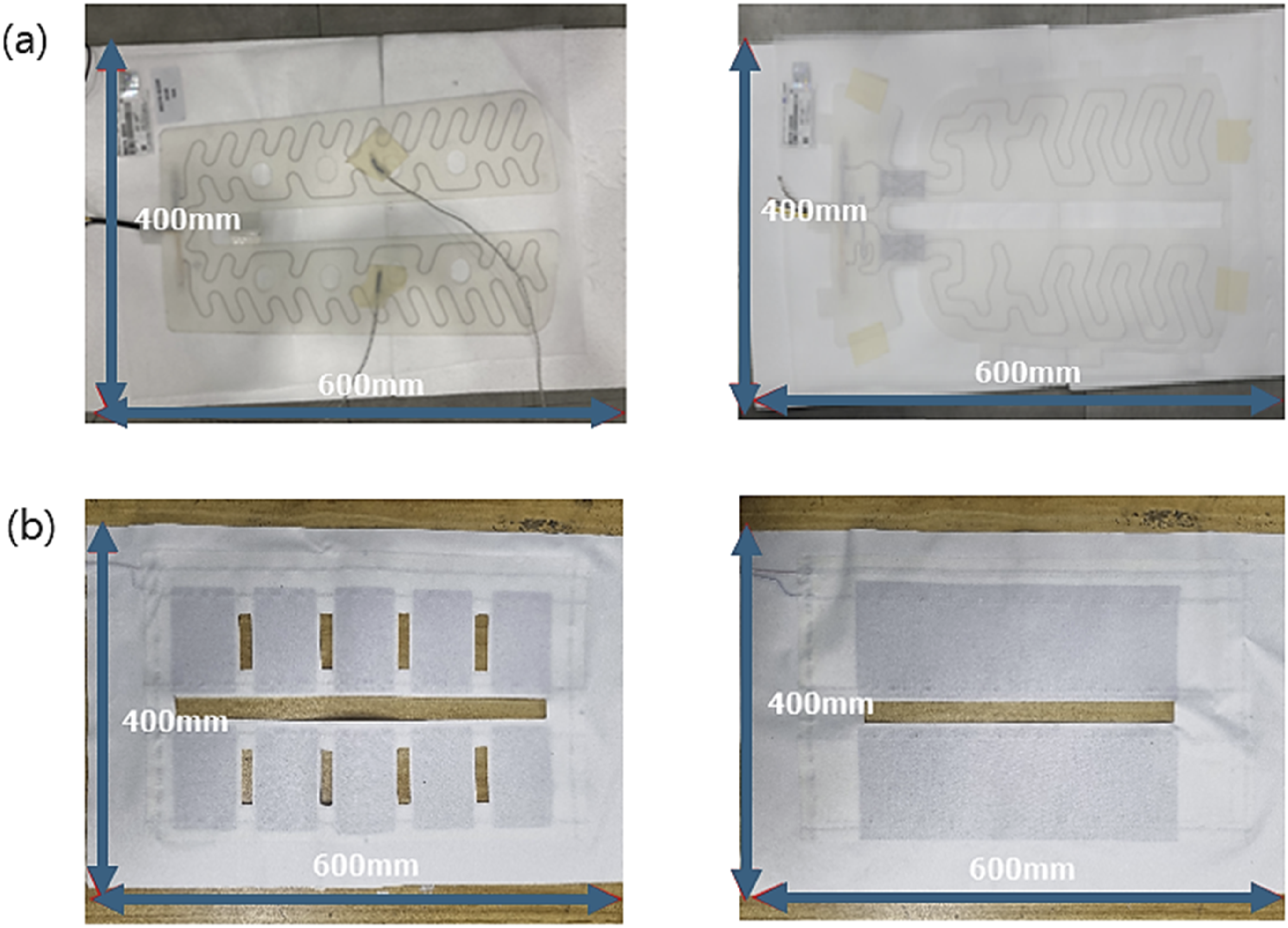
The printing was performed using CNT paste with a production of 1 cp (centipoise) per 80 g. The back and bottom sections were divided into back and bottom sections for the application of automotive surface heating seats and were made to be same in size to the sample to be compared with the third-party product (Figure 2). The heating coating area of the back seat was 11.4 cm × 5.5 cm in size, with 5 pieces on each side, and 10 pieces in total, and the heating coating was applied with a 2 cm gap between the coating areas for the application of ventilation channels
43
(Figure 3). For the bottom seat, the coating was applied to the left and right sides with dimensions of 12.5 cm × 34.3 cm. Afterwards, printing and drying were completed using the RTR facility system, and CNT heating was performed. The CNT sheet had a resistivity value of 20 Ω/sq and a viscosity of 32,000 cp. To protect the durability of the body surface, the prototype was made by laminating the Dewspo fabric with a secondary laminating process as a protective film. The fabric is 97% polyester, 3% conductive yarn and weighs 192 g/yd. The prototype was completed with 5 pieces each for the hip seat and backrest seat, and the prototype was subjected to its own heat and durability tests to evaluate its performance. Process of developing the sample. (a) Process of developing sample sheet, (b) process of printing and laminating for developing the sample. Samples’ size utilized in this study for experimentation. (a) Third-party samples, (b) developed samples. Prototype heated seat developed using RTR system: Temperature measurement area.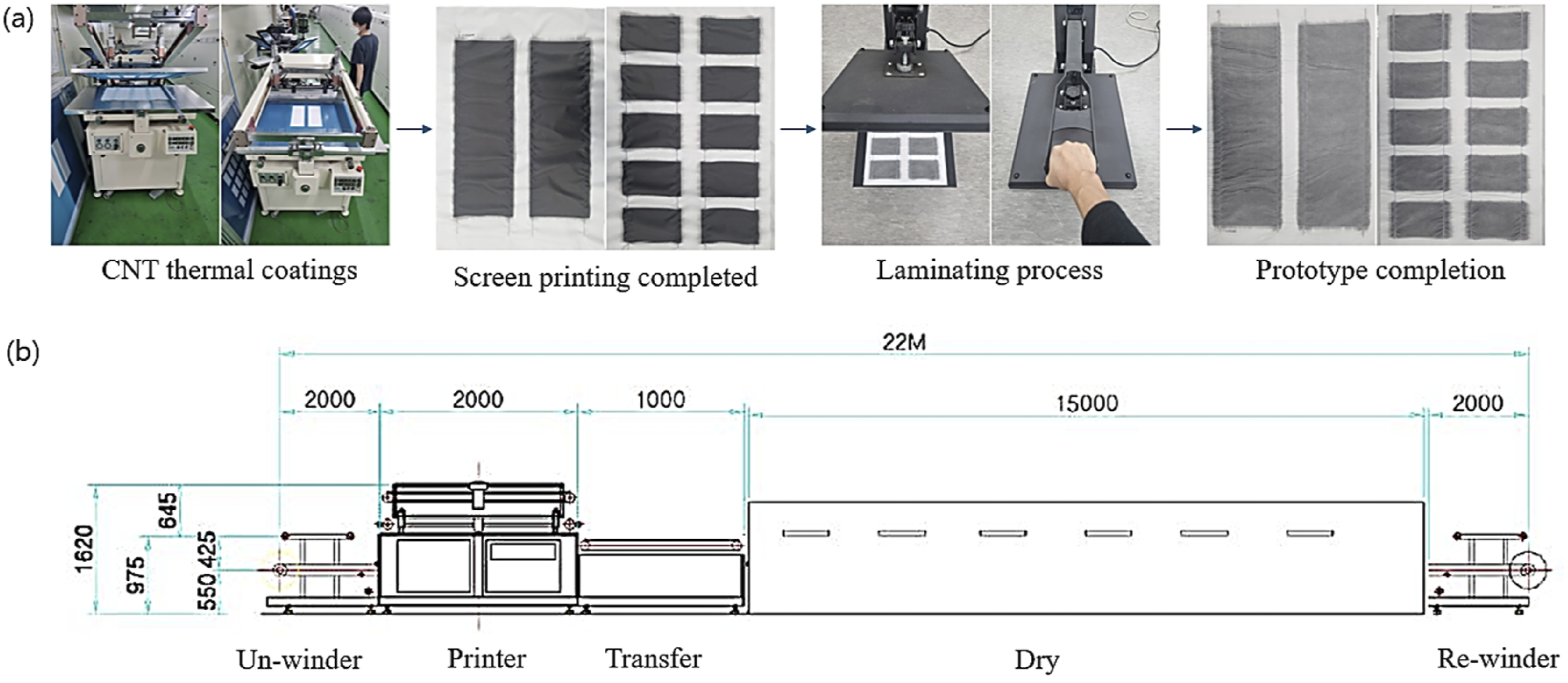

Evaluate performance tests to verify safety and durability
Performance test to determine the durability of car seat samples.

Name of equipment and material names that are used in performance tests.

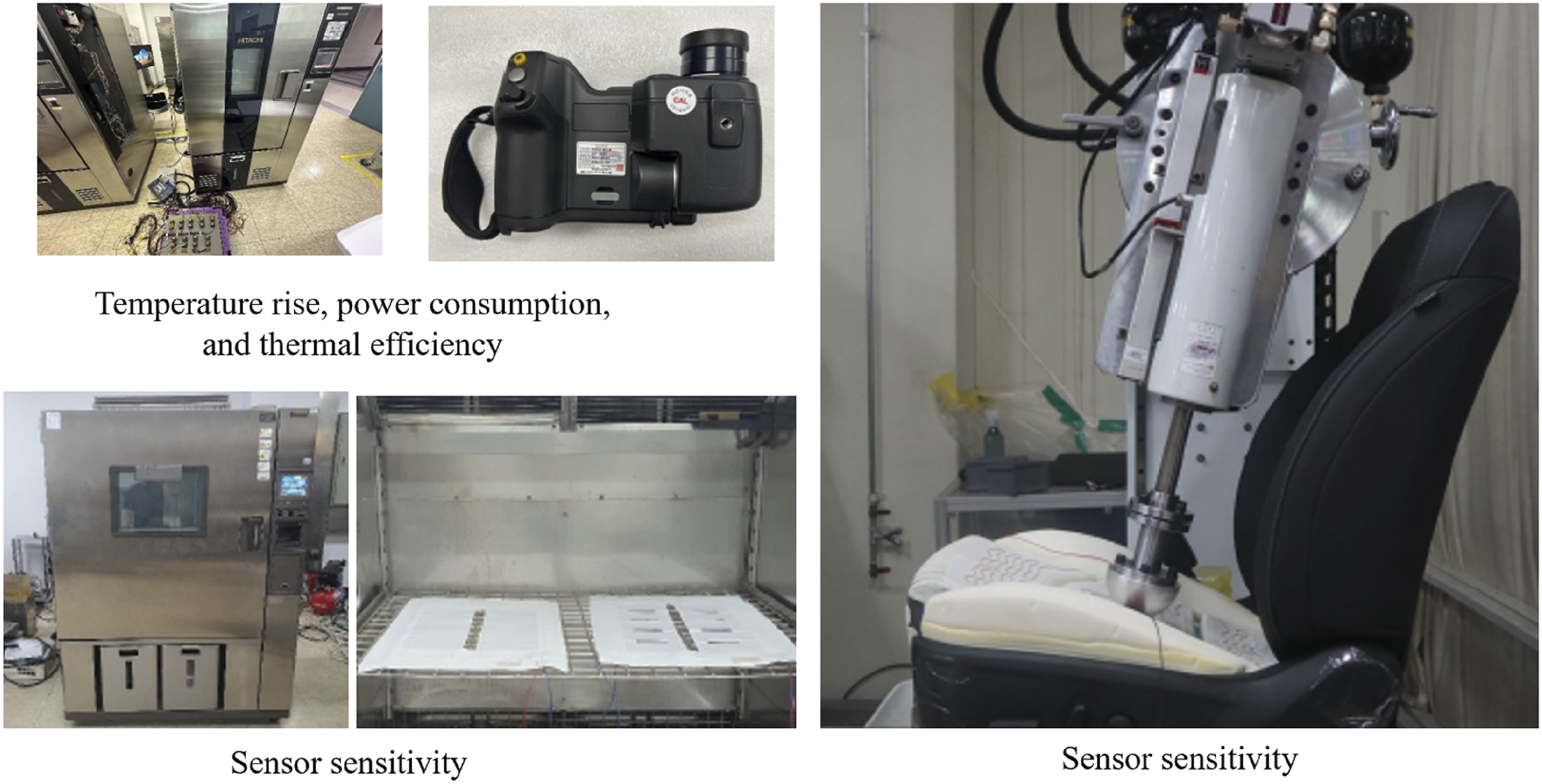
Image of equipment used in performance tests.
Evaluating thermal performance
Prior to applying the developed planar heating sheets to automobile seats, it is necessary to verify the heating effect of the air temperature. The comfortable temperature range for humans is 17°C–24°C. 47 The maximum temperature increase was evaluated to ensure that the temperature increase is more than 25°C compared to the ambient temperature after powering on. The back and bottom sheet were then tested at room temperature with insulation to simulate the conditions when a person is seated. Heating seats are mainly used in winter, 48 and the degree of coldness felt by humans in winter is 10°C or less at ambient temperature, and the ambient temperature environment was set to 10°C or less. Both the back and bottom sheets were placed in a chamber set at −2°C for 1 h and then left open to the atmosphere (uninsulated) for the exothermic test. To further verify that the seats retain their exothermic temperature, they were held at temperatures above 45°C for 8 h. The temperature that feels very hot to human skin is between 35°C and 40°C 49 to test safety and durability under extreme conditions.
Comparison with third party samples
To evaluate the heating performance and power consumption of the planar heating sheet developed in this study with the third-party sample, a performance test was conducted with other ventilated sheets currently sold in the market. In the case of the third-party sample, it is made of metal heating wire and is insulated by covering styrofoam on top to create the same environment as an automobile seat, 50 and the heating temperature and power consumption performance test was conducted by applying 12 V voltage for about 1 h. 51
Results and discussion
Performance test evaluation results to verify safety and durability
Of the nine items tested in this study to confirm safety and durability, a total of six items were self-evaluated, and the results of the Thickness of CNT coating heating sheet test showed that all five sheets were the same at 0.4 mm (Figure 5). The five sheets were measured using a vernier caliper, with sheets number 1–5 measured relative to the bottom sheet. In addition, the results of the Alignment control precision of CNT coating for heating sheet and Gap control precision of CNT coating for heating sheet tests showed that all five sheets showed high precision of < ± 70 μm (Table 4). The Alignment control precision of CNT coating for heating sheet experiment calculates the standard deviation of whether the coating positions of the five prototypes the same length from the center after are coating the CNT-based ink, while the Gap control precision of CNT coating for heating sheet experiment calculates the standard deviation of the length of one side of the five prototypes after coating. In the Coating area experiment, the area after coating was measured using a holding plate, and a heating area of 7500 cm2 with a width of 150 cm and a length of 50 cm was obtained. This indicates that it is possible to develop a size larger than the size of the developed sample. For car seats, according to ISO 5353, if the average seat width of a passenger car is about 500 mm and the depth is 500 mm, the area requires about 2500 cm2, and if the seat width is 550 mm and the depth is 550 mm, the area requires 3000 cm2, using SV or large cars as an example.
52
Therefore, the heating area of the heated seat developed in this study is suitable for application to car seats. As a result of the sensor sensitivity test, after 10,000 loading-unloading tests of 100 kg, a total of 20 measurements were conducted to see if it can detect a weight of about 10 kg, and it was found that it can be recognized all 20 times. The following are the results of the RTR system test. The fabric heat treatment roller installed in the first stage of the RTR system is a necessary step to prevent wrinkles, shrinkage, and deformation of the fabric used, and in the case of the RTR system used in this study, the maximum temperature can be set to 200°C. The RTR system used in this study is judged to be suitable for the development of automobile seats, as the actual manufacturing of heated seats for automobiles is performed by setting the temperature to 150°C.
53
Measurement location. (a) Align precision measurement, (b) gap precision measurement. Control precision of CNT coating for heating sheet test results.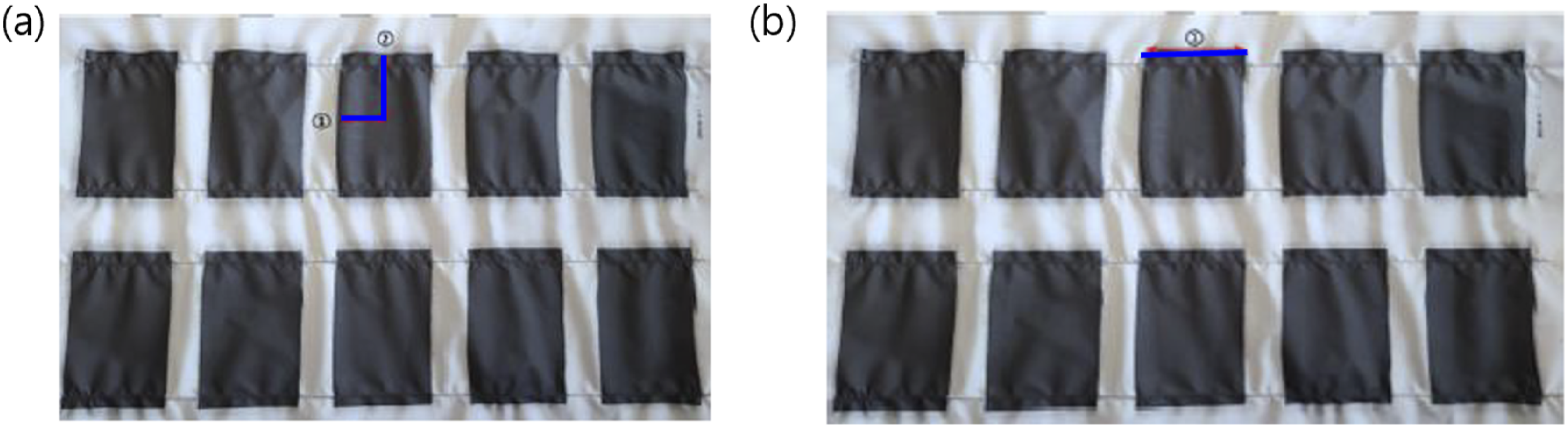

Test results tested with KS standard.

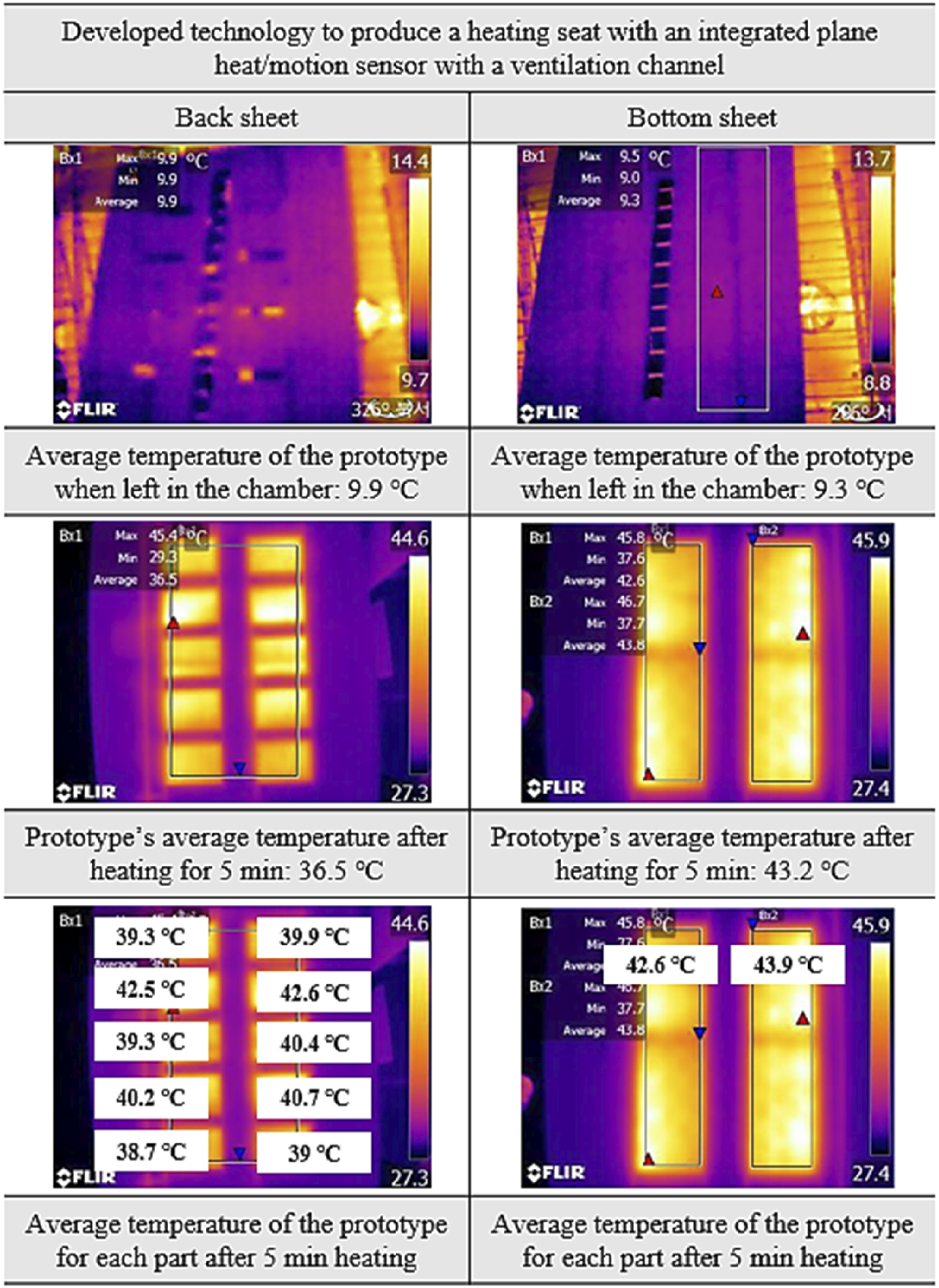
Average temperature of the developed prototype.
Evaluating thermal performance
To determine the rate of change of the back sheet temperature maintenance developed in this study, an initial 12 V voltage was applied to the test, and the current was 1.56 A. The current was 123 W/m2 per unit area, and the temperature was 23°C after 10 min. The temperature was then checked at one-hour intervals for 8 h, with a maximum temperature of 61.7°C after 6 h of operation and a minimum temperature of 59.1°C after 2 h of operation. Calculating this, we found that the retention rate was 97.8%. For the bottom sheet, the current was 1.67 A with 132 W/m2 per unit area and the temperature was 23°C after 10 min. The temperature was then measured at one-hour intervals for 8 h, just like the back sheet, and the temperature was 50.9°C after 2 h, 51.7°C after 4 h, and 51.2°C after 8 h, and the temperature retention rate was 99.3% (Figure 7). Back and bottom sheets’ maintenance calorific value test.
Comparison with the third-party car seat sample
The third-party car seat samples used in this study were made with the same size back seat (11.4 × 6.5 cm) and bottom seat (12.5 × 34.3 cm) as the car seats developed in this study. As a result of a performance test comparing the heating temperature and power consumption performance by applying a 12 V voltage for about 1 h with a third-party sample, the heating temperature was about 60°C for the planar heat sheet developed in this study and 68°C for the third-party sample, indicating a difference of about 6°C–9°C. However, this is due to the low resistance value of the metal heating wire, which shows a rapid temperature rise and high temperature. Nevertheless, the sheet developed in this study was also able to confirm a stable temperature rise rate at a temperature where the driver can feel sufficient warmth.
56
As a result of the heating test of the back sheet and the bottom sheet of the planar heater developed in this study, the back sheet showed a higher heating effect by more than 10°C on average. A small heating area increases the heat density per unit area because energy is concentrated per area when the same power is applied. As such, it is believed that the heating area of the back sheet is relatively small, resulting in a higher heating temperature for the same power consumption. In this study, the power consumption of the back sheet was 123 W/m2 and the bottom sheet was 132 W/m2, while the power consumption of the third party sample was 228 W/m2 and 260 W/m2, respectively, indicating a power consumption reduction of about 40% for the back sheet and about 49% for the bottom sheet, indicating that the planar heat sheet developed in this study has a high power consumption efficiency per unit area of about 45% on average. This minimizes energy consumption, which can improve the driving range of electric vehicles.
56
(Figure 8). Comparison with the third-party sample. (a) Temperature comparison, (b) electricity consumption comparison.
Conclusion
The development and evaluation of an integrated planar heat automobile seat with ventilation channels was the objective of this study. The ventilation-heating system was designed to enhance the temperature control function of the seat and provide a constant environment despite seasonal climate changes, to satisfy both occupant comfort and safety. Providing a favorable environment to reduce fatigue and maintain alertness during long-distance driving by positively affecting the air quality inside the car has been identified as an important factor when driving. Consequently, it is important to consider functionality, durability, comfort, and energy efficiency when designing a planar heat car seat with ventilation channels.
Tests have demonstrated its suitability as an automotive seat in terms of safety, durability, comfort, and energy efficiency. The consistent thickness and high precision of the CNT coating ensures uniform heat distribution and stability, and the heating area that meets ISO 5353 standards suggests that it is applicable to a wide range of vehicle models. In the temperature rise test, the heating performance met the comfort temperature within 5 min, and the excellent air permeability and flexural durability indicate that the seat can remain comfortable and robust even during prolonged use. Furthermore, the stable heat treatment process of the RTR system supports the reliability of seat production, and the seat is expected to have a wide range of applications.
The prototype developed is a CNT planar heater that offers flexibility that is differentiated from conventional heating methods. It is designed with a thin thickness of less than 1 mm without cables, reducing inconvenience, and is highly durable and can be easily transformed into various shapes and sizes. It heats up quickly in a short period of time and is highly energy efficient, delivering heat evenly with low power to reduce heating costs. With its convenient installation, high durability, environmentally friendly and electricity savings, the flexible planar heater with CNT-based coating can be applied to various fields such as smart heated mattresses, smart heated cushions and cushions, smart heated blankets, smart heated floors, smart heated walls, smart heating systems, heated clothing, and heated handles.
As the demand for CNT planar heat technology for use in electric vehicles is expanding, this study is important as a basic research resource for product production. As various performance tests were conducted on the back sheet and bottom sheet developed in this study, in future studies, performance test comparisons with third-party samples should be conducted. Furthermore, research will evaluate the performance under various climatic conditions such as high temperature, low temperature, and high humidity, and develop improved prototypes based on user feedback to increase the likelihood of actual commercialization. In conjunction with this, it should also be tested for its potential to emit far-infrared light, inhibit mold growth, and be fireproof and insulating. We anticipate that this study will be used as a basic research material for the development of low-power heating car seats utilizing CNT planar heaters.
Footnotes

Statements and declarations
Author contributions
Co-first authors J.E.Y. and J.C. drafted the manuscript; J.L. and S.H.J. collected the data; and the corresponding author S.M.K. wrote the manuscript.
Funding
This work was supported by the Technology development Program (S3155527) funded by the Ministry of SMEs and Startups.
Conflicting interests
The author(s) declared no potential conflicts of interest with respect to the research, authorship, and/or publication of this article.
Data Availability Statement
The datasets used and/or analyzed during the current study are available from the co-corresponding authors on reasonable request.