




Abstract
Anti-microbial fabrics are a special type of textile, whose properties are modified to fight against various microorganisms and prevent their transmission. The surface of textiles provides an environment for microorganism growth, so there is a need to create antimicrobial fabrics. One of the most promising methods to achieve antimicrobial properties in textiles is the incorporation of metal NPs including silver, copper, zinc and titanium. Metal NPs possess antimicrobial properties due to their high surface area, ability to release metal ions and photocatalytic activities. This review paper explores the various techniques used to incorporate metal nanoparticles into textiles including sol-gel process, pad dry cure and plasma treatment. The working mechanism by which metal NPs exhibit antimicrobial properties is also discussed in this paper. The fabrics coated with NPs can be characterized by using different techniques for different properties like wash durability, heat resistance, odour resistance, etc. A wide range of applications of antimicrobial fabric in the field of textile industry, and medical field such as hospital curtains, bedsheets, patient’s clothes, etc. Can be used to inhibit the growth of bacteria and other microorganisms. This review further highlights future directions in this field including the development of sustainable safe and long lasting antimicrobial textile treatments. Overall, this study gives a detailed overview of antimicrobial fabrics coated with NPs, synthesis, characterization, properties, applications, and their future scope.
Introduction
Microorganisms like bacteria, virus and fungi thrive in cotton textiles because the perfect combination of temperature, moisture, and nutrition (stains, dead skin cells, sweat, and other skin secretions) fulfil the conditions that are necessary for their growth and reproduction on the surface of the fabric. Microbial infections that reside on the surface of fibres can cause a disagreeable smell, colour deterioration, allergic reactions, textile deterioration, and even pose a health concern. As a result, the synthesis of antimicrobial fabrics has drawn interest from numerous studies, and the market for them is expanding quickly. Nanotechnology’s potential to improve textiles’ antimicrobial qualities has drawn a lot of attention to its use into textile production in recent years. Adding NPs (nanoparticles) to textiles is a creative and practical method of achieving persistent antibacterial activity without sacrificing the fabric’s comfort, breathability, or appearance. NPs have strong antibacterial properties against a wide range of microorganisms because of their distinct size, large surface area, and reactivity. 1
With the increasing production of healthcare, medical, hygiene, and protective textile materials, there is a growing demand for non-toxic, effective, long-lasting, and reasonably priced antimicrobial textile materials. 2 The microorganism present on the textiles not only causes discomfort to the person wearing them but also damage the material on which they are present. So, it is crucial to reduce the growth of microorganisms in the textiles. To put it another way, these microorganisms can cause various adverse effects such as stains, an offensive smell, decolorization of the textile, and reduction in the mechanical strength of the textiles. Improved antimicrobial properties of NPs infused fabrics present a great deal of promise for use in a variety of industries, from consumer goods like socks, athletics, and home textiles to medical textiles like surgical garments and wound dressings. 3
History
Textiles are widely used and have a vital role in human culture. Various types of microorganisms have been detected on the surface of fabrics. This topic has lately been explored concerning clothing microbiology and the impact and interplay of textiles with human skin (microflora). 4 Natural antimicrobial agent coatings on textiles or fabrics have their origins from ancient Egypt (used as mummy wrap), which involved the use of spices and herbal coatings on linens. Chinese people have traditionally utilized bamboo fibers for housing construction because of Bamboo-Kun, (an antibacterial component present in bamboo). The Chinese used silk and other textiles with therapeutic qualities to stop wound infections from spreading. 5
The development of the first synthetic antimicrobial agents in the early 20th century marked the beginning of the contemporary era of antimicrobial fabrics. Antibiotics, especially penicillin, which was discovered in 1928, transformed the treatment of bacterial infections and sparked interest in creating fabrics that may stop the spread of illnesses. During World War II, application and utilization of antibiotic material have been found and the use of antimicrobial fabrics to prevent them from spoiling during periods of severe rain and snow was also in demand at that time. In order to prevent microbial attack due to rain and snow, which could damage fibers and raise the risk of infection, tarpaulins, truck covers and tents were made from antimicrobial fabrics. Several other military materials were treated with copper, antimony salts, and chlorinated wax mixtures, to prevent microbial colonisation and boost their longevity. This treatment not only provides stiffness to the fabrics but also gave them a distinctive smell. 6
In the beginning, the negative impacts of these compounds on the environment and human health received more attention than the adverse effects of these antimicrobials. Rachel Carsons book “The Silent Spring”, which was released in 1962, gave rise to the idea of safer antimicrobial substances and textiles. The creation of antimicrobial fabrics has exploded in the 21st century due to advancements in nanotechnology. Numerous NPs have been investigated by researchers, including metal oxides such as ZnO (zinc oxide) and TiO₂ (titanium dioxide), which have shown strong antimicrobial qualities in addition to extra advantages including UV protection and photocatalytic activity. Furthermore, more effective, self-cleaning textiles that maintain their antimicrobial properties even after extended usage have been made possible by the use of nanofibers and nanocoatings. 7
Current scenario
Antimicrobial fabrics are particularly useful in hospitals and other environment these days, especially in areas where bacteria cause various problems. In hospitals, numerous germs that are easily spread from one person to another may be present on the clothes that doctors, nurses, and patients wear. Antimicrobial fabrics have essential commercial opportunities in areas that require the control of the spread of infectious microorganisms. 8 Based on their selectivity to target specific microorganisms, antimicrobial textiles can be classified as antiviral, antifungal, or antibacterial. Additionally, several antimicrobial fabrics may target more than one type of microorganism at the same time. Certain substances are referred to as antimicrobials and can be utilized to target a wide variety of microorganisms. 9 These fabrics are in high demand in common areas such as hotels, restaurants, and train stations. For example, towels used for mopping up spills, curtains, and carpets may promote the growth and spread of microorganisms. The need to control bad odor caused by various microorganisms is also in demand; this is an area of research that is currently growing in this sector.
Numerous anathema-causing bacteria that can spread from an infected person to others may be present in the material. Laundering garments is the only feasible and effective technique to reduce the microbial load from textiles, but in hospitals with constant shift work, this is not quite possible. Alternatively, creating antimicrobial textiles is another method to reduce the risk of microbial infections spreading from one person to another through textiles. Workers in sewage treatment facilities and other sanitary-related fields, where there is a significant risk of infection, may also find these antimicrobial textiles helpful. To give textiles new functional qualities including water resistance, flame retardancy, and antibacterial activity, surface modification techniques like plasma treatment, electro-spinning, polymerization, microencapsulation, sol-gel, and nanotechnologies have been used. 10
Locations that do not use plastic bags such as countries like France, Italy, Kenya and Bangladesh and in India states like Maharashtra, Tamil Nadu, Sikkim and Karnataka can find usage for antimicrobial textiles. Although food packaging made of biodegradable materials is generally safer for the environment and does not alter the quality of the food, it is still vital to use antimicrobial coating in these wrappers to prevent the growth of food-spoilage bacteria and pathogenic bacteria. 11
A brief about nanoparticles (NPs)
Greeks, Romans, Egyptians, and Persians have all employed metal-based compounds like copper and silver as antibacterial agents since ancient times. 12 The size and forms of metallic NPs specifically allow them to exhibit robust and extended antibacterial action against a wide variety of pathogens at lower concentrations. 13 Because of its exceptional effectiveness against bacteria, fungi, and viruses, silver NPs were regarded as the most fascinating metallic NPs with antimicrobial properties. Applications of AgNPs in various industries such as the pharmaceuticals, food, textiles, and packaging industries is made possible because of their strong antibacterial action. 14 The scope and scale of current processes and products are being revolutionized by nanotechnology, which includes the field of nanomaterial. 15 NPs, nanotubes, nanowires, nanofibers, and other nanostructured systems are some of the examples of nanomaterials. AgNPs have been identified as a new class of antibiotics due to their wide range of uses. They have been observed to exhibit an antibacterial action in a variety of formulations, sizes, and forms. 16 A brief description of the properties of some inorganic NPs is given below:
Silver nanoparticles (Ag NPs)
Before the current age of nanotechnology, silver was solely recognized as a metal. However, it was later discovered that silver could be created on a nanoscale. Modern engineering techniques have been applied to metallic silver, producing ultrafine particles with unique morphologies and properties. These particles are measured in nm (nanometre). The reliable new agent for the treatment of cancer is AgNPs. Nano-sized AgNPs have been tested for their anticancer properties against a wide range of human cells causing cancer, including breast cancer cells. Because AgNPs have anti-inflammatory, antiviral, antibacterial, antifungal, and osteoinductive properties, which improve wound healing, it is possible to use in the medical field.
Copper nanoparticles (Cu NPs)
Properties like high surface area to volume ratio and exceptional chemical stability and heat resistance, make Cu NPs an effective antibacterial material. Cu NPs have an excellent ability to remove heavy metals from water, hence they are used in water purification. Cu NPs are used in numerous industries including food packing industries and pharmaceutical ones, because of their exceptional antiviral, antibacterial, antifungal, and anti-inflammatory qualities. 17
Zinc nanoparticles (Zn NPs)
The antibacterial capabilities of ZnO (a semiconductor metal oxide) can be further enhanced when it is used as nanomaterial. Because of their structure, size, and surface-capping agents, ZnO NPs have essential antibacterial effects against various bacteria and may also find use in food preservation. Emami far et al. (2010) produced orange juice packs made of LPDE (Low Density Polyethylene) nanocomposites containing ZnO NPs. For up to 112 days of storage, this packing material demonstrated a considerable reduction in lactobacillus Plantarum microbiological growth rate. 18 The easy molten salt approach was utilized to create star-shaped ZnO NPs, which were then utilized to create synthetic NPs having 2-4 wt percent ZnO nanocomposites. ZnO NPs at 4 wt percent showed the strongest antibacterial action against Enterobacter aerogenes and Bacillus subtilis bacteria. 19
Titanium nanoparticles (Ti NPs)
TiO2 with its superior whitening, photocatalytic, and antibacterial qualities, is another inorganic substance that is frequently utilized in a wide range of items, such as cosmetics and orthodontic composites. 20 The photocatalytic ability of TiO2 is enhanced to a large extent when it is reduced in the form of NPs, producing more ROS (reactive oxygen species). ROS harms cells of bacteria, DNA chains, and other biological elements by applying oxidative stress. Therefore, along with their use as a UV filter, for the prevention of skin cancer, the application of TiO2 NPs has been focused on food packaging and water disinfection. 21
Nickel nanoparticles (Ni NPs)
The multifunctional nature of NiO (nickel oxide) NPs includes intriguing photo catalytic, electrochemical, and catalytic characteristics. Additionally, the biomedical industry is interested in using NiO NPs as antibiotics or cancer treatments because of their anti-inflammatory qualities. 22 Excellent antibacterial activity was demonstrated by NiO NPs made from Eucalyptus globules leaf extract against methicillin-sensitive and resistant S. aureus, P. aeruginosa, and E. coli. 23
Gold nanoparticles (AuNPs)
Properties such as non-toxicity strong functionalization ability, photo-thermal activity , poly-valent effects, and simplicity of detection make AuNPs remarkably useful in the production of antibacterial medicines. 24 While the majority of antibiotics and antibacterial nanomaterials cause cellular death through ROS formation. Thus, antimicrobial activity of Au NPs does not trigger any ROS-related processes. Cui et al. demonstrated two main mechanisms behind the AuNPs antibacterial action (1) their adherence to the bacterial membrane, causing the membrane potential to change and the amount of ATP to decrease (2) inhibition of Translational Ribonucleic Acid (tRNA) binding to the ribosome. 25
Silicon nanoparticles (Si NPs)
The larger surface area of SiO2 (Silicon Oxide) offers antimicrobial activity. It was demonstrated by Cousins et al. that Si NPs decrease the bacterial attachment or attraction to oral biofilms. 26 The usage of Si NPs in combination with other metals (such as Ag), has been the subject of much research in the last several years. The synthesis and study of novel Ag-Si nanocomposite antibacterial activities were reported by Egger et al. In comparison to standard materials like AgNO3 and silver zeolite, their studies revealed that the nanocomposite had a better antibacterial impact against a wider variety of microbes. 27
Magnesium and Calcium nanoparticles (Mg and Ca NPs)
About alkalinity and active oxygen species, CaO (Calcium Oxide) and MgO (Magnesium Oxide) and show potent antibacterial action. According to confirmed research, the production of superoxide on the surface of CaO and MgO NPs as well as an elevation in pH brought about by hydrating the particles with water. 28 Excellent antibacterial effects are demonstrated by MgO and CaO NPs, and can also be used in conjunction with other disinfectants. Furthermore, these NPs are affordable, biocompatible, and easily available. Their antimicrobial activities are promising. 29 Studies have indicated that these substances may find application in food processing, medicinal procedures, and environmental conservation. 12
Synthesis of antimicrobial nanoparticles (NPs)
Various methods of synthesis of nanoparticles.

These methods are further divided in various synthesis methods which are represented with the help of diagram. Figure 1 represents various methods for the synthesis of NPs. Various methods of synthesis and different techniques of each method.
Different methods of nanoparticles along with their advantages and disadvantages.

Working mechanism of antimicrobial nanoparticles (NPs)
It is crucial to know about the anti-microbial mechanism of NPs in order to optimize their utilization and create different variants of harmless, potent antimicrobial NPs. The mechanisms that have been suggested include hydrophobic contacts, electrostatic forces, dominant receptor-ligand interactions, and van der Waal’s forces that allow NPs to directly interact with the surfaces of microorganisms. 42
After interacting with the microorganisms, the nanoparticle modifies the membrane’s structure, interacts with the cellular pathway, and enters the microbial cell membrane. Oxidative stress, protein denaturation, enzyme inactivation, changed gene expression levels and electrolyte imbalance are all consequences of NPs’ interaction with metabolic pathways . The release of metal ions into solution and oxidative stress caused by reactive oxygen species are two significant antimicrobial nanoparticle action mechanisms. 43
Reactive oxygen species
One important mechanism that prevents microbial development is oxidative stress generated by ROS. While the cell is somewhat protected by its natural defence, high cellular stress caused by NPs increases ROS levels and induces oxidative stress, which ultimately results in cell death. The ROS are created when oxygen reaches undesirable states and are converted to superoxide radical (O͞-), hydroxyl radical (OH−), and hydrogen peroxide (H2O2). Lipid oxidation is a mechanism by which both internal and extracellular ROS can break down the bacterial cell membrane. It’s interesting to note that lipid oxidation has little effect on the cell wall of Gram-positive bacteria probably because of the thick layer of peptidoglycan that exists. It is difficult for certain negatively charged ROS, including OH radicals, to penetrate through negatively charged cell walls regardless of Grams composition. 44
H2O2, a frequently released ROS, can, nevertheless, pass across membranes and destroy bacteria. ROS are produced at the cell wall as a result of positive NPs interacting with negatively charged cell walls. By exceeding the ability of the cellular antioxidant defence to counteract ROS generation, the ROS production destroys the cell membrane. Free radicals are also said to cause oxidative stress and damage to cell membranes, which can lead to lipid peroxidation and restrict the growth of microorganisms. Ag NPs, Cu NPs and Fe NPs work with this mechanism. 45
Ions release
When the NPs contact with bacterial cells in an aqueous solution, metal ions are continuously liberated from them. The ions enter the cell through the membrane and come into close contact with protein and nucleic acid functional groups such as amino (-NH), carboxyl (-COOH), and mercapto (-SH) groups.
The abnormal enzyme activity and structural alterations brought on by these interactions disrupt the physiological functions of the cell.
The antibacterial activity of palladium nanolayers was investigated and the antibacterial activity that resulted was assigned to the corresponding metal ions produced in the solution. However, when added to bacterial cultures, metals oxide suspensions showed very little antibacterial action, suggesting that there may be another mechanism such as Reactive Oxygen Species (ROS) generation or physical disruption of the bacterial cell wall outside the release of metal ions that causes antibacterial activity. Ag NPs, Zn NPs and Cu NPs shows antimicrobial activity through ion release mechanism. 46
Cellular penetration of nanoparticles (NPs)
The NPs disrupt the membrane by first interacting with the bacterial cell by adsorption and then penetration. Numerous study teams discovered that one of the main mechanisms of toxicity is the adsorption of NPs on cell walls followed by their breakdown. The adsorption of NPs depolarizes the call wall and modifies its negative charge, making it permeable. Using a laser scanning confocal microscope, the researchers demonstrated a hazy cell wall, signifying cell wall breakdown. According to the proposed action mechanism, (i) cell wall disintegration due to nanoparticle penetration; and (ii) ROS formation that interfered with DNA replication and Adenosine triphosphate (ATP) production. 47
Diffusion introduces ROS into the cell [300]. With the blend of graphene oxide and iron oxide NPs, demonstrated enhanced antibacterial efficiency, which they assign to maximum generation of hydroxyl radicals and diffusion into bacterial cells, and thus rendered the Methicillin-Resistant S. aureus (MRSA) inactive.
The researchers discovered that NPs can cause cell wall breakdown, which allows ions to enter the cytosol, and can also act as a source of toxicity.
48
Mechanism of action of NPs against different microbes is described below in Figure 2. Mechanism of action of nanoparticles against different microbes.
Antibiotics
The well-known modes of action of antibiotics can be categorized according to their distinct targets, which include folic acid metabolism, genome replication, and biosynthesis (cell wall and proteins).
49
Nevertheless, the emergence of enzymes that may break down antibiotic structures, such as β-lactamase and chloramphenicol acetyltransferase, has led to the emergence of multiple resistance mechanisms. Moreover, overexpression of efflux pumps and mutations in the targets of the antibiotics, such as the sulphonamide-targeting enzyme dihydropteroate synthase (DHPS), decreased drug accumulation.
50
The negatively charged groups of bacterial membrane can potentially be replaced by neutral groups, which reduce the possibility of an electrostatic interaction between MNPs and antibiotics. This process is known as resistance. Additionally, in encoded transport systems, genetic mutations could occur.
51
Figure 3. Represents the schematic diagram of working mechanism of NPs against bacteria. Schematic Diagram of Working Mechanism of nanoparticles (NPs) against Bacteria.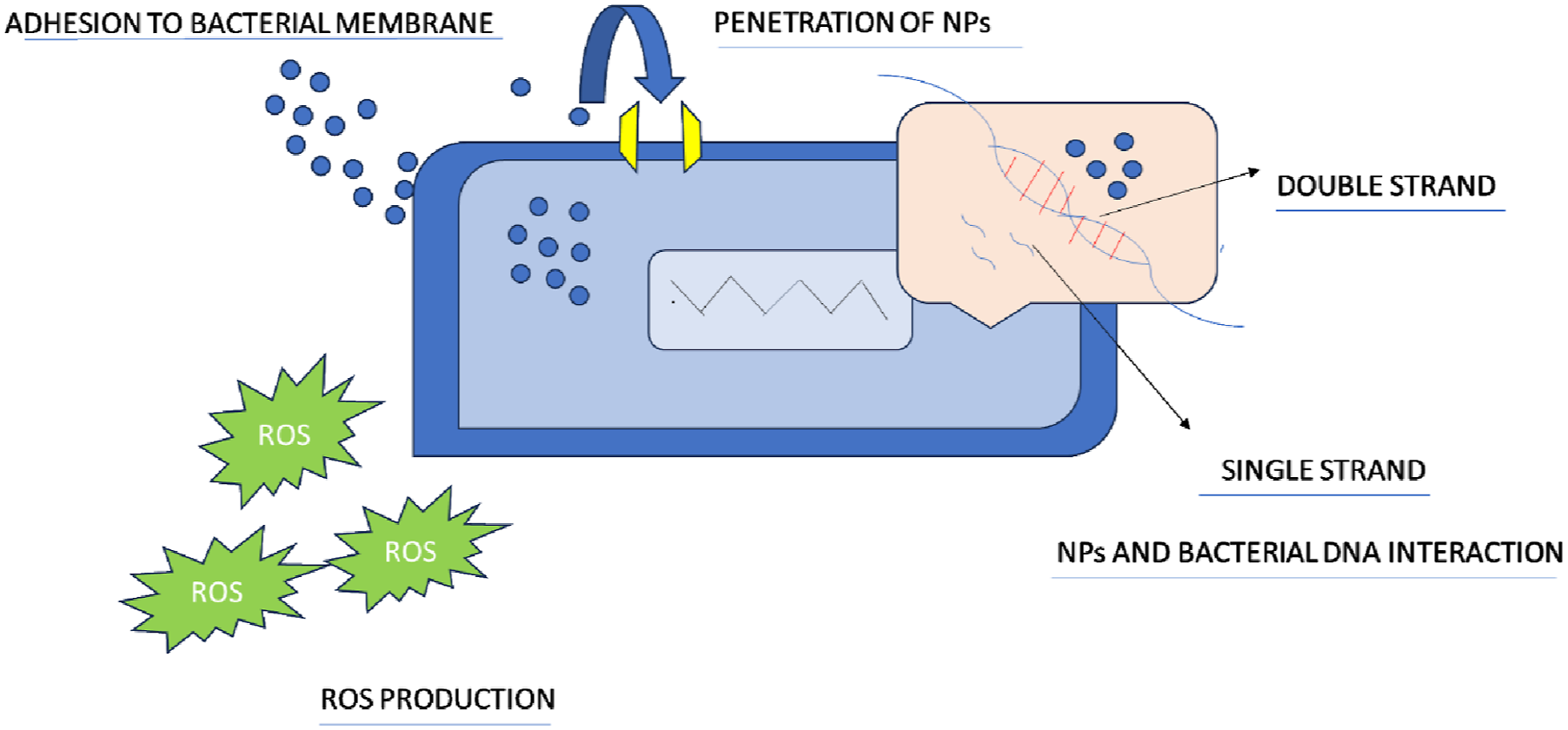
There are different bacteria which are targeted by different NPs. Some of which are mentioned below in the form of Figure 4. Different bacteria targeted by different nanoparticles.
Antifungal
The two main targets of antifungal drugs are nucleic acid synthesis and cell membrane, which is disrupted by echinocandins, polyenes, and azoles. On the other hand, antimetabolites affect the synthesis of Nucleic acid. Target alterations or overpowering of efflux pumps, which remove the drug from the cell and reduce its intracellular concentration, are the most common resistance mechanisms linked to antifungal medications. Another resistance mechanism involves dysregulation of target expression and mutation of target. The final route of resistance to antifungals is linked to changes in the synthesis pathway of ergosterol. Specifically, gene mutation encoding the enzyme lanosterol 1,4 α-demethylase affects other different enzymes from the similar biosynthetic route.
52
Figure 5. Represents the schematic diagram of working mechanism of NPs against fungi. Schematic diagram of working mechanism of nanoparticles against fungi.
There are different fungi which are targeted by different NPs. Some of which are mentioned below in the form of diagram Figure 6. Different fungi targeted by different nanoparticles.
Antiviral
The field of NPs antiviral mechanism of action remains unexplored. The working mechanism of an antiviral medication against influenza (a virus) was examined by only one group of researchers. AgNPs amantadine/oseltamivir capability to able to stop the H1N1 virus from contaminating host cells as well as to stop chromatin condensation and caspase-3 activity was shown by Li et al. The conjugates prevented accumulation of reactive oxygen species (ROS) from building up and stopped the H1N1 virus from inducing apoptosis.
53
The same group (2017) assessed AgNP-zanamivir’s antiviral mechanisms using flow cytometric analysis and the TUNEL-DAPI test. The possible molecular pathways demonstrated that AgNP-zanamivir prevented caspase-3-mediated apoptosis by producing reactive oxygen species.
54
Overall, the synergistic effects and underlying mechanisms demonstrated many benefits; nevertheless, the majority of studies are extremely conjectural and require more research. Still, the subject needs deeper investigation. To completely comprehend the biological impact of these intricate systems in the virus, it is imperative to look into how MNPs interact with other medication.
55
Numerous different types of microorganisms exist on the surface of textiles, and each microorganism is targeted by NPs through different mechanisms. Figure 7. Represents the schematic diagram of working mechanism of NPs against virus. Schematic diagram of working mechanism of nanoparticles against viruses.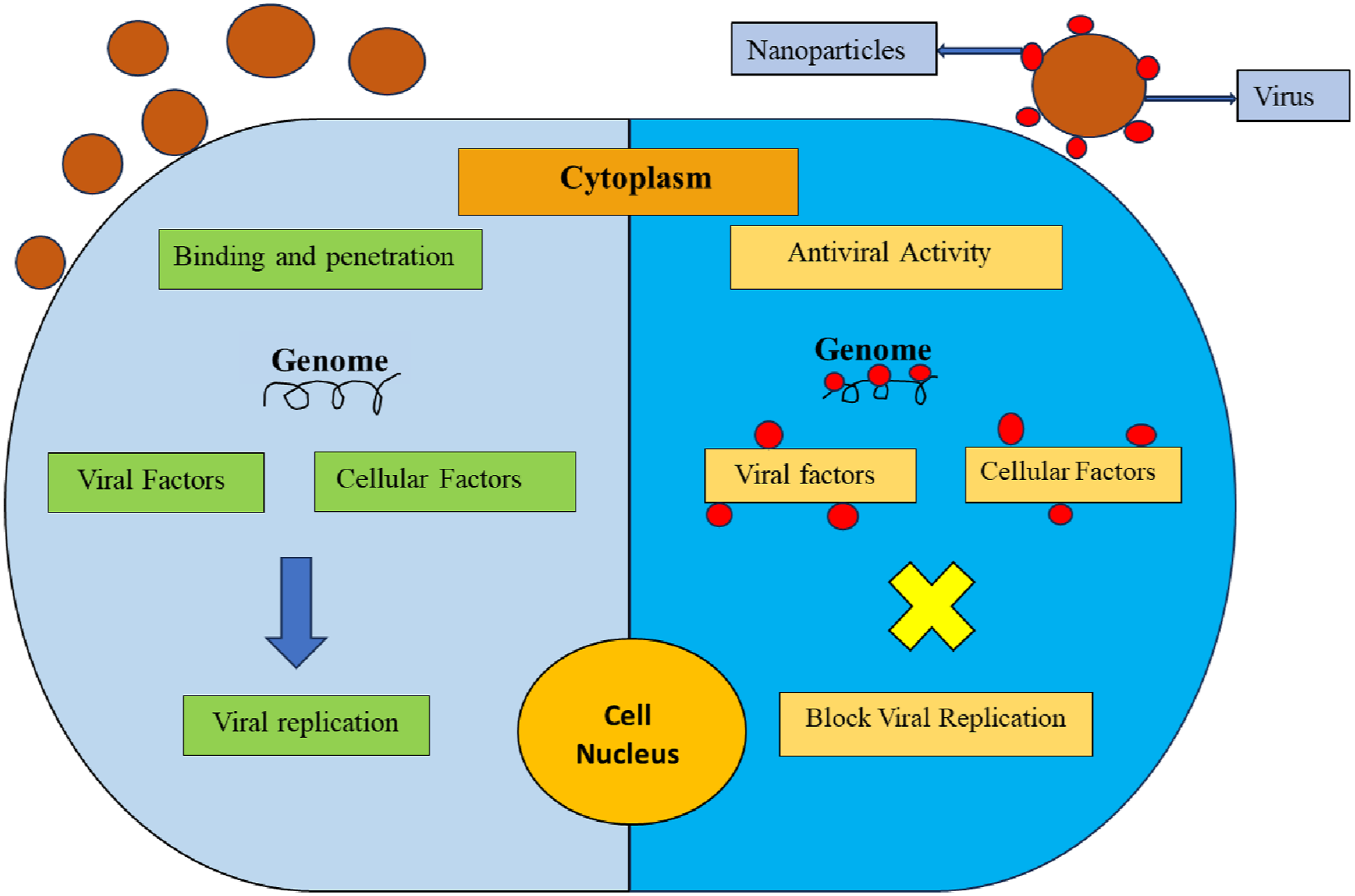
There are different viruses which are targeted by different nanoparticles. Some of which are mentioned below in the Figure 8. Different viruses targeted by different nanoparticles.
Properties of nanoparticles (NPs)
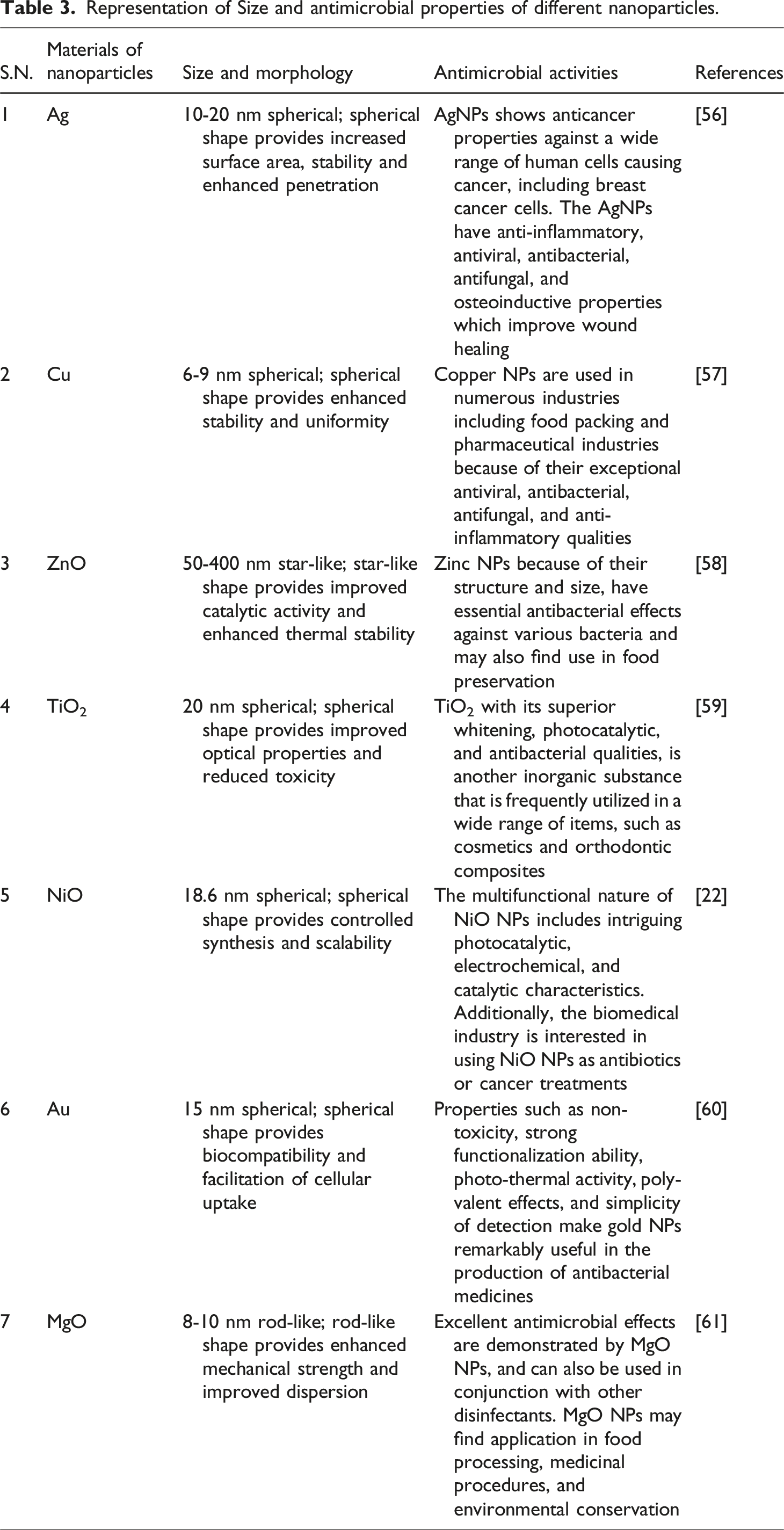
Representation of Size and antimicrobial properties of different nanoparticles.
Application of nanoparticles (NPs)
NPs are used in various fields such as photocatalytic drug delivery molecular recognition etc. All these are described below:
Photocatalytic
In addition to being connected with electron transport, photocatalytic activity of NPs is also dependent on surface area, size, radiation sources, and other variables. Due to its large band gap energy, ZnO is not a catalyst for visible light. As a result, it is demonstrated that decorating the ZnO surface with MNPs is a very helpful method to turn it into a material that is visible light active. The visible light source was a 60 W tungsten lamp, which emits a continuous spectrum of light between 300 and 1400 nm.
The separation process of the photo-generated electron-hole charge carriers served as the basis for the photocatalytic mechanism of the produced Ag-doped ZnO NPs. 62 Pure metals including gold, platinum, silver, iron, zinc, cerium, thallium, nickel, cobalt, etc. Are included in metal nanoparticles; these metals’ compounds include hydroxides, oxides, chlorides, phosphates, sulfides, and fluorides. The majority of metal nanoparticles have band gaps in the infrared and ultraviolet regions, making them unsuitable as photo-catalysts. These nanoparticles are made from metal precursors and produced using a variety of techniques, including photochemical, chemical, and electrochemical ones. 63
Self-cleaning surfaces, water and air purification systems, sterilization, hydrogen evolution, and photoelectrochemical conversion are just a few of the many products and applications in the environmental and energy sectors that make extensive use of TiO2 photocatalysis. The creation of photogenerated charge carriers (hole and electron) upon absorption of ultraviolet (UV) light matching to the band gap is the source of TiO2’s photocatalytic capabilities. We can fully benefit from the special qualities that TiO2 materials offer by selecting materials with the right dimensionalities. 64
Drug delivery
These days, there are several uses for medication delivery systems built around NPs. Metallic nanoparticles’ distinct physicochemical characteristics—such as their small size, large surface area, and variable surface chemistry—have made them attractive options for drug delivery systems. The ailment being treated, the characteristics of the medication, and patient acceptability all influence the drug delivery routes that use MNPs. Numerous metallic nanocarriers have been created, and researchers have looked into their potential uses in drug delivery systems. Silver, gold, iron oxide, titanium dioxide, and zinc oxide are a few of the many distinct nanoparticles that make up these nanocarriers. 65
Detection of heavy metals
The main causes of heavy metal pollution in water bodies are urbanization and human activity. Heavy metal contamination of drinking water sources is detrimental to both the environment and human health. The most widely utilized heavy metals are Zinc (Zn), Copper (Cu), Nickel (Ni), Lead (Pb), Cadmium (Cd), Chromium (Cr), Arsenic (As), Mercury (Hg), etc. Water facilitates the easy absorption of heavy metal ions by living things, which then spread throughout the food chain and endanger people, plants, and animals. One straightforward and reasonably priced technique for identifying heavy metal ions is colorimetric sensing. 66 Nanoparticles improved the effectiveness of analytical instruments and were discovered to be highly sensitive, selective, and capable of rapid operation. Nano-based sensors have a low detection limit and a high linear range, making them useful for on-the-spot or on-field detection. They are also easily integrated into devices. 67
Molecular recognition
Nanoparticles are perfect for detecting molecular recognition events because of the intrinsic physical characteristics which are extremely sensitive to the characteristics of their local molecular environment. Cop-per systems are still not commonly used as nanoparticle cores due to their easiness of back-oxidation. 68 Proteins and nucleic acids, for instance, are widely known for their use in coating Ag/ZnO NPs, which shows how bimetallic NPs can conjugate with nucleic acid (Ag/ZnO) molecules such as DNA and RNA. This genetic material can bind with complementary strands in the interim, and the NPs nucleic acid can be utilized to recognize nucleic acid molecules in solution molecularly. Furthermore, the ability of nucleic acid to self-assemble improves their recognition effectiveness, beginning with the sequence to particular molecular places like as proteins, cells, organs, and species. Bimetallic silver-zinc oxide NPs have been found to have a wide range of applications, including the detection of numerous deoxyribonucleic acid sequences and the identification of polynucleotide sequence alterations.
Other Applications
Researchers greatly value NPs because of their superior chemical stability, conductivity, and catalytic, photonic, optoelectronic, and antioxidant properties. They are extensively utilized in several academic fields, such as chemistry, physics, medicine, and pharmacy.
Incorporation of nanoparticles (NPs) onto fabric
In general, inorganic particles and polymeric materials, like textiles are not attracted to each other. Two of the previously stated organic and inorganic materials have different surface energies, which results in a certain type of repellency at their interfaces. The usage of NPs causes this issue due to their high specific surfaces. As a result, adding NPs to the surface of textiles does not permanently alter them, especially during washing. The majority of techniques now available for stabilizing inorganic nanostructured materials on textile surfaces need several phases including initial setup, functionalization, ultimate treatment, drying, curing, and so forth. For high-scale manufacturing production, this is a very high-cost and time-consuming process. 69
Various finishing processes including cushioning, coating, sputtering, and printing, have been employed in modern times. Several techniques and substances are used to improve the functionality and stability of antimicrobial coating such as the use of binders like polyurethane resin and polyacrylic esters (PALS), which are cross-linkable encapsulation of antimicrobial compounds and the chemical alteration of fibers to create covalent bonds. Since 2009, the concept of synthesizing AgNPs onto cotton fibers using screen printing and digital printing with ascorbic acid has been evolving. Additionally, it has been reported that AgNPs can be synthesized in situ on cotton fabric by employing cotton cellulose chains as stabilizing and reducing agents. Additionally, Yazdan Henas et al. reported on the in situ production of silver particles using dipping techniques on cotton fiber.
Various methods are used for incorporation of NPs onto fabric:
Plasma treatment
One significant challenge for the incorporation of AgNPs to the 80 polymeric long chains of cellulose is poor adhesion which can be overcome by plasma-treatment of cellulose fibers. 70 AgNPs can be more firmly bound to cellulose polymer chains by stimulating the formation of additional polar oxygen-bearing groups, such as hydroxyl, carboxyl, ether, and ester groups through plasma treatment by oxidation and etching. 71 It has not yet been reported about the in situ production of AgNPs on the surface of cotton textiles activated by plasma. This approach increased selectivity, reduced time of reaction, enhanced rate of reaction and rapid volumetric heating of NPs in addition to being straightforward and environmentally friendly. 72
Sol-gel process
The use of sol-gel technology has shown promise in the functionalization of textile surfaces. The Sol-Gel method offers various advantages such as high purity, low-temperature processing, ultra-homogeneity and enhanced durability of textiles. AgNPs with dodecanethiol caps were made and added to the sol formulation. After being padded with silica sol doped with AgNPs and covered with dodecanethiol, the cotton fabric was allowed to dry and cure. When tested against Escherichia coli, the treated cotton cloth had excellent antibacterial activity. 28
Direct blending method
AgNPs synthesised from direct integrating methods into the polymer solution before electrospinning is a simple way to create AgNPs-loaded nanofibers. AgNPs in the form of solutions are recommended for the ease of their incorporation into the nanofibers. In addition to having strong antibacterial activity, the encapsulation of AgNPs along with poly (έ-caprolactone) (PCL) microfibers in the absence of silver on microfiber permits controlled release of AgNPs from the hybrid constructions. Numerous polymeric systems including nylon, polyvinylidene fluoride (PVDF), PVA/polyurethane (PU), and polyvinyl pyrrolidone (PVP), were reported to be electro-spun and loaded with AgNPs.
UV-irradiation method
The first silver burst release is achieved by UV-irradiation, in the form of AgNPs or in the remaining Ag+ ions, the quantity of AgNPs loaded on nanofibers becomes increasingly important. This technique encourages the random distribution of AgNPs on the surface of nanofibers. The process of formation of AgNPs causes the migration of silver ions from the core to the surface, creating a functional surface that offers the antimicrobial property.
Silver mirror reaction method (SMR)
The SMR method is a flexible technique that produces AgNPs, which cover the surface of an item immersed in the reaction mixture by using various substances as reducing agents for the AgNO3 solution. An observable phenomenon akin to a glossy mirror coat covering the solution’s upper surface or an object submerged in it may result from this reduction. For both very small surfaces (nanofibers) and very large surfaces (telescope lenses), it is utilized to produce a controllably smooth covering.
Thermal reduction method
In the thermal reduction method, silver precursors are heated on the fabric’s surface to transform them into elemental silver. By using thermal energy, silver ions (Ag+) from substances like silver nitrate (AgNO3) are reduced to silver NPs in this process. The reduction reaction is usually driven by the high temperature (approx.200°C). But in the presence of a chemical reducing agent, thermal reduction can be carried at low temperature (approx. 60 °C–80 °C).
73
The year- wise evolution of methods of incorporation of nanoparticles in last 10 years is represented in Figure 9. Representation of evolution of methods of incorporation.
Curing processes
The fixation of additives on the surface of textile to impart the additional functionality to the material is known as curing. Curing can be done by various methods. The application of NPs or additive on the surface of textile can be done by various methods such as UV curing, spraying, padding, immersion in a chemical bath or printing etc.
Techniques curing
There are various techniques of curing some of which are as follows:
Immersion in a chemical bath
A straightforward method called immersion involves dipping a material directly into a solution of nanoparticles and then allowing it to diffuse. This procedure depends on time and could take a few minutes. The affinity between the surface of the material and the nanoparticles determines the deposition’s success. 74 The process of immersing the fabric in the metal salt solution is followed by ultrasonic radiation irradiation. The inventors discovered that “silent” soaking—that is, soaking without the use of ultrasonic radiation—does not result in fabric impregnation by the metal salt solution that is especially effective. The metal salt is primarily deposited on the surface of the cloth by “silent” soaking, with little penetration into the body of any fibers or yarns. In contrast, the combination of soaking and ultrasonic radiation allows for deeper penetration of the metal salts into the fiber and yarn bodies, in addition to a significantly higher loading of metal salt. Method for producing antimicrobial yarns and fabrics by nanoparticle impregnation
Spraying
An easy-to-manage approach for creating coated fabric with antibacterial properties is the pigment-binder spray coating process. The liquid was applied directly onto the cotton cloth using spray coating. For coating textile substrate with less agglomeration, spray coating is a simple, rapid, non-contact, and reasonably priced method. Water-repellent viscose fibers were created by Khattab et al. (2019) by spray-coating lanolin-silicon rubber with minimal aggregation. 1
Analysis of various process parameters, such as spray rate, atomization air pressure, inlet and exhaust air temperature, inlet and exhaust air flow, nozzle size, and nozzle-to-bed distance, is necessary for monitoring spray-coating. To create antimicrobial textiles, we sprayed a coating based on silver nanoparticles (AgNPs) onto polyester fabric substrates. 75
Pad dry curing
Pad dry curing method is one of the most widely used methods of curing of antimicrobial fabric inculcated with NPs. It consists of various steps as the name suggests first step involves padding of fabric with padder then drying to remove excess of water and finally curing to cause a chemical reaction. 75 Pad dry curing method has many advantages. 76 One of the benefits is that it permits the covalent bonding of finishing metallic NPs to cotton fabric, thereby transferring antiviral and antibacterial properties. For example: the covalent bonding of carboxymethyl chitosan to cotton fibers made possible by the pad-dry-cure technique results in cotton textiles that are exceptionally antibacterial and laundry durable. 77
Printing
Printing is one of the method by which NPs can be precisely deposited on antimicrobial fabric and thus complex patterns and highly spatially resolved functional coatings can be produced. Additionally, printing techniques like inkjet and screen printing are very scalable, which makes them suitable for mass manufacturing. Another benefit of the printing technique is its adaptability, which allows it to use different kinds of NPs and ink formulas to give the fabric a range of functional qualities. Furthermore, printing typically requires less equipment and resources than other deposition procedures, making it a more affordable option. Another advantage is design versatility, since the printing process enables fabrics to be personalized with particular patterns or functional coatings. But there are a few drawbacks to take into account as well. Although, NP penetration into the fabric may be limited by the printing process, which could eventually lead to decreased durability or loss of functionality. 78
Durability and immobilization of nanoparticles (NPs) on fabric
Cotton textiles can acquire antibacterial qualities from a variety of inorganic NPs; nevertheless, the modified textile products’ antimicrobial activity is typically less long-lasting. Accurate assessment of the antimicrobial durability and enhanced methods of finishing by using NPs are essential to solve this issue. 1
Durability of nanoparticles (NPs)
Representation of the treated cotton fabric’s antibacterial durability and the amount of Ag NPs remained after washings.

It is critical to immobilize these inorganic NPs due to the significant environmental risk imposed by release of toxic metal ions from modified fabric. 80 The proportion of NPs that exhibit weak adhesion when coated on a cotton surface rapidly decreases as the number of washing cycles increases. While durability is achieved through overdosing with NPs, this durability is fictitious and the actual durability that results from stabilizing the inorganic NPs is completely different.
Antimicrobial tests frequently fail to detect actual significant loss of inorganic NPs after washing. To provide the most comprehensive description of the antimicrobial durability, it is essential to explain the antimicrobial efficacy, the amount of inorganic NPs, and their declining trends as the number of washing cycles increases. 1
Immobilization of nanoparticles (NPs)
Immobilization refers to the process of binding the NPs to the surface of fabric so that they remain fixed in place and do not leach off during usage or washing. As explained above, adding too many inorganic NPs will not increase the antibacterial durability. Thus, new methods that are not harmful to the environment or safety are required.
Finishing techniques can be broadly divided into two categories based on the physico-chemical properties of inorganic substances in raw form. The “solution” class uses antecedent solution to create NPs on the surface of textile through in situ synthesis, while the “sol” approaches are associated with colloidal suspensions of inorganic NPs. Three groups can be made out of inorganic NPs: (i) metal salts, (ii) metal oxides, and (iii) metallic NPs. These groups include those from the solution of ionic metal and those found in the sol-suspension.
The benefits of employing an inorganic NP sol-suspension, especially when combined with polymer binders, resulted in a lot of curiosity. The fundamental procedure entails the deposition of enhanced NPs on the textile surface through a suitable technique. To enhance the stability and durability of the NPs coating, the surface of cotton fabric is modified. Applying a layer of chimerical changes and different polymer binders of cellulose through bioprocessing and oxidation are mostly used to enhance the surface characteristics of cotton fabric. There are numerous cotton materials that can be created, and developed by mixing four possibilities groups: modified cotton, binders, NPs textiles, as well as finishing methods. 1
Characterization of antimicrobial fabric
The study of a material composition, structure, and different properties such as physical, chemical, electrical and magnetic, etc. Is referred to as characterization. 81 The methods for examining the size, shape, surface characteristics, composition, purity, stability, and advantages and disadvantages of nanomaterials are compiled here. 81
Techniques of Characterisation
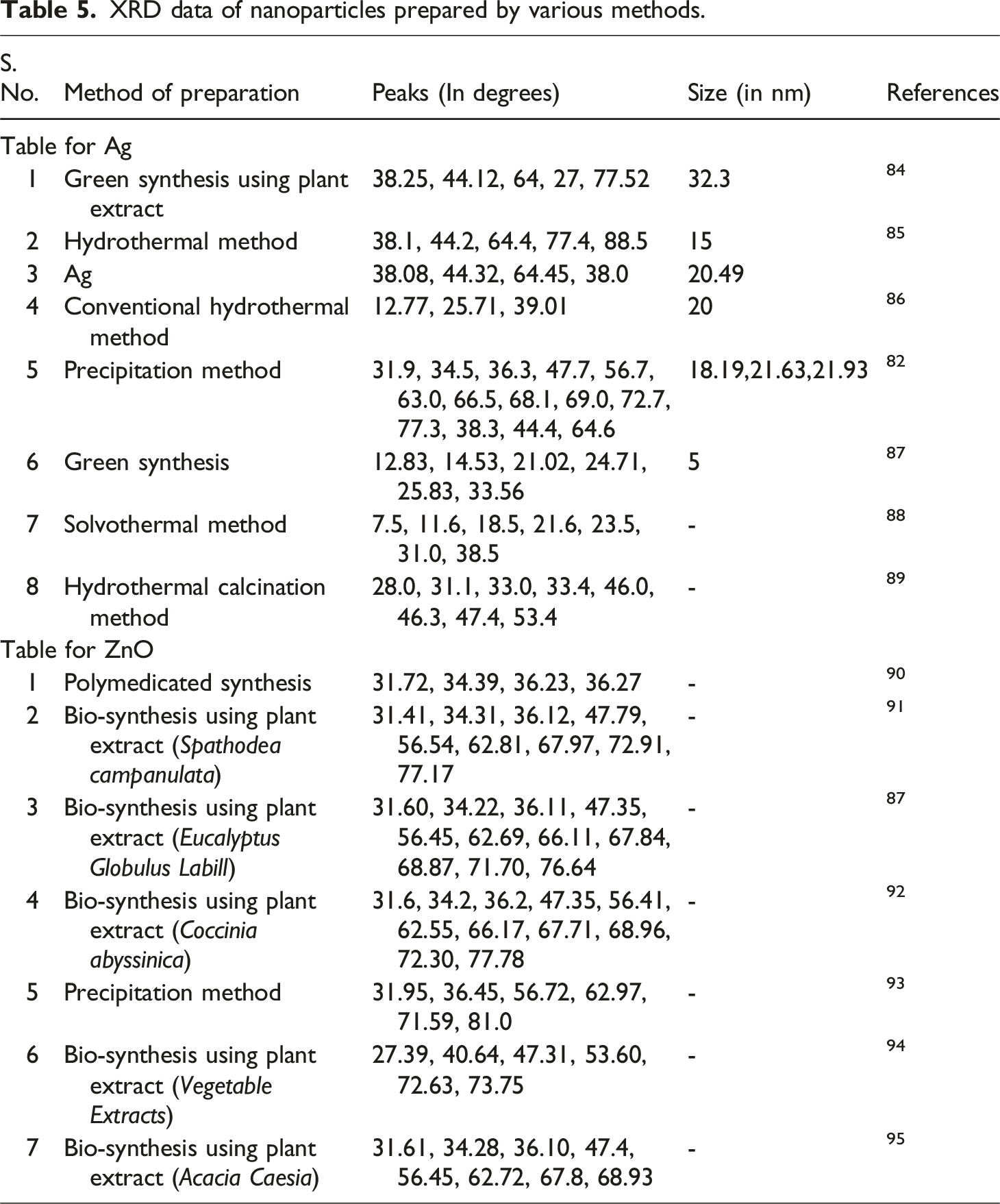
NPs were characterized using various analytical techniques such as ultraviolet visible (UV-Vis) spectrophotometry, TEM (transmission electron microscopy), X-ray diffraction (XRD), Fourier Transmission Electron Spectroscopy (FTIR), and many more. Different techniques are used to detect different properties of crystals. Some of these are described here 82 .
XRD (X-ray diffraction)
XRD is a type of technique used for liquid and solid substances. It is mainly used in the detection of the structure of the crystal. Many methods are used for XRD and these methods are distinguished by the phase of the crystal either powdered or crystalline.
XRD data of nanoparticles prepared by various methods.
UV-visible characterization
UV-visible is a useful technique for the identification and characterization of nanomaterials. The NPs show special properties. The localized surface plasmon resonance (LSPR) of noble metal NPs is one of their most intriguing and significant characteristics. When photons at a specific frequency cause conduction electron on NPs surface to collectively oscillate, the result is the LSPR of the NPs. This results in efficient scattering, higher electromagnetic field intensity surrounding the NPs, and selective absorption of photons.
UV data of nanoparticles prepared from different methods.

FTIR (Fourier transform infrared spectroscopy)
FTIR is another technique used for characterization of antimicrobial fabric. The most often used FTIR-based techniques for characterization are micro-spectroscopy FTIR, attenuated total reflectance (ATR–FTIR), and transmittance FTIR
107
. FTIR is used as a tool for structural and compositional investigation. Identification and quantification of functional groups can be accomplished with the use of FTIR spectroscopy.
108
Different amounts of vibrational and rotational energy are present in molecules. When two vibrational energy levels are precisely matched by their energy and the molecule’s dipole moment shifts during the vibration, the shift between vibrational modes may arise. By examining the infrared spectra that are generated when a material absorbs infrared light, FTIR can offer details about the molecular composition and structural properties of textile fibers. The uniformity and cleanliness of textile fibers are guaranteed by quality control using FTIR. You can ascertain the chemical composition of textiles by recognizing functional groups like amines, hydroxyls, and carbonyl. Relevance of peaks of inorganic matter in FTIR spectra is explained below: 1. 2. 3. 4.
Thus, the FTIR spectra provide insights into the chemical composition of the bio-assisted nanoparticles and the role of functional groups from the bio-reducing agents in the stabilization and functionalization of the NPs.
FTIR data of nanoparticles prepared from different methods.

TEM (transmission electron microscopy) characterization
Without a doubt, one of the most significant techniques for characterizing NPs is transmission electron microscopy. TEM creates high lateral spatial resolution micrographs of nanoscale materials by applying a concentrated electron ray to a thin sheet. By focusing and limiting the ray and observing the resulting diffraction pattern, TEM also makes it possible to examine the various properties of crystals. The single-particle examination of size, shape, and crystal structure is made possible by TEM’s great spatial resolution and selectivity
Even though TEM allows for nanometre-level visual inspection of individual particles, the entire process can be very laborious. This problem can be solved by lowering the acceleration voltage or by employing cryo-EM (see advanced methods), but doing so will increase the complication of the process or decrease the achievable resolution. Finally, TEM requires extremely skilled individuals and is an extremely expensive technique (both in terms of acquisition and maintenance costs).
119
The right choice of analysis method (human vs automated), and magnification is essential for successful nanoparticle characterization. These choices impact the degree of electron ray damage to the sample and regulate the measurement resolution background contrast, number of particles in each image, and subsequent analysis’s effectiveness. Additionally, they establish the correct way to calculate the particle-background border. TEM creates images on a specialized camera due to the interaction of the sample and electron beam. As a result, the sample needs to be strong enough to survive both the electron beam and the high vacuum chamber it is placed in. Although TEM functions on a distinct premise from SEM, it frequently yields comparable data. Sample preparation for TEM is laborious and time-consuming since the sample needs to be ultra-thin. The dispersion of NPs is applied to support grids or films, and to enable handling and withstand instrument vacuum, the NPs are embedded in a plastic or fixed with some materials.
120
The difference in electron density between the organic matrix and mineral structures in the sample, the sample’s thickness and density, the diameter of the objective aperture, and the energy of the electrons are the main factors that affect TEM images. Using bright-field or dark-field imaging is another adjustable parameter.
121
TEM provides a high-resolution image of a fiber’s cross section and provides details on the internal structure of the fiber, such as the arrangement of fibrils, defects, and voids. This understanding is necessary to comprehend the mechanical properties and usefulness of textile materials. With TEM, the crystalline regions of fibers can be investigated. This method provides insights into the mechanics behind textile deterioration and longevity by monitoring changes in the microstructure of fabrics exposed to environmental conditions including moisture, UV light, or chemical agents. TEM images of different NPs is given below in Figure 10. TEM data of different nanoparticles.
Performance estimation of anti-microbial fabric
Explanation of qualitative and quantitative methods along with a little comparison.

AATCC TM 147: ANTIBACTERIAL ACTIVITY OF TEXTILE MATERIALS; PARALLEL STAKE METHOD. ISO 20645: International Organization for Standardization. AATCC TM100: AATCC Test Method 100: Antibacterial Finishes on Textile Materials. JIS L 1902: The Japanese Industrial Standards.
We proposed that the performance of antimicrobial healthcare textiles could be assessed using a new, more thorough efficacy test when exposed to the following conditions: (1) pure cultures of significant HAI-causing microbes and normal skin microorganisms; (2) repeatable combinations of skin microorganisms with pathogens; and (3) artificial soils, such as synthetic sweat and 5% serum. 123 It is important to remember that antimicrobial analysis techniques are highly susceptible to contamination. Because of this, testing are typically conducted in strictly regulated environments to guarantee reproducibility of findings.
MIC (Minimum inhibitory concentration assays)
Minimum inhibitory concentration of Gram-negative bacteria and Gram-positive bacteria along with their morphology.


Applications of anti-Microbial fabric
Antibacterial fabrics find diverse applications in various industries and environments. The increasing needs of customers related to odor control and cleanliness increase the market for antimicrobial textiles. Different industries have introduced various brands of antimicrobial textiles. 126 Some of the applications are given below:
Health care industry
Antimicrobial textile materials find application in clinical and sanitary practice for many purposes, such as first aid. Antimicrobial textiles have the potential to serve as bio-functional textiles. To build wearable medication delivery systems, these textiles are made by fusing traditional materials with highly developed pharmaceutical nanocarriers. These bio-functional fabrics are intriguing goods that could increase skin penetration while posing less of a danger for toxicity. Textile materials with antimicrobial properties can be employed as an appropriate matrix to enable the release of various active ingredients gradually. In addition to serving as carriers for antimicrobial agents, these textiles have potential use in the treatment of psoriasis, melanoma, hormone therapy, aromatherapy, and atopic dermatitis. Some NPs has capacity to stick to cotton fabric and perforate it suggests that they could be utilized as a dressing material to aid in the healing of wounds. Additionally, these incredibly effective antimicrobial cotton textiles are not that much toxic against human cells. 11
Textile industries
Antimicrobial clothing appears to have potential use in a wide range of sectors, not simply routing. A recent assessment analysis was conducted on the development of antimicrobial textiles for extended space flight. Microbes are largely absent from the space travel system, and the likelihood of microbial growth within the spacesuit is quite low. Due to a lack of laundry facilities, clothes are worn for extended periods and are sometimes transported on missions. Microbes can proliferate when human skin comes into contact with them, and there are no effective ways to wash garments. The usage of antimicrobial material in space exploration could decrease or remove the requirement for garment washing. Due to its potential to stop microbial development and perspiration odor, antimicrobial sportswear is also in demand. Sportswear with odor-controlling properties was subjected to sensory analysis, and the results showed that odor-control textiles might have a milder scent than comparable polyester samples. 105 A patent has been granted for a flexible antimicrobial sleeve that gets rid of any bacteria that the wearer sneezes or coughs and transfers to the sleeve. Children were supposed to wear this sleeve on the elbow of the clothing they were already wearing. Because of the fit of the design, the wearer could easily apply and remove it without having to limit their range of motion. 11 Also, Packaging materials, such as bags, pouches, and wraps, can be treated with antimicrobial agents to stop the growth of bacteria and preserve the hygiene of the packaged goods.
Antimicrobial textiles can also help to maintain freshness and cleanliness in textile accessories like bathrobes, towels, and washcloths.
Food packaging
Food packaging is essential to supplying consumers with high-quality and safe food products. These made significant contributions to preserving the physicochemical characteristics of foods and their raw materials, including their color, flavor, moisture content, and texture, as well as ensuring that they are free from oxidation and microbial deterioration. In addition to serving the same purpose as traditional food packaging, antimicrobial food packaging systems are made to stop microbiological growth on food surfaces, improving the stability and quality of food. To increase the shelf life of packaged food products, nanomaterials with special physiochemical and antibacterial qualities are being investigated extensively in food packaging as preservatives and antimicrobials. Copper, gold, titanium dioxide, magnesium oxide, zinc oxide, cellulose, chitosan-based polymeric nanoparticles, lipid nanoparticles, are among the different nanomaterials used in food packaging. Packaging systems based on antimicrobial nanomaterials are designed to be more effective against microbiological pollutants. Theese provide prolonged shell life and protection to food products. 127 Composite active packaging materials are frequently created by incorporating antibacterial ingredients into food packaging. Thermal processing or the casting procedure can be used to accomplish this. 128
Storage
Textile technology has used supercapacitors for energy storage applications. In a stacked multilayer structure, these supercapacitor textiles might store energy and perform photoelectric conversion. Schottky diode-adorned textiles have good uses in reverse current and discharge protection, voltage clamping, and switched-mode power supply. Activated carbon has been used in poly (methyl methacrylate) (PMMA) and polyethylene glycol (PEG) to modify cotton and polyester textiles. 129 Nanoparticles offer intriguing new avenues for a range of energy-related applications. Nanomaterials increase surface area in energy storage, increasing capacity and charge/discharge rates. One example of this is the electrodes of lithium-ion batteries that incorporate nanoparticles. In contemporary solar cells, nanoparticles enhance light absorption and conversion efficiency, hence augmenting energy transfer. Nanoparticles also contribute significantly to energy savings by improving the efficiency of light-emitting diode illumination, where quantum dots may accurately customize output light hues and reduce energy usage. In complex catalytic systems, nanoparticles also help optimize chemical reactions, reducing the energy requirements for numerous industrial applications. Nanoparticles are crucial for improving energy transmission, storage, and savings as well as for developing a more efficient and sustainable energy environment. 130
Air filters
Nanoparticle release into the environment could be a problem, yet their use in air filters can be hopeful. Conventional procedures include the external deposition of nanoparticles that are not permanently fixed, resulting in environmental pollution. A wet chemical treatment for polyester fiber filters appears to be a viable approach for improving the adherence between the fiber and nanoparticle, is economical, and doesn’t require any specialized equipment medical equipment for healthcare personnel, and even air filters can be made safer by the antibacterial properties of copper nanoparticles. 131 Numerous techniques for creating antimicrobial air filters have been documented. Generally, the techniques fall into two categories: direct processing and altering the existing air filter. A filter composed of carbon, glass fiber, polymers, or other materials is used in air filtration. Air filters come in a variety of forms, including porous polymeric membranes, nanofiber membranes, and non-woven fiber filters. 132
Water purification
Filters reliably remove impurities without the need for new chemicals or the creation of hazardous byproducts, they are frequently employed in wastewater and water treatment procedures. Nonwoven is one of the fastest-growing market categories. In addition to woven, paper, and membrane filters, nonwoven fabric filters are one of the four main filtration systems available on the market. They can be precisely engineered to satisfy strict regulatory standards for liquid and air filtration as well as precise specifications. Greater permeability, increased specific surface area, and adjustable pore size distribution are just a few of the many special technical features that nonwovens provide. They also have unique filtration mechanisms and benefits for increased filtration efficiency and reduced energy consumption. 133
Chitosan-coated cotton gauzes or cotton gauzes cationized by adding quaternary ammonium groups have been investigated as biological disinfectants against both Gram-positive and Gram-negative microorganisms. 134
Silver nanoparticles effectively fight bacteria, viruses, and other dangerous pathogens, they are perfect for purifying water. By eliminating microbiological pollutants, their incorporation into purification systems contributes to the purification of water, guaranteeing safer drinking water for domestic and commercial uses. They provide a number of benefits they effectively eradicate inactive viruses and bacteria like Salmonella and E. Coli, ensuring that the water is free of pathogens that cause illness. , prevente biofilm formation on filters, silver nanoparticles increase the filtration system’s robustness and lifespan.
Silver nanoparticles also provide a non-toxic and eco-friendly water purification system as an alternative to chemical disinfectants. The silver ions released by the silver nanoparticles enter microbial cells, harm essential processes, and cause cell death. Long-term water safety is maintained by this activity, which guarantees ongoing antibacterial activity within water filters.
Other applications
Air filters, packaging of food, health care and hygiene, sportswear, storage, ventilation, and water purification are just a few of the domestic and commercial uses for these antimicrobial textiles. The past several years have seen an increase in economic prospects and public awareness of antimicrobial textiles
135
is given below in Figure 11. Representation of applications of antimicrobial fabric.
Future considerations
Antimicrobial fabric has some challenges and limitations which still need improvement or study. These are the future considerations which are described below:
Environmental friendly textile
A common objective of studies on sustainable production and consumption trends is the environmental sustainable approach to the manufacturing processes of the textile and garment sectors, including resource consumption, emissions, and waste generation. Organic cotton and bamboo are examples of alternative materials that can be used to reduce environmental impact and reduce reliance on virgin resources. Examining supply chain practices to identify opportunities to reduce carbon and water emissions while improving transparency, traceability, and the procurement of ethical materials. Future efforts to manufacture textiles and clothing in an environmental friendly manner should prioritize using cutting-edge technology and renewable resources. Adopting circular economy concepts can minimize waste and boost resource efficiency throughout the production chain. Collaboration between producers, designers, and consumers is necessary to truly have an impact. Furthermore, transparent labelling and certification programs can empower consumers to make informed choices, which in turn promotes more environmentally friendly market practices. 136 Surprisingly, there was little interest shown in demonstrating the environmental viability of antimicrobials, even though they are well-known for the numerous antimicrobial compounds employed in textile finishing. 137
Antimicrobial resistance
When creating an antimicrobial treatment for a textile, antimicrobial resistance should also be taken into consideration due to the high concentration of antimicrobial agent needed to achieve antimicrobial activity and durability. It is always advisable to weigh the benefits and risks before using an antimicrobial agent on textiles. Antimicrobial resistance can be prevented to some extent. To provide an effective product, the antimicrobial should, first and foremost, not approach the minimal inhibitory concentration (MIC) of the therapy during the product’s useful life. Because of the antimicrobial product’s low wash durability, the minimum inhibitory concentration (MIC) can be obtained. Secondly, a gene’s resistance to a route can be decreased by combining the synergistic mechanisms of other antimicrobial products. It is thought that a complicated antimicrobial mechanism is more effective and more complex for microorganism to successfully create a set of altered genes against the antimicrobials.
Cytotoxicity Analysis
These textiles’ cytotoxicity has not yet been studied. One biological assessment and screening test that uses tissue cells in vitro to look on morphology and cell viability by medical devices is the cytotoxicity test. It is critical to evaluate the impregnated fabrics for cytotoxicity due to the widespread concern over the toxicity of NPs (NPs). The human skin organs due to their small size. For cytotoxicity testing, HepG2 cells were thus employed as a second cell line. Numerous techniques have been employed to gauge NP cytotoxicity in mammalian cells, and while opinions differ about the best approach, our knowledge of its limitations has improved due to the variety of end point measurements and assay types. The applications and intended use of antimicrobial NPs determine the best kind of assay to evaluate their cytotoxicity. It would be the only point of minor touch with these textiles. Thus, determining the cytotoxicity of HDF cell lines was crucial. NPs have the potential to enter the human body through a variety of channels and end up in the most delicate.
138
• Future efforts to manufacture textiles and clothing in an environmental friendly manner should prioritize using cutting edge technology and renewable resources. • Also, as antibiotics continue to be overprescribed and used extensively in husbandry practices, the state of antibacterial resistance will only worsen. • Although NPs are a potential solution to the issue due to their multi-target mechanism of action, more work must be done. • In conclusion, standardized practices, in NP fabrication should be considered for maxima validation amongst future studies, which should include a cytotoxicity analysis and an inflammatory response.
Safety measures
There are various antimicrobials available for use as textile finishes, however there are a few specifications that must be met: It must meet the following criteria: (1) it must not be harmful to humans; (2) it must not cause skin irritation or allergies; (3) it must be effective against microorganisms; (4) it must be appropriate for textile processing; (5) it must be durable during laundering; and (6) it must not detract from the textile’s quality or appearance. According to reports, nanomaterials might enter an organism by skin penetration. Because NPs can pass through biological barriers, they can cause oxidative damage and inflammatory responses. Additionally, skin penetration could cause harm to employees. Therefore, a deeper comprehension of how these nanomaterials are transmitted from their separation and migration to their entry into the human body is required. Furthermore, once NPs enter the body, it is important to fully understand how various organs respond to them, how they are metabolized, and how to get rid of them from the body. Despite this, there aren’t many accounts of these problems in the literature. The liver and spleen further disperse the nanomaterials once they enter the blood circulation system. If the NPs are hydrophilic and have positively charged surfaces, this lengthens the circulation period. The brain, testes, reproductive system, and foetus in utero where residues of the chemical components have been discovered have all been documented to be in danger in this instance. To be more precise, much more study is required to comprehend the NPs and how chronic exposure after accumulation affects secondary organs. 139
Conclusion
To sum up, antimicrobial textiles based on nanoparticles offer improved defense against a variety of infections and are a potential development in textile technology. Silver, copper, and zinc oxide nanoparticles can be included into textiles to provide them long-lasting antibacterial qualities that enhance hygiene and slow the spread of illnesses. These textiles are especially useful in fields where disease resistance and cleanliness are essential, such as healthcare, sportswear, and personal protective equipment. Despite the well-established efficacy of these materials, issues with long-term stability, possible environmental effects, and industrial scalability still exist. To solve these issues and maximize the performance of fabrics treated with nanoparticles for wider applications, more investigation and creativity will be necessary. All things considered, antimicrobial textiles based on nanoparticles have enormous potential to transform sectors that demand strict adherence to safety and hygiene regulations.
Footnotes
Acknowledgments
The authors would like to acknowledge University Grant Commission (UGC), New Delhi (201819-NFO-2018-19-OBC-UTT-74058) for financial assistance.

Funding
The author(s) disclosed receipt of the following financial support for the research, authorship, and/or publication of this article: University Grants Commission; 201819-NFO-2018-19-OBC-UTT-74058
Declaration of conflicting interests
The author(s) declared no potential conflicts of interest with respect to the research, authorship, and/or publication of this article.