




Abstract
Professionals engaged in fire rescue and industrial production may face the danger of hot liquids and steam. They need to be equipped with specific thermal protective clothing (TPC) to ensure their safety. To evaluate how well TPC protects against hot liquids and steam, this paper reviewed the mechanism of hot liquids and steam, the factors affecting its protection, and measurement methods. Firstly, the characteristics of hot liquids and steam are analyzed from the perspective of heat transfer mode, and the importance of hot liquids and steam protection is emphasized. Secondly, the factors affecting protection performance of hot liquids and steam is reviewed base on relevant researches, focusing on the fundamental properties of fabrics, the air layer under clothing, the moisture factor, clothing factor and the environmental factor. Finally, the existing measurement methods for hot liquid and steam protection performance are summarized, and the deficiencies in the existing research has been discussed. At last, this paper looks forward to the development of the future research direction. This review provides reference ideas for protective measures against hot liquid and steam burns, and provides new ideas for the design and optimization of hot liquid and steam protective clothing.
Keywords
Introduction
Occupational persons engaged in firefighting operations, petrochemicals, food processing, and marine transportation may face the hazards of hot liquids and steam. The temperature of hot liquids and steam are much lower than flames, but can also cause serious burns on human skin. According to statistics, 1 of the patients hospitalized for burns in mainland China from 2009 to 2018, the proportion of scald injuries reached 60.19%, while burns caused by flames accounted for only 20.45%. Another research organization investigated the burn treatment records of firefighters from 2005 to 2009 2 and found that 65% of the patients were scalded by hot liquids and steam, and only 20% of the patients were burned by flames. In addition to causing skin burns, hot steam can cause respiratory problems and severe respiratory disease. 3
Relevant practitioners need to wear specific thermal protective clothing (TPC) to keep their safety. Facing different thermal disasters, the performance requirements of TPC are different. TPC refers to the defense against high temperature, high heat, high humidity, and other hazards to the human body protective equipment. TPC is widely used in fire rescue, petrochemical, metallurgy, coal mining, tunneling, food processing, and other operations that need to face the extreme heat environment. The risk factors that may exist in extreme heat environments are radiant heat, high-temperature flame, heated air, molten metal object splash, high-temperature liquid splash, steam, etc.4,5 TPC mainly reduces the speed of heat transfer, to transfer heat from the outside to the human skin slowly and in small amounts, to achieve the reduction or delay of the skin to produce burns. 6 Most of the current research on TPC focuses on the protective performance against flames and thermal radiation, such as the use of Thermal Protective Performance (TPP) testers or Radiant Protective Performance (RPP) testers to measure the protection property of protective fabrics exposed to flames or thermal radiation. As well as the use of Stored Energy Test (SET) testers to evaluate the protection property of fabrics during the process of exposure to low thermal radiation and the release of heat accumulation in the cooling process when the thermal exposure ends. 7 The overall performance of TPC is evaluated using full-scale manikin, such as the burning manikin. 8 All these evaluation methods simulate flame or thermal radiation exposure, and a series of evaluation criteria have been established accordingly.
There are fewer studies on the protection property of hot liquids and steam, but the heat transfer mechanism of hot liquids and steam is different from that of other thermal hazards. Heat and mass transfer occur mainly by convection and/or diffusion under the hot liquids and steam exposure, with mass transfer dominating the process. 9 Therefore, studying the factors influencing the protection property of hot liquids and steam, and exploring their internal heat transfer mechanisms are important foundations for the development of TPC for hot liquids and steam.
This paper will analyze the characteristics of hot liquids and steam, and review the relevant research. Analyzing the influencing factors of hot liquids and steam protection performance from the standpoint of the “clothing-human-environment” system, and summarizing the current hot liquids and steam protection performance evaluation technology. This paper systematically summarizes previous research on the protective performance against hot liquids and steam, which can sketch comprehensive understanding about the mechanism of hot liquids and steam, and provide theoretical guidance for the development of protective clothing against hot liquid and steam and the safety protection of professionals.
Characteristics of hot liquids and steam
When hot liquids and steam contact clothing, energy transfer occurs in the form of heat conduction or convection and mass transfer through the fabric. 10 Hot liquids splashed onto clothing may flow, stay or penetrate the fabric surface. 11 Hot liquids flowing or staying on the fabric surface will create convection, transferring heat to the fabric surface. This heat transfer will cause heat to pass through the fabric by conduction. It is also possible that hot liquid can penetrate the porous structure of the fabric and be stored in the fabric. The liquids stored in the fabric will continue to transfer energy to the skin. In addition to heat and mass transfer, the thermal energy of hot steam also comes from phase change. 12 Steam can penetrate clothing, condense on the skin surface, and quickly release a large amount of heat. Wetting of the fabric by hot liquids and vapors greatly increases its thermal conductivity and the heat capacity of the fabric system, which can result in increased heat transfer. 13 Although the maximum temperature of water vapor can reach 374.5°C, which is far lower than the temperature of flame (726.9 °C–2726.9°C), 14 the harm caused by hot liquids and steam cannot be underestimated.
Some studies have classified the factors that cause burns to firefighters into three categories: scalding, flame burns, and burns on contact, with scalding due to contact with hot liquids and steam being the main factor leading to firefighter injuries. 2 From the home to the workplace, people are at risk from hot liquids and steam. Studies have shown that second-degree burns can occur in adults when their skin is exposed to hot water at 66°C for 2 s. 15 In addition to firefighters, people who engage in navigation, oil, gas, food processing, and other industries face hot liquids far more than 66°C. The temperature of hot water is as high as 80∼90°C generally in industry. 16 When the accident happened, these hot liquids are often sprayed with pressure and come into contact with the clothing. Due to the impact force, the clothing surface is squeezed and the air layer underneath clothing is reduced, which reduces the thermal protection property of the clothing. 17
According to the pressure and the temperature, steam is classified as low-pressure, medium-pressure, and high-pressure steam. Steam in the industry can usually be as high as 0.1∼4 MPa, with temperatures up to 100∼300°C. 6 If steam leaks accidentally, it will bring great danger to the lives of workers, and leaking steam in the industry is often accompanied by a certain amount of impact and pressure. Based on the ambient temperature and intensity of radiant heat flux, the fire exposure conditions are categorized into “routine”, “ordinary”, and “emergency”, with temperatures in the “ordinary” conditions as high as 70∼300°C. 18 Moisture in the fire environment is mainly in the form of hot steam. Although the steam in a fire environment is at low pressure, it can penetrate directly into TPC and cause skin burns.
In general, although the rate of heat transfer between hot liquids and steam and clothing is lower than that between flame and clothing, hot liquids and steam may penetrate TPC in contact with the human skin, releasing a large amount of heat. The skin is also able to absorb hot liquids and steam, accelerating the heat transfer, and resulting in scalding of the skin. The fabric of TPC absorbs hot liquids and steam, and the moisture content rises, resulting in the thermal protection performance of TPC changes. Hot liquid splash and high-pressure steam injection into the TPC, compressing the size of the air layer underneath clothing, will also reduce the thermal protection performance of TPC.6,14,19,20
Study of factors influencing protective performance
Analyzed from the standpoint of the “clothing-human-environment” system, the thermal protection properties of TPC will be affected by the basic properties of fabrics, including thickness, density, breathability, fabric structure, waterproofing, etc. The air layer under clothing that exists between clothing and the human body will affect the heat transfer, and a multi-layer clothing fabric system will also form an air layer between each fabric. In the process of human movement, the clothing will be deformed, resulting in changes in the thickness and distribution of the air layer under clothing, thus indirectly influencing the performance of thermal protection. The human body sweats by metabolism, then clothing will absorb part of the sweat, and the variation in the moisture content of the fabric will change the basic properties of the fabric. Environmental factors include the type of heat source, the heat flux intensity, the distance from the source of heat, the impact of the pressure, the wind speed, and so on. The different exposure conditions have different influences on thermal protection properties.
Basic properties of the fabrics
In the study of the thermal protection properties of small samples of fabrics of TPC, many scholars have investigated the relationship between the basic properties of fabrics and thermal protection properties during flame or radiant heat exposure, such as fiber chemical structure, fabric structure, weight, thickness, density, breathability, etc.21–25 In the study of protection against hot liquids and steam, the conclusions regarding the influence of the basic fabric properties can be summarized in the following three areas:
Waterproofness and breathability
Waterproofness and breathability are the main factors affecting the protection property during hot liquids and steam exposure. During the exposure of hot liquids and steam, water with a lot of heat will transfer mass through fabric. Impermeable and low breathability fabrics can significantly reduce the amount of mass transfer. In the study of the protective performance of hot liquids and steam, research shows that semi-permeable and impermeable fabrics provided greater protection compared with permeable fabrics.13,26 Woven technique, yarn count, yarn density, structural parameters and treatments determine the waterproofness and breathability of the fabric. For permeable fabrics, an increase in the resistance to liquid penetration significantly improved the thermal protection property. Water repellent finishing of permeable fabrics will fill pores in the fiber structure of fabric to reduce liquid penetration, and it can also change the surface properties of the fibers. 11 The surface properties of fabrics contact angle also affect hot liquid protection. 13 Permeable fabrics can also be coated or laminated to make them waterproof. For fabrics containing semi-permeable or impermeable membranes, the direction of moisture transfer of the membrane is the key factor affecting the protective performance. 26 This is because when the membrane is oriented toward hot liquids, on one hand, liquids will not penetrate into other layers, on the other hand, the membrane has less resistance to water, which reduces the amount of time the liquids stay on the fabric surface. 12 Both of which can reduce mass transfer.
In the study of protective performance against hot steam, there are also plenty of studies to prove the importance of waterproofness and breathability of fabrics for thermal protective performance. Studies have shown that impermeable fabrics resist hot steam better than semi-permeable and permeable fabrics, which boost protection properties by reducing mass transfer. 20 For permeable fabrics, a vapor-impermeable treatment can significantly improve steam protection. 27 Su et al 28 found that the positive influence of the thickness of fabric was diminished by hot steam, but the importance of breathability for thermal protection was increased. It demonstrated that fabric systems with waterproof and breathable layers provide better resistance to steam penetration through the fabric system. And thermal protection was effectively improved by exposure to low-pressure steam and thermal radiation because of low breathability.
Fabric thermal resistance, weight and thickness
When hot liquids splash onto the fabric, the heat is transferred through the fabric by conduction. The thermal conductivity of the fiber components and the thermal conductivity of the hot liquid captured within the fiber structure affect the heat transfer rate. 11 Fibers with low thermal conductivity can reduce the rate of heat transfer. Fibers with low hygroscopicity absorb and store less liquid, which can reduce the impact of liquid on the heat transfer rate and the release of heat storage.
The weight and thickness of the fabric also affect the protection against hot liquids and steam. It has been found that heavier, thicker fabrics have better protection compared with lighter, thinner fabrics, with density being the main factor affecting hot liquid protection. 26 For impermeable and semi-permeable fabrics, thickness seems to be the primary determinant of protection against hot liquids. 13 The water vapor permeability, thermal insulation, and thickness of the fabric all affect steam transmission. During steam exposure, for moisture barrier fabrics, there is no significant positive correlation between the thickness and thermal protection. 28 Reducing the moisture regain and air permeability of fabrics is more effective in improving thermal protection properties. 28 Because this effectively reduces the amount of steam penetrating into the fabric. For insulation layer fabrics, increasing the thickness of the fabric has a positive impact on improving the protective performance of the fabric system.20,28 Because the process of steam exposure is also accompanied by heat conduction and radiation. The presence of the thermal insulation layer can also reduce the absorption of steam by the fabric system, thereby reducing the release of heat from steam condensation within the fabric.
Fabric combination
Multi-layer fabric systems can provide better protection compared to single-layer fabric systems. This is because multi-layer fabric systems are thicker than single-layer fabric and contain more air layers, which have increased thermal insulation properties. And they can store more hot water during hot water exposure, which can slow down skin burns. 29 Whereas in steam exposure, the steam penetrates the multi-layer fabrics, which may condense farther away from the skin, reducing the degree of skin burns than single-layer fabric systems.9,30 Therefore, their protective performance is better than single-layer fabric systems. Both moisture barrier and thermal liner can improve the thermal protection property of TPC. The thickness of the thermal liner, the material of the waterproof-breathable membrane, and the location of the placement can affect the protection efficiency.11,12,29–31
TPC should use a multi-layer fabric combination that includes a moisture barrier and a thermal insulation layer. It is recommended to place the moisture barrier as the outer layer in the multi-layer fabric system, as this can directly prevent hot liquids or steam from passing through the fabric system.11,12 The presence of the thermal insulation layer can increase the still air within the fabric system, thereby improving the thermal insulation performance of the fabric system and reducing heat transfer. At the same time, the insulation layer can also help reduce the penetration of liquids and vapors. It should be noted that although studies 11 have found that the thermal insulation performance of the fabric system increases with the increase in thickness and weight of the thermal insulation layer, the amount of penetrating liquid and steam absorbed by the thermal insulation layer will also increase, especially for fabrics with high moisture regain. 12 The increase in liquid stored in the fabric system will cause the fabric system to release more energy during the cooling phase.
To sum up, during the exposure of hot liquids and steam, preventing or reducing the mass transfer between fabrics is the primary method to enhance protection performance. In multi-layer fabric combinations, moisture barrier can directly isolate hot liquids and resist the penetration of steam in the fabric system, which is essential in hot liquid and steam protection. For permeable fabrics, appropriate surface finishing should be done to improve liquid resistance and thus improve thermal protection. During the heat exposure and cooling periods, reducing heat transfer is also an important way to improve hot liquid and steam protection. The thermal resistance, weight and thickness of the fabric all affect the heat transfer between fabrics to varying degrees.
Air layer under clothing
The thermal conductivity of air is much smaller than that of fibers, thus still air has a very good performance of insulation. At present, there is much research involving the heat transfer mechanism of the air layer and its effect on the thermal protection property. The thickness, volume, and location of the air layer notably affect the heat transfer through conduction, convection, and radiation. 32
Thickness and volume
The thickness of the air layer under clothing influences the form of airflow, which is related to the clothing production process and the wearer’s size. When the thickness of the air layer under clothing is at a lower level, the air layer is in a static state, and the heat is mainly transmitted through conduction and radiation. In this occasion, increasing the thickness of the air layer can promote its thermal insulating properties. However, when the thickness of air layer reaches a certain value, natural convection will occur. Convection and radiation become the main forms of heat transferring, and convection can speed up heat transfer.32,33
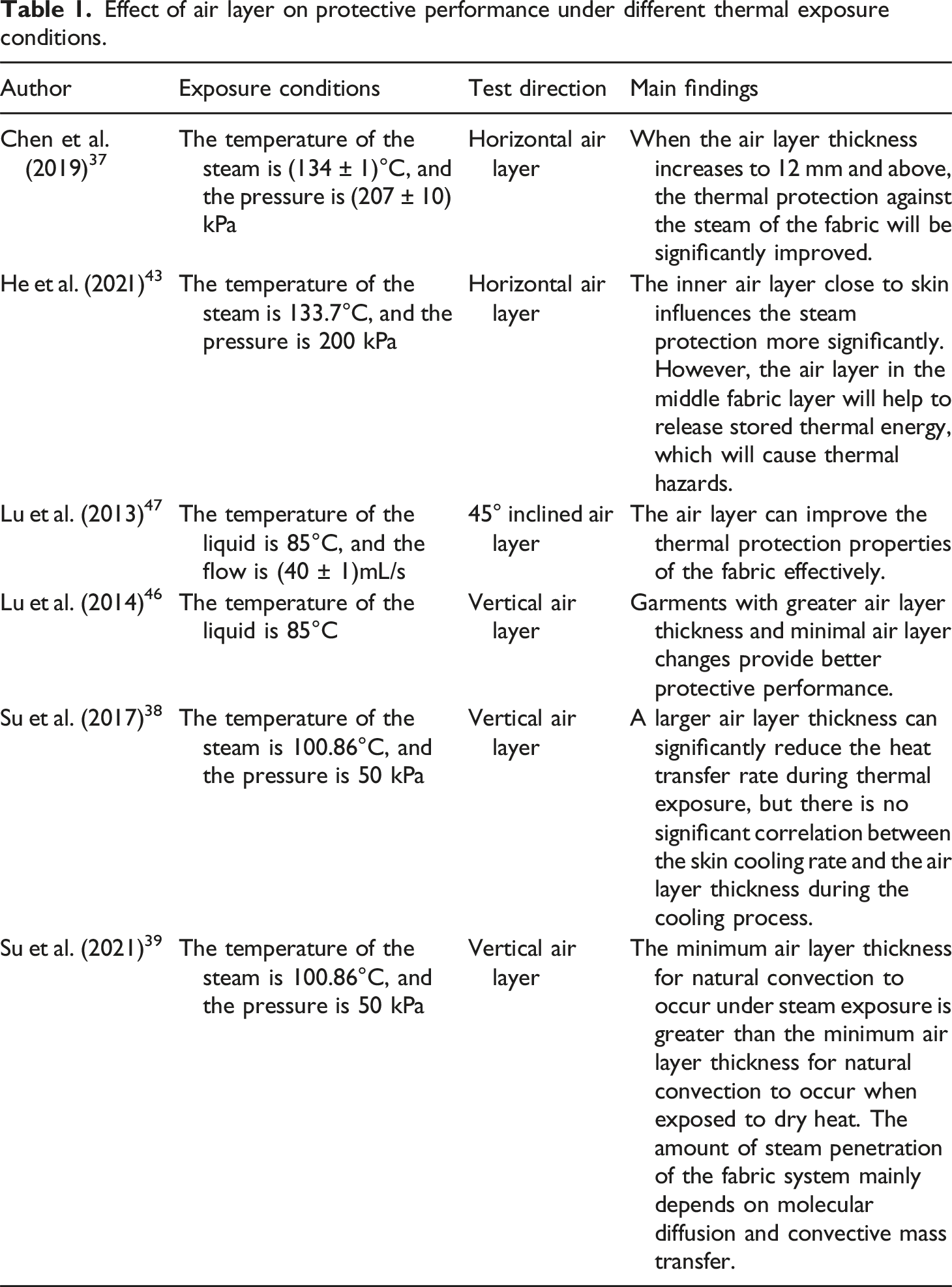
In the research area of thermal protection of TPC, the mainstream view is that there exists an optimal thickness of the air layer under clothing, and many scholars have investigated the optimal value of the air layer.33–36 From the existing conclusions, the optimal value of the air layer is not uniform. There is variability in the optimal thickness of the air layer measured under different heat exposure conditions, orientation of air layer, and moisture content. In the study of thermal protection against steam, Chen et al 37 found that the protection properties of TPC had a significant correlation with the thickness of the air layer. The protection property of TPC was significantly improved when the thickness of the horizontal air layer was increased to 12 mm and above. While Su et al38,39 compared the influence of the thickness of the vertical air layer on thermal protection properties in dry heat (thermal radiation) and moist heat (hot steam and thermal radiation). They found that the thickness of the air layer in which natural convection occurs in moist heat is larger than that of exposure to dry heat. This was attributed to the humidity of the environment and the moisture content of the fabric was increased by hot steam, which slowed down the rate of heat transfer.40,41
Location
TPC includes single-layer and multi-layer protective garments. For single-layer suits, the air layer under clothing exists between fabric and skin. For multi-layer suits, the air layer under clothing exists between the layers of fabric and between the innermost layer of fabric and skin. 42
For multi-layer TPC, the internal air layer close to the skin influences thermal protection property even more. However, the performance of thermal hazards caused by the release of stored thermal energy is more likely to be affected by the air layer between intermediate fabric layers. 43 In the exposing phase of hot steam, the internal air layer is more effective in reducing heat transfer than air layer of intermediate fabric. 44 During the cooling phase, the energy stored in the intermediate air layer needs to additionally pass through the internal air layer to be released to the skin, and increasing the thickness of the intermediate air layer can effectively reduce the heat release during the cooling phase. 45
For single-layer TPC, there was no significant relationship between the location of air layers and skin burns. 46 Except for the pelvis, there was a significant relationship between the thickness of the air layer and the percentage of burns in all body parts. For the upper body parts, the greater size of the air layer has better thermal protection properties. However, in the legs, the greater the air layer, the higher the percentage of burns instead, which is because the water flow accumulated in the upper body during hot water exposure will decrease the size of the air layer by compressing the TPC. Meanwhile, the heat transfer with the garment can be increased by the water flow, which can reduce the thermal protection of the garment in the legs. 46 Therefore, maintaining the stability of the air layer is also crucial to improving the protective property of TPC.
Effect of air layer on protective performance under different thermal exposure conditions.
Moisture factor
Moisture in the TPC system comes from two main sources, sweat from human metabolism and water vapor or liquid water from the external environment. The influence of moisture in TPC is complex. Moisture can change the thermophysical and optical properties of fabrics. At the same time, moisture will undergo a phase change as it passes through the clothing system, absorbing or releasing heat. 14 Therefore, many scholars conducted research on the moisture influencing protective performance in a positive of negative way.
Effect of moisture on thermal protection under different thermal exposure conditions.
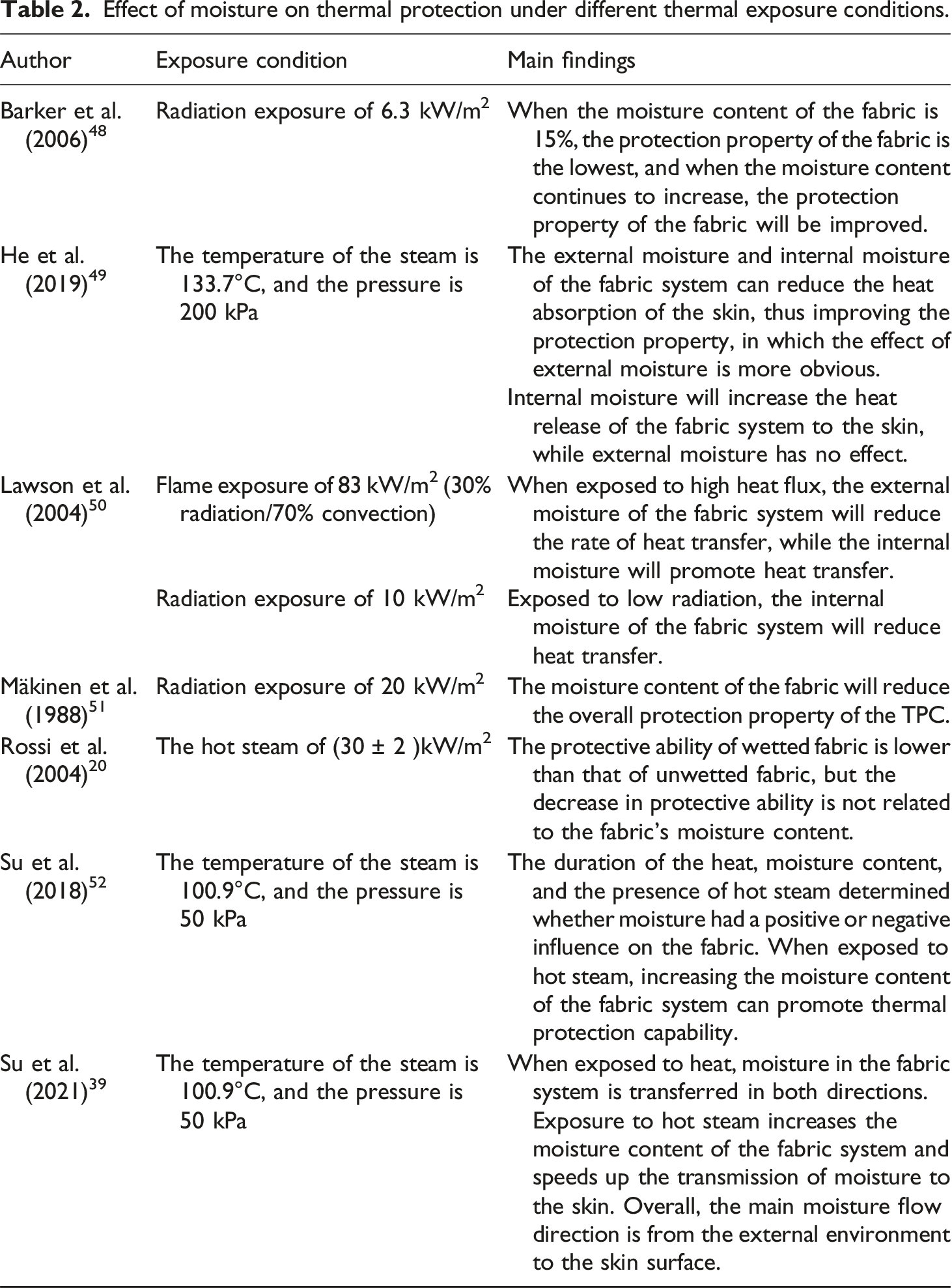
Under hot steam exposure conditions, pre-wetted fabrics are less thermally protective than non-wetted fabrics. It proves that moisture can accelerate heat transfer to a certain extent, acting as a thermal conductor to improve heat transfer and reduce thermal protection. 20 However, among the pre-wetted fabrics, those with the highest moisture content had the highest thermal protection. This is because moisture also has better heat storage and evaporative heat loss properties, which slows down heat transfer of the fabric system. 52
In summary, when exposed to different thermal conditions, the content and the location of moisture have different influences on thermal protection. The influence of moisture on the protection property against hot steam has been studied, but the influence of moisture content in the inner layer between fabric and skin has been mainly investigated. Whether the influence of moisture in the outer fabric shows consistent results with studies under radiation/flame requires further exploration. In addition, there is less research has been done on moisture and how affects thermal protection during hot liquids splash.
Clothing factor
The use of instrumented manikin can be effective in characterizing the protective performance of full-size garments. The protective performance of TPC against exposure to hot liquids or steam has been measured using manikin.
When it comes to the choice of fabric material for protective clothing, impermeable or semi-permeable garments provide more significant protection than permeable garments.53,54 This is due to the fact that liquids or steam are blocked out of the garment, directly reducing the amount of mass transfer. This is presented in agreement with the results of the bench-scale tests. For permeable garments, changing the surface properties of the garment through water repellent finishing can improve the protective properties of the garment. 55
The size of the TPC affects the size of the air layer under clothing. In Lu et al 46 ’s study, loose-fitting protective garment provided more significant protection than tight-fitting protective garment. This was due to the fact that loose-fitting protective garment provided a larger air gap under clothing. The air layer acted as an insulator, blocking the transfer of external heat. It should be noted that increasing the thickness of the air layer up to a certain point can lead to convection currents, and excessively loose garments can also cause certain obstacles to human activities. 55 Therefore, simply increasing the size of a garment does not mean that the thermal protection will be effectively improved. Designers need to consider both ergonomic and protective factors when designing protective clothing sizes.
In the study about the thermal protection performance of TPC against hot water spray, it was found that the burns of the human body mainly occurred at the areas of the direct contact with the hot water spray, the heavy water flow, and the small air layer. 55 Designers can consider adding extra protection to these areas where burns are likely to occur, such as increasing the thickness of the fabric and increasing the size of the garment partially as appropriately, etc. In addition, scholars found that the places where reflective tape was attached to the clothing provided additional protection. 55 The pockets on the clothing also affected the distribution of skin burns. 55 This further illustrates that increasing the thickness and adding fabric layers can improve the thermal protection performance of clothing. It should be noted that if hot water flows into and accumulates in the unfolded pockets, it will cause skin burns in the nearby area.10,55
From the above researches, TPC should be made of fabrics that are impermeable or semi-permeable. For better protection, protective garments should be made of multi-layer fabrics. A certain air layer should be maintained between the human body and the clothing, and the size of the protective clothing should be taken in account ergonomics and protection. Appropriate zoning of the garment should be designed to enhance protection in areas prone to hot water splashes.
Environmental factor
When hot liquids are splashed on the surface of fabrics, moisture diffuses and penetrates through fabrics, and the process is accompanied by heat transfer that may cause skin burns. Different exposure conditions, such as temperature of liquids, flow rate, and spray angle of liquids, can affect the diffusion and penetration of the moisture. 11 There are differences in the potential ability of different liquids to thermally damage the skin. Lu et al 13 found that drilling fluid produced the worst burns and rapeseed oil produced the least severe burns for the same amount of fluid addition. The thermal diffusivity of the liquid is a crucial factor affecting skin burns, and the liquid viscosity and the surface properties of the fabric determine the penetration and diffusion of the liquid. Lu et al 56 also investigated the influence of different liquids and temperatures on the fabric impact penetration and analyzed how the liquid impact angle affects the penetration performance of the fabric system. They found that the penetration rate of the fabric increased with the increase in liquid temperature. The liquid impact angle also affects the liquid penetration properties of fabrics markedly. The smaller the inclination angle helps store more liquid and penetrate through the fabric.
Firefighters may be faced with clothing immersed in hot water while on duty. When exposed to hot water immersion and compression, both conductive heat and mass transfer occurs between fabrics, 57 and evaporative resistance is a very important characteristic that affects protection performance. 58 This is because evaporative resistance determines the amount of mass (water vapour) transferred through the fabric system and thus affects the thermal protection of the fabric. It has been found that evaporative resistance affects thermal protection to different degrees at different temperatures. At lower water temperatures, moisture resistance prevents significant mass transfer between fabrics and therefore has a greater impact on protection. However, at higher water temperatures, water molecules are able to pass through the fabric system more easily due to the longer diffusion distances and faster diffusion rates. 58 In this case, the effect of evaporative resistance is reduced. The pressure of compression does not affect the amount of water molecules passing through the fabric system, but it does affect the thermal insulation of the multilayer fabric system. 58 At high compression, less still air is trapped in the multilayer fabric system, which affects the thermal insulation properties of the fabric system.
At the same temperature, high-pressure steam injection is not as hazardous as direct contact with hot water. However, steam is permeable and can easily penetrate the garment layer, and condensed steam has a high heat transfer coefficient. When the steam content of the air underneath the garment reaches 12% or more, the condensation temperature rises to more than 48°C, causing skin burns. 59 The distance and pressure of steam injection also affect the thermal protection property of fabrics. Sati et al 60 developed a column steam protection tester and used it to evaluate the protection property of different fabrics under different steam pressures (69 kPa, 207 kPa) and nozzle-to-specimen distances (50 mm, 100 mm). It was found that fabrics exposed to steam at 207 kPa and 50 mm had the worst protective performance and that steam pressure and jetting distance could significantly affect the maximum heat flux and temperature reached during steam exposure. Qiu et al 61 explored the role of steam characteristics (pressure, flow rate, and jet distance) on the thermal protection properties of fabrics. He found that steam flow rate and pressure significantly affect the amount of moisture stored within the fabric, and an increase in the amount of moisture absorbed by the fabric will lead to a decrease in its thermal insulating properties, which accelerates the time to skin burns. This is consistent with previous studies on the effects of moisture on protective ability. 20 Steam injection distance also significantly affects the steam protection of fabrics.
Evaluation of protection against hot liquids and steam
Small-scale fabric testing
Compared with the evaluation studies on flash fire and thermal radiation protection, there is less research on the protective properties of hot liquids and steam. The ASTM 2701-2008 62 specifies a hot liquids splash test equipment, which can measure the time of second-degree skin burns of fabrics when exposed to hot liquids at a certain temperature, to obtain the protection property of fabrics against hot liquids. However, the test method has certain drawbacks: the liquid pouring process is awkward, the liquid flow rate cannot be controlled, the test is not reproducible and may cause burns to the operator, and the data from the lower sensor cannot be aligned with the data from the upper sensor. 26
Jalbani et al 26 improved the apparatus by removing the funnel and adding a temperature-controlled thermostatic tank, liquid transfer, circulation piping system, and hot liquid injection port. The improved device can control the temperature and the fluid flow rate, as well as the exposure time under the hot liquid, which can simulate different disaster environments and also achieve the repeatability of the experiment. Lu et al 13 also further improved the hot liquid splash test apparatus by replacing the copper sheet calorimeter originally used in ASTM 2701-2008 with a skin analog sensor, and the data collector collects the temperature per sensor. The data collector is connected to a computer which, through automatic calculations, is able to output predicted second and third-degree burn times. The sensor plate can also be rotated to simulate various impact angles between the liquid and the fabric.
The above measurements evaluate the fabrics’ thermal protection properties against hot liquid splash. Firefighters on duty sometimes crawl on their knees on the ground for firefighting and rescue work, for this activity the knees, elbows, and calves portion of the TPC will be compressed, and the TPC is also submerged in hot water. Such a compression of hot water submersion can also lead to skin burns. 63 The University of Alberta developed a hot water immersion with compression tester, 57 which consists of a temperature-controlled water tank, a top perforated metal platform, a column weight, a pneumatic device, an air compressor, and a data acquisition system. The top perforated metal platform is located at the bottom center of the tank. The temperature of the liquid in the tank can be set with a temperature control device. The column weight is connected to a skin simulation sensor, and the specimen is held in place using rubber bands. Then a pneumatic device is used to immerse the specimen-covered sensor into the liquid until the whole assembly is placed flat in the center of the metal platform, and a certain amount of pressure can be exerted on the specimen between the sensor and the perforated surface by controlling the pneumatic device.
Regarding the measurement of hot steam protection, scholars mainly used homemade equipment to conduct research. Rossi et al 20 used a Bunsen burner to heat a water tank to generate steam. Steam was transported through a pipeline, and the specimen was placed directly above the pipeline. A calorimeter was connected behind the specimen to collect the steam heat flux. The scholars defined a Steam Transfer Index (STI) that STI12 indicates the time for the sensor temperature to reach 12°C, and STI24 indicates the time for the sensor temperature to reach 24°C. The University of Alberta has developed a dual-purpose hot liquid and steam tester. For the steam exposure test, the instrument is fitted with a steam injection attachment, steam is generated by a 3 kW boiler at 150°C. The specimen is placed in a sample holder with a skin simulation sensor attached, and the steam is injected from 50 mm above the specimen through a 4.6 mm diameter nozzle at a pressure of 200 kPa. If hot water exposure testing is performed, the steam injection attachment is replaced with a hot water test attachment.64,65 In practice, steam is sprayed horizontally to the human body, and scholars in China have created a test apparatus that enables steam to be sprayed horizontally concerning the ASTM F2731-11. 66 The device consists of a steam generator, a steam transport tube, a heat exposure simulation case, a specimen clamping device, and a data collector. The steam generator can produce steam with a temperature of 100∼175°C and a pressure of 50∼700 kPa, and the steam is transferred into the middle of the test specimen through the delivery pipe. The steam injection distance can be set by adjusting the distance from the nozzle to the specimen, and the valve of the steam engine can control the size of the steam flow. A skin analog sensor is placed on the back of the specimen, and the sensor is connected to the data collector, which is a data platform capable of automatically outputting the skin burn time and skin thermal energy transfer under hot steam exposure conditions, as well as demonstrating the changes in temperature and heat flow over time at different locations of the skin. 67
Bench scale tests are easy to operate and low cost. Scholars have continued to improve hot liquid and steam bench test equipment to explore the protection performance of fabrics. Most of these test equipment explore the impact of single-factor disaster environment on protection performance. The test equipment for hot liquid splashing only simulates the environmental factor of hot liquids. The actual environment may also be accompanied by high radiation and/or large amounts of steam. The steam protection performance test device of fire ground developed by Su et al. 67 can simulate the composite environment of steam and high-temperature radiation. However, it ignores the high heat flux fire environment of flames, radiation combined heat sources, etc. Therefore, the device’s simulation of the combined heat sources of the fire environment can be further improved.
Full-scale manikin testing
The University of Alberta built a hot liquid spray manikin system, which consisted of a manikin, a hot liquid spray system, a data acquisition system, and a main control box. As shown in Figure 1, The manikin was identical to the burning manikin Harry, with 110 sensors placed uniformly on the surface to measure heat flux to the surface of the manikin, which was suspended vertically in an upright position. The hot liquid spray system consists of a heated water tank, high-power suction pumps, and automated control of the nozzle composition. The nozzle has four groups, evenly distributed in the manikin’s left front, left rear, right front, and right rear quadrilateral. Each group of nozzles consists of three nozzles. Twelve nozzles can be a certain pressure sprayed with hot liquids to the front and rear torso of the mannikin at the same time. During the process of hot water spraying, the sensor collects the heat flux changes on the manikin surface. Through the skin heat transfer model and burn prediction model to predict the burn distribution on the manikin surface, the time of second-degree and third-degree burns on the skin, and the total energy absorbed, and to comprehensively assess the thermal protection property of TPC.
6
Hot water spray manikin test system.
54

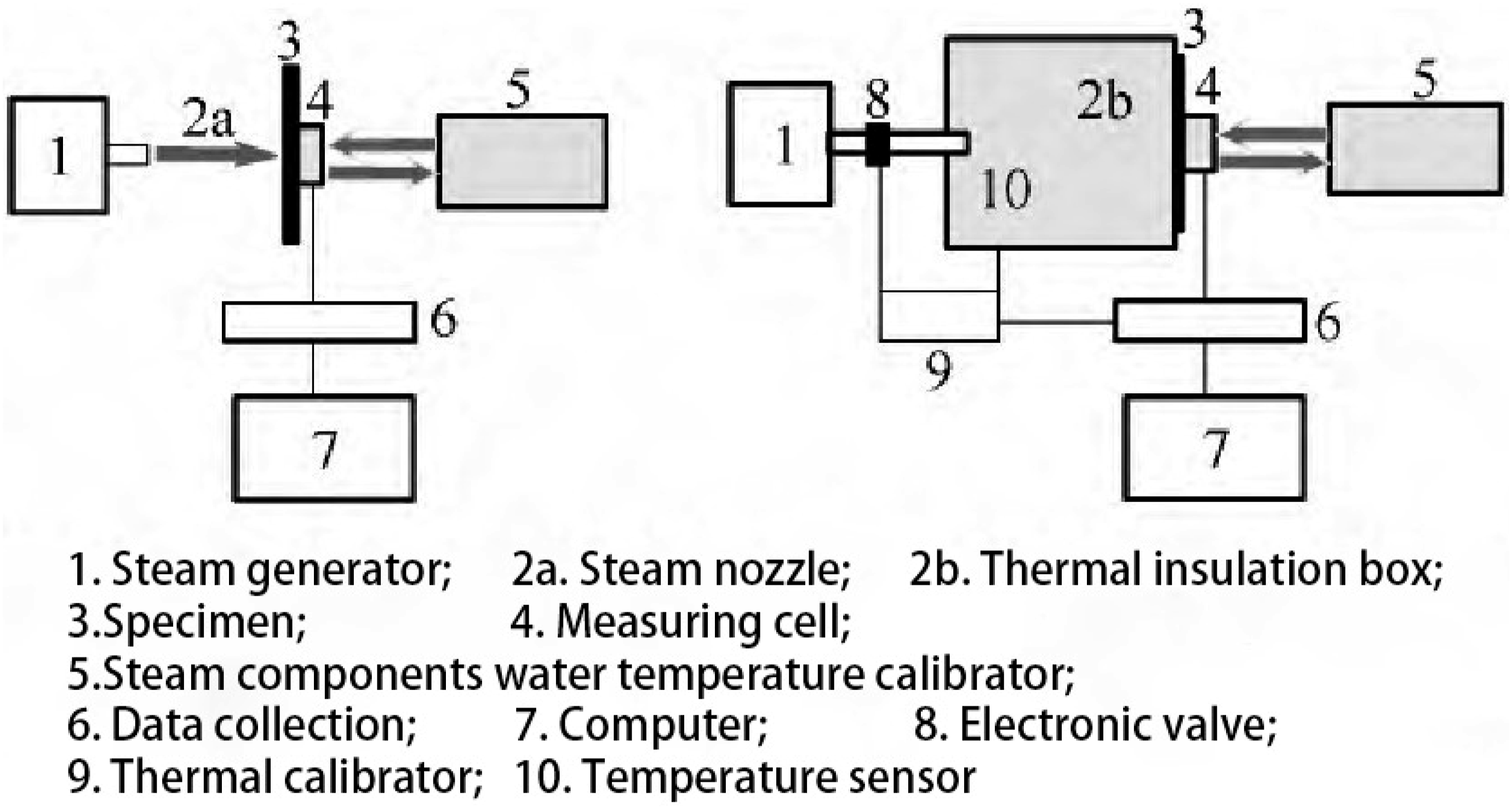
The Institut de Médecine Navale du Service de Santé des Armées (IMNSSA) has set up a steam laboratory, with equipment that includes a test device that generates steam jets or steam atmospheres, a copper warming manikin, and a steam climate chamber (as shown in Figure 2). The test rig quantifies the thermal protection of fabrics exposed to steam pressure, and the manikin and climate chamber assess the heat defense of the garments. The test rig simulates two experimental conditions: steam injection and steam environment. It includes components such as a steam generator (maximum temperature of 142°C and pressure of 300 kPa), a sample holder, a measurement unit, and a data collector. To simulate steam injection conditions, the sample holder and measurement unit are fixed to a removable stand. To simulate a steam environment, the removable stand is substituted by an isolation box capable of creating a steam environment (80°C). For steam protection testing of fabrics, the samples were placed on the grippers and performed on the test unit. For steam protection testing of garments, the protective equipment was worn on the manikin in a steam environment in a climate chamber.
53
It is important to note that when conducting the testing of garments, this laboratory can only simulate a steam environment and cannot test the protective performance during steam injection hazards. Schematic diagram of the IMNSSA steam laboratory (left: steam injection test set; right: steam environment test set).
68
Some scholars have discussed the relationship between bench scale test and manikin test and found that there is a strong correlation between the two. 69 To some extent, bench scale test can predict the overall protective performance of clothing based on the air layer size of clothing. 69 However, full-scale manikin tests can more realistically simulate the distribution of air layers on the human body and predict the parts of the human body that are more susceptible to burns. 46 It can also explore the impact of clothing design features on protective performance, thereby more comprehensively evaluating the overall protective performance of clothing. Some scholars have now used hot liquid spray manikin or steam manikin laboratories to study the protective performance of clothing. However, both devices still have room for improvement. At present, the manikin related to hot liquids or steam all use thermostatic manikins and do not have the function of simulating sweating and movement. Human sweating is a dynamic and continuous process, and the human will move when wearing TPC. Human movement will squeeze the air layer in the clothing and also drive air flow. Some scholars have used bench scale test or numerical simulation to explore the impact of dynamic sweating 70 and human movement 71 on protective performance. However, these studies are at the fabric level under radiant exposure. In the future, it can consider developing manikin test devices for hot liquids and steam with movement and sweating functions.
Numerical simulation
Through the method of physical experiments to simulate different thermal hazardous conditions, the corresponding thermal protection property of fabrics can be obtained. However, the thermal protection experiments are essentially destructive to the fabric, and the simulated conditions are somewhat different from the real situation. The numerical simulation can make up for the shortcomings of physical experiments and provides a certain theoretical basis for the evaluation and optimization of the thermal protection property of TPC.
Chen et al. 54 developed an empirical model of the relationship between fabric properties and protection properties against hot water using multiple linear regression and explored the contribution of stored energy to skin burns. He et al. 49 modeled the relationship between external moisture, internal moisture, and the dual performance of the fabric system using a two-dimensional exponential function to explore the location, content, and joint effects on the dual performance of fabrics exposed to hot steam. Mandal et al. 9 compared the accuracy of the multiple linear regression model and artificial neural network model in forecasting the hot water and steam protection of fabrics. They found that both the prediction models were effective, while the artificial neural network model was more accurate and precise.
The above scholars are empirically modeling the data obtained from physical experiments. Although they can predict the thermal protection properties of fabrics to some extent, empirical models lack an in-depth understanding of the internal heat transfer mechanism of fabrics or garments. Their predictive ability is limited by the quality of the data and the fitting method, which makes their applicability not high. Numerical simulation of heat and moisture transfer between TPC systems can provide a deeper understanding of the internal mechanism of action and a more scientific analysis of the key factors that cause burns on human skin.
72
The heat and moisture transfer in “high pressure steam- fabric-air gap-human skin” system is shown in Figure 3.73,74 Heat and moisture transfer in “high pressure steam- fabric-air gap-human skin” system.
Su et al. 44 built a numerical model to simulate heat and moisture transfer in flame-retardant fabrics exposed to hot steam, which takes into account the impact flow, the non-transient balancing between the three phases, the vapor flow within the fabric due to the pressure difference, the dynamic wicking, and the potential phase transitions during the process. By experimentally verified, this model can accurately predict the surface temperature of fabrics, skin temperature, and skin burns during heat exposure. However, there was a deviation between the predicted temperatures and the measured values of the model on the cooling phase when heat exposure ends. On the basis of this model, scholars have further improved the model by considering the diffusion of water vapor molecules, Darcian flow and the coupled transfer of heat and moisture in the air layer.73,75 However, this model still uses the calculation method of vapor permeability used by predecessors, so there is a certain deviation between the predicted value of the fabric system with a moisture-proof layer and the actual value. 74 Lu et al. 74 changed the method of calculating the vapor permeability and rebuilt a model to simulate the heat and moisture transfer of flame-retardant fabrics on steam exposure conditions, which, compared to the previous model, the model is more appropriate to predict skin burn for TPC with waterproof and breathable layers. In a follow-up study, the model has been improved from the perspective of the air layers, taking into account the static air between the fabric layers and the dynamic air due to human movement. 76 Based on this model, 74 Pan et al. 77 considered the effect of steam pressure on the thermophysical properties of fabrics and established a new hot pressurized steam heat and mass transfer model. The accuracy of the model was verified by bench scale test. The model can deeply analyze the steam protection mechanism inside the fabric.
Recommendations
Compared with flash fire and radiant heat protection, the research on thermal protection of hot liquids and steam started later. Although scholars around the world have conducted a series of studies on the thermal protection property of TPC exposure to hot liquids and steam and achieved some milestones, there are still some deficiencies:
Research on the overall protective performance and numerical simulation of clothing needs further in-depth exploration
Most of the current research on thermal protection on hot liquids and steam exposure is focused on the fabric level. Scholars have tested the protection of TPC during hot liquid spray using the hot liquid spray manikin and established the relevant prediction empirical model,6,54 but the research on hot steam protection of TPC has not yet been involved. With the further advancement of computer technology, numerical simulation method research has been greatly promoted. Although the related numerical simulation of clothing field research started late, with the further in-depth study of protective performance in clothing, the current application of numerical simulation in the field of TPC has become a research hot spot. 72 Scholars have established the heat and moisture transfer model of fabric systems exposed to steam, and the next research direction can consider the numerical simulation at the clothing level. Numerical models at the fabric level generally only consider energy transfer perpendicular to the “fabric-air layer-skin” system and cannot fully simulate the heat transfer process, especially in the state of clothing, the difference in the temperature of each part will intensify the transfer of energy between adjacent parts. 78 Due to the curved surface of the human body, the one-dimensional plane heat transfer model cannot replace the heat transfer process of the dressed human body. The high-precision full-scale numerical model can scientifically reveal the three-dimensional heat transfer process in the chamber, and provide more comprehensive and quantitative guidance for the design and optimization of TPC.
There is a lack of research on the effect of thermal aging on protection property against hot liquids and steam
It has been found that after impermeable fabrics are exposed to steam injection for a period of time, the fabrics gradually become permeable. 53 This indicates that steam has the potential to change the properties of fabrics. However, there are few reports on whether hot water and steam will damage fabrics, what properties of fabrics will change after repeated exposure to hot water and steam, and whether such changes are reversible. Repeated washing during daily use and abrasion cause by friction between fabrics during daily wearing of garments may also reduce the protective properties of fabrics. 79 These aspects should be explored in the future to provide more theoretical basis for the use and preservation of protective clothing.
Insufficient research on the impact of human motion on protective performance
When the human body is in motion, the shape of the clothing will change due to external forces, which may affect the protection performance of the clothing. 80 In addition, the distribution of the air layer between the clothing will also change with the movement of the human body, as well as causing air flow. It has been established that dynamic air has a complex effect on the protective properties of garments. 71 However, in the field of protection against hot liquids and steam, there are few studies on these factors. In the future, new test equipment can be developed to address the shortcomings in this area, and conduct relevant in-depth explorations.
Conclusions
This paper firstly analyzes the hazards of hot liquids and steam from the perspective of heat transfer mode, and then from the standpoint of the “clothing-human-environment” system, summarizes the influencing factors of protection properties during hot liquids and steam exposure which scholars around the world have mainly studied in terms of basic property of the fabrics, air layer under clothing, moisture factor, and environment factor, etc., and summarizes the relevant research results and related assessment and evaluation techniques.
The current research mainly focuses on small-scale fabric testing, and there is very little research on clothing testing. The evaluation techniques, instruments and standards need to be further unified and improved to enhance the correlation between the studies. The effects of thermal ageing and human motion on the protective performance against hot liquids and steam are not sufficiently researched. Future research should target the deficiencies of the existing research by conducting protective performance tests at the clothing level, further studying and improving the heat and moisture transfer model, conducting numerical simulations at the garment level, and conducting corresponding studies on the damage of hot liquids and steam on fabric performance.
Footnotes
Declaration of conflicting interests
The author(s) declared no potential conflicts of interest with respect to the research, authorship, and/or publication of this article.
Funding
The author(s) received no financial support for the research, authorship, and/or publication of this article.
