




Abstract
Under dynamic wear conditions, moisture management and heat transfer behaviour of clothing between the human body and its environment are very important attributes for comfort and performance. Especially considering heavy works like firefighting, it is important to analyse liquid moisture management and thermal comfort properties of fabrics that influence moisture sensation and personnel comfort feeling significantly. This study mainly investigates thermal comfort and moisture management properties of a firefighter clothing with a new fire resistant underwear. Analysing single layer fabric (underwear, outer shell, moisture barrier and thermal barrier) performance properties, together with their three-layered and four-layered combinations gives a better understanding of comfort and protective performance. For characterizing the fabric structures, weight, thickness, FTIR analysis and SEM-EDX tests were conducted. Heat and moisture transfer properties were measured with limited flame spread, thermal resistance (skin model), water vapour transmission rate (dish method), thermal conductivity, air permeability, thermal diffusion, water vapour resistance, moisture management transfer (MMT) and water vapour permeability tests.
Introduction
Protective clothing is a fundamental equipment to work and survive in extreme environments. Thermal protection from fire is the main aim considering thermal protective clothing. On the other hand, heat stress generated in the high temperature environment and increased metabolic activities must also be balanced. Heat and moisture transfer from skin through the multi-layered textile structure have a direct influence on the safety and performance of the workers so protection must be combined with comfort.
Thermal protective garments and firefighter uniforms are produced using special multi-layered fabric structures consisting of three layers of technical fabrics; outer shell fabric, moisture barrier fabric and thermal barrier fabric that are bulky and heavy. These heavy clothing together with high thermal conditions increases the importance of heat and moisture transportation through the fabric layers which are vital factors for human health and comfort [1–8]. Intense physical activities and extreme environmental conditions cause sensible perspiration, moderate to heavy liquid sweating [9]. Sweat must be transferred away from the skin to evaporate to the atmosphere. If the dissipation of sweat into the surrounding atmosphere is not possible, the relative humidity (RH) of the microclimate increases. Non-transfer of moisture has certain effects on the heat transfer mechanisms and leads to some inconveniences like heat stress, wet sensation, hyperthermia or hypothermia. For this reason, thermal protection from fire, metabolic heat and moisture stress generated by the human body must be balanced [10,11].
Evaluation of thermal comfort performance of firefighters alone is not enough without considering liquid moisture and moisture vapour management of the clothing systems. Concerning the moisture distribution inside the textile layers, there are some studies which have presented stunning results in the literature. Keiser et.al. investigated the moisture transport properties of different layers and concluded that more than 75% of moisture accumulated in the inner three layers of the clothing system consisting of five and six layers [12]. Mäkinen et al. found that 50% – 80% of the sweat accumulated in the inner two layers. If the liquid moisture level that get stuck between layers is high, it can cause discomfort as well as steam burns on skin when the outside temperature is high [13]. Weder et al. used X-ray tomography to study the distribution of moisture in different multi-layered clothing structures [14]. They concluded that liquid moisture was mainly collected in the two layers near the skin especially the underwear and the inner liner of a garment. Mah and Song outlined factors affecting firefighting clothing’s heat and moisture transfer capacity such as material properties, style, fit, size and drape of garments [15]. Li et al. evaluated the effects of material components and design features on the heat transfer properties of firefighter turnout clothing [16]. By using a sweating manikin, heat and moisture transfer performances of firefighter turnout clothing including the outer shell, moisture barrier and thermal liner were evaluated considering clothing material, design, size, and accessories (design details in clothing). Lawson and Vettori suggested that thermal performance of firefighter clothing must be evaluated while dry, wet, in a full loft and fully compressed [17]. He et. al. studied heat and moisture transfer in a multilayer protective fabric system under various ambient conditions [18]. Chung and Lee studied comfort of protective clothing for fire fighters and suggested choosing proper clothing designs and material layers to balance protection and comfort [19].
As stated previously, firefighter garments consist of outer shell, moisture barrier, thermal barrier fabrics and also an underwear. Firefighters also wear different types of underwear garments besides firefighter uniforms. In normal applications, firefighters mainly use normal underwear made of cotton or blends of cotton/synthetic fibers which holds moisture and creates an uncomfortable situation. The effect of underwear on wearer comfort is also an important subject and there are limited studies in the literature. Petrusic et. al. investigated moisture management behaviour of different types of underwear fabrics developed for firefighters and linings of firefighter intervention jackets [20]. They concluded that combination of natural and synthetic fibres resulted in best performing fabrics with regard to the moisture management. Polyester and poly-urethane can also be selected as another fiber type for underwear considering moisture release. Wakatsuki et.al. measured the heat transfer of four cases (1) wet station wear and dry underwear, (2) wet station and wet underwear, (3) dry station wear and wet underwear, and (4) dry station wear and dry underwear. They found that there was a significant impact regarding the condition of station wear, but little impact by underwear [21]. Wakatsuki et.al. focused on the moisture and metabolic heat transfer properties of synthetic underwear within the fire fighter clothing and found no positive contribution of any types of underwear according to heat and moisture transfer [22]. Elena et. al. analysed the effect of moisture on the thermal protective performance when the underwear is dry and wet with protective clothing systems. They found that moisture had a positive effect on thermal protection [23]. Wanga et al. concluded that thermal and moisture comfort of firefighters’ ensembles, when combined with the polyester inner clothing, wereworse than the other types of inner clothing [24]. In our previous study, Eryuruk et. al. evaluated single layer thermal comfort behaviour together with three and four layered combinations. In this preliminary study, limited evaluations were conducted and a positive effect of underwear on thermal comfort was found [25].
In the previous studies, many researchers have studied about the comfort properties of firefighter clothing but there are not enough studies about the effects of underwear on the thermal and moisture comfort properties of firefighter clothing. In this study, a new fire resistant underwear was produced and analysed considering thermal and moisture comfort level. This new knitted underwear was specially developed for firefighters and produced using fire resistant viscose, para-aramid and antistatic materials. The main purpose of this study was to evaluate the role of different fabric layers upon thermal comfort and moisture management behaviour, with and without underwear fabric. Three-layered and four-layered combinations were created to characterize and understand multi-layered fabrics’ performance properties. This study also contains quite extensive and detailed analyses to characterize and evaluate heat and moisture transfer properties of firefighter clothing with the fire resistant underwear fabric. FTIR analysis and SEM-EDX tests were used to characterize fabrics. MMT instrument was used to measure, evaluate, and classify liquid management properties of fabrics. Moreover, limited flame spread, thermal resistance (skin model), water vapour transmission rate (dish method), thermal conductivity, air permeability, thermal diffusion, water vapour resistance and water vapour permeability tests were used to measure comfort properties.
Materials and methods
Materials
Fabric properties of the firefighter garment and underwear are presented in Table 1. All samples were supplied from a well-known fabric brand in the world. One firefighter garment type was selected for this study. Fabrics were selected from the standard materials that are mostly used for thermal protection. A blend of meta-aramid and para aramid outer shell tough fabric, laminated moisture barrier fabric and aramid felt quilted to aramid/viscose FR nonwoven fabric were used in the three layered firefighter protective clothing. A new single jersey knitted fabric was produced using 78% FR viscose, 20% para-aramid, 2% antistatic material and aimed to be used as an inner layer of firefighter clothing (Figures 1 to 3). The underwear fabric was produced using Lenzing™ FR fibers and designed with the right blending ratios, fabric weight and structure to obtain desired comfort and protective performances [26]. 5 washing cycles at 60 °C according to ISO 6330:2012 standard, method 6 N and a vertical drying were applied to firefighter fabric samples [27]. 5 washing cycles at 40 °C according to ISO 6330:2012 standard, method 4 N and tumble drying were applied to the underwear fabric samples [27].
Fabric properties.

Methods
Characterization tests of fabrics were performed with FTIR and SEM-EDX tests to analyse the structure of the fabrics. FTIR analysis was performed using Perkin Elmer with UATR Accessory in the range between 400 cm−1 and 4000 cm−1. A scanning electron microscope (SEM) (Phenom ProX, ThermoFischer Scientific, US) was used to analyse samples. The identification of different chemical elements in the samples was accomplished with the Energy Dispersive X-ray (EDX) spectroscopy. Flammability tests were conducted according to EN 15,025 standard [28]. Thickness values of fabrics were measured using ISO 5084 standard and five tests were conducted for each fabric sample [29].
Thermal and moisture management properties of the firefighter clothing and underwear were evaluated considering some properties such as thermal resistance, thermal conductivity, thermal diffusion, air permeability, water vapour resistance, water vapour permeability and moisture management capacity that are explained in detail below.
Thermal resistance (skin model)
The sweating guarded hot plate apparatus (Figure 4), also called Skin Model, was used to measure the thermal resistance values (Rct) (m2K W−1) under steady-state conditions according to ISO 11,092 (ISO, 1993) [30]. The temperature of the guarded hot plate was kept at 35 °C (i.e. the temperature of the human skin) and for the determination of Rct of the fabrics, the standard atmospheric conditions (65% RH and 20 °C) were set. The test apparatus was enclosed in a climatic chamber, and the airspeed, generated by the airflow hood, was set to 1.1 ± 0.05 m/s. The test section was in the centre of the plate, surrounded by the guard and lateral heater that prevented heat leakage. For the Rct test, the fabric sample was placed on the porous metal plate surface and the heat flux from the plate to the environment was measured. After the system reached steady state, the total thermal resistance of the fabric was calculated using equation (1).
Thermal conductivity and thermal diffusion (Alambeta)
Alambeta instrument was also used to test thermal conductivity and thermal diffusion properties of fabrics. Alambeta is a computer-controlled instrument designed for the measurement of the basic static and dynamic thermal characteristics of textiles [31].
Water vapour resistance
Water vapour permeability is the ability of a material to allow water vapour to pass through it. Permetest instrument was used to measure water vapour resistance and water vapour permeability according to ISO 11092:2014 (sweating guarded-hotplate test) standard [30,31].
Water vapour permeability (dish method)
The water vapour permeability values of the samples were measured using the Dish Method (Figure 5), according to BS7209 test standard [32]. This method determines the weight loss of water (with the evaporation time 24 h) contained in a dish, the top of which was covered by the cover ring. In this method, the test fabric was placed in an airtight manner over the top of a dish. Another dish containing the reference fabric was secured in the same airtight manner. The experiment was performed with eight dishes. Three dishes with the first type of fabric, three with the second type of fabric and two with the reference fabric were tested. The size of the test specimen was not critical as long as it was slightly larger than the diameter of the cover ring (83 mm). 46 ml of distilled water was required for each dish under standard conditions. The weights of dishes were measured after 1 hour by the balance with a resolution of 0.01 g. The samples were re-weighted after 16 hours, as it is recommended by the standard. The difference in water loss between a dish covered with the reference fabric and one with the test fabric enabled to study the relative rates of moisture movement through the test fabrics. Then the moisture vapour permeability of the test specimen could be calculated. The water vapour permeability (WVP, g m − 2day − 1) is given by the equation (2).
M is the loss in mass of the assembly over the time period t (g),t is the time between successive weightings of the assembly in hours,
A is the area of exposed test specimen (equal to the internal area of the test dish) (m2).
The water vapour permeability index (L) is given by means of equation (3).
Air permeability
Air permeability of fabrics was tested using Prowhite AirTest II air permeability tester according to EN ISO 9237 test standard [33]. Air permeability tests were conducted using a fabric area of 20 cm2 and an air pressure of 200 Pa.
Moisture management properties (MMT)
Moisture management tester (MMT) was used to evaluate moisture management properties (Figure 6) [34]. This method quantitatively measured the liquid moisture transfer in one step for a fabric in multi directions according to the AATCC 195-2017 test standard, where liquid moisture spreads on both surfaces of the fabric and transfers from one surface to the opposite [35]. Definitions of these terms are given below [36–38];
During the experiments, MMT tests were conducted for both sides of each fabric,
Grading of MMT indices [38, 39].

Experimental results
FTIR, SEM-EDX, limited flame spread, thermal resistance, thermal conductivity, thermal diffusion, air permeability, water vapour resistance, water vapour permeability and MMT results are presented below.
Fourier transform infrared spectroscopy (FTIR) analysis
FT-IR analysis was performed using Perkin Elmer with UATR Accessory in the range between 400 cm−1 and 4000 cm−1. IR spectrum of outer shell composed of aramid fibers was presented in Figure 7. The absorption peak at 3303 cm−1 is assigned to the stretching vibration of the N-H bonds. The stretching vibration peak at around 2917 cm−1 is originated from the-CH2 and -CH3 groups and peaks at 1600–1700 cm−1 (Amide I bands) (1643 cm−1, 1734 cm−1) are attributed to the carbonyl (C = O) stretching vibrations. The peak at 1643 cm−1 shows the clusters of C = O groups and signals at 1603 cm−1 correspond to C = C stretching of an aromatic ring. The peaks observed at 1475 cm−1 and 1530 cm−1 (Amide II bands) are attributed to the N-H rocking and C-N stretching vibrations and the peaks at 1237 cm−1 and 1407 cm−1 (Amide III bands) are attributed to the asymmetrical C-N stretching and C = O bending vibrations . The peak at 1080 cm−1 confirmed C-O-C bond stretching while peaks observed from 570 to 856 cm−1 correspond to C-H out of plane bending [40–44].
Underwear was composed of viscose and para-aramid fibers. The peaks at 3315 cm−1, which is assigned as the -NH- stretching; 1638 cm−1 indicating the stretching of -C = O bond; and 1539 cm−1, which is the characteristic peak of the -NH- bending, show the characteristic peaks of para-aramid (Figure 8). The peaks appeared around 1200–1400 cm−1 are due to amide III band while peaks around 1000–1150 cm−1 correspond to C-O-C asymmetric stretching and C-O stretching. The absorption peaks around 2900 cm−1, associated with aliphatic C–H stretching vibrations and O–H stretching vibrations, are due to viscose which also causes broadening of the peak around 3315 cm−1. The peaks observed from around 510 to 900 cm−1 correspond to C-H out of plane bending [40–43,45,46].
FTIR spectrum of inner part of the moisture barrier given in Figure 9 has similar characteristic peaks with outer shell composed of aramid fibers (as represented in Figure 1) (REF-1, REF-2, REF-3, REF-4). In Figure 10, spectrum of the outer part of the moisture barrier composed of polyurethane (PU) shows the absorption band at 3313 cm−1 corresponding to the N–H stretching. The weak peaks at 2916 and 2849 cm−1 are associated with the asymmetrical and symmetrical stretch of -CH, -CH2, and -CH3. Peaks appeared around 1500–1600 cm−1 (1539 cm−1, 1513 cm−1) are assigned to -C-N and -C = C-. Peaks ranging from 1600–1750 cm−1 belong to the carbonyl stretching region for PU. Other modes of -CH2 vibrations are identified by the bands at 1,40,41,47,21,305 coupled C-N and C-O stretching vibrations at 1174, and ester C-O-C symmetric stretching vibrations at 1062 cm−1. Absorptions peaks below 900 cm−1 are attributed to -C-H out of plane bending [47–50].

Schematic representation of firefighter clothing’s layers. (a) lateral view of fabric structure, (b) Top view of the fabric structure.

Pictures of single layer fabrics.
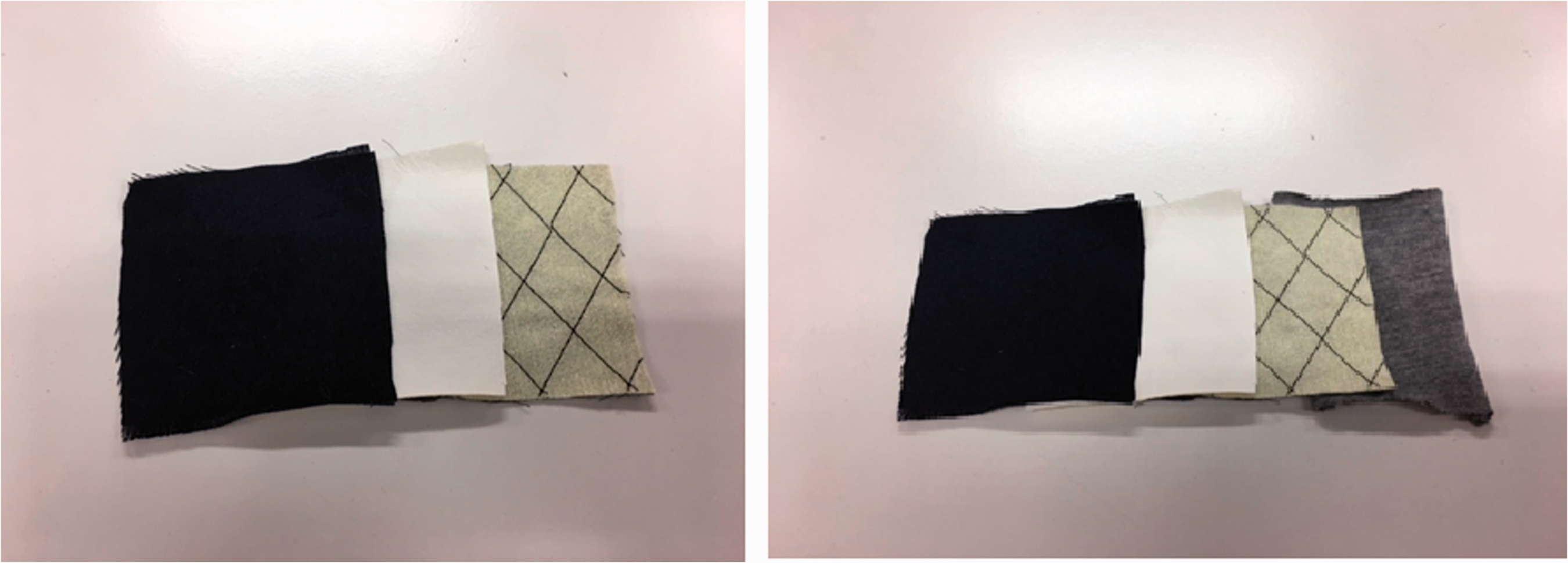
Pictures of three and four layered fabrics.

The sweating guarded hot plate apparatus (Skin model).

Scheme of the evaporative dish method.

Scheme of MMT instrument.

FTIR spectrum of outer shell.

FTIR spectrum of underwear fabric.

FTIR spectrum of nonwoven side of the moisture barrier fabric.

FTIR spectrum of membrane side of the moisture barrier fabric.

FTIR spectrum of thermal barrier fabric.

SEM images for (a) underwear, (b) fire resistant nonwoven fabric (thermal liner back side), (c) woven thermal barrier (thermal liner front side), (d) PU membrane, (e) outer shell.

Thermal resistance results.

Thermal Conductivity Results.

Thermal diffusion values.

Air Permeability values.

Water vapour resistance values.

Water vapour permeability index of fabrics.
As expected from Figure 11, IR spectra of thermal liner, which is an aramid felt quilted to Aramid/Viscose FR nonwoven fabric show characteristic peaks originated from the aramid and viscose fibers as explained in Figures 7 and 8 [40–43,45].
SEM-EDX results
A scanning electron microscope (Phenom ProX, ThermoFischer Scientific, US) was used. The identification of different chemical elements in the samples was accomplished with the Energy Dispersive X-ray (EDX) spectroscopy. The Figure 12 presents the images obtained with SEM. These images show the structure used for each layer. The knitted structure of underwear is shown in Figure 12(a). A fire-resistant nonwoven fabric (Figure 12(b)), made of aramid fibers, is put together with a woven fabric (Figure 12(c)) or a PU membrane (Figure 12(d)) to produce thermal barrier and moisture barrier, respectively. As presented previously (Table 1), the nonwoven fabric is combined with PU membrane and woven fabric by lamination and quilting, respectively. The Figure 12(e) presents the woven structure of outer shell.
The Table 3 presents the EDX results obtained for different layers.
EDX results for underwear, fire resistant nonwoven, PU membrane, woven thermal barrier and outer shell.
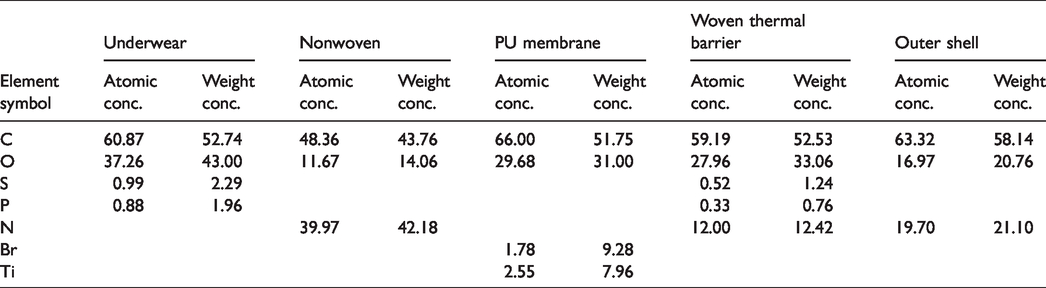
The EDX results show that all the layers contain C and O elements however differences are obtained regarding to other atoms (N, S, Ti, …) for different layers. The underwear shows the presence of P and S elements which can come from the chemical finishing process. As the underwear is made of viscose fibers, a special chemical finishing process based on phosphorus was applied in order to increase the fire resistance properties of these fibers. The fire-resistant nonwoven fabric and outer shell are made of aramid fibers thus they contain N element which come from the chemical structure of aramid. The PU membrane, which is used into moisture barrier, contains Br and Ti elements which can come from its chemical structure. It should be noted that, this membrane has a white color and it may be possible to use TiO2 as a whitener. The woven thermal barrier, which is quilted with fire-resistant nonwoven, is made of 50 aramid/50 fire-resistant viscose fibers. Thus, N element which come from the chemical structure of aramid is obtained. In addition, P and S elements can come from the chemical process applied to viscose fiber to increase the fire resistance properties.
Limited flame spread test results
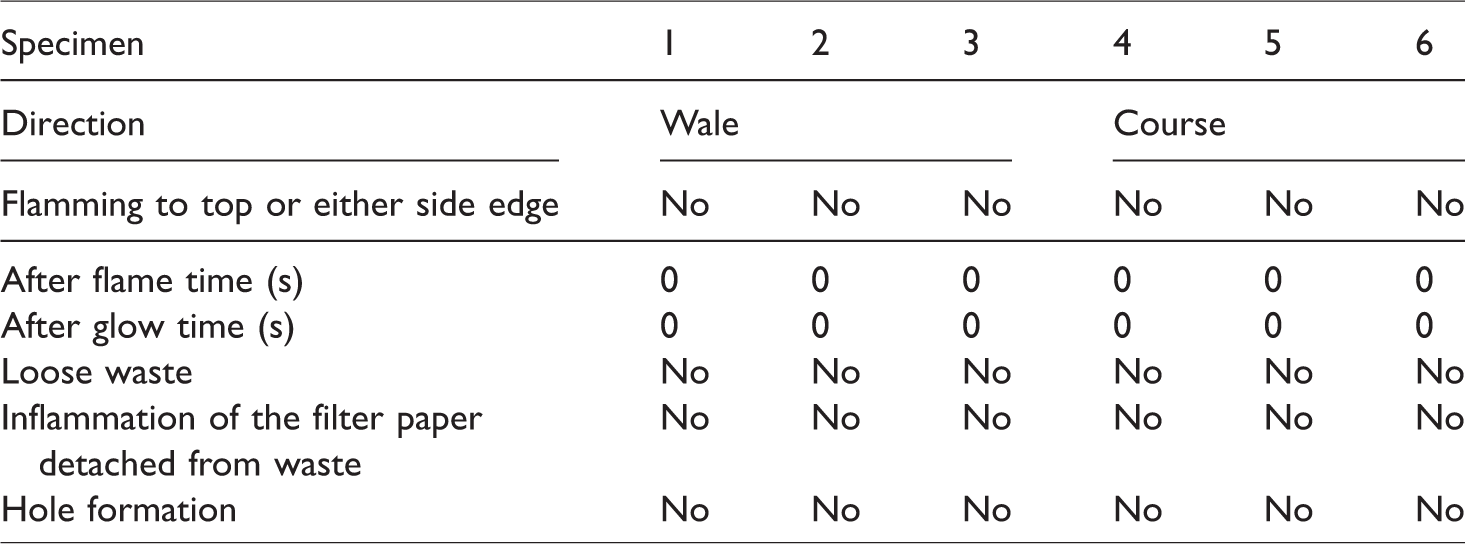
The limited flame spread test is the basic test for all kind of heat protective clothing. The EN standard for firefighters’ protective clothing refers to ISO 15,025 procedure is applied [51,52]. Table 4 shows the test results of firefighter clothing. Fabric layers are numbered from outside to inside; 1 is outer fabric, 2 is moisture barrier and 3 is thermal liner. According to this method, test results of firefighter clothing are given in Table 4 and test results of underwear fabricare given in Table 5. According to UNE-EN ISO 14,116: 2015, performance level was found as index 3 which is the best performance level for firefighter fabrics and underwear fabric.
Limited flame spread test results of firefighter clothing fabrics.

Limited flame spread test results of underwear fabric.

Thermal comfort test results
Higher thermal resistance means higher thermal insulation capacity so thermal resistance gives thermal insulation property of a fabric. According to the test results, as the number of fabric layers increased, the thermal resistance of fabrics increased (Figure 13). Thermal resistance of firefighter clothing is very important to protect a firefighter from thermal stress and hazard. As it is seen in Figure 13, thermal liner fabric has a very high thermal resistance value alone. Moreover, three and four-layered fabrics have bigger thermal resistance values than single layered fabrics. High thermal resistance is not enough to protect firefighters during working under very hot environmental conditions because the high level of sweating can cause discomfort on the body. As a result of statistical analysis, high R2 value was found between thermal resistance and fabric thickness (0.978) and moderately high R2 value was found between thermal resistance and fabric weight (0.724). It can be concluded that, thermal insulation property increases because of more air layer inside the fabric structure when the number of fabric layers and fabric thickness increase [53].
Thermal conductivity and thermal diffusion values are obtained using Alambeta instrument (Figure 14). Thermal conductivity is the quantity of heat that passes through the unit area of unit thickness in unit time. Multi-layered fabric structures have higher thickness values and this increases the amount of fibre in a specific unit area of the fabric and also the thermal conductivity values. Underwear fabric has the highest thermal conductivity value, because of its lowest thickness value compared to other fabrics. Also it is seen that, underwear fabric has an increasing effect on the thermal conductivity of four layered fabric combination.
Thermal diffusion is an ability related to the heat flow through the air inside the fabric structure (Figure 15). Higher thermal diffusion value is mainly related to the bulky fabric structure because of a large amount of air inside the fabric structure. As seen in the results, outer shell, underwear, three and four layered thermal protective fabrics have lower thermal diffusion values compared to moisture barrier and thermal liner fabrics. Moisture barrier and thermal liner fabrics have higher thermal diffusion values. This is resulted because of a fire-resistant nonwoven fabric, that was put together with a PU membrane and thermal woven fabric to produce moisture barrier and thermal barrier. Four-layered fabric structure have slightly higher thermal diffusion value than three-layered one because of its more bulky fabric structure.
As written in Table 1, moisture barrier membrane composed of 85%metaramid,15%paraaramid PU which is laminated to FR nonwoven layer. Because of this structure, the moisture barrier membrane component doesn't allow air passage through it. Thus the multilayer material combination with 3 or 4 layers' air permeability values are measured zero. This is an undesirable property for the comfort level of wearer because it is known that evaporation of liquid and sweat vapour inside the fabric layers will improve with the help of air permeability.(Figure 16). On the other hand underwear and thermal liner farbric have higher air permeability values when compared with outer shell fabric.
Water vapour resistance, in other words breathability, is another important parameter that is the ability of a fabric to allow moisture transmission through it, Figure 17 presents the water vapour resistance values of fabrics. As it is shown in the Figure, Ret values increase as the number of layers increase in clothing. This means that, the ability of the layered fabric structure to transmit moisture through the clothing is low, as a result comfort level of the clothing decreases.
The ability of a textile material to transmit vapour from the body is also very important to feel comfortable. As it is seen from the Figure 18, underwear and outer shell fabrics have the highest water vapour permeability values. However, moisture barrier fabric has the lowest water vapour permeability value as it is a barrier for humidity. The number of fabric layers plays a significant role in water vapours permeability values, when the number of fabric layers increase, water vapour permeability values decrease, increasing the level of discomfort A negative correlation between water vapour permeability index and fabric thicknessis found, as the thickness increases, water vapour permeability decreases (R2= 0.786).
MMT results
Liquid moisture transfer in clothing significantly influences the wearer’s perception of moisture comfort sensations. Dynamic liquid transfer values of clothing materials are measured using the MMT test instrument. MMT device gives all the measured results in a water content vs. time graphics for each sample and measurement. An example of this figure is presented in Figure 19 for underwear fabric.
Underwear fabric shows stable AR rates from top to bottom faces regarding the front and back sides of fabrics. Underwear fabric’s transmission rate is faster at the bottom side compared to the top side that means it removes liquid moisture (and heat) from your skin, leaving you cool, dry and comfortable. Outer shell front fabric has less absorption rate than the back fabric side which is a desired property not to permit the passage of liquid from outside to inside but to transmit the inner vapour and liquid from skin surface to outside. Top absorption rates for moisture front and back fabrics are 58.024 (%/sec) and 90.892 (%/sec) whereas bottom absorption rates are zero. This means that there is no moisture transfer from top to bottom surfaces that indicates exactly the behavior that should be expected from the moisture barrier fabrics. However, moisture remains more on the back side due to the water insulation layer coated on the back side of the fabric. The thermal liner fabric has a steady absorption level in the medium level for face and reverse sides and top and bottom absorption levels. Especially three-layered fabric structure has the biggest AR rate which is 338.727 for top and 0.000 for bottom meaning that all the liquid moisture distributed on the top surface. For four-layered fabric structure, this value decreased to 136.764 which is still very fast but lower than the three-layered fabric structure due to the positive effect of the underwear fabric.
Table 6 shows all test results of fabrics obtained from the MMT test device.
MMT results of fabrics.
Overall evaluation and fabric classification according the test results
Depending on the grading of indices, the grades are summarized in a figure, called as a fingerprint of the liquid moisture transfer behaviour. This figure gives a direct overall evaluation for moisture management performance of the tested fabrics. Figure 20 shows the finger print result of the underwear fabric given as an example. The first four scales give the liquid moisture transfer behaviour of top surface, while the four grading scale in the middle section show the bottom surface properties. The last two scales indicate one-way transport index and OMM properties.

Water content vs. time graphic underwear front fabric type.

Finger print of the evaluation indices and the classification results for underwear front fabric type.
Discussion and overall evaluation
As a result of thermal and moisture management analyses of single fabric layers and layered fabric structures, it is clearly seen that layered fabric structures have high thermal resistance, low thermal conductivity and low air permeability values. Moreover, water vapour permeability values decrease and water vapour resistance values increase. This means that the ability of fabrics to permit heat and moisture transfer decreases as a result human comfort feeling level decreases. This condition was proved also by the previous studies. As conducted by a previous study at least 75% of the moisture remained in the clothing layers and especially placed in the underwear and inner layer [12]. In another study a similar result was obtained, between 50% – 80% of the sweat was accumulated in the inner two layers [13].
In this study, regarding the liquid moisture management results, firefighter fabrics can be classified into four categories. As a result of MMT measurements, obtained grades are summarized in Table 7a and 7b. Underwear fabric can be classified as “
a: MMT Evaluation Results (Front Face)

b: MMT Evaluation Results (Back Face)

This results showed that, single layer thermal comfort and moisture management properties are needed to be understand at first and then the behaviour of layered structure must be analysed as a whole. Moreover, another important point is that the front and back fabric sides that are in contact with skin or with environment, must be evaluated separately. If the neighbouring layers don’t transmit moisture, liquid moisture will get stuck in the inner layers and influence the whole character of the layered structure. Moisture is mainly accumulated in the inner fabric layer that have a direct contact with the skin. For this reason inner clothing need to take the liquid moisture and transfer it to the adjacent layers not to create wetness and discomfort in the skin.
According to the MMT results, it is seen that negative accumulative one-way transport index values are obtained for three-layered and four-layered fabric. However, it is also clearly seen from the results that underwear fabric has a positive effect by increasing the accumulative one-way transport index value for four-layered fabric structure. A comparison of overall moisture management capacity values presents that, underwear fabric and thermal barrier fabric show the highest liquid moisture management capacities meaning that liquid sweat can be transferred from the skin through the outer surface to keep the skin dry. When the three-layered structure is considered, thermal fabric is directly in contact with the liquid moisture and the neighbouring fabric is moisture barrier which is water-repellent fabric. On the other hand, regarding four-layered back fabric structure, underwear fabric is in touch with the skin, it transmits liquid moisture directly to the other surface which is thermal barrier fabric that take moisture and creates a less clammy touch, less chilly sensation.
Conclusions
In this study, thermal comfort and moisture management properties of firefighter clothing assemblies and a new developed fire-resistant underwear fabric were evaluated. Single fabric layers, and their three and four-layered combinations were constructed for the analyses using MMT instrument, sweating guarded hot plate instrument, Alambeta, Permetest, evaporative dish method and air permeability instrument.
The scientific and original findings of the study can be listed as below: As a result of the analyses, it is concluded that as the number of fabric layers increase, thermal protection level gets better whereas thermal comfort properties get worse. As the number of fabric layers increased, thermal resistance, water vapour resistance values of fabrics increased while water vapour permeability, thermal diffusion values decreased meaning that uncomfortable sensation increases. Especially fabric thickness and the number of layers have a decisive role in thermal resistance and water vapour permeability results. Regarding MMT results, it is found that, layered fabric structures are classified as waterproof fabric with very slow absorption and slow spreading causing uncomfortable feeling to the end-user. Especially underwear fabric structure has the highest liquid moisture management capacity and one-way transfer capacity so it can be classified as “fast absorbing and quick-drying fabric”. Considering multi-layered fabric structures, it was found that inner layers, especially underwear fabric plays a significant role in comfort feeling. This means that liquid sweat is transferred from the skin to the outer surface, as a result, it increases liquid moisture transmission, keeps the skin dry and increases the comfort level of the wearer. Thermal barrier fabric can be classified as moisture management fabric with good one-way transport properties with its bulky structure and it is similar to a bridge for transferring moisture from underwear to outer environment. Outer shell and moisture barrier fabrics are classified as water repellent fabrics. As a general conclusion, as the number of fabric layers increase, heat and moisture transfer properties of fabrics decrease. On the other hand, the use of new fire resistant underwear fabric has a positive effect by increasing heat and moisture transfer properties of the layered fabric structure.
Results of this study could be used by students, researchers and industry to understand the effects of different fabric layers on the thermal comfort and moisture management properties of thermal protective garments. It should be noted that, the results of this study may only apply to the fabric samples used in this study. Future studies are needed to be undertaken to verify these results with different fabric structures considering different fiber contents and fiber ratios of firefighter and underwear fabrics. Moreover, different functional underwear fabrics can be compared with the regular underwear fabrics containing whole cotton or blends of cotton with the same construction parameters.
Footnotes
Declaration of conflicting interests
The author(s) declared no potential conflicts of interest with respect to the research, authorship, and/or publication of this article.
Funding
The author(s) disclosed receipt of the following financial support for the research, authorship, and/or publication of this article: This study has received funding from the European Union’s Horizon 2020 research and innovation programme under the Marie Skłodowska-Curie grant agreement No. 644268.
