




Abstract
The application of phase change material (PCM) has shown great potential in the fabrication of PCM-integrated cloth (PCMIC) due to its numerous advantages, including latent heat storage, narrow temperature range, energy storage density, longevity, and compatibility with textile processing. PCMs can lessen the demand for mechanical heating and cooling systems, which can save energy and assist the environment towards sustainability. PCM-integrated cloth provides new opportunities to enhance thermal comfort, energy efficiency, and functionality across a range of applications. The advancement of PCMIC has shown promise in the past decade. This review covers the fundamentals, latest advancements, characterization methods, and advanced applications of PCMIC in detail. Progresses, challenges, and opportunities of versatile applications of PCMIC in space wear, medical textiles, sportswear, bedding, thermoregulating buildings, flame-retardant textiles, automotive textiles, and footwear are critically summarized. Space agencies like NASA, and ESA used PCM-based products for comfortable space exploration while surgical gauges, bandages, and other clinical products incorporated with PCM comfort much in patients. Moreover, sportswear brands like Nike and Adidas utilized PCM in their products for better wearability. Through an analysis of the foundations, current developments, and challenges, this thorough overview is a valuable resource for further innovation and progress in the field of PCM-integrated textiles.
Keywords
Introduction
Phase change materials (PCMs) have paid great attention to their energy efficiency, temperature regulation, thermal comfort, and environmental sustainability features.1–3 It has been used in various fields including buildings and construction, textiles and apparel, energy storage, electronics and electrical devices, transportation, cold chain logistics, medical and healthcare, and many more application areas.4–6 Among these, there are a wide variety of PCM applications in the textile and apparel sectors.7,8 PCMs are becoming an interesting component of fabrics because they can store and control heat in unique ways. Also, it is very promising for a variety of textile-related applications due to its latent heat storage, restricted temperature range, high energy storage density, reusability and lifespan, compatibility with textile processes, and environmentally favorable PCM. 9
PCMs can store energy in three ways: latent heat, sensible heat, and chemical processes. Latent heat thermal energy storage (LHTES) has received considerable attention for both heating and cooling purposes. 10 PCMs can efficiently control temperature changes in textile materials because they absorb or release a considerable amount of energy as latent heat during the phase change process. 11 Additionally, the phase change of PCMs exhibits a small temperature range, guaranteeing accurate control over thermal management in textile applications. 12
Near the phase-transition limit, PCMs can undergo a phase change, releasing energy as they cool and absorbing it as they heat. 13 Thereby the incorporation of PCMs into textiles creates new opportunities to enhance thermal comfort, energy efficiency, and functionality across a range of applications along with environment-friendly behavior for energy saving.14,15 PCMIC originally developed by NASA to maintain a constant temperature in space, is now widely used to increase thermal comfort in a wide range of environments. 16 PCMIC is made using a variety of techniques, such as melt spinning, lamination, coating, fiber extrusion, finishing, injection molding, foam production, and bi-component synthesis.17,18 The high storage capacity and density at temperatures close to isothermal make these materials attractive for use in LHTES systems. 19 One novel approach to cutting energy consumption is to make use of thermal energy storage (TES). 20 PCMIC offers a wide range of significant uses in thermoregulating structures. Through the incorporation of PCM composites into structural components like ceilings, floors, and walls, PCMIC improves energy efficiency and interior temperature control.21,22 To increase thermal energy storage capacity, n-heneicosane (HE) is impregnated into bentonite (BNT) clay to create a composite PCM. The composite’s good compatibility and thermal performance are confirmed by characterization techniques. 23 PCMIC offers a wide range of potential applications, such as sportswear, home textiles, safety equipment, and energy-efficient buildings. Active temperature control, thermal storage, moisture management, and improved wearer comfort are just a few benefits that PCMIC might provide. PCMIC, or microencapsulated phase change material (MPCM) incorporated clothing, tackles the problem of controlling moisture in chemical protective garments. Body heat builds up in clothing during intense activity, causing discomfort and sometimes dangerous heat stress. Sweat is trapped by traditional impermeable materials, making the problem worse. By incorporating PCM into the fabric structure of the garment, PCMIC absorbs extra heat produced by the body. This keeps the microenvironment from overheating and lessens the need for excessive perspiration. Consequently, wearer productivity can rise, heat stress can be reduced, and wearing comfort is enhanced. Usually, a polymer film encases the PCM, which is then included in the clothing laminate.
In addition, it provides energy savings by reducing the requirement for heating and ventilation systems.24–26 However, only a limited number of review articles have been published in this field. For instance, Yang et al. reported a review article concentrating on organic PCM used in cloths. 27 The synthesis, mechanism, and classification were all summarized by Iqbal et al. However, they did not report any details regarding applications. 28 Prajapatiet al. reported a reviewed polymeric PCM used in temperature-controlled cloths. 29 Other applications have not been addressed there. In addition, Keyanet al. reported a review of microencapsulated PCM applications. Moreover, Hossain et al. reported a review on the fabrication, characterization, and environmental impact of PCM-incorporated textiles. 30 The existing literature on PCMIC research currently in publication shows shortcomings in thorough analysis, frequently failing to synthesize recent developments and address fundamentals issues. Therefore, there is enough space to write a thorough review that covers the most recent developments and innovations in PCMIC, including new approaches to encapsulation, advanced textile structures, and functional finishing techniques. It will investigate the challenges and opportunities associated with scaling up production, ensuring durability and wash-ability, and adhering to industry regulations and standards. This work attempts to offer a more comprehensive and current review, covering fundamental of PCM, its characterization techniques, current accomplishments, challenges, and trends in this field. It aims to inspire further research, promote innovation, and contribute to the development of high-performance, energy-efficient textiles by examining the latest advancements and exploring the potential of PCMIC.
Fundamental of PCM
Working principle
PCMs may appear in at least two distinct phases (amorphous or one or even more crystalline phases), so they can transition back and forth between them. 31 Electrical conductivity, mass density, optical reflectivity, and thermal conductivity are all diverse physical qualities among the phases. These variations, as well as the consistency of the switching, allow these materials can hold data. Based on basic knowledge of the bonding features, 1st treasure map for phase-change a material is offered. The degree of ionicity and even the inclination toward hybridized (covalence) bonding are represented by two coordinates that may be determined just from the compositions. A limited amount of both values is an intrinsic property of PCMs. This coordinate method allows for the prediction of physical property trends as stoichiometry changes. To keep heat for later use, latent heat preservation is one of the most effective strategies.32–34
As shown in Figure 1, when a PCM is exposed to heat and its temperature rises, it absorbs thermal energy from the surroundings. As the temperature continues to increase, the PCM reaches its melting point. At this point, the PCM undergoes a phase transition from a solid to a liquid state, absorbing additional heat energy in the process. During this melting phase, the temperature of the PCM remains constant even as it absorbs heat, as the energy is used to break the bonds between the molecules and transition them from a solid to a liquid state. Once all the PCM has melted, it continues to absorb heat energy from the surroundings without a further increase in temperature. This phase, where the PCM remains in its liquid state while absorbing heat, is known as the latent heat phase. The PCM stores thermal energy in the form of latent heat, which can be released later when needed. In Figure 1, the X-axis demonstrates the energy content and the Y-axis indicates the temperature. Conversely, when the temperature of the PCM drops below its freezing point, it begins to solidify. As it solidifies, the PCM releases the stored thermal energy in the form of latent heat, maintaining a constant temperature during this phase transition. Once all the PCM has solidified, it can continue to release heat energy as its temperature decreases further. Working mechanism of PCM.
The concept of PCM involves using phase transitions between solid and liquid states to effectively store and release thermal energy. This feature makes PCMs useful for a wide range of applications, including thermal energy storage, temperature management, and energy-efficient heating and cooling systems.
Types of PCMs
PCMs are categorized into three main types based on chemical nature: organic, inorganic, and eutectic.
Organic PCMs
This PCM is classified into paraffin, non-paraffin PCM. Paraffin wax noted for its high latent heat storage, chemical stability, and is low cost, which widely employed in building insulation and thermal energy storage systems. Non-paraffin organics included esters, fatty acids, alcohols, and glycols. Because of polyethylene glycol (PEG)’s great latent heat storage capacity, chemical stability, non-toxicity, and flexibility is appreciated in the textile and medical industries. Bio-based polyols, derived from natural sources, are environmentally friendly and provide moderate thermal storage capacity, commonly used in building materials and packaging. Vegetable oils, as renewable resources with moderate latent heat storage, are preferred in applications requiring biodegradability. 35 Hexadecane, heptadecane, octadecane, mixtures of alkanes, fatty acids, glycols, and polyalcohols are a few examples of organic PCMs. 30
Inorganic PCMs
Inorganic PCMs are recognized for their variety of thermal management applications due to their high latent heat of fusion, high thermal conductivity, and affordable price. Inorganic PCMs are two types, salt hydrate and metallic. Salt hydrates like lithium nitrate dihydrate, calcium chloride dodecahydrate, sodium hydroxide monohydrat etc. 36 showed high latent heat storage capacities and cost-effectiveness, that are commonly employed in industrial and residential thermal energy storage despite issues like phase separation and super-cooling. Low-melting-point metals and metal eutectics make up metallic inorganic PCMs, which have exceptional thermal conductivity, low specific heat, low vapor pressure, and a high heat of fusion per unit volume. Carbon nanotubes, known for their high thermal conductivity, enhance the heat transfer properties of PCMs and are used in advanced thermal management systems. Graphene-enhanced PCMs, offering excellent thermal conductivity and stability, are utilized in high-performance thermal management applications such as electronics cooling and battery thermal regulation. 37 LiNO3.2H2O, MgCl2.4H2O, MgCl2.6H2O, and CaCl2.12H2O are a few examples of inorganic PCMs. 37
Eutectic PCMs
Mixtures of two or more components that solidify congruently at a temperature lower than any of its constituent components are known as eutectic PCMs. This temperature is also referred to as the eutectic temperature. 38 They can be formulated by the combination of inorganic-inorganic or inorganic- organic or organic-organic PCMs. 39 Triethylolethane with water plus urea, CaCl2 plus MgCl2.6H2O, CH3COONa.3H2O plus NH2CONH2 are a few examples of eutectic PCMs. 6 As a PCM, the eutectic mixture exhibited strong long-term thermal reliability and sharp melting point which permits good temperature control in thermal energy storage systems. 40
Bibliometric study of PCMs
Methodology of bibliometric
Several PCM-related keywords were included in a thorough search approach for the bibliometric study. “PCM cloth” and “PCM textile,” PCM treated fabric, MPCM treated fabric, PCM in 3D textile material, MPCM in 3D textile material, Sustainable PCM treated fabric, Sustainable MPCM treated fabric were the keywords. The keywords were selected to ensure a thorough analysis of relevant literature on the subject. To capture the most recent developments and trends in PCM fabrics and textiles across 15 years, a search was conducted from March 2010 to March 2024. Finding pertinent publications was primarily accomplished through the Scopus database, which is renowned for its thorough coverage of academic literature. Articles that had the designated keywords in their title, abstract, or keywords section were screened and given a prospective inclusion score for the study.
Bibliometric analysis
Various keywords have been included in the analysis of relevant publications spanning the 15 years from 2010 to 2024. Searching for “PCM textile” yielded only 3198 publications. Most of them, or 460 publications, were completed in 2022. In 2023, 445 publications ranked as the second-highest. 2010 had the fewest publications just 48 of any year. This shows how interest in this field has grown over time. It is shown in Figure 2 (a1) that the number of publications has been steadily rising over the past 15 years. 2014 had 107 publications, a significant increase over the 83 from the year before. After that, it rose to 116 publications in 2015, reached its greatest number in 2022, and then dropped by roughly 15 publications the following year. 1929 research articles accounted for which is more than half of the total publications. Of all publications, 592 were review articles. Bibliometric analysis by the keyword (a) PCM textile; (b) PCM cloth; (c) PCM treated fabric.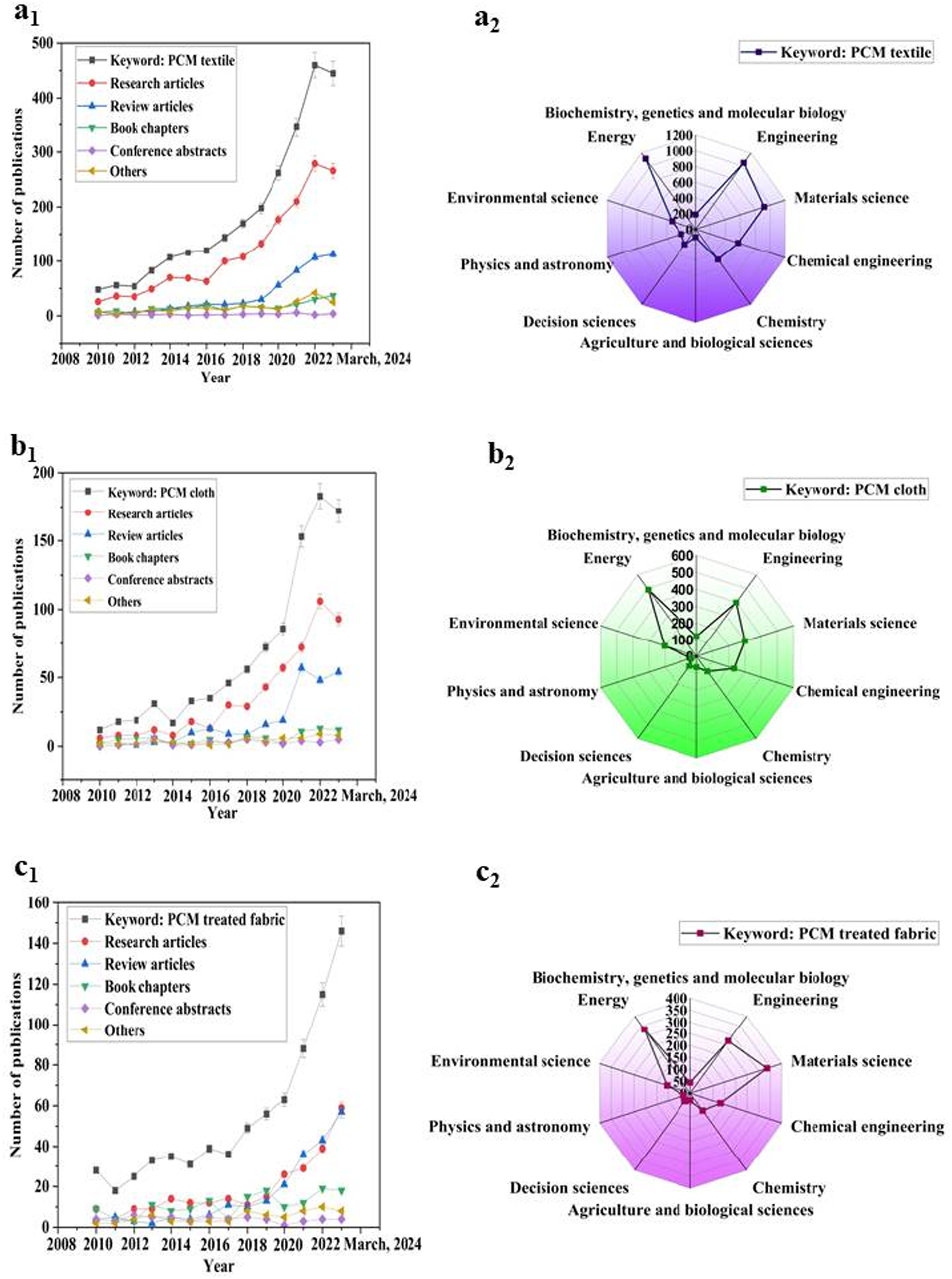
However, no noteworthy conference abstracts or other publications of which there are 65 in a single year have been discovered in the last 15 years. There were 317 published book chapters. The subjects that were most preferred, according to Figure 2 (a2), were energy, engineering, and materials science. Of the 3199 publications, 1111 have been in the field of energy. The fields of engineering, materials science, and chemical engineering have published 1046, 921, and 572 publications respectively. Only 103 publications the fewest have been made in the fields of biological sciences and agriculture. With 487 publications, chemistry has a noteworthy publication count as well.
In contrast, the keyword “PCM cloth” has just 1316 publications, or roughly one-third of the papers that were previously counted. With 183 publications, 2022 has seen the most number yet. 2023 was the year with the second-highest number of publications 172. The number of publications published in the year 2021 was almost half that of the previous year, 2020, with 86 articles released. In contrast, the number of publications published in the next year, 2021, was almost exactly 153. The graph of 15-years publications also showed a sudden increment in publications from 2020 to 2021 in Figure 2 (b1). Among the total, research articles and review articles have the highest number of publications which are 716 and 285 respectively. 134 book chapters have been published using this keyword. Conference abstracts are higher number which is greater than the ‘PCM textile’ keyword by only five publications. Similar to the previously mentioned keyword, energy has the highest number of publications, which is 492. Comparing the engineering and materials science fields to other fields like chemistry, environmental science, and others, which are depicted in Figure 2 (b2), it reveals that the former have more publications 398 and 300, respectively. With just 33 articles, this field has the fewest accomplishments in physics and astronomy.
In the case of ‘PCM treated fabric’, there are 1000 publications of which, 2023 is the most published year among 15 years. Second highest publishing year is 2022, which contains 115 publications. From Figure 2 (c1), it is shown that there is a rapid increase from 2020 to 2023. Before that, a gradual increase in publications is observed. Among the total, 334 and 267 research articles and review articles have been published. From the radar chart in Figure 2 (c2), it can be observable that, materials science subjects have a higher preference for the publications on ‘PCM treated fabric,’ which have 336 articles, whereas energy subjects have only five fewer articles.
There are only 73 publications on “MPCM-treated fabric,” with 2023 and 2022 being the most published years out of the previous 15 years, which are 12 for both years. The graph demonstrated in Figure 3 (a1) indicates that there will be a sharp increase in 2022 and 2023. Prior to it, fewer publications were seen. In all, 23 review articles and 31 research articles have been published. The radar chart in Figure 3 (a2) shows that, with 42 articles, the topic of energy has a larger preference for publications on “PCM-treated fabric,” whereas the subject of materials science has 24 publications. Bibliometric analysis by the keyword (a) MPCM treated fabric; (b) PCM in 3D textile material; (c) MPCM in 3D textile material.
Research on “PCM in 3D textile material” has a good number of publications, with a total of only 957 publications identified. The year 2022 and 2023 stand out as particularly high, each contributing 165 publications. From Figure 3 (b1), a gradual increment in publications by this keyword is easily observable. Breaking down the article types of the publications, there are 285 review articles and 404 research articles among the total publications. The book chapter’s amount is also significant, which is 110. A radar chart in Figure 3 (b2) highlights the major subject areas within these publications. Energy-related topics arise as the most prevalent, with 337 articles focusing on this side. Meanwhile, materials science has 306 publications, showcasing a notable interest.
Only a limited number of publications, totaling 59, focus on the topic of “MPCM in 3D textile material” with the year 2022 standing out as the most prolific, accounting for 16 publications, as shown in Figure 3 (c1). Prior to this surge, in 2023, 13 publications had been done. Among these publications, there are 23 review articles and 21 research articles. From the scatter-line graph, a random increase and decrease in article publications can be observed. According to a radar chart in Figure 3 (c2), the subject of energy dominates with 38 articles, indicating a strong preference for research focus. On the other hand, the field of engineering is represented by 20 publications, showing a slightly lesser but still significant interest in this subject area.
Research on “Sustainable PCM treated fabric” has received major scholarly attention, with 578 publications identified. The years 2023 and 2022 stand out 95 and 82 publications, respectively indicating higher interest among the 15 years. From Figure 4 (a1), it can be observable that after the year 2020, scholars are more focused on this keyword. Publications comprise 211 review articles, 116 research articles, and 121 book chapters. From the radar chat demonstrated in Figure 4 (a2), fuel and energy abstracts-related topics lead with 67 articles which is highest preferable subject area for this keyword. Bibliometric analysis by the keyword (a) sustainable PCM treated fabric; (b) sustainable MPCM treated fabric.
Scholarly interest in the topic of “Sustainable MPCM treated fabric” is quite low, as seen only 48 papers that have been found shown in Figure 4 (b1). Out of 15 years, 2023 and 2022 had the highest number of publications, with 9 and 8, respectively. 23 review papers, and 9 research articles. Energy subjects lead the radar discussion with 34 articles, making them the most preferred subject area for this term as demonstrated in Figure 4 (b2).
Recent developments of PCMIC
Fabrication techniques of PCMIC with key finding.

Several researchers have used PCM in the form of fiber, as shown in Table 1, to improve the functionality of the fibers. Cai et al. reported PCM-infused advanced fibers fabricated using electrospinning techniques. This fiber can be used in thermoregulatory applications. 41 Coaxial electrospinning was used with PEG, and polyamide six polymers to form PCM-infused composite fibers as reported in a recent study. 42 In addition, emulsion electrospinning, electro-spraying technology, and centrifugal spinning techniques have been used in some studies to form PCM-incorporated fiber with thermoregulating features for advanced functional textile applications.
In the case of a woven fabric consisting of cotton warp and polyester weft, the application of a coating optimizes the mechanical and physical properties while retaining air and water vapor permeability. However, for viscose fabric, 46 the coating did not exhibit a thermal buffering effect. Recycled PET can be used in the form of an electrospun membrane with PCM. 51 Microencapsulation has shown outstanding thermal qualities in non-woven fabric made of wool, 48 particularly in warmer locales, but its performance is lower in regions with longer and more severe winter seasons because of less frequent activation temperatures, larger insulation levels, smaller temperature differentials, possible moisture sensitivity, and problems with material compatibility. The utilization of microencapsulation in composites, such as cement and glass fiber, 49 leads to significant improvements in their mechanical and physico-chemical properties. These examples show the different effects and possible benefits of coatings and microencapsulation in cloths, providing customized qualities and applications. 50
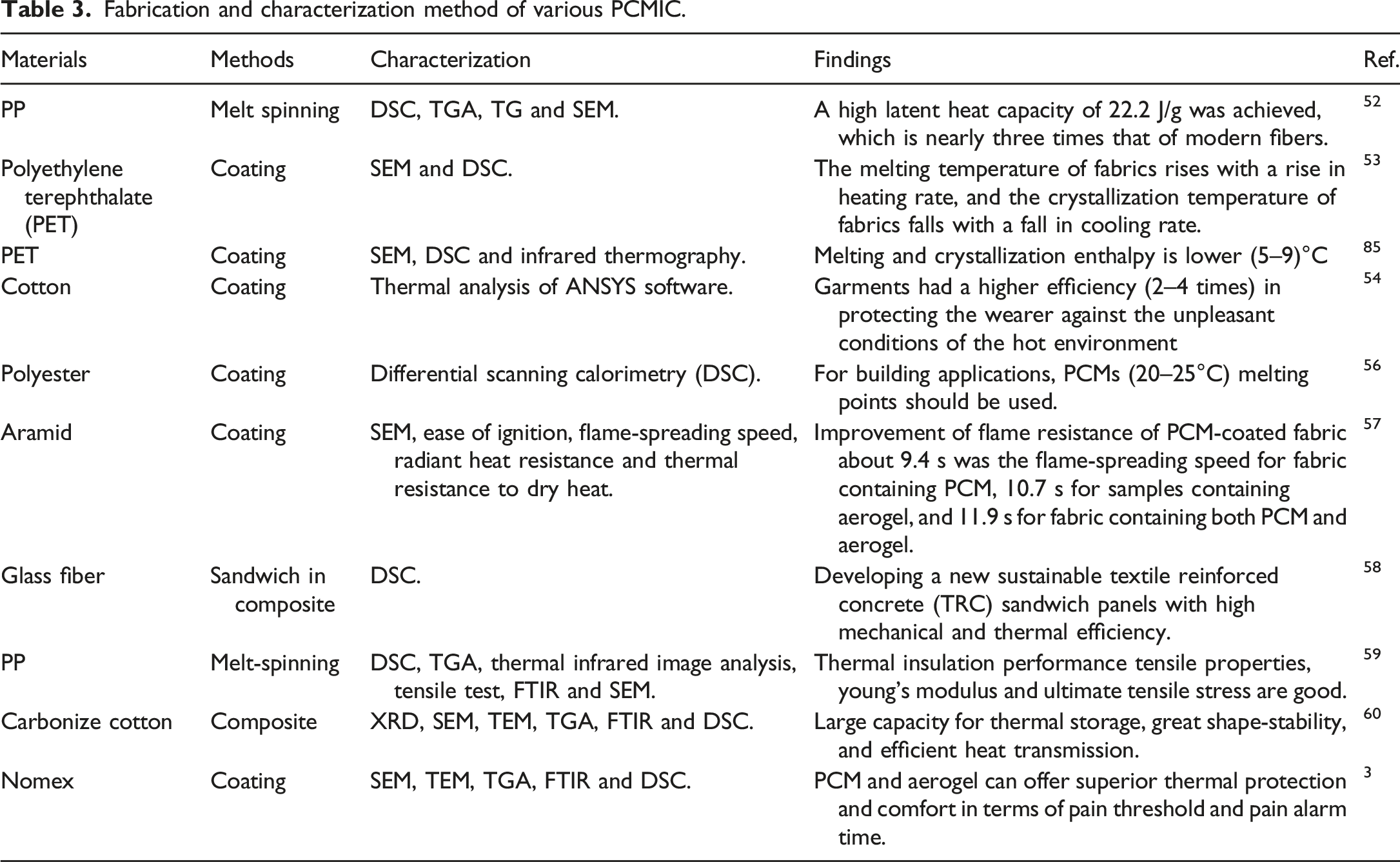
In addition, PCM treatments have been performed on various materials via various production procedures, resulting in distinct characteristics and advantages. For example, PP fibers treated with PCM by melt spinning achieved roughly three times the latent heat capacity of contemporary fibers. The industrial melt spinning process involves preparing PCM and PP, drying PCM at 30°C for 8 h, and characterizing their thermal behavior. The setup includes a machine with a throughput of 60 g/min, a take-up velocity of 1000 m/min, and a 60-hole spinneret. PCM content is varied to PCM22, PCM36, PCM50, and PCM64, with volume percentages ranging from 22% to 64%. These parameters ensure the successful fabrication of bicomponent yarn with PCM in the core, offering flexibility and control over the final product’s properties. 52
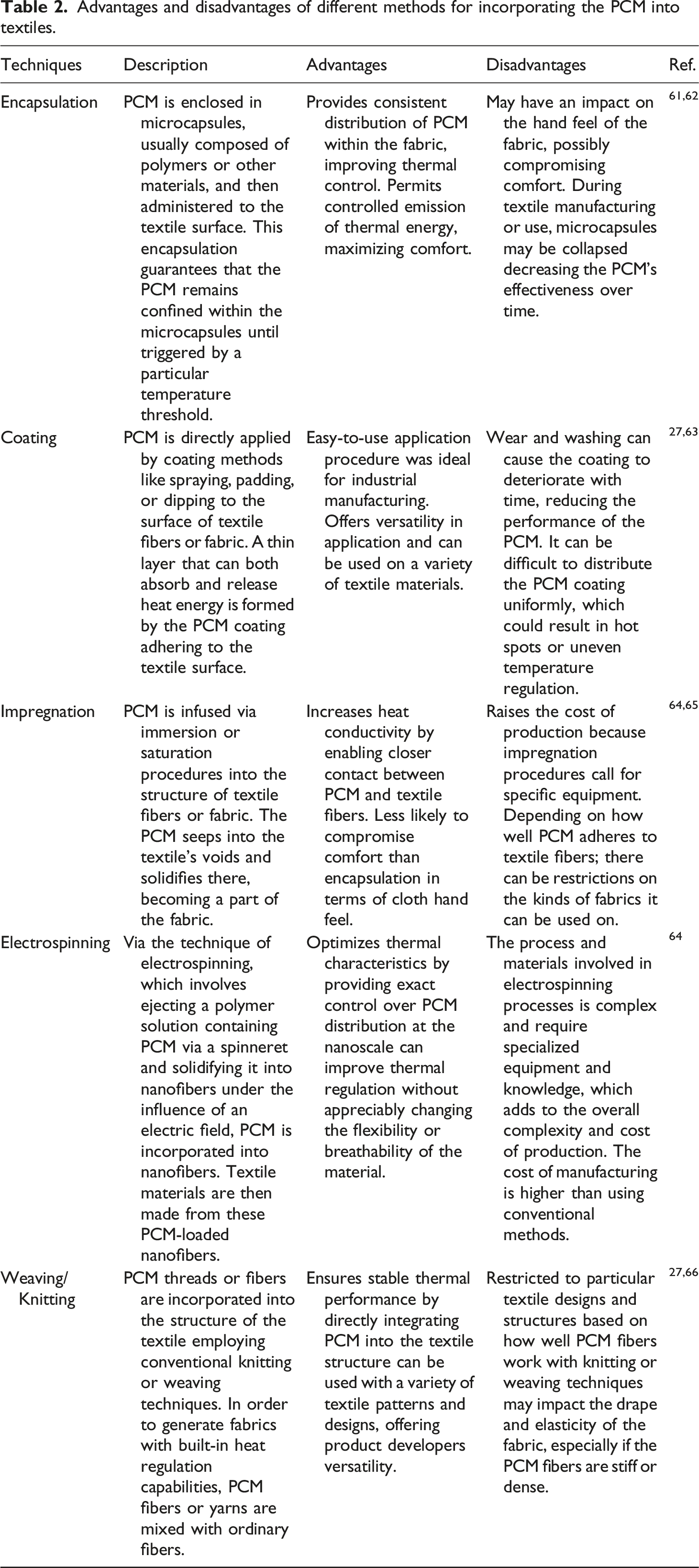
Advantages and disadvantages of different methods for incorporating the PCM into textiles.
Characterization of PCMIC
Fabrication and characterization method of various PCMIC.
Morphological characterization
Scanning electron microscopy (SEM)
Scanning electron microscopy enables high-resolution imaging of the microstructure and surface morphology of cloth integrated with PCM. This imaging helps reveal any structural irregularities or defects, as well as the distribution and dispersion of PCM particles inside the fabric matrix.
67
General SEM testing and sample preparation criteria for PCM-integrated cloth are offered by ASTM and ISO, especially ASTM E1508-12 and ISO 4287. Researchers can analyze PCM distribution and morphology both qualitatively and quantitatively by using SEM to investigate the microstructure of PCM-integrated cloth.
68
Understanding the incorporation of PCM particles into the fabric and their interactions with its structure is made easier with the help of this information.
30
For example, Castro et al. conducted a study investigating the long-term autonomic thermoregulating capabilities of fabrics based on microencapsulated PCMs SEM tests.
69
However, SEM analysis of PCM integrated fabric has some limitations including surface sensitivity, difficulty with sample preparation, insufficient chemical information, and challenges with quantitative analysis.
5
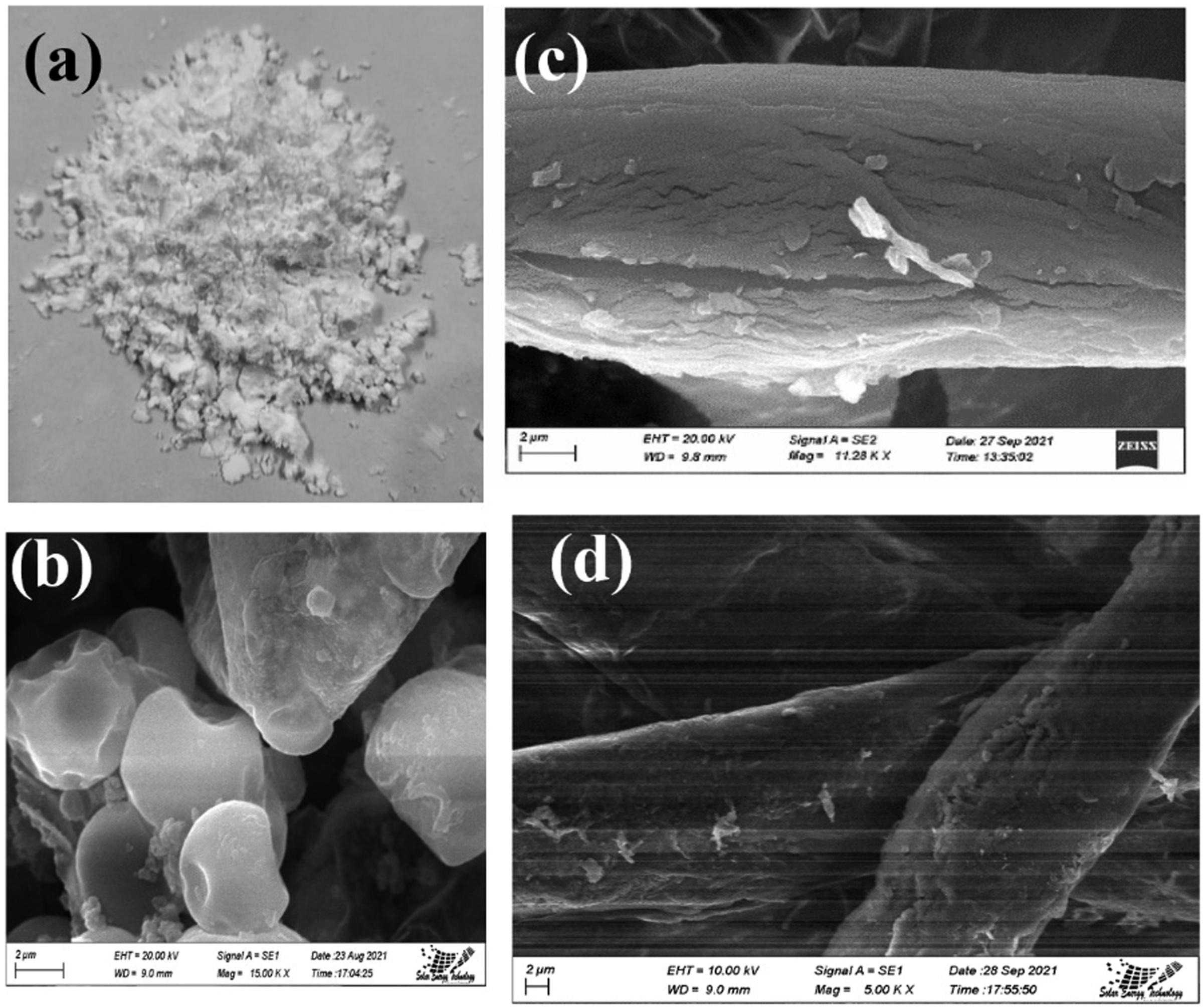
Figure 5 shows MPCM incorporated cotton cloth and MPCM powder image. (a) Actual image of MPCM powder (b) SEM image of MPCM powder (c) SEM image of MPCM incorporated cotton cloth magnifications 11 KX (d) SEM image of MPCM incorporated cotton cloth magnifications 5 KX.
70
Transmission electron microscopy (TEM)
The distribution, crystal structure, and nanoscale morphology of PCM particles within the fabric matrix may all be seen using TEM following the standard method (ANSI C63.4-2014 standard). 71 It offers details on the interfaces between PCM and textile fibers as well as the size, shape, and orientation of the particles. 72 Through the use of TEM, researchers can gain an understanding of the molecular interactions between PCM particles and the fabric, as well as the nanoscale organization of PCM-integrated cloth. 73 Understanding the basic characteristics and behavior of PCM-integrated textiles, such as mechanical stability, phase change kinetics, and thermal conductivity, requires knowledge of this information. 74 In order to evaluate reversible thermochromic MPCMs for thermal energy storage in protective gear, Geng et al. investigate into TEM testing. 75 However, the thinness requirements for the sample, the field of view restriction, and the possibility of sample damage from electron beam irradiation are the limits of TEM examination for PCM-integrated fabric. 76
Optical microscopy (OM)
Optical microscopy procedure creates high-resolution images of microcapsules, allowing for the investigation of their shape. 77 It’s a visual aid for analyzing PCM concentrations, particle sizes, and shapes, how those particles interact with cloths, phase changes, and overall product quality. 78 Researchers and manufacturers can learn a great deal about the microstructural characteristics of PCMIC through OM testing, which in turn allows for the optimization of thermal properties, functionality, and performance across a wide range of applications. 79 Nevertheless, resolution restrictions, depth-of-field restrictions, and other issues are some of the limitations of optical microscopy. 80
Polarized optical microscopy (POM)
Polarized optical microscopy provides valuable insight into the crystallinity, orientation, and birefringence of PCMs within the textile matrix. It shows a pictorial image of any fiber of coated fabric like PCM incorporated fabrics. 81 It is very helpful for examining how PCM molecules or crystals are oriented and aligned inside the fabric matrix. It can aid in comprehending how these elements affect the behavior of the material during phase transitions and its thermal characteristics. 82 For example, Kumar et al. reported the POM test and obtained a clear morphology for the pure cotton and rough morphology for the grafted cotton. 83 One of the limitations of polarized optical microscopy (POM) is that it cannot yield comprehensive three-dimensional structural data. 84
3D tomography
Emerging methods such as 3D tomography provide added value for PCM/MPCM-treated fabrics and textiles by offering advanced analytical capabilities. 3D tomography, such as X-ray computed tomography (CT), provides detailed cross-sectional images of the fabric structure. This allows for the visualization and analysis of the distribution and encapsulation of PCM/MPCM particles within the fabric. Moreover, it can measure the size, shape, and distribution of PCM/MPCM microcapsules in the fabric. This information is critical for understanding how the PCM/MPCM interacts with the fabric and affects its performance. By conducting repeated scans over time, 3D tomography can assess how the PCM/MPCM-treated fabric changes or degrades after usage or washing.
Thermal characterization
Thermogravimetric analysis (TGA)
Using weight variations as a function of temperature, TGA assesses the thermal stability and decomposition behavior of PCM-integrated cloth by following ASTM E2550. 86 In addition to providing information about the material’s thermal reliability and suitability for real-world applications, it indicates the temperature at which degradation first occurs. 87 But TGA is constrained by its incapacity to offer precise details regarding the molecular makeup or structure of the materials under examination. 88
Infrared thermography (IT)
IT enables precise measurement and observation of surface temperatures without the need for touch. 89 The IR spectral range is used in thermography. Because practically all items at ambient temperature produce infrared radiation, thermography may “see” someone’s whereabouts in either a visible or invisible setting. When the object’s temperature rises, so does the amount of radiation it emits as the temperature rises, thermography can detect or measure temperature differences. 85
In their study, Nejman and his colleagues investigated the thermal performance of PCMIC using infrared thermography. Their analysis, as reported, involved the examination of thermograms captured during the heating process of modified woven and knitted fabrics. These thermograms, in Figure 6(a), recorded at specific time intervals, revealed distinct temperature profiles for fabrics modified with and without MPCM. By analyzing the mean temperature relationships over time, the researchers were able to identify the points at which the maximum temperature difference occurred between the woven and knitted fabrics with and without MPCM as shown in Figure 6(b).
85
(a) Thermograms of heating process recorded for woven 28 fabric in 120 s and woven 43 in 270 s and for knitted 28 recorded in 110 s and knitted 43 in 270 s (* average surface temperature of the sample); (b) The temperature dependence on heating time for: (i) woven cloth W28/0, W28/20, W28/40; (ii) woven cloth W43/0, W43/20, W43/40; (iii) knitted cloth K28/0, K28/20, K28/40; (iv) knitted cloth K43/0, K43/20, K43/40.
85

In addition, emissivity (ϵ) is a critical parameter for understanding the thermal properties of PCMs, representing how efficiently a surface emits thermal radiation compared to a perfect black body with an emissivity of 1.00. 90 For PCMs, emissivity values typically range from 0.7 to 0.95, varying based on material, surface finish, and temperature. High emissivity enhances radiative heat transfer and cooling processes which are crucial for thermal energy storage and temperature regulation applications. The emissivity of conventional textile materials varies based on fabric type, weave, color, and surface treatment, typically ranging from 0.70 to 0.95, with cotton around 0.77 and polyester from 0.85 to 0.95. Factors such as dye, coating, and surface roughness also influence these values, with darker and rougher surfaces exhibiting higher emissivity. The distribution, encapsulation method, and type of PCM can either increase or decrease the overall emissivity of the textile, depending on whether the PCM has a high or low emissivity and how it is applied. 91 Accurate emissivity values are essential for precise thermographic measurements and sensor calibration; incorrect values can lead to significant inaccuracies in temperature readings and poor thermal management, affecting system efficiency and performance. 92
Ignoring emissivity can lead to significant consequences, primarily through measurement errors and system inefficiencies. Misestimating or overlooking emissivity results in inaccurate temperature readings, as exemplified by a PCM with an actual emissivity of 0.80 being incorrectly assumed to have an emissivity of 1.00, leading to lower measured temperatures than reality. This inaccuracy skews data interpretation, potentially leading to incorrect conclusions about a PCM’s efficiency and suitability for specific applications. Additionally, incorrect emissivity assumptions disrupt energy balances, causing higher energy consumption or inadequate thermal regulation, which impacts overall system efficiency. Thermal management issues, such as overheating or underheating, can arise, leading to potential system failures and reduced lifespans. Over time, maintenance and reliability are compromised, as improper temperature management accelerates material degradation and fails to prevent thermal stress.93,94
Thermal conductivity
Thermo-physical properties of various PCMs.

Differential scanning calorimetry (DSC)
Summary of the onset temperature (T0), keeping temperature (Tp), and enthalpy (△H) of various PCM on the textiles.

Mechanical characterization
Tensile strength, flexural, and abrasion resistance
Mechanical testing assesses the durability and physical characteristics of PCM-integrated cloth across a range of stress scenarios. Tensile strength test follows for PCM integrated cloth for the flexural test (BS:3356) and for abrasion test (ASTM: D4966-89), 104 It guarantees that the material will hold up against handling, cleaning, and other mechanical stresses that come with regular use in the real world. 30 When combined, these characterization techniques provide a thorough understanding of the characteristics and functionality of PCM-integrated fabric, which helps in the creation of materials that are ideal for particular thermal management applications. 5 Tensile, flexural, and abrasion test constraints include the challenge of precisely simulating real-world circumstances, the potential for specimen variability, and the dependence on specific testing conditions. 105
The fabric intelligent hand tester (FIHT)
Fabric intelligent hand tester is used to evaluate the hand qualities of cloths, including their softness, stiffness, smoothness, and flexibility. It can be used to evaluate the thermal psycho-sensory intensity, static thermal insulation, and thermal regulating capability of cloths, including PCMs. As we have seen in an article reported by Ying et al. where the FIHT test has been found. 106
Structural characterization
X-ray diffraction (XRD)
X-ray diffraction is predicated on the idea that a material’s crystal structure scatters X-rays. It offers details on the orientation, phase composition, and crystallographic structure of crystalline materials. The crystalline structure of PCM materials inside the textile matrix is examined using XRD. 107 It is useful for studying phase transitions like melting and solidification, identifying the various phases that are present, and figuring out crystallographic parameters. 108 But when it comes to analyzing amorphous materials or extremely thin films, XRD is limited in its capacity to offer comprehensive structural details about crystalline materials. 109
Fourier transform infrared spectroscopy (FTIR)
Fourier transform infrared spectroscopy determines how an infrared light-absorbing, transmitting, reflecting substance behaves. For performing this test, (Bomen-MB100, Hartman Braun, Company) for FT-IR spectroscopy is used. It offers details about the material’s bonding, molecular structure, and chemical makeup. The chemical interactions between PCM and the fabric matrix are investigated using FTIR. It aids in functional group identification, compatibility evaluation, and change analysis. 110
Raman spectroscopy
This technique quantifies how inelastic molecules scatter monochromatic light. It offers details on chemical composition, crystal structure, and molecular vibrations. The chemical makeup and molecular structure of PCM-integrated cloth can be examined using Raman spectroscopy. It is useful for studying phase transitions, determining precise chemical bonds, and evaluating phase purity. 111 However, the capacity of Raman spectroscopy to identify extremely low analyte concentrations in intricate matrices is constrained. 109
Wide-angle X-ray scattering (WAXS) and small-angle X-ray scattering (SAXS)
These methods use X-rays to examine the atomic structure and nanostructure of materials. Nanoscale characteristics are studied using SAXS, whereas crystallographic orientation and atomic spacing are determined with WAXS. The nanostructure and crystalline characteristics of PCM materials inside the fabric matrix can be examined using SAXS and WAXS. They shed light on the phase and particle size distribution. 112 The atomic-level structural information that WAXS and SAXS may have trouble with large molecule sizes or sample heterogeneity. 113
AFM, or atomic force microscopy
Utilizing a sharp probe tip, AFM detects the mechanical characteristics and surface topography of materials. The surface morphology, roughness, and nanoscale characteristics of PCM-integrated cloth can all be described using AFM. It offers finely detailed pictures of PCM particles and how they are distributed across the fabric matrix. 114 But while AFM offers high-resolution surface topography imaging, its use is limited by its slow scanning speeds and difficulties when imaging soft or non-conductive materials. 115
Hyperspectral imaging
Hyperspectral imaging captures a wide range of wavelengths across the electromagnetic spectrum. This allows for the identification of different materials within the fabric, including the PCM/MPCM. Moreover, by measuring how different wavelengths are absorbed, transmitted, or reflected, hyperspectral imaging can provide insights into the thermal properties of the PCM/MPCM-treated fabric. In addition, hyperspectral imaging can identify changes in the fabric over time, such as degradation of PCM/MPCM microcapsules or changes in the chemical composition due to washing or wear.
Physical properties
Air permeability
Under controlled conditions, the airflow rate through a fabric sample is determined through air permeability testing. 116 To measure the air permeability automatic air permeability tester. 104 The air permeability significantly influences the breathability and comfort of fabrics. PCM incorporation causes changes in fabric structures that may affect the flow of air and the PCM’s thermal comfort. Understanding the change enables the development of fabrics with the desired air permeability for specific applications. 117 Grezta et al. conducted tests to analyze the air permeability of multilayer nonwoven fabric integrated with aerogel or PCMs to confirm enhancements in comfort for protective clothing designed for cold weather. 118
Hygroscopic properties
Hygroscopic qualities are utilized to examine how successfully a material can absorb moisture from the environment. 119 The standard method for hygroscopic properties is BS 7209. 104 Some testing methodologies include moisture vapor transfer rate, dynamic vapor sorption, and gravimetric analysis. 120 Performance textiles may be evaluated for how much PCM changes the moisture absorption behavior, since the PCM’s inclusion may alter how effectively the garment keeps the wearer comfortable. This property will allow us to validate that PCM-incorporated textile satisfies the guidelines for adequacy moisture control. Malaquias et al. evaluated the ability of fire-resistant apparel with phase-change materials to absorb moisture while taking water into account. 121
Factors affecting the large-scale manufacturing of PCMIC
Material development
To create PCM with better qualities, such as regulated cooling effects and prolonged cooling duration to increase comfort and performance, ongoing research is necessary. 30
Fabric integration
A variety of processes, including impregnation, filling with hollow fibers, melt spinning, coating, and microcapsule encapsulation, can be used to insert PCM into cloth. However, successful integration of these techniques requires careful execution. 122
Advanced technologies
To improve the wearability and functionality of PCM integrated cloth, smart textiles, and creative manufacturing techniques are used to generate adaptable textiles or fibers with PCM features. 30
Economy of cost
Achieving economical production techniques and materials is essential to the market’s broad acceptance of PCM-integrated fabric. 28
Regulatory compliance
To guarantee that PCM integrated cloth is accepted and trusted in the market, it is imperative that it adhere to industry norms and regulations for safety, quality, and performance. 123
Applications of PCMIC
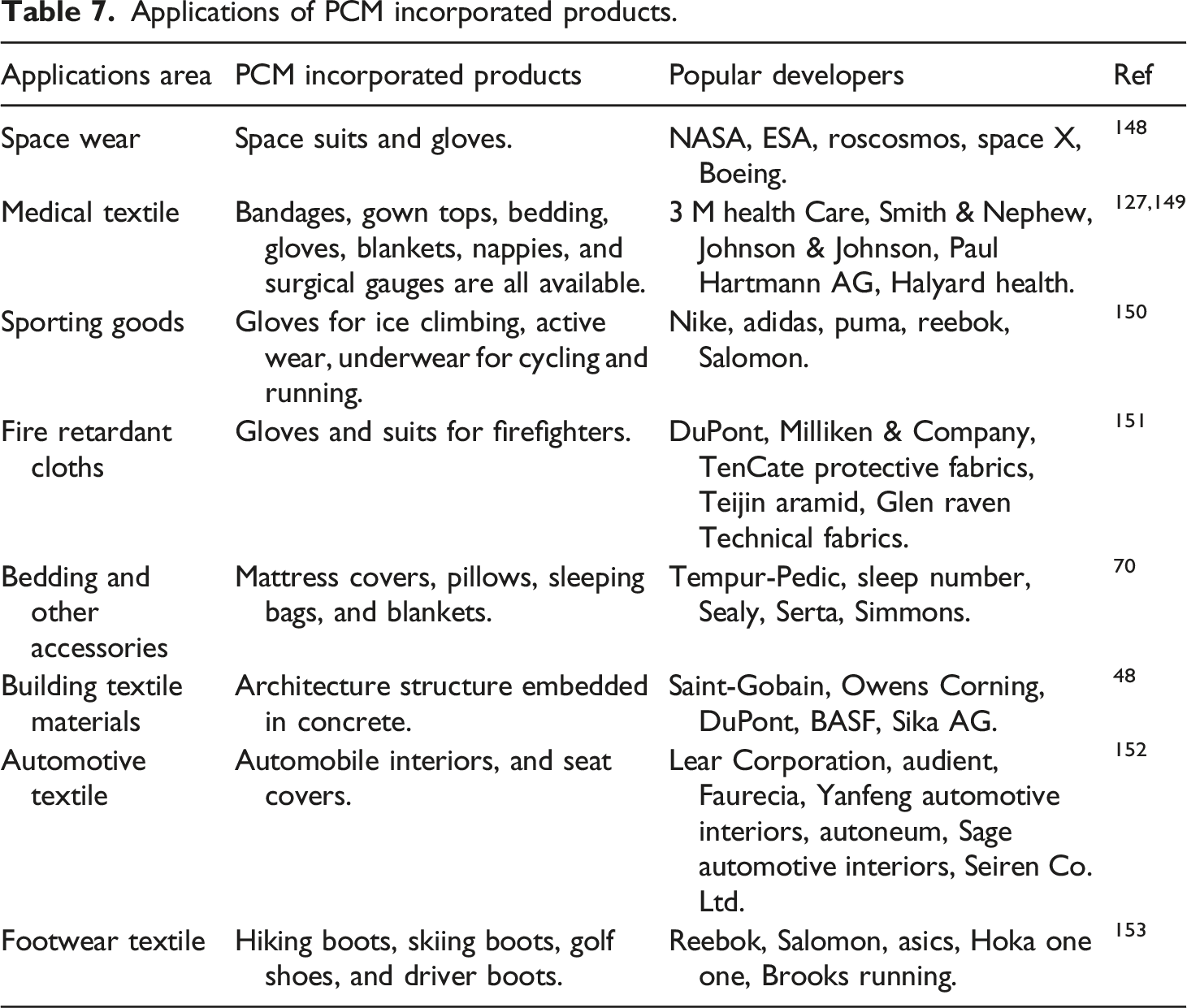
The application of PCMIC has increased dramatically in a variety of industries, including space wear, medical textiles, sportswear, bedding, thermoregulating structures, automotive textiles, flame-retardant fabrics, footwear, and so on which are shown in Figure 7. Various applications of PCMIC.
Applications in space wear
PCMIC for suits can make wearers more comfortable by mitigating the effects of extreme heat or cold. This has the potential to boost astronaut efficiency and health during long-duration missions. PCMs can be designed to have a large thermal storage capacity without sacrificing portability. This is crucial for space missions because it reduces tiredness and increases productivity—a situation where every kilogram counts. 11
Transition temperature ranges, thermal conductivity, and applications of PCMs.

Applications in medical textile
Researchers and manufacturers have been putting a lot of effort into developing state-of-the-art materials for PCMIC with superior properties and functionality. 127 Enhancing PCMIC’s wash ability and durability is a priority to ensure its continued usage. Through its interaction with the microclimate surrounding the human body, PCM can react to changes in temperature brought on by alterations in activity levels and external variables. 128 Therefore, heat-storage and thermo-regulated cloths can maintain a comfortable skin temperature, making them suitable for use as a bandage, as well as for burning treatment and heating/cooling therapy. 129 Again, surgical clothing, patient bedding materials, bandages, and items to manage the temperature of patients in intensive care units might be all benefitted from PCMIC. 106
PCMIC has great potential in the medical field. The development of advanced materials with better thermal properties and longer life spans is predicted as PCM research progresses. Advances in manufacturing processes and integration strategies will likely lead to a reduction in production costs and an increase in production efficiency for PCMIC. PCMIC may prove advantageous in various emerging fields, including sports textiles, post-surgery rehabilitation, and wearable health monitoring devices. Smart textile technologies such as sensors and actuators could be integrated with PCMIC to enable real-time monitoring and adaptive heat management for personalized healthcare.
Applications in sportswear
By controlling their skin temperature, PCMIC for athletic wear can protect athletes from the adverse consequences of overheating or undercooling. 130 To satisfy the demanding needs of athletic applications, researchers are developing cutting-edge PCM materials with customized phase change temperatures and enhanced durability. 131 Ensuring optimal PCM element integration while preserving important clothing attributes like breathability, flexibility, and moisture management is challenging. It can be difficult to maintain the phase change capabilities of PCM fabrics while also guaranteeing their wash ability and durability over extended usage. Cost-effectiveness and production scalability continue to be concerns because PCM materials can be expensive and challenging to produce in large quantities.132,133 Sportswear with PCM integration has a lot of room to grow. The use of state-of-the-art weaving or coating techniques could enhance the performance and integration of PCM materials in sportswear. Sportswear may gain from adaptive temperature control and real-time monitoring if smart textile technologies, like embedded sensors or control systems, are applied. Also, there is a need to focus on recycling and reusing the PCMIC.134,135
Applications in bedding and complementary items
The inclusion of microcapsules to duvets, pillows, and mattress lees facilitates active temperature regulation within the bedroom.
136
When body temperature increases, the body absorbs additional heat energy and cools. When the temperature of the body declines, the stored energy is dissipated, which has the effect of warming the body.
52
A schematic diagram of PCMIC for bed sheets and pillows is shown in Figure 8. Schematic diagram of PCMIC for bed sheet and pillow.
There have been many developments in PCMIC for bedding and its associated items recently. Researchers and manufacturers have been working to improve temperature regulation and sleep comfort by incorporating PCM into new textiles and materials. For instance, Shahid et al. reported PCM incorporated bed sheets for the hospital patients applications. 70 Bedding from PCM is made to both absorb and release heat, keeping you at a pleasant temperature throughout the night. To maximize the thermal management in bedding, high-tech PCM materials with tailored phase transition temperatures and enhanced durability have been created.
Applications in footwear and accoutrements
PCMIC for footwear has come a long way in recent years. The PCMIC for shoes is made to absorb and release heat, keeping the foot at a comfortable temperature. To maximize thermal management, high-tech PCM materials with tailored phase transition temperatures and enhanced durability have been studied. A book chapter written by Kuklane and his associates addressed the state of footwear intended for cold climates. It was discussed how PCM can make the wearer more comfortable. 137 PCM is a material that, within a certain temperature range, can store and release large amounts of thermal energy, mostly latent heat. Therefore, it may be possible to accommodate foot sole temperature regulation using a PCM-enhanced shoe sole. PCM can retain heat from the shoe sole that has evaporated during an intense exercise for a certain period of time before releasing it. 138
Applications in fire retardant cloths
PCMIC for fireproofing can keep their interior temperature at a suitable level. These cloths offer enhanced comfort and fire safety because of the PCM materials incorporated into them. In extremely hot conditions, PCMIC is intended to keep its wearers safe, comfortable, and cool. Over time, advances have been achieved in PCMIC that are fire-retardant. Manufacturers and academic institutes have both conducted research and development on the integration of PCM materials into flame-resistant fabrics. 10 Scientists have developed innovative phase transition temperature-specific PCM that ensures effective thermal management in fire-retardant cloths. Png et al. presented several methods to mitigate the flammability of textile cloth. 139 Su et al. reported flame-resistant (FR) PCM for thermal protective application in firefighting protective clothing. Some researchers investigated ways to enhance the FR property of PCMs used in thermal protective clothing. Cardoso and Gomes proposed utilizing a microcapsule protective agent and FR to enhance the FR property. 140 Mohaddes et al. also proposed PCM finishing with melamine formaldehyde to enhance the FR property. 141 These fabrics now perform better and are more comfortable, thanks to advancements in fabric engineering and PCM composition.
Applications in building textile materials
Using PCMIC with building materials is an innovative way to increase the thermal comfort and energy efficiency of a building. 142 These fabrics are designed to actively regulate temperature by absorbing and radiating heat, hence increasing energy efficiency. Researchers focused on developing novel PCM compositions and integration techniques for building materials. Rubino and his colleagues reported PCMIC for building applications and revealed a significant reduction in energy consumption. 48 The phase change temperatures of these materials are being tailored to work in a variety of environments. There was another report on the use of microencapsulated PCM in buildings to save energy. Considering the current global energy crisis, this is imperative. 143 Furthermore, PCM can be integrated into composites by the process of incorporating different percentages of microencapsulated PCM into materials such as foamed concrete and cement render. By increasing the thermal mass of lightweight construction materials, this method improves thermal performance and lessens the need for air conditioning systems. Buildings with PCM layers applied to their exterior or interior can more efficiently control inside temperature. 144
Applications in automotive textile
Applications of PCM incorporated products.
Challenges
For extended periods, PCMIC materials must be resistant to radiation, vacuum, and extreme temperatures without deteriorating or losing their reliability. PCM-incorporated suits must function as long as possible while maintaining optimal performance during prolonged missions. 154 Furthermore, it might take more energy to activate PCM devices, and energy is a valuable resource in space. It is very difficult to match the energy needed for PCM activation with the power sources that are accessible aboard spacecraft. Also, one of the most concerning factors in applying medical applications is the compatibility and degradability of PCMIC during and after consumer use. Another challenge is to incorporate it with different drugs or other clinical materials to get the optimal performance of PCM materials.
Moreover, PCM typically has low thermal conductivities, which can result in inefficient heat transport, particularly in bulk systems. 155 These can decrease the wear conformability of the sports player while performing high activity. There have been previous reports on the use of metal foam, carbon foam, layered clay minerals like kaolin, carbon fibers, carbon nanotubes, and nanoparticles to increase PCMIC’s thermal conductivity. 156 However, incorporating these materials can increase the overall cost of the product. Additionally, with a low thermal conductivity and a high latent heat of fusion, it is difficult to guarantee effective heat transfer within the garment. Furthermore, ensuring optimal PCM element integration while preserving important clothing attributes like breathability, flexibility, and moisture management is challenging. Furthermore, extreme weather conditions, such as heat in the desert or freezing at high altitudes, might impair soldiers’ operational efficiency. By effectively absorbing and releasing significant amounts of latent heat within a constrained temperature range, PCMs provide a remedy by reducing extreme temperatures. However, commercial PCMs frequently show poor phase-reversal and stability problems. 157 The problems of using PCMs in building textiles include choosing the right PCMs for different climates and preserving mechanical qualities. Scalability and long-term stability are crucial, as is cost-effective manufacture, to achieve widespread acceptance. 5 Besides those, there are difficulties in integrating PCMs into automobile fabrics, such as choosing the right PCM temperature and preserving durability. 29
Life cycle assessments of PCM and cloths
Life cycle assessment (LCA) is a comprehensive approach to evaluate the ecological consequences of a product, process, or service across its complete life cycle, encompassing the extraction of raw materials to the ultimate disposal or recycling. LCA evaluates the overall sustainability of a product or system by taking into account many environmental elements such as energy use, resource depletion, greenhouse gas emissions, water usage, and waste generation. Within the realm of textiles that include PCM, LCA might be beneficial in evaluating the environmental consequences of integrating PCM into textile goods.158,159
It is found in many literatures regarding the LCA of PCM and their applications.161,162 Bernal et al. assess 18 environmental impacts of latent heat thermal energy storage technology systems with phase change material (S-LHTES-PCM) for domestic heating system from a cradle-to-grave perspective. The findings indicate that the primary areas of environmental impact in the system are the solar collector, PCM, the PCM tank, and the heat exchanger. The primary factor responsible for the majority of the effects is the substantial utilization of power and heat in the manufacturing process of raw materials for these components. Indeed, a 40-years S-LHTES-PCM system exhibits a reduced global warming potential (GWP) compared to natural gas.
160
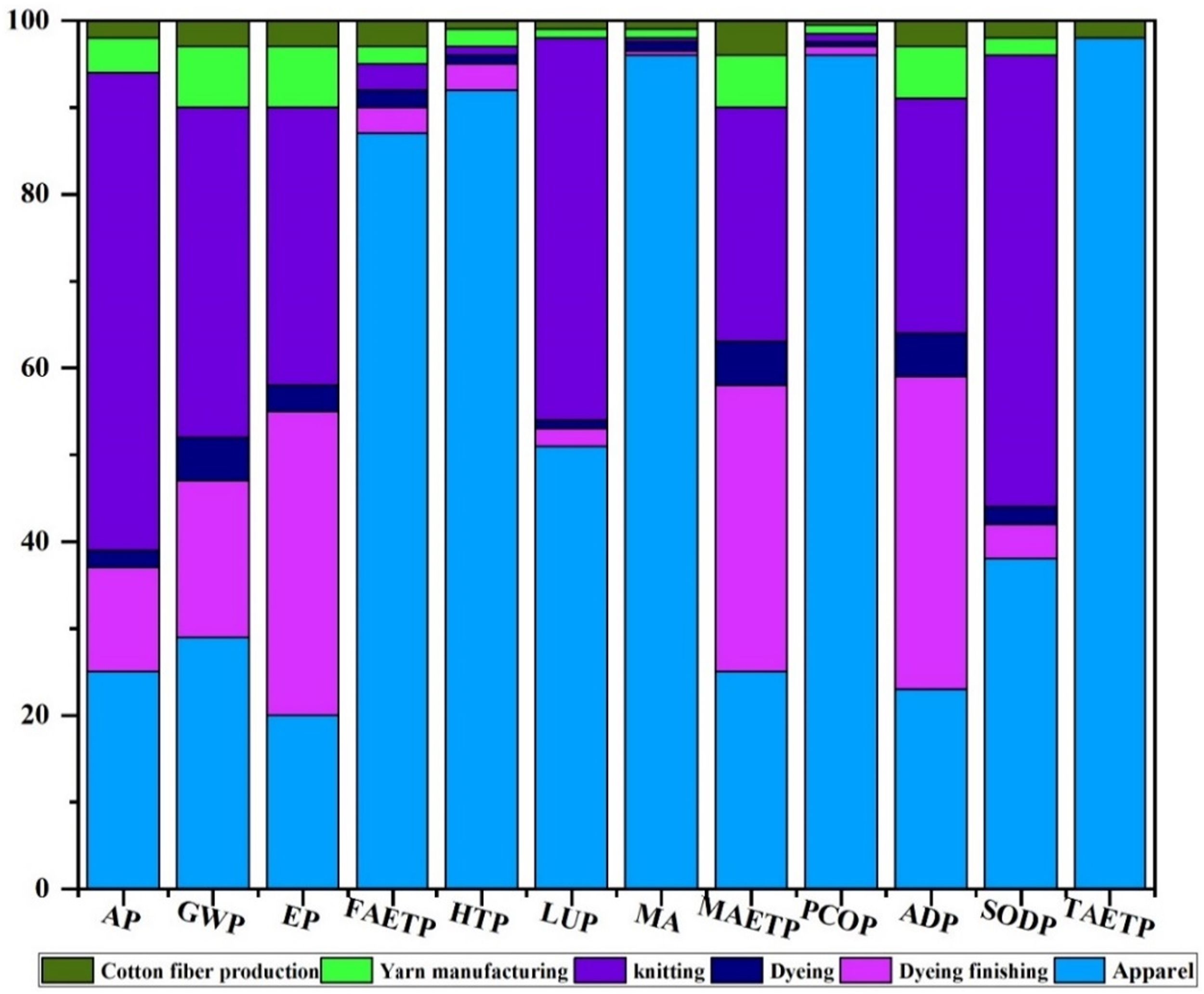
Figure 9 illustrates that the solar collector is the primary source of environmental impact in nine out of the 18 categories, accounting for contributions ranging from 35% in OFPh to 73% in FETP. The PCM is responsible for environmental impact in five categories, ranging from 26% in GWP to 65% in WDP. The PCM tank contributes to environmental impact in three categories, ranging from 35% in MEP to 49% in ODP. The heat exchanger is the main contributor to HTPc, accounting for 30% of the total impact. Collectively, these components account for more than 83% of each of the 18 assessed effect categories. In addition, Islam et al. investigated the environmental impact of cotton polo shirt manufacturing by LCA revealing that dyeing is the contributor to the environmental pollution GWP of 38.36% and then cotton fiber cultivation 29.32%.
163
GWP of the finishing section is 1723.8 CO2-eq. for 1000 kg of cotton knit fabrics as illustrated in Figure 10. This result reveals the context of the environmental load assessment of textile products and PCM’s LCA has many studies.
163
PCMs typically involve relatively straightforward production processes compared to some other materials and may use renewable or low-impact materials. PCMs are often used in energy-efficient building materials, textiles, and thermal management systems to reduce energy consumption for heating and cooling. In these applications, PCMs can contribute to energy savings and environmental benefits by reducing the need for mechanical heating and cooling systems. At the end of their useful life, PCMs need to be disposed of or recycled to mitigate the load. Thus, we should focus on each stage from the preparation to the end use of PCM, and PCMIC and take corrective measures to minimize the environmental loads. Life cycle analysis of a solar domestic system with latent heat thermal energy storage technology with PCM.
160
The environmental impact graph of cotton polo shirt manufacturing by LCA.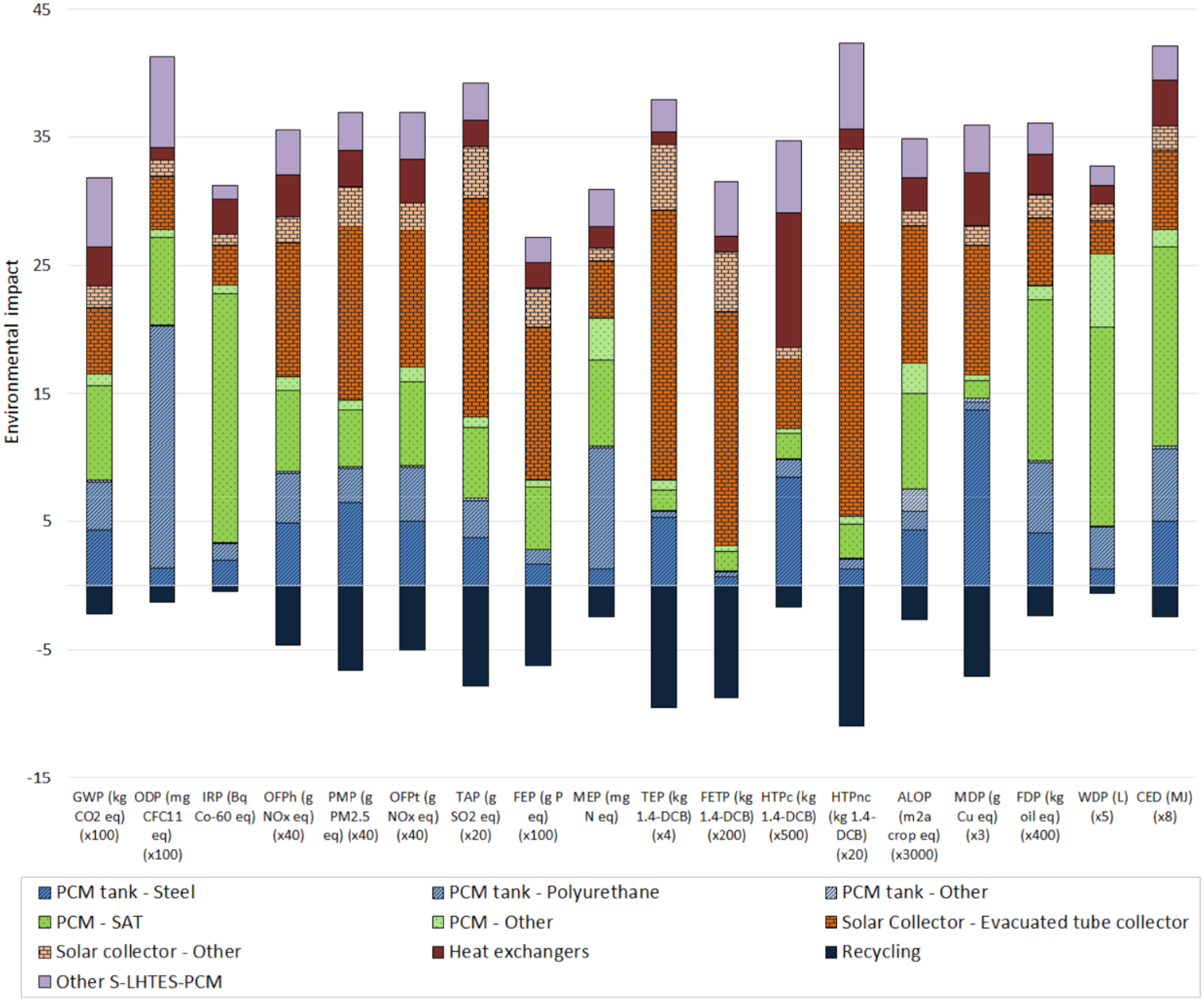
Future outlook
PCMIC has a good prospect. Researchers should prioritize making PCM materials more thermally conductive at a reasonable cost will benefit a variety of applications, including sportswear. Further research is required to determine how to combine improved thermal conductivity with PCMs’ high latent heat of fusion characteristics without compromising this crucial feature. It is expected that further development will result in solutions for the integration, durability, and cost-effectiveness issues. PCMIC may produce more sophisticated, custom-fit sportswear in the future with features that improve performance, like improved heat management.164,165 Also, sportswear may gain from adaptive temperature control and real-time monitoring if smart textile technologies, like embedded sensors or control systems, are applied. Further study should be done on the modification of PCM so that PCMIC can withstand in extreme conditions in space including extreme levels of heat or cold remains also with different radiations. This involves a comprehensive investigation into how to modify PCM formulations to endure space radiation, solar radiation, cosmic radiation, and other environmental conditions in addition to high heat and cold. The prospect is to produce biocompatible and biodegradable PCM materials that will ensure safe use and little environmental damage. Furthermore, improvements in material engineering may make it possible to combine PCM with medications or therapeutic materials, improving therapeutic results and performance in medical applications. Additional developments will involve the use of nanotechnology for improved qualities, real-time control through integration with smart systems, and customization to accommodate various building designs and occupant requirements. Environmentally friendly sourcing and extending the uses of PCM textiles beyond heat regulation are the main focuses of sustainability initiatives. 166 Standardized testing procedures and laws are essential for reliable results, guaranteeing that building fabrics infused with PCM adhere to industry standards. Nanotechnology for better properties and smart vehicle system integration for more comfort are examples of future developments. 167 Fuel economy is enhanced via lightweight solutions and customization to vehicle designs, and eco-friendly materials are the focus of sustainability initiatives. Industry requirements are met by PCM-infused automotive textiles thanks to the establishment of uniform safety rules.
Moreover, enhanced integration and performance are possible outcomes of recent innovations in PCM formulations and fabric engineering. In addition to improving energy efficiency and occupant comfort, building textiles that integrate PCM could be used in a variety of architectural aspects, including roofing systems, walls, and curtains for sustainable construction.
According to Strategic Market Research, 168 the PCM market showed promising growth prospects, with a market size value of USD 1.66 billion in 2021. Forecasting ahead, the revenue for PCM products and solutions is expected to soar to USD 5.1 billion by 2030, representing an impressive compound annual growth rate (CAGR) of 15%. Using 2021 as the reference year, the data shows substantial growth in the market and potential for companies in the PCM industry to take advantage of developing trends and fulfill the changing demands of customers globally. Various companies, including Outlast Technologies LLC, Cocona Inc., and Phase Change Energy Solutions Inc., are leading the way in PCM-coated textile innovation, offering a range of solutions for temperature regulation and energy efficiency in various industries. The prospects for these enterprises are extensive because of the developments in PCM technology and the growing demand for sustainable and high-performance fabrics. Outlast, Cocona, and Phase Change Energy Solutions are well-positioned to take advantage of developing trends and stimulate growth in the PCM-coated textile business. They are focused on growing into new markets, improving product performance, and seeking collaborations. 169
Conclusion
With its unique thermoregulating and functional properties, the emerging material PCM offers a promising avenue for the development of cloths containing PCM. Latent heat storage, narrow temperature range, high energy storage density, reusability and longevity, compatibility with textile processing, and environment-friendly PCM make them highly attractive for a wide range of textile-related applications. The diverse applications of PCMIC, such as space wear, medical textiles, sportswear, beddings, thermoregulating buildings, flame-retardant cloths, automotive cloths, and footwear, may offer benefits such as active temperature regulation, thermal storage, moisture management, and enhanced wearer comfort. A bibliometric analysis across 15 years is performed to capture the most recent developments and trends in PCM fabrics and textiles. Along with the analysis of previous trends, recent trends are also included in this study. Several characterization methods along with their challenges are mentioned. Factors such as material development, fabric integration, and so on affect the large-scale production of PCMIC. Along with the great advantages of this material, it possesses many challenges, including moderate fastness properties, decreased softness of cloths, and limited heat release of certain PCM. Through energy savings and low-impact materials, PCM technologies provide environmental benefits throughout their life cycle, from manufacturing to disposal. As a result, complete assessment and mitigation techniques are required for sustainability. With ongoing research on new incorporation methods, characterization techniques, and possible advanced applications, the future of PCMIC is promising. To unlock the full potential of PCMIC, it is essential to conduct multidisciplinary research involving material, chemical, and textile experts.
Footnotes
Declaration of conflicting interests
The author(s) declared no potential conflicts of interest with respect to the research, authorship, and/or publication of this article.
Funding
The author(s) received no financial support for the research, authorship, and/or publication of this article.
