




Abstract
This paper investigates the electromagnetic interference shielding effect and wearing comfort properties of a sandwich material consisting of a surface layer, an electromagnetic interference shielding layer, a thermal insulation layer, and a lining layer. The main aim is to research its potential as a winter jacket’s material for shielding electromagnetic radiation and the relationship between single-layer fabric samples and multi-layer sandwich materials under different properties. Experimentally, it is found that the electromagnetic interference shielding effectiveness of the sandwich materials is only determined by the electromagnetic interference shielding layer fabric sample, the other layers’ fabric samples have no significant impact on the electromagnetic interference shielding effect. In this paper, the air permeability of the sandwich materials is 25 to 50% lower than that of the single-layer fabric samples with the lowest air permeability in their combination. And the water vapor resistance of the sandwich materials is 40 to 60% higher than that of the single-layer fabric samples with the highest water vapor resistance in their combination. The thermal resistances of the sandwich materials measured by the Alambeta are lower than those calculated by the sum of the individual layers’ thermal resistance, which may be caused by the reduction in the internal air of the sandwich materials. Finally, the quality index evaluation is used to select the most suitable sandwich material for the winter jacket against electromagnetic radiation, which achieves the purpose of balancing the electromagnetic interference shielding effect and wearing comfort.
Keywords
Introduction
Clothing comfort research begins in the 1930s. For a long time, many scholars have defined comfort without a unified concept. The general view among scholars is that the most important and only comfort indicator is a satisfactory thermal balance, and comfort can only be achieved when physiological, psychological, and physical factors interact in a satisfactory state. 1 Clothing comfort, in a broad sense, is the wearer’s overall experience of wearing clothes through their senses and perception. This includes physical comfort, psychological pleasure, social-cultural self-actualization, and self-satisfaction. 2 In a narrow sense, clothing comfort refers to physical comfort that mainly includes temperature comfort, contact comfort, and fit comfort. Temperature comfort means that, under the interaction of external environmental conditions and its own activity conditions, clothing plays an appropriate auxiliary thermoregulatory function so that the human body maintains thermal balance. 3 When studying the comfort of clothing, it is necessary to regard the “human-clothing-environment” as a unified whole. 4 The comfort of clothes comes from the way three factors work together and affect each other, please refer to Figure 1. 5 With the progress of society and the development of science and technology, people pay more and more attention to the comfort of clothing, and clothing comfort and function have also developed rapidly.
The wearing comfort properties of a functional sandwich material will be investigated in this paper, please refer to Figure 2. The original reason for studying this material is that people in modern society are getting more and more used to electronic devices and are getting more and more sick from the electromagnetic radiation that these devices give off.
6
The development of protective clothing is crucial to protecting people in professional fields from electromagnetic radiation. At present, many scholars and researchers have conducted a large number of experiments and research to improve the electromagnetic shielding effect of different materials.7–9 At the same time, some researchers have also tested the comfort properties of different materials with electromagnetic shielding effects.10–12 But these studies focus on the comfort of the electromagnetic shielding material itself, the research in this paper is more about the comfort of combining electromagnetic shielding materials with other textile materials to form electromagnetic shielding clothing materials suitable for winter wear. The sandwich material in this paper mainly aims to be used in the winter jacket for shielding electromagnetic radiation and consists of a surface layer, an electromagnetic interference shielding layer, a thermal insulating layer, and a lining layer. Apparently, this kind of multi-layer construction provides the required heat in winter but thereby reduces the ability of the interior to transfer excess heat and moisture to the surrounding environment, which leads to discomfort for the wearer. Therefore, it is necessary to optimize the wearing comfort of this sandwich material while ensuring its electromagnetic shielding effect, which mainly includes air permeability, water vapor permeability, and thermal insulation. Factors affecting comfort performance. Diagrammatic sketch of sandwich materials.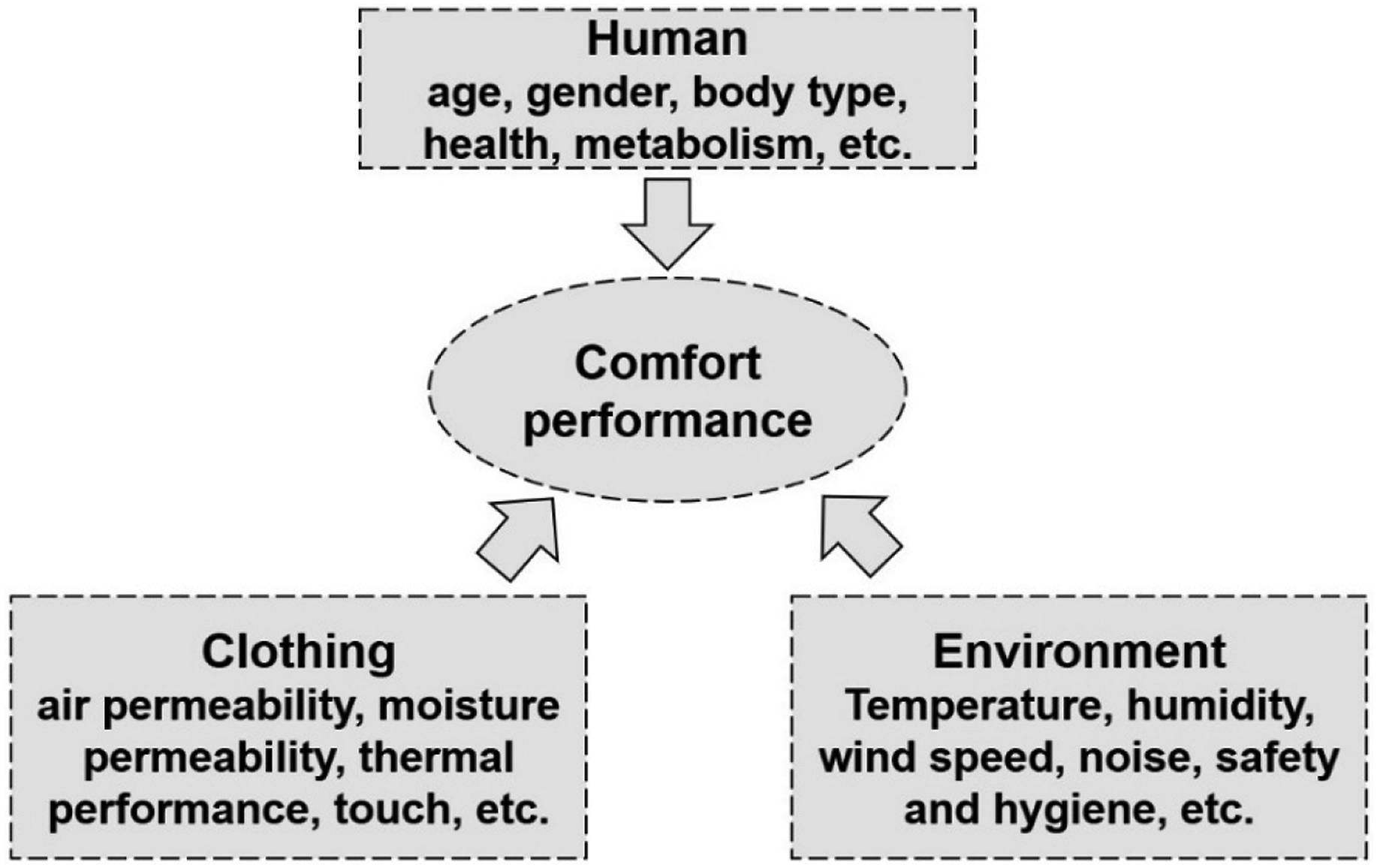

Materials and methods
Materials
Electromagnetic interference shielding layer
Basic information of electromagnetic interference shielding fabric samples.

Thermal insulation layer
Basic information of thermal insulation fabric samples.

Surface and lining layers
Basic information of surface and lining fabric samples.

Constructional information of surface and lining fabric samples.

Methods
Fabric physical properties and porosity
The fabric thickness was measured by a thickness gauge according to the EN ISO 5084 standard, 13 and the measurement equipment with a 50 mm presser foot under 1.0 kPa pressure when it was applied to the fabric. The average value was calculated after measuring each sample five times in different positions. 14 The areal density of the fabric samples, also expressed in grams per square meter, was measured following the ISO 3801 standard. 15 This included measuring the length, width, and weight of the fabric samples. The areal density was obtained by calculating the ratio of the fabric weight to the area. 16 In this paper, the porosity of fabric samples was measured through a microscope under the transmitted light image and processed by the image analysis software. This software calculated the pore number, pore size, and pore volume fraction present in the structure. Then, the porosity was found by figuring out how much of the total area of the fabric was made up of pores. 17
Electromagnetic interference shielding effectiveness
The electromagnetic interference shielding test used Rohde & Schwarz company’s test machine that is built up with the sample holders and network analyzer, and it measured the net shielding effectiveness caused by reflection and absorption over a frequency range of 30 MHz to 3 GHz. According to the ASTM D4935-10 standard, 18 this kind of testing was used for the measurement of the electromagnetic interference shielding effectiveness of planar materials under normal incidence, far-field, and plane-wave conditions. 12 The measurement results showed the shielding effectiveness measurements at each measurement frequency, and each fabric sample was measured five times at different locations and averaged as a result.
Air permeability
The air permeability meter FX3300 was used, and the test was carried out with reference to the test standard ISO 9237 19 for the determination of the air permeability of textile material. 20 The air permeability of the textile material refers to the airflow velocity through the textile sample under certain conditions for sample area, pressure differential, and time. During the test, the sample was placed in the air inlet of the device and pressed against the gripping arms, and air was then pumped through the sample. The pressure of the air valve was 200 Pa, the airflow was measured with a flow meter, and the test time was 10 seconds 21 Each sample was 20 cm2 in size, was tested five times at different points, and the average value was calculated as a result.
Water vapor permeability
According to the standard ISO 11092, 22 Permetest was used as the measuring instrument in this study. And water vapor resistance (Ret Pa·m2·W−1) was used to characterize the water vapor permeability test. 23 Water vapor permeability is a standard method for testing the textile materials’ thermo-physiological properties and it refers to the mass of water vapor that vertically passes through the sample per unit area within a specified time under the condition of constant temperature and humidity on both sides of the fabric. During the test, the sample was placed on a water vapor permeable membrane on a heated perforated plate and exposed to the 1 m/s parallel airflow. 24 Test conditions were set at 35% relative humidity and 20°C ambient temperature, and the results were calculated as the average of 5 tests per sample.
Thermal insulation
According to the standard ISO 11092, 22 Alambeta was used as the measuring instrument in this study and thermal resistance was chosen to characterize thermal insulation performance in this paper. Thermal resistance is a numerical value that expresses the ease of heat transfer. It is the value obtained by dividing the temperature difference between any two points by the heat flux flowing between the two points. A high thermal resistance value means that heat is difficult to transfer, while a low thermal resistance value means heat is easy to transfer. The sample was set on the measuring bottom plate during the test, the head plate went down and touched the fabric sample with a 200 Pa pressure. Then the heat flow value of the sample was analyzed and calculated, and the final thermal resistance value was displayed. The sample size should not be less than 12 cm by 12 cm, and the thickness should be between 0.5 mm and 8 mm. The measured ambient temperature was around 16°C to 26°C, and the relative humidity was between 10% and 80%. Every sample was tested five times at different points, and the average value was calculated as a result. 25
Results and discussion
Fabric physical properties and porosity
Basic information on fabric samples’ porosity.

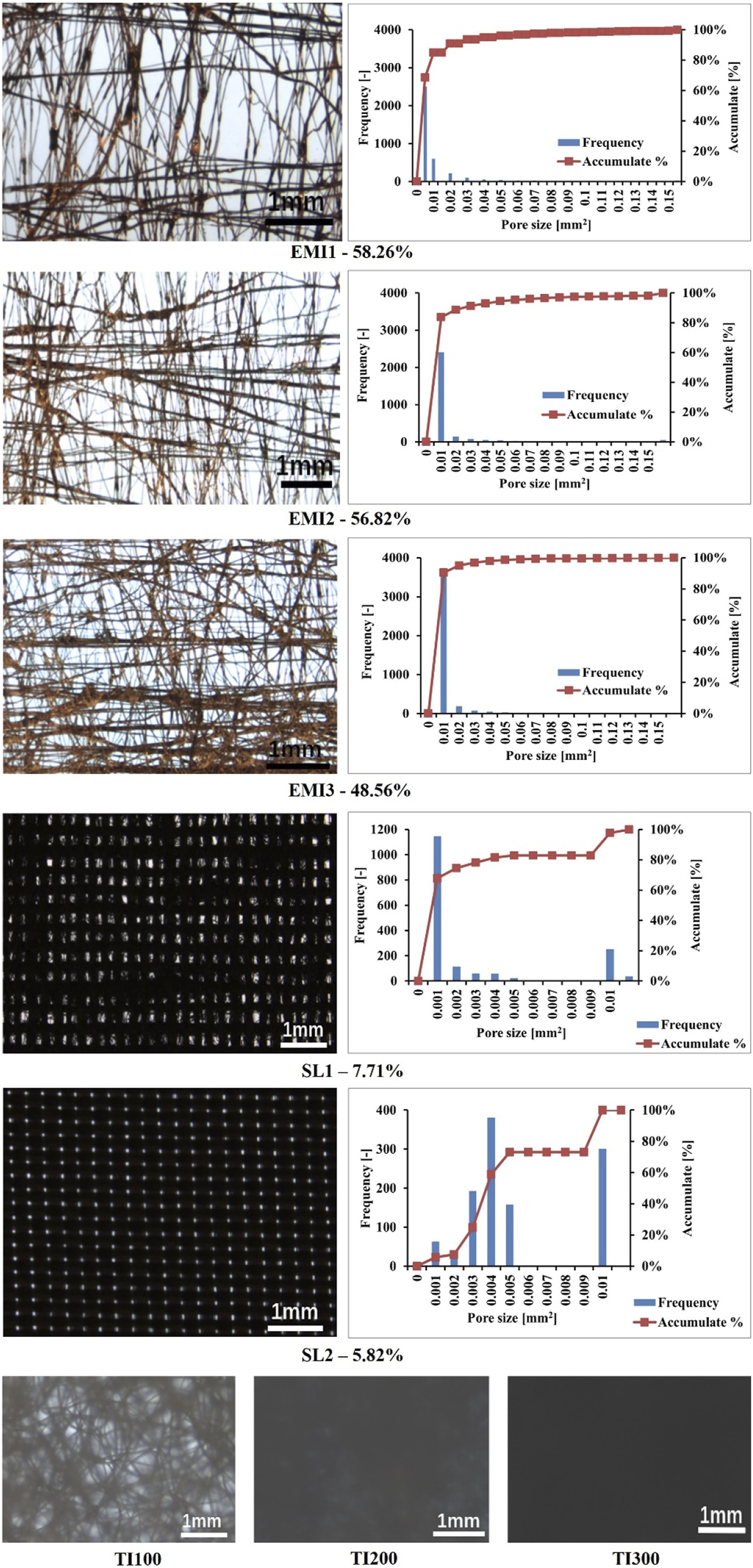
Image of fabric samples and their pore size distribution.
Electromagnetic interference shielding effectiveness
This paper compares the average value at 1.5 GHz for evaluating the electromagnetic interference shielding effectiveness of different sandwich materials. Because some researchers have conducted extensive research on the frequency of electromagnetic radiation generated by various radio signals, the results show that 1.5 GHz is the most commonly exposed frequency in the life and work of human.
29
It can be observed from Figure 4 that the electromagnetic interference shielding effectiveness of the samples EMI1, EMI2, and EMI3 is 20.7 dB, 29.1 dB, and 39.3 dB, respectively. Simultaneously, it can be seen that the electromagnetic interference shielding effectiveness of sandwich materials including different EMI samples is 21.2 dB, 28.7 dB, and 39.7 dB. In contrast, the difference between the two groups of data is not significant. From the previous research, it can be learned that the main impact factors on electromagnetic interference shielding effectiveness are the conductivity, thickness, and porosity of the conductive layer.30,31 Simply increasing the thickness of the non-conductive layer has no effect on the electromagnetic interference shielding effectiveness of the entire sandwich material. Therefore, it can be concluded that the other layers’ samples in the sandwich materials do not affect the electromagnetic interference shielding effect, except for the samples of the electromagnetic interference shielding layer. EMI Samples’ and sandwich materials’ average electromagnetic interference shielding effectiveness at 1.5 GHz.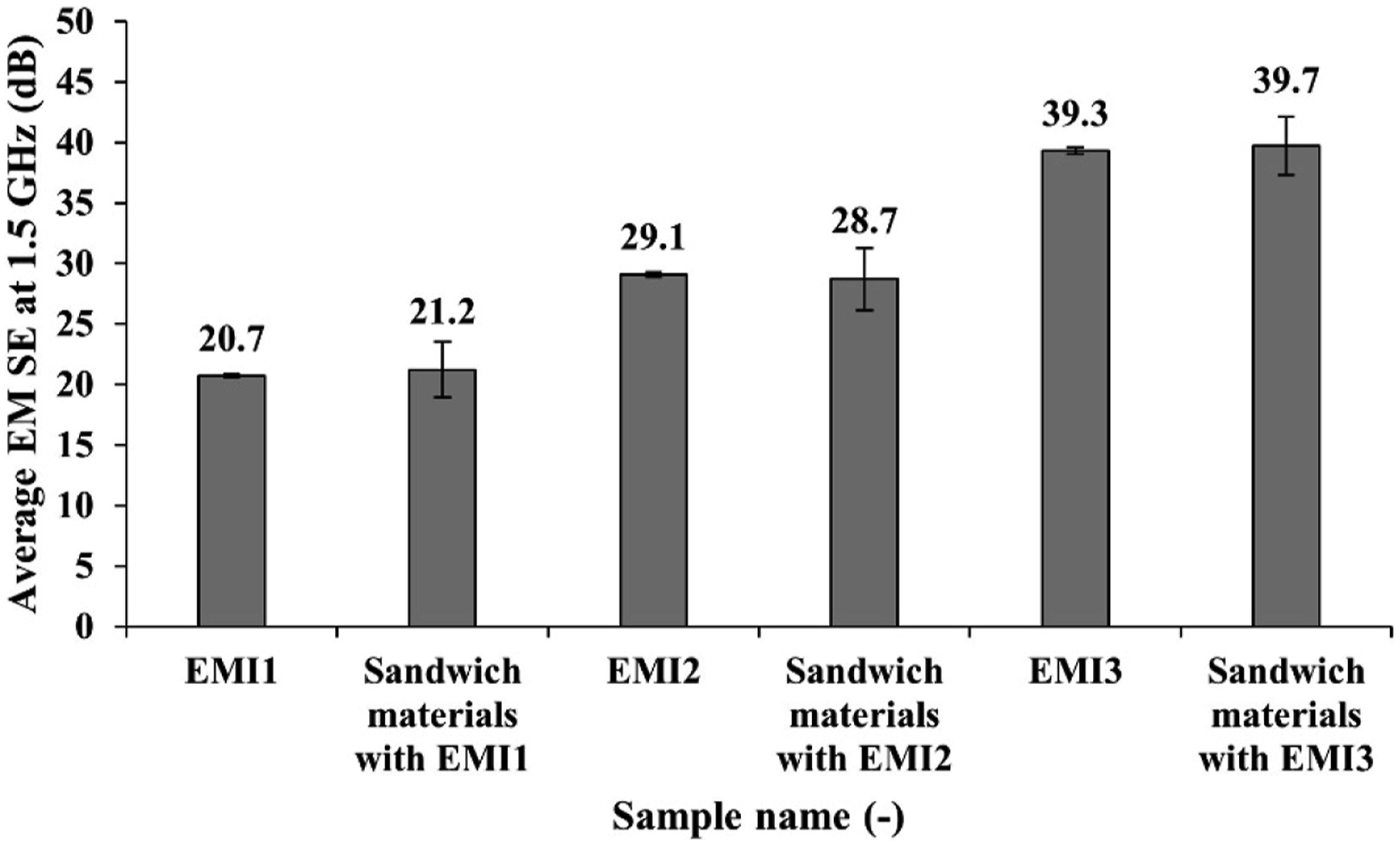
Air permeability
The air permeability of the fabric refers to the performance of air passing through the fabric, which affects the wearing comfort of the fabric. Therefore, understanding and characterizing the air permeability of fabrics are extremely important.
32
The results of the fabric samples’ air permeability can be compared in Figure 5. The EMI samples exhibit excellent air permeability, and their test values are all higher than 8000 L/m2/s. The air permeability of EMI samples is positively correlated with their porosity. In addition, sample TI100 also achieves an air permeability of 8198 L/m2/s, which is very close to that of the EMI samples. However, as the thickness doubled and tripled, the air permeability of the fabric samples decreased to 4808 L/m2/s and 3504 L/m2/s. Comparatively, samples SL1 and SL2 have poor air permeability. The above experimental data show that many factors, such as porosity, thickness, and fabric materials, influence air permeability. Air permeability of fabric samples.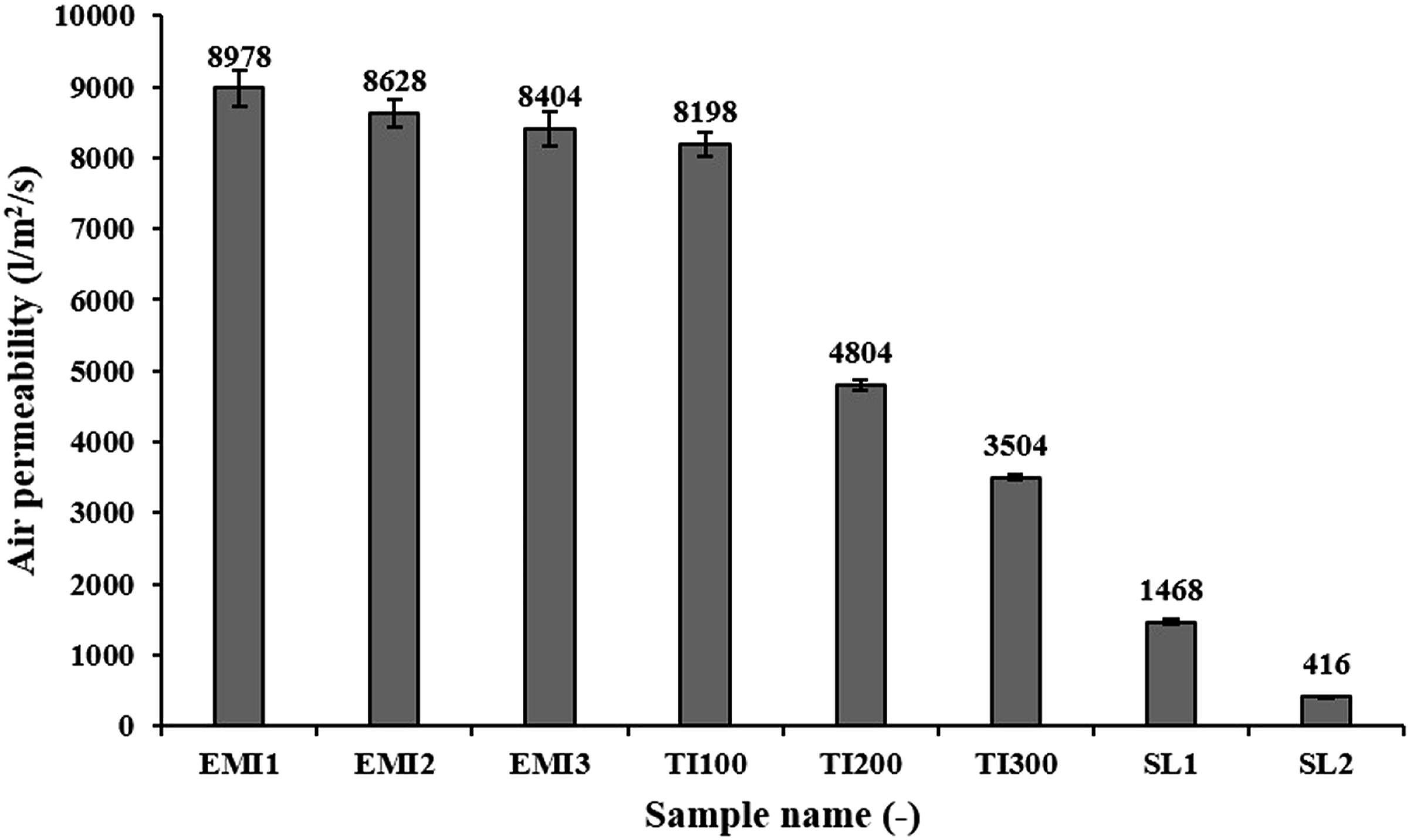
In addition, Figure 6 and Table B1 (Appendix B) show the air permeability of sandwich materials formed by various combinations. The air permeability of sandwich materials is greatly reduced compared to the single-layer fabric samples, which is mainly due to the increase in thickness and the decrease in porosity. The air permeability of the sandwich materials with sample SL1 as the surface and lining layers ranges between 700 and 800 L/m2/s, representing a 50% reduction in air permeability compared to the SL1 sample. And the air permeability of the sandwich materials using sample SL2 as the surface and lining layers is from 250 to 290 L/m2/s, which is about a 25% reduction in air permeability compared to the SL2 sample. It is discovered that SL samples with low air permeability play a significant role in the air permeability of the sandwich materials. Furthermore, the TI samples have a secondary effect on the air permeability of the sandwich materials. In comparison, the air permeability of the sandwich materials containing the TI100 sample is slightly higher than that of the sandwich materials containing the TI200 and TI300 samples. The most interesting founding is that the EMI samples have excellent air permeability, but they do not play a key role in the sandwich material. There is almost no difference in the air permeability of the sandwich materials containing samples EMI1, 2, and 3. Two important points can be drawn from the above analysis. First, the lowest air permeability fabric sample in the sandwich structure determines the upper limit of the air permeability of the sandwich textiles. Second, once the lowest air permeability fabric sample has been determined, the higher air permeability fabric samples from the other layers can effectively improve the air permeability of the sandwich materials. Air permeability of sandwich materials.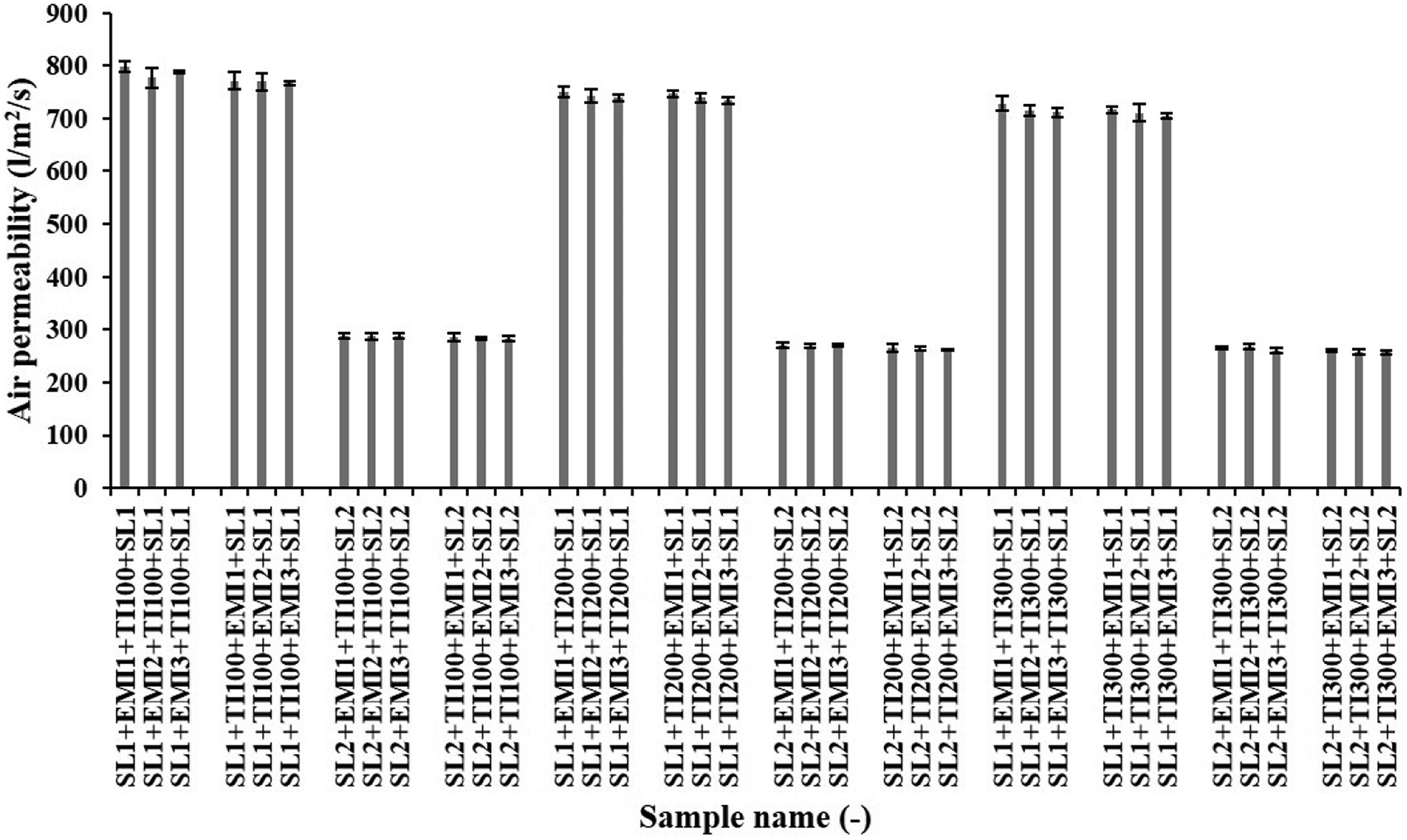
Water vapor permeability
When the human body performs heavy physical labor, it will dissipate heat through sweat evaporation to maintain the thermal balance of the body. If the water vapor can diffuse to the surrounding environment through the fabric, the human body will feel comfortable; if the fabric hinders the diffusion of the water vapor, the human body will feel stuffy and humid.
33
Therefore, water vapor permeability is an important factor affecting the wearing comfort of the fabrics. The water vapor permeability of the samples will be analyzed by their water vapor resistance, and the water vapor resistance of all fabric samples is shown in Figure 7. The figure shows that the water vapor resistance for sample TI300 is the highest and that for sample EMI1 is the lowest. The TI samples have high water vapor resistance, with values above 22.5 Pa·m2·W−1. The water vapor resistances of other fabric samples are less than 4.2 Pa·m2·W−1, which indicates that they have good water vapor permeability (water vapor resistance range 0–6: very good, 6–13: good, 13–20: satisfactory, 20 + unsatisfactory).
34
Due to their low porosity and high thickness, the TI samples show higher water vapor resistance.
35
These two factors prevent water vapor from passing through the fabric, resulting in unsatisfactory water vapor permeability. Water vapor resistance of fabric samples.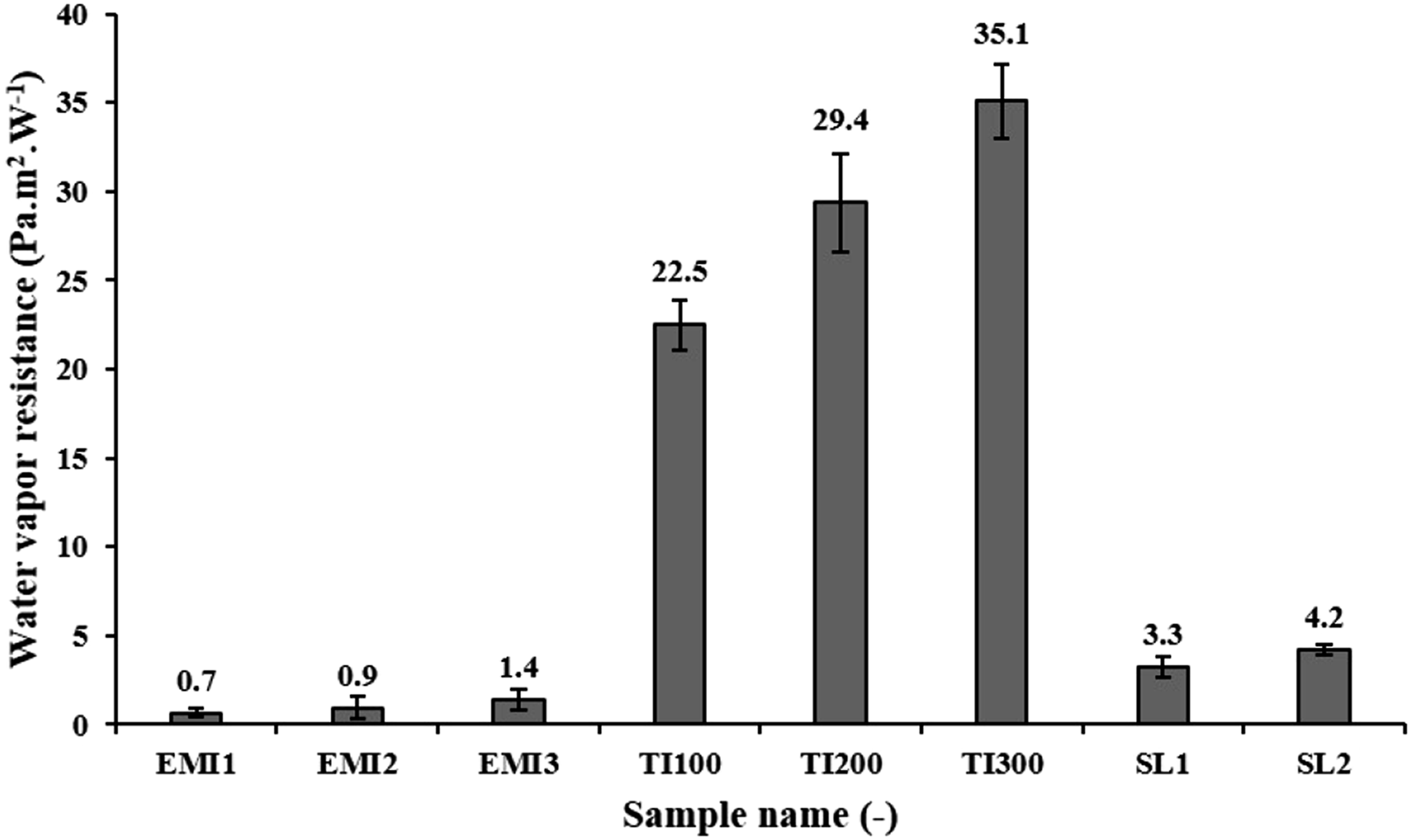
In addition to the above data, Figure 8 and Table B2 (Appendix B) show the water vapor resistance of the sandwich materials. The water vapor resistance of sandwich materials ranges from 40.9 Pa·m2·W−1–70.4 Pa·m2·W−1. They are 40% to 60% higher than those of the single-layer fabric samples with the highest water vapor resistance in their combination. The combination of multiple layers of fabric samples causes more staggered stacking between yarns and lower porosity in sandwich materials, resulting in worse water vapor permeability.
36
Figure 8 also displays the water vapor resistance of sandwich materials containing the different EMI samples, which are not significantly different. The main reason is that there is no significant difference in the water vapor resistance of samples EMI1, 2, and 3. The principle of EMI samples can also be applied to SL samples. On the contrary, the TI samples play an important role in the sandwich materials’ water vapor permeability performance. First, the TI samples with the highest water vapor resistance in the sandwich materials will determine the lower limit of the sandwich materials’ water vapor resistance. Second, since the water vapor resistance of the TI samples has a significant difference, this leads to a significant difference in the water vapor resistance of the sandwich materials containing different TI samples. Following the increase in the thickness of the TI samples, the water vapor resistance of sandwich materials presents the same increasing trend as that of single-layer TI samples. In this paper, all sandwich materials do not exhibit good water vapor permeability. Since it will be used in winter, the wearer feels more comfortable when performing low-intensity work. In contrast, high-intensity labor may cause the wearer discomfort due to insufficient water vapor transmission.
37
Water vapor resistance of sandwich materials.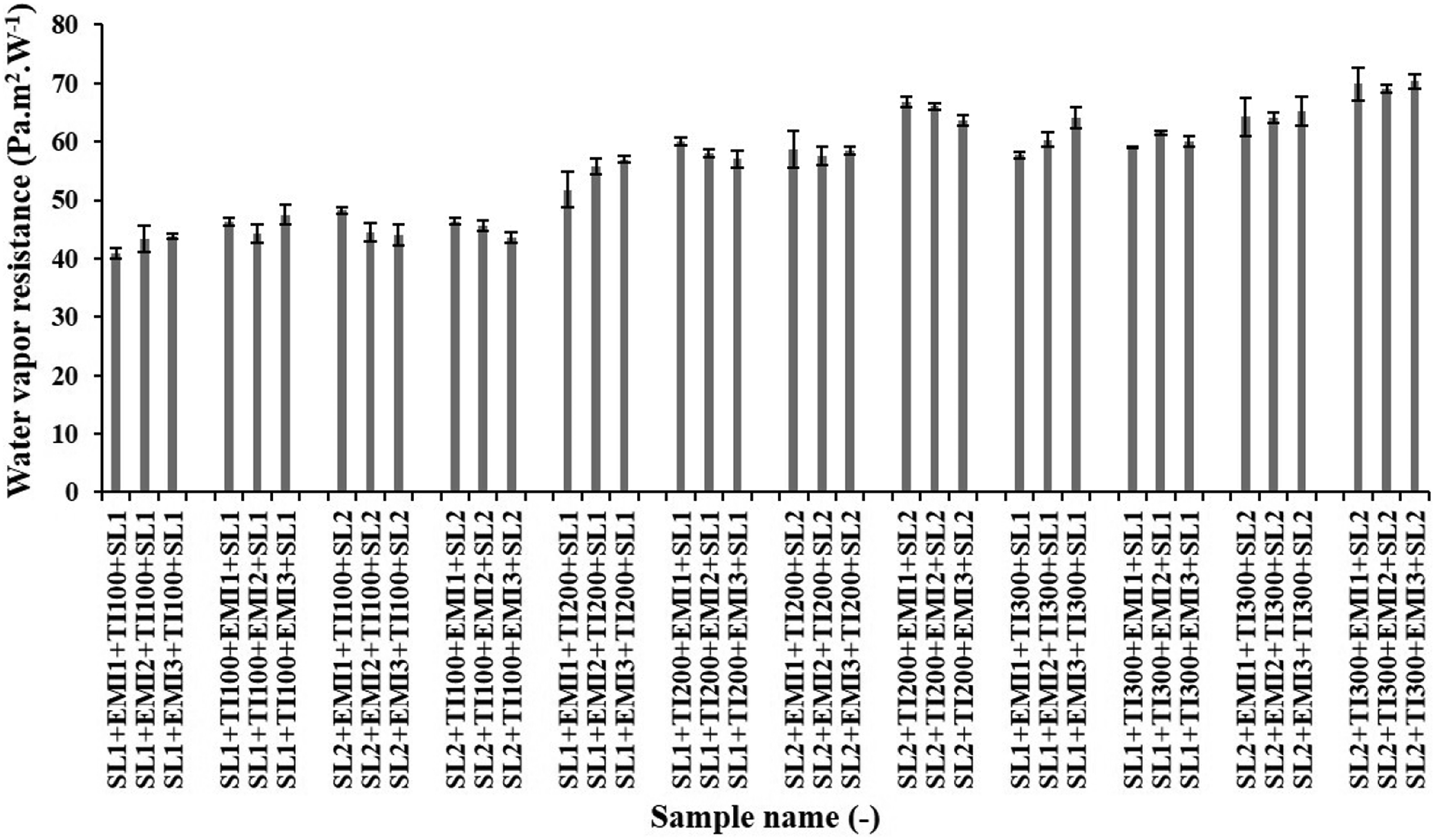
Thermal insulation
Thermal conductivity and thermal resistance of fabric samples.

The heat transfer process of sandwich materials is relatively complex, and it will be affected by many factors. Textiles are a macroscopic collection of textile fibers and air with heat transfer pathways such as conduction, convection, radiation, and latent heat transfer accompanied by water vapor transport. Under normal conditions of use, the heat transfer effects of convection and radiation are less than those of conduction due to the relatively small gaps and holes between fibers or yarns in general textiles.
39
Therefore, according to the principle of heat transfer, the total thermal resistance of the sandwich materials at a steady state is approximately the sum of the thermal resistances of the individual layers.
40
The thermal resistances of the sandwich materials obtained by the sum of the individual layers and by the Alambeta measured are compared and shown in Figure 9 and Table B3 (Appendix B). They display that the thermal resistances of the sandwich materials as measured by the Alambeta are lower than those calculated by the sum of the individual layers’ thermal resistance. The above phenomenon could be explained by the fact that the texture of fabric samples is relatively soft, resulting in more contact points between them when different layers of fabric samples are superimposed together. So the adjacent layer fabric samples fill each other’s voids, resulting in less air inside the sandwich materials and lower thermal resistance.
41
It can also be observed that there is a greater difference between the sum of the individual layers’ thermal resistance and the Alambeta measured thermal resistance when the fabric sample in the constituent sandwich materials has a higher thermal resistance. This finding can be verified by the p value of the paired sample t-test in Figure 7. Except for the above two findings, the sandwich material consisting of samples SL1, EMI2, and TI300 has the highest thermal resistance, which is 0.266 K·m2/W. On the contrary, the sandwich material consisting of samples SL2, EMI2, and TI100 has the lowest thermal resistance, which is 0.111 K·m2/W. The positions of the EMI samples and TI samples are also swapped in this experiment, but the results are not significantly different. The thermal resistance of sandwich materials by the sum of the individual layers’ thermal resistance and by the Alambeta measured. p value of the paired sample t-test for the thermal resistances of the sandwich materials by the sum of the individual layers’ thermal resistance and by the Alambeta measured.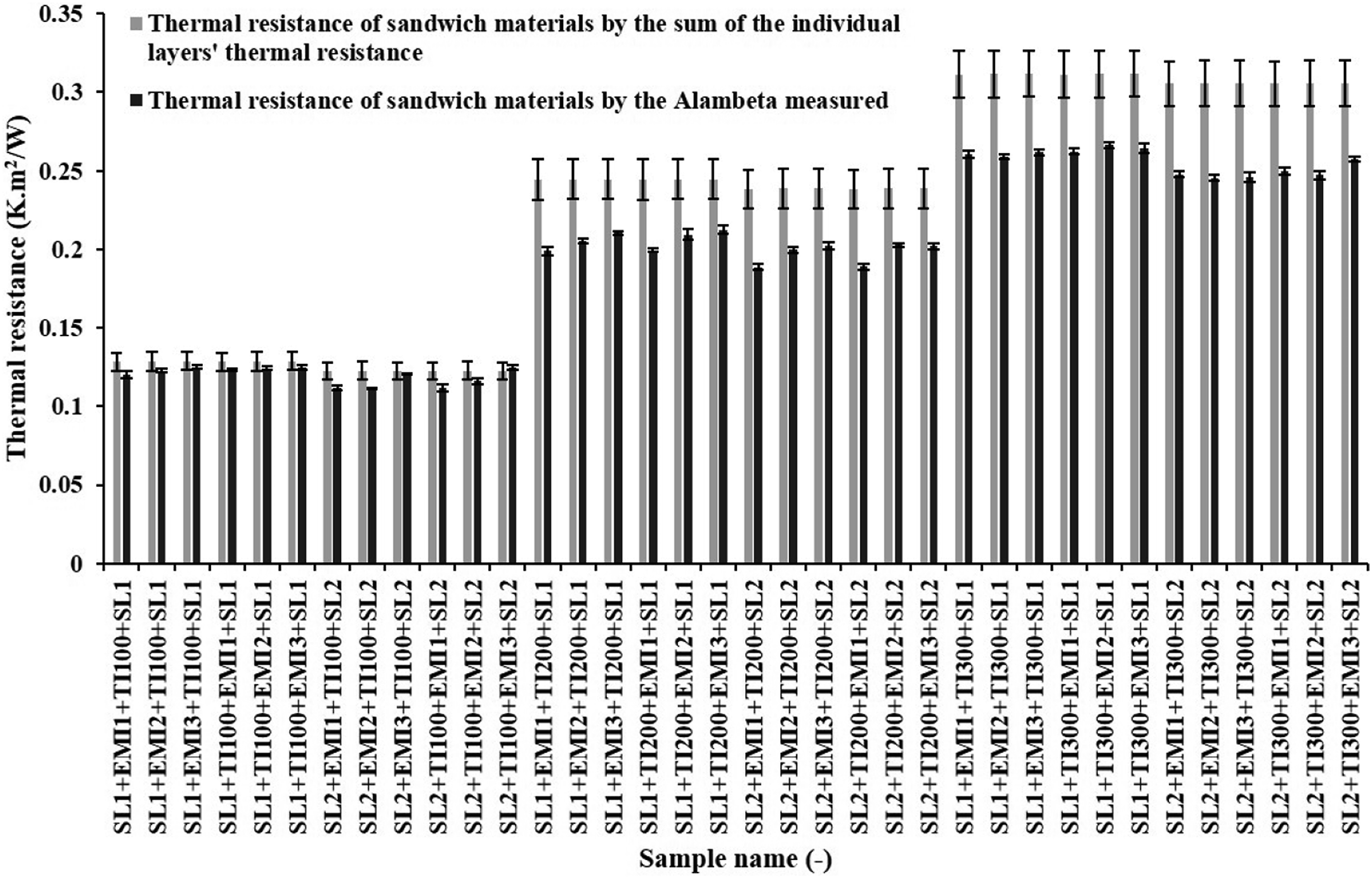

Quality index evaluation 42

H and L values of all sandwich materials for different properties.

Local utility values of all sandwich materials for different properties.


Weighted geometric average of all sandwich materials.

The bold values are the top three after a comprehensive evaluation.
Conclusions
In this paper, the balance between electromagnetic interference shielding effect and wearing comfort properties becomes a critical issue for sandwich materials. From the above series of experimental studies and the analysis of their results, the following conclusions can be drawn. The sandwich material’s electromagnetic interference shielding effect is entirely determined by the fabric sample with the electromagnetic interference shielding effect. Other fabric samples that do not have an electromagnetic interference shielding effect will not affect the sandwich material’s overall electromagnetic interference shielding effect. Due to the increase in thickness and the decrease in porosity, the air permeability of the sandwich materials is substantially lower than that of the single-layer fabric samples. The air permeability of the sandwich materials in this paper is 25% to 50% lower than that of the single-layer fabric samples with the lowest air permeability in their combination (SL samples). Therefore, the lowest air permeability fabric sample in the sandwich material determines the upper limit of the sandwich textiles’ air permeability. Increasing the air permeability of other layers of fabric samples after determining the fabric sample with the lowest air permeability can effectively improve the air permeability of the sandwich material. Similar to the situation with air permeability, the water vapor permeability of the sandwich materials is also substantially lower than that of the single-layer fabric samples. The water vapor resistance of the sandwich materials is 40% to 60% higher than that of the single-layer fabric samples with the highest water vapor resistance in their combination (TI samples). So, the fabric sample with the highest water vapor resistance in the sandwich material will decide the lower limit of the sandwich material’s water vapor resistance. After determining the fabric sample with the highest water vapor resistance, decreasing the water vapor resistance of other layers of fabric samples can effectively improve the water vapor permeability of the sandwich material. The thermal resistances of the sandwich materials measured by the Alambeta are lower than those calculated by the sum of the individual layers’ thermal resistance. It is due to the mutual extrusion of the material layers, which reduces the static air between the layers and ultimately leads to a reduction in thermal resistance. When the fabric sample in the constituent sandwich materials has a higher thermal resistance, the difference between the sum of the individual layers’ thermal resistance and the Alambeta measured thermal resistance is larger. Finally, the quality index evaluation method is used to uniformly assess and optimize all test properties. The best way to meet the requirements of this paper is to make a sandwich out of samples SL1, EMI3, and TI300.
Footnotes
Declaration of conflicting interests
The author(s) declared no potential conflicts of interest with respect to the research, authorship, and/or publication of this article.
Funding
The author(s) disclosed receipt of the following financial support for the research, authorship, and/or publication of this article: This work was supported by the Ministry of Education, Youth and Sports of the Czech Republic and the European Union (HyHi, Reg. No. CZ.02.1.01/0.0/0.0/16_019/0000843).
