




Abstract
There is still a lot of research space and market demand for lightweight, heat-insulating, and EMI-shielding construction materials. This paper develops and compares the thermal insulation, ohmic heating effect, and EMI shielding properties of a kind of multifunctional sandwich material with “ROTIS” and “FLAT” structures. The ROTIS-structured sample exhibits slightly higher thermal conductivity than the FLAT-structured sample, owing to its lower volume porosity and higher plated copper content per unit area. Since ROTIS technology allows for a significant increase in the thickness of thinner raw materials, this structure allows for an increase in the thermal insulation of thinner materials. Also, samples with ROTIS structures have a better ohmic heating effect than samples with FLAT structures. This is because the active layer has more plated copper content per unit area, while the insulation layer has less thermal resistance. Unsatisfactorily, the samples with the ROTIS structure show lower electromagnetic shielding effectiveness at 1-1.5 GHz, which is mainly due to their reduced volume porosity. In conclusion, this research develops sandwich materials with the ROTIS structure that exhibit excellent thermal insulation, electromagnetic shielding, and ohmic heating properties, making them suitable for use as building materials in demanding indoor temperatures and electromagnetic environments.
Keywords
Introduction
Construction materials are various materials applied to construction projects. There is a wide variety of construction materials, broadly categorized as inorganic, organic, and composite materials. 1 With the development of society, many scholars have put forward the development strategy of ecological construction materials. Including the development of high-performance and long-life construction materials, greatly reducing the material consumption and service life of the construction project; the development of low energy consumption and environmentally friendly construction materials to replace the high energy consumption, environmental pollution, toxic and harmful to the human body of the construction materials; the development of construction materials with the improvement of ecological environment of the building and health care functions, such as antibacterial, deodorization, shielding of harmful radiation of the multifunctional materials, and so on.2,3 Among them, the thermal insulation performance of buildings is an important aspect of saving energy and improving the living environment. 4 The proportion of building energy consumption in the overall energy consumption of mankind is generally 30%–40%, the vast majority of which is the energy consumption of heating and air conditioning, so construction energy efficiency is of great significance. 5 Furthermore, as more and more electronic products enter our lives, the electromagnetic radiation they emit poses a potential threat to our bodies. The united nations conference on the human environment has listed it as one of the major pollutants that must be controlled. 6 Therefore, the study of construction materials with electromagnetic radiation shielding is also in line with the current direction of development and is of great significance for the protection of human beings.
At present, many experts and scholars are committed to researching the thermal insulation of construction materials and conforming to the structure of heat preservation and energy saving technology.
7
Hamza Alahmad and other scholars concluded that the building materials commonly used for thermal insulation are extruded polystyrene foam, expanded polystyrene foam, glass wool, rock wool, polyurethane rigid foam, and phenol foam.
8
Dong Yitong et al. have summarized some of the new insulation materials used in buildings in recent years in one of their review articles, including transparent insulation material, aerogel, closed-cell foam, vacuum insulation material, and reflective insulation material.
9
Many other researchers have recently focused on phase change and 3D printing material, obtaining valuable research results.10,11 At the same time, research on the construction materials for electromagnetic shielding effectiveness is relatively limited. Currently, cement-based electromagnetic shielding material and electromagnetic shielding coating are two widely used products.12,13 For example, Aylin Akyildiz et al. focused on the addition of carbon nanomaterials to cement-based mixtures to enhance electromagnetic shielding effectiveness. The results revealed that a 1% carbon nanotube yielded maximum EM shielding at 2 GHz.
14
In addition, some researchers are focusing on the sustainability of the electromagnetic shielding material and introducing the application of more environmentally friendly cellulose, biopolymers, and industrially recycled materials.
15
However, there is rarely research on construction materials that combine the above two properties. This paper investigates the thermal insulation and electromagnetic shielding properties of a kind of sandwich material with the ROTIS structure. The sandwich material is composed of polyester nonwoven with an acrylic binder that has high spectral absorbance and polyester nonwoven with copper plating that has an electromagnetic shielding effect as well as an ohmic heating effect. After processing it into the ROTIS structure, which makes it a type of construction material as the barrier layer that is light, insulates heat, and shields electromagnetic interference (refer to Figure 1). Finally, by comparing the properties of the sandwich materials with and without the ROTIS structure, it can be determined how the ROTIS structure affects them. Schematic diagram of geometrical model and different properties for sandwich material with ROTIS structure.
Materials and methods
Materials
The sandwich material samples in this paper are composed of two kinds of different nonwoven materials. One is named “active layer material (AL)” and was purchased from the company BOCHEMIE a.s. It is a kind of polyester nonwoven fabric with three different contents of copper nanoparticles deposited on it, and the material’s ability to shield against electromagnetic radiation is mostly attributable to its patented method of chemically depositing metals onto surfaces.
16
Additionally, the distribution of copper nanoparticles on the material’s surface results in an ohmic heating effect. It means that when a specific electric power is applied to the material, an electric current passes through it and then can generate a certain amount of heat.
17
This significantly broadens the potential applications for the material. This study specifically uses it as the middle layer of sandwich materials. Another one is named “insulation layer material (IL)”, and it is a kind of polyester nonwoven fabric with an acrylic binder
18
purchased from the company SINTEX a.s. It is always used for thermal insulation due to its high spectral absorbance, which aids in heat preservation. This type of fabric is typically used in multi-layer fabrics rather than on its own, and three different thicknesses of this kind of nonwoven have been selected for this article. Figure 2 and Table 1 show the basic information for AL and IL samples. Schematic diagram of active layer material (AL) (a) and insulation layer material (IL) (b). Basic information of AL and IL samples.

The sandwich material with the ROTIS structure is based on the ROTIS technology developed at TUL Liberec.
19
It is based on the twisting of fiber ends that protrude from the web surface into what is referred to as quasi-yarns with a fineness of 250 tex. The ability to fix surface reinforcing nets to the surface of fixed structures is a benefit of this technology. Simultaneously, the machine’s pressure transforms the 2D textile material into the 3D textile material. The machine production process is referred to in Figure 3(a). The sandwich material with the FLAT structure is fed into the machine from the A subsystem, and through extrusion by machine pressure and fixation by quasi-yarns, the sandwich material with the ROTIS structure is finally out of the B subsystem of machine.
20
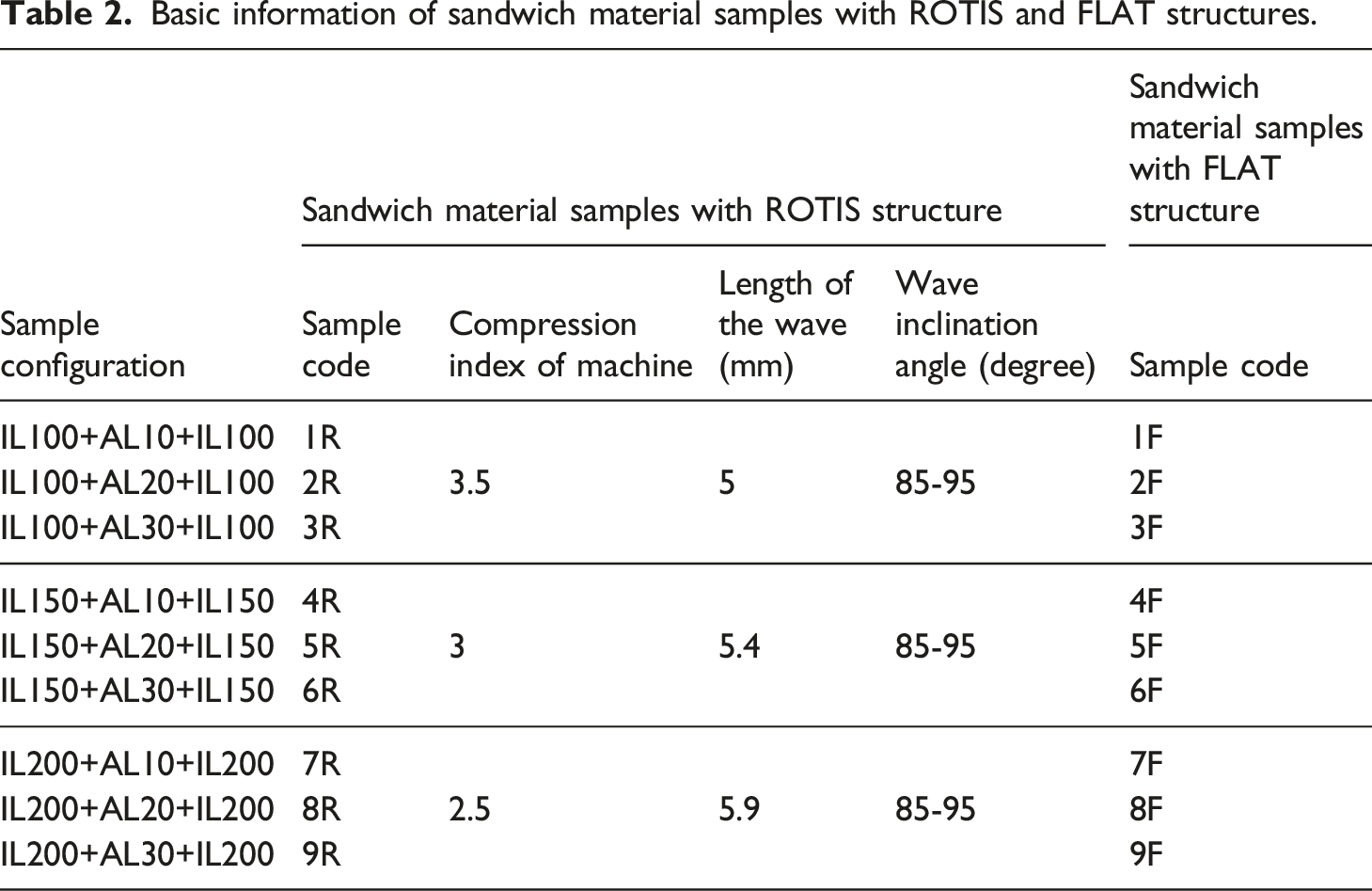
The key point in making samples is to choose the machine’s appropriate compression index, which is the ratio of the conveyor’s input velocity to its output velocity. The value of the compression index of the machine is usually taken according to the thickness of the fed sample. This is because a high compression index will increase the quasi-yarns’ tension in the sample, causing it to crumble; while a low index will result in insufficient pressure, preventing the sample from molding. Figure 3 and Table 2 display the basic information for sandwich material samples with FLAT/ROTIS structures. Machine production process of ROTIS technology (a),
21
Schematic diagram of sandwich material samples with FLAT (b) and ROTIS (c) structures. Basic information of sandwich material samples with ROTIS and FLAT structures.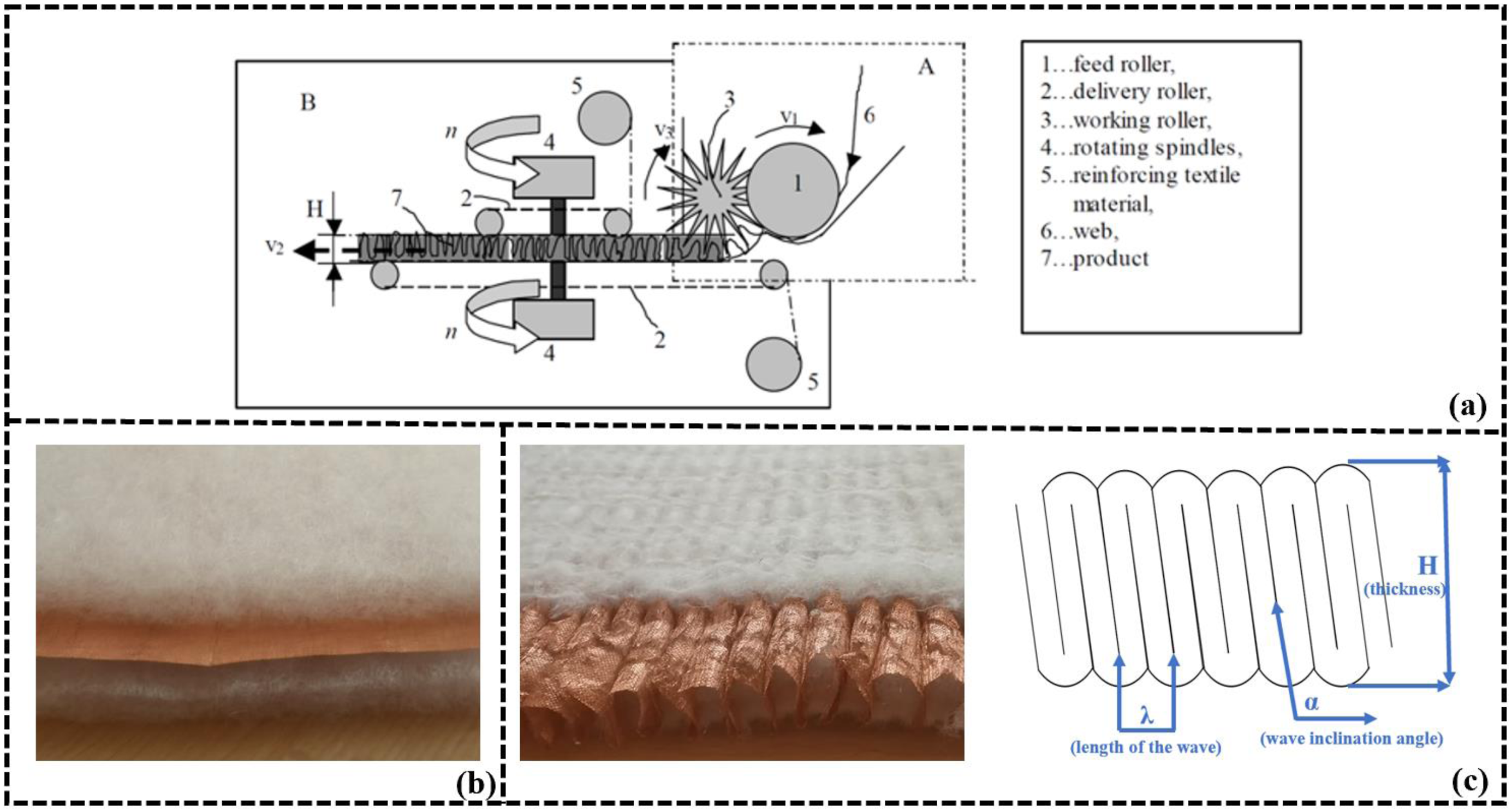
Methods
Fabric physical properties and Fourier transform infrared spectroscopy
The determination of the sample’s thickness was carried out using a Schmidt thickness gauge D-200, supplied by Hans Schmidt & Co GmbH (Germany) and adhering to EN ISO 5084 standard.22,23 The areal mass of the fabric was quantified as the mass per unit area and was computed in accordance with ISO 3801 standard.
24
In this research, the mass was assessed using a precision balance provided by Sartorius Lab Instruments GmbH & Co. KG (Göttingen, Germany).
25
Infrared spectra were acquired using a Fourier transform infrared spectrometer (FTIR) named Tensor 27 (Bruker). Powder-form samples were subjected to analysis in the attenuated total reflection (ATR) mode, employing a diamond crystal as the internal reflection element. To measure the samples, the wavelength range was from 2 to 18 µm. The acquisition parameters included a total of 50 scans at a resolution of 4−1 cm.
26
And volume porosity was calculated via volume packing ratio according to the equation (1):
Thermal conductivity and thermal resistance
The Alambeta device, provided by Sensora Instruments & Consulting (Czech Republic), has been selected as the measurement apparatus in this study. This investigation aims to evaluate the thermal transfer characteristics of fabric samples, specifically through the metrics of thermal conductivity and thermal resistance following ISO 5086-1 with Togmeter SDL M 259. 27 The operational principle of the Alambeta device involves a mathematical analysis of the heat flow dynamics across the test samples, facilitated by the temperature differential between the lower and upper measurement plates. The applied pressure during the measurement process was maintained at 200 Pa, with the contact area measuring 12 cm by 12 cm and the thickness ranging from 0.5 to 10 mm. Measurements were conducted under controlled environmental conditions, with an ambient temperature of approximately 22°C and a relative humidity of about 40%. Each fabric sample undergoes five measurements under identical conditions at disparate points, with the calculated mean of these measurements representing the final values for thermal conductivity and thermal resistance.28,29
Ohmic-heating and emissivity
The ohmic-heating test was characterized as a methodology whereby an electric current is conducted through materials, fundamentally to induce thermal energy.
17
This process was tested by an infrared camera (FLIR-E6390, FLIR Sweden) alongside a voltage regulator (S-LS-78, STAMOS Poland). The fabric’s extremities were interfaced with the electrical output of the voltage regulator, ensuring the electrode separation was sustained at 20 cm. The infrared apparatus was positioned at an elevation of 20 cm above the material’s surface to facilitate optimal thermal imaging. During the experimental procedure, an electric current was incrementally applied across the material, with voltage levels varying from 0 to 5 V. The average temperature over the middle section between the two electrodes was measured after different minutes. The test was performed five times with different fabric samples under the same conditions, and the average of these measurements was taken as the measured value. (Figure 4). Schematic diagram of ohmic-heating (a) and emissivity (b) test.
Since an infrared camera was used to measure the sample surface temperature, the emissivity of the sample surface must be measured. The emissivity of a material’s surface is its efficiency at emitting energy in the form of thermal radiation.
30
As shown in Figure 5(b), the whole set of equipment for testing emissivity is mainly divided into four parts. The first part is a heating plate, which can be adjusted to the temperature required for a test. In this experiment, the temperature was set to 40°, and the sample was placed on it. The second part is a temperature sensor, which is connected to the sample surface on one side and the computer on the other side. It can transfer the actual temperature of the sample surface (Tr) to the computer. The third part is an infrared imaging device (FLIR camera), and its emissivity (ε) was set to 0.95 during measurement in this experiment. The distance between the infrared detector and the test sample was half a meter. It was connected to the computer also, and the measured temperature (T) was transmitted to the computer. The fourth part is the computer, where the software calculates according to the Stefan-Boltzmann law and gets the emissivity of the sample. All testing was carried out in a confined space under the same temperature and humidity.
31
The sample’s real emissivity (ε
r
) is calculated according to Stefan-Boltzmann’s law (2): Reflectance, transmittance, and absorbance of AL10 (a), AL20 (b), AL30 (c), IL100 (d), IL150 (e) and IL200 (f) samples at the wavelength from 2 µm to 18 µm.

Electromagnetic shielding effectiveness
The fundamental concept underlying electromagnetic shielding materials revolves around the mechanisms of wave reflection, absorption, and the multiple internal reflections of electromagnetic waves within the material, culminating in the diminution of electromagnetic wave energy.32,33 The assessment of electromagnetic interference (EMI) shielding effectiveness (SE) was executed employing the coaxial transmission line approach in adherence to ASTM standard 4935-10. 34 This standard stipulates the evaluation of a shielding material’s response to plane electromagnetic waves, across a frequency spectrum ranging from 30 MHz to 3 GHz with a contact measuring area of 12 cm by 12 cm. The experimental setup incorporated a coaxial specimen holder, provided by Electro-Metrics Inc. (model EM-2107A), to facilitate the measurement process. The vector network analyzer utilized for this purpose was sourced from company Rohde & Schwarz (model ZNC3), which was connected to both the input and output terminals of the specimen holder. The SE of the material was determined by analyzing the power ratio between the output and input signals. Each fabric sample underwent five measurements under identical environmental and operational conditions, but at distinct locations on the fabric. 35 The mean of these measurements was subsequently computed to represent the electromagnetic shielding effectiveness of the sample.
Results and discussion
Fabric physical properties and FTIR
Basic information of AL and IL samples.

Reflectance, transmittance, and absorbance of AL and IL samples at a wavelength of 10 µm.

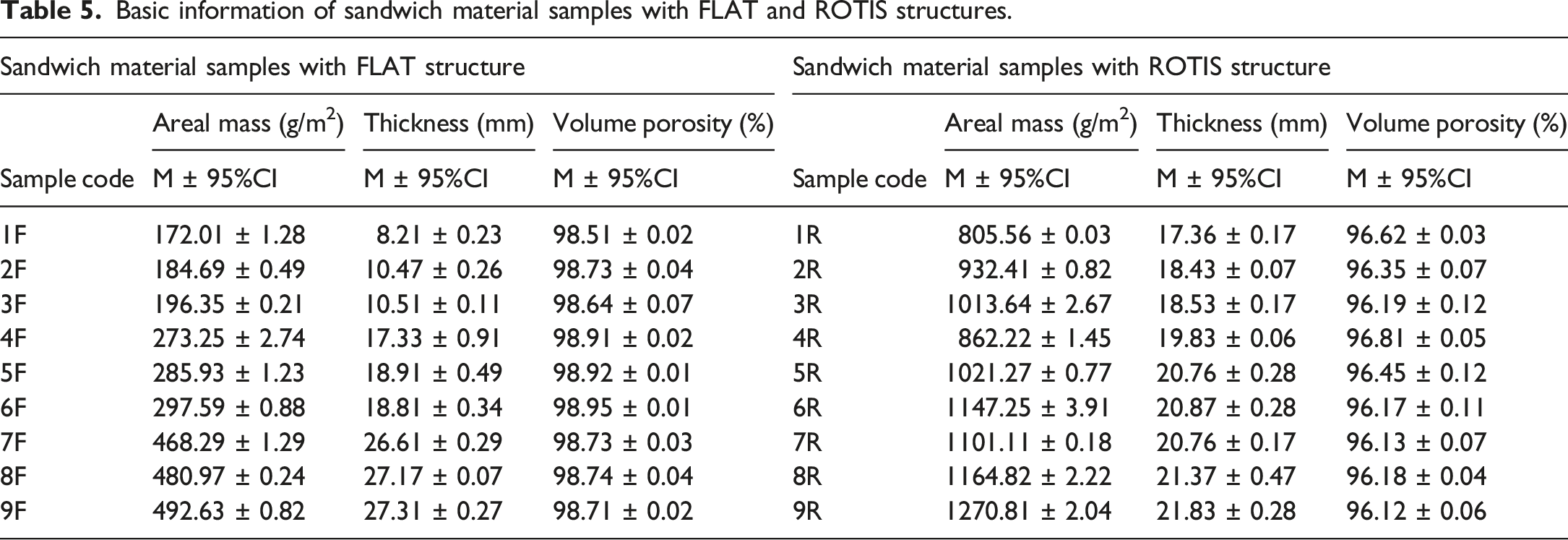
Basic information of sandwich material samples with FLAT and ROTIS structures.
Thermal conductivity and resistance
Thermal conductivity and thermal resistance of AL and IL samples.


Thermal conductivity, volume porosity and copper plated content of sandwich material samples with FLAT and ROTIS structures.
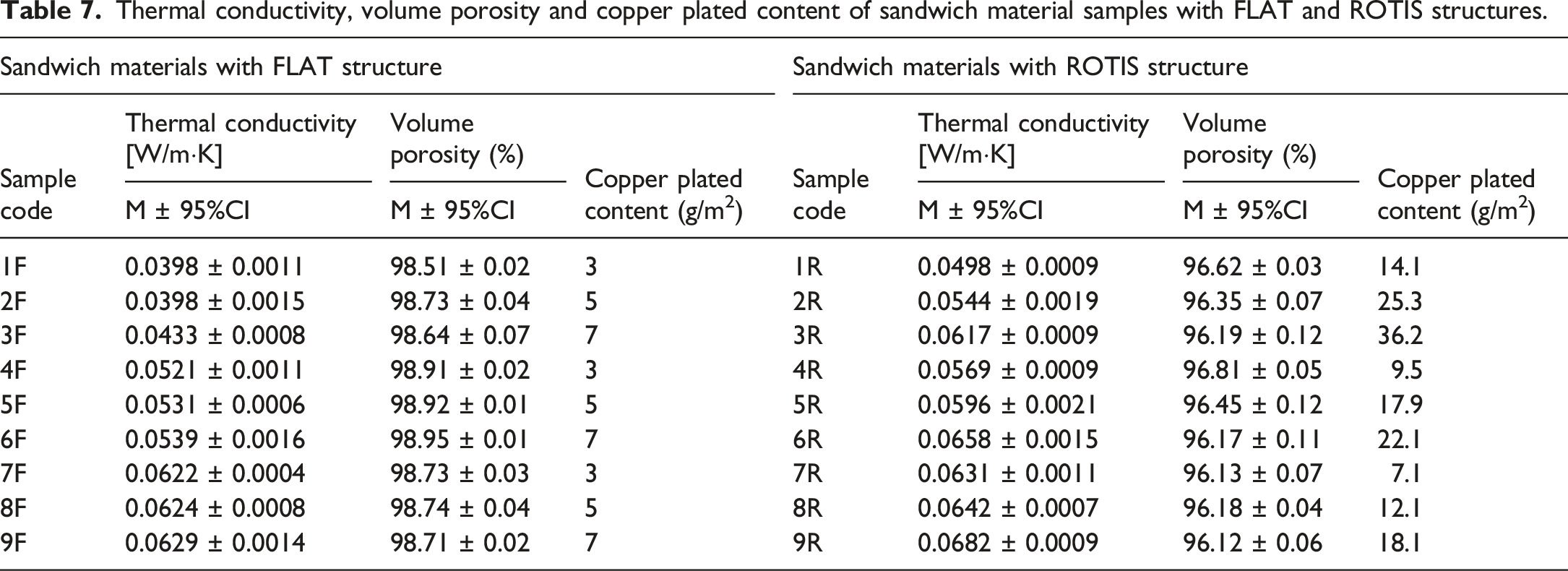
In this study, the thermal conductivity of the ROTIS structure is also in line with the theoretical model described above. By looking at Figure 6, it can be noticed that the samples with ROTIS structures contain fabrics both parallel and perpendicular to the direction of heat transfer. By modifying the above theoretical model, it is possible to obtain formulas (4) for the thermal conductivity that correspond to the samples with ROTIS structures as: Schematic diagram of heat transfer direction through the sandwich material samples with ROTIS structure. Measured related thermal conductivity of sandwich material samples with ROTIS structure and calculated value of x, 1-x, x/1-x. Relationship between the copper plated content of sandwich material samples with ROTIS structure and the value of x/1-x. Linear correlation result between the copper plated content of sandwich material samples with ROTIS structure and the value of x/1-x.


Thermal resistance, thermal conductivity, and thickness of sandwich material samples with FLAT and ROTIS structures.
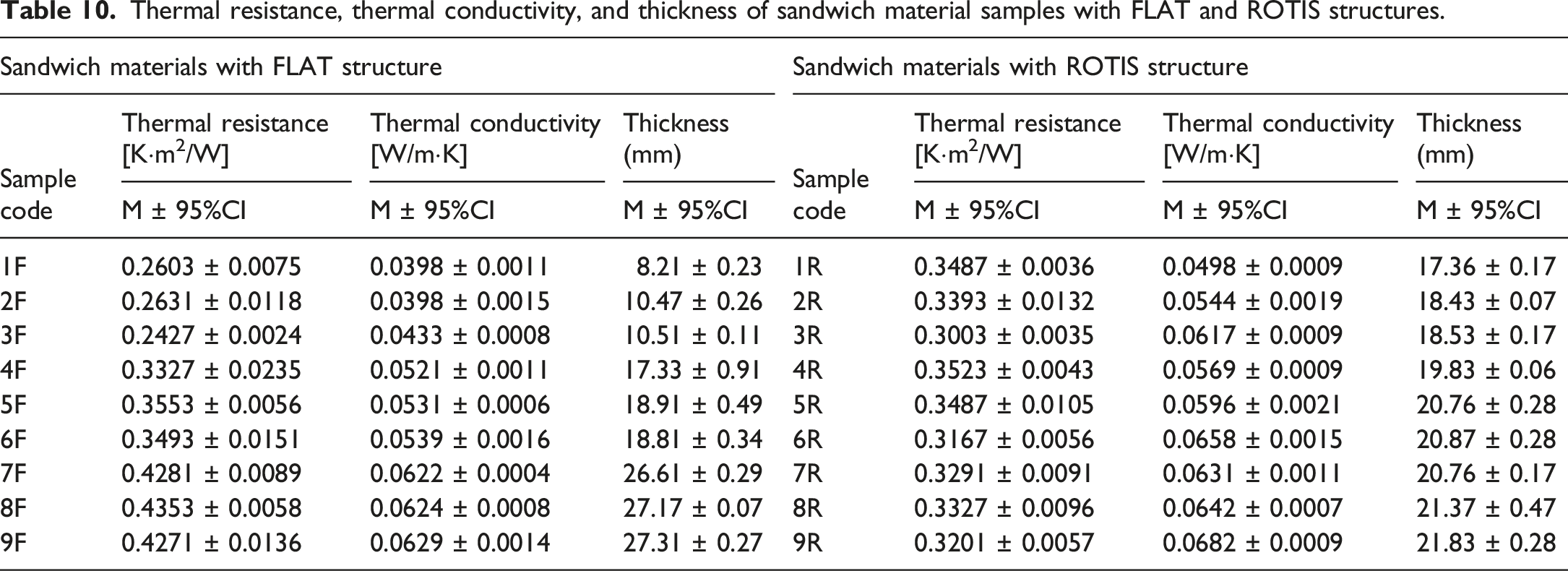

Relationship between the thermal conductivity, the thickness, and the thermal resistance of sandwich material samples with FLAT (a) and ROTIS (b) structure.
The thermal resistance of textiles is affected by their thermal conductivity and thickness, lower thermal conductivity and thicker thicknesses increase the thermal resistance of the material. 41 The thermal resistance values of the sandwich material sample, including the IL100 and different AL samples, with the ROTIS structure are much higher than those of the FLAT structure. This is mainly because the thicknesses of the sandwich material sample with the ROTIS structure have a substantial increase, leading to significant increases in their thermal resistances. Interestingly, the thermal resistance values of the sandwich material sample, including the IL150 sample and different AL samples, with the ROTIS structure are similar to those of the FLAT structure. The reason for the lack of a significant change in their thermal resistance is twofold: on the one hand, the thickness of the samples with the ROTIS structure increases only slightly, and on the other hand, the thermal conductivity of the samples with the ROTIS structure also increases. For sandwich material samples that included IL200 and different AL samples, the thickness of the samples with the ROTIS structure was drastically reduced compared to the samples with the FLAT structure. This directly results in the thermal resistance of the sandwich samples with the ROTIS structure being lower than that of the sandwich samples with the FLAT structure. From the above experimental results, it can be concluded that ROTIS structures will greatly improve their thermal insulation performance for samples with lower thickness.
Ohmic-heating test
Ohmic heating is the process by which an electric current passes through a conductor to produce heat. Due to the distribution of copper nanoparticles on the surface of active layer materials, they exhibit the ohmic heating effect. The ohmic-heating effect of active layer materials is tested in this study, including the active layer material itself and the sandwich material samples with FLAT/ROTIS structures. As can be seen from Figure 9, the ohmic-heating test results for samples AL10, AL20, and AL30. The voltage of 1.5 V was loaded on sample AL10 and 2 V on samples AL20 and AL30, respectively. This is because when the loaded voltage is too high, generating too much heat can cause the sample to burn. The comparison shows that the three samples of the active layer can reach temperatures ranging from around 28°C to 35°C with no significant differences and also cannot reach a relatively high temperature. This is because the thicknesses of the active layer materials are very thin, and they quickly diffuse into the surrounding air when heat is generated. Therefore, this kind of material should be put in the sandwich structure and will fulfill the function of generating and retaining heat. Ohmic-heating test for sample AL10 and sandwich material samples with AL10 (a), ohmic-heating test for sample AL20 and sandwich material samples with AL20 (b), and ohmic-heating test for sample AL30 and sandwich material samples with AL30 (c).
Thermal resistance of insulation layer, copper plated content of active layer, and temperature of ohmic heating for sandwich material samples with FLAT and ROTIS structure.
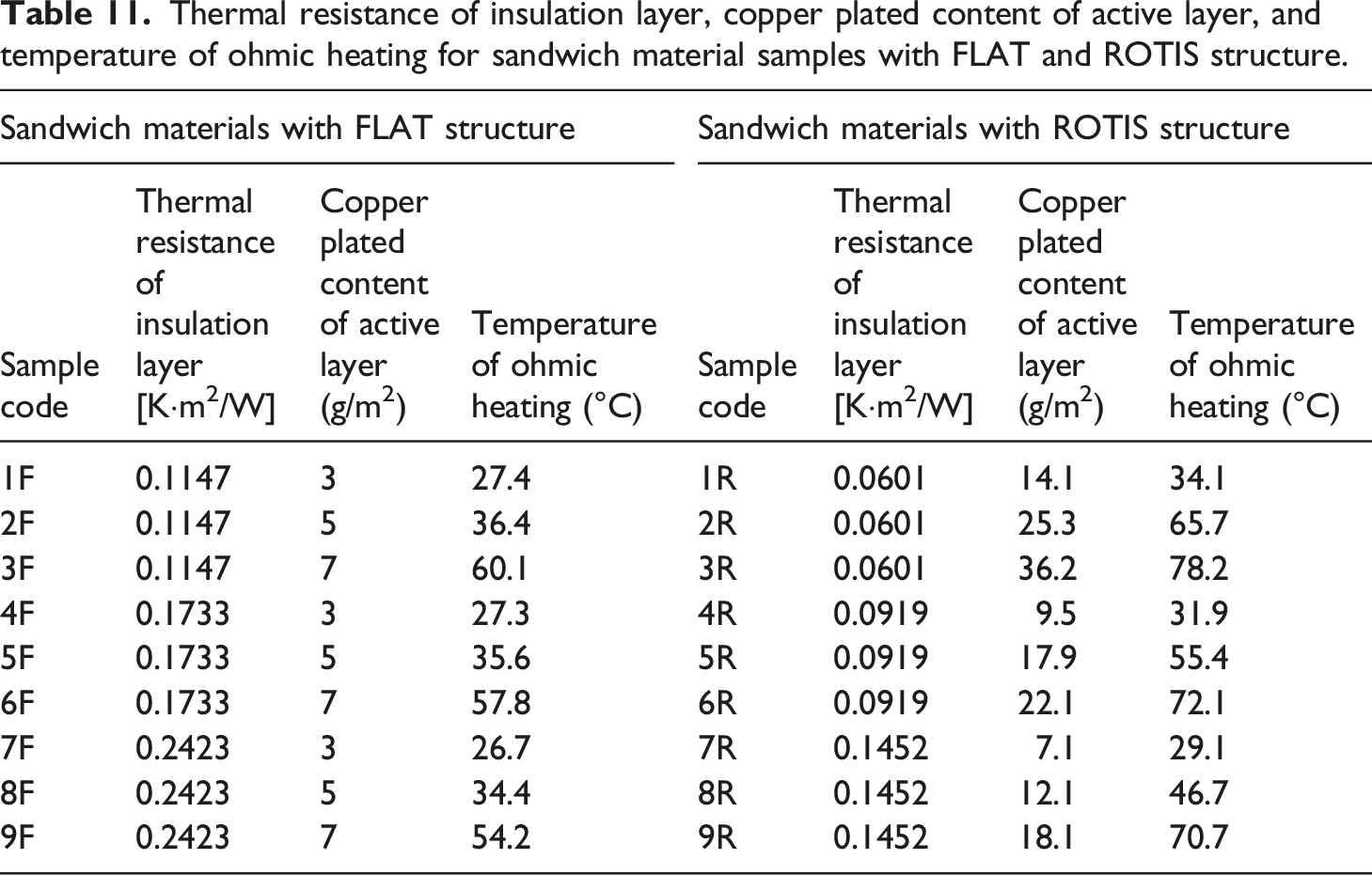

Relationship between the thermal resistance of the insulation layer, the copper plated content of the active layer, and the temperature of ohmic heating for sandwich material samples with FLAT (a) and ROTIS (b) structure.
Analysis results by “One-Way ANOVA” and “Pearson correlation coefficient”.

Electromagnetic interference shielding effectiveness (EM SE)
This paper compares the values from 30 MHz to 3 GHz to evaluate the electromagnetic interference shielding effectiveness of different single layer samples and sandwich material samples. This is because this frequency in the electromagnetic spectrum is most often exposed in everyday life and work environments.
16
It can be observed from Figure 11(a) that the average value of electromagnetic interference shielding effectiveness for the samples AL10, AL20, and AL30 is around 48 dB, 55 dB, and 61 dB, respectively. According to the FTTS-FA-003 standard
42
about the grading of electromagnetic shielding fabrics for professional use, all AL samples exhibit “very good” electromagnetic shielding effectiveness. Prior research indicates that the primary determinants of electromagnetic interference shielding efficiency include the conductivity and porosity of the shielding layer.
43
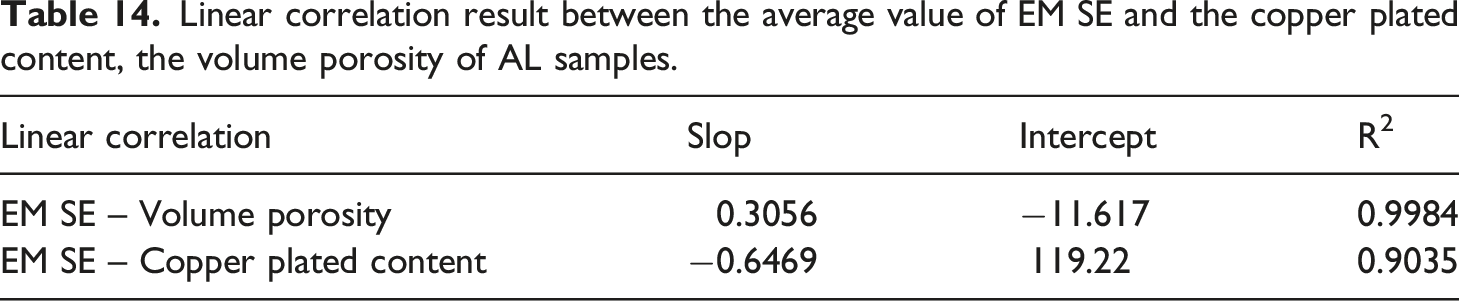
Typically, the electromagnetic shielding effectiveness of a material is directly proportional to its conductivity and inversely proportional to its porosity.44,38 By looking at Table 13, Figure 11(b) and Table 14, it can be seen that the experimental results in this paper also conform to this objective law. There is a positive correlation between the copper plated content of the active layer materials and their electromagnetic shielding effectiveness; and a negative correlation between the porosity of the active layer materials and their electromagnetic shielding effectiveness. In addition, the insulation layer materials did not show electromagnetic shielding effectiveness in the frequency range of 30 MHz to 3 GHz. As a result, only the active layer materials provide the electromagnetic shielding effectiveness of the sandwich material samples in this paper. EM SE for AL and IL samples from 30 MHz to 3 GHz (a), the relationship between the average value of EM SE and the copper plated content, the volume porosity of AL samples (b). Average value of EM SE from 30 MHz to 3 GHz, volume porosity and copper plated content for AL samples. Linear correlation result between the average value of EM SE and the copper plated content, the volume porosity of AL samples.

The electromagnetic interference shielding effectiveness of sandwich material samples with different active layer materials is shown in Figure 12. It can be observed that the differences in electromagnetic interference shielding effectiveness between the sandwich material samples with FLAT structure and active layer materials are not significant. This experimental result also follows previous research showing that simply increasing the thickness of the non-EMI shielding layer material does not affect the overall EMI shielding performance of the sandwich material when there is no significant change in the conductivity as well as the porosity of the EMI shielding layer material. The sandwich material samples with the ROTIS structure showed a trough in the test frequency range from 1 to 1.5 GHz, which was not expected. This phenomenon can be explained based on the “frequency-selective surface” theory which has been studied by many scholars, that is, the geometry and size of the shielding material will produce specific responses to electromagnetic waves of specific wavelengths.
45
From the basic information in Table 5, it can be seen that the volume porosity of sandwich material samples with the ROTIS structure decreased by 2% to 3% compared to sandwich material samples with the flat structure. Thus, it can be demonstrated that the ROTIS structure minutely alters the porosity of the active layer material in the sandwich material sample. Because of this change, the sandwich material samples with the ROTIS structure show troughs in the 1–1.5 Hz band. This means that the sample is less effective at blocking electromagnetic waves in this frequency range. EM SE for sample AL10 and sandwich material samples with AL10 (a), EM SE for sample AL20 and sandwich material samples with AL20 (b), and EM SE for sample AL30 and sandwich material samples with AL30 (c).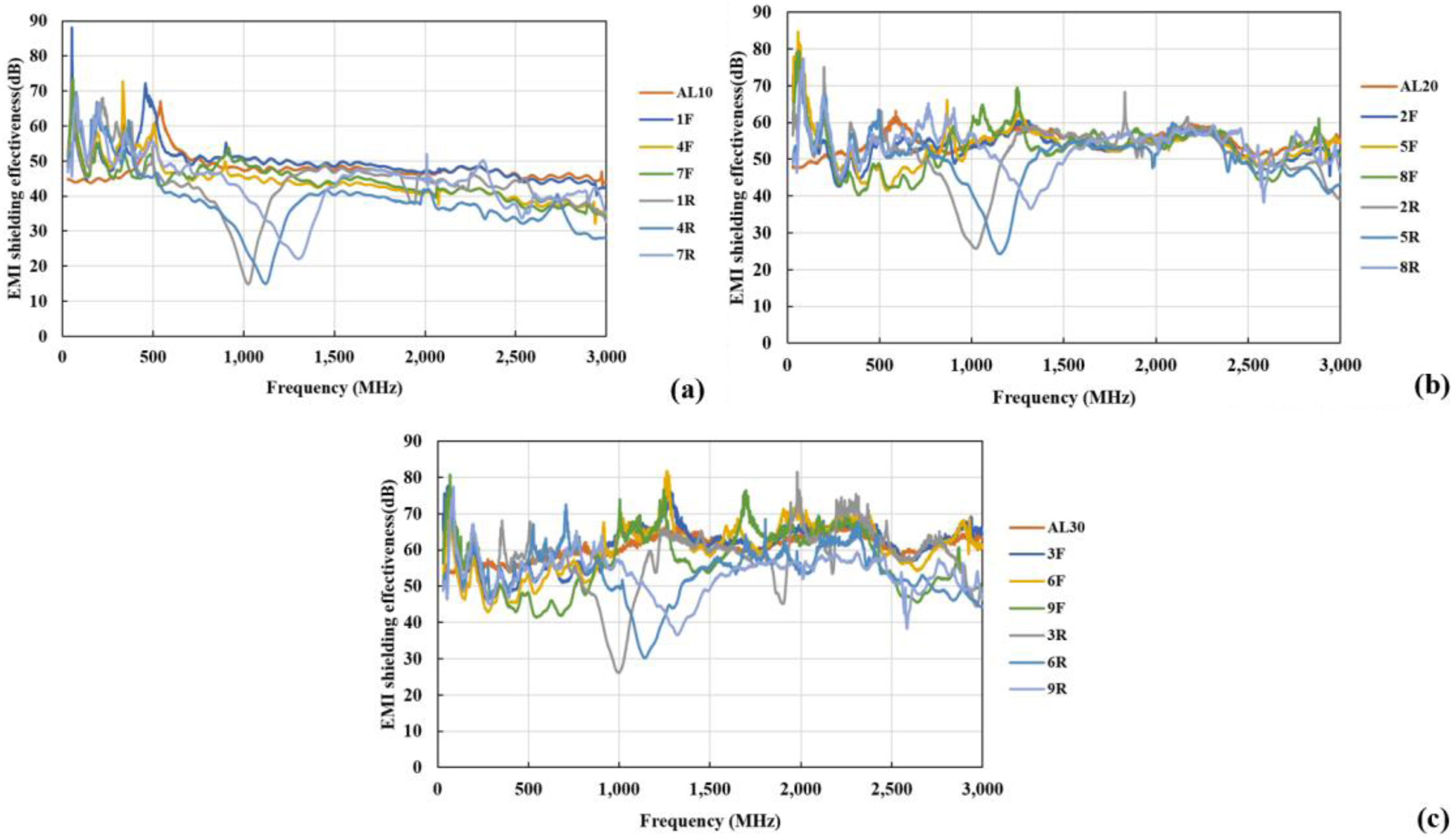
Conclusions
This paper evaluated and compared the thermal insulation property, ohmic-heating effect, and electromagnetic interference shielding property of a particular type of sandwich material with “ROTIS and FLAT” structures. The machine’s pressure causes the sandwich material with the ROTIS structure to exhibit a sinusoidal-like shape. This method causes the thickness of thinner original samples to increase, while the thickness of thicker original samples either remains constant or decreases. The ROTIS structure resulted in a significant increase in the sample’s areal mass, in contrast to a decrease in its volume porosity. Experimentally, it was found that the sandwich material with the ROTIS structure had slightly higher thermal conductivity than that with the FLAT structure. On the one hand, this is because the ROTIS structure decreases the sample’s volume porosity, resulting in a slight increase in its thermal conductivity. On the other hand, the ROTIS structure makes its sample contain two parts of fabric parallel and perpendicular to the direction of heat transfer, which will substantially increase the copper plating content per unit area in the sample. Given the positive correlation between the copper content per unit area of the sample and its thermal conductivity, it is inevitable that this structural change will enhance the sample’s overall thermal conductivity. The change in thermal resistance is affected by both the change in thermal conductivity and thickness of the samples. The ROTIS structure will increase the thermal resistance of the originally thinner samples with the FLAT structure, while the thermal resistance of the initially thicker samples with the FLAT structure will remain constant or decrease. Therefore, the ROTIS structure will greatly improve their thermal insulation performance for samples with low thickness.
This paper also evaluated the ohmic heating effects of the active layer materials and all sandwich materials. The thin thickness of the active layer material quickly diffuses the generated heat into the surrounding air, limiting the test results to a range of about 28°C to 35°C. The temperature for the ohmic heating effect of the ROTIS-structured sandwich samples is relatively higher than that of the FLAT-structured sandwich samples and the active layer material itself. This is because the ROTIS structure increases the copper content per unit area of the active layer of the sample, as well as reducing the thermal resistance of the insulating layer. The most satisfactory results are the maximum ohmic heating test values for samples 3R and 4R, which are about 70°C and 80°C, respectively. The above series of results suggest that the active layer material can enhance its ohmic heating performance in the sandwich material with ROTIS structure. The EMI shielding effectiveness of active layer materials and all sandwich materials was tested from 30 MHz to 3 GHz, and all active layer samples showed “very good” EMI shielding effectiveness. The difference in EMI shielding performance between the FLAT sandwich and the active layer is negligible, while the ROTIS sandwich samples show an unexpected decrease in the frequency range of 1 to 1.5 GHz during the test. The theory of “frequency-selective surfaces” explains this phenomenon, as the ROTIS structure alters the volume porosity of the samples, thereby influencing the shielding effectiveness of electromagnetic waves in this frequency range. This means that the ROTIS-structured sandwich samples are less effective at shielding electromagnetic waves in the frequency range of 1 to 1.5 Hz.
Footnotes
Declaration of conflicting interests
The author(s) declared no potential conflicts of interest with respect to the research, authorship, and/or publication of this article.
Funding
The author(s) disclosed receipt of the following financial support for the research, authorship, and/or publication of this article: This work was supported by the by the Czech Science Foundation (GACR)-project Advanced structures for thermal insulation in extreme conditions (Reg. No. 21-32510M).
Ethical statement

Data availability statement
The datasets used and/or analyzed during the current study are available from the corresponding author on reasonable request.