




Abstract
A scarf is a social requirement in feminine clothing, and contributes to a sober appearance. It offers many thermophysiological comfort features. The aim in this work is to develop a mathematical model to predict air and water vapor permeability, thermal resistance, moisture management permeability, and pilling resistance in scarves, as a function of warp count, weft count ends per inch, picks per inch, and fabric weight in grams per square meter. Linear and quadratic mathematical models were fitted using the least squares approximation technique. Error analysis of both models showed that quadratic models behave better for air and water vapor permeability, thermal resistance, and moisture management. However, for pilling resistance, the linear model is found to be better.
Comfort is an agreeable condition of physiological, psychological, and physical harmony between a human being and the environment. Clothing comfort can be categorized as thermophysiological, sensory (or tactile), or psychological. 1 A fabric that offers thermophysiological comfort has the ability to allow heat, air, and perspiration to move through it. 2 Air and water vapor permeability, thermal resistance, and moisture management control the passage of heat, air, and perspiration through the fabric. All these properties are influenced by the fiber’s nature, the yarn, and the fabric structure.3 –20
Air permeability is the quantitative measure of air moving through a fabric. The air permeability of fabric is significant in many industrial processes, including the manufacture of filters, tents, sailcloth, parachutes, raincoat material, shirting, waterproof fabrics, and airbags. 21 Outdoor clothing requires fabric with a low air permeability, to act as a windbreaker. 22 Water vapor permeability is the quantitative measure of water vapor transmitting through a fabric under given circumstances. The higher the permeability of the fabric, the more rapid the water vapor transmission. A lower water vapor permeability reduces the flow of vapor across the barrier. 23 Thermal resistance is a quantitative measure of an object or material to resist heat flow. 24 A fabric’s thermal resistance is strongly influenced by the enclosed air affected by the fabric structure. 25 Moisture management is the process of wicking heavy moisture or perspiration, followed by evaporation, to keep the wearer dry. 26 Thermophysiological comfort can be assessed by evaluating the movement of air, heat, and, in both liquid and vapor forms, through clothing for thermal equilibrium.3,5 Comfort is a physical property of clothing, including scarves. A scarf is a piece of fabric usually worn about the shoulders, around the neck, or over the head. Head scarves are worn for various reasons, for example, to protect the head and hair from rain, wind, dirt, cold, or warmth, 27 or for religious purposes. Moreover, a scarf may be thought to contribute to a sober appearance.
Thermal comfort concerning fabric balances the needs of the body with the properties of the environment.6 –8 The yarn structure and the fiber cross-sectional shape greatly influence the thermal comfort of different woven fabrics. 28 The thermal properties of 1 × 1 rib polyester and cotton fabrics have been examined. 29 Interlock and 1 × 1 rib fabrics have remarkably high thermal conductivity and thermal resistance. Moreover, single jersey fabrics have a higher relative water vapor permeability than 1 × 1 rib and interlock fabrics. 30 Textured polyester knitted fabric has greater air permeability than moisture management polyester, for the same yarn count and knit structure. 31
The fabric construction and the constituent fiber properties affect the thermal comfort properties of woven fabrics used to make clothing. Cellular weave, which is a derivative of satin and dice weaves, has the highest thermal resistance. Moreover, 2/2 twill and matte twill weaves exhibit the smallest water vapor thermal resistance. 32 Cotton fabric of a specific areal density produced from coarser yarns with fewer ends per inch (EPI) and picks per inch (PPI) is found to admit better air permeability and tear strength, as compared with that made from finer yarns with greater EPI and PPI. 33 Cotton fabric admits higher air permeability and thermal resistance, compared with other cellulosic fabrics, whereas the moisture management properties of Tencel fabric are superior to those of other cellulosic fabrics. 34
Textile manufacturing processes can be mathematically modeled to predict the physical qualities of the fabrics. The function’s behavior depends on the input variables. Different numerical methods are used for modeling purposes. 35 Least squares approximation (LSA) is a polynomial fitting method to fit a given data set. 36 Data fitting involves using a parametric model with one or more coefficients that link the response data to the predictor data. 37 LSA minimizes the sum of squares of residuals to estimate coefficients of terms.
LSA is always in fashion for use in predictive models.5,6,13 –20,38 –46 The least squares method is convenient in formulation and error evaluation, generally in mixed and local (finite-element) versions, and its performance is competitive with other methods. 45 Systematic regression and LSA have been used to estimate and quantify the properties of fiber materials. 47 LSA has been used to study the relationship between intermingled yarn properties and melange fabric properties. 45
The literature related to the clothing comfort of woven fabric indicates that significant work has already been done to investigate the thermal comfort properties of such fabrics, but there is, to our knowledge, no research explicitly based on scarf fabric in Pakistan. Moreover, there is a lack of thermophysiological comfort property analysis concerning scarves.
The aim in this study is to develop a mathematical model to predict the thermophysiological comfort properties of scarves from various parameters of thermal comfort. The comfort properties include air and water vapor permeability, moisture management, thermal resistance, and pilling resistance. These quantities are modeled based on warp count, weft count, EPI, PPI, and grams per square meter (GSM). Linear and quadratic LSA models are fitted. An error analysis is presented, to investigate the construction of a better predictive model.
This manuscript is organized in the following manner. The next section details the methods used to collect the experimentation data. After this, the linear and quadratic mathematical modeling of the thermophysiological properties of ladies’ scarves is presented. The following section concerns the development of prediction models for thermophysiological properties, including air and water permeability, moisture management, and thermal resistance. The last section deals with the error analysis; finally, conclusions are drawn.
Materials and methods
The thermophysiological comfort properties of scarves can be predicted based on warp count (unit, Ne), weft count (unit, Ne), EPI, PPI, and GSM (a standard measure of fabric weight). To model the thermophysiological comfort properties, including air permeability, water vapor permeability, moisture management permeability (MMP), thermal resistance, and pilling resistance, we want the experimental data regarding these properties. This section is divided into two subsections, the first detailing experimentation to collect data and the second giving details of the mathematical technique, namely, LSA, used for modeling.
Materials and mechanical tests for data collection
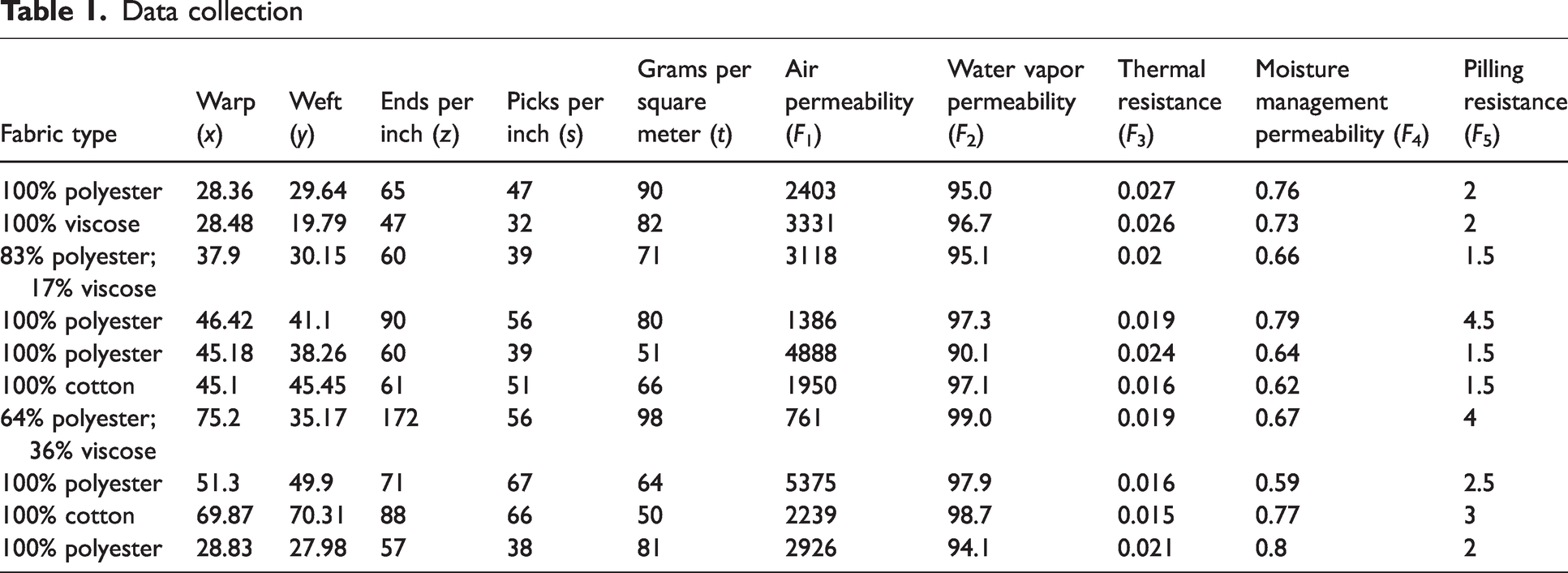
Usually, scarves are made of polyester, viscose, cotton, and blends of these fibers. A sample of 10 scarves was collected from the market; fabrics were made of 100% polyester; 100% viscose; 100% cotton; 83% polyester and 17% viscose; and 64% polyester and 36% viscose. The EPI, PPI, and warp and weft counts (units, Ne) of each sample were determined using standard testing methods. The GSM of each sample was determined according to ISO 3801:1977. 48 The air permeability of fabric was determined using an air permeability tester (MO21A, SDL Atlas), following BS ISO 9237:1995, 49 and measured using a testing head of area 20 cm2 and air pressure 100 Pa. The thermal resistance and water vapor permeability of woven fabrics were tested using a Permetest instrument, giving results equivalent to those produced by the BS EN ISO 11092:2014 standard test method. 50 The moisture management of fabrics was determined using the AATCC TM 195:2011 method. 51 The experimental data led to the values given in Table 1 for air permeability, water vapor permeability, thermal resistance, and pilling resistance, as well as warp and weft counts (units, Ne), EPI, PPI, and GSM.
Data collection
Mathematical modeling using LSA
The mathematical technique used for the mathematical modeling is the LSA. The LSA approximates the coefficients of the polynomial terms. For the coefficient approximation, a standard set of equations is formed and solved. The resulting expression is the required prediction model for the thermophysical property. Let the function F indicate a thermophysical property of the scarf. Let the variables x, y, z, s, and t, respectively, denote the warp count, weft count, EPI, PPI, and GSM. The LSA methods for the sake of linear and quadratic polynomials are given as follows.
Linear polynomial approximation
Let us consider a linear function F in five variables x, y, z, s, and t, expressed mathematically as







Quadratic polynomial approximation
Let us consider a quadratic function F in five variables x, y, z, s, and t, mathematically expressed as


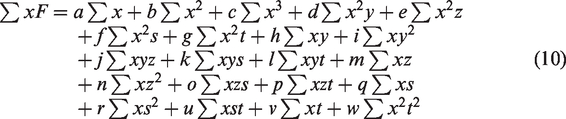
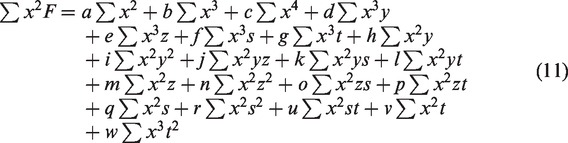
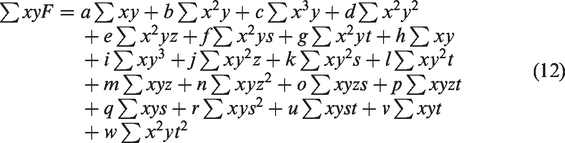
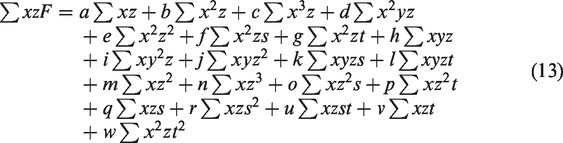
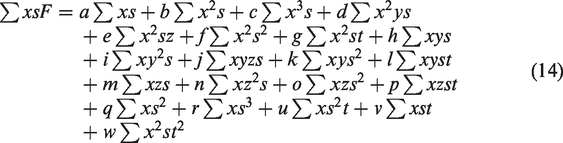
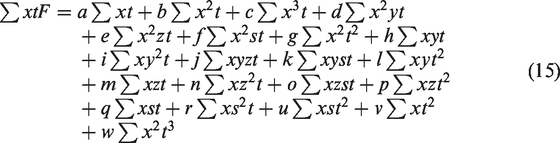
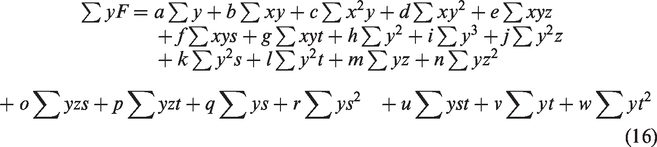
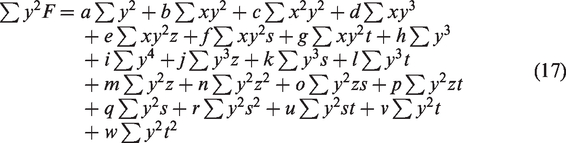
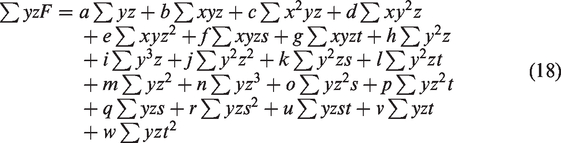
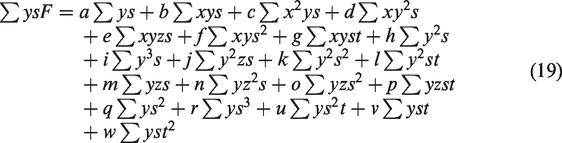
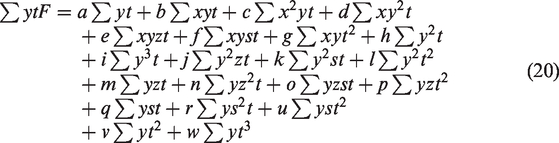
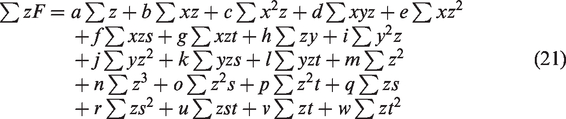
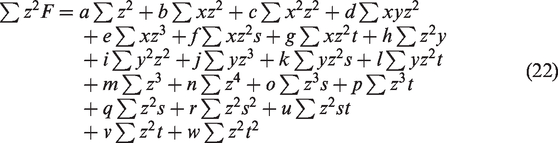
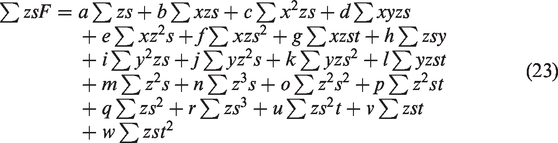
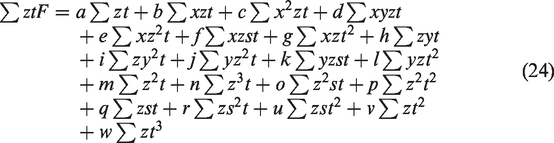
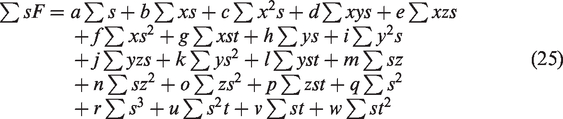
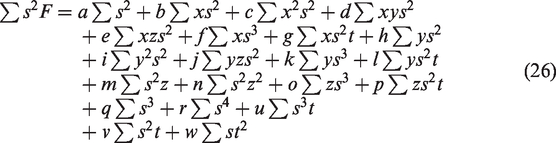
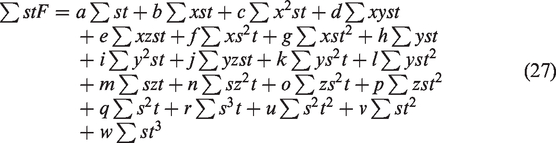
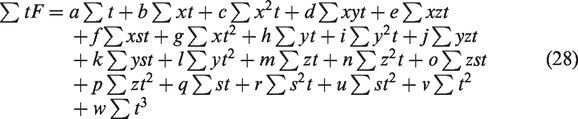
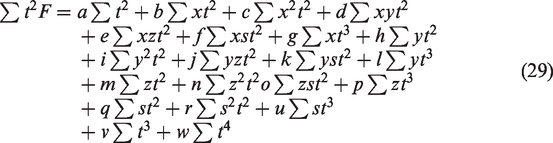
Both the linear and the quadratic models lead to predictive functions. The error analysis of both models helps to check their validity.
Results and discussion
This section describes the construction of linear and quadratic mathematical models from the experimental data collected from the sample of 10 scarves. LSA (with Mathematica) is used to predict the thermophysiological comfort properties of scarves, depending on warp count, weft count, EPI, PPI, and fabric weight in GSM.
Modeling air permeability of scarves using LSA
The fabric air permeability is the air flow rate across a portion of fabric in a given period, as measured by the pressure difference across the fabric within the fabric test area. This property is mainly dependent on fabric weight, thickness, and porosity.
Linear model
For the data given in Table 1, an LSA linear model for the air permeability of a scarf in terms of warp (x), weft (y), EPI (z), PPI (s), and GSM (t) can be determined as

Quadratic model
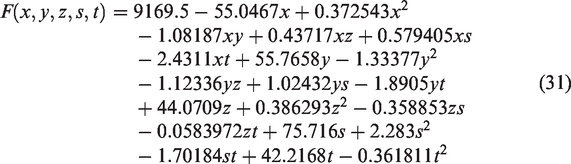
For the data given in Table 1, an LSA quadratic model for the air permeability of a scarf in terms of warp (x), weft (y), EPI (z), PPI (s), and GSM (t) can be determined as
Modeling water permeability of scarves using LSA
Water vapor transmission is necessary for clothing comfort. A decrease in water permeability leads to an increase in relative humidity, causing discomfort to the human body. Thus, water vapor transmission is essential.
Linear model
For the data given in Table 1, an LSA linear model for the water permeability of a scarf in terms of warp (x), weft (y), EPI (z), PPI (s), and GSM (t) can be determined as

Quadratic model
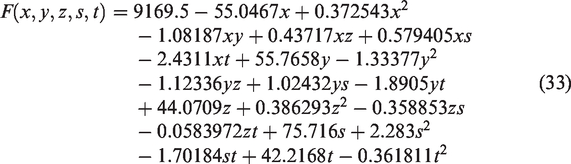
For the data given in Table 1, an LSA quadratic model for the water permeability of a scarf in terms of warp (x), weft (y), EPI (z), PPI (s), and GSM (t) can be determined as
Modeling thermal resistance of scarves using LSA
The thermal resistance of the fabric is a function of the fabric thickness. Fabric with a high thermal conductivity will have a lower thermal resistance if it is thick enough. The thermal resistance is the time taken to transfer heat through the fabric in one direction at a speed determined by the heat conductivity.
Linear model
For the data given in Table 1, an LSA linear model for the thermal resistance of a scarf in terms of warp (x), weft (y), EPI (z), PPI (s), and GSM (t) can be determined as

Quadratic model
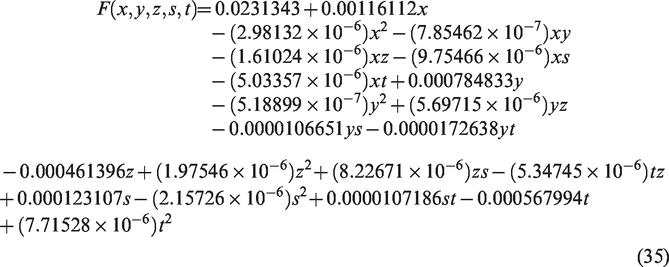
For the data given in Table 1, an LSA quadratic model for the thermal resistance of a scarf in terms of warp (x), weft (y), EPI (z), PPI (s), and GSM (t) can be determined as
Modeling moisture management of scarves using LSA
Moisture management is an important criterion that determines the comfort level of that fabric. The consumer’s demand draws the attention of apparel manufacturers to the high-performance end, regarding the moisture management of fabric.
Linear model
For the data given in Table 1, an LSA linear model for the moisture management of a scarf in terms of warp (x), weft (y), EPI (z), PPI (s), and GSM (t) can be determined as

Quadratic model
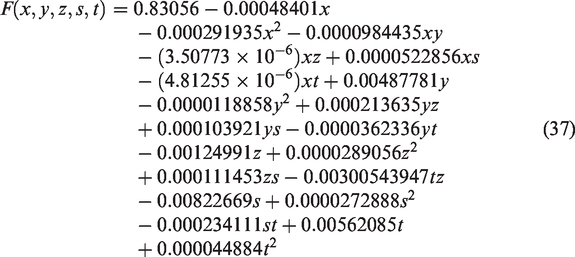
For the data given in Table 1, an LSA quadratic model for the moisture management of a scarf in terms of warp (x), weft (y), EPI (z), PPI (s), and GSM (t) can be determined as
Modeling pilling resistance of scarves using LSA
Pilling is the tendency of fibers to come loose from a fabric surface and form balled particles of fiber. Pilling is caused by wear and abrasion, rubbing actions, the presence of softly twisted yarn, an excess of short fibers, and migration of fibers from the constituent yarn.
Linear model
For the data given in Table 1, an LSA linear model for the pilling resistance of a scarf in terms of warp (x), weft (y), EPI (z), PPI (s), and GSM (t) can be determined as

Quadratic model
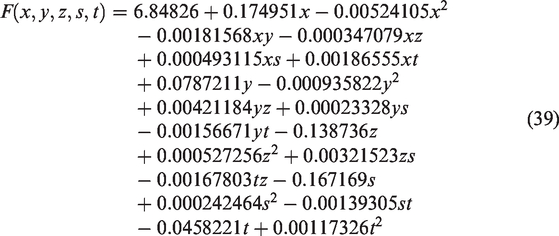
For the data given in Table 1, an LSA quadratic model for the pilling resistance of a scarf in terms of warp (x), weft(y), EPI (z), PPI (s), and GSM (t) can be determined as
Validation of results
Error analysis is important, as it characterizes the validity of the predicted models. We have developed linear and quadratic relationships of the thermophysiological properties of scarves, for example, air and water permeability, thermal resistance, MMP, and pilling resistance, concerning the changes in warp (unit, Ne), weft (unit, Ne), EPI, PPI, and GSM. Based on error analysis, an effective and efficient model can be traced.
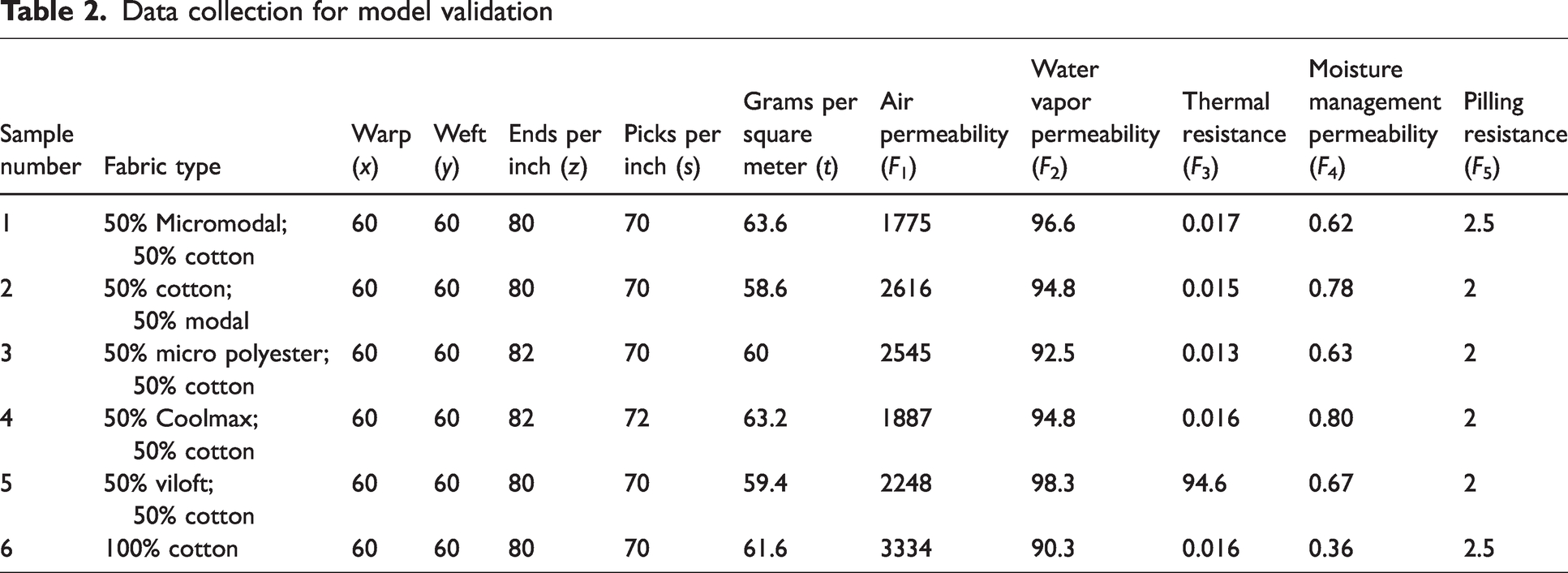
We took six samples for error analysis, the details of which are given in Table 2.
Data collection for model validation
It is well known that errors are traced using a simple formula:

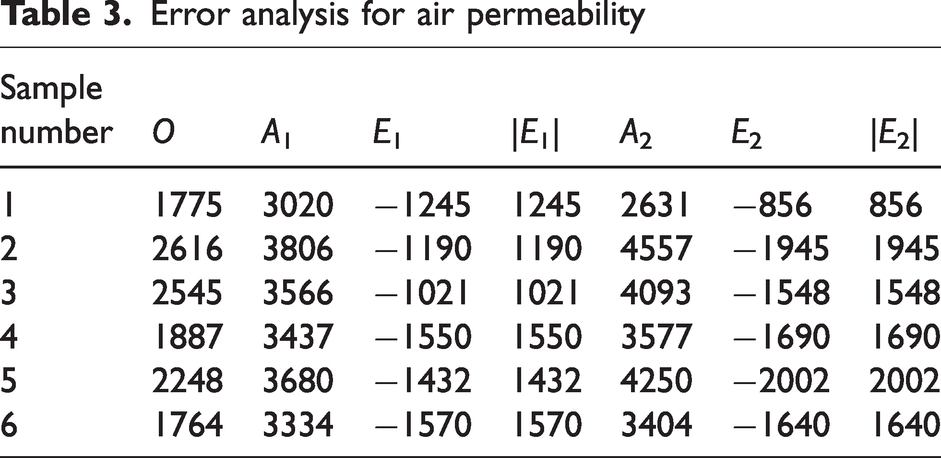
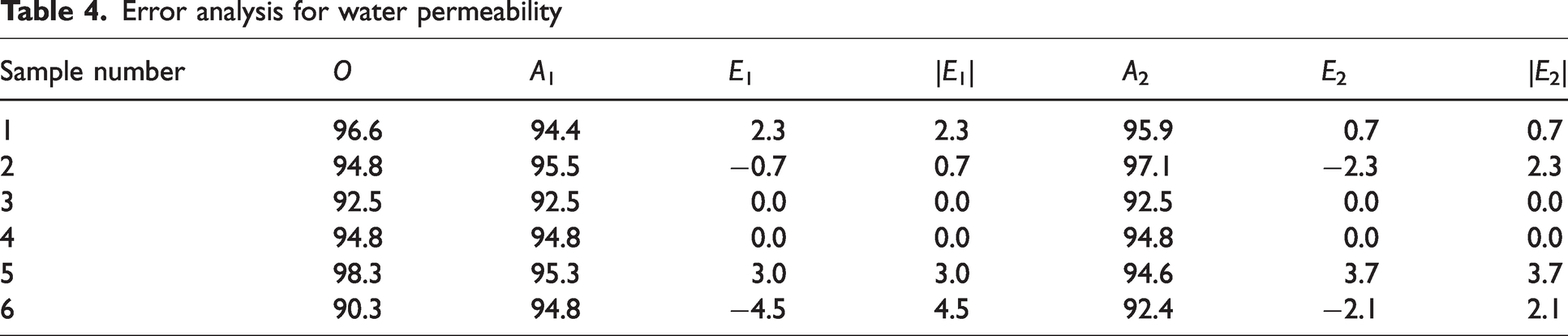
This leads to the errors in the samples, which can be used to show the validity of the model. We want to make a comparison between the linear and quadratic models for the same property, to find a reliable model for prediction purposes. Note that O represents the observed value in each sample, A1 and A2 denote the theoretical values determined by the linear and quadratic models, respectively, and E1 and E2 are the errors obtained from the linear and quadratic models, respectively.
Table 3 and Figure 1 give the error analysis of the linear and quadratic models developed for air permeability (Equations (30) and (31), respectively).
Error analysis for air permeability
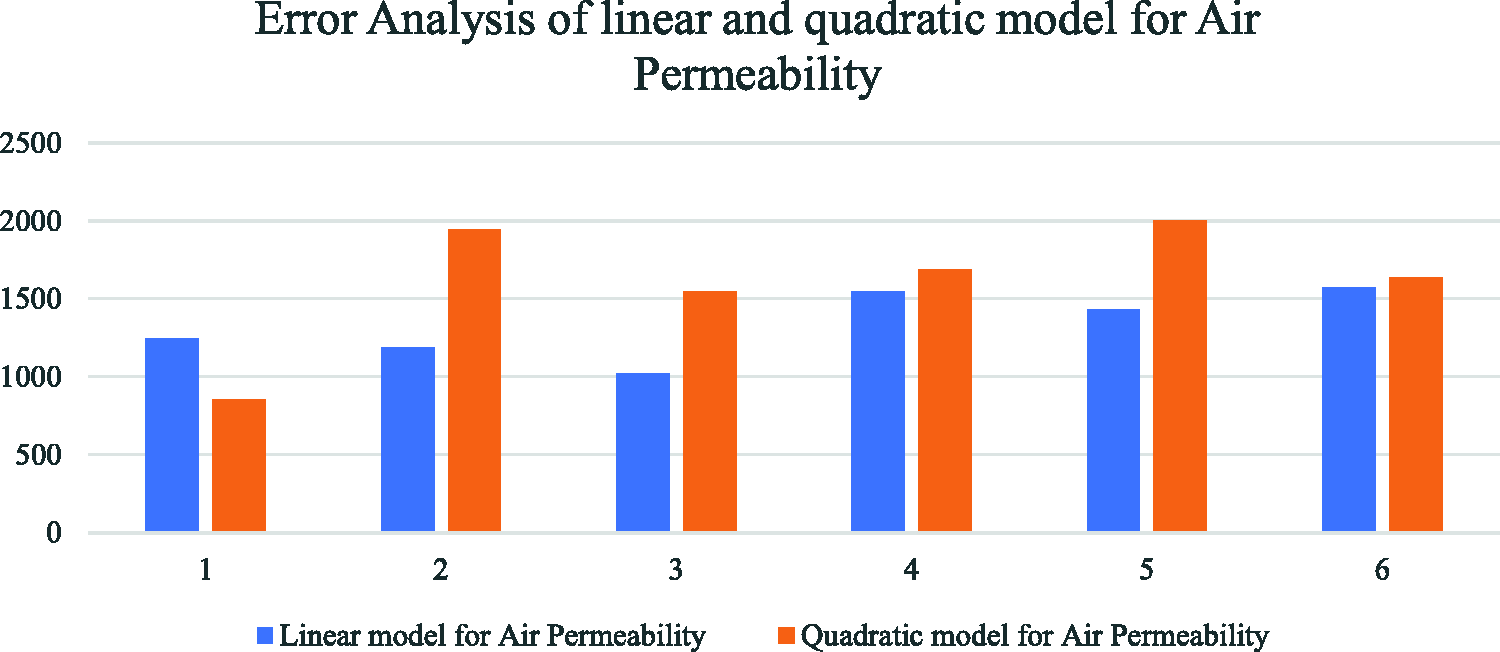
Error analysis of linear and quadratic models for air permeability.
Table 4 and Figure 2 give the error analysis of the linear and quadratic models developed for water permeability (Equations (32) and (33), respectively).
Error analysis for water permeability
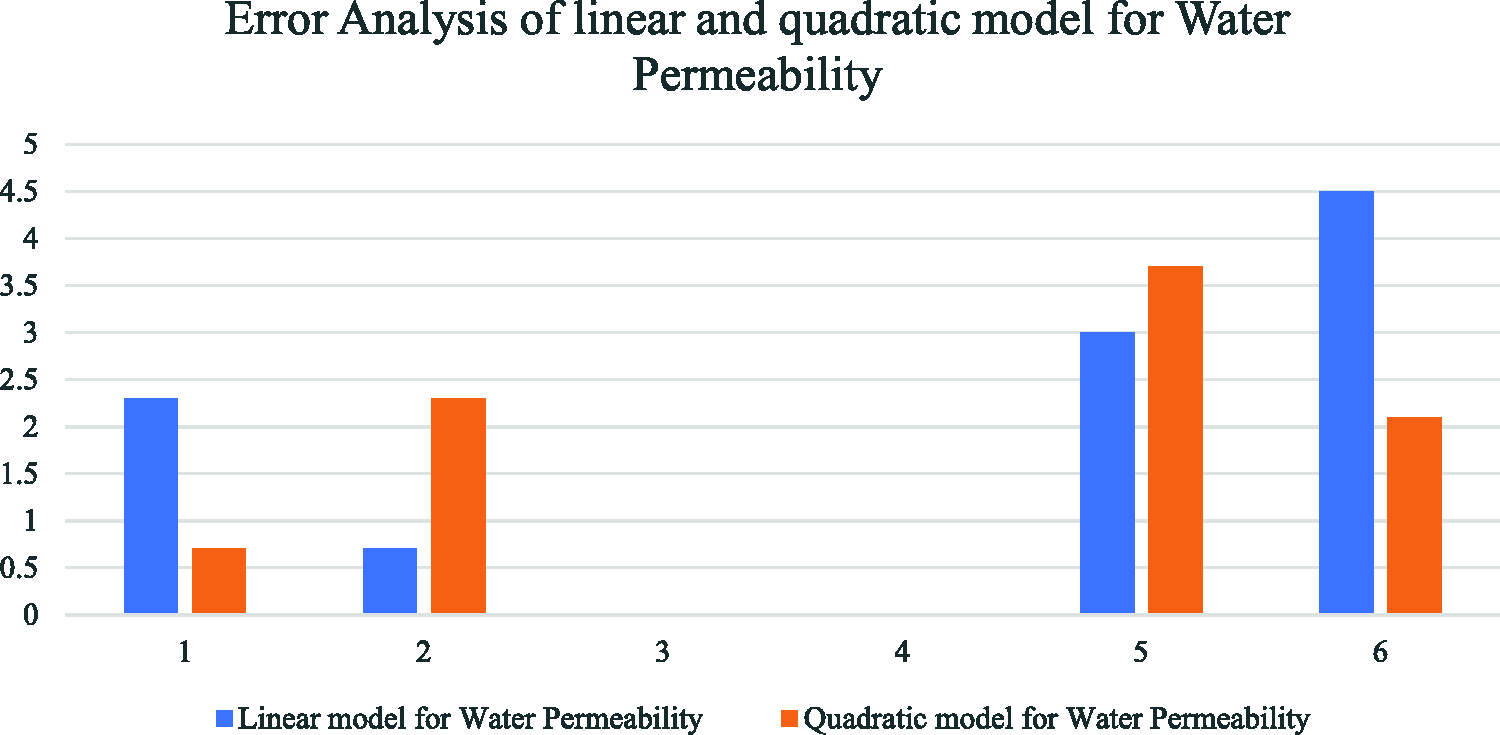
Error analysis of linear and quadratic models for water permeability.
Table 5 and Figure 3 give the analysis of the linear and quadratic models developed for thermal resistance (Equations (34) and (35), respectively).
Error analysis for thermal resistance
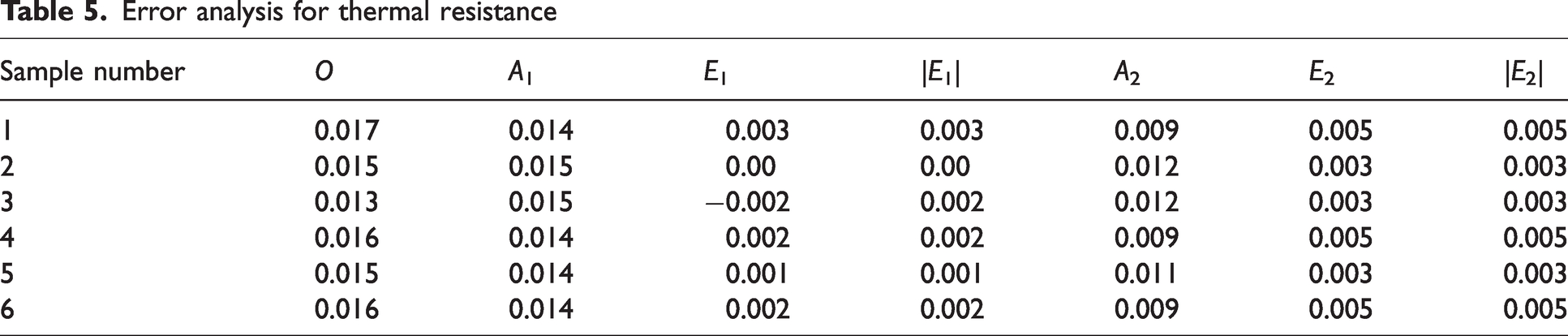
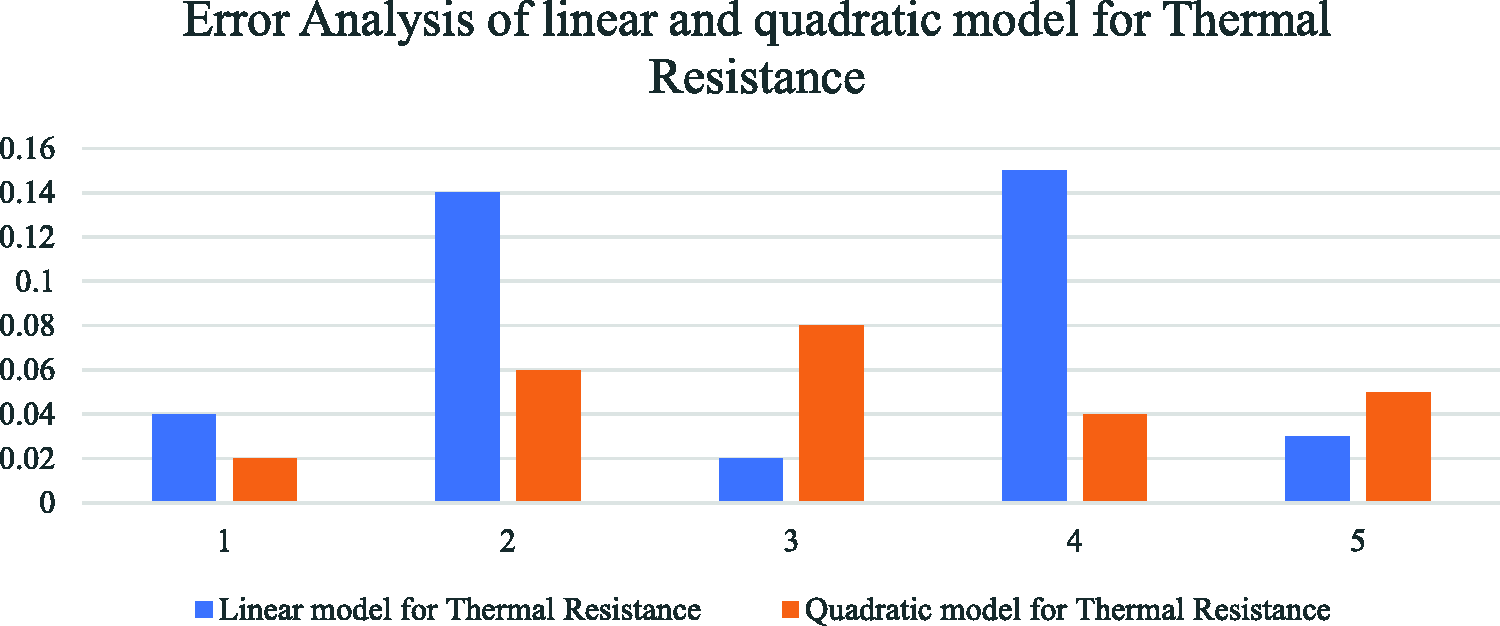
Error analysis of linear and quadratic models for thermal resistance.
Table 6 and Figure 4 give the error analysis of the linear and quadratic models developed for MMP (Equations (36) and (37), respectively).
Error analysis for moisture management permeability
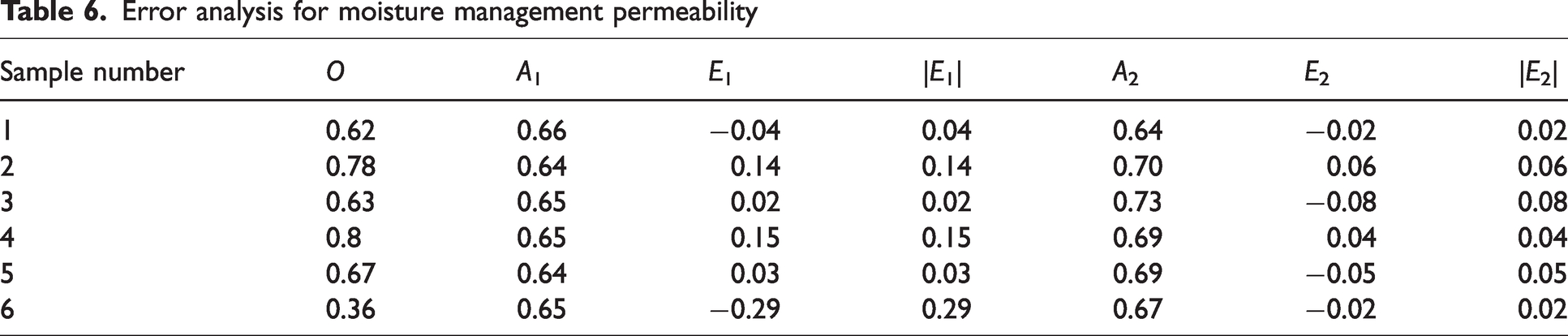
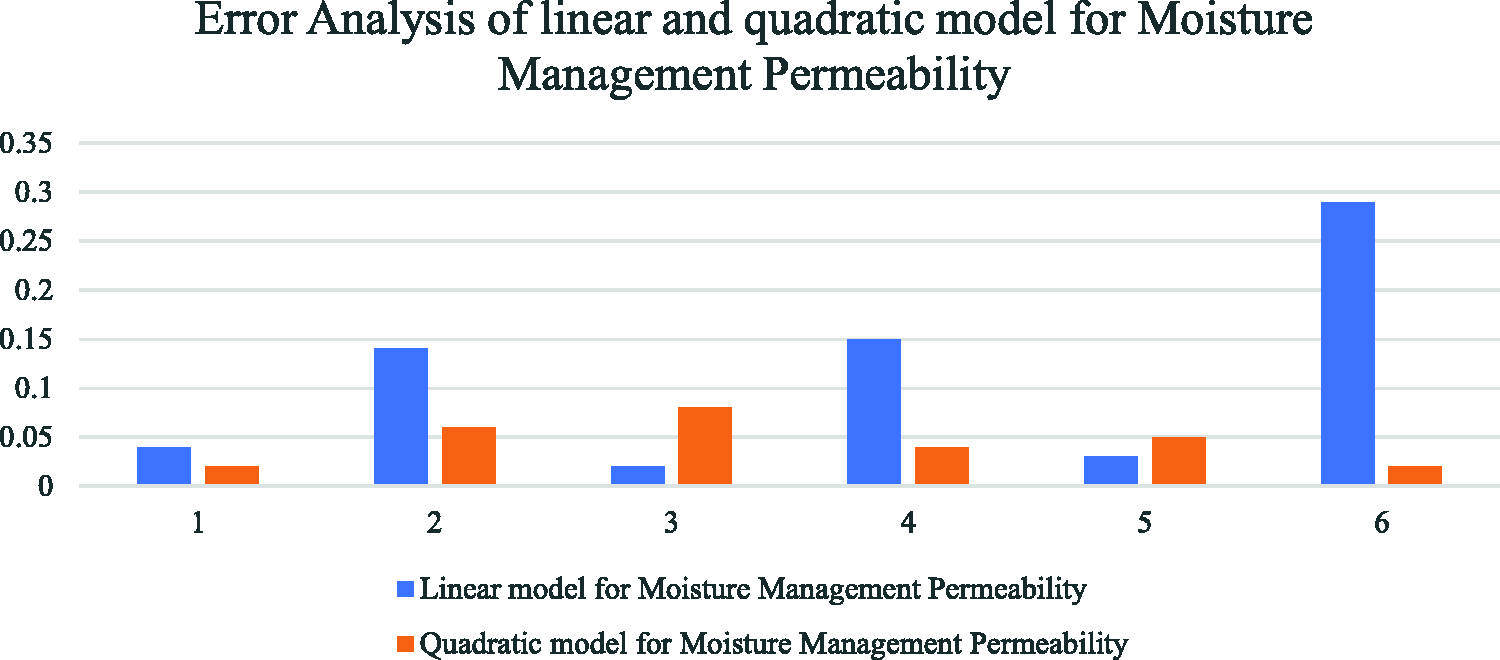
Error analysis of linear and quadratic models for moisture management permeability.
Table 7 and Figure 5 give the error analysis of the linear and quadratic models developed for pilling resistance (Equations (38) and (39), respectively).
Error analysis for pilling resistance
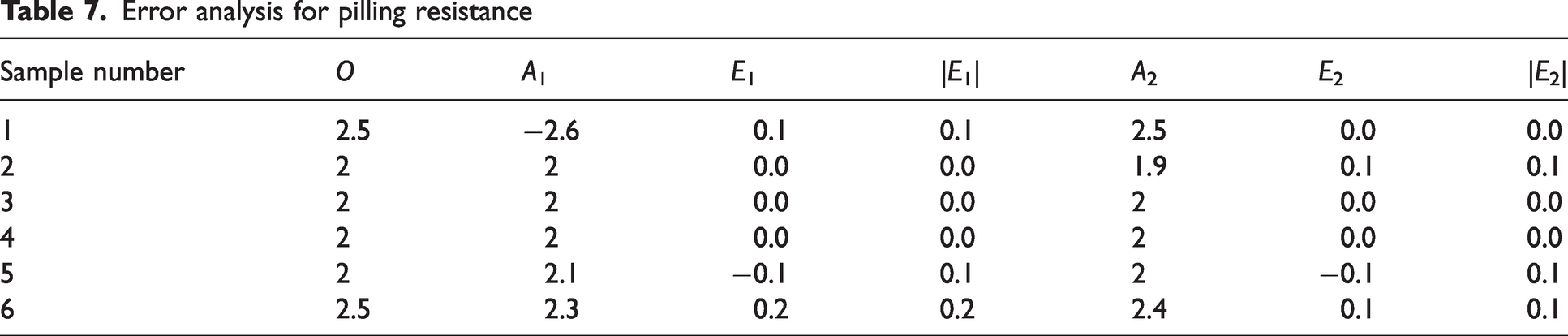
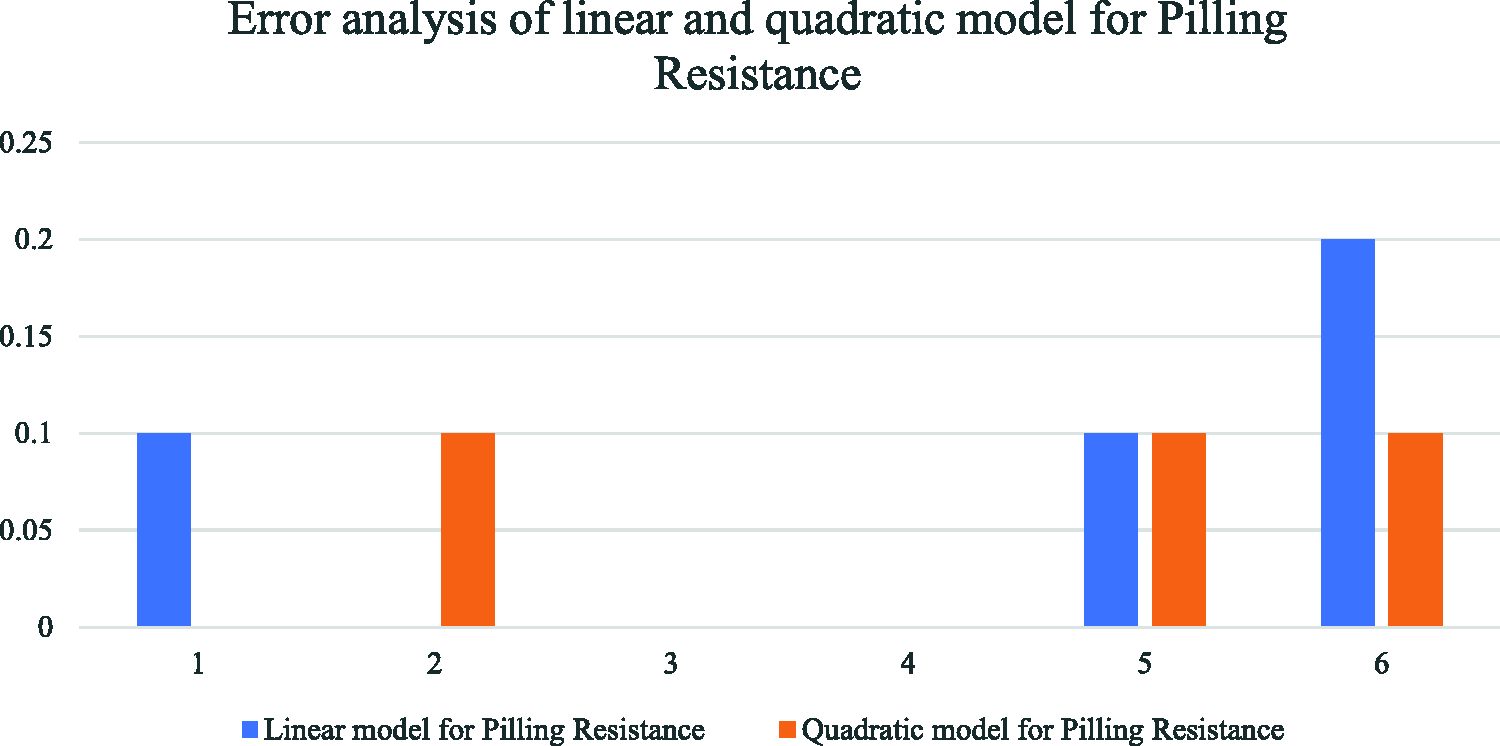
Error analysis of linear and quadratic models for pilling resistance.
Conclusion
The thermophysiological properties of ladies’ scarves are worth investigating, to increase the comfort of the consumer. These properties include air and water permeability, thermal and pilling resistance, and moisture management. We have determined a mathematical model for these properties, based on the minimum number of weaving parameters, including warp count, weft count, EPI, PPI, and GSM. The linear and quadratic mathematical models are fitted using the LSA technique. An error analysis of both models showed that the quadratic model is more accurate. Moreover, the model for pilling resistance is found to give the best approximation, as the least error is obtained for the linear and quadratic models.
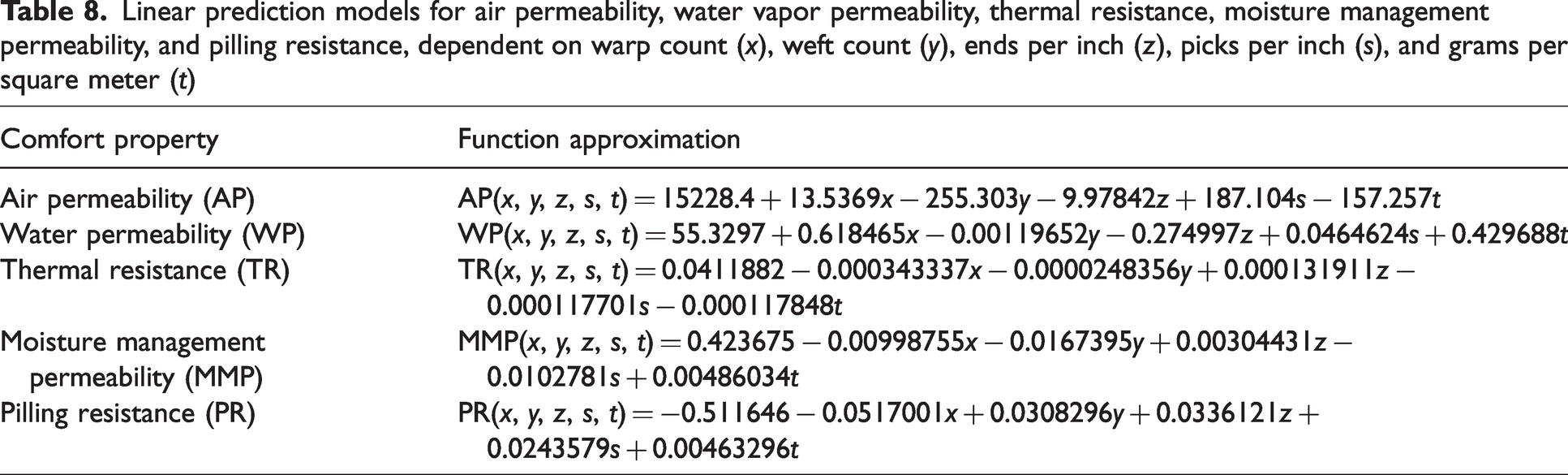
Linear relationships for the prediction of air permeability, water vapor permeability, thermal resistance, MMP, and pilling resistance dependent on warp count (x), weft count (y), EPI (z), PPI (s), and GSM (t) have been developed. The results are summarized in Table 8.
Linear prediction models for air permeability, water vapor permeability, thermal resistance, moisture management permeability, and pilling resistance, dependent on warp count (x), weft count (y), ends per inch (z), picks per inch (s), and grams per square meter (t)
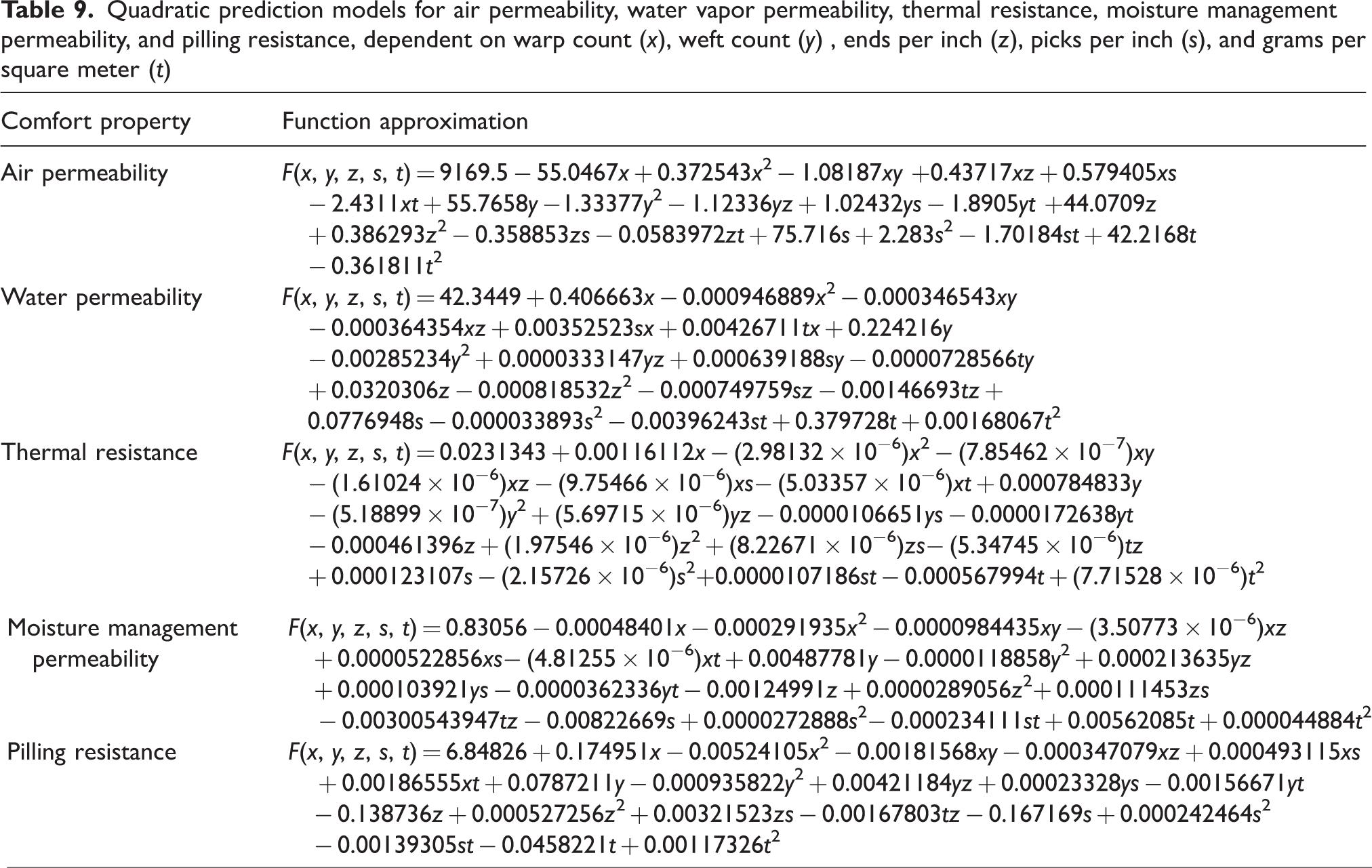
Quadratic relationships for the prediction of air permeability, water vapor permeability, thermal resistance, MMP, and pilling resistance dependent on warp count (x), weft count (y), EPI (z), PPI (s), and GSM (t) have been developed. The results are summarized in Table 9.
Quadratic prediction models for air permeability, water vapor permeability, thermal resistance, moisture management permeability, and pilling resistance, dependent on warp count (x), weft count (y) , ends per inch (z), picks per inch (s), and grams per square meter (t)
The key aim of this research is dependent on the error analysis of all the linear and quadratic models of the thermophysiological properties of scarves, such as air and water permeability, thermal resistance, MMP, and pilling resistance, with respect to the changes in warp (unit, Ne), weft (unit, Ne), EPI, PPI, and GSM. Tables (3) to (7) indicate that, for the same thermophysiological property, the error terms at each point in the quadratic model are smaller than the error terms of the linear model. Thus, the quadratic approximation leads to better results, compared with the linear approximation. Moreover, the model for pilling resistance is found to give the best approximation, as the smallest error is obtained for both the linear and the quadratic models.
This research can be extended to the mathematical prediction of other thermophysiological comfort properties of scarves. Moreover, this research can be extended to home textile products and other types of apparel, such as different wearables, hosiery, and sportswear.
Footnotes
Acknowledgment
We are grateful to the Higher Education Commission, Pakistan, and the National Textile University Faisalabad, Pakistan for their support.
Data and code availability
The data are available on request to the authors.
Declaration of conflicting interests
The author(s) declared no potential conflicts of interest with respect to the research, authorship, and/or publication of this article.
Funding
The author(s) disclosed receipt of the following financial support for the research, authorship, and/or publication of this article: This work was supported by the Global Challenge Research Fund (GCRF), UK Research Innovation, and the Henry Royce Institute for Advanced Materials (EPSRC grant numbers EP/R00661X/1, EP/P025021/1, EP/P025498/1).
