




Abstract
The Covid-19 pandemic has created a global health crisis which has affected the economic and social development. Infectious airborne particles are transmitted via direct contact or inhalation. In order to reduce the infection rates, face masks such as cloth, surgical and filtering facepiece respirator masks are being used as a nonpharmaceutical intervention. Face cloth masks are recommended for public use due the global shortages of traditional single use surgical and filtering facepiece respirators. Decontamination of masks for reuse is also being suggested in order to address the shortages and environmental pollution. Single use masks are disposed after one-time use and pose an environmental and health risk if not properly disposed. Incinerating masks releases toxic gases during combustion. Contaminated masks can be treated with heat, ultraviolet, chemicals and antimicrobial agents to deactivate microbial particles. The protection provided by masks can be compromised if the decontamination method damages the structural integrity, and heat and chemicals have been reported to cause this. When electrostatic charged masks are exposed to water and chemicals, they lose their electrostatic charge and as result their filtration efficiency decreases. Mask’s filtration efficiency from the highest to the lowest is in the order filtering facepiece respirator, surgical and cloth. Because masks act as a barrier and they cause breathability difficulty which is associated with the discomfort experience for the wearer. Breathability from the highest to the lowest is in the order cloth, surgical and filtering facepiece respirator.
Keywords
Introduction
Fibrous fabric masks play an important role in the prevention and protection against infectious airborne particles. The WHO recommends the wearing of masks in public places to reduce the transmission of airborne SARS-Cov-2. Wearing of masks is not always accepted by the public and some countries legislated mandatory wearing of masks in public places as per the compliance requirement.1–3 Fibrous masks reduce transmission of infectious airborne particles.4,5 Infected individuals release infected respiratory secretions when talking, coughing, sneezing, singing, laughing and breathing. Other modes that individuals can be infected are through ingestion of contaminated food or water. Respiratory secretions and droplets depend upon the size of the secretion. Aerosols have a diameter less than 5 μm whereas droplets have diameter greater than 5 μm. Virus particles are nanoparticles with a diameter less than 1 μm or 1000 nm. SARS-Cov-2 does not exist alone, it is found in respiratory aerosol and droplets and its diameter is about 60–140 nm. Depending on the size of secretion, ambient temperature and humidity it can fall to ground or surfaces immediately or remain suspended in the air for hours hence the need to clean surfaces and wear masks as they act as barriers that block the entry or release. Aerosol particles can remain suspended in the air for extended periods and can also travel long distances. Droplets with diameters greater than 100 μm tend to immediately fall to the ground whereas those with diameters less than 100 μm can remain suspended in the air for extended period and are better vehicle for transmission when liquid evaporates, the solid residue called droplet nuclei is formed and it remains suspended in the air.1,3,6–8
The coronavirus disease has become a global pandemic with more than 620 million confirmed cases of infections and more than 6.5 million deaths as of 18 October 2022. 9 Masks, social distancing and washing hands are some of the measures being undertaken to reduce the Covid-19 transmission.7,8,10–13 The role of fibrous masks in reducing transmission has been widely reported.7–15 Fibrous masks are classified as face cloth masks, surgical masks and filtering facepiece respirator masks. Cloth masks which can be made at home were introduced due to shortages of surgical masks and respirator masks at the beginning of Covid-19. They can be homemade using ordinary fabric whereas surgical masks and respirator masks are produced in the clothing and textile industries as they require specialized nonwoven fabrics and are subjected to performance tests. Natural and man-made fibres can be used to make cloth masks while for surgical and respirator masks mainly used man-made fibres. Fibrous masks capture particles by using the interception, inertial collision, Brownian diffusion, gravitation and electrostatic adsorption filtration mechanisms. Gravitational and inertial collision dominates in the capture of large particles whereas the other mechanisms dominate in the capture of small particles. 15 In general, cloth masks have good permeability and poor filtration efficiency whereas surgical and respirator masks have good filtration and poor permeability. 12 Some of the factors that influence mask performance are types of fibres, fabric structures and number of fabric layers.3,14
Mask fit is another factor that influences filtration efficiency as air escapes in areas surrounding the nose, chin and cheeks instead of passing through the mask layers. Proper mask fit ensures that the wearer gets the maximum rated protection. Tight fit causes discomfort due to breathing difficulties or skin irritation which can lead to removal of the mask. Respirator masks have been introduced to improve breathability.16,17 Other factors that can reduce the level of protection are wearing masks upside-down, inside-out and not covering the mouth or nose completely. 18 In addition, pandemic fatigue also results in poor adherence to measures that are in place to prevent transmissions. 19
Unlike reusable cloth masks, surgical and respirator masks are disposed of after single use, however, due to global shortages of these masks, there are attempts to decontaminate them for reuse.5,20 Some of the methods that have been suggested for decontamination are vaporous hydrogen peroxide (H2O2), dry heat, warm moist heat, microwave generated steam and UV irradiation. Depending on the decontamination method the structural integrity and filtration efficiency of a mask can be negatively affected. 20 Single use masks pose a danger to the environment as the majority are not safely disposed of and end up contaminating the environment and leading to increased waste being generated. 18 This paper highlights the use of face masks as a tool in the fight against infectious airborne particles. It also highlights various methods that can be used to decontaminate single use masks for reuse.
Fibrous mask and its construction
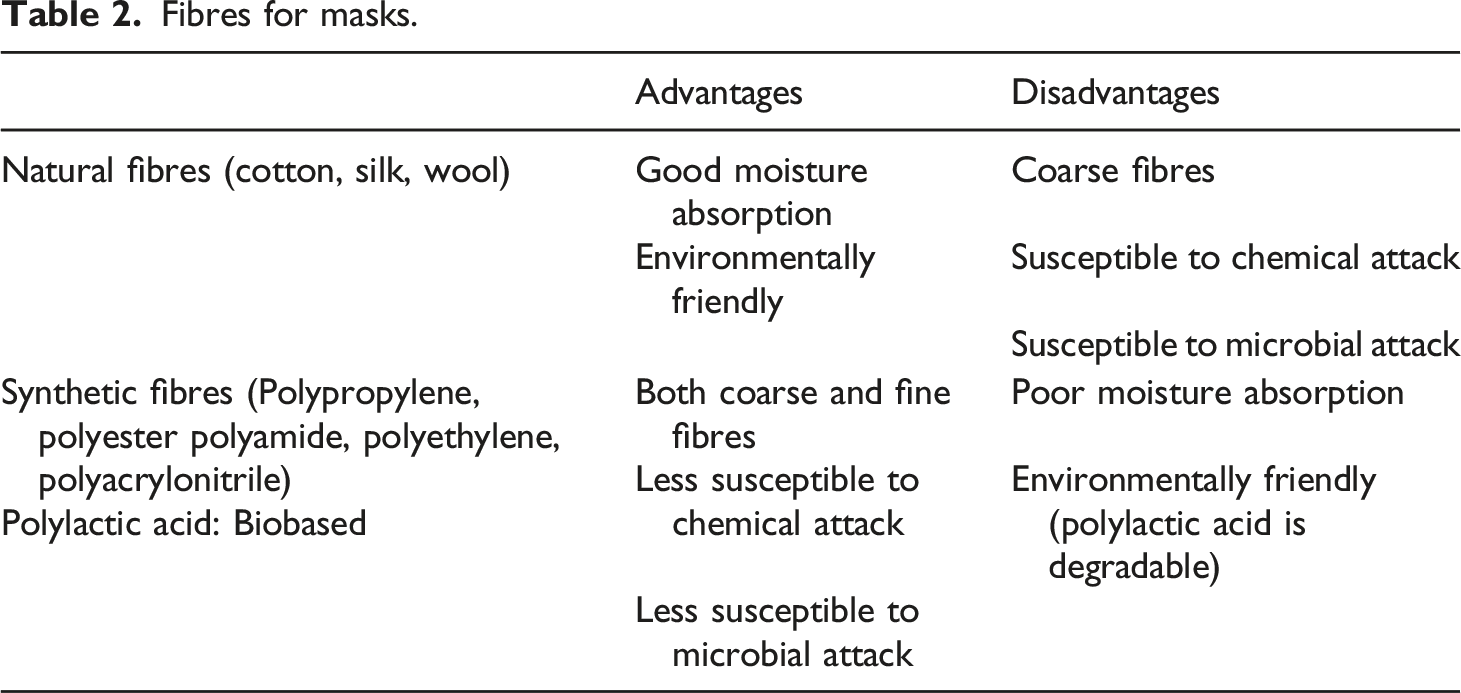
Fibrous masks are made using woven, knitted and nonwoven fabrics. The most popular fibres used to make these fabrics are polypropylene, polyethylene terephthalate, polyamide, polylactic acid and polyethylene. Depending on their application, hydrophobic or hydrophilic fibres or a combination can be used to produce a mask with the desired filtration performance. Natural fibres can be used, since they are hydrophilic, they will pose a health risk as a moist environment promotes microbial growth.11,21 Hydrophobic fibres are good in reducing aerosol and droplets penetration but have poor skin comfort whereas the hydrophilic fibres are the opposite. 10 Cloth masks are made from normal fabric cloth whereas surgical and respirator masks use nonwoven fabrics produced using meltblown, spunbond and electrospinning methods. These fabrics have high filtration efficiency as compared to the cloth fabrics. In order to enhance the mask filtration efficiency, a combination of fabric layers (e.g. spunbond and meltblown) is used to produce multi-layered surgical and respirator masks. Electrospun layers can also be incorporated to further enhance the filtration efficiency. Electrospun membranes have better filtration efficiency, however, they are fragile and lack structural stability and require additional support layers from either the meltblown or spunbond nonwovens. The addition of more layers enhances filter filtration efficiency. 21 However, this can cause breathing difficulties as layers act as barriers and reduce air flow especially for the nonwovens.
Meltblown fabric layers are a popular choice for surgical and respirator masks and microfibres having diameters in the range 0.5–10 μm can be produced when polypropylene fibres are used. Polypropylene is preferred as they can be easily processed than other types of fibres. For ultrafine fibres with nano diameters, the electrospinning method is used. These small diameters are produced by adjusting the electric field, collection time, polymer solution or spinning nozzle. Micro and ultrafine fibres have large surface areas to capture particles, while ultrafine fibres are reported to physically block virus particles. To further enhance filtration, fibres can be charged by using corona electric discharge, tribo-electric, photo-ionization and liquid contact charging methods. Electrocharged fibres are very effective in attracting small oppositely charged particles. The added benefit of electrostatic charge is that it has no impact on the weight of the charged masks.20,22–24
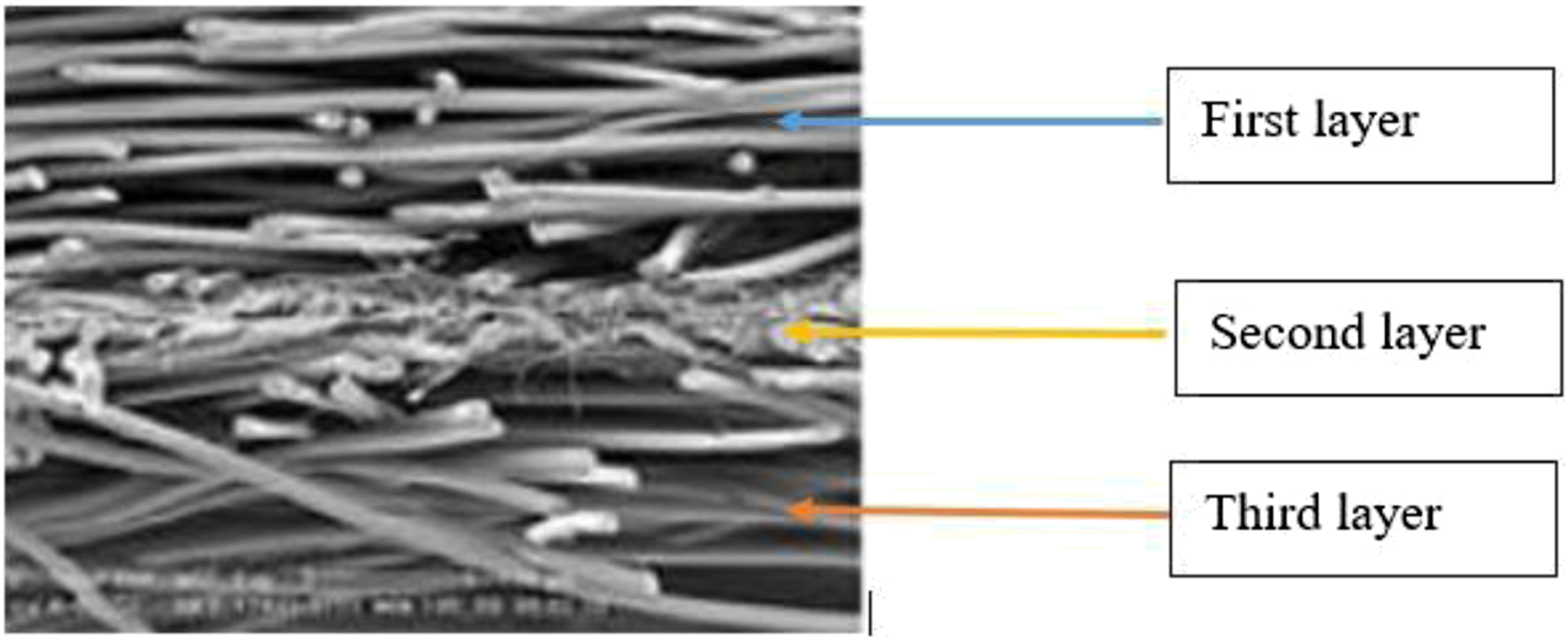
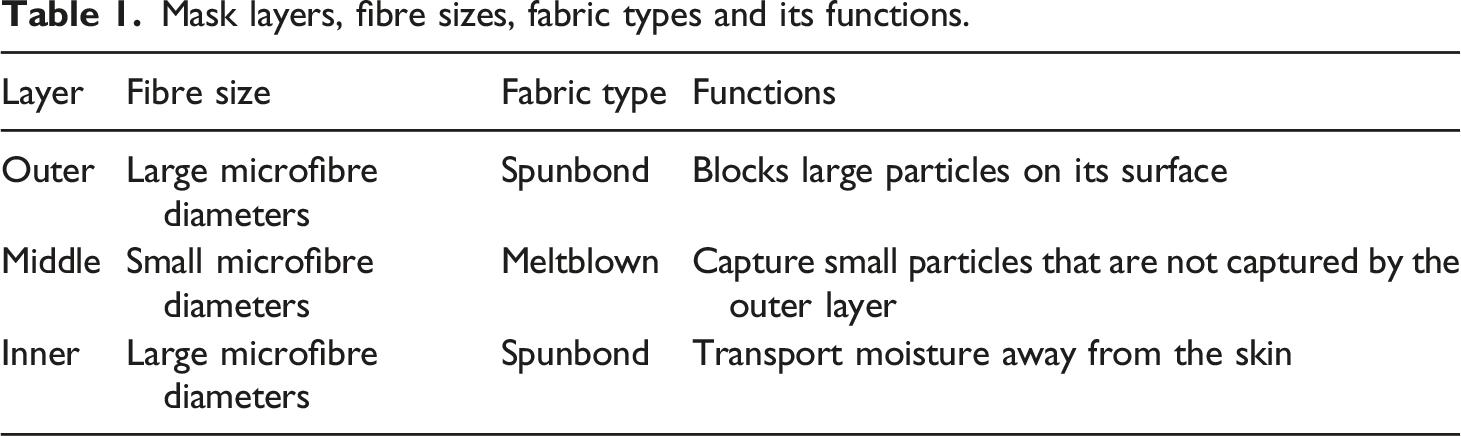
Both the surgical and respirator masks have a minimum of three distinct layers, namely the outer, middle and inner layers (Figures 1–3). The outer layer is hydrophobic. It acts as a barrier against infectious particles and due to its low permeability, it is responsible for breathing difficulties (Table 1). Particles that penetrate the first layer are filtered by the middle layer(s), its primary function is to filter particles. The inner layer is in direct contact with the skin, and it is responsible for the feeling associated with contact comfort or discomfort that the wearer experiences. It transports moisture away from the skin.21,25 Spunbond and meltblown techniques are widely used to produce the layers for surgical and respirator masks. Spunbond is widely used to produce the outer and inner layers whereas meltblown is used to produce the middle filtering layer. A variety of fibres can be used to produce layers as previously stated, however, the most dominant fibre is polypropylene which can easily be processed using spunbonding and meltblowing manufacturing methods. However, given its poor degradability, it poses danger to the environment if the fibres are not disposed of safely.
1
(a) surgical mask (Spunbond-Meltblown-Spunbond) and (b) Respirator mask (Spunbond-Meltblown-Meltblown-Spunbond). (a) N95 meltblown layers. (b) Scanning electron microscope (SEM) cross-section image reveals the three layers and fibres with thickness around 300 μm. (c) SEM image fibres with diameters in the range of ∼1–10 μm [Reprinted with permission from reference number].
22
Scanning electron microscope (SEM) cross-section image reveals the three layers and fibres [Reprinted with permission from reference number].
26
Mask layers, fibre sizes, fabric types and its functions.

Fibres
Fibres for masks.
Types of masks
Fibrous face masks can be classified into three groups, cloth face masks, surgical masks and filtering facepiece respirators like N95 masks as shown in Figure 4.
14
Cloth masks are a recent development due to shortages of traditional masks (surgical and respirator) which are manufactured using nonwoven fabrics. Cloth masks are primarily made from woven and knitted fabrics as these fabrics are cheaper to produce as compared to meltblown and spunbond fabrics. Cloth masks are made from yarns with open structures which allows the particles as wells air to pass through it. (a) Cloth mask, (b) Surgical mask and (c) Respirator N95 mask.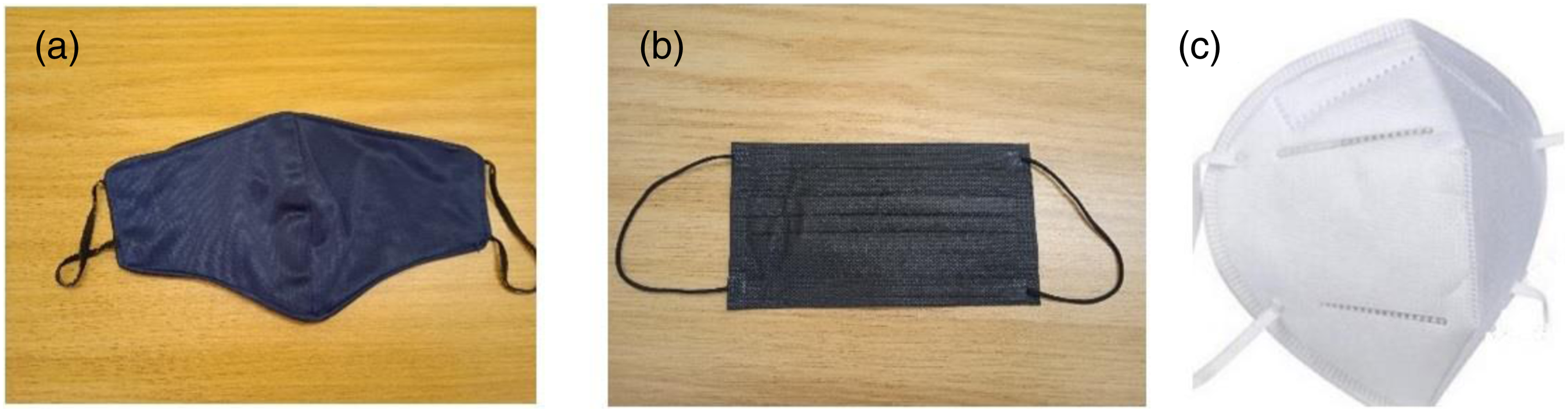
Surgical and respirator masks have high filtration efficiency than cloth masks due to the spunbond and meltblown layers which are made from fine fibres. The better filtration of respirator masks than that of surgical masks can be attributed to additional or thick layers incorporating meltblown or similar technologies. Meltblown layer comprises of microfibres which have small diameters and diameters as small as 1–7 μm can be produced and these fibres have large surface area to capture the particles. Spunbond layers on the other hand have fibre diameters larger than that of meltblown. 22
Reusable and non-reusable masks
Face masks can also be classified into reusable and non-reusable. Usable masks can be reused after replacement of a cartridge filter or after decontamination of a mask whereas non-reusables are disposed after single use. Based on this classification the cloth masks are in the reusable class whereas surgical and respirator are in non-reusable class. Cloth masks can be reused as they are made from traditional garment fabrics and can be subjected to several cycles of cleaning without significantly damaging their structural stability and on the other hand, non-reusable masks cannot be subjected to this as it will compromise their structural stability and reduce their filtration performance. Non-reusable masks are a burden to the environment and require safe disposal. 10
Cloth face masks have been recommended for public use even though they have low filtration efficiency. It was due to shortages and high prices of surgical and respirator masks during the early stage of the Covid-19. 1 Surgical and respirator masks have multiple highly efficient nonwoven layers that enhance their filtration efficiencies. Multiple layers of woven/knitted fabrics can also be used to enhance cloth mask filtration efficiency. Addition of layers restricts air flow, and the wearer will experience breathability difficulties and cause discomfort. There is a tradeoff between filtration efficiency and breathability, the higher the high filtration efficiency, the lower is the breathability due to decrease in open spaces in a fabric and on the other hand, the higher the breathability, the lower is the filtration efficiency due to increase open spaces in a fabric. The order of breathability for fibrous masks is cloth followed by surgical and then respirator. When filtration efficiency performance is considered, the order is reversed, it is a respirator followed by surgical and then cloth. When it comes to comfort, the cloth and surgical masks are more comfortable than respirator due to their better air permeability.2,6,21,28
Cloth masks
Cloth masks are easy to produce and are widely available. They are made using woven and knitted fabrics. Nonwoven fabrics can also be used. A detailed review on the cloth masks covering fibre type, yarn fineness, twist/inch, fabric layers, fabric layer thickness, weave type was reported by Clase et al. 3 In general, cloth masks are cheaper to produce than surgical and respirator masks. 2 Even though the level of protection provided by cloth masks is not high, it is important to continue to wear them as they have some ability to block pathogens. Some fabrics have been treated with finishing processes that raises the fibres to improve filtration efficiency.2,3,29 Using multiple layers also improves the filtration efficiency. One additional layer is reported to improve the filtration efficiency by 20%. However, this is not always the case as it was reported by Clase et al., that a single woven fabric with a fabric count of 42 can outperform a double layered fabric that is made from two fabrics that each has a count of 22. 3 This difference can be attributed to the larger pores of each fabric with a 22 count as there are a small number of yarns/area compared to the high number of yarns of single layer fabric with a count of 42. Fabrics with high thread count have high filtration efficiency. The thread count must be higher than 200/inch and the porosity must be less than 2%. Fabrics with very high thread counts have pores in the range 5–15 μm whereas those with low thread counts have pores in the 50–200 μm range. Bhattacharjee et al., reported that a cloth mask filtration efficiency can be improved to approach that of a surgical mask by using a minimum of three fabric layers. 30 However, this can only apply when standards used for respiratory masks are not used. 3 When cloth masks are tested using standards for respiratory masks, they perform poorly. 3 Multi layered cloth can have an inner layer made from cellulosic fibres like cotton or flax and the outer layer can be made from man-made fibres like polyester or nylon. The middle layer can be made from a blend of fibres. Washing this cloth mask at 60°C is reported to have no effect on its efficiency.3,22,30
Surgical masks
Surgical masks also called medical masks are designed to provide protection against liquid droplets and splashes that might contain biological particles. Their filtration efficiency is not as high as that of respiratory masks but higher than that of cloth masks. In some cases, surgical mask’s protection can be 5 times higher than that of cloth masks. Surgical masks are made of nonwoven fabrics and have a minimum of at least three layers. The polypropylene fibres with diameters in the range 15–40 μm are widely used to produce the nonwoven fabrics. The inner and the outer layers are produced using the spunbond technique whereas meltblown technique is used to produce the middle layer with microfibres (1–7 μm) which are responsible for most of the filtration. The inner layer is in contact with the skin, and it is associated with wearer’s comfort or discomfort feeling.1,17,22,24,31,32 An ideal surgical mask must have high filtration efficiency, high air permeability and high resistance to fluids. 24 As compared to respirator masks, surgical masks are not as highly effective in providing protection against infectious aerosol particles. 4
In order to enhance their filtration efficiency, both the surgical and respirator masks are treated with electrostatic charge to enhance capturing of particles that are smaller than the fabric pores. Electrostatic charged masks rely mostly on electrostatic attraction to remove tiny oppositely charged particles. Post treatment of masks for reuse also causes them to lose electrostatic charges.14,24 Activated layers can be incorporated to enhance the protection provided by surgical masks. When infectious virus particles are adsorbed and trapped by the activated charcoal layer, they are deactivated. Furthermore, when the charcoal adsorbs the surrounding moisture, it prevents the buildup of a moist environment which is important for microbial growth. Antimicrobial agents can also be incorporated to improve efficiency. Coating the outer layer with sialic acid traps viral particles on the fabric surface and they can then be deactivated with zinc and copper nanoparticles that are incorporated into the fibres. Masks treated with zinc and copper showed antiviral protection against the influenza virus. Five minutes exposure is reported to deactivate about 99.99% of the trapped virus particles. 11 However, treating a fabric with antimicrobial agents restricts the flow of air due to reduced size of the fabric pores.
Respirator masks
Respirator masks are made of nonwoven fabrics. They provide better protection than cloth and surgical masks due to more number of layers and better mask fit. 21 Respirator masks can be classified according to the level of filtration efficiency (95%, 99% and 100%) they provide against 0.3 μm particles. Respiratory masks can remove particles with a size 0.3 μm and in comparison, surgical masks can remove 10 μm particles. Respirators classified as N95, N99 and N100 have minimum filtration efficiency of 95%, 99% and 99.97%, respectively. The number indicates mask filtration efficiency, whereas the letter indicates whether a mask is resistant or not to oil. The difference between N, P, and R respirators is their resistance against the penetration of oil-based particles. If a mask has some resistance to oil, the letter N is replaced with the letter R and if a mask has a strong resistance to the oil, the letter P is used. Since N95 masks have no resistance against oil-based particles they are not recommended for use in environments where there is a risk of inhaling oil particles. N95 masks are good for use in public places and health facilities to prevent the spread of diseases like SARS-Cov-2 virus.
In situations where there are oil particles, either R95 or P95 are used depending on the level of protection required. Since the start of the Covid-19 pandemic, the public demand for these masks has grown rapidly and caused shortages for health care workers. The shortages for health care workers are not new as it was experienced during the SARS 2002, H1N1 2009 and 2014 Ebola pandemics. Healthcare workers are always given first preference to these highly efficient masks as they are at the forefront in the fight against pandemics. Healthcare workers treat people who are infected and are at a higher risk of acquiring infectious biological particles.11,21,24,33 Good mask fit for respirator masks is an important factor to ensure that these masks can perform at their rated efficiencies. Incorrect fit reduces the efficiency. The disadvantage of a good mask fit is that air flow through the mask decreases, and the wearer experiences discomfort and it can lead to poor compliance to mask wearing. 21
Mask fit and comfort
Proper mask fit is an important non-performance parameter that ensures that a mask performs according to its rated filtration efficiency as air can escape in the areas surrounding the nose, chin, and cheeks. It is considered together with performance parameters such as permeability, filtration efficiency and resistance to fluid during the design. Even though permeability is one of the important parameters that is considered when designing a mask, however, it is not as important as the filtration efficiency which is related to the ability of a mask to remove contaminants. Wearing a mask with good permeability improves breathability. When comparing the above-mentioned parameters, the most parameter for surgical masks is their resistance to fluid, while for respirator masks is their filtration efficiency. Creating a mask that fits everybody is a challenge to designers as each individual mask’s fit is different due to the different face shapes (Figure 5). Improper mask fit not only causes leakages, but also causes discomfort which has been attributed to the unwillingness of the wearer to wear a mask for an extended period.34–37 Face leakages due to improper mask fit cause a reduction in filtration performance due to air escaping in areas not covered by the mask. Tight fit reduces leakages by ensuring that air passes through the fabric layers. Surgical and cloth face masks have a poorer face fit than filtering facepiece respirator masks.6,11,14,16 Cloth and surgical masks are not normally subjected to a fit test. Fit test is done by measuring the number of particles that penetrate a mask and those that escape through the mask edges. A fit factor is used to find the filtration efficiency. A fit factor is the ratio of particles inside to the outside particles. A fit factor with a ratio of 1 particle inside a mask to 100 particles outside is equivalent to a mask with a 99% filtration efficiency.
3
Mannequins are used to study face mask fit and leakages around the edges of the mask.34,35,37 Face is covered with a mask and a pipe from the mannequin is connected to a respiratory pump to simulate breathing.
36
Surgical and Respirator masks fit [Reprinted with permission from reference number].
38

Proper face fitting ensures that the wearer gets maximum rated mask protection. Leakages that occur due to improper mask fit, decreases protection against airborne particles even when one is wearing a highly efficient mask like the N95. Leakages of between 0.5–2% are reported to decrease the nominal filtration efficiency by 50–67% due to open spaces between the face and the mask edges. Facial hair makes loose fitting as a mask cannot make adequate airtight seal with the skin and protection provided by a mask will decrease. The higher the facial hair the lower is the tightness between the face and the mask.4,38,39 Because of leakages caused by facial hairs, the filtration performance will drop below the mask rated filtration efficiency. It was reported that the protection provided by a N95 mask can drop below 70% for a non-fitted one during breathing which was less than that of a surgical mask and a cloth mask with a nonwoven layer. Masks fit can be improved by using elastic materials that can easily be stretched to take the shape of the wearer. 40 It was reported that an incorporation of a nonwoven layer in a single cloth mask can improve cloth filtration efficiency to be closer to that of surgical masks. The filtration efficiency of a cloth mask without a nonwoven layer range from 40–70% for 1.5–3.5 μm aerosol droplets and for the one with nonwoven layers range is 60–90%.
Mask comfort is important if a mask is to be worn for an extended period. Mask comfort is difficult to determine as it is influenced by the individual tolerance level of the pain, tightness and perceived anxiety. Discomfort can be due to breathability difficulty, skin irritation, pain, tightness, moisture build-up and heat build-up in a mask. Wearing a mask interferes with communication and often people raise their voice when they communicate as masks restrict air flow.33,34,41,42 As previously stated, wearing of a mask restricts breathability and heat dissipation to the outside environment and as the temperature and humidity increase inside a mask, more effort is required to breathe and the wearer experiences discomfort. Exhaling air that comes into contact with eyes also causes discomfort. Accumulation of moisture causes breathing difficulty especially for masks with high evaporative resistance. Accumulation of moisture can reduce the level of protection provided by certain types of masks. The permeability of a mask can be used to predict breathability difficulty. Masks with low pressure drop cause less breathability discomfort due to less resistance to airflow whereas masks with high pressure drop cause breathability discomfort due to increased resistance to airflow. When a person feels uncomfortable, the compliance will decrease due to increased frequency of adjusting a mask or temporary removal to relieve discomfort. Discomfort is the highest in masks with better tighter fit. Tight fitting can cause skin irritation or pain due to friction or pressure in areas where a mask is in contact with the skin. Tight fitting can also cause redness and leave marks on the surface of the skin.13,17,29,40
In order to improve comfort by improving breathability, some manufacturers have incorporated valves in respirator masks to allow air to freely escape. 21 Because of this, concerns have been raised as some of the droplets can now escape through the valves instead of escaping through traditional escape areas around the chin, cheeks, and bridge of the nose as is the case with other types of masks. The wearer can also be at a risk of acquiring the infectious droplets from the surrounding if the mask valves do not have lids that close during inhalation. In a controlled setting using coughed air from individuals, Tanisali et al. (2021) reported that valve type performed poorly and reduced the spread in a contaminated region by 60% while non-valve types had 80% indicating that valves do not prevent the transmission of infectious droplets. It was not indicated whether the valves have a closing mechanism.16,43
Benefit of double masking
Double masking improves mask fitting and blockage of cough aerosol droplets by surgical and cloth masks improved by 90% which was higher than the filtration of cloth masks. 15 Double masking a cloth mask with a nonwoven layer over a surgical mask was reported to show no significant improvement in the filtration efficiency. 41 Double masking can also be used to enhance filtration and mask fit by wearing a cloth mask over a surgical mask. Breathing difficulty increases as airflow is reduced due to an increased number of layers. 44
Filtration efficiency and mechanisms
When designing a fabric mask, a designer must take into consideration that it must at least have a minimum filtration efficiency of about 70% to solid particles or air-borne droplets. Because of the different structures of fabrics, nonwoven fabric filters have a better filtration efficiency than woven or knitted fabric filters. 19 Respirator masks have better filtration efficiency and provide better protection than surgical masks as previously indicated. Their minimum filtration efficiency is 95% whereas that of surgical masks is reported to be 89%. Cloth masks filtration efficiency is the lowest ranging from 46–86% for 0.02 μm particles. The filtration efficiency of surgical masks for particles in the range 0.02–0.01 μm is reported to be about 75% while that of cloth is about 60%. Surgical masks have an additional requirement of providing protection from splashes such as blood when medical practitioners perform procedures such as surgery. 17 Comparison of the filtration efficiency of surgical and respirator masks is not a true reflection of their performance as they are tested for different objectives. Respirator masks are tested using sodium chloride particles with a diameter of 0.1–0.3 μm for particle filtration efficiency whereas surgical masks can be tested using aerosolized bacteria with a mean particle size of 3 μm for bacterial filtration efficiency. Whyte et al. (2022) compared non-medical masks for particle filtration efficiency using 3 μm particles and bacterial filtration efficiency of masks using 0.65–7 μm particles and the particle filtration efficiency range was from 94–98.8% while bacterial filtration efficiency range was from 91–96%. There was no description about the type of non-medical masks used for these tests.45,46 Single cloth masks efficiency against particles that are less than 300 nm was between 5–80% and for particles greater than 300 nm it was between 5–95% and when multilayer cloth was used, the efficiency was greater than 80% for particles that are less than 300 nm and for particles greater than 300 nm it was greater than 90%. Cloth and surgical masks tested for cough aerosol transmission using respiratory aerosol simulators showed a 40–60% reduction. The aerosol transmission is reduced by 96% when doubled masks are used for both coughing and inhaling simulators.
Fibrous masks can capture particles that are smaller than the fabric pores as they do not rely only on fabric pore size to capture particles. Particles can also be captured using the interception, inertial collision, Brownian diffusion, gravitation and electrostatic adsorption filtration mechanisms. Interception occurs when particles are larger than the fabric pores. Inertial impaction occurs when particles with a big mass do not deviate with the air flow stream near the fibres because of their inertia and they collide with the fibres and are captured. Diffusion occurs when particles deviate from the flow stream and are attracted to the fibres. Electrostatic adsorption occurs when electrostatically charged fibres attract oppositely charged particles, and this mechanism can remove sub-micron particles.3,24 Highly efficient fabrics like meltblown are made using microfibres and its micropores cannot block the entrance of a virus like SARS-Cov-2 which has a diameter in the range 60–140 nm. Even nanomembrane nanopores cannot block SARS-Cov-2, however, it has been indicated that some nanomembranes are able to block nanoparticles. In order to address this shortcoming, fabrics are electrostatically charged to enhance the capturing of small particles. As seen in (Figure 6), particles that are smaller than the fabric pore size can pass easily through if a mask does not possess electrostatic charges. Capturing occurs when oppositely charged airborne particles like some viruses are attracted to the surface of oppositely charged fibres and as more particles are captured, the filtration efficiency will gradually decrease as the fibre’s charges dissipate. Electrostatic charged masks also lose their charges if they are exposed to liquids such as water and alcohols and these methods should not be used for decontamination.3,10,24,38,47,48 Filtration mechanisms: (a) meltblown fabrics, (b) Nanofibre membrane [Reprinted with permission from reference number].
48

In general, woven/knitted structure cloth masks have a low filtration efficiency due to large fabric pores which in some situations can be visible to naked eyes. Because of large fabric pores and lack of multiple layers, cloth masks compared to surgical and respirator masks have high breathability as air can easily pass through the fabric, however, filtration efficiency decreases as particles pass easily without hindrance. Woven fabric masks with a high thread count can have pores in the range 5–15 μm while those with a low thread count can be in the range 50–200 μm, hence the poor filtration efficiency of cloth masks. 3 Nonwoven masks on the other hand have complex fabric structure which has tortuosity, hence their enhanced ability to capture particles. 21
The filtration parameters are filtration efficiency, pressure drop and dust holding capacity. These parameters are related to fibre, yarn, fabric properties, their structural characteristics, manufacturing methods, subsequent finishing treatment on them and particle size. Some of the factors that influence fabric performance of a fabric mask are pore size, fabric thickness, permeability, yarn and fibre types. For example, air permeability shows how easily air can pass through a fabric under pressure drop. High pressure drop is not required as it causes breathing difficulties and can also indicate that pores are clogging. Compared to large fabric pores, small pores increase filtration efficiency and pressure drop, as there is less space for air to pass through, as a result permeability decreases. Similarly higher fabric thickness decreases the permeability and filtration performance due to increased number of fibres contained per unit area. Finer fibres have large surface area and more fibres per area and have higher filtration efficiency but increases resistance to air flow resulting in higher pressure drop.49,50
Mask decontamination and reuse
Masks for reuse are decontaminated as the corona virus can remain infective on surfaces for up to 3 days and in the aerosol, it can be up to 16 h. 5 Decontamination of a mask is not the same as cleaning the latter remove’s dirt from a mask while the latter deactivates or kills the microorganisms. Decontamination makes masks safer for reuse. Depending on the method used, the mask might be rendered unsafe for use even though it is decontaminated if the fabric structure is damaged, or it contains a toxic residue. 51 Single use masks are not designed to be reused as they must be safely disposed after single use, however, due to shortages of these masks, there are recommendations that they be decontaminated for reuse in order to extend their lifetime. Decontamination can be repeated several times as long as a mask can maintain its structural and filtration performance.21,48 Because masks trap particles, treatment methods that do not remove trapped particles will not make the treated mask’s permeability to be closer to that of a new mask. This is one of the issues in decontamination methods. 52
After decontamination, a mask must maintain its structural integrity, filtration efficiency and breathability performances like that of a new mask. A surgical mask must also maintain its splash resistance against fluids,1,32,33 however, this is not possible as repeated cycling to deactivate particles will gradually cause gradual deterioration of the mask structural integrity. 53 Deciding on which method applies is not only about its effectiveness as other factors such as the operating cost and the environment and health impacts are considered. 54
Methods used to deactivate infectious biological particles captured by a mask can be divided into physical and chemical methods. Some of the methods are dry heat, hot water and steam, microwave oven, vaporised H2O2, alcohol, ultraviolet irradiation, and bleach detergent.51,53,55 Because these methods are still new in the treatment of single use masks, it is recommended that a combination of methods must be used to reduce the risk. Masks subjected to either UV irradiation, vaporised H2O2 or dry heat can also be subjected to additional treatment of 70% ethanol. 32
Dry heat and hot water
Decontamination can be achieved by using dry heat and hot water or steam. Dry heat exposes masks to high temperatures that deactivate the virus particles. Temperatures in the range of 65–70°C have been reported to deactivate the SARS-CoV-2. Masks can be treated up to 20 cycles with little or no effect on the mask filtration efficiency. The method can also be used to treat many masks. This method can be easily adapted when compared to other methods such as vaporised H2O2. 32 Exposing contaminated masks to direct sunlight for an extended period is also reported to have the ability to deactivate virus particles and since the sun is freely available, it can be used as an alternative inexpensive treatment method. However, because of the long time required to achieve effective deactivation, this method is not scalable for large industrial applications. 20
Hot water and steam methods also use high temperatures to deactivate infectious particles. Hot water treatment can be used at homes as it does not require the use of expensive chemicals and machines. Home appliances like rice cookers and microwaves can generate steam. When a microwave is used, a small amount of water is put inside the oven together with contaminated masks and the heated water generates a steam that is hot enough to deactivate the virus particles. The challenge in using a microwave is that it cannot be used for masks with metallic nosebands. It is not a quick method, as it can take up to 30 min to effectively deactivate the virus particles. This method has an added advantage of removing dirt from a mask. Respirator masks treated with water maintained their filtration efficiency. The choice of the fibres used to make waterproof masks is important as polypropylene fibres were reported to maintain their waterproof resistance and structure even after 10 cycles. Electrostatic charged masks should not be treated with hot water as they will lose their charges, and their filtration efficiency will decrease.20,48,54 Steam method such as autoclaving uses steam to sterilize microorganisms by raising temperatures to above 100°C for a specific time. According to Grinshpun et al. (2020) autoclaving causes no visible damages to surgical masks that were tested, however, on the N95 masks the straps were damaged as they lost their elasticity. This was also observed on the soft nose clip materials used to fit a mask over a person’s nose. Alcaraz et al., reported that surgical masks maintain their fabric structure and filtration performance after repeated washing and autoclaving. However, the resistance to fluids was lost and as a result, these treated masks must not be used in places where the wearer will be exposed to liquids. Rice cooker steam generates heat and steam that can be used to treat contaminated masks. A significant decrease in organisms was observed when it was used to treat masks contaminated with bacteriophage MS2 particles and methicillin-resistant aureus. Masks were decontaminated by applying heat first for 10 min and after that steam was applied for 5 min. In comparison when only dry heat was applied using a dry oven, it was observed that there was no significant decrease in organisms. This supports a recommendation that using a combination of treatment methods improves decontamination effectiveness. 56
Irradiation
Ultraviolet irradiation is widely used to kill bacteria and viruses. Contaminated masks are subjected to 254 nm electromagnetic short waves to deactivate the microorganisms. Masks are exposed to UV radiation for about 15 min. It is reported that waves can deactivate H1N1 virus on the surface of the mask and leaving the mask for several days after treatment further improves decontamination as viruses like SARS-Cov-2 decay with time on the surfaces. Before treatment, masks must be individually placed on a surface to ensure maximum penetration of UV. Stacking reduces UV penetration which has raised concern about the ability of UV to decontaminate the inner layers of multi layered masks. Despite this short shortcoming, it can be easily used to decontaminate small individual masks. Increasing a dose to 1000 J/cm2 was reported to cause some damages to the structural integrity of a mask. When a mask was subjected to a dose of 2360 J/cm2 the breaking strength of a mask’s elastic straps decreased by 20–50%. Because UV does not affect the electrostatic charge of the mask, it is a good treatment method for charged masks when compared to methods that require the use of liquids.20,32,47,53,57
Chemical
UV germicidal irradiation is also used for decontamination. It uses UV radiation to deactivate and decontaminate infectious biological particles without causing damage to a mask. Alcohol has also been suggested. Deciding which of the methods to use requires that the following factors be taken into consideration: effectiveness of the method, cost, number of cycles that a mask can be decontaminated without significantly changing its structural integrity and filtration efficiency. When moist heat is used, a mask can be decontaminated up to 50 cycles but in the case if UV irradiation is used, only 10–20 cycles can be achieved. Since different methods have different efficiencies, it is suggested a combination of methods should be used to enhance the speed and effectiveness of decontamination. Using a combination of moist heat and UV irradiation can greatly improve the deactivation and time required to effectively deactivate particles.20,47
Chemical decontamination using vaporised H2O2 and ethanol is widely used in hospitals to decontaminate surfaces due to its ability to inactivate microorganisms easily, however, it leaves behind a residue which can cause respiratory and skin problems. H2O2 toxicity is considered to be low, as it can break down into water and oxygen and its effect on the environment and health is considered to be minimal. However, it is recommended that human exposure to it must be short to reduce health risk as its residue can cause respiratory and skin problems. Workers must be trained in the use of H2O2 as it is a strong oxidant. Masks that were treated with vaporised H2O2 showed no structural damage.20,32 Treatment of surgical masks with 70% ethanol decreases their filtration efficiency due to the degradation of the electrical charges since the most dominant filtration mechanism in these masks is the electrostatic adsorption. When fibres are damaged by chemicals, the mask structural integrity is compromised resulting in reduced filtration performance. 55
Antimicrobial
Masks can be treated with antimicrobial agents such as nanomaterials to enhance their protection performance. Nanomaterials deactivate infectious biological particles that want to penetrate a mask. Natural fibres like cotton are susceptible to bacterial degradation and treating them with antimicrobial agents imparts resistance to bacterial degradation. Nanomaterials such as silver, titanium dioxide, zinc oxide, copper, gold and magnesium can be used as antimicrobial agents. Nanomaterials deactivate coronavirus and adenovirus which causes respiratory and gastrointestinal diseases by attacking virus membranes. Silver is widely used because of its good antimicrobial activity, masks treated with silver nanoparticles are effective against Escherichia coli and Staphylococcus aureus bacteria.25,58,59 Copper nanoparticles can deactivate hepatitis C virus. 60 Surgical masks treated with zinc and copper granules had antiviral protection against the influenza virus. Five minutes exposure is reported to deactivate about 99.99% of the trapped virus particles. 10 Graphene and grapheme-derived nanomaterials possess antimicrobial properties. Negatively charged graphene derived nanomaterials attract the positively charged virus and form a bond. 59 It was reported that masks treated with graphene or graphene oxide were able to remove the SARS-Cov-2. 61 Activated charcoal layer can be incorporated to enhance mask filtration performance. When infectious virus particles come into contact with the activated charcoal layer they are adsorbed and trapped, and the virus are deactivated. Activated charcoal layer has the additional benefit of reducing moisture buildup as it absorbs it. Moist environment promotes microbial growth. Antimicrobial agents can also be incorporated to improve efficiency. 10
Disposal issues
Before the start of Covid-19 pandemic, the world was already suffering from massive plastic pollution. The rapid spread of the pandemic has created a huge demand for face masks. Face masks are designed for single use and after use they are disposed of. This generates a lot of waste especially during pandemics when they are a necessity.1,62 Because of the amount of waste sent to treatment facilities, some of the facilities were stretched beyond their capacities. Masks must be safely disposed of to minimize their negative impact on the environment, as their impact is going to be felt long after the pandemic has ended. Face masks are a medical waste, as they contain hazardous pathogens and should not be disposed of as general waste, however, it ends up in landfills as part of municipal waste. Medical waste is treated as medical waste which uses electricity to incinerate the waste. During combustion, toxic gases were emitted causing environment pollution.1,63,64 Masks that were sent to landfills or discarded at public places release microplastics when they start to degrade. Animals and humans acquire them when they ingest contaminated food or water. 65 It is estimated that about 3.7 billion masks are disposed of every day, which is about 11,100 tonne if one mask weighs about 3 g. The estimated annual waste can be about 4, 051, 500 tonnes. High efficiency fibrous masks are made of synthetic fibres that are not easily biodegraded and there is a need for environmentally friendly fibres or manufacturing process. 21 Mask waste can be used in the construction as a reinforcement material for concrete and composite insulation panels.66,67 Face masks may also contain toxic chemicals such as chlorinated phenols, polycyclic aromatic hydrocarbons, phthalates and organo phosphates which are reported to cause health and environmental problems. 62 Concerns are also being raised about the impact of antimicrobial agents such as metal and nonmetal nanoparticles which are incorporated in some masks to impart antimicrobial activity. 21 Using eco-friendly materials, production and finishing methods that generate less waste should be adopted to protect the environment. 64
Social and economic impact
Debates about the wearing of masks differ from country to country. In some countries the debates about health issues are being mixed with political views which often complicate things as the wearing of masks in public is a new thing in most countries. One of the issues being raised by people who are against the wearing of masks is that mandatory wearing infringes on their human rights. This is even though masks have been proven to reduce the risk of acquiring or transmitting infectious particles during the influenza and Ebola epidemics.21,67
Covid-19 pandemic has caused an enormous burden on the health systems. World economy was also affected due to decreased economic activities as countries impose local, regional and international blockages. Blockages cause disruptions in the manufacturing and transportation sectors. With limited goods being manufactured or transported, businesses started to close, and workers were retrenched. With less income in the hands of consumers the demand for goods drops and the economy suffers.21,69
Conclusion
Face masks are used as an effective prevention tool that reduces the transmission of infectious biological airborne particles. Masks act as a barrier and cause breathing difficulties and discomfort due to decreased air flow. Because of their open structure, cloth masks have lower filtration efficiency than surgical and filtering facepiece respirator masks. Decontamination of masks for reuse using methods such as heat, chemicals and UV is being explored to address global shortages. After decontamination, a mask must maintain its structure and performance as well as not have any residue that can cause health problems. Treating an electrostatic charged mask with water, steam and ethanol will cause it to lose its charges. Although masks are effective in reducing transmission, they require proper face fit to ensure they perform at their rated filtration performance. The negative impact of Covid-19 is not only about health issues as it also affects society, economy and the environment. The highly efficient single use masks are made from fibres like polypropylene which are not easily biodegraded, they pose a danger to the environment if not properly disposed of.
Footnotes
Acknowledgements
This work is based on the research supported in part by the National Research Foundation of South Africa (grant-specific unique reference numbers (UID) 104840. Authors also acknowledge permission granted by various sources to use the figures used in this paper.
Declaration of conflicting interests
The author(s) declared no potential conflicts of interest with respect to the research, authorship, and/or publication of this article.
Funding
The author(s) disclosed receipt of the following financial support for the research, authorship, and/or publication of this article: This work was supported by the National Research Foundation (104840).
