




Abstract
This research focused on understanding the microbe killing mechanism of the antimicrobial properties of highly elastic conductive poly(ethylene terephthalate) (PET)/multi-walled carbon nanotube (MWCNT) powernet fabrics with the help of electric fields and highly elastic structure. In this study, PET/MWCNT fabrics containing three different percentages of MWCNT were knitted and characterized with antimicrobial activity, cytotoxicity, electromagnetic shielding properties, DSC analyses, stiffness tests, and pressure measurements using wireless pressure sensors. Results show that MWCNT has a statistically significant effect on antibacterial activity, cytotoxicity, electromagnetic shielding, stiffness, and exerted pressures. PET/MWCNT fabrics showed excellent antibacterial activity against tested germs; S. aureus and E. coli. A statistically significant increase in percentage reduction of bacteria was observed with the increase in carbon nanotube nanoparticle concentration, accompanied by a good laudering durability even after 20 washing cycle. In terms of cytotoxicity tests, all PET/MWCNT samples were found to have over 70% average relative cell viability, indicating that they are noncytotoxic without interrupting the cell line and primary cell growth in vitro. The materials have provided longer conductive networks and formed electromagnetic shielding at the range of 22.79 dB-25.77 dB at the frequency of 0–1.30 GHz. Moreover, MWCNT concentration did not lead to considerable changes in physical properties like stiffness and exerted pressure properties. Characterization analyses confirmed the changes in the chemical structure of the PET/MWCNT.
Introduction
Electrically conductive polymers are candidates for a variety of uses including semiconductor chips, integrated circuits, electrodes, lightweight battery components, sensors, electrochromic displays, and static-free packaging material.1,2 Several studies have been reported on the incorporation of electrically conductive additives such as carbon nanotubes (CNTs) into fibers or their coating onto fabrics that can both improve mechanical and electrical properties and enable the multi-functionality required for electrical energy storage, sensing and actuation.3–9 There has been increasing interest in incorporation of CNTs into polymers such as poly(ethylene terephthalate) (PET), polypropylene (PP), polyimide and polyamide for formation of fibers.10,11 Thermal stability and time stability are important properties for polymer fibers/composites to observe their degradation and behavior versus temperature and time.12,13 In a study conducted at the Center for Bio-Artificial Muscle and Department of Biomedical Engineering, South Korea, a more alignment and stable structure is achieved when these nanoparticles were added during spinning processes. 14 It was reported that thermal stability of the fibers was not significantly affected by the presence of CNTs at low concentrations (up to 2%).15,16 However, their biocompatibility also plays a vital role for in vivo use.17–19
Multi-walled carbon nanotubes (MWCNTs) have attracted special interest for industry and are widely used for a variety of commercial products due to their super mechanical strength, thermal conductivity, high surface area, well-defined morphologies, and unique optical and electrical properties. 20 There are also several studies on the antibacterial properties of MWCNTs. In a study on the antibacterial activity of MWCNT, MWCNT samples were treated with an acid mixture of H2SO4 and HNO3 produced oxygen-containing functional groups (e.g. OH, C=O, COOH) with nominal damage to the structure of the nanotubes.21,22 Kang et al. provided the first evidence that the diameter of carbon nanotubes (CNTs) is a key factor governing their antibacterial effects, and that the possible main CNT cytotoxicity mechanism is cell membrane damage by direct contact with CNT. 23 Olivi et al. reported that individually dispersed nanotubes could be visualized as numerous moving nano darts attacking bacteria in a buffer solution, causing degradation of bacterial cell integrity that led to cell death. This mechanism occurs through adhesion to the surface of microbial cells, interruption of transmembrane electron transfer, disruption/penetration of the cell envelope, DNA damage, and oxidation of cell components. 24
In addition, CNTs have shown great potential for use in electromagnetic interference (EMI) shielding materials due to their outstanding electronic properties. Al-Ghamdi found that there is a positive correlation between shielding and electrical conductivity. 25 A radio-frequency (RF) electromagnetic field (EMF) comprising the frequency range from 100 kHz to 300 GHz is used in a variety of technologies including mobile telephones, broadcasting and TV, microwave oven, radar, portable and stationary radio transceivers, personal mobile radio, MRI. 26 RF EMF affects the human body even at low levels of exposure to electromagnetic fields at home, resulting in headaches, anxiety, suicide and depression, nausea, and fatigue. It can be explained by the electromagnetic theory that electromagnetic energy passing through the body will establish a potential gradient in the human body. From this point of view, the standing waves produced will naturally create heat in the body and raise the body temperature. 27
In the current literature on the modification of polyethylene terephthalate (PET) fibers/fabrics with CNTs, researchers have mostly focused on improving electrical properties.28–34 Mazinani et al. (2010) produced PET/MWCNT conductive fibers at a MWCNT concentration of 2% w/w, and reported that more conductive fibers could be obtained at higher draw rate without increasing the MWCNT concentration. 29 The rheological and electrical conductivity of PET/MWCNT nanocomposites were investigated by Hu et al. 33 Sivasubramaian et al. (2012) prepared the composite material of polypyrrole/MWCNT/PET fabric by coating the surface of PET fabric with a combination of polypyrrole (PPy) and MWCNTs. The results show that the fabricated composite materials have improved conductivity and high specific capacitance, making them suitable for use as electrodes in supercapacitors. 35 Lin et al. (2016) applied the melt extrusion method to coat the PET yarns with polypropylene (PP) and MWCNTs for producing wires. PP/MWCNTs-coated PET conductive yarns exhibited satisfactory tensile properties and electrical conductivity for use in functional woven and knitted fabrics. 36 Arbab et al. (2015) coated polyester fabric with enzyme-dispersed MWCNT suspensions by a simple tape casting method for the development of textile-integrated solar cells. 37
In this study, for the first time, highly elastic conductive PET/MWCNT powernet fabrics were produced from MWCNT integrated melt-spun PET yarns to enhance antibacterial activity and electromagnetic shielding effect (EMS) for functional purposes in pressure garments. Another original point of this research is to focus on the understanding of the antimicrobial properties of highly elastic conductive PET/MWCNT powernet fabrics through the microbe killing mechanism with the help of electric fields and highly elastic structure. Therefore, the fabricated fabrics were characterized in terms of antibacterial activity against S. aureus and E. coli and electromagnetic shielding effect (EMS). Pressure garments designed for use in medical applications like low blood pressure, muscle starins and sprains, are worn for long periods of time (24 h/7 days). These highly stretch garments should maintain their elastic recovery during use by motions, activity for rehabilitation purposes. For this purpose, the stiffness and exerted pressures using wireless pressure sensors were also tested. However; toxic impacts of MWCNTs are still poorly understood. Therefore, in this study, in vitro biocompability of MWCNTs was assessed using MTT (3-(4,5-dimethylthiazol-2-yl)-2,5-diphenyltetrazolium bromide) assay with L929 mouse fibroblast cells. The effects of multi-walled carbon nanotube (MWCNT) nano-particles at three different concentrations on the polyethylene terephthalate (PET) structure were also evaluated. DSC analysis was performed to observe the effect of MWCNT addition on the thermal transition properties of the PET structure.
Experimental
Material
The extrusion grade polyethylene terephthalate (PET) and MWCNT were supplied from Sigma-Aldrich (St Louis, MO, USA). The supplied MWCNT has a purity higher than 95% MWCNT, a length of 5 μm with 6–8 walls with a diameter 5.5 nm prepared by chemical vapor deposition using cobalt and molybdenum as catalysts (CoMoCAT).
Methods
Production of PET/MWCNT powernet fabrics
Process conditions of bicomponent fiber production.

Technical specifications of the produced MWCNT integrated melt-spun PET yarns and prepared PET/MWCNT powernet fabrics for samples A, B, C.

Melt spun MWCNT integrated polyester yarns were knitted using 30% elastane yarns, which have a great function for rehabilitation, in the powernet warp knitting structure due to their elastic structure and elastic recovery properties. Powernet warp knitting structure is a knitting structure produced on a raschel machine with inlaid yarns, in which each needle in the knitting width is fed by at least one yarn and in line with the direction of fabric production. The elastane yarn number was 47 tex. Table 2 shows the technical properties of the produced MWCNT integrated melt-spun PET yarns and prepared PET/MWCNT powernet fabrics, for samples A, B, C.
The cross-section of the PET/MWCNT fabric structure and the yarn cross-section were taken by an optical microscope. The powernet warp knit stitch diagram, the microstructure of the carbon atoms arrangement taken by an optical microscope and the homogenity of the crosslinking of MWCNT with PET can be clearly seen in Figure 1. (a) The cross-section image of 20 wt.% PET/MWCNT sample (b) Powernet warp knit stitch diagram.
Antibacterial activity
The experimental method used to determine the antibacterial effects was AATCC Test Method 100: 2004 “Assessment of Antibacterial Finishes on Textiles” Standards, using Staphylococcus Aureus (S. aureus) ATCC 6538 and Escherichia Coli (E. coli) ATCC 25922 (2.00 × 10⁵ CFU/mL) test inoculum. The AATCC Test Method 61 (2A): 2010 “Colorfastness to Laundering: Accelerated” was followed to evaluate the washing durability. The samples were evaluated after 10 and 20 washing cycles. The percentage reduction of bacteria was calculated according to the related equation (1) given in the Supporting Information.
Cytotoxicity testing: cell viability
The average relative cell viability was determined to evaluate the toxicity of PET/MWCNT material by the MTT (3-(4,5-dimethylthiazol-2-yl)-2,5-diphenyltetrazolium bromide) assay with L929 mouse fibroblast cells. Firstly, cells were cultured in MEM-Alpha medium supplemented with 10% fetal bovine serum (FBS). They were then incubated at 37°C in a wet atmosphere containing 5% CO2. The tested PET/MWCNT fabrics were cut into 2.5 cm × 2.5 cm pieces and soaked in a 2 mL culture medium with no FBS for 3 days. The extracts were diluted to a concentration of 25% with a culture medium and then L929 cells were seeded in 96-well plates at a density of 2000 cells per well and incubated for 24 h. Subsequently, the medium was removed and replaced by prepared extracted dilutions. After incubation for 24, 48 and 72 h, the cells were treated with 20 μL per well MTT solution (5 mg mL−1 in phosphate-buffered saline, PBS) and incubated for another 4 h at 37oC. After that, 200 mL per well dimethyl sulfoxide (DMSO) was added to dissolve the formazan crystals. 38 The plates were shaken for 15 min, and the optical density was detected on a multiwell microplate reader (Tecan GENios, Tecan Austria GmbH, Salzburg, Austria) at 490 nm. Cell viability was calculated according to the related equation (2) given in the Supporting Information.
Electromagnetic shielding effect
The electromagnetic shielding properties were evaluated according to ASTM 4935; a standard test method for measuring the electromagnetic shielding effectiveness of planar materials. This test method provides a procedure for measuring the electromagnetic (EM) shielding effectiveness of a planar material due to a plane-wave, far-field EM wave. From the measured data, near-field SE values may be calculated for magnetic (H) sources for electrically thin specimens. The measurement method is valid over a frequency range of 30 MHz to 1.5 GHz. The near-field shielding effectiveness (SE) is the ratio of power received with and without a material present for the same incident power. Shielding effectiveness was calculated according to the related equation (3) given in the Supporting Information.
The measurements were taken from different parts of the samples between 30 MHz–1.5 GHz frequencies and repeated 10 times. The shielding effect data were all obtained in the unit of dB. Then, the obtained results were evaluated according to FTTS-FA-003 (2005) (Functional Technical Textile Standard) as given in the Supporting information. Functional Technical Textile Standard was used to determine the required shielding effect (SE) for the significant shielding effect values.
Differential scanning calorimetry
DSC analysis was used to measure enthalpy changes as a function of temperature/time with the addition of MWCNT. Thermal transitions of the samples were determined using the Perkin Elmer Diamond 7 DSC device. In the DSC procedure, a small sample (5–10 mg) in weight was pressed into an aluminum mold and the heating-cooling-heating cycles were applied at 30°C–300°C. After the first heating cycle, the sample was kept at 300oC for 2 min before being cooled to 0°C. The first heating was carried out at 10°C/min with successful cooling and heating cycles of 10°C/min and the analysis was repeated three times.
Stiffness tests (bending rigidity)
The produced highly elastic structures need fitting on the body to provide needed exerted pressures to achieve their functions. Therefore, the elasticity of the fabrics should be protected. Stiffness (bending rigidity), one of the most widely used parameters to judge bending rigidity and fabric handling, was tested to evaluate the change in elasticity of the samples with the addition of MWCNT. Stiffness was measured for all samples according to ASTM D5732, 2001. The samples were conditioned for 24 h at 20oC, with 65% relative humidity before testing.
Pressure measurements
The constant stretching and re-stretching of the fabric will eventually wear down the elasticity of the pressure garment and cause it to lose its ability to exert the correct pressure. So, the pressure measurements were performed to see the effects of all samples for newly designed pressure garments. Exerted pressure measurements were taken on each garment designed for calf and ankle (from ankle to knee), the most active parts of the body, using a static mannequin. They were tested using wireless pressure sensors with 10 repeats after samples were conditioned for 24 h at 20oC, 65% relative humidity. Measurements were recorded using calibrated pressure sensors that were connected to a data acquisition and management software program by wireless transmitters.
Statistical analysis
The statistical analysis of the experimental data was performed using the JMP version 8.0.2 software package (SAS Institute, Inc. Cary, NC). The statistical analysis includes the analysis of variance (ANOVA) where ‘SS’ is the sum of squares of the deviations from the means, ‘df’ is the degrees of freedom, and ‘MS’ is the mean squares. ‘F-stat’ is the ratio of two variances used to find out if the means between two populations are significantly different. ‘p-value’ is the probability of obtaining test results (at least as extreme as the results actually observed during the test, assuming that the null hypothesis is correct). For the one-way ANOVA, p-values less than 0.05 were considered statistically significant. All of the data are also presented as average ±standard deviation.
Results and discussion
Antibacterial activity
The human body produces complex electrical activity in many different types of cells, including neurons, endocrine and muscle cells, called “excitable cells.” This electricity also creates a magnetic field. The space surrounding a charged object is affected by the presence of the charge thus, resulting in the establishment of an electric field in that space.
The newly designed fabrics have provided longer conductive barriers (electromagnetic shielding). When microbes such as bacteria, and viruses enter the fiber, electric fields are generated by human movements through the attraction and repulsion of electric charges.
39
The designed fabric will convert the expansion and contraction generated by the wearer’s motion (waving hands, walking, and running, etc.) into electricity and kill microbes without the need for chemical finishes, as presented in cross-section images of fibers and fabrics in Figure 2. Cross-section images and a schematic diagram for the antimicrobial activity test of PET/MWCNT electronically conductive polymers.
The antibacterial properties of the control (unsterilized 100% PET fabric) and PET/MWCNT samples are presented in Figures 3 and 4. The total population of Staphylococcus aureus (S. aureus) ATCC 6538 and Escherichia Coli (E. coli) ATCC 25922 on each sample was determined. After the antibacterial tests were performed, the live vibrio concentration of the standard blank sample at zero contact time was compared with that of a standard blank sample oscillated for 24 h and that of the antibacterial fabric sample oscillated for 24 h. The effects of contact time on percentage reduction of bacteria with PET/MWCNT fabrics against E. coli and S. aureus are shown in Figures 3 and 4. It is seen that the percentage reduction of S. aureus before washing is lower than that of E. coli. This may be attributed to the fact that the Gram-positive cell wall consists of linear ester linkages cross-linked with short peptides of bacteria to form a three-dimensional rigid structure.
40
However, a small but a statistically significant increase was observed with the increase in carbon nanotube nanoparticle concentration (from 94% to 99% for S. aureus and from 96% to 99% for E. coli). It is attributed to the antibacterial effects of MWCNT, causing a small significant increase with increasing concentration. Antibacterial activity using S. aureus ATCC 6538. The data are represented as mean ± standard deviation (SD). Antibacterial activity using E. coli ATCC 25922. The data are represented as mean ± standard deviation (SD).

Since AATCC 100 test method is a quantitative test method, reliable test results were obtained about the antibacterial activity on Gram-positive S. aureus and Gram-negative E. coli. Although the antibacterial mechanism of MWCNT is not yet understood, it is believed that they have a germicidal power on Gram-positive bacteria according to the reported values on such inorganic nanoparticles. 41 Although covalently bonded metal ions to ester chains provided a stable and excellent antibacterial activity, the growth rate of S. aureus and E. coli decreased with increasing wash cycles, showing the weakening of the bonds. Therefore, the durability of the antibacterial fabrics was satisfied even after 20 wash cycles. The antibacterial effect of MWCNT against E. coli was less durable to washing than S.aureus, and the effectiveness of MWCNT against E. coli decreased to approximately 50% after 20 washes, which could be due the presence of the outer membrane. 42
Cytotoxicity testing
The cytotoxicity of sterilized raw PET fabric and PET/MWCNT fabrics was evaluated through the MTS test. The extraction medium was cultured with mouse fibroblast cells (L929) for 24, 48 and 72 h. As shown in Figure 5, the raw polyester fabric showed no significant difference from the control cells at 24 h as well as at 48 and 72 h. It could be seen that the viability of cells treated with PET/MWCNT fabrics was 98%, 96%, and 95% of the negative control at 24 h, 80%, 79% and 78% of the negative control at 48 h, 84%, 83% and 81% of the negative control at 72 h for sample A, B and C, respectively. The viability of cells treated with raw polyester fabric was slightly higher than that of PET/MWCNT. Generally, samples C with higher MWCNT content showed a higher percentage of cell viability in comparison with samples A with lower MWCNT contents. According to the MTS reading, most of the samples stimulate the cell growth rapidly. As reported before, the average relative cell viability was over 70%, indicating the low toxicity of PET/MWCNT material.43–46 These results indicated that the PET/MWCNT fabric had low toxicity to L929 cells. In vitro cytotoxicity tests of L929 cells cultured in extracts of raw polyester fabric and PET/MWCNT fabrics for 24, 48 and 72 h. The data are represented as mean ± standard deviation (SD).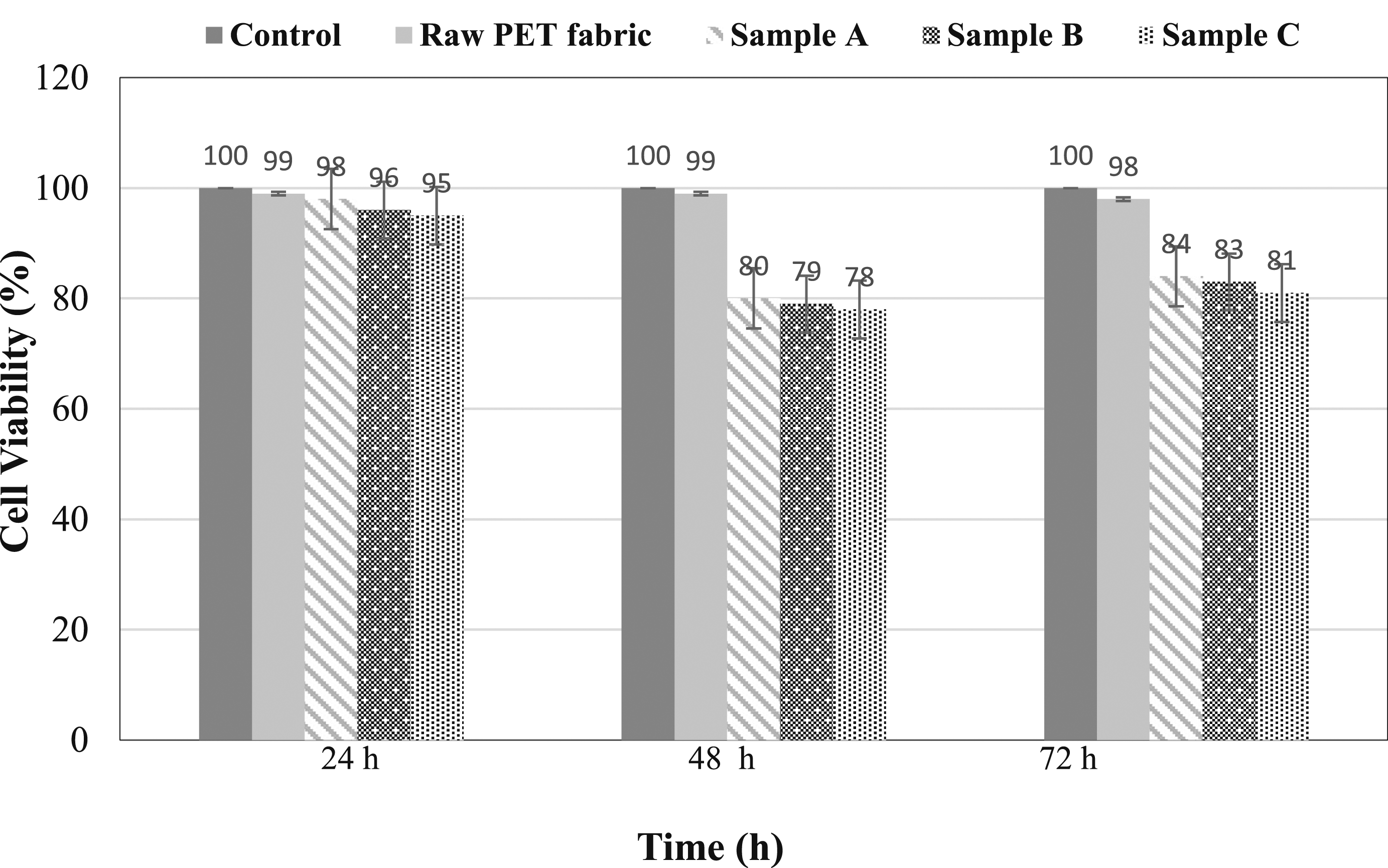
Electromagnetic shielding effect
Electromagnetic shielding reference limits for the evaluation.

Electromagnetic shielding results.

Differential scanning calorimetry
According to the results presented in Figure 6 and the graphics obtained from DSC curves, the melting temperature was measured as 250.9oC, 249.5oC, and 249.1oC for samples A, B and C, respectively. It is concluded that the carbon nanotube nanoparticles have lowered the melting temperature of PET from 260oC to around 249.5oC. A small but statistically significant decrease in melting temperature was observed with the increase in carbon nanotube nanoparticle concentration in the structure. It can be concluded that the new materials would provide advantages during processes such as dyeing and other treatments by energy savings in the future. DSC analysis for each specimen versus % content in MWCNT nanoparticles. (Sample A: 20 wt.% MWCNT, Sample B: 25 wt.% MWCNT, Sample C: 30 wt.% MWCNT)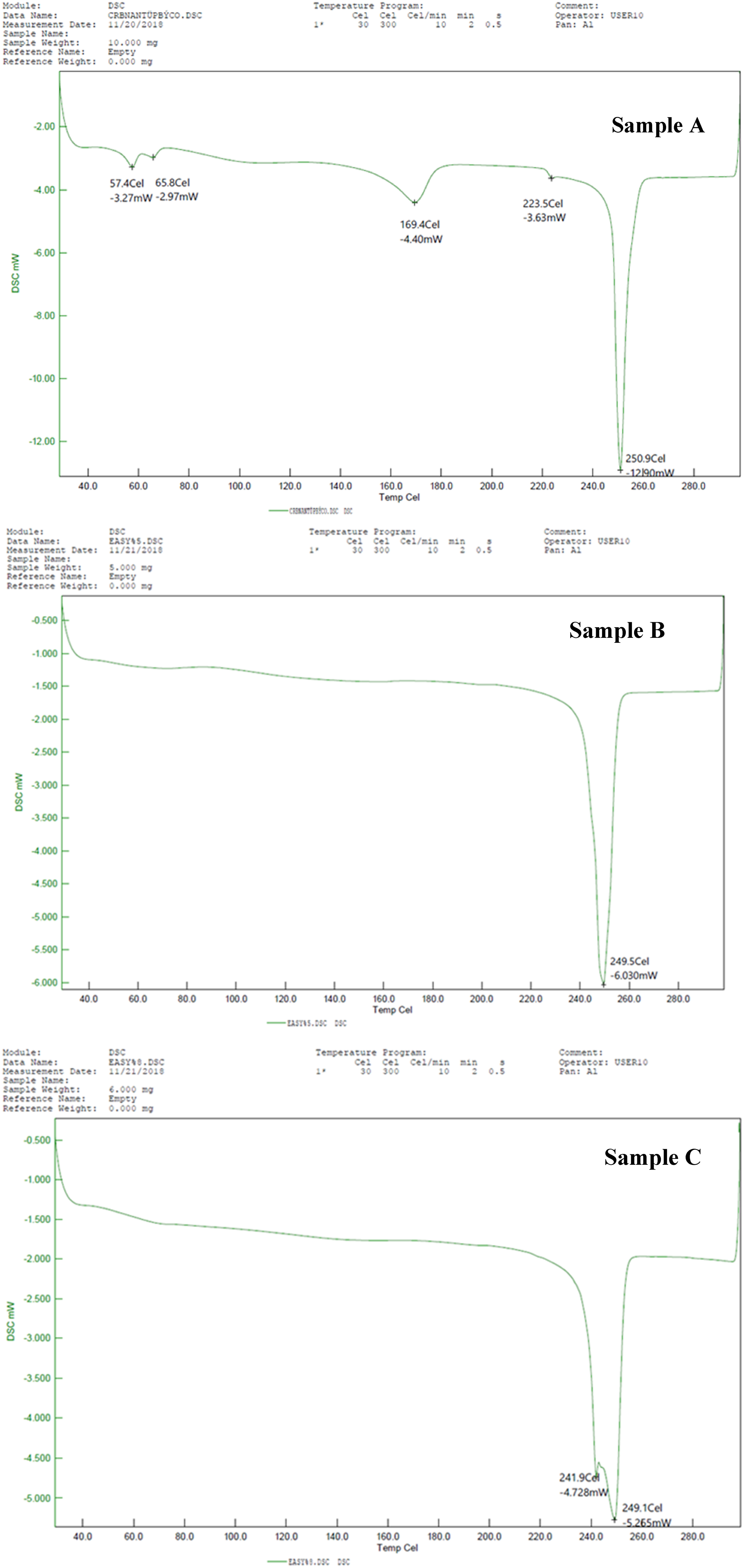
Stiffness
All fabrics have shown good elasticity according to the reported results presented in Figure 7. The stiffness showed a small but statistically significant decrease for all fabrics with the increase in MWCNT concentration and after 10 and 20 washes. The increase in MWCNT content created more elastic structures. It was also observed that the increase in the filler content exhibited higher elastomeric performance on the polyester resin embedded with nanoparticles.
47
It is thought that the MWCNT nanoparticles decreased the crystallinity and increased the amorphous structure yielding an increase in the elastic structure of the fabric. Higher percentages of nanoparticles have created more amorphous structures bringing more elasticity into the structure. According to the results, the newly designed pressure garments would provide flexibility and comfort to help muscle training during long use in rehabilitation. Stiffness (MD, machine direction; CD, cross direction; W, wash) for each specimen versus % content in MWCNT nanoparticles. (Sample A: 20 wt.% MWCNT, Sample B: 25 wt.% MWCNT, Sample C: 30 wt.% MWCNT).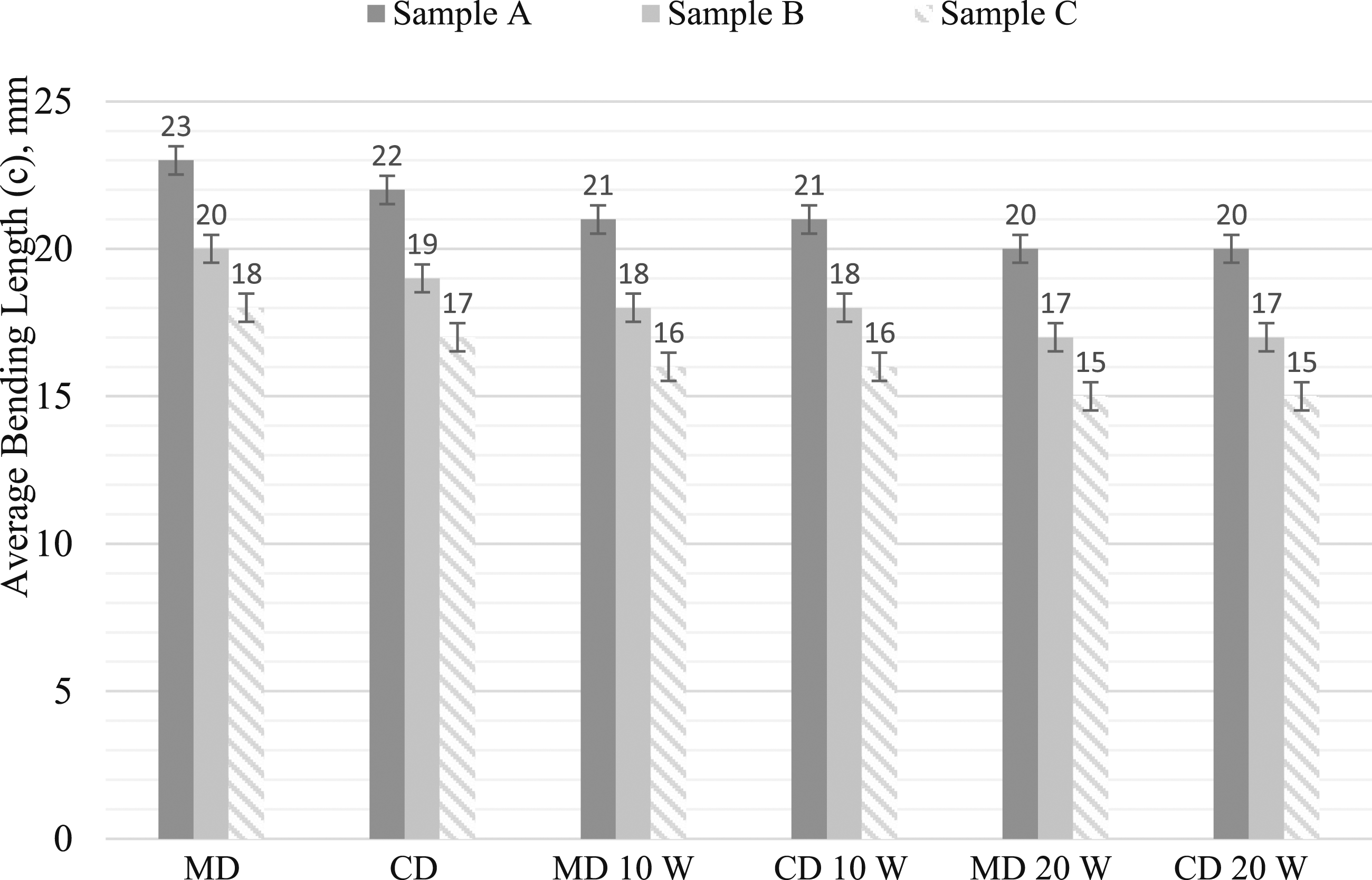
ANOVA and estimation of parameters from stiffness.

Pressure measurements
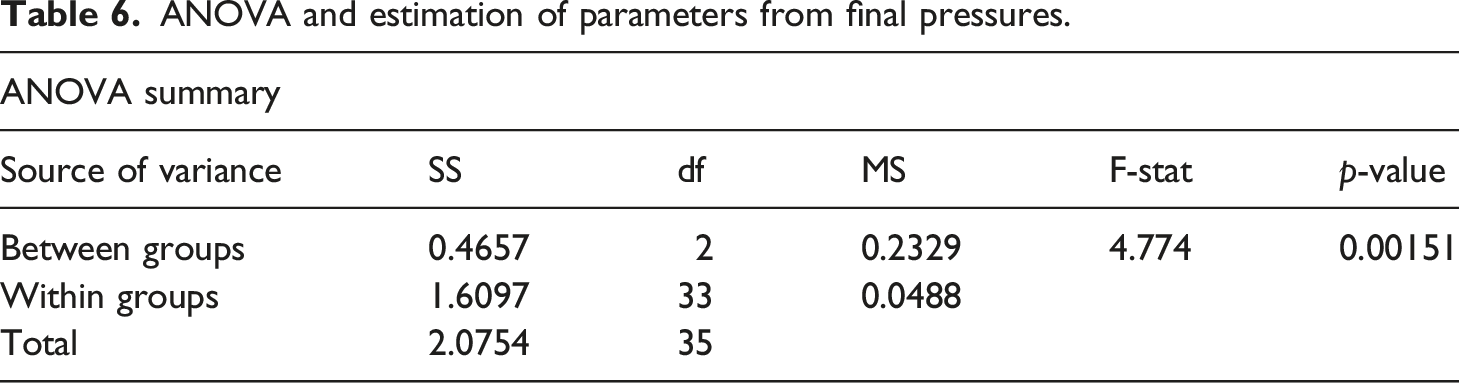
Exerted pressures were measured using wireless pressure sensors between 5.3 and 5.7 mmHg for the ankle and 4.9–5.2 mmHg for the calf, which are within the required medical range. The results are presented in Figure 8. Exerted pressures showed a small but statistically significant increase with the increase in MWCNT concentration and after 10 and 20 washes. It is thought that the increase in nanoparticle concentration decreased the crystallinity and thus the amorphous structure increased, creating a more elastic structure. Wash cycles also significantly increased the elasticity of the fabrics. Exerted pressures (mmHg) (A, Ankle; C, Calf; W, Wash) for each specimen versus % content in MWCNT nanoparticles. (Sample A: 20 wt.% MWCNT, Sample B: 25 wt.% MWCNT, Sample C: 30 wt.% MWCNT).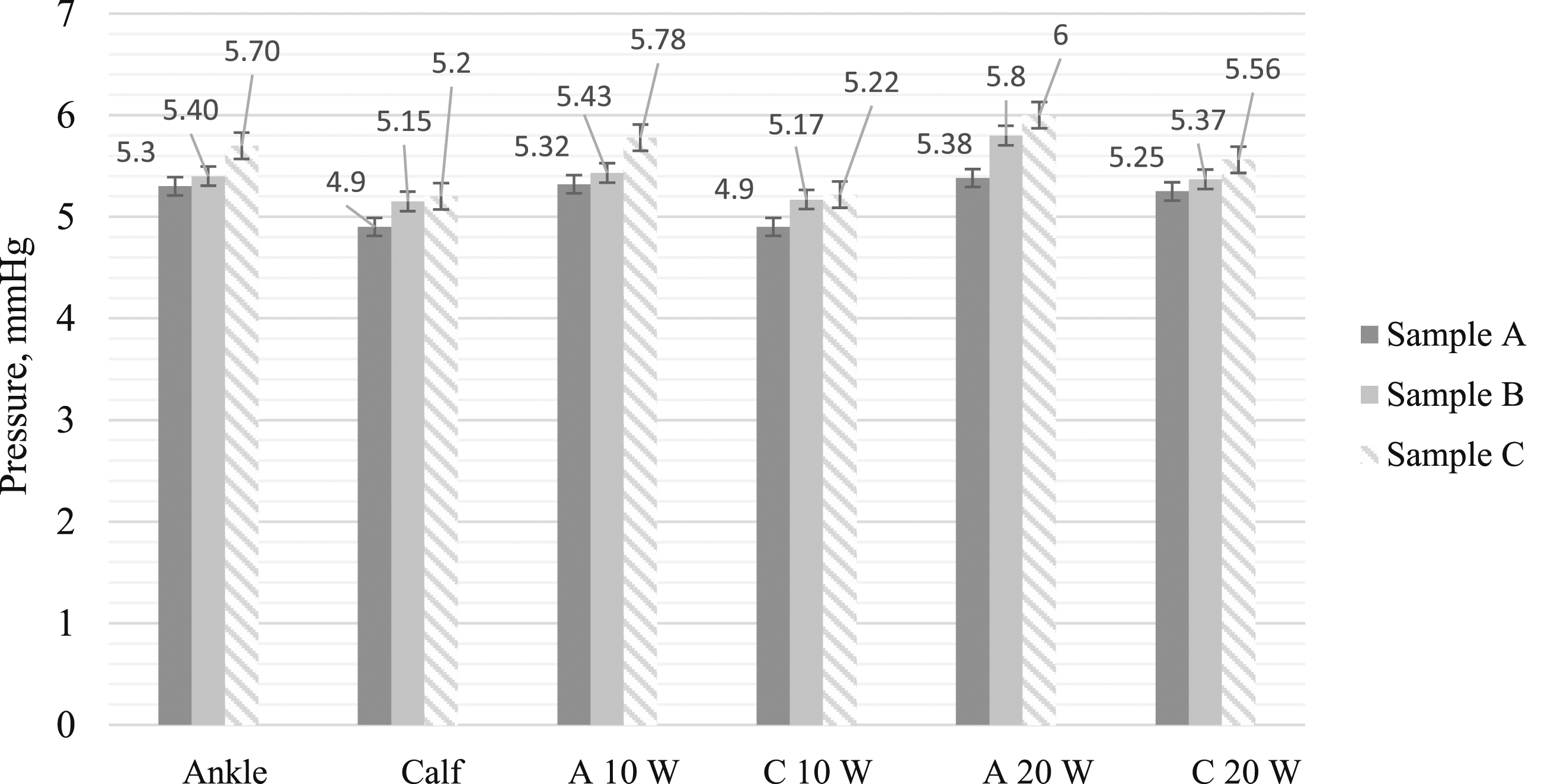
ANOVA and estimation of parameters from final pressures.
Conclusion
In this study, highly elastic conductive PET/MWCNT powernet fabrics were produced from MWCNT integrated melt-spun PET yarns and their antimicrobial properties was investigated in terms of microbe killing mechanism with the help of electric fields and the highly elastic structure.
Results showed that MWCNT has a statistically significant effect on antibacterial activity, cytotoxicity, electromagnetic shielding, stiffness, and exerted pressures. PET/MWCNT powernet fabrics showed excellent antibacterial activity against tested germs. A small but a statistically significant increase was observed with the increase in MWCNT concentration (from 94% to 99% for S.aureus and from 96% to 99% for E. coli) and 30 wt.% MWCNT samples showed better antibacterial activity. In addition, the antibacterial effect of MWCNT against E. coli was less durable to washing than S.aureus, and the effectiveness of MWCNT against E. coli decreased to approximately 50% after 20 washes, indicating good laundering durability of the antibacterial fabrics. In terms of cytotoxicity tests, the PET/MWCNT samples were found to be toxic-free without interrupting the cell line and primary cell growth in vitro and samples with higher MWCNT content showed a higher percentage of cell viability in comparison with samples with lower MWCNT contents. All samples with continuous MWCNT fillers have shown a good electromagnetic shielding effect in the range of 22.79–25.77 dB at the frequency of 0–1.30 GHz and classified in the general use class with providing very good protection according to the standard of FTTS-FA-003. The highest SE (35.29 dB) was achieved with 30% concentration of MWCNT at 86 MHz frequency. Thus, the materials have provided longer conductive networks and formed electromagnetic shielding. According to DSC analyses, it was observed that the MWCNT decreased the crystalline density (crystallinity) of PET fibers, resulting in a lower melting temperature of the samples. The stiffness showed a small but statistically significant decrease for all fabric samples with the increase in MWCNT concentration. MWCNT nanoparticles decreased the crystallinity and increased the amorphous structure, creating a more elastic structure with excellent conductivity. Exerted pressures showed a small but statistically significant increase with the increase in MWCNT concentration and the newly designed pressure garments would provide flexibility and comfort to help muscle training during long use in rehabilitation.
In the future, the new materials would provide advantages during processes such as dyeing and other treatments by energy savings and being environmentally friendly. Finally, the manufactured PET/MWCNT materials will convert the expansion and contraction generated by the wearer’s motion into electricity, killing microbes without the need for chemical finishes while providing a long elastic and strong structure with a close fit to help sensing and actuation. They would also provide a durable antimicrobial activity and an electromagnetic shielding effect during long continuous use for future designs. Future studies will focus on different fabric structures with different nanoparticle concentrations and different germs considering the circular economy principles by following ecological methods.
Supplemental Material
Supplemental Material - Antimicrobial Properties of Highly Elastic Conductive Poly(ethylene terephthalate)/Multiwalled Carbon Nanotube Fabrics
Supplemental Material forAntimicrobial Properties of Highly Elastic Conductive Poly(ethylene terephthalate)/Multiwalled Carbon Nanotube Fabrics by Nilüfer Y Varan, Pelin Altay and Yavuz Çaydamlı in Journal of Industrial Textiles
Footnotes
Declaration of conflicting interests
The author(s) declared no potential conflicts of interest with respect to the research, authorship, and/or publication of this article.
Funding
The author(s) received no financial support for the research, authorship, and/or publication of this article.

Supplemental Material
Supplemental material for this article is available online.
References
Supplementary Material
Please find the following supplemental material available below.
For Open Access articles published under a Creative Commons License, all supplemental material carries the same license as the article it is associated with.
For non-Open Access articles published, all supplemental material carries a non-exclusive license, and permission requests for re-use of supplemental material or any part of supplemental material shall be sent directly to the copyright owner as specified in the copyright notice associated with the article.
