




Abstract
Aramid has been proved to have excellent ability to protect against ballistic threats however, it has poor puncture resistance. In this research, flexible fabric materials with outstanding stab resistance were prepared with thermoset–aramid composites coated with SiC particles. The stab resistance and mechanical properties of the flexible fabric composites were evaluated. Results showed that the stab resistance of the thermoset–aramid fabrics was effectively improved by the introduction of SiC particles; however, the tear force was slightly decreased. Composites coated with 20 wt.% SiC particles exhibited the best stab resistance against knife cut. Scanning electron microscopy observation showed that the irregular SiC particles were embedded into the gaps among aramid fibers. The increased stab resistance was ascribed to the fact that the introduced SiC particles with hard and refractory nature could highly enhance the fiber-to-fiber friction and blunt the sharp metal blade by abrasion.
Introduction
High-performance fibers with high specific tensile strength and modulus have been widely used to fabricate light and flexible fabrics applied in body protection fields. For example, the body armors made from high-performance fibers can effectively protect the users against attacks, such as ballistic threats and sharp instrument injuries [1]. With the increased strictness in gun control legislation, the possibility of firearm attacks has been reduced. Meanwhile, the accessible incisive weapons make stabbing assaults more potential threats [2]. Compared with commercially available stab-resistant materials, such as metal ring mesh, titanium foil layers, rigid metal and ceramic, high-tenacity fabrics have relatively limited level of stab resistance, in spite of their excellent ballistic protection properties. The traditional stab-resistant armors are bulky and inflexible, which makes them uncomfortable to wear and difficult to conceal [3]. Therefore, the flexible stab-resistant materials with excellent wearability are in urgent need.
Nowadays, one of the most advanced strategies of protecting body armor against knives and spikes is the use of fabrics treated by special resins. Kim et al. explored the stab resistance of p-aramid fabrics reinforced with thermoplastic low-density polyethylene resin and thermoset epoxy resin, respectively [4]. It showed that both of the resin-treated fabrics could effectively block the penetration of knife impactor, and both of the penetration depths were less than the allowable penetration depth for “E1” energy level 1 defined in NIJ standard 0115.00. The epoxy resin-reinforced fabric exhibited a more excellent protective performance against knife and spike impactors. Hosur et al. examined the stab resistance of thermoplastic-Kevlar composites [5]. Quasi-static tests showed that the puncture resistance of resin-treated Kevlar was highly improved. Li et al. presented that the stab resistance of ultrahigh molecular weight polyethylene (UHMWPE)-unidirectional (UD) composites was significantly improved by thermoplastic films, particularly polyethylene terephthalate and polypropylene [6].
A new strategy of making light and flexible fabrics is to combine the flexible fabrics with hard and refractory particle coatings. The coatings could effectively prevent the penetration of knives and blades, and the fabrics retained their flexibility. It has been reported that TwaronR SRM is a commercially available stab-resistant material with SiC particle coatings. The SiC particles greatly enhanced the stab resistance of the fabrics. Gadow et al. developed cermet and oxide ceramic coatings on fiber fabrics based on thermal spray technology. Quasi-static stab testing results showed that aramid fabrics with hard ceramic coatings exhibited increased penetration resistance and energy absorption [7].
Due to its unique shear thickening behavior, silica powder has been also widely investigated as the reinforcing material in enhancing the stab resistance of fabrics. When silica particles are suspended in the carrier liquids such as ethylene glycol (EG) and polyethylene glycol (PEG) in high concentration, a non-Newtonian fluid known as shear thickening fluid (STF) is formed. The STF is a kind of special material whose viscosity can increase dramatically when the shear rates are above a critical value due to the formation of silica hydroclusters. The STFs have been proved to be helpful in improving the protective capability against the prevailing threats. Many attempts to strengthen aramid fabrics with STFs have been reported [8–13]. For such novel liquid body armors based on STFs, the promising results have been shown towards improved stab resistance in spike penetration. For knife stab resistance, however, the STFs offer a limited improvement [14]. Moreover, the applications of STFs still suffer several drawbacks, such as high manufacturing cost, evaporation, leakage of carrier fluids and air and/or moisture permeability for the comfort clothing purpose [15].
In this work, a high-performance and cost-effective flexible body armor was developed by using aramid fabrics impregnated with thermoset vinyl ester resin and then coating with hard and refractory SiC particles. The effects of SiC coating on the knife stab resistance and mechanical properties were investigated. Meanwhile, scanning electron microscopy (SEM) was applied to help identifying and explaining the mechanisms of fabric stab resistance. This research proved that the addition of SiC particles into thermoset resin/aramid composites could highly improve the performance of stab resistance.
Experimental
Materials
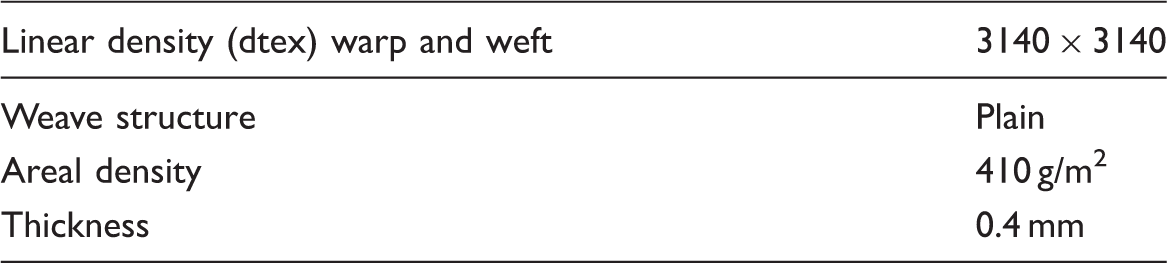
Specification of Kevlar fabrics.

SEM image of SiC powder (average size 0.45 µm).
Fabrication of thermoset–aramid composites coated with SiC particles
Parameters of stab testing samples.

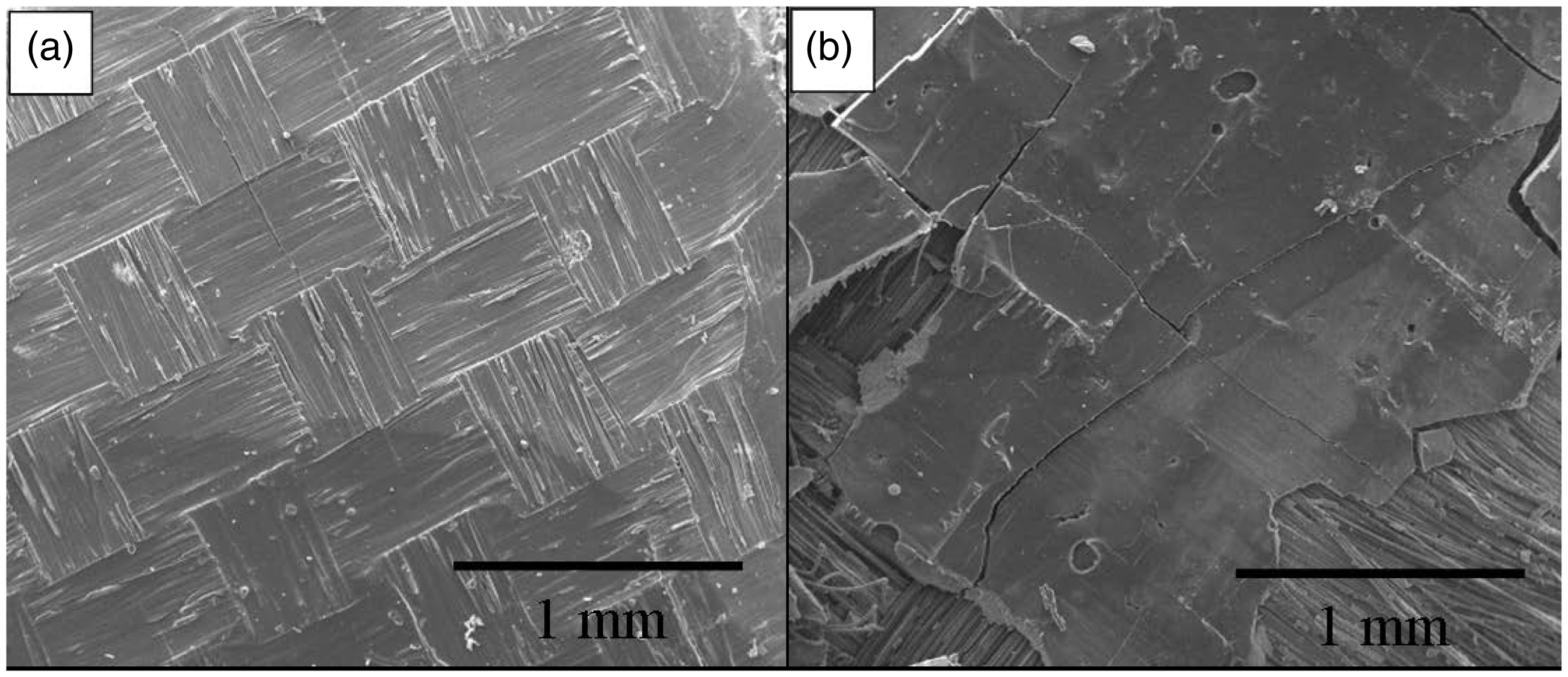
SEM images of the fabrics (a) without SiC; (b) after spraying with SiC.
Mechanical and drop tower stab resistance tests
The tear force was measured to evaluate the effects of SiC particle coatings on the mechanical properties of the flexible stab-resistant materials. Tests were performed using a universal testing machine (Instron 5966) based on the standard ISO 13937-4:2000.
The drop tower tests for the measurements of stab resistance were conducted on a dynamic puncture tester based on the NIJ Standard 0115.00. Figure 3 shows the picture of the dynamic puncture testing. For the stab testing, the impactors were rigidly mounted to the crosshead in a conventional rail-guided drop tower. The stab targets were placed on a multi-layer foam backing (Figure 4), as specified by the NIJ standard. This backing was composed of four layers of 5.8-mm-thick neoprene sponge, followed by one layer of 31-mm-thick polyethylene foam, backed by two 6.4-mm-thick layers of rubber. Synthetic polymer-based Polyart™ witness papers were placed between the fabrics target and the foam backing, to measure the depth of penetration into the target.
Dynamic puncture tester: (a) configuration; (b) picture of the target testing using the knife. Schematic diagram of the testing and backing material setup for drop tower stab resistance tests.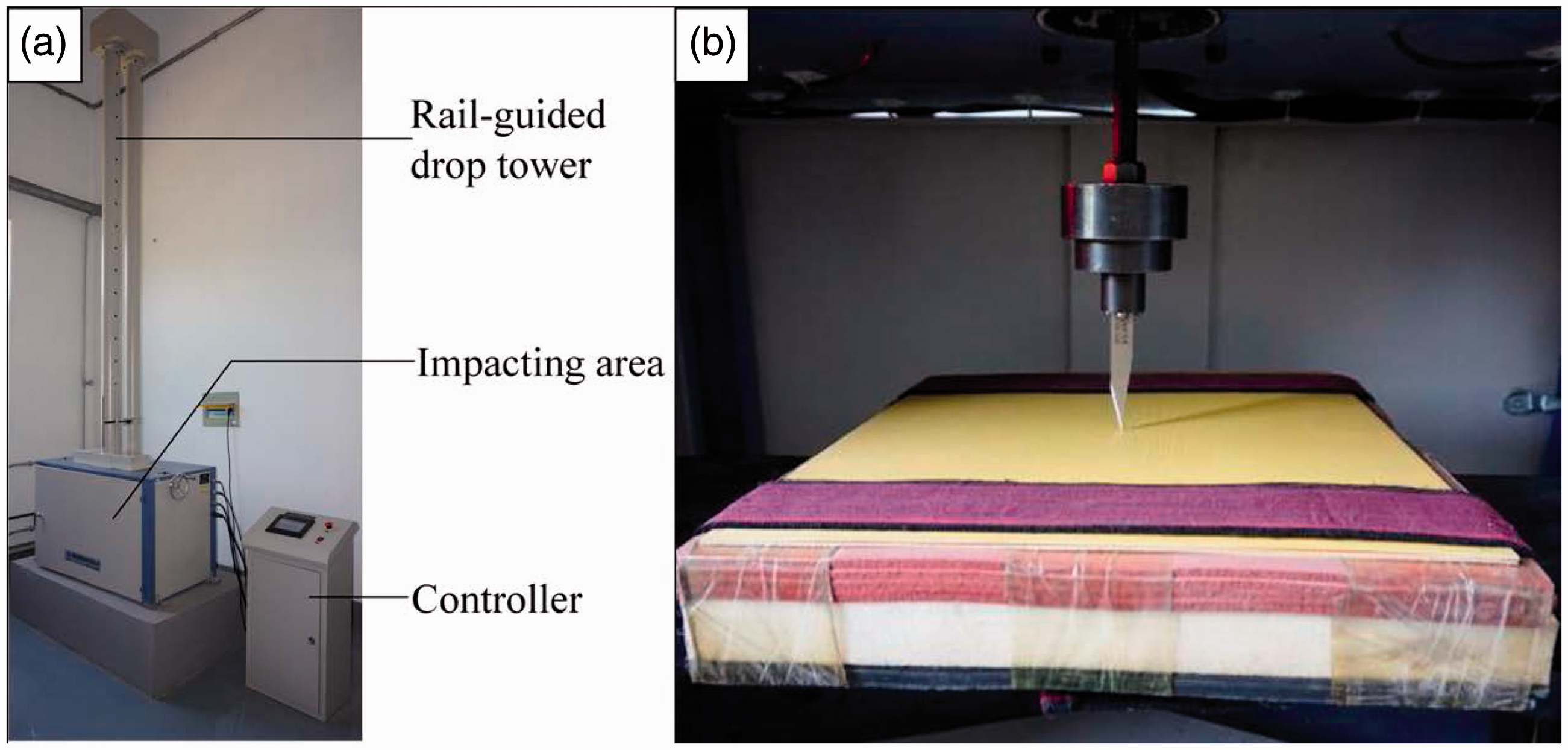

To perform a stab test, the impactor was mounted to the crosshead, and then loaded with specific weights. The crosshead was dropped from a fixed height to impact the target. In this paper, a specified impactor P1 knife with E1 strike energy level (24 J) was used. The SiC-coated side of the fabric was the stab face. The depths of penetration into targets were used to characterize the stab resistance difference of the specimens.
Imaging of the fabrics
To provide further insights into the stab resistance behaviors and mechanisms, photographs and SEM images of fabric targets at different magnifications were presented.
Results and discussion
Stabilities of SiC suspensions in different dispersants
The excellent stability of SiC suspension is essential for the uniform spray of SiC particles onto the fabrics. In this research, the suspension stabilities of SiC particles dispersed in different dispersants were investigated. The SiC particles (20 wt.%) were added into three different kinds of dispersants including PEG, TMAH, and PVP (1.0 wt.%), respectively. After magnetically stirred for 2 h, the suspensions were poured into 50 mL test tubes to observe the slurry settlements. The settling process of SiC particles dispersed in different dispersants is presented in Figure 5.
Sedimentation process of SiC particles dispersed in different dispersants.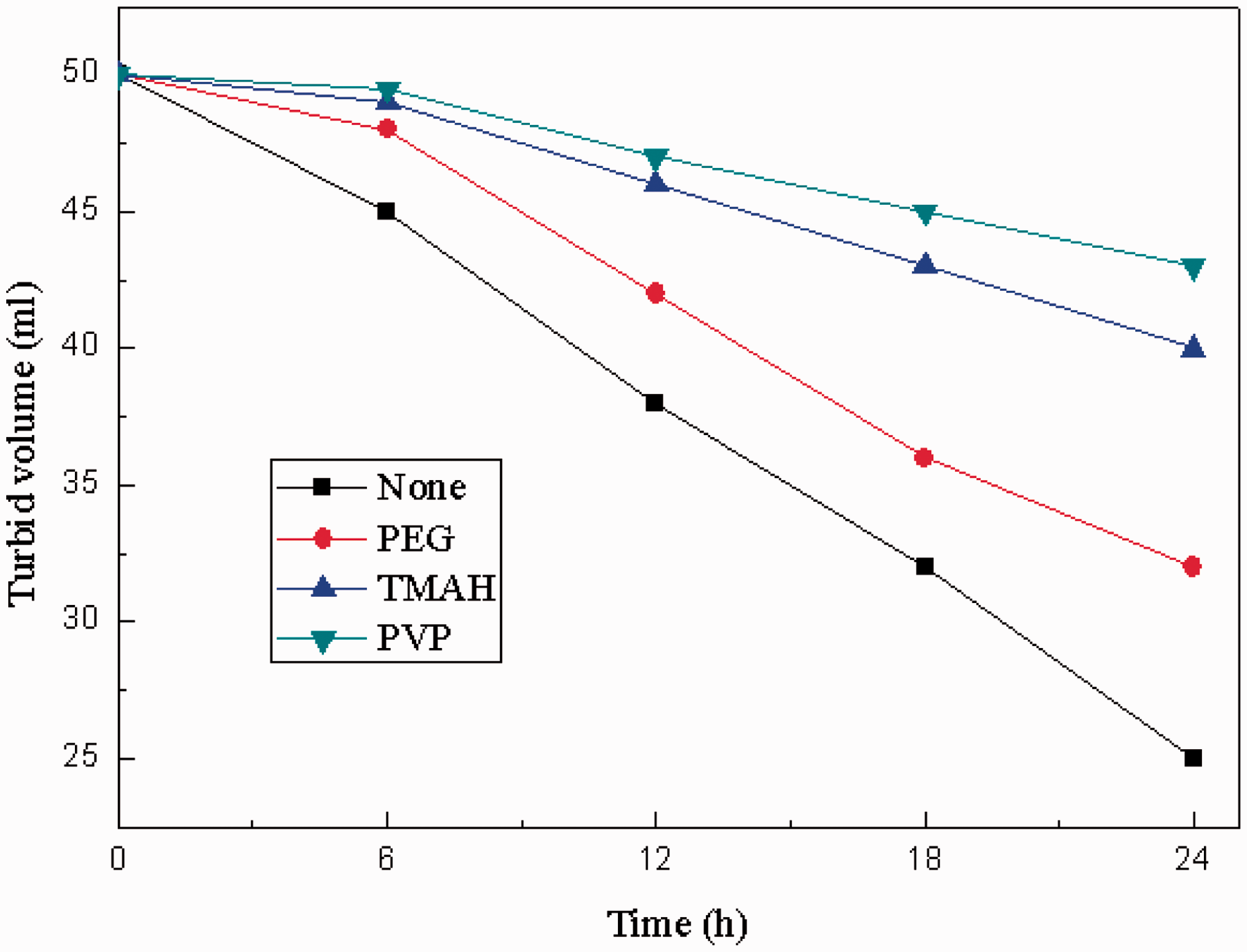
As shown in Figure 5, the dispersant PVP possessed the best dispersion stability for SiC particles, compared with PEG and TMAH. The non-ionic dispersant PEG possessed high polarity. The dispersion role of PEG for SiC particles was mainly attributed to the formation of steric hindrance, which repelled the SiC particles with each other. The ionic dispersant TMAH could simultaneously produce steric hindrance and electrostatic repulsion, which ensured the stable dispersion of SiC particles. Therefore, the TMAH exhibited much better dispersion stability than PEG. Compared with the structure of TMAH, the non-ionic polymer dispersant PVP owned a ring structure, which strengthened the steric hindrance effect. Meanwhile, the amide groups with negative charge also enhanced the electrostatic repulsion among SiC particles. Therefore, PVP exhibited the best dispersion stability for SiC suspensions, which was suitable for the uniform spray of submicron SiC particles onto the fabrics [16].
Stab resistance of different fabrics
The performance of stab resistance was evaluated by the dynamic drop tower stab tests based on the NIJ standard 0115.00. The performance of stab resistance was characterized by the penetration depth of the knife impactor. It was accessible that the lowest penetration depth represented the best stab resistance. Figure 6 shows the penetration depths of the nine layer fabrics targets with different SiC concentrations. The results showed that the specimen without SiC particle coating performed the largest penetration depth, with an average penetration depth of 8.2 mm, which exceeded the maximum allowable depth of 7 mm. The specimens coated with SiC particles, however, performed the better stab resistance. All the fabric targets achieved the penetration depths less than 7 mm, which met the requirement of NIJ standard for stab resistance of body armor. With the increase in SiC concentration, the penetration depth dramatically decreased when the SiC concentrations increased from 5 wt.% to 20 wt.%. The specimen coated with 20 wt.% SiC particles exhibited the lowest penetration depth, with an average value of 2.5 mm, implying the best stab resistance. However, when the SiC concentration was above 20 wt.%, the penetration depth was then slightly increased. The reason could be ascribed to the fact that the increased SiC concentration decreased the resin rate, resulting in a significant reduction in the adhesion property between the material interfaces.
Results of drop tower stab tests for specimens with different SiC concentrations against knife impactor.
For a more intuitive observation, the photographs of the fabric targets after the knife impactor damage are presented in Figure 7. The front (impact) face of the first fabric layer and the back face of the last fabric layer are shown in Figure 7. It was noted that extensive yarns were cut in the front face for both targets, while the damage level was obviously decreased for SiC/aramid/resin target. This performance was in accordance with the results of drop tower stab tests.
Photographs of fabrics after knife impactor damage.
In order to explore the effect of areal density on the stab resistance of the fabrics, specimens with 7 to 10 layer fabrics were applied to perform the drop tower stab tests. The specific energy absorption value, defined as the ratio of the stab energy to the areal density of specimen, was proposed to characterize the stab performance of the system from the aspect of energy. The penetration depths of specimens 0# (fabrics without SiC) and 4# (fabrics with 20 wt.% SiC) with different fabric layers are illustrated in Figure 8. It was observed that the stab resistance was continuously improved with the increase in areal density. For fabrics 4#, nine layers of fabrics (areal density of 6.75 kg/m2) were able to meet the requirements of stab-resistant standards, and the corresponding specific energy absorption value was 3.56 J·m2/kg. However, for fabrics 0#, the minimum layer to meet the comparable stab-resistant level was 10 (areal density of 7.50 kg/m2), and the corresponding specific energy absorption value was 3.20 J·m2/kg. Therefore, it can be concluded that 20 wt.% SiC additive increased the energy efficiency by 11.25%, which promoted the lightweight of anti-stab material by 10 wt.%.
Drop tower stab test results for specimens with different fabric layers against knife impactor.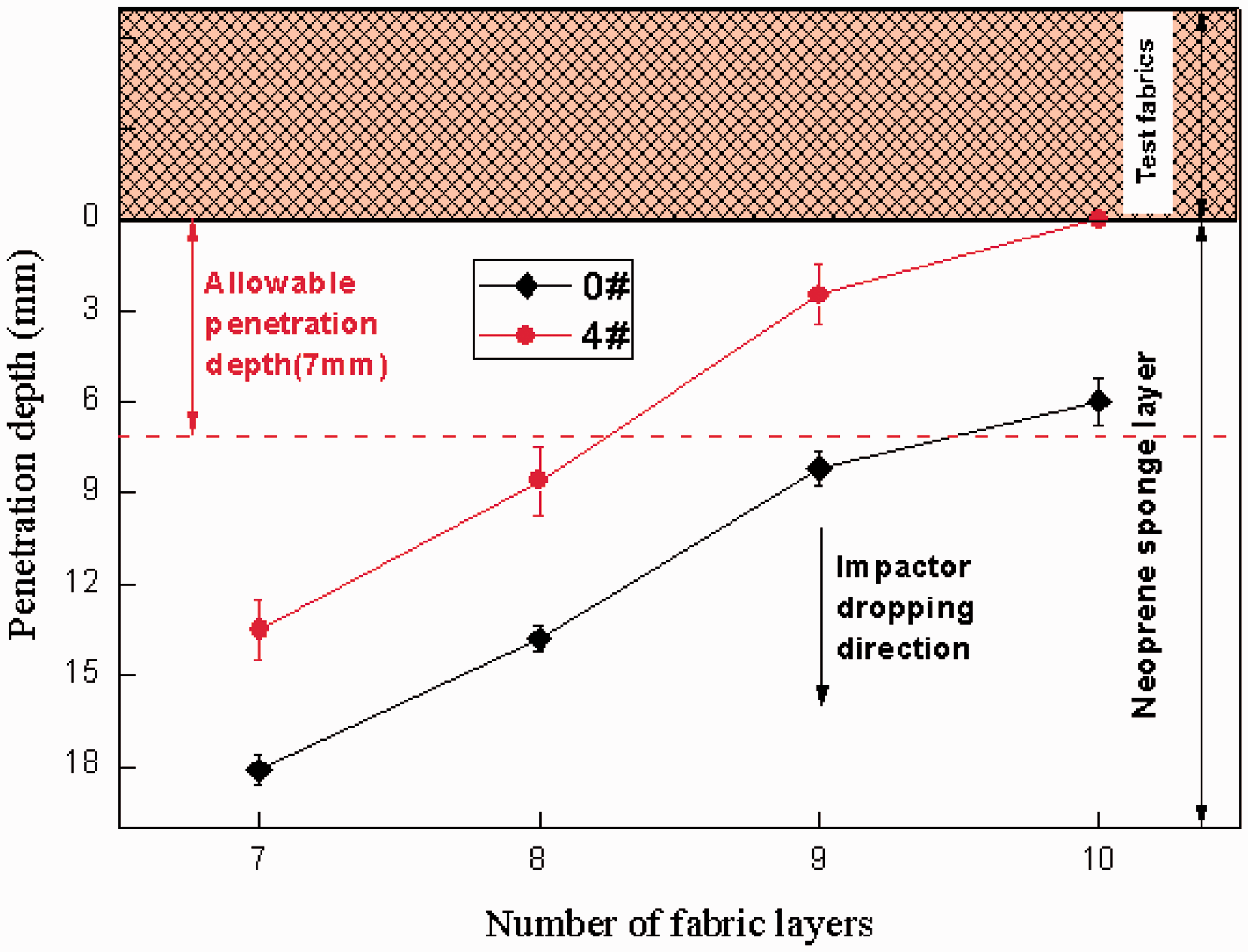
Mechanical properties of fabrics
The tearing property is an important criterion for evaluating the performance of flexible composites. The tear force of the fabric has an excellent correlation with the tensile breaking strength, which is an important failure form in the puncture failure of the fibers. The tear forces of specimens from 0# to 5# are illustrated in Figure 9. It was noted that with the increase in SiC concentration (the resin rate was reduced accordingly), the tear force of the material gradually decreased. Compared with that of specimen without SiC particles, the tear force of specimen containing 25 wt.% SiC was reduced by 15.7%.
The relationship between tear force of fabrics and SiC concentration.
In order to explore whether this decline was caused by the resin rate or SiC concentration, the tearing property of specimens with resin only (same fabric and resin ratio compared with 0#–5#, without SiC) was evaluated as a comparison. The tear forces for specimens with different resin rates are illustrated in Figure 10. It can be seen that with the decrease in resin rate, the tear forces of the fabrics gradually increased, which was in accordance with the variation trend in Figure 9. It indicated that the addition of SiC lowered the tearing properties of the fabrics. In other words, the SiC coating was not contributed to the maintenance of tear properties of the fabrics.
Relationships between the tear force of fabrics and resin rate.
Microstructure and anti-stab mechanism
The SEM images of fabric specimens with and without SiC coating at different magnifications are shown in Figure 11. As shown in Figure 11(a) and (b), the fibers in fabrics only impregnated with resin showed a smooth appearance, suggesting that the resin was well wetted on the surfaces of the fibers. The fibers in fabrics with resin and SiC coating, however, exhibited a different morphology. As shown in Figure 11(c) and (d), SiC particles with irregular shapes were embedded into the gaps between the fibers.
SEM images of the fibers at different magnifications: (a and b) fabric only impregnated with resin; (c and d) fabric coated with resin and SiC.
The vinyl ester resin performed excellent mechanical properties. When added into woven fabrics, the resin matrix provided additional toughness to the fabrics, which required more energy to knife cut. The impregnated fabrics also showed improved friction for the individual threads. Therefore, the penetrating objects cannot change the fabric structures and push the fibers aside easily.
SiC, one of the most outstanding ceramics, has been widely used as bullet-proof material and abrasive due to its high hardness and excellent wear resistance [17,18]. As mentioned above, the SiC particles dispersed among the fibers reduced the tear properties of fabrics. However, the anti-stab performance of the fabrics was improved due to the coating of SiC particles. The SiC particles with irregular shapes may cause damage to fibers when the fibers were stretched, which may be one of the reasons for the reduced tear force of the fabrics. In spite of this, the addition of SiC increased the fiber-to-fiber friction. The friction among the fibers was a key factor to ensure the stab resistance of materials. The addition of SiC was helpful to prevent the fibers slipped away upon the knife cut down. On the other hand, the hard coating could blunt the sharp metal blades by abrasion, and the high friction between the ceramic coating and the metal blade stopped further penetration.
Conclusions
In this research, the vinyl ester resin–aramid composites coated with SiC particles were fabricated. With the addition of SiC particles, the stab resistance of composites against knife penetration was highly improved. The hard and refractory SiC particles were contributed to increasing the fiber-to-fiber friction and blunting the sharp metal blades by abrasion, leading to the enhancement in stab resistance. Meanwhile, the tear forces of the fabrics were slightly decreased. The SiC particles with irregular shapes might be detrimental to the fibers under stretching, leading to the reduction of the tear performance of the fabrics. Systems with 20 wt.% SiC concentration obtained the optimized stab resistance against the knife penetration. The added SiC particles increased the energy efficiency of the fabrics by 11.25%, and decreased the weight of the anti-stabbed material by 10 wt.%. The results indicated that the SiC particles should be a promising candidate in the fabrication of high-performance anti-stab fabric composites.
Footnotes
Declaration of conflicting interests
The author(s) declared no potential conflicts of interest with respect to the research, authorship, and/or publication of this article.
Funding
The author(s) disclosed receipt of the following financial support for the research, authorship, and/or publication of this article: This work was supported by the National Key Research and Development Program of China (No. 2016YFC0800300) and the Science and Technology Development Program of Tianqiao District, Shandong Province (No. TQ201510).