




Abstract
In this study, wet wipes were produced for body applications with nonwoven fabrics consisting of polyester and cellulose (viscose and Tencel®). Fabrics were wetted by natural-based wetting solutions (rose water, olive oil) which were functionalized by sodium alginate and natural antibacterial agents (cinnamaldehyde and geraniol) without preservatives. Besides physical characteristics (weight, thickness, porosity, fiber orientation), bending rigidity, Handle-O-Meter measurements, and moisture management test parameters of the nonwoven fabrics were determined. Subjective hand and wiping performances of produced wipes were determined by subjective evaluations carried out on 10 female subjects. According to the results, 100% Tencel® and its blend with viscose have good absorption and moderate transfer characteristics. Polyester content up to 60% is acceptable for wet wipes for the body according to their liquid absorption, transfer, and subjective evaluation results if fabric weight is sufficient. Among the functionalized wetting solutions, antibacterial performance of the solution including olive oil, sodium alginate and cinnamaldehyde was the maximum and it has acceptable hand values according to objective Handle-O-Meter results and subjective evaluation results.
Introduction
Increased use of wipes in industrial and consumer applications as a result of modernization and increased consumer awareness has led to a big market among personal hygienic products since 1990s. In United States, market growth of wet wipes in 2011–2016 is 5.1%, consisting of mainly personal care, household/home cleaning, and industrial cleaning wipes [1,2]. Besides baby care, many application areas (account 50% of the sales) exist such as face and eye cleaning, make up removing, sun protection (SPF), self-tanning, anti-perspirant, insect-repellent lotion applications on skin, treatment of dry or oily skin, body cleaning, and surface cleaning in houses and industry [3–5]. Using a wipe is quicker and easier than other cloth/paper towels for dispensing a liquid. Qualifications necessary for baby care wipes determined by subjective panel tests are softness, elasticity, thickness, necessary wet strength in cross direction, and thermal prints [6]. In a patent study [7], dynamic friction resistances of wet wipes were evaluated subjectively after wiping arms and necks of subjects by ratings of stickiness, roughness, dampness, and white appearance after usage. A similar blind clinical trial study was carried out on premenopausal and postmenopausal women to investigate the effects of a prototype feminine hygiene wet wipe and a standard dry toilet tissue on the vulvar skin [8].
Wet wipes consist of two main components: absorbent fabric and the wetting solution. Generally blends of wood pulp or cellulosic fibers (viscose and cotton) with synthetics; mainly polyester, polyamide, polyethylene, polypropylene, polyvinylalcohol, and bicomponent fibers [9] are used as materials [10,11]. Linen, jute, silk, ramie, hemp, and bamboo may also be used for wet wipes [11,12]. Viscose fibers are a preferred component of fiber blends as they provide desirable wettability for most cleaning lotions when they are used as a component of a nonwoven fabric because of the relatively high surface energy of viscose rayon (∼50 dynes/cm) [6]. Spunlace (roughly half of the market), airlaid, carded, wet laid, needle punched, and composite nonwoven fabrics are used for absorbent fabrics of wet wipes [1]. Spunlace technology is a common method for producing soft, flexible webs having optimum cross direction modulus which gives an idea about the force required to crumple the fabric [6].
Wetting solutions of wet wipes may consist of hydro alcohols, emulsions or oils [5]. They may include alcohol, binder, softener, surfactant, pH buffering material (organic and inorganic acids), emulsifier, silicone oils, perfumes (aleo vera, cinnamon, lemon leaves, lavender, chamomile, etc.), mineral powders, antibacterial agents, and their combinations. Lotions and medicines may also be applied on wet wipes [13–18]. Moreover, antibiotics (antibacterial and/or antiviral), antioxidants, vitamins (A and E), biological agents, swelling agents, absorptive agents, sedative agents, color pigments [19], and sodium alginate [20] may also be used in wetting solutions of wet wipes. Foaming proteins, such as May-Tein SY, May-Tein C or Supro-Tein S, and their super mild cleansing system, Biobase® SMC, can also be incorporated into wipes for makeup removing, skin cleaning, and body cleaning applications [9]. In a patent study [21], wet wipes including sodium bicarbonate were produced for unpleasant odor prevention and skin healing. A similar two-layered fragrance emitting wet wipe including an antibacterial agent was suggested [22]. According to subjective evaluation results of wet wipes including natural mineral powders (talk, kaolin, etc.) aiming skin relief and pleasant feeling, surface friction of the skin decreased by 95% after wiping. Its performance was further evaluated subjectively for dampness, stickiness, roughness, and whiteness after usage [7]. A test was carried out to determine the effect of wet wipe on skin moisture level by conductance measurements on arm skins of twenty subjects after 30 min of wiping [23]. In a preceding study [24] daphne oil and rose water was used as main wetting solutions combined with zeolite and antibacterial active agent alpha-pinen and it was aimed to leave some of the alpha-pinen caved within zeolite on skin to create healing effect after wiping.
An inadequately preserved wipe product could potentially harbor pathogenic organisms, causing infection or illness [9]. But preservatives which are used to keep the wipes hygienic and sterile by the time it contacts the consumer’s body lead to skin irritations and allergic reactions [25]. Generally used preservatives are alcohols, paraben, organic acid, phenoxyethanol, and glycols. As a result of hazardous effects of chemicals and preservatives, use of natural based products in wetting solutions has gained importance. Besides olive oil, which is one of the main wetting solutions of this study, volatile oils of different plants such as lemon, thyme, cinnamon, and carnation were used as components of wetting solutions [26,27]. Main solution application methods of wetting solutions on nonwoven fabrics are spraying or soaking it in a bath. The most common rate of solution saturation is 300–400% of fabric absorption capacity, which is 3–4 g of liquid per gram of fabric [5].
Liquid absorption and transfer characteristics are crucial for wet wipes. It is of great interest to study the liquid transport in dry nonwoven fabrics such as the initial stage of liquid absorption in dry wipes. The dry fabric should absorb liquids and the wet wipe should be tolerant to lotions and keep applied liquid in the product until the moment of use and release it for the intended purpose [28]. The phenomena of vertical wicking, absorbency, and liquid spreading are affected by the material (blend ratio), fiber diameter, fiber orientation distribution, thickness, weight, porosity, pore size, its distribution, and tortuosity of the pores [29–32]. For the wet wipes, at least a portion of the fibers must have a surface energy that is high enough to allow them to be wetted by the wetting solution [6]. When transfer of liquid within the fabrics is considered, behavior of cellulose belongs to the category where wicking is accompanied by diffusion into fibers (two simultaneous processes are operating: capillary penetration and diffusion). Because of fiber swelling, sorption within the fibers decreases the volume of the liquid flowing in the capillary spaces. Behavior of polyester belongs to the category where wicking is accompanied by adsorption on fibers.
In this study, wet wipes were produced from spunlace nonwoven fabrics having different compositions and natural-based wetting solutions. Rose water and olive oil were functionalized by sodium alginate and herbal antibacterial agents to enable preservation and controlled antibacterial performance. Physical, mechanical characteristics, and moisture management parameters of the wet wipe fabrics were measured. Subjective hand and performance evaluations were carried out to determine the sufficiency of the wipes for different end uses. Results were put forward about optimum fabric and wetting solution combinations and relationships between objective and subjective data.
Experimental
Materials and production of wet wipes
Wet wipe codes.

Note: CV: viscose; PES: polyester.
3 g/L.
0.5 Molar.
Antibacterial agents were solved in ethanol (Sigma Aldrich) and concentrations were arranged according to the final amounts of main solutions (rose water and olive oil) and sodium alginate. After mixing rigorously with a magnetic mixer, homogeneous solutions were obtained and ethanol was evaporated from the solution. Wetting solutions were applied on nonwoven fabrics by spraying (Alfajet W-77S) and liquid amounts were arranged according to the literature [5,10] as 30% of their absorption capacities.
Physical and mechanical characteristics of the nonwoven fabrics
Weight values of nonwoven fabrics were determined according to ASTM D3776 Option C. Thickness values were measured according to EDANA WSP 120.6 (05) by the producer. Bending rigidity values were measured according to ASTM D 1388-96 (2002). Air permeability values were tested according to ASTM D 737 under 200 Pa pressure.
Fiber orientations of the nonwoven fabrics were determined by angle measurements on microscopic photos of the fibers with horizontal axis (Figure 1), a method modified from a preceding study [29]. Microscopic images were taken with 10x magnification by a Motic DMB3 microscope camera (Motic Co., China) from 20 points of 20 samples (Total 400 images).
Angle measurements from microscopic fabric images.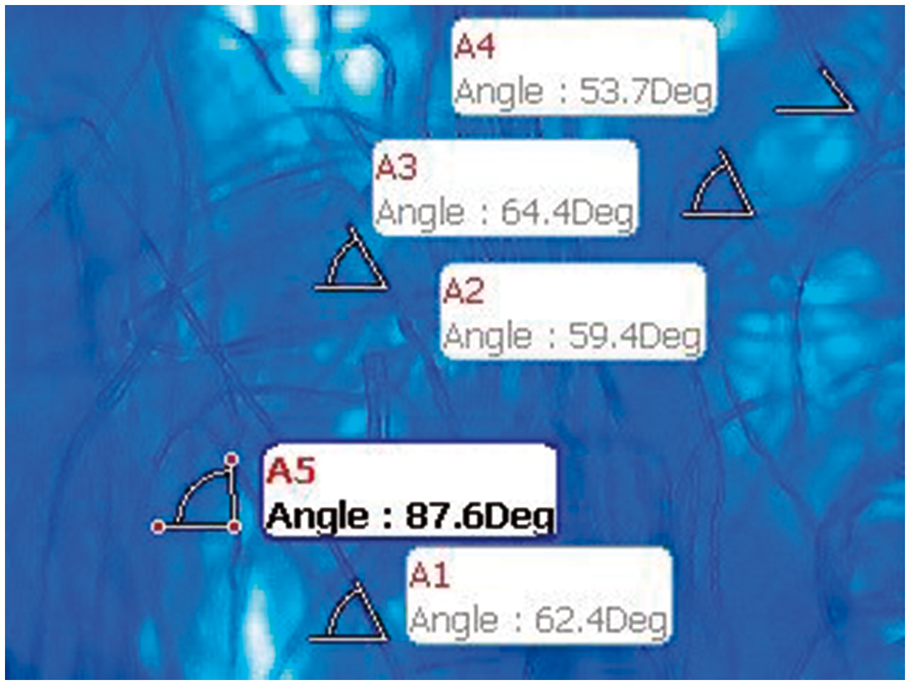
Porosity characteristics of the nonwoven fabrics were determined according to a preceding study [29] on 2 × 2 cm fabric samples. Volume of the dry fabric (Vf) can be defined according to equation (1)

md: dry weight (g)
δf: fabric density (g/cm3).
Fabric samples were wetted with glycerin to fill the pores with the liquid without absorption and liquid weights filling the pores were calculated from the weight differences of wet and dry fabrics (mp = mw − md). Volume of liquid filling the pores (Vp) is the free space volume within the fabric structure and porosity of the fabric can be calculated according to equations (2) and (3) in turn. δl is the density of the used liquid (glycerin density which is 1.261 g/cm3) [29]


Moisture management characteristics
Dynamic moisture absorption and transfer properties of the nonwoven wet wipe fabrics were tested by moisture management tester (MMT) (SDL Atlas Textile Testing Solutions Co.) which measures liquid transfer in multi-directions by electrical conductivity principle according to AATCC 195-2009 [43].
Antibacterial tests
Antibacterial properties of the wet wipes including natural-based solutions were investigated by agar diffusion method (SN 195920:1992) against Staphylococcus aureus (ATCC 6538) and Escherichia coli (ATCC 25922) strains to simulate real end use conditions of wet wipes. Bacterial suspensions were obtained from single colonies isolated on agar plates and inoculated in the appropriate broth for overnight cultures at 35℃. Bacterial suspensions (100 µL, 108 CFU/mL) were dropped onto LB agar (Difco) plates. Wet wipes (1 cm diameter) were placed on the surface of the agar and incubated at 35℃ for 24 h. Kanamycin (30 µg) antibiotic disc was used as a control. All tests were performed in triplicate and the antibacterial activity was expressed as the mean of inhibition diameters (mm) produced by the wipes.
HOM measurements and subjective hand-performance evaluations of the wipes
Handle-O-Meter (HOM) stiffness measurements were conducted on the nonwoven fabrics in dry and wet wipe forms according to Method E of JIS L1096 to have an idea about their bending and surface roughness characteristics. The force required to deform a fabric through a restricted opening by a plunger is measured [44]. Specific hand value is calculated in mNm2/g from the force obtained for different directions and two faces of the fabric.
Subjective hand and performance evaluations were carried out with wet wipes having 10 x 5 cm dimensions on 10 female subjects (having ages between 25 and 40) who are frequent wet wipe users and have interest on natural based products. Five-point subjective rating scales were used for dampness, softness/compressibility, surface roughness, bending, and stickiness evaluations. A subjective five-point rating scale was used; 1 meaning ‘Do not feel at all’ to 5, meaning ‘Feeling completely’. Hand evaluations (softness, roughness and bending) were carried out according to a preceding study about fabric hand [45]. Dampness and stickiness evaluations were carried out after wiping forearms of the subjects once with the sample wipe [7]. Evaluations were carried out blind and at standard atmospheric conditions (20℃, 65% relative humidity) (Figure 2). Subjects came into the test chamber 20 min before the test for acclimatization.
Subjective hand evaluations.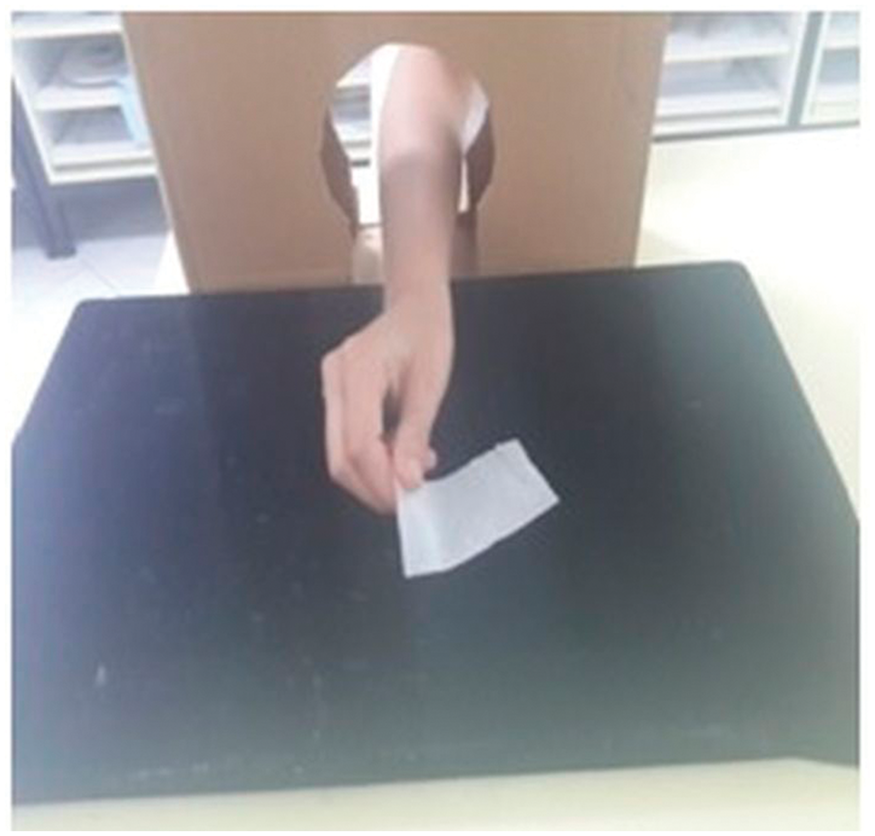
Statistical analyses
SPSS 15.0 Statistics Software (SPSS Inc., Chicago, IL) was used for parametric and non-parametric analyses of the results. Analysis of variance (ANOVA) test was carried out for variance analysis of objective measurement results. Duncan and Student–Newman–Keuls (SNK) tests were used to examine the differences between measured parameters of the fabrics. Correlation analysis was conducted to determine relationships between objective and subjective results. A value of p < 0.05 indicated statistical significance. Kendall’s Consistency test was used to evaluate the degree of agreement between subjects. Kendall’s coefficient of concordance (W) is a measure of inter-judge reliability and agreement between fabrics evaluated by each judge (subject). Kruskal–Wallis H-test, which is the non-parametric equivalent of one-way ANOVA test, was used for variance analysis of subjective evaluation results. The Mann–Whitney U-test, which is the non-parametric equivalent of Student’s t-test, was used for double comparisons of each fabric for their subjective evaluation results [46].
Results and discussion
Fabric physical and mechanical characteristics
Physical and mechanical properties of fabric.

Note: CV: viscose; HOM: Handle-O-Meter; SD: standard deviation; PES: polyester.
Thickness values were obtained from company technical sheets.
Porosity values of the fabrics can be seen in Table 2. According to statistical analysis results, differences between porosity values of the fabrics were found insignificant (p > 0.05). As stated in a preceding study [29], the presence of large number of pores in thick/heavy samples provides more capillary channels to transport liquid. But porosity measurement technique used in this study could not be able to differentiate nonwoven fabrics.
MMT results of the nonwoven fabrics (top).

CV: viscose; MMT: moisture management tester; PES: polyester; SD: standard deviation.
Superscript alphabets show statistical significance of the results (p < 0.05), same letters having identical properties.
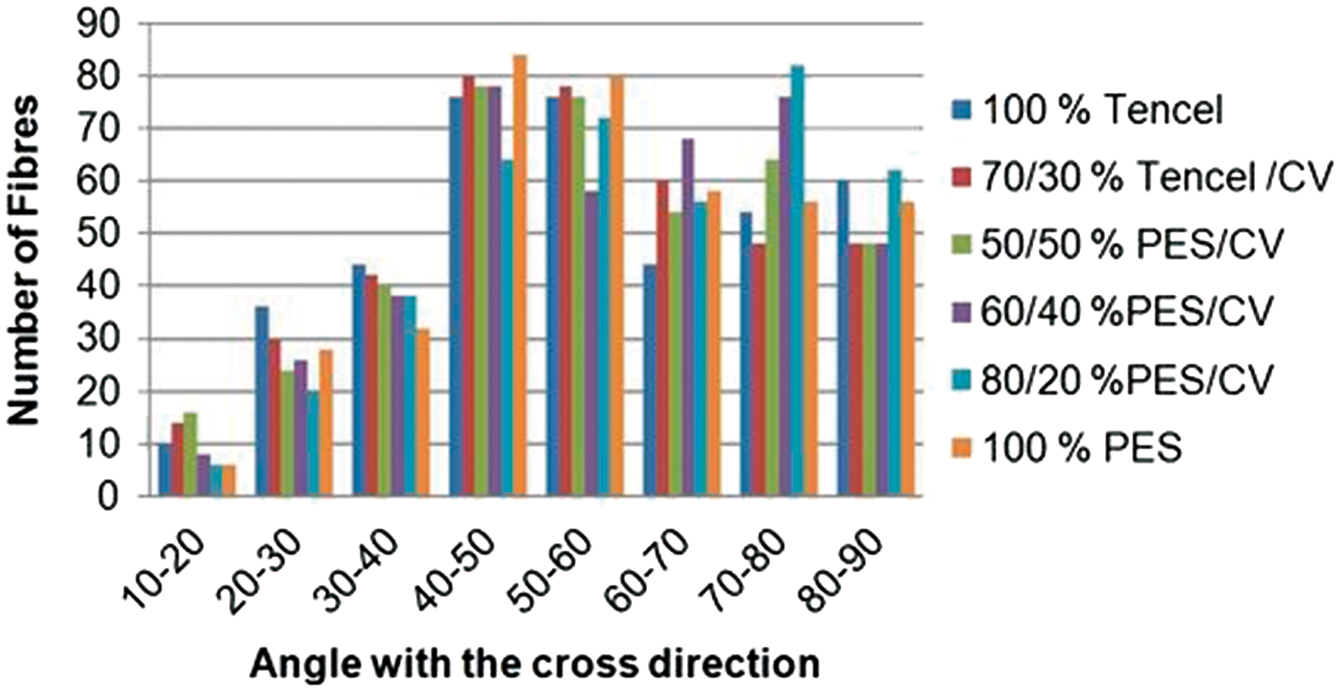
Fiber angle distributions with cross direction.
A certain amount of crumple resistance is necessary for a wet wipe fabric for an accepted hand and performance. Therefore, fabric bending rigidity and HOM measurements were conducted and results are compiled in Figure 4. According to the results of both parameters, which are in harmony as expected, significant differences were detected among all fabrics (p < 0.05). Highest values were measured for 100% Tencel fabric (I) and lowest values were measured for 50/50% PES/CV (III) fabric. As HOM measurements also include surface roughness characteristics, bending rigidity measurements differentiated fabric differences more than HOM results. All the fabrics have significantly different bending rigidity values from each other, but according to HOM results giving idea about hand performances of the fabrics, 100% Tencel fabric (I) is the stiffest one. The 70/30 Tencel/CV (II), 60/40% PES/CV (IV), and 100% PES (VI) fabrics have statistically identical performances. When fabric bending rigidity is considered, fabric weight is more effective on this property than material type confirming a preceding study [47]. One exception to this rule is 100% Tencel fabric (I) having the highest rigidity.
Boxplot diagrams of (a) bending rigidity (b) stiffness (HOM) values.
Fabric permeability and liquid transfer characteristics
Air permeability and moisture management properties of the nonwoven fabrics were measured to have an idea about fabric structure. Air permeability values are statistically different from each other (p < 0.05). The 50/50% PES/CV fabric (III) have maximum air permeability and 100% Tencel fabric (I) have the minimum permeability (Figure 5). It can be concluded that, air permeability changes according to fabric weights for blended fabrics including more than 50% PES (III, IV, V and VI). This is an expected result that the number of fibers which the air passes through is less for these fabrics. But when cellulosic fabrics (I and II) are considered, they have lower air permeability values because of the rougher fiber surfaces making more friction with air passing through. Air permeability is not a property directly affecting performance of a wet wipe but we can get an idea about its pore structure and tortuosity enabling ascent of the liquid within the structure.
Boxplot diagram of air permeability values.
Moisture management results of fabric top sides are compiled in Table 3. Capillary penetration of a drop indicates several important properties of a textile fabric: including repellency, absorbency, and sorption of stain. When the liquid is a surfactant solution as in the case of wet wipe wetting solutions, drop absorbency time and rate of capillary penetration depend on the solution concentration [29].
Among MMT parameters, significantly lower wetting time for top surface was detected for 70/30% Tencel/CV fabric (II). This result may be attributed to the higher water retention ability of viscose when compared to Tencel [48]. In this study, 30% viscose ratio decreased wetting period significantly. According to a study conducted by Lenzing, surface energies of viscose or Tencel were found identical and around 90 mN/m and water has a surface energy around 73 mN/m [49]. Other fabrics (I, III and IV) which are cellulosic or having up to 60% of polyester constituted the second group having identical liquid absorption properties. Fabrics including more than 80% polyester could not absorb liquid within acceptable periods. According to a study [49], if a droplet stays for more than 10 s, the fabric is called liquid repellent and fabric V and VI belong to this group. Differences between 100% PES (VI) and 80/20% PES/CV (V) fabrics are also significant. Wetting time values are also related to drop test results which were discussed in a preceding study [50]. For cellulosic fabrics, 100% Tencel (I) and 70/30% Tencel/CV (II) fabrics gave statistically identical results for drop test and differences of viscose and Tencel could be observed with MMT. Wetting time values for fabric bottom are identical except for the 80/20% PES/CV fabric (V) having the highest wetting period. Moreover, bottom layer of 100% PES fabric (VI) was not wetted.
Absorption rates of the nonwoven fabrics have also significant differences (p < 0.05). It is an unexpected result that while 100% PES fabric (VI) have the highest absorption rate, 80/20 PES/CV% fabrics (V) have the lowest one. Bottom absorption rate values have a great variation that their differences could not be analyzed. Cellulose including fabrics (I and II) have statistically identical results with 60/40% PES/CV fabric (IV) and 50/50% PES/CV fabric (III) transferred liquid significantly faster than the mentioned group. Lower absorption rates of cellulosic fabrics are not in harmony with the wicking test results of a preceding study [50]. Cellulosic fabrics (I and II) absorbed more water and capillary heights were higher than PES including fabrics according to wicking test results. This difference may be attributed to the different transfer directions of the mentioned two test methods.
Maximum wetted radii were detected for 60% PES including fabric (IV) (up to 30 mm) and values were identical for 50% PES including fabric (III). Cellulosic (I and II) and 80% PES including fabric (V) have similar and lower radius values (up to 25 mm) and the lowest radius was detected for the 100% PES fabric (VI) (up to 5 mm).
The area covered by the liquid spreading on fabric surface does not correlate with the drop absorbency time especially when liquid is absorbed by the fibers as for the cellulosic fabrics of this study [32]. But this is not the case for the fabrics constituting of cellulose and polyester blends. Significant differences were detected for both top and bottom spreading speed values of the fabrics (p < 0.05). Cellulosic fabrics and PES including fabrics up to 60% created statistically identical groups having higher values. Performances of cellulosic fabrics are also statistically different from each other. Spreading speed values for bottom of the fabric were identical except for 80/20 PES/CV% fabric (V) and bottom layer of 100% PES (VI) fabric was not wetted. Fabric weight did not have an effect on any of the liquid absorption and transfer characteristics.
Antibacterial activity test results of wet wipes
Antibacterial activity test results of wet wipes.

Note: CV: viscose; PES: polyester.
HOM and subjective hand/performance evaluation results
HOM results of the wet wipes are given in Figure 6. The 100% PES fabric (VI) have the highest HOM values, meaning a stiffer hand. The 50/50% PES/CV fabric (V) is the softest/pliable one among the fabric groups and its performance was not affected from wetting solutions. When wetting solutions are considered, olive oil and its mixture with NaAlg created softer hand for the wet wipes produced from cellulosic fibers (Tencel and viscose). This result is valid for all cellulose including wipes and the mentioned wetting solution has the best antibacterial performance. The effect of NaAlg is more apparent for the wet wipes including rose water that they became stiffer with the existence of NaAlg. When the HOM results of dry fabrics (Figure 3) are compared with their wet wipe forms, wetting solutions made the cellulosic fabrics softer because of absorption and swelling of fibers. According to the HOM values of the dry fabrics (Figure 3), 100% Tencel fabric was the stiffest one because of its high modulus [48], but in wet wipe form, its stiffness became similar with the 70/30% Tencel/CV and other 60% and 80% PES including ones (II, IV and V). 100% PES fabric was detected significantly stiffer than the other wipes. As a conclusion, all the fabrics became softer if they can absorb wetting solutions because of their cellulosic contents. But HOM values of the 50/50% PES/CV fabric (III) having the minimum weight was not affected from wetting solutions and it remained the softest one also for the wet wipe form.
Handle-O-Meter (HOM) results of the wet wipes.
Kendall’s Consistency test results.

According to Kruskall Wallis test results, differences between subjective evaluation results for different fabrics were found significant (p < 0.05). The Mann–Whitney U-test was used for double comparisons of each fabric for their subjective evaluation results. Subjective evaluation results of wet wipes are given in Figure 7. According to softness evaluation results, 60/40% PES/CV fabric (IV) have significantly higher compressibility/softness evaluation results for all wetting solutions. For all fabrics, except for fabric IV, wetting solution including olive oil/cinnamaldehyde/NaAlg slightly decreased compressibility/softness evaluation results, especially for the fabrics including up to 50% cellulose (I, II and III). Roughness evaluation results increased with inclusion of NaAlg for both rose water and olive oil but increment is higher for olive oil especially for the fabrics including cellulose. Swelling of cellulosic fibers by rose water and closing the fiber interspaces may be the reason of this result. Bending evaluations are generally lower for the cellulosic wet wipes, especially the ones including olive oil and they are higher for 60% and 100% PES including wipes except for the one including olive oil/cinnamaldehyde/NaAlg. 50/50% PES/CV fabric (III) having the lowest weight was evaluated as the softest/pliable one and 100% PES fabric (IV) was evaluated as the stiffest (despite its moderate weight values) in case of bending for all wetting solutions confirming its HOM results. When subjective evaluations are compared with the HOM results, a combination of roughness and bending characteristics; higher roughness but lower bending evaluation results of the olive oil/cinnamaldehyde/NaAlg solution created acceptable HOM results. Influence of bending on HOM results seems dominant. Stickiness feeling was affected from absorption capacities of the fabrics as expected. If the wet wipe absorbs more solution, it leaves damper and stickier feeling after. Moreover, solutions including olive oil created slightly stickier sensations than rose water especially for the cellulosic fibers including up to 50% PES. But results are acceptable for 60/40% PES/CV wipe including olive oil/cinnamaldehyde/NaAlg which have high antibacterial activity, higher compressibility/softness, acceptable roughness, and lower bending evaluations. Dampness evaluations are also in harmony with stickiness evaluations. Fabrics including more cellulosic fibers and higher weights created damper evaluations and 100% PES fabric was evaluated as the driest one. Wetting solutions including olive oil also created acceptable dampness for 60/40% PES/CV wipe including olive oil/cinnamaldehyde/NaAlg. Rose water gave damper feelings than olive oil especially for the wipes including PES up to 50%.
Subjective evaluation results.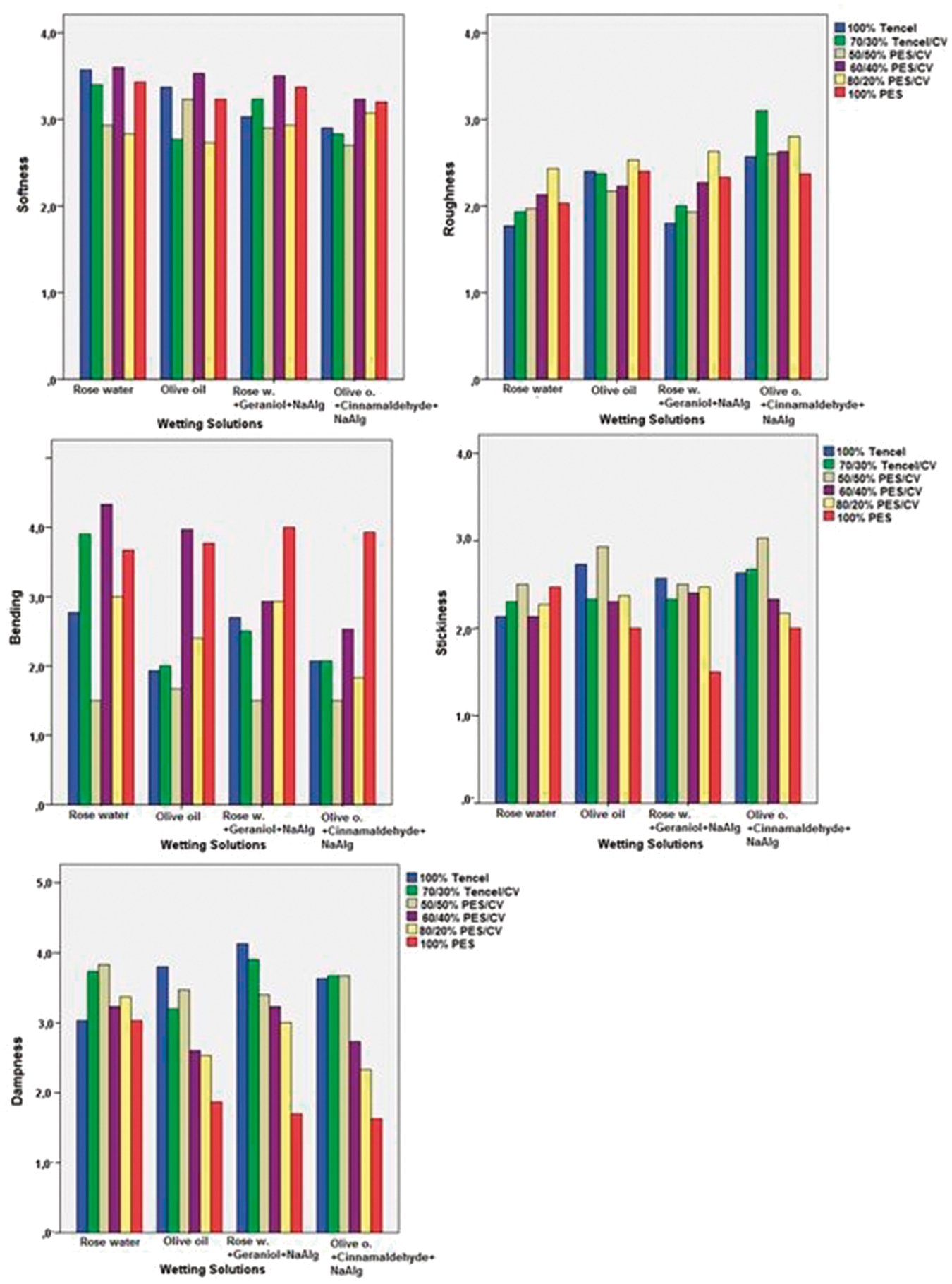
Correlation coefficients between objective and subjective results.
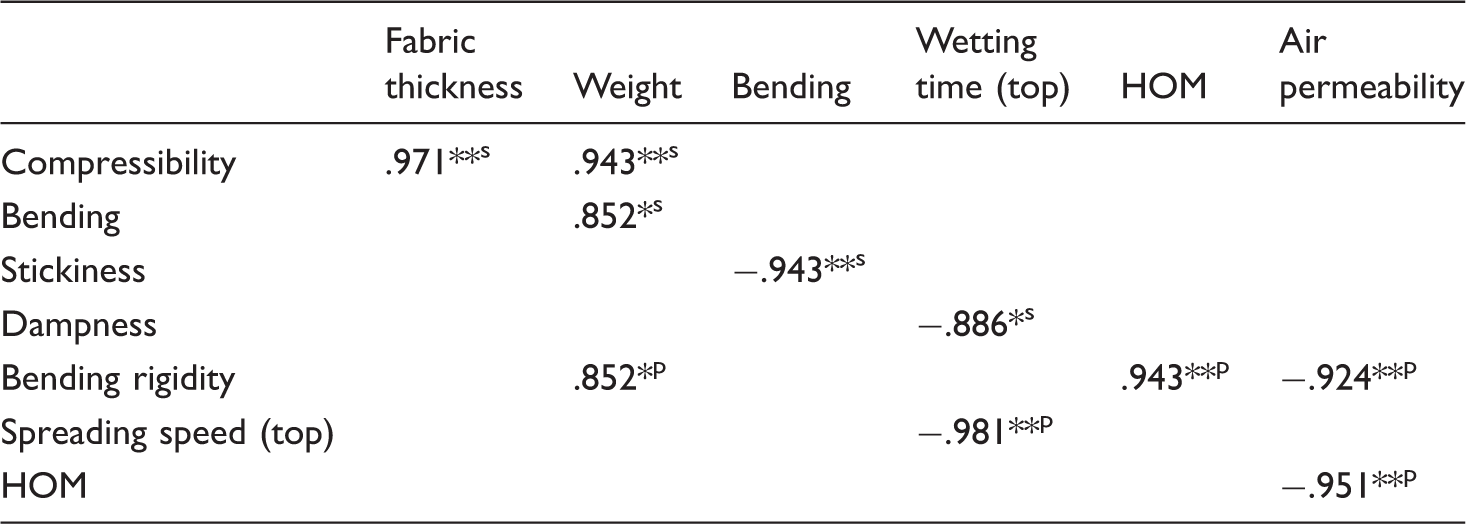
HOM: Handle-O-Meter.
and ** show correlation coefficients significant for p < 0.05 and p < 0.01, respectively.
s: Spearman; p: Pearson correlation coefficients.
Conclusions
This study covers liquid absorption and transfer characteristics of nonwoven fabrics consisting of cellulosic and polyester-blended nonwoven fabrics. Performance, hand, and antibacterial evaluations were also made after they were wetted with completely natural-based solutions (rose water, olive oil and their antibacterial functionalized forms) without any preservatives. According to the results, the highest antibacterial performance was detected for the wetting solution including olive oil/cinnamaldehyde/NaAlg. Among the wipes of this wetting solution, 60/40% PES/CV fabric (IV) was felt softer by the subjects and its other evaluation results about roughness, stiffness, stickiness, and dampness are within acceptable levels. Performance of this fabric was confirmed by HOM measurements for all wetting solutions. Wetting time, absorption rate, and spreading speed results of 60/40% PES/CV fabric (IV) are also within the best or moderate groups. Its performance was not affected from high bending rigidity and HOM results of this fabric as wetting wipe. Its higher weight increased its stiffness but had positive effect on antibacterial and subjective performances. Among cellulosic fabrics, Tencel/CV blend (II) have the best performance for absorbing liquid. Both cellulosic fabrics (I and II) have moderate performances for liquid transfer. Their higher bending rigidity in dry form decreased when they are wetted and absorbed liquid. They had higher stickiness and dampness evaluations because of their higher absorption capacities. Summing up, if the fabric weight is sufficient, PES content up to 60% may be suitable for wet wipes of body applications. Viscose is better than Tencel for liquid absorption but Tencel have better subjective evaluation results. Natural solutions having antibacterial functions may be good solutions for completely non-hazardous wipes for the body.
Footnotes
Acknowledgements
The authors would like to thank Mogul Textile Co. for supplying the material and Assoc. Prof. Dr Gungor Durur and Lenzing AG for affording the opportunity for MMT and HOM Tests in turn.
Declaration of Conflicting Interests
The author(s) declared no potential conflicts of interest with respect to the research, authorship, and/or publication of this article.
Funding
The author(s) disclosed receipt of the following financial support for the research, authorship, and/or publication of this article: A project of Suleyman Demirel University (3515-YL1-13).