



Abstract
Until recently, the under-representation of women in top management and government positions has been attributed to discriminatory hiring and promotion policies. A rather new perhaps competing explanation is that women tend to avoid competitive settings due to mental dispositions and personality traits that are different from those of men. In this article, the performance of female and male elite athletes in one of the traditional Olympic sports, track and field athletics, is analyzed over an extended period (2001–2021). Since elite athletes have self-selected into a highly competitive environment, significant differences between the genders in terms of their observable collective behavior, that is the homogeneity of the individual performances, are highly unlikely. The empirical analyses show that the gender gap in competitive intensity, that is the dispersion in elite performances, is already quite small and will have completely disappeared in a few years.
Introduction and Motivation
Even in Western democracies, women continue to be underrepresented in top management positions (“glass ceiling”) and earn about 20% less than men (“gender pay gap”). How can these persistent phenomena be explained? Is it all about discrimination? Possibly. However, recent studies found that pay transparency reduces the gender pay gap by about 20% to 40% (Baker et al., 2023 1 ) and that female representation on corporate boards increases significantly following the implementation of a quota system (Mensi-Klarbach & Seierstad, 2020; Yu & Madison, 2021), suggesting that underrepresentation in top management positions and pay discrimination of women can at least be significantly reduced. But is that already the whole story?
A large body of (mostly) experimental literature that has emerged since the turn of the millennium shows that men and women differ with respect to competitive orientations (Gneezy et al., 2003; Niederle & Vesterlund, 2007; Sutter & Glätzle-Rützler, 2015), risk aversion (Borghans et al., 2009; Charness & Gneezy, 2012), overconfidence (Adamecz-Völgyi & Shure, 2022; Barber & Odean, 2001), choking under pressure (Bucciol & Castagnetti, 2020; Ors et al., 2013) as well as altruism and other-regarding preferences (Andreoni & Vesterlund, 2001; Brañas-Garza et al., 2018).
Following the development of that particular strand of literature, researchers have started to call for convincing field evidence complementing the available laboratory findings (e.g., Niederle, 2016). Moreover, these researchers call for evidence that the documented differences in psychological traits do indeed account for “a significant fraction of gender differences in economic decisions relevant to (…) market (…) outcomes of women and men,” which would, in turn, document “the external relevance of gender differences in competition (…) and risk” (Niederle, 2016). However, while the laboratory evidence shows in many cases large gender differences in, for example, attitudes towards risk or attitudes towards competition, most of the existing attempts to measure the impact of these factors on actual outcomes fail to find large effects. “More direct demonstrations of field relevance will be crucial for these new perspectives to have a lasting impact on how labor economists approach their study of gender gaps” (Bertrand, 2011, p. 1583). 2
In this article, I use field data from a traditional sport with a long Olympic history, track and field athletics, to analyze gender differences in competitive orientations. The main advantage of sports data when studying gender differences in competitiveness is that elite female track and field athletes (like women in top managerial positions) have self-selected into a previously male-dominated and highly competitive arena. This sample selection is advantageous in the sense that professional female athletes are less likely to experience a lower willingness to compete than women in a randomly selected sample. Admittedly, however, this may come at the cost of external validity.
Thus, in contrast to the experimental literature, I am not interested in eliciting individuals’ preferences, but in analyzing (and comparing) their observable behavior using field data from an admittedly idiosyncratic context—professional track and field athletics. In this context, I try to answer two different, yet closely related questions:
First, is the number of women selecting themselves into a highly competitive environment identical to or lower than the number of men doing so? Second, is the variation in individual performance higher among women than among men or is the field in the different track and field events equally balanced?
The remainder of the article is structured as follows: The next section provides a brief summary of the relevant literature using sports data to analyze differences in competitiveness and choking under pressure of female and male athletes. The “Data” section describes the data used to produce the descriptive findings and the econometric evidence that will then be discussed in the “Descriptive Evidence” section. The article concludes with a brief summary of the main findings and some policy implications.
Literature Review
Similarities and differences in the behavior of professional female and male athletes have been documented in a number of studies already (e.g., Booth & Yamamura, 2018; Booth et al., 2022; Frick, 2011a, 2011b, 2021; Frick & Moser, 2021; Harb-Wu & Krumer, 2019; Toma, 2017). These studies analyze differences in performance, risk-taking, and choking under pressure in either single-sex or mixed-sex competitions.
Booth and Yamamura (2018) used field data from the Japanese Speedboat Racing Association (JSRA) to analyze whether male and female performance varies in mixed-sex and single-sex environments. For each race, the JSRA randomly assigns racers into two treatment groups: single-sex and mixed-sex, and racers are not allowed to refuse that allocation. Thus, selection is not an issue when investigating the impact of single-sex or mixed-sex groups on individual performance. They find that women's race times are slower in mixed-sex than all-women races, whereas men's race times are faster in mixed-sex than men-only races. Moreover, in mixed-sex races, men are more likely to suddenly change lanes (considered a potential rule-violation) than are women. In a follow-up paper, Booth et al. (2022) used another large dataset with over one million person-race observations of individuals making their racing debut over the period 1997–2012, who were again randomly assigned by the JSRA into single-sex and mixed-sex races. This randomization enables the authors to shed light on learning in races, and explore debut-racers’ performance as they gain experience. Their key findings are, first, that women are initially less skilled than men, second, that the average debut-woman's performance improves faster than debut-men's, and, third, that after gaining racing experience, the gender gap in skill and performance disappears. Backus et al. (2023) used data from thousands of chess games and found that women perform significantly worse when playing against men even after controlling for player skill, age, and experience in this male-dominated competitive setting. This result is primarily due to the fact that women make more avoidable mistakes against men than against women.
In contrast, the remaining papers quoted above analyze gender differences in competitiveness in single-sex tournaments only. Frick (2011a) uses longitudinal data from professional distance running covering a period of nearly 40 years (1973–2009) and shows that on average the women's races were—for most years—indeed less competitive than the men's contests. Closer inspection of the data, however, reveals that the women's races over distances with large amounts of prize money and/or prestige at stake (5000 m track, 10,000 m road, half marathon, and marathon) have always been particularly “balanced.” Moreover, although it still exists, the gender gap has considerably narrowed over the years. These findings are compatible with two complementary rather than substitute hypotheses. First, due to changing socio-cultural conditions, boys and girls are today socialized similarly in many parts of the world, and due to the increasing returns to success (i.e., identical prize money levels and distributions) women are nowadays motivated to train as hard as comparably talented men. 3 In another paper, Frick (2021) asks whether men and women differ with respect to sensation-seeking behavior, an extreme form of risk preference. Using data from two different high-risk sports—cliff diving and free diving—he finds that, first, women are under-represented in both sports, but that, second, for those who self-select into these occupations, no differences with respect to sensation-seeking behavior can be found between men and women. 4
Harb-Wu and Krumer (2019) as well as Toma (2017) addressed the issue of choking under pressure. Assuming that performing in front of a supportive audience not only increases motivation, but also creates psychological pressure, which may impair performance, particularly in precision tasks, the authors analyze the shooting performance in the sprint competitions of professional biathlon events. They find that for both genders, biathletes from the top quartile of the ability distribution miss significantly more shots when competing in their home country compared to competing abroad. Their results are in line with the hypothesis that high expectations to perform well in front of a friendly audience prompt individuals to choke when performing skill-based tasks. Toma (2017) compares the free-throw attempts in women's and men's college and professional basketball and finds that professional as well as college players are likely to choke under pressure. In the final 30 s of a tight game, Women's National Basketball Association and National Basketball Association players are 5.8 and 3.1 percentage points less likely to make a free throw, while female and male college players are 2.3 and 2.1 percentage points less likely to make a free throw. Like Harb-Wu and Krumer (2019), Toma (2017) also finds find that women and men do not differ significantly in their propensity to choke and pressure.
Summarizing, the literature suggests that in single-sex tournaments female athletes perform as well as male athletes while in mixed-sex competitions female athletes often perform worse than men. Moreover, female and male athletes seem to have similar risk preferences and to respond in the same way to psychological pressure.
Data
In this article, I add to the first strand of literature using a large dataset from track and field athletics covering a period of more than 20 years. My intention is to analyze whether the gender gap in competitive intensity among elite athletes that has been documented in several studies using longitudinal data has remained constant over time or has recently decreased as more women have self-selected into a professional athletic career. The data I use comes from the website of “World Athletics” (www.worldathletics.org), the international governing body for athletics, including not only track and field, but also cross-country running, road running, race walking, mountain running, and ultra-running. Since 2001, World Athletics has published two annual rankings for each of the 19 Olympic track and field disciplines, one including the Top 200 performers and one including the Top 200 performances. While the former lists 200 different athletes, the latter includes up to 20 performances by one and the same athlete delivered in the same year. Combining these two rankings allows the calculation of the concentration of athletic performances in different ways:
How many men and women deliver the Top 200 performances in each year and event? How large is the performance variation among the Top 200 male and female athletes?
If the female talent pool continues to be more heterogeneous (because fewer women self-select into a professional track and field career), then the number of female athletes delivering the Top 200 performances will be lower and the coefficient of variation will be higher than among male athletes.
The datasets that I start with are very large: The first one includes the Top 200 male and female
Descriptive Evidence
Figure 1 shows the average number of athletes delivering the Top 200 performances each year. It appears that the number is always slightly higher among men than among women, suggesting that “competitive intensity” is higher in the men's events, as here more athletes are required for the best performances. In other words, the talent pool seems to be larger among men.
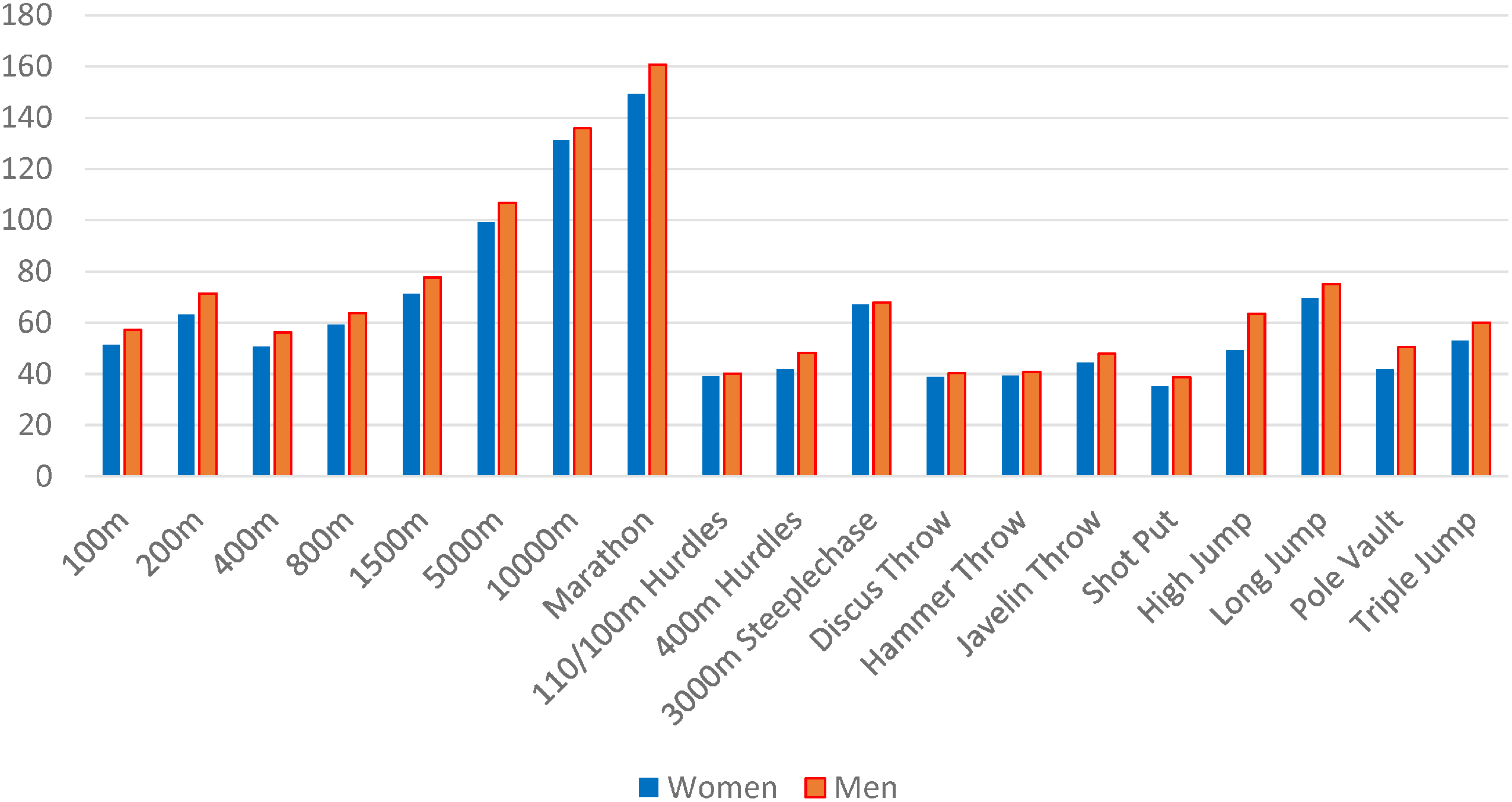
Average number of athletes delivering top 200 performances by event and year.
However, it also appears from Figure 1 that the number of athletes delivering the Top 200 performances varies much more by event than by gender. In the long-distance races, for example, that figure is much higher than in the different throwing and the jumping events—for both, women as well as men.
Figure 2 demonstrates that the number of athletes delivering the Top 200 performances is highly correlated between the genders. When that number is low among men, it is also low among women and when it is high among men, it is also high among women, documenting once more that the type of event is far more important for the number of different athletes delivering the Top 200 performances than the athletes’ gender. 7
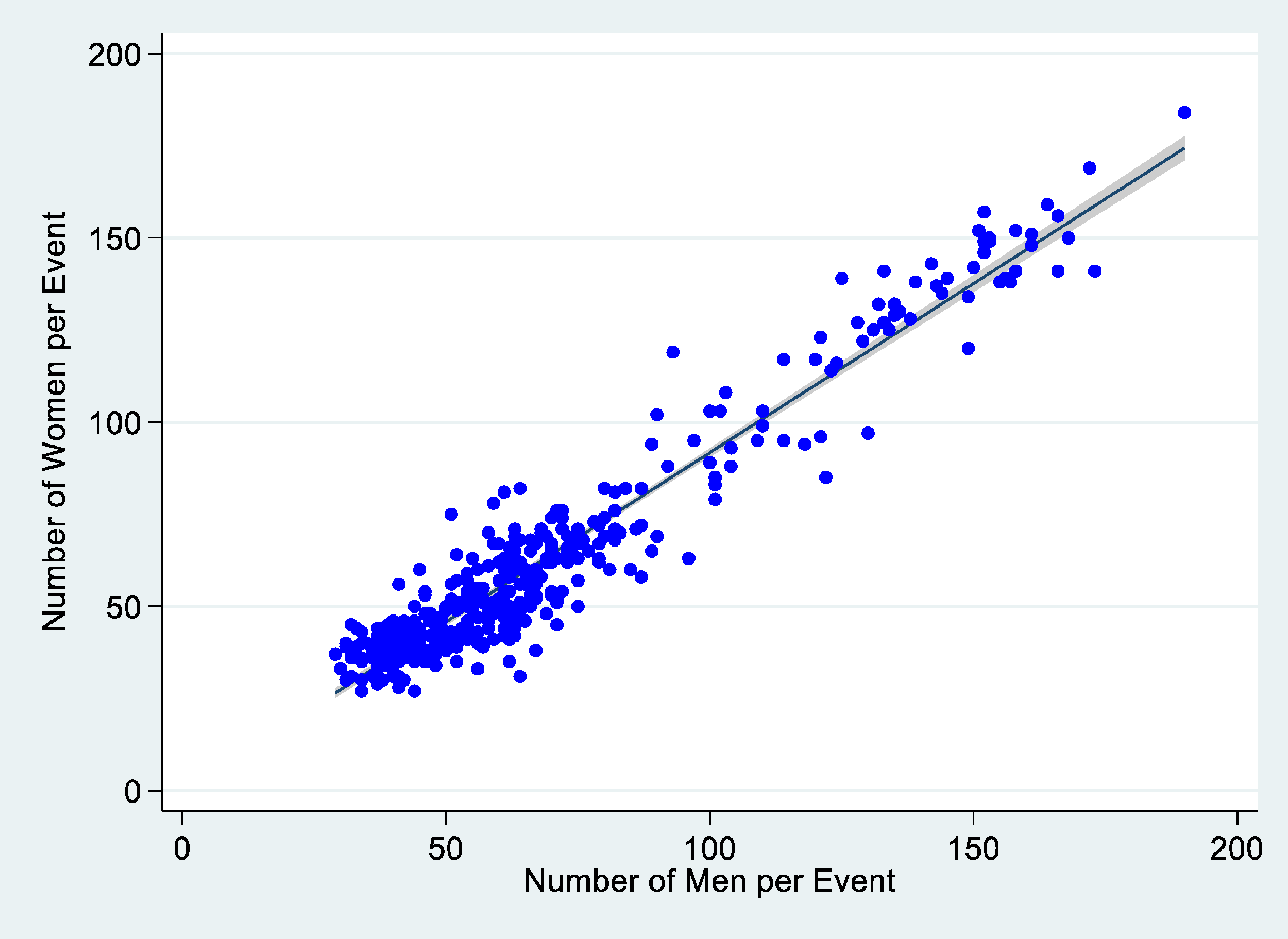
Athletes per event and year by gender (r = .96).
Figure 3 displays the coefficient of variation by event and gender. It appears that, first, the performance dispersion is quite low in the running events and quite high in the throwing events, suggesting once more that the event effect dominates the gender effect. Moreover, it also appears that the coefficient of variation is always higher among women than among men, suggesting again that the women's events are less balanced than the men's events, that is, that performance heterogeneity is higher among women than among men.
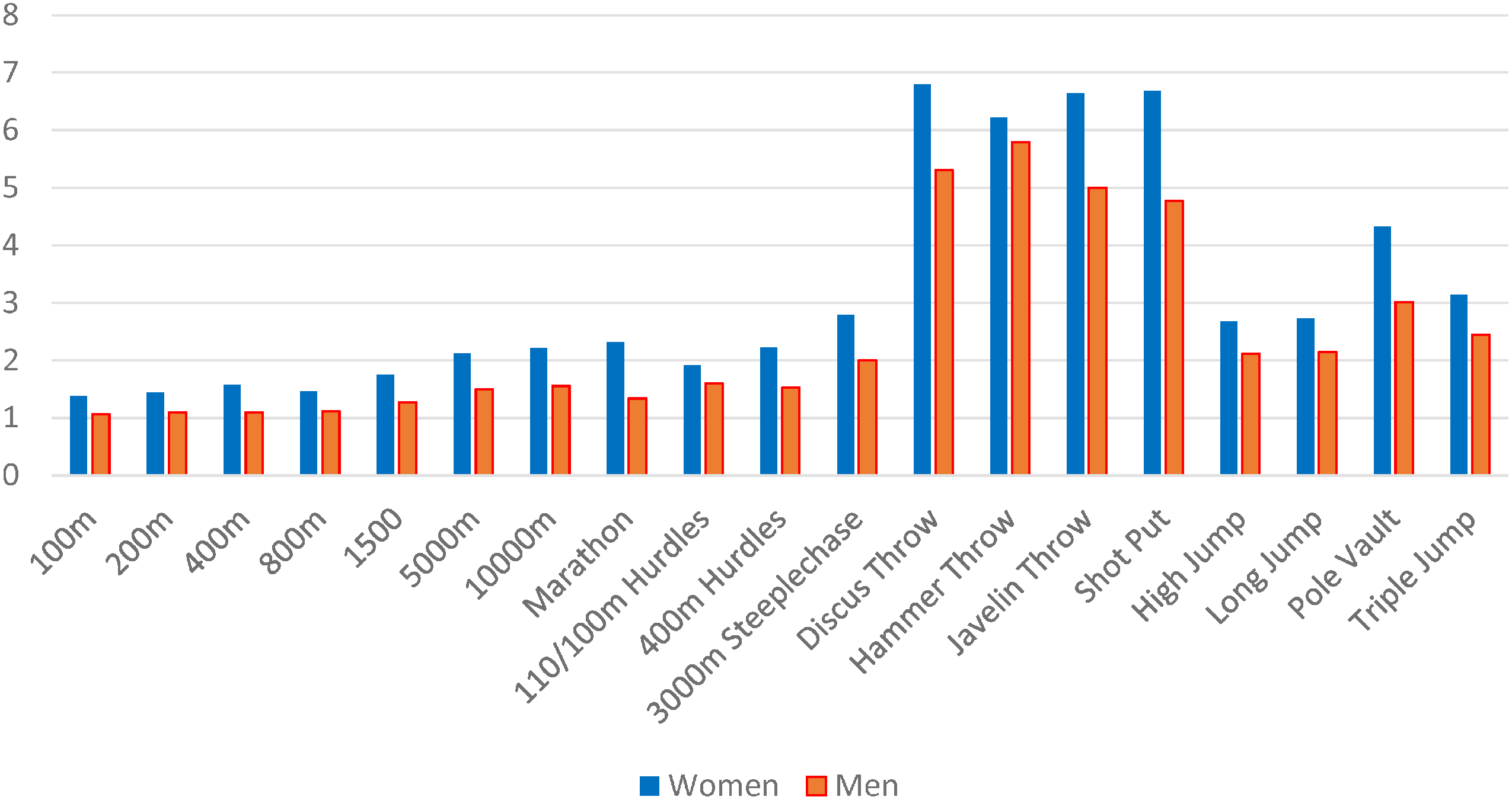
Coefficient of variation of the top 200 performances by gender.
Nevertheless, Figure 4 shows that the correlation between the coefficients of variation in the women's and the men's events is high at 0.86, suggesting that the event effect clearly dominates the gender effect.
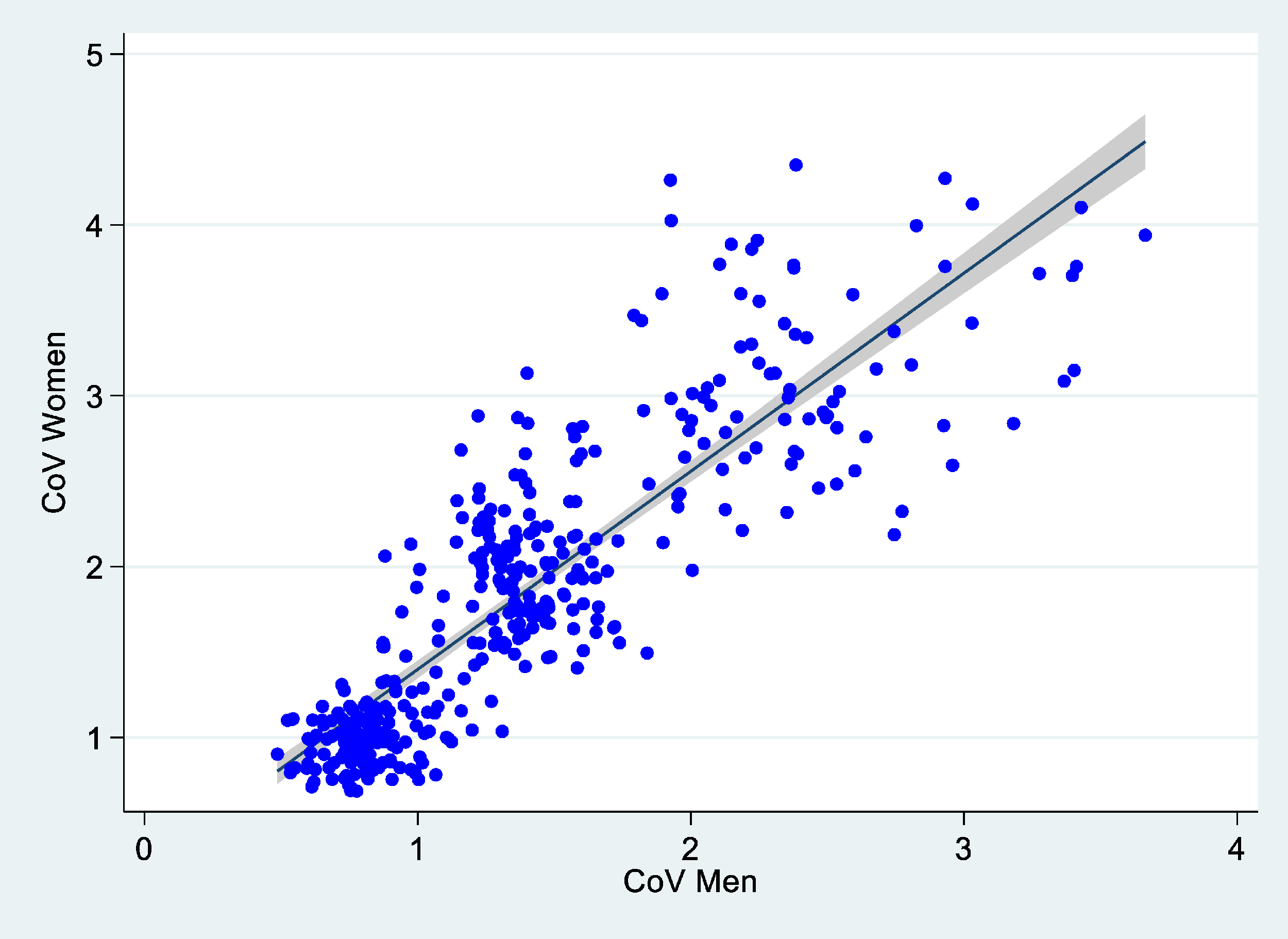
Coefficient of variation of male and female top 200 performances (r = .86).
Summarizing, the descriptive evidence suggests that the women's events are less suspenseful in the sense that the competitiveness among women is lower than among men. However, it is not yet clear whether this is a time-invariant phenomenon. 8
Econometric Findings 9
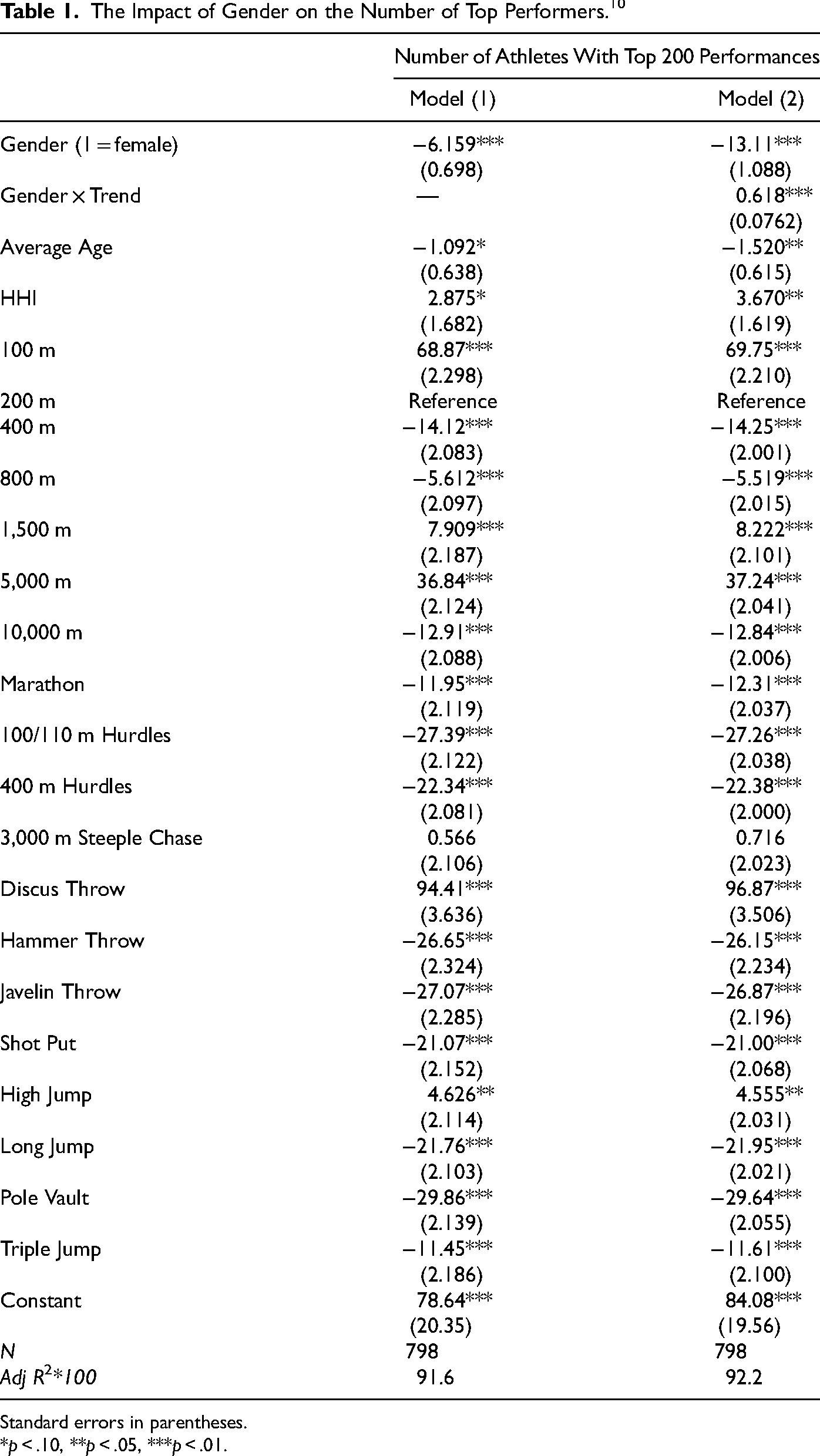
Model 1 in Table 1 shows that the number of different athletes required for the Top 200 performances is indeed significantly lower among women than among men. On average, six fewer female athletes deliver the elite performances each year. Model 2 interacts with the gender dummy with a linear time trend to check whether this effect remains constant over time. The statistically positive and significant coefficient suggests that the number of Top 200 athletes will be identical for women and men in about 11 years. This, in turn, is surprisingly fast because women have been allowed to compete in the 19 different track and field disciplines at the Summer Olympics on average 64 years later than men (see Table A1 in the Appendix).
The Impact of Gender on the Number of Top Performers. 10
Standard errors in parentheses.
*p < .10, **p < .05, ***p < .01.
It also appears from Table 1 that the coefficients of most of the event dummies are far larger in magnitude than the gender dummy, re-affirming the findings presented in Figures 1 and 2. The interpretation of the respective coefficient is straightforward. Relative to the 200 m (the event where the average number of athletes with the top 200 performances is closest to the average of the entire dataset), the number is, for example, 13 athletes lower in the 100 m and 88 runners higher in the marathon. Thus, the longer the running distance, the higher is the number of athletes required for the top 200 performances. With the exception of the long jump, the number of athletes delivering at least one of the top 200 performances is significantly lower in the throwing and jumping disciplines, suggesting that these events are less competitive in the sense that they are dominated by smaller groups of athletes.
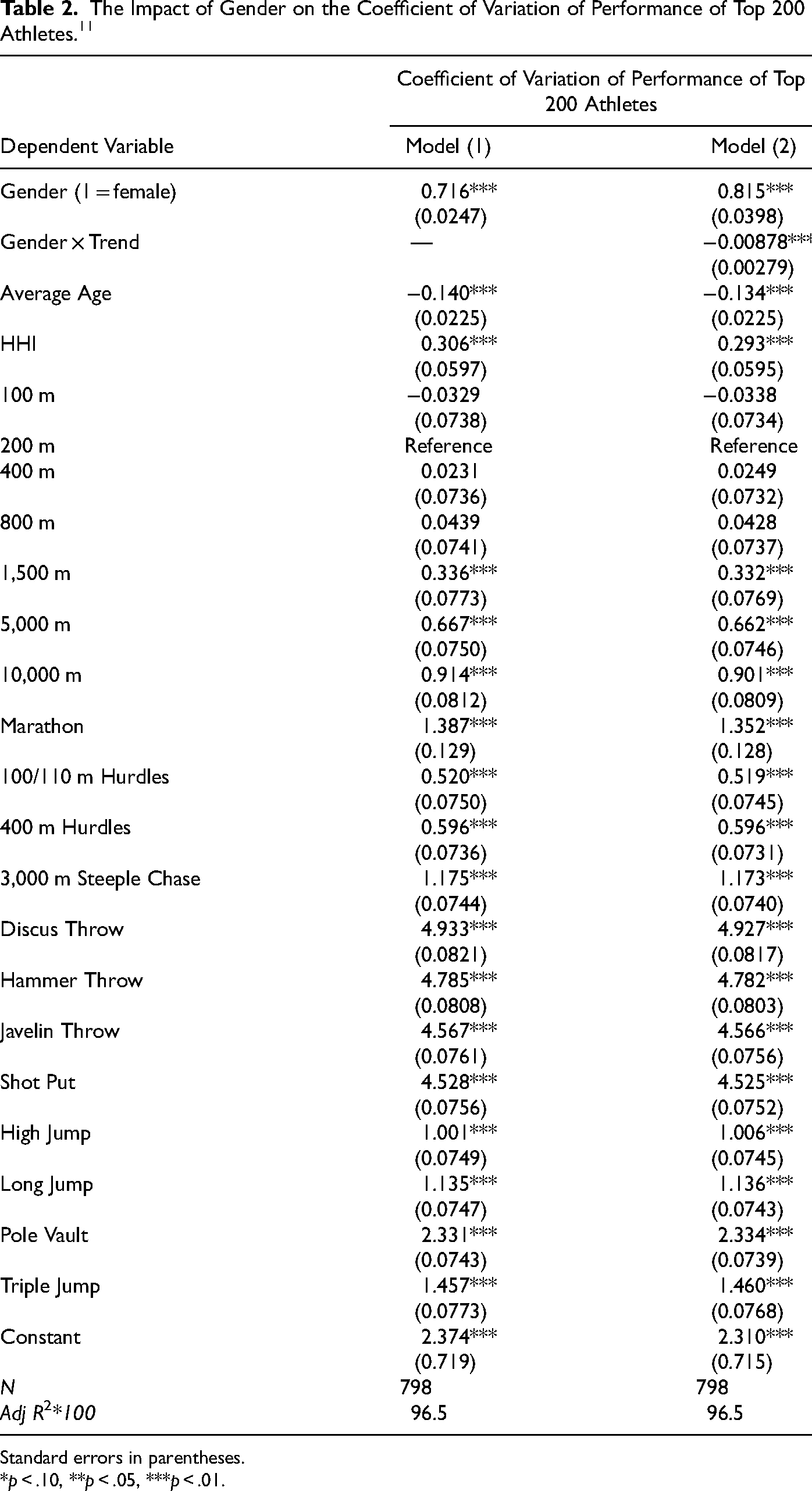
Model 1 in Table 2 shows that the coefficient of variation of the Top 200 athletes is still significantly higher among women than among men, confirming the results of previous studies, finding that female competitions are less balanced since the contestants are more heterogeneous with respect to talent and ability. Model 2 interacts with the gender dummy with a linear time trend to check whether this effect remains constant over time. The statistically significant and negative coefficient suggests that the coefficient of variation will be identical for women and men in about 46 years. This is once more surprisingly fast because women have arrived on average 64 years later in the different events in professional track and field than men (see Table A1 in the Appendix),
The Impact of Gender on the Coefficient of Variation of Performance of Top 200 Athletes. 11
Standard errors in parentheses.
*p < .10, **p < .05, ***p < .01.
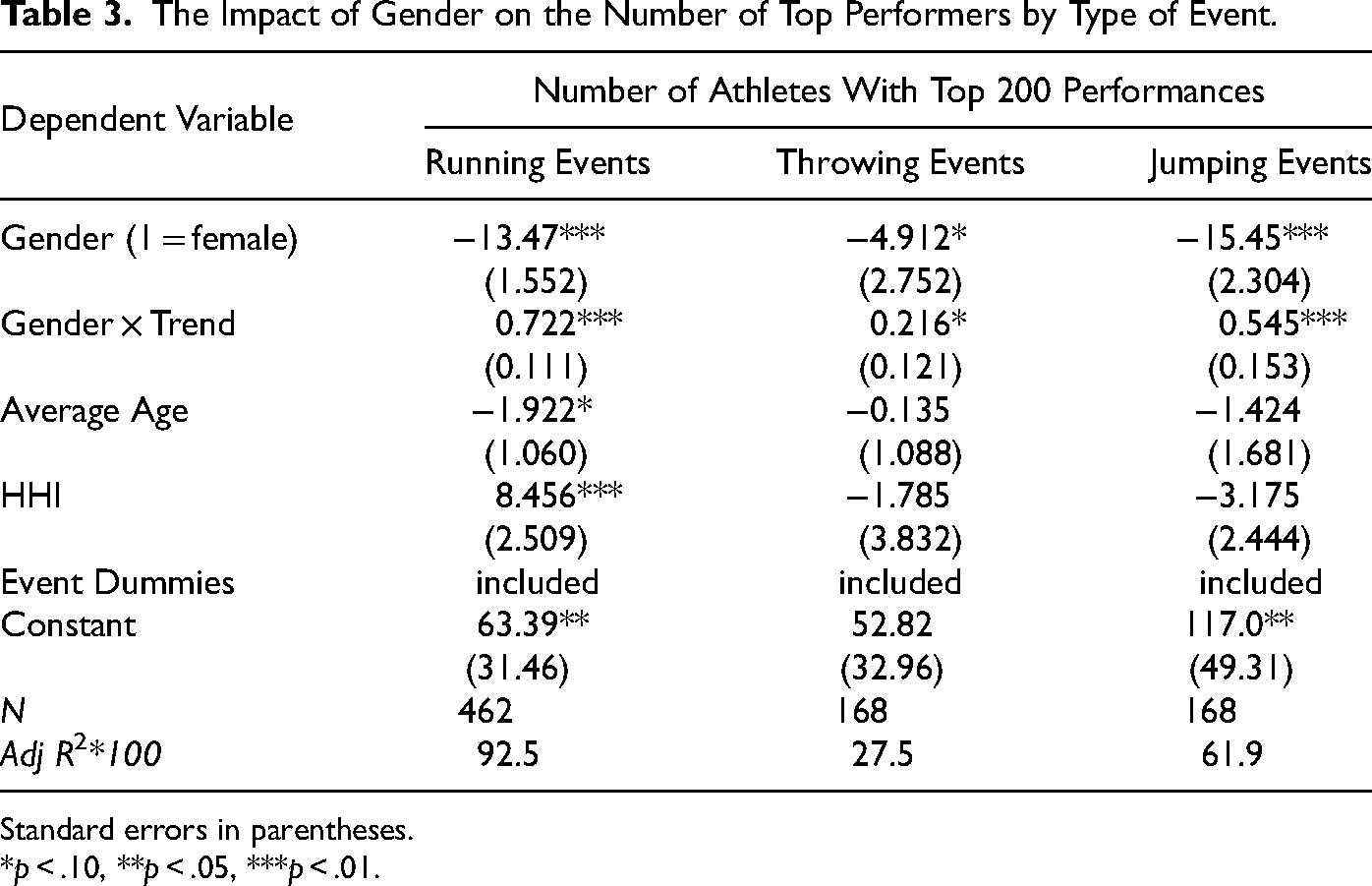
Table 3 repeats the estimation provided in Table 1 separately for the three types of disciplines. It appears that the number of athletes delivering the top 200 performances will be identical for men and women in about 9 years (running), 11 years (throwing), and 14 years (jumping), respectively.
The Impact of Gender on the Number of Top Performers by Type of Event.
Standard errors in parentheses.
*p < .10, **p < .05, ***p < .01.
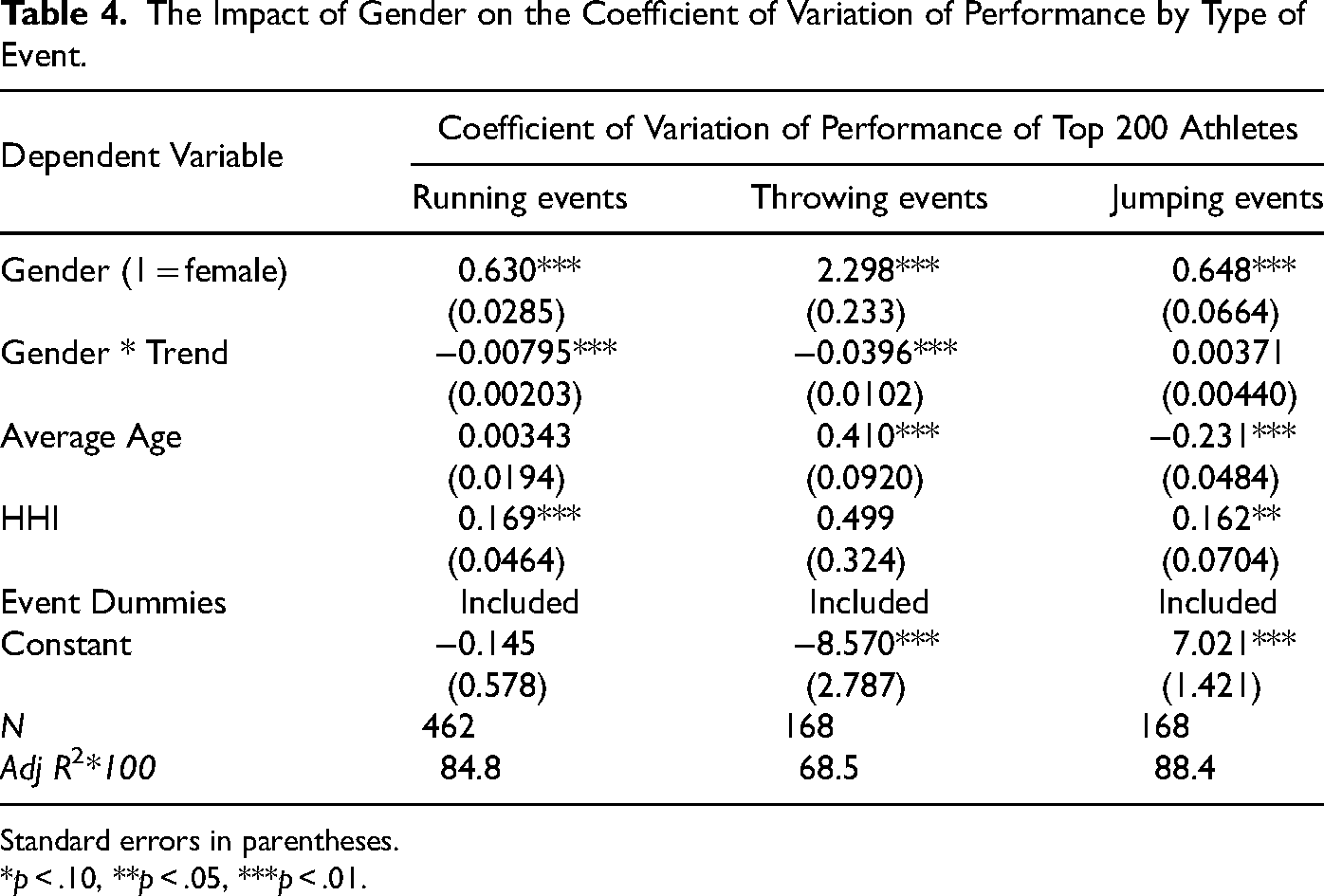
Finally, Table 4 repeats the estimation provided in Table 2 separately for the three disciplines. It appears that the coefficient of variation will be identical among women and men in 40 years in the running events and in 28 years in the throwing events. No such convergence effect can be found for the jumping disciplines as the coefficient of the interaction term fails to reach a conventional level of statistical significance.
The Impact of Gender on the Coefficient of Variation of Performance by Type of Event.
Standard errors in parentheses.
*p < .10, **p < .05, ***p < .01.
Summary and Implications
My results suggest that the number of elite athletes and the concentration of performances are now quite similar among men and women. The remaining differences are mainly driven by the late addition of most of the track and field events for women to the Summer Olympics program and the type of event. They are significantly higher in the throwing and jumping than in the running disciplines. The main finding, however, is that the gender gap in competitive intensity has decreased over time and will soon have completely disappeared.
In a recent meta-analysis of the experimental literature, Markowsky and Beblo (2022) showed that men seem to enter tournaments more often than women. However, their analysis also reveals that larger gender differences are prevalent in lab experiments with student subject pools and when math tasks are involved, but almost negligible in field-like environments (e.g., professional sport in general and track and field athletics in particular). Moreover, experimental interventions such as information treatments prove very effective in reducing or even eliminating the gender gap. Thus, when controlling for self-selection in a particular environment, no gender differences in competitive orientations should be expected. This is in line with Hardies et al. (2013) finding that gender differences in, for example, risk aversion and competitive orientations present in the general population can be absent in populations of professionals as a result of self-selection, institutional mechanisms, socialization, or a combination thereof.
Recent studies find that women respond to monetary incentives as men do (Bandiera et al., 2021) and that gender is not as decisive for economic behavior as originally thought (Fornwagner et al., 2022), suggesting that the number of women self-selecting into leadership positions in general and professional sports careers, in particular, will increase further in the near future. This increasing number of successful “role models” will, in turn, induce more women to compete—in whatever kind of environment (Kofoed Jørgensen et al., 2022).
This, in turn, suggests that sports federations and organizations at the national as well as the international level should design programs that particularly encourage young female athletes to choose a career they may otherwise not be willing to enter due to risk aversion or due to the fear of choking under pressure. As the number of female elite athletes increases, their events will become as attractive to spectators as the men's events, with predictable positive consequences for the individual athletes’ reputations and personal incomes.
Footnotes
Declaration of Conflicting Interests
The author(s) declared no potential conflicts of interest with respect to the research, authorship, and/or publication of this article.
Funding
The author(s) received no financial support for the research, authorship, and/or publication of this article.

Notes
Author Biography
Appendix
Year of First Appearance of Male and Female Athletes in Track and Field Events at Olympic Games.
12
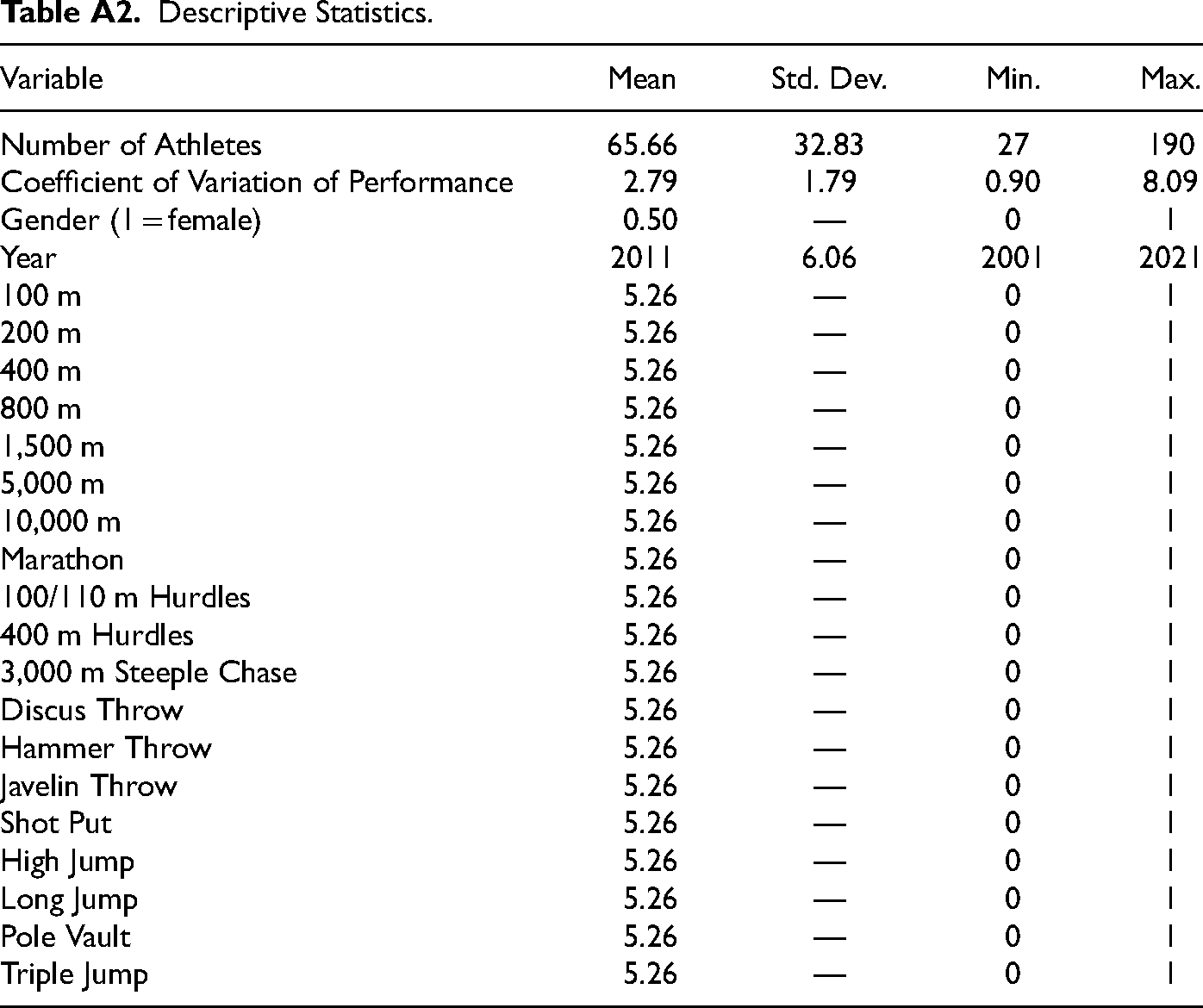
Descriptive Statistics.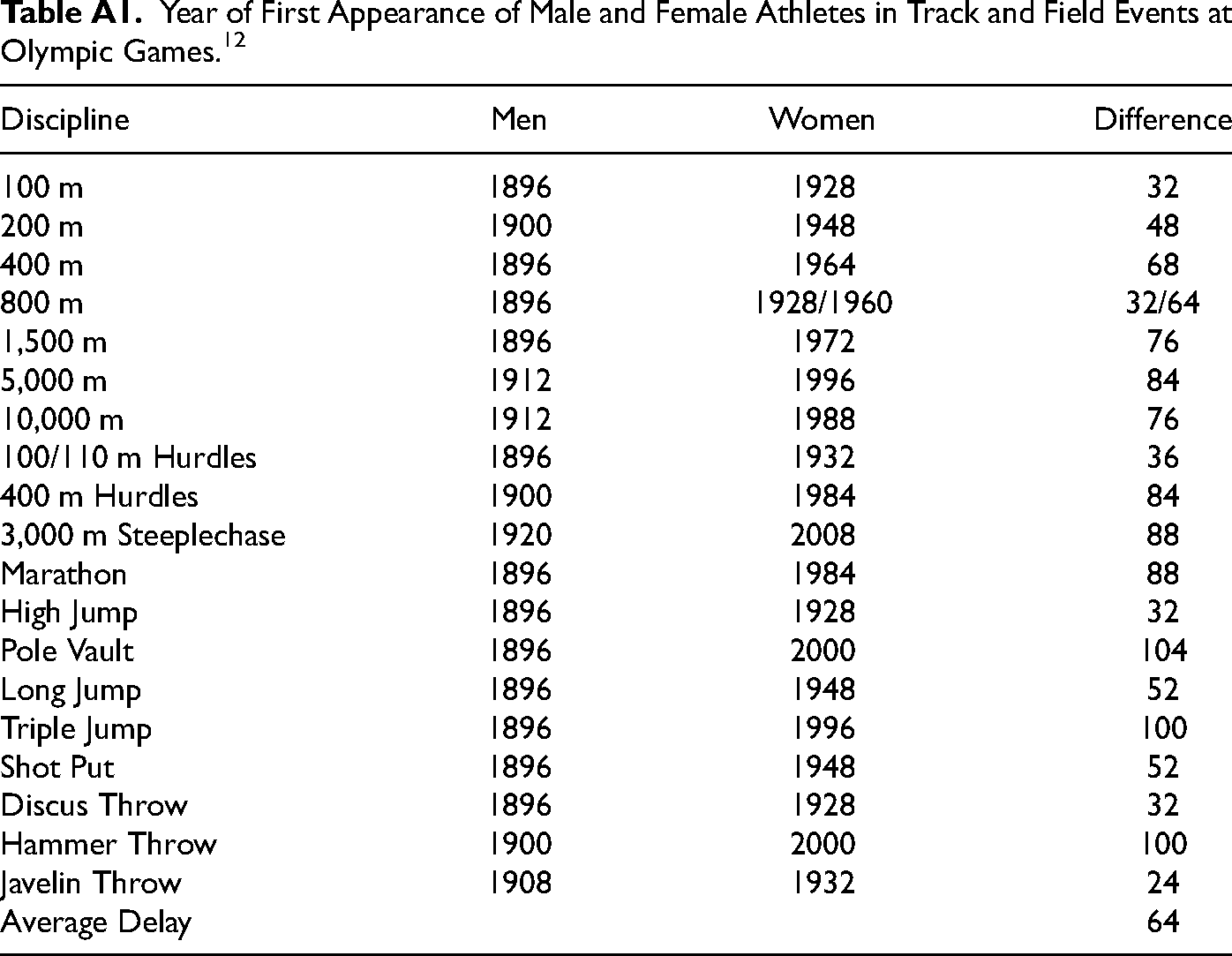
Discipline
Men
Women
Difference
100 m
1896
1928
32
200 m
1900
1948
48
400 m
1896
1964
68
800 m
1896
1928/1960
32/64
1,500 m
1896
1972
76
5,000 m
1912
1996
84
10,000 m
1912
1988
76
100/110 m Hurdles
1896
1932
36
400 m Hurdles
1900
1984
84
3,000 m Steeplechase
1920
2008
88
Marathon
1896
1984
88
High Jump
1896
1928
32
Pole Vault
1896
2000
104
Long Jump
1896
1948
52
Triple Jump
1896
1996
100
Shot Put
1896
1948
52
Discus Throw
1896
1928
32
Hammer Throw
1900
2000
100
Javelin Throw
1908
1932
24
Average Delay
64
Variable
Mean
Std. Dev.
Min.
Max.
Number of Athletes
65.66
32.83
27
190
Coefficient of Variation of Performance
2.79
1.79
0.90
8.09
Gender (1 = female)
0.50
—
0
1
Year
2011
6.06
2001
2021
100 m
5.26
—
0
1
200 m
5.26
—
0
1
400 m
5.26
—
0
1
800 m
5.26
—
0
1
1,500 m
5.26
—
0
1
5,000 m
5.26
—
0
1
10,000 m
5.26
—
0
1
Marathon
5.26
—
0
1
100/110 m Hurdles
5.26
—
0
1
400 m Hurdles
5.26
—
0
1
3,000 m Steeple Chase
5.26
—
0
1
Discus Throw
5.26
—
0
1
Hammer Throw
5.26
—
0
1
Javelin Throw
5.26
—
0
1
Shot Put
5.26
—
0
1
High Jump
5.26
—
0
1
Long Jump
5.26
—
0
1
Pole Vault
5.26
—
0
1
Triple Jump
5.26
—
0
1