



Abstract
Background
This manuscript addresses the social problem of promoting healthy sexual behaviours, particularly in the context of the ABC (abstinence, be faithful, condom use) social marketing strategy.
Focus of the Article
This study examines how consumers’ perceived values of edutainment-delivered social marketing interventions influence their intentions to adopt healthy sexual behaviours. The research extends the theory of consumption value and customer perceived value to sexual health promotion contexts, providing insights into the effectiveness of edutainment as a medium for social marketing messages.
Methods
The study employed a quantitative cross-sectional survey design. Data was collected using a self-administered questionnaire from 688 respondents in Ghana who had been exposed to ABC-themed edutainment television shows. PLS-SEM was used for data analysis.
Results
The analysis revealed that social value (β = 0.21, p < .00) and social marketing price (β = 0.20, p < .00) significantly and positively influenced behavioural intentions, while emotional value (β = 0.06, p = .13) and quality (β = −0.04, p = .54) were not significant predictors. These findings suggest that in collective societies, social influence mechanisms may supersede individual emotional responses in driving health behaviour decisions.
Recommendations for Research or Practice
Social marketers should prioritize social value elements and minimize perceived time costs when designing edutainment content for promoting healthy sexual behaviours. Intervention designs should leverage community influence structures, enhance social status through behaviour adoption, and maximize value per time unit. While emotional and quality dimensions may not directly drive behaviour change, they can serve as supporting elements that enhance program engagement.
Keywords
Introduction and Background/Rationale
Understanding consumer behaviour in relation to social issues represents a critical frontier in social marketing research, as its implications extend far beyond individual decision-making to fundamentally shape community health outcomes and societal wellbeing. While traditional public health interventions have often focused on information dissemination and behavioural prescriptions, mounting evidence suggests that understanding how consumers perceive, value, and ultimately adopt health behaviours may be crucial for improving intervention effectiveness (Larki et al., 2022; Lefebvre & Flora, 1988; Truong et al., 2024). Consequently, the persistent challenge of promoting healthy sexual behaviours represents one of social marketing’s most complex and urgent priorities. Despite decades of interventions and substantial resource investment, adoption rates for healthy sexual behaviours remain suboptimal, particularly in regions most affected by HIV/AIDS (Lieber et al., 2021). Recent studies seemingly suggest that most behavioural change programs fail to achieve their intended outcomes, highlighting a critical gap between intervention efforts and behavioural adoption (Steinmetz et al., 2016).
This gap in effectiveness can be attributed to several key factors. First, many interventions employ standardized approaches that fail to account for cultural and contextual nuances, resulting in messaging that doesn’t resonate with target audiences (Deshpande, 2022). Second, traditional approaches often position audiences as passive recipients rather than active co-creators of health solutions, limiting ownership and sustained adoption (Akbar & Barnes, 2024). Third, interventions frequently focus on knowledge transfer without adequately addressing the complex social, cultural, and psychological factors that influence behaviour adoption (Millard & Akbar, 2024). The GPDS (Getting Started, Planning, Design, and Sustainability) framework proposed by Akbar and Barnes (2024) emphasizes the importance of engaging target audiences as experts in understanding their own needs, preferred communication styles, and behavioural motivations. Similarly, Millard and Akbar (2024) work on practitioners’ reflexivity highlights how co-discovery and co-design processes with target audiences can significantly enhance intervention effectiveness by ensuring cultural appropriateness and addressing actual rather than perceived barriers.
This research addresses a fundamental challenge in contemporary social marketing i.e., while practitioners have traditionally relied on behavioural theories and educational approaches, mounting evidence suggests that understanding how target audiences perceive and value health interventions may be crucial for improving their effectiveness (Zainuddin et al., 2024). At its core, social marketing operates through an exchange framework, wherein target audiences adopt behaviours in exchange for perceived benefits that outweigh costs (Boksberger & Melsen, 2011). This exchange framework functions through the strategic application of the marketing mix—product, price, place, and promotion (Grier & Bryant, 2005). While traditional approaches have emphasized changing attitudes and increasing knowledge, understanding the specific values that drive behavioural exchanges remains underdeveloped. By exploring how different value dimensions influence health behaviour decisions, we can better design interventions that deliver compelling value propositions to target audiences.
Thus, this study attempts to address three specific gaps in current knowledge and practice which demand particular attention. First, despite significant investment in message design and delivery, we lack systematic understanding of how target audiences evaluate and assign value to social marketing interventions. Second, while edutainment has become a preferred vehicle for delivering health messages, evidence about which aspects of these programs drive behavioural change remains inconclusive. Third, existing theoretical frameworks often fail to capture the complex value assessments individuals make when considering behaviour change, creating a troubling disconnect between theory and practice (Kassirer et al., 2019). To address these gaps, we draw upon the theory of consumption value (TCV) and its related concept of customer perceived value (CPV), frameworks that have revolutionized commercial marketing but remain underutilized in social marketing contexts (Sheth et al., 1991; Zainuddin & Gordon, 2020). TCV posits that consumer choices are driven by multiple value dimensions, including functional, social, emotional, epistemic, and conditional values. This multidimensional approach offers particular promise for understanding health behaviour adoption, where decisions often involve complex trade-offs between immediate gratification and long-term wellbeing (Sweeney & Soutar, 2001).
Our research examines how target audiences evaluate and perceive the value of sexual health interventions, which specific perceived value aspects of edutainment programs most effectively drive behavioural change, and how practitioners can better design interventions to align with audience value perceptions. Through addressing these questions, we aim to provide both theoretical insights and practical guidelines for enhancing social marketing effectiveness. The current study contributes to social marketing by firstly extending consumption value theory to health behaviour contexts, addressing calls for more nuanced frameworks (Lefebvre, 2013; Zainuddin et al., 2024); providing empirical evidence on edutainment effectiveness in sexual behaviour change where previous findings have been inconsistent (Bertrand et al., 2006; Chandra-Mouli et al., 2017); and examining how value dimensions influence behaviour adoption within the ABC strategy framework, a widely implemented HIV/AIDS prevention approach (Miller et al., 2008; Murphy et al., 2006; Oshi et al., 2005).
In the current study, the ABC (Abstinence, Be Faithful, Condom Use) message delivery through edutainment channels represents a promotional strategy within social marketing’s broader marketing mix. While edutainment combines education with entertainment (Barnett & Parkhurst, 2005), it is important to recognize that it functions primarily as a promotional vehicle rather than constituting the complete intervention. Effective social marketing requires addressing all marketing mix elements—enhancing the product (benefits of healthy sexual behaviours), minimizing price (reducing barriers to adoption), ensuring place (accessibility of supporting resources), while using promotion (including edutainment) to communicate these value propositions. Edutainment has evolved from early initiatives like ‘The Archers’ to sophisticated multimedia platforms (Kyere-Owusu & Boamah, 2020), with evidence suggesting it can influence values and behaviours through emotional connections (Grady et al., 2021). Our study aims to identify which aspects of edutainment most effectively communicate value propositions that drive behavioural change, providing practitioners with concrete strategies while advancing theoretical understanding of value perception in social marketing.
The implications of this research are particularly relevant given the evolving media landscape and increasing competition for consumer attention in health communication (Kassirer et al., 2019). For practitioners, our findings offer specific guidelines for enhancing edutainment effectiveness, tools for measuring and improving program impact, and evidence-based strategies for resource allocation. For researchers, we provide new theoretical insights into how value perceptions influence behaviour adoption in social marketing contexts. The remainder of this paper is organized as follows: We first examine the theoretical foundations of TCV and perceived value, critically analysing their applicability to social marketing contexts. We then explore the evolution and effectiveness of edutainment in health behaviour change, focusing particularly on sexual health interventions. Following this, we present our empirical analysis of how consumer perceived values influence intentions to adopt healthy sexual behaviours, using structural equation modelling to test our hypothesized relationships. We conclude by discussing implications for social marketing theory and practice, offering specific recommendations for practitioners while acknowledging limitations and suggesting directions for future research.
Theoretical Background
Theory of Consumption Value
The Theory of Consumption Value (TCV) emerged as a response to limitations in traditional economic theories of consumer choice, which primarily focused on utility maximization and rational decision-making (Sheth et al., 1991). TCV fundamentally challenged the prevailing notion of consumers as ‘homo economicus’ - perfectly rational agents making optimal decisions based on complete information and stable preferences (Becker, 1976; Simon, 1955). Instead, TCV posits that consumer choices are influenced by five distinct value dimensions: functional, social, emotional, epistemic, and conditional values, which operate independently and contribute differently across varied choice situations. The functional value dimension addresses performance-related utility, focusing on how effectively a product or service fulfils its intended purpose. Social value captures the utility derived from association with specific social groups, recognizing that consumption choices often serve as markers of social identity. Emotional value acknowledges the affective components of decision-making, incorporating feelings and states that consumption experiences evoke. Epistemic value relates to novelty-seeking and curiosity satisfaction, while conditional value emerges in specific contexts or circumstances that temporarily enhance other value perceptions. This multidimensional framework represented a significant theoretical advancement by explicitly incorporating psychological and sociological perspectives into consumer choice theory. However, early applications revealed challenges in empirically validating the independence of these value dimensions (Sweeney & Soutar, 2001). Critics noted that boundaries between different value types, particularly emotional and social values, can be ambiguous and culturally dependent (Thompson & Troester, 2002). The theory’s initial focus on product choice decisions potentially limited its applicability to more complex behavioural decisions, requiring subsequent refinement for service contexts and experiential consumption.
Despite these limitations, TCV’s contribution to understanding consumer behaviour cannot be understated. The theory’s recognition of emotional and social factors in decision-making helped bridge the gap between economic and psychological approaches to consumer behaviour (Holbrook, 2006; Mäntymäki & Salo, 2015). However, questions remain about the theory’s ability to account for evolving consumer behaviour in digital environments and its applicability across different cultural contexts, particularly in social marketing applications where behavioural outcomes rather than product purchases constitute the target “choice” (Tanrikulu, 2021). TCV has demonstrated promising applications in understanding socially relevant behaviours. Sheth et al. (1991) applied the framework to analyse cigarette smoking behaviour, discovering that emotional value most strongly distinguished smokers from non-smokers, followed by conditional value. Albaum et al. (2002) extended this work, emphasizing the importance of emotional, functional, epistemic, and social values in predicting adolescent smoking behaviour. Nelson and Byus (2002) further validated the multidimensional and independent nature of these values in public health contexts, suggesting TCV’s potential relevance for social marketing applications.
Customer Perceived Value: Evolution and Critical Analysis
Customer Perceived Value (CPV) has evolved as a cornerstone concept in marketing literature, representing a theoretical progression from TCV’s foundational principles. While TCV established the multidimensional nature of value, CPV focuses more specifically on the evaluative judgment process whereby consumers assess the utility of products or services based on perceptions of benefits and sacrifices (Zeithaml, 1988). This conceptual evolution has generated multiple theoretical perspectives, empirical approaches, and sometimes contradictory findings that warrant careful examination. The theoretical development of CPV has followed two distinct trajectories. Early conceptualizations adopted a unidimensional approach, viewing value primarily as a cost-benefit tradeoff (Zeithaml, 1988). This perspective reduced CPV to a simple “value-for-money” assessment that dominated marketing research throughout the 1990s (Dodds et al., 1991). However, this simplistic view failed to capture the complex nature of value perceptions, particularly in service and experiential contexts, leading to theoretical limitations and inconsistent empirical results (Lin et al., 2005).
The evolution toward multidimensional understanding marked a significant advancement, particularly through Sweeney and Soutar’s (2001) influential work developing the PERVAL scale. Their research empirically demonstrated that value perceptions encompass distinct dimensions—including emotional, social, quality/performance, and price value for money—that influence consumer decisions independently and in combination. This multidimensional conceptualization offered several advantages, enabling researchers to analyze how different value components contribute to overall assessments and how they might vary across different consumption contexts. Recent meta-analytical evidence (Blut et al., 2024) provides compelling support for integrative CPV models that include benefits, sacrifices, and overall value assessments. This comprehensive approach accounts for both advantages and disadvantages that shape value judgments while capturing the evaluation process at a more abstract level. Particularly noteworthy is the finding that self-esteem emerges as the most powerful determinant of overall value, while security risk appears to be the variable that most significantly impedes it—insights with substantial implications for social marketing applications.
Despite these advancements, contemporary critiques highlight several limitations requiring attention. First, the framework often inadequately captures the context-dependent nature of value perceptions, which can vary significantly across cultural settings and consumption domains (Holbrook, 1999). Second, most CPV measurements employ static approaches that fail to account for how value perceptions evolve throughout the customer journey, creating a temporal blindspot in our understanding (Leroi-Werelds, 2019). Third, the complex interplay between different value dimensions remains inadequately understood, particularly in digital and emerging service contexts where traditional boundaries between dimensions may blur or reconfigure (Kumar & Reinartz, 2016). The contemporary technological landscape presents both challenges and opportunities for CPV application in social marketing. As digital platforms reduce barriers to information access and enable more direct customer expression of values, social marketers face increasing pressure to understand and respond to these value dimensions when designing interventions. Research calls have emphasized the need for more empirical work to advance CPV within social marketing contexts, recognizing that understanding consumer values is crucial for designing interventions that can drive positive transformation at both individual and societal levels (Goh et al., 2014; Tanrikulu, 2021).
The Theory of Consumption Value, Customer Perceived Value and Social Marketing
Social marketing fundamentally differs from commercial marketing in its focus on behaviour change for societal benefit rather than profit generation (Cheng et al., 2010; Kotler, 2020; Temmerman & Veeckman, 2024). While commercial marketing exchanges involve monetary transactions for products or services, social marketing exchanges typically involve behavioural adoption in return for promised individual or collective benefits. This fundamental difference necessitates careful adaptation rather than simple adoption of commercial marketing frameworks like TCV and CPV. Theoretical integration between TCV/CPV and social marketing creates promising opportunities for enhancing intervention effectiveness. Social marketing has traditionally relied on behavioural theories such as the Transtheoretical Model, Health Belief Model, and Theory of Planned Behaviour. However, the contemporary digital landscape presents unique challenges, including reduced barriers to information, customer-driven message movement, and increased communication noise, making value-based approaches increasingly relevant. The application of consumption value theory to social marketing contexts offers several advantages. First, it shifts focus from persuasion and knowledge transfer to value creation and exchange, emphasizing what target audiences actually value rather than what practitioners believe they should value (Abdullah et al., 2019). Second, it provides a more nuanced framework for understanding behavioural decision-making, recognizing that social behaviours, like product choices, involve complex trade-offs between competing values. Third, it enables more precisely targeted interventions by identifying which value dimensions most strongly influence specific behaviours in particular contexts.
Early applications of TCV to social issues have yielded promising insights. Beyond the previously mentioned smoking behaviour studies (Albaum et al., 2002; Sheth et al., 1991), TCV has been applied to environmental conservation behaviours (Biswas, 2017), exploring how different value perceptions influence willingness to adopt sustainable practices. In transportation research, Zailani et al. (2019) applied TCV to understand drivers’ willingness to pay for biofuels, finding that emotional and epistemic values significantly influenced adoption intentions beyond simple economic considerations.
The social marketing context, however, introduces unique considerations in applying TCV and CPV. Social behaviours often involve more complex decision processes than product purchases, with longer-term consequences and stronger normative influences. The “product” in social marketing (a behaviour) typically cannot be physically possessed, making functional value assessments more abstract. Social marketing exchanges often involve delayed or probabilistic benefits against immediate costs, creating unique temporal challenges in value perception. Additionally, the collective nature of many social marketing outcomes introduces value dimensions beyond individual utility maximization. These contextual differences highlight the need for thoughtful adaptation rather than direct application of commercial value frameworks (Hyun & Fairhurst, 2018). Social marketers must consider how value dimensions might operate differently in behavioural contexts, develop appropriate measurement approaches for abstract behavioural “products,” and account for the collective and long-term nature of many social benefits. This research contributes to this emerging field by examining how consumption value dimensions influence intentions to adopt healthy sexual behaviours, providing empirical evidence for TCV and CPV application in a critical social marketing domain.
Conceptual Framework & Hypotheses Development
Customer Perception Value, Edutainment, and Intention to Adopt Healthy Sexual Behaviour
Customer Perceived Value (CPV) in the context of edutainment comprises multiple dimensions that influence how audiences evaluate and respond to health behaviour messages. Drawing from consumption value theory, we can examine how different value components specifically shape the effectiveness of edutainment programs promoting healthy sexual behaviour. The CPV scale takes into account four main components of importance to customers with regards to their perception of value, specifically Quality, Price, Emotional and Social Value (Sweeny & Soutar, 2001). The proponents of the scale establish that both quality and price are components of the functional value of the TCV which is defined as “the perceived utility acquired from an alternative’s capacity for functional, utilitarian, or physical performance” (Sheth et al., 1991). However, quality has a positive effect and price a negative effect on functional value. Though used to assessing consumer decision making and choice with commercial retail products this study attempts to extend CPV in the social marketing space using an edutainment product to influence the intention to adopt healthy sexual behaviour. Figure 1 Below is the proposed conceptual framework to drive the study. Our conceptual framework examines how different value dimensions contribute to the exchange relationship between the costs of adopting healthy sexual behaviours and the benefits received. Consistent with social marketing’s exchange principle, we recognize that audiences evaluate both the promoted behaviours (the product) and the promotional vehicle (edutainment) when making adoption decisions. The value dimensions in our framework therefore represent the complete value proposition that social marketers offer in exchange for behavior adoption (). Conceptual framework illustrating how different value dimensions contribute to the social marketing exchange between edutainment-delivered interventions and healthy sexual behaviour adoption.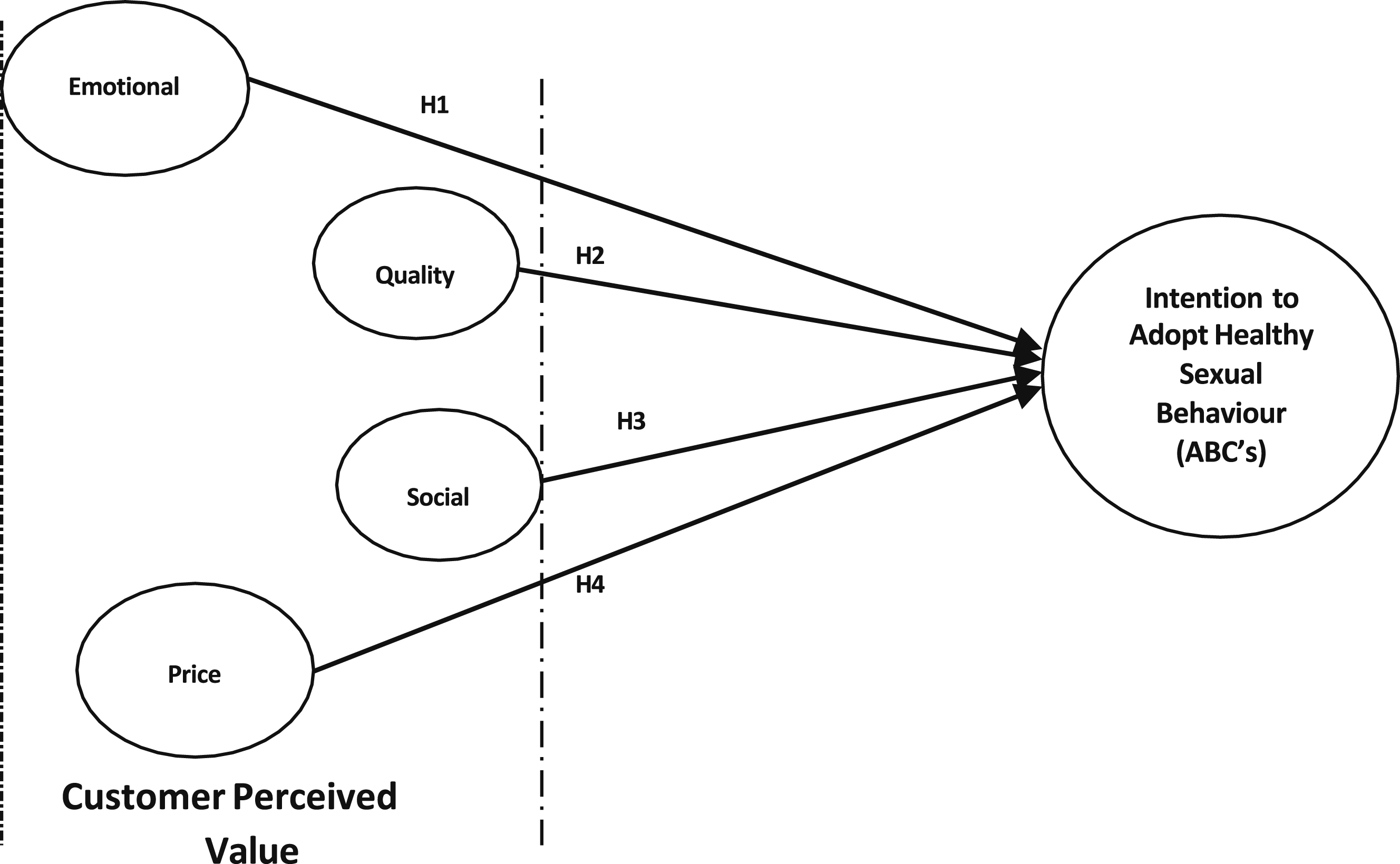
Emotional Value refers to “the perceived utility acquired from an alternative’s capacity to arouse feelings or affective states” (Sheth et al., 1991). The importance of emotional value in edutainment is important for several reasons when it comes to promoting healthy sexual behaviour. First, incorporating emotional elements into sex education can help make the material more relatable and personal for the learner. By addressing issues of self-esteem, body image, and communication, sex education can speak to the individual’s own experiences and emotions (Mathews et al., 2009). This can make the material more meaningful and relevant, which can increase the likelihood that the learner will retain the information and be motivated to put it into practice. Secondly, incorporating emotional elements into sex education can help foster a sense of connection and understanding among learners. By discussing sensitive and personal topics such as relationships and sexual decision-making, sex education can create a sense of community and support among learners. This can create a safe and welcoming environment for learners to ask questions and seek guidance, which can be essential for adopting healthy sexual behaviours. Finally, emotional value can play a critical role in changing behaviour through television shows. Research has shown that viewers are more likely to be influenced by characters and stories that they can relate to and that evoke strong emotions (Miller et al., 2008; Zailani et al., 2019). By creating characters and stories that resonate with viewers on an emotional level, television shows can help to engage viewers and make them more receptive to the messages being communicated (Kyere-Owusu & Boamah, 2020). By addressing the emotional aspects of sexuality, sex education can help individuals develop a positive and healthy understanding of their own sexuality.
We therefore propose the following hypothesis.
Emotional value will positively and significantly influence the intention to adopt healthy sexual behaviour.
Quality value in edutainment programming operates as a multifaceted construct that influences behavioural intentions through several critical mechanisms. At its foundation, high-quality edutainment ensures information accuracy and reliability through rigorous expert consultation and thorough review processes. This scientific grounding is particularly crucial for sexual health education, where misinformation can have serious consequences. When edutainment programs are developed with expert input, viewers develop greater trust in the presented information, increasing their likelihood of adopting recommended behaviours (Kyere-Owusu & Boamah, 2020). The production quality dimension manifests through multiple elements that enhance viewer engagement. Well-written narratives create coherent storylines that maintain viewer interest while effectively conveying health messages. Visual appeal through professional cinematography and production values elevates the viewing experience, making educational content more palatable (Brame, 2017). Compelling character development and plot progression ensure sustained viewer attention, facilitating better retention of health information. These elements work synergistically to create an immersive learning environment that balances entertainment with education. Furthermore, quality programming serves as a powerful vehicle for behavioural modelling through carefully crafted character portrayals and relationship dynamics (Bandura, 2001). By featuring characters who demonstrate healthy sexual behaviours and decision-making processes, edutainment provides viewers with concrete examples to emulate. These positive role models illustrate not only what healthy behaviours look like but also how to navigate challenges in implementing them. The portrayal of realistic consequences - both positive and negative - helps viewers understand the practical implications of their behavioural choices (Barnett & Parkhurst, 2005).
The quality dimension also encompasses the program’s ability to maintain consistency in messaging while avoiding didactic approaches that might alienate viewers. High-quality edutainment achieves this balance by integrating educational content naturally within entertaining storylines. This integration ensures that health messages are absorbed organically rather than feeling forced or preachy. When viewers perceive high production values alongside credible information delivery, they are more likely to remain engaged with the content and internalize its messages (Schmidt et al., 2016). Moreover, quality edutainment facilitates deeper learning through strategic repetition and reinforcement of key messages across episodes. This consistent exposure to health information, delivered through varying scenarios and character experiences, helps cement behavioural lessons in viewers’ minds. The cumulative effect of high-quality production elements, accurate information, and effective message delivery creates a powerful platform for promoting behaviour change. The interaction between these quality components - information accuracy, production values, behavioural modelling, and message integration - creates a comprehensive framework for influencing viewer behaviour (Bandura, 2009). When edutainment achieves excellence across these dimensions, it maximizes its potential for promoting healthy sexual behaviours. The research suggests that viewers who perceive higher quality in these programs demonstrate greater intention to adopt recommended health practices (Kyere-Owusu & Boamah, 2020). We therefore argue that:
The quality of an edutainment television show will positively and significantly influence intention to adopt healthy sexual behaviour.
Social value in edutainment represents a complex, multilayered construct that influences behavioural intentions through several interconnected social mechanisms. Drawing from Sheth et al.’s (1991) foundational definition of social value as “the perceived utility acquired from an alternative’s association with one or more specific social groups,” edutainment leverages social dynamics to promote healthy sexual behaviours in multiple ways. Primarily, edutainment programs serve as powerful tools for raising awareness and fostering collective understanding of sexuality-related social issues. This operates through carefully constructed narratives that portray realistic social scenarios and interactions. For instance, when programs address sensitive topics like consent and respect in sexual relationships, they create a shared social dialogue that helps normalize these discussions within communities (Oshi et al., 2005). This awareness-building function is particularly crucial in contexts where traditional social norms might discourage open discussion of sexual health.
The second mechanism through which social value operates is the establishment and reinforcement of positive social norms around sexual behaviour. Edutainment programs achieve this by deliberately portraying healthy sexual behaviours and relationships in a socially desirable light. This portrayal goes beyond simple representation to demonstrate how healthy choices enhance social relationships and contribute to community wellbeing. Research demonstrates that “social value manifested through interactions between characters helps viewers understand the social implications of their health decisions” (Blut et al., 2023). This understanding creates a supportive social environment that encourages individuals to adopt and maintain healthy behaviours. Furthermore, edutainment possesses the unique capability to challenge and transform existing negative social norms and behaviours. By presenting alternative perspectives and behaviours, these programs encourage viewers to critically examine established societal expectations around sexuality (Ayikwa et al., 2020). This critical engagement is facilitated through the portrayal of diverse characters challenging harmful traditional practices, demonstration of positive outcomes from adopting healthy behaviours, illustration of community support for individuals making healthy choices and representation of evolving social attitudes toward sexual health. The social value dimension also operates through peer influence mechanisms. When viewers see characters similar to themselves successfully navigating sexual health decisions, it enhances their self-efficacy and confidence in adopting similar behaviours. Additionally, edutainment programs create a form of parasocial interaction where viewers develop connections with characters, leading to social learning through identification and empathy. This social bonding aspect enhances the program’s ability to influence behaviour by creating emotional investment in characters’ health decisions, facilitating vicarious learning through character experiences, building social support networks among viewers and fostering community dialogue about sexual health (Bandura, 2009). The social value of edutainment also extends to its role in creating sustainable social change. By addressing social issues related to sexuality, these programs contribute to broader societal transformation. Research indicates that when edutainment successfully activates these social value mechanisms, viewers are more likely to adopt and maintain healthy sexual behaviours (Kyere-Owusu & Boamah, 2020). The cumulative effect of social awareness, norm transformation, peer influence, and community support create a powerful motivator for behavioural change. We therefore propose that.
Social Value will positively and significantly influence the intention to adopt healthy sexual behaviour.
Price value in social marketing contexts, particularly edutainment, represents a sophisticated construct that extends far beyond traditional monetary considerations. Drawing from social marketing theory, price encompasses all costs - both tangible and intangible - that consumers must exchange for the perceived benefits of behaviour adoption (Anderasen, 1994; Cheng et al., 2010). In the context of edutainment promoting healthy sexual behaviours, price value manifests through multiple dimensions of consumer sacrifice. Firstly, through temporal investment, this entails time spent watching and processing program content, opportunity costs of choosing educational entertainment over other activities, time required to reflect on and implement behavioural recommendations and long-term time commitment to maintaining behaviour changes (Bartels & Urminsky, 2015). Secondly, psychological costs which include mental effort required to engage with educational content, emotional investment in character narratives and outcomes, cognitive processing of complex health information and psychological adjustment to new behavioural patterns (Devine et al., 2023; Feldon et al., 2019; Inzlicht et al., 2018). Thirdly, social adjustment costs which addresses potential resistance from existing social networks, effort required to align with new social norms, navigation of changed relationship dynamics and management of social expectations (Bicchieri et al., 2018). Lastly implementation costs such as energy expended in behaviour modification, resources needed to maintain new behaviours, lifestyle adjustments required for change and personal investment in health outcomes (Artinian et al., 2010). The effectiveness of edutainment programs depends critically on the perceived balance between these various costs and anticipated benefits. When viewers evaluate the social marketing price value, they consider whether the program benefits justify time investment, if behavioural changes are worth the required effort, how implementation costs compare to health benefits and whether social adjustment costs are manageable. The complex interplay between different types of costs and their perceived value relative to benefits directly influences viewers’ behavioural intentions. When price value is optimally balanced, viewers are more likely to commit to and maintain recommended health behaviours. We therefore propose the following hypothesis.
The social marketing price will positively and significantly influence the intention to adopt healthy sexual behaviour.
Method/Approach
Using the research objectives and proposed hypotheses as guiding tenets of data collection for the study, the research was contextually set in the emerging nation of Ghana, which has implemented the ABC policy through donor-funded edutainment programmes. Notably “Things We Do for Love” which aired in the 1990s and “YOLO,” a pseudo sequel in the late 2010s. These two shows thematically addressed the constituent ABC policies and sexual education through dramatization and conscious inculcation of questions and answers relating to healthy sexual behaviour at the end of each show.
Sampling Strategy and Justification
Non-probability sampling techniques were employed, specifically purposive sampling, as this method allowed us to target respondents who had direct exposure to and interaction with either of these edutainment shows (Malhotra, 2020). This sampling approach was deemed appropriate given the need to reach viewers familiar with the specific programs and the sensitive nature of sexual health topics. Furthermore, the evaluation of show-specific content required respondents with actual viewing experience, making purposive sampling most suitable. This approach aligns with established methodological precedents in edutainment research examining sensitive health behaviours (Malhotra, 2020).
Data Collection, Participant Selection and Ethical Considerations
The researchers conveniently engaged respondents from two popular mega churches and a large mosque on two Friday and Sunday sessions in November 2022. While we acknowledge potential religious bias in this sampling approach, these venues were selected because they provided access to diverse demographic groups across age and socioeconomic status within established community gathering points. These institutions also maintained existing youth programs addressing sexual health education, facilitating access to our target population. To mitigate potential religious bias, we included multiple denominations and both Christian and Muslim institutions in our sample, while employing screening questions to verify exposure to the shows regardless of religious affiliation. All participants provided oral consent before participating in the study. Prior to data collection, ethical clearance Number H22/01/114 was obtained from the researcher’s affiliated university. The data collection process yielded a total of 700 distributed and retrieved questionnaires, representing a 100% response rate. From the returned questionnaires, 688 were deemed usable based on several quality criteria. Questionnaires were included if they demonstrated a minimum 85% completion rate of all items, contained complete responses on key construct measures, provided valid responses to screening questions about show exposure, and exhibited consistent response patterns indicating thoughtful completion (Sarstedt et al., 2021). Missing data in the usable questionnaires underwent rigorous examination through pattern analysis to determine the nature of missing responses. Where appropriate, multiple imputation techniques were applied for randomly missing responses, while mean substitution was utilized for non-critical items. All decisions regarding missing data treatment were thoroughly documented to ensure transparency and reproducibility. The age distribution of participants showed a significant young adult component, with 27% falling between 18–25 years of age, representing the largest single age group in our sample. In terms of marital status, 65% of respondents identified as single. The religious composition of the sample included 42% Christian and 35% Muslim respondents, with the remaining 23% distributed across other religious affiliations or choosing not to specify their religious background. This distribution, while not perfectly aligned with national demographics, provided sufficient diversity for meaningful analysis.
Measurement
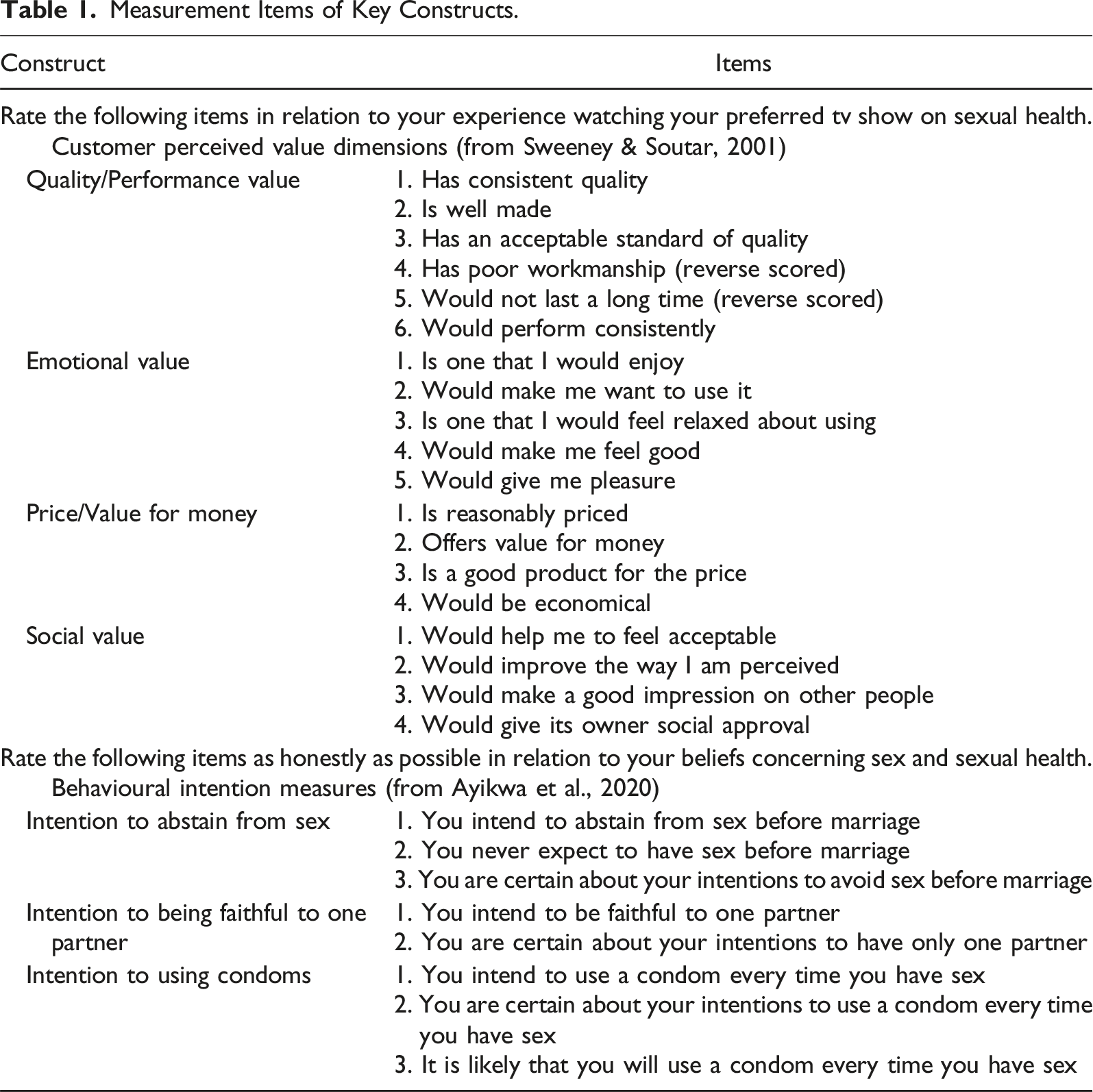
The research instrument comprised three sections a first section which consisted of a screening section which ensured that respondents had watched any of the shows before partaking in the study. A second section which adapted scales from Sweeney and Soutar (2001) and a final section which measured the intention of adopting healthy sexual behaviour by adapting scales from Ayikwa et al. (2020).
Results/Findings
Measurement Items of Key Constructs.
Measurement Model Evaluation
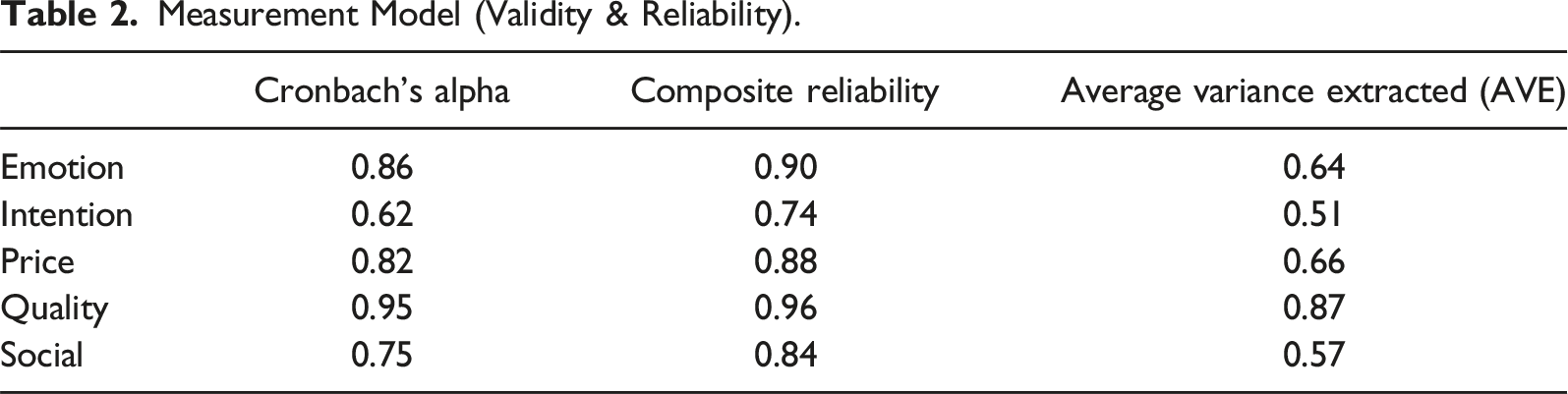
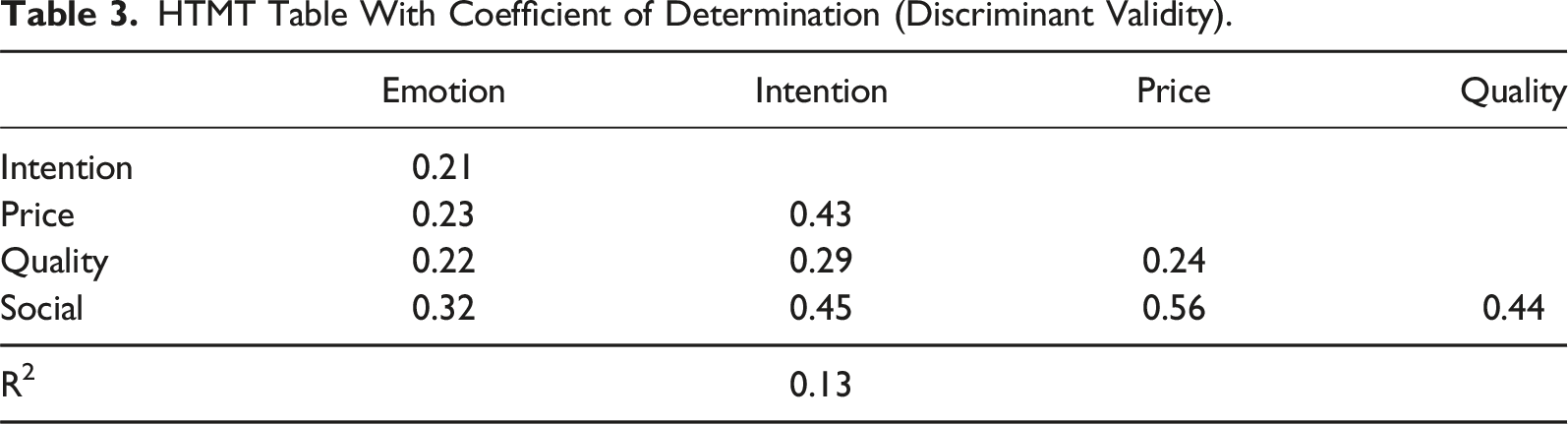
Our analytical approach began with a rigorous assessment of data characteristics and measurement properties. Initial screening revealed non-normal distribution patterns when evaluated against George & Mallery’s (2010) threshold of ±2. This non-normality, while notable, did not compromise our analysis given PLS-SEM’s robust capabilities in handling non-normal data distributions. Following established methodological protocols, we conducted a comprehensive evaluation of the measurement model through sequential assessment of internal consistency reliability, convergent validity, and discriminant validity (Hair et al., 2017). In pursuit of measurement precision, items with outer loadings below 0.7 were systematically evaluated and removed when their elimination contributed to improved model reliability and validity indicators (Hair et al., 2019).
Measurement Model (Validity & Reliability).
HTMT Table With Coefficient of Determination (Discriminant Validity).
Structural Model Evaluation
Inner VIF.
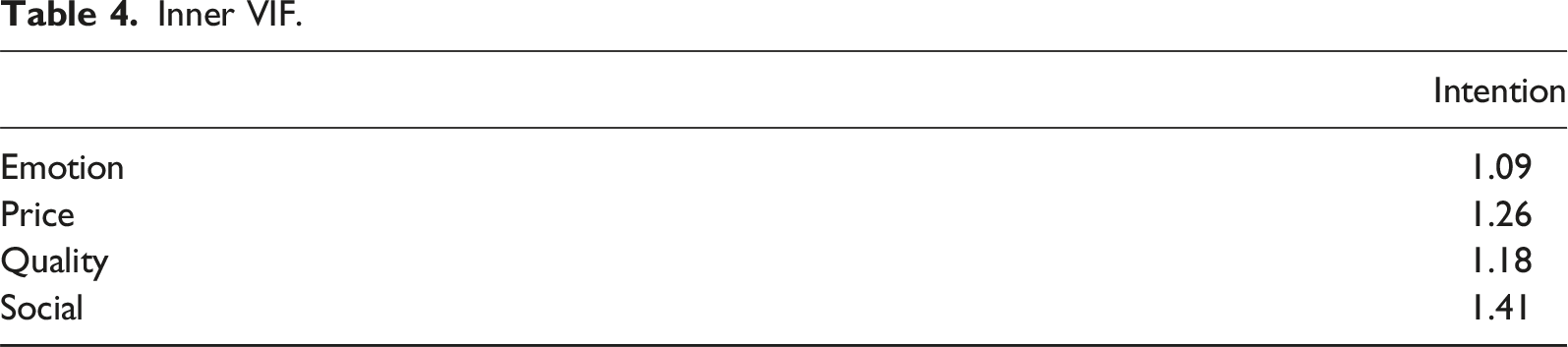
Addressing our first research question regarding how target audiences evaluate sexual health interventions, the model explained 13% of variance in intention to adopt healthy sexual behaviours (R2 = 0.13). While this explanatory power might initially appear modest, it represents meaningful insight into highly complex behavioural processes, particularly given the sensitive nature of sexual health decisions and the multitude of factors influencing such behaviours (Minitab, 2014). To validate the model’s predictive capacity, we employed sophisticated blindfolding techniques and 5000 bootstrap subsamples. The resulting Q2 values exceeded zero, while t-statistics for direct relationships surpassed the critical 1.96 threshold, providing strong support for the model’s predictive relevance and statistical significance.
Hypothesised Path Results.
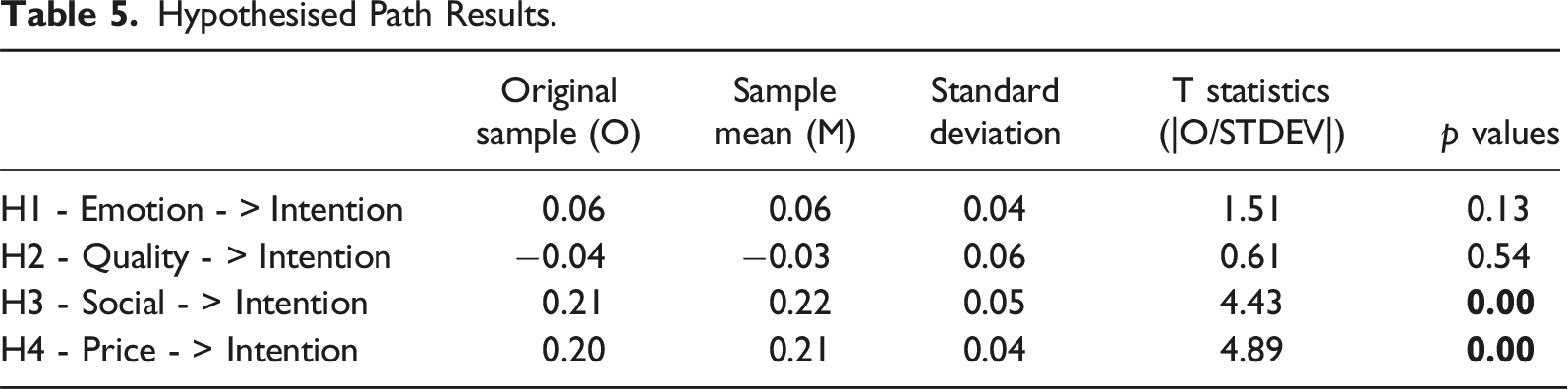
Contrary to theoretical expectations, emotional value (β = 0.06, p = .13) and quality (β = −0.04, p = .54) did not demonstrate significant direct effects on behavioural intentions. This unexpected finding warrants careful consideration of several potential explanatory factors. Firstly, the predominance of social value likely reflects the deeply embedded collective nature of African societies, where social influences and community perspectives often supersede individual emotional responses or quality perceptions in behavioural decisions (Whyle & Olivier, 2020). This cultural context may fundamentally shape how value is perceived and acted upon in health behaviour decisions. Secondly, while our measures demonstrated strong reliability, the abstract nature of emotional value in health behaviour contexts may have created unique measurement challenges. The complexity of capturing emotional responses to health interventions, particularly in sensitive areas like sexual behaviour, may require more nuanced measurement approaches (Epel et al., 2018). Thirdly, the relationship between emotional value/quality and behavioural intentions may operate through indirect pathways not captured in our direct effects model. These relationships might be mediated by intervening variables such as platform characteristics, celebrity influence, or other contextual factors that shape how these value dimensions translate into behavioural intentions.
Discussion
This study’s findings provide significant theoretical and practical insights into how value perceptions influence behavioural change through social marketing interventions. The results not only advance our understanding of value perception in health behaviour contexts but also raise important questions about the application of commercial marketing frameworks in social marketing. The emergence of social value as the primary driver of behavioural intentions (β = 0.21) represents a significant theoretical contribution that extends beyond mere statistical significance. This finding fundamentally challenges existing assumptions about value perception in social marketing contexts, particularly regarding the relationship between individual and collective value dimensions. While commercial marketing frameworks often emphasize individual value perceptions, our results suggest that social marketing interventions, especially in collective societies, operate through distinctively social mechanisms. This aligns with Andreasen’s (1994) seminal argument that social marketing must adapt rather than simply adopt commercial principles. The strong influence of social value also supports recent theoretical developments in social marketing that emphasize the role of collective influence in behaviour change.
The significant effect of price value (β = 0.20), conceptualized primarily through time investment, advances social marketing theory by expanding our understanding of non-monetary exchange beyond traditional cost-benefit frameworks. The strong influence of time-related considerations suggests that audience investment decisions may be more complex than previously theorized in social marketing literature. This finding challenges conventional approaches to social marketing program design, which have historically focused on reducing monetary or psychological costs while potentially underestimating the crucial role of time perception in behaviour adoption decisions (Weinreich, 2010). Perhaps most intriguingly, the non-significance of emotional value and quality dimensions raises fundamental questions about the boundary conditions of commercial marketing frameworks when applied to social marketing contexts. This unexpected finding suggests that the relationship between value dimensions may operate differently in social marketing compared to commercial marketing settings. Rather than indicating their irrelevance, this finding suggests these dimensions may operate through more complex, indirect pathways. The cultural context of our study provides additional theoretical insight into how value perceptions operate in collective societies, highlighting the critical role of cultural context in shaping how different value dimensions influence behavioural intentions.
Our findings have substantial implications for social marketing practitioners, particularly those working in health behaviour change interventions. The strong influence of social value suggests that practitioners should prioritize social elements in intervention design as central drivers of behaviour change, moving beyond simple social proof mechanisms to develop sophisticated approaches that leverage community influence structures. Programs should be explicitly designed to create visible demonstrations of community support for desired behaviours, enhance social status through behaviour adoption, incorporate community leadership in program design, and build social support systems that reinforce behaviour change. The significant role of time value suggests that practitioners must carefully consider how audiences evaluate time investments in relation to perceived benefits. This requires developing intervention designs that not only minimize time barriers but also clearly demonstrate value for time invested. Programs must deliver maximum impact within audience time constraints through careful consideration of program duration, delivery mechanisms, clear communication of time-benefit relationships, and strategic use of multiple channels to enhance efficiency. The non-significance of emotional and quality dimensions suggests that practitioners should reconsider how these elements are integrated into intervention designs. Rather than relying on emotional appeals or quality assertions as primary behaviour change drivers, these elements might better serve as supporting factors that enhance program engagement and message retention, reinforcing socially-driven behaviour change. The non-significance of emotional value and quality dimensions further warrants deeper theoretical consideration. This finding, while unexpected, may be explained by several theoretical mechanisms. First, the cultural context of Ghana, characterized by strong collectivist values (Hofstede, 2011), likely elevates social considerations above individual emotional responses in decision-making processes. In collectivist societies, decisions about health behaviours may be more heavily influenced by community standards and social approval than by individual emotional reactions or quality assessments. Second, the specific nature of sexual health behaviours—which involve deeply personal yet socially embedded decisions—may create a unique value perception dynamic where social considerations outweigh emotional and quality factors that might be more prominent in other behavioural contexts. Third, rather than indicating irrelevance, these dimensions may operate through indirect pathways. For example, emotional values might influence social value perceptions, which then affect behavioural intentions. Similarly, quality perceptions might moderate the relationship between social value and behaviour adoption through mechanisms like trust, perceived relevance, or message credibility (Petty & Cacioppo, 2012). This possibility of sequential mediation, where emotional and quality elements function as antecedents to the more directly influential social value, offers a promising direction for future research and theory development in social marketing.
Conclusions
This study advances our understanding of how perceived values influence health behaviour intentions through social marketing interventions. While the explained variance of 13% might appear modest, it represents meaningful insight into extremely complex behavioural processes, particularly given the sensitive nature of sexual health decisions. The prominence of social and price values, coupled with the unexpected non-significance of emotional and quality dimensions, provides important insights into value perception dynamics in social marketing contexts.
Our findings demonstrate that commercial theoretical frameworks like the Theory of Consumption Value can be effectively applied to health behaviour contexts, though with important adaptations. The study shows that while consumption value theory provides a valid framework for understanding behavioural intentions in social marketing, the relative importance of different value dimensions varies significantly from commercial contexts. The dominance of social value likely reflects the collectivist cultural context of Ghana, where community standards and social approval may exert stronger influence than individual emotional responses or quality assessments. Similarly, the significance of price value (conceptualized as time investment) highlights the importance of temporal considerations in health behaviour adoption—an aspect often underemphasized in traditional social marketing approaches. The non-significance of emotional and quality dimensions suggests not their irrelevance, but potentially their operation through indirect pathways. These dimensions may function as antecedents that influence social value perceptions, which then affect behavioural intentions through mechanisms like trust, perceived relevance, or message credibility. This possibility of sequential mediation offers promising directions for future theoretical development in social marketing.
The study’s limitations include its cross-sectional nature, preventing observations of how value perceptions evolve over time, and its focus on a specific cultural context, which may limit generalizability. Additionally, our sampling approach through religious institutions may have underrepresented secular youth and those affiliated with smaller religious groups, though screening measures were employed to mitigate potential bias. Future research should explore these value relationships across diverse cultural contexts and through longitudinal designs to capture the dynamic nature of value perceptions. Researchers should also investigate potential mediating mechanisms between different value dimensions, particularly examining how emotional and quality elements might indirectly influence behaviour change.
Despite these limitations, our findings provide clear direction for both theory development and practical application in social marketing. The strong emergence of social value as a primary driver of behavioural intentions, combined with the significant influence of time investment considerations, offers practitioners concrete guidance for intervention design while suggesting important theoretical refinements. As social marketing continues to evolve as a discipline, these insights provide a foundation for developing more effective, theoretically-grounded interventions that resonate with target audiences and drive meaningful behavioural change.
Footnotes
Declaration of Conflicting Interests
The authors declared no potential conflicts of interest with respect to the research, authorship, and/or publication of this article.
Funding
The authors disclosed receipt of the following financial support for the research, authorship, and/or publication of this article: This work was supported by the Ethics Clearance: Granted by DRID – UniMAC (University of Media, Arts & Communication – Directorate of Research, Innovations and Development); H22/01/114.
