




Abstract
Background:
Social marketing successes are relatively well-documented, but mistakes and failures in the field are not. When mistakes and failures are reported, they are usually on an ad hoc basis, as opposed to a systematic gathering of evidence. This paper is the second half of a two-part research study that aims to understand the perceptions of social marketing professionals with regard to mistakes and failures in the field.
Focus:
This article is related to research and evaluation of the social marketing field.
Research Question:
What are the perceptions of the social marketing community regarding mistakes and failures in the field?
Importance to the field:
A greater understanding of mistakes and failures in the social marketing field will assist practitioners to assess their own shortcomings, address causes of mistakes and failures, and improve program outcomes.
Method:
This research is qualitative and exploratory, with a constructivist, grounded theory methodology. Surveys were completed by 100 social marketing community members. Survey data was analyzed and coded using SPSS software and Microsoft Excel.
Results:
According to the analyzed survey data, the social marketing community believes that inadequate research, poor strategy development, and mismanagement of stakeholders are the most common mistakes made by social marketers. Further, weak evaluation and monitoring is considered to be the “least well-managed” program element. Poor strategy development, external influences, and poorly designed program and behavioral objectives are considered to be the primary reasons for social marketing program failure.
Recommendations for research or practice:
Future research may explore the extent to which external influences lead to social marketing program success or failure, particularly in comparison to mistakes made by social marketers. Additionally, practitioners should be aware of and develop strategies to mitigate common mistakes and failures in order to improve program outcomes.
Limitations:
The 100 social marketing professionals who responded to the survey are not representative of the global social marketing community. Further, responses were based on self-report rather than direct observation, which may make them more susceptible to bias.
In the 1990s, a friend from high school went into a job interview for a sales position at a car rental company. When asked what his greatest weakness was, he looked straight into the interviewer’s eyes and replied, “kryptonite.” In saying this, he was able to take the dreaded “what are your weaknesses?” question and turn it around in his favor through an inference to Superman. Needless to say, he got the job, became the top sales person that year in Canada and today is vice-president of sales for a large multinational food conglomerate.
This anecdote highlights two things: firstly, that this friend’s business school degree seems to have paid for itself, and secondly, it illustrates our tendency to shy away from talking about weaknesses or past mistakes. If you’ve ever had a social marketing program “fizzle” or fail to meet its objectives, you likely haven’t been scrambling to write it up as an abstract for presentation at the next World Social Marketing Conference. But we would likely all be better off if you did.
While it was once taboo to talk about or reflect on the “F” word (i.e., failure), time and time again it has been proven to lead to effective—and positive—change. In 2011, Harvard Business Review dedicated an entire issue to this topic. In the issue, Edmonson (2011) argued that “the wisdom of learning from failure is incontrovertible” and that it is crucial to build a learning culture that embraces this notion. The practice of entrepreneurship is a good example of this type of learning culture. There is empirical evidence to suggest that entrepreneurs regularly discuss failure because it is an accepted social norm within their field of practice. “Fail fast, early, and often” is a common piece of entrepreneurial advice (Gartner & Ingram, 2013; Parris & McInnis-Bowers, 2017).
This paper is part of a larger research project that aims to explore common mistakes 1 and failures 2 that have been identified by a range of professionals in the social marketing community. The purpose of this research is not to pinpoint specific programs that have “failed” or made significant errors, but rather to identify which parts of the process of designing, implementing and evaluating social marketing programs are most likely to be the weakest. In collecting and reporting on our findings, we also aim to contribute to building a culture of mistake- and failure-sharing within the social marketing community.
Background/Literature
There are many case studies, reports and articles documenting social marketing successes in a variety of fields and contexts (Truong, 2014). There is also a growing body of literature that points to the effectiveness of social marketing in various domains such as physical health (Gordon et al., 2006), environmental sustainability (McKenzie-Mohr et al, 2012), and global health (Firestone et al., 2017). However, less research has been conducted related to mistakes and failures in the social marketing field. When surveying the social marketing literature, what we do find is that several articles critique, assess, or evaluate one or a few social marketing programs, pointing to failures or mistakes made during the design, implementation and evaluation stages (Deshpande et al., 2015; e Silva & Silva, 2012; James et al., 2017; Ramirez et al., 2017; Smith et al., 2009). Some articles have discussed failure in the context of social marketers making mistakes with regard to one particular topic—the use of theory, for example (Dietrich et al., 2016; Glassman & Braun, 2010; Manikam & Russell-Bennett, 2016). Others explore weaknesses in the discipline as a whole (Antonetti et al., 2015; Nicholson & Xiao, 2011; Russell-Bennett et al., 2013). Some scholars have listed challenges that they encountered or lessons learned during the course of one social marketing program (Clason & Meijer, 2016; Long et al., 2011; Parvanta et al., 2013), while others have listed mistakes made in the course of designing and implementing a single social marketing program (Huberty et al., 2009; Sundstrom, 2013).
Only one article was found that engaged in a discussion related to the reasons why many social marketing programs fail. Wymer (2011) asked why social marketing programs might be less effective than they could be, and then pointed to mistakes made by social marketers as an important contributing factor to reduced program effectiveness. Specifically, he stated that 1) social marketers’ understanding of the social problem is biased due to their own “mental models”; 2) they restrict social marketing strategies to those that are aimed at individuals rather than tackling environmental factors, and; 3) when they do acknowledge that environmental factors contribute to the social problem, they fail to create a plan that will eliminate the upstream cause of the problem.
Wymer (2011) provides valuable insight into possible reasons why social marketing programs fail, but he leaves many questions unanswered. Are there other common mistakes that social marketers are making that might lead to program failure, and, if so, how are these mistakes characterized? What about other common reasons why social marketing programs fail aside from mistakes made by social marketers? Further, Wymer’s (2011) paper is conceptual. Until recently, there has been no empirical study that explores the most common mistakes made by social marketers and/or the factors that might contribute to social marketing program failure. This research will begin to fill this gap in knowledge by exploring perceptions of social marketing professionals related to program failure in the field.
For this paper, we surveyed 100 members of the social marketing community in order to investigate the research question, “What are the perceptions of the social marketing community regarding mistakes and failures in the field?” In alignment with previous research conducted by Cook et al (2020), the purpose of this exploration is to (1) expand the understanding of failures in social marketing beyond a case-by-case basis, toward a more systematic appraisal of failures in the social marketing field, (2) begin to understand the extent to which mistakes made by social marketers might contribute to social marketing program failure, especially in comparison with external influences, and (3) assist social marketers in assessing their own and others’ shortcomings, which could lead to more successful program outcomes (Mintz, 2016).
From an academic perspective, this research provides empirical data to complement both conceptual discussions of common social marketing mistakes (e.g., Wymer, 2011), and previous research that has looked into the weaknesses of specific social marketing programs (e Silva & Silva; Huberty et al., 2009; Sundstrom, 2013). From a practitioner perspective, this research offers empirical data that may serve as a guide for social marketing professionals to begin mitigating some of these mistakes and failures, thereby improving program outcomes.
Method
Research Design
This paper is the second half of a two-part qualitative study that aims to explore social marketing professionals’ perceptions related to mistakes and failures in social marketing programming in order to better understand the reasons behind social marketing program failure. This research was approved by the University of Waterloo’s Office of Research Ethics.
In the first part of the study, 17 social marketing experts 3 were interviewed regarding their opinions about mistakes and failures in the field (Cook et al, 2020). In this second part, the focus is on gathering opinions from the wider social marketing community. 4 In order to accomplish this, the researchers surveyed 100 social marketing community members over a 2-year period, from 2017 to 2019. Survey questions examined different angles of the social marketing community’s perspectives on failures and mistakes made in the field. In addition to demographic questions, researchers inquired about mistakes made in the field, program elements that are least well-managed, and failures in social marketing programs. Survey questions also varied between open and closed questions, in order to get a wide range of possible responses. Each of these angles gave the researchers a multifaceted understanding of the various reasons behind social marketing program failure.
Social Marketing Community Surveys
The research team collected 108 surveys that had been administered both online and in person (i.e., on paper) to the social marketing community. Respondents who were given paper copies of the survey were recruited from social marketing conferences in Europe and North America. Respondents who completed the survey online were recruited through social marketing listservs (e.g., iSMA, SMANA, ESMA newsletter, New Zealand Social Marketing Network), the research team’s personal contacts, and the social marketing experts’ personal contacts. Since the research team felt it would be more difficult to recruit survey respondents online as opposed to in person, potential online respondents were offered a chance to win a $50CDN VISA card as an incentive to participate. The winner was randomly drawn and then mailed the VISA card.
To meet eligibility criteria, survey respondents had to: Have consented to participate Have worked on a project or program that aimed to change a behavior(s) Have completed a minimum of 14 of 16 survey questions
Data Analysis
Data from the 108 surveys was consolidated into the University of Waterloo’s Qualtrics Insight Platform. At this point, eight surveys were disqualified. Five were incomplete, two had no behavioral experience and one did not consent. This left 100 valid surveys.
The 100 valid surveys were then imported into SPSS for analysis. SPSS Version 26 was used to analyze survey data. Data was reviewed again before analysis (to ensure that there were no more invalid surveys), and then examined using descriptive statistics. Initial codes were built upon from preexisting codes used in previous research by Cook et al (2020). Similar codes were grouped together and defined (Braun & Clarke, 2006). Following Cohen et al. (2019), two raters conducted pilot tests with 10% of the data to ensure adequate interrater reliability. Once interrater reliability was established (Cohen’s K = .76), one member of the research team coded the rest of the data. Of the survey questions that were coded, all codes are shown in the charts and graphs below (minus the code for missing or irrelevant data), except the survey question related to program elements that are least well-managed. In this question, only the top six least well-managed program elements are listed as it would have been impractical to include results for all twenty program elements.
Overview of Survey Respondents
All 100 survey respondents answered in English. In terms of their working roles, most survey respondents were practitioners (42%), consultants (22%) or academics (17%). Some were educators (11%), and several had “other” roles such as student researcher or government employee (8%).
Most survey respondents (60%) had ten or less years of experience working in the social marketing field, while one-third (33%) had sixteen or more years of experience and a few (9%) had more than 20 years of experience. Survey respondents work in a variety of fields, many in more than one. The most common fields of work are in health (70%) and environment (57%), while the rest were a diverse mix of safety, transportation, international development, social work, disaster preparedness, conflict prevention, food, and agriculture, among others.
The majority (70%) of survey respondents answered questions related to their level of experience with program design, program implementation and program evaluation. See Table 1.
Survey Respondents’ Level of Experience with Programming, by Number of Respondents.

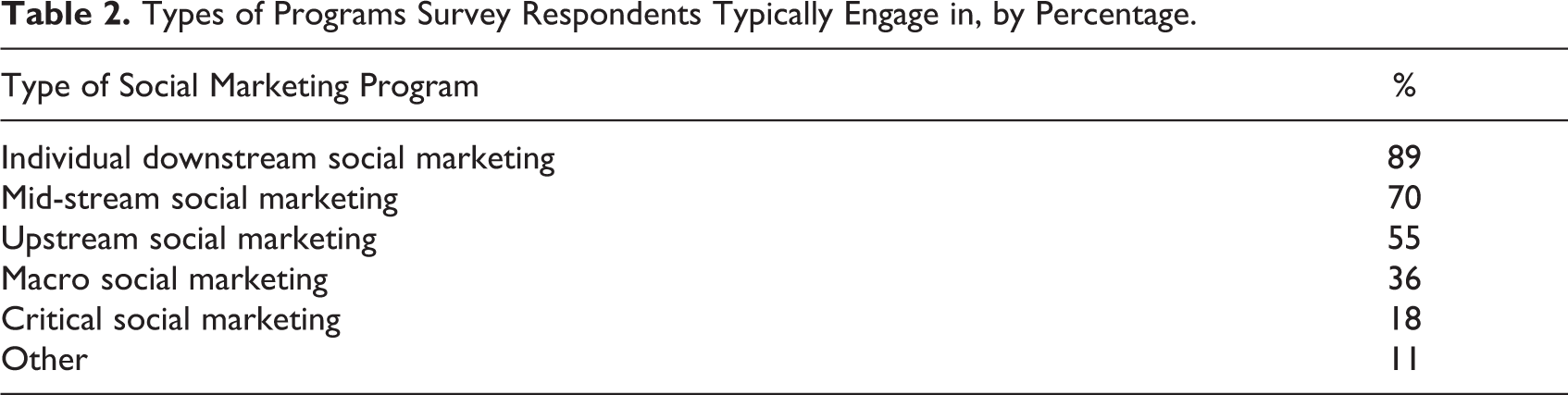
Nearly all (96%) of survey respondents answered questions related to the types of social marketing programs they regularly engage in (e.g., downstream, upstream, critical, etc.). Most social marketers engage in multiple types of social marketing programs. Perhaps not surprisingly, the largest percentage of respondents engage in individual “downstream” social marketing programs. This is consistent with Truong (2014)’s finding that the majority of social marketing research and discourse focuses on the individual, downstream level.
Most respondents also engage in mid-stream and upstream social marketing, with a minority engaging in macro and critical social marketing programs. A small percentage of respondents engage in other types of social marketing programs such as systems social marketing, strategic social marketing, and social and behavior change communication. See Table 2.
Types of Programs Survey Respondents Typically Engage in, by Percentage.
Findings
In regard to mistakes, failures, and least well-managed program elements in social marketing, respondents were asked several questions in the survey.
In this section, these will fall under the following subheadings: Most common mistakes made by social marketers Least well-managed program elements by social marketers Reasons for social marketing program failure Additional comments about successes and failures in social marketing programs
Most Common Mistakes Made by Social Marketers
Respondents were asked what they believe are the three most common mistakes made by social marketers in the design and implementation of social marketing programs. This was asked as an open question in the survey, which was then coded into the corresponding program element codes. Responses are illustrated in Figure 1.
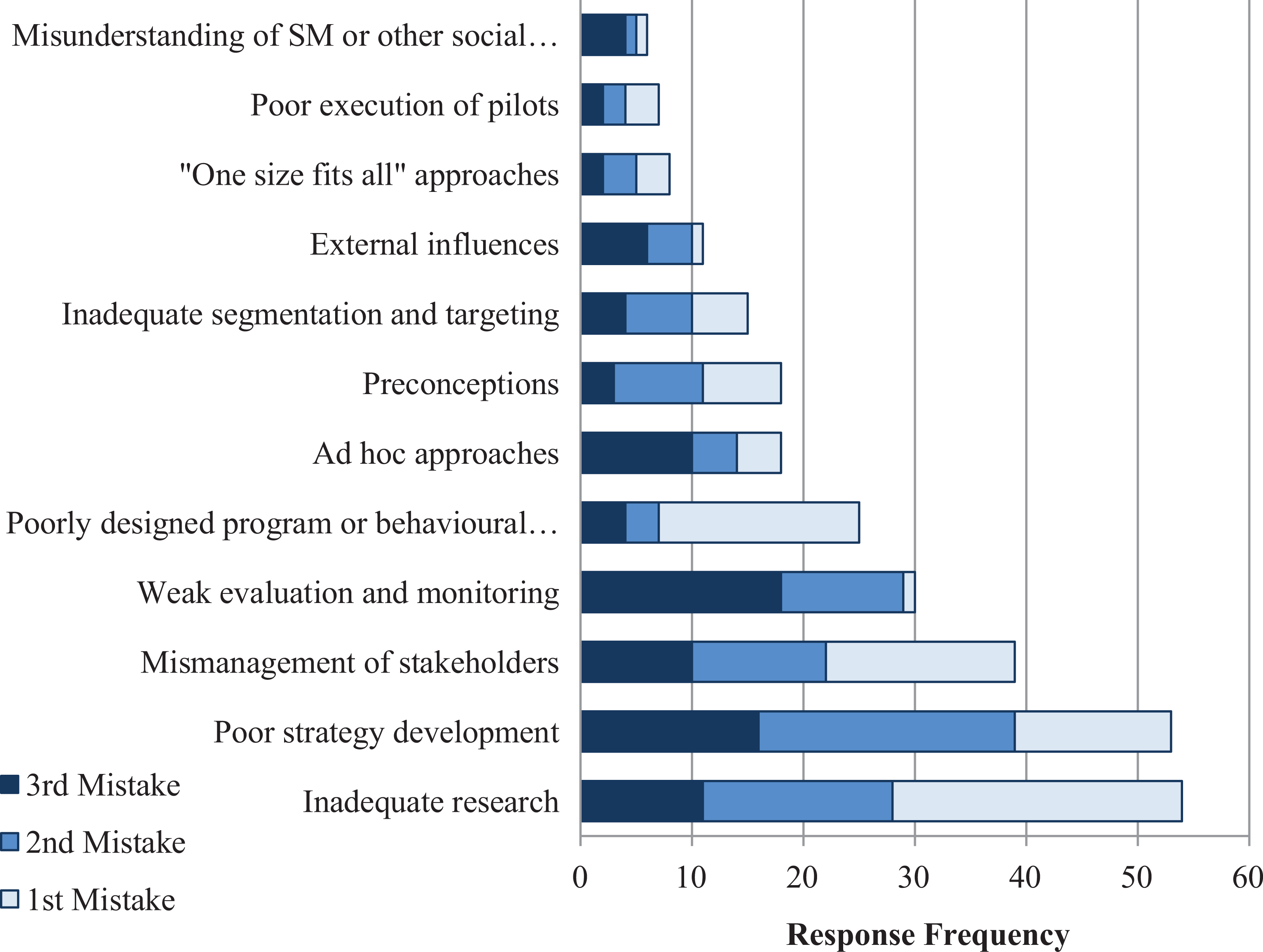
The most common mistakes made by social marketers, according to survey respondents (by frequency of response). Respondents were asked to note the top three most common mistakes they believe are made by social marketers.
Similar to recent research done by Cook et al (2020), in which social marketing experts were asked what they believed were the most common mistakes made by social marketers, “inadequate research” and “poor strategy development” were the top two most frequent responses. “Inadequate research” was not only listed the most frequently overall, but it was also most frequently listed first (among the three possible mistakes that respondents could list).
Inadequate research
For this mistake, responses tended to revolve around the notion that social marketers may sometimes do little or no formative research at the beginning of the campaign. However, there were a few other nuances in relation to “inadequate research” that appeared in the responses: The first involves a lack of understanding. Respondents who commented on this mentioned that the social marketer may lack an understanding of the motivations of the priority group, the social problem as well as its systemic causes, or the structural factors that influence particular behaviors. The second involves inadequate gathering of evidence. Respondents who commented on this mentioned such things as a lack of baseline data, an overemphasis on anecdotal evidence or theoretical evidence instead of field evidence, and a failure to analyze previous interventions. The third involves a misinterpretation of research. Some respondents mentioned that the social marketer may misread research about the priority group, or may draw the wrong conclusions from the formative research and as a result may fail to appropriately apply the research to strategy development.
Poor strategy development
Many respondents stated that the social marketer may overemphasize the importance of awareness and education in influencing behavior change. Other responses mostly fell into two categories: The first relates to a misuse of messaging. Respondents mentioned that messages may be unclear, overly negative or fear-based, too plentiful (so as to be confusing), irrelevant, or they may lack creativity. The second relates to an inadequate use of behavioral levers.
5
Some respondents mentioned inadequacies with respect to barriers and benefits. For example, either the benefits to the desired behavior were not well promoted, or not enough tools were provided to overcome the barriers. Other respondents mentioned inadequacies in the use of the 4Ps (Product, Price, Place, Promotion). For example, forgetting the importance of distribution; lacking integration across channels; using the wrong channels; underemphasizing the quality of products and services; not using the full scope of marketing tools to make the behavior fun, easy and popular; and not focusing on the “user experience,” which makes the behavior too complicated or difficult.
Mismanagement of stakeholders
In contrast to Cook et al (2020)’s previous work with social marketing experts, “mismanagement of stakeholders” was one of the top three listed mistakes made by social marketers, according to the wider social marketing community. “Stakeholders” for the purposes of this research study, was defined as any individual or group who has an interest in or is affected by the success of the social marketing intervention. This definition includes the priority group. Most respondents described this mistake in the context of top-down approaches to campaigns, where there is little (if any) input or engagement with the priority group related to program formation, direction and goal-setting. Some respondents stated that social marketers may make the mistake of focusing on the needs of the program rather than the needs of the priority group. Other respondents mentioned inadequate or ineffective partnerships as a key mistake. More specifically, some respondents described the mistake as a failure to communicate with, engage with, or coordinate various stakeholders (e.g., influencers or community leaders) in order to get buy-in for the program. One respondent described this mistake as a lack of social marketing training for stakeholders.
With respect to the ranking of mistakes (i.e., whether the mistake was listed as respondents’ first choice, second choice, or third choice), “inadequate research” was most often the first mistake respondents listed. “poor strategy development” was most often the second mistake listed, and “weak evaluation and monitoring” was most often the third mistake listed.
Least Well-Managed Program Elements by Social Marketers
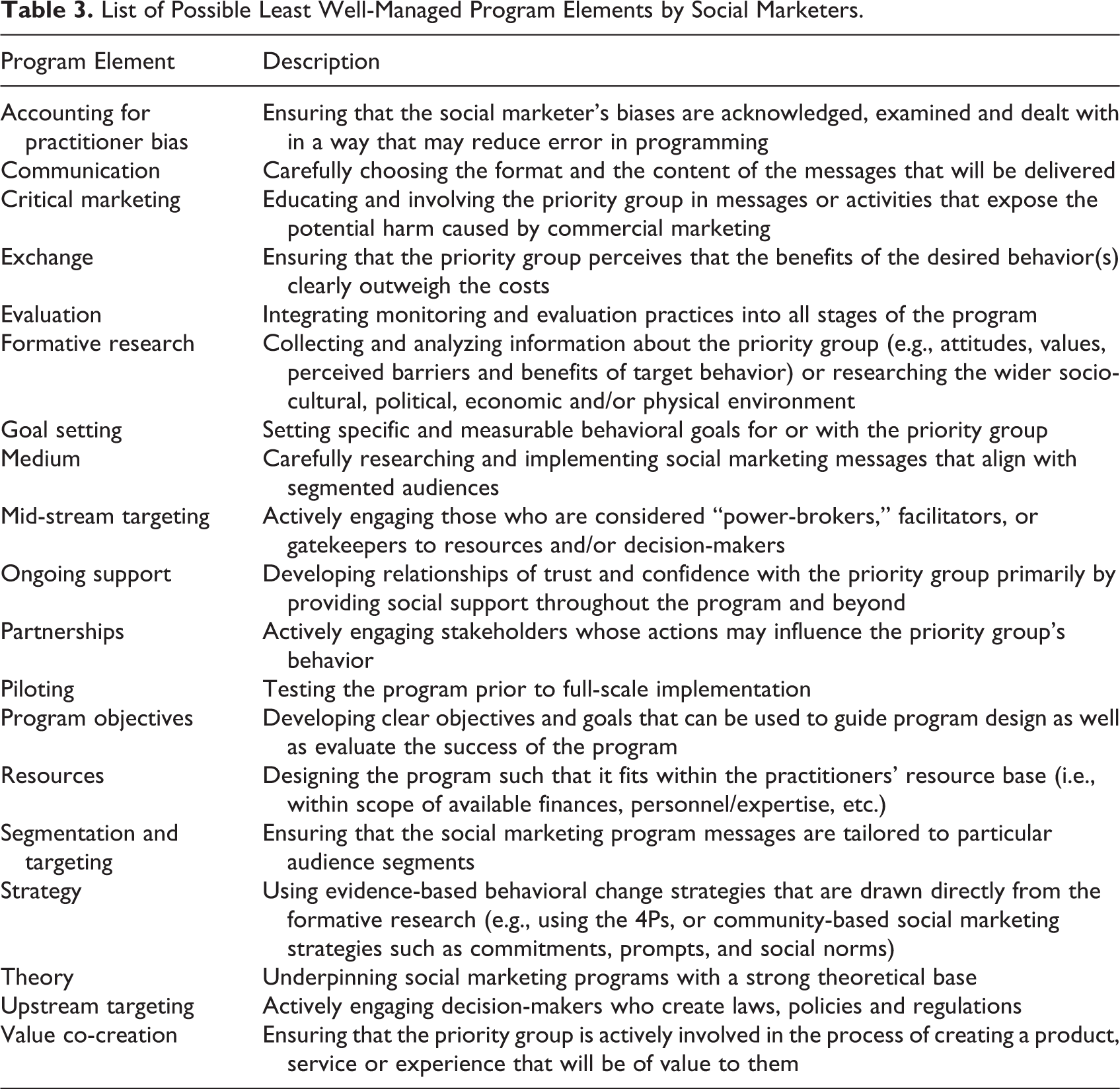
Respondents were also asked what were the top five elements that they believe are the least well-managed by social marketers. This was asked as a closed-ended question. The list of twenty possible program elements they could choose from is in Table 3 below.
List of Possible Least Well-Managed Program Elements by Social Marketers.
Results found six top elements (there were two ties) that the social marketing community believes are least well-managed by social marketers: evaluation, partnerships, value co-creation, practitioner bias, ongoing support and strategy. See Figure 2.
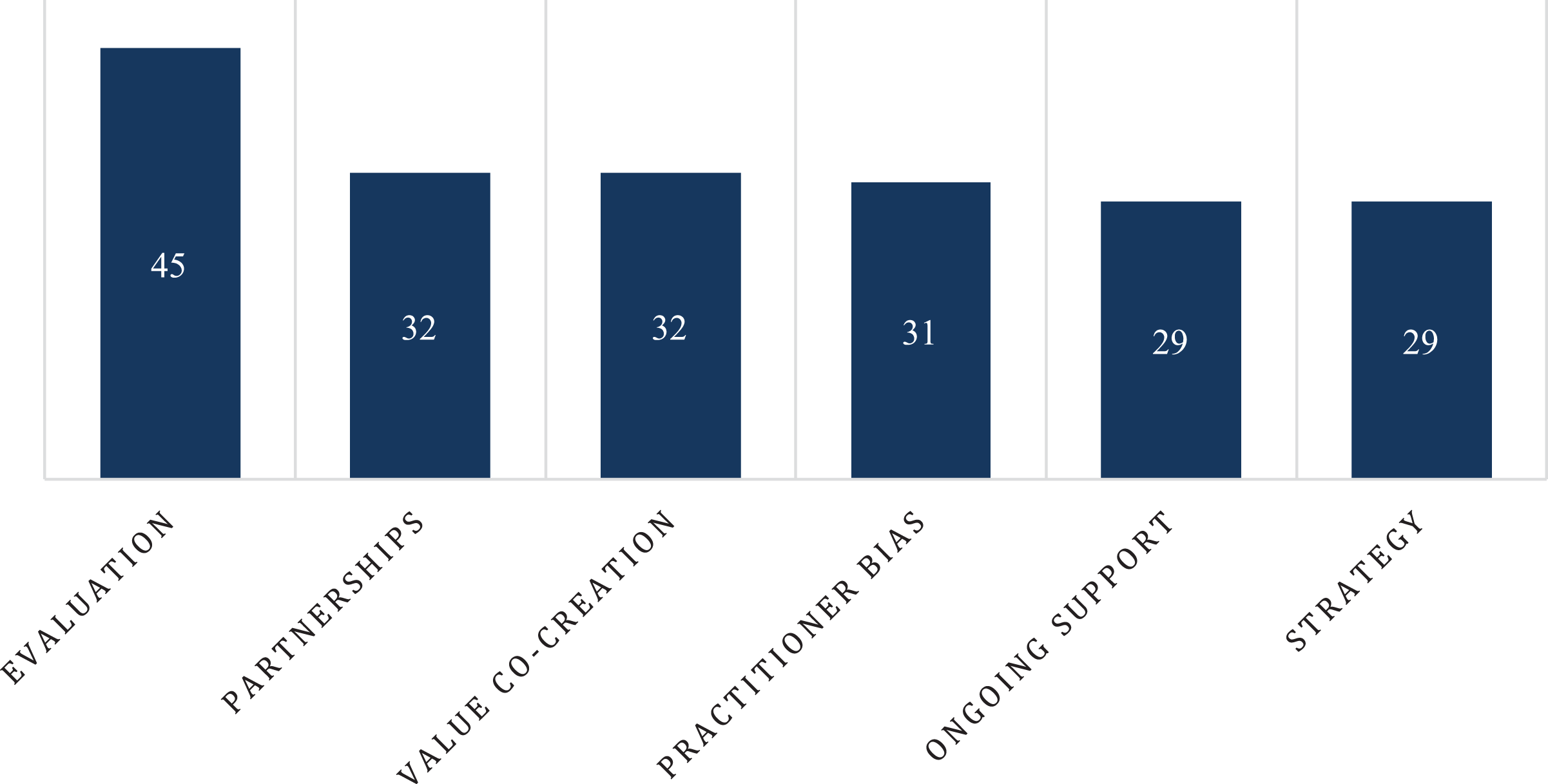
Least well-managed program elements by social marketers, according to survey respondents (by number of responses). Respondents were asked to select up to five social marketing program elements that they believe are the least well-managed by social marketers (from the list illustrated in Table 3).
Reasons for Social Marketing Program Failure
Respondents were asked if they have had any experience with social marketing programs that failed to meet their behavioral change goal(s). Of the 100 respondents, 58% said that they had been involved in a program that failed, while 42% had not. Of the respondents who had been involved in a program that failed, 50 out of the 58 (86%) offered reasons as to why they believe the programs they were involved in failed. Respondents offered 78 reasons in total (after missing, unclear or irrelevant responses were removed). Figure 3 demonstrates the break-down of reasons for program failure.
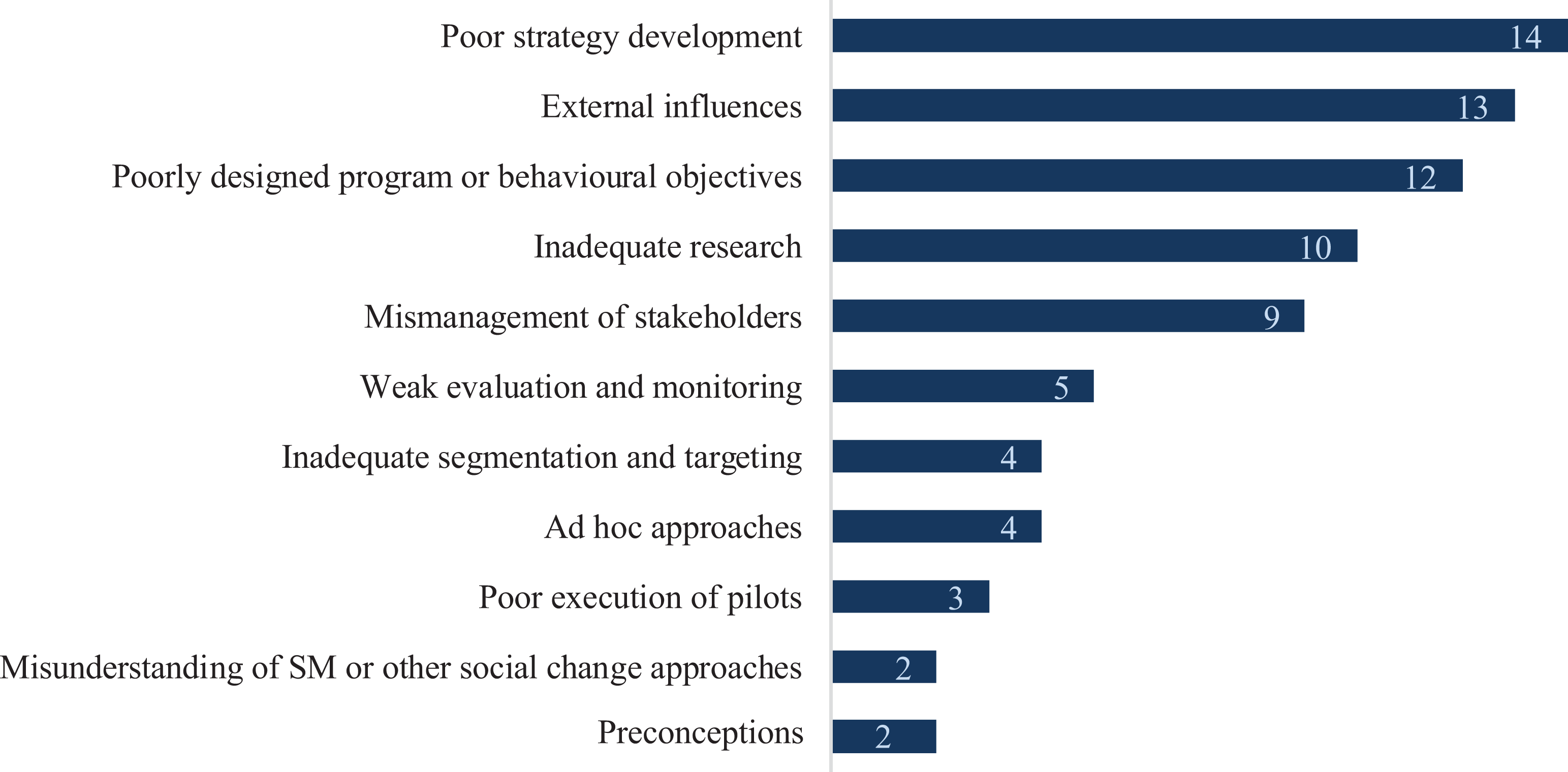
Top reasons for social marketing program failure, according to survey respondents (by number of responses).
“Poor strategy development,” “external influences,” and “poorly designed program or behavioral objectives” were listed as the three major reasons why the social marketing programs failed.
Poor strategy development
The most common reason for failure cited by the social marketing community with regard to “poor strategy development” was that the overall approach of their campaign focused more on awareness raising and education instead of behavior change. Additionally, some respondents pointed to particular problems that the campaign encountered when designing the 4Ps (e.g., In regard to “promotion,” there was an overemphasis on fear-based messaging, whereas with “place,” there was a lack of accessibility for services). A few respondents also mentioned that their campaign was too broad or complicated in its approach. For example, one respondent stated, “We were attempting to get support for affordable housing and the campaign was far too complex, the messages were confusing and the ask was too big.”
External influences
Another major reason for program failure related to external influences. These are phenomenon or conditions that the social marketer may not have direct control over but may influence the success or failure of a program. External influences were referred to in a number of different ways, including: funding cuts; relatively small budgets that exclude key elements such as evaluation; lack of personnel; decision-makers, upper management and/or the client setting their own agenda and being inflexible; and working in a behavioral environment that is difficult to change (e.g., social stigma).
Poorly designed program or behavioral objectives
The most common reason cited for program failure within this category was that too many behavioral objectives were selected. Other reasons included the lack of a behavioral goal and setting behavioral objectives that are unattainable, overly complex, inappropriate or poorly defined.
Additional Comments Related to Successes and Failures in Social Marketing Programs
Of 100 respondents, 60% offered additional comments related to both success and failure in social marketing. Responses varied greatly. See Table 4 for a non-random, diverse sample 6 .
Additional Comments from Survey Respondents.
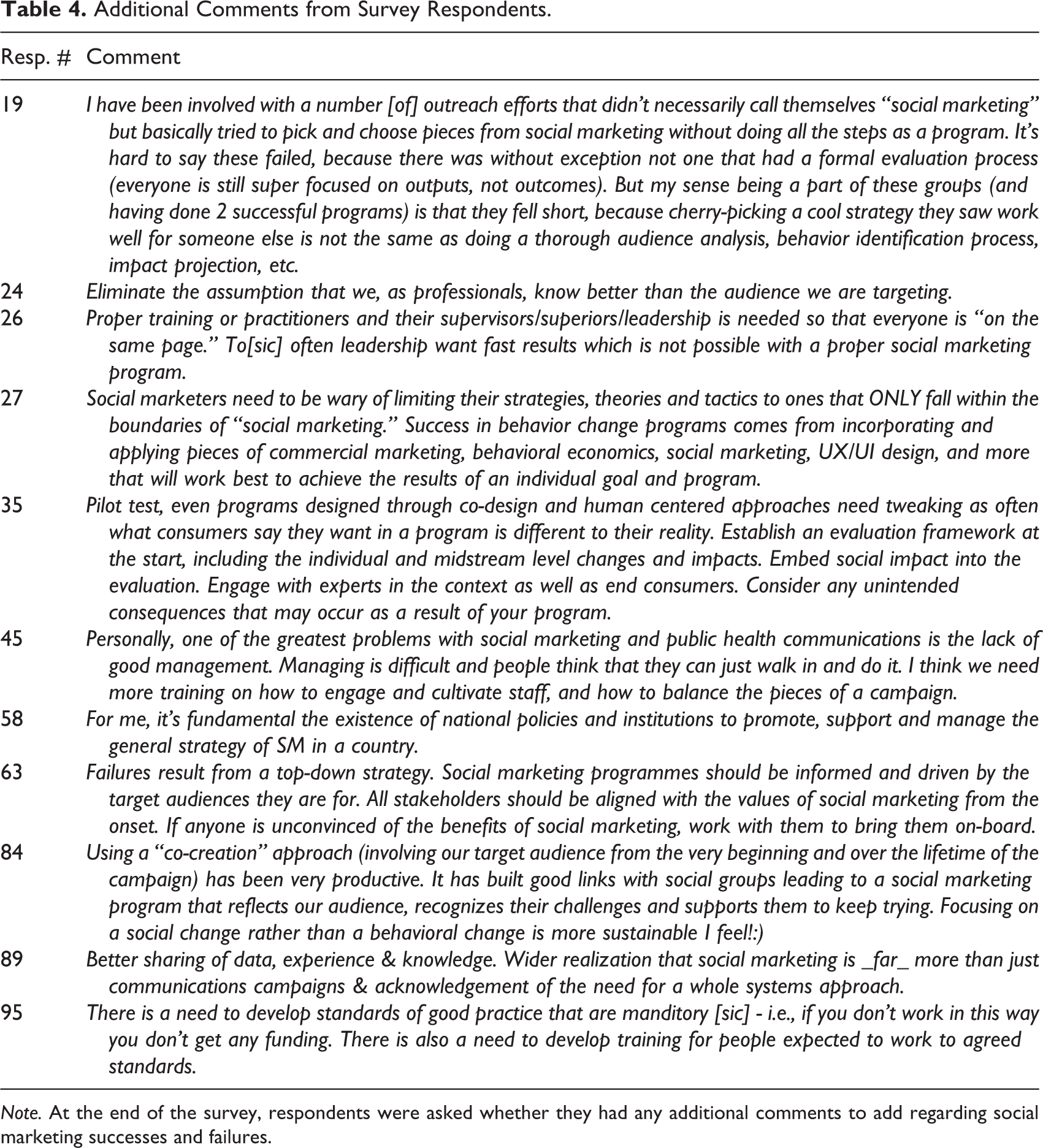
Note. At the end of the survey, respondents were asked whether they had any additional comments to add regarding social marketing successes and failures.
Discussion
This discussion will cover each of the findings from the survey responses as well as strengths and limitations of this research, and recommendations for social marketing professionals. Additional comments about successes and failures in social marketing programs will not be discussed in this section, as it is solely intended to be a reference for the reader.
Most Common Mistakes Made by Social Marketers
Inadequate research
Surprisingly, “inadequate research” is the top mistake listed by both social marketing experts (Cook et al, 2020) and the wider social marketing community. Social marketing is known to be a programmatic approach to social change that creates value for individuals and society partially through research (Lefebvre, 2012). Yet, there is ample evidence in social marketing literature that research is not always adequately undertaken. This evidence is expressed in both direct and indirect ways. When inadequate research is expressed directly in the literature, it is described as a lack of primary research (Gordon, 2013), a lack of barrier and benefit research (Lombardo & Léger, 2007) or a lack of research vis-à-vis the target audience (Hoffman et al., 2009; McGovern, 2007).
When inadequate research is expressed indirectly, it is described in the following ways (see Table 5 below):
Indirect References to Inadequate Research in the Social Marketing Literature.
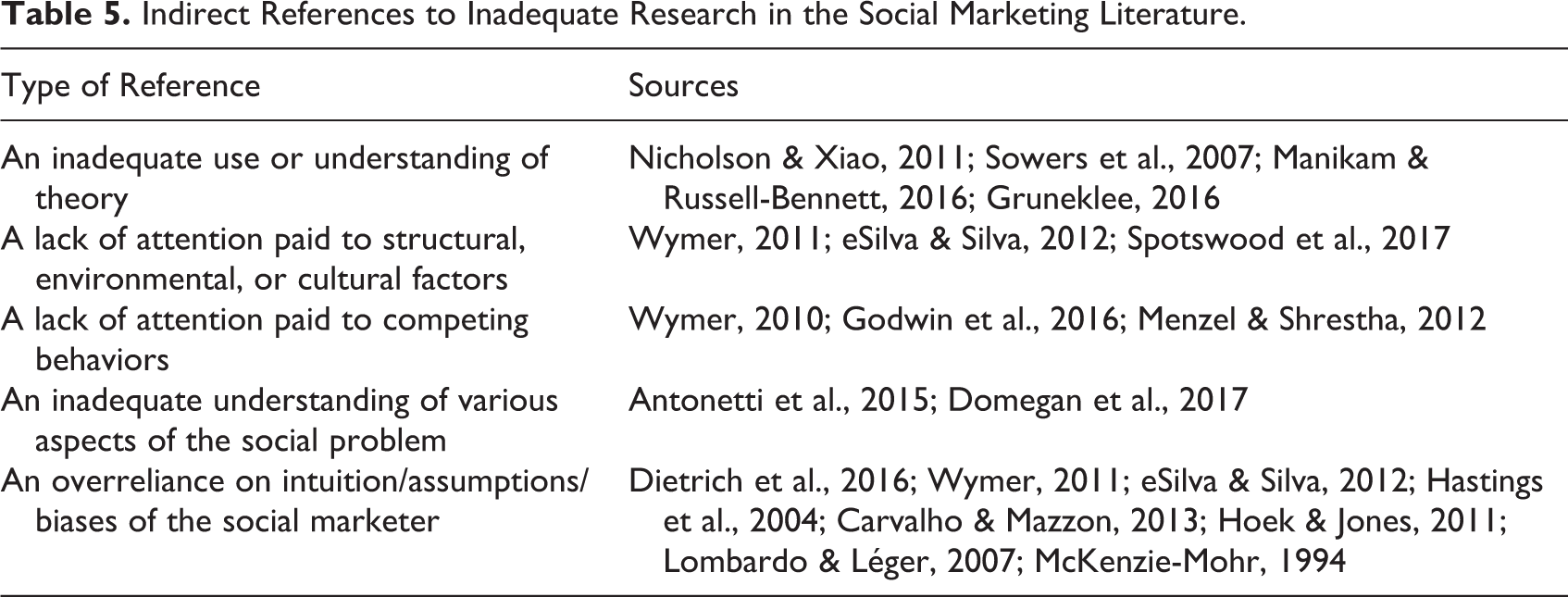
All of these descriptions represent facets of the same overarching problem: that formative research within social marketing programs is commonly inadequate. This has obvious implications for the rest of the social marketing program, from strategy development to evaluation. Further research is required to understand the factors that contribute to this problem, including potential external influences on the social marketer’s ability to conduct adequate research.
Poor strategy development
The most common mistake cited by the social marketing community in regard to “poor strategy development” was that the overall approach of their campaign focused too much on awareness raising and education as opposed to behavior change. The social marketing community has known for quite some time that “programs that do not have behavior change as a stated objective are not social marketing programs” (Maibach, 2002). And yet, this research, as well as previous research by Cook et al (2020) indicates that many individuals who intend to change behavior are not sufficiently trained in social marketing techniques in order to know how to do so. This research also indicates that many social marketers know exactly what social marketing is, but are influenced to engage in awareness or information-heavy campaigns by external actors such as funders or those in upper management positions. There is, therefore, room for social marketers to develop skills in promoting social marketing to decision makers (Sowers et al., 2007).
Mismanagement of stakeholders
The mismanagement of stakeholders was mentioned most often in the context of top-down approaches that do not engage the priority group. Whether or not this problem is well recognized in the social marketing community is arguable; however, it is evident that collaboration between actors is required in order to achieve positive social change (Johansson et al., 2018; Vargo & Lusch, 2016a, 2016b). Some scholars also state more specifically that social marketers are, or should be, embracing service-dominant logic, which proposes value as being co-created rather than as a deliverable outcome (Desai, 2009; French et al., 2017; Lefebvre, 2012; Luca et al., 2016a). There is also anecdotal evidence in the form of case studies that social marketers are indeed engaging with the priority group in the process of co-creation (Biroscak, 2017; Blanchette et al., 2016; Erickson et al., 2015). Nevertheless, this research adds to the literature suggesting that top-down approaches are still common when it comes to the way that social marketers engage with the priority group from the research to the evaluation stage of programming (Bellew et al., 2017; Dietrich et al., 2016; McBride et al., 2000; Vogl, 2007).
Least Well-Managed Program Elements by Social Marketers
Weak evaluation and monitoring
This is the top element that is considered to be the least well-managed by social marketers. We know from the social marketing literature that strong evaluation and monitoring is important for program success (Bontrager & Marshall, 2020). We also know that after almost fifty years of programming, social marketers still face basic evaluation questions regarding distinctions between social marketing and other types of interventions, as well as whether or not social marketing is effective or cost effective in comparison to those other interventions. This research confirms that the field of social marketing would greatly benefit in the near future if the social marketing community were able to obtain more funding for evaluation processes and reform evaluation strategies (Chapman, 2010).
Since “partnerships” and “value co-creation” have already been covered in the previous sub-section, these two program elements will not be discussed here.
Reasons for Social Marketing Program Failure
As mentioned earlier, “poor strategy development,” “external influences,” and “poorly designed program or behavioral objectives” were listed as the three major reasons why social marketing programs fail.
Poor strategy development
This has already been covered in the “most common mistakes” section; therefore, a detailed discussion will not be necessary here. However, it is interesting to note that “poor strategy development” has been listed as the second most common mistake made by social marketers, both in this research as well as previous research by Cook et al (2020). Additionally, “poor strategy development” was identified by the social marketing community as the primary reason for program failure. As has already been mentioned, most of the respondents’ comments in regards to this centered around the notion that in social marketing programming, too much emphasis is placed on awareness raising and education rather than behavior change.
External influences
Interestingly, when the language of mistakes is used in the survey question, “external influences” do not seem to be important; however, when the language of failure is used; that is, when the social marketing community was asked what factors might contribute to the failure of a social marketing program, “external influences” feature prominently. Previous research by Cook et al. (2020) found that all 17 social marketing experts who were interviewed mentioned external influences when discussing mistakes and failures in the field (2020). This research further confirms the notion that external influences may significantly influence the success or failure of a social marketing program. This begs the question: what exactly is the interplay between external influences and mistakes made by social marketing practitioners that may cause a social marketing program to fail? Further research is required in order to answer this question.
Poorly designed program or behavioral objectives
Within this category, the most common reason cited for program failure was that too many behavioral objectives were selected. According to McKenzie-Mohr (2018), social marketers should limit the number of target behaviors to no more than five or six within one program or campaign. Limiting behavioral objectives carries the advantages of keeping the strategy concise and reducing the problem of decision fatigue among the priority group. (Fries, 2019). Respondents also mentioned the lack of a behavioral goal and setting behavioral objectives that are unattainable, overly complex, inappropriate or poorly defined. Social marketers may therefore consider Lee and Kotler’s (2016) advice to “establish quantifiable measures” relative to the behavioral objectives. That is, they advocate for goals that are specific, measurable, attainable, relevant and time-bound (SMART).
Strengths and limitations of this research
Strengths of this research include its qualitative, exploratory nature. That is, the social marketing field currently has a rudimentary understanding of mistakes and failures in the field. An exploratory analysis such as this one provides a starting point for further, more focused analysis. Another strength is the reflexivity inherent in this research. Social marketers most often publish research related to the success or failure of the particular programs they are working on (Borden & Mahamane, 2020; Deshpande et al., 2015; e Silva & Silva, 2012; James et al., 2017; Ramirez et al., 2017; Smith et al., 2009; Sundstrom, 2013). Far less often do they publish research that critically examines the work that they are doing as a whole (Wymer, 2011) or how they adapt and improve as a result of that work (Lefebvre, 2012). Finally, and perhaps most importantly, when social marketers have a better understanding of the nature of mistakes and failures made in the field, that insight empowers them to address these mistakes and failures in order to bolster the success of social marketing programs.
This study has a few limitations. First, the sample size of 100 respondents is not sufficient to be statistically representative of the global social marketing community. Second, SM experts from developing countries were under-represented. Embedded within this limitation is the fact that the survey was only administered in one language (i.e., English). Third, the mistakes and failures described in the surveys are based on self-reported insights rather than direct observation, which may make the findings less robust (Geller, 2002).
Based on the findings from this study, we propose five recommendations. The first three recommendations are aimed at social marketing professionals, while the final two are aimed at social marketing academics.
Recommendations for Social Marketing Professionals
Recommendations for Social Marketing Academics
All social marketing professionals may benefit from reviewing the most common mistakes, reasons for failure, and least well-managed program elements in order to provide a starting point for further discussion and action, both in practice and in academia. To facilitate this, the researchers have included a synthesis of findings from both parts of the research study. See Figure 4.
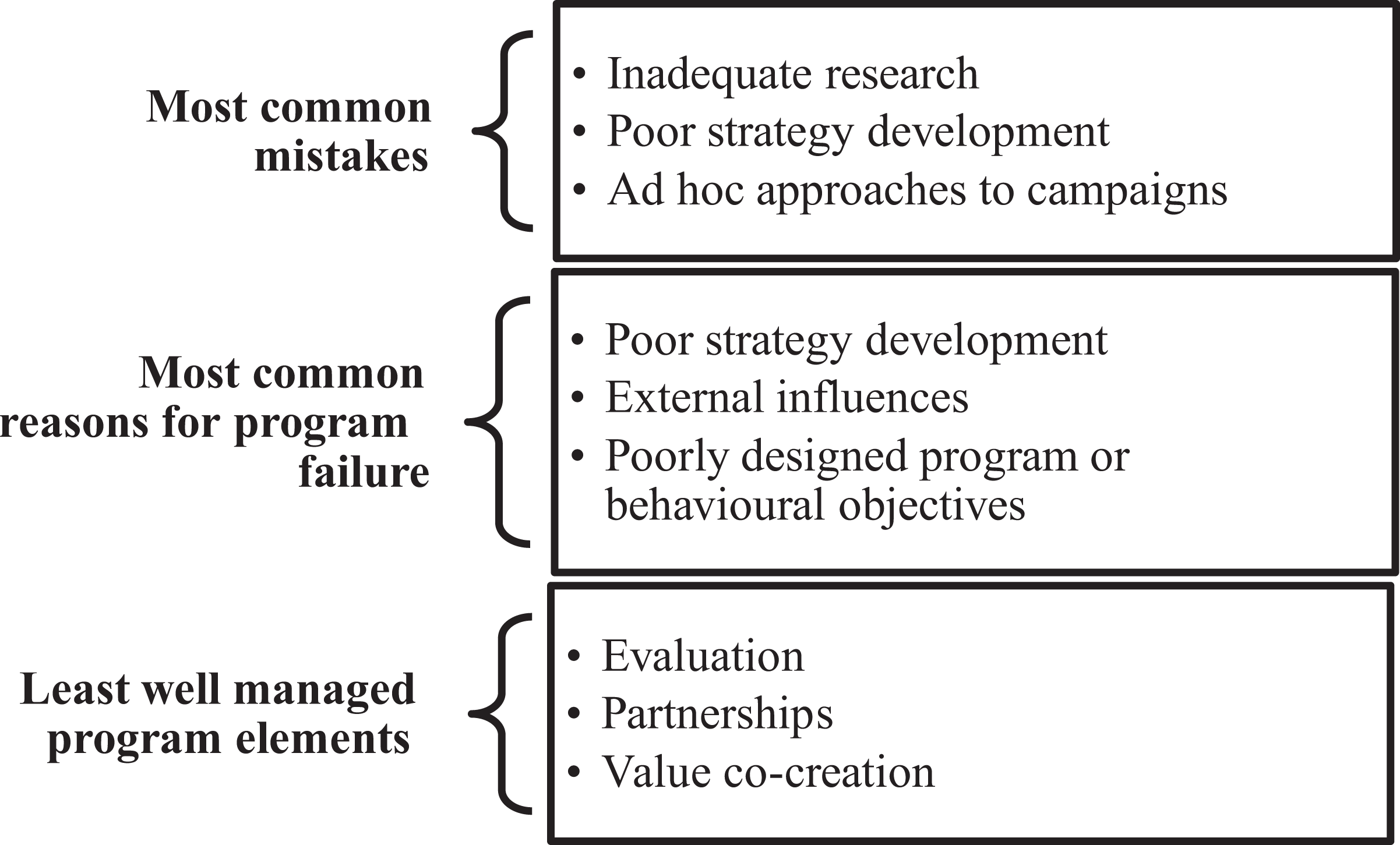
A synthesis of most common mistakes and failures as well as least well managed program elements by social marketers, according to the social marketing community.
Conclusion
This paper is the second half of a two-part research study that has explored the perceptions of social marketing professionals with respect to mistakes and failures in social marketing programs. This research study also represents an attempt to foster a culture of mistake- and failure-sharing within the social marketing community. Simultaneous efforts from practitioners, academics, and other members of the social marketing community will help everyone to feel comfortable sharing and learning from each other’s mistakes and failures, which will in turn bolster program outcomes and increase the likelihood of future program success.
Footnotes
Declaration of Conflicting Interests
The author(s) declared no potential conflicts of interest with respect to the research, authorship, and/or publication of this article.
Funding
The author(s) disclosed receipt of the following financial support for the research, authorship, and/or publication of this article: This research was funded in part by the Social Sciences and Humanities Research Council of Canada.
