



Abstract
Background
Circular fashion presents a new challenge in understanding consumers and marketing. There is a gap in research connecting the different layers of consumer behavior, sustainable fashion, with a systemized view on social marketing.
Focus
This systematic literature review adds value by drawing on the richness of evidence of consumer behavior and sustainable fashion research. The novel, combined method maps out the six key themes, time periods and focal points of the evolution of the field to identify barriers to change and inform social marketing strategies (Action Goals) for a new circular fashion system. Finally, it unpacks the challenges from a systems approach to suggest Research and Policy Recommendations for a circular fashion system, linking the macro, meso and micro levels.
Importance to the Social Marketing Field
This systematic review has applied a systems social marketing approach to set the agenda for future research avenues and identified action goals for social marketing benchmarking.
Research question
This review seeks to investigate existing research to seek for the controversial interpretations and messages about sustainability in the fashion market and the evolving conflicting values of different stakeholders. It unpacks CB in SF, to look for barriers to change.
Method
The study advances the systematic review method by combining scientific mapping and a multi-phase qualitative thematic coding techniques. Quantifying the research trends, along with uncovering the thematic and relational structures has enriched the results and findings.
Result/Recommendations
By unpacking consumer behavior and sustainable fashion to inform about the barriers to transition, this study adds value by embedding fashion into a systems perspective. This study has laid the foundations to support the transformative process for a circular fashion system with Action Goals for Social Marketing, and Research and Policy Recommendations.
Keywords
Introduction
The transition to circular fashion poses a recent challenge, bringing issues like waste, recyclability and post-consumption to the forefront of fashion consumers, markets and policymaking (Noris et al., 2021; Wagner & Heinzel, 2020). Some consumer groups and emergent business models support this transition (Brydges, 2021; Sandberg & Hultberg, 2021). To effectively spread these new forms of business models and consumption across wider markets, a deeper understanding of how to engage with and shape consumer behavior (CB) around the ‘new logic of sustainability’ (Ozdamar Ertekin et al., 2020) is crucial. This new logic stems from the consumer demand for socially and ecologically engaged fashion, leading to the emergence of both consumer-driven and consumer-driving marketing in recent years, as the growing body of systematic reviews aligning CB with sustainable fashion (SF) highlights (Arrigo, 2021; Dabas & Whang, 2022; Mukendi et al., 2020).
Companies have an impactful presence in consumers’ lives and can be influential markers of the transition, by adopting innovative marketing to establish sustainable behavior practices (Davies et al., 2020; White et al., 2019) as agents of change (Peterson, 2013). Sustainable business practices, in turn, can contribute to building sustainable societies (Sheth & Parvatiyar, 2021). However, it is essential to acknowledge that consumers’ consciousness is fragmented, and their attitude-behavior disposition can be inconsistent (Edbring et al., 2016; ElHaffar et al., 2020; Razzaq et al., 2018). Fashion consumption is culturally and socially defined, and further complicated by emotional and symbolic meanings (Clark, 2008; Joergens, 2006; Lundblad & Davies, 2016). Addressing the detrimental consequences of unsustainable systems may ultimately rest on companies and communities, if timely, orchestrated efforts are not undertaken. A social marketing strategy should not be limited to raising awareness about informed consumption choices. It must facilitate attitude and behavior change through a systems approach that tackles identified barriers and enables change by acknowledging the cultural embeddedness of fashion. Sustainable fashion and the transition to a circular economy should not rely solely on identified consumer preferences, or premium products labelled as sustainable. A value-driven systems social marketing paradigm could foster a meaningful change through continuous multi-level interventions. According to the transtheoretical model different stages of change require specific conditions (Casais, 2023), and various marketing techniques to ensure those necessary conditions for change and minimize barriers (Layton, 2015).
Research in the intersection of consumer behavior (CB) and sustainable fashion (SF) has unpacked many important barriers. This study draws on this richness of this evidence and provides a picture of how sustainability has evolved in fashion marketing. The identified eleven challenges and action goals for transformation based on six key themes, emerging from the literature aim to inform social marketing strategies, and shape policies for social change. This comprehensive approach adopts a systems perspective that spans various levels, rather than focusing on a single area, strategy or target group. The proposed research avenues and policy framework highlight gaps for future studies to explore. Finally, this study advances the systematic literature review method by integrating scientific mapping with a qualitative thematic coding technique. This novel approach added value by providing a more comprehensive and nuanced understanding than either method could have achieved. Quantifying the research trends, along with uncovering the thematic and relational structures within the field has enriched the results and findings, making this literature review a novel contribution to the field.
Sustainable, Ethical, Circular Fashion and Consumer Behavior
Environmental concerns about the textile industry have been part of the fashion discourse since the sixties (Jung & Jin, 2016b). The slow fashion movement later embraced these principles emphasizing durability, local production and consumption (Clark, 2008; Jung & Jin, 2016b), while advocates for ethical fashion raised concerns about working conditions and production standards (Joergens, 2006). Sustainable fashion unified these, and now encompasses the notions of environmental, ethical and slow fashion movements (Mukendi et al., 2020). Current SF studies focus on consumption (Mukendi et al., 2020) defined by zero waste design, upcycling and recycling techniques, short supply-chains and no-sweatshop production. Not far from these ideals, but broadening the scope of areas involved, circular fashion (Wagner & Heinzel, 2020), departs from the linearity of the production-consumption loop, emphasising the role of waste management, recyclability, policymaking, emerging business models, new consumption patterns, and markets. Modes of circularity and waste management are undisputedly growing research areas (Xie et al., 2021) in SF beyond technology and production. Regulatory frameworks (Ki et al., 2020; Peirson-Smith & Evans, 2017), and consumer-to-consumer business models are expected to impact and potentially disrupt accelerated fashion consumption cycles (Camacho-Otero et al., 2020; Machado et al., 2019).
CB research has become increasingly vital for fashion marketing over the past 25 years (Dabas & Whang, 2022). SF choices are driven by ethical decisions, values, identity and cultural factors (H. Kim et al., 2016; Lundblad & Davies, 2016; Razzaq et al., 2018), despite the potential lack of information, doubts, or conflictual preferences (Ritch, 2015). While consumers’ willingness to change behavior towards sustainability is growing (Gazzola et al., 2020) they exhibit diverse perceptions of what constitutes sustainable fashion (Mukendi et al., 2020). Recent interest lies in systemizing scholarship on consumers’ sustainable behavior, attitudes and preferences (Dórea et al., 2021; Elhoushy & Lanzini, 2021; Nova-Reyes et al., 2020) to inform new strands of marketing research focused on consumers, ethics, welfare and responsibility (Ferrell & Ferrell, 2021). However, behavior cannot be reduced to individual factors alone, as it is also controlled by institutions forming a social system (Brennan et al., 2016; Goldberg, 1995). Circular fashion presents a new challenge in understanding consumers and marketing (Shrivastava et al., 2021; Vehmas et al., 2018), and there is a gap in research connecting the different layers of consumer behavior, sustainable fashion, with a systemized view on marketing.
Systems Social Marketing, and the Circular Economy Transition
Cultural and behavioral shifts are crucial in addressing fashion’s environmental and ethical impact. Social marketing could play a pivotal role in advancing sustainable fashion practices, due to its imperative to influence people’s behavior for social good and impact (Harris, 2022; Lefebvre, 2013). As moral questions are embedded in social marketing (Harris, 2022), it can be particularly powerful in responding to the ethical concerns around fashion, by urging change at multiple levels, and by demonstrating new roles and ways to address the barriers to change (Andreasen, 2002). Many social marketing practitioners and researchers tend to focus on promotion, overlooking its potential for fostering actual behavior change (Lee, 2020). Issues like accessibility of sustainable fashion, negative labelling of secondhand, or overconsumption of perceived sustainable products, as examples to potential challenges, will persist without an orchestrated effort. Pursuing a sustainable social transition calls for a multi-level strategy merging social marketing with system-based theories to drive holistic behavior change (Brychkov & Domegan, 2017).
Most social marketing approaches concentrate only on the range of actors involved (Truong, 2017) defined by ‘individualistic parameters’ (Brennan et al., 2016). There are individual, community-defined or structural barriers to change, requiring interventions from governments, businesses, and communities. Systems social marketing relies on various stakeholders to develop multi-layer societal interventions (Domegan et al., 2016). The systems approach integrates upstream and downstream interventions, emphasizing the role of regulatory support for ensuring the efficacy of social marketing efforts (Truong et al., 2018). This is crucial, as the change in perceptions, societal norms, forms of advocacy, policy, and education need to occur simultaneously to reach the desired outcome, and in interaction with one another. Behavior change is relational, embedded in a social ecology of historical, physical, environmental setting (Brennan et al., 2016). Acknowledging this complexity, the roots of the systemic problem can be uncovered by (French & Gordon, 2015) going beyond the consumer myopia, and unpacking the wicked problem (Brennan et al., 2016).
Much focus is spent on the fashion industry’s ecological footprint and the possible beneficial impact of a circular transition. This study argues that the circular transformation of the fashion industry can be achieved by deeply integrating circularity strategies (Bauwens et al., 2020) into the economic and cultural systems of fashion consumption. This integration should be built upon both businesses and regulations, supported by consumer-centric campaigns. Low-tech solutions, such as involving consumers in take-back management, adopting strategies to reuse through repair, second-hand options, refraining to buy, and obtaining and sharing information about products require behavioral changes from both consumers and businesses. Such significant socio-technical transitions require institutional support. To bridge the gap between a diverse range of consumers and value-driven companies, and to achieve real impact, support from policies that drive change across the micro (consumers), meso (companies, communities, formal and informal institutions), and macro-level (policy-making) is essential. Macro-social and systems social marketing could support this, as they recognize the dynamic interplay among macro, meso and micro levels. These approaches acknowledge how people, governments, economic and other macro-institutional actors drive meaningful change, and assist downstream interventions by guiding the steps of transition (Brychkov & Domegan, 2017; Flaherty et al., 2020; Kemper & Ballantine, 2017; D. Truong et al., 2018).
Fashion is a system of intricacies involving consumption, production, supply-chains, distribution, etc., therefore the solution cannot be one-problem focused. The evidence collated in this study suggests that CB in itself is part of this complex system involving culture, attitudes, values, and the impact of branding and sales efforts on consumption outcomes. Complex systems are a defined order of elements, therefore, the unfavorable or harming outcomes associated with it can be eliminated by dismantling the complexity and identifying the specific issues systematically.
Research Goal and Structure of the Review
This study examines the existing literature to seek for the controversial interpretations of sustainability in the fashion market and the conflicting stakeholder values (Domegan et al., 2016). Using a systems approach, it unpacks CB in SF to identify barriers to change (French & Gordon, 2015).
For this end a multi-stage systematic literature review maps and systemizes the evidence. In addition to what systematic reviews offer – namely advancing a field of research by contributing to the conceptual, methodological, and thematic development of a domain (Hulland & Houston, 2020; Paul & Criado, 2020) – the learnings are developed into Action Goals to inform a social marketing agenda that can be converted into social marketing campaigns against benchmarks (Andreasen, 2002), and the Social Marketing Indicator that examines processes (Wettstein & Suggs, 2016). However, embarking on a detailed benchmarking exercise is out of the scope of this study. The findings could potentially be applied to a behavioral ecological model for fashion consumption, including the policy, social system, and the personal dimensions similar to the model developed for alcohol consumption by Brennan et al. (2016).
In what follows, the Method section presents the methods applied, followed by the identified time periods and themes in SF and CB marketing research. Discussion and recommendations present the challenges for a circular fashion system, with implications for a research and policy agenda to enable a circular transition, and an outlook is formulated in the concluding section of the article.
Method
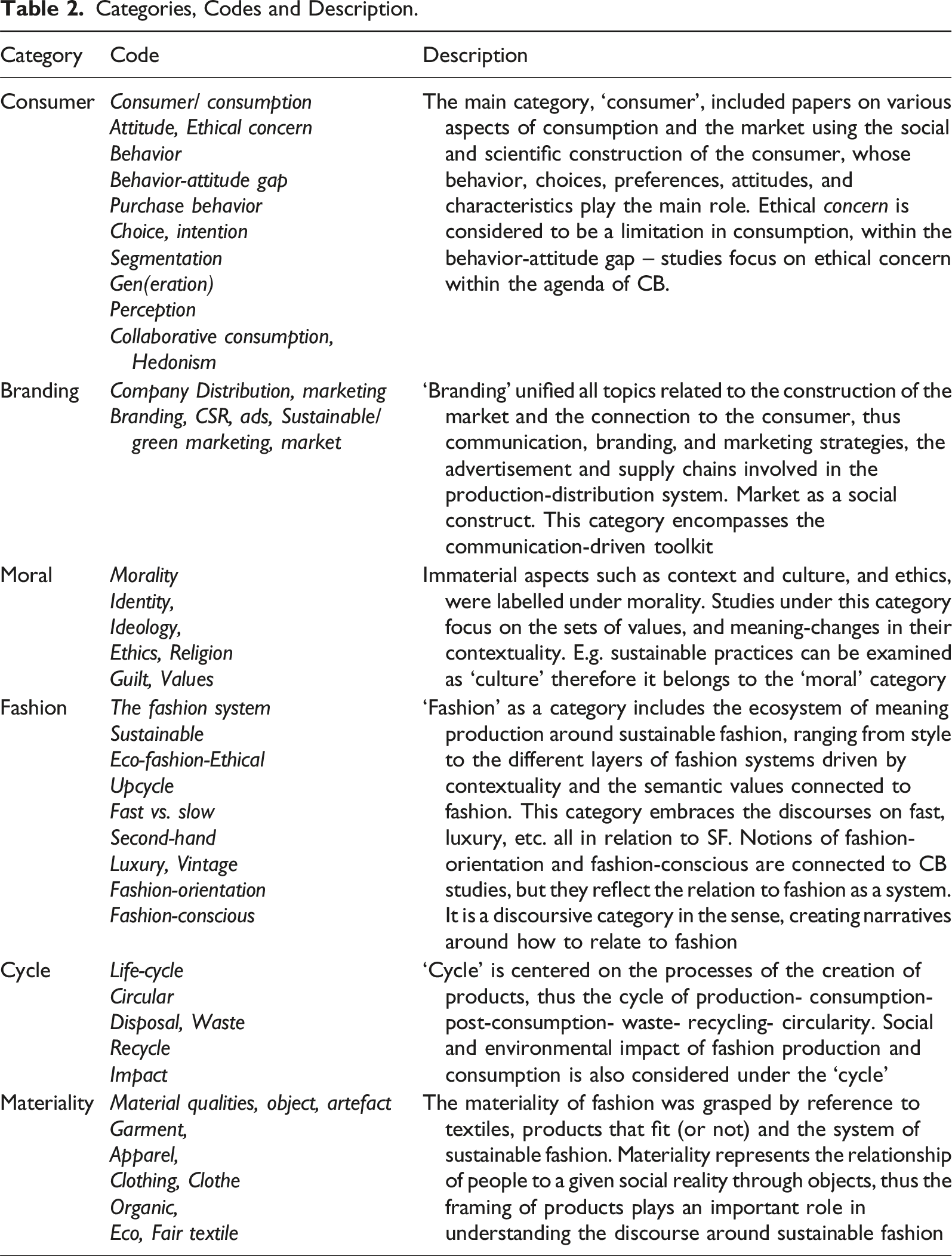
For mapping and systemizing the evidence, the literature review combined a bibliometric review (with scientific mapping) and a thematic coding approach. This novel approach of combining bibliometric analysis with thematic coding, added value by not only quantifying the research trends, but also uncovering the thematic and relational structures within the field. This provides a more comprehensive and nuanced understanding than either method alone could achieve. The results of the bibliometric analysis and scientific mapping were complemented by the thematic coding. In the following subsections, the two approaches are described. The categories and codes applied in the thematic analysis are presented at the end of this section.
Systematic Literature Review Following the SPAR-4-SLR Protocol.
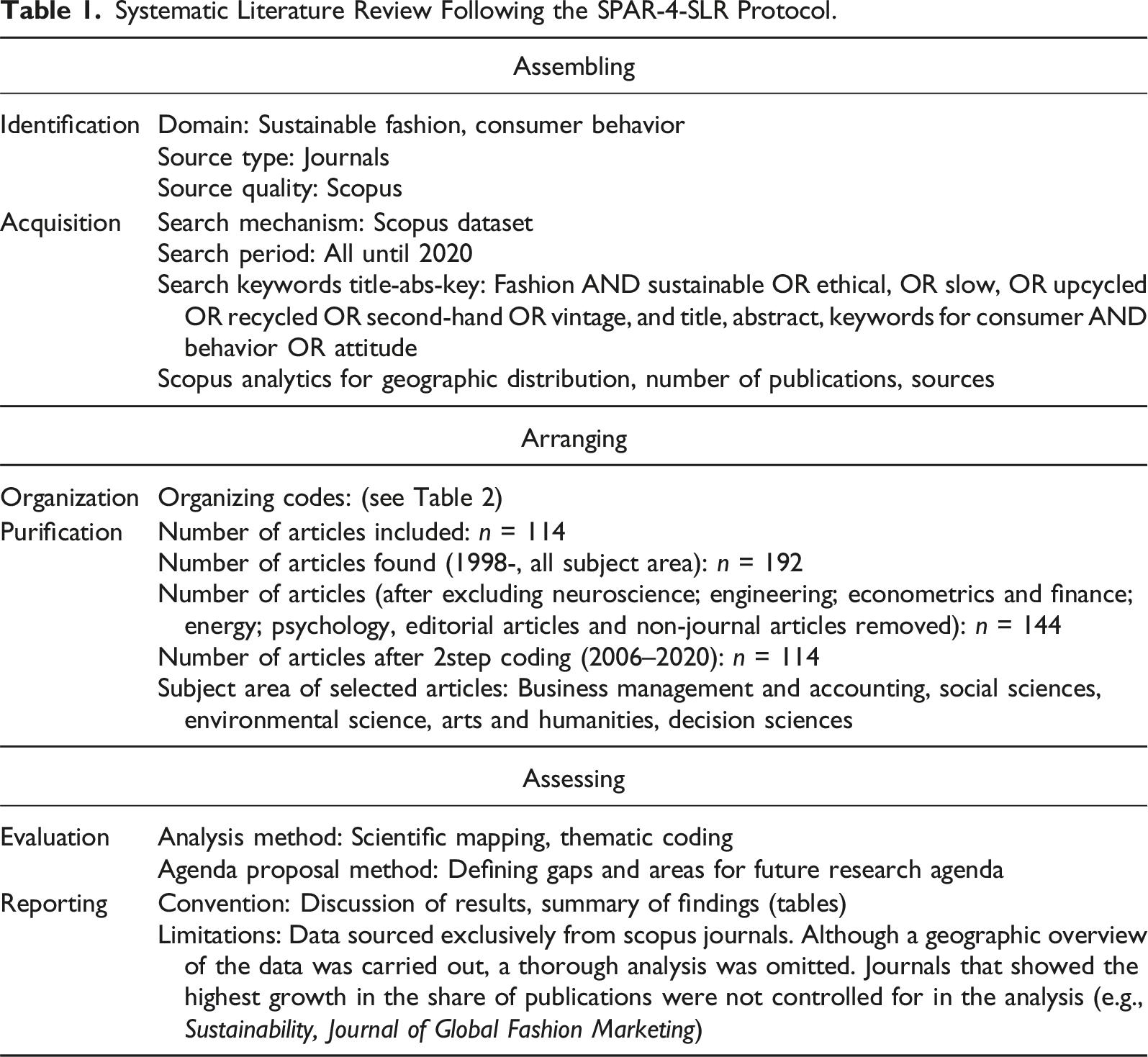
Bibliometric Review, Scientific Mapping
First, the review combined bibliometric analysis and scientific mapping. Bibliometric analysis quantifies scientific output, identifying trends at different time intervals (Cobo et al., 2011; Ding et al., 2001; Small, 1973). Scientific mapping links thematic interrelations between disciplines through spatial representation (Ruggeri et al., 2018) and network visualization (Chen et al., 2008). Scientific mapping is used in an array of disciplines, employing co-word and bibliographic analysis, subject classification, clustering and user behavior analysis. Co-word analysis is based on the co-occurrence of keywords that characterize each paper (Cobo et al., 2011; Nova-Reyes et al., 2020; Yang et al., 2012), resulting in clusters that are characterized by two parameters: centrality and density, where high centrality and density indicate principal themes. Words with at least three occurrences were included in the analysis, while methodological terms, references to the article itself, and structural elements of the abstract were omitted to ensure accuracy. The results were normalized by examining association strength and fractionalization, then visualized in a keyword-cluster network, with cluster density. The strength of both total links and occurrences were considered as weights, to gain a comprehensive understanding of the underlying structure. These factors were considered in the process of thematic coding as explained below. Significant milestones reflecting growth in the number of papers, mapped in Scopus (detailed in Table 3) have determined the time periods for analysis. The titles associated with the time periods were constructed based on the findings of the analysis revealing the trends in the evolution of this scholarship.
Thematic Coding
Theoretical reviews offer a conceptually grounded approach to exploring a research area that may not be fully captured by exclusively metrics-based reviews (Paul & Criado, 2020; Paul et al., 2021). To achieve a theoretical impact and provide a comprehensive interpretation of the results, thematic coding complemented the bibliometric review and scientific mapping. Following a zooming in strategy, with a sequence of steps in the review process (Arksey & O’Malley, 2005; Moher et al., 2015), the hybrid-narrative method (Kumar et al., 2020), involved a manual scrutiny and categorization of data in-between and after the bibliometric analysis and text mining procedures. With the blind technique, the coding excluded both the author and index keywords to validate and contrast the lexicon-based text-mining.
Categories, Codes and Description.
Results – Major Themes and Time Periods in SF and CB Marketing Research.
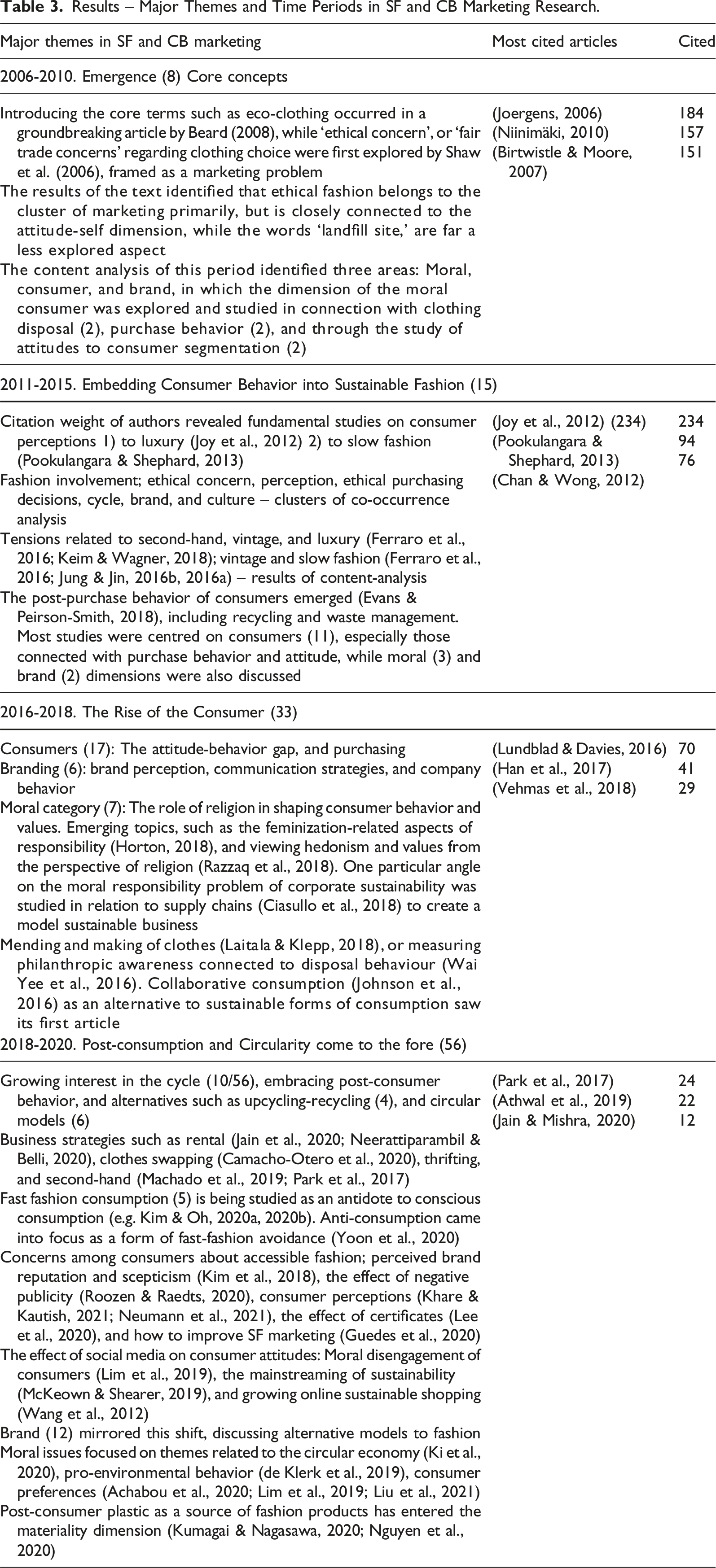
Overview of Time Periods and Themes in SF and CB marketing Research
The emergence of the core frameworks and concepts of sustainable fashion and consumers, dates back to 2006. The four time periods that capture the changing societal context of markets (Andreasen, 2002) are identified through the analysis of the emerging themes from the articles. Due to limitations of the literature review, these were not contrasted to outside factors, such as global trends in the fashion industry.
As a result, the evidence drawn from the intersection of SF and CB in the reviewed literature (Table 3) reveal that sustainability as a marketing strategy has shifted the way consumers perceive brands, make purchasing decisions and shape their attitudes and behavior over time (Achabou et al., 2020; Elhoushy & Lanzini, 2021; Hiller Connell, 2011; Kim et al., 2016; Klerk et al., 2018; Kumagai & Nagasawa, 2020; Lee et al., 2019; Lundblad & Davies, 2016; Nguyen et al., 2020; Ritch, 2015; Shaw et al., 2006; Vehmas et al., 2018). The number of publications, citation weights, co-occurance, and the diversification of the themes reflect the widening range of services, business models, branding strategies connected to SF, and makes evident that sustainability is a forming and growing subsystem of fashion marketing.
We know, that consumer behavior serves as a guiding metric for social and commercial marketing (Andreasen, 2012), shaping the agenda for understanding the connection between consumer behavior and marketing outcomes. In this line, the growing CB and SF research can be divided into two main strands. The market-driven approach aims to understand consumer behavior to refine product attributes and promotion strategies thereby enhancing marketing efficiency. These studies aim to understand sustainability cues (Jegethesan et al., 2012; Rahman et al., 2020), the link between perceived sustainability and branding (Chang & Jai, 2015; Kim & Oh, 2020a), and how product attributes and sustainability labels are expected to create value (Ritch, 2020).
The other strand, the push sustainability marketing approach aims at targeting and reinforcing fashion choices. For instance, the promotion of sustainable products revolves around advertisement strategies to reach a wider set of consumers (Visser et al., 2015), or utilizing a refined segmentation strategy (Park et al., 2017). The expansion of the communication-driven green marketing has created a loop of meaning-production around sustainability. In this loop, marketing strategies are continuously refined to appeal to consumers, leveraging sustainability to enhance the perceived value of the products. As part of this market adaptation, global brands have adjusted their marketing strategies with the inclusion of affordable ‘conscious’ fashion labels (Hill & Lee, 2015). As a result, in contrast to the slow fashion movement, promoting a low range of high-end sustainable brands (Fletcher, 2010), sustainable fashion has now become the hallmark for a wide range of affordable brands. However, the high turn-over rate of these product lines raises controversy, as they perpetuate overconsumption of goods albeit at a premium price. Despite their relative affordability, consumers still pay more for ‘sustainability’ compared to conventional products. SF offered by fast fashion brands has been embraced by consumers, who willingly adopted the idea of consumption framed within mainstreamed sustainability marketing (Chang & Jai, 2015; Neumann et al., 2021; Visser et al., 2015). Consequently, the positive shift in consumer attitudes toward affordable sustainability has further shaped green marketing and branding strategies (Evans & Peirson-Smith, 2018; Peirson-Smith & Evans, 2017; Vehmas et al., 2018).
While widespread changes in the general consumer beliefs, perceptions and purchasing practices have been driven by the mainstreamed sustainable marketing system of affordable fashion, a widening gap has emerged among other consumer groups. These groups increasingly perceive sustainability differently, and explicitly call for the fashion industry to transform its production and waste management structures (Park et al., 2017; Peirson-Smith & Evans, 2017; Ritch, 2020). The ‘new logic of sustainability’ as part of the fashion system, looks into expanding the existing market by introducing more affordability, and aesthetics into ‘sustainable fashion’ according to Ozdamar Ertekin et al. (2020). However, consumer research shows that ‘sustainable’ has come to encompass fast fashion too. The expansion of sustainability and green product lines presents further challenges by positioning fast fashion brands on the same sustainability agenda as luxury fashion in the eyes of consumers. While high-end fashion emphasizes craftsmanship and the use of sustainable materials, it often fall short on fair pricing, and in many cases fair wages for garment workers as reported by think tanks, which falls outside the scope of this study (e.g. see Fashion Transparency Index).
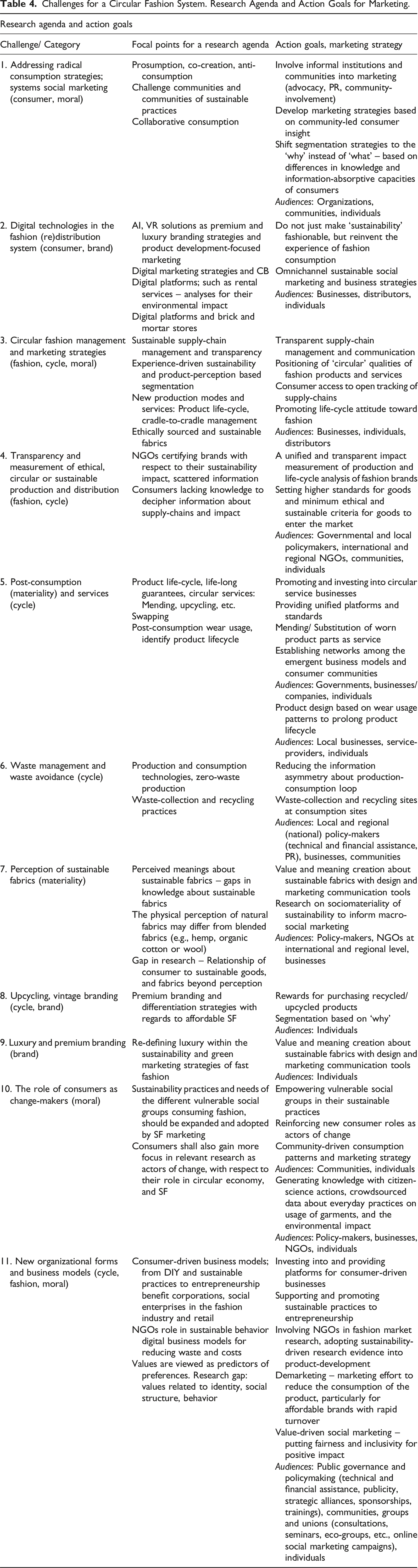
Challenges for a Circular Fashion System. Research Agenda and Action Goals for Marketing.
Discussion and Recommendations
In what follows a research agenda and action goals are presented, based on a gaps-focused review of the systemized literature (Paul et al., 2021). The eleven challenges point to the gaps, thus the under-represented, emerging topics related to circular fashion systems in the literature. These challenges stand against the six categories (in brackets), demonstrating that a circular fashion system must be explored in its complexity, going beyond the ‘cycle’. All thematic dimensions, such as branding, materiality of the products, moral dimensions, etc. are becoming just as important as production, and post-consumption, and must be included in exploration of a circular system.
The focal points provide a foundation for a research and policy-making agenda that supports a circular transition. These include the importance of social mechanisms, such as collaboration, specialization, behavior, and emergence, in facilitating transition, all in interaction with the surrounding marketing system (Layton, 2015).
Building on the identified challenges against the categories (see Table 4), the action goals address the multiple, interacting layers of the marketing system to drive change (Layton, 2015), targeting various audiences, as detailed in Table 4. The following subsections discuss these challenges in a systemic manner. The discussion draws on the individualist approach in research to explore factors influencing consumer behavior from the lenses of a marketing system (Segmentation, Targeting, Positioning to Brand Extension – the Second Life of Brands and Upcycling). It then shifts toward embedding sustainable fashion within the economic and social organizational system that influences consumer behavior (Boundary-Spanning for Sustainability to Impact of Ethical Organizations on Consumers and the Fashion Industry). Finally, (Implications for a Research and Policy Agenda to Enable a Circular Transition) a unified research agenda is proposed.
Systemic Challenges
Segmentation, Targeting, Positioning
Marketing is relevant at the purchase (pre-purchase), usage and post-usage stages of SF consumption, where CB aspects dominate. The purchase stage typically involves decision-making, attitude-behavior gap, preferences or the consumer attributes that define behavior. Materiality connects consumers and products through the attributes that represent materialized sustainability, defining perception and purchasing intention. Studies on fabric perception for e.g. animal-friendly or cruelty-free leather and wool (de Klerk et al., 2019; Lee et al., 2019); organic cotton (Hustvedt & Dickson, 2009); recycled plastics (Kumagai & Nagasawa, 2020; Nguyen et al., 2020), or more generally green or sustainable apparel (Khare & Kautish, 2021) provide insights into consumers’ concerns and knowledge about ethical clothing. Survey studies in the materiality domain reveal patterns such as ethical concerns outweighing pro-environmental ones (de Klerk et al., 2019), or ‘recycled’ cues enhancing purchasing intention (Kumagai & Nagasawa, 2020; Nguyen et al., 2020). Experimental studies (Lee et al., 2019) highlight discrepancies in available information, and avenues for consumer education, for e.g. through e-commerce apps (Hustvedt & Dickson, 2009). This line of income based and product-focused segmentation, targeting and positioning (STP) strategy views consumption as something to be enhanced toward premium spending, without offering sustainable future pathways. Segmentation in SF marketing should depart from understanding consumers’ knowledge and information-absorptive capacities, to design targeting strategies that alliviate fair information-gathering and decision-making. These strategies should include education on sustainable consumption and post-usage behavior.
Clothing product groups like footwear (Achabou, 2020), and children’s wear (Ritch, 2019) are relevant when considering various usage strategies. Future research should address the barriers to usage strategies to better inform sustainable service and product design, and their positioning (see recommendations in Table 4, points 3 and 5).
The symbolic value of goods plays a pivotal role in fashion marketing, as consumer behaviors are more aspirational and hedonic than functional (Amatulli, 2015). In addition to creating symbolic value around ethical sourcing or sustainable life-cycles, it is crucial to reinvent the experience of fashion consumption, rather than merely making ‘sustainability’ fashionable through green marketing of affordable apparel for its hedonic experience. Sustainable marketing segmentation strategies should focus more on ‘why’ consumers purchase than ‘who buys what’, differentiating by purchase-perception rather than consumer attributes to address conscious consumption strategies (Dangelico & Vocalelli, 2017) (see point 1., 3. and 7., Table 4).
Experience-Based Marketing and Habit Adoption
For some consumer groups, sustainable practices and hedonic benefits are perceived as conflicting. Second-hand, reuse, rental and other sustainable practices have limited product scope, and may carry social stigma with negative associations. Marketing of SF should be experience-based, rather than product-focused. Experiences could encompass various positioning strategies besides thrifting (Park et al., 2020) and swapping (Henninger et al., 2019). Business models that challenge these perceptions and offer opportunities for broader adoption of sustainable habits are based on collaborative fashion consumption (Camacho-Otero et al., 2020; Jain & Mishra, 2020; Neerattiparambil & Belli, 2020; Park et al., 2020). However, innovative business’ marketing strategies target a limited consumer scope (see points 1. and 2. in Table 4). Networks among emergent business models and consumer communities could act as enablers of transformative change. (See points 8. and 9. in Table 4).
Supply-Chains
Despite information barriers, supply chains are important to eco-conscious consumers (Chan & Wong, 2012). A consumer-focused study, of the footwear industry, for example, revealed that the actions of consumers, clients, NGOs and employees are crucial for sustainable supply chain management capabilities (Ciasullo et al., 2018). The changing legal environment, especially the European Union’s regulations on supply-chain transparency, circular production and waste management calls for long-term adjustments. Multi-stakeholder actions and regulatory support are important for enabling systemic transformation of supply chains (see points 4. and 6, Table 4).
Brand Extension – the Second Life of Brands and Upcycling
On a meso-level, CB research extends its focus from brand communities to bottom-up communities around circular practices. These communities are important sources of information for insights into their post-purchase consumption. For example, in the secondhand market, consumers value brands for their product attributes. Brands can benefit the secondhand market by providing quality and durability guarantees for their used products (Camacho-Otero et al., 2020). Premium brands could reinforce SF promotion by communicating the symbolic value of their products’ second life. Some consumers perceive secondhand items as ‘poor’, restraining brands’ ability to benefit from services of their pre-used products (point 10. Table 4). Tags, such as ‘preloved’ or ‘vintage’ can reframe these perceptions offering secondhand items as upscale. To overcome brand perception issues, pricing mechanisms, and secondhand gentrification, brands could enhance their image of sustainability by offering life-cycle extension services, such as collecting and selling pre-worn clothes, renting, or mending. If green brand positioning is more relevant than green product positioning (Dangelico & Vocalelli, 2017), then services and actions focused on sustainability will be valued by consumers in the long term, and contribute to the development of long-lifecycle consumption patterns. Additionally, services, like tailoring, or mending can provide local embeddedness for the brand and contribute to the local economy. Recycling and upcycling are becoming key messages of some brands, with upcycling creating a bridge between the vintage industry and luxury (See points 5, 7, 8, 9, Table 4).
Boundary-Spanning for Sustainability
The intensification of product use can prompt companies to invest into the life extension of products. However, ecological transaction costs, such as transportation or dry-cleaning connected to for e.g. rental services, or post-consumption sales may exceed the benefits (Iran & Schrader, 2017) (see point 3., Table 4). Research into the actual impact of usage and consumption transactions, including evaluation of all ecological transaction cost factors and community-driven behaviors, should inform the future design of services to achieve better environmental outcomes. Sustainability-informed research think tanks, and informal consumer and activist communities should form the foundation for any transformative social marketing agenda (points 10. and 11. in Table 4).
Boundary-Spanning for Inclusion
Further barriers arise, as marketing strategies often overlook social inequalities. Participation practices in collaborative fashion consumption may reflect structural inequalities, or the cultural capital of the participants (Camacho-Otero et al., 2020). Research on the sustainability practices and needs of the vulnerable fashion consumers, like mothers (Ritch, 2019), should be expanded and integrated into SF and social systems marketing (point 10., Table 4). Additionally, consumers should be studied as change agents in the circular economy (Machado et al., 2019). Values, often discussed as predictors of sustainability preferences, offer crucial insights for marketing by linking to identity, behavior, and social structure. By incorporating values of inclusion and fairness social marketing systems could address socio-economic and regional inequalities present in the current fashion system. This entails making sustainable consumption accessible as well as integrating the needs of vulnerable groups regardless of their cultural capital or social status. Both social and commercial marketing could expand its focus embracing diversity and inclusion (Cateriano-Arévalo et al., 2022). Overcoming additional barriers, such as lack of information or trust in brands and products, can be achieved through joint promotion supported by local and specialized NGOs, and governmental agencies (p. 11. in Table 4). There is a need to explore the strategies and motivations behind the evolving role of consumers and communities in shaping socio-economic systems, particularly in relation to sustainable practices among vulnerable social groups, collaborative consumption, anti-consumption, and communities of sustainable practices. Entrepreneurship may play a vital role in driving transformation. (See points 1. and 11. in Table 4).
Impact of Ethical Organizations on Consumers and the Fashion Industry
There is limited consumer-driven research on the impact of ethical fashion organizations on consumer attitudes. Social enterprises and benefit corporations serve as agents of positive change, promoting societal and ecological sustainability (Peterson, 2013). Governmental support for these entities, as part of the upstream social marketing, benefits the entire ecosystem (Papakosmas et al., 2012). Policy efforts should generally aim to enhance the organizational capabilities of businesses in terms of culture, values, employee behavior facilitating transformation by incorporating the knowledge of ethical organizations. (See points 4, 7 and 11. in Table 4).
Implications for a Research and Policy Agenda to Enable a Circular Transition
Industry actors including retailers, platforms, distributors, corporations, supply chains and the advertising industry can be orchestrated to drive transformation and behavior change. To support this process, the foundations for further research informing stakeholders and policymakers can be summarized as follows: (1) Research should reexamine fashion as a complex system of interconnected stakeholders, ranging from emerging DIY businesses and online-offline services to NGOs, consumer communities, governmental agencies, and international regulatory bodies. This holistic approach would provide a deeper understanding of how these diverse actors influence sustainable practices, innovation and policy-development within the fashion industry; (2) Policy should recognize that social mechanisms within the SF systems are influenced by the socio-economic context, and the interaction between top-down and bottom-up structures. Therefore, policies should aim to foster collaboration between regulatory bodies, businesses and grassroots consumer communities to create an inclusive framework that integrates both large scale initiatives and local efforts for sustainable practices; (3) Policy and research should acknowledge, that production and consumption form an interlocking system, rather than a binary set-up. Consequently, CB within the context of marketing, should adopt a broader perspective, moving beyond a sole focus on individual consumers. Research should explore the interconnectedness between production and consumption, emphasizing the collective impact of systems, supply chains, and consumer communities. Policy should support this shift by promoting integrated approaches that address both sides of production-consumption dynamic. (4) Research and policy should focus on the co-creation of transformative values related to circularity by involving multiple stakeholders including consumers, brands, industry actors, regulatory bodies. This co-creation process aims to redefine how fashion products, brands, and experience-driven consumption are valued. Policy frameworks should support and adopt stakeholder participation, while research should explore and enable effective co-creation and participation methods and their impact on CB and industry practices. (5) Circular Innovation Hubs could serve as collaborative spaces bringing together designers, manufacturers, consumers, NGOs to develop, adopt and spread new practices, technologies and business models. The Hubs would enable collaborative networks, knowledge sharing, and consumer engagement. (6) Environmental and ecological systems influencing consumer behavior is a gap in research, there was no research found in this domain in the intersection of CB and SF, namely how the relationship with the natural and built environment relates to consumer behavior in sustainable fashion. Research is encouraged in this area, particularly for understanding how environmental factors affect consumer’s choices, and their relation to fashion in terms of sustainable and circular practices. Policy needs to be informed about the impact of environmental challenges, the longer-term impact of climate change on communities and the need for sustainable practices to leverage these risks.
Conclusions
This study has laid the foundations to further map and model how industry actors, retailers, platforms, distributors, corporations, supply chains and the advertising industry can be orchestrated for transformation and behavior change, connected through a systems social marketing approach, dismantling barriers to change (Brychkov & Domegan, 2017; Lee, 2020).
As an outlook for the future of policy and industry interaction, it can be concluded, that the institutional pressure, or a legal push may drive, outweigh, or complement market-driven adjustments. To develop multilayer societal interventions and to integrate circularity into the fashion system (Bauwens et al., 2020; Domegan et al., 2016) it is important to consider, that regulatory frameworks for circular business models (Wasserbaur et al., 2022), production (Pal et al., 2021) and the fashion market (Blasi et al., 2020; Colasante & D’Adamo, 2021; Evans & Peirson-Smith, 2018; Khitous et al., 2022) are expected to significantly impact and scale up sustainable practices (Pal et al., 2021; Sandberg & Hultberg, 2021). Unquestionably, circularity approaches of integrated strategies across supply chains (Brydges, 2021), and advancements in waste management are crucial growth areas (Xie et al., 2021). Eco-friendly behaviors like recycling (Grazzini et al., 2021; Iyer & Kashyap, 2007), should be integrated into systems social marketing strategies, bridging multilevel actors and embedding them in diverse social and cultural contexts. Collaborative fashion consumption is expanding on online platforms (Arrigo, 2021; Neerattiparambil & Belli, 2020; Shrivastava et al., 2021), promoting and upscaling secondhand or ‘preworn’ and ‘preloved’ items, providing examples of new ways of marketing, attitudes and economic models.
This study contributes to the recent discussions about the goals and avenues of social marketing (Cateriano-Arévalo et al., 2022; Flaherty et al., 2020; Salgado Sequeiros et al., 2022). By mapping consumer behavior in the light of the ethical and ecological challenges of fashion, and informing about the potential for change. Action goals and a social marketing research agenda based on the findings of SF and CB research propose further avenues to support this transformative process.
Footnotes
Acknowledgments
The author thanks Mark J. Percival at Queens University of Edinburgh and György Pataki at ESSRG for their support and comments. The author also thanks the participants of the KISMIF Conference (2022), the Fashion Research Seminars at Queens University for their comments, and the Anonymus reviewers of this paper. A special thankyou to Kamilla Füller-Székely for her constant support and contribution to our work on sustainable fashion research, and to Asefeh Asemi for the contribution to the ideation phase of the first draft of the bibliometric analysis.
Declaration of Conflicting Interests
The author(s) declared no potential conflicts of interest with respect to the research, authorship, and/or publication of this article.
Funding
The author(s) disclosed receipt of the following financial support for the research, authorship, and/or publication of this article: This research was funded by the Program “From Talent to Young Researcher project aimed at activities supporting the research career model in higher education”, grant number “EFOP-3.6.3-VEKOP-16-2017-00007” funded by Corvinus University of Budapest.
