




Abstract
This study explores the use and attitudes towards generative AI (GenAI) tools among students with disabilities in higher education (HE), addressing a gap in existing research on accessibility and inclusivity challenges for marginalised groups. Informed by a prior study and affordance theory, we surveyed 124 students with various disabilities, mainly with neurodiversity, dyslexia and social/communication impairment, about their use of and attitudes toward GenAI tools during academic writing. We identified three key affordances provided by GenAI tools, including explainability, expressibility, and plannability, that positively affect students with disabilities’ learning, especially writing processes. However, our study also highlights significant areas where GenAI tools remains insufficient in addressing barriers faced by students with disabilities, such as low learning motivation and time management issues. Our findings offer practical implications for both educational practitioners, GenAI developers and policy makers. These include the need to design more inclusive GenAI tools and to promote AI literacy, along with providing policy guidance and training for both students and staff in HE institutions.
Keywords
Introduction
Since the launch of ChatGPT in 2022, generative AI (GenAI) has rapidly gained public attention and begun to see widespread use across various sectors. Higher education (HE) is one of the key areas where GenAI tools are being applied. These tools are expected to bring a range of benefits to teaching and learning, including improved accessibility of information, personalised learning experiences, and support for critical thinking (Farrokhnia et al., 2024; Zhao et al., 2024a, 2024b). However, there are also growing concerns about potential negative impacts, such as increased breaches of academic integrity, the spread of misinformation, over-reliance on automation, reduced learning opportunities, dependency, and environmental costs (Cotton et al., 2023; Crompton, 2024; Kajiwara and Kawabata, 2024). In response to these risks, many HE institutions have introduced policies to guide the use of GenAI tools (Stanford University, 2023; Zlotnikova et al., 2025). For example, the Russell Group in the UK, which consists of 24 research-intensive universities, has shifted its stance to promoting the ethical use of these tools within 4 months of banning them (Russell Group, 2023; Wood, 2023). Although these policies have gained some recognition, they share a critical flaw: the limited involvement of students in their development (Jenks et al., 2025; Zlotnikova et al., 2025). Most are based on theoretical assumptions rather than grounded in students’ lived experiences, which raises questions about their practical effectiveness (Nguyen et al., 2025). More critically, these policies tend to reflect general assumptions about student behaviour, often overlooking the specific perspectives and needs of students with disabilities.
Students with disabilities, who are often a vulnerable group within the student cohort in HE, frequently face barriers that limit their access to and participation in academic activities, particularly in writing-related tasks (Scott, 2019). As defined by Higher Education Statistics Agency (HESA) (2024), based on the Equality Act 2010 (Department for Education, 2014), students with disabilities are those ‘who have a physical or mental impairment, and the impairment has a substantial and long-term adverse effect on their ability to carry out normal day-to-day activities’. They often experience difficulties with spelling, grammar, sentence structure, planning, and revision, which can lead to lower academic performance compared to students without disabilities (Graham et al., 2017). Consequently, students with disabilities may be especially motivated to seek support (Atcheson et al., 2025). GenAI tools, offering personalised assistance accessible at any time, are likely to be especially appealing to them (Fletcher et al., 2024; Heidt, 2024). This potential inclination to rely heavily on GenAI tools as a form of sustained support may lead students with disabilities to develop distinct usage patterns of these tools. As such, many existing policies, which are based on assumptions about general student behaviour, may not effectively guide or support how students with disabilities interact with these tools. Even more concerning, some policies may leave students with disabilities confused about whether they are permitted to use GenAI tools as a learning support, which can result in missed opportunities that could aid their learning (Atcheson et al., 2025).
As the HE sector works towards an inclusive and responsible GenAI future (Perkins et al., 2024; UNESCO, 2024), revising existing GenAI usage policies to better reflect the realities of students with disabilities is essential. This requires a bottom-up approach, starting with a deeper understanding of how students with disabilities actually interact with and use GenAI tools. However, research that centres students with disabilities and closely examines their use of GenAI tools remains scarce. This gap may stem from limited access to students with disabilities, challenges in securing ethical approval, or a lack of confidence among researchers in engaging with vulnerable groups. In this study, in collaboration with university’s Disability Support Services Department, we aim to address this gap through an exploratory investigation. Specifically, we seek to find answers to the following research question: • How do generative AI (GenAI) tools enhance accessibility and inclusion for students with disabilities in higher education?
By adopting an affordance lens in exploring this research question, this study aims to achieve two objectives: (1) to develop a clearer understanding of how GenAI tools benefit students with disabilities in higher education, and (2) to develop a clearer understanding of GenAI tools’ limitations in addressing these students’ needs. In doing so, generate practical insights will be generated to inform policy development and contribute to a more inclusive GenAI future in the HE sector.
Literature review
GenAI and students with disabilities in higher education (HE)
GenAI is undoubtedly one of the most groundbreaking innovations in contemporary society. It refers to artificial intelligence (AI) capable of generating novel content, rather than merely analysing or acting upon existing data like traditional expert systems (Holmes and Miao, 2023). Multiple studies have shown that GenAI tools, particularly text-to-text models like ChatGPT (Rasul et al., 2023), have become increasingly integrated into HE, bringing both significant and contested shifts to teaching and learning (Jeon J and Lee, 2023; Wu and Chiu, 2025). Students with disabilities have also been actively impacted and involved in this GenAI-driven transformation (Khazanchi and Khazanchi, 2024; Zhao et al., 2024c).
In this study, we adopt HESA’s (2024) definition of disability, which states that ‘Under the Equality Act 2010, a person has a disability “if they have a physical or mental impairment, and the impairment has a substantial and long-term adverse effect on his or her ability to carry out normal day-to-day activities”’. Moreover, we follow HESA (2024) disability categories, allowing participants to report multiple conditions in the survey (see Methods, Figure 1, and Appendix). Empirical evidence suggests that students with disabilities are actively embracing GenAI tools. In a 2023 study at a US university, Bharadwaj et al. reported that 49% of surveyed students with disabilities had already used GenAI tools. By 2025, a follow-up survey at another US university found that 95% of students with disabilities were using GenAI regularly, with some even preferred these tools over traditional university disability support services (Atcheson et al., 2025). Similar findings have been observed in the UK. Fletcher et al. (2024) found that 78% of surveyed students with disabilities had used GenAI tools, and 19% had paid for premium versions. Disabilities conditions (figure made by the authors).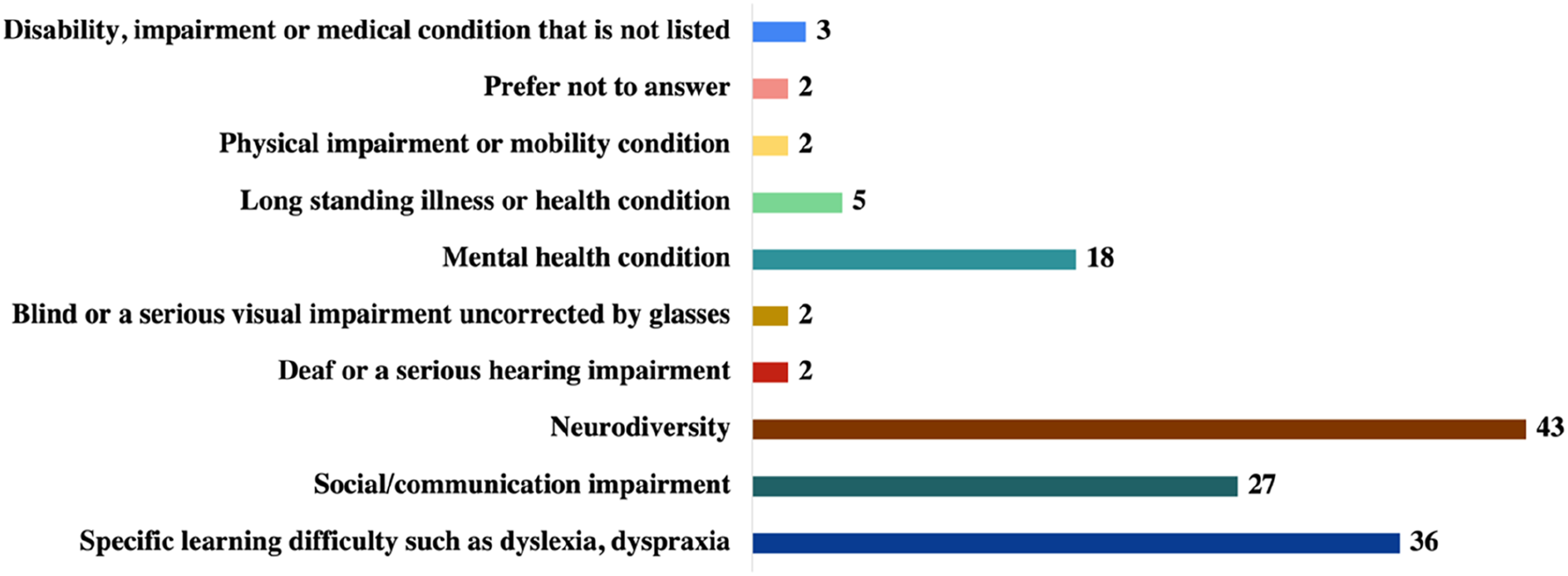
Many view the active adoption of GenAI tools as highly beneficial for students with disabilities. One key beneficial impact is GenAI tools’ potential to enhance students with disabilities’ accessibility within academic settings (Atcheson et al., 2025; Tamdjidi and Billai, 2023). Specifically, GenAI can make learning materials more accessible. For example, ChatGPT has been shown to support blind and visually impaired students in accessing graphical content by converting it into more interpretable descriptive text (White et al., 2025). In other cases, it also assists students with neurodivergence in understanding complicated concepts by breaking down dense material and highlighting key points in a way that suits shorter attention spans (Addy et al., 2023; Beauchemin et al., 2008). In addition to improving access to learning materials, GenAI also offers more accessible personalised support for students with disabilities. By rapidly analysing user input, it can respond to students with disabilities’ needs with speed and accuracy (Sağdıç et al., 2024). For example, Elkot et al. (2025) demonstrated how guided interactions with a GenAI system could be used to tailor English language learning to students with disabilities’ specific needs. Even more helpfully, GenAI tools are available 24/7, meaning that personalised support can be accessed outside typical school hours (Tamdjidi and Billai, 2023). This is particularly valuable for students with disabilities, who often have demanding schedules and may require flexibility in when and how they receive support (Atcheson et al., 2025).
Another beneficial impact is GenAI tool’s support in helping students with disabilities articulate themselves more effectively, both in academic writing and interpersonal communication. Specifically, GenAI can help students with disabilities express their ideas more clearly and confidently by improving their writing in terms of grammar, clarity, and structure (Souval et al., 2025). For instance, Glazko et al. (2023) found that the use of GenAI tools enhanced students with disabilities’ performance in creating presentation slides. Moreover, research suggests that GenAI can aid students with disabilities in developing social skills by generating interactive scenarios that simulate real-life situations. These scenarios help build confidence and prepare students with disabilities for social interactions, including peer collaboration and group learning environments (Almufareh et al., 2024; McMurtrie, 2023).
Despite the aforementioned benefits, some argue that the introduction of GenAI for students with disabilities should be approached with greater caution (Jenks et al., 2025). This concern largely stems from how these technologies are developed. Often, there is a lack of training data specifically representing students with disabilities (Nakao et al., 2023), and GenAI development teams themselves frequently lack diversity (Park, 2022). As a result, GenAI tools may fail to accurately capture the needs and experiences of students with disabilities, which could limit their effectiveness or even negatively affect learning outcomes (Francis et al., 2025; Rocky Mountain ADA Centre, 2023). A focus group study involving 56 participants with disabilities had demonstrated how large language model-based dialogue systems can perpetuate harmful stereotypes about disabled individuals (Gadiraju et al., 2023). Encountering such biased outputs may reduce students with disabilities’ self-efficacy and discourage them from continuing to use GenAI tools, ultimately leading to missed opportunities for learning support (Botchu et al., 2024; Wang et al., 2025). In addition, overly personalised responses from GenAI may undermine students with disabilities’ autonomy. Chen and Zhu (2023) warn that constant exposure to simplified content may reduce cognitive engagement for students with attention deficit hyperactivity disorder (ADHD), in turn, limiting these students’ opportunities to develop focus and reasoning skills. Similarly, McMurtrie (2023) cautions that excessive reliance on GenAI could lead to over-dependence, weakening students with disabilities’ ability to generate original ideas and express themselves independently in academic settings.
The conflicting views on the impact of GenAI on students with disabilities in HE largely stems from the limited research that directly engages with students with disabilities to understand how they interact with these tools (Alshaigy and Grande, 2024; Hadar et al., 2025). Most existing studies focus on awareness and acceptance, without closely examining the actual experiences of students with disabilities (Atcheson et al., 2025). Among the few studies that do explore students with disabilities’ use cases, some are framed from the perspective of educators rather than students with disabilities directly (e.g. McMurtrie, 2023). This disconnect has led much of the current discourse on GenAI’s impact to lean towards theoretical speculation, risking a detachment from the lived realities of students with disabilities.
In response, our study places students with disabilities at the centre, recognising them as primary sources of knowledge. This approach aims to generate a fuller understanding of how GenAI benefits students with disabilities in HE and what are the limitations of these tools. Such insight is crucial for preparing the HE sector, both pedagogically and politically, for a GenAI era whose progression is inevitable and demands proactive engagement rather than avoidance or delay (Perkins et al., 2024; UNESCO, 2024).
The affordance lens
To guide this study and better understand how GenAI tools affects the students with disabilities in HE, the ‘affordances’ of GenAI tools needs to be carefully examined. Originally introduced by Gibson (2014) and later further developed within educational technology research, the concept of ‘affordances’ refers to the action possibilities that arise from the relationship between an individual and a technology within a specific context (Bower and Sturman, 2015; Stoffregen, 2003). More specifically, affordances are both relational and contextual (Wang et al., 2018). Affordances emerge from the interaction between the user’s subjective perception of utility and the objective features of the technology (Lee et al., 2025). Individuals interpret a technology’s functions and limitations in different ways, depending on their capabilities, cultural norms, and the institutional structures that shape their engagement (Sadler and Given, 2007; Zhang et al., 2023).
Three main reasons informed the choice of affordance as the theoretical lens for this study, rather than other commonly used frameworks such as the Technology Acceptance Model (TAM). First, this study seeks to understand what new possibilities GenAI tools may open for students with disabilities in HE. TAM, by contrast, focuses on predicting technology uptake based on factors like perceived usefulness and ease of use (McCoy et al., 2007), and therefore does not fully capture the depth and complexity of students with disabilities’ engagement with GenAI tools. Affordance theory, however, highlights how action possibilities emerge through situated interactions, making it more appropriate for examining how students with disabilities engage with GenAI tools in real educational contexts (Crompton et al., 2024).
Second, the affordance lens considers not only the interaction between students with disabilities and GenAI tools, but also the broader HE context. This holistic focus allows for more meaningful research findings with greater practical and policy relevance. It recognises how GenAI tools and students with disabilities shape each other in use, rather than treating them as separate or fixed. This relational perspective helps identify how GenAI tools can be better adapted to meet user needs and informs the design of more inclusive and context-sensitive technologies. Also, the affordance lens considers the influence of context, including how institutional structures, policies, and cultural expectations influence the way students with disabilities engage with GenAI tools (Lee et al., 2025). By accounting for these systemic factors, it moves beyond individual-level analysis and provides a richer understanding of how technology functions within the broader HE context.
Third, affordance theory has proven effective in guiding research on GenAI/AI’s impact on learning. For example, Zhang et al. (2023) found that AI tools can enhance student engagement and reduce anxiety in learning foreign languages, as these tools afford students to achieve a flow state. Additionally, Jeon (2024) uncovered the impacts of AI chatbots on students’ psychological well-being in EFL learning by examining how well these tools afford students’ needs for interactive pedagogy, convenient technical support, and a supportive social environment.
In this study, the affordance lens is primarily used to guide data analysis. Rather than applying existing affordance frameworks as fixed coding schemes, we draw on them to support a detailed exploration of how students with disabilities engage with GenAI tools and how GenAI tools influence their learning, particularly in relation to academic writing assessments such as essays. Gaining insight into both the use and the impact of GenAI tools in this context will help inform more targeted development and implementation strategies, contributing to a more inclusive HE environment.
Methodology
At present, research that engages with students with disabilities tends to be either small in scale or narrowly focused on specific impairments, offering limited insight into broader patterns of engagement with GenAI tools. To address this gap, our study adopts an affordance lens to explore the question: How do generative AI (GenAI) tools enhance accessibility and inclusion for students with disabilities in higher education? To answer this research question, an inductive approach is particularly well suited, as it allows unanticipated themes to emerge and ensures that our findings are grounded in the lived experiences of students with disabilities, rather than shaped by pre-existing theoretical frameworks (Bryman, 2016). This inductive stance, in turn, can build a more authentic evidence base, which can inform the development of more responsive educational practices and policies. The study received ethics approval from the University of Sheffield, including the 7188 students registered with the university’s Disability Support Services Department following formal diagnosis.
To ensure the robustness of the research, we conducted a two-stage project. The first stage involved a survey designed to capture broad patterns of GenAI use among students with disabilities and to raise awareness of the study within this group. The second stage consists of follow-up interviews informed by insights from the survey. The rationale for this design choice (i.e. a survey followed by interviews) was twofold. First, there was no established framework that could be used to guide the design of effective interview protocols; the survey therefore provided an empirical basis for developing context-sensitive interview questions. Second, students with disabilities are often a hard-to-reach group, particularly in the absence of an existing relationship of trust; the survey stage helped increase awareness of the project and establish an initial foundation of trust to support subsequent in-depth interviews. Together, this sequential design ensured both breadth and depth in understanding GenAI tools affordances for students with disabilities.
In this paper, we focus primarily on the survey findings, as the interview data are still being collected from participants who completed the survey. More specifically, the survey was developed by the researchers in consultation with disability support professionals from the university’s Disability Support Services Department and was piloted with several volunteered students with disabilities. Given the access barriers that students with disabilities often face in participating in research (Wilkenfeld, 2015), the survey was designed and distributed with the support of the university’s Disability Support Services Department. The survey was sent to all enrolled students with disabilities at the University of Sheffield during February and March 2024, resulting in 124 valid responses. This response rate marks a notable improvement compared to previous studies involving students with disabilities. For instance, a similar survey within UK higher education received only 54 responses (Fletcher et al., 2024), while a comparable study in the US gathered just 65 (Atcheson et al., 2025). Informed consent was obtained at the beginning of the survey. Participants were informed of their right to withdraw, and no identifiable information was collected. Specifically, the survey comprised three core sections (a copy of the survey is included in the appendix to this paper):
All the collected data were analysed in two stages. First, responses to the closed questions were examined in Microsoft Excel using descriptive statistics, following the approach used by Fletcher et al. (2024). Second, affordance theory was applied as a theoretical lens to guide an inductive content analysis of the open-ended responses. Guided by the relational and contextual nature of the affordance lens, we focused on how the functions of GenAI tools aligned with respondents’ stated needs, while also considering the broader institutional and educational contexts that shaped their engagement. Given that this is among the first studies to examine GenAI tools affordances in academic writing for students with disabilities, no validated affordance scales were available that matched the specific context or could be directly applied. Therefore, this study inductively identified an initial set of affordances as groundwork for future scale development. In other words, our analysis did not attempt to fit the data into pre-existing affordance frameworks. Rather, these frameworks were used as sensitising concepts to inform a more nuanced interpretation of respondents’ actual uses of and expectations for GenAI tools. To guarantee the reliability of the analysis, the coding process was carried out in multiple stages. One author conducted the initial round of coding, after which two additional authors independently reviewed the coded segments. All codes were compared and discussed until consensus was reached. This approach enabled us to represent the voices of students with disabilities more authentically and to generate insights that can inform the inclusive development and implementation of GenAI tools in higher education.
Results
As revealed in the survey, nearly all respondents were motivated to engage with GenAI tools (see Zhao et al., 2025, for further details from this study), as these tools offered new opportunities to enhance their learning. Specially, guided by the survey questions and through inductive coding of answers to the open-ended questions, three key affordances of GenAI tools were identified, comprising eight sub-affordances (see Figure 2). Here, affordances refer to correspondences between respondents’ learning needs and concerns, and GenAI tool’s function, as will be elaborated further with illustrative citations. Identifying these affordances addresses the first research objective, namely how GenAI tools benefit students with disabilities in HE. However, this finding is based on self-reported data from a single survey and should be interpreted with caution, as it may not fully capture the diversity and depth of lived experiences or motivations among students with disabilities. Affordances of GenAI tools (figure made by the authors).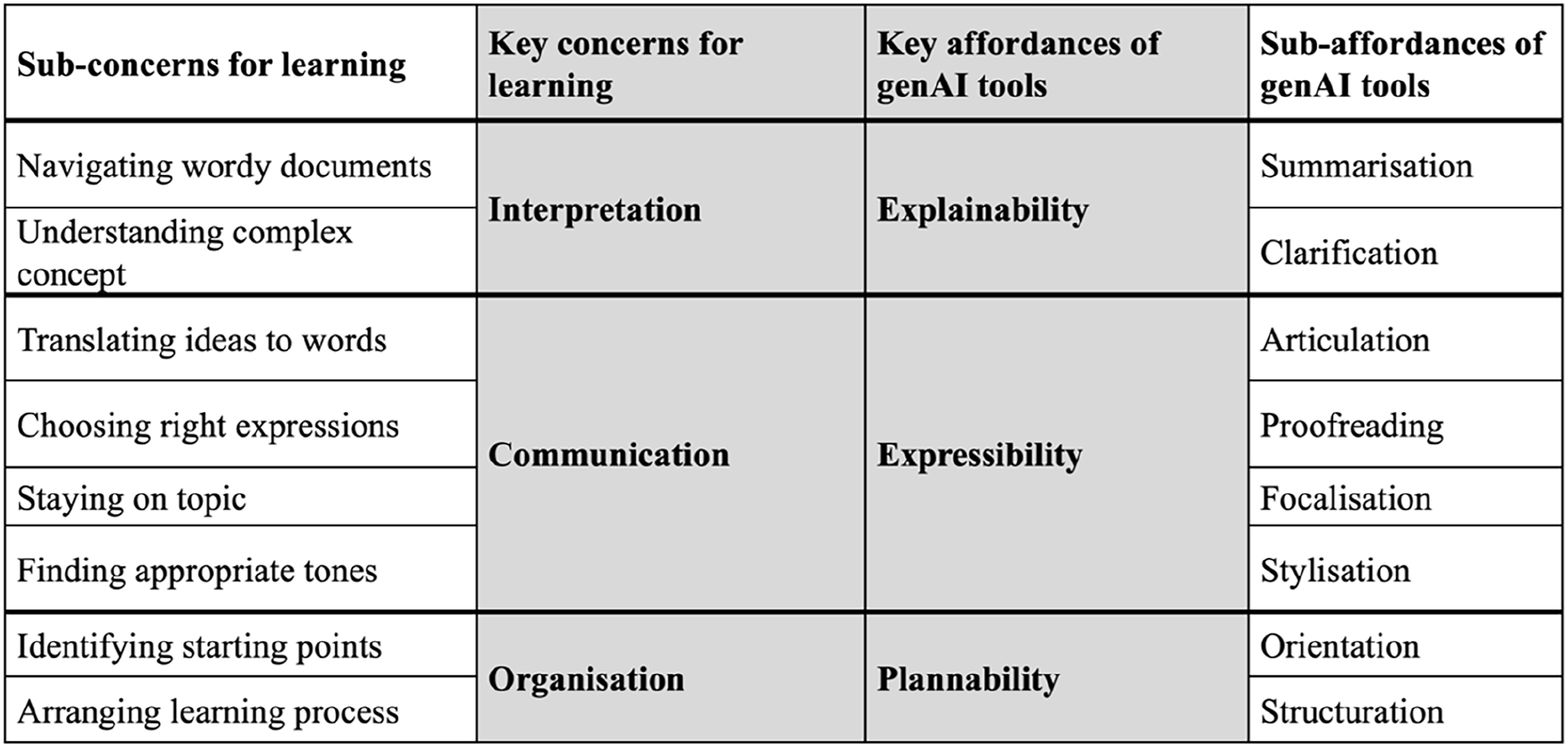
Apart from the affordances, this study also identified three groups of affordance gaps, as discussed in the last subsection of this section. These gaps indicate where GenAI tools fall short in meeting the learning needs and concerns of the respondents (Sadler and Given, 2007), addressing the second research objective and highlighting areas where further improvement is required in both the technical design and the institutional support. Notably, since the reported affordances were identified inductively from responses to open-ended questions, some appeared less prominent in the data. However, this does not suggest that they were unimportant. As one of the first studies to examine the affordances of generative AI (GenAI) for students with disabilities, this research serves as an initial exploration. Building on these findings, the project team is conducting follow-up interviews to further validate and deepen the data, addressing insights that may have been difficult to capture through a single exploratory survey study.
Explainability
In this paper, explainability refers to the function of GenAI tools in making learning materials and complex concepts more comprehensible, affording respondents to interpret them effectively. Explainability consists of two key sub-affordances: summarisation and clarification.
Summarisation
The sub-affordance of summarisation reveals the functionality of GenAI tools in summarising large documents into easily digestible segments. This sub-affordance directly responds to a key challenge reported by 18% of respondents (n = 22): difficulty engaging with long and wordy materials. For these respondents, many of whom have neurodivergent conditions, this sub-affordance supports ‘comprehensive access’ to learning materials in ways that align with their ‘limited concentration span’. This, in turn, affords them stay engaged without cognitive overload or anxiety, reducing the risk of falling behind in their studies. ‘I also use ChatGPT to input large readings that are required on my course, to summarise the key points for me as reading large passages are extremely hard, as well as understanding most academic language’. ‘I use BingAI to provide a summary of concepts I do not know much about’.
Clarification
The sub-affordance of clarification deals with GenAI tools’ function of elucidating complex concepts into comprehensible forms. Clarification affords respondents to ‘process and understand’ ‘odd’ terminology they encounter in rubric standards, classroom questions, messages, and academic concepts. By providing this support, GenAI tools can help the respondents to manage comprehension challenges that might otherwise hinder their ability to complete assignments, particularly written tasks, as reported by 7% of the surveyed respondents (n = 9). ‘I have dyslexia. It has a major impact, it hinders […] and the processing of materials to understand terminology. I used Bard, which has now changed, on the odd question [that] is difficult to understand, it gives a simpler view’.
Expressibility
Expressibility deals with GenAI tools’ function in enhancing cross-actor interaction, affording respondents to communicate themselves more effectively to both humans and systems. Expressibility consists of four sub-affordances: articulation, proofreading, focalisation, and stylisation. Notably, the value of expressibility extended beyond classroom learning, affording respondents greater support in expressing themselves clearly even in social and everyday communication.
Articulation
The sub-affordance of articulation highlights GenAI tools’ function in organising unclear ideas into meaningful expressions. For many respondents (n = 21, 17%), articulation was particularly valuable, as they often experienced mental blocks that led to ‘erratic changing’ in how they expressed ideas, making it ‘struggling’ for others to understand their work or even their needs. By affording clearer articulation, GenAI tools helped them express themselves more effectively. This not only improved communication with peers and tutors but also made it easier to find and engage with relevant learning supports and materials independently. ‘ChatGPT can be really helpful as I don’t need to know the exact keywords you would usually need to search documentations. It is helpful as I have a learning disability that can make it difficult to explain what I need’.
Proofreading
The sub-affordance of proofreading deals with GenAI tools’ function to review and correct written content. This sub-affordance was valued by 30 respondents (24% of the surveyed), many of whom described themselves as ‘terrible writers’ and highlighted grammar and word choice as ongoing challenges in both academic and everyday contexts. With the support of GenAI tools, respondents were better able to spot and correct errors, which helped reduce their anxiety and boosted their confidence in producing essays, reports, and programming code that met academic standards. ‘Grammarly - helps with grammar, spelling, structure and making sure the tone of my writing is appropriate’.
Focalisation
The sub-affordance of focalisation highlights GenAI tools’ function to ensure that expressions align with expectations. Focalisation was valued by 17 respondents (14% of the surveyed), particularly those with neurodiversity or dyslexia. These respondents reported frequent difficulties in maintaining focus, tracking their arguments, and determining whether they were ‘directly answering the question or not’. By providing targeted feedback based on rubric criteria, GenAI tools helped them stay on topic and structure their responses more effectively, improving the clarity, relevance, and overall quality of their work. ‘ChatGPT is good for helping me understand what a question wants me to do, and to keep me on topic’.
Stylisation
The sub-affordance of stylisation pertains to GenAI tools’ ability to adjust and refine the style of written content regarding its target audience. By affording this function, GenAI tools afford personalised support for respondents (n = 5, 4%) in selecting an appropriate tone for their ‘professional’ writing. With this support, respondents were able to tailor their communication for different audiences, even for potential employers. For respondents, this sub-affordance helped with both their academic work and career preparation, offering useful guidance that was otherwise hard to get. ‘Gemini is very helpful when creating cover letters and researching companies for my year in industry. It is also very helpful for changing the tone or flow of short sections of writing that don’t quite work right’. ‘ChatGPT […] it has been useful in drafting professional/formal emails as it has quite a neutral tone, making conversation with employers and placement opportunities a lot easier’.
Plannability
Plannability refers to GenAI tools’ function in structuring and managing tasks effectively, affording respondents a more well-organised learning process. Plannability is made up of two sub-affordances: orientation and structuration.
Orientation
The sub-affordance of orientation addresses GenAI tools’ function in pointing out where to start when approaching a given task. In their responses, 13 respondents (10%) said they struggled to get started on academic work, often calling the first step of an assignment ‘overwhelming’. By offering a clear and dependable starting point, GenAI tools helped them overcome this barrier. This support enabled students to organise their thoughts more effectively and approach their studies with greater confidence. ‘I use ChatGPT to break the task of writing an essay down into smaller tasks. I will ask it to make a starting sentence so I do not have to stare at a blank page with nothing on it’.
Structuration
The sub-affordance of structuration highlights GenAI tools’ function in breaking down complex tasks into manageable steps. By providing a clear step-by-step outline, GenAI tools afford respondents a more orderly learning process. In this way, respondents can avoid being overwhelmed and getting fatigued while learning (n = 17, 14%), maintaining a consistent study routine with greater ease. ‘ChatGPT is incredibly helpful for getting ideas for what to write about and how to plan out my essays’. ‘I also have combined ADHD which makes it difficult for me to focus on a laborious activity such as writing. (…) ChatGPT is my one go to for how to structure essays’.
Affordance gaps
Beyond the identified affordances, respondents also indicated that GenAI tools also have its affordance gaps. Namely, these tools failed to afford (or may even exacerbate) their learning concerns. Notably, GenAI tools failed to afford the following three groups of learning concerns:
‘I don’t really trust them to give me reliable information on complex topics, and I don’t want the hassle of working out how to properly cite AI tools’.
‘I don’t currently use any [GenAI] tools (…) partially due to being unsure of the University’s protocol on AI’.
‘There’s a sense that work that uses AI wouldn’t fully be my own work’. ‘I don’t use it for academic papers because I worry that the meaning of the writing could be lost in translation’.
A careful review of the survey findings suggests that while GenAI offers valuable support for students with disabilities, its full potential can only be realised through stronger institutional frameworks and more inclusive implementation strategies. Crucially, these efforts should be co-developed with the active involvement of students with disabilities, who, according to our respondents, are willing to contribute. When asked, ‘Do you think students should be involved in determining university AI policy?’, all participants provided valid answers, with 96% expressing interest and 32% indicating strong enthusiasm. Although this result derives from a single survey item, it nevertheless provides valuable insights, given the exceptionally high response rate and the strong consistency across participants’ answers. Also, after indicating their willingness, many participants went on to offer thoughtful and practical suggestions for policy improvement, showing that they are genuinely prepared to take part and contribute meaningfully to shaping institutional practice.
Building on this, we are confident that the involvement of students with disabilities in shaping GenAI policies in higher education will be both feasible and valuable, and the team is now conducting follow-up interviews and preparing additional studies to engage students more deeply. In the following discussion, we also outline how the role of students with disabilities can be further advanced in institutional decision-making, with the aim of providing more comprehensive support and fostering a more inclusive higher education environment in the GenAI era.
Discussion
By adopting an affordance lens and an inductive approach, this study examined how generative AI (GenAI) tools enhance accessibility and inclusion for students with disabilities in higher education. Grounded in students’ real-life experiences, the findings offer an enhanced understanding of GenAI’s impact on higher education, informing more targeted strategies for its sustainable and inclusive integration.
Affordances of GenAI tools in disabled learning
This study is one of the first to analyse empirical data on the affordance of GenAI tools for students with disabilities in HE. Most respondents expressed a positive attitude towards GenAI tools and motivated to use these tools (Zhao et al., 2025). This strong receptiveness to GenAI, which aligns with findings from previous studies involving students with disabilities (e.g. Atcheson et al., 2025; Fletcher et al., 2024), highlights the need for HE institutions to move beyond restriction and instead focus on integrating GenAI in ways that genuinely support diverse student learning needs.
Respondents showed such enthusiasm because GenAI tools afforded targeted supports not only for academic tasks but also for everyday situations. One valuable affordance of GenAI tools recognised by students with disabilities both in this study and in others (e.g. Atcheson et al., 2025; Fletcher et al., 2024), was explainability. For many students with disabilities, processing academic texts and instructions presents a compounded challenge (Atcheson et al., 2025). They often experience slower reading speeds, increased errors, and greater cognitive fatigue. Some also find it difficult to identify key points or grasp abstract concepts, which makes engaging with core learning materials more demanding (Khazanchi and Khazanchi, 2024). In this context, the ability of GenAI tools to provide timely, personalised summaries and clear explanations of lengthy or complex content proved particularly valuable. This type of support also helps to fill a critical gap often left unaddressed by existing student services for students with disabilities (Atcheson et al., 2025). By gaining access to these long-desired personalised support, students with disabilities can approach their learning tasks with greater confidence and discover more interest and meaning in the learning process (Atcheson et al., 2025; McMurtrie, 2023). As this interest and engagement grow, students with disabilities may become better equipped to participate actively in their education. In turn, this helps to narrow the gap in learning experiences and outcomes between students with disabilities and their non-disabled peers, fostering a more inclusive educational environment.
Beyond the affordances specifically relevant to students with disabilities, some benefits identified by respondents were also shared by their non-disabled peers. One such affordance is expressibility. Acting as a writing assistant, GenAI tools helped students, both with and without disabilities, organise their thoughts and adjust their tone appropriately for different contexts (Almufareh et al., 2024; Wu and Chiu, 2025; Zhao et al., 2024b). This support not only improved their academic writing but also increased their confidence in social interactions and professional settings, areas that many students with disabilities found particularly anxiety-inducing (Atcheson et al., 2025; McMurtrie, 2023). In other words, for students with disabilities, GenAI tools offer not only the chance to catch up academically but also the opportunity to begin future careers on a more equal footing. This form of equality beyond education may be even more important, as the ultimate goal of learning is to prepare individuals for life after graduation (Jenks et al., 2025). These findings highlight the inclusive potential of GenAI and suggest it should be meaningfully embedded in HE. Therefore, instead of restricting the use of GenAI tools, institutional policies should aim to support and guide their responsible integration into learning practices.
In addition to the previously discussed affordances, respondents also identified a lesser-mentioned one: plannability. With this affordance, respondents can learn how to break down complex learning tasks into manageable sub-tasks and complete them step by step. This, in turn, reduces respondents’ levels of anxiety around learning. For students with disabilities, who often experience heightened anxiety even over small tasks due to their health conditions (Botchu et al., 2024), this affordance can be especially valuable. By reducing anxiety, plannability enables students with disabilities to approach their studies with greater focus and confidence, which can lead to improved academic outcomes.
While GenAI tools can afford meaningful support, they also present clear limitations. Respondents identified several affordance gaps where these tools failed to meet and even intensified their learning concerns. Many respondents were concerned that GenAI tools could produce false or misleading information, a problem often described as hallucination. Although non-disabled peers shared similar concerns (Zhao et al., 2024b), respondents and other students with disabilities reported higher levels of anxiety about hallucinations (Atcheson et al., 2025; Glazko et al., 2023). This heightened concern may stem from a lack of confidence in their academic abilities (McMurtrie, 2023), which makes it harder for them to judge the reliability of GenAI outputs. As a result, they felt more vulnerable when deciding whether to trust GenAI tools.
The lack of confidence can also lead some respondents to fear that GenAI tools might outperform them in key learning tasks. Rather than feeling supported, they worried that their own voices could be overshadowed by GenAI tools, limiting opportunities for personal development. This concern echoes warnings by Chen and Zhu (2023), who argue that reliance on simplified GenAI content may hinder students with disabilities’ ability to build focus and reasoning skills. With this concern, some respondents chose to avoid using GenAI tools for learning. Another significant affordance gap that distance respondents from GenAI tools was the issue of academic integrity. Many respondents were unsure whether using GenAI tools would be considered acceptable, particularly in the absence of clear institutional guidance. This concern was not limited to students with disabilities; non-disabled students also expressed it, even those who felt confident using GenAI tools appropriately (Wu and Chiu, 2025).
At the core of these affordance gaps lies a structural limitation: students with disabilities are often not involved in designing or implementing GenAI tools and policies (Zhao et al., 2025). More specific, most GenAI tools are developed by experts and privileged groups (Nakao et al., 2023), which means they are usually designed for the general student population. As a result, the specific needs of students with disabilities are often ignored. At the same time, HE institutions have not done enough to help students with disabilities understand how GenAI works or how to use it in a safe and effective way. Without inclusive design and clear guidance, students with disabilities risk falling further behind. To address the pressing need for effective and inclusive guidance on the use of GenAI tools by students with disabilities in higher education, further research is required. Three key directions warrant particular attention: (1) interview-based studies, especially students with disabilities and those directly supporting them, are needed to validate and refine the identified affordances and affordance gaps; (2) larger-scale surveys should be conducted to examine associations between different disability profiles and specific affordance patterns, thereby enabling a systematic evaluation of both the value and barriers of GenAI use to better support the development of tools tailored to diverse learners; and (3) evaluation studies on co-creation policy models should be conducted to actively involve students with disabilities in the design and governance of GenAI tools and policies, ensuring that their perspectives are systematically and sustainably embedded in institutional practices in higher education.
This study also makes a significant theoretical contribution, particularly by complementing adoption models such as the Technology Acceptance Model (TAM) through an affordance lens. It advances theoretical understanding in three key ways: First, it extends beyond adoption intentions: while models like TAM emphasise perceived usefulness and ease of use, the affordance lens in this study illustrates how students with disabilities actually engage with GenAI tools in authentic learning contexts, offering insights that go beyond user intentions. Second, it reveals contextual and relational value, showing that the value of GenAI tools is co-constructed through interactions among users, tools, and institutional settings such as accessibility policies and support services. This complements TAM’s individual-level focus by incorporating the social and institutional dimensions of technology use. Third, it addresses inclusion through affordance gaps. By identifying both affordances and affordance gaps, this study extends adoption theories to include equity and accessibility as essential considerations, which are often overlooked in traditional technology adoption research.
Strategies for developing and deploying GenAI in disabled learning
Although our study shows that the majority of respondents expressed interest in being involved in shaping university GenAI policies, this finding is based on a single-item measure and should therefore be interpreted with caution. Nevertheless, it highlights a strong desire among students with disabilities to engage meaningfully in institutional decision-making on GenAI policies. To translate this willingness into practice, HE institutions should recognise that involvement should occur at multiple levels, from consultation (e.g. sharing lived experiences and providing feedback on accessibility policies and tools), to co-creation (e.g. collaboratively developing or testing GenAI tools and policies), to representation through central committee roles (e.g. participating in policy review and working groups). Ensuring meaningful participation across these levels requires two key preconditions (1) first, students with disabilities need to be fully respected and recognised as equal contributors rather than treated as passive subjects; (2) second, they must be provided with the necessary institutional support, confidence, and knowledge to participate effectively.
Too often, HE institutions claim to involve students with disabilities in major decisions, yet they seem treat students with disabilities more as passive subjects rather than active contributors (Jenks et al., 2025). This lack of genuine respect and recognition sidelines students with disabilities’ voices and weakens the inclusiveness of GenAI tools and policies. At the heart of this issue is the scepticism within higher education about students with disabilities’ ability to use GenAI tools meaningfully and their willingness to contribute to the development of GenAI policies (Alshaigy and Grande, 2024; Hadar et al., 2025). However, findings from this study, along with other research involving students with disabilities directly (e.g. Atcheson et al., 2025; Fletcher et al., 2024; Glazko et al., 2023), show that concerns about their ability or willingness to engage with GenAI tools are unfounded. Students with disabilities can use GenAI tools just as effectively and critically as their non-disabled peers, recognising both the strengths and risks of using these tools. Through frequent use of GenAI tools, students with disabilities have gained valuable insights that could meaningfully inform tool development and policy. They also showed a strong willingness to contribute: 96% of respondents in our study expressed interest in being involved in shaping university GenAI policies. However, this finding should be interpreted with caution, as it is based on self-reported data from a single survey conducted at one institution and may therefore lack generalisability. Nevertheless, it provides valuable preliminary insight into students’ motivation to participate in GenAI-related policymaking. Based on this finding, HE institutions should actively create opportunities for student representatives to be included in these meetings and ensure that the policymaking process is transparent and accessible. Making these discussions more visible and open to student involvement will help foster a more inclusive approach to shaping GenAI policies.
Alongside genuine respect, students with disabilities also need AI literacy training to prepare themselves to contribute informed and constructive input. On one hand, developing AI literacy strengthens their ability and confidence to understand and engage with GenAI tools (Zhao et al., 2024a). With structured training from ‘official channel’ (Atcheson et al., 2025), students with disabilities can be better equipped to explore a wider range of GenAI tools and assess their value with great confidence; this is what many respondents in this study specifically called for. This broader exposure, in turn, can help students with disabilities spot design limitations more easily and offer practical suggestions to improve the design of GenAI tools. On the other hand, AI literacy training offers students with disabilities the opportunity to access and critically examine existing institutional GenAI policies in HE (Jeon and Lee, 2023; Kajiwara and Kawabata, 2024). This, in turn, allows students with disabilities identify policy shortcomings and contribute to making these policies more inclusive and practical.
Once students with disabilities are well-prepared and recognised as equal contributors, HE stakeholders should take concrete steps to involve them in GenAI policy and design. A crucial move is to moving away from one-size-fits-all GenAI policies and instead adopt more flexible frameworks. Many HE institutions, including leading ones, have already introduced policies, such as the Russell Group’s Principles for the Use of AI in Education (2023) and Stanford University’s Generative AI Policy Guidance (2023). While these guidelines offer valuable insights, they share a key limitation: they treat students with disabilities the same as non-disabled students, overlooking the specific needs of the former (Crompton, 2024). In most cases, all students are expected to follow a single set of rules and face the same penalties if those rules are broken, with few exemptions or tailored provisions for students with disabilities. This uniform approach to GenAI use can be problematic. More specific, students with disabilities often face greater academic and physical challenges than their peers, which may lead them to rely more heavily on GenAI tools for support (Atcheson et al., 2025). Also, as noted by respondents in this study, when students with disabilities do not follow GenAI usage rules, it is often due to difficulty understanding the guidelines rather than any deliberate intention to misuse the tools. In such cases, applying the same penalties and behavioural standards to all students can be unfair. To build a more inclusive GenAI future in HE, policies must move beyond a one-size-fits-all approach and adopt a more flexible scope. This requires expanding the group of contributors involved in shaping these policies, ensuring broader representation and input (Jenks et al., 2025).
Notably, students with disabilities should be meaningfully included to the panel, not only as participants but as key representatives. Their perspectives should be supported by university disability services, ensuring their needs are fully understood and addressed. Besides, GenAI developers should also be part of the panel. As the ones shaping the design and function of the GenAI tools, their collaboration with students with disabilities can help identify barriers early on and promote more accessible, inclusive solutions. This cross-sector dialogue is essential for developing policies that are both practical and equitable. Also, as GenAI technologies evolve rapidly, often outpacing HE institutions’ ability to stay updated (Zlotnikova et al., 2025). Without input from developers, institutional policies risk becoming outdated, failing to address emerging advancements, and missing opportunities to promote the ethical use of GenAI (Perkins et al., 2024).
To enable effective collaboration and dialogue within a more diverse policy development panel, clear direction is essential. As a wider range of voices may lead to differing priorities and potential conflicts, we propose three guiding principles to support the development of inclusive GenAI policies in HE: (1) First, policies must cover the entire GenAI lifecycle, from the creation of training datasets to implementation and long-term monitoring (Souval et al., 2025). Focussing solely on final outputs is not sufficient, as issues such as bias and exclusion often emerge much earlier in the development process. To address these challenges, HE institutions should go beyond academic boundaries to build collaborative relationships with GenAI developers and industry partners. Such collaboration would give universities a voice at the earliest stages of GenAI development and enable them to shape cross-sector standards, promote educational equity, and ensure that GenAI evolves in line with broader societal values. (2) Second, policy development should adopt a global perspective rather than remain confined to individual institutions. Aligning with international frameworks, such as UNESCO’s AI Competency Framework (2024), enables HE institutions to learn continuously from global best practices while adapting these insights to their specific contexts. Achieving this requires the active participation of all staff, particularly those in student support services who work directly with students with disabilities, in cross departmental collaborations both locally and internationally. Such engagement helps embed inclusivity and accessibility within institutional culture and ensures that global partnerships translate into meaningful and contextually relevant change. (3) Third, policies must be flexible and regularly audited by the panel member. Ongoing audits and updates should be informed by research, student experiences, and technological changes to ensure policies remain relevant and effective. To make the audit process more robust, structured student panels should be established to ensure the lived experiences of students, including those with disabilities, are integrated into evaluation. In addition, sandbox pilots with accessibility criteria can be used to test new tools or policies in controlled environments and identify barriers before large-scale deployment. Finally, participatory policy audits that actively involve students, faculty, and technical experts are needed to enhance transparency, accountability, and shared ownership. By embedding these principles, HE can foster a GenAI-enabled learning environment that is both inclusive and sustainable.
Conclusion
This study explores the affordance and limitations of GenAI tools for students with disabilities in HE. By bringing forward voices from groups often overlooked, this study provides clearer insights into how GenAI tools impact the HE sector, marking a significant theoretical contribution to the field. These theoretical insights, in turn, help shape more inclusive and responsible GenAI policies across the HE sector.
More specific, findings further confirm that students with disabilities are both willing and able to engage effectively with GenAI tools. For them, these tools afford explainability, expressibility, and plannability, enabling clearer interpretation, enhanced communication skills, and structured organisation in writing. However, students with disabilities also identify affordance gaps in GenAI tools, including hallucination, concerns about academic integrity, and loss of personal voice. To address these affordance gaps and support a more inclusive GenAI future, the HE sector must adopt forward-looking policies to guide the implementation of GenAI tools. This requires HE institutions to build more diverse and representative policymaking panels, including voices from groups that have historically been overlooked. To contribute meaningfully to GenAI policy development, students with disabilities need to be recognised as equal partners and provided with targeted AI literacy training to help them express their views. Meanwhile, HE institutions need to be open to the perspectives of students with disabilities by adopting a flexible approach to GenAI policy design. Instead of applying the same rules to everyone, policies should allow for reasonable exceptions and be broad enough to meet diverse needs. These policies should also address the entire GenAI lifecycle, including how models are trained, how tools are used in daily learning, and the long-term effects they may have. Many forms of bias and exclusion begin early in the development process. To ensure policies stay relevant, institutions should learn from international best practices and review their policies regularly as technology and student needs evolve. This approach will help make GenAI more inclusive, fair, and supportive for all students.
Our study also has limitations that point to opportunities for future research: (1) First, although this study involved more students with disabilities than many previous studies, the overall sample size is still relatively small in relation to the wider student population. Future research could expand on these findings by involving a larger and more diverse group of students with disabilities, which would help generate more comprehensive and generalisable insights. (2) Second, our study collected data primarily from one institution. This limitation arises from the difficulty in obtaining ethics approval and access to students with disabilities across multiple institutions. To improve the generalisability of findings, future research could replicate this study in other institutional settings and compare outcomes. (3) Third, while this study included various GenAI tools and a diverse group of students with disabilities, it did not compare how students with different disabilities interact with specific tools. This was not a deliberate omission but a result of limited prior research to guide such distinctions. As an exploratory study, our aim was to provide a broad foundation. Future research could expand on this by conducting targeted comparisons to better tailor GenAI tools and policies to specific students with disabilities’ needs. (4) Fourth, this study mainly relied on single-item measures and employed descriptive statistics alongside inductive thematic analysis to explore the topic. This design reflects the exploratory nature of the research, which sought to identify key themes and patterns as a foundation for future work. To generate deeper insights, future studies could build on our findings by using more detailed surveys and advanced analytical approaches. Encouragingly, we have already begun addressing this by conducting follow-up interviews to expand and enrich the dataset. (5) Finally, our study is centred on the perspectives of students with disabilities, with key insights drawn from their experiences. However, given the complexity of the GenAI ecosystem, it is essential to also consider the perspectives of other stakeholder groups. Future research could involve sharing and discussing our findings with GenAI developers. Exploring the differing attitudes between students and developers may provide clearer insights into the root causes of the identified affordance gaps and guide us in cultivating a more inclusive GenAI ecosystem.
Footnotes
Acknowledgements
The authors would like to express their gratitude to all participants who contributed to this study. We gratefully acknowledge all the participants who completed the questionnaire for their support of this study.

Ethical considerations
This research gained ethical approval from the University of Sheffield.
Consent to participate
Informed consent was obtained at the beginning of the survey. No identifying information was collected from the survey.
Funding
The authors received no financial support for the research, authorship, and/or publication of this article.
Declaration of conflicting interests
The authors declared no potential conflicts of interest with respect to the research, authorship, and/or publication of this article.
Data Availability Statement
The data supporting the findings of this study are available upon request from the first author.