




Abstract
Adult learners are a neglected species in the generative artificial intelligence (GenAI) era. The sweeping changes brought by GenAI in the educational arena have implications for adult learning. GenAI in education will usher in a world of adult learning that will be radically different from its predecessor. However, how adult learners will apply GenAI technologies to achieve their educational and professional goals remains blurred. To address this gap, it is crucial to examine essential principles for integrating GenAI into adult learning. For effective digital transformation of education, GenAI should optimize adult learning and ensure the safety of adult learners. This study proposes a “GenAI adult learning ecology” framework (GenAI-ALE) for higher education institutions in this digital era permeated by GenAI. The GenAI-ALE considers eight (8) essential principles categorized into two main themes; institutional factors (GenAI curriculum design, GenAI divide, GenAI policy, GenAI ethics) and interpersonal factors (GenAI human-centered andragogy, GenAI literacy, GenAI interest, and GenAI virtual learning). Malcolm Knowles’ andragogical model is used to provide a context for integrating GenAI into adult learning. Applying the framework in a real-world context follows four iterative systematic steps; pre-perception and perception, GenAI readiness, assessment, and outcome. Reimagining new forms of adult learning in the GenAI revolution calls for higher education institutions to develop education systems where there is a synergy between humans (adult learners) and GenAI.
“The andragogical model advocates for instructional technologists and educators to tailor GenAI tools to adult learning strategies.”
Introduction
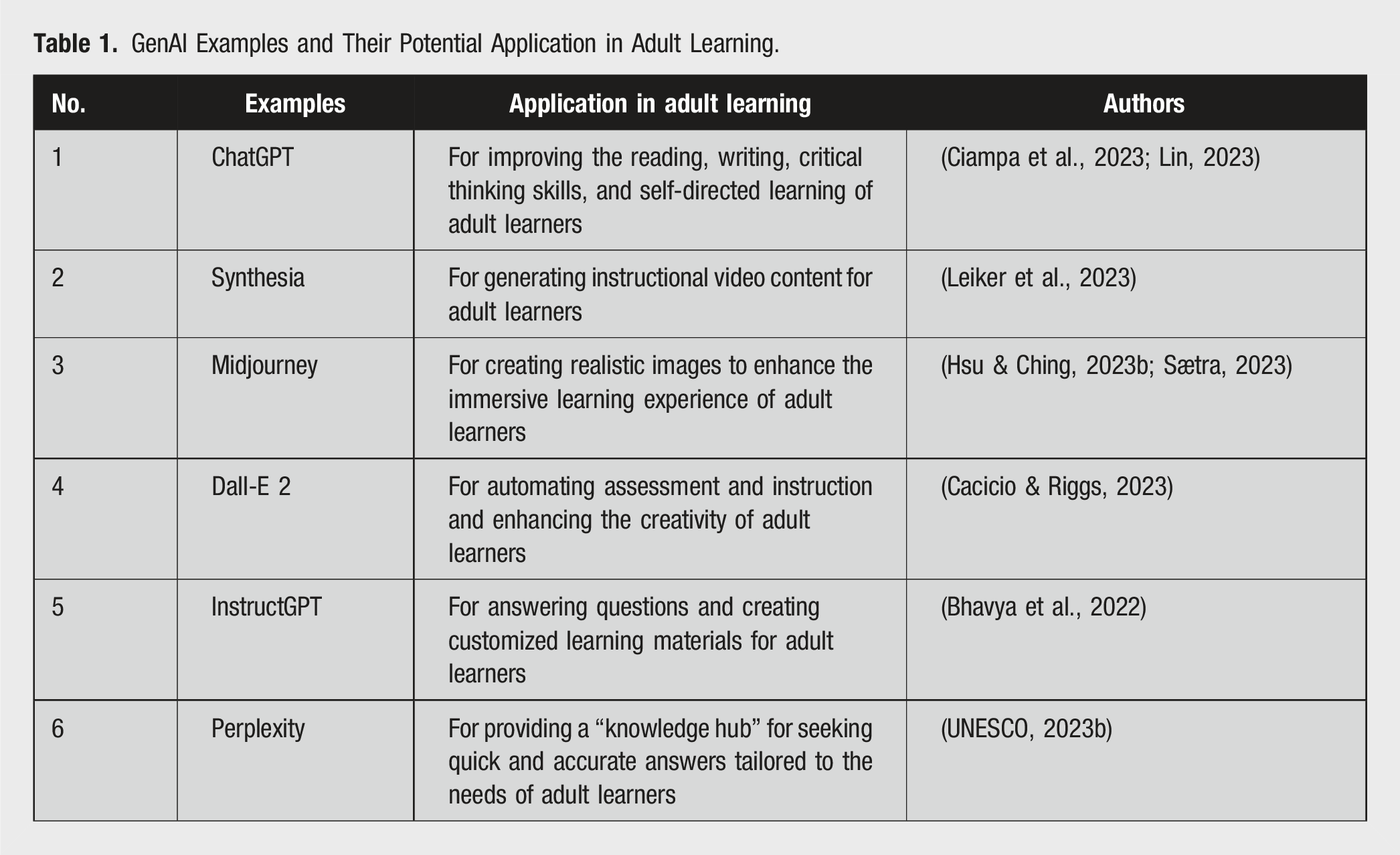
Advanced artificial intelligence (AI) technologies are rapidly disrupting the educational landscape like never before. Particularly, the introduction of ChatGPT by OpenAI in November 2022 has popularized the application of generative artificial intelligence (GenAI) technologies in everyday life including education. Generative AI (GenAI) pertains to “the production of entirely new creative works, such as text, pictures, music, or poetry, in response to simple prompts” (Cacicio & Riggs, 2023, p. 80). Popular examples of GenAI are ChatGPT, Midjourney, DALL-E, Synthesia, Bard, Stable Diffusion, which can all aid educators in task automation (Cacicio & Riggs, 2023; Sætra, 2023). In adult education where there is limited teacher capacity and resources, GenAI tools have the potential to expedite the rapid creation of high-quality, personalized, and engaging materials for the purposes of instruction and assessment in any given learning context (Cacicio & Riggs, 2023).
However, amid the euphoria of the transformative potential of GenAI technologies (e.g., ChatGPT, Claude, Bard, and Bing Chat) in the field of education, there have been doomsday predictions of their use by teachers and students (Rudolph et al., 2023). Educators have received mixed messages and have a great deal of uncertainty about the impact of GenAI tools in terms of teacher practice, teacher education, and student learning (Mishra et al., 2023). Hence, a cautious approach to the adoption of GenAI tools for teaching and learning is recommended due to several factors such as their accuracy, response quality, perceived usefulness, ethical issues, etc. (Adarkwah et al., 2023a; Tlili et al., 2023).
In this light, the “GenAI adult learning ecology” framework (GenAI-ALE) is proposed to guide educators in implementing GenAI as an educational tool in adult learning. It is believed that the proposed framework will promote safe and responsible use of GenAI technologies in adult learning. One of the core aims of educating adults is to enhance their competencies and provide them with foundational skills needed to address real-world challenges. In a survey, 71% of adults with higher education degrees, especially postgraduates, believe AI chatbots will impact their jobs (Hsu & Ching, 2023a). Hence, providing a framework to guide the design, development, and implementation of GenAI tools for adult learners is of immense value.
Potential of Generative AI for Adult Learners
GenAI Examples and Their Potential Application in Adult Learning.
A Comparison of Traditional Adult Learning Methods With GenAI-Infused Learning Approaches.
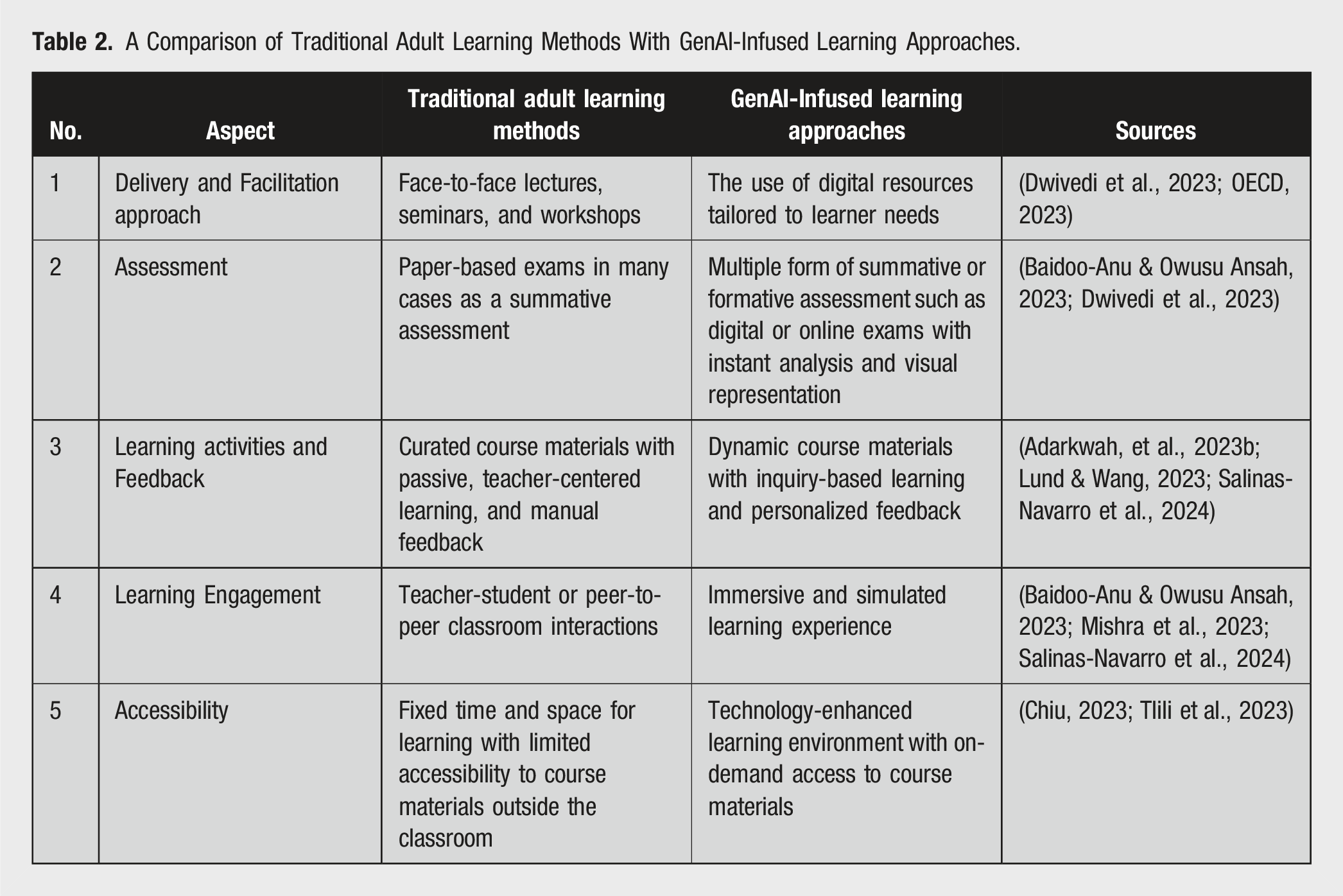
Despite the transformative potential of GenAI for adult learners, adult educators have to be alert of its potential dangers to educational quality to be able to fully harness its benefits. For example, Tlili et al. (2023) calls for a cautious approach to integrating GenAI technologies such as ChatGPT into education because of its ability to encourage plagiarism and cheating, foster laziness among learners, and its tendency to provide misleading or inaccurate information. GenAI tools may also lack quality responses, provide undesirable results and probabilistic outcomes, and have a risk of being biased (Dwivedi et al., 2023).
The GenAI-ALE Framework
The generative artificial intelligence adult learning ecology (GenAI-ALE) framework is designed to guide the effective integration of generative AI technologies into adult learning environments (Figure 1). It consists of two main categories: institutional factors and interpersonal factors, each with specific components that form the backbone of the framework. Poquet and de Laat (2021) argue that the implications of technologies on lifelong learning (LLL) are both personal and institutional. Interpersonal factors refer to considerations related to individual students’ personal characteristics, interactions, and relationships within the learning environment and how they engage with the learning content. Institutional factors pertain to considerations related to the educational institution as a whole involving the readiness, mechanism, and support systems for integrating GenAI into adult learning and education practices.
In the GenAI-ALE framework, both interpersonal and institutional factors have four subfactors. Interpersonal factors involve; GenAI human-centered andragogy, GenAI literacy, GenAI interest, and GenAI virtual learning. Institutional factors involve GenAI curriculum design, GenAI divide, GenAI policy, and GenAI ethics.
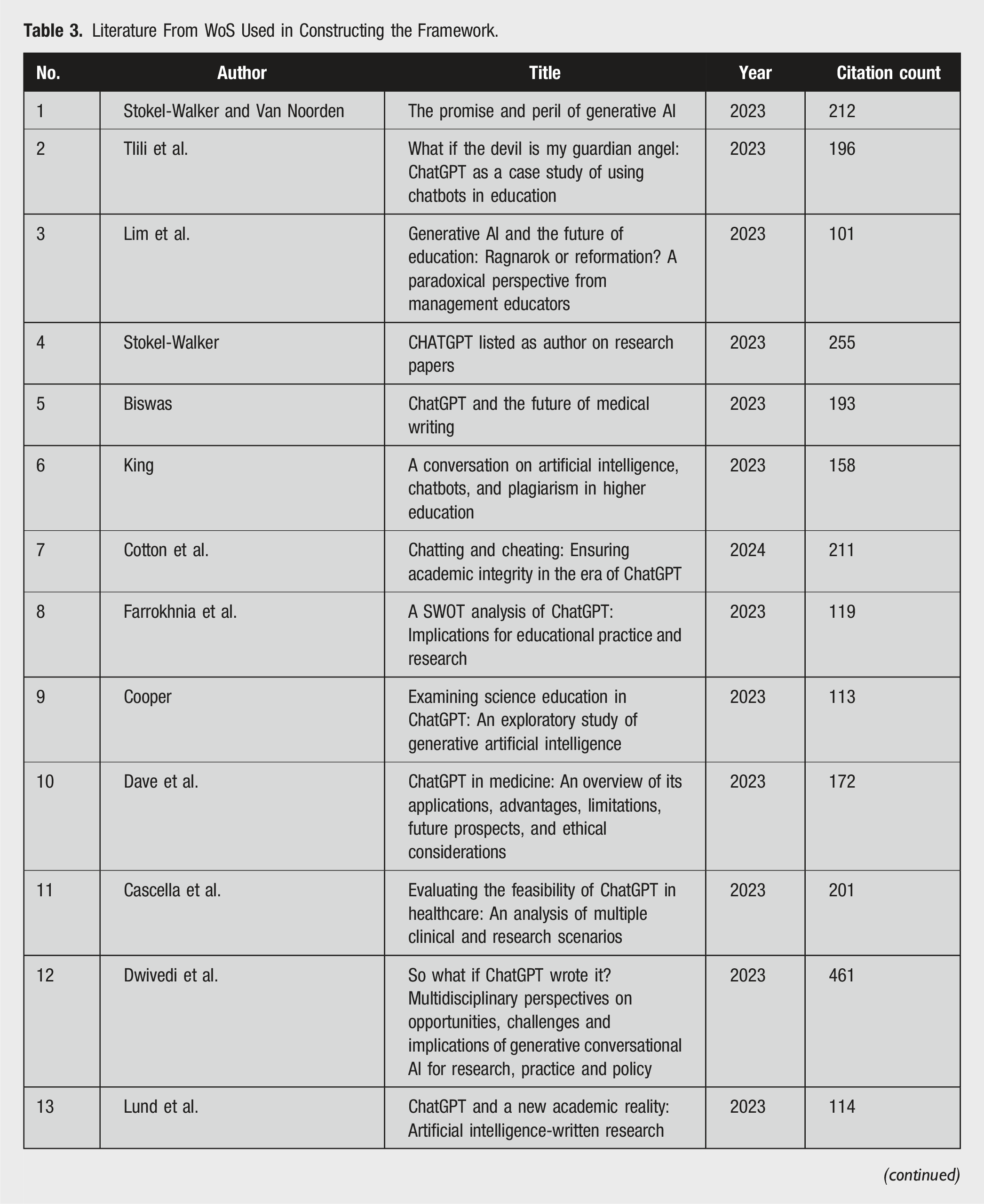
In constructing the framework, a systematic literature search was performed on the Web of Science (WoS) database to identify relevant and recent literature on GenAI use in education. Using the search string “Generative AI” OR “GenAI” OR “ChatGPT” OR “Chatbots,” an initial 1018 were obtained. The search was limited to only research articles, the year range 2023-2024, and to the research areas “education educational research or computer science.” The year range was chosen for the literature search because publications on GenAI peaked during this period. The two research areas were focused on because adult education or learning falls within education educational research and GenAI applications such as ChatGPT also fall within the computer science area. The search did not concentrate on articles specifically related to only adult education due to the scarcity of research articles on GenAI specific to adult education. The 1018 records were downloaded as an Excel file and screened for data extraction. The final records included (n = 14) in the study were color-coded while the remaining 1005 were deleted.
Literature From WoS Used in Constructing the Framework.
UNESCO Report on GenAI Used for Constructing the Framework.

Interpersonal Factors
GenAI Human-Centered Andragogy
This factor describes adopting teaching methods that prioritize the needs and preferences of adult learners. This includes using GenAI to provide personalized support, feedback, and learning pathways tailored to individual learner profiles. Andragogy simply points to the education of adults in contrast to pedagogy which emphasizes more on the education of children and youth education (Forrest & Peterson, 2006). Human-centered andragogy is a form of educating adults that is learner-centered (Forrest & Peterson, 2006). UNESCO’s (2023b) recommendation for incorporating GenAI into education is to adopt a human-centered approach which focuses on the development of human capabilities and agency for effective human-machine collaboration in learning, life, and work. In a human-centered andragogy, more emphasis is laid on the adult learner than the GenAI technology.
GenAI Literacy
This factor touches on enhancing adult learners’ understanding and skills using GenAI tools. GenAI literacy “include the ability to understand how LLMs are trained; to appreciate the differences between AI tools designed for specialized tasks as opposed to an all-purpose [function]; and to understand what types of problems current GenAI tools are good at solving” (Bridges et al., 2024, p. 73). With the knowledge that GenAI will revolutionize education, work, and society, there is a need to build AI-literate citizens (Adarkwah, et al., 2023; Chen et al., 2023a; Chiu, 2024; Tlili et al., 2023). For adult learners to be able to successfully use GenAI tools in work and learning, there is a need to create opportunities for learners to build an understanding of GenAI and contemplate their individual relationships with GenAI (Chen et al., 2023). For example, developing impactful prompts is a required skill to fully harness the potential of GenAI (Robertson et al., 2024).
GenAI Interest
This factor refers to cultivating interest and motivation among adult learners to engage with GenAI technologies. It includes demonstrating the practical benefits of GenAI in real-world contexts and creating engaging learning experiences that resonate with learners’ intrinsic motivations. The way a learner views AI tools is crucial for sparking interest in using the tool (Albayati, 2024). Chiu (2024) adds that in the workplace setting, young adults are more inclined to use GenAI than their elders. Hence, adult educators have the duty to raise awareness among adults and cultivate their interest in utilizing GenAI tools.
GenAI Virtual Learning
This factor involves facilitating virtual learning environments integrating GenAI tools to provide flexible and accessible educational opportunities. It includes utilizing AI-enhanced platforms for virtual classrooms, discussions, and assessments to support distance and part-time learners. GenAI technologies can facilitate virtual learning practices (Leiker et al., 2023) and make education accessible to all learners resulting in a more equitable and inclusive education. Adult learners, often working professionals or part-time students, are actively involved in distance education (Pozdnyakova & Pozdnyakov, 2017). GenAI tools are currently accessible as add-ons in virtual meeting platforms for educational purposes and can be seamlessly incorporated into learning management systems.
Institutional Factors
GenAI Curriculum Design
This factor refers to developing a curriculum that incorporates GenAI tools, such as ChatGPT, to enhance personalized learning experiences and improve digital literacy. The adoption of GenAI technologies for adult learning practices calls for new instructional approaches such as making changes to curriculum and assessment practices (Tlili et al., 2023). GenAI educational tools should be integrated into curricula policies (Fullan et al., 2023). A GenAI curriculum should be underpinned by fundamental pedagogical theory, ensure teaching approaches align with learning strategies, and emphasize how GenAI can help improve digital/AI literacy. Institutions that aim to embrace GenAI for teaching and learning activities should write an explicit curriculum related to GenAI (Healy, 2023).
GenAI Divide
This factor points to addressing the digital divide by ensuring equitable access to GenAI technologies for all adult learners by overcoming barriers related to learners’ socio-economic status or geographic location. The advancement in AI can amplify existing societal inequalities if only a section of individuals or groups can access advanced AI systems (e.g., GenAI technologies) and leverage their capabilities. The digital divide posed by GenAI is expected to widen over time as these services are likely to transition into paid services (Dwivedi et al., 2023). For adult learners, aside from the challenge with access, they might not possess the technical capabilities to use the tool efficiently compared to the younger generation (Chiu, 2024; Hsu & Ching, 2023b). Adult educators will need to build AI talent, strengthen AI competencies and skillsets, and create an AI-enabling environment for learners.
GenAI Policy
This factor involves establishing comprehensive policies and guidelines for the ethical and responsible use of GenAI in education. These policies should cover data privacy, intellectual property, academic integrity, and the regulated/appropriate use of AI-generated content. GenAI policies represent a university’s preference for governing emerging technologies and deeper assumptions relating to assessment in higher education (Luo (Jess), 2024). According to UNESCO (2023b), a policy framework for the use of GenAI in education and research includes promoting inclusion, linguistic, and cultural diversity, promoting human agency, monitoring and validating GenAI systems for education, developing the AI competencies of learners, building the capacity of teachers and researchers to make good use of GenAI, etc. Adult educators will need to evaluate and redesign policies and integrate GenAI in a manner that promotes equitable learning experiences both in traditional classrooms and experiential learning settings.
GenAI Ethics
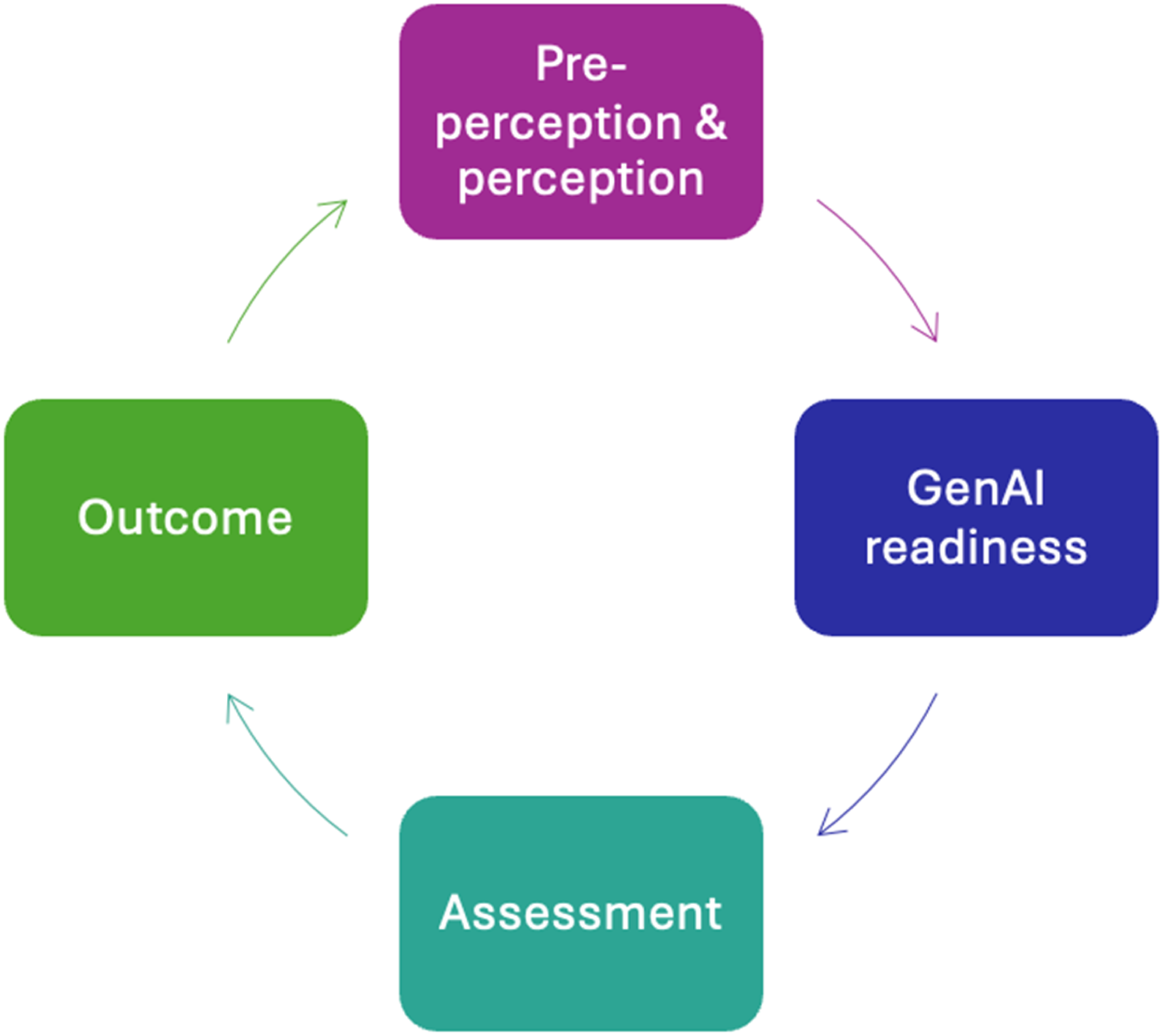
This factor is defined as implementing ethical guidelines to ensure that GenAI technologies are used in ways that promote fairness, accuracy, and transparency. Generative AI should be designed with ethical considerations in mind (Tlili et al., 2023) for it to be a trustworthy tool for researchers, teachers, and learners (UNESCO, 2023b). Human-centric ethics in institutions that increasingly make use of GenAI is important for its appropriate use (Elyoseph et al., 2024). Some of the ethical issues around GenAI revolve around prompts that can generate harmful, biased, and inappropriate content (UNESCO, 2023b), fairness, honesty, and responsibility, fake information, cheating, overreliance (Tlili et al., 2023), etc. When thinking of ethical consideration of implementing GenAI, adult educators should focus on the ethical problems of the end user and the ethical problems in the development of the technology. See As in See Figures 1 and 2. The GenAI Adult Learning Ecology (GenAI-ALE) framework. Systematic steps for the application of the GenAI-ALE framework.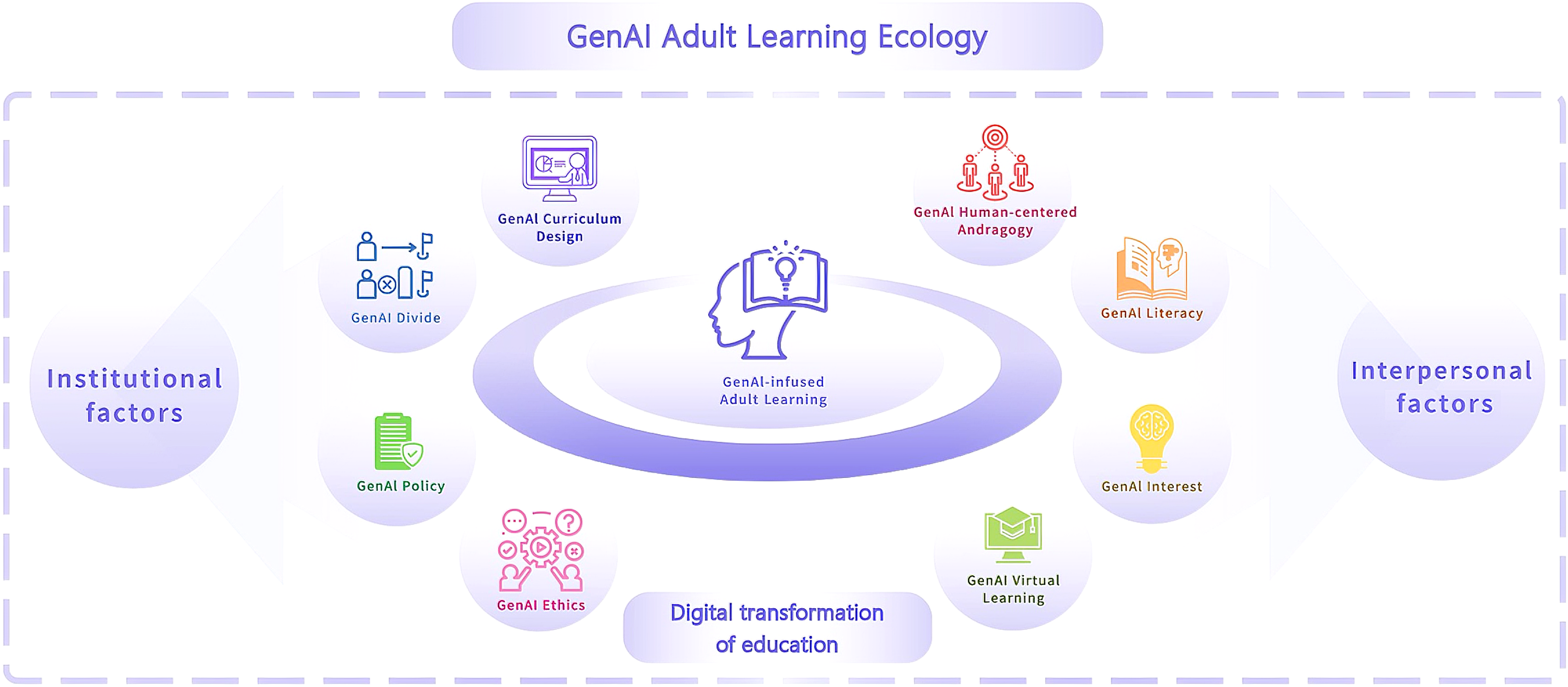
GenAI-ALE and the Andragogical Model
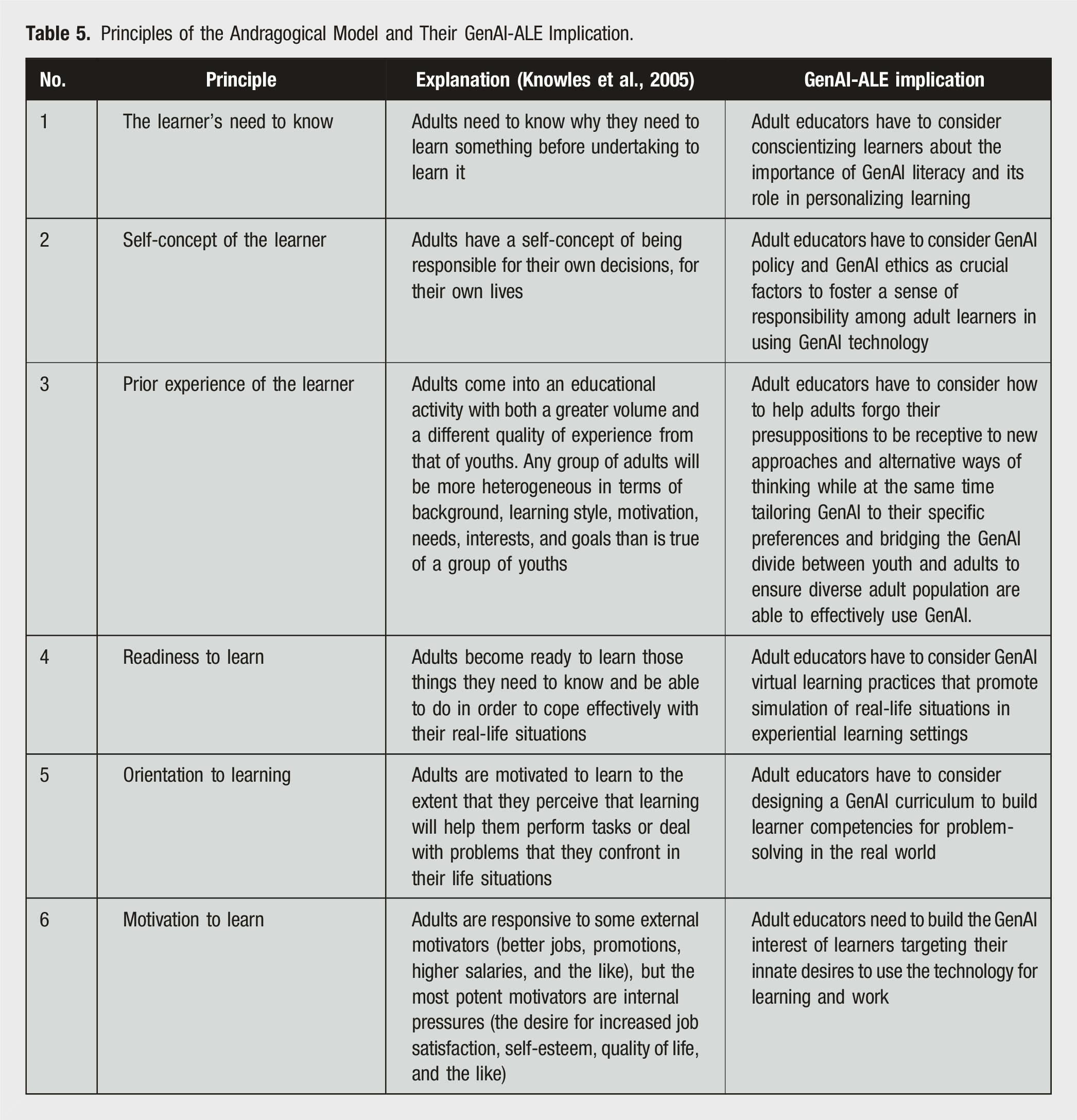
GenAI implementation in adult education and learning practices calls for the need to rethink Malcom Knowles’s andragogical model in light of emerging technologies. Andragogy as defined by Knowles simply refers to a set of principles or assumptions designed to facilitate adult learning and program development (Rossman, 2000). Knowles developed an andragogical model based on his principles of andragogy with the model stating that adult educators should guide and not manage instructional content (McGrath, 2009). That is, the principles of andragogy provide a context for integrating a GenAI in adult learning.
Principles of the Andragogical Model and Their GenAI-ALE Implication.
Application of the GenAI-ALE Framework
While the GenAI-ALE framework provides promising solutions in revolutionizing adult higher education, its effective adoption follows four (4) systematic steps that need frequent iteration and contextualization. The steps are gleaned from the works of Gupta and Yang (2024) and Basgen et al. (2024) on GenAI implementation applicable in higher education. Gupta and Yang (2024) present a GenAI technology adoption model aimed at elucidating the complex process that entrepreneurs and other innovation ecosystem actors such as libraries, go through for its adoption. According to the researchers, there are three stages in the adoption process involving pre-perception & perception (awareness of GenAI technologies), assessment (evaluating the performance of GenAI for educational operations), and outcome (assessing the overall effect of GenAI adoption). As a vital step, GenAI readiness or preparedness emphasized in the work by EDUCASE (Basgen et al., 2024) is placed between the perception & perception and assessment phases in the work by Gupta and Yang (2024).
Conclusion, Implications, and Limitations
The integration of GenAI technologies in adult education represents a significant shift in the educational landscape. This study highlights the need for a structured approach to leverage GenAI effectively in adult learning environments. The conceptual framework of GenAI adult learning ecology (GenAI-ALE) outlines key institutional and interpersonal factors for consideration when integrating GenAI into adult education and learning practices. Malcom Knowles’s andragogical model serves as a foundational theory for adopting GenAI technologies in adult learning. The andragogical model advocates for instructional technologists and educators to tailor GenAI tools to adult learning strategies.
Moreover, although the review of literature highlights that although GenAI has a transformative potential for adult education and learning practices, it poses potential threats. As a practical implication, adult educators must be aware of the dangers posed by GenAI and install mitigation structures to counteract the negative effects and challenges of using the technology. Institutions should develop comprehensive policies to guide the ethical use of GenAI in adult education.
Despite the burgeoning literature on GenAI’s impact on education recently, there are still fewer studies focusing on adult education and learning. As a theoretical implication, the study calls for further investigations into implementing GenAI in adult higher education such as implementing and contextualizing the GenAI-ALE framework in different educational settings. Using the framework as a springboard, future research should investigate the impact of specific GenAI tools on adult learning outcomes, including cognitive skills, critical thinking, and creativity.
A limitation of the study is that it primarily discusses theoretical aspects of applying the GenAI-ALE framework in adult higher education. To compensate for this, a GenAI adoption model on how to systematically implement the GenAI-ALE in adult higher education is presented. Future researchers can strengthen the findings of the current study by including empirical evidence or pilot studies that apply the GenAI-ALE framework in actual adult learning settings.
Footnotes
Declaration of Conflicting Interests
The author(s) declared no potential conflicts of interest with respect to the research, authorship, and/or publication of this article.
Funding
The author(s) received no financial support for the research, authorship, and/or publication of this article.
