



Abstract
This paper explores the potential of virtual education options to fulfill policies designed to broaden participation in computer science (CS) education. Virtual education platforms inherently offer access to a wider range of students than traditional brick-and-mortar schools. Access does not preclude the various socio-economic challenges to engaging these platforms, but this format could be used to mitigate barriers to reaching groups of students that have historically been marginalized in CS courses. In 2019, Georgia passed legislation that requires all middle and high schools to offer CS courses by 2025. The legislation also allowed for virtual courses to satisfy the requirement. While the legislation is intent on broadening participation in CS education, it specifically incorporates a virtual option, making it novel among similar legislative actions across the country. In this context, we examine whether virtual CS courses increase access for marginalized student populations. As such, we explore (1) to what extent do the disparities in CS education found in brick-and-mortar classrooms also appear in virtual settings and (2) to what extent is there an association between modality and rurality on CS course enrollment. Using district enrollment data from 2012 to 2019 for CS courses in Georgia, we calculated the percentage of students in marginalized groups that enrolled in physical courses across the state compared to the percentage enrolled in statewide virtual courses to illuminate existing disparities in enrollment. We conducted this analysis at the district level to highlight variability in representative disparity and the underlying structural differences that might contribute to these disparities. Our analysis provides insight that incorporates the different levels of representative disparity districts have overall. As an early adopter of virtual CS education, the Georgia model provides valuable information for states interested in policies to broaden participation in CS courses.
Keywords
Introduction
Computer science (CS) was once a highly selective and guarded field of study. The field had its own jargon, instructional pathways that began at post-secondary institutions, and a stereotypical set of characteristics for members. Although the first programmers were majority women (Light, 1999), since the early ‘80s the field has become increasingly male-dominant (National Science Foundation, 2019). As the global society has become more digital with fundamental activities like communication, entertainment, and education relying heavily on computing devices, the field of computing needs significant broadening. While computing practitioners and academics are eager to broaden participation in computing classes and jobs (Guzdial, 2016), the structures that initially kept the field restrictive persist (Google/Gallup, 2016). This study examines the extent to which the attempt of one state to remove systemic barriers to CS at the K-12 level might be associated with changes in CS enrollment overall, specifically for students from ethnically and geographically marginalized groups and those with other ascriptive characteristics underrepresented within the CS field.
Representation in CS, be it in industry, college, or high school, has historically been limited to largely urban, wealthy, White or Asian men. This field has proven challenging for other groups to enter due to systemic barriers such as available courses in schools, access to computing devices, and access to a CS teacher, which limit access to CS educational experiences (Google/Gallup, 2015a, Google/Gallup, 2015b). As a result, school systems, universities, and state education agencies are implementing policies that could bridge the chasms between students from all demographic groups and computing knowledge and experiences essential to equitable participation in society. These policies seek to overcome the barriers to obtaining computing skills and jobs. Over the past 5 years, many states have enacted legislation that is aimed at stimulating student participation in CS education (Code.org, CSTA, ECEP, 2020). Common policies include the following: • Adopting CS education standards; • Allowing CS courses to count for graduation credit; • Allowing CS courses to count for admission to college; • Establishing teaching credential pathways for CS teachers; • Funding teacher professional learning; • Hiring a state education CS specialist; • Requiring all elementary, middle, or high schools to offer CS courses • Making CS a graduation requirement.
Georgia has, either through state education agency policy or state legislation, enacted all of these policies except the last—making CS a graduation requirement. In addition to the mandate that each middle and high school offers a CS course, Georgia law provides state-wide online courses as an option to meet the requirements. In this report, we are exploring the potential impact of one facet of a policy intended to address several structural contributors to the disparities in CS course enrollment.
A further challenge in Georgia is the recruitment and retention of CS teachers in the 123 school systems identified as rural systems. The disparities between what some have called the “two Georgias,” the rural and urban areas of the state, is a challenge that the Georgia Department of Education and the Georgia legislature have worked to address. Examples include a law allowing non-communication utilities to offer broadband services in rural communities and targeted professional learning workshops in rural communities. The online provision in the CS law is intended to be another solution to these challenges. The online option is designed to help mitigate the challenge in recruiting and retaining a CS teacher and provide access to computing courses in rural school systems and systems serving low socio-economic communities. While the ultimate impact of policies takes time to realize, educational research can examine the potential of modifications to common policies that are intended to address specific barriers to CS education.
As such, we examined the extent to which offering CS courses virtually, such as the statewide, state-sponsored Georgia Virtual School, increased access to CS courses. Specifically, we answered the following research questions. (1) Are the disparities found in face-to-face CS instruction also found in online CS instruction? and (2) To what extent is there an association between modality and rurality on CS course enrollment? As a state at the forefront of K-12 online CS course-taking, findings can provide insight into the potential for using online course-taking to broaden participation in CS education. We also document how much of an impact the modality has on CS enrollment, which policymakers, researchers, and educators can use to inform the development and improvement of virtual CS courses or policies intent on broadening participation in CS.
Background
Georgia CS policy background
Georgia is a large southeastern state with a student population of about 1.9 million. Approximately 70% of the students are in the five urban centers of the state while the remaining 30% are in rural school systems. Georgia’s student body is 39% White, 37% Black, 16% Hispanic, 4% Asian, and 4% other ethnicities (Georgia Department of Education, 2020). We analyzed data for high school and middle school CS courses, which is the focus of the legislation. Georgia has 481 high schools and 484 middle schools in its 212 school systems.
Computer science related polices and student enrollment.
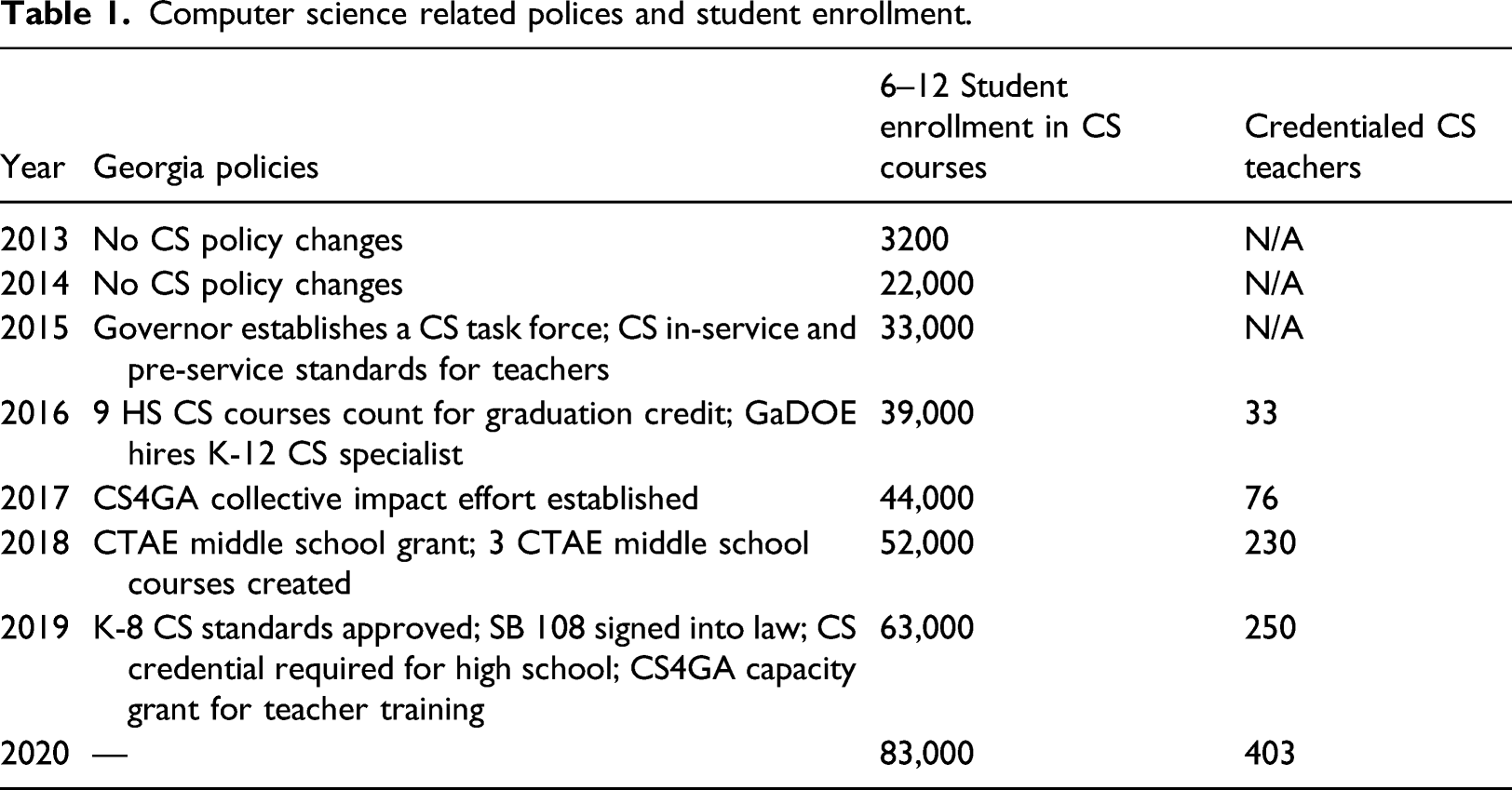
In 2015, the governor of Georgia called for a task force to broaden participation in CS education in the state, resulting in computer science counting for graduation credit and the state education agency creating a specialist position dedicated to computer science. Over the next few years, the state increased the number of high school CS options to 19 courses, including 2 AP and 2 IB courses, and formalized credentialing pathways for CS teachers. In February 2019, the State Board of Education approved the inaugural K-8 CS standards which eventually turned into five middle and six elementary school courses. By this time Georgia Virtual School offered 8 of the 19 CS-related high school courses. The state legislature passed a bill in March of 2019 requiring all middle and high schools to offer CS courses by the years 2023 and 2025, respectively. The CS law is a structural policy designed to broaden participation in Georgia K-12 CS courses by requiring a course be offered in both middle and high schools across the state and by including language that allows offering CS via an online institution to satisfy this requirement.
Online courses have the potential to be offered anywhere internet service is available. In addition to Georgia Virtual School, there are two fully online Local Education Agencies operating in Georgia as well as supplemental virtual schools offered by several school systems. Online CS course offerings preclude physical distance as a barrier to enrollment. It remains to be seen whether factors such as the availability and speed of internet service, district revenue, and other characteristics commonly associated with structural inequities impact student enrollment in online CS courses and thus mitigate virtual schooling’s potential to broaden participation in computing courses. As Georgia marches towards the 2023 and 2025 mandate, questions arise as to whether these policy interventions will be successful in broadening participation in computing courses.
Disparities in CS education
Participation in CS education has been growing steadily for some time, but in the past 7 years, the drive to add CS education as a ubiquitous aspect of K-12 education has increased dramatically (Guzdial, 2016). This drive is partially in response to chronic disparities in the STEM and CS career fields. Ethnic minorities and women are more likely to be diverted out of STEM degrees, which include CS, than White and Asian males (Carnevale et al., 2011). In 2015, women accounted for only 26% of the computer and mathematical sciences workforce in the U.S. while accounting for half of the overall workforce. Hispanics, Blacks, and American Indians made up 27% of the population but account for only 11% of the science and engineering workforce and (National Science Foundation, 2019).
In education, the disparities are equally pronounced. In 2015, women received 18% of the CS degrees issued nationally (National Science Foundation, 2019). In K-12 education, ethnic minorities, English language learners, students from rural communities, and students with disabilities are all underrepresented in CS classes (Code.org, CSTA, ECEP, 2020). While there have been curricular initiatives that have made some headway in broadening participation, it is important to remember that curriculum alone is insufficient (Margolis, 2014). Initial and ongoing teacher PD, authentic project-based instruction, and initiatives that address student identity in CS are initiatives that, when taken together can have a lasting impact. These disparities are decreasing, but there remains a great deal of ground to be covered before equitable access can be associated with CS education and occupations.
Georgia is also seeing an increase in CS course enrollment, accompanied by a gradual correction of underrepresentation in K-12 CS courses. In Georgia, high school student enrollment in CS-related courses grew from ∼3500 students in 2013 enrolled statewide to ∼54,000 in 2019. This represents an increase from 0.7% of high school students participating in CS courses to almost 11%. Part of this is due to the College Board’s release of AP Computer Science Principles in 2017. In Georgia, 2985 students took the AP CS Principles exam in 2019 compared to 1973 that took AP CS A, the long-standing AP CS option.
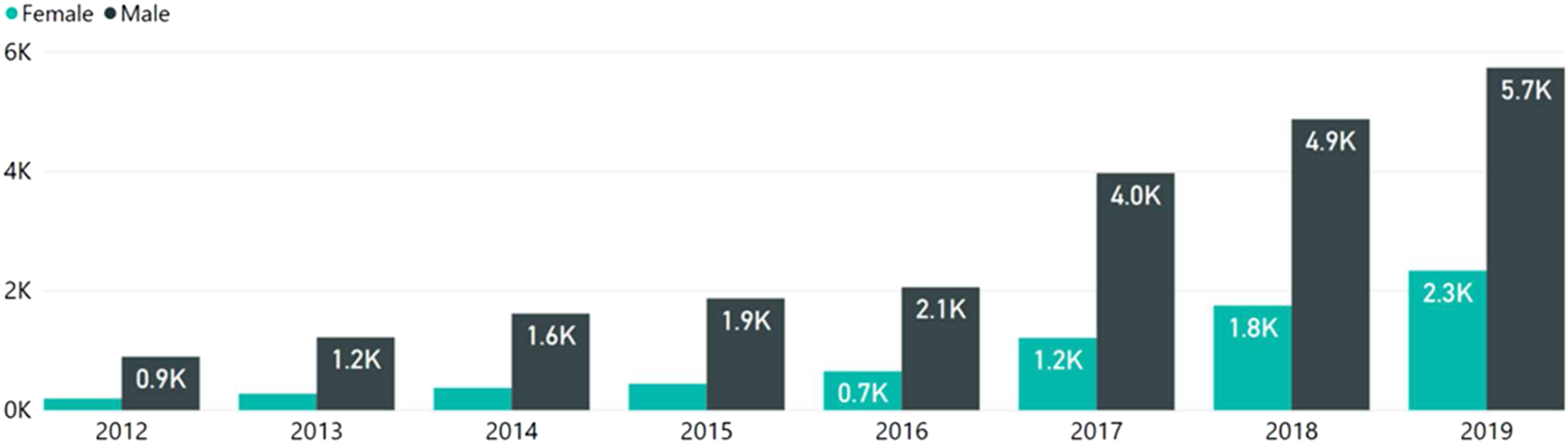
As the offering of CS courses has increased, so has the demographic diversity in those classes. The ratio of boys to girls in high school CS courses in Georgia in 2013 was a little over 3:1. In 2019, the ratio was 2.2:1. In AP CS Courses, the ratios were 4.4:1 and 2.5:1, boys to girls, in 2013 and 2019, respectively. White students in Georgia, however, are still more likely to persist in CS pathways than Black students. In 2018 and 2019, Black students outnumbered White students in enrollment in introductory courses (e.g., AP CS Principles) but dropped off significantly in advanced courses (e.g., AP CS A). Access to CS courses and the early development of CS identity are the subject of current efforts to mitigate these disparities Figure 1 and 2. Gender breakdown in all computer science courses (Georgia Department of Education Data). Gender breakdown in AP computer science courses (Georgia Department of Education Data).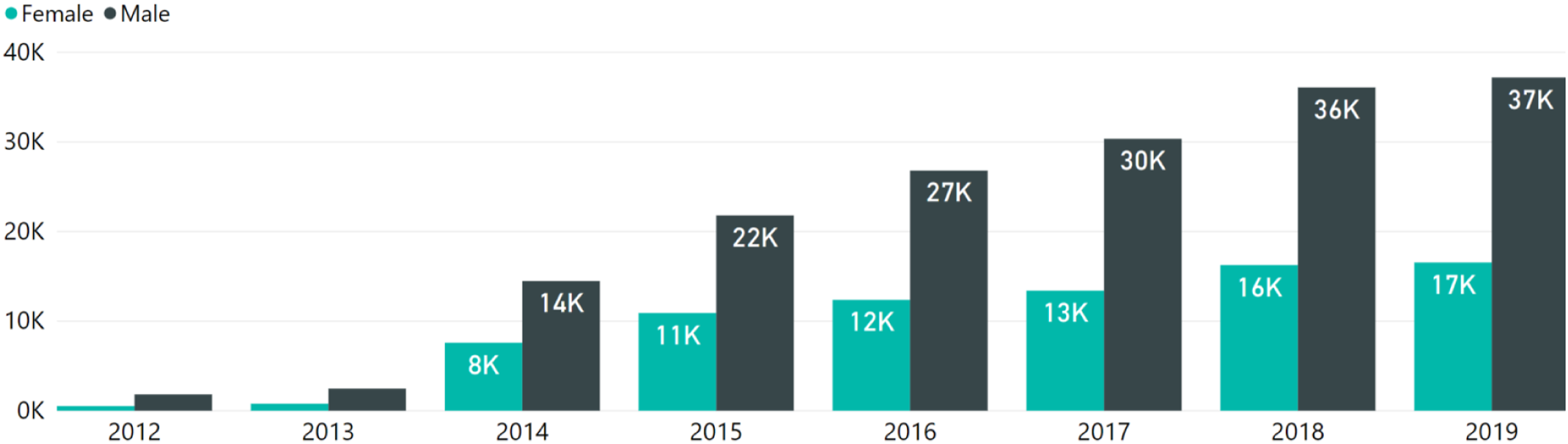
Overall representation in Georgia CS courses.
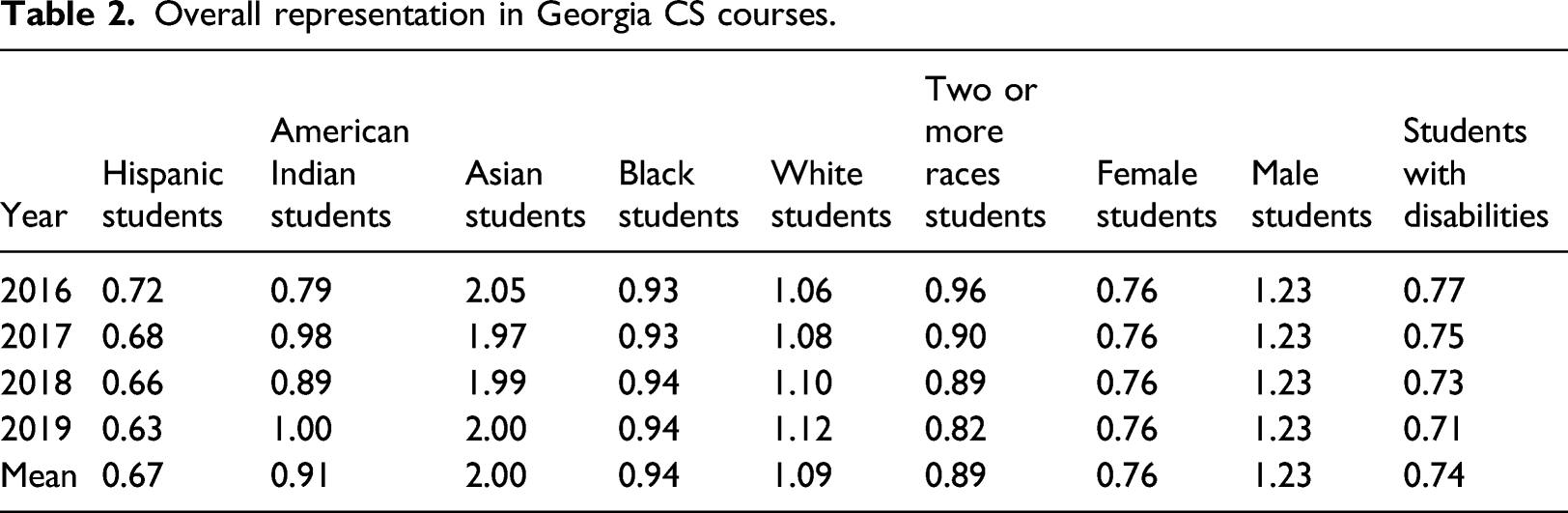
Black and Latinx (referred to as Hispanic in the Georgia data system) students, girls, and students with disabilities are consistently underrepresented in CS classes. Asian, White, and male students are consistently overrepresented in these courses, and the gaps have remained consistent over the past few years.
The reasons for representation disparities are varied. There are issues of access that relate to community and local education agency structure. Formative experience in computing courses has shown to be a statistically significant factor in predicting learning outcomes for middle school students in CS (Grover, 2016), but Black and Hispanic students are less likely to have a CS course at the school they attend or have a computing device available at home (Google & Gallup, 2016). Black students in Georgia are 1.5 times less likely to attend a school that offers AP Computer Science than White and Asian students (Code.org, CSTA, ECEP, 2020). Even within the same school district, the schools with higher black or Latinx populations have a lower likelihood of offering CS, especially advanced CS courses. Other reasons point to persistent beliefs about who would be successful in CS courses. A direct predictor of girls' interest in computing is the perceived support from peers and teachers (Denner, 2015), but girls are less likely to be told that they would be good at CS (Google & Gallup, 2016). Online CS course offerings will not address many of these challenges but may, when combined with additional interventions and policies, serve as an important component to a comprehensive plan to broaden participation in CS education.
Virtual learning
One benefit of virtual learning is the ability to provide instruction to students across geographic areas. Many courses are also delivered in such a way that a comparable educational experience can be provided to large numbers of students at the same time. Virtual learning is shown to be at least as effective as face-to-face learning regarding student achievement (Nguyen, 2015). However, unlike traditional, face-to-face instruction, virtual learning requires access to a computing device and high-speed internet, as well as teacher and student readiness and interest to engage in an online format.
Online learning has many different flavors and schemas of implementation (Malik & Agarwal, 2012). While some schools are run completely in the virtual space, others utilize a hybrid model, pulling content from remote servers while relying on a local facilitator. Some students take one or two classes online via supplemental models like Georgia Virtual Schools while others use virtual lessons and activities as practice or tutorial. These options are as present in CS education as they are in any other content discipline and perhaps, due to the technical nature of the discipline, more so. The various learning models are accessible to all age ranges. Preschool-aged children are commonly engaged with online tools, such as Scratch, to learn CS concepts (Wohl, 2015). Our current focus is whether an online option for CS courses will attract students, particularly those who have traditionally self-selected out of CS courses or have had little to no access to an in-person CS teacher.
It is important to keep in mind that this is a period of transition and most students have a legacy of organized, face-to-face instruction. Even though students will likely see an increase in the number of online learning experiences they encounter, there still appears to be a strong connection to in-person presence. Additionally, the global COVID pandemic has forced millions of more students into virtual learning than had previously self-selected into such experiences, instigating the transition to digital learning to occur at a more rapid pace. Future research will incorporate this historical context when exploring the evolution of virtual learning. When provided with both a virtual instructor and an in-person facilitator, students feel better supported and respond more favorably to the in-person facilitator even if the majority of instruction comes from the online instructor (Borup et al., 2019). There are two models in Georgia that function in a similar fashion. Microsoft TEALS pairs an industry professional with a classroom teacher to serve as the subject matter expert while the teacher develops content knowledge. Although this has historically been an in-person pairing, the TEALS team is planning to use a virtual option to support districts in rural communities’ access to industry professionals. Georgia Virtual also operates the “Partner-Up” model that has a similar construction, offering a virtual teacher to support in-class facilitation.
It is important to note that barriers to effective online instruction may be found in a social context like student reading levels as well as poor platform design such as text translations for English language learning students (Heinrich et al., 2019). Additionally, the recent COVID pandemic brought to light a wide number of disparities regarding broadband access, at-home computing devices, and familiarity with and readiness to participate in online learning. The disparities in access to broadband and computing devices existed before the pandemic (Google & Gallup, 2016) but have been exacerbated because of the imperative to shift to virtual learning. Lack of readiness to participate in online instruction being a barrier to success is also not novel (Engin, 2017). Students that have not been properly prepared for self-regulated learning find less success in online environments (Darling-Aduana et al., 2019) but the adaptations in the learning environment caused by the pandemic mean these challenges are affecting more students than ever before. In many school systems, virtual learning went from elective to compulsory, and future research should reflect on how that impacts participation in online CS courses.
Methodology
This study used data provided by the Georgia Department of Education from the past 5 years, corresponding to the implementation of CS policies in Georgia. These data include whether the students’ enrollment took place online or in-person. The online distinction is used whether the student attends class at a completely online school or takes an online class while attending a brick-and-mortar or home school. Thus, online enrollment includes (but is not limited to) courses taken via Georgia Virtual School. By segmenting the data based on modality we can compare enrollment in online CS courses to enrollment in non-CS courses and determine if including this option in the legislation inherently addresses the disparity gaps commonly found in CS education. Our research questions were as follows: (1) Are the disparities found in face-to-face computer science instruction also found in online CS instruction? (2) To what extent is there an association between modality and rurality on computer science course enrollment?
Additionally, we studied the impact that modality and system revenue had on CS enrollment. While this is ancillary to the purpose of this article, these characteristics are added as control variables to account for size and financial resources of a school system.
Data were analyzed for the school years 2015–2016 (AY, 2016) through 2018–2019 (AY, 2019), the oldest and most current data available at the time of the request. The data set included face-to-face and online course enrollment for all courses in the high school IT pathways (16 unique courses including AP courses as well as CS-related courses like web development), the middle school CS courses (3 unique courses), and the IB CS courses (2 courses). The data points for each course included the school system name, school name, course name, course type (online or face-to-face), total enrollment, and enrollment broken down by race and ethnicity, gender, and disability status. Overall enrollment data was also pulled for each district to provide contextual comparisons.
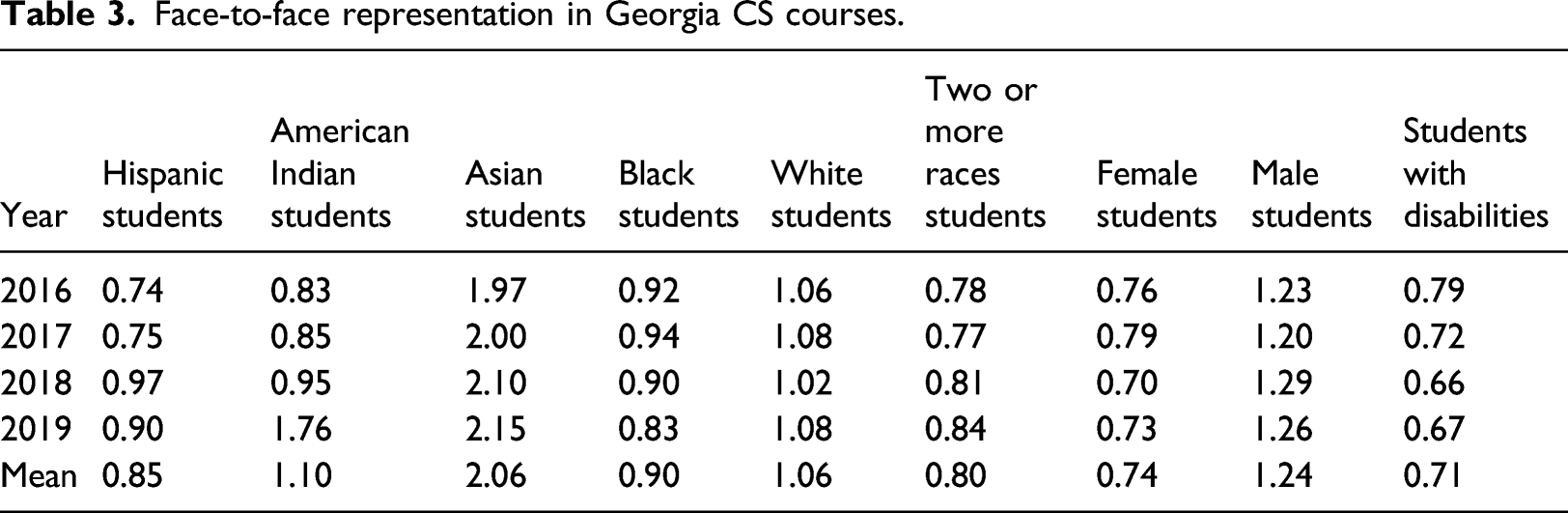
Face-to-face representation in Georgia CS courses.
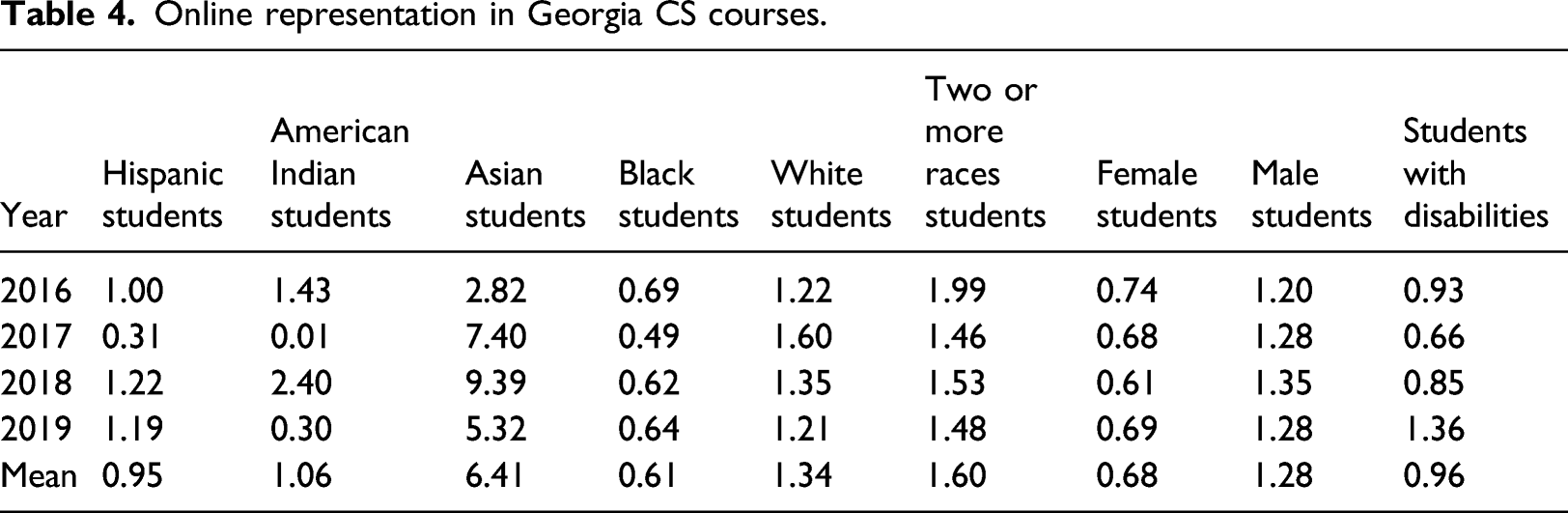
Online representation in Georgia CS courses.
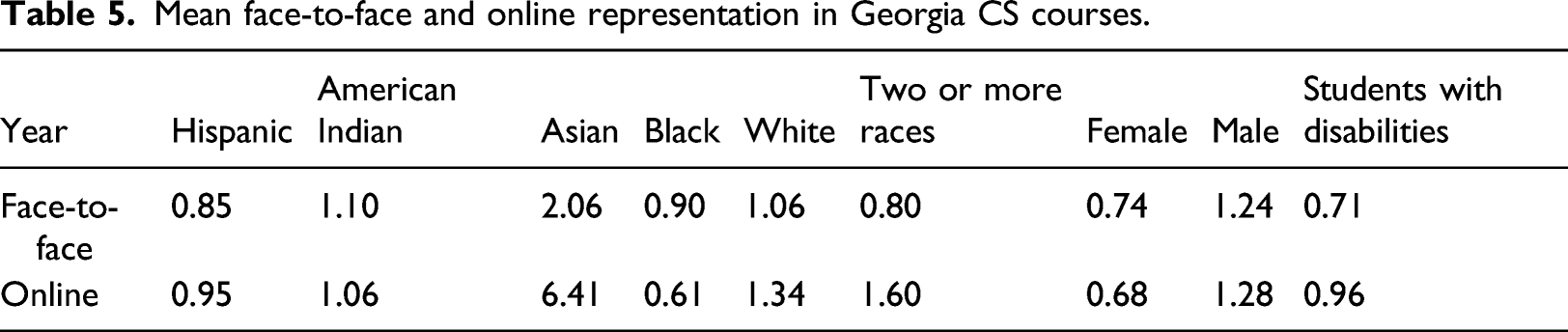
Mean face-to-face and online representation in Georgia CS courses.
Impact of modality, rurality, and time on CS course enrollment.

Impact of system revenue, having a CS teacher, and rurality on online CS enrollment.

As a note, the data for online CS representation is related to online total representation and the data for face-to-face CS representation is related to face-to-face totals; thus, the overall representation numbers seen earlier (Table 2) included significantly fewer “0” entries than either of the two data sets seen here. Consequently, the whole is not precisely equal to the sum of its parts.
Following this comparison, a regression was run on the whole data set to determine if modality, rurality, or academic year impacted enrollment in CS courses. The regression was used to explore the extent to which identified independent variable affects the dependent variable in question, that is, CS enrollment.
Finally, we looked specifically at the 2018–2019 school year. This was the most recent data available at the time of analysis. This data was appended with system revenue and the number of credentialed CS teachers in the system as control variables. A final regression was run on this data to determine to what extent the wealth of a system, having a CS teacher, and whether a system was classified as rural or urban impacted enrollment in online CS courses.
Results
The first research question was a direct assessment of the ability of online learning options to increase diversity in CS education. Are the disparities found in face-to-face CS instruction also found in online CS instruction? The evidence for this question was a comparison between the mean representation measures for face-to-face and online CS enrollment. This comparison shows one change from underrepresentation in face-to-face enrollment to overrepresentation in online enrollment, students that identify as two or more races. Hispanics, American Indians, and students with disabilities saw their representation in CS courses get closer to their representation in the population, but disparities in representation of Black versus White and Asian students and female versus male students all became larger in online CS courses. Again, these representations are compared to the population in each district so as not to conflate the different compositions of the various communities across the state.
The second research question explored the impact that modality and rurality have on CS course enrollment.
For the regression model, rural was coded as “1” and urban was coded as “0.” Face-to-face was coded as “1” and online was coded as “0.” Academic years 2016, 2017, 2018, and 2019 were coded as “1,” “2,” “3,” and “4,” respectively. The p values for modality and rurality are both less than 0.05 with large beta values, so we conclude that both modality and rurality had a strong influence on overall CS enrollment. Students in Georgia are far more likely to enroll in a CS class if they are from one of the urban centers of the state than if they are from one of the rural school systems. Students are also more likely to attend a CS course if there is a face-to-face option than if their only option is online. These disparities are consistent over the past few years as the variable academic year (e.g., AY, 2016 vs. AY, 2019) has a small beta value for such a large population and p value greater than 0.05, and thus, we conclude that year did not impact CS enrollment significantly.
As an extension to the previous question, an additional regression was run on data from the 2019 academic year.
For this data set, we added a variable for the yearly revenue of a system and another variable for the number of credentialed CS teachers each system had. We used the natural log of the system revenue to normalize the distribution across the state. This final regression analyzed online CS enrollment as the dependent variable with the log of system revenue, whether the system had a CS teacher, and whether the system in question was identified as rural as the predictor variables. The regression used stepwise variable entry to treat system revenue and CS teachers as control variables to isolate the effect of rurality. For this data set, revenue and number of CS teachers were coded as continuous values, and rural was coded as “1,” urban as “0.” The model revealed that a systems’ designation as rural did not significantly impact whether a student enrolled in an online CS course, nor did the revenue of the system. Having a credentialed CS Teacher, however, had a positive impact on whether a student took an online CS course. The CS Teacher is a face-to-face intervention that had a positive effect on online options.
Discussion
Creating policies to broaden participation in computer science is an effort that is growing nationally (Code.org, CSTA, ECEP, 2020). The variety of policies that are recommended are being implemented in different order and combination, usually to increase overall enrollment in CS courses. A common goal is also to increase the diversity in CS by encouraging populations who have previously been marginalized in CS education. Some policies seek to increase broad enrollment while also including adaptations to address specific populations of students. Georgia’s 2019 legislation is such a policy, incorporating language that is intent on affecting rural and low socio-economic communities, communities with schools that traditionally have had difficulty recruiting a CS teacher. While there are efforts intent on expanding what counts as CS knowledge, that is beyond the scope of this article.
Historically there have been palpable disparities in CS education regarding who is enrolling in the courses (Google & Gallup, 2016). Our findings confirmed that these disparities are as present in the Georgia K-12 school system as they are throughout the country. Table 2 also shows that these disparities have been slow to change over the last 4 years despite statewide efforts to broaden participation in CS education. Students identified as Asian, White, and male are overrepresented in CS classes, while students identified as Hispanic, Black, two or more races, female, and with disabilities are underrepresented.
Based on the data analyzed here, the disparities in CS education in Georgia are not significantly addressed through online education options. Some disparities that are of common concern, such as that between boys and girls in CS courses and those between White and Black students, see increases in online CS courses. Additionally, although online options are considered an means to address for the challenges to offering CS in rural school systems, the existence of virtual options in Georgia has not positively impacted diversity in CS enrollment. Rural systems are far less likely to enroll students in a CS course than urban systems, but rurality does not have a significant impact on online CS course enrollment once the physical presence of a CS teacher is taken into account. The associated cost of taking a course via Georgia Virtual Schools also does not seem to be the deterrent as system revenue is also not significantly correlated with online CS course enrollment. There may be other extenuating circumstances, such as the structural and social factors not related to online access. Principals and superintendents have cited the lack of a connection between CS courses and high stakes testing and the limited amount of time in the school day as reasons why they do not offer CS courses (Google & Gallup, 2015). After the implementation of the new Georgia legislation that requires CS to be offered, follow-up research could survey rural counties to investigate which of the multitude of factors impacts students’ choices to enroll in CS courses.
Interestingly, having a credentialed CS teacher in the building increases the likelihood that a student will take an online CS course. Students in Georgia are also more likely to take a CS course, online or face-to-face if there is a face-to-face option in their district. These outcomes may have something to do with the Georgia Virtual Partner-up model where a new CS teacher will enroll their students in a Georgia Virtual course, having the virtual teacher serve as the content expert while the classroom teacher gains comfort with the material. This is like the model explored by Borup and colleagues (2019) as well as the model offered by the TEALS program which has shown success in supporting the development of new CS teachers. Another rationale may be that having a CS teacher on the premises opens the options and possibilities of CS to students that otherwise would not have had any awareness of what was available. A final reason could be that the fully virtual school systems in Georgia also offer face-to-face options. Students may take advantage of these options to engage in a familiar context. Whatever the reasons, the impact of a high-quality teacher can never be understated. The legislation in Georgia also came with appropriated funds for building CS teaching capacity with this understanding as essential.
We found that offering online learning options is not enough to broaden participation in CS on its own. Interventions to remove other structural barriers, such as access to high-speed internet, may also play a role in providing rural districts with access to online CS courses. During the same legislative session that Georgia lawmakers passed the CS bill, they also passed a bill enabling utility companies besides telecommunication companies, such as electric companies, to provide broadband to those parts of the state without strong telecommunications infrastructure. Perhaps this legislation will bolster the CS bill by providing additional access to remote regions. Adding middle school to the high school requirement and encouraging elementary schools to offer CS-related instruction may culminate in more students taking CS courses. The practice of helping young students build identities related to CS begins at formative stages of development and can persist throughout their academic careers. Future research is needed to determine whether more recent policies enacted in Georgia will result in greater diversity and wider enrollment numbers. Students’ futures, and the future of the United States, are best served when all students have access to courses essential for success in the modern economy and equal participation in society.
Footnotes
Declaration of conflicting interests
The author(s) declared no potential conflicts of interest with respect to the research, authorship, and/or publication of this article.
Funding
The author(s) received no financial support for the research, authorship, and/or publication of this article.
