



Abstract
This study makes use of recent evidence from developing countries by which to evaluate the effectiveness of private higher education institutions (HEIs), comparing them with public HEIs. In this way, it contributes to the literature by providing the first evaluation of productivity and its components in Vietnamese HEIs. The study uses the Färe-Primont index together with a meta-frontier approach. The research results indicate that the higher education system in Vietnam is powerfully driven by the large-scale public sector coupled with the long-term plans of Vietnamese state HEIs. Public HEIs have also been a major contributor to domestic research, and although there has been an increase in total factor productivity (TFP) throughout the research period, the private sector’s TFP was 30% higher than that of the public sector. Moreover, the higher technology gap rate (TGR) of private HEIs shows the potential for greater development in the future.
Introduction
The higher education system (HES) in Vietnam has many limitations and the lack of educational efficiency has been noted for decades (Hayden, 2017). According to Dao (2015), the Vietnamese HES, influenced by the Soviet regime from 1975 to 1991, lacks an effective governance structure, adequate mechanisms to ensure teaching quality, and a complete funding system. The lack of operational finances is also the reason why HEIs multiply poor-quality courses to increase revenue (Tran, 2015). The Ministry of Education and Training (MOET, 2009) has confirmed that regulations on teaching standards (e.g., student–teacher ratios, academic space per lecture) are frequently violated, especially by newly established universities. Also, Tran (2015) found that the programs taught in universities are out of sync with the labor market, and unemployment rates in Vietnam are relatively high as a result. Meanwhile, programs using foreign textbooks and other means for incorporating foreign curricula have failed to achieve the expected results (Chen, 2015; Nguyen and Tran, 2018). In Vietnam, furthermore, the problem of inequality in access to higher education is glaringly obvious (e.g., between rural and urban areas) (Ministry of Planning and Investment [MPI], 2011; Sánchez and Singh, 2018).
To improve the effectiveness of HEIs, a solution agreed by both scientists and administrators is to privatize the HES in Vietnam. Becker (1964) argued that higher education is both a process of accumulating knowledge and a form of investment. Accordingly, HEIs are places tasked with helping improve and enhance human capital (e.g. via teamwork and conflict resolution skills) that is expected to yield higher returns, especially in a country in transition (Tran et al., 2019). Tang (2012, p. 213) states that “private higher education has evolved more rapidly than the public system and it may be considered as supplementing and complementing the public higher education system.” The quality of the HES can improve through fostering competition between private and public sectors (Lubienski and Lubienski, 2006; Pucciarelli and Kaplan, 2016). In the context of corruption is widespread (Vu et al., 2018; Vu and Ly, 2021), the development of the private sector in (higher) education is an effective solution for the pressing debt-budget issue in Vietnam. Furthermore, the existence of the private sector in education creates more choices offering cheaper tuition as well as higher standards linked to market needs through the competition between private and public sectors. Islam and Salma (2016) suggest that semi-public and private universities play a major role in Bangladesh’s HES (e.g., improving its quality through adapting to market needs; applying modern technology and more effective teaching methods; aiming at a salary-reward mechanism for deserving lecturers).
In Vietnam, privatization of the education system is known as “socializing education”. Accordingly, “socializing education” in Vietnam mandates the utilization of society’s resources (e.g., from citizens and social organizations) to build a foundation for education, specifically by encouraging the participation of the private sector. This process was triggered by the economic reform of 1986. The vulnerability of the Southern education system, the state-controlled HES, coupled with enormous debt-budgetary pressures, has forced the central government to seek resources through “socializing education” (Jonathan, 2011). In other words, socializing education accepts and empowers the private sector to engage in educational activities in Vietnam, particularly through Resolution 90-CP/1997 and the Education Law of 1998.
However, this strategy has many shortcomings since the position and role of private institutions are ambiguous. In particular, Article 11 (Education Law, 1998) states that: “All organizations, families and citizens have the responsibility to care for the educational work, build the movement of learning and a sound educational environment and coordinate with the school in achieving the goals of education. The state plays a leading role in the development of education.” The Government has detailed its aspirations for higher education in the Higher Education Reform Agenda (HERA) (NQ, CP, 2005). By 2020, the goal is for 45% of the appropriate age group to be enrolled in higher education, for HEIs to become more financially self-sufficient, and for non-public (or private) higher education to account for up to 40% of all enrollments. However, as of 2019–2020, this rate was only about 20% (MOET, 2021). The updated socialization objective is emphasized in Decision 69/QD/TTG/2019, which specifies that the goal is that by 2025, 100% of higher education institutions will become fully independent of the state and will be accountable accordingly.
On the other hand, previous studies have noted that the massive increase in independent HEIs has entailed serious social consequences, because academic and financial standards are not guaranteed (Pham, 2021a). The university’s board of directors sometimes has only a few owners, and most of them are retired or part-time lecturers. Some such institutions have temporary facilities, do not meet area and lighting standards, have outdated classroom equipment, and some schools do not have libraries to serve teaching and training activities (Pham, 2021a; 2021b). Moreover, in the organization and operation of independent HEIs, there is often conflict between the president and the board of directors (Gropello et al., 2008). Most board members want their universities to be profit driven, attract more investment, and increase their investment returns, whereas the president and a few board members advocate for the public good and the non-profit purpose of their institutions. According to an evaluation by Times Higher Education, reputable private HEIs originate from the United States, Japan, and some developed countries, but not developing ones.
In Vietnam, although several papers have evaluated the efficiency of HEIs through both non-parametric methods (e.g., data envelopment analysis—Tran, 2018) and parametric approaches (e.g., stochastic frontier analysis—Tran et al., 2020), no studies have measured and compared the productivity of universities in the private sector with public ones. Accordingly, the expected contribution of our research includes several elements. First, the study envisages educational activities as production functions with corresponding teaching and research inputs and outputs, and assesses the productivity of private HEIs in comparison with public HEIs by means of the Färe-Primont (FP) index. The FP index is used to evaluate total factor productivity (TFP) and its components, such as technical efficiency (TE, defined as learning-by-doing capacity), scale efficiency (SE), and mixed efficiency (ME, also known as allocative efficiency). According to O’Donnell (2012a), the FP index allows for efficiency valuation based on multiple inputs and outputs, without requiring their price. The index also satisfies all economically relevant axioms, including the transitivity assumption, which the Malmquist index violates.
Moreover, this study uses a meta-frontier approach with each separate frontier covering public and private HEIs. Accordingly, it is a mistake to use a single frontier if there is a significant difference in the “production function” among frontiers/groups (public and private HEIs in this case). In Vietnam, the difference arises from two important sources: (i) Institutional impact, which includes both formal rules (e.g., regulations, constitutions, and laws) and informal constraints (e.g., taboos, norms, and codes of conduct), such as ambiguous concepts of socialization and privatization, or conflicts between interest groups (as in the case of Ton Duc Thang University), and (ii) the public/private target of these two sectors. While the public sector focuses on educational quality and its social value (non-profit), the private sector operates for profit. Therefore, examining the efficiency of both sectors using the FP index in conjunction with a meta-frontier technique provides an interesting perspective for exploring higher education in Vietnam.
The study is divided as follows: An overview of private and public HEIs presents the background to Vietnam’s HES and highlights the disparity between public and private HEIs. Methodology and Data source present the methodology, data source, and rationale for selecting inputs–outputs for assessment, given Vietnam’s context. Empirical results and discussion describes the research findings and provides a detailed discussion, and Conclusion offers conclusions and policy implications.
An overview of private and public HEIs
There are several types of private HEIs in Vietnam: Semi-public HEIs (ban cong), which charge tuition despite being government-run; privately founded HEIs (dan lap), which are owned and operated by private organizations and funded by tuition fees; and privately owned HEIs (tu lap), which are owned and operated by private individuals. For primary and basic general secondary education, this sort of institution is acceptable.
As of 2013, there were approximately 421 HEIs in Vietnam, with 207 universities and 214 colleges, of which 54 were private universities and 29 private colleges—four times the number in 1999. This total rose to 556 in 2016 (MOET, 2016, 2013). According to Pham (2013), as of June 2016, 88 universities in Vietnam were partnered with 255 global research institutes from 33 countries. Although the enrollment rate of students has increased rapidly (from 162 students per 10,000 people in 2001–2830 students per 10,000 in 2019), student numbers at private universities in 2020 were 20% of student enrollments lower than the Higher Education Reform Agenda target of 40% of student enrollments (MOET, 2021).
Both private and public HEIs are governed by the law on education (2012-law number: 08/2012/QH13) and its revision (2018-law number: 34/2018/QH14), with many binding provisions for research and teaching output. For example, Article 36, section 2b, of this law states that the Ministry of Education and Training (MOET) determines the curriculum, which commonly includes political theory, defense and security, as well as other teaching material in HEIs. The curriculum is based on socialist education, with Marxism-Leninism and the philosophy of Ho Chi Minh embodying its fundamental principles. According to Article 3, MOET stipulates the minimum capacity of operation and amount of knowledge that learners must have after graduating from each level of higher education. The aim is to build, evaluate, and disseminate training programs for college, university, masters, and doctoral degrees. Moreover, MOET is responsible for regulating and adjusting quality assessment standards and implementing accreditation that recognize good quality. Provisions for educational autonomy are mentioned in Article 29, section d.
Public and private HEIs differ in that: (i) private HEIs have a board of directors (Article 17, the education law 2012). The board of directors has the highest authority in deciding strategy, training programs, applying new technology, and drawing on international curricula; (ii) private HEIs are governed by ambiguous rules and procedures. For example, private HEIs use at least 25% of their profits, considered “undivided common property,” for reinvestment. Decision No. 64/2013/QD-TTG regulates gradually increasing charter capital and reducing land requirements. The lowest permitted capital for establishing an HEI is from VND 15 billion to VND 250 billion, while the minimum required land area has been reduced from 15 to 5 hectares. The government also provides subsidies to non-profit private HEIs. Private universities are considered “non-profit activities” only if “shareholders or capital contributors do not earn income or receive an annual yield exceeding the interest rate of government bonds.” Decision 70/2014/QD-TT also emphasizes what constitutes a non-profit private HEI.
In addition, when assessing their productivity, several noteworthy factors distinguish between private and public HEIs. First, private HEIs struggle to obtain licenses permitting them to get established and operate officially because of inefficient government procedures dealing with private HEIs (e.g., the cumbersome, complicated, and time-consuming paperwork). Second, through its party organs (e.g., MOET, MPI, and the Vietnam General Confederation of Labor [VGCL]), the government has imposed many regulations on academics which are arbitrary and obstruct the development of private HEIs. Third, the approach to the external governance of institutions has fluctuated considerably, sometimes loose, sometimes strict, depending on the term of office of senior officials. Fourth, private HEIs are weakly engaged in research activities (Vu, 2012). Fifth, tensions in governance and limited, uneven government policy are major issues challenging the survival and development of Vietnam’s private HEIs. The concepts and criteria for distinguishing between non-profit and for-profit institutions are vague (Nguyen, 2016). For example, according to the 2012 Education Law and its subordinate documents, it is understood a priori that private HEIs in Vietnam receive no financial support from the government. In 2008, however, the government implemented a policy to encourage socialization (i.e., social participation) in education, vocational training, healthcare, culture, sports, and the environment. Under this policy, encouragement is given to provide favorable site clearance licenses, land rights for long-term use, incentive tax rates, and soft loans for private institutions.
Methodology
Färe-Primont index
The FP index, developed on the basis of data envelopment analysis (DEA), is used appropriately and effectively with a database in which: (i) there is no information concerning prices (of inputs and outputs), in areas such as health, education, macroeconomics, and agriculture, especially in the case of developing countries (Dakpo et al., 2019a, 2019b; Ilyas and Rajasekaran, 2019; Kar and Rahman, 2018; Khan et al., 2015; Molinos-Senante et al., 2017; Rahman et al., 2020); and (ii) no assumptions are required concerning the production function as is the case with stochastic frontier analysis (SFA). However, the FP index based on non-parametric assessment (e.g., DEA) may be biased and contaminated with noise by not taking into account the stochasticity of the data. Bootstrap techniques can be applied to solve this problem (see also Bogetoft and Otto, 2011). The FP index has been applied widely in Vietnam and other countries (e.g., Dakpo et al., 2019a; Molinos-Senante et al., 2017; Thanh et al., 2019; Tran and Villano, 2017; Vu and Tran, 2021).
Effectiveness evaluation is carried out by means of the Färe-Primont (FP) index, following O’Donnell (2012a, 2012b). In the case of N HEIs (n = 1, 2,…, N) in T stages (t = 1,2,..., T), the production process requires K inputs (x) to produce Q outputs (y). We have benchmark technology in phase t with N HEIs that will be

Performance of HEIs is compared through the TFP index, defined as




Decomposition of TFP change
Suppose that Meta-frontier, TFP definition, and decomposition focusing on mix efficiency.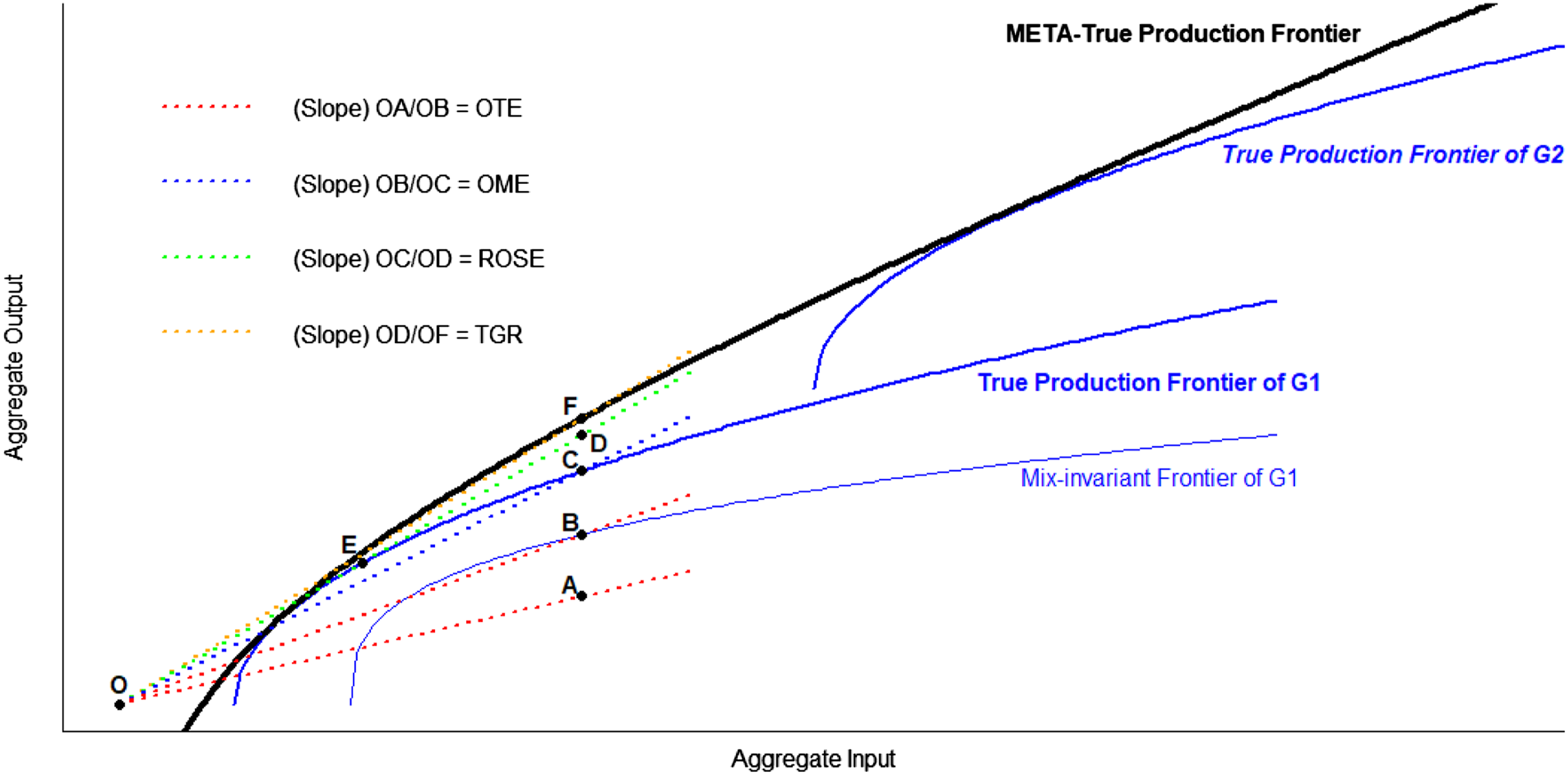
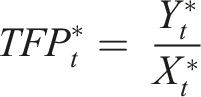
The formula
TFPE is decomposed into several components (Figure 1 below):
OTE/ITE is output/input-oriented technical efficiency (Figure 2). The term was introduced by Farrell (1957) to compare decision-making units (DMUs), from least to most efficient. In other words, this index is measured by comparing the position of DMU to the best practice DMUs belonging to a mix-invariant production frontier (of group x in the case of a meta-frontier). In economics, this index is known as learning-by-doing ability. OTE equals the fraction of slope OA over slope OB (as in Figure 1 below). OTE calculates the highest possible TFP with the same number of aggregated inputs and holding input and output mixes fixed. ITE calculates the greatest possible TFP from a small number of aggregated inputs while keeping the input and output mixtures constant. If technical efficiency is calculated under the assumption of variable returns to scale (VRS), it is obtained by solving the following non-parametric DEA dual linear program (LPs)
1
with FP technique (O’Donnell, 2011) (Figure 2). The overall change of TFP and its components.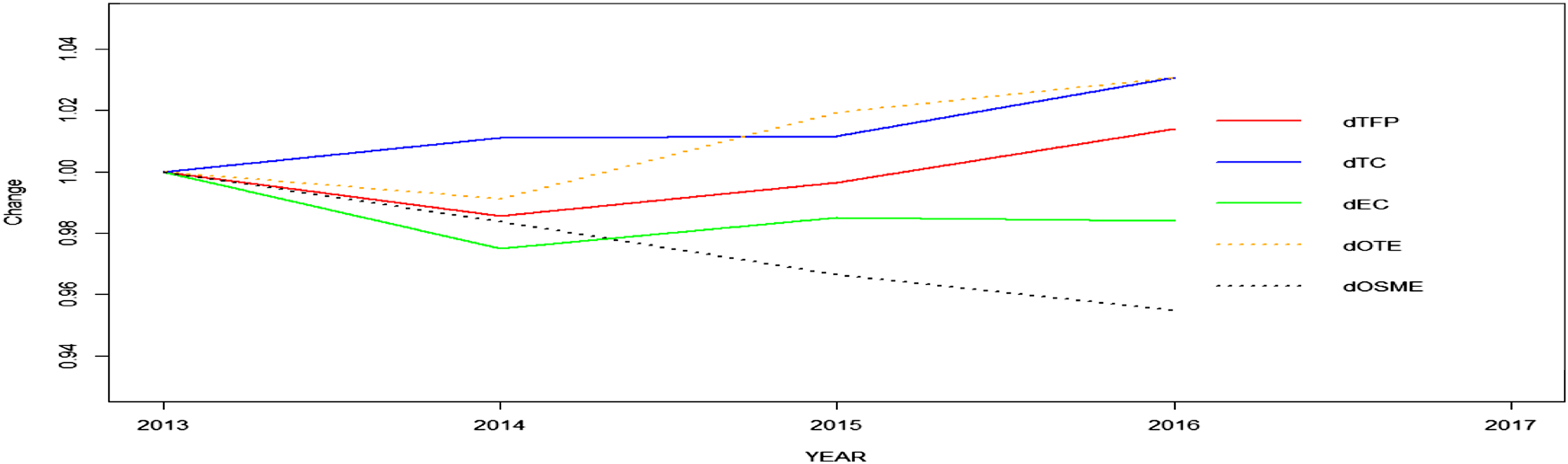

OSE/ISE is output/input-oriented scale efficiency. In economics, this index is also referred to as “scale efficiency.” The difference between the maximum TFP feasible at a technically efficient point and the maximum TFP possible at the point of the mix-invariant optimal scale associated with the CRS mix-invariant production frontier OSE/ISE is captured by OSE. As a result, according to the previous definition, OSE refers to the optimal size of operation for DMUs that are technically efficient



OME/IME is output/input-oriented mix efficiency. In economics, this index is also referred to as allocative efficiency, representing the potential change in productivity when restrictions on input and output mix are relaxed. OME is equal to the fraction of slope OB over slope OC (as in Figure 1 below). It captures the difference between TFP at a point located on the CRS mix-invariant production frontier and maximum attainable productivity and is calculated by the formula
According to O’Donnell (2011), the residuals are calculated as follows.
Thus, the change of HEI n between

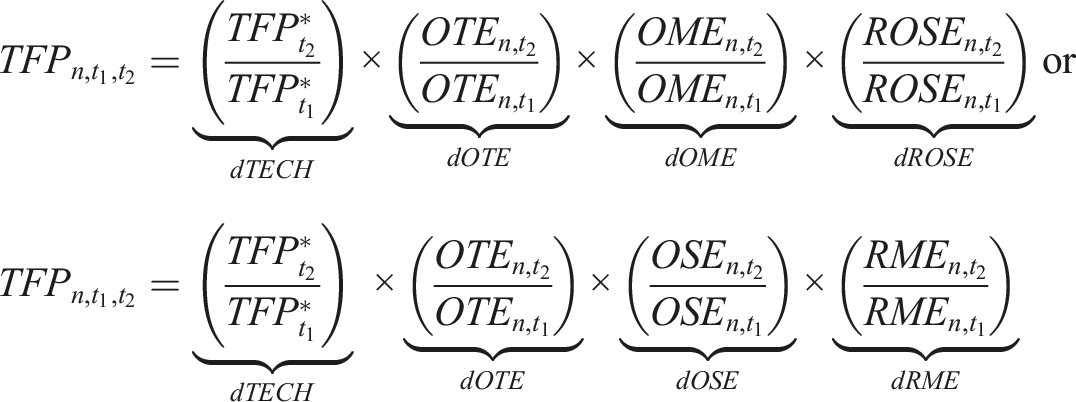
Meta-frontier F
re-Primont index
The use of a single frontier may be an omission because it does not capture the disparities in the performance of public and private HEIs. For example, differences in accessing capital (e.g., physical, human, and financial capital), governance structure, and any other characteristics of the socio-economic environment. The application of a meta-frontier approach ensures accuracy and consistency in evaluating Vietnam’s HES productivity (e.g., Johnes and Virmani, 2020). Hence, this study also builds an analytical framework evaluating the relative effectiveness of public and private HEIs, considering differences in institutional influence (from the educational system) and operational purpose (of the public and private sectors).
Suppose s = 1, 2, ..., and S are distinct groups of technology sets, then technology in time t in groups can be written as

The meta-technology in time t can be written as

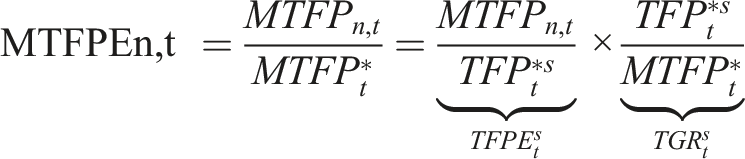
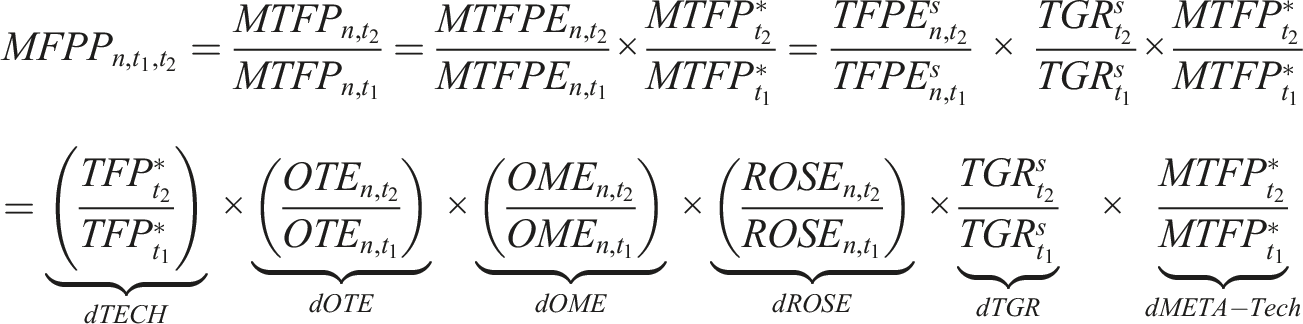
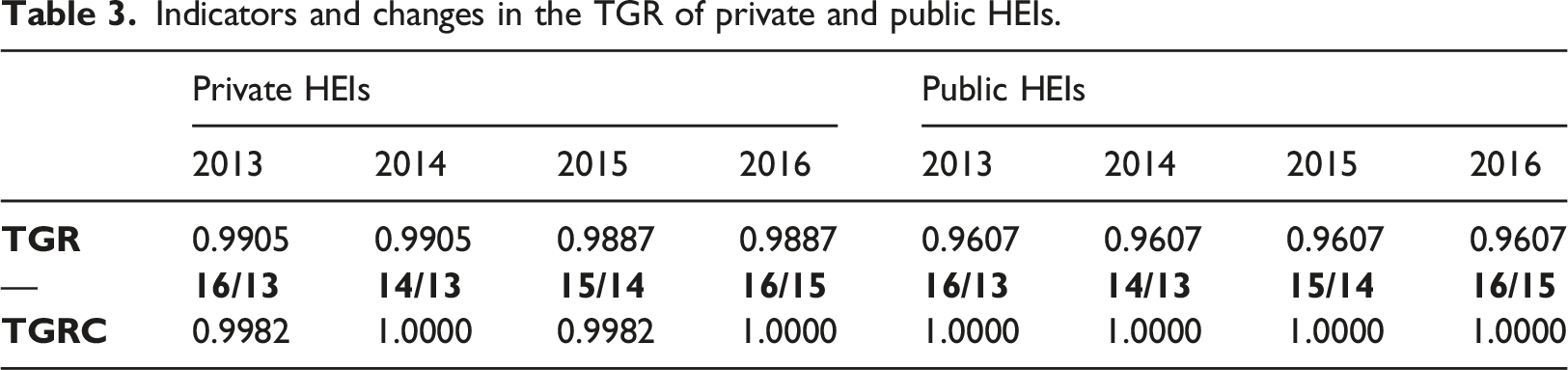
Similarly, in the case of the separate (group) frontiers described, the Färe-Primont index is computed using meta-technology components, where the meta-technology is the technology that embraces all the individual technologies. The technological gap between groups and the meta-frontier is represented by the technology gap rate (TGR)
Data source
The panel data was collected from the MOET database with 102 HEIs (76 public and 26 private HEIs) during 2013–2016. In this paper, we select outputs and inputs that are consistent with previous studies (Abbott and Doucouliagos, 2003; Jauhar et al., 2017; Miranda et al., 2012; Shamohammadi and Oh, 2019; Wolszczak-Derlacz, 2017). Higher education outcomes are measured on the basis of several criteria in the teaching and research areas (Nemoto and Furumatsu, 2014).
Statistical description.
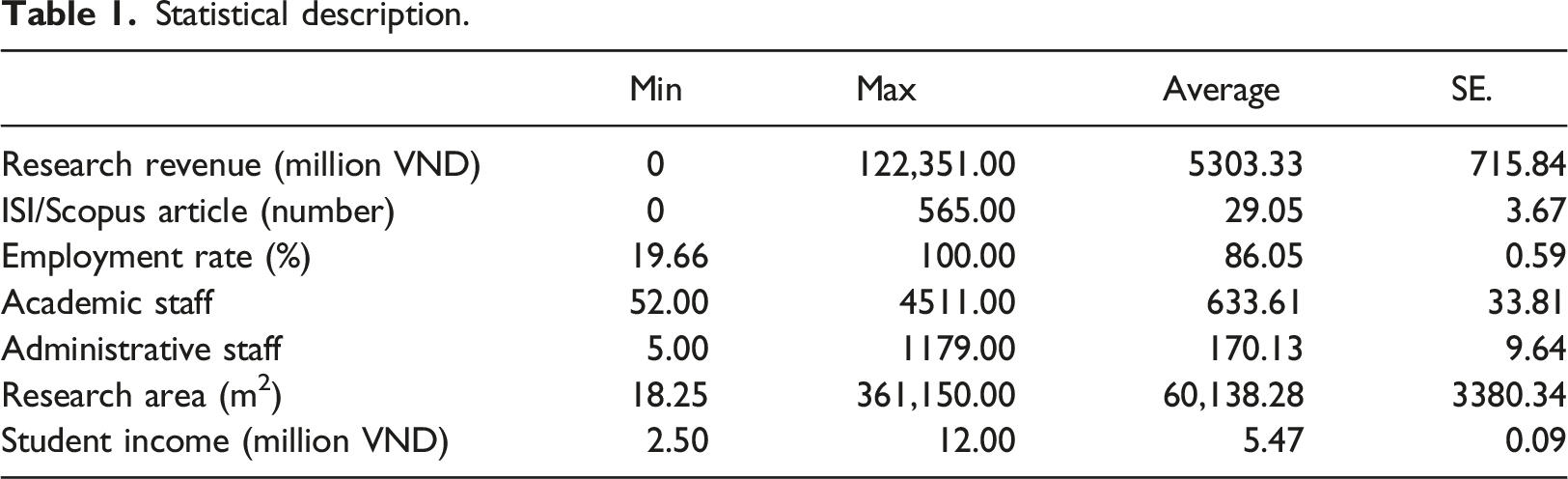
Second, regarding research output, the total research income for all universities can serve as a good proxy, because it includes government support for academic activities and research project revenue (Abbott and Doucouliagos, 2003; Miranda et al., 2012). There are difficulties with this approach, however. Several HEIs in Vietnam, such as the Academy of Cryptography Techniques University, focus solely on teaching output and have no research activities; research revenue is not a guarantee of quality. Scientific output may include seminar reports, books, domestic articles, and annual reports, and the quality of these is often below international standards.
To solve the first issue, Wolszczak-Derlacz (2017) considers the total revenue of HEIs instead of just research income. In this research in the Vietnamese context, we consider total research revenue representing research outcomes. We take this approach for the same reason as Tran and Villano (2017), aiming to achieve an overall picture of the HES. To solve the second issue, Wolszczak-Derlacz (2017) makes use of additional citation indexes from ISI/Scopus articles as the third output. In a nutshell, we apply three outputs from the teaching and research dimension: total research revenue, citation indexes, and the employment rate of students after 12 months.
The paper uses three main input variables: the first is the total number of academic staff involved in teaching and research activities. The second variable is the number of administrative staff engaged in management activities. These two variables are applied in most assessments of the effectiveness of HEIs (Jauhar et al., 2017). The third input is academic space for lectures (e.g., classroom, lecture hall, and office). According to Tran and Villano (2017), the physical research area for lectures plays a major role in academic circles. MOet also establishes standards for teaching and research conditions.
Empirical results and discussion
The overall effectiveness of Vietnam’s HEIs in the 2013–2016 period.
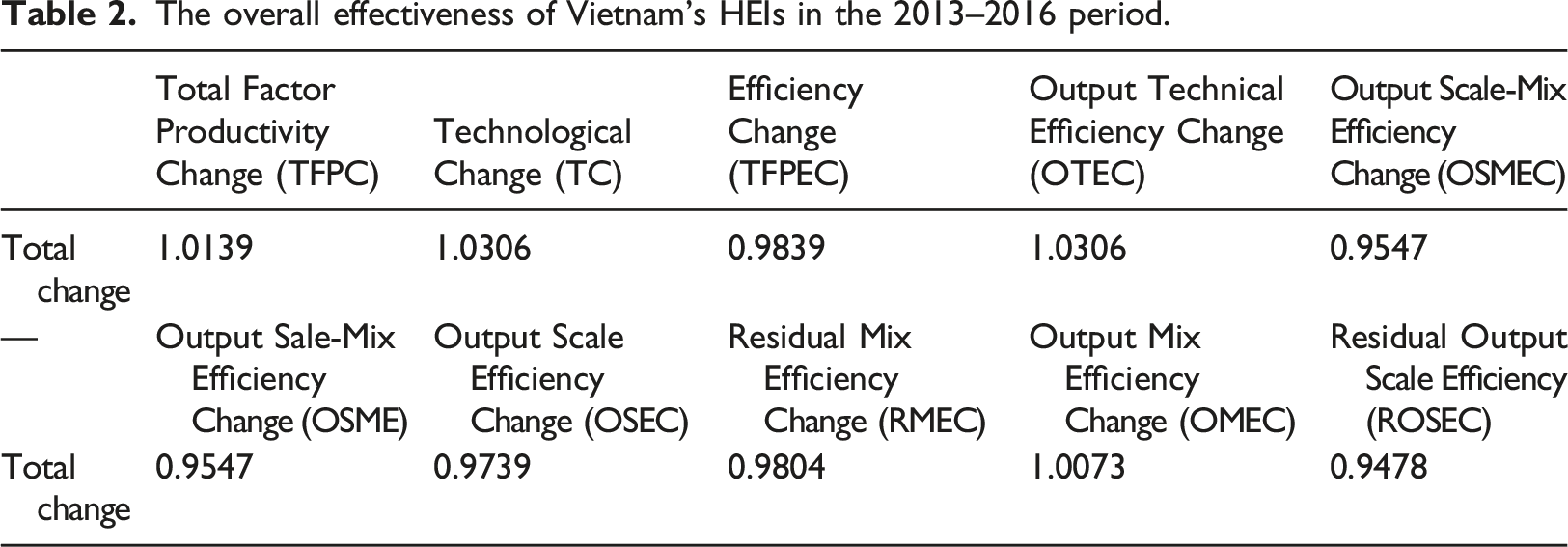
TFPE is decomposed into several components: output-oriented technical efficiency (OTE) and output-oriented scale-mixed efficiency (OSME). The increase in OTE (3.09%) represents an improvement in learning-by-doing ability among HEIs. In other words, HEIs learn from each other’s pedagogy in such matters as using the syllabus and affiliate programs to improve the effectiveness of teaching and research performance. However, the sluggish change in OTE coupled with the significant decline in OSME (4.54%) caused the total factor productivity efficiency (TFPE) to deteriorate during the research study.
The decline of OSME stems from a decrease in both scale efficiency (OSE or ROSE) and mixed efficiency (RME or OME). The stagnation in scale efficiency may be caused by the strict application of MOET’s enrollment mechanism (Circular 06/2018/TT-BGDĐT [ amended and supplemented 01/2019/TT-BGDĐT]) and inadequate finances under the input-based funding system (World Bank, 2020). For example, the application of a ceiling tuition fees in Vietnam’s HES (49/2012/NQ-HDND, 86/2015/ND-CP) makes it difficult for HEIs to adjust their size, given Vietnam’s background of operating on a small scale and with narrow specializations. Pham (2013, p. 110) explains that “due to low market demand for conventional disciplines, the university [University of Science] had to struggle to recover teaching costs, let alone generate income from practicing economies of scale”. Moreover, the decline of mixed efficiency (OME or RME) is due to a lack of flexibility in adapting to stakeholders and labor market needs.
Furthermore, although the number of courses is expanding considerably, there is no adequate guarantee of quality and if any guarantee is offered, it is only a limited effort by MOET in the face of increasing educational needs. Nguyen (2016) shows that although the number of new courses has been increasing rapidly, the new courses are only available in an inadequate number of specializations.
TFP change among Vietnam’s provinces is depicted in Figure 3. Reflected in the changes in color on the map, TFP change was negligible in the 2013–2016 period. Nevertheless, the effectiveness of HEIs in the Southeast region is more in evidence than in other regions. The Southeast is also the leading economic region for Vietnam’s growth and includes large-scale provinces, such as Ho Chi Minh, Vung-Tau, and Binh-Duong. The distribution of educational TFP changes in Vietnam’s provinces in the 2013–2016 period.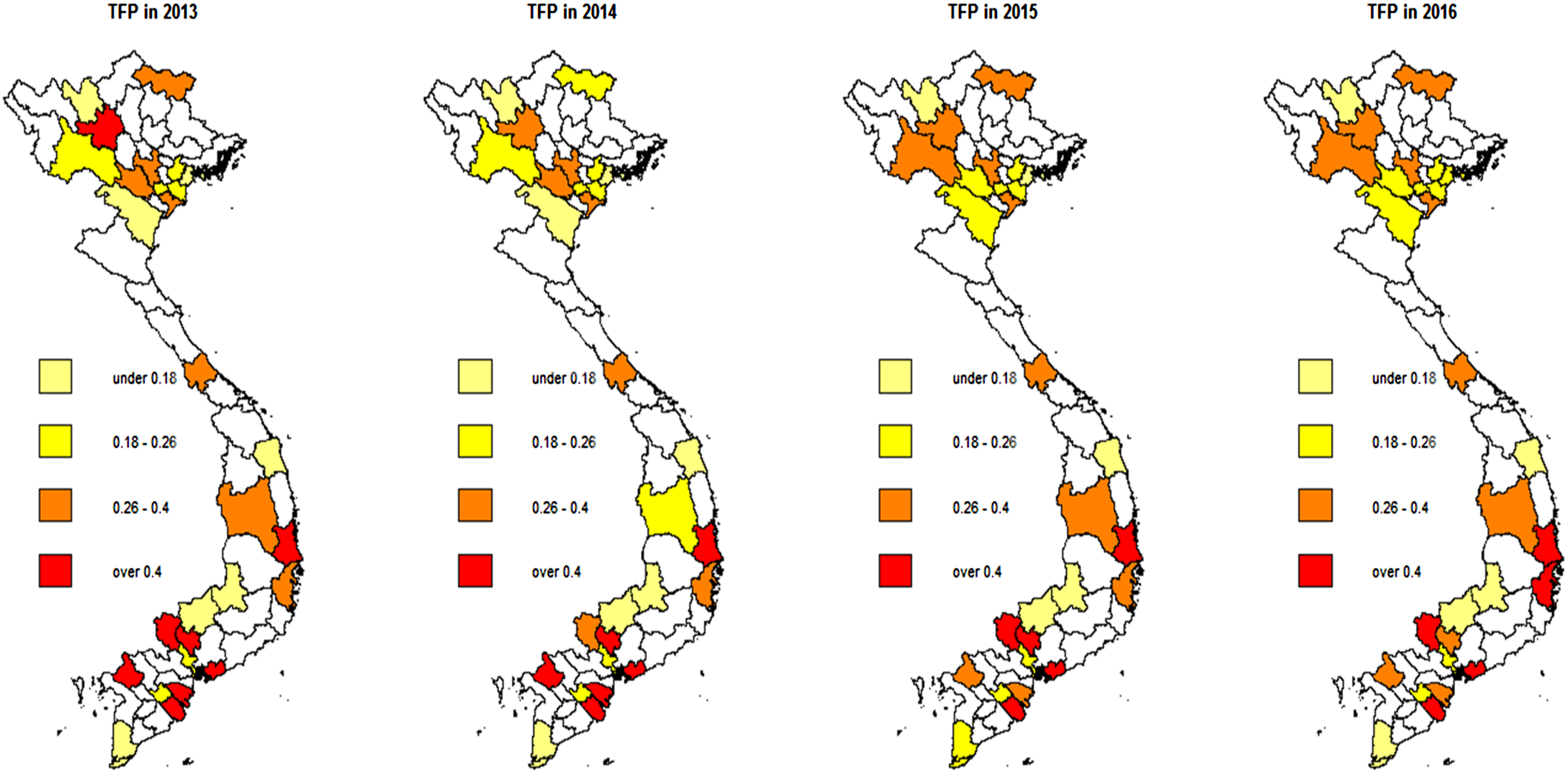
Indicators and changes in the TGR of private and public HEIs.
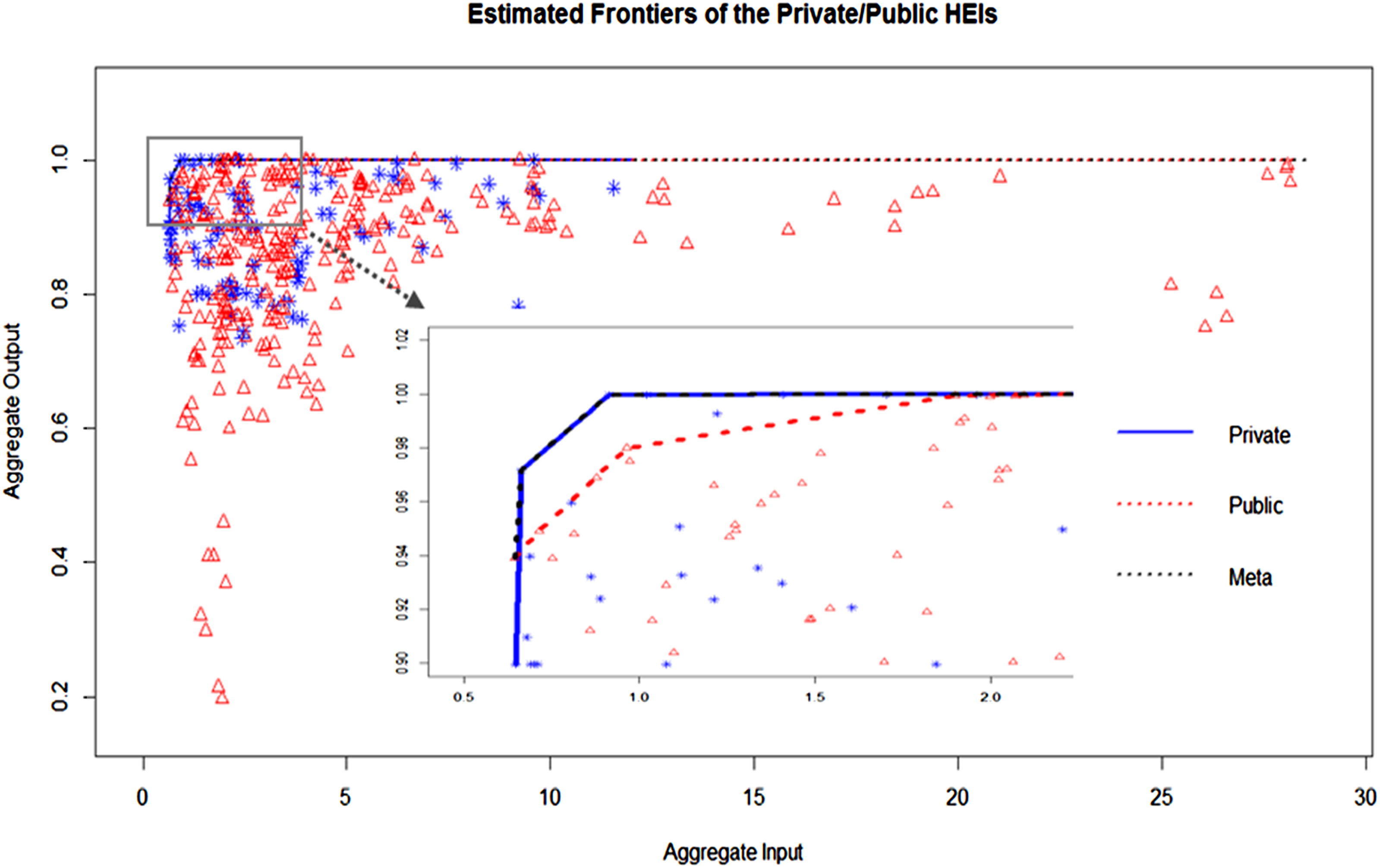
Meta-frontier of Vietnam’s HEIs in the 2013–2016 period.
TFP and its component of private/public HEIs in the 2013–2016 period on the meta-frontier
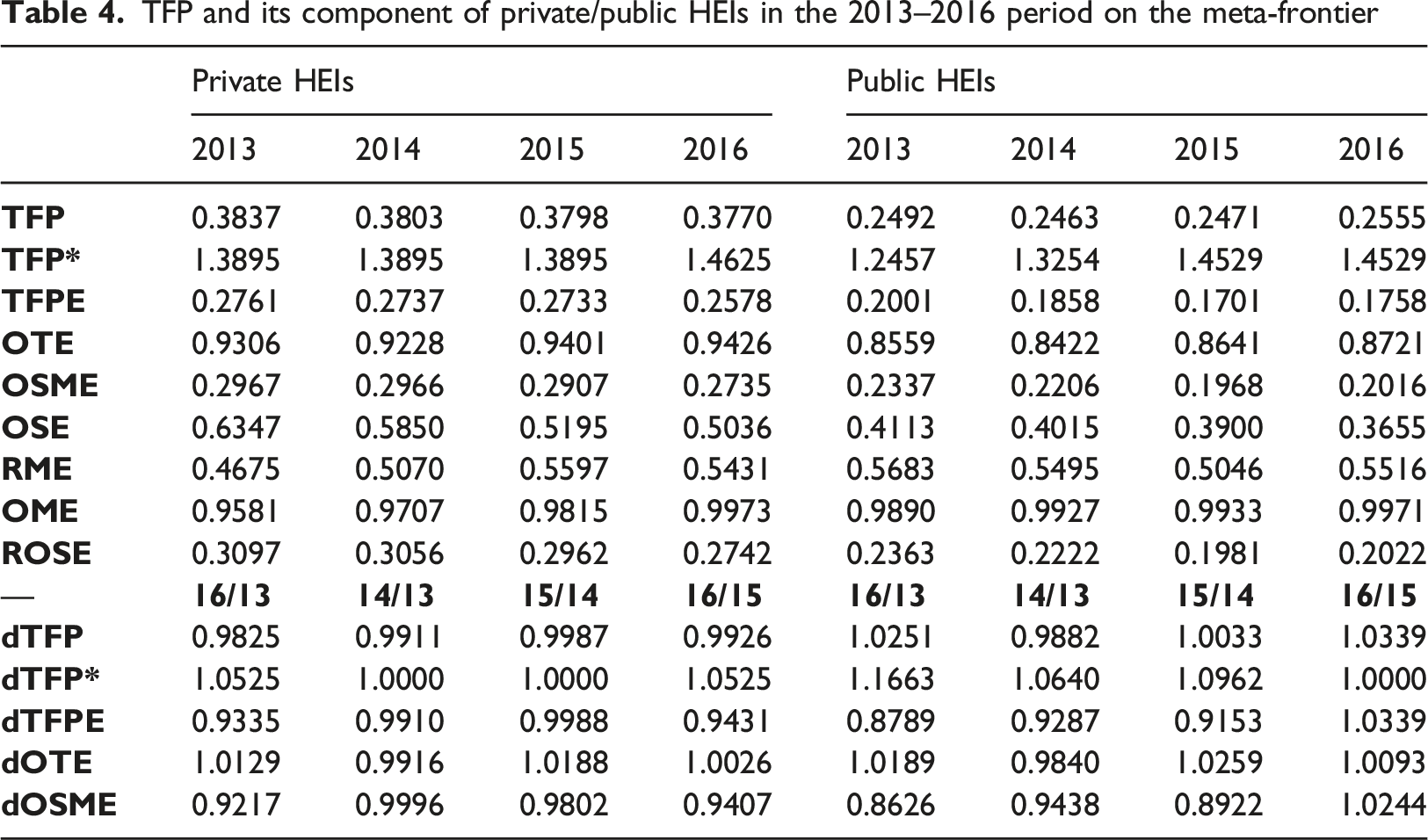
Table 4 shows that on average, the TFP of private HEIs was about 30% higher than that of public HEIs during 2013–2016. In other words, given the same number of inputs, while public HEIs produce one unit of aggregate output, private HEIs generate 1.3 units. The scale efficiency and technical efficiency of private HEIs are also significantly higher than those of public HEIs, reflecting the greater flexibility of the private sector in its learning-by-doing capability (e.g., improving management, connecting scholars, applying updated curriculum, and new technology). This result is also consistent with the study by Tran and Villano (2017) about the technical efficiency of Vietnam’s HEIs in the 2011–2012 period. As noted in the literature (Day-Ashley et al., 2015; Lubienski and Lubienski, 2006; Pucciarelli and Kaplan, 2016), private schools and universities in developing countries help improve the quality of education, citizen choice, and accountability, and also meet educational needs through competition, which leads to better teaching conditions, including smaller class sizes, better-qualified teaching staff, and higher parental participation.
However, it should be noted that most private HEIs are on a small scale with a low level of student enrollment (15.1% in 2018). From 2013 to 2016, public HEIs have improved their TFP by 2.5%, while the score for private HEIs was −1.75%. The development of private HEIs faces an imbalance between research and teaching outcomes (Vu, 2012). Our data shows that only a few private HEIs participate in research activities while the participation of the rest is negligible or nonexistent. There is no evidence to support the difference in mixed efficiency between private and public HEIs. As demonstrated in previous studies in Malaysia (Naidu and Derani, 2016), the quality of training in public and private schools in developing countries is no different.
Conclusion
In general, the TFP of Vietnam HEIs is low, showing only sluggish improvement (only increasing by 1.61% during 2013–2016). Hence, more effort in developing the higher education system is demanded from stakeholders. Regarding scale efficiency, the price ceiling policies for tuition fees (49/2012/NQ-HDND, 86/2015/ND-CP), enrollment regulations (Circular 06/2018/TT-BGDĐT), and other government constraints (e.g., MOET) are the causes of poor effectiveness. Consequently, a strategy of educational autonomy can be judged to point in the right direction through efforts to accept and support private HEI development. Moreover, there are many shortcomings that constrain the productivity of the private sector, especially the unequal treatment shown HEIs by government parties, for example, support programs offered only to non-profit universities when the definition of “non-profit” is ambiguous (Nguyen, 2016).
This study provides the first evidence of TFP and its decompositions for universities in Vietnam. Compared with public HEIs, private HEIs offer better potential future development with about 30% better total factor productivity (TFP) during the 2013–2016 period. The operational scale of private HEIs is still small and their direction for development is to become profit-making institutions. Meanwhile, to build a reputation for Vietnam’s HEIs, large-scale, diversified study majors are needed. Public HEIs are the main driving force for higher education in Vietnam and contribute to sustainable development. By contrast, private HEIs are limited in their research activities, show a lack of attention to the poor and vulnerable groups, as well as a lack of balance between research/teaching output and revenue (Day-Ashley et al., 2015; Pedró et al., 2015). Although the Higher Education Reform Agenda may not reach its planned educational socialization goal, the development of private sector education still offers many socio-economic advantages. Hence, the push for the development of private education and the autonomy of public education are seen as bright new spots on the road toward integrating and ensuring that the teaching and research outcomes of Vietnamese HEIs reach international standards.
Footnotes
Declaration of conflicting interests
The author(s) declared no potential conflicts of interest with respect to the research, authorship, and/or publication of this article.
Funding
The author(s) disclosed receipt of the following financial support for the research, authorship, and/or publication of this article: This work was supported by Vietnam National Foundation for Science and Technology Development (NAFOSTED) (503.01-2019.303).
Note
Author biographies
 ) in Vietnam, Head of VSE (Vietnamese Science Editors) Research Group. Associate Professor Tran Trung has published many articles in prestigious international journals in ISI, Scopus and monograph editors of international publishers (SpringerNature, Taylor & Francis, DeGruyter). The main research areas of Associate Professor Tran Trung are ethnic education, educational management, public policy, and teaching methods. In addition, Associate Professor Tran Trung also participates in interdisciplinary research between education and mathematics, computer science, economics and technology, and the development of scientific research skills.