




Abstract
This paper discusses human relationships with the natural world in Japanese educational policy. Based on two case studies, we argue that policy must recognize the cultural and spiritual ties that people in Japan have fostered in order to live well, which this paper considers to be part of “re-wilding education policy.” We briefly review the history of educational policy in Japan and identify its core features before clarifying the existing power structure between national and local governments regarding such policy. We also describe the characteristics of the Japanese education system, which stem partly from tensions between central and local governments due to the interpretation of legal frameworks. Through two case studies—situated in a traditional farming community in a mountainous area, and a community on a group of remote islands—this paper focuses on educational practices derived not from the dominant education policy but from local realities. These two cases allow us to demonstrate effective efforts made in these communities to rebuild traditional human–nature relationships on a small scale based on the everyday lives of the inhabitants. We conclude that any successful re-wilding of education policy in Japan will depend on the central government’s release of power, recognition of the unique features of diverse localities in Japan, and support for spontaneous activities emerging in local communities.
Keywords
Introduction
The Japanese peninsula is 3500 km long with a diverse range of natural and geographical environments. For over 1000 years hamlets have formed organically and people have lived off the land. In villages, wisdom on how to live sustainably has been passed down through the generations. The worldviews that formed as a result are based on animism and an awe of nature, which remain the foundations of Japanese cultures today (Torigoe, 2017; Umehara, 1989).
In the 19th century, Japan remade itself as a modern nation, transforming from a feudal society, to stave off the threat of colonization by Western powers. To expedite this modernization, education developed to become a means to produce people devoted to the strong centralized nation (Ota, 1986). Over the past 150 years, government policies have effectively severed people from the land and community, both spiritually and physically, and public education has played an important role in this (Koguni, 2001; Otsuki, 2010). Government reports (e.g. Ministry of Education, Culture, Sports, Science and Technology, 2016, 2018a, 2018b) reflect current educational policies that are determined to control not only school education but also social education, with the seemingly primary concern being global economic competency.
We suggest a re-wilding of education in Japan is critical and timely in the current context. Japan has been moving rapidly into the global economy and concentrating its attention on large cities, whereas communities in the countryside and small islands have been shrinking due to depopulation and aging. The elders in these places retain knowledge from lived experiences close to the natural environment, which varies from place to place. Opportunities for the people of Japan to learn from diverse local contexts with the local elders can contribute to learners’ identity and ability to live well in broader (human and more-than-human) communities. In this context, we suggest wild pedagogies might offer a reconsideration of priorities in life to act upon the fundamental values and a way forward via a re-wilding of educational policy. In particular we focus our attention on the wild pedagogies’ touchstone of socio-cultural change (Jickling et al., 2018: 97–101).
A potential “re-wilding” of education policy in Japan could mean easing the centrally controlled management system of education, and instead relearning from local cultures that were nurtured based on human–nature relationships before science and technology began controlling natural environments. Such learning could be derived from the land and local cultures, including relationships between people and the invisible world (Jickling et al., 2018), and in this paper we consider possibilities inherent within wild pedagogies to assist in this re-wilding.
This paper considers two case studies to explore the relationships between humans and nature in Japan, and discusses the cultural and spiritual connections that people previously nurtured as part of “a good life.” We suggest policymakers should attend to the possibilities within these relationships: empowering communities toward autonomy, with less control by central government as essential for any re-wilding of education policy. The authors of this paper have long engaged with traditional societies both inside and outside of Japan. Each author has conducted separate ethnographic research over many years in the locations presented in this paper. One author has conducted several research projects with mixed methods, including an exploration of the outcomes of place-based education programs (e.g. Ecoplus, 2014; Takano, 2011). The other has conducted numerous action research studies on community development with local residents and local government administrations (e.g. Oguri, 2008, 2009, 2012, 2017).
The idea of “wild pedagogy” is still relatively new (Jickling et al., 2018), and as yet, to our knowledge, no studies concerning wild pedagogy or re-wilding education policy have been conducted in Japan. Therefore, this paper will begin the discussion from the authors’ own interpretation and analysis of the situation in each place as well as in Japan as a whole. We believe that a re-wilding of education (and educational policy) is critical at this time because of currently problematic human–nature relationships. Such considerations are highlighted by climate change, but also via the current Covid-19 pandemic, which many scientists suggest was caused by over-exploitation of the natural environment (Johnson et al., 2020; Quammen, 2020).
As a result of the modernization discussed above, Japan has escaped much colonialization by the West. However, ironically, to fight against the West, Japan had to centralize its power to rapidly create a strong “nation state.” The cost of such centralization was the denial of many of its own traditional cultures. This has resulted in a type of “colonization” of the Japanese people by their own central government through denial of the diverse cultures that once flourished in Japanese villages.
This paper argues that a re-wilding of education is an opportunity to recognize the diverse natural and cultural heritages specific to local areas, and to support internal movement within communities. This approach contrasts with current education policy that stresses standardization, centralization, and economic growth. We briefly review education policy in Japan and identify its core features. In so doing we clarify the opposition between central and local government powers over education policy from the perspective of re-wilding education. We then focus on educational practices that derive from local reality rather than dominant education policy. Here, we argue about meanings and possibilities from the standpoint of building human–nature relationships. In support of our argument we present examples of educational practices that reinforce sustainable living based on the diverse ecosystems and geographical features of each community. Finally, we refer to the challenges and possibilities found in these local attempts and make proposals for a re-wilding of education policy.
Background to education policy in Japan and framework of consideration
Three great educational reforms in Japan
Rappleye and Kariya (2011) suggest that there were “three great educational reforms” in Japan. The first reform occurred during the Meiji Restoration of the late 19th century, with the aim of transforming Japan from a feudal society to a modern nation under the absolutist emperor system. The second reform dismantled the militaristic nation under the leadership of the United States after World War II, when Japan switched to democratic nationalism. The third reform, promoted by the Ad Hoc Council on Educational Reform, began in the mid-1980s when Japan declared that it had caught up with Western society, and this reform process is still in progress. Contrary to the previous two educational reforms, the third reform has sought to break with the tradition of blindly following the West. Japan discarded the West as a model (Kayama, 1978) and instead began to revert to its own traditions and cultures, which had been abandoned. However, Kariya (2019: 324) points out the paradox that this tradition, which the central government unconsciously selected, was the product of modernization that was invented post Meiji Restoration and underlines the complexity of Japanese modernization.
Inconsistencies in education policy and the perspective of re-wilding
The three educational reforms highlighted above have been (or are being) implemented by Japan’s central government, reflecting movements in which the aim is to catch up to, or break away from, the West. In Japan it has previously been considered necessary to concentrate power in the center to implement educational practices and other national policies that aimed to catch up with and surpass the West in every corner of the country. In reality, however, the majority of the population previously lived in what might be termed “natural villages” (e.g. Miyamoto, 1966; Suzuki, 1940; Yanagita, 1991), communities based on kinship and territorial bonding that formed long before the establishment of the centralized nation; the towns and cities that later formed were also made up of such natural villages. Therefore, local communities inevitably resisted the central government’s attempts to implement policies that conflicted with, and discarded, their autonomy (Makabe, 1976, 1977; Kokumin Kyoiku Kenkyujo to Kyoiku Kenkyukai, 1985).
However, this reality and its internal inconsistencies have been obscured as subsequent education policies have been developed. A symbolic example can be found in the “principle of emphasis on individuality,” which was foundational to the third educational reform (Ministry of Finance Printing Bureau, 1988; Watanabe, 2006). In this case the government acknowledged that the previous two educational reforms had failed to develop individuality due to a uniform, rigid, and closed approach; consequently, they thought it important to deregulate and leave to the market the goal of reducing dependency on the government and fostering individuals’ independence and individuality (Kariya, 2019). However, the conclusion of the report also indicates that the central government did not reflect on its role in suppressing local governments’ claims to the right to act independently. Furthermore, there are no other indications of reflection by the central government regarding its role in suppressing local governments’ call for individuality (Fujioka, 1990; Kobayashi, 1995; Nanri, 1992).
Examinations of the power relationships between the national government and local governments reveal important perspectives when considering the potential re-wilding of education policy in Japan. Rethinking the culture of human–nature relationships must be based on “seikatsusha” (Amano, 2011) and on the “place” where a human leads their everyday life. “Seikatsusha” refers to an “autonomous citizen” who grasps the characteristics of life holistically, beyond existence as a consumer and a laborer, and who can make changes in their way of life through everyday practices. “Seikatsusha” is not an idea borrowed from Western countries (such as “citizen” and “consumer”); nor is it a collective noun such as “nation” or “people.” Rather, it defies such labeling and demands that one choose how to live on one’s own initiative. Thinking and practicing in concrete “places” under the concept of “seikatsusha” is one practical path toward rebuilding the culture of human–nature relationships.
The phrase “rebuilding the culture of human–nature relationships” used in this paper is similar to “socio-cultural change,” one of the touchstones of wild pedagogy (Jickling et al., 2018: 97–101). However, the phrase in this paper has unique characteristics. First, an attempt is made to see the cultural style of human–nature relationships from the small unit of everyday life. Second, the assumption is to allow deep roots to form in the places where people make a living and to learn the history of that place; in that way people can weave new cultural fabrics from the threads of human–nature relationships. Third, while wild pedagogy discussions tend to focus on “Western” contexts, this paper situates the discussion specifically in the context of present-day Japan.
To clarify the third point, while cultures should not be over-generalized, a widely held view is that in so-called “Western” societies, people consider themselves separate from their natural environment, placing “nature” objectively away from one’s self. On the other hand, traditionally, Japanese cultures did not strictly consider natural elements as separate objects, and opposition to nature was unthinkable (Sato, 2005; Nakamura, 2006; Suzuki, 1978). The notion of nature as separate from humans, as currently understood, did not exist in the Japanese language until the late 19th century (e.g. Tokyo Gakugei Daigaku Yagai Kyoiku Jisshu Shisetsu, 1992; Yanabu, 1977). Such worldviews were formed over long periods of time, and have influenced how people conceive human–nature relationships as well as what kinds of solutions are possible in contextualized situations.
The re-wilding of education policy means adopting political measures to assist in creating spaces for the organic development of educational practice, and thereby rebuilding the cultures of human–nature relationships. Because educational policy affects the workings of education, it must foster autonomy and spontaneity and respect people’s freedom. Since the culture of human–nature relationships is practiced on the small scale of everyday life, we suggest educational practices should also be based on everyday life. In this way education policy should then focus on the autonomy of administrative units (i.e. levels of national, prefectural, and city/town) that are closer to people’s lives, rather than on national-level policy.
Characteristics of the Japanese education system
Tension of power between central and local government
In examining the relationship between the national and local governments in the context of education policy, it is necessary to describe the unique features of the Japanese education system. As noted, educational reforms have primarily been implemented by the central government. However, decentralization of education was promoted in the late 1940s at the initiative of the central government when the second educational reform was implemented. The education system introduced by the US during the occupation period was based on progressive, democratic ideas of education, and therefore power was delegated to local governments.
A typical example can be found in the boards of education system, which were introduced after World War II. This system incorporated ideas to avoid unfair political control of education. The aim was to make the educational administration in local governments independent from the head of the local government, and therefore a council of laymen controlled educational administration. Up until 1956, to ensure the autonomy of education in local administrative bodies, members of the boards of education were elected by the public. After 1956, however, the law was revised, and members were subsequently appointed by the heads of local government. This political move is known as the “reverse course” in the history of Japanese education (Ota, 1978). After the Korean War broke out in 1950, international cooperation was strengthened to prevent Japan from becoming a communist country, and conservatives gained power in domestic politics. Beginning in the mid-1950s, the progressive and democratic education system began to retreat rapidly. In 1958 the teachers’ performance review system was introduced, requiring those who appointed the teaching staff to evaluate and record teachers’ performances. Furthermore, after two education-related laws were enacted in 1954, teachers were prohibited from engaging in political activities. In this way, the central government began exerting stronger control over education.
This strong grip on education has continued during the third educational reform, and the complete revision of the Basic Act on Education (2006) was critical in the centralization of education policy. The original Basic Act on Education was first enacted in 1947. It was governed by the Constitution rather than by the Imperial Rescript on Education (the moral foundation of the Emperor’s rule over the people), which underlay Japan’s move toward militarism before the war. The law kept government power to a minimum, but the 2006 revision added Article 17. Under Article 17 the central government formulates the plan, reports it to the National Diet, and announces it publicly; local governments are forced to accept this plan and then attempt to develop local plans according to local states of affairs. This has solidified the central government’s supremacy over local governments on matters of education.
Social education and school education
In considering Japan’s education policy it is also vital to include a discussion of Japan’s social education system. Among educational scholars in Japan, social education is sometimes referred to as adult education and community education, and its meaning has developed over time. First, it was intended to complement school, after which it became an extension of school education, and this was followed by a demand for its practice outside of school education (Miyahara, 1955: 43). Its underlying value is the sense of a right to social education. When the phrase “life-long education/learning” appeared in the education policy statement in the 1980s, the phrase social education was already used to describe continuing education and the self-education movement (Ogawa, 1988: 14–17). This caused some confusion in both public and academic arenas.
Although the essence of the idea remains in dispute, in the context of education law and policy, it is understood that social education is defined as “mainly an organized instructional activity performed for young people and adults outside of the instructional activity conducted as part of the school curriculum” (The Social Education Act, 1949). The Social Education Act and the School Education Act are the two wheels that drive the Japanese education system. The law designates the scope of social education as education other than the school education stipulated by the School Education Act. It is designed for youths and adults and includes sports and cultural activities. Social education covers non-formal and informal fields of education, meaning that it includes both organized and non-organized educational practices occurring beyond school education. There is a difference between school education and social education. In social education, administrative bodies, including central and local governments, pay expenses to “create an environment in which all citizens can use every opportunity and place to improve their cultural education in line with their everyday lives” (Article 3, The Social Education Act, 1949), but do not influence the educational content.
Attention to the social education system is essential when considering the re-wilding of education policy. In the power relationship between the national and local governments, the national government has less control over social education than over school education. Since local government has more discretion and autonomy over social education policy, the social education system and the practice of social education are vital in reconsidering and rebuilding the culture of human–nature relationships, which cannot be effectively accomplished only via school education.
In addition, and separate from the problem of the system design mentioned above, we must also consider how the system effectively functions in society. Over 60 years have passed since the basic education system in Japan was devised and designed in post-war Japan. During this time the socio-economic situation has greatly transformed, as has social consciousness, yet budget and workforce cuts in the area of social education have negatively affected the system.
Implications of re-wilding education for traditional farming communities
Previously, we have discussed the significance of the power relationships between national and local governments, as well as the social education system, in considering the re-wilding of Japanese education policy. Next, we present two case studies to explore educational practices that might rebuild human–nature relationships based on local cultures, and what kind of re-wilding of education policy is necessary to promote such undertakings. The first case study demonstrates a local government’s attempt to officially address the importance of people’s relationship with the natural world. It also considers the reality that the government may not itself have the budget for such measures and opportunities for not-for-profit organizations in receipt of external funding to drive these changes.
Minami Uonuma City and ties with the environment
Minami Uonuma City is located in the southern part of Niigata prefecture, approximately 200 km north-west of Tokyo (Figure 1), at the foot of a high mountain range. The area is largely forested (76%) and it experiences heavy snowfall in winter. As reflected in its title “Snow Country,” it is typically covered with over 3 m of snow for four months a year.
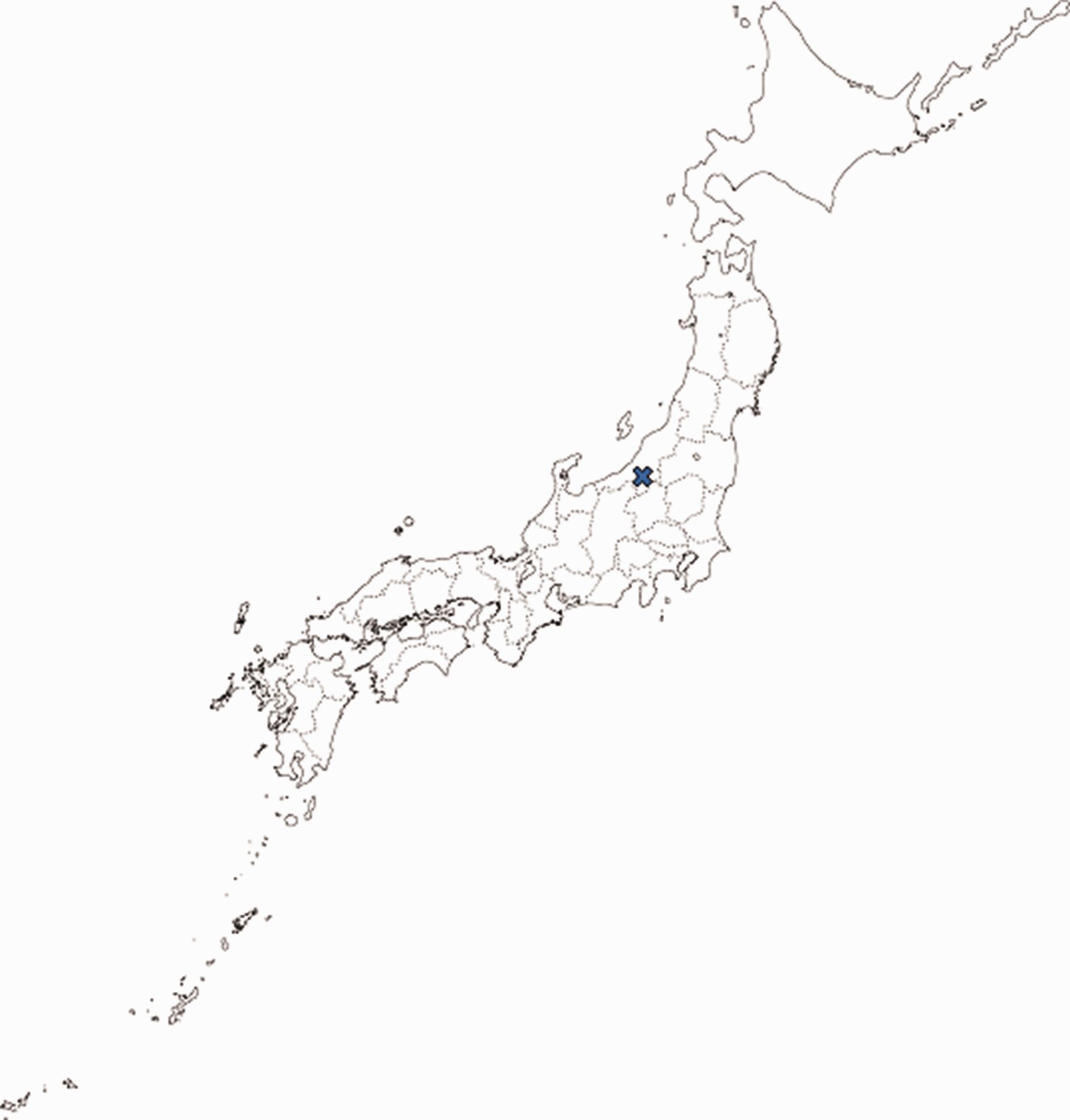
Approximate location of Minami Uonuma City shown as a cross (designed by Hakuchizu Senmonten).
As of December 2019, Minami Uonuma had 55,884 residents and 20,015 households (Minami Uonuma City, n.d., a). Approximately 25% of all households in the city are engaged in rice farming and the city is known for its production of high-quality Koshihikari, Japan’s top-selling and most expensive brand of wholesale rice. However, many farmers in the city also have additional paid work in town, as farming does not necessarily generate sufficient cash to cover the cost of living. The city demonstrates many examples of local people’s cultural and spiritual ties with natural elements, and those ties have implications for education.
One example is Shugendo, an old mountain religion that was established approximately 1300 years ago based on ancient animism, mountain worship, and pantheism. Shugendo is still practiced today in many parts of Japan. Based on the belief that mountains have super-powers, Shugendo monks go through a series of ascetic trainings in the deep mountain areas to acquire supernatural power to carry out rituals for the welfare of ordinary people (Takano, 2019). Minami Uonuma City is surrounded by deep mountain ranges, and the entire area has been designated as a sacred place for ascetic training. Shugendo monks in Minami Uonuma continue to serve as healers, educators, and shamans for local people. Another example of the cultural and spiritual ties between local people and the natural elements is “Echigo Jofu,” a hand-woven cloth for kimono made from thin torn fibers of ramie (Boehmeria nivea), a type of hemp, with over 1000 years of history. As the fibers are easily broken, the humid and cold climate in winter is best-suited to handling them and producing high-quality cloth. In the finishing stage, in early spring, the cloth is spread over the snow under the sun. The ozone generated from the melted snow surface naturally bleaches it.
The city’s new education plan
The increasing centralization of Japan over the past 150 years has seen many small villages and farming communities merge into larger administrative units. In 2005, Minami Uonuma city was formed by the merger of three towns that were similarly composed of many rural communities.
Japan is the leading aging society in the world (Cabinet Office, 2019) and since 2016 has experienced depopulation. Issues of aging and depopulation are particularly critical in Japan’s countryside areas like Minami Uonuma, because farming is not popular among youth. As such, many agricultural regions are struggling to survive. These critical elements are relevant for current municipal policies, and the city’s educational policies seem intent on tackling these issues within the structure established by the central government. As a newly merged city, Minami Uonuma developed its first basic plan on education in 2011. The plan spanned a 10-year term, but, according to the city’s education board, it was updated five years later to accommodate social changes. Like any other education policy documents in Japan, the first-term basic plan paid little attention to the social education system. Triggered by the city’s then superintendent of education to address issues such as aging and depopulation, the review committee updated the plan to add two more pillars. Thus, while the initial plan centered around “school and preschool education,” the revised plan added “promotion of life-long learning and community education” and “promotion of youth and child support.” Among the city’s seven targets, one refers to nature and culture; it states that the city’s objective is to provide “Education where people understand and celebrate nature, history and culture, and nurture these assets to protect, succeed, and develop, so that everyone can be proud of their hometown” (Minami Uonuma City, n.d.,b).
The city is currently discussing the second term (from 2021) of the basic plan on education, which stresses life-long learning and interactive learning at various life stages to respond to the longevity, aging, and depopulation issues as well as the changing society. A number of different groups, including communities and schools, are expected to be actors in this process. Again, this resonates with the touchstone of wild pedagogies (Jickling et al., 2018)—socio-cultural change—through education, where re-wilding education can help people reclaim their relationship with the natural world. In Minami Uonuma, this is happening through local government initiatives.
Tochikubo Primary School
Minami Uonuma City comprises 135 communities, each with its own area boundary, community name, and community self-government. While in the past all children were able to walk to school, small community schools were later merged or closed based on the national government’s suggestion of an “appropriate size of primary school.” Since 1947, eight schools in Minami Uonuma City area have been merged or closed, and among the 18 schools that are currently operated, two more are under consideration to be merged. However, the communities of these two schools have resisted the pressure of school mergers because the primary schools remain important community hubs. They are both located in a mountainous area with terraced rice paddies around the hill, and their schools have small populations. One of them, Tochikubo Primary School, had only nine students in first to sixth grade in the 2007 school year. The school was first established in 1879, and Tochikubo residents recall that at one time it had more than 100 pupils.
In 2007, the president of the Tochikubo Primary School Parent Teacher Association stated that all community members believe that keeping the school in the community is as important as maintaining the community (Nishimura, 2007). Nishimura describes how, at the school board meeting to discuss the school closure, a community member claimed that “the Tochikubo community and school support each other in a way that no other communities could do” (2007: 2–3). The merger plan of Tochikubo Primary School was subsequently shelved, and the city granted this and one other school special status to accept students from outside of their school zones on the condition that they offer unique education not offered by other schools.
To make their education unique, Tochikubo Primary School utilizes the natural environment and local community. The students often conduct nature studies, going out to the rice paddies and crop fields, learning to ski, keeping small wildlife at school to nurture and observe, and experiencing the process of making Echigo Jofu cloth, described previously, which includes burning dead grass for the ramie fibers. Community members are actively involved in all of these activities. Through such education, students have opportunities to build bonds with their natural surroundings as well as with other community members. This style of re-wilding education is possible because this primary school acquired a special status; in other words, it is outside the mainstream.
Ecoplus and place-based education
Other unique opportunities that Tochikubo Primary School students participated in were village programs organized by Ecoplus, a small educational not-for-profit founded in 1992 in Japan to address human–nature relationships in the context of sustainability (one of the present authors is a co-founder of Ecoplus and has designed parts of the educational programs). In communities like Tochikubo, where the local economy remains strong, many residents continue to maintain a semi-subsistence way of life, growing their own rice and vegetables and harvesting edible wild plants and fungi. People have developed cultures, traditions, beliefs, and philosophies of life through significant interaction with nature.
Ecoplus adopts a place-based approach to education. Smith and Sobel (2010) suggest that place-based education seeks to achieve a “greater balance between the human and non-human,” and to provide a pathway “to foster the sets of understanding and patterns of behaviour essential to create a society that is both socially just and ecologically sustainable” (2010: 22). When the school in Tochikubo was threatened with closure, the village president approached Ecoplus to consider solutions. Based on the results of questionnaires administered to residents regarding their thoughts on the community, Ecoplus identified “nature,” “food,” “people,” and “health” as key themes for vision making. Ecoplus proposed conducting several educational programs centered around those themes based on residents’ traditional knowledge as one way to continue the school and the community (Iwasaki and Takano, 2010).
Examples of the program and participants’ feedback
The first program implemented by Ecoplus in Tochikubo in 2007 set out to identify local wildlife and help residents to see their living place differently. Local adults and children walked around their village in the company of an expert—most often a passionate local high-school biology teacher. The two-hour nature walks covered only short distances because the participants found so many interesting things along the way, including several species on endangered lists. These walks took place on a monthly basis for six years, except in winter.
Yearly reports compiled using the data accumulated by the villagers demonstrate a high degree of biodiversity in the area. Moreover, some villagers changed their mindsets as a result of observing nature. A local resident in his 40s, for example, described how his view of the village and natural world had changed over the course of the program; suggesting he felt much more attached to the place he lived and was surprised to find himself talking to his children about wildlife in the village (Takano, 2017: 256).
Such programs also invited participants from urban areas, with participants sometimes walking through organic rice paddies with bare feet to plant rice seedlings, and then enjoying a rice ball lunch next to the paddy under the blue sky before an open panorama. Participants also cut grass in the beech forest and harvested wild grapes and honey mushrooms along the way to make into a nourishing soup for the evening. In the questionnaire at the end of the program, one woman in her 20s stated that the experience had made her aware of her mental and physical isolation in Tokyo, and she recognized the importance of the connections between people in a community (Takano, 2010). These are just some examples of the socio-cultural change opportunities that a re-wilding of education might bring about.
Policies and practices
In Tochikubo, a re-wilding of educational programs has contributed to community development and the building of human–nature relationships, as well as learning for sustainability among both residents and visitors. While Minami Uonuma City officially encourages life-long learning, it does not have concrete budgetary measures to support such programs. Any organizations that seek to generate opportunities for community education, such as Ecoplus, must seek external funding. Therefore, the principle of life-long learning written in the Basic Act on Education is difficult to manifest in reality. The cultural and spiritual ties with nature that people in mountainous areas of Japan have fostered can contribute to sustainable living, but also a re-wilding of education that can generate socio-cultural change. For education policy to implement a re-wilding of education, it is necessary to have a system and budget, as well as written policy, to support real-world efforts to create such educational opportunities.
Remote islands of Japan—a case study of Amamioshima Island
In this second case study we focus on the potential of human–nature relationships in the remote Amami Islands, and policy possibilities arising to promote socio-cultural change.
Culture of human–nature relationships on the Amami Islands
The Amami Islands are located 380 to 610 km south of mainland Kyushu in the southern part of the Japanese archipelago and consist of five islands: Amamioshima, Kikai, Tokunoshima, Okinoerabu, and Yoron (Figure 2). These islands are currently under the jurisdiction of Kagoshima Prefecture.
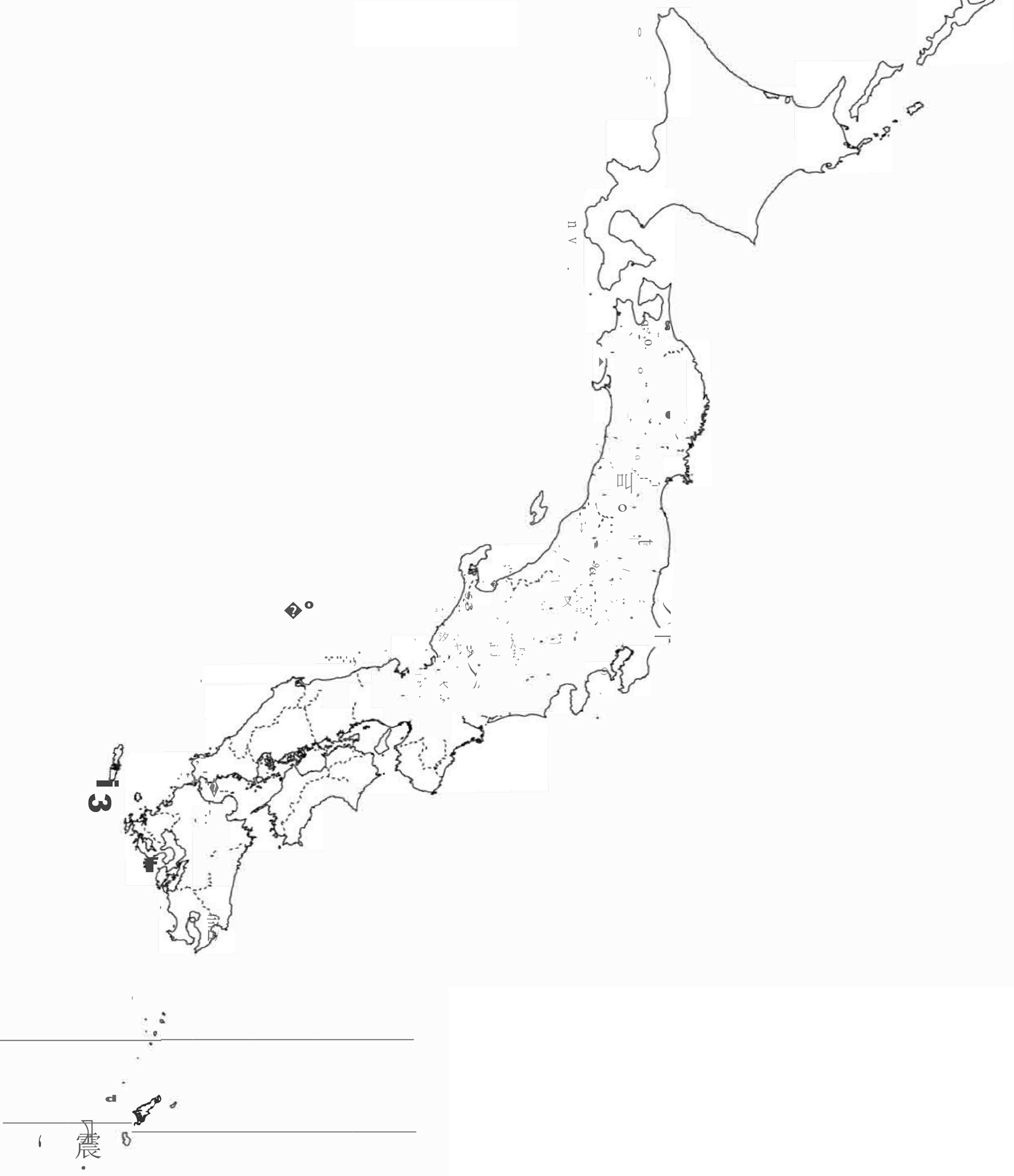
Location of five Amami islands illustrated between the two lines (designed by Hakuchizu Senmonten).
The Amami Islands have a unique position in the history of Japan. From ancient times to the Middle Ages, they maintained a relationship with mainland Japan (then called Yamato). In 1466, the islands were attacked by the newly unified Ryukyu Kingdom (present-day Okinawa Prefecture) and fell under its rule. In 1609, they were invaded by the Satsuma Domain (now Kagoshima Prefecture) located in the southern end of mainland Kyushu, coming under its control. After the Meiji Restoration, they subsequently became part of Kagoshima Prefecture in 1879. Following WWII, the Amami Islands were placed under the rule of US occupation forces until 1953, even after the main islands of Japan regained sovereignty.
For a long time, the Amami Islands have suffered discrimination and oppression under different rules. However, the indigenous and various other cultures also mixed and developed a number of unique cultures. Today, for example, animism and shamanism are alive and well, while different traditional religions, such as Shintoism, Buddhism, and Christianity, coexist with newly born faiths. The multi-layered structure of the faith system has long influenced people’s mentality and worldviews, including human–nature relationships (Amamigaku Kankoinkai, 2005) providing a unique context. Thus, what makes the Amami Islands remarkable is not only the diversity of their nature and geography, but also culture.
Amami’s education on the culture of human–nature relationships
Even after Japan’s modernization the Amami Islands remained somewhat removed from the political and economic centers, with centralized policies still not permeating the Amami Islands as much as in some other areas of the country. The Amami Islands began to change dramatically after 1953, when they were reintegrated with Japan (Kagoshima Prefecture Amami Gunto Branch Government Office, 2018). A large portion of the national budget was allotted to promote development of the Amami Islands, resulting in strong dependence upon the external economy and destruction of natural environments. Moreover, formal education affected people’s mentality regarding the value of their cultures and traditions; they tended to view such traditions as antiquated and the outside world as more significant and advanced (Oguri, 2010, 2011).
For some time after the war, most schoolteachers were locals from the islands. However, as time passed, the percentage of schoolteachers born in mainland Kagoshima increased, and Amami children were taught the educational content that had become uniform across the country. The Japanese archipelago spreads over 1500 km north and south (including subarctic to subtropical climates). Thus, livelihoods and ways of life differ from region to region due to the diversity of animals and plants across the country. Despite this diversity, many Japanese school textbooks present uniform content as if every region in the country were an extension of Tokyo’s central control.
The gap between school education content and children’s daily lives is a problem not unique to the Amami Islands (Makabe, 1976, 1977; Takahashi, 2014). Since post-war Japan, this problem has been raised and fought by progressive intellectuals and schoolteachers. The gap has negatively impacted identity formation for individuals and communities, but it has also deprived children of opportunities to deepen awareness of their relationship with nature, and resulted in a divide between children and the natural world around them.
Social education has played a significant role in building the identities of children and communities. Learning opportunities for understanding human–nature relationships, as well as community ties, are embedded in daily life. The Amami Islands hold multiple events and festivals throughout the year to express their wishes and gratitude for the healthy development of children, a good harvest, a big catch, or safety while working at sea or in the mountains. These events and festivals are scheduled according to the lunar calendar rather than the Western calendar. Unlike the Western solar calendar, the lunar calendar is based on the phases of the moon and the tides. This calendar is still used by many men and women, particularly in remote villages. For many, fishing is a minor subsistence activity and is not a means to earn cash. In Amami, people maintain the tradition of catching fish and foraging, relying on the blessings of the mountains and land to support their lives and allow them to share with their neighbors (Nakayama, 2014).
Community-based social education organizations—such as associations for young and middle-aged men and women—play a central role in planning and implementing traditional events and festivals. Children’s groups and child development associations are also involved, as they too create spaces for social education. Instead of sitting in a classroom to learn, people of different ages come together and preserve the culture of the village as they work (Kagoshima University Kagoshima Kankyogaku Research Group, 2019; Oguri, 2020). Non-formal and informal education are practiced through these daily activities.
Educational challenges and future education policy of Amami
Until approximately 20 years ago, the use of local dialects at school was prohibited on the Amami Islands. Dialects directly reflect the worldviews unique to places and some emotions can be expressed uniquely in such dialects. Therefore, rejecting dialects deprives people of the culture of expressing complex interhuman relationships, and human–nature relationships. The Boards of Education of the Amami Islands, comprising 12 local governments, have since realized the significance of inherited dialects and have begun implementing independent measures both in school and in social education to preserve these traditional ways of expressing the world (Amamishi, 2018). However, many challenges remain.
Those attempting to pass on village culture find problems maintaining interpersonal relations within the community, at least in part due to an aging population, declining birth rates across the country, and the permeation of urban culture. Additionally, many traditional communities retain the feudal tradition and give less consideration to respect for individuals. These are issues with which not only the Amami Islands but all of Japan must grapple. However, Amami is one of the few localities where the human–nature relationships in everyday life are found continuously throughout the year (Oguri, 2013). Since regions such as Amami have the culture of human–nature relationships in desirable quality and scale, they offer a useful example for shedding light on possibilities for promoting developed cultures of human–nature relationships.
Desired socio-cultural change (Jickling et al., 2018: 97–101) in some ways presupposes the innovation of the currently dominant economic system in Japan. What is at stake is how the activities in each village will effectively interact with the economic activities that dominate our current way of life and whether they will be able to drive such innovation. Put differently, to have an impact on the real economy, certain levels of quality and scale (i.e. population and land area) are required.
The Amami Islands are currently facing a new challenge. The Japanese government has registered some of the islands as candidates for inscription on UNESCO’s World Natural Heritage List under the “natural” criteria (Government of Japan, 2017). In preparation, certain areas of the islands were designated as national parks in 2018, and the Ministry of the Environment launched a new vision of the national park as “ecosystem-managed” and “environmental-culture-oriented” (Naha Regional Office for Nature Conservation, 2009). The notion of environmental culture is in accord with the culture of human–nature relationships and what is implied by the phrase “socio-cultural change.” Regardless of the terminology, an attempt is currently being made in the Amami Islands to seek a path for development different from any that we know. During times of transition such as these, what role might education play?
Building a new culture is beyond the power of any single individual. As such it is necessary to begin a dialogue and deepen mutual understanding with others, and to work with those that have different qualities and are from diverse backgrounds. To pursue the path of re-wilding education policy, it is therefore necessary to prepare the kind of environment that will support the empowerment of its actors.
Conclusion: challenges and possibilities for re-wilding education policy in Japan
In this paper we have examined two cases focusing on the power relationship between national and local governments in Japan, and have explored both with respect to education policy and the social education system. We suggest possibilities for re-wilding Japanese education policy must include a rethinking and rebuilding of the culture of human–nature relationships involving the context of everyday life. To ascertain the direction of education policy in Japan we have therefore focused on educational activities in specific settings. While the examples of Minami Uonuma and the Amami Islands are only two of many educational practices in Japan, it is meaningful to examine these cases because the re-wilding of education policy means constituting a theory inductively. We recognize that transformation of the human–nature relationships has resulted through complex procedures which were often directly unintended by policies. However, wild pedagogies, and in particular the touchstone of socio-cultural change, identify the crucial role of political power and control in the relationships between people and the land, as well as reshaping educational practices. Human–nature relationships in Japan are deeply rooted in the communities that sustain each unique culture.
Through the two case studies we have highlighted:
the diversity of Japan in terms of its nature, geography, history, and cultures, including spiritual aspects; the development of a deeper understanding of each locality, which is necessary to understand Japan’s diversity; how, through experience and education, people can recognize the value of relationships between themselves and the invisible world within the community; that regional cultures are disappearing due to the declining birth-rate, aging, and urbanization; and that current education policy contains obstacles to implementation.
Examination of the case studies allowed us to recognize that efforts are being made to reconsider and rebuild the culture of human–nature relationships on the small scale of everyday life. We have also shed light on the factors and issues that inhibit such projects. One conclusion is that the success, or lack thereof, of the re-wilding of education policy in Japan will ultimately depend on whether we can implement an education policy that respects the unique features of diverse localities in Japan, supports spontaneous activities emerging in respective communities, and removes obstacles to their emergence. The policy challenge is also, then, to transform the mindset behind policy formulation.
Education policy in Japan has primarily been formulated and implemented by the central government as a legacy of “colonialization.” The third educational reform, currently still underway, does not adequately consider power relationships between the central and local governments and the inconsistencies inherent therein. The dramatic revision of the Basic Act on Education in 2006 has resulted in a system for implementation of the central government’s Basic Plan for the Promotion of Education at local levels to make top-down policies work more effectively.
We suggest the following two key points can be extracted from this move. First, the central government forces local governments and people to accept abstract definitions of “nation,” and as a result, the central government seems able to exert control over the people. Second, it also rejects the spontaneity of local governments by disallowing the implementation of education policy in ways that suit the various levels of development in different localities.
Minami Uonuma City and the Amami Islands provide examples to illustrate the relationship between education policy of localities, residents, and the intended role of education. Local governments, for example, often aim to use education policy to preserve local cultures and support traditional ways of life. However, unlike the central government, local governments do not necessarily prioritize economic growth or use education policy to pursue economic growth. Instead, they focus on local economies, attempting to recover lost ties with local nature and history, and promote both community development and spiritual cultures. The central and local governments are not on an equal footing, however. If local governments implement policy established by the central government but fail to produce results, they may not receive sufficient funding from the national budget. Under such conditions, how can educators and educational policy makers ease the centrally controlled management system to promote the re-wilding of Japan’s education policy? We suggest an imperative to establish a framework that can effectively further investigate re-wilding education policy issues in Japan.
Footnotes

Declaration of conflicting interests
The author(s) declared no potential conflicts of interest with respect to the research, authorship, and/or publication of this article.
Funding
The author(s) disclosed receipt of the following financial support for the research, authorship, and/or publication of this article: This work was supported by JSPS KAKENHI Grant Number JP16K04611.