



Abstract
In the context of Industry 4.0, research on lifelong learning intention (LLI) and adoption is valuable for developing a learning society. However, prior studies on LLI of adults have primarily focused on the impact of individual characteristics or environment sporadically. There is a lack of research approaching LLI of adults. In emerging markets like Vietnam, although lifelong learning is an essential competence, scholars have not focused on this issue. Therefore, this study has built a path model to explain factors affecting the LLI of Vietnamese adults in the business sector by integrating individual and social antecedents forming LLI. We empirically analyse the data obtained through a survey of 417 adults. The findings that are established using SmartPLS certify that attitude, social influence, perceived behavioural control, voluntariness and self-efficacy are significant determinants of both the perceived usefulness of lifelong learning (PUoLL) and LLI of adults. While jobs relevant in the business sector have impacted PUoLL, it is not directly the relation to LLI. The study establishes a strong positive influence of PUoLL on the LLI of adults in the business sector. The results provide important insights for policymakers, educators, scholars and learners to develop strategies for lifelong learning for adults.
Introduction
The implementation and development of lifelong learning programs had been discussed since the 1970s by UNESCO and OECD (Hubackova & Klimova, 2014). The European Community (EC) also had then considered the issue of lifelong learning through the Bologna Declaration in 2001. They issued the introduction to make higher education programs more flexible, which could be to the benefit of lifelong learning trajectories (Van der Wende, 2001). Lifelong learning has long been emphasised as a primary strategy for adapting and developing competitive capability and economic growth by many governments in European countries (Brandi & Iannone, 2016). The need for lifelong learning has rapidly increased in research and practical terms around the world recently because of the continuous innovations of technology and information systems as well as the speedy changes in economic conditions and globalisation (Gogunskii et al., 2016). Many professions in the business sector are heavily affected and forced to change constantly by new challenges. In parallel, for acquiring a qualified labour force, adults need to maintain their learning to update their professional knowledge and skills after completing a formal education (Tezer & Aynas, 2018).
The advancements in technology and digital tools are opening several possibilities for learning methods (Sarwar et al., 2016). Everyone can obtain and update information during their life by making appropriate selections and orientation in lifelong education. The high importance of lifelong learning is highlighted by providing an available and widened educational environment to the population (Brandi & Iannone, 2016; Tezer & Aynas, 2018). The meaning of the lifelong learning term includes adult education term and later, recurrent education, which aims at going far beyond providing a second or third chance for adults (Askling & Foss-Fridlizius, 2000).
Lifelong learning brings great benefits and satisfaction to adults. Kassim et al. (2019) investigated the perceived need for lifelong learning programs for professionalisation among workers in Malaysia. They showed that most of the workers felt that lifelong learning programs provide personal satisfaction. Baumann and Keimer (2023) indicated that lifelong learning is important when it comes to keeping up with changing professional requirements and conditions. Hence, they examined the benefits contributing to the satisfaction with practice-oriented, non-formal education for working professionals in Swiss. In addition, older adult students in Hong Kong who have received both informal and formal learning opportunities experienced positive changes to their physical, psychological and social health (Law et al., 2023).
Some scholars pointed out that knowledge about useful perception and intention of lifelong learning can help educational management and lectures in establishing mechanisms to foster students toward the learning environment (Lindsay, 2016). Many academic works revealed that LLI is an essential variable to predict the real learning implementation of learners (Nadlifatin et al., 2020). As an individual has a positive perception of lifelong learning, it will be carried out to a high degree (Ajzen, 1991; Sarwar et al., 2016). Furthermore, based on the Theory of Planned Behaviour (TPB) and the Theory of Acceptance Model (TAM), determinants of useful perception and intention of learners in lifelong learning have been confirmed (Sarwar et al., 2016). However, the combination of TAM and TPB has not been emphasised in many previous studies in lifelong learning discipline, so it is necessary to study more in diverse environments.
The digital age creates many challenges for every segment of society and requires changes in individual lives in both developed and developing countries. However, emerging markets are more heavily impacted by these changes (Tezer & Aynas, 2018). In this context, several governments are increasing their interest in LLI strategies (Harteis & Goller, 2014). Lifelong learning plans are introduced by many governments to move to a knowledge- intensive economy as the consequence of developed workforces (Hee et al., 2019). Boeren (2017) suggested that it is necessary to do more adult lifelong learning participation research being conducted in the developing regions of the world. In fact, the popularity of lifelong learning is still limited in developing countries, particularly in Vietnam. Hence, it is necessary to research this topic in these countries (Tezer & Aynas, 2018). The Conclusion No 49-KL/TW and Resolution No 52-NQ/TW of the Vietnamese Political Bureau of the Party Central Committee (2019a), (2019b) showed that the learning citizen model through lifelong learning programmes will meet requirements of the information age. Therefore, Vietnamese authority has emphasised lifelong learning as an important strategy to optimise citizen education. In the first stage, several policies and practices (e.g. LLL is a learning outcome of higher education; financial aid program for poor people to access higher education; encouraging the expansion of public and private universities; organising several LLL conferences to discuss the LLL solutions) have been pushed to encourage lifelong learning in some recent years. However, they have not been widely disseminated to educational institutions and the public. Only a few large universities in Vietnam have begun to pay attention to this issue, but their actions are still in their infancy.
Theoretical Background
Lifelong Learning
Although the concept of lifelong learning has been introduced since the 1970s, there has not been a unified concept of lifelong learning for more than four decades because it depends on the needs and purposes of an individual (Crick et al., 2004). According to Crick et al. (2004), lifelong learning is adult education or the acquisition of skills and training beyond school. In addition, Crick and Yu (2008) introduce the concept of lifelong learning which includes a set of dispositions, values and attitudes. It is often shaped by people’s behaviour and dispositions, which are influenced by social, historical, cultural and personal resources. Or as reported by the European Community (2007), lifelong learning is the ability to pursue and persevere in learning to organise learning for an individual, including time and information management of the individual. It includes formal learning in formal institutions such as universities and colleges, non-formal learning typically provided in the form of short courses, workshops, and seminars, and informal learning or self-study (OECD, 2001; UNESCO, 2012). These different forms of learning could be seen as occurring on a continuum continuously at various levels of formality to informality (Souto-Otero, 2021).
In recent years, the rapid growth of technology and globalisation causes obvious impacts on lifelong learning, especially in the business sector (De Lange, 2013; Kaźmierczyk et al., 2020). It creates both opportunities and challenges for learners to improve their qualifications and skills at work as well as orientations to enhance the quality of lifelong learning.
Theories of Behaviour and Lifelong Learning Intention
The intention to perform the behaviour is the degree of a person’s effort to try to perform that behaviour (Ajzen, 1991). In the educational sector, LLI reflects one’s willingness to acquire new knowledge through lifelong learning (Sarwar et al., 2016).
As a modification of the Theory of Reasoned Action (TRA), TPB assumes that a behaviour can be predicted or explained by behavioural intention. Behavioural intention is influenced by three factors including attitude toward behaviour, subjective norms and perceived behavioural control (Ajzen, 1991). Furthermore, extending the factors mentioned in the original TPB model of Ajzen (1991), the Decomposed TPB model is developed by Taylor and Todd (1995). It comprises the impact of self-efficacy on perceived behavioural control and determinants of each component in the original TPB model including perceived usefulness (Taylor & Todd, 1995). TPB has been used successfully to predict and explain a wide range of human intentions and behaviours (Armitage & Conner, 2001).
TAM that is also developed from TRA determines the relationship between perceived ease of use, perceived usefulness, attitudes and behavioural intentions with the technology system (Davis et al., 1989). From the first TAM model, Venkatesh and Bala (2008) suggested the TAM3 model focussing on factors affecting perceived usefulness and perceived ease of use.
Inheriting from the original TPB and Decomposed TPB, this study combines voluntariness and job relevance in TAM3 (Venkatesh & Bala, 2008) to investigate antecedents of the LLI of adults in the business sector.
Hypothesis Development
A systematic review shows that the three dimensions of self-directed learning or lifelong learning of adults are person, context and process (Curran et al., 2019). In this study, we focus on person and context in Vietnam because the Vietnamese characteristics and the learning environment are unique and specific. We have added an explanation of Vietnamese educational culture (pp. 6–7).
A systematic review shows that three dimensions of self-directed learning or lifelong learning of adults are person, context and process (Curran et al., 2019). In this study, we focus on person and context in Vietnam because the Vietnamese characteristics and the learning environment are unique and specific. In general, Vietnamese culture is villagers’ culture (Tran, Ngoc Them, 1994) or agricultural culture, which considers the relationship in the village as family relations and an emphasis ‘on the hierarchical, social order in their dealings with one other’ (Ellis, 1995) with a traditional teaching method which is teacher-centred, book-centred and an emphasis on rote memory (Liu & LittleWood, 1997) Specifically, Vietnamese educational situation exists in collectivism culture that all decisions about career and tertiary study fields are made by family, not individuals. Besides, Vietnamese students’ behaviour and relationship focus on face-saving. They maintain, save or honour face for the group and in the class. The aim of Vietnamese education is to educate people to become good citizens in both knowledge and morality. Lecturers themselves are thus automatically assumed to be moral guides or role of models. Therefore, the education system is absolutely teacher-centred, closed, non-feedback and applicable to conformists (Huong, 2008). These features might be caused by the differences in LLL.
Lifelong Learning Intention and Perceived Usefulness
According to Decomposed TPB and TAM3, perceived usefulness is one of the main predictors of behavioural intention (Taylor & Todd, 1995; Venkatesh & Bala, 2008). PUoLL is the extent to which learners believe that lifelong learning may help to improve their academic performance, by facilitating the whole learning process in general and the completion of learning-related tasks. We can be able to predict behavioural intention with e-learning systems based on perceived usefulness (Agudo-Peregrina et al., 2014). When learners perceive learning usefully, they will be more likely to accept and learn actively (Al-alak & Alnawas, 2011). Additionally, perceived usefulness of e-learning systems leads to a considerable impact on the intention to use e-learning of learners (Cheng et al., 2012; Roca & Gagné, 2008). In the lifelong learning context, we build the hypothesis:
The Perceived usefulness of lifelong learning positively affects the lifelong learning intention of adults.
Attitude, Perceived Usefulness and Lifelong Learning Intention
Attitude that is an important predictor when it comes to the study of consumer behaviour (Kotchen & Reiling, 2000) is considered as the belief in performing the behaviour (Ajzen, 2001. As consumers have a positive attitude towards something, their intention to purchase increases (Ajzen, 1991; Ajzen et al., 2009). Attitude towards intention can be referred to as a person’s favourable or unfavourable intention to purchase (Davis, 1989). If consumers have a positive attitude towards a certain product or activity, it will increase their intention to purchase that product or activity (Haque et al., 2015). In this study, we focus on the attitude of adults towards lifelong learning.
According to the TAM3, attitude also has an impact on behavioural intention (Venkatesh & Bala, 2008). In distance education, Sahin and Shelley (2008) investigated that attitude towards a specific technology of students will influence their intention to use this technological application. Furthermore, a strong and positive relationship among the students’ attitudes towards web-based instruction preferences to take web-based courses (Lin, 2007; Sivo et al., 2007). Because the PUoLL is the belief in the positive influence of lifelong learning, it can be predicted by the attitude of learners. Hence, we propose the hypotheses:
Attitude of adults positively affects perceived usefulness of lifelong learning.
Attitude of adults positively affects the lifelong learning intention.
Social Influence, Perceived Usefulness and Lifelong Learning Intention
Social influence is defined as ‘a person’s perception that most people who are important to him think he should or should not perform the behaviour in question’ (Ajzen, 1991; Chen & Aklikokou, 2020; Venkatesh et al., 2003). In the context of lifelong learning, social influence is the extent to which learners perceive a pressure from members in their environment for lifelong learning (Agudo-Peregrina et al., 2014). The impact of social influence on perceived usefulness was suggested by Karahanna and Straub (1999), Terzis and Economides (2011), Agudo-Peregrina et al. (2014) and Chen and Aklikokou (2020).
The impact of social influence on behavioural intention has been indicated in TPB and TAM and explored in many previous studies (Agudo-Peregrina et al., 2014; Chen & Aklikokou, 2020). The original TAM model proposed a double influence of subjective norm on behavioural intention, both directly and indirectly through perceived usefulness (Davis et al., 1989). From above discussion, we propose:
The influence of society positively affects perceived usefulness of lifelong learning of adults.
The influence of society positively affects the lifelong learning intention of adults.
Perceived Behavioural Control, Perceived Usefulness and Lifelong Learning Intention
The relationship between the ability to control a behaviour and the behavioural intention is originally proposed in the TPB (Ajzen, 1991) and explored in various contexts. An individual has a high perceived behavioural control when he/she possesses enough resources as well as opportunities and faces few obstacles in implementing the behaviour (Jahangir & Begum, 2008). Perceived behavioural control is a function of the individual’s cognitive internal control over behaviour performing in which the extended individual feels and tends to perform such behaviour (Hawkins et al., 1992).
As learners perceive that they can afford to pay for their lifelong learning and are confident in the quality of education, they will hold a high level of perceived behavioural control (assurance on the lifelong learning quality) and hence motivating these learners to choose lifelong learning (Ali, 2015). Inheriting from the TPB and the above studies, hypotheses are developed:
Perceived behavioural control positively affects perceived usefulness of lifelong learning of adults.
Perceived behavioural control positively affects the lifelong learning intention of adults.
Voluntariness, Perceived Usefulness and Lifelong Learning Intention
Voluntariness is the extent to which potential adopters perceive the adoption decision to be non-mandatory. Previous works have found that voluntariness has a positive impact on perceived usefulness, actual use or behavioural intention (Venkatesh & Davis, 2000; Venkatesh et al., 2003). In a forced use environment, the use of a technology or a system can enhance efficiency in the initial stage, while social pressure can reduce the intention to use the technology in the future (Agovrwal & Prasad, 1997). The influence of voluntariness on perceived usefulness is also confirmed by Park et al. (2014). In this context, voluntariness is defined as a learner’s level of perception that lifelong learning is non-mandatory. Based on these arguments, we propose:
Voluntariness positively affects the perceived usefulness of lifelong learning of adults.
Voluntariness positively affects the lifelong learning intention of adults.
Self-Efficacy, Perceived Usefulness and Lifelong Learning Intention
In the educational field, self-efficacy is considered as a significant factor for the lifelong learning implementation (Agudo-Peregrina et al., 2014). It refers to learners’ confidence in their ability to find information, communicate with others and skills in using technology. Learners with high levels of learning self-efficacy are more likely to learn and learners with lower learning self-efficacy may avoid it (Abdullah et al., 2016). Regarding the relationship between self-efficacy and perceived usefulness, literature reports various results. While several studies (Abbad et al., 2009; Ma et al., 2013; Purnomo et al., 2013) have showed that a lack of significant association between these two constructs, some other works (Abdullah et al., 2016; Chow et al., 2012; Park, 2009) have found significant positive relationship between self-efficacy and learners’ perceived usefulness of learning. In line with the study of Abdullah et al. (2016), we propose self-efficacy positively affects PUoLL.
Furthermore, learning self-efficacy has a positive impact on acceptance and usage of learning systems (Lwoga et al., 2015; Zhang, 2012). According to these authors, self-efficacy also predicts continued intention to use the learning system. It means that learners who believe they have the ability to study will keep learning in future. This study also conceptualises self-efficacy to affect LLI. Based on this analysis, the following hypotheses are proposed:
The Self-efficacy of adults positively affects the perceived usefulness of lifelong learning.
The Self-efficacy of adults positively affects the lifelong learning intention.
Job Relevance, Perceived Usefulness and Lifelong Learning Intention
Venkatesh and Davis (2000) introduce the concept of job relevance to characterise the compatibility between a system and the occupations that the system uses. In the context of learning, this concept is defined as the degree to which learners consider lifelong learning important and relevant to their (current/future) careers. Job relevance concerns PUoLL of learners because the learning ability to carry out and successfully fulfill their career needs is a prerequisite for that learning system to be evaluated as useful (Agudo-Peregrina et al., 2014). Furthermore, career-related individual characteristics like job relevance are important antecedents of training motivation (Colquitt et al., 2000; Hurtz & Williams, 2009).
Employees who have highly involved anticipation will receive higher job performance in the future because of keeping learning (Mathieu et al., 1992). If learners consider lifelong learning important and relevant to their careers, they will be inspired to learn something new in order to improve their job-related skills (Noe & Schmitt, 1986). Consistent with the past research, we propose:
Job relevance positively affects the perceived usefulness of lifelong learning.
Job relevance positively affects the lifelong learning intention of adults.
Control Variables
In the unified theory of acceptance and use of technology (UTAUT), Venkatesh et al. (2003) suggested that the effect of effort expectancy on intention is moderated by age. The strength of the relationship is more significant for younger than older. In Vietnamese traditional culture, learning is believed to be a responsibility of the younger. Many older people do not want to learn continuously as they have a permanent job. It has created a mentality that they do not need to study continuously because they will never be unemployed. Therefore, the concept of lifelong learning is not widely known in Vietnam. Since the importance of age, we consider the age of learners as a control variable to demonstrate that the effects of the control variable on LLI are unlikely (Spector & Brannick, 2011). Figure 1 graphically depicts the proposed research model. Proposed research model.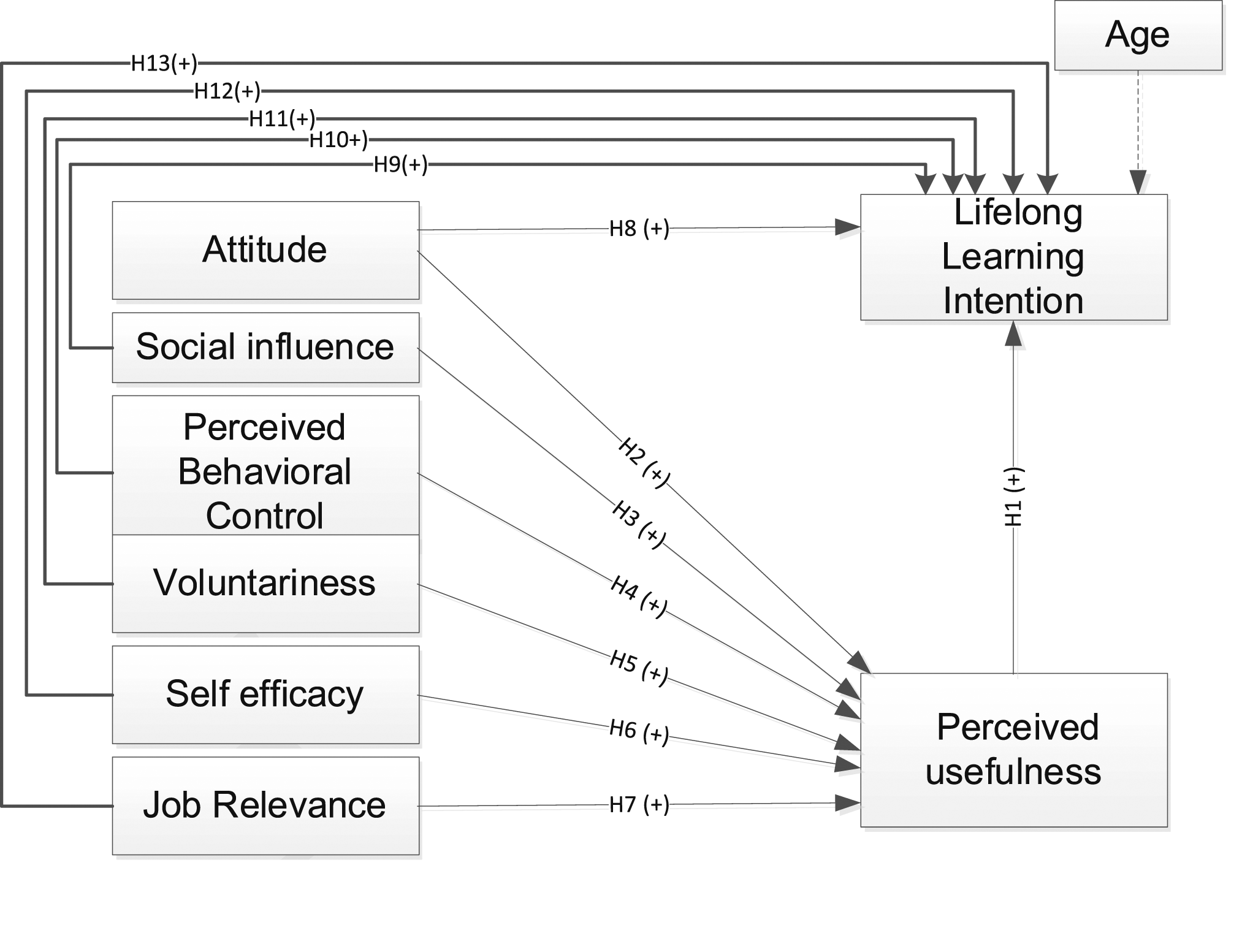
Method
Design and Sampling
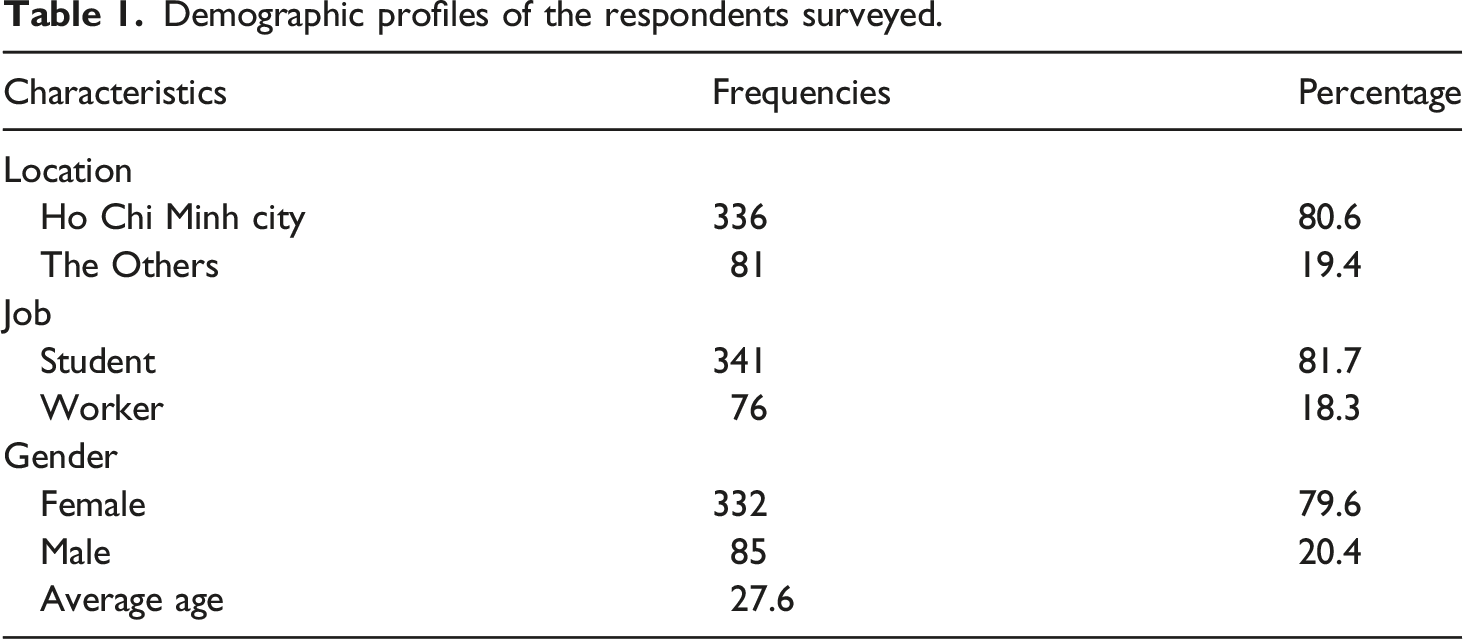
A cross-sectional survey design is chosen because we seek insights from a broad range of adults’ lifelong learning. We use an online survey because of the many advantages of this mode of data collection (Bhattacherjee, 2001). Participants are required to be over the age of 18 and they attended at least a formal or informal course in business major. To ensure data quality, we exclude responses which are lack of consideration and content responsiveness (Parsons et al., 2014).
Demographic profiles of the respondents surveyed.
Measures
This study accepts scales from previous studies; however, items of all constructs are modified for the lifelong learning context. The participants are asked to indicate their degree of agreement on a seven-point scale from 1 (strongly disagree) to 7 (strongly agree) for each item. The questionnaire used in the present study consists of four items for attitude (AT), two items for social influence (SI) and three items for perceived behavioural control (PBC), based on Taylor and Todd (1995). The scales adapted from Venkatesh and Bala (2008) included voluntariness (VOL) (3 items), perceived usefulness (PU) (4 items), self-efficacy (CSE) (4 items) and job relevance (REL) (3 items). While four validated observers of behavioural intention (BI) were measured by using Venkatesh et al. (2003).
Results
Nonresponse and Robustness Test
We test for possible nonresponse bias through an independent sample t-test. Survey responses are split into early and late respondents and analysed for differences in key demographic and study variables (Armstrong & Overton, 1977). The t-test does not yield statistically significant mean differences between the groups. Therefore, nonresponse does not bias our findings.
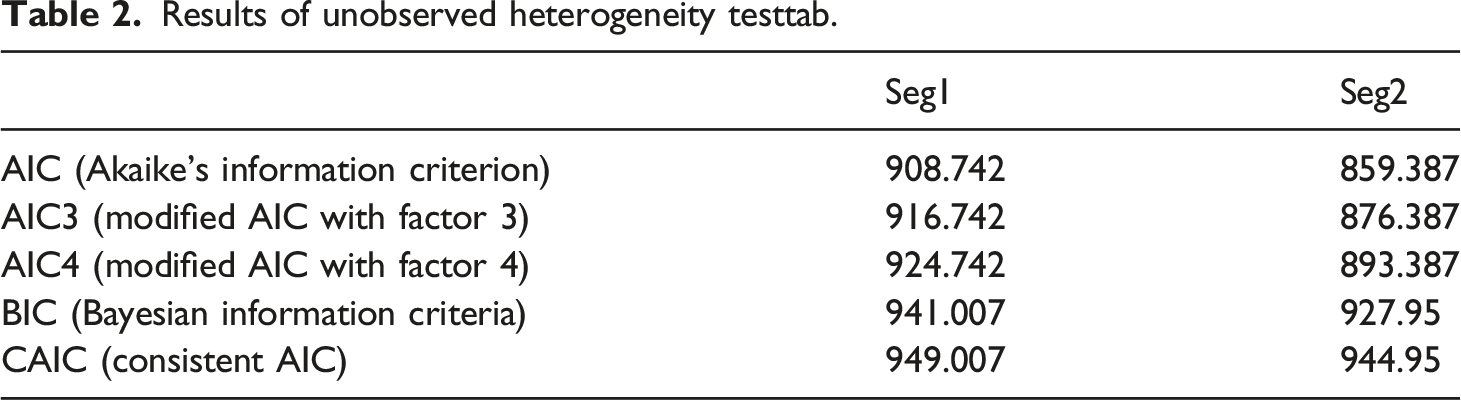
Some robustness methods are conducted to improve the value of these research results. First, we employ statistical techniques to examine common method variance (CMV) (Sharma et al., 2009). Using EFA for Harman’s single-factor test, it shows that one factor only accounts for 31.128% of the total variance (Podsakoff & Organ, 1986). Furthermore, all these Variance Inflation Factor (VIF) indexes are lower than the acceptable thresholds of 3.3 (Kock, 2015). They justified that CMV is not a serious problem in this study.
Results of unobserved heterogeneity testtab.
Measurement Model Evaluation
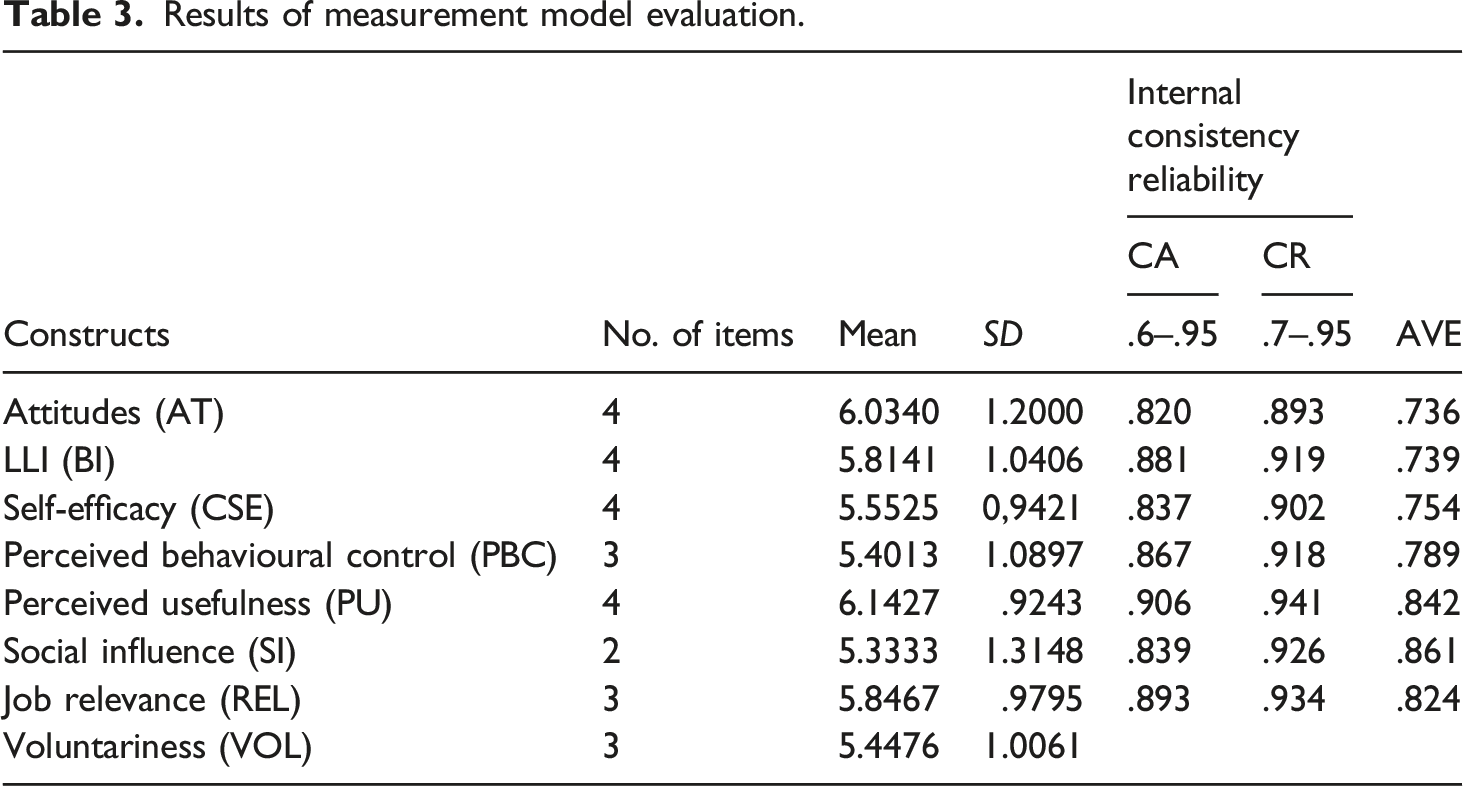
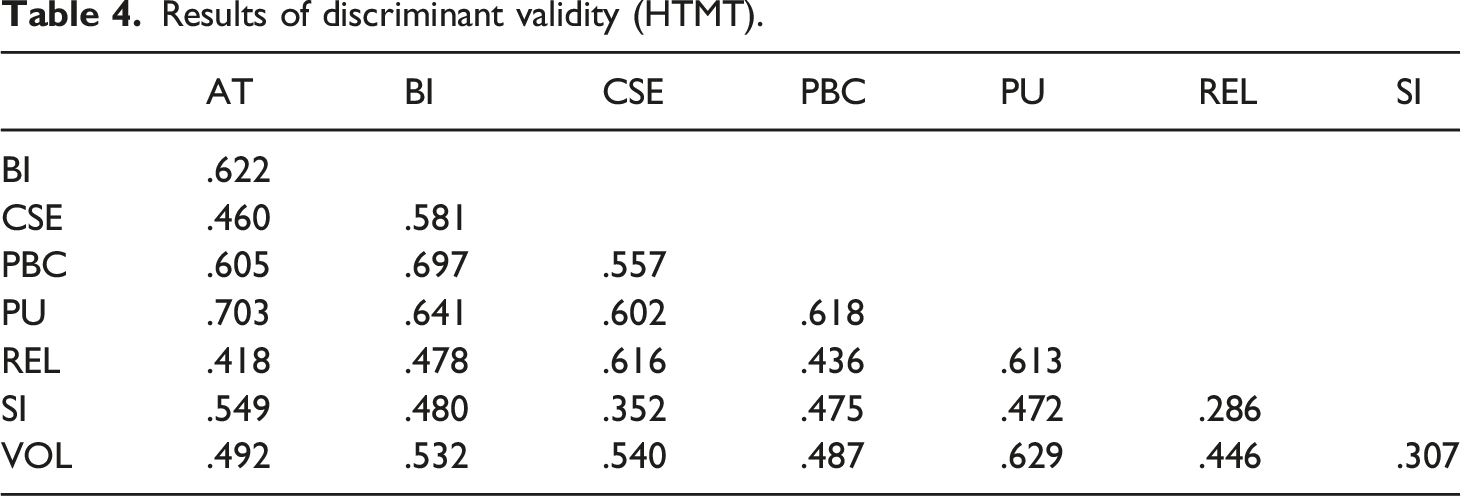
Two items of voluntariness (VOL2 and VOL3) are eliminated due to insufficient factor loadings or cross-factor loadings. For assessing internal consistency reliability, all Cronbach’s alpha (CA) indexes exceed the minimum threshold of .60, which is generally acceptable (Urbach & Ahlemann, 2010). In addition, a composite reliability (CR) of all the constructs is also higher than .7, as suggested by Fornell and Larcker (1981), implying high internal consistency (Hair et al., 2017).
Results of measurement model evaluation.
Results of discriminant validity (HTMT).
Hypotheses Testing
In the structural model, we utilise the bootstrapping technique with 5,000 resamples to estimate the magnitude and significance of path coefficients (β) at the confidence level of 95%. Figure 2 presents that attitudes (β = .278, p < .001), voluntariness (β = .260, p < .001), job relevance (β = .234, p < .001), perceived behavioural control (β = .132, p < .01), self-efficacy (β = .090, p < .05) and social influence (β = .082, p < .05) significantly impact the same direction to PUoLL, confirming H2a, H5a, H7a, H4a, H6a and H3a. Results of PLS path modelling. Note: ***p < .001; **p < .01; *p < .05.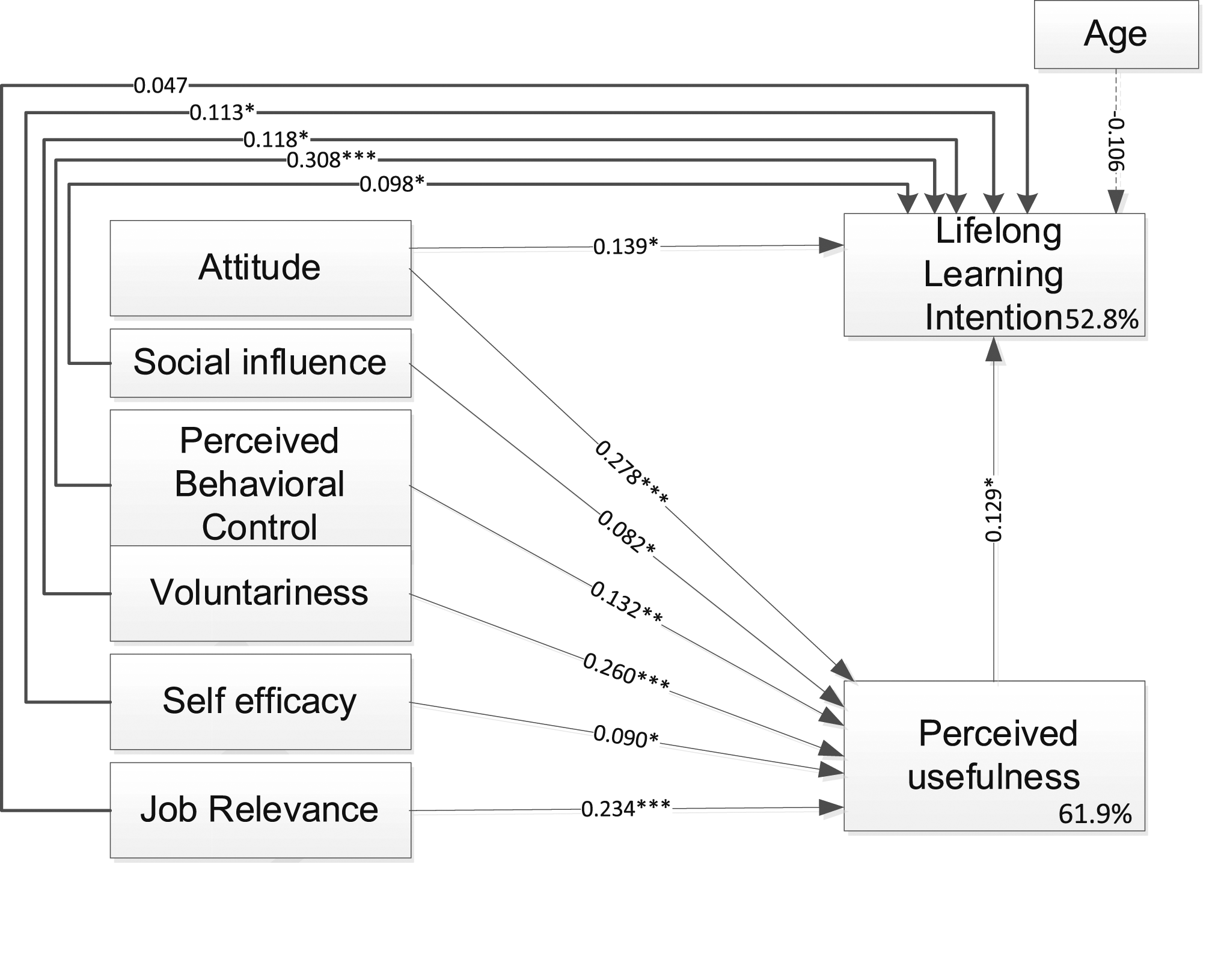
The hypothesis of PUoLL significantly affects LLI of adults (β = .129, p < .05), supporting H1. LLI is impacted by perceived behavioural control (β = .308, p < .001), attitude (β = .139, p < .05), voluntariness (β = .118, p < .05), self-efficacy (β = .113, p < .05) and social influence (β = .098, p < .01) (H4b, H2b, H5b, H6b and H3b are accepted). However, job relevance does not significantly relate to an adult’s LLI (β = .047, p > .05).
The Age of a Vietnamese adult is not considered as a control variable for LLI because the β index is .106 and p- value is over .05.
Post-Hoc Analyses
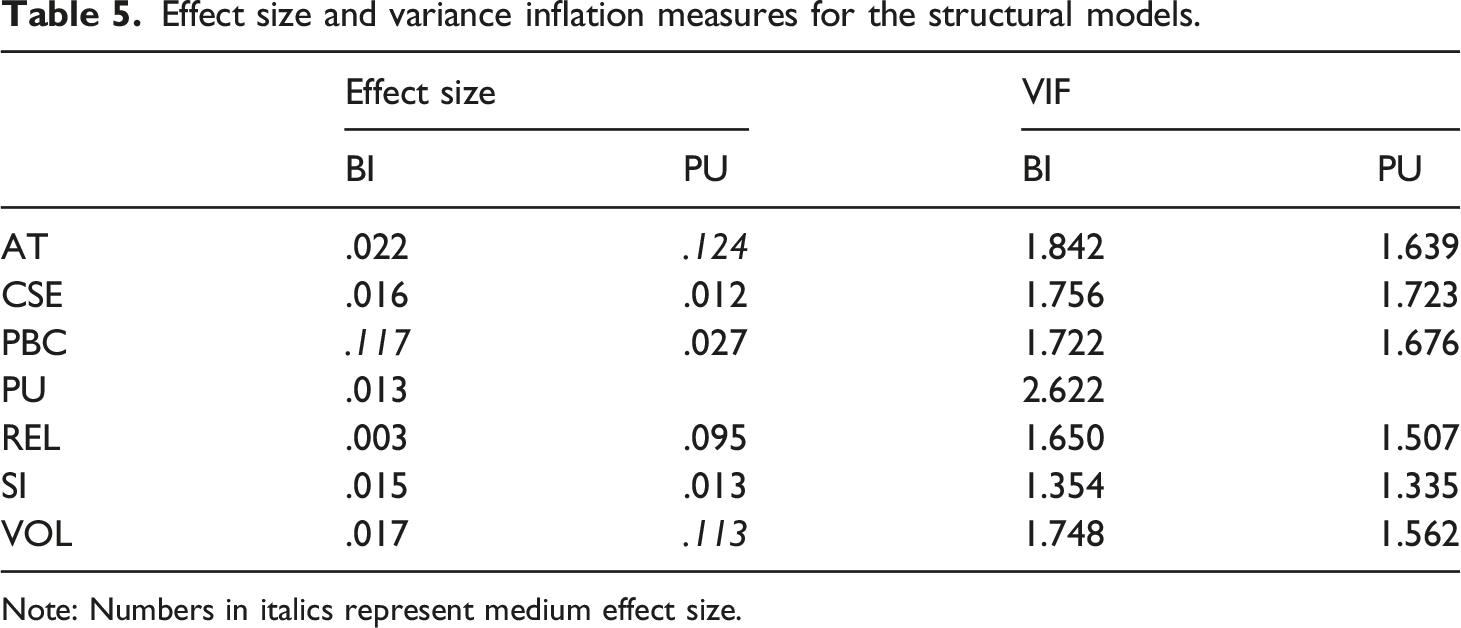
Effect size and variance inflation measures for the structural models.
Note: Numbers in italics represent medium effect size.
All Q2 values are considerably above zero (Q2 of BI is .378, Q2 of PU is .510), thus providing support for the model’s predictive relevance regarding the endogenous latent variables (Hair et al., 2016).
We check for multicollinearity through the VIF index. The collinearity diagnostics given in Table 5 show that VIF for the independent variables is higher than .20 (lower than 5) as the guideline recommended by Hair et al. (2016) which further suggests that multicollinearity does not exist among the independent variables.
The goodness-of-fit index (GoF) is used to investigate the quality of the whole model. The GoF value is .631 and exceeds the cut-off value of .36 for the large effect of R2 (Tenenhaus et al., 2005; Wetzels et al., 2009). Furthermore, the standardised root mean squared residual value (SRMR) is .049 lower than the exclusion threshold (.08). It supports that the proposed research model is highly relevant (Hair et al., 2016).
We test whether nonlinear relationships occur or not in this study. The analysis indicates that nonlinear effects do not exist in our data because the quadratic effects of exogenous variables in the model are not significant (Hair et al., 2017).
Discussion and Implications
Discussion
The results of data analysis show that the PUoLL is affected by six factors. The first four factors that have impacts on the PUoLL include attitude, perceived behavioural control, self-efficacy and social influence. When learners have a positive attitude about lifelong learning, they will feel the usefulness of lifelong learning. This result is completely supported by TPB and previous studies (Ajzen, 1991; Sarwar et al., 2016). In addition, the effects of perceived behavioural control, self-efficacy and social influence on the PUoLL are consistent with the conclusion discovered in the study of Hawkins et al. (1992); Karahanna and Straub (1999); Venkatesh et al., (2003); Jahangir and Begum (2008); Terzis and Economides (2011); Ali (2015); Abdullah et al. (2016); Sarwar et al. (2016); and Chen and Aklikokou (2020). The remaining factors affecting the perceived usefulness include voluntariness and job relevance. These factors are completely consistent with the TAM3 (Venkatesh & Bala, 2008) and previous studies, such as Venkatesh and Davis (2000), Agudo-Peregrina et al. (2014) and Park et al. (2014).
The findings indicate important antecedents of LLI. The LLI is affected by PUoLL and five other factors including perceived behavioural control, attitudes, voluntariness, self-efficacy and social influence. This conclusion is completely supported by the conclusions of TPB (Ajzen, 1991) and Sarwar et al. (2016). The effects of perceived behavioural control, attitudes, voluntariness, self-efficacy and social influence on the behavioural intention were completely confirmed in previous studies such as Venkatesh and Davis (2000), Agudo-Peregrina et al. (2014), Lwoga et al. (2015) and Sarwar et al. (2016).
In our context, job relevance does not significantly relate to an adult’s LLI. The rejection of hypothesis H7b in this study is different from the study of Noe and Schmitt (1986) and Mathieu et al. (1992). However, this result is reasonable when compared with the TAM3 model (Venkatesh & Bala, 2008). In line with the research of Fagan (2019), the results of this study show that the age of learners does not influence LLI. Similarly, the effect of university education on lifelong learning tendency by age of teachers is not statistically significant (Tezer & Aynas, 2018).
Management Implications
Our findings reinforce and enhance the perspective of businesses and educators in developing their employees and students as lifelong learners. Educational institutions, workplace managers and government could boost LLI of adults through improving attitude, perceived behavioural control, social influence, self-efficacy and voluntariness. Learners have a perceived usefulness, perceived behavioural control, proactive attitude, self-efficacy, voluntariness towards lifelong learning, the LLI will be built in their mind and leads to a high willingness to participate in learning throughout their lives. Therefore, it is important that educational institutions can robust learners’ intention regarding lifelong learning by promoting these elements. Individuals are ready to join in the lifelong learning environment as they already have a favourable feeling towards it, so educational institutions should help their students conceive about the importance of a lifelong learning mindset for success in careers. Furthermore, universities should establish their formal education which follows a general orientation towards lifelong learning. Students need to be provided skills related to self-control capability and self-study to be more proactive with changes in the workplace environment as well as to be willing to participate in new courses beyond the formal educational programmes. Universities should also take advantage of digital advances to innovate training methods so that learners have more opportunities to access different courses.
The important role of lecturers cannot be ignored in establishing a positive attitude towards LLL of students. Educators must have LLL capacity and become role models for learners to follow. Lecturers need to develop appropriate and effective educational methods to arouse, nurture and promote a passion for learning in their students. Managers of universities should also build a favourable environment for teaching and learning, support lecturers in learning and improve student-centred teaching methods.
Learners’ awareness of their financial ability to pay for lifelong learning and confidence in the quality of education should be emphasized to promote perceived behavioural control and motivate individuals to choose lifelong learning. Therefore, educational institutions and government agencies should develop financial support policies for learners. Universities need to seriously improve the quality of training programs and consider them as their sustainable development strategy.
Social influence is one of the main factors that influence both perceived usefulness and LLI. It provides an insight to government agencies to perceive their role in developing lifelong learning. The government needs to consider issuing effective policies regarding lifelong learning to robust adults’ LLI and improve citizens' cognition about lifelong learning. There should be close, synchronous and regular coordination between universities, the Educational Ministry and socio-political organisations in propagating and explaining to learners the benefits of lifelong learning. This work must be based on a legal basis officially issued and approved by the government. Its results not only increase attitudes about LLI among learners, but also increase awareness among citizens, such as family, friends and teachers who have a positive influence on the learning attitude of the learners. In addition, higher education centres could consider lifelong learning as a primary strategy to attract potential learners in a noticeable competitive context between universities.
Enhancing voluntary learning and controlling social influences on learners are closely related to the establishment and implementation of their social relationships. Teachers and families should only guide, not force learners in career orientation. Learning is only effective if it comes from the learner’s interest, ability and voluntariness. Therefore, the whole society and especially the family should pay attention to the learning of family members, creating all conditions to encourage their relationships to pursue their studies.
We find that these strategies are supported by Thummaphan and Sripa (2022). They concluded that to build lifelong learning cities in Thailand, the authorities should base upon the 4Com principle comprising community, communication, commitment and combination.
Conclusion
The Lifelong learning behaviour of adults is caused by their LLI. In addition, PUoLL is crucial for lifelong learning initial adoption. However, there have been few studies on LLI, particularly in which the adoption of lifelong learning is made in a voluntary manner. Thus, this study has tried to provide empirical evidence of the significant role of PUoLL and LLI in Vietnamese adults in the business sector.
The results of this empirical study provide some interesting theoretical and practical insights. Theoretically, we confirm that PUoLL plays a significant role as a predictor of LLI in adults. Additionally, the finding suggests that LLI could be theoretically increased by enhancing perceived usefulness, perceived behavioural control, attitude, voluntariness, self-efficacy and social influence. For improving PUoLL, changing in attitude, voluntariness, job relevance and perceived behavioural control of adults should be prioritised solutions. Finally, PUoLL could be improved when adults have self-efficacy as well as feeling social pressure from the people closely related to them.
In conclusion, this study contributes to expanding our understanding of the role of PUoLL and some factors related to individual learners and social environment in conjunction with their LLI in the business sector. Although the study has limitations of generalisability due to the nature of the cross-sectional study in a particular country, the proposed research model is useful as a basic model to extend with other meaningful factors that reveal significant antecedents and their consequences in the LLI of adults in the business sector. Also, cross-cultural and more empirical studies in the different domains of the education sector are highly encouraged.
Footnotes
Declaration of conflicting interests
The author(s) declared no potential conflicts of interest with respect to the research, authorship, and/or publication of this article.
Funding
The author(s) disclosed receipt of the following financial support for the research, authorship, and/or publication of this article: This work was supported by Vietnamese Ministry of Education and Training (the code of project: B2022-KSA-09).
