




Abstract
Due to globalisation and migration, the Arabic-speaking population in Europe has rapidly increased over the past few decades. To maintain the Arabic language, children across Europe attend community-based heritage language education. With the development of new communication technologies, digital Arabic heritage language education is gaining popularity. Although previous research from community-based Arabic heritage language education in physical educational settings indicate that some translanguaging is taking place, little is known about how the digital setting of online Arabic heritage language teaching influences language practices and pedagogies. Hence, this article investigates the following research question: How does a heritage language teacher of Arabic use translanguaging as a pedagogy in digital heritage language education? To answer this question, a digital linguistic ethnography over 7 months was conducted, involving digital classroom observations, interviews with one teacher and five students and the collection of documents. Adopting a translinguistic perspective, the analysis shows how the teacher capitalised on students’ translingual resources to create a safe space, challenging language hierarchies and supporting the development of literacy skills in Modern Standard Arabic. Based on these findings, we discuss how the online teaching setting contributes to shaping the language practices of the digital classroom.
Keywords
Introduction
Due to globalisation and migration, the Arabic-speaking population in Europe has rapidly increased over the past decades (United Nations Educational, Scientific and Cultural Organisation [UNESCO], 2019). To maintain the Arabic language, children across Europe attend community-based heritage language education (Gogolin, 2021; Steenwegen et al., 2023). With the development of new communication technologies, digital Arabic language education is gaining popularity (Hilmi, 2021). Indeed, recent studies from have found that the pandemic accelerated the popularity of digital heritage language learning and prompted teachers to adapt their teaching to the new reality (Burgo, 2023; Cun, 2024; Hancock and Hancock, 2024; Wang, 2021; Zabrodskaja et al., 2024). Previous research has suggested that the particular ways of organising Arabic heritage language education in the diaspora influence the purpose, content and materials used in a specific context (Iversen, 2024). However, limited research has been conducted on how the transnational (and often transcultural) nature of digital heritage language education influences the teaching of Arabic in such settings.
In this study, we are specifically concerned with how transnational settings influence language use and pedagogies in digital classrooms. Arabic learners in the diaspora typically grow up in multilingual environments, where they are exposed to one or more varieties of Arabic in their daily interactions at home and within their Arab communities, alongside the society’s majority language, which often functions as their second language. Previous research on heritage language education has highlighted the importance of capitalising on students’ complete linguistic repertoires – embracing their diverse language skills and experiences – to develop instructional practices leverage the learners’ complex linguistic realities (see Abourehab, 2024; Abourehab and Azaz, 2023). Hence, we investigate the following research question: How does a heritage language teacher of Arabic use translanguaging as a pedagogy in digital heritage language education? This research question was investigated through 7 months of digital ethnographic fieldwork involving digital classroom observation in a community-based Arabic heritage language school, interviews with one teacher based in Italy and five primary school students based in the US, and the collection of relevant documents, including the school’s curriculum and teaching materials.
Translanguaging in education
The so-called trans-approaches or translinguistic perspectives on language and identities have gained significant support among linguists and educationalists alike over the past couple of decades (Bonacina-Pugh et al., 2021; Fuster and Bardel, 2024; Singleton and Flynn, 2022; Zaidi and Sah, 2024). What these approaches and perspectives share is a joint understanding of how speakers’ competence in different named languages are interconnected, and how these competencies entail an untapped potential in education (García, 2009; García and Wei, 2014). Currently, translanguaging is a term used to describe naturally occurring language use in linguistically diverse settings (García and Wei, 2014; Lee and Dovcin, 2020), as a theory of language (Otheguy et al., 2019; Wei, 2018) and as an approach to education (García et al., 2017). The latter is often referred to as pedagogical translanguaging (Cenoz and Gorter, 2021; Juvonen and Källkvist, 2021) and is what the current article is concerned with. Pedagogical translanguaging may take the form of a planned and strategic use of translanguaging and a more flexible and spontaneous form (Bonacina-Pugh et al., 2021; Fuster and Bardel, 2024), both of which are relevant for this study.
While students have historically been required to learn through the medium of a single language (often the official national language) (Gogolin, 2021), pedagogical translanguaging capitalises on students’ complete linguistic repertoire for the purpose of learning (Cenoz and Gorter, 2021; García and Wei, 2014). Moreover, pedagogical translanguaging has the ambition of transforming education by challenging monoglossic language ideologies and, consequently, hegemonic language hierarchies (Ganuza and Hedman, 2017; García and Wei, 2014). As such, pedagogical translanguaging can be defined as ‘activating multilingual speakers’ resources so as to expand language and content learning’ (Cenoz and Gorter, 2021: 1). García et al. (2017: ix) identified the following four advantages associated with pedagogical translanguaging:
Support students as they engage with and comprehend complex content and texts
Provide opportunities for students to develop linguistic practices for academic contexts
Make space for students’ bilingualism and ways of knowing
Support students’ socioemotional development and bilingual identities
In addition, researchers have demonstrated how pedagogical translanguaging positions students’ multilingualism as a resource and consequently strengthens students’ multilingual identities (Krulatz and Iversen, 2020; Sierens and Van Avermaet, 2014). The space for students’ bilingualism created through translanguaging, is what Wei (2015) has referred to as a ‘translanguaging space’. This is ‘a social space for multilinguals to perform and transform their identity, attitudes and values’ (Wei, 2015: 196). Researchers have found translanguaging spaces to be ‘safe spaces’ as it can ensure a positive identity and reduce language anxiety (Capstick, 2020; Capstick and Ateek, 2024). Nevertheless, Lang (2019) has argued that this safe space still needs to encourage risk-taking in order for students to develop new language practices.
Translanguaging and Arabic heritage language education
Arabic is a multiglossic and multidialectal language, with a significant distinction between the formal Modern Standard Arabic (MSA) used in education and media and the various colloquial dialects used by people in everyday interactions across the Arab world (ElHawari, 2021). Haeri (2003) argued that the distance between people’s everyday language and MSA is problematic for many reasons and in need of reform. However, she highlighted that the strong religious and political association between Classical Arabic of the Qur’an and MSA prevents such necessary reforms (Haeri, 2003). In the Western diaspora, religious and political interests reinforcing this association are potentially weaker. In Europe, speakers of Arabic constitute a highly diverse community of speakers with origins from countries across the Arab world and with various connections to Europe. Some have already lived in Europe for generations, while others have recently migrated to Europe (UNESCO, 2019).
Iversen (2024) studied Arabic heritage language education taking place in public and community-based schools in Scandinavia. He found that the organisation of the education significantly influenced the purpose, content and materials of the education (Iversen, 2024). Studies from a Muslim community centre in the United States (Azaz and Abourehab, 2021) and several Muslim independent schools in Australia (Kawafha and Al Masaeed, 2023) both found that Arabic teachers were ideologically opposed to translanguaging, although they indeed engaged extensively in translanguaging practices in their own Arabic teaching. In Abourehab and Azaz (2023), translanguaging was actively employed by teachers and students to navigate linguistic knowledge despite a monolingual language policy favouring MSA, valued for its ‘purity’ and connection to Islamic heritage. Similarly, in Kawafha and Al Masaeed (2023), teachers employed translanguaging to address learners’ needs, even when the teachers preferred an MSA-centred teaching approach. Similar hesitance to engage with translanguaging has been identified in other studies of Arabic language education contexts (see, e.g., Al-Bataineh and Gallagher, 2021). Azaz and Abourehab (2021) argued that this resistance towards translanguaging potentially prevented students’ learning. Furthermore, Kawafha and Al Masaeed (2023) suggested that teachers need more training in how to purposely activate students’ whole linguistic repertoires to support their learning.
Indeed, recent studies have argued that there is a need for more flexible approaches to Arabic heritage language teaching (Ali, 2024; Oraby and Azaz, 2024; Vanpee, 2024). Specifically, researchers have argued for the need to develop curricula and instructional models challenging conventional language hierarchies in Arabic language education (Rabie-Ahmed and Mohamed, 2024; Vanpee, 2024). Reporting from Arabic heritage language education at a Muslim community centre in the United States, Abourehab and Azaz (2023) stated that MSA ‘is believed to be the pure variety that grants heritage learners access to Islamic history, traditions, and rituals’ (p. 408). Nevertheless, the researchers found that translanguaging was actively used to support students’ acquisition of lexical and grammatical knowledge of MSA (Abourehab and Azaz, 2023). Furthermore, they found that the multidialectal practices they observed not only contributed to supporting students’ learning but also gave a voice to their dialectal identities (Abourehab and Azaz, 2023). Even though the community centre’s official language policy was based on monoglossic language ideologies, the translanguaging challenged these ideologies and affirmed students’ complex language repertoires.
Methods
In this article, we investigate how a heritage language teacher of Arabic uses translanguaging as a pedagogy in digital heritage language education. This was investigated through digital linguistic ethnography involving 7 months of digital classroom observations, interviews with one teacher and five students and the collection of various documents. We use the term digital linguistic ethnography, which merges digital ethnography with linguistic analysis, to study the ways in which individuals build communities, knowledge and identities through digital technologies and how these in turn shape the individuals’ linguistic practices (Blommaert, 2018; Varis and Hou, 2020).
Research setting
The ethnographic fieldwork was conducted in a community-based Arabic heritage language school offering online teaching outside of mainstream education and after regular school hours. The teaching sessions mainly targeted children, teenagers and adolescents from the worldwide Arab diaspora. The school offered sessions every day of the week, although most sessions were held during the weekend. The school promoted itself as a multicultural institution, offering classes in Arabic as a heritage language, as well as a second language, along with fostering an understanding of Arab culture. As reported by the principal and the teacher, the school emphasised the development of students’ communicative skills in both written and spoken Arabic, with an emphasis on the spoken dialectal varieties of Arabic. With its explicit vision of cultivating ‘global citizens’, the school’s instruction focused on five aspects: communication, culture, connection, comparison and community.
The first author participated in weekly one-on-one sessions with one heritage language teacher, Sara, and five of her students: two siblings (Bob and Daylina) alongside three other siblings (Dana, Sherine and Diana) aged 7–13. 1 Two of the students received 1-hour sessions, while the three youngest students had a half-hour session each week. The students were children or grandchildren of Arab immigrants who had been born and resided in different parts of the United States. In addition to their proficiency in English, all students demonstrated an understanding of Levantine Arabic (LA), which was used in their homes alongside English to varying degrees. The students had enrolled in the school primarily to develop their oral communication skills in LA, in addition to developing literacy in MSA. Diana and Sherine also possessed basic Spanish proficiency, and Bob and Daylina had some knowledge of Farsi. Bob and Daylina had familial ties to Iran, Palestine and Italy through their parents and grandparents. Dana, Sherine and Diana shared a connection to Palestine and Jordan – their parents’ and grandparents’ countries of origin.
While the principal and school management were located in the United States, Sara delivered her online classes from Italy. Originating from Syria, the teacher had extensive experience teaching Arabic onsite, both from Syria and Italy. Moreover, she has been involved in online teaching since the establishment of the school. Alongside her educational background and career in economics, the teacher held professional qualifications in teaching Arabic as a second language from an Italian university. She was proficient in MSA and LA, as well as in English and Italian.
Fieldwork
The fieldwork consisted of extensive digital classroom observations of online teaching over the course of 7 months. On the principal’s request, the first author kept her microphone muted and her screen turned off during the observations after she had initially introduced herself to the participants at the onset of the fieldwork. In addition to the observations, the first author conducted interviews in person with Sara, one-on-one interviews with the five students, an interview with one parent from each sibling group and an interview with the school’s principal over Zoom. Teaching materials, session plans and the school’s curriculum were also collected. Data collection extended to the school’s published content on its website and social media platforms, as well as external material about the institution available online. Part of the data collection process involved traditional ethnographic methods, including meeting Sara in person in Italy. During this one-week fieldwork onsite, the first author took detailed field notes on various aspects of the school, including the preparation for teaching sessions, the digital tools and teaching aids, as well as other teaching materials and tools developed by the school.
The fieldwork resulted in 39 h of screen recordings, including both video and audio recordings of Dana, Sherine and Diana. Additionally, Sara recorded 20 hours and 30 minutes of audio documenting the instructional sessions with Bob and Daylina. Moreover, the fieldwork resulted in 13 hours of interviews with all the participants, 2 hours and 35 minutes of informal interviews and voice messages on WhatsApp between the first author and Sara and 230 A4 pages of field notes. To investigate the research question, a strategic selection of oral interactions between the teacher and the students was transcribed. These sessions were selected based on what the first author highlighted in her field notes as interactions between the teacher and the students that were relevant to the research question. The selected excerpts were transcribed to Arabic using the Latin script, a convention referred to as Arabizi (see Alsulami, 2019; Duwairi et al., 2016) 2 and combined with a transcription using the Jefferson Transcription System (see Jefferson et al., 2015). 3 All excerpts were translated into English, followed by abbreviations and font-type key guides. 4
Methods of analysis
Blommaert and Jie (2020) asserted that in ethnography, ‘the whole process of gathering and moulding knowledge is part of that knowledge; knowledge construction is knowledge, the process is the product’ (p. 10). Aligning with this assertion, our data analysis began while the first author was in the field. At an early stage of the fieldwork, our attention was drawn to the teacher’s language practices. The first author recorded in her field notes rich points illustrating the language use in the digital classroom. As the fieldwork developed, the first author noticed how the teacher capitalised on the students’ diverse linguistic repertoire. By adopting a translanguaging perspective, we interpreted these practices as examples of pedagogical translanguaging that activated these diverse resources to challenge monolingual ideologies and promote language and content learning (e.g. Cenoz and Gorter, 2021). After the fieldwork had been completed, the analysis process involved careful reading of field notes, transcripts of classroom interaction, interviews and voice messages. Additionally, we examined the school’s documents, online publications, curriculum, lesson plans and students’ work. Following ethnography’s abductive, iterative and recursive logic (Skukauskaitė and Green, 2023), we categorised and interpreted the teacher’s language practices in light of previous research and relevant theoretical concepts. What the first author observed led her to also focus on translingual practices with a focus on the variation in dialects and different varieties of dialects. Accordingly, it enabled the discovery of new ideas and rich points in the teacher’s language practices (e.g. Atkinson, 2017; Skukauskaitė and Green, 2023), which differed from conventional ways of teaching Arabic as a heritage language (e.g. Abourehab, 2024; Abourehab and Azaz, 2023). Through this abductive, iterative and recursive analysis, three primary functions of the teacher’s translanguaging were identified.
Research ethics
Before commencing the fieldwork, all the participants (and parents) were briefed about the project and signed consent forms indicating their agreement to be observed, recorded and interviewed. The participants received information letters in both Arabic and English, supplemented by a simplified multimodal version for the students. Interviews were conducted in the participants’ preferred language(s). Parental consent was obtained for the video and/or audio recordings of the students. The study complied with the digital research guidelines provided by the Norwegian National Committee for Research Ethics in the Social Sciences and Humanities (2019, 2022). These measures were implemented to safeguard the vulnerability of the participants as ethnic minorities, children and adolescents and to ensure ethical interactions throughout the research process, including assigning pseudonyms to the participants. The collected data were securely stored and analysed in line with European and Norwegian data protection regulations.
Despite adherence to formal research ethics requirements, reflexivity, as in all ethnographic research, was essential for maintaining the researcher’s self-awareness and critical reflection (Blommaert and Jie, 2020; Patiño-Santos, 2020). As an immigrant researcher from the Levant, the first author recognised that her shared linguistic and cultural background in many ways positioned her as an insider (Ryan, 2015; Trzeszczyńska, 2022: 847). As a white Norwegian-born researcher with only limited Arabic language skills, the second author was, in many ways, an outsider to the field under study. Our different positionalities influenced our decision-making and relationships with the participants throughout the research process (Blommaert and Jie, 2020; Patiño-Santos, 2020). However, Martin-Jones and Martin (2017: 190) highlighted that insider/outsider status is complex and subject to negotiation. Despite her expertise in heritage language education and her familiarity with the students’ cultural and linguistic backgrounds, the first author’s unfamiliarity with the digital realm challenged her insider positionality and power dynamics with the participants.
Analysis
Through the analysis, we identified three main functions of Sara’s translanguaging in digital heritage language education. Her openness to translanguaging contributed to creating a safe space for the students, challenged conventional language hierarchies in Arabic language education and supported the student’s development of literacy skills in MSA.
Creating a safe space
The analysis of the recorded teacher–student interactions, students’ work and student interviews showed that the learners experienced the digital classroom as a safe space for translanguaging. In line with recommendations from recent research (e.g. Ali, 2024; Rabie-Ahmed and Mohamed, 2024; Vanpee, 2024), the school aimed to develop students’ communication and literacy skills in Arabic by drawing on student’s complex linguistic practices and repertories. This aim was articulated in the school’s multilingual and multiglossic policies. Researchers have found that such translanguaging approaches can contribute to the creation of safe spaces in the classroom (Capstick, 2020; Capstick and Ateek, 2024; Lang, 2019), and the school’s official openness to flexible language practices clearly contributed to creating a safe space for the students in our study.
On their website, the school presented its multilingual and multiglossic policy, which explicitly stated its aim to capitalise on learners’ multilingual and multiglossic resources. For example, the school described how its approach to heritage language education was designed to help students ‘connect with their cultural and linguistic heritage’. Furthermore, the website introduced its method of blending ‘classical and colloquial Arabic’ to equip students with the skills to communicate effectively in everyday situations. This approach was facilitated by the school’s digital organisation, as it proudly offered a multilingual (Arabic and English/French) and multiglossic (MSA and Arabic dialect varieties) interactive ‘multimedia curriculum’, which catered to diverse learning styles with a focus on both ‘written and spoken Arabic’. In addition, the school offered a so-called extended programme in which the school connected Arabic-speaking students ‘worldwide’, allowing them to ‘freely exchange’ their thoughts, interests and updates ‘in any language’ and the language form ‘they choose’. The explicit aim of this programme was to create ‘a safe space’ where learners could use their whole linguistic repertoires, including their Arabic language skills, to establish friendships and social networks. Thus, ensuring a positive identity as multilinguals among the students and reducing anxiety around speaking Arabic (e.g. Capstick, 2020; Capstick and Ateek, 2024; Lang, 2019).
During the first author’s fieldwork in Italy, Sara explained that the school’s multilingual and multiglossic approach to teaching Arabic was reflected in how they selected teachers for each student. She explained that before any student enrolled, they always conducted an orientation talk among the principal, parents and student to understand the student’s linguistic background, interests and goals in learning Arabic. In this way, the school could tailor the teaching to the student’s needs by matching them with a teacher who shared a similar language repertoire and interests. Sara reported that the principal often selected teachers speaking the student’s first language to build on their existing language skills. This practice reflected the school’s multilingual approach and commitment to a translanguaging pedagogy, allowing students to draw on their complex linguistic repertoires while learning Arabic.
When the first author asked Sara about the use of diverse linguistic resources in the digital classroom, particularly different dialectal varieties of Arabic and MSA, Sara responded by highlighting her students’ motivations for participating in the heritage language course:
Example 1: Voice message from Sara, 24 September 2023 5
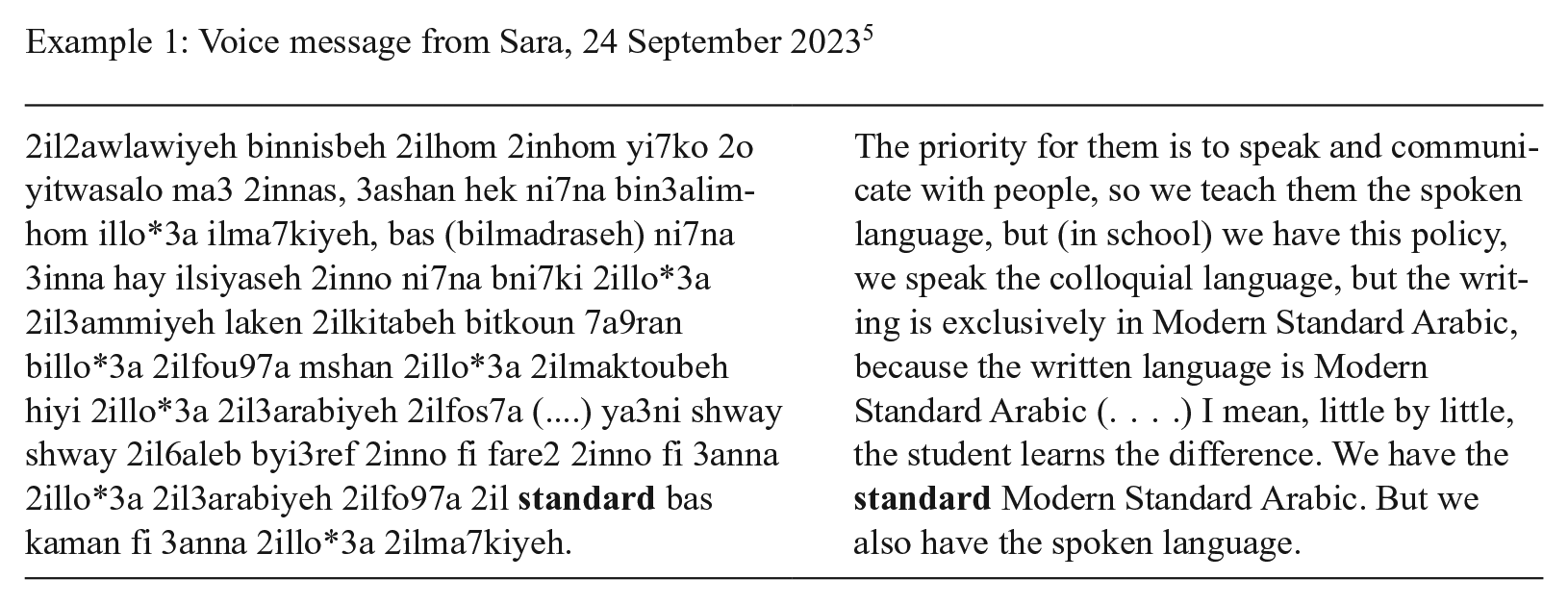
In this statement, Sara emphasised the school’s recognition of Arabic as a diverse, multi-dialect language and her understanding of the students’ complex journey to develop their Arabic language skills. To address this complexity, the school adopted a policy that created a translanguaging space to support students in building communication skills in both the Arabic dialect spoken in their homes and communities and MSA for formal written communication. One example of how Sara used translanguaging to create a safe space for students to develop communication skills in Levantine Arabic was her method of opening and ending each session by asking the students about their recent activities. The excerpt below shows how translanguaging helped Dana, a 7-year-old student, to express herself and develop her communication skills in LA:
Example 2: Recording from session with Dana, 5 November 2023
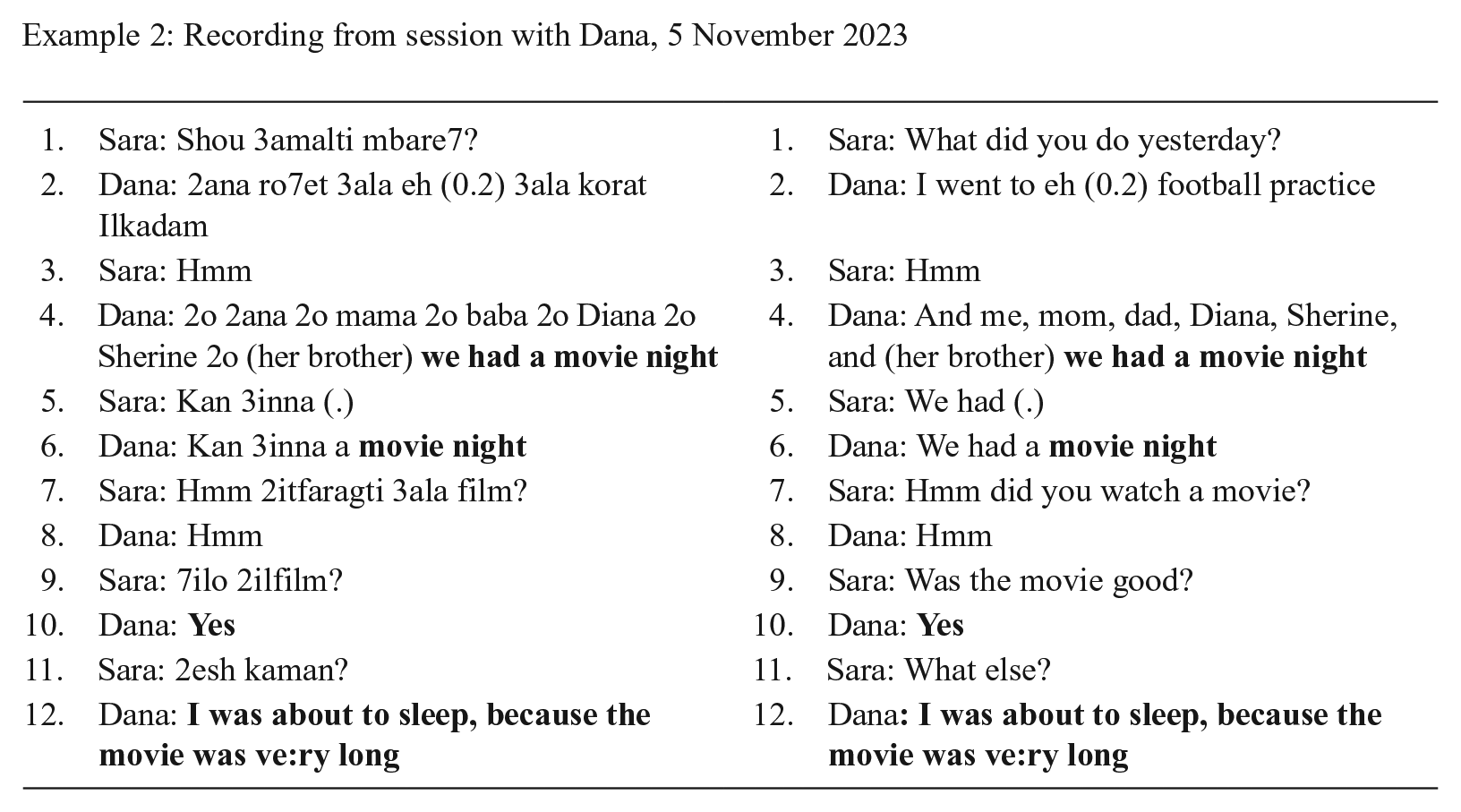
As we can see from this excerpt, Dana engaged in translanguaging practices, drawing on her linguistic resources in both LA and English. As evident from her continued use of English (lines 6, 10 and 12), Dana apparently perceived the digital heritage Arabic sessions as a safe space for translanguaging. Sara also permitted the use of LA (lines 1–3 and 7–9) and English (lines 4, 6, 10 and 12) and thus created a translanguaging safe space for Dana to utilise her multilingual and multiglossic resources in the development of her communication skills in Arabic. In a voice message dated 21 January 2024, Sara explained that this strategy encouraged students to express themselves in Arabic and discuss their daily lives.
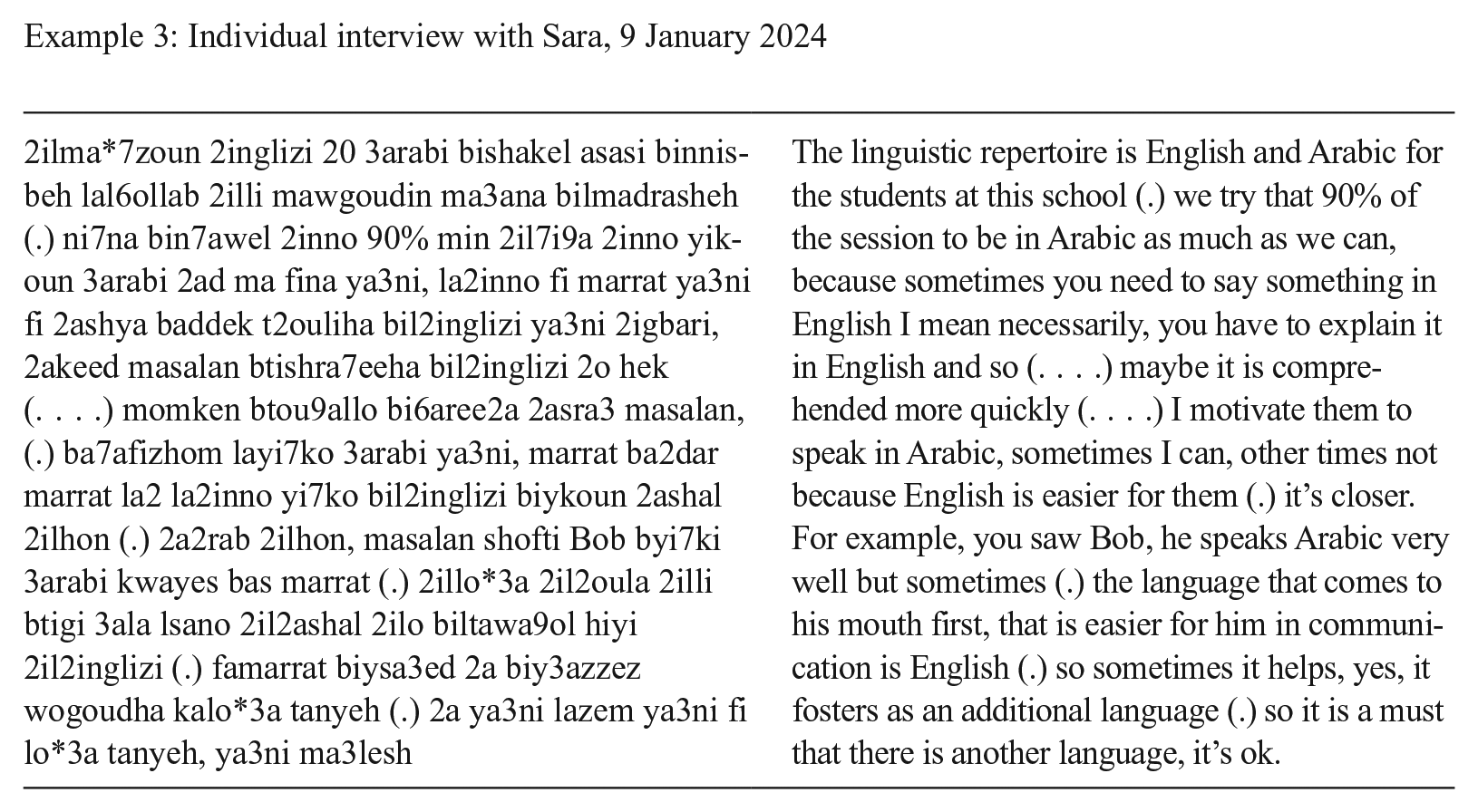
Throughout the fieldwork, Sara consistently capitalised on the students’ linguistic resources. English, a language that the students used in addition to LA in their everyday lives, was particularly frequent. When interviewed, Sara explained that she found it essential to use both Arabic and English during the sessions since the students were comfortable using both:
Example 3: Individual interview with Sara, 9 January 2024
How Sara’s flexible language policy influenced her students became evident in the 7-year-old Daylina’s poster about pollution. Not proficient in MSA literacy yet, she challenged the way written texts could be presented in the Arabic classroom by conveying her message using English phrases (e.g. ‘Go! Good!’ with a smiley face, ‘Stop. Bad.’ with a sad face and ‘I wish the oshen [sic] was clean’). During the session, Sara did not comment on the student’s use of English. Rather, she encouraged Daylina to add an audio recording in LA describing her drawing.
Example 4: Daylina’s poster from session, 18 February 2024
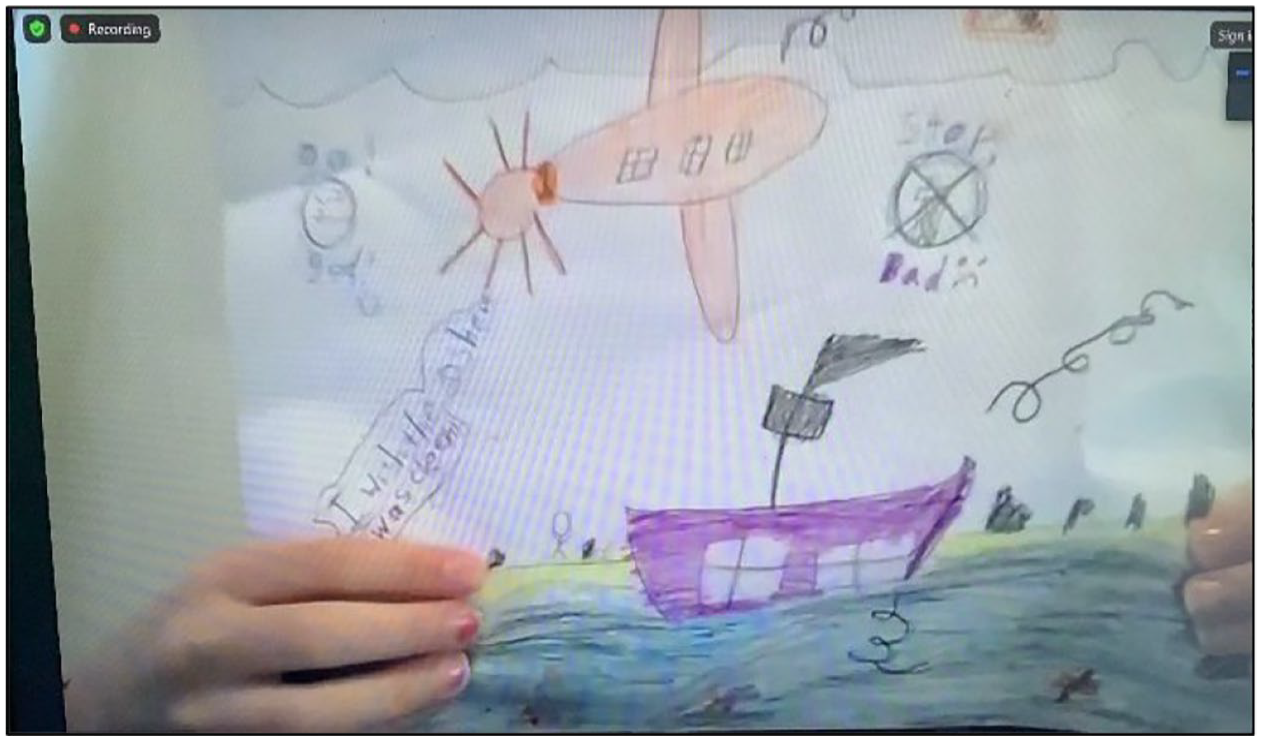
The use of multimodalities facilitated the creation of a safe translanguaging space for the students to use their linguistic repertoires critically and creatively during the Arabic sessions. The students were encouraged to produce and present their work through MSA, LA, drawings, symbols and pictures found on the Internet. Sara also encouraged them to write texts in MSA and include audio recordings in LA. Nevertheless, she never criticised the students for using English. On the contrary, she explicitly states that ‘it is a must that there is another language’. These flexible language practices all contributed to creating a translanguaging safe space for the students (e.g. Capstick, 2020; Capstick and Ateek, 2024; Lang, 2019).
Challenging language hierarchies
As we have already suggested, LA varieties and English were flexibly used in oral communication between the teacher and students throughout the fieldwork. Such translanguaging practices effectively challenge language hierarchies that typically privilege MSA and often promote an Arabic-only policy in Arabic language education (Ali, 2024; ElHawari, 2021; Haeri, 2003; Vanpee, 2024). In line with the critical potential in pedagogical translanguaging (García and Wei, 2014; Oraby and Azaz, 2024), the teacher challenged the conventional monolingual approaches to Arabic language education and thus destabilised language hierarchies and borders between and among standard and dialectal varieties. Conversely, she expanded and extended the typically valued linguistic practices in educational settings by including language practices common in students’ homes and communities (e.g. García and Wei, 2014).
In line with her translanguaging approach to Arabic heritage language teaching, Sara activated Arabic linguistic resources that her students were familiar with and used in their everyday lives. For Sara, developing the students’ LA skills was critical to enable them to establish and maintain relationships with other speakers of this Arabic variety, including family members in their parents’ countries of origin. Sara explicitly expressed this objective when asked about using LA varieties alongside MSA:
Example 5: Voice message from Sara, 24 September 2023
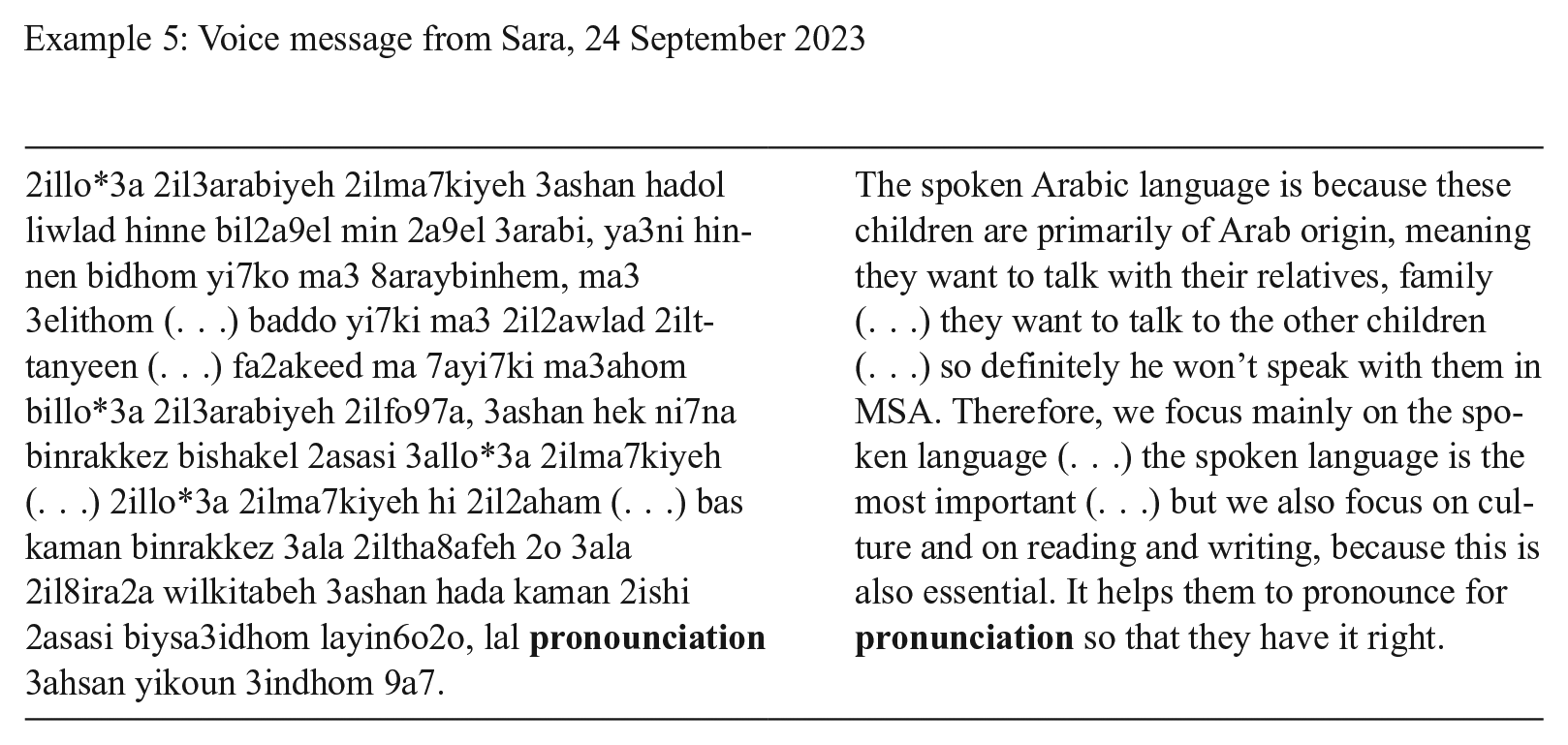
In this excerpt, Sara explained why the school prioritised dialectal varieties of Arabic over MSA. Aware of Arabic’s multiglossic nature, Sara valued LA as essential for communication and relationship-building within the diasporic community and the Levant at the same time as she would integrate cultural and literacy elements to ensure comprehensive language development. Recognising that MSA is not used in informal speech, she adopted a translanguaging pedagogy that emphasised LA. This approach effectively challenges the traditional hierarchy of MSA by referring to LA as ‘the most important’. While Sara acknowledged the importance of MSA for literature, formal settings, media and pronunciation, her approach reflected the school’s view of language as dynamic, opposing the conventional higher status of MSA in heritage language education.
One empirical example of how LA and other linguistic resources challenged the status of MSA is illustrated in the example below from a session in which Sara explained how to draw a butterfly using a video clip in MSA to illustrate each step of the process. In addition to English, Sara used translanguaging practices with LA and MSA to challenge the higher status of MSA as the most prestigious variety of Arabic. She acknowledged and encouraged Sherine to pronounce the word ‘pen’ in the LA dialect Sherine was familiar with:
Example 6: Recording from session with Sherine, 15 October 2023
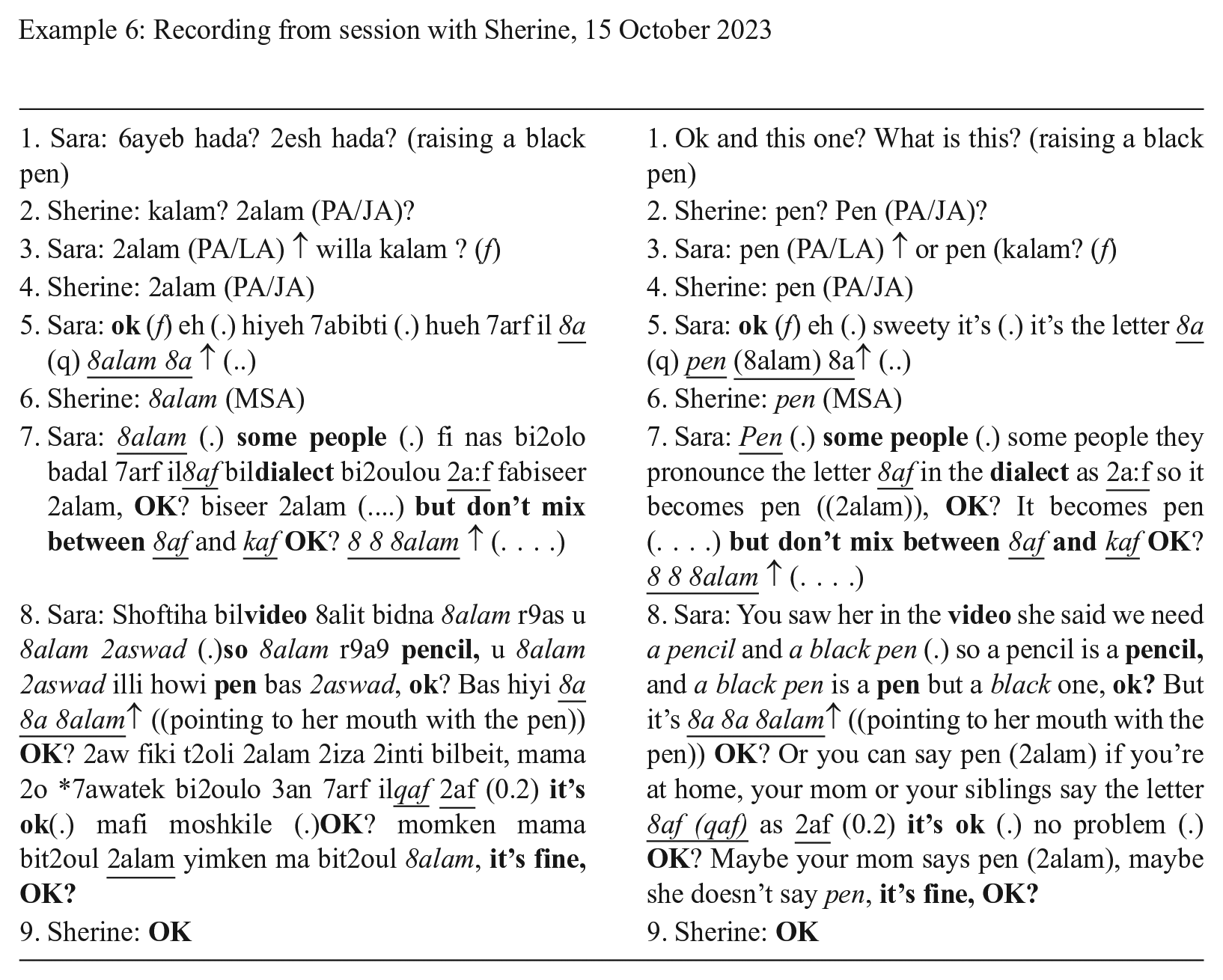
In this excerpt, Sara challenged the dominant status of MSA in Arabic heritage classrooms by using Levantine Arabic herself and drawing on Sherine’s knowledge of Arabic to inquire about the word for ‘pen’ (utterance 1). Sherine expressed uncertainty regarding the correct pronunciation, initially mixing the letter ‘8af’ with ‘kaf’ – a common occurrence among heritage learners – and then pronouncing the word ‘8alam’ as ‘2alam’, reflecting the LA variety she is accustomed to (utterance 2). Sara acknowledged Sherine’s dialectal pronunciation but was aware that heritage learners often mix the letters ‘8af’ and ‘kaf’, which can alter the meanings of words, potentially leading to misunderstandings or awkward situations. To clarify, Sara sought to confirm whether Sherine knew the correct pronunciation of ‘8af’ as ‘2af’ in the LA variant without conflating it with the letter ‘kaf’ (utterance 3). In response, Sherine demonstrated increased confidence and reaffirmed her pronunciation of the word ‘2alam’ in her familiar dialectal variety (utterance 4). Sara acknowledged Sherine’s choice of LA and, to further support her learning, bridged LA with MSA by providing the pronunciation of the letter ‘8af’ and the word ‘8alam’ in MSA (utterance 5). Finally, Sherine signalled her understanding by repeating the word ‘8alam’ in MSA (utterance 6). Additionally, Sara challenged the exclusive status of Arabic in the classroom by drawing on Sherine’s knowledge of English to first explain the difference between the word ‘8alam’ in MSA and ‘2alam’ in LA (utterances 7–8). Through her instruction, Sara questioned the hierarchical status of MSA as the only acceptable variety of Arabic by acknowledging the dialectal variety spoken at Sherine’s home (utterance 8). She emphasised the importance of LA as a dialect used among LA speakers as equivalent to spoken MSA in mass media and formal settings and encouraged Sherine to use the dialectal Arabic variety spoken by her family (utterance 8). Sherine expressed her understanding of the Arabic varieties and the possibility of using LA in the classroom as a valid variety (utterance 9).
Notwithstanding Sara’s acceptance of different dialectal varieties of Arabic in the classroom, she often drew the students’ attention to certain dialectal differences to foster students’ metalinguistic awareness. For example, when she was talking with Bob, a 10-year-old student, about environmentally friendly and unfriendly heating methods, Sara drew upon English and different varieties of LA to explain the different types and names of heaters. Through the conversation, she explicitly pointed out regional variations and loanwords from other languages related to historical colonisation:
Example 7: Recording from session with Bob, 24 September 2023 6
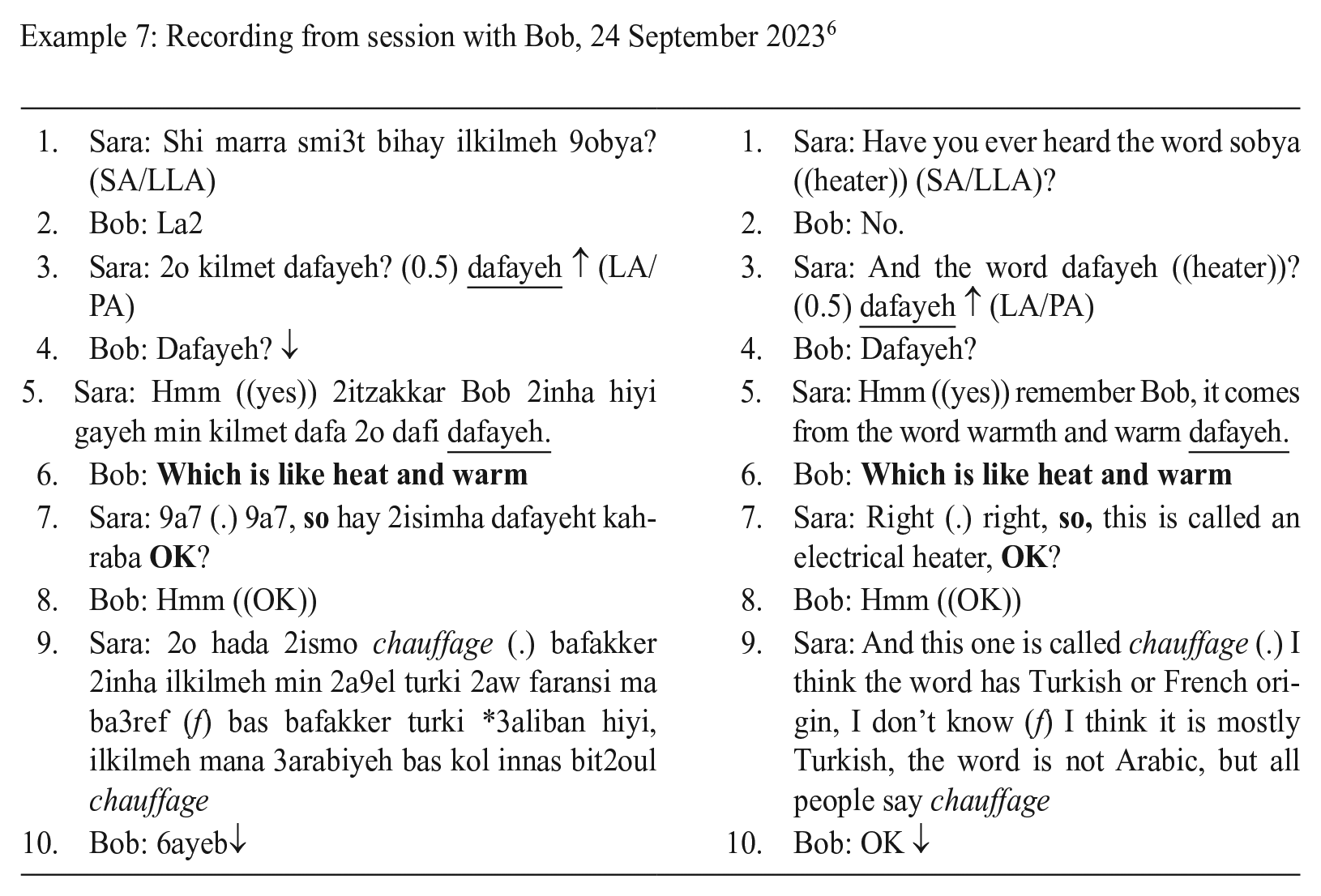
As can be seen from this example, Sara explained the origins of different Arabic vocabulary related to heaters without expressing a preference for either of them. In addition to the word ‘dafayeh’ common in Palestinian Arabic (utterances 3, 4, 5 and 7), Sara mentioned the Turkish loanword ‘soba’ common in Syrian Arabic (utterances 1), as well as the French loanword ‘chauffage’ (utterances 9). Since Bob was unfamiliar with these terms, Sara actively used translanguaging to explain and expand his linguistic resources. Consequently, Bob gained deeper insight into the rich variety within the Arabic language, where all varieties were considered equally legitimate in the classroom.
Translanguaging for literacy support
Notwithstanding the school’s otherwise flexible language policy, the school was also committed to teaching MSA as the only written form of Arabic. Nevertheless, Sara and the students engaged extensively in translanguaging literacy activities. These practices involved drawing on the students’ linguistic resources, including varieties of LA, English and prior knowledge of MSA to support MSA literacy development. Sara strategically adapted translanguaging practices based on each student’s age, exposure to Arabic and existing literacy skills. Consequently, translanguaging served as an effective support (e.g. Cenoz and Gorter, 2021; García et al., 2017; Rabie-Ahmed and Mohamed, 2024).
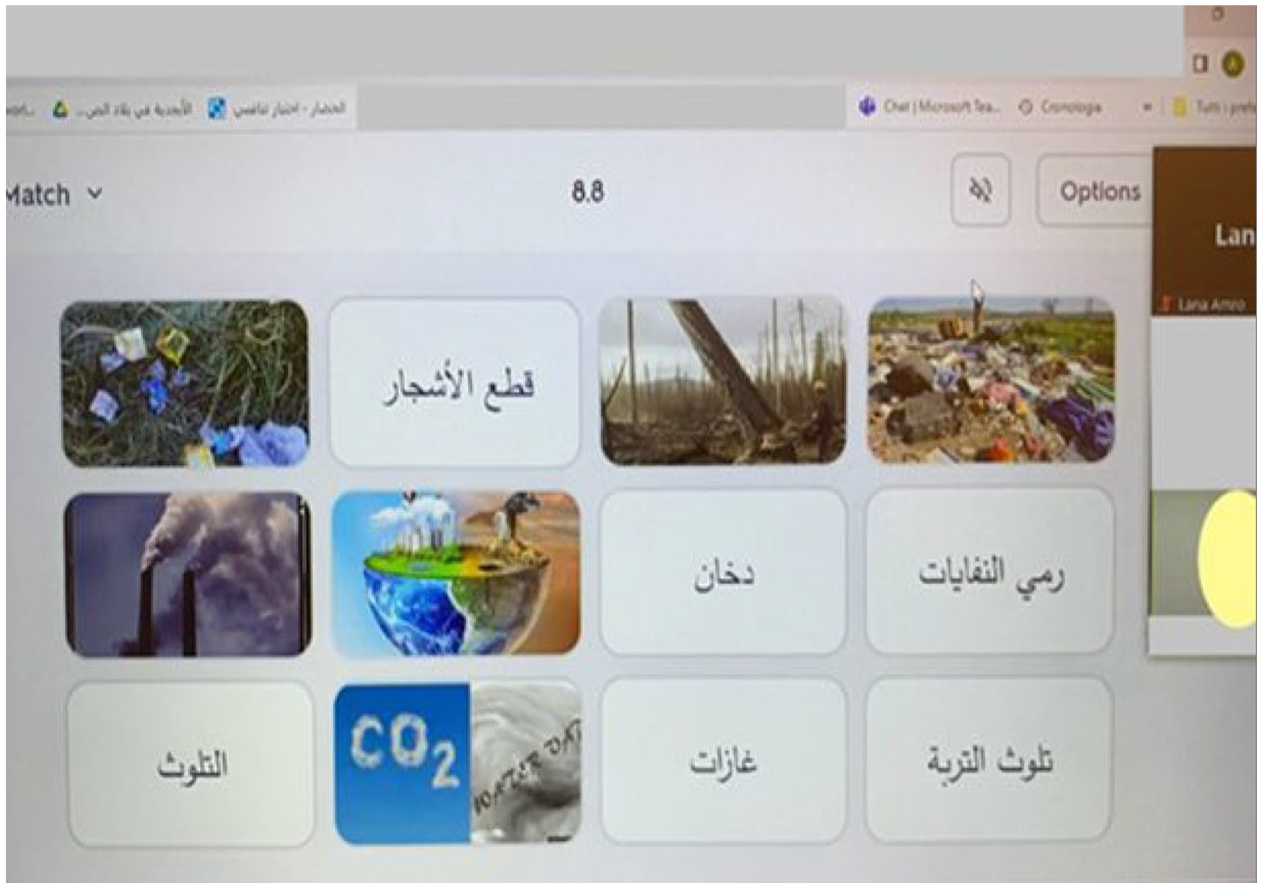
Translanguaging reading activities often included utilising students’ personalised word lists and interactive games. The empirical example below illustrates how Sara utilised translanguaging and drew upon Bob’s linguistic resources in MSA, LA and English to support his reading skills in MSA. Bob, on the other hand, used translanguaging to support and expand his vocabulary and reading skills. Over several sessions, Sara and Bob collaborated to learn about pollution. As can be seen from Examples 8 and 9, Sara used a memory game to review new vocabulary and improve Bob’s reading skills in MSA.
Example 8: Screenshot from session with Bob, 5 November 2023
Example 9: Recording from session with Bob, 5 November 2023
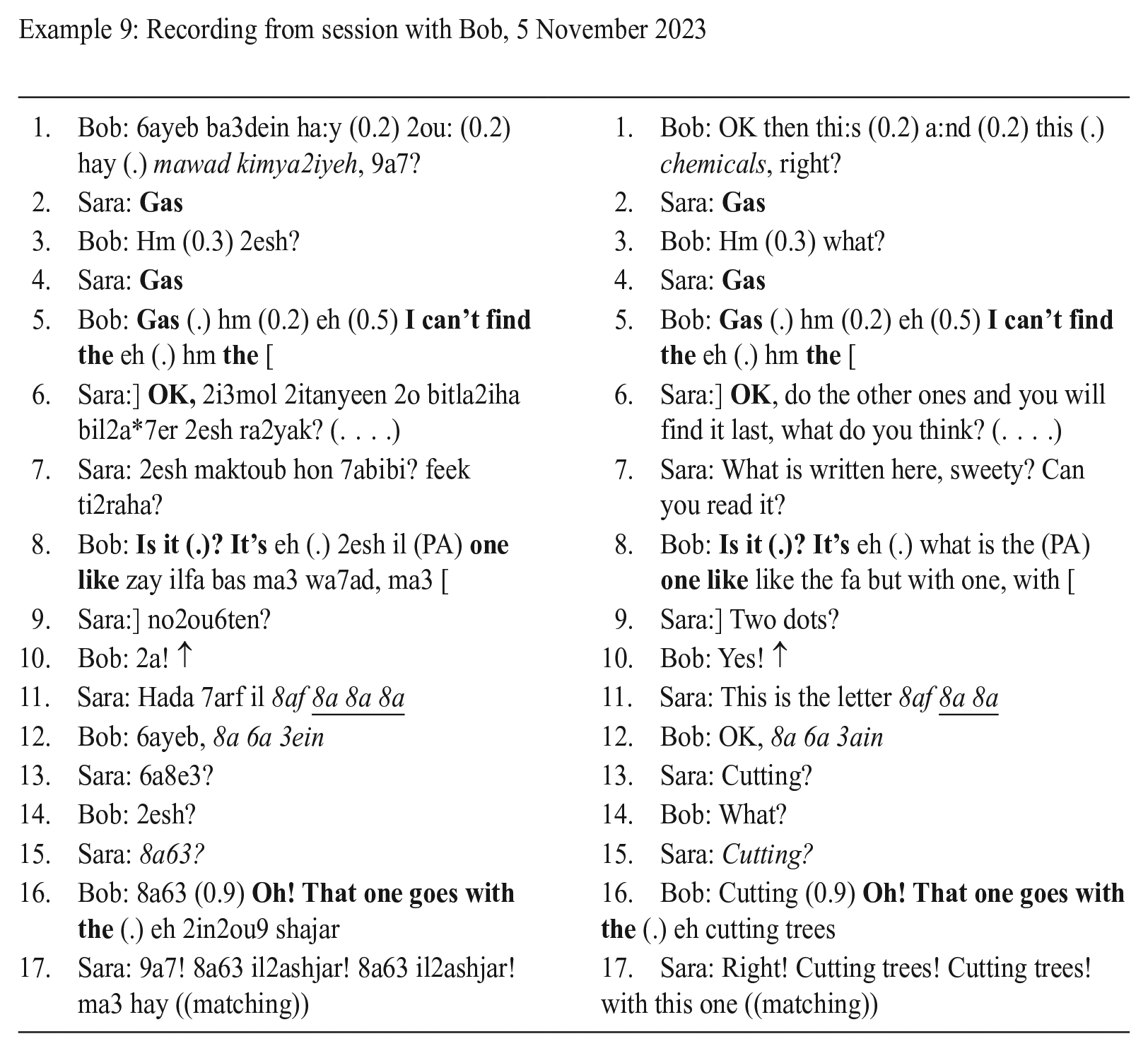
In this example, Sara used English to help Bob find the picture with ‘gas’ written in English and connect it to the correct word in MSA (utterances 2 and 4). In utterances 6, 7, 9 and 13, Sara used LA to help Bob think strategically in the game, encourage him to read the words and pronounce the letters. Moreover, she provided the first part of the phrase ‘8a63 il2ashjar’ (cutting trees) in LA. In utterances 11, 15 and 17, Sara helped Bob pronounce the letter ‘qaf’/‘8af’ correctly at the same time as she acknowledged his answer in LA. Bob used English to express his thoughts, strategise and ask Sara for help in reading and matching words with pictures (utterances 5, 8 and 16). Moreover, he used LA to ask for affirmation, express thoughts and collaborate with Sara in reading the word and connecting it to the familiar LA term ‘2in2ou9 shajar’ (utterances 1, 3, 8, 10, 12, 14 and 16). MSA was used to guess words and pronounce letters and words (utterances 1, 12 and 16).
Sara usually initiated literacy activities by reviewing Arabic letters with the students. Sara would write on a digital whiteboard, while the students copied in their own notebooks. In the example below, Sara first wrote the Arabic letters needed to spell ‘day’ (‘yawm’) in MSA. Diana was then instructed to connect the letters to form the word ‘yawm’ in her notebook and show it to Sara: Example 10: Screenshots from session with Diana, 1 October 2023
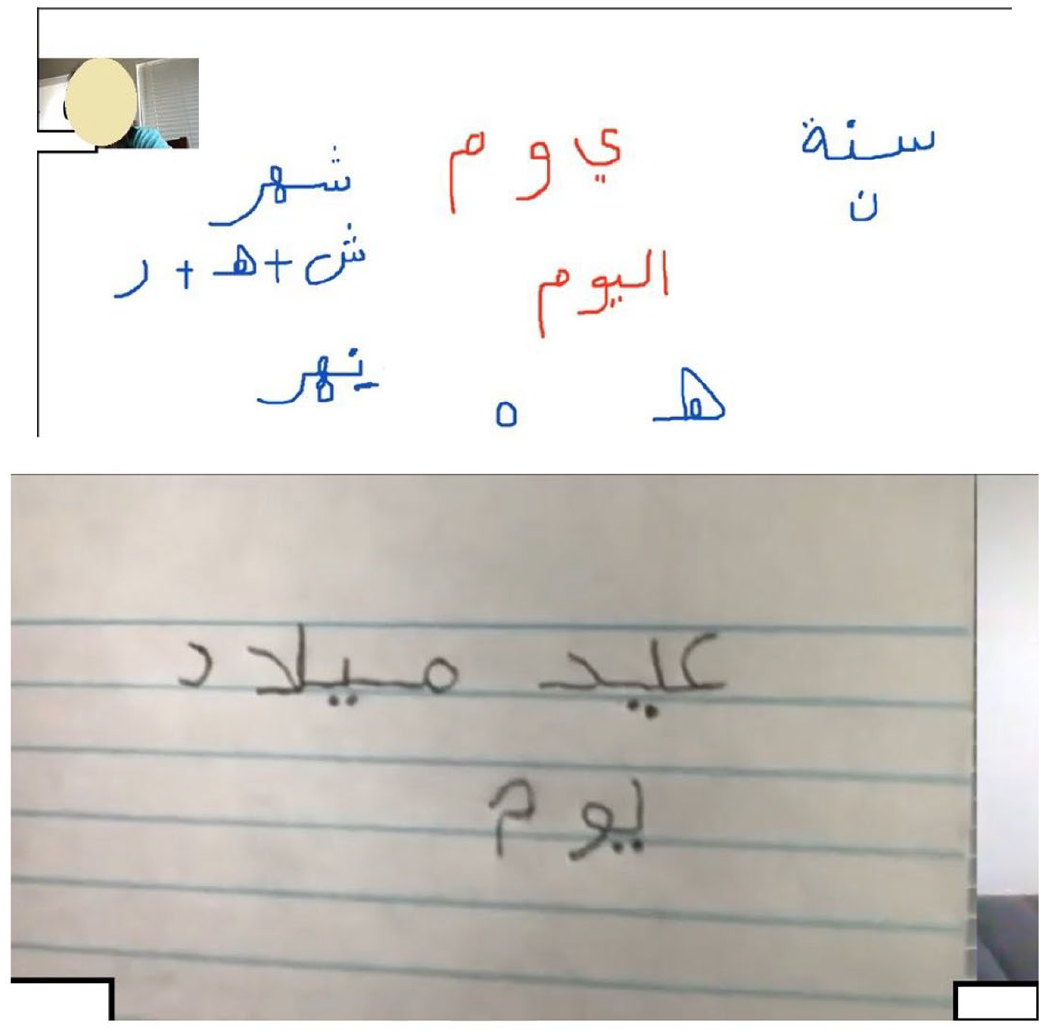
As Sara and Diana discussed the spelling of the word ‘yawm’ in MSA, they were translanguaging, combining English, MSA and LA. The excerpt below illustrates these translanguaging practices.
Example 11: Recording from session with Diana, 1 October 2023
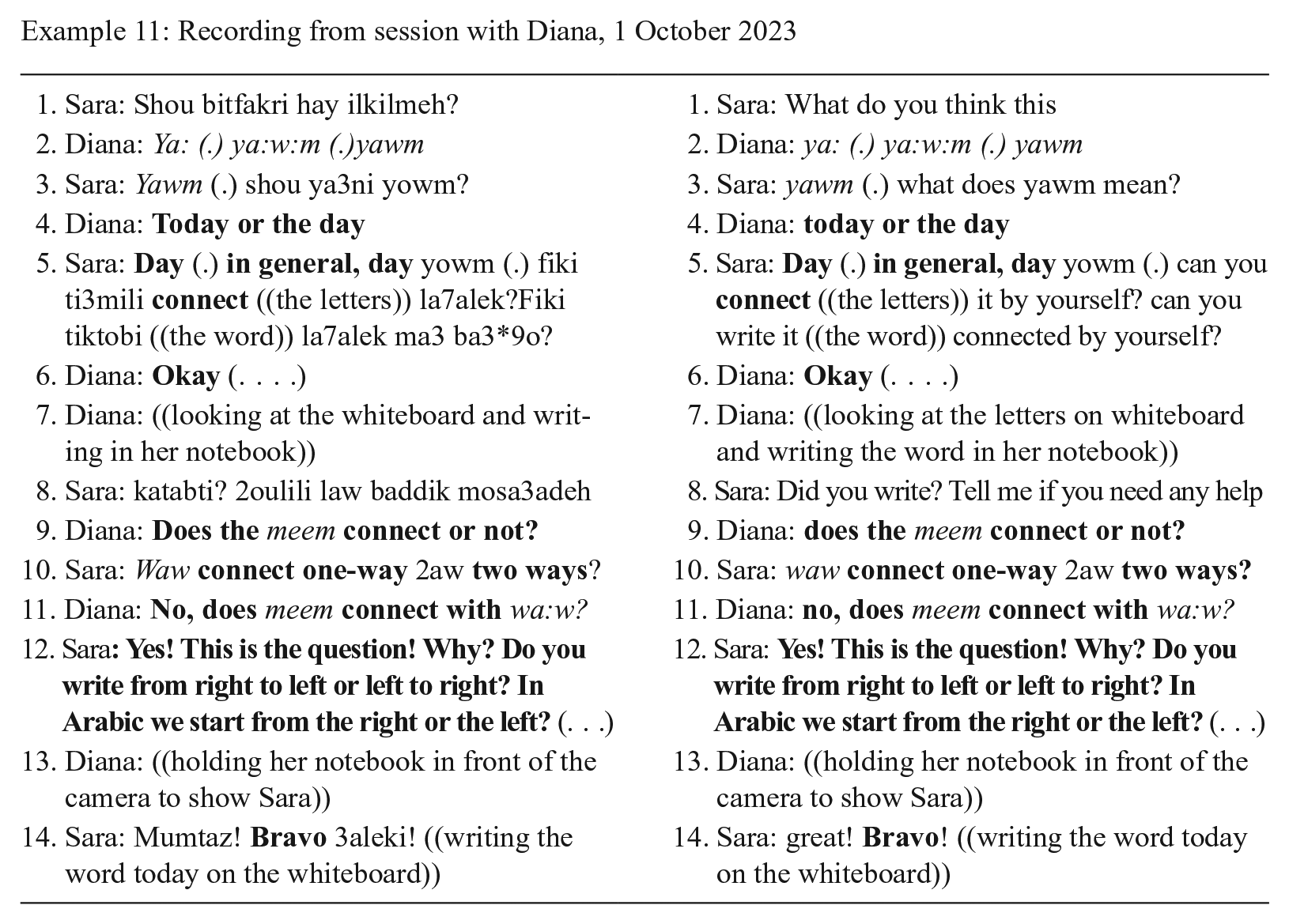
As can be seen from this example, Sara used LA to discuss the writing of ‘yawm’ (utterances 1, 3, 8 and 14), ensuring Diana recognised the letters and connected the word day in MSA to its LA version (utterances 3–6). MSA was used to confirm the answer in MSA and discuss the letter ‘waw’ (W) (utterances 3 and 10). Sara drew on English to explain the difference between ‘day’ (‘yawm’) and ‘today’ (‘alyawm’) and to ensure task understanding (utterance 5). English also covered writing characteristics in MSA, such as letter connections and right-to-left writing (utterances 10 and 12). Diana used English to show understanding, follow instructions and ask for help with the letter ‘meem’ (M) forms (utterances 4, 6, 9 and 11). Finally, she used MSA to express her understanding and inquire about letter forms (utterances 2, 9 and 11). This example demonstrates how translanguaging can be effectively used to support the development of formal literacy skills in MSA.
Discussion and concluding remarks
In this article, we have investigated how a heritage language teacher of Arabic uses translanguaging as a pedagogy in digital heritage language education. This is a particularly relevant question considering the growing Arabic diaspora and the expanding market for digital heritage language education (Hilmi, 2021; UNESCO, 2019). Previous research has indicated that the organisation of Arabic heritage language education can have significant consequences for the purpose, content and materials used in this teaching (Iversen, 2024). However, so far, limited research has been conducted on how the transnational and transcultural nature of digital heritage language education influences the teaching of Arabic in such settings. In this article, we have drawn particular attention to language use in digital Arabic heritage language classrooms and have identified the extensive use of translanguaging practices throughout all the observed sessions.
Contrary to previous studies, we found that both the principal and the teacher involved in the current study enthusiastically promoted translanguaging as part of Arabic heritage language education (cf. Al-Bataineh and Gallagher, 2021; Azaz and Abourehab, 2021; Kawafha and Al Masaeed, 2023). Our findings suggest that the teacher’s openness to translanguaging and her pedagogical use of translanguaging contributed to creating a safe space for heritage language learners where they could capitalise on their complete linguistic repertoire to develop their Arabic language skills. These observations confirmed findings from previous studies, suggesting that translanguaging can contribute to the creation of safe spaces for students (Capstick, 2020; Capstick and Ateek, 2024; Lang, 2019) and can position students’ multilingualism as a resource (Krulatz and Iversen, 2020; Sierens and Van Avermaet, 2014). The students in our study appeared to be relaxed as they shuffled across conventional language borders in communication with their teacher. The transnational and transcultural setting of the organisation of the heritage language school likely contributed to the development of the school’s flexible language policy and Sara’s language practices.
The safe space facilitated critical and creative engagement with the Arabic language in ways that challenged conventional language hierarchies in Arabic language education (e.g. Ali, 2024; Haeri, 2003; Vanpee, 2024). The digital heritage language school’s multilingual and multidialectal approach stands in contrast to the monoglossic language policies common in other community-based Arabic heritage language settings (e.g. Abourehab and Azaz, 2023; Azaz and Abourehab, 2021). Although Abourehab and Azaz (2023) found that teachers often engaged in translanguaging, the official language policy prescribed a monoglossic policy and the teachers would articulate scepticism towards the practice. Conversely, we found that the school’s multilingual and multidialectal language policy was also consciously reflected in Sara’s teaching practice. Previous studies have found that heritage language education taking place outside public education offers greater liberty to develop teaching aligned with community-specific objectives (Iversen, 2024). Due to the school’s transnational and transcultural organisation, it was probably even more free to make independent language choices appropriate to its students.
Finally, our findings align with previous studies that have found that translanguaging can be effective in supporting students’ acquisition of formal literacy skills in MSA (e.g. Abourehab and and Azaz, 2023; Rabie-Ahmed and Mohamed, 2024). Our findings confirm previous studies reporting the benefits associated with translanguaging in language teaching, including supporting students in comprehending complex content and texts and providing opportunities to develop linguistic practices for academic contexts (Cenoz and Gorter, 2021; García et al., 2017). Although the digital heritage language school aimed to teach MSA for literary purposes, this was achieved through a flexible language use between teachers and students. This demonstrates how language teaching can aim at specific formal language skills while affirming students’ linguistic repertoires.
We found that the digital setting of heritage language teaching, with teachers and students located in different national settings, promoted the use of translanguaging because of the stakeholders’ divergent language repertoires. For example, the teacher accommodated her speech to meet the needs of her mostly English- and LA-speaking students. Furthermore, transnational and online settings seem to have contributed to weakening the otherwise strong political association between Classical Arabic of the Qur’an and MSA (e.g. Haeri, 2003). The transnational setting offers the school extensive liberty to shape its own language policies and practices. Finally, opportunities for developing translingual teaching materials increased due to the digital organisation of teaching. Because of their immediate access to the Internet, Sara and her students could immediately access online resources in different varieties of Arabic and other linguistic resources.
Footnotes
Appendix
Declaration of conflicting interests
The author(s) declared no potential conflicts of interest with respect to the research, authorship, and/or publication of this article.
Funding
The author(s) received no financial support for the research, authorship, and/or publication of this article.
