




Abstract
A large body of scientific literature has highlighted the gendered division of academic work, particularly the undervalued and invisible tasks that make up the less prestigious dimension of the academic professions. Informed by the concept of ‘academic housework’, this paper explores the effects of the COVID-19 pandemic on the gendered distribution of academic work, drawing from the results of a survey of 1750 lecturers and researchers from Portuguese public universities. Our results, based on a series of linear and categorical regressions, point to the reinforcement of gender inequalities in the division of academic labour during the pandemic. This is reflected in worsening imbalances in the allocation of time to unpaid, invisible ‘institutional housekeeping’ and to emotional, institutional care work, including mentoring and supporting students. The fact that women, regardless of their family or professional situation, bore the greater share of the effort associated with the increased material and emotional demands of teaching and academic service during this period is reflected in an increasing imbalance in the allocation of time to research, which involves fundamental activities for career advancement. Our findings underline the need to rethink the current neoliberal model of academic meritocracy and to begin to recognise and value the gendered and invisible work of academics.
Introduction
The structural inequalities that shape women’s experiences within the academic professions have been documented over time by various studies and statistical indicators, and they confirm the idea that higher education institutions are gendered organisations (Acker, 1992; Gardner, 2013; Hart, 2016; Sallee, 2012). The pandemic crisis produced a new set of circumstances that radically transformed the professional lives of lecturers and researchers and impacted on the gender dynamics that permeate academic work. Extensive literature aimed at analysing the gendered nature of the effects of COVID-19 within academia has highlighted the emergence of new sources of inequalities between men and women and the exacerbation of existing ones (Ferreira et al., 2021; Özkazanç-Pan and Pullen, 2020; Pereira, 2021).
A recurrent focus of the literature has been on the disproportionate restrictions imposed by non-academic responsibilities on women’s academic working conditions during the pandemic (Aldossari and Chaudhry, 2021; Dunatchik et al., 2021; Yaish et al., 2021; Yildirim and Eslen-Ziya, 2021). Many studies, for example, have linked the widely documented trend of reduced scientific productivity by women academics in the early periods of lockdown – particularly in terms of decrease in the number of articles submitted – to the intensification of reproductive and care work (Minello et al., 2021; Myers et al., 2020; Kasymova et al., 2021; Viglione, 2020). In these studies, therefore, the private sphere and the gendered dynamics of the distribution of activities that occur within it are identified as the main factors explaining the pandemic inequalities seen in the academia.
Despite the important contributions brought by these studies, their conclusions seem to tell only ‘half the story’. As Pereira (2021) emphasises, understanding gender asymmetries in academic labour under COVID-19 as a consequence of asymmetries in the private sphere, which are external to scientific institutions (i.e. as a consequence of the sexual division of private reproductive labour) may help conceal the many ‘asymmetries in professional labour, which are internal to academia . . . and, some may even argue, intrinsic to academia’ (Pereira, 2021: 503). With regard to such intra-academic dynamics, an extensive literature has shown that tasks that make up the less prestigious dimensions of academic professions – the so-called pastoral care or academic housework (Acker, 1995; Heijstra et al., 2016) – are unequally distributed on the basis of gender, and constitute significant obstacles in women’s careers, to the extent that undertaking these restricts the possibilities of devoting time and energy to activities that are more valued and beneficial for their career progression (Guarino and Borden, 2017; Macfarlane and Burg, 2019; Misra et al., 2012; Lynch, 2010). Specific studies of the effects of the pandemic on these gendered distribution patterns of undervalued academic work are still scarce, however.
We believe, following Docka-Filipek and Stone (2021), that the story of the challenges faced by women academics during COVID-19 will only be complete when elements associated with both the gender regimes that shape the ‘private’ and ‘public’ domains are included (Walby, 1989). In this sense, the main objective of this article is to explore the (still little studied) influence of the health crisis on the gendered division within institutions of the functions and tasks that make up academic work. We intend to fill the gap in the literature which is essentially focused on studying pandemic inequalities within the private sphere beyond academia. In our analyses and discussions, we explore the gender dynamics that shaped scientific work in this period through the lens of ‘academic housework’ (Heijstra et al., 2016, 2017). We recognise in this concept a tool of great heuristic potential which serves to underline the ways in which the processes of distributing undervalued and invisible forms of academic work replicate, on many levels, traditional patterns of sexual division of reproductive and care work.
Our analytical focus falls specifically on Portuguese public higher education and focuses essentially on the effects of COVID-19 on perceptions of the use of academic time during the first year of the pandemic – after three waves of the pandemic and two general lockdowns. The article is based on a nationwide survey that involved the application of an online questionnaire to a sample of 1750 lecturers and researchers working for Portuguese public higher education institutions.
The remainder of this article is organised as follows: section 2 presents the theoretical background and a literature review, section 3 describes the research method, section 4 presents the findings and discusses the results and Section 5 concludes the article.
Literature review
Academic institutions from a gender perspective
In order to understand the different impacts of the pandemic on the lives of women and men in academia, it is necessary to analyse academic institutions from a perspective that addresses the complexity and multidimensionality of the links established between social gender dynamics and the functioning of organisations. The contributions of Acker (1990, 2006) can help us to operationalise this perspective. The author suggests the idea of ‘inequality regimes’ in work organisations to refer to the ‘loosely interrelated practices, processes, actions, and meanings that result in and maintain class, gender, and racial inequalities within particular organizations’ (Acker, 2006: 443). In asserting the gendered nature of organisations, Acker (1990) stresses that conventional distinctions between male and female, men and women, shape and inform the internal distribution of advantages and disadvantages, visibility and invisibility, and positions of control and subalternity, producing different degrees of belonging, participation and enjoyment of rights.
Despite the continuing efforts of scientific institutions to sustain a public image of being open, diverse, and meritocratic organisations that are supposedly untouched by the regimes of inequality that characterise other spheres of society (Ahmed, 2012; Ferguson, 2012; Sifaki, 2016; Thornton, 2013), the scientific literature has largely documented multiple (and persistent) gender asymmetries in academia. These are expressed in a variety of ways: women are under-represented in decision-making groups, they are concentrated in the lower and less stable ranks of the academic career, they receive less funding and have lower salaries than their male colleagues (Currie, 2012; European Commission, 2019; Johnson, 2017; UNESCO, 2019; Van der Lee and Ellemers, 2015; Whittington, 2011;). This general picture of women’s relative disadvantage compared to men in terms of participation, status/power and working conditions is also to be found in Portuguese academia. Notwithstanding the important advances achieved in recent years and highlighted in recent international reports – which underline, for example, the considerable female participation among active authors in the country (close to parity) (Elsevier, 2021), the higher representation for women within the pool of doctoral graduates, and the gender balanced ratio of academic staff (European Commission, 2021) – considerable gender inequalities persist in the academic labour market. According to the She Figures report (European Commission, 2021), women in Portugal are considerably under-represented in decision-making and leadership positions in research (they represent 35% of board members), and in the higher positions on the academic ladder (they hold only 27.1% of top ranking positions), have lower access to research funding (research success rate of men is 3 percentage points higher than that of women), and are more concentrated in precarious forms of employment (13.7 %, against 7.9 % of men).
Several studies have advanced possible explanations for such disparities between men and women in academia. To mention just a few examples, these range from dynamics associated with the private domain, such as professional disadvantages imposed on women by unequal patterns of sexual division of domestic and care work, to factors internal to institutions, such as recruitment and selection processes permeated by gender bias (Van den Brink and Benschop, 2012; Van den Brink et al., 2006), everyday practices of discrimination, harassment and bullying in the workplace (Grauerholz, 1996; Gunter and Stambach, 2005; Morley, 2006), and ultimately the gendered nature of the criteria establishing the relevance of merit (Ramos et al., 2015; Rees, 2011).
Below, we briefly discuss some of the main themes that have animated recent debates about the differential impacts of the COVID-19 pandemic on the academic working conditions of men and women.
Gender and academia during the COVID-19 pandemic
One of the immediate effects of the pandemic on the functioning of organisations was the rapid transition from face-to-face work to remote working from home (Brynjolfsson et al., 2020). With the establishment of lockdown policies by governments around the world, higher education institutions were faced with the pressing need to transition to distance working and teaching models. The impacts of these abrupt changes on teaching and research activities were many and, as several previous studies suggest, not equally distributed between men and women.
Numerous studies have pointed out early on that the double burden of paid and unpaid work became even heavier for women in periods of lockdown, in particular given the growing demands of domestic and family care work (Dunatchik et al., 2021; Yaish et al., 2021). As the conventional regimes of sexual division of labour dictate, women continued to be primarily responsible for tasks aimed at reproducing the material conditions of the home and the well-being of the household, activities that were intensified during lockdown due to the increased occupation of domestic space (Aldossari and Chaudhry, 2021; Ferreira et al., 2021). Women with dependent children consequently experienced a disproportionate increase in their domestic and care workload, and many became the main providers of additional childcare and monitoring (often in real time) of their children’s remote school activities (Benzeval et al., 2020; Carlson et al., 2021; Chung et al., 2022).
Many studies that have interpellated the transformations triggered by the pandemic in academic work from a perspective sensitive to gender asymmetries have linked the disproportionate deterioration in women's working conditions to the intensification of domestic and care-giving activities. Various studies have, for example, consistently pointed to such private and extra-academic factors as the main causes of the widening of pre-pandemic gender differences in scientific productivity rates (Cui et al., 2022; Minello et al., 2021; Myers et al., 2020).
We argue that this perspective only accounts for part of the problem and is imbued with a certain reductionism, since it displaces to the private sphere the complex dynamics of social relations that result in the differentiated conditions for performing academic work experienced by men and women under COVID-19. This movement towards the ‘privatisation’ of social phenomena appears to be a way of making the deep roots of pandemic asymmetries invisible and, at the same time, relieving institutions of their responsibilities (Pereira, 2021).
While we also recognise the prominence of private reproductive labour and care work in the social lives of women, it seems particularly useful to extend the above readings to other fields, particularly that of institutional practices. It is for this reason that we now turn to the notion of ‘academic housework’.
Academic housework
One topic of special interest in feminist scholarship concerns the ways in which the process of women’s integration into the labour market reproduces and reflects the gender roles they have traditionally played out in the domestic sphere, roles fundamentally associated with care-giving (Ferguson et al., 2022). Several studies point out that, in their work environments, women tend to devote more time to performing undervalued activities, aligned with characteristics and behaviours culturally defined as feminine (Bellas, 1999; Link et al., 2008). As Heijstra et al. (2017) put it (p. 203), ‘carrying the main responsibility for domestic and caring tasks follows women into their work environment, as the responsibility for such service tasks is not easily left behind at home’.
Academia is one of the professional areas in which this trend has been documented (Misra et al., 2012; Sax et al., 2002). Studies show that in comparison to their male counterparts, women tend to perform more tasks with little visibility and institutional recognition, such as student mentoring, serving on internal committees, administrative duties and emotional labour (Bellas, 1999, Misra et al., 2011). Such roles, sometimes referred to in the literature as ‘academic mothering’ and ‘institutional housekeeping’ (O’Meara, 2016: 2), demand interpersonal skills and other attributes culturally assigned to women. As a result, women tend to be associated, also within academia, with the stereotypical roles of mother and caregiver.
In this article, we draw on the notion of ‘academic housework’ (Heijstra et al., 2016, 2017) to designate this set of activities. Although essential for the proper functioning of scientific institutions, they are generally undervalued and invisibilised, generating few benefits for those who perform them in terms of career progression or enhancing their prestige among peers. In fact, the marked undervaluing of these functions contrasts with the major demands on time and energy involved in carrying them out. This makes them a significant obstacle in women’s careers, since they restrict women’s abilities to dedicate themselves to other tasks that produce greater professional benefits, such as research (Macfarlane and Burg, 2019). Among the various responsibilities that constitute ‘academic housework’, we highlight in our analyses a wide range of eminently invisible and undervalued institutional and academic service tasks, such as student support (e.g., tutoring and mentoring), undergraduate and graduate programme coordination/management, institutional service, outreach/community service and other activities grouped under the broad formal and informal terms of ‘citizenship’ or ‘being a good colleague’. Our analytical focus is specifically on the impacts of the pandemic on traditional gendered patterns of sharing this type of work in terms of (1) the frequency with which the different tasks are performed by men and women, and (2) transformations in the allocation of time to each type of task.
Empirical material and methods
Sample and data collection
This article is based on empirical material collected between March and April 2021 as part of a nationwide study to find out about adaptation strategies for teaching and research work under COVID-19. The results presented and discussed here are based on quantitative and qualitative data produced through a web-based survey to which 1750 lecturers and researchers from Portuguese public higher education institutions responded.
The questionnaire included a brief presentation of the objectives of the study and guarantees on the anonymity and confidentiality of responses. To avoid self-selection, the call for participation was presented as a discussion about the impacts of COVID-19 on teaching and research practices, without reference to the gender perspective. It included a broad set of questions around the effects of the health crisis on various dimensions relating to working conditions and academic performance. In addition to questions on the socio-demographic and professional dimension, the survey included questions on changes in time allocation to different academic activities during the pandemic crisis. The questionnaire contained both closed questions and open spaces for personal testimonies which, in the respondents’ view, were not covered by the multiple-choice questions presented. Furthermore, open questions provide the opportunity to express less standardised feelings and opinions. This resulted in a mixed questionnaire, suitable for exploring people’s experiences and practices, their perceptions and understandings of the objects of study (Terry and Braun, 2017).
The survey was carried out on two sub-samples, composed of (1) lecturers from 14 public higher education institutions selected to cover the entire country (seven universities and seven polytechnic institutes) and (2) researchers who applied for projects under the call for proposals from the Foundation for Science and Technology (Fundação para a Ciência e a Tecnologia – FCT) for funding Scientific Research and Technological Development Projects (IC&DT) in all scientific domains (2020). To choose the higher education institutions to be included in the sample, a non-probability, selective sampling plan was built, from which we identified single observation units, consisting of all the people with teaching positions in the selected institutions, and all those who applied for projects with national funding during the pandemic. Invitations were sent to personal email addresses, available on the websites of the institutions selected for the sample and on the FCT project funding application forms. In total, 7883 lecturers and researchers received an invitation to complete an online questionnaire, resulting in 1750 valid questionnaires.
The procedures for data collection, storage, protection, retention and destruction complied with national and EU legislation (in particular EU-GDPR 2018). All personal data (abiding by FAIR criteria as set by GPDR) were archived with access restricted to research members.
Data analysis methods
Data from questionnaires were processed and analysed using the SPSS statistical software (version 26) and a range of statistical analyses of the material was conducted. Descriptive and inferential, univariate, bivariate and multivariate statistical analyses were carried out: frequency analysis, contingency analysis, and regression analysis techniques (linear, logistic and ordinal logistic). Specific procedures and analysis methods vary by the scale of dependent variables. Ordinal logistic regressions were used for dependent variables of ordinal scales (e.g., Likert scale questions), regular logistic regressions were used for dichotomous dependent variables (e.g., yes/no questions), and linear regression were used for continuous dependent variables (e.g., counts). While performing regression analyses, we controlled for some key socio-demographic and occupational variables that may affect the outcome, including gender (men/women); marital status (living/not living in couple); children aged <12 years (yes/no); care for people with special needs (yes/no); type of academic profession (teaching/research); employment contract (permanent/not permanent); working time regime (full-time/part-time); age (scale); seniority in the institution (scale); education subsystem (university/polytechnic). For statistical inference, we considered test statistics with p-values at or below 0.1 to be significant.
To analyse the discourse captured in the responses to open-ended questions in the questionnaires we used an essentially inductive approach (i.e. we allowed the data to determine themes) with a focus on narrative analysis. In the first round, we sought to identify broad themes and categories by engaging in an open and axial coding process. In the second round, each of these broad categories was subdivided into dimensions relating to the various factors and actors that constitute the academic experience of teaching and research. This strategy resulted in testimonies from which the excerpts included in this article are drawn.
Sample characterisation
We will now present the sample obtained in comparison with the national universe to determine its level of representativity. When comparing the gender distribution of the universe with our sample, we found some discrepancies. In 2020/2021, women represented 45.8% of the total number of lecturers and researchers in higher education at national level (DGEEC, 2022), while in our sample they have a greater presence (57.3%). As can be seen in Table 1, those who responded identified themselves as either women (n = 1001) or men (n = 749). No one declared themselves as ‘non-binary’, although this option was provided.
Socio-demographic breakdown of the sample.
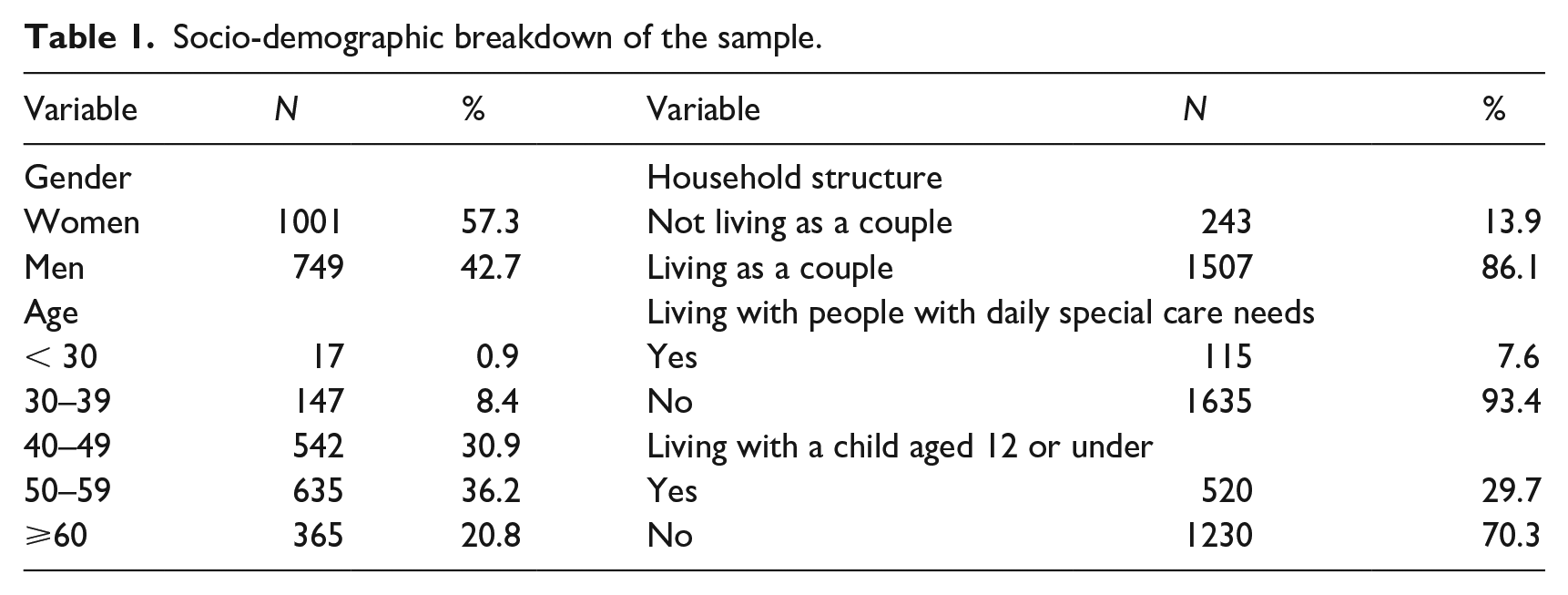
The average age of our sample of respondents was 51 years (SD = 9.20), a figure similar to the national universe which was 50 years by the end of 2020 (DGEEC, 2022). More than a third of the people who responded to the survey lived in a household that was demanding in terms of providing care to dependents. 29.7% (n = 520) of respondents lived with children aged 12 years or younger and 7.6% with people with special daily care needs. A large proportion of the sample (86.1%) lived as a couple, with a prevalence of the dual career family model among the respondents (in four out of five cases).
As shown in Table 2, regarding the socio-professional characteristics of the respondents, we found that the vast majority (87.5%) had a teaching contract in a higher education institution and 12.5% (n = 218) had a contract or grant as a researcher in the higher education sector. Among those engaged in research, women accounted for 66%, while they represented 55.9% of the teaching staff, following the national trend for greater representation of women in research in the higher education sector (51.3% in 2020) compared to that of lecturers in higher education (45.4% in 2020) (DGEEC, 2022). Most of the people in the sample were working full-time (89.2%), and on permanent contracts, that is, with a tenure-track career (77.9%). The distribution by type of contract was not, however, uniform in the sample. There was a noteworthy predominance of precarious employment contracts among people working as researchers (64.9%) and an over-representation of women on precarious contracts (62.8%). Following general trends observed for academia in the country as a whole, a more significant proportion of lecturers/researchers in the sample were present in university institutions, although the prevalence is higher in the sample (69.8% compared to 61.5% at national level, in 2020) (DGEEC, 2022).
Socio-professional breakdown of the sample.
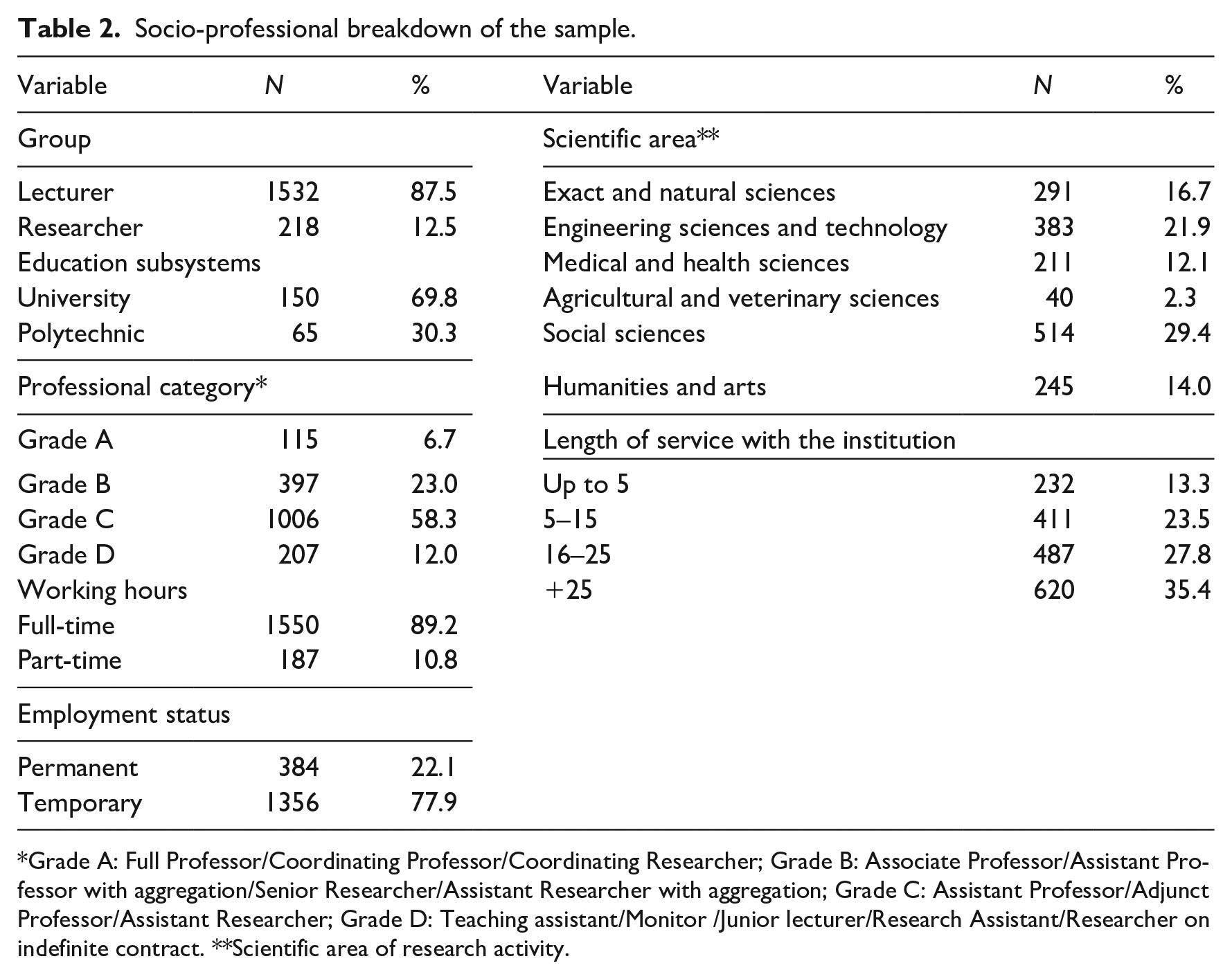
Grade A: Full Professor/Coordinating Professor/Coordinating Researcher; Grade B: Associate Professor/Assistant Professor with aggregation/Senior Researcher/Assistant Researcher with aggregation; Grade C: Assistant Professor/Adjunct Professor/Assistant Researcher; Grade D: Teaching assistant/Monitor /Junior lecturer/Research Assistant/Researcher on indefinite contract. **Scientific area of research activity.
With regard to the distribution by scientific area, the sample obtained shows a configuration close to that observed in the country as a whole, although with a relatively higher weighting towards the Social Sciences, which was the scientific area with the highest concentration of academics in our sample (29.4% compared to 24% in the universe), and lower weighting of the Exact and Natural Sciences (16.7% compared to 23%) (DGEEC, 2020). The distribution by career level in our sample follows that of the country as a whole, with a strong concentration in the lowest career categories (grade C) and a weak occurrence in the top categories (grade A).
Results and discussion
Taking care of the academic ‘children’ – Typical patterns, atypical times
Of the many activities that go into academic housework, student mentoring is one of the most invisible and discredited by the reward system currently in place in the Neoliberal University (Hodgins and Mannix-McNamara, 2021). However, even before the pandemic, in the face of efforts by teaching-intensive institutions to attract and retain students, faculty have increasingly been called upon to engage in what Goode et al. (2020) terms intrusive teaching, defined as ‘the ascribed supportive role that requires excessive commitment with individual students’ emotional and social issues’ (Goode et al., 2020: 56). Qualitative studies point to the expansion of this component of emotional labour during the pandemic period (Berheide et al., 2022; Walters et al., 2022).
We asked participants via the survey to answer questions about the various activities associated with student support that they had carried out during the first year of the pandemic. While we have categorised the surveyed activities under the broader heading of ‘student support/supervision activities’, it is important to clarify that not all activities within this category necessarily involve elements of emotional support. While activities like mentoring or tutoring clearly align with the concept of ‘intrusive teaching’, other activities such as student master’s or PhD supervision may primarily focus on academic guidance and may not necessarily involve emotional support or guidance, as it is not formally mandated or contractually required. However, it is worth noting that existing literature suggests that care work tends to emerge within the performance of the various academic activities surveyed (Goode et al., 2020). Moreover, it is relevant to consider gendered expectations that perceive women as inherently more caring, helpful, and nurturing than men. As a result, women may experience greater pressure to provide personal and emotional support to students, perceiving it as an implicit part of their assigned duties (Anderson, 2010; El-Alayli et al., 2018; Goode et al., 2020).
To provide a visual representation of the distribution of these tasks, Figure 1 shows the percentages of women and men who claimed to have carried out seven different types of student support/supervision tasks.
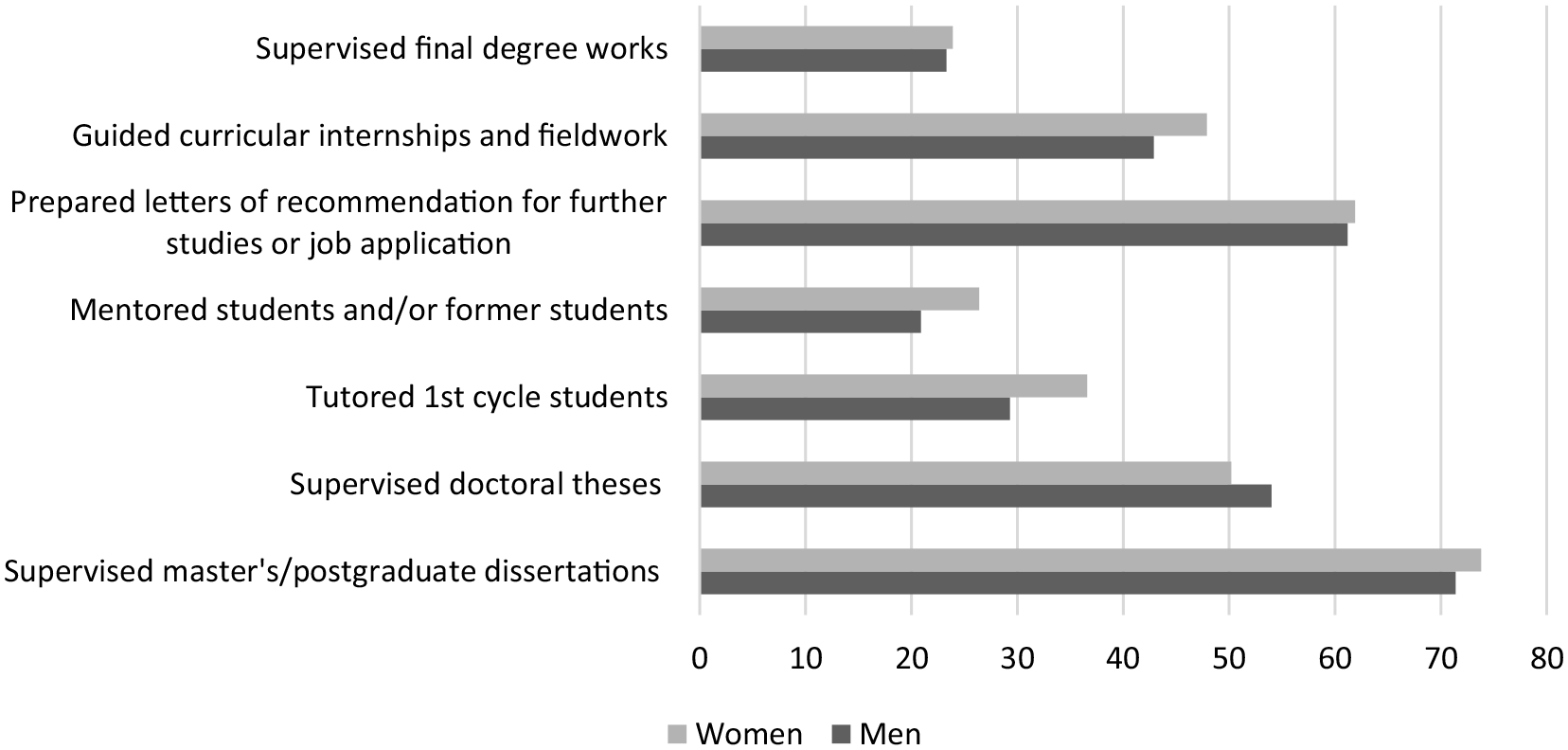
Student support/supervision activities during the pandemic, by gender (%).
We observed that women more frequently performed six of the seven student support activities surveyed. This trend, observed in the descriptive analysis, is corroborated by the results of the regressions presented in Table 3. These show statistically significant differences between men and women in the mentoring of students or former students and tutoring of first cycle students. These results are based on the answers given about the intensity of performing the seven student support functions, and integrate several control variables into the model. 1 Indeed, under similar circumstances in socio-demographic, family and occupational terms, women tended to support significantly more students than their male colleagues.
Student support activities: Linear regression beta coefficients.
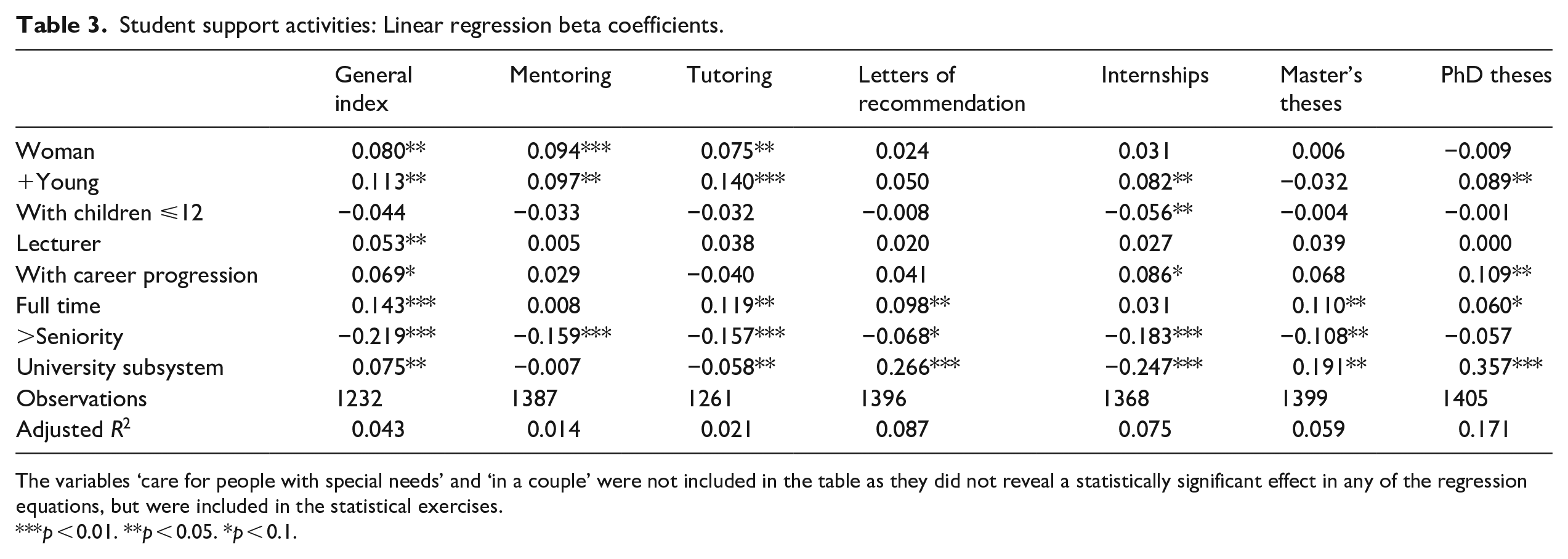
The variables ‘care for people with special needs’ and ‘in a couple’ were not included in the table as they did not reveal a statistically significant effect in any of the regression equations, but were included in the statistical exercises.
p < 0.01. **p < 0.05. *p < 0.1.
The level and nature of involvement in these activities depend, of course, not only on gender but also on factors such as length of service, hierarchical position, and personal willingness. Previous research has shown that early career academics tend to be more engaged in academic housework compared to associate and full professors. This is because the latter have greater opportunities to delegate such tasks to academics in subordinate positions (Heijstra et al., 2016). Considering that women often concentrate in the lower ranks of the academic career and frequently constitute the majority in subordinate positions (European Commission, 2021), it is essential to gain further insights into the experiences of early career academics regarding academic housework, while also accounting for gender. In our study, we employed ‘seniority’ as a proxy to measure the effect of career stage since the direct indicator of career stage, professional category, could not be included in the regression models due to concerns of overfitting. 2 The regression results presented in Table 3 indicate a significant negative relationship between seniority and all student support activities considered. This suggests that as seniority increases, there is a corresponding decrease in the level of support provided to students. Thus, Interestingly, the findings indicate that (women) academics with less length of service in the institution tended to provide more support to students compared to their more senior colleagues. This implies that junior women academics play a vital role in student support.
Some of the comments made by women in the open-ended survey questions illustrate the picture revealed by the data, and demonstrate the intensification of demands associated with student support: The pandemic brought the need to increase student support time and, unlike tenure-track faculty, guest lecturers are not paid for support hours. (Woman Invited Assistant Professor at a Polytechnic Institute, 49 years old) The additional time that distance learning requires, particularly in supporting students, to keep them motivated and as optimistic as possible, was not considered by the institutions. (Woman Assistant Professor at a Polytechnic Institute, age not given)
It is important to highlight that among the seven activities surveyed, mentoring students or former students and tutoring first cycle students characterise the tasks most directly associated with the notion of emotional labour (Hochschild, 1983). That is, they are functions particularly permeated by social expectations linked to high levels of nurturance, altruism, and self-abnegation (Bellas, 1999: 98). In this sense, these results resonate with what is discussed in the literature about women being disproportionately encouraged in academia to perform ‘pastoral care’ roles (Acker, 1995; Lynch, 2010), a trend that appears not to have changed under COVID-19.
In order to count the number of students covered in the seven activities surveyed, we also calculated the ‘general index of student support’ by summing up the answers given to each of the items. Statistically significant differences between genders were also observed in this index, denoting that women disproportionately concentrated on student support functions during the first year of the pandemic crisis. It is important to underline that this difference was mainly due to the number of 1st cycle students who were supported, precisely the type of task which is more time-consuming and to which less prestige is conferred. In fact, while the supervision of master’s students and especially PhD students is generally taken into account in evaluating teaching staff and in institutional decisions associated with promotion, tenure and merit, the other activities surveyed very rarely are.
The fact that women attended to significantly more students than men can also be interpreted as an indication that gendered expectations informed the choices of the student body when seeking support and mentoring during the COVID-19 pandemic. According to Bellas (1999: 101), ‘since cultural expectations dictate that women be polite and listen to other people’s problems, students may expect such behavior of their female professors outside the classroom’, making them favour women when looking for service (Noy and Ray, 2012). The overload of student support work experienced by women during the pandemic, therefore, can be understood as emerging from demands permeated by gender biases coming both from institutional agents (responsible for decisions related to the distribution of academic housework among different professionals) and from the public supported, an element that highlights the transversality and pervasiveness of expectations and stereotypes that associate women with academic care work.
Institutional care
Administrative tasks performed for institutions and serving on internal committees are important dimensions of what we have defined as academic housework. Like student care roles, these activities tend to be ‘down-graded in the discussion of what counts in the university’ (Acker and Feuerverger, 1996: 403) and, as has been amply demonstrated in the literature, their distribution is marked by clear gender bias (e.g. Bird et al., 2004; Guarino and Borden, 2017; Hanasono et al., 2019).
In analysing how the division of institutional service between women and men played out during the first year of the pandemic crisis, we asked our respondents to report on the performance of ten different ‘institutional care’ activities (i.e. activities of an eminently administrative nature performed for institutions and aimed at ensuring their bureaucratic operating conditions). The proportions of men and women who said they carried out these tasks are shown in Figure 2.
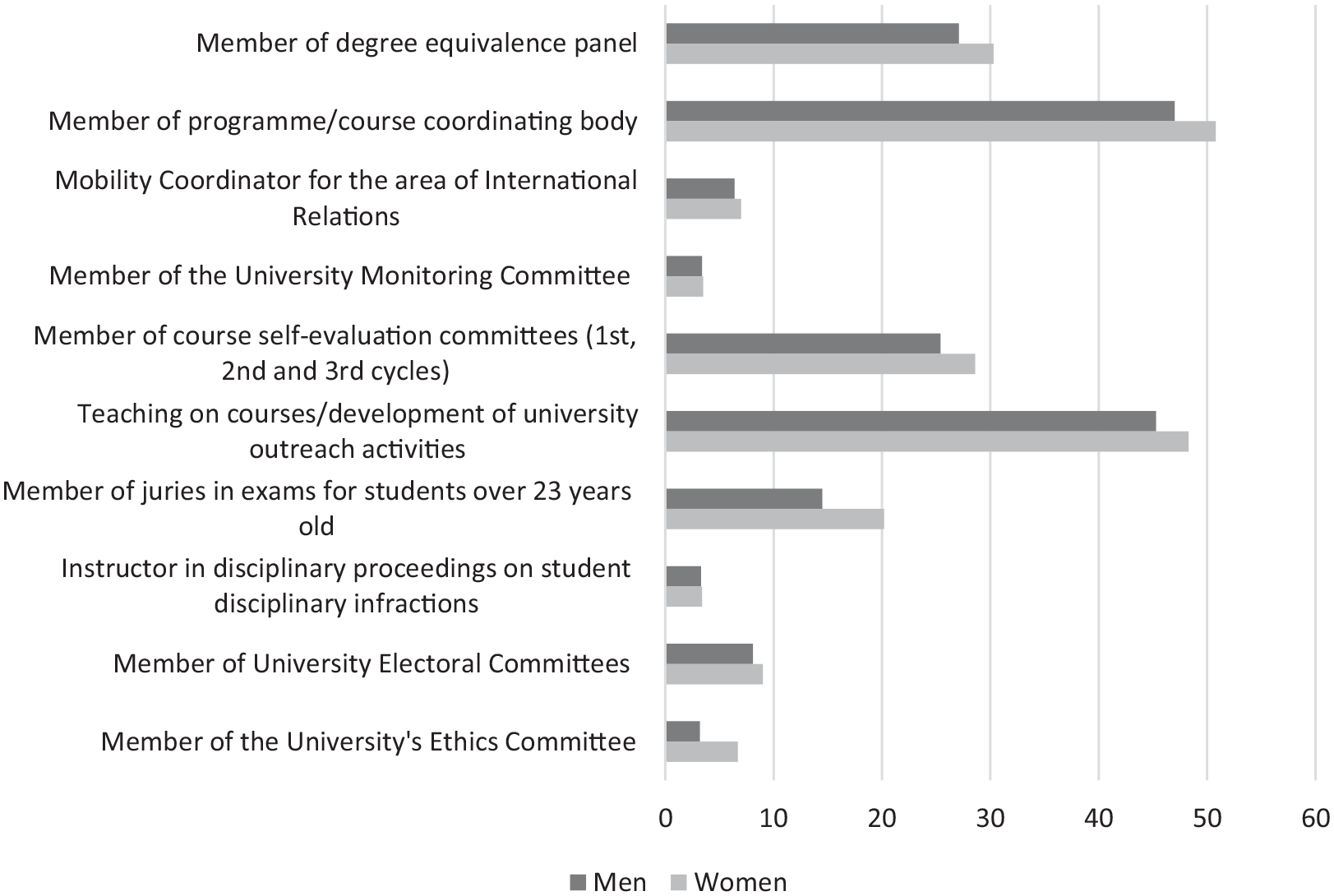
Exercising positions and duties of academic/institutional service, by gender (%).
Women stated that they carried out all the activities surveyed more frequently than men. The regression models (Table 4) show that, with the exception of the duties of member of academic electoral committees and coordinating mobility programs for the area of International Relations, the differences observed between the genders are statistically significant for all activities. In other words, among men and women in comparable socio-demographic and occupational conditions, it was the women who more often performed duties associated with ‘institutional care’ during the pandemic. Additionally, when considering career stage using seniority as a proxy, the analysis revealed that women, particularly those in the early stages of their careers, played a prominent role in performing those duties. This suggests that women in the initial stages of their professional trajectory assumed a larger share of these responsibilities, while men with greater seniority were less involved in such activities.
Exercising positions and duties of academic/institutional service: Linear regression beta coefficients (for general index) and logistic regression beta coefficients.
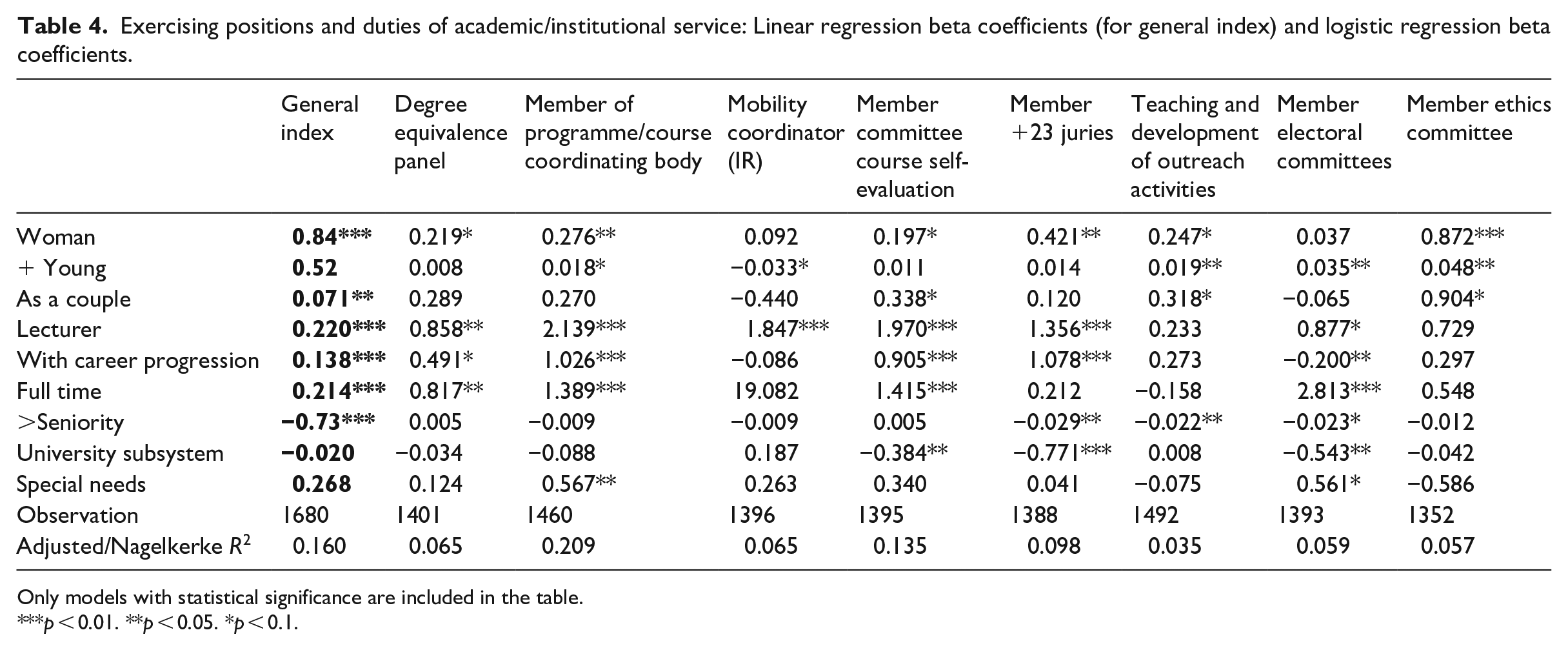
Only models with statistical significance are included in the table.
p < 0.01. **p < 0.05. *p < 0.1.
The testimony of a university lecturer explains this picture: The current model is undoubtedly incapable of meeting the students’ needs and overloads professors who accumulate administrative positions, classes, research and countless bureaucratic tasks to which they have to respond. Those who want to keep the focus on the students work around 12 to 16 hours a day; at the end of this time it is unbearable. (Woman Assistant Professor at a University, 61 years old)
The comment highlights how the concentration of multiple administrative functions and bureaucratic tasks has contributed to producing, mainly for women academics, a context of extreme work overload, leading to exhausting and, in the respondent’s words, ‘unbearable’ daily work routines. It should also be noted, in line with Guarino and Borden (2017), that with the exception of individuals who undertake defined administrative roles (department chairs, deans etc.), the vast majority of academics do not receive extra financial remuneration for institutional housekeeping activities, under the pretext that ‘contributing as good citizens to the academic community is part of their job’ (Guarino and Borden, 2017: 673). We therefore observe that, just as in the private sphere, housework in scientific institutions is not only symbolically undervalued, but also economically invisible.
Impact of pandemic crisis on ‘academic housekeeping’ task distribution
The significant and sudden transformations in working and learning conditions in higher education (Górska et al., 2021; Malisch et al., 2020; Pereira, 2020; Shalaby et al., 2021; Walter et al., 2022), together with the profound alterations in the dynamics of many families arising from changes in the nature and volume of domestic and care work (Aldossari and Chaudhry, 2021; Dunatchik et al., 2021; Yaish et al., 2021), reinforced the need to adapt and readjust the amount and organisation of the time devoted to professional work and its distribution among different academic activities. Previous studies that have analysed the impact of the first months of the pandemic note the gender bias observed in these adaptations (Collins et al., 2020; Lopes et al., 2022; Minello et al., 2021; Myers et al., 2020).
In our study we sought to expand and broaden these results by identifying and understanding the patterns of change in the uses of academic time during the pandemic. In the survey, we questioned lecturers and researchers on how the pandemic influenced their allocation of time to a set of specific academic tasks, including those that can be associated with academic housework. For each of the activities they were asked to indicate one of three options: (1) spent less time; (2) spent the same amount of time; (3) spent more time.
In the figures below (Figures 3 and 4) a general tendency can be observed for faculty to redirect their time towards teaching tasks, especially the preparation of classes and assessments (73% indicated that they spent more time, 69% of men and 76% of women), to the detriment of knowledge transfer and academic dissemination activities (49% spent less time, 44% of men and 52% of women) and of some research tasks, namely the carrying out of field/laboratory work which, among all the activities listed, is the one which shows the greatest disinvestment (77% spent less time, 72% of men and 81% of women).
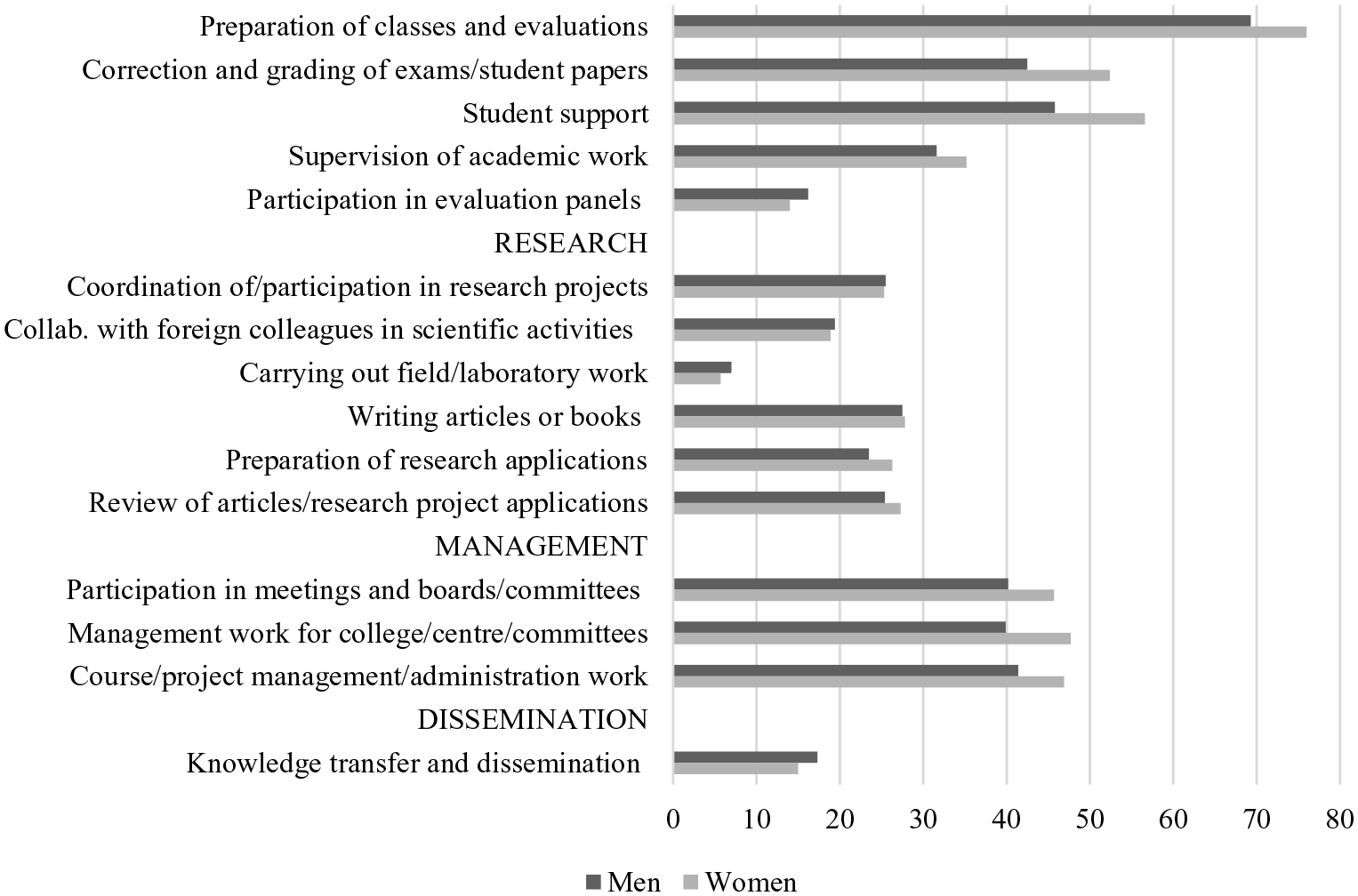
Academic tasks with reported increase in time spent, by gender (%).
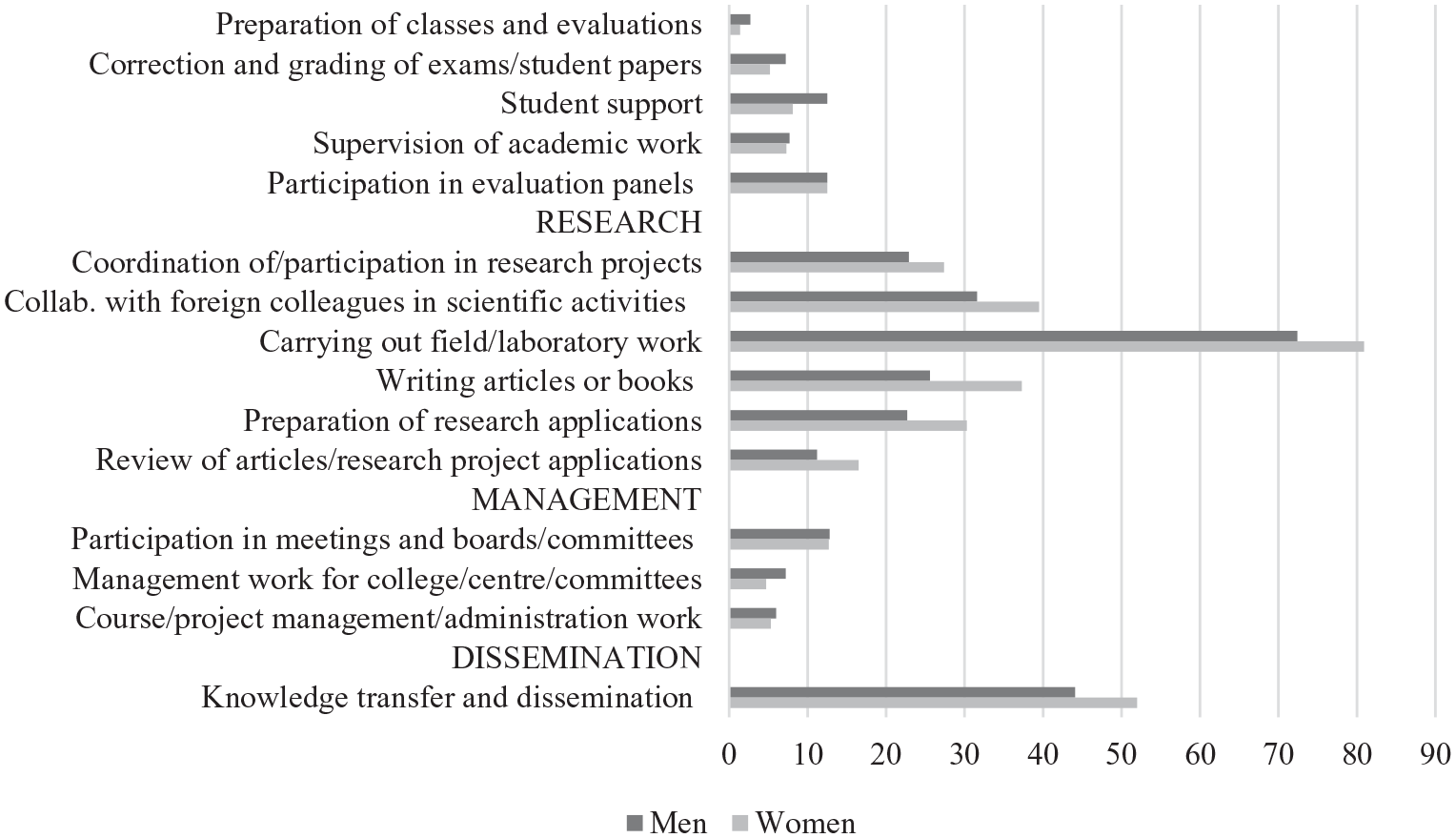
Academic tasks with reported decrease in time spent, by gender (%).
This general pattern of change in time allocation outlined by the data, corroborated by other studies (Lopes et al., 2022; Meehan et al., 2021; Minello et al., 2021; Shalaby et al., 2021; Washburn et al., 2021) finds resonance in the open-ended comment responses on the impact of the pandemic on academic performance. The testimonies presented show the increase in the workload linked to teaching activity and administrative tasks associated with the new working and learning conditions during the pandemic and the consequent disinvestment in the other domains of academic action. Some excerpts illustrate these perceptions.
The excess of teaching work, derived from the coordination of internships, their supervision, due to unforeseen decisions that emerged due to the pandemic and the quadrupling of the Ethics Committee meetings took away much of the time that was allocated to research and publication. (Woman Assistant Professor at a Polytechnic Institute, 49 years old) The scientific component (research, publication) was heavily penalized by the overload of time and resources in the pedagogical/teaching and administrative/management components. (Woman Assistant Professor at a Polytechnic Institute, 49 years old) Given the extended teaching time required to carry out the necessary experimental classes in a context where laboratory capacity was reduced by half, the number of contact hours increased, which was exhausting and left little time to carry out the remaining tasks as usual. (Woman Assistant Professor at a University, 66 years old)
Previous qualitative studies have already reported the effects of the rapid transition to distance learning on the increased workload arising from the need for training for remote teaching and adapting lessons and didactic approaches to the virtual model, without this time being compensated for (Górska et al., 2021; Meehan et al., 2021; Washburn et al., 2021).The restrictions on personal contacts further hindered research plans, including information gathering and analysis (Kasymova et al., 2021; Myers et al., 2020; Shalaby et al., 2021). Moreover, lecturers faced additional demands from students, seeking support in the transition to online learning and increased emotional assistance during the pandemic crisis (Berheide et al., 2022; Newcomb, 2021). Pre-pandemic research has shown that female faculty members are often perceived as being more approachable and empathetic, leading to higher expectations from students for nurturing and emotional support (Crabtree and Shiel, 2019; Sprague and Massoni, 2005).
Although the general sense of change in the (perceived) allocation of time to the various domains of academic activity, particularly an increase in the time dedicated to non-research related tasks, is shared by both men and women, the descriptive data reveals important gender differences in this framework of change. Figure 3 shows that, with the exception of participation in juries, it is more women who report a greater investment of time in all tasks associated with teaching and institutional and academic management during the pandemic. On the other hand, the downward trend in the time invested in research and in the dissemination and transfer of knowledge is particularly reported by women in all the tasks in which these areas are broken down, as shown in Figure 4. Thus, men show lower percentages of disinvestment in dissemination activities and in research tasks, particularly those linked to scientific productivity and the development/maintenance of research networks: collaboration with foreign colleagues in various scientific activities and writing articles or books.
The results of the multivariate regression analyses allow us to statistically attest to the predictive power of gender in determining perceived changes in the allocation of academic time, after controlling for the effects of socio-demographic and occupational variables that are potentially relevant in determining the results (cf. methodology).
An overall look at the statistical results for the different time allocation indices 3 and their predictors, presented in Table 5, shows that increased investment in teaching and administrative tasks during the pandemic crisis is particularly due to the dedication of women. The increase in these dimensions comes at the expense of the time dedicated to research. Thus, the multiple linear regressions and ordinal regression (used only for the domain ‘dissemination’ 4 ) used to obtain predictive models of changes in the allocation of time to the various domains of scientific activity made it possible to identify gender as a significant predictor in all models: teaching (β = 0.067, p < 0.05); research (β = −0.068, p < 0.05); (β = 0.040, p < 0.1) and dissemination (bsex = −0.278, p < 0.05). All models are statistically significant, although they explain relatively low proportions of the variability in changes to the allocation of time to teaching.
Changes in the allocation of time to domains of academic activity (rates of change): Linear regression beta coefficients.
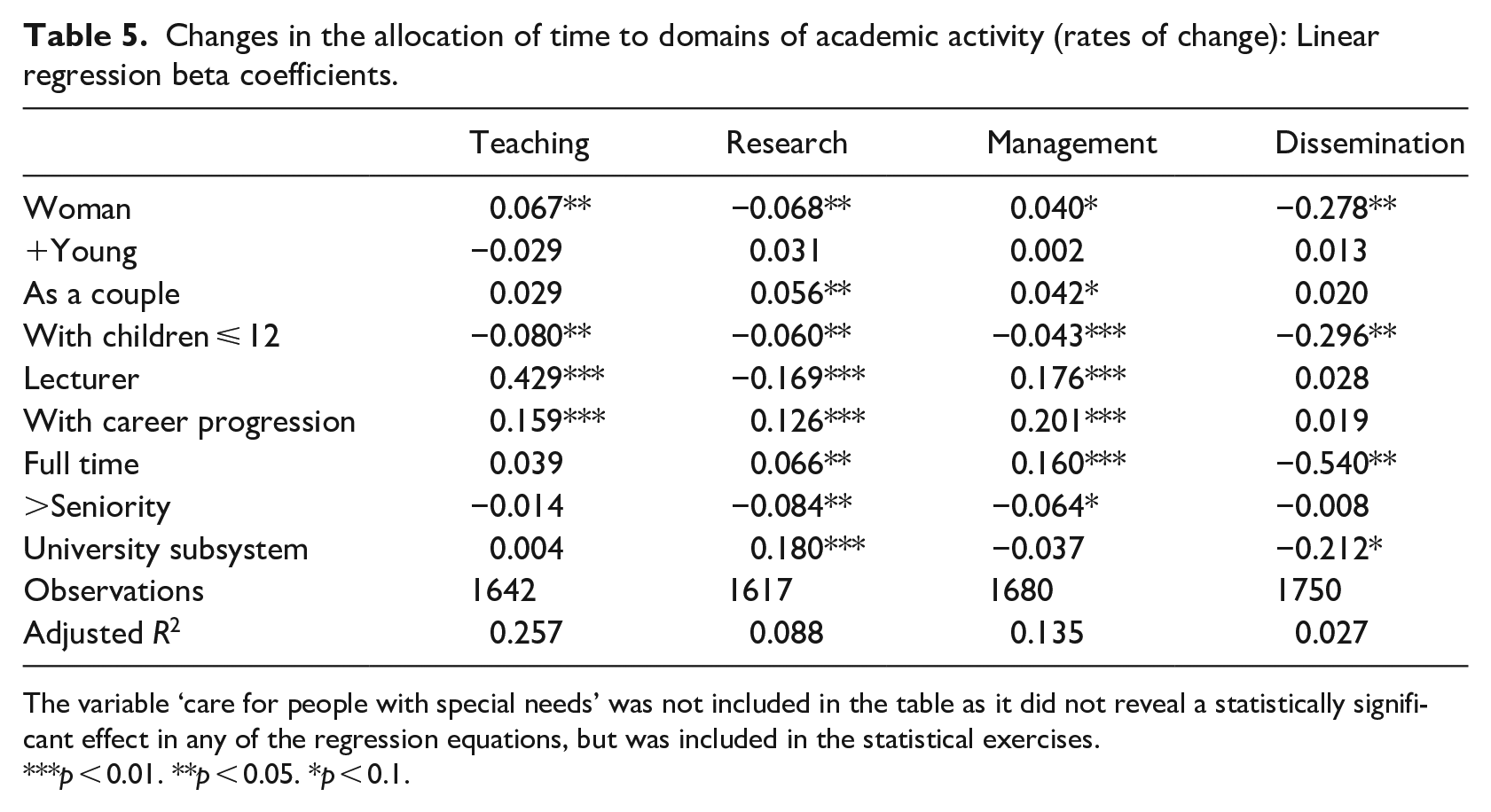
The variable ‘care for people with special needs’ was not included in the table as it did not reveal a statistically significant effect in any of the regression equations, but was included in the statistical exercises.
p < 0.01. **p < 0.05. *p < 0.1.
These results point to the reinforcement of gender inequalities in the division of academic labour during the pandemic period previously discussed in auto-ethnographic reflections and small-scale qualitative studies (Boncori, 2020; Guy and Arthur, 2020; Minello et al., 2021). We see a disproportionate increase in teaching and management/administration, removing from women in particular the time to devote to other domains of academic activity. This is reflected in worsening imbalances in the allocation of time to research, which involves activities that are key to career advancement, external reputation and promotion within the institution (Macfarlane and Burg, 2019). The uneven loads of teaching, student mentoring and support and other non-research tasks create added obstacles for women academics while navigating tenure and promotion expectations, since this type of service is not recognised and rewarded as much as research work, despite its essential nature. Our findings, then, are in line with early small-scale regional/national surveys and interview-based studies (Górska et al., 2021; Shalaby et al., 2021) and auto-ethnographic accounts (Boncori, 2020; Guy and Arthur, 2020; Plotnikof et al., 2020) of the experience of lockdown, suggesting that women academics have been disproportionately affected by pandemic-related changes in academic teaching, research and institutional service.
In order to test, more specifically, the relevance of the gender variable in predicting changes in the allocation of time to the duties that most frequently involve academic housework, we created regression models for four of the tasks that make up the teaching and domains: (i) student support, (ii) management/administrative work associated with teaching/research activity, (iii) institutional management/administrative work, and (iv) participation in meetings, boards, and committees. In addition to ordinal regression models 5 for each of the four variables individually, we also developed a linear regression model by creating an overall variable of change in the allocation of time to academic housework (overall index), made up of the information present in the individual variables. 6 The results of the regression equations are presented in Table 6, and attest to an increase in gender inequalities in the allocation of time to academic/institutional service activities during the pandemic. Multiple linear regression enabled us to identify gender as a statistically significant predictor of time devoted to student support. Thus, the mean value of increase in the overall allocation of time to academic service and care duties is significantly higher for women (β = 0.337, p < 0.05).
Changes in time allocation to academic/institutional care/service activities: Ordinal regression estimates.
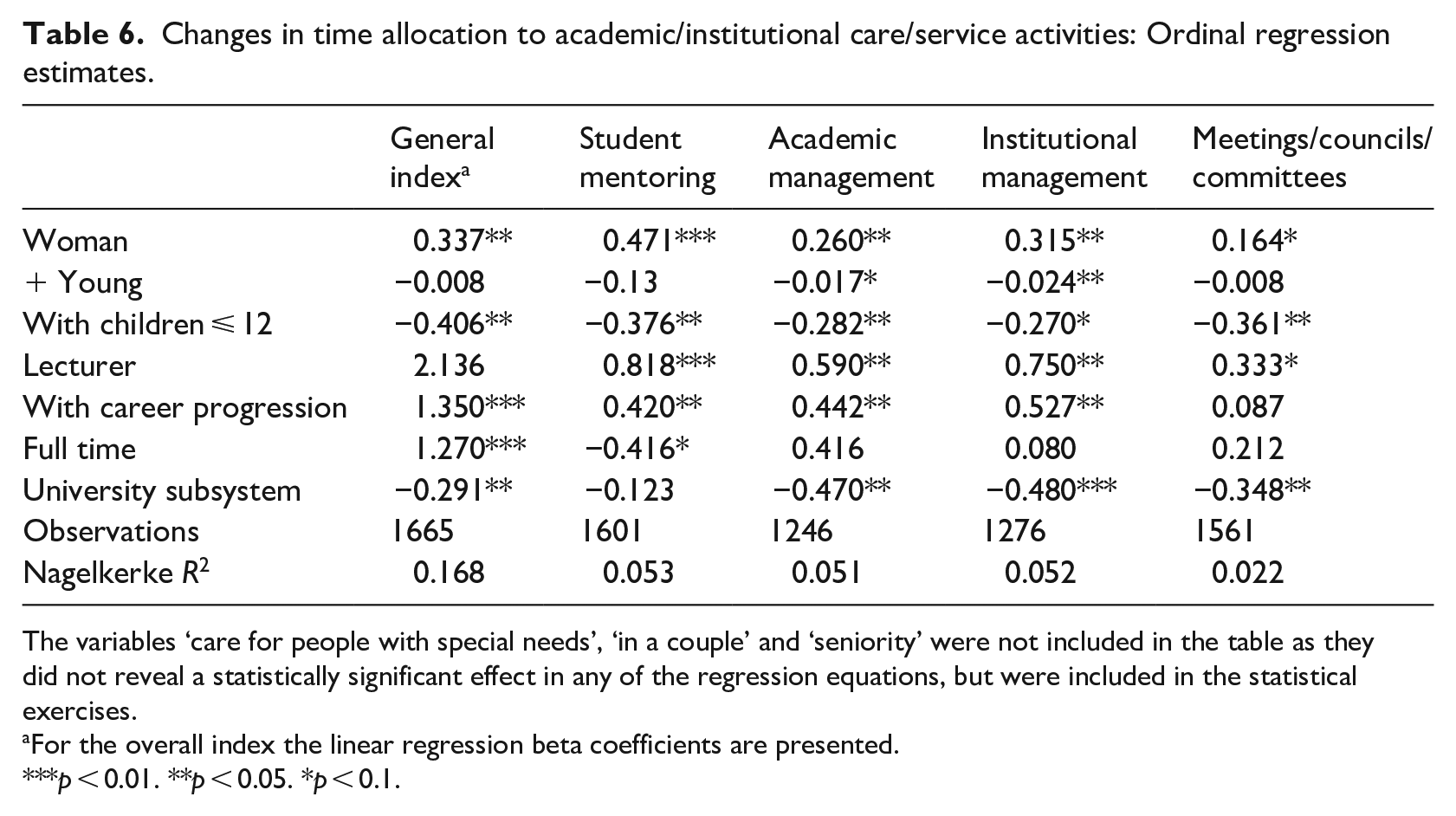
The variables ‘care for people with special needs’, ‘in a couple’ and ‘seniority’ were not included in the table as they did not reveal a statistically significant effect in any of the regression equations, but were included in the statistical exercises.
For the overall index the linear regression beta coefficients are presented.
p < 0.01. **p < 0.05. *p < 0.1.
The regression models used to explain the impact of gender on changes in the allocation of time to each of the tasks support the results obtained from the regression equation for the overall index. In fact, women are more likely to spend more time on student support (bsex = 0.471, p < 0.001), academic management (bsex = 0.260, p < 0.05), institutional management administration (bsex = 0.315, p < 0.05), and participation in meetings/councils/committees (bsex = 0.164, p < 0.1). We see that the magnitude of the influence of gender on the likelihood of increased time spent on academic housework is particularly marked in the task associated with academic ‘care’ – student support. This result is in line with previous qualitative studies suggesting the increasingly gendered nature of student pedagogical, technical/technological and emotional support obligations during the pandemic (Berheide et al., 2022; Górska et al., 2021; Washburn et al., 2021), which reflect gendered expectations of both colleagues and students regarding nurturing and emotional support (O’Meara, 2016; Sprague and Massoni, 2005).
The study thereby reveals a clear trend towards exacerbating gender asymmetries in the allocation of academic time, with women assuming the greater share of effort associated with the increased material and emotional demands of teaching/learning and academic service during this period.
Conclusion
Our study provides sound evidence on the impacts of the coronavirus pandemic on the academic workloads of women and men academics, and most particularly on the gender division of the so called ‘academic housework’ in Portuguese HEIs. The results shed light on the gendered and gendering effects of the pandemic on scientists’ teaching, service and research routines placing women, irrespective of their familiar or professional situation at an increased disadvantage in terms of career progression prospects in the performative academia.
Systemic barriers hindering the productivity and career advancement of women academics, namely those related to the unequal distribution of work and academic care/housework, appear to have been exacerbated with the pandemic, as our study confirms the gendered nature of these obligations. The results point to the reinforcement of gender inequalities in the division of academic labour during the pandemic, which is reflected in worsening imbalances in the allocation of time to unpaid, invisible ‘institutional housekeeping’ (including uneven increase of – already disproportionate – departmental and institutional service demands), and to emotional, institutional care work, including mentoring and reassuring students.
By revealing asymmetries in the division of academic labour during the pandemic, the study allows us to perceive ‘pandemic’ gender inequalities as a result not only of the unequal division of private reproductive work, which is external to academia, but also as a consequence of asymmetries in professional labour, which are internal (Pereira, 2021: 6). The pandemic contributes to narrow masculine notions of what constitutes the ideal type of academic worker, as women’s pursuit of the ideal of ‘academic excellence’ (which is underpinned by ideal worker norms) is further hampered in the pandemic scenario. As Shalaby et al. (2021: 666) argue, if scientific institutions continue to apply ‘male’ measures of success – which tend to privilege research activities by focusing on publication and funding success rates (Pereira, 2017; Steinþórsdóttir et al., 2018), while undervaluing teaching and service tasks (Heijstra et al., 2017; Lynch, 2010) – in evaluating women academics’ promotion and tenure post-COVID, the existing gender gap in academia will only widen.
By making more apparent the unevenly exclusionary character of the ideal-worker norms that continue to structure and shape career-path and professional success within academia, the COVID-19 pandemic serves as an opportunity to transform the academic profession towards a more healthy, inclusive, caring and sustainable work culture. This transformation implies questioning the supposed return to ‘normality’ of past work (Pereira, 2020), as a return to ‘the normal’ would mean the continuation of an unjust system of academic work (Motta, 2020). It also implies promoting new norms of academic labour based on alternative models for professional success that account for the lived realities of most academics (Górska et al., 2021) and are sensitive to the conditions and needs of different groups of men and women scholars.
We argue that reimagining academia in a post-pandemic world should involve re-framing the relationship between academic work and care in ways that acknowledge the blurred and intersecting nature of the boundaries between professional and private lives (Górska et al., 2021). It should also review the established ways of evaluating academic success to acknowledge and mitigate systemic differences in its enactment (Oleschuk, 2020), through the inclusion of more diverse and ‘holistic’ assessments (Moodley and Gouws, 2020) that recognise and value the gendered and invisible forms of academic work (Gonzales and Griffin, 2020; Pereira, 2020), such as emotional support of students and care work.
Footnotes
Acknowledgements
This article is the outcome of research conducted as part of the project ‘Pandemic and Academia at home – what effects on teaching, research and career? Study on changes in the higher education and research system’. The authors would like to express their gratitude to Virgínia Ferreira, the project coordinator, and Cristina Vieira, the other team member, for their contributions to the project.
Declaration of Conflicting Interests
The author(s) declared no potential conflicts of interest with respect to the research, authorship, and/or publication of this article.
Funding
The author(s) disclosed receipt of the following financial support for the research, authorship, and/or publication of this article: This work was financed by Portuguese funds through FCT - Foundation for Science and Technology under the scheme RESEARCH GENDER 4 COVID, grant 77.
