




Abstract
This article explores the crucial role of higher education institutions in catalysing regional innovation ecosystems. In particular, it aims to study how polytechnics in Portugal have been involved in this process. The research utilizes an exploratory and reflective case study approach to present real-world evidence of collaborative efforts within innovation networks that involve both businesses and the social economy. Thus, the study raises awareness of collaborative innovation and entrepreneurship networks, emphasizing genuine interactive learning and knowledge exchange. Polytechnic institutions can enhance regional competitiveness by providing education and training for future entrepreneurs and highly skilled professionals, as well as offering technological and managerial solutions that drive value creation and the emergence of new businesses and markets, potentially even on an international level. The study also emphasizes the fourth mission of higher education institutions, particularly polytechnic institutes, focusing on empowering communities through social innovation projects for sustainable local and regional development.
Introduction
Extensive academic literature has explored the topic of regional innovation, revealing significant variations in innovative capabilities, economic, social, and technological advancement across different regions (Filippopoulos and Fotopoulos, 2022; Hamón et al., 2024; Jonek-Kowalska and Wolniak, 2021). These differences can be attributed to various factors, such as resource availability, supportive institutions and networks, and investment in research and development (Barbieri et al., 2023; Jonek-Kowalska and Wolniak, 2021; Lazzeretti et al., 2022).
Scholars have recently analysed diverse mechanisms that drive regional innovation. Filippopoulos and Fotopoulos (2022) noted both technologically driven and public Research and Development (R&D) driven paths, with lagging regions emphasizing 'softer’ innovation. Barbieri et al. (2023) mapped green technological development in European regions, examining the relationship between technological capabilities and green innovation potential. Lazzeretti et al. (2022) conducted a comprehensive literature review on artificial intelligence in regional sciences, highlighting emerging topics such as Industry 4.0, smart cities, and big data. Castaldi and Mendonça (2022) emphasized the importance of trademarks in regional innovation studies, pointing out their role in understanding regional resilience and growth. Collectively, these studies demonstrate the diverse factors influencing regional innovation, including R&D investments, technological capabilities, emerging technologies, and softer intangible assets, enhancing our understanding of the complex landscape of regional innovation across Europe.
By identifying the unique strengths and weaknesses of regions (European Commission, 2023), targeted strategies and policies can be developed to foster innovation and drive economic development (World Economic Forum, 2015). Policymakers and governments are increasingly looking to universities to contribute to the regional innovation system and/or entrepreneurial ecosystem as part of building the knowledge-based economy and fostering regional competitiveness, as mentioned by Theeranattapong et al. (2021a) and Feldman et al. (2019).
Recent research emphasizes the crucial role of universities in fostering regional innovation systems and economic development. Universities contribute to knowledge creation, dissemination, and intellectual capital generation (Stoimenova, 2019). They support local knowledge base development through skills enhancement and entrepreneurship promotion (Cacciolatti and Rosli, 2022). In peripheral regions, universities can help bridge gaps between academic activities and regional strengths, although tensions may arise (Benneworth, 2018). The globalized economy has placed a premium on innovation, making universities critical engines for regional competitiveness (Drabenstott, 2008). Key indicators of university competitiveness within regional innovation systems include knowledge transfer, measured by industry income, patents, co-publications with industry partners, and spin-offs, as well as regional engagement, assessed through graduates working locally, student internships, regional joint publications, and income from regional sources (Stoimenova, 2019). To maximize universities’ impact on regional development, new mechanisms are needed to connect university innovation with regional needs (Drabenstott, 2008).
To maximize the potential of available opportunities, it is not solely the conventional business entrepreneurs who can make a substantial impact, but also the academic and institutional entrepreneurs from academia, civil society, and the public sector (Camargo et al., 2021). These entities possess the capability to contribute towards user-driven innovation, which in turn, strengthens the overall innovation ecosystem. By engaging a diverse range of stakeholders, including those from academia and the public sector, this approach endeavors to establish a collaborative environment that nurtures innovation and propels economic growth (Brand et al., 2015).
Polytechnic higher education institutions, like universities, considering the dual Portuguese higher education subsystems, have actively participated in co-creation projects, which have been initiated by the European Social Fund under the Operational Programme on Competitiveness and Internationalisation. These projects have been specifically designed to promote territorial cohesion in the country and have further strengthened the role of polytechnic institutions in driving regional development.
This investigation intends to organize and establish the essential significance of polytechnic education institutions as central hubs for fostering regional innovation, with a particular emphasis on their significant contributions towards the economic, social, and technological advancements of the respective regions they are situated in. Thus, the primary research question is formulated as follows:
How can polytechnic institutions effectively stimulate regional innovation ecosystems? This can be divided into three operational questions: (1) What is the meaning of regional innovation ecosystem? (2) By what means, or channels, may polytechnic institutions contribute to generate innovation and development in non-metropolitan areas? (3) What specific initiatives highlight the strategic importance of higher education institutions, particularly polytechnic institutions, in co-creation processes, especially in collaborations with businesses and social economy organizations?
To address these questions, a directed exploration was performed in electronic databases of scholarly articles, encompassing B-On (extensively utilized among Portuguese scholars and researchers), as well as portals of scientific journals indexed to Scopus, WoS, and Google Scholar, with the aim of offering theoretical backing. The filtering criteria consisted of the appropriate keywords (as specified in the paper), peer review, availability of full text, and a time frame ranging from 2015 to 2023. Certain references published before 2015 were also included due to their significant theoretical contributions to the systemic innovation approach.
Empirically joint initiatives adopted by polytechnic institutions to promote innovation networks, in alignment with the model of open innovation, in strong collaboration with the business sector and the social economy, through co-creation and knowledge transfer, are noteworthy. Thus, the article also seeks to raise awareness among internal and external stakeholders of polytechnic institutions regarding the relevance of collaborative innovation and entrepreneurship networks. These networks strive to promote the exchange of knowledge through genuine interactive learning, which is enhanced by participating in collaborative projects.
The paper is structured as follows: it begins with an introduction, followed the conceptual framework emphasizing the concepts related with regional innovation ecosystem and its theoretical implications for the comprehension of the polytechnics institutions’ role in stimulating regional development. Then, it is mentioned the research method including data collecting process. The results section provides evidence through illustrative cases of recent initiatives in Portuguese NUTS two regions of the Centro region of Portugal, suggesting how robust can be the regional innovation ecosystem model. Finally, the article concludes synthetizing the crucial role that polytechnics can play as drivers of those ecosystems considering an in-depth reflexion based in such results.
Conceptual framework
The field of economic geography and regional studies emphasizes the importance of understanding the heterogeneous nature of regional innovation and examining the factors that affect the innovation generation process (Yaghmaie and Vanhaverbeke, 2019).
The Regional Innovation Systems approach, which has attracted the attention of researchers and policy makers since the 1990s (Asheim et al., 2019; Breschi and Malerba, 1997; Doloreux and Parto, 2005; Edquist, 1997), focus on interaction of knowledge generation, exploitation and commercialization through networks of different scales - regional, national and even global (Asheim et al., 2019; Theeranattapong et al., 2021a).
The regional perspective is crucial as regions are considered an important intermediate level of territorial governance of economic processes, between the national and the cluster (Doloreux and Parto, 2005). Regional innovation can therefore be driven by different actors, including companies, science and technology parks and higher education institutions in a Triple Helix logic understood as a set of interacting private and public interests, formal institutions and other organizations that establish organizational and institutional agreements and relationships to generate, use and disseminate knowledge (Etzkowitz and Zhou, 2017; Thomas et al., 2020).
This perspective on innovation and learning by interaction emphasizes the importance of promoting international competitiveness and economic growth. It is considered a crucial policy tool for the development and implementation of smart specialization strategies (Bertini, 2017). As highlighted by Asheim et al. (2019), this regional approach is not focused on isolated industrial niches but rather on complex and integrated clusters. The aim is to strengthen the regional innovation system by encouraging investment in industrial research and development, fostering collaboration between research and industry, and creating high-skilled job opportunities. Additionally, this approach seeks to support the growth of a competitive manufacturing industry in the global economy, which is driven by knowledge and innovation (Bertini, 2017).
The innovation system approach emphasises the collective engagement of knowledge users-producers through subsystems of knowledge exploitation: companies, universities and other research organisations that are seen as crucial for innovation and the development of new pathways (Asheim, 2019). In the current dominant paradigm for regional innovation policies, at least in Europe, they fall under the so-called smart specialisation approach (González-López and Asheim, 2020).
According to Isaksen et al. (2022) regional innovation systems should be developed based on reorientation and transformation strategies. These strategies should consider the unique context and history of the region, as well as the identification of major societal challenges at the regional level. These challenges can range from strictly local issues, such as polluting industrial activity, to more general “system-wide” challenges. The reorientation, transformation, or combination of strategies should be tailored to the specific preconditions of different spatial scales and the context of the region. Furthermore, the involvement of networks and coalitions of actors is crucial in effectively executing these strategies.
The motivation to foster connections between actors in regional innovation systems and universities - or higher education institutions, more broadly - arises within the context of open innovation (Bogers et al., 2019; Chesbrough, 2006). By utilizing both internal and external knowledge sources, Research, Development, and Innovation (RD&I) initiatives have a positive impact on enhancing technology transfer performance within institutions and promoting the commercialization of research-generated developments (Rossoni et al., 2024). Furthermore, these researchers assert that industry benefits from cutting-edge laboratories and technologies from academia, while institutions gain insight into business realities and market demands. Higher education institutions exert a substantial influence at development of regional innovation dynamics. An extensive study developed by Organisation for Economic Co-operation and Development (OECD) demonstrate that institutions are actively supporting entrepreneurs (university students, but also local entrepreneurs) through courses, incubation, and acceleration activities (OECD, 2022). It also shows that universities are actively engaging with external stakeholders in their surrounding communities, to spur innovation through joint-research, organisation of events (such as festivals or competition).
From the point of view of policy making Department of Business, Energy and Industrial Strategy (BEIS) (BEIS, 2021), cited by Arthur et al. (2023), recognizes that “the innovation process occurs in an ecosystem in which companies, public research institutions, further education providers, financial institutions, charities, government bodies and many other players interact through the exchange of skills, knowledge and ideas, both domestically and internationally”.
An innovation ecosystem is a dynamic system that consists of interconnected individuals, companies, and institutions that work collectively to combine knowledge flows and produce new forms of innovation to address the challenges of sustainability in economic activities developed by various stakeholders (Adner, 2017; Granstrand and Holgersson, 2020; Jacobides et al., 2018).
Such ecosystem comprises various entities like higher education institutions (i.e. universities and polytechnic institutions), scientific and technological parks, financial markets, start-up communities, Small and Medium Enterprises (SMEs), and large companies (Han et al., 2022). These innovation ecosystems serve as platforms for fostering knowledge synergies among different actors who perceive open innovation as a catalyst for societal, economic, and environmental progress (Camargo et al., 2021). Moreover, innovation ecosystems create conducive environments for entrepreneurial activities, generating innovative ideas for business ventures across diverse sectors, along with other favorable external effects (Brand et al., 2015).
Innovation ecosystems have been recognised in scholarly literature as a valuable resource for companies, particularly SMEs (Liu et al., 2021). One of the advantages of these ecosystems is the availability of training services that are tailored to enhance the skills of professionals within these companies. By participating in these training programs, SMEs can equip their workforce with the necessary knowledge and expertise to drive innovation and remain competitive in the market. Furthermore, innovation ecosystems offer SMEs the opportunity to attract new talent, which can bring fresh perspectives and ideas to the company, contributing to its overall innovative capacity and fostering a culture of creativity and continuous improvement (Phonthanukitithaworn et al., 2023).
Regional innovation, as defined by Kijek et al. (2023), pertains to the ability of a specific geographical area to produce and utilize knowledge to enhance economic, social, and technological progress. This is accomplished through spatial agglomeration, cultural and social proximity among various stakeholders, such as firms, non-profit organizations, research units, educational institutions, and public authorities at different levels of territorial governance, particularly at the local and regional scales (Christensen and Pederson, 2018; Boschma, 2005; Kirat and Yannick, 1999). The main aim is to promote the creation of sustainable value within the region, under the umbrella of Sustainable Development Goals, minimizing transaction costs and mitigating investors’ perception of risk.
Higher education institutions (HEIs) have emerged as key drivers of open innovation ecosystems, as emphasized by Hamón et al. (2024). HEIs have played a vital role in regional development by contributing to innovation in multiple ways. Firstly, they have been pivotal in training and developing skilled human resources, equipping them with the necessary expertise and knowledge to enhance the region’s human capital. Secondly, HEIs have facilitated collaborations with the business sector, resulting in the creation of novel products and services. Lastly, they have actively participated in the generation and transfer of knowledge and technology, thereby fostering innovation and growth in peripheral regions, particularly within agri-food regional complexes (Oliveira and Natário, 2016; Oliveira and Turčinková, 2019). In summary, the significance of HEIs in promoting innovation and regional development cannot be overstated.
The role of polytechnic institutions in the Portuguese higher education system, alongside universities, is crucial as a key-actor in the regional innovation process, particularly in peripheral regions, which are typically characterized by low population density. This argument was put forward by Fernández-Esquinas et al. (2016) and Unger et al. (2020). These scholars have identified two main channels through which this role is fulfilled: • Informal relationships, such as student and researcher exchanges facilitated by programs like the European Union’s Erasmus+. These exchanges foster knowledge transfer and collaboration between institutions, contributing to regional innovation. • Education and research collaborations, which involve specialized training, joint participation in R&D projects, academic consulting services, sharing of infrastructure and equipment, involvement of companies in advanced training programs and internships, joint research through research centres and laboratories, and commercialization activities such as patenting, licensing, intellectual property rights, participation in joint ventures, public research spin-offs, and academic start-ups. These collaborations enhance the capacity for innovation in the region.
Overall, these channels highlight the diverse ways in which polytechnic institutions contribute to regional innovation, particularly in the aforementioned territory types.
Dollinger and Lodge (2020) suggest that HEI have the potential to collaborate in various areas, such as creating vocational education programs and designing curriculum for doctoral and post-doctoral programs. Vilani and Lechner (2020) and Wagner et al. (2019) also emphasize the importance of universities in regional development and entrepreneurship and provide insights into how universities can contribute to sustainable regional development through their support programs and internal transformation.
According to Baxter et al. (2020), institutions can establish partnerships with comparable entities located in other regions, including cross-border collaborations. These partnerships aim to engage in projects with social impact, providing scientific and financial consultancy for small-scale investments that promote economic growth, social inclusion, and environmental sustainability in agricultural and forestry activities.
The focus of these initiatives is on rural territories that have been adversely affected by the migration of young people to central regions and cities. Additionally, these partnerships can also involve social economy organizations such as social enterprises, cooperatives, social solidarity institutions and non-profit organizations (Baxter et al., 2020; Cerdeira et al., 2023). It is worth noting that these joint projects have the potential to secure external funding through calls launched by international organizations, particularly the European Union, as highlighted some time ago by the OECD (2013).
Thus, as stated by Cortese et al. (2023), it should be considered that higher education institutions are pivotal in dynamizing the so called regional social innovation ecosystems which refer to a network of stakeholders, including individuals, organizations, and institutions, collaborating to create and implement innovative solutions to social issues within a specific geographic region. Social innovation involves a value-driven and socially oriented transformation of practices and capabilities, often emerging within a local context (Domansky et al., 2020). The growing interest in regional social innovation ecosystems stems from their potential to foster sustainable development and tackle intricate social challenges (OECD, 2021).
Several academic articles provide insights into regional social innovation ecosystems. For example, Cortese et al. (2023) suggest that a successful pathway for enabling ecosystems through science and technology and knowledge management constructs entails empowerment, cooperative strategic posture, knowledge transfer, and local knowledge exchange. Another article published in ScienceDirect provides a conceptual review and a new definition of innovation ecosystems, which refers to a loosely interconnected network of companies and other entities that coevolve capabilities around a shared set of problems, solutions, and market opportunities (Granstrand and Holgersson, 2020).
Overall, social innovation ecosystems represent a new approach to innovation that emphasizes collaboration, social impact, and community engagement, and they offer a promising way to address complex social challenges and promote sustainable development (Domansky and Kaletka, 2022).
Conceptual framework of the regional innovation system (synthesis).
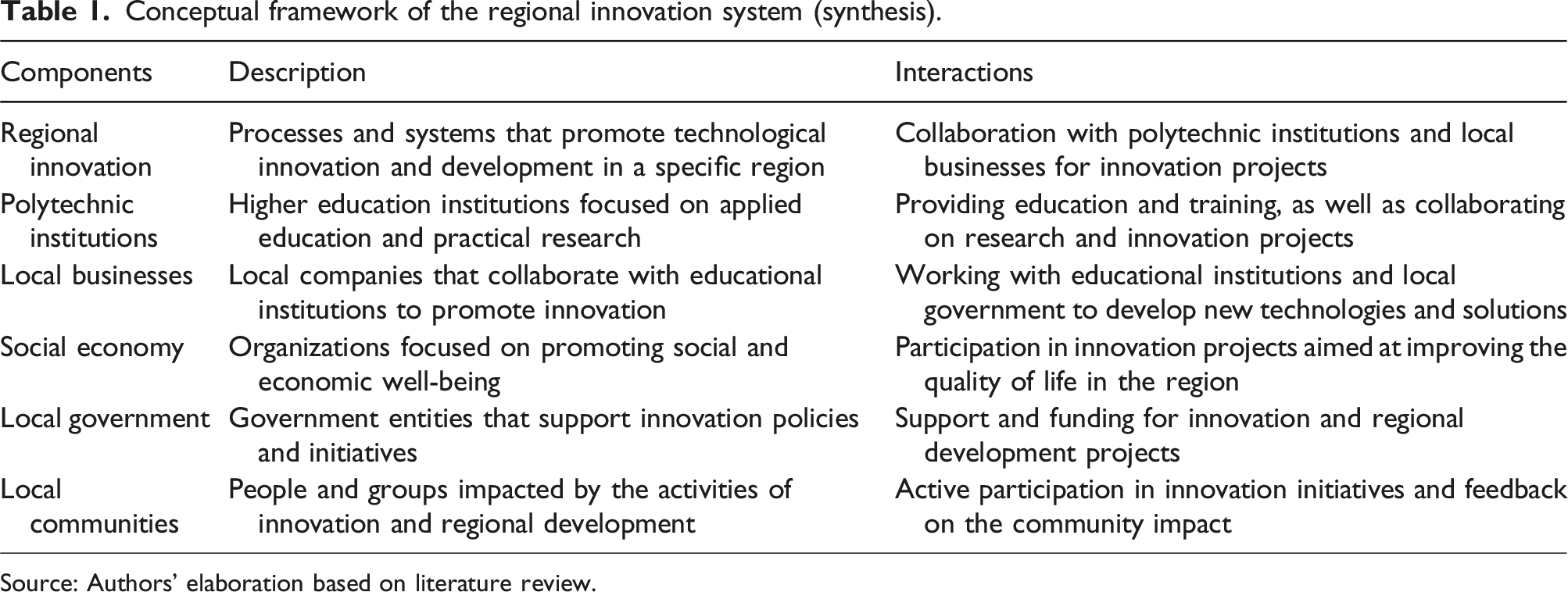
Source: Authors’ elaboration based on literature review.
In summary, regional higher education institutions can play a crucial role in collaborating with business representatives, including cooperative associations, to organize a comprehensive array of initiatives aimed at fostering entrepreneurial culture and social innovation (Corona and Mayorga, 2019; Saha et al., 2023).
By recognizing the value of intangible assets, such as cultural and natural heritage, in sparsely populated areas, these institutions can contribute to the region’s external perception through activities like international tourism conferences, science fairs, start-up competitions, and business incubation programs. This, in turn, enhances the appeal of knowledge-intensive enterprises and services, ultimately benefiting the region’s reputation as an attractive place to invest and
Methodology
The research was based on a qualitative case study approach, of a non-exhaustive nature, as defined by Yin (2018). According to the author, it does not aim to provide a complete and comprehensive analysis but a preliminary understanding of the case, which can then be used to develop hypotheses or theories to be tested in subsequent research. Additionally, it is important to note the reflective nature of the study, as the process of generating evidence involves reflection and interpretation of the collected data about the case (Yin, 2018).
The empirical object of study was based on collaborative Research, Development, and Innovation (R&D + I) projects involving the participation of polytechnic higher education institutions (Polytechnics, in short) and various stakeholders, including business agents, public and private organizations, and local government authorities. The Centre Region of Portugal was specifically targeted as the territory of placement for such projects which hypothetically shall generate knowledge and technology transfer in order to foster a regional innovation ecosystem. The geographical boundaries of this NUTS II Portuguese region include six Polytechnics: Polytechnic of Guarda, Polytechnic of Viseu, Polytechnic of Tomar, Polytechnic of Coimbra, Polytechnic of Leiria and Polytechnic of Castelo Branco (Figure 1). The public polytechnic higher education network in Portugal. Source: https://ccisp.pt/pt/membros/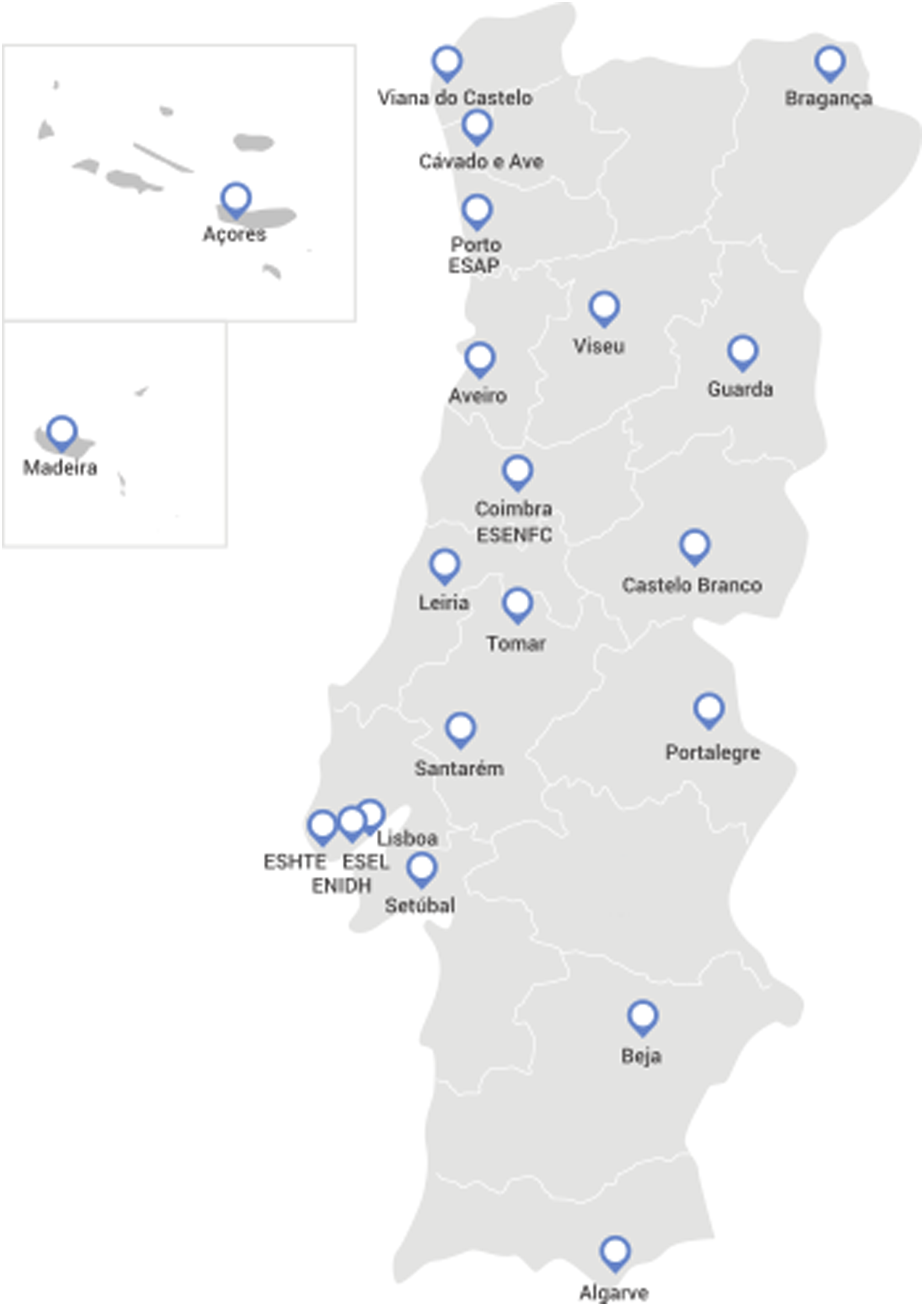
It should be noted that the public polytechnic higher education network comprises 15 polytechnics, 5 non-integrated schools, and 7 universities, 4 of which are represented in the Council for the Coordination of Polytechnic Higher Education Institutes (CCISP).
Empirically, the study examines joint initiatives adopted by polytechnic institutions placed in the region above mentioned to promote innovation networks, aligned with the open innovation model (Chesbrough, 2006; Phonthanukitithaworn et al., 2023), in close collaboration with the business sector and the social economy through co-creation and knowledge transfer. These initiatives are highlighted to showcase the strategic importance of polytechnic institutions in fostering regional development (European Commission, 2023; Jonek-Kowalska and Wolniak, 2021).
To ensure the reliability and robustness of the results, special emphasis was placed on electronic sources hosted on platforms managed by official and reputable entities. These sources were rigorously selected and supplemented by other criteria, including the active involvement of non-governmental organizations (NGOs) and entities within the social economy. This comprehensive approach ensured a multifaceted and thorough examination of the data. The findings from this extensive search are detailed in the subsequent section, offering valuable insights into the nature and scope of partnership projects in research and development and innovation, specifically involving polytechnic institutions in the Centro region of Portugal.
Results
The research methodology described in the previous section led to a set of four relevant cases of the innovative behaviour of higher education institutions located in this territory, including not only the entrepreneurial features, but also social inclusion and sustainability.
Between 2021 and 2023, a remarkable initiative was undertaken to establish a collaborative nationwide network between Portuguese polytechnics, including those placed in the Centro Region of Portugal, and a Finnish company called Demola Global. This initiative, named Link Me Up - 1000 ideas - Support system for the co-creation of innovation, creativity and entrepreneurship, aimed to promote innovation practices through co-creation and practice-oriented research.
The project has received funding of 4.728.357,97€ from the European Social Fund under the Thematic Operational Programme on Competitiveness and Internationalisation, also known as COMPETE 2020 (reference POCI-03-33B5-FSE-072070), as stated by the Portuguese Government (Governo de Portugal/Portuguese Government, 2021).
The primary objective of the project was to enhance sustainability and elevate employment standards, while also facilitating labor mobility across the Portuguese NUTS II regions of Centro, Norte, and Alentejo of Portugal. These three regions were assigned budgets of 47%, 30%, and 23% respectively, out of the total amount. The Polytechnic Institute of Leiria, situated in a medium-sized industrialized city near the Atlantic coast of the Centro region, served as the promoting entity. Additionally, other Polytechnics located in these regions, namely Beja (Alentejo), Bragança (Norte), Castelo Branco (Centro), Cávado e do Ave (Norte), Coimbra (Centro), Guarda (Centro), Portalegre (Alentejo), Porto (Norte), Santarém (Alentejo), Tomar (Centro), Viana do Castelo (Norte), and Viseu (Centro), acted as co-promoters.
The program aimed to foster the development of entrepreneurial ideas and business plans through regional and national competitions, with the ultimate goal of creating sustainable enterprises. A total of 14,514 students from different levels of polytechnic education, including vocational, bachelor's, and master's courses, participated in the program. The students were mentored and coached by professors, referred to as facilitators, from various scientific fields of the polytechnics. The program was carried out in collaboration with public and private organizations, including local administration, business sector, and third sector partners, both in Portugal and other countries (namely Brazil and Cape Verde), with the aim of finding concrete solutions to real problems.
Framed in the themes that concern the planet, the process involved the identification of a challenge and the design of innovative solutions capable of boosting the development of the region in a sustainable way and with sustainability of the planet (Agência Nacional de Inovação, 2024). The constant interaction and feedback between the different partners have become fundamental to obtain 1.076 ideas (491 co-creation innovation, involving 2.347 students and 3017 companies; 585 business plans, involving 2.375 students), having 65 students created their own business.
The co-creation process entailed the exploration of well-being issues (“healing the planet”, “future of work”, “human beings in the modern world”, “value creators of tomorrow”), encompassing the identification of a problem and the design of innovative solutions capable of enhance regional development in a manner that is both sustainable and beneficial for the planet (Agência Nacional de Inovação, 2024). The continuous collaboration and exchange of ideas among various stakeholders have proven to be crucial in generating a total of 1.076 proposals (491 co-creation innovations, engaging 2.347 students and 3017 companies; 585 business plans, involving 2.375 students), with 65 students successfully establishing their enterprises.
The recognition of this accomplishment came through the official announcement of being the winner of the national phase of the European Enterprise Promotion Awards 2023. This prestigious award is part of an initiative led by the European Commission, which aims to honor the most outstanding projects and initiatives in the field of business promotion across the 27 Member States of the European Union and the countries associated with the COSME program. In Portugal, the coordination of this initiative is entrusted to the Institute for Support to Small and Medium Enterprises (IAPMEI/Agency for Competitiveness and Innovation, 2023).
A second case worthy of mention is the creation in May 2022 of the Regional Innovation Offices, described as an initiative of the Polytechnic of Coimbra aiming to “connect this institution to the territories of the region, with a focus on the interior, creating spaces in these territories to carry out joint actions”. According to this source, “the objectives of this project are to open doors to the transfer of knowledge, the development of innovation projects, the promotion of integration actions for the students of the Polytechnic of Coimbra and the unemployed in the labor market and the qualification of companies and institutions in the region” (Politécnico de Coimbra/Polytechnic of Coimbra, 2023).
This initiative is, therefore, an action that responds not only to stimulate the transfer of knowledge to a business fabric historically filled by micro and small companies, in its vast majority, but also to the emergence of job creation opportunities for young people from the interior municipalities of the district of Coimbra (Figure 1), seeking to stop their migration to the coast and encourage the economic and social development of these peripherical territories.
The INOV C + Smart Innovation Ecosystem of the Centro region is the third case being presented. This is also characterized by a high level of institutional density, as it encompasses a consortium consisting of the Polytechnics of Leiria, Coimbra, Tomar, Castelo Branco, Guarda, and Viseu, along with the Universities of Coimbra, Aveiro, and Beira Interior. Additionally, it includes various centres for technology valorisation and transfer, as well as science and technology parks.
This initiative aims to establish a sustainable development model, drawing inspiration from the theoretical concepts of regional innovation systems. Its main objective is to foster innovation within the business sector and promote entrepreneurship within Higher Education Institutions, Science and Technology Parks, R&D Centres, and Technological Interface Centres, which are recognized as having significant technological and research potential. This initiative is driven by the desire to enhance the innovative capacity of the business fabric and create a more entrepreneurial environment (Universidade de Coimbra, 2023).
The fourth case highlights the recognized importance of social innovation ecosystems in the harmonious territorial development is the upcoming launch in 2023 of the Centre for Social Economy and Innovation (CEIS), placed in the city of Guarda. Such city is capital of an inland district belonging to the Centro region (see NUTS III Beiras e Serra da Estrela in Figure 1). This is heavily affected by the migration of young individuals to the Portuguese metropolitan areas of Lisbon and Porto, as well as to Central Europe in search of better employment opportunities (as discussed in-depth by Cerdeira et al., 2023). The CEIS aims to empower social economy entities, promote professional training and the recognition, validation, and certification of skills, as well as provide services and technical support to entities within the social economy sector (Governo de Portugal/Government of Portugal, 2023).
As established by the Portuguese Government, the CEIS has entered into agreements with national entities of the Social Economy, namely the António Sérgio Cooperative for Social Economy and the Portuguese Confederation of Social Economy, and its geographical scope of intervention will be national. Another noteworthy aspect is its location outside the capital city of Lisbon, which reflects the central government’s political will to foster regional innovation in the less developed territories of Inland Portugal.
The CEIS will serve as a hub for disseminating knowledge and enhancing the value of human capital within a vast regional network of cooperatives, associations, and social solidarity institutions, thereby impacting the national economy. According to the results of the Satellite Account of Social Economy for 2020 (INE/CASES, 2023), the Gross Value Added (GVA) of the Social Economy accounted for 3.2% of the Portuguese economy’s GVA, experiencing a slight increase (0.4%) compared to 2019. Between 2019 and 2020, social economy organizations have demonstrated resilience and adaptability in the face of challenges, contributing to the overall economic landscape.
Considering that academia is acknowledged as a partner by the CEIS through the Centre for Iberian Studies, also based in Guarda, it is apparent how the Portuguese Government recognizes the pivotal role played by polytechnic institutes in the endogenous development of a vast transborder territory, where signs of demographic, economic, and social decline are becoming increasingly evident to the Iberian governments. This partnership includes researchers and professors from the University of Coimbra and the Polytechnic Institute of Guarda (both located in the Centre Region), as well as the University of Salamanca (a bordering Spanish city).
Synthesis of results.
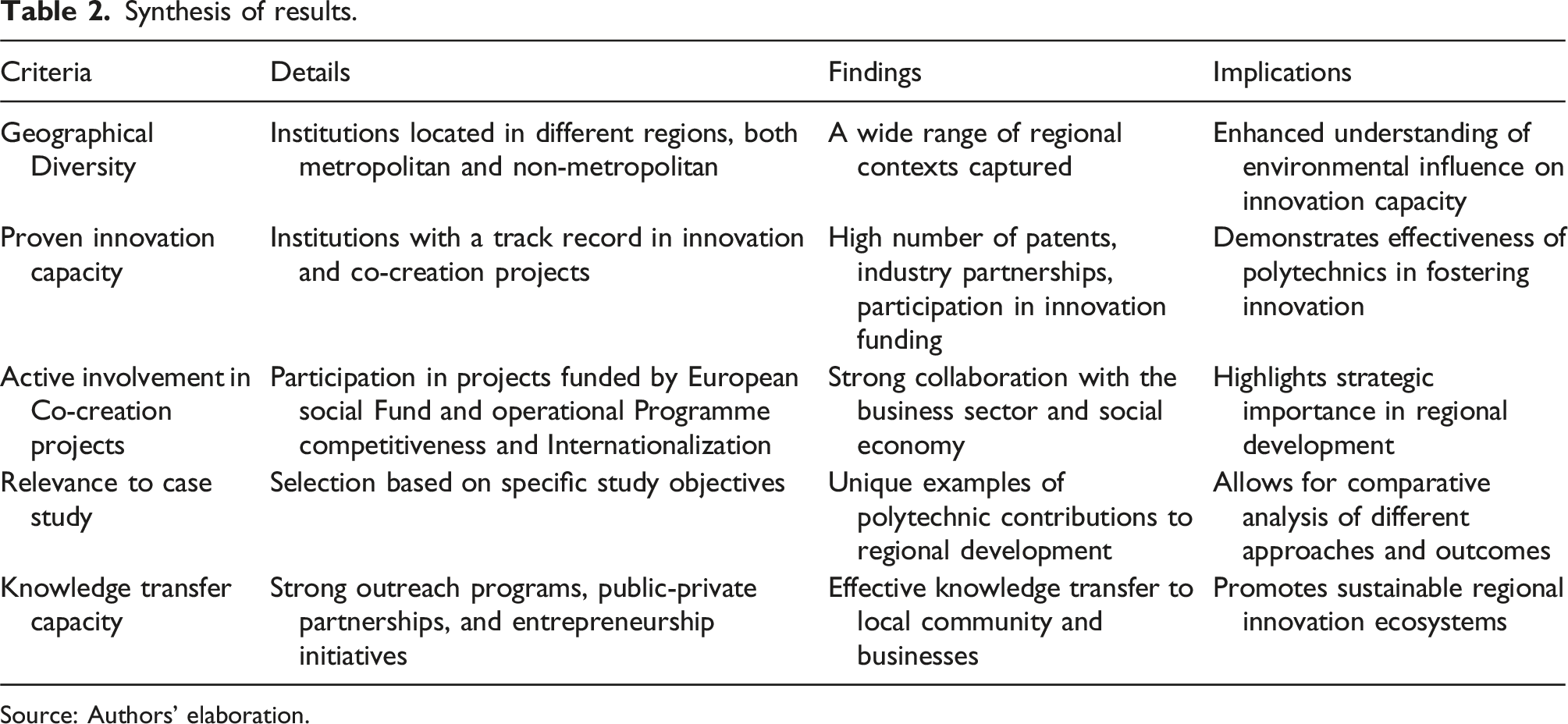
Source: Authors’ elaboration.
Conclusion
Higher education institutions, including polytechnic institutes, are expected to play a crucial role in fostering regional innovation ecosystems. They are expected to act as hubs by training skilled individuals, conducting practical research in collaboration with businesses and social economy organizations. By doing so, polytechnic institutes contribute significantly to the economic, social, and technological advancement of the regions they are located in. This contribution is evident through the development of qualified human resources and the promotion of practice-oriented research, as well as the transfer of knowledge and technology, as highlighted by various studies (Asheim et al., 2019; Dollinger and Lodge, 2020; Jacobides et al., 2018; Portuguez Castro et al., 2019; Rossoni et al., 2024; Theeranattapong et al., 2021).
The adoption of regional strategies that promote entrepreneurial culture and the development of applied research programs further strengthens their role as drivers of regional innovation. In this article, this is demonstrated by the cases analysed, which align with the agenda for a smart specialization strategy as defined in Camargo et al. (2021) and put into practice in the Centre region.
Despite the case study nature of the research carried out, it allows to foresee significant impacts in the medium term, particularly the following. (1) Enhancing Business Competitiveness: Polytechnic institutions have the potential to enhance business competitiveness through the provision of technological and management solutions to collaborating enterprises. This facilitates value creation, thereby fostering the emergence of new businesses and markets, including those in the international realm. The documental analysis conducted in this paper supports this proposition. The potential impact of the dynamic nature of these enterprises, which contributes to the continuous expansion of job opportunities in the service sector that supports regional clusters and urban hubs, should not be disregarded. However, it is important to note that this paper lacks empirical evidence to substantiate this claim, thus presenting a clear limitation. (2) Evaluating Economic, Social, and Technological Effects: conducting further research to evaluate the potential economic, social, and technological effects of integrating highly skilled workers, innovative companies, and social economy organizations in proximity areas of polytechnic schools would be advantageous. This investigation is crucial for policymakers to assess the educational and vocational offerings, and research initiatives led by polytechnic institutions to allocate budgets and ensure quality accreditation.
This article presents an original contribution to the academic literature by providing recent examples of research and development, innovation, and entrepreneurship in peripheral regions, highlighting the economic and social value of polytechnic institutes in Portugal. Additionally, the article presents empirical evidence that supports the literature on the new challenges faced by polytechnic institutes in their institutional mission, which includes not only training, education, and research and development activities, but also the promotion of social innovation, contributing to the goals of sustainable development in terms of economic growth and social (territorial) cohesion.
As a final note of this investigation, it is important to emphasize that the cases addressed in this study clearly illustrate the fourth mission of higher education institutions, particularly polytechnic institutes. This mission involves empowering neighbouring communities through the conception, design, implementation, and scaling of social innovation projects aimed at local and regional endogenous development.
Footnotes
Declaration of conflicting interests
The author(s) declared no potential conflicts of interest with respect to the research, authorship, and/or publication of this article.
Funding
The author(s) received no financial support for the research, authorship, and/or publication of this article.
