



Abstract
Faces inherently capture our attention, allowing our brains to quickly determine whether a new individual poses a threat. This natural tendency has been leveraged by brands to attract consumer attention in advertising, but the contribution of a face to attract attention on pack has yet to receive much attention. In this study, we examine whether incorporating a face on product packaging enhances its visibility in online supermarkets. Our research indicates that unlike in advertising, faces do not have a significant positive effect on a packaging visibility in an online shopping context. The likely reason is that the reduction of facial image size to a thumbnail on screen renders them ineffectual as emotion communication devices. Therefore, there is no online attentional advantage that would encourage packs without a face to add one to their pack design, nor is there any disadvantage if packs take a face off their pack in an online setting.
Introduction
The growth of e-commerce has significantly reshaped global business, propelled by technological advancements and widespread internet accessibility. It is estimated that by 2027 41% of global retail sales will be online, up from 17% in 2017 (Barthel et al., 2023). Businesses have responded to year-on-year growth by making substantial investments in online infrastructure as more products are sold online. However, an area currently lacking is research into the efficacy of existing packaging designs on these emerging online platforms. In e-commerce, search can result in hundreds of options, competing for attention in the limited visual ‘real estate’ on a screen (Ashler, 2017; Chapple et al., 2021), Thus, the ability of a brand to cut through the clutter and gain attention becomes even more critical. Therefore, brands are looking to leverage the pack’s visual image to get a competitive advantage in this retail space. One potential tactic to attract attention to the brand is to harness the attention-getting advantage of a face.
Individuals pay more attention to faces (Klatzky & Forrest, 1984), as the detection of positive or negative emotion on faces helps human’s survive in social settings (Pessoa et al., 2002). Faces on grocery brand packs gained practitioner and researcher attention in 2021 when Uncle Ben and Aunt Jemima were dropped from their respective packs in response to concerns about racial stereotyping. In both cases the face was dropped in favour of some other pack element, rather than being replaced by a new spokes character. Given past research has found consumers display heightened attention to faces in advertising (Garretson & Burton, 2005), does the abandonment of these faces have negative consequences for the brands?
Within this research we draw on the fields of neuroscience, psychology, and advertising to explain why consumer packaged goods pack designs that include a face should be more likely to stand out in grocery shopping environments. We then test whether having a face on a pack gives the brand and advantage via a split sample experiment which tests if consumers in an online e-commerce setting display heightened attention to products with faces on them.
Background
Attentional bias for faces – a neuroscience and psychology perspective
Faces attract attention due to a combination of evolutionary and psychological factors in human development (Klatzky & Forrest, 1984). Our faces serve as an outlet for expressing emotions (Sergerie et al., 2005), therefore recognising and interpreting faces is crucial for human survival in social environments (Pessoa et al., 2002). Faces play a pivotal role in non-verbal communication, providing rich information about identity and intentions (Langton et al., 2008), but we can only react to non-verbal cues if we interpret these early, and therefore give the face we see attentional priority. Indeed, facial recognition is so important to our lives that the brain has a localised centre, the fusiform gyrus, that serves a key purpose of identifying face shapes (Parvizi et al., 2012). This is heightened attention to, and interest in faces is referred to in psychology as attentional bias for faces (Schindler & Bublatzky, 2020).
The study of faces in marketing
Within the marketing paradigm, faces have primarily been explored in advertising research, with evidence that consumers tend to pay more attention to faces over other stimuli (Cerf et al., 2009). Indeed Guido et al. (2019) concludes that human faces and face-like images strengthen advertising and brand recognition (see also Droulers & Adil, 2015) and can manipulate viewer gaze (Hutton & Nolte, 2011). This includes the online world, where online advertising banners featuring faces are more attention-grabbing than those without (Sajjacholapunt & Ball, 2014). Therefore, the is evidence that presence of a face draws attention, and helps an advertisement stand out, in cluttered media environments.
Retail settings are also very cluttered environments where the brand needs to stand out. For Consumer-Packaged Goods (CPGs), the package design is the brand’s ‘ambassador’ as the visual representation of the brand. Packaging goes beyond protecting the product; it also reflects the brand’s identity (Ambrose & Harris, 2011). A carefully designed package increases the brand’s visibility in a retail setting (Young, 2004), and increases the chance a product is chosen (Reimann et al., 2010). However, a CPG brand’s pack is made up of many different elements such as images, words, colors, and logos. It is therefore important to assess the effects of various design components to test their efficacy in attracting consumer attention, to design a pack that will get the brand noticed in retail settings.
Despite the clear advantage of faces in advertising, their efficacy on pack is unknown. Previous packaging research has examined the role of packaging design elements such as color (Gaillard et al., 2006), shape (Kotler & Alexander Rath, 1984), product images (Ward et al., 2023) and typography (Romaniuk & Hartnett, 2013). Most of this research investigates the impact of design elements on consumer judgments of a brand’s identity (Romaniuk & Caruso, 2018; Ward et al., 2020). The studies that are in retail settings (e.g., Gaillard et al., 2006) were conducted in-store only and did not examine the impact of faces on pack. Therefore, this research explicitly tests the efficacy of faces as attention-getting devices in an e-commerce grocery context.
Theories of shopper search and attention
A brand needs to stand out/gain attention to be noticed and considered for purchase (Silayoi & Speece, 2007; Wedel & Pieters, 2006). Increased attention elevates the probability of being included in consumers’ consideration sets (Fitzsimons et al., 2002). However, clutter in the environment means brands face competition to stand out (Grange et al., 2019; Khachatryan et al., 2018). In shopping environments, competitive clutter arises from multiple brands within a small space (Grange et al., 2019). In-store, brands can easily buy additional shelf space or use displays, such as endcaps, to gain attention (Caruso et al., 2018). In e-commerce, the visual ‘real estate’ for any one brand is usually smaller, bound by visual constraints, and full of competitor options (Ashler, 2017; Chapple et al., 2021), making it difficult to discern branding features.
Shoppers are more likely to purchase the option they look at most (e.g., Gidlöf et al., 2017). Milosavljevic et al. (2012) conclude this effect is heightened during fast decision-making scenarios, such as shopping online (Anesbury et al., 2016). Therefore, standing out in e-commerce can improve the chance of being purchased (Varela et al., 2017). As a result, brand managers are looking for ways to help their brands stand out from the clutter.
Researchers have studied the effect of pictorial versus word cues in advertising stimuli and online website design (Chocarro et al., 2022; Stolk et al., 1993). Termed the “picture superiority effect” (Paivio & Csapo, 1973), most studies suggest that images are more attractive, generate more recall and are processed at a higher speed than text (e.g., Hong et al., 2004). Packaging with a face has a greater pictorial element on pack, compared to packaging without a face, which should create a stronger ability to differentiate the pack stimuli (as discussed in Childers & Houston, 1984), making pack identification subsequently an easier cognitive process for shoppers (see also Hockley, 2008). Given this documented appeal of faces to the human gaze, it is reasonable to hypothesise that a face on a pack could be more noticeable than one without a face in shopping environments. However to the best of the authors’ knowledge, the literature has not investigated whether using a face on pack enhances the attention the pack obtains. Our study investigates this by testing the following hypotheses in the online shopping environment for fast-moving consumer goods: H1: CPG packaging that features a face will stand-out to more consumers in a grocery e-commerce environment than packaging without a face. H2: CPG Packaging that features a face will be selected faster by consumers in a grocery e-commerce environment than packaging without a face.
Method
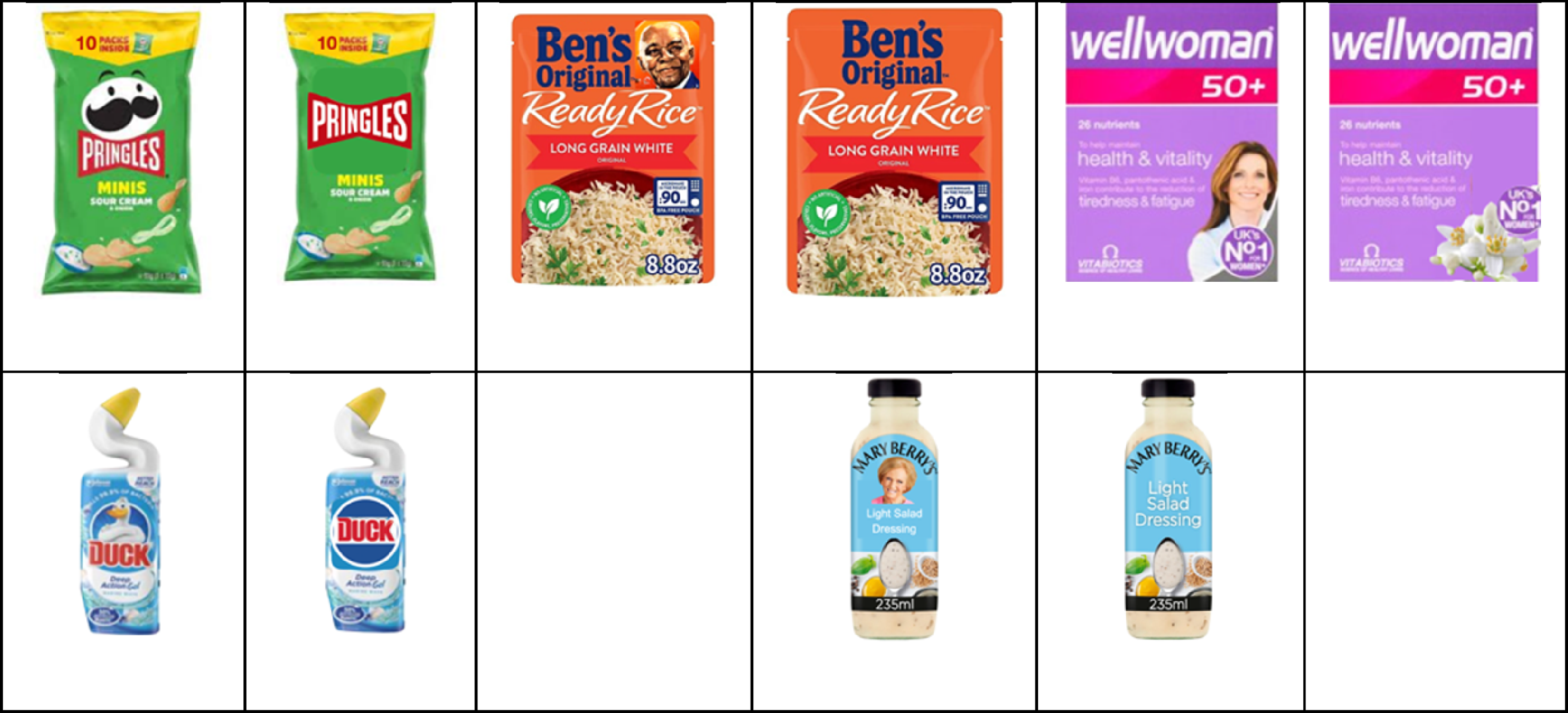
Our study aims to assess the impact of faces on brand visibility in e-commerce. We conducted a split-sample study with 896 respondents from the UK who had purchased from at least one of five categories (Crisps, Ready Made Meals, Vitamins, Toilet Cleaner, Salad Dressing) in the past year. Each group viewed mock-up online supermarket pages (see Figure 1) for each category, featuring eight brands. One group saw a set of packs in a category where one pack had a face, while the other saw the same packs but the treatment pack did not have a face (Figure 2). Respondents viewed five pages, each showing a different category, in a random order, and saw either two or three categories with a pack with a face. Example of page for Crisps. Packaging examples with/without faces.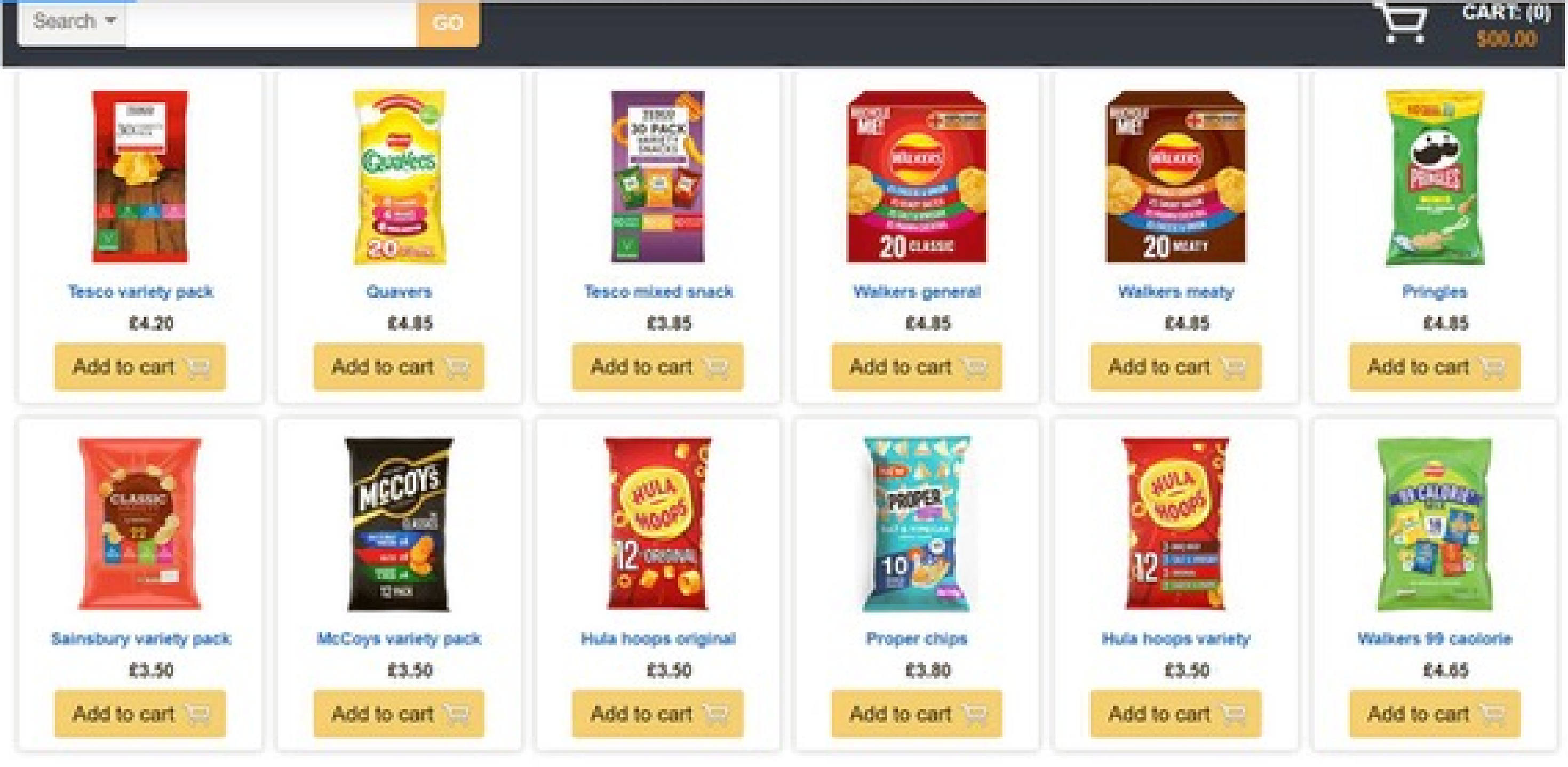
The samples have a very similar profile, with no statistically significant differences between the two samples based on key characteristics. For example: gender (Females Sample A = 52%; Sample B = 53%), age (18–29 yrs Sample A = 19.6%; Sample B = 20.4%; 50–59yrs Sample A = 20.9%; Sample B = 19.9%), target brand awareness (Mary Berry Salad Dressing Sample A = 20.3%; Sample B = 18.8%) or target brand usage (WellBlends Vitamins Sample A = 2.9%; Sample B = 3.4%).
Prices relevant to the brands in each category were provided to improve the realism of the setting (e.g., private labels are priced lower than manufacturer brands), but no promotional materials were included to avoid unnecessary distraction. Competitor brands were selected as from the same category, but without any faces on their packs.
A first category, eggs, was used as a warm-up exercise for all respondents. Respondents were shown the page and asked to ‘click on the pack that stands out to you’. The option chosen and time taken to click were recorded. Respondents who took more than 20 seconds to respond for the warm-up category were prompted with a reminder to make their selection quickly. The five categories then followed, like how someone might work through categories when grocery shopping.
The faces (see Figure 2) included a celebrity chef added to a pack (Mary Berry, 58.3% recognition); a made up “spokesperson” female face currently present on pack (Wellwoman, 4.4% link with brand); a human character previously on pack but now removed (Uncle Ben; 69.5% recognition); an animated human face currently on pack (Mr Pringles; 76.8% recognition) and an animated animal face currently on pack (Duck; 73.3% recognition). The categories were chosen due to the mix of face types (mascot, male, female, animal, prior used vs. newly introduced, famous vs. unknown) and the product purchase frequency of different categories, across both food and non-food categories. This enabled us to test a wide variety of conditions for typically bought categories which include well-known brands.
Results
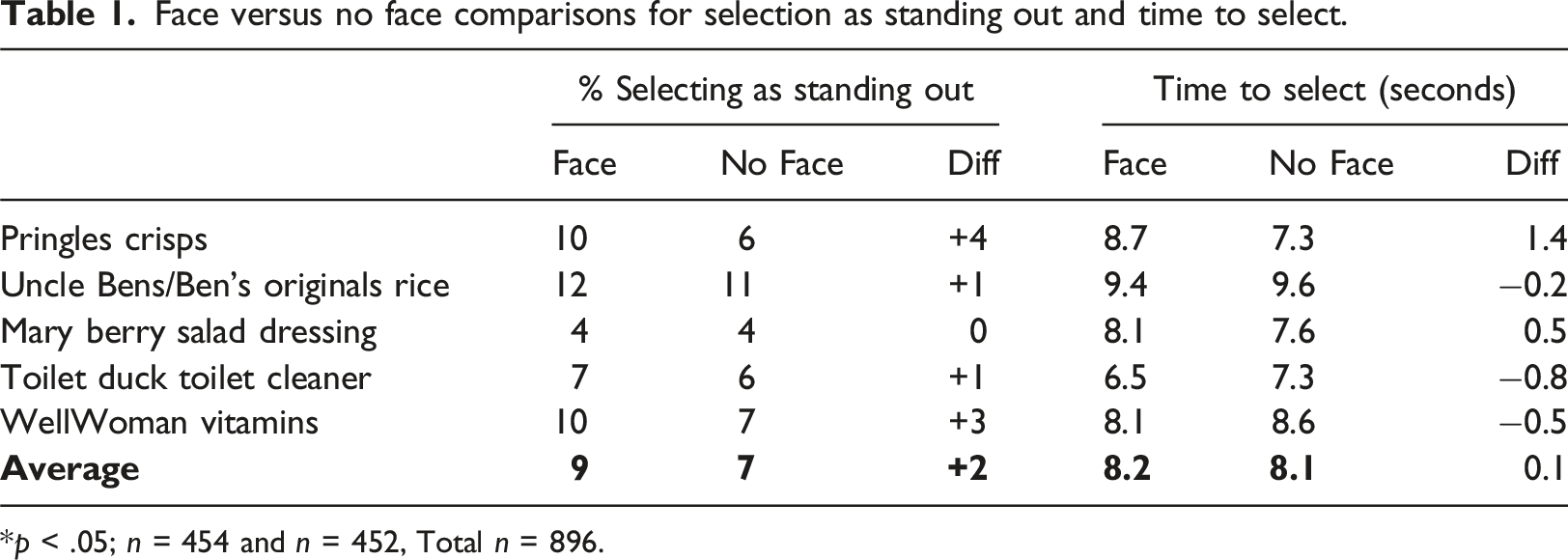
Face versus no face comparisons for selection as standing out and time to select.
*p < .05; n = 454 and n = 452, Total n = 896.
Therefore, we conclude that there is no evidence to suggest packs that feature a face are substantively more likely to be selected. Nor are packs with a face selected substantively faster than their counterpart pack without a face. Therefore, H1 and H2 are not supported.
Discussion
This study examines the impact of using faces on packaging to stand out. Despite testing five different types of faces, the results did not show any consistent or significant differences. This suggests that having a face on the packaging does not provide a noticeable advantage in attracting visual attention online, whether it’s a familiar commonly present face like Mr Pringles or a newly applied face like Mary Berry.
While at first glance, this appears in conflict with the picture superiority effect (Hong et al., 2004; Unnava & Burnkrant, 1991), this result suggests to us that the pack in its entirety is processed as the ‘picture’ rather than the individual elements that comprise it. Most picture superiority research compares a picture to a word (e.g., Hockley, 2008) and tests subsequent recall of prior stimuli. In this instance we test whether a more visually rich and distinct stimuli, due to the presence of a face, gets more attention than a picture that is less visually rich due to the absence of a face.
When a pack image is enlarged, its imagery parts (faces, logos etc.) are easily discernible from text (the brand name, slogans, or product claims). However, in the context of an online retail store, unless clicked on, pack images are often relatively small and appear on a single page alongside other textual information (e.g. brand name, price, add to cart button). As such, the face on pack is not able to activate any additional benefit not already received as part of the holistic pack design (Orth & Malkewitz, 2008). The enlarged pack is only seen after clicking on the brand, therefore, on first appearance, the face is not sufficiently large enough to draw attention and encourage clicking on the pack (to buy or for more information).
This finding is further explained by theories of attention, which find emotion and stimuli size play a mediating role. Ghosh et al. (2022) found logos (pictoral) and brand names (textual) equally influence attention when both elements are equal in size (Ghosh et al., 2022). Hence, we suspect that the small size of the pack thumbnails in the online store layout does not allow emotion to be conveyed or perceived, and so do not activate our emotional reading/response systems (e.g., Sergerie et al., 2005). Therefore, the faces in pack thumbnails lack the depth of non-verbal communication to draw attention.
Thus, our research highlights a boundary condition on the effects of faces on consumer attention, that relates to the size of the face. It might be desirable to alter the layout of an e-commerce environment to enhance the size and therefore impact of the face on the pack, but this is typically the domain of the retailer and so outside of the control of a brand manufacturer. A future avenue of testing might be to replace the pack with a face i.e. linked to the brand (e.g., Mr Pringles face instead of the full pack) to see if that gains more attention than the face as part of the pack.
Practical implications
Often, research promotes practical implications that identify actions to improve marketing performance. However, knowing when inaction is the prudent course to take is equally as important as this stops marketers investing in activities that incur costs for no additional benefit. This is particularly important when it comes to faces as using a human face given the prior evidence has been very positive about the influence of faces on attention and using a face can incur additional talent costs that other visual images do not face.
This research finds brands that do not use faces on pack will not gain an attentional advantage in grocery e-commerce settings by adding a face to their pack’s visual design. We also show that removing a face from pack will have no detrimental effect on pack attention in an e-commerce context.
Limitations and future research
This research suffers limitations of scope, as it is in one country across five packaged goods categories in an online context. Therefore, replication in other contexts would be beneficial. Expansion of the scope would also allow for more detailed analysis into potential category differences, such as comparison of the efficacy of faces on products with high/low emotional or cultural relevance.
Another limitation of this study is that its metrics are restricted to decision efficiency and time taken. Future research could use eye-tracking to gain deeper insights into the cognitive processes resulting in consumer behavior. We also recommend extending the testing to mobile apps, which are also small image contexts where a face might not have sufficient size to gain an attentional advantage. Testing of other characteristics (such as color, or typography) to see which helps a brand stand out online would also be beneficial.
Footnotes
Acknowledgements
We would like to thank our colleagues at the Ehrenberg-Bass Institute for Marketing Science, and the many companies around the world that sponsor the Institute’s research program.
Declaration of conflicting interests
The author(s) declared no potential conflicts of interest with respect to the research, authorship, and/or publication of this article.
Funding
The author(s) received no financial support for the research, authorship, and/or publication of this article.
