



Abstract
The purpose of this study is to contribute to the body of research on political brand identity by specifically exploring political brand culture as a key element of political brand identity. Thus, this study addresses a significant gap in the literature on political brand identity using the developing world context of Pakistan Tehreek-i-Insaf party [PTI]. Adopting a qualitative methodology, this research involved in-depth interviews with PTI members to uncover the underlying values, beliefs, and cultural elements that shape the party’s brand culture. The findings reveal that PTI’s brand culture is an intricate and complex network of values, beliefs, and strategies that shape its identity and influence its interactions with both internal stakeholders and the broader public. These core values not only define PTI’s culture but also distinguish it from its competitors. The originality of this study lies in its development of a new framework for understanding political brand culture, comprising Brand Core Values, Collaborative Engagement, and Brand Strategy & Goals. This framework provides a nuanced tool for both academics and practitioners to analyse and manage brand cultures across various contexts, offering valuable insights for enhancing brand coherence and resilience during times of change.
Keywords
Introduction
This research explores the political brand culture element of Pakistan Tehreek-i-Insaf’s [PTI] political brand identity. The growing field of political branding research has documented the use of branding techniques across various political levels, highlighting its effectiveness as a new approach to political marketing (Cinar, 2011; Cosgrove, 2012; French & Smith, 2010; Guzmán & Sierra, 2009; Knuckey, 2010; Lees-Marshment, 2014; Phipps et al., 2010; Smith & Spotswood, 2013). However, despite this surge in research, most studies have tended to focus on political brand image that is how the brand is viewed externally by stakeholders (Putri & Ahmad, 2024; Rutter et al., 2018). Thereby creating a paucity of studies focusing on brand identity that is how internal stakeholders view the brand. A limited number of studies focusing on brand identity have examined brand personality and online and offline communications (Bode & Dalrymple, 2016; Rutter et al., 2018), primarily addressing tangible aspects, personality traits, and messaging. Moreover, there has been some progress in brand identity, research focusing on one or more key dimensions such as brand culture remains limited and under-developed (Armannsdottir et al., 2019; Pich et al. 2020a, 2020b; Rutter et al., 2018; Verma, 2015). This emphasis reveals a significant gap in research on brand identity, particularly in the exploration of individual elements such as brand culture. The lack of focus on these dimensions presents a challenge in fully understanding brand identity, which in turn limits the ability to effectively manage it. Additionally, studies examining political branding in developing democracies remain limited (Farhan & Ahmad, 2016; Marsh & Fawcett, 2011) with explicit calls for more research in this area (Narteh et al., 2017; Nwanganga et al., 2017). This imbalance creates a gap in our understanding of how branding functions within different political contexts.
This study aims to address the existing gap by exploring a single element of political brand identity, specifically the political brand culture of the Pakistan Tehreek-e-Insaf (PTI) political brand from the perspective of party members. While Khan et al. (2024) used focus groups with external stakeholders to examine the brand image of the PTI political brand, this study employed interviews with members of the PTI party to focus on the internal political brand culture. By focusing the perspective to party members, this study offers an in-depth understanding of the internal dynamics of the political brand. PTI is a Pakistani centrist political party founded in 1996 by former cricket captain Imran Khan (Akram & Iqbal, 2020; Chaudhry & Bilal, 2021; Noreen, 2018). PTI was in power at the federal level from 2018 to 2022 (Amjad et al., 2024) with Imran Khan as Prime Minister. Since its ouster from power in 2022 (Jan et al., 2023), the party has faced a series of crises with Imran Khan being jailed in August 2023. In the run-up to the general elections in 2024, the party was effectively banned from contesting by the Supreme Court of Pakistan (Arshad, 2024). Subsequently, its candidates were forced to run as independents. Despite these obstacles, PTI-backed candidates emerged as the largest single block of winners in the National Assembly of Pakistan (Sharma, 2024).
The article begins by exploring existing literature on political branding, specifically examining the concepts of political brand identity and political brand culture. Following this foundation, the research objectives are presented, outlining the aims of the study. The methodology chapter then details the research approach, data collection, and analysis strategy employed by the study. This section provides a transparent explanation of how the research was conducted, including the chosen methods and the rationale behind them. Subsequently, the findings chapter presents the various themes uncovered in the study regarding PTI’s corporate brand culture. This section examines the core elements that define the party’s internal brand. A discussion chapter then analyses these findings about the existing literature. This critical examination highlights how the study’s results contribute to filling identified gaps in the current understanding of political branding. Finally, the article concludes by summarizing the key takeaways and outlining potential avenues for future research. This concluding section provides a sense of closure while also pointing toward directions for further exploration in the field.
The concept and significance of political branding
Political branding borrows from marketing principles applied to destinations, organizations, and countries (Billard, 2018; DasGupta & Sarkar, 2022; Munoz & Towner, 2022; Robinson, 2004; White & Chernatony, 2002). Numerous scholars have explored this concept, including Lees-Marshment (2009), Lilleker (2006), and Lock and Harris (1996). The core idea lies in treating political entities (parties, candidates, ideologies, policies) as brands that can influence political outcomes (Ahmed et al., 2017; Cosgrove, 2012; Downer, 2016b; French & Smith, 2010; Grimmer & Grube, 2017; Guzmán & Sierra, 2009; Harris & Lock, 2010; Kaneva & Klemmer, 2016; Lees-Marshment, 2014; Nwanganga et al., 2017; Peng & Hackley, 2009; Phipps et al., 2010; Pich et al., 2016; Rawson, 2007; Zhang, 2022). Literature suggests that political branding involves distilling a party’s values, benefits, and unique attributes into a clear and persuasive message that amplifies its strengths (Lees-Marshment, 2014). It also encompasses the overall perception of the party and its elements (Lees-Marshment, 2014; Nwachukwu et al., 2016). The “brand” in politics refers to integrating a party’s tangible and intangible aspects to cultivate a specific image and reputation (Lees-Marshment, 2014, 2015; Needham, 2005; Scammell, 2015). Political brands have variously been conceptualized as personal political brands (Armannsdottir et al., 2019), political campaign brands (DasGupta & Sarkar, 2022), and political brand communities (Newman, 2020).
Researchers have often viewed political party brands through the lens of corporate branding, recognizing the involvement of various internal and external stakeholders (Jain et al., 2018; Pich et al., 2016; Pich & Armannsdottir, 2022). These political brands are often conceptualized as a trinity comprising the party, its policies, and its leader (Pich & Dean, 2015; Pich et al., 2016). The internal element of a political brand is known as its corporate brand identity, whereas the external perception in the minds of stakeholders is known as brand image.
Despite the involvement of numerous stakeholders, most studies on political brands have primarily focused on brand image from the voter’s perspective; however, a few studies have also examined brand image from the media’s viewpoint. Thus, creating a gap in research involving multiple external stakeholders. Schneider and Ferié (2015) emphasize the importance of studying internal audiences in political brand management. They argue that, like corporate brands, political parties rely heavily on their members, who play a significant role in leadership elections, policy development, and legislative efforts. Despite their influence, party members are often understudied in the context of political brand management. Neglecting the internal audience creates a critical gap in our understanding of political brands (Schneider & Ferié, 2015). Subsequently, researchers including Billard (2018), Jain et al. (2018), Panigyrakis and Altinay (2017), Pich et al. (2016), and Serazio (2017) have highlighted a gap in research on the corporate brand identity of political parties. They argue that a more comprehensive understanding of political brands requires a deeper examination of this aspect. Furthermore, these researchers emphasize the need for studies that explore political brand identity within dynamic contexts and settings. This broader perspective will contribute to a richer understanding of how political brands function and evolve.
Political brand identity
Non-exhaustive list of corporate political brand identity publications.
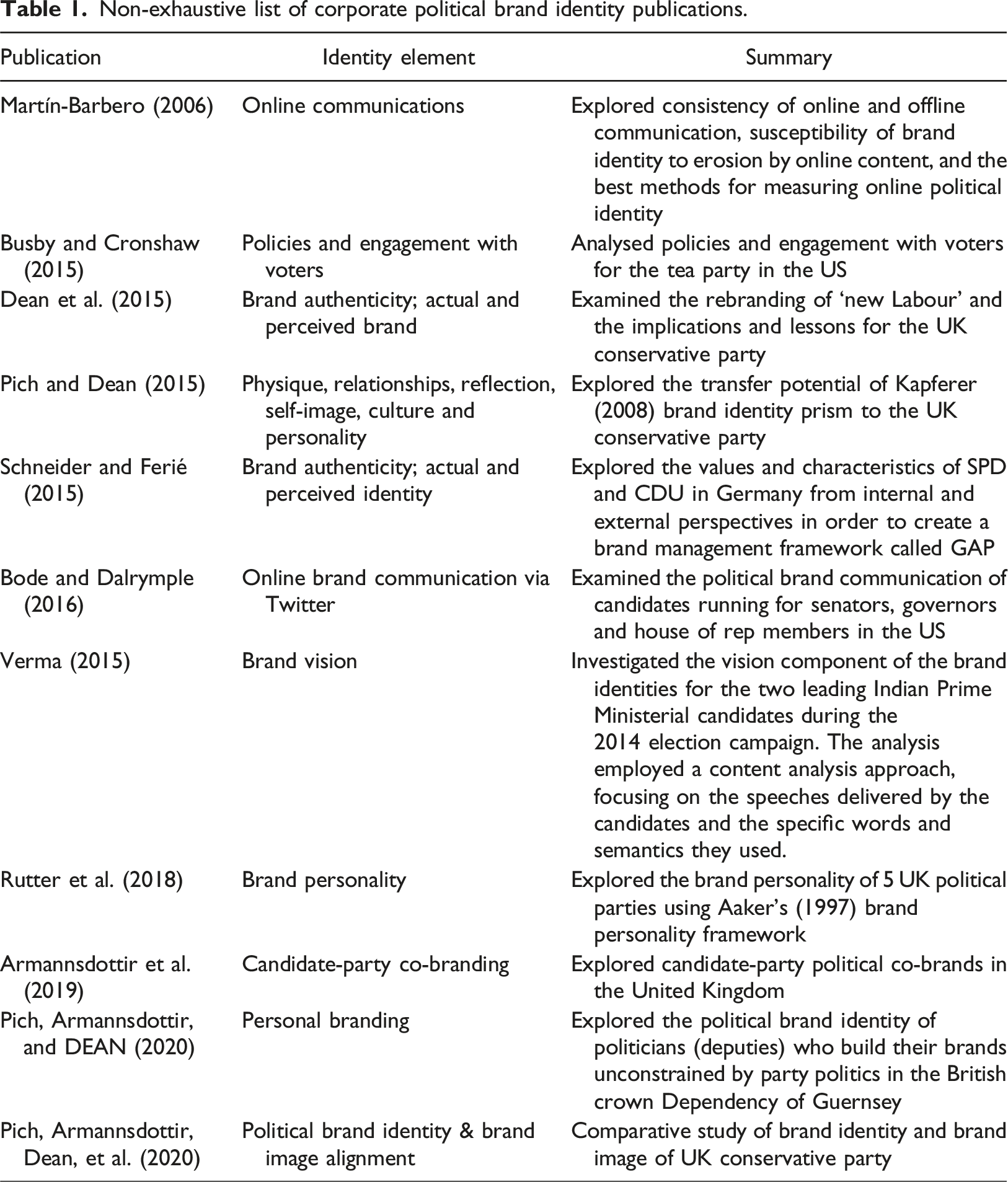
Additionally, Rutter et al. (2018) and Pich, Armannsdottir, and DEAN (2020) investigated the internal brand personality and personal branding in political contexts. However, a crucial aspect of political brand identity remains under-explored: the internal culture of the party brand. There is a common theme in the literature (Armannsdottir et al., 2019; Pich et al. 2020a, 2020b; Rutter et al., 2018; Verma, 2015) indicating the need for further understanding of political brand identity. Pich and Dean (2015) define culture as the party’s heritage, core values, and the values of its figurehead, and how these are perceived by internal stakeholders. Authors (Armannsdottir et al., 2019; Pich et al. 2020a, 2020b; Rutter et al., 2018; Verma, 2015) suggest that future research should consider one of the different dimensions or aspects of identity such as brand culture to provide greater focus, detail, and in-depth understanding on this under-researched and under-developed topic area. While internal culture is a broad topic, Pich and Dean (2015) have contributed to this critical gap by applying Kapferer’s (2008) brand identity prism to the UK Conservative Party. Kapferer’s (2008) framework consists of six dimensions to analyse brand identity, one of which is culture. Their research revealed that internal stakeholders viewed the Conservative Party as a ‘broad church’ with diverse viewpoints. However, a key finding, a sense of contradiction emerged. Internal stakeholders often blur the lines between their personal values and the party’s core values, making it difficult to distinguish the two (Pich & Dean, 2015). This complexity suggests that existing models for understanding brand identity may not fully capture the nuances of political brands, particularly regarding the internal cultural dimension. Therefore, further research is needed to explore this crucial aspect in greater detail and offer a new, more revealing framework.
In summary, while some research on political brand identity has been undertaken, it has largely overlooked the internal culture of the brand. However, Pich & Dean’s (2015) work demonstrates the potential for exploring the ‘culture dimension’ in analysing political brands. Further research is needed to explore this facet in more depth, examining how internal stakeholders shape and contribute to the overall brand identity. By investigating the internal culture of political brands, we can gain a more comprehensive understanding of how these brands function and evolve. This aligns with calls from Needham and Smith (2015) and Pich and Newman (2020) for more research in under-explored areas of political brand identity.
Corporate political brand culture
The complexity of political brand culture coupled with a paucity of literature necessitates an interdisciplinary approach. This involves examining commercial corporate branding to conceptualize and clarify the notion of brand culture. According to Barros-Arrieta and García-Cali (2021), corporate brand culture plays a significant role in forming the corporate brand identity and determining the corporate brand image of an organization. Nonetheless, there is no consensus among researchers about what constitutes internal corporate brand culture (Du Preez & Bendixen, 2015; Garas et al., 2018) except that it is how internal stakeholders “perceive their company and how they aim to present it to the outside world” (Koporcic & Halinen, 2018, p. 395). Graham et al. (2022, p. 553) define corporate brand culture as “a beliefs system,” “a coordination mechanism,” “an invisible hand,” “how employees interact with one another,” “a standard of behaviour,” and “the tone for what type of company this is”. Whereas Saleem and Iglesias (2016) assert that brand culture is part of brand ideology. Saleem and Iglesias (2016, p. 48) conclude that “a brand’s ideology, as is evident in the literature, is not limited solely to written goals and norms but also includes a brand’s organizational culture that employees are exposed to on an everyday basis (King & Grace, 2008), which has to be supportive and conducive to the brand’s actual positioning and promise.”
Corporate brand culture is a relatively new concept within branding, and continued research is crucial for its development (Barros-Arrieta & García-Cali, 2021; King & Grace, 2010; Piehler et al., 2018; Saleem & Iglesias, 2016). This emphasis on exploration aligns with scholars who highlight the nascent nature of corporate brand culture and the need for robust frameworks to solidify its foundation (Barros-Arrieta & García-Cali, 2021; Hytti et al., 2015; King & Grace, 2010; Piehler et al., 2018; Saleem & Iglesias, 2016; Zhang et al., 2016). Understanding the importance of a strong corporate brand culture goes beyond marketing messages. Employees who lack a clear understanding of the brand essence are unable to effectively deliver on the brand promise (Erkmen & Hancer, 2015). Strong internal communication is essential – the messages conveyed to employees about the brand carry equal weight to those disseminated to external stakeholders (Anisimova & Mavondo, 2010; Barros-Arrieta & García-Cali, 2021; Pinar et al., 2020). Here’s where the concept of “internal markets” becomes relevant. Similar to the concept of “nano relationships” within stakeholder relationship management (Duralia, 2021; Stevens & Nafzger, 2021; Varey & Lewis, 2000), employees play a pivotal role in delivering the brand promise (Christopher et al., 1991; Hanaysha, 2016). Just as every department in a company contributes to customer satisfaction, a strong brand culture ensures all employees, regardless of position, understand and embody the brand’s values.
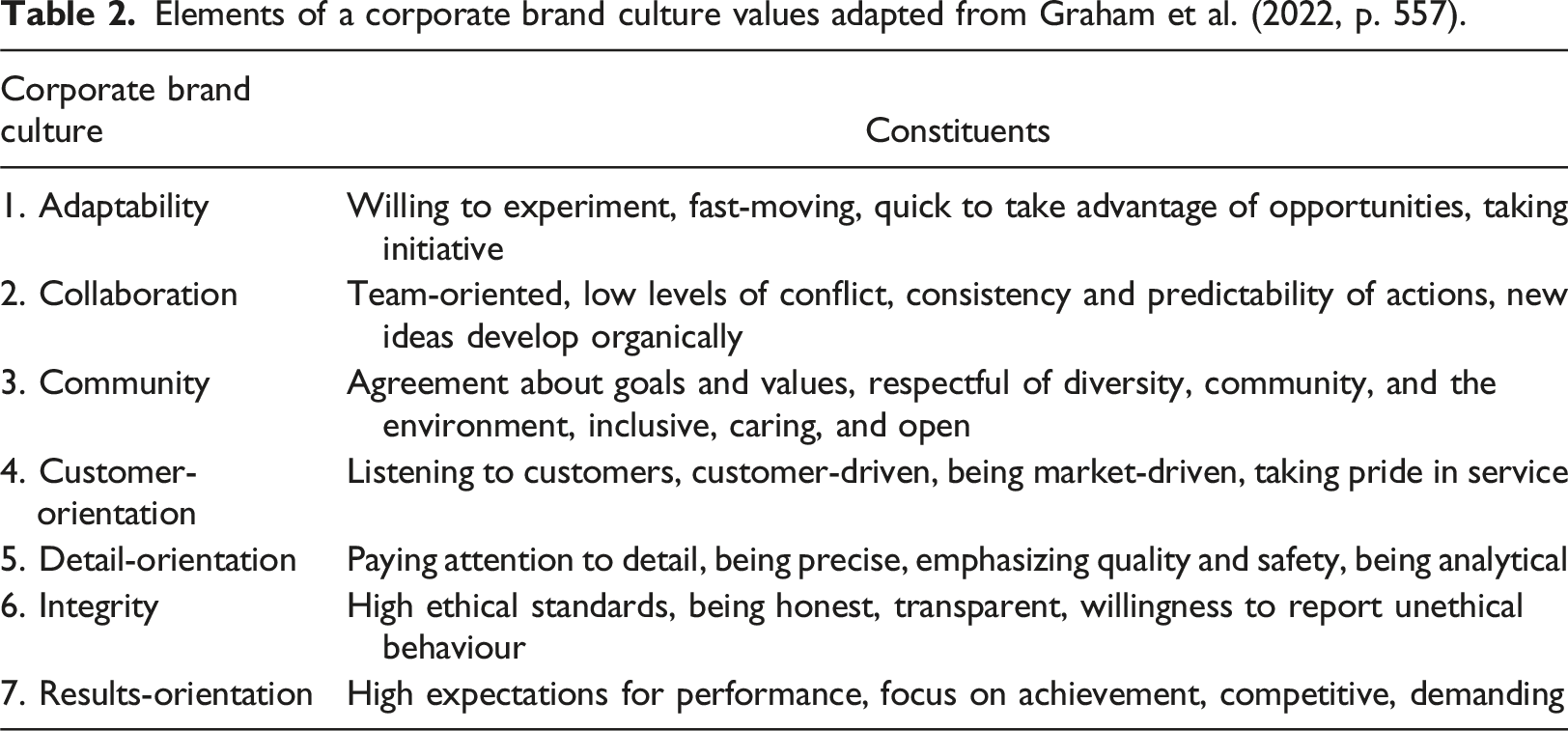
Elements of a corporate brand culture values adapted from Graham et al. (2022, p. 557).
While the concept of internal markets has been explored in commercial contexts, political brands offer an interesting parallel (Christopher et al., 1991; Sarker & Ashrafi, 2018). External groups including (but not limited to) the media, students, investors, and public servants act as ‘stakeholders’ and the party as the ‘brand.’ A successful corporate brand requires a coherent message that resonates with stakeholders, not just in the short term but also in the long term to build brand equity (Dean & Croft, 2001; Susila et al., 2020). Stakeholders are more likely to support parties perceived as unified and on-brand while punishing those seen as fragmented and off-brand (Butler et al., 1997; Doherty et al., 2021; Fazekas & Hansen, 2022; Whiteley & Seyd, 2003). This again emphasizes the need for a strong internal market, where all party members understand and project a consistent message. Interestingly, Schneider and Ferié (2015) point out that party members are often underestimated in corporate political brand management. Similar to corporate branding, political brand management (Arbouw et al., 2019; Balmer, 2001, 2002, 2012) must consider its internal audience – party members – who play a crucial role in leadership elections, policy development, and legislative efforts. Ignoring the internal audience creates a significant gap in our understanding of political brands (Brexendorf & Keller, 2017; Lahtinen & Närvänen, 2020; Maon et al., 2021). After all, brand identity reflects the commonalities and differences between how external audiences (various stakeholders) and internal audiences that is party members perceive the brand (Kapferer, 2008; Ozdemir et al., 2020; Tuškej & Podnar, 2018). In a democratic party, the internal group can significantly shape the brand through their actions and decisions.
Considering this discussion, the under-researched area of corporate brand culture demands further study. While there is ample research on leadership and policies within the realm of corporate political brands, the “party” element – which encompasses the internal culture and its impact on brand identity – remains understudied (Fazekas & Hansen, 2022; Susila et al., 2020). Further research in this area is essential to gain a more comprehensive understanding of how corporate brand culture functions and shapes the overall brand image. Corporate brand culture helps frame the exploration into this key dimension of political brand identity. So far, ‘culture’ has been broadly defined and only briefly researched (Graham et al., 2022). By examining the seven dimensions of corporate brand culture, we can potentially deconstruct a key aspect of political brand identity for an under-researched political ‘party’ brand. This approach will provide deeper insights into how internal culture influences brand identity and image.
Objectives
The research objectives for this study are to contribute to the paucity of studies focusing on a single element of political brand identity namely political brand culture: (1) To explore the political brand culture element of PTI’s political brand identity from the perspective of its internal stakeholders. (2) To create a model to examine and manage the various elements of political brand culture.
Research approach
This study, focused on the corporate political brand identity of the PTI brand with a particular emphasis on its brand culture, employed a qualitative research approach. This methodology was chosen due to its ability to provide dense and in-depth exploration of a limited number of participants’ worldviews (Azungah, 2018; Gephart, 2004; Mohajan, 2018). Qualitative research fosters a discourse that facilitates understanding of social phenomena (Braun et al., 2021; Gephart, 2004; Yauch & Steudel, 2003). By placing participants at the centre of the research process (Ebbs, 1996; Grzanka & Cole, 2021), it allows for the exploration of “behaviour, values, beliefs, and so on in terms of the context in which the research is conducted” (Bryman & Bell, 2011, p. 411; Levitt, 2021). The “humanistic focus” (Gephart, 2004, p. 455) inherent in qualitative research, with its emphasis on detail, context, and flexibility, empowers participants to share what is truly important to them. This flexibility and openness (Cloutier & Ravasi, 2021; Hamilton & Finley, 2019) allowed researchers to uncover new avenues for inquiry, enriching the understanding of political brands (Sinkovics et al., 2008; Yauch & Steudel, 2003).
Researchers such as Bell et al. (2022) advocate for qualitative research methodologies when the aim is to understand the world through the lens of research participants (Cloutier & Ravasi, 2021; Coleman, 2019). This approach prioritizes in-depth exploration of specific scenarios, individuals, or themes, often relying on verbal narratives rather than numerical data (Doz, 2011; Duberley & Johnson, 2015; Nadkarni et al., 2022). Qualitative research excels at generating rich descriptions, emphasizing nuanced understanding over mere breadth (Titon, 2012). Furthermore, it is particularly advantageous in the exploratory phase of new research areas, where formulating rigid hypotheses might hinder discovery (Davies & Chun, 2002; Maxwell, 2013). The core value of qualitative research lies in its ability to unearth hidden aspects, generate unique data, and provide profound insights into participants’ attitudes, emotions, and deeply held beliefs (Covaleski & Dirsmith, 1990; Ejnavarzala, 2019; Malhotra et al., 2020; Rubin & Rubin, 2011) which align with this research.
Methods
This study aims to understand the internal perspective of the PTI brand, focusing on how party members perceive and aim to embody its core values. To achieve this, semi-structured interviews were chosen as the primary data collection method (Bell & Waters, 2018; Ejnavarzala, 2019). The flexibility of semi-structured interviews allows for in-depth exploration while maintaining a degree of direction (Gillham, 2005). This approach aligns with the research objectives, as it empowers interviewees to share their unique perspectives on the party’s brand identity with a specific focus on the brand culture (McCracken, 1988). These interviews, characterized as “extended conversations” (Pierli et al., 2023), unearthed rich data about the PTI brand as viewed by its internal stakeholders (Gillham, 2005). During the interviews, open-ended questions were used to encourage detailed responses from participants about the core values, beliefs and central tenets of the PTI corporate brand (Husband, 2020; Low et al., 2019). Prompts and probes were employed by the interviewer to examine deeper into specific topics and gain further insights (Bailey et al., 2020; Robinson, 2023) where necessary. This process relies on effective listening (Ejnavarzala, 2019; Liamputtong, 2020), as it allows the conversation to be tailored by the interviewer and new avenues of inquiry to be explored (Creswell & Poth, 2016). This research approach, with its emphasis on participant-centric exploration, was well-suited to uncovering the internal meaning and identity of the PTI brand (Bell et al., 2022). By exploring the perspectives of party members, the study sought to provide a comprehensive understanding of the current culture of the PTI’s corporate political brand.
Sampling
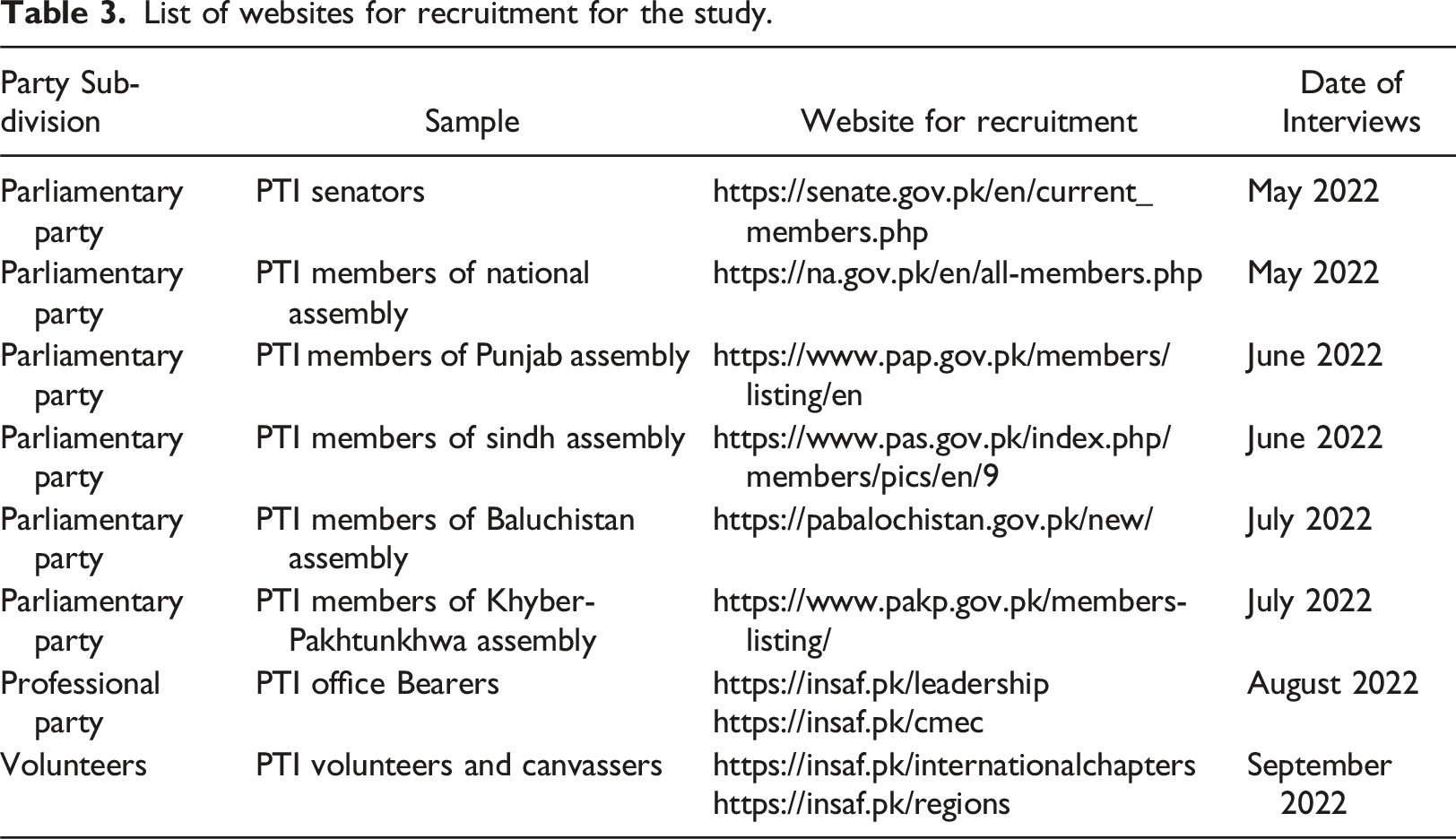
This study investigated the corporate brand culture of the PTI party as perceived by its internal stakeholders. The research aimed to understand how internal stakeholders within the party perceive the core values, beliefs, and central tenets of the PTI brand. According to Brunton et al. (2017) and Macassa et al. (2021), “internal stakeholders” encompass a wide range of individuals who support the party from within, such as candidates, managers, politicians, activists, and volunteers (https://www.insaf.pk/). Considering the PTI’s organizational structure, the study defined internal stakeholders as individuals connected or affiliated with the party and belonging to one of its three subdivisions: Parliamentary Party, Professional Party, and Volunteers (https://www.insaf.pk/).
List of websites for recruitment for the study.
Analysis
Six-stepped thematic analysis adopted by the research (Braun & Clarke, 2016, 2019).
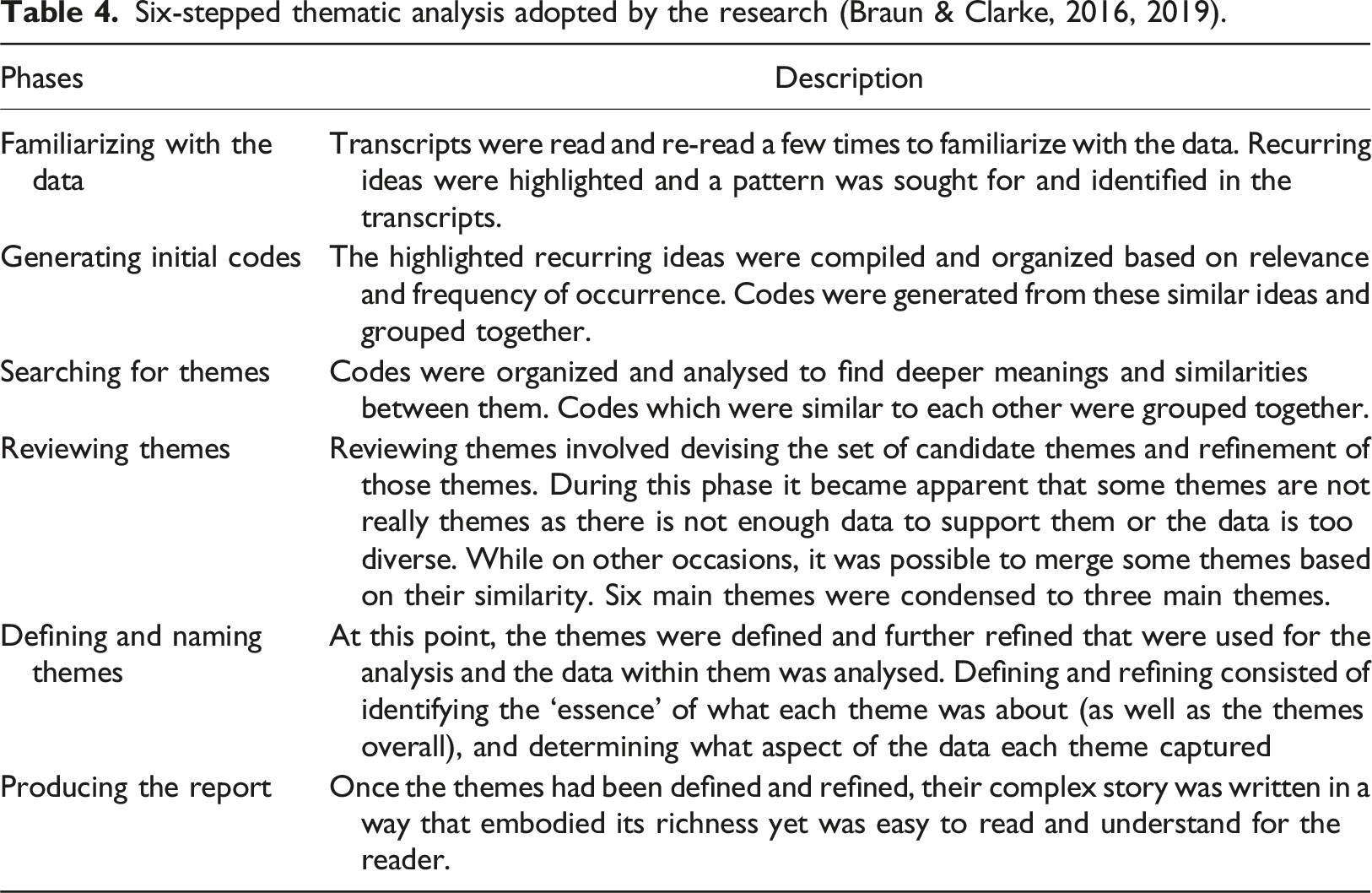
To facilitate a nuanced exploration of sub-themes, a two-stage contextualist thematic analysis was undertaken, supported by the use of thematic maps. The first stage involved a comprehensive familiarization with all findings and the identification of initial categories. The second stage focused on a more critical review of these categories, with researchers delving deeper to uncover hidden meanings and re-evaluating concepts identified during the initial phase (Boyes et al., 2022; Royster, 2020; Rudolph et al., 2021). Finally, the second-order themes were condensed into overarching dimensions that captured the core findings (Rudolph et al., 2021).
Findings
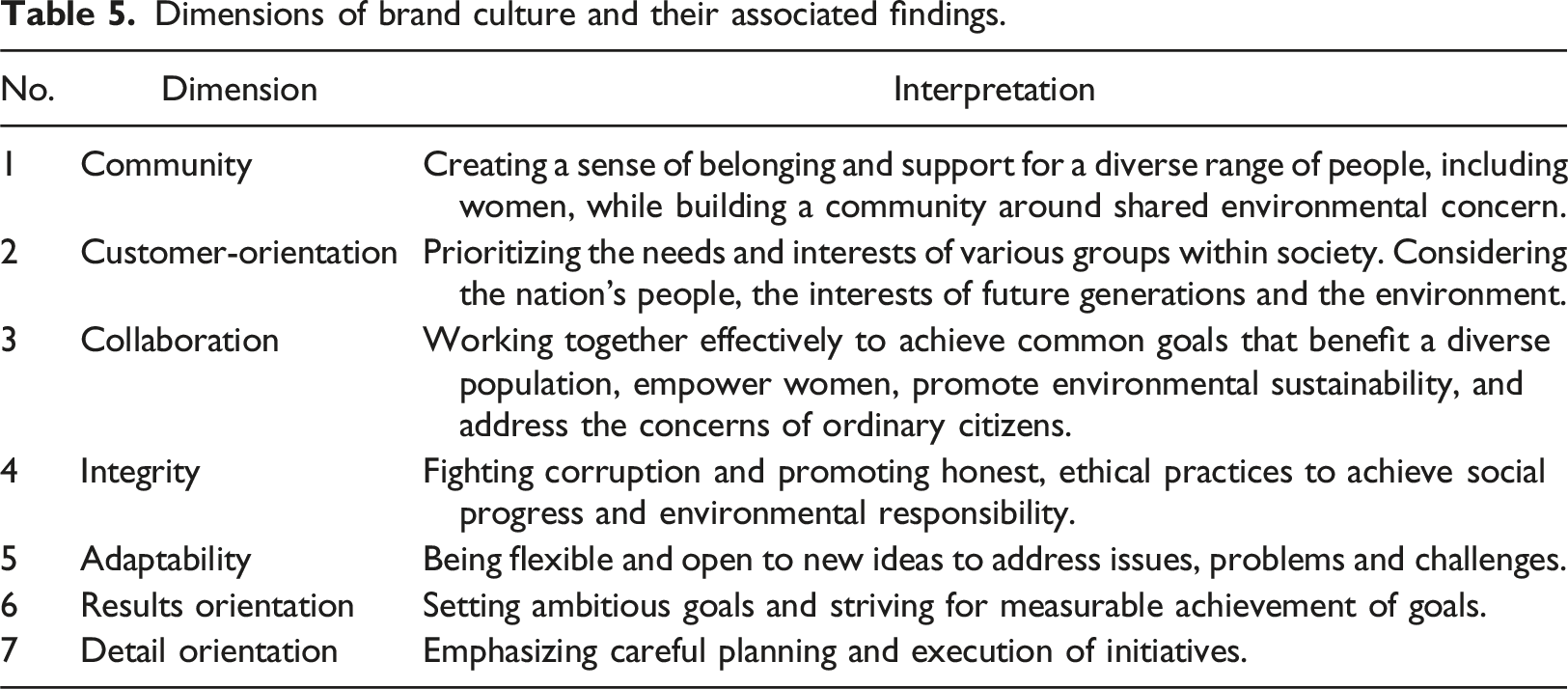
Dimensions of brand culture and their associated findings.
Community
This study reveals a strong emphasis on community within the PTI party’s brand culture. Community refers to creating a sense of belonging and support for a diverse range of people, including women, while building a community around shared environmental concern (Graham et al., 2022). The dimension of community within the PTI party’s brand culture is integral to its identity as stated by KP1, a former minister in the state government of KP “PTI strives for inclusivity and diversity. The party consists of representatives from all segments of society, regardless of their background or socioeconomic status. Our party believes in equal representation and ensuring that everyone’s voice is heard.” Similar sentiments about diversity were echoed by NA2, a member of the National Assembly who stated “PTI’s culture includes valuing and embracing all members, regardless of their background or ethnicity.” Women’s empowerment also featured as a central theme of community with PP4, a member of the Punjab state assembly stating “all our social policies are geared towards the uplift of women in Pakistan…women stand to benefit the most from our policies”. Looking after the environment was similarly a key component of the PTI brand culture as voiced by NA3, a member of the National Assembly “PTI is the only party to raise awareness about climate change.” These perspectives collectively highlight the PTI party’s commitment to fostering a diverse, inclusive, and environmentally conscious community, underscoring the integral role of these values in shaping its brand culture.
Customer orientation
Findings from this study suggest that PTI party brand culture prioritizes customer orientation, making it an integral aspect of its identity. This customer focus extends beyond traditional notions, encompassing the needs and interests of diverse stakeholders within Pakistani society. From youth and students to rural and urban populations, PTI recognizes the importance of serving all segments. Additionally, the party demonstrates a forward-thinking approach by considering environmental concerns and the well-being of future generations. (Graham et al., 2022). This was vocalized by SM2, a Senator “PTI represents a diverse range of people from every district of Pakistan, from youth and students to rural and urban populations, both educated and uneducated, men and women, rich and poor, even Pakistanis living overseas. We are committed to addressing their needs and ensuring that everyone’s voice is heard and valued”. KP5 a member of the KP state assembly focused on women stakeholders “PTI’s core values are based on health, education and tackling crime which are all women’s issues. Women are the weakest link in our society.” Sentiments about stakeholder orientation were also voiced by NA1 a member of the National Assembly “Our health card benefits women the most. More and more women stand to benefit from hospital care during pregnancy for example.” Environmental issues and future generations also featured as important stakeholders with VL1, a PTI volunteer from Islamabad saying “The billion-tree tsunami project is not just about planting trees; it’s about protecting our wildlife and preserving biodiversity. By restoring forests, we’re creating habitats for countless species and ensuring a healthier ecosystem for future generations all the while creating jobs”. These insights collectively underscore the PTI party’s dedication to addressing the needs of its constituents, particularly women, through stakeholder-oriented policies and services that prioritize health, education, and justice, solidifying this dimension as a cornerstone of its brand culture.
Collaboration
Collaboration was found to be a fundamental aspect of the PTI party’s brand culture, highlighting the importance of working together effectively to achieve common goals that benefit a diverse population, empower women, promote environmental sustainability, and address the concerns of ordinary citizens. (Graham et al., 2022). PP1 a member of the Punjab state assembly spoke of team orientation and working together “PTI has multiple stakeholders within the party, nationally and internationally, as well as geographically. Different regions and provinces have their own sets of stakeholders. We are always cognizant of this in our political activities”. Consistency of brand message across Pakistan was highlighted by VL1 a PTI volunteer from Islamabad “PTI is largely influenced by and influences the population of every province of Pakistan. We are the only truly national party in Pakistan today and this is reflected in how the party is run”. PP2 a member of the Punjab state assembly expressed similar when according to them “PTI wants to ensure rights for women who are oppressed, who are deprived of justice within their homes and families. By working with them, we can achieve justice for them”. These viewpoints collectively emphasize PTI’s commitment to fostering collaboration and maintaining a cohesive, team-oriented approach, which is crucial to ensuring the consistency and unity of its brand culture across all regions and stakeholders.
Integrity
Integrity was also found to a core component of the PTI party’s brand culture, reflecting its commitment to high ethical standards, being honest, transparent, and willingness to report unethical behaviour (Graham et al., 2022). These views were voiced by NA5, a member of the National Assembly who said “PTI has implemented strict anti-corruption policies to eliminate graft, bribery, and misuse of power in public offices”. PP11 a member of the Punjab state assembly expressed similar views by saying “We want to implement justice in such a way that corruption is completely eliminated. We have zero tolerance for corruption, whether it involves small amounts or millions”. PP6 also a member of the Punjab state assembly seconded this opinion by saying “PTI’s culture is built on the foundations of honesty and integrity, where leaders are expected to act with utmost honesty and serve the nation with integrity”. These perspectives affirm PTI’s commitment to integrity, transparency, and ethical leadership, underscoring these principles as fundamental pillars of its brand culture.
Adaptability
The findings revealed that the PTI political brand culture is adaptable in terms of proactively responding to voter wants and societal problems. While adaptability can be applied to almost all the findings generally, it is a dimension that lacks specificity. Every organizational value needs to be adaptable, which makes this dimension too broad and limits its usefulness in providing a deeper understanding of the brand’s unique characteristics and specific strategies. Nonetheless, adaptability within the PTI party’s brand culture refers to the willingness to experiment, move quickly, take advantage of opportunities, and take initiative to respond to stakeholder’s needs (Graham et al., 2022). KP3, a member of the KP state assembly provided insights about adaptability by saying “PTI’s health insurance focuses on transforming the healthcare system, ensuring access to quality healthcare services for every citizen through the health card”. Similar views were expressed by PP10, a member of the Punjab Assembly who said “The flagship program of PTI is the ‘Ehsaas’ program, which focuses on the welfare of the people, providing opportunities, and empowering individuals and communities”. PTI’s health insurance was hailed as a great initiative by PP1 a member of the Punjab Assembly who said “Through the health card initiative and the Ehsaas program, we have improved access to healthcare. In the future, hospitals will strive to provide the best services to attract patients. Every individual will have 1 million rupees for their healthcare needs”. A similar perspective was offered by SM2 a senator who said “The way our government introduced health insurance is comparable to the NHS”. These perspectives highlight PTI’s proactive approach and adaptability in addressing the health and welfare needs of its citizens, reinforcing its commitment to innovative solutions and quick responses as core elements of its brand culture.
Result orientation
The findings suggest that PTI is result oriented in its values and strategies. However, as with adaptability, result orientation is a dimension which lacks specificity and is very broad. All aspects of an organization’s brand culture need to be results oriented; therefore, this is a dimension that can be applied to most things in general but nothing in particular. Nonetheless, result orientation in the PTI party’s brand culture emphasizes a focus on high expectations for performance, achievement, competitiveness, and demanding standards (Graham et al., 2022). Sentiments related to achievement and competitiveness were voiced by NA2 a member of the National Assembly who said “PTI is the only party to raise awareness about climate change”. High expectations for performance were voiced by SM2 a senator who said “We have always campaigned on a corruption-free Pakistan”. Focusing on high expectations for environmental stewardship was expressed by PP3 a member of the Punjab state assembly who said “Our billion-tree tsunami project has received world acclaim. It has also resulted in job creation. Pakistan is most affected by climate change as you can see with the recent flooding.” These perspectives collectively highlight PTI’s dedication to achieving high standards of performance, competitiveness, and environmental stewardship, underscoring its commitment to result orientation as a defining aspect of its brand culture.
Detail orientation
The findings suggest that PTI is result oriented in its values and strategies. However, as with adaptability and result orientation, detail orientation is a dimension which lacks specificity and is very broad. All aspects of an organization’s brand culture need to be detail oriented; therefore, this is a dimension that can be applied to most things in general but nothing in particular. Detail orientation within the PTI party’s brand culture signifies paying attention to detail, being precise, emphasizing quality and safety, and being analytical (Graham et al., 2022). PP3 a member of the Punjab state assembly discussed quality, and safety by saying “Our billion-tree tsunami project has received world acclaim. It has also resulted in job creation. Pakistan is most affected by climate change as you can see with the recent flooding”. Being precise and analytical thinking was demonstrated by KP2 a member of the KP state assembly who said “We have done a lot to improve access to education and health for women, however, we need more women at the upper echelons of the party. I would like to see more women in decision-making positions within the party.” These insights collectively underscore PTI’s commitment to quality initiatives, and analytical decision-making, highlighting the importance of detail orientation as a cornerstone of its brand culture.
Discussion
This study had two key objectives. First, this study aimed to explore the internal brand culture element of Pakistan Tehreek-i-Insaf’s [PTI] political brand identity. More specifically, this study revealed the PTI’s brand culture is an intricate and complex network of values, beliefs, and strategies that shape its identity and influence its interactions with both internal stakeholders and the broader public. These core values not only defined PTI’s culture but also distinguished it from its competitors. This was achieved by focusing on its internal brand culture using a framework of seven dimensions: adaptability, collaboration, community, customer orientation, detail orientation, integrity, and results orientation (Graham et al., 2022). Therefore, investigating the internal culture of a political brand, provided a comprehensive understanding of how a political brand functions and evolves. Further, this study demonstrates that brand culture plays a significant role in forming the brand identity, which in turn could impact the external brand image of a political brand (Du Preez & Bendixen, 2015; Garas et al., 2018; Koporcic & Halinen, 2018, p. 395). Finally, this study demonstrates that brand culture is an appropriate and helpful lens to frame the exploration of a key dimension of political brand identity (Graham et al., 2022). However, the findings suggest that while the framework by Graham et al. (2022) was a useful tool for understanding political brand culture, it was also problematic for several reasons. Firstly, there is significant overlap between the themes uncovered by this study. For example, environmental issues and women’s issues correspond to community, customer orientation, and collaboration, but not exclusively to any one of these themes. This overlap creates a complex interrelationship among the three elements creating ambiguity and making it difficult to measure the impact of a single dimension. Secondly, the broad nature of adaptability, result orientation, and detail orientation in the Graham et al. (2022) model presents a challenge. These qualities are necessary for most successful brands, making it difficult to distinguish unique brand cultures using this framework. Furthermore, the lack of specific details within these dimensions allows for subjective interpretation. This ambiguity hinders effective comparison and analysis of brand cultures based on Graham et al. (2022) framework. The generality also limits the model’s ability to provide actionable insights for building and managing dynamic brand cultures. Lastly, while the framework consists of adaptability, its other dimensions appear to be static and do not take into account the dynamic and evolving nature of brand cultures due to crises, technological advancements or societal changes. This makes it challenging to measure and manage brand culture during periods of flux. As such, this framework is insufficient to fully explain the findings and capture the richness of the PTI brand culture. Therefore, a streamlined and unambiguous framework that captures the nuances, richness and dynamic nature of a political brand’s culture is required.
The political brand culture auditing and planning framework
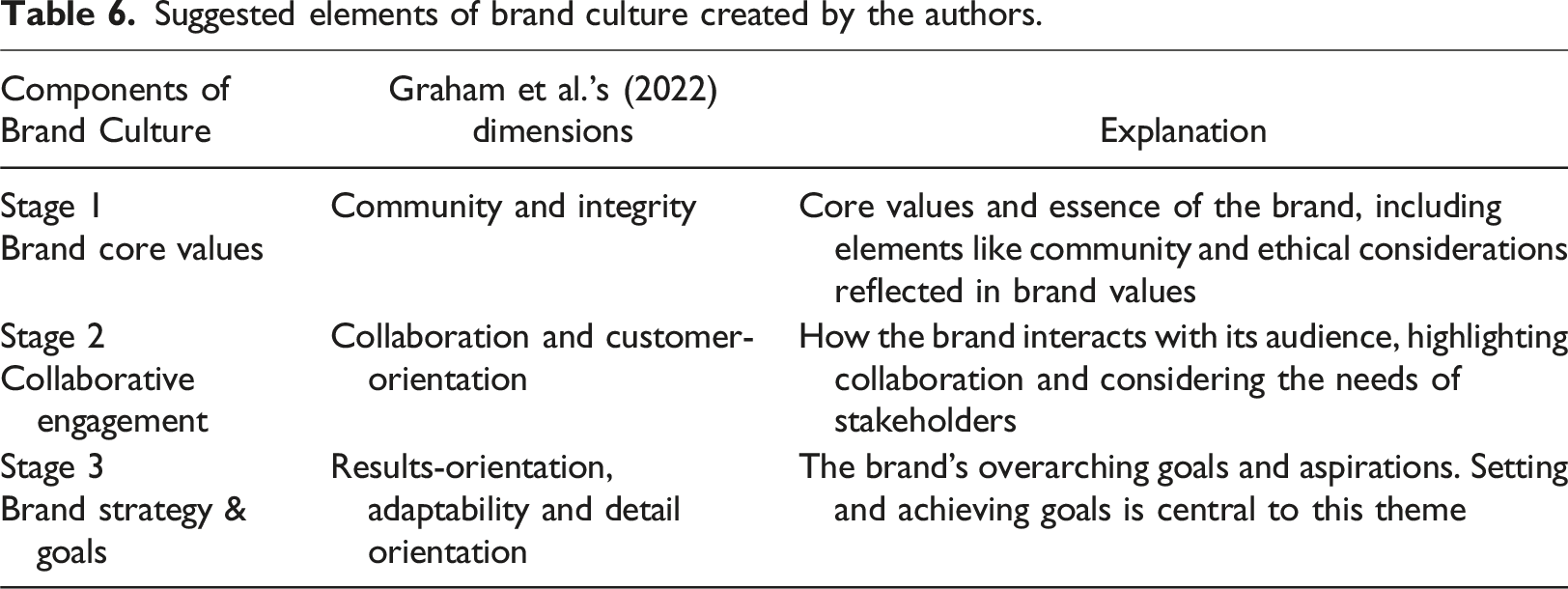
The second objective of this study aimed to create a model to examine and manage the various elements of political brand culture. By developing a framework to analyse this culture, the study addresses a recognized gap (Barros-Arrieta & García-Cali, 2021; Du Preez & Bendixen, 2015; Garas et al., 2018; Pich & Newman, 2020) in political branding research, specifically by examining the brand culture of the PTI party. The findings shed light on the complex nature of political brand culture and its intricate nature, providing deep insight into one key dimension of identity that has, until now, remained under-researched and under-developed. The significance of this study is underscored by Schneider and Ferié (2015), who have emphasized the need to research political parties and their culture, as parties’ elect leaders and determine policies. Current research on political brands neglects an in-depth exploration of brand culture. While previous studies recognize political parties as central to a political brand’s identity (Pich & Dean, 2015; Pich et al., 2016; Robertson & Meintjes, 2021), they have not fully examined the distinct role of brand culture. Culture goes beyond the party’s leadership and policies and consists of the core values and shared beliefs that define the brand’s identity (Graham et al., 2022). This understanding, as highlighted by Schneider and Ferié (2015), allows for leveraging the leadership and policies through a strong brand culture, ultimately shaping public perception. Therefore, a comprehensive understanding of political brand identity requires a closer look at its cultural dimension. As stated in the findings, the seven elements of brand culture suggested by O’Reilly et al. (1991), Chatman et al. (2014) and Graham et al. (2022) did not always align with the findings of this study. For example, dimensions such as adaptability, results-orientation and detail orientation are broad enough to be applied to all the themes generally but none exclusively. All elements of brand culture require a degree of adaptability, goal orientation, and attention to detail. Whereas dimensions such as community, customer-orientation and collaboration have significant overlap and repetition making them difficult to apply. Consequently, based on the findings of this study, The political brand culture model proposed by the authors. Suggested elements of brand culture created by the authors.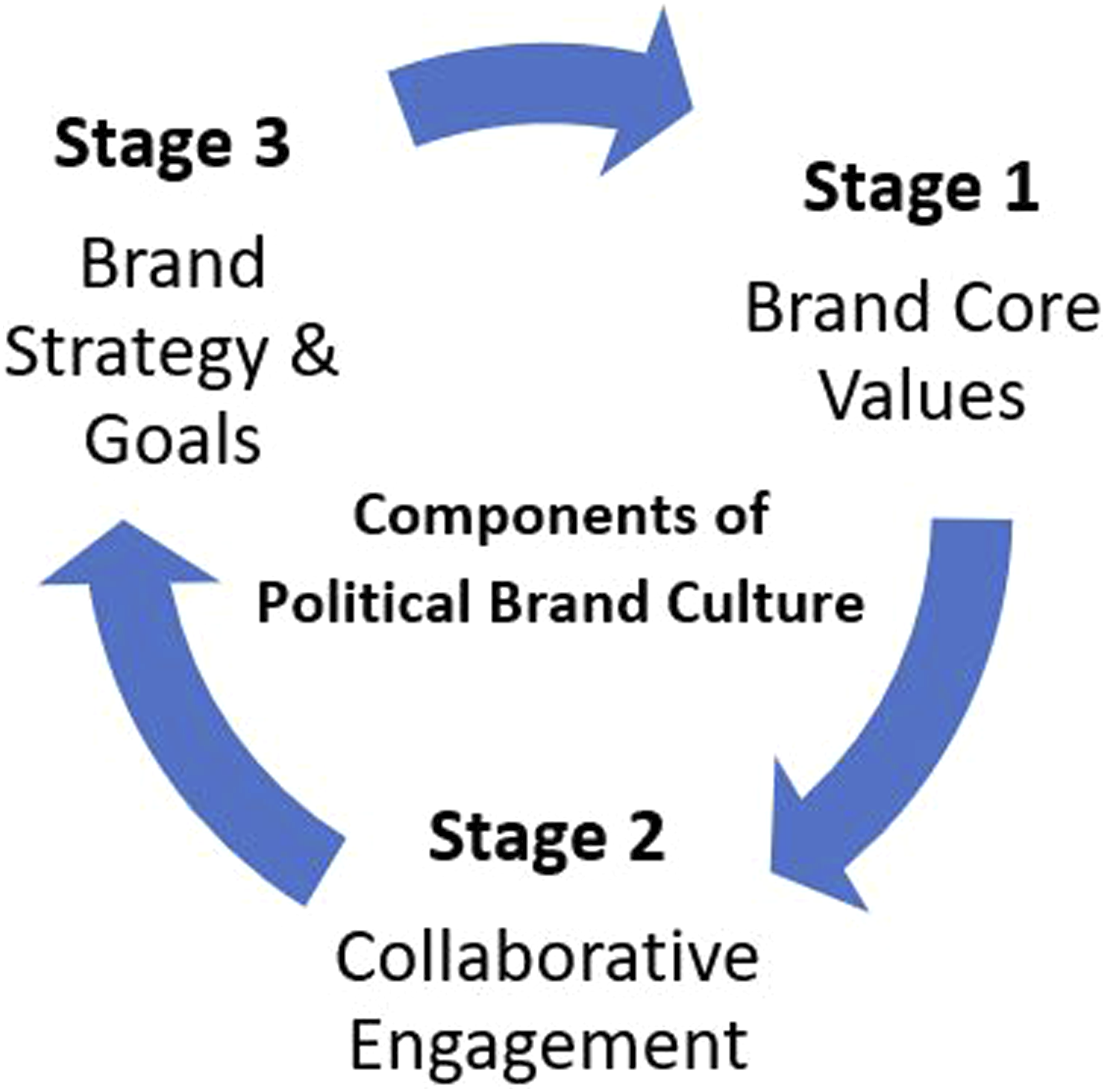
Stage 1 - Brand core values
Stage 1 focuses on brand core values, which encompass the fundamental principles and ethical standards that define a political brand’s culture and guide its actions. Further, brand core values, including community and integrity, are essential to building a strong and cohesive brand culture across political contexts (Marland & Wagner, 2020). For example, political brands should aim to create and manage an inclusive and diverse community of support and appeal to multiple stakeholders beyond its traditional support-base. This in turn will allow multiple stakeholders to identify with the desired identity and create a loyal and trustworthy community. In addition, this long-term proactive approach will ensure political brands strive for a sustainable and authentic culture, grounded upon clear, relatable and identifiable values. Clear, coherent and identifiable values will ensure political brands have distinct identities, which will reaffirm ‘what they stand for’ and ‘represent’ and potentially represent a series of unique selling points. It is important for political brands to routinely review and reflect on their brand core values both from an internal and external perspective. This will identify misalignment, misunderstanding or areas for improvement, which can be addressed-corrected to ensure political brand values are aligned and understood in the desired way. Alternatively, if brand values are found to be coherent, and interpreted in the desired way, then political brands can develop strategies and tactics to maintain and manage alignment to ensure political brand culture and identity remains consistent, clear and relatable.
Stage 2 - Collaborative engagement
Stage 2 of the Political Brand Culture Auditing and Planning Framework can be defined as collaborative engagement. Collaborative engagement refers to a political brand’s interactive and participatory approach in engaging with its audience and stakeholders. This dimension combines the themes of collaboration and stakeholder orientation, as outlined by Graham et al. (2022). Political and indeed commercial brands often engage a diverse range of stakeholders, including various regional and socio-economic groups, to foster a sense of belonging, patriotism, and collective identity (Gorbaniuk et al., 2015; Jain et al., 2018; Jain & Ganesh, 2020; Kaur & Sohal, 2019). Engaging communication strategies, which resonate with disenfranchised groups and promote narratives of change, further emphasize a stakeholder-driven orientation. This approach enhances stakeholder participation and reflects a collaborative spirit within a brand. By considering the needs and feedback of its stakeholders, political brands can strengthen their brand culture, positioning collaborative engagement as a crucial component in shaping a more comprehensive framework applicable to broader branding contexts. Again, political brands should routinely review and reflect on their current collaborative engagement to identify areas for improvement or areas of best practice to manage the political brands envisaged identity.
Stage 3 - Brand strategy & goals
The final stage of the Political Brand Culture Auditing and Planning Framework focuses on brand strategy & goals. Brand strategy & goals encompass the strategic objectives and performance expectations of a brand, focusing on high achievement, competitiveness, and adaptability. This dimension reinterprets result orientation, adaptability, and detail orientation as outlined by Graham et al. (2022). For many brands, both political and commercial, strategic goals often include commitments to societal impact, such as improving education, healthcare, or addressing global challenges like climate change (Falkowski & Jabłońska, 2018; Panigyrakis & Altinay, 2017; Pich et al., 2016; Schneider & Ferié, 2015). Additionally, adaptability in responding to contemporary issues and evolving market conditions demonstrates a brand’s proactive nature (Pich et al., 2016; Schneider & Ferié, 2015). Emphasizing detail orientation, particularly in the implementation of high-quality, results-driven initiatives, further underscores a brand’s strategic focus. This results-oriented approach ensures that brands maintain high performance and competitiveness in their respective arenas. Political brands should review and reflect on the current brand strategies and goals including short-term and long-term strategies and goals. Reviewing the current short-term strategies and goals (ranging from strategies of goals related to communication campaigns, policy campaigns, programmes, and responding to day-to-day foreseen and unforeseen issues) will identify alignment or misalignment between strategies, brand core values, and collaborative engagement, which can be addressed or managed. Similarly, reviewing the current long-term strategies and goals (for example seeking power at future elections, increasing representation in local/regional/national/international parliaments, and developing policy ahead of future elections) will highlight alignment or misalignment between strategies, brand core values, and collaborative engagement, which can be addressed or managed to ensure envisaged culture and identity is interpreted in the desired fashion. Collectively, these elements highlight the need for a framework that emphasizes brand strategy and goals, showcasing how unique aspects of brand culture extend beyond the general dimensions proposed by Graham et al. (2022) and can be applied across broader political and commercial contexts. Therefore, the Political Brand Culture Auditing and Planning Framework serves as a systematic diagnostic brand management tool. Further, the arrow represents that the three-stage framework encourages a cyclical process that should be followed out on a routine basis to monitor current political brand culture to ensure it is aligned to desired brand identity. This will highlight whether a political brand demonstrates differentiation with competitors and continues to encourage identification particularly in terms of its brand core values, collaborative engagement and brand Strategy and goals.
Contribution to theory
This study adds to prior literature in several way. First, existing research has tended to focus on western contexts with established and traditional electoral systems with explicit calls for further research on political brands in dynamic settings developing democracies (DasGupta & Sarkar, 2022; Farhan & Ahmad, 2016; Marsh & Fawcett, 2011; Narteh et al., 2017; Newman, 2020; Nwanganga et al., 2017; Pich, Armannsdottir, & DEAN, 2020). Second, existing research in this area has primarily focused on the external perspective of political brands investigated through concepts such as brand image, personality, reputation, and/or positioning from the standpoint of voters-citizens (Khan et al., 2024; Putri & Ahmad, 2024; Rutter et al., 2018). Further, research on the internal perspective of political brands remains under-researched and under-developed particularly framed through the concept of brand identity (Schneider & Ferié, 2015). Despite some progress made on political brand identity, existing research has tended to concentrate on multiple dimensions of internal identity rather than focus on individual elements of identity such as the overlooked dimension of brand culture (Armannsdottir et al., 2019; Pich et al. 2020a, 2020b; Rutter et al., 2018; Verma, 2015). Scholars argued that further research on political brand identity was required with a distinct focus on an individual element of internal identity as this would provide a comprehensive and richer understanding of a political brand (Billard, 2018; Jain et al., 2018; Needham & Smith, 2015; Panigyrakis & Altinay, 2017; Pich et al., 2016; Pich & Newman, 2020; Serazio, 2017). Third, as brand culture remains a new theoretical lens within commercial branding literature, within the discipline of political branding, and broadly defined with no universal definition consensus among researchers about what constitutes internal corporate brand culture (Barros-Arrieta & García-Cali, 2021; Du Preez & Bendixen, 2015; Garas et al., 2018; King & Grace, 2010; Piehler et al., 2018; Saleem & Iglesias, 2016).
Additionally, given the limited models or frameworks available for understanding the cultural dimension of political brand identity, this paper seeks to explore that cultural aspect and critically apply Graham et al.’s (2022) corporate brand culture framework to the context of PTI. Although Graham et al.’s (2022) framework proved to be a useful tool for examining political brand culture, some dimensions were overly broad, and there was significant overlap between certain aspects. This study puts forward Political Brand Culture Auditing and Planning Framework created from existing theory and empirical findings presented in this paper. It represents a systematic model of how to understand the political brand cultural dimension of political brand identity.
Contribution to practice
The findings have implication for practitioners beyond politics. Practitioners can follow these stages to identify core brand values, assess the presence and effectiveness of collaborative engagement, and review existing brand strategies and goals. This analysis reveals potential inconsistencies, misalignments, and areas for improvement. Secondly, the framework goes beyond mere analysis. It empowers strategists to proactively manage brand identity by facilitating the development of desired brand values, envisioning effective collaboration and engagement strategies, and planning future brand strategies and goals. This enables proactive management of the brand’s cultural direction. Thirdly, the framework’s versatility extends beyond initial analysis and planning. It can be used routinely to monitor and maintain brand alignment, particularly during periods of change or crisis. This ongoing evaluation allows for course correction and ensures the brand identity remains consistent and resilient. This framework offers valuable insights for brands, fostering a deeper understanding of this crucial but often underdeveloped dimension of brand identity – brand culture.
Conclusion
This study significantly advances the understanding of corporate political brand culture by focusing on the Pakistan Tehreek-e-Insaf (PTI) party. It addresses a known gap in political branding research, particularly within developing democracies, by exploring the perceptions of PTI’s brand culture from the perspective of internal stakeholders. The findings highlight that PTI’s brand culture is multifaceted, characterized by core values such as inclusivity, anti-corruption, social reform, nationalism, and Islam, which shape the party’s identity and strategic direction. The new framework proposed—comprising Brand Core Values, Collaborative Engagement, and Brand Strategy & Goals—effectively captures the distinctive elements of PTI’s brand culture. This framework goes beyond the general dimensions outlined by Graham et al. (2022), offering a more tailored approach that aligns with the unique aspects of PTI’s brand culture. It provides a comprehensive tool for academics and practitioners to explore, diagnose, and manage brand cultures across various contexts. This framework’s application extends beyond political entities, offering valuable insights for managing brand culture during times of change in various industries. By maintaining a clear focus on core values, fostering collaborative engagement, and setting strategic goals, brands can navigate transitions more effectively, ensuring brand coherence and resilience. This contribution is crucial for maintaining brand integrity and achieving long-term success. Overall, this study fills the research gap by addressing the paucity of research on brand identity, particularly the cultural aspect of brand identity within PTI. Additionally, it contributes a strong model that can be applied to other brands in diverse sectors, enhancing both the theory and practice of brand culture management.
Limitations and future research
This research focused on PTI’s corporate political brand culture, an underexplored area within a specific national context. One limitation is the study’s geographic and political specificity, which may affect the generalizability of the findings to other political entities or regions. Additionally, the dynamic nature of political environments means that the findings represent a snapshot in time and may not account for future changes within PTI or its external context. Future research should explore how brand culture evolves in response to internal and external crises, rebranding efforts, and coalition dynamics. Comparative studies across various political and cultural contexts can provide a broader understanding of political brand culture. Moreover, applying the developed framework to for-profit organizations can uncover how corporate incentives and goals influence brand culture. Longitudinal studies examining the interplay between leadership, policies, and culture will also enrich the current understanding of corporate brand identity.
Footnotes
Declaration of Conflicting Interests
The author(s) declared no potential conflicts of interest with respect to the research, authorship, and/or publication of this article.
Funding
The author(s) received no financial support for the research, authorship, and/or publication of this article.
