




Abstract
Universities are increasingly enhancing their study abroad programmes to boost students’ employability skill development. Study abroad is vital for fostering leadership, management, and life skills through strategically crafted international education experiences. Despite its popularity, there is limited understanding of how duration affects the development of employability skills, such as adaptability on study abroad. This study helps to addresses this gap by assessing the socio-cultural and psychological adaptability of students before and after participating in short- or medium-term study abroad at two different international destinations. A mixed-methods approach was utilised to explore both quantitative and qualitative student response data that was collected pre- and post-study abroad experience over a 4-year period. The findings reveal that study abroad destination, duration, and the type of in-country learning significantly shape the development of students’ adaptability skills. The results also highlight notable differences in learning outcomes between short- and medium-term study abroad, offering valuable insights in curricular refinement. These insights aid in making informed decisions regarding the incorporation of relevant and suitable learning activities that are tailored to the unique impacts of duration on study abroad. The findings from this study are particularly pertinent given the ongoing disruptions and impacts on internationalising curricular, further complicated by rising travel costs, accommodation expenses, perceived, potential, and actual risks. These challenges highlight the importance of understanding the affects of duration on study abroad for short- and medium-term programmes, namely adaptability.
Introduction
There is growing interest in the benefits of outbound mobility programmes (OMPs) for enhancing students’ learning outcomes in the field of study abroad (Hains-Wesson & Ji, 2020, 2021; Pasquarelli et al., 2023; Potts, 2019). However, as Dai and Pham (2024), Knutson Miller and Gonzalez (2016), and Potts (2019) point out, a significant gap remains in understanding if the duration of OMPs impact the development of non-technical employability skills, such as adaptability (Pasquarelli et al., 2023). This issue is further complicated by ongoing scholarly debate regarding the definition of short- and medium-term OMPs. Scholars like Iskhakova and Bradley (2022), Varela (2017), Whatley and González (2022), and Hains-Wesson and Ji (2020, 2021) highlight the complexities in establishing consistent definitions for such terms in the study abroad field.
For instance, the definition of a short-term OMP varies across the literature. Koernig (2007) defines a short-term programme as a 2-week in-country experience, while Cooper (2009) and Hains-Wesson and Ji (2020) suggest it is a 3-week duration. On the other hand, Knutson Miller and Gonzalez (2016) classify any programme under 8 weeks as short-term, while Ballestas and Roller (2013) categorise all such programmes under the broad term study abroad. Therefore, to provide a working definition for this study, the authors align with the International Education Association of Australia’s (IEAA) framework as noted by Potts (2019). According to the IEAA, short-term OMPs span 2 to 7 weeks, while medium-term OMPs can last up to 6 months. Given the disparities in defining such terms, as well as the modest research on the affects of duration and OMP type around non-technical skill development, further investigation is required.
To assist, the authors of this paper, examine whether the duration and/or type of short- or medium-term OMPs influences students’ adaptability skill development, especially considering recent challenges, including post-COVID travel hesitancy, rising international travel costs, and heightened risks. To achieve this, the authors undertook a two-pronged approach research study. First, the study builds upon previous work (as part of the authors’ longitudinal investigations) into short-term study abroad curricular outcomes (Hains-Wesson & Ji, 2020, 2021). Second, the study focusses on the impact of OMP duration on the socio-cultural and psychological adaptability of a cohort of Australian university students. Using pre- and post-online surveys, as well as post-experience focus group interviews, the study evaluates students’ adaptability both pre- and post-departure in a short- and medium-term OMP via two different international destinations.
Outbound Mobility Programmes (OPMs)
Outbound Mobility Programmes (OMPs), including short-term study, professional placements, volunteering, and research abroad, have become vital components of contemporary higher education study abroad. These programmes are increasingly recognised for their role in enhancing students’ employability by fostering global perspectives, intercultural communication, and non-technical skill development (Varela, 2017). According to Tangen and Henderson (2023), OMPs promote transformative learning experiences that prepare students for the dynamic expectations of global work environments. This is consistent with the UK Commission for Employment and Skills (UKCES, 2015–2016), and its definition of employability - as graduate readiness for meaningful post-study employment, underpinned by both technical and transferable competencies.
Studies have also shown that students engaged in OMPs outperform peers in areas such as global awareness, intercultural understanding, and adaptability (Daly & Barker, 2005; Knutson Miller & Gonzalez, 2016; Potts, 2019). These experiences provide rich, real-world contexts for developing strategic thinking, open-mindedness, and resilience. These skills are highly sought after in international careers (Ballestas & Roller, 2013; Donald et al., 2019). Notably, adaptability has emerged as a central employability quality, enabling graduates to navigate complex, unfamiliar situations across varied cultural, academic, and professional settings (Ballestas & Roller, 2013; Dai & Pham, 2024), especially with the rise of Artificial Intelligence.
As the global labour market evolves, the contribution of OMPs to employability skill development continues to grow in importance, demanding nuanced evaluation tools to assess specific outcomes, such as adaptability. However, the measurement of such an employability skill remains underexplored, which is due in part to the intangible and multidimensional nature of such a skill. Traditional tools such as the “My Vocational Situation” Diagnostic Form (Holland et al., 1980) and the “Measure of Guidance Impact” (Christophers et al., 1993) offer foundational insights. However, limitations to capture the breadth of student development in modern higher education contexts remains (Dacre Pool et al., 2014), including OMPs and study abroad experiences. Furthermore, self-perceived employability scales (e.g. Rothwell et al., 2008) focus on institutional prestige or graduate perceptions, rather than developmental indicators to guide reflection or behavioural change (Dacre Pool & Swell, 2007).
To help address such limitations, Dacre Pool and Sewell (2007) introduced the CareerEDGE model, later operationalised through the Employability Development Profile (EDP). This tool emphasised five core dimensions: career development learning, work and life experience, academic performance, generic skills, and emotional intelligence. Critically, integrating self-reflection, fostering self-efficacy, confidence, and self-esteem, which are psychological traits essential for successful employability outcomes. The model’s student-friendly structure makes it highly suitable for higher education contexts. Given this background, the current study adopts the CareerEDGE self-assessment tool to evaluate employability skill development, particularly adaptability. Its comprehensiveness, emphasis on reflection, and proven psychometric reliability make it an ideal survey instrument to capture nuanced shifts in students’ capabilities during and after OMP participation.
Adaptability and Employability
Adaptability is widely recognised as a core employability skill that enables individuals to navigate and thrive in unfamiliar, rapidly changing environments. Defined as the ability to adjust effectively to new conditions (Ballestas & Roller, 2013), adaptability is particularly critical for students participating in study abroad, where they often confront diverse social norms, academic expectations, and cultural settings.
Studies have suggested that the resilience of students from widening participation backgrounds in short-term study abroad increases personal and professional growth (Mellors & Vicencio, 2025). With recent research into the benefits of OMPs, highlighting the role of adaptability as both an outcome of, and a mechanism to enhance employability. Participation in OMPs fosters students’ ability to manage ambiguity, work across cultural boundaries, and develop context-sensitive critical thinking skills. These competencies are increasingly in demand for meeting a globalised labour market (Crossman & Clarke, 2010).
Further, the development of adaptability through OMPs has been linked to enhanced career self-efficacy and a stronger sense of professional identity (Arghode et al., 2021). Therefore, designing OMPs that balance immersion with appropriate adaptability scaffolding is critical for maximising students’ employability impact, particularly for those from underrepresented or equity backgrounds, and who may face additional barriers to participation, such as require learning adjustments.
While employers widely value adaptability, it remains difficult to measure. This is partly due to its situational and self-internal nature (Baard et al., 2014), such as being a characteristic (i.e. resilience), cognitive (state of mind; Ong et al., 2006; Ployhart & Bliese, 2006; van Dam & Meulders, 2021), or behavioural (i.e. self-esteem; Taylor et al., 2000). With debate as to whether it should be measured as a current state of adjustment or a broader capacity to adjust in future contexts.
Subsequently, adaptability (as a broader capacity) can also be broadly conceptualised into two distinct but interconnected domains: psychological adaptability and socio-cultural adaptability (Ward & Kennedy, 1993, 1999). Psychological adaptability refers to an individual’s internal capacity for well-being and emotional regulation, enabling them to manage uncertainty and emotional stress during transitions (Ward & Kennedy, 1999). In contrast, socio-cultural adaptability is more externally oriented and reflects a student’s ability to navigate new cultural systems, norms, and interpersonal relationships (Ward & Kennedy, 1993).
Research indicates that these adaptability dimensions are crucial to successful cross-cultural adjustment and are positively associated with academic achievement, mental health, and professional success (Martin et al., 2012; Putwain et al., 2020). Therefore, in this study, adaptability (rather than adaptation) is the focal construct because adaptability is not always a static state of adjustment but rather a multidimensional capacity to navigate thoughts, emotions, and behaviours when confronted with new or changing conditions.
This framing aligns more closely with the objectives of this study, which focusses on OMPs and students’ potential to adjust to unfamiliar socio-cultural and academic contexts rather than on existing states of adjustment. Not forgetting that understanding how adaptability skills develop through OMPs, and how duration and type of programme may influence adaptability skill development may also play a critical role in shaping the nature and depth of students’ learning outcomes.
For instance, short-term OMPs (typically ranging from 2 to 7 weeks) might be more accessible and less financially burdensome, whereas medium-term OMPs (such as semester-long exchanges or internships) can offer deeper immersion experiences, potentially facilitating more sustained behavioural and attitudinal shifts (Shirley et al., 2006). This position can be potentially affirmed via several studies which confirm the effectiveness of short-term OMPs in enhancing adaptability.
For instance, Knutson Miller and Gonzalez (2016) found that participants in a 2-week service internship in China exhibited improved cultural adaptability and greater appreciation for diversity. Potts (2019) reported that over 90% of students in sub-3-week programmes experienced gains in adaptability. However, other studies have questioned whether such short- to medium-term durations allow for meaningful psychological and socio-cultural adjustment in OMPs (Koester, 1985; Mumtaz & Nadeem, 2022) with limited studies focussing on the influence of type and duration on skill development in OMPs.
Therefore, without additional evidence on OMPs’ effectiveness when focussing on adaptability, type, as well as duration on short- or medium-term OMP options, educators and policymakers may risk investing in longer OMP durations that may not be necessary and/or fully support certain employability development areas. This study, therefore, helps to address this gap by asking: Does the duration and type of short- or medium-term study abroad programmes influence students’ adaptability skill development and if so, to what purpose?
Context
The focus of this study centres on the learning experiences of a specific group of students from an Australian university who participated in a short- or a medium-term OMP (see Table 1).
Student Demographics, Programme Duration, and International Destinations (Sourced Hains-Wesson & Ji, 2020, 2021).
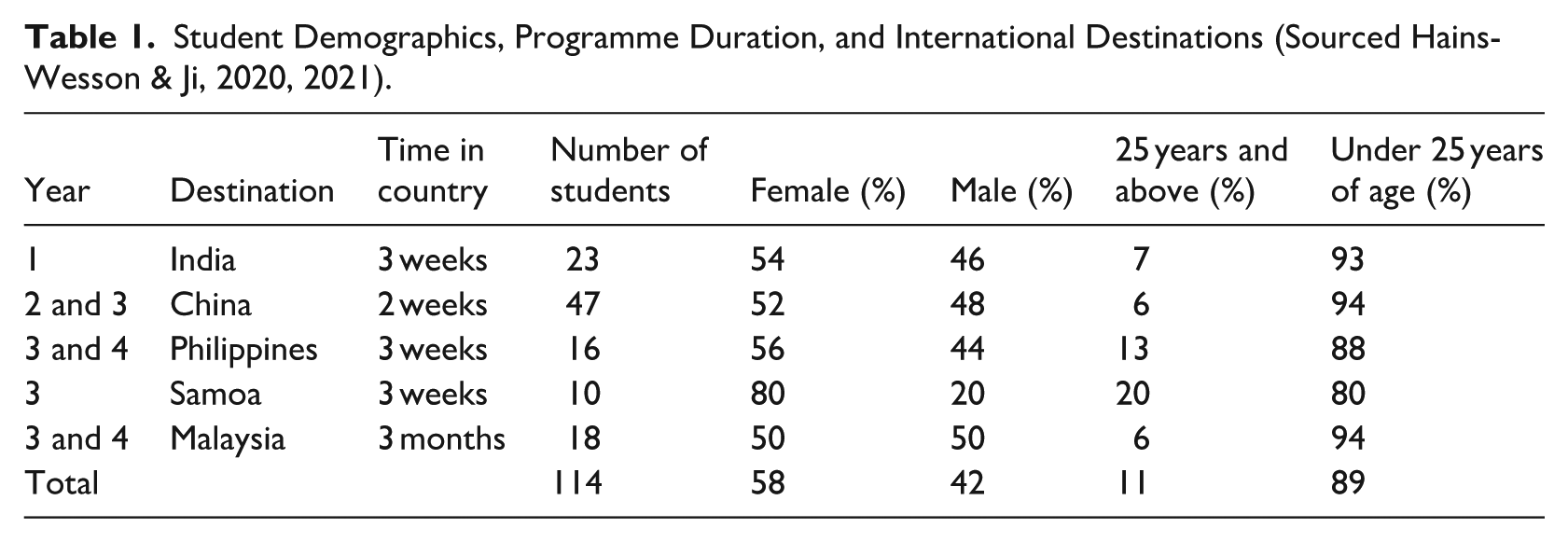
To then decide upon the specific OMPs that this study would focus on, the authors were guided by four key criteria, which were: (1) OMP with the highest enrolment numbers to ensure meaningful data availability, (2) distinct variation in OMP duration to effectively compare short- and medium-term impacts, (3) OMP curriculum framework that centred on adaptability skill development, and (4) sufficient international and socio-cultural diversity to enrich comparative insights (see Table 1). While a number of OMP destinations met some of the criteria, it was the 3-month Malaysia (medium-term) and 2-week China (short-term) OMPs that met all four criteria and were selected for this study.
Short-Term OMP: China
The short-term OMP was a study tour and ranged in duration from 2 to 3 weeks in China; it did not have an in-built internship component as did the medium-term OMP selected. The short-term OMP introduced students to a range of industry contexts, allowing students to observe and deeply reflect on professional practice in a work environment via an experiential learning framework (Kolb, 2014). The short-term OMP to China offered students a comprehensive exposure to a spectrum of culture, economics, and history with each city visited presenting a unique contribution to the programme.
Medium-Term OMP: Malaysia
The medium-term OMP to Malaysia included a 3-month, internship programme, focussing on students completing an individual in-built internship with an approved industry client. This programme allowed individual students to undertake daily tasks in an organisation matched to their career and degree interests. The destination country of Malaysia serves as a fascinating study destination for students involved in OMPs, providing firsthand experience of a dynamic, culturally, and economically diverse society.
Curriculum
The teaching structure and assessment criteria for each programme has been reported elsewhere (Hains-Wesson & Ji; 2020; 2021). To briefly recap, both OMPs shared similar curricular, which was based on Cooper’s (2009) three-phase OMP model, including: (1) pre-departure phase for preparation and culture shock learning; (2) in-country phase for industry connection, and employability development through self-reflection; and (3) return to campus phase for integrating employability learning into future career planning through small group learning and reflection.
The curricular framework featured employability-focussed industry visits, student logbooks on these experiences, self-reflective reports, and group presentations. The medium-term OMP cohort participated in a 3-month, full-time internship in a work environment that was most relevant to their study area and career aspiration/s. Each destination provided students with several site visits, networking opportunities, and cultural activities, fostering in-country awareness and learning, such as language familiarity and understanding of local customs.
A teacher accompanied the OMP student cohorts (for both programmes) to gain insights into students’ learning experiences, mentored students, and consulted with internship supervisors over a 1-week period, including managing in-country risks. A third-party provider was hired for both programmes to ensure university-level risk assessment and management was met when the teacher was not available (Hains-Wesson & Appleby, 2017). The third-party provider also organised industry connections, including accommodation and in-country travel oversight. Each programme included preparation, midway, and post-learning workshops, incorporating risk assessment and management mechanisms.
Methodology
A mixed-methods approach was chosen for this study, aligning with the authors’ post-structuralist perspectives to socially explore procedures for curricular improvement in OMPs. By combining qualitative and quantitative data, the authors compared students’ employability skill development both individually and collectively. This approach helped minimise researcher subjectivity and enhance a deeper understanding (Hall, 2020) of the phenomena being studied. Further, mixed methods are a well-established methodology in education research (Greene et al., 1989), helping to provide insights from diverse stakeholders and facilitate a comprehensive understanding of potential solutions to improve practice (Creswell & Plano Clark, 2011; Hall, 2020).
While the quantitative data (N = 44) set was modest, its inclusion was essential to enable a comparative analysis across programme formats and to illuminate broad patterns in students’ reported adaptability skill development. The survey data provided an important baseline to identify variations in outcomes and guide interpretation. Recognising the potential for non-response and attrition bias, the researchers drew upon qualitative data, which was based on a relatively larger sample (N = 64).
The qualitative data supported the survey data trends and revealed how programme characteristics, such as location, cohort composition, and delivery mode, may influence student learning outcomes, thus extending the analysis beyond the single variable of duration. Importantly, the use of qualitative data not only added explanatory value but also mitigated some of the inherent limitations of the smaller-scale quantitative analysis. The integration of both data types ensured that the study remained analytically robust and relevant, offering meaningful, situated insights into the complex dynamics of adaptability measurement within and across a short- and medium-term OMP.
Participant Recruitment
Recruitment invitations were sent to students enrolled in short- or medium-term OMP over a 4-year period. These invitations were delivered via email and posted on the learning management system, which was Canvas. The study adhered to ethical guidelines, for example, data analysis was postponed until after final grades were issued (Ethics Approval: 2015/284 and 2022/521) with no student undertaking more than one OMP. The survey and interview questions were designed based on a validated instrument by Hains-Wesson and Ji (2020, 2021), building upon the authors’ longitudinal study.
The pre-survey was conducted at least 1 week prior to students departing their home country to undertake the OMP with the post-survey and focus group interviews occurring within 2 weeks of arriving home. Participants voluntarily joined the study, with 44 students completing the pre-survey (38.6% response rate) and post-survey instruments (38.6% response rate) and 64 students (56.1% response rate) participating in focus group interviews. In total, 12 focus group interviews were recorded, each lasting between 45 and 60 min.
The authors ensured that the focus group interviews provided a safe space for students to give honest responses, aiming to minimise social desirability bias through carefully crafted questions. Literature suggests that participants can “present themselves more socially desirable rather than their actual beliefs or behaviors” (Hall, 2020, p. 69). Therefore, survey questions and focus group design were framed to encourage participants to be open and honest, while ensuring anonymity, promoting diverse viewpoints.
Methods
The survey instrument was adapted from previously validated measures (Hains-Wesson & Ji, 2020; 2021), aligning with Ward and Kennedy’s (1993, 1999) socio-cultural and psychological adaptability scales, which differentiate between internal emotional regulation and the ability to navigate new cultural environments. This study’s survey instruments comprised of two sections: (1) socio-cultural and psychological adaptability, and (2) employability skills development. Items were drawn from the Brief Socio-Cultural Adaptability Scale (BSAS) and the Brief Psychological Adaptability Scale (BPAS; see Supplemental Appendices I and III). Both of which have been widely used in intercultural adjustment research to assess participants’ adaptability (Hains-Wesson & Ji, 2020; 2021).
The BSAS evaluates the ease or difficulty of adapting to everyday aspects of life abroad (e.g. making friends, understanding customs, and dealing with bureaucracy), whereas the BPAS assesses psychological and emotional responses to acculturation (e.g. stress, loneliness, and homesickness). Importantly, the wording of the BPAS pre-survey items (e.g. “How frequently do you have the following feelings?” “Sad to be away from Australia”) may be read in two ways: as indicators of current emotional state or as anticipatory responses to being abroad. In this study, the items were treated as expectations, positioning the BPAS as a measure of adaptability rather than adaptation. This distinction matters because it frames the BPAS questions as capturing students’ capacity to anticipate and prepare for emotional and socio-cultural challenges, as well as to reflect on skill development retrospectively. Higher scores on the 7-point Likert scale (1 = “very easy/never,” 7 = “very difficult/always”) signified greater difficulty, offering a nuanced picture of students’ perceived challenges across different programme durations.
The second section of the survey focussed on employability outcomes, drawing selectively on items from the tested and known Employability Development Profile (EDP; Dacre Pool & Sewell, 2007). Grounded in the CareerEDGE model, the EDP conceptualises employability as a multidimensional construct encompassing self-management, communication, teamwork, problem-solving, adaptability, and career-building skills. Students rated their perceived development in areas such as resilience, intercultural communication, and professional confidence using a 7-point Likert scale (1 = “strongly disagree,” 7 = “strongly agree”). These measures were administered pre- and post-OMP to track perceived growth over time. Although modest in sample size, the use of established, validated scales strengthens the reliability of findings and situates them clearly within existing scholarship on adaptability as an employability skill outcome (Hains-Wesson & Ji, 2020; 2021; Dacre Pool & Sewell, 2007; van Dam & Meulders, 2021; Ward & Kennedy, 1993, 1999).
Focus Group interviews
In-depth, semi-structured, focus group interviews were instigated, building upon the survey data collection. In the interview sessions, the use of a research assistant was instigated to adhere to ethical requirements. The interview questions focussed on students’ overall personal, professional, and learning experiences when undertaking a short- or medium-term OMP. For example, the semi-structured questions focussed on group discussions, such as (1) what types of employability skill development experiences were undertaken; (2) provide examples of the challenges or benefits when adapting to a new environment and/or culture; and (3) provide feedback on how the programme could be improved upon via examples (see Supplemental Appendix IV).
Mixed Methods
After collecting the different survey data sets, the quantitative analysis was conducted using the non-parametric Wilcoxon signed-rank test to identify significant differences, while thematic analysis was performed on the focus group interview data using NVivo. Within the mixed methods approach, the authors prioritised quantitative data, using qualitative data to enrich and elaborate on the findings (see Figure 1). The structured survey data quantified trends, patterns, and attitudes relevant to the study, while the recorded focus group interviews provided deeper insights, narratives, and perspectives related to the survey topics. This approach also helped minimise researcher bias by combining data points, with the quantitative data forming the backbone of the analysis and the qualitative data providing additional context and depth to answer the research question (Creswell & Plano Clark, 2011).
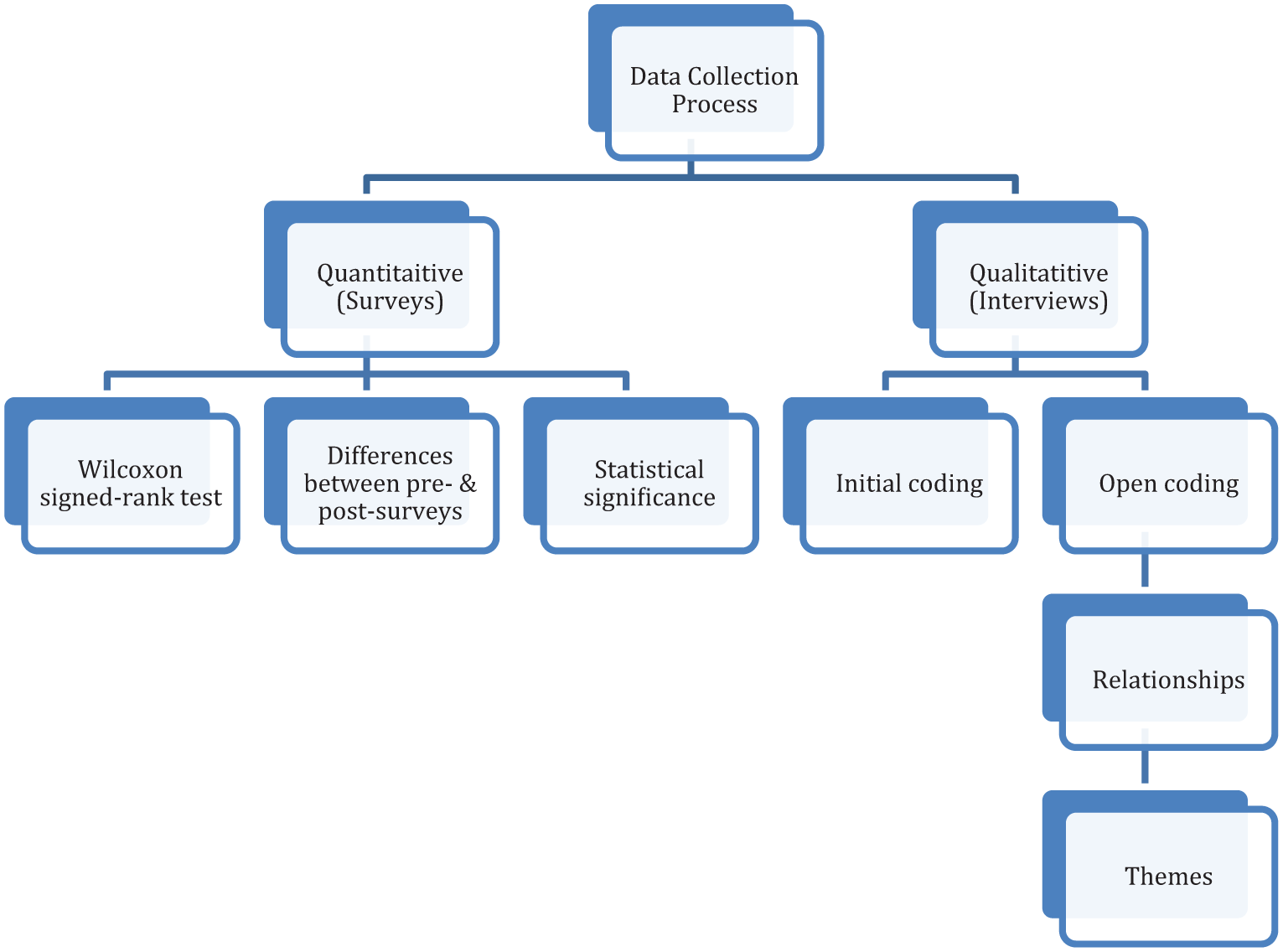
Mixed methods approach: a visual representation (sourced by authors).
Data Analysis
Quantitative
Given the modest sample size for the China and Malaysia OMPs, the data cannot be assumed to be normally distributed. Therefore, the Wilcoxon signed-rank test (Field, 2018) was employed to assess the differences between the pre- and post-survey responses. This method was chosen because it provides a robust way to identify whether the participants’ self-assessed adaptability skills were significantly different prior to and after participating in the OMP.
To reduce dimensionality and improve interpretability, the authors conducted exploratory factor analysis by grouping related survey items into coherent factors. In the BSAS, 13 survey items were grouped into four factors, specifically, items related to environment and practical daily arrangements formed factor 1, Environmental adjustment (α = .71); items focussed on social engagement and language merged into factor 2, Social interaction and communication (α = .79); cultural expectations and behavioural adjustments comprised factor 3, Cultural norms and values (α = .77); and everyday routines such as food and family life formed factor 4, Daily lifestyle (α = .72). 1
Similarly in BPAS, eight survey items were grouped into three factors for statistical analysis: (1) Positive emotional adaptability (α = .72) bundles items that capture the joy and enthusiasm of being abroad, reflecting a student’s uplifting, approach-oriented response to the new environment; (2) Cultural adjustment challenges (α = .78) units those items that index stressors tied directly to navigating a different cultural context, highlighting the cognitive and behavioural hurdles of acculturation; (3) Separation & isolation distress (α = .93) groups feelings of disconnection from home, representing the emotional toll of physical separation and social isolation. 2
Lastly, 26 survey items in the EDP survey were classified into five conceptually coherent employability skills: (1) Communication and interpersonal skills (α = .73); (2) Self-management and adaptability (α = .67); (3) Cognitive and problem-solving skills (α = .74); (4) Academic and learning orientation (α = .85); and (5) Career readiness and experience (α = .81). 3 By comparing the survey results between the short- and medium-term OMP cohorts, an examination of the impact of duration can be determined.
Qualitative
The qualitative interview responses were transcribed into a Word document, with all participants being de-identified using a tagging system that included the year and programme duration (i.e. ST = short-term; MT = medium-term). The data sets were cleaned and organised prior to being imported into NVivo for analysis. An initial round of open coding was conducted line by line by the authors to identify key ideas, concepts, or themes relevant to the research question. Each segment of text was then assigned preliminary codes that captured participants’ reflections, perceptions, and experiences.
The researchers then compared their coding decisions and engaged in an iterative process of discussion to resolve any discrepancies. Differences in interpretation were addressed through reflective dialogue, revisiting the data in context, and reaching consensus on the most appropriate code assignments. Where disagreements persisted, codes were refined or merged to better reflect shared understanding.
Following this inductive phase, the codes were then grouped into broader thematic categories using a constant comparative method. Redundant codes were merged and irrelevant ones removed. Thematic analysis was guided by the principles outlined by Ryan and Bernard (2003). While the coding process was inductive, the final themes were streamlined to align explicitly with the core constructs measured in the quantitative analysis, which were (1) socio-cultural adaptability, (2) psychological adaptability, and (3) employability development.
The socio-cultural adaptability theme captured students’ navigation of unfamiliar cultural environments, including interpersonal interactions, cultural learning, and the challenges of OMPs. The psychological adaptability theme reflected students’ emotional regulation, coping strategies, confidence building, and self-awareness in response to complex or confronting situations abroad. This theme aligns with personal growth narratives and adjustment processes observed in the original analysis.
Finally, the employability development theme covered reflections on personal and professional skill acquisition, namely adaptability, and future career orientation. This theme also incorporated aspects of programme design and duration impacts. By streamlining the thematic codes to align with the quantitative constructs, the authors established a coherent framework for interpreting the qualitative data in parallel with the survey findings.
Results
In the following section, the authors present key findings from both the quantitative and qualitative phases of the study. The results are structured to first highlight the patterns and key differences evident in the quantitative data, offering a broad, comparative view of student outcomes across OMP type. This approach enables initial insights into how OMP duration may relate to increased/decreased socio-cultural and psychological adjustment as well as employability development, especially adaptability.
Following the presentation of the quantitative findings, the qualitative data are then presented to provide deeper insight into the patterns identified. The purpose of this integration is to explore how students’ lived experiences can contextualise and elaborate on the numerical trends, offering a more nuanced interpretation of the results. Finally, given the interconnected nature of socio-cultural and psychological experiences during OMPs, the first two constructs are combined into a single thematic area in the qualitative results.
Quantitative Results
Surveys
Socio-Cultural and Psychological Adaptability
Participants’ socio-cultural and psychological adaptability was first measured, focussing on their perceptions of how easy or difficult it was to adapt to a new environment. The overall results are presented in Table 2. For instance, Panel A shows the pre- and post-survey responses from the short-term OMP where participants indicate that the socio-cultural environment was easier to adapt to, which indicates overall improved socio-cultural adaptability. In the post-survey, participants reported that environmental adjustments became significantly easier (p < .01) and social interaction and communication also improved (p < .05). However, adapting to cultural norms and values and changes in daily lifestyle showed no significant differences.
Brief Socio-cultural Adaptability Scale (BSAS).
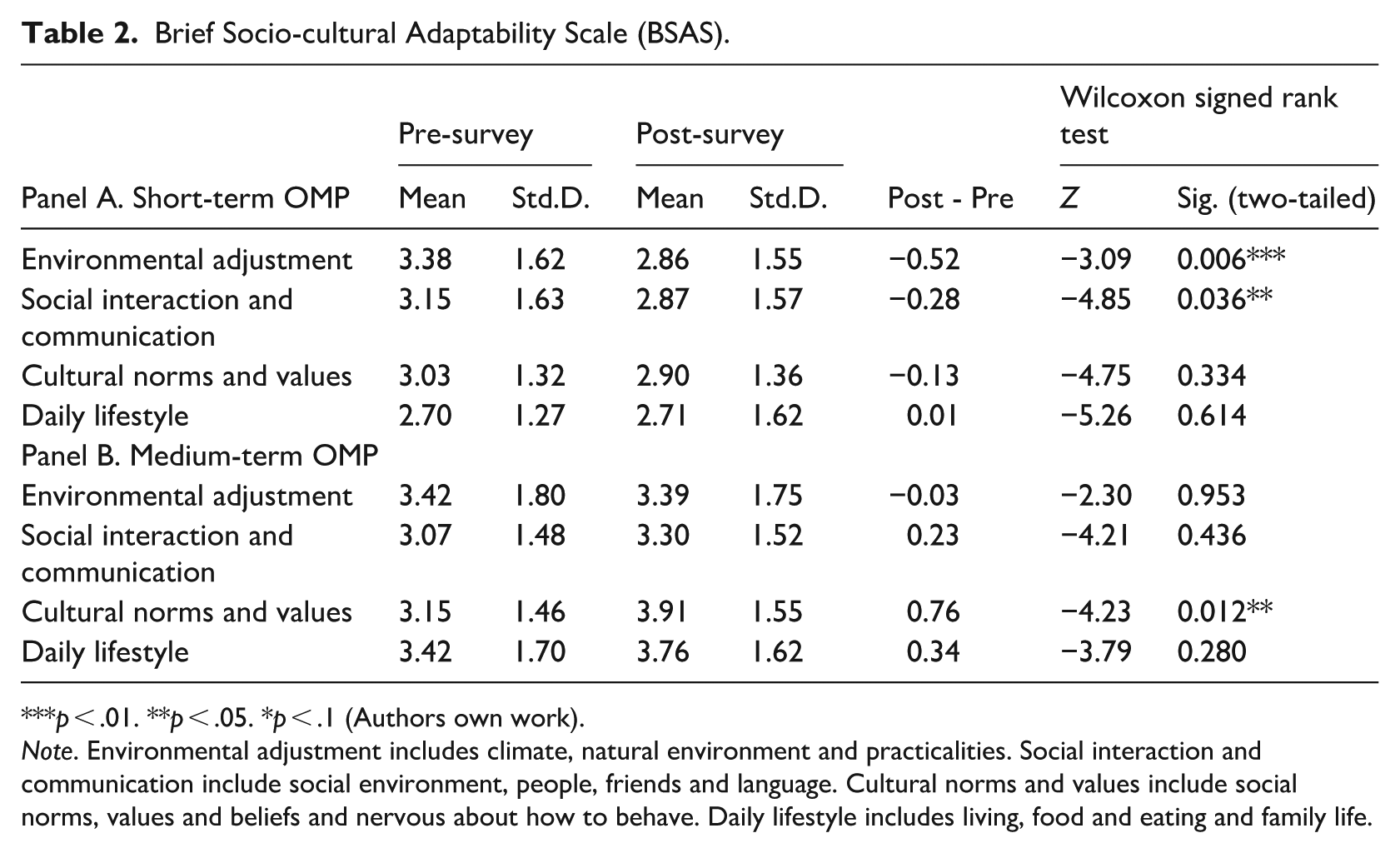
p < .01. **p < .05. *p < .1 (Authors own work).
Note. Environmental adjustment includes climate, natural environment and practicalities. Social interaction and communication include social environment, people, friends and language. Cultural norms and values include social norms, values and beliefs and nervous about how to behave. Daily lifestyle includes living, food and eating and family life.
Panel B of Table 2 indicates that the medium-term OMP participants experienced greater difficulty adapting across most socio-cultural factors: social interaction and communication increased from 3.07 to 3.30, cultural norms and values rose from 3.15 to 3.91 (p < .05), and daily lifestyle went from 3.42 to 3.76. Although pre-survey factor means were similar for both programmes, the medium-term cohort’s post-survey ratings of challenges were significantly higher for social interaction and communication (2.87 vs. 3.30), cultural norms and values (2.90 vs. 3.91), and daily lifestyle (2.71 vs. 3.76; all p < .01). These results suggest that adapting to the socio-cultural environment was more challenging for the medium-term OMP participants than for their short-term counterparts, and that their confidence in adaptability declined as a result.
The results referring to participants’ psychological adaptability were similar to the findings of the socio-cultural adaptability survey. These results are in Table 3. Panel A of Table 3 presents pre- and post-survey responses for the short-term OMP. The results indicate that there is an increased frequency of positive feelings (6.09 vs. 6.24). At the meantime, there is a reduction in the cultural adjustment challenges (3.46 vs. 3.25) and separation and isolation distress (2.26 vs. 2.00, p < 0.05). This result suggests that survey participants felt less negative and better able to psychologically adapt in the short-term OMP.
The Brief Psychological Adaptability Scale (BPAS).
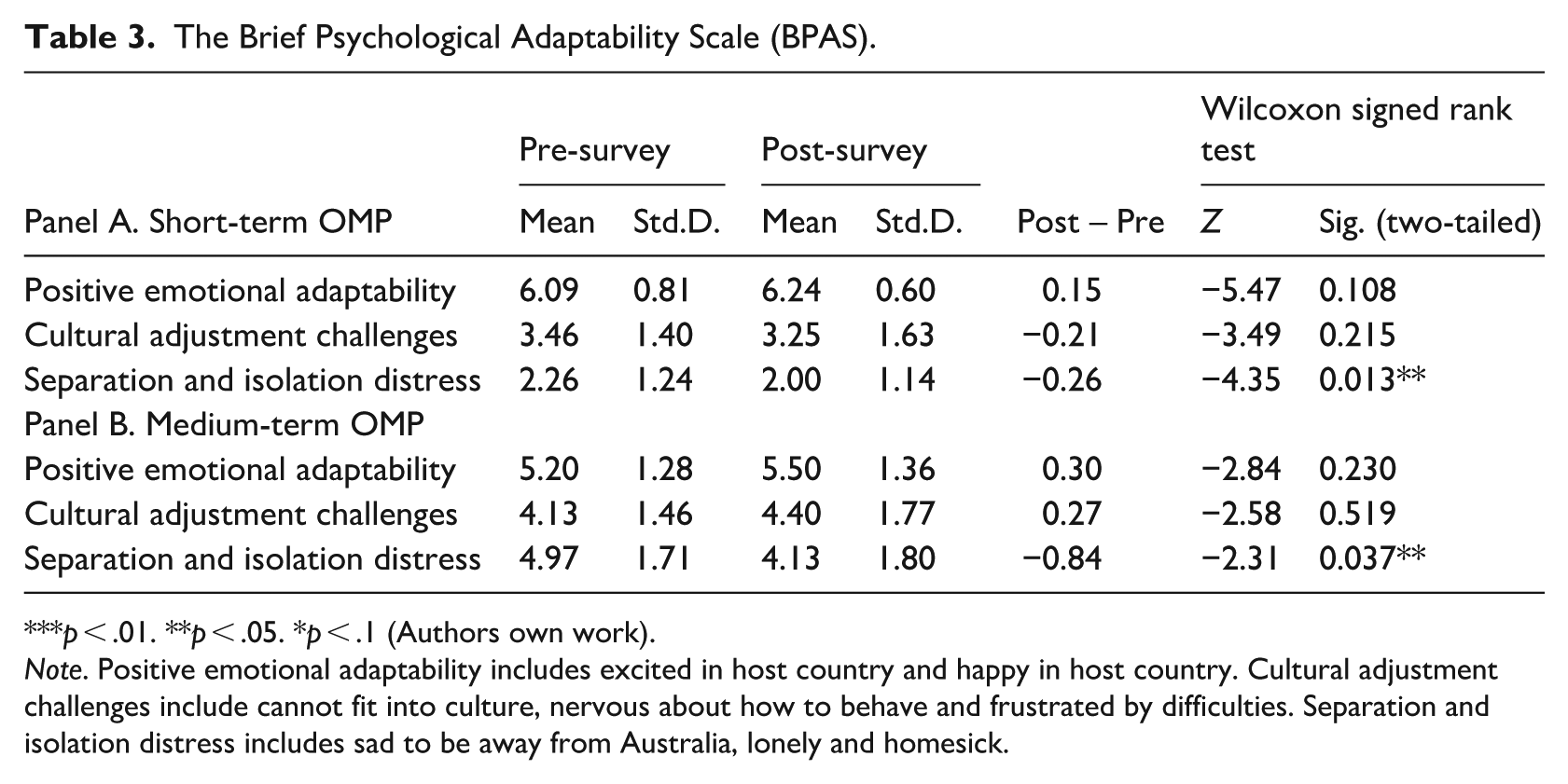
p < .01. **p < .05. *p < .1 (Authors own work).
Note. Positive emotional adaptability includes excited in host country and happy in host country. Cultural adjustment challenges include cannot fit into culture, nervous about how to behave and frustrated by difficulties. Separation and isolation distress includes sad to be away from Australia, lonely and homesick.
In Table 3 Panel B, the results illustrate that students who participated in the medium-term OMP also increased positive feelings (5.20 vs. 5.50) and reduced separation and isolation distress (4.97 vs. 4.13, p < .05). However, participants indicated greater cultural adjustment challenges (4.13 vs. 4.40). Furthermore, when comparing average ratings in the post-survey results, the medium-term cohort experienced significantly fewer positive emotions (6.24 vs. 5.50, p < .1), greater cultural adjustment challenges (3.25 vs. 4.40) and significantly greater separation and isolation distress (2.00 vs. 4.13, p < .01). It suggests that the medium-term OMP participants suffered from more negative feelings and less positive feelings than the short-term OMP participants.
A likely explanation for these findings is that the extended duration of the medium-term programme exposed students to sustained cultural and professional pressures, including the demands of managing internships alongside daily cultural adjustments. Unlike short-term OMP participants, who often benefit from structured, time-limited activities, medium-term participants were required to maintain independence and resilience over a longer period. This prolonged exposure may have amplified psychological fatigue and feelings of isolation, particularly when cultural expectations and workplace norms differed from students’ prior experiences. As a result, participants in the short-term OMP reported greater improvement and confidence in their socio-cultural and psychological adaptability compared with their medium-term counterparts.
Employability Skills Development
To further explore how duration affects adaptability in short- to medium-term OMPs, the authors compared employability skill development across the two programmes (see Table 4, Panels A and B). Short-term OMP participants failed to show any significant improvement in their employability skills. However, the medium-term OMP participants indicated improvements in communication and interpersonal skills (from 5.53 to 5.72), academic and learning orientation (from 4.17 to 5.21, p < .01), and career readiness and experience (from 4.71 to 4.76). Despite the short-term cohort’s self-management and adaptability ratings decreasing slightly from 6.11 pre-programme to 5.97 post-programme, students’ post-OMP rating remained significantly higher than the medium-term OMP (5.97 vs. 5.79, p < .1). Overall, while the medium-term OMP participants achieved broader employability improvements, they fell short of short-term OMP peers on adaptability, highlighting that a longer programme did not necessarily translate into better adaptability gains.
Employability Development Profile (EDP).
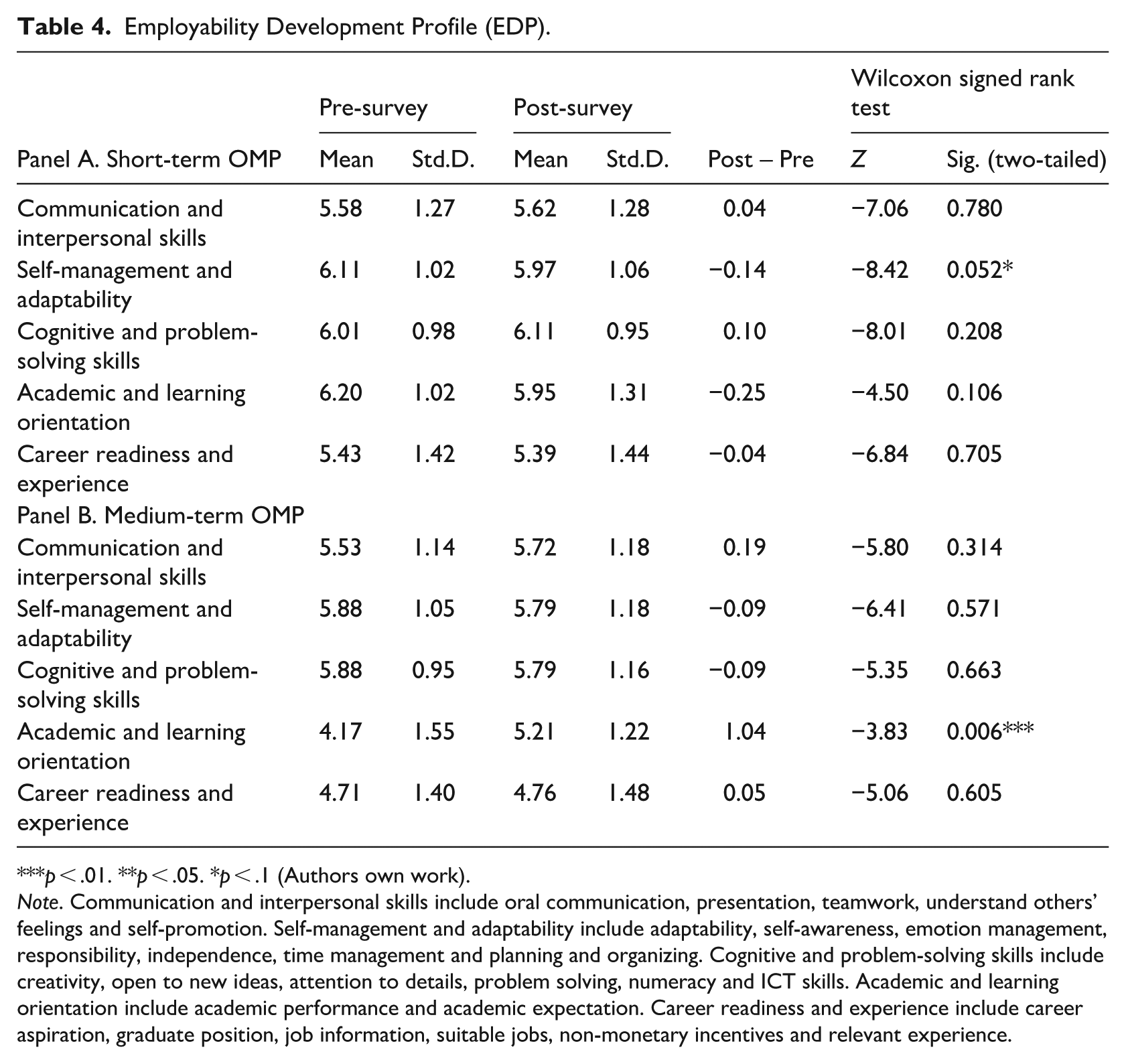
p < .01. **p < .05. *p < .1 (Authors own work).
Note. Communication and interpersonal skills include oral communication, presentation, teamwork, understand others’ feelings and self-promotion. Self-management and adaptability include adaptability, self-awareness, emotion management, responsibility, independence, time management and planning and organizing. Cognitive and problem-solving skills include creativity, open to new ideas, attention to details, problem solving, numeracy and ICT skills. Academic and learning orientation include academic performance and academic expectation. Career readiness and experience include career aspiration, graduate position, job information, suitable jobs, non-monetary incentives and relevant experience.
Qualitative Results
Focus Group Interviews
The qualitative data provided rich insight into the diverse and often complex ways students experienced socio-cultural and psychological adaptability during their participation in the OMPs. Across both short- and medium-term groups, students reflected on their challenges and growth, with the qualitative responses both reinforcing and expanding upon the patterns observed in the quantitative findings. Further, given the size of the qualitative sample (N = 64), and due to word constraints, this section presents a carefully curated selection of representative participant quotes only. Rather than detailing all individual responses, the authors applied a clustering strategy during analysis by grouping similar sentiments and shared experiences to form aggregated thematic patterns that aligned with the quantitative areas of focus. The illustrative quotes featured in this section were selected for their clarity, frequency across focus groups, and alignment with both the thematic framework and the quantitative constructs. This approach ensured that the richness of student voice is preserved, while maintaining a concise and coherent narrative aligned with the overarching themes, which were socio-cultural and psychological adaptability and employability skills.
Socio-Cultural and Psychological Adaptability
Students in the medium-term OMP commonly reported greater difficulty managing sustained cultural exposure and continuous professional engagement. Many described a cumulative sense of psychological fatigue associated with balancing internship commitments, academic tasks, and everyday cultural adjustments. This aligns with the lower average psychological adaptability scores seen in the quantitative dataset for medium-term students. One participant explained, “We were constantly meeting new people and learning new customs, and by the second month, I just felt emotionally drained” (2016MT).
Other participants echoed this sentiment, such as stating: “I tried to prepare by learning the language, reading blogs, even talking to people who had gone before, but nothing really got me ready for how mentally tough it would be. It is different when you’re living it every day” (2016MT). These responses suggest that longer duration, while offering deeper immersion, may compound emotional strain, supporting the idea that psychological adjustment does not necessarily improve linearly with more time abroad.
In contrast, short-term OMP participants generally expressed greater ease in adapting to the cultural context and reported fewer psychological challenges. Their reflections revealed higher levels of confidence and flexibility in navigating language barriers and unfamiliar social settings. This finding is congruent with participants higher average socio-cultural adaptability survey scores. As similar student remarks suggested: “Even if we couldn’t speak the same language, people were welcoming, and we figured it out. It made me realise how adaptable I can be” (2015ST).
Interestingly, medium-term students also reported a stronger sense of personal growth despite experiencing more difficulty. Many highlighted how navigating prolonged stressors contributed to an enhanced sense of resilience and adaptability over time. As one student put it: “I felt overwhelmed by deadlines and expectations, but I look back now and see how much I’ve grown. It was hard, but it pushed me to become more independent and resourceful” (2016MT). This aligns with the employability development gains identified in the quantitative results, particularly for those who completed the medium-term OMP despite facing significant personal challenges.
Employability Skills Development
Employability skill development emerged as a prominent theme across both short- and medium-term OMP participants, though the nature, intensity, and perceived value of that development varied markedly between the two programme types. A recurring theme among medium-term OMP participants was a sense of being under-prepared not only for the emotional and cultural demands of extended-in-country engagement, but also for the professional expectations placed upon them. Even students who undertook additional preparations such as self-directed language study, personal goal setting, or seeking guidance from past participants, often found themselves overwhelmed by the cumulative pressures of work placement, academic assessment, and cultural immersion. One participant explained, “I thought I was ready, but being in the actual environment made everything feel different. It was a real shock in terms of how to conduct myself professionally in a different culture” (2016MT).
Many medium-term OMP students emphasised the steep learning curve involved in navigating cross-cultural workplaces. They described developing skills such as adaptability, problem-solving, and interpersonal communication in contexts where expectations were ambiguous and feedback structures unfamiliar. This aligns with the quantitative results, which indicated that medium-term OMP participants reported slightly higher levels of perceived employability skill development overall, despite also indicating lower psychological adjustment scores. As one student reflected, “It wasn’t easy, but I learned how to deal with difficult situations, asking for help, managing time, dealing with setbacks. Those are things I know I’ll need in any career” (2016MT).
However, several participants noted that the development of these skills often occurred in retrospect and was not always immediately recognised during the OMPs. This suggests that reflection, distance, and time post-OMP is important in consolidating the employability benefits of longer, more immersive mobility programmes. A student commented, “At the time, I just felt stressed. But now that I’ve had time to reflect, I realize how much I learned about being proactive and dealing with uncertainty” (2016MT).
In contrast, short-term OMP participants described more structured and scaffolded experiences that boosted their confidence and professional identity in a shorter time frame. Their accounts suggested that the limited duration of an OMP may have made it easier to remain focussed, emotionally stable, and professionally engaged. Many cited specific moments of achievement, such as completing a group presentation, navigating an intercultural meeting, or receiving positive feedback from a supervisor; as confidence-building and directly transferable to future employment. One student noted, “It wasn’t a long time, but it gave me a taste of what it’s like to work internationally, and I feel more confident applying for jobs now” (2015ST).
Short-term OMP students often framed employability development as closely tied to team-based learning, peer support, and guided reflection built into the programme design. As another participant stated, “The tasks were clear, and we knew what was expected. That helped me focus on building skills like presenting and teamwork, without feeling lost” (2015ST). Together, these findings highlight the possible curvilinear relationship between OMP duration and employability outcomes. While extended exposure in medium-term OMP can create conditions for deeper skill acquisition through challenge and resilience-building, the emotional load and lack of adequate pre-departure preparation may have diluted the perceived benefits for some students. Conversely, short-term OMPs, although less immersive, can be often more structured and emotionally manageable, leading to strong perceptions of skill development within a controlled timeframe.
The results suggest that OMP design, scaffolding, and post-experience reflection opportunities are as critical as duration in shaping employability outcomes. Ensuring that students are equipped not only with logistical and cultural knowledge, but also with emotional preparedness and clear professional learning goals, may enhance the effectiveness of both short- and medium-term mobility programmes in building graduate capabilities.
Discussion
This study adopted a mixed methods approach to investigate how OMP duration might influence adaptability development among university students participating in two OMPs at an Australian university. The short-term OMP was a 2-week study tour to China, featuring structured learning activities and accompanying academic supervision, while the medium-term OMP involved a 3-month internship in Malaysia with modest supervision. The findings demonstrate that while the short-term OMP cohort improved their adaptability, students in the medium-term programme experienced significantly greater challenges. These challenges stemmed from extended time away from home, increased independence through internship placements, and most notably, a perceived lack of adequate preparation. These factors contributed to emotional strain, cultural adjustment difficulties, and in some cases, diminishing adaptability development outcomes. While medium-term OMPs may offer deeper immersion, the data presented here, potentially suggests that without sufficient preparation and support, these programmes can inadvertently hinder the very skills they aim to cultivate.
Theoretical Contributions
This study contributes to the study abroad literature by emphasising the need to better integrate preparation as a pedagogical mechanism in diverse OMP curricular design. First, the findings show that adaptability development is not necessarily linearly correlated with time abroad. In fact, it may follow a curvilinear pattern, where skill gains plateau or decline under prolonged emotional strain. Second, the results highlight the central role of teacher autonomy in shaping OMP experiences, from destination and duration to the nature of preparatory activities and in-country support options. Third, the study positions preparation quality, not just duration, as a key determinant in shaping students’ ability to adapt and thrive in culturally unfamiliar contexts.
Practical Implications
The findings challenge the common assumption that longer study abroad programmes (e.g. 3–6 months) yield greater learning and adaptability outcomes. Crucially, the results reveal that medium-term OMP students felt under-prepared despite attending the standard pre-departure workshops. This points to the need for more targeted and experiential pre-departure preparation for medium-term programmes. For instance, students may benefit from scenario-based simulations, self-regulation skill-building, guided intercultural reflection, and mentorship from past participants.
Additionally, preparation should extend beyond logistical or cultural briefings to include psychological readiness training, such as managing uncertainty, coping with homesickness, and balancing work-study demands. Institutions could also offer staggered support, with check-ins during and post- programme, not only before departure. These enhancements could better equip students to handle the emotional and cultural complexities of extended stays, such as when undertaking internships, thus maximising the adaptability potential of medium-term OMPs. Where substantial cultural distance exists, shorter yet intensive programmes, with structured reflection and strong teacher presence, may sometimes be more effective in promoting adaptability. Nonetheless, with improved preparation, medium-term OMPs can remain a powerful study abroad learning model when well-supported.
Limitations
A notable limitation of this study is that data collection took place before the COVID-19 pandemic, which means that potential post-COVID influences were not captured. Additionally, there may be sampling bias, as participants who aligned with the research were more likely to engage in the survey and interviews, leading to possible self-selection bias. The modest number of survey responses and the study’s focus on a single cohort at one Australian university further constrains the breadth of data and findings. As a result, the recorded focus group interviews became crucial in supplementing and enriching the survey findings, however, due to the word limitations, a further study that focusses on the qualitative data alone is being undertaken.
Despite these limitations, the study offers valuable insights. It draws from two different OMPs conducted over an extended and defined period, involving a select group of students from an Australian university. The selected OMPs for this study also provided exposure to varied work and cultural environments, different programme types, and international duration times, making the research an important contribution to understanding the impact of short- to medium-term OMPs on student learning outcomes, namely adaptability.
Conclusion
The findings potentially indicate that the OMP destination, duration, and type of learning can significantly influence the development of adaptability skills. Such insights can aid in making informed decisions about incorporating relevant and appropriate learning activities tailored to a particular OMP duration and type. This is especially relevant given the post-COVID travel hesitancy, which continues to impact the internationalisation of the curriculum, compounded by increased travel costs and risks.
Another crucial finding from this study is that OMP teachers who prioritise students’ well-being to include destination and duration time in-country can significantly influence the development of adaptability skills. Future research should build upon the findings presented here by including large-scale and diverse OMPs, encompassing various delivery modes, durations, academic levels, and discipline cohorts. Finally, future research should also consider tracking students who participate in short- and medium-term OMPs to understand the influence on job destination outcomes upon graduation.
Supplemental Material
sj-docx-1-alh-10.1177_14697874251383909 – Supplemental material for Examining the Impact of Duration in Short- and Medium-Term Study Abroad: A Mixed-Methods Study
Supplemental material, sj-docx-1-alh-10.1177_14697874251383909 for Examining the Impact of Duration in Short- and Medium-Term Study Abroad: A Mixed-Methods Study by Rachael Hains-Wesson and Kaiying Ji in Active Learning in Higher Education
Footnotes
Acknowledgements
Not applicable.

Ethical Considerations
Ethics approval was received: project numbers: 2015/284 and 2022/521.
Consent to Participate Statements
Informed written consent requirements were conducted for the survey and focus group interviews.
Funding
The authors received no financial support for the research, authorship, and/or publication of this article.
Declaration of Conflicting Interests
The authors declared no potential conflicts of interest with respect to the research, authorship, and/or publication of this article.
Data Availability Statement
Due to ethical considerations, no additional data beyond what is presented in this article will be made available. All relevant findings and insights are included in the manuscript to ensure compliance with confidentiality and participant privacy requirements.
Supplemental Material
Supplemental material for this article is available online.
Notes
Author Biographies
References
Supplementary Material
Please find the following supplemental material available below.
For Open Access articles published under a Creative Commons License, all supplemental material carries the same license as the article it is associated with.
For non-Open Access articles published, all supplemental material carries a non-exclusive license, and permission requests for re-use of supplemental material or any part of supplemental material shall be sent directly to the copyright owner as specified in the copyright notice associated with the article.
