



Abstract
While violence is often targeted at and experienced by bodies with different identities or appearance, studies of violence in social sciences research often neglect the body as a data source and site of analysis. This article makes an original contribution to the literature on visual methods in general and arts-based approaches specifically, by focusing on the understudied and underutilised method of body mapping. It is novel in developing techniques for using body mapping as a tool for seeing violent extremism in international politics. The approach here enables researchers to engage with a potentially difficult topic and interrogate the nuances of how violent extremism is understood, experienced and resisted at a local community level. In so doing, it produces a rich, original data set of 20 body maps, interviews and focus group discussions with 10 men and 10 women from Muslim communities from around the coast in Kenya created during two 5-day intensive body mapping workshops held in Mombasa in November 2019. This embodied storytelling challenges dominant ideas about violent extremism and makes visible otherwise marginalised and obscured personal narratives and lived experiences of violence. This is of fundamental importance because everyday violence and exclusion not only go unaddressed in the efforts to tackle violent extremism but are also exacerbated by the excessive security measures used by the government in its effort to counter the threat of groups such as Al-Shabaab. The techniques we develop in this article have significant advocacy potential and societal impact: body mapping creates a platform and a tool for highlighting and challenging everyday practices such as female genital mutilation, violence against women, discrimination, racism, police brutality, tribalism and marginalisation. It can also transcend linguistic and educational barriers to enable access to a diverse audience and create bridges between divided communities.
Introduction
As humans we experience the world through our bodies. The ways we touch, taste, smell, see, hear and feel influence our perceptions of reality and have significant bearings on how we experience and remember things. Violence often targets bodies with divergent identities (inflected by gender, race, sexuality, religion and citizenship status, for example), and is experienced through the body (Sweet and Ortiz Escalante, 2015). Yet, in qualitative social research, the body is often neglected as a site of enquiry. Research typically focuses on cerebral, cognitive and intellectual elements and, in the process, unsees the body as an epistemic site (McCorquodale and DeLuca, 2020). As a result, the lived experience of the body as a primary source of data and an essential site of analysis continues to be marginalised.
Body mapping is a relatively new arts-based research method that engages the body as a research site. Arts-based research involves the use of various forms of art to generate data and communicate knowledge. ‘Arts-based research seeks to contribute to developing interrelated epistemological, theoretical and methodological dialogue regarding art as an approach to inquiry’ (Boydell et al., 2020: 2). Body mapping is a powerful visual method that offers researchers, participants and audiences alternative dimensions from which to view phenomena (De Jager et al., 2016). By its very nature, because it engages bodily experiences and feelings, body mapping is also a visceral approach to enquiry that is capable of unearthing additional ways of knowing (Sweet and Ortiz Escalante, 2015).
This article is based on our experience of using body mapping as a form of embodied storytelling to study violent extremism from a bottom-up, gendered and intersectional perspective in Kenya. In the article, we share our experience of using body mapping and explore how this method can contribute to research on challenging or difficult topics and particularly to studies of violence. Our aim in sharing our experience is to encourage the uptake of body mapping as a method in social sciences research. In the first section, we introduce body mapping as a method. We then describe our research on violent extremism in Kenya and how we used body mapping. In the final two sections of the article, we discuss how we analysed the textual and visual data from the body maps before reflecting on the value of body mapping as a research method for the study of violent extremism and, more broadly, for social sciences.
What is body mapping?
According to the systematic review of body mapping conducted by De Jager et al. (2016), the first recorded use of this method was in MacCormack and Draper’s (1987) study on female sexuality in Jamaica, in which women were encouraged to draw their reproductive system on a pre-printed outline of a female body and explain how it functioned. The study’s body maps revealed an overemphasis on fertility, which is connected to womanhood, social power and status, but also kinship and continuity. Subsequent early references to body mapping in academic literature were about the lifelong and Memory Box workshops in Khayelitsha, in South Africa (Cornwall, 1992; MacGregor, 2009; Samosir et al., 2018; Solomon, 2002). In these workshops, body mapping was employed in an intervention to raise awareness about Human Immunodeficiency Virus (HIV); fight stigma; increase self-esteem and resilience; and highlight a lack of accessible antiretroviral medication. In this setting, body mapping was used as a therapeutic tool that enabled participants to talk about their experiences, document their stories and provide a relic or memento for their families after they passed (Lys et al., 2018; MacGregor, 2009; Judea Samosir et al., 2018; Nöstlinger et al., 2015). Since then, the popularity of body mapping appears to have been growing, and variations have been used as art therapy techniques in health interventions in relation to different illnesses, but also as educational and preventative tools. For example, Lys et al. (2018) used body mapping in their research with youth in Canada’s north-western territories as an educational sexual health intervention aimed at changing risky behaviours. In their study, it elicited meaningful conversations about sexual health and risky behaviours that participants may otherwise have regarded as potentially stigmatising or uncomfortable. In social sciences research, although body mapping remains underutilised, the method has been used as a participatory tool and a way of narrating life experiences (Gastaldo et al., 2012). McCorquodale and DeLuca (2020) used body mapping to understand, through a phenomenological lens, how mindfulness contributes to the health and well-being of working mothers and their children. Gastaldo et al. (2012) employed body mapping to study the experiences of undocumented workers in Canada. Meanwhile, Boydell et al. (2020) used the technique to identify how women from marginalised groups cope with, negotiate and resist stigma. In more recent years, body mapping has also been used in research on gender-based violence (GBV). Sweet and Ortiz Escalante (2015), in a study that sought to contribute to enhancing women’s safety in private and public spaces in New York City, Mexico City and Barcelona, utilised body mapping to facilitate a visceral approach to planning. In their study, bodies were seen as spaces where planners can collect information about violence and fear of violence. In Guatemala, Lykes and Crosby (2013) used body mapping as a participatory action research tool to enable healing among survivors of wartime sexual violence. Yet, in the field of international relations and security studies, body mapping remains a relatively new and underutilised approach to research. To our knowledge, body mapping has not been used before to study violent extremism. In our research, we wanted to use the lenses of gender and intersectionality to explore how violent extremism is understood, experienced and resisted in everyday life. The use of body mapping enabled us to engage with a potentially difficult topic and to focus on personal perspectives and everyday, embodied experiences of violence.
Violent extremism as an everyday embodied phenomenon
Violent extremism is a relatively new concept in the lexica of the United Nations’ (UN) counterterrorism bodies; it first emerged in Security Council resolution 2178 (2014) but gained particular prominence with the adoption of The UN Secretary General’s (UNSG) Plan of Action to Prevent Violent Extremism (POA) in 2015. In this plan, the UNSG adopted a soft, preventive approach to break away from the legacy of the Global War on Terror (GWOT) and garner system-wide support at the UN for a joined-up strategy to addressing violent extremist threats (Ucko, 2018). As a result of this move at the UN level, the focus on preventing and countering violent extremism (P/CVE) has certainly become part of mainstream work on peace, human rights, development, peacebuilding and even gender (Street and Altiok, 2020). Recent years have seen an unprecedented expansion of programmes and policies on P/CVE across the globe. However, as with ‘terrorism’, there is no consensus on what violent extremism actually is. The UNSG in his POA did not attempt to provide a definition of this phenomenon (UN General Assembly, 2015). Thiessen (2019) has argued that, in order to build operational support for the implementation of its agenda, the UN intentionally failed to define violent extremism, opting instead for strategic ambiguity. However, in 2020 the UN Special Rapporteur, Fionnuala Ní Aoláin expressed deep concern that ‘violent extremism’ as a concept remains opaque, highly contested and vague because this allows States broad discretion and scope to adopt and apply sweeping measures (UN General Assembly, 2020).
Over the past two decades, counterterrorism has been used by many States to violate human rights in the name of national security and, in the light of such actions, the failure to define violent extremism is very dangerous (Huckerby, 2020; Street and Altiok, 2020). In 2020, Loujain al-Hathloul, a women’s rights activist from Saudi Arabia, was sentenced to 6 years in prison under counterterrorism laws for challenging the country’s driving ban, and this example of a State using counterterrorism and violent extremism legislation to crack down on political opponents and human rights advocates is not unique (Huckerby, 2020). The UN Special Rapporteur also noted with concern that, while most P/CVE national strategies declare that violent extremism is not confined to a particular religion or belief system, many of the resulting national programmes and policies only target specific groups and focus particularly on Islamist extremism (UN General Assembly, 2020). After 11 September 2001, Muslims around the world were disproportionately targeted by surveillance, profiling, stop and search policies, arrest, detention and extraordinary rendition (Breen-Smyth, 2014; Cherney and Murphy, 2016). Unfavourable media representation, as well as the discourse of threat employed by governments, led to enhanced levels of public fear and negative public perceptions of Muslim minorities, which were cast as suspect, dangerous, undeserving and unpatriotic communities, and so the forces of racism and xenophobia were unleashed (Breen-Smyth, 2014).
Like many other countries, Kenya is confronted with the threat of terrorism. Since the 1980s, Kenya has been the scene of several terrorist attacks linked to international terrorist networks, most notably, the 1998 bombing of the United States embassy by Al-Qaida that killed over 200 people and injured thousands of others. Since 2011, Kenya has also experienced an increased number of attacks sponsored by Al-Shabaab, a militant group based in Somalia. In global politics, particularly since 9/11, Kenya has become a significant ally of the West in the GWOT (Lind et al., 2017), and its National Strategy for Countering Violent Extremism, launched in 2016, defined violent extremism primarily as a problem of violent Islamist extremism in line with GWOT and counterterrorism policies and priorities in the West: There are multiple forms of violent extremism but the main threat to Kenya is based on Salafi-Jihadi ideology that is embraced by Al Shabaab group (Harakat Al-Shabaab Al-Mujahidin), Al Qaeda’s affiliate in the Horn of Africa, and other terrorist organizations such as Dae’sh (ISIS) that seek ‘entry’ into the Horn of Africa (Government of Kenya, 2016: 9).
Given that the country has a large Muslim minority, the association of Islam and Muslims with terrorism and violent extremism is problematic. The focus on groups such as Al-Shabaab has led to the construction of Muslim minorities as a suspect community in Kenya (Badurdeen, 2018). Over the last 10 years, Muslim communities, and particularly those who are ethnically Somali, have borne the brunt of security and counterterrorism operations (Lind et al., 2017).
Body mapping as a process
Violent extremism in Kenya was defined using a state-centric and donor-led approach (Aroussi, 2021). For this reason, in our study we sought to explore how violent extremism is understood, experienced and resisted at a local community level, focusing on individual and everyday experiences, and body mapping offered us the opportunity to do this. As per the guidance on research of this type, we applied for ethics approval from our respective institutions and obtained a research permit in Kenya. Our research involved an initial phase in which we conducted interviews and focus group discussions with stakeholders including civil society organisations, community-based groups, activists, and men and women from different communities. Our findings helped us to understand the issues relevant to our research, and they also supported our preparation for phase two. In phase two, we organised two body mapping workshops in Mombasa with 10 women and 10 men from Muslim communities who were living in areas formally recognised by law enforcement agents and non-governmental organisations as hotspots for violent extremism. The workshops were led by our research partner, an artist and curator in Kenya with over 20 years’ experience in using arts therapy and particularly body mapping. The participants were recruited through community-based organisations and informal networks, and selection was based on gender, ethnicity, age and socio-economic backgrounds to capture the diversity of experiences among Muslims around the coast. We adapted body mapping techniques to the local context, using African fabric, beads and henna as workshop materials. Our study utilised a feminist intersectional framework, which recognises that the intersecting and multiple identities men and women embody relate to power structures and in turn shape their experiences of violence and resistance. Ethnicity in Kenya is highly politicised and linked to violence, marginalisation and exclusion. For this reason, we selected male and female participants from different ethnic groups. We held single-sex workshops due to the sensitive nature of the topic.
Body map storytelling can be adapted to different time scales. In Solomon’s (2002) study, the body mapping workshops were held over several weeks (De Jager et al., 2016). Other research using this method has used time frames as short as three sessions of one or 2 h each (Boydell et al., 2020; Sweet and Ortiz Escalante, 2015). However, when working on sensitive topics, this approach may not be suitable. An evaluation by Samosir et al. (2018) recommended that, when this method is being used with vulnerable groups, such as people living with HIV, the body mapping process should last a minimum of 2 days. In our research, like Gunn (2017), we used body mapping for five full days. The participants shared accommodation and meals and engaged in various activities as a team, including listening to music, praying and even singing while painting, with the research team joining in where possible. These shared sensory and spatial experiences supported the building of trust and friendships, and they transformed the research experience for the participants and the researchers.
Body maps can be created by individual participants or a group of participants. In some studies, such as those by MacCormack and Draper (1987) and Richardson (2015), a pre-printed outline of the human body is used to elicit discussion. In our study, participants created their own body maps by helping each other to trace the outlines of their bodies on large canvasses (Figure 1). Each workshop was structured as a set of activities, and, while they used the same sequences, there was some fluidity and adaptation allowed between the workshops for women and men. The process involved the production of multiple drawings in response to questions focused on understandings and experiences of violent extremism and resistance, including questions about significant actors, personal networks, and places of safety and insecurity. The drawings were then used in sharing circles as catalysts for discussion about the experiences that participants had depicted. At a later stage, these same drawings were placed within the life-size painting. Body tracing in process: Ramadhan.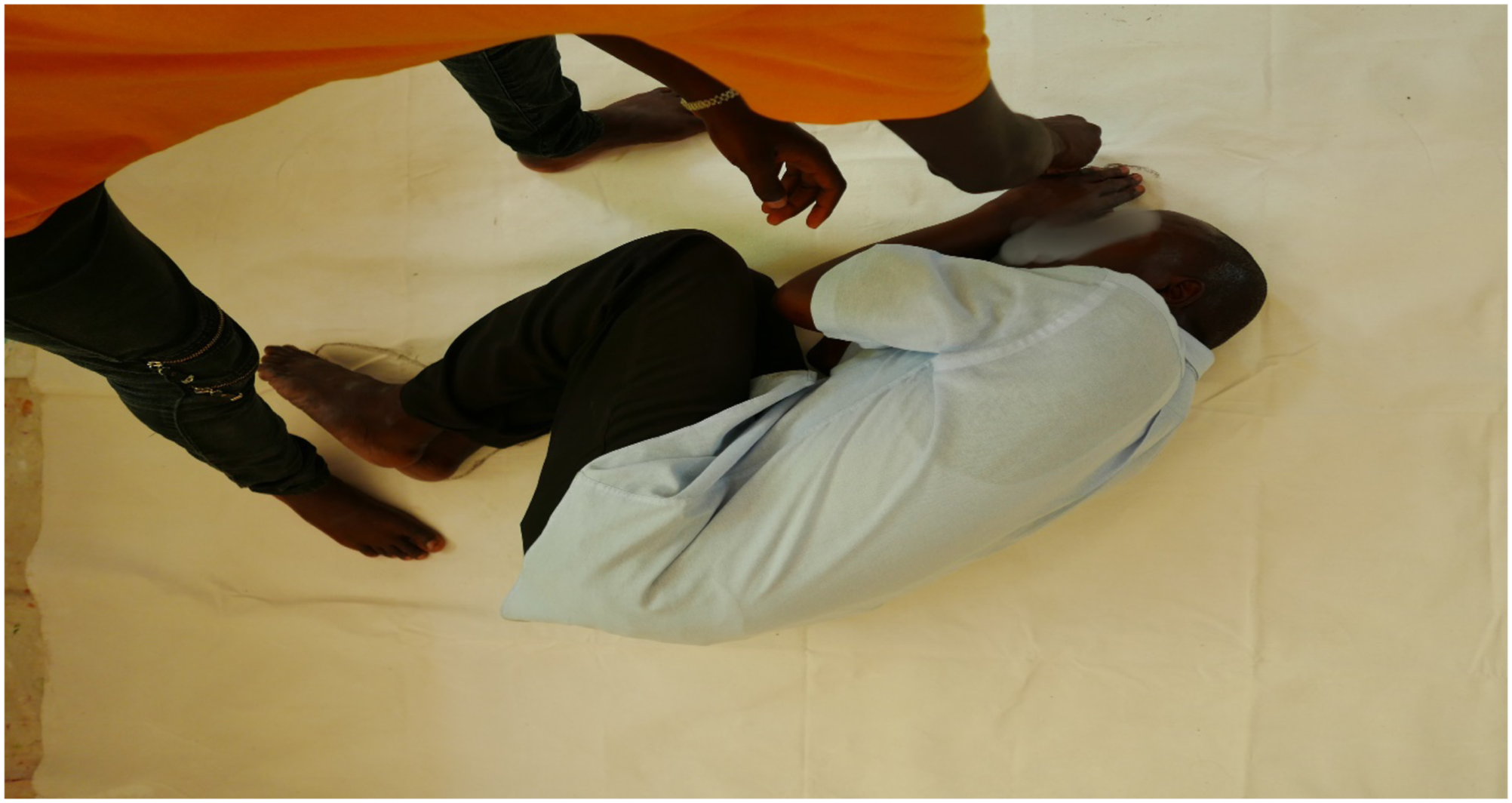
Throughout the workshops, the participants were able to engage in self-reflection and to examine complex identity issues and relationships with the self and others. This noticeably resulted in personal validation and reinforced self-worth. For instance, Ramadhan, in reflecting on his body mapping experience, argued that: During this week, I managed to explore what was in me which has been really haunting me for quite a while. It is a form of relief. It helps me to be in a position to stand on my own, not to depend on anybody.
Amy, a young Somali female participant, disclosed a similar experience: [The body mapping] taught me to find myself, to resist and to share with others. I had stuff inside me, and you showed me how to paint them on canvas. Taking them out on the canvas, felt like life changing. I feel so alive, like a new person.
This result is not surprising because, as Lys et al. (2018: 1194) have explained, body mapping is an asset-based approach which encourages participants to consider themselves in a positive light and to recognise the strengths and resources within themselves and their communities. This can, in turn, strengthen self-esteem and increase personal connectedness.
Many participants were initially hesitant about their artistic abilities, and this response has been noted in other studies in this area (e.g. McCorquodale and DeLuca, 2020), but, after taking part in the workshop, they gained confidence in their skills and thoroughly enjoyed the experience. As Walid, one of our participants, stated: You know, the environment which you are in changes you a lot. In the five days we have been here, I have felt very good. I feel sad now because it is ending. However, I have gained something. I have learned about violent extremism and that to resist you need to start with yourself. I have learned how to draw, to paint and to mix paints in different colours and it felt amazing (Walid, November 2019, Mombasa).
Body mapping encourages the participants to be co-researchers and creators. Because the data produced is very personal, participants must be involved in the decision-making about use of their artworks. Precisely because of its ability to unearth deeply held individual experiences and emotions, body mapping can be harmful if used without adequate ethical and safety considerations or training. Like Sweet and Ortiz Escalante (2015: 1833), who ‘used relational and visual situated ethics that value mutual respect, dignity and connectedness between participants and researchers’, we made sure that the participants understood and respected confidentiality issues, the impact of disclosure, and the importance of treating each other with dignity and respect. We provided participants with referral points as per the common guidance in this area. We used a participant-centred approach and managed ethics as a process that requires care and ongoing reflexive dialogue involving checking and rechecking consent at every stage of the research, including during the data collection, analysis, interpretation and dissemination processes. Instant messaging services and particularly WhatsApp were used to facilitate this continuous ethics process, and they also sustained friendship and lasting connections among the researchers and the participants.
The final stage of body mapping is knowledge translation. Visual imageries are constructed for an audience and their meanings are only completed through audiencing (Rose, 2001). The exhibition of artworks is central to body mapping as a visual method. Sharing the body maps with an audience enables public engagement with the issues which can contribute to social transformation (Mitchell, 2011; Mitchell et al., 2018). We were fortunate to have completed the body mapping workshops before the start of the COVID-19 pandemic, although it prevented us from holding large-scale, in-person exhibitions. To adapt our research to this new context, we created digital and outdoor exhibitions of the body maps in Kenya. These body map exhibitions had a positive impact on the self-esteem and confidence of the participants, who were able to showcase and discuss their art with the community and members of the public, including policymakers. Sharing the body maps with audiences also had a positive impact in terms of encouraging dialogue and raising awareness. We also produced a digital book, which included personal narratives and body maps that illustrated the participants’ everyday experiences and struggle with violence, and a series of short films. Through this multimodal knowledge translation strategy, we were able to interrogate violent extremism, emphasising communities’ daily struggle against violence and creating forms of engagement that promoted empathy and understanding of the experiences of the Muslim communities in Kenya.
Understanding violent extremism through body map storytelling
Although the use of visual methods is gaining popularity, there is a relative lack of research on how to rigorously analyse visual images (McCorquodale & DeLuca, 2020). Gillian Rose’s work on interpreting visual materials is a key point of reference in this area. For the analysis of the body maps, we used Rose’s (2001) critical visual methodology, which employs interpretive concepts of composition, semiology and discourse. Attention to composition using the ‘good eye’ approach involves looking at the body maps as they are in terms of their content, colour and spatial organisation. Body maps typically contain symbols, used as messages, which are deeply personal and steeped in hard-to-decode cultural nuances. Semiology studies the meaning of symbols and signs, while discourse involves looking at the web of intersectional meanings in which the images and messages are embedded. This is about understanding how issues are framed, interpreted and represented. To help guide this process, after the body maps were completed, the participants were interviewed at length about their artworks. We asked them to explain, interpret and analyse their artwork with specific questions on composition, semiology and discourse. This approach to analysing body mapping privileges the participants’ own meaning-making processes and resonates with the auteur theory approach, which is based on the idea that the most authentic way to analyse a visual image is through understanding what its creator intended it to represent (Mannay, 2010; Rose, 2001).
The last stage of our analysis involved researcher-focused reflections on the body maps and the textual interview data. Collings et al. (2021) offer a great insight into how to analyse qualitative and visual data in body mapping research, emphasising the need to do justice to visual data as meaning-making sites. They warn that analysing textual data using traditional qualitative techniques reinforces the hierarchy between words and images and reduces visual data to purely ornamental function, and they outline a variety of approaches for analysing textual and visual data from body mapping research (Collings et al., 2021). These include narrative inquiry, visual and textual content analysis, axial embodiment, and combined approaches. The aim of our research was to highlight people’s personal experiences and understanding of violent extremism, as well as their efforts to resist it. We also wanted to amplify marginalised communities’ voices to help change both policies on countering violent extremism and perceptions about the Muslims in Kenya. To capture the nuances of violent extremism and resistance using the lenses of gender and intersectionality, it was important to examine the entirety of the data from each participant as an individual case study. We also needed to look across personal narratives to understand the communal struggle and establish key recommendations. Hence, a narrative inquiry approach was best suited to our research because it enabled us to interpret highly personal stories faithfully, while also capturing narrative patterns across stories that helped to form the bigger picture.
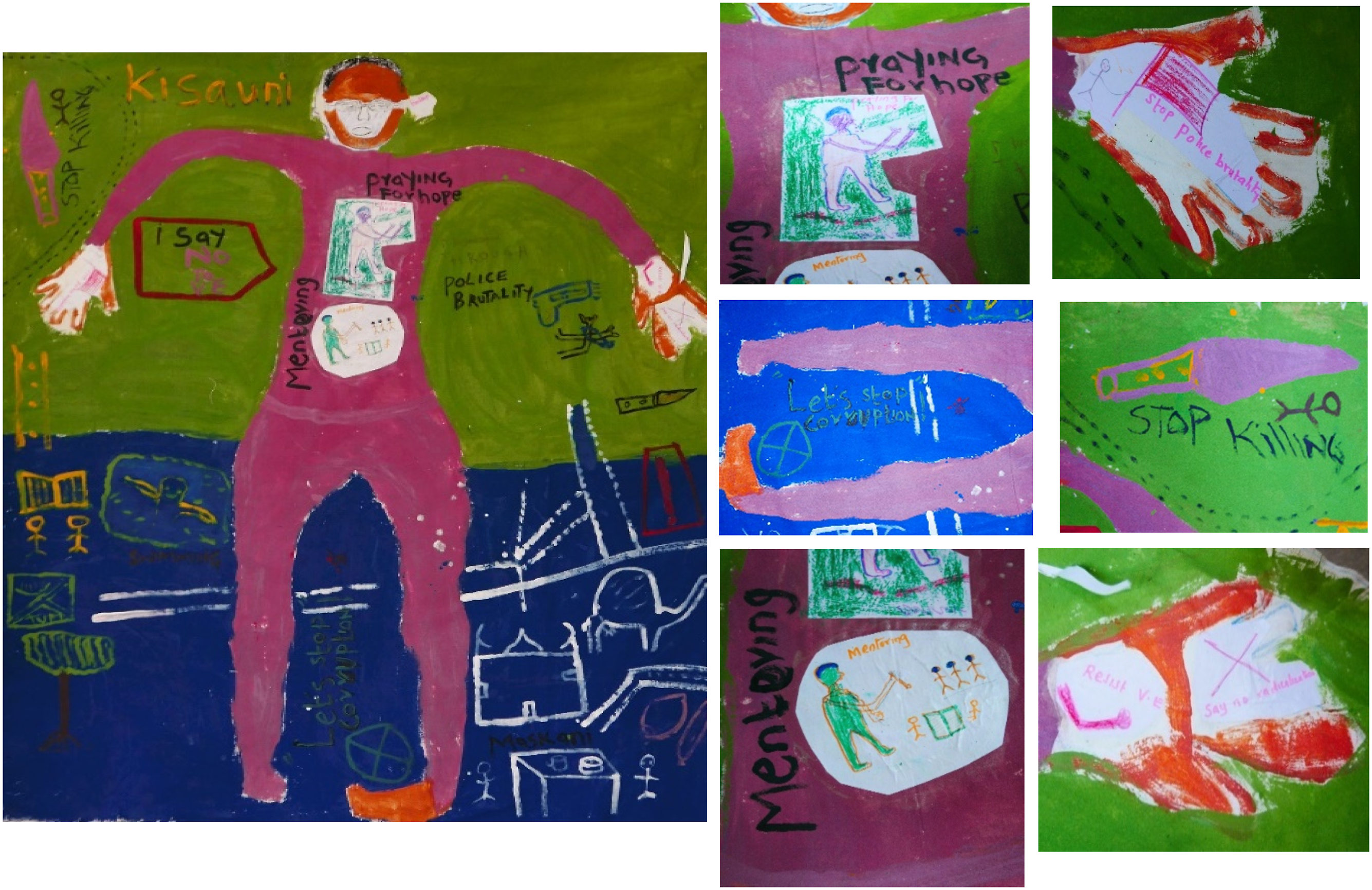
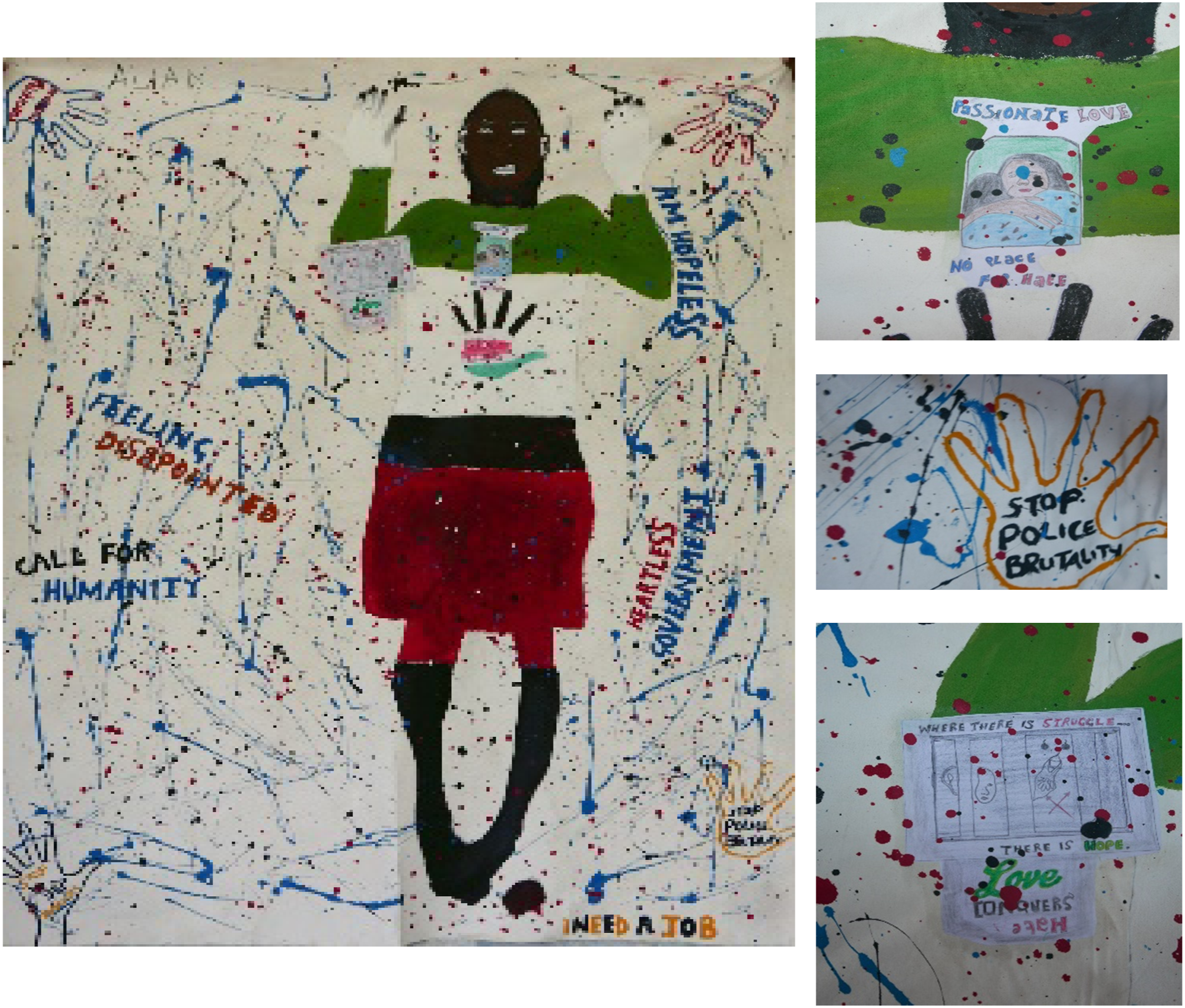
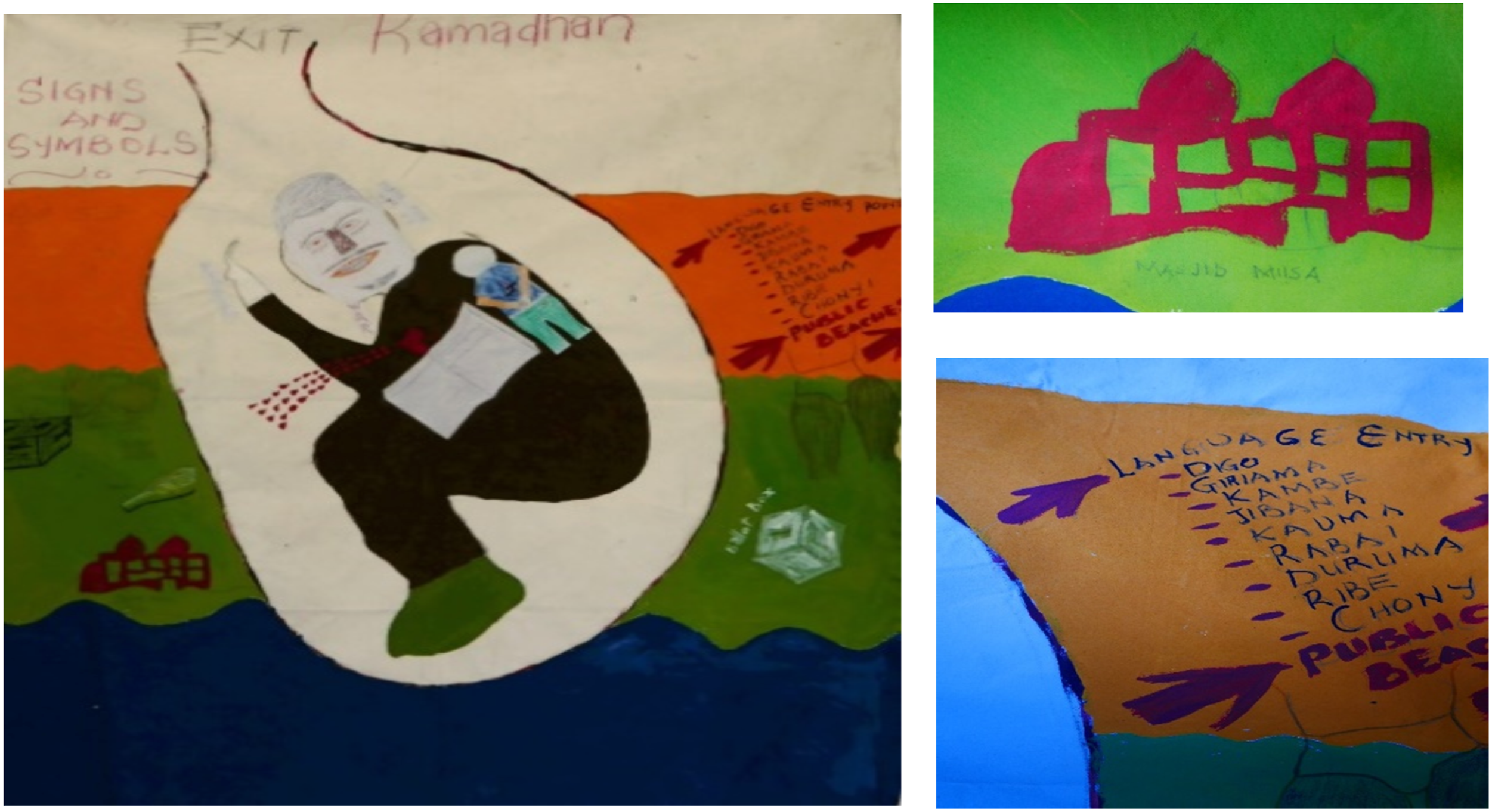
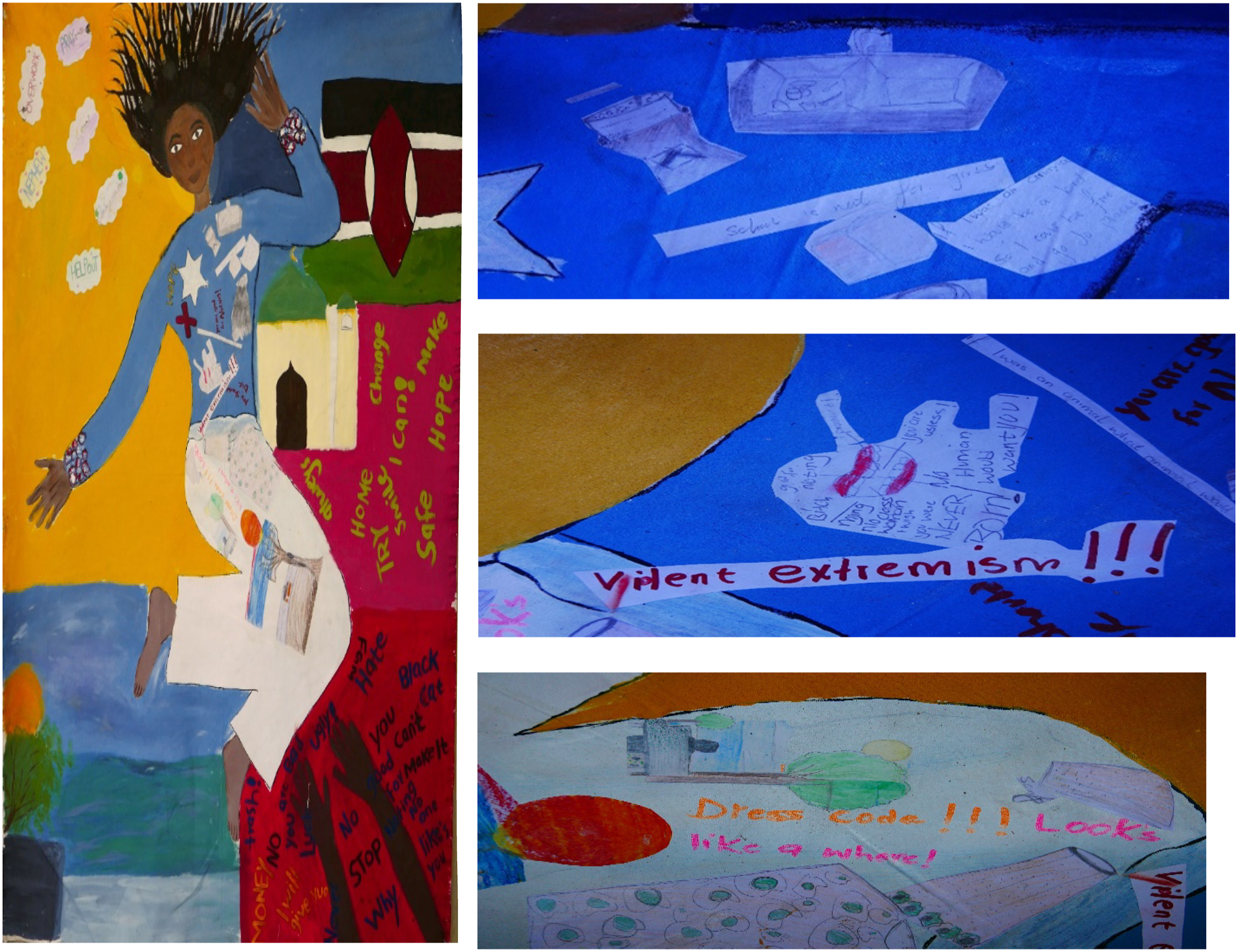
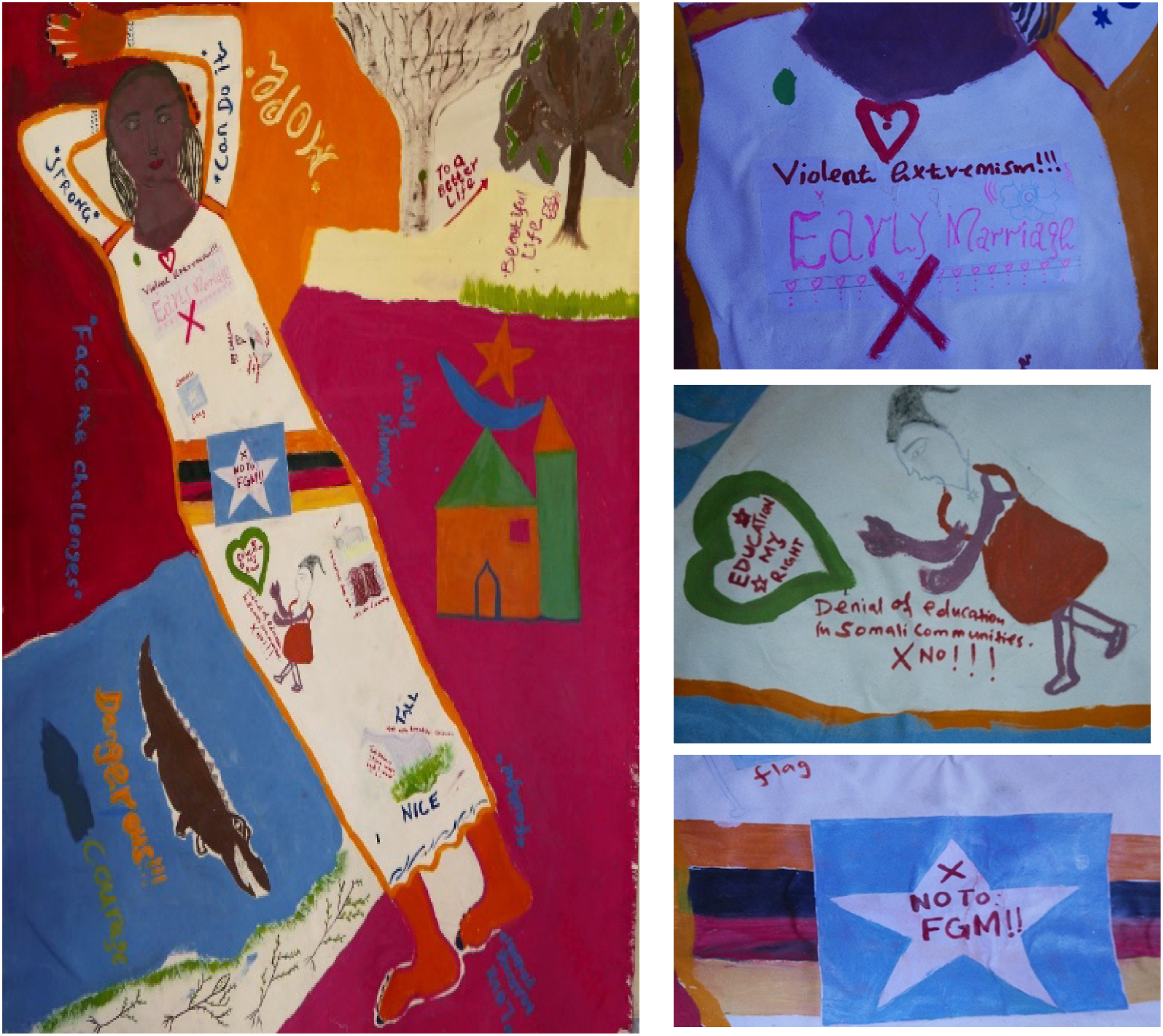
In the following section, which focuses on six of the body maps produced in this study (Figures 2-7), we provide insights into the process of analysing body maps data using critical visual methodology and a narrative inquiry approach (Collings et al., 2021). The six body maps and stories included here were selected because they were representative of the community’s struggle with violent extremism. Although, to facilitate the representation of key themes, personal stories have been somewhat truncated, the full narratives are available in our digital book of stories (Aroussi et al., 2020). Adila’s body map: ‘I Saved Him’. Nour’s body map: ‘No to violent extremism’. Alian’s body map: ‘Hopeless Kenyans’. Ramadhan’s body map: ‘You have to stand on your own – make your own destiny’. Amy’s body map – ‘It doesn’t matter what you go through – you can still make it with a smile”. Habiba’s body map – ‘Stand strong’.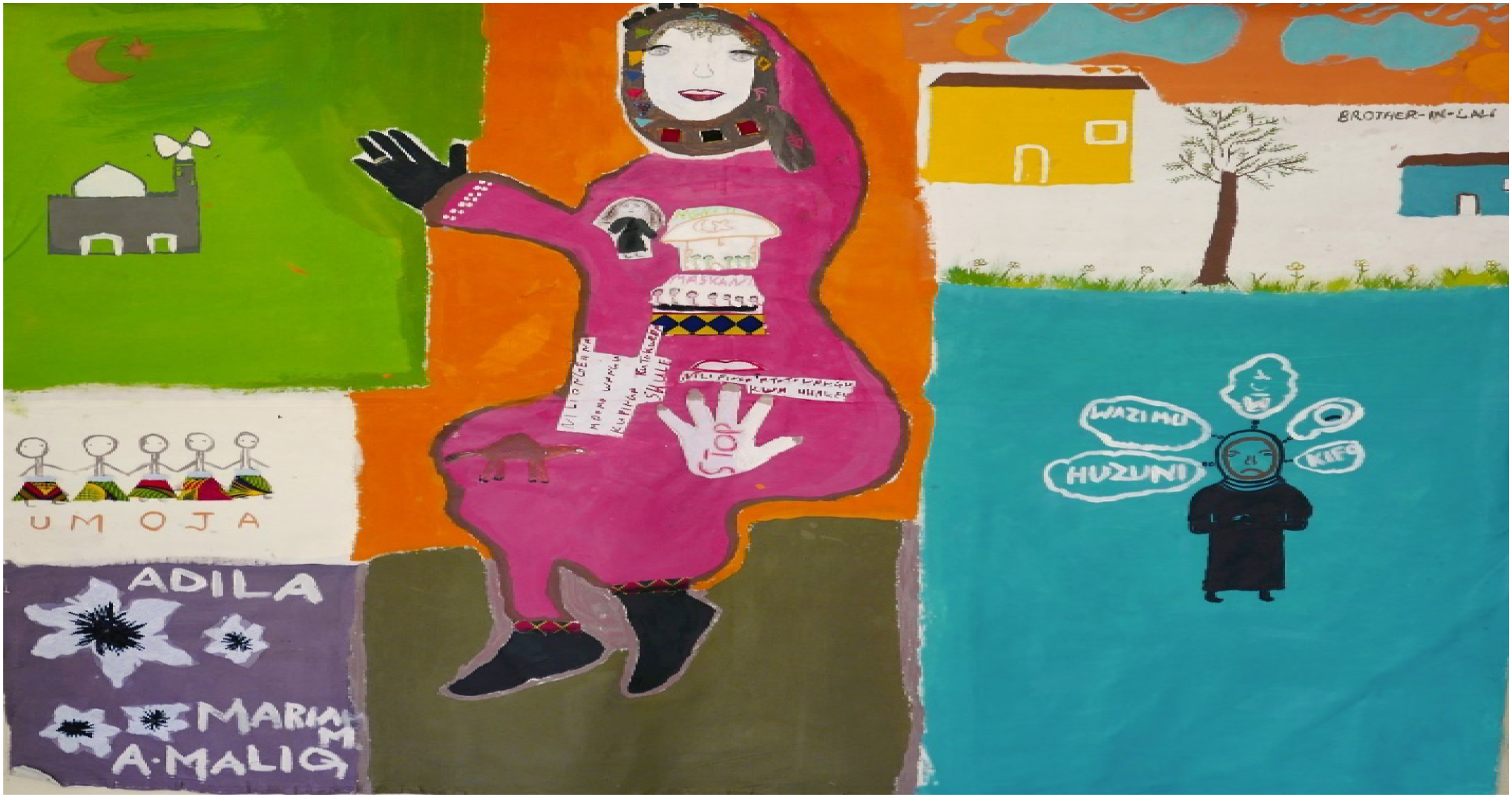
During the workshops, both male and female participants discussed their experiences of recruitment and radicalisation including by Al-Shabaab. Adila (Figure 2), a mother living in Mombasa whose son was recruited by Al-Shabaab, narrated her ordeal: My son used to frequent the mosque. One day those people came under the pretext that they wanted to spread da’wah (the message). They brainwashed him and he never wanted to continue with his studies. My son was offered a huge amount of money. I was suffering at that time and going through hardships. He told me, “Mother if I were to go to Somalia, I will bring you huge amounts of money”. He tried convincing me, but I said “No!” (Adila, November 2019, Mombasa).
Adila managed to save her son with the support of her brother-in-law. However, after almost falling victim to recruitment by Al-Shabaab, her son fell in with a bad crowd and started selling drugs at his local Maskani (a meeting place where people gather informally). To save him from this path, Adila made him travel to work in Saudi Arabia, but he is now back home, and she is concerned that he will again be vulnerable to recruitment.
These experiences remain painful for Adila. In her body map, she drew herself in a sleeping position to reveal how she is often kept awake at night with worries. Her body map included drawings of the Maskani and Miskiti (mosque) where her son was recruited, and they are depicted at the level of her heart to signify pain. She also painted a picture of herself with an angry face as a reference to her struggle to save her child. An open mouth denotes speaking up, while a raised hand symbolises an instruction to stop. Adila, who is from a mixed Arab and Agha Khan ethnic background, painted herself wearing an abaya because she wanted to reaffirm this part of her identity. She explained that “This is my culture. I am a Muslim and an Arab. On the Hindu side of my family, they wear sarwal (trousers) but I love buibui (hijab and abaya). I love my religion”.
The threat of Al-Shabaab was discussed as a major source of insecurity particularly for participants from regions with proximity to Somalia. Nour, a young Kenyan Somali man from Mandera, lived through various terrorist attacks (Figure 3). He expressed his feelings of insecurity and his fear of Al- Shabaab and their network of sympathisers, and he argued that what he experienced in Mandera affected him to the extent that ‘he does not feel at peace’. Nour used symbolism to refer to the insecurity caused by Al-Shabaab. Inside his body map, close to the heart, he included an image of a person praying for hope and peace but without explicitly mentioning Al-Shabaab. Nour also lamented police brutality and excessive security measures. He explained how the anti-terror police in Kenya target whole communities and particularly Kenyan Somalis with arbitrary detention and violence, particularly after each terror attack. He also highlighted the forced disappearances and extra-judicial killings of those suspected of being involved in violent extremism. Nour drew particular attention to the disproportionate curfews used by the police in his hometown: Mandera and Dujia are both under curfew. If you are found walking at 7p.m., you will be jailed. That imposition also violates the rights of the citizens. […] For if you have a mother in labour and you want to drive her to the hospital, until you inform the government. i.e. the Police, to permit you to take her, you cannot move. Last month, a relative passed away because of the delays. Suppose your mother or sister died due to delays, how would you feel? (Nour, November 2020, Mombasa).
Nour argued that the police, motivated by corruption, also typically harass and target Kenyan Somalis. He complained that he could not leave his house without an ID card because ‘if I don’t have my ID card with me, I’ll be put in chains. You have to walk with your ID all the time because we look Somali’. Nour argued that people in Mandera feel trapped between the insecurity caused by Al-Shabaab and that caused by the police. To symbolise this experience, Nour included a message on each of his hands: one says, ‘No to Radicalisation’ and ‘Resist Violent Extremism’, while the other reads ‘Stop Police Brutality’. He also included the message ‘I say no to Violent Extremism’ on the left side of the painting and the picture of a gun and two arms in handcuffs on the right side. Nour now lives in Kisauni, but even there he does not feel safe, not just because of police harassment but because of gang-related violence too. Nour revealed that one of his close friends was killed in a mugging attack, and he referred to this incident on his body map when he drew a knife and wrote ‘Stop the Killing Kisauni’.
But while men and women in the workshops discussed the threat of Al-Shabaab and their experiences of radicalisation and recruitment, they did not necessarily make these central in their body maps. For example, Alian (Figure 4), a young man from the Giriama community, divulged his experience of online grooming by a female Al-Shabaab recruiter who took advantage of his family’s financial difficulties to entice him to join her with the offer of money and the promise of future employment. However, he did not consider this experience important enough to include in his body map.
For Alian, the form of violent extremism that mattered most was ethnically motivated political violence. His experience of the 2007 post-election violence influenced his perception of what violent extremism is and took centre stage in his painting. Alian participated in the violence, and he now considers this to be the true danger of radicalisation. Inside his body map, close to his heart, Alian put a hand in the colours of the Kenyan flag symbolising a call to stop the killings, in a reference to his very personal experience of violence: It was during the 2007 post-election violence. It touched Mombasa very badly … I used to hear so many things. So, I felt bitter, when that day came, I felt I had to do something. Kikuyu must feel pain about what they are doing to us in Mombasa .… When that time passed, I sat down and asked myself what I wanted in life …. I came to realise that the politicians are trying to separate us.
While explaining his artwork, Alian argued that:
Violent extremism starts with a person. It starts with you, once you hate your fellow Kenyans. It means you have that thing that makes you think you are hated by the other person. So, once two hate each other, it’ll reach a point where you want to fight.
This experience was a wake-up call for him that changed his outlook on life. He is now an activist and a mentor for youth at risk is his community. Therefore, in his body map, he emphasised the power of love to conquer hate. His hands were painted raised in a position of praying for hope. But the challenges that Alian sees facing his community are those of marginalisation, police brutality and unemployment, which are pushing youth towards radicalisation, violence and crime.
In fact, the themes of marginalisation and joblessness were invoked by almost all male participants, who felt frustrated, hopeless and bitter. For instance, Ramadhan (Figure 5), who has postgraduate qualifications but is unemployed, described his situation as he explained his body map: I am the only son in a family of around 9. I have sisters. I’m their only security …. As far as my life is concerned in terms of employment, I’m totally not proud to be a Kenyan. I’m just hanging here waiting as life goes on [….] I felt happy when we first voted for the first multi-parties when the former President Mwai Kibaki took power. I really had hopes. But eventually all the hopes perished …. I’m a victim of violent extremism. For example, I’m here, not working, and my wife is the one who does everything. Sometimes I just wonder what can I do to get money that I can sustain my wife and my daughters? What is this life? Why should I not go to the bridge and just drown myself? Then you encourage yourself to keep hope alive (Ramadhan, November 2020, Mombasa).
Ramadhan’s body map composition uses the image of someone inside the womb, in a foetal position waiting to be born, to symbolise his status. The ballot box in his body map is a homage to his disappointment in the government and political elites. His account clearly encapsulates the conflict that many young men experience between norms of masculinity in a traditional patriarchal society, based on expectations that they will act as providers and protectors, and the harsh economic and social realities of joblessness and powerlessness that they face. This experience of victimisation, by an economic system that failed to deliver social change and government policies that marginalised coastal youth, was perceived as a form of violent extremism.
Body mapping as a method typically involves reflections on the self, through bodily experiences, feelings, and emotions, and reflections on the outside world, in terms of personal connections and spatial analysis. In our study, this exercise enabled participants to engage in deep reflections about identity, ethnicity, religion and race in Kenya. For Ramadhan, this prompted him to think about his identity as an African Muslim from the coast. Ramadhan disclosed his pain at seeing members of his Mijikenda community unemployed or in lower-rank jobs because of ethnic, economic and political marginalisation. He also discussed the discrimination that African Muslims experience in Kenya, including at the hands of fellow Muslims: There is still the mentality that Africans are just slaves of the Arabs. In 2017, I contested for the County Assembly’s seat in my home village. The other contestant was of Swahili origin with a Bajuni father. I remember, I was engaged in a Friday prayer at the mosque when the imam said, “We need to vote for Salim. He is one of us. He is a Muslim”. I just stood up and I said, “What? Am I not a Muslim because I am black?”
After that, Ramadhan’s attachment to his own Mijikenda community, indigenous to the coast, grew stronger. His experiences of rejection and marginalisation made him sympathetic to the Mombasa Republican Council group’s idea of cessation. On the body map he produced, this affirmation of tribal and coastal identity was reflected in the listing of all of the nine clans of the Mijikenda people.
Ramadhan’s body map also included references to police brutality, and particularly his experience of the killings at Masjid Musa. Ramadhan narrated his experience of this event: I was at Masjid Musa for Friday prayers when it was attacked by the police, and I had a friend whom we used to go to school with and play football together. The cops entered the Mosque. We were totally not in good position to see them entering the Mosque with their shoes on. So, we tried to do whatever we could, but my friend was shot in the head. We took him to the hospital. Unfortunately, he lost his life. Nowadays, if I see a policeman, I just feel too bad. I don’t feel safe… I still feel traumatized…. Nothing has been done to bring justice for the deceased (Ramadhan, November 2020, Mombasa).
Clearly, the incident at Masjid Musa had a significant impact on Ramadhan. The injustice caused by the killing of his friend and the deep offence and humiliation that he felt at the hands of the Kenyan police, who entered the mosque wearing shoes in what he considered a sacred space, were still very painful. On his body map, he documented this experience in the shape of a blood fountain emanating from the heart and a photo of Masjid Musa.
Female participants did not discuss police brutality, but instead documented the experiences they had had of police harassment, particularly when they were wearing abaya or Islamic veil. Amy (Figure 6), a Somali woman, recounted how, when she was travelling by bus from Wajir to Nairobi wearing an abaya, she was singled out for police checks, taken off the bus, and subjected to humiliation and violence after being slapped by a policeman. Amy was so traumatised by her experience that she included in her body map a picture of the bus travelling, under the hot sun, from Wajir to Nairobi. She maintained that ‘after this incident, I learnt that it’s not everywhere that you can go with hijab and abaya’ (Amy, November 2020, Mombasa).
A significant difference between male and female participants’ understanding of violent extremism emerged in relation to gender-based violence. In her body map, Amy highlighted how patriarchal norms and gender discrimination within her community impacted her, and she understood these experiences as forms of violent extremism. Amy complained that, ‘as women they see us like objects: you have to clean, cook and take care of the babies’. She wrote on her painting that ‘School is not for girls’, as she herself was denied education for cultural and financial reasons. Amy also documented the messages of abuse that she regularly receives as a woman. Amy decided to paint her hair uncovered and wild to express her desire for freedom: I call it Medusa hair style, I feel it’s free, I don’t really get to open my hair .... Through the painting I believed I had to show my hair. I got the chance to show my hair, to see it, to be free, the colour and everything. It’s a painting, but I feel like the air is going through my hair. I feel like I am connected to the painting, that’s how I feel. I just feel free just seeing my hair like that.
Amy’s desire for freedom was also made clear through the position of her body leaping into the air and the symbol of the bird with the message that read ‘If I was an animal, I want to be a bird so that I could be free and go to places’. Amy’s perspective on headscarves was not shared by all participants. For example, Adila viewed the scarf as a powerful symbol of culture and identity, but what was at stake for the women was not whether or not they should cover their hair but their right to choose without interference, prejudice, or harassment.
Female participants’ body maps included various references to violence against women, domestic abuse, forced marriages, denial of education and female genital mutilation. Habiba (Figure 7), a Somali girl from Tana River, tackled many of these issues in her body map. For example, messages reading ‘I am strong’ and ‘I can do it’ on her left and right arms acted as statements of empowerment. Another message, inside the body close to the heart, connected ‘Violent Extremism [and] Early Marriages’. Habiba explained in her interview that this reflected her own experience of early forced marriage. Although she managed to escape, the memory still haunts her. Habiba argued that, in her conservative Somali community, girls are typically denied education and forced into early marriages because of fear that they will engage in sexual relationships with men. She decried the community’s failure to value girls’ education, recalling an incident when her father responded to her getting an important prize from her school by saying, ‘I would rather if you got me a samosa (savoury pastry)’ (Habiba, November 2019, Mombasa). Habiba argued that these dismissive misogynistic practices constitute violent extremism, and she also included a reference to female genital mutilation (FGM) in her painting, writing ‘No to FGM’ inside the Somali flag to indicate that this a problem, particularly among Somali communities. Habiba, recounted her personal ordeal: I was around 10 years’ old. I was very young. I could not escape, they forced us. Until today, I recall that pain. It takes 3 to 4 weeks for you to heal. When I finished my first week, they told us you are ok you can try to walk and sit outside. That day, I was sitting on the ground playing with the stones and I started bleeding. After 4 hours, I lost a lot of blood. They changed my clothes, but I was still bleeding until I lost conscious[ness]. My parents and the rest of the family were so worried about what to do because they did it in secret and were so worried about what could happen to them if they took me to hospital. I was in a state of dying but Allah saved me (Habiba, November 2019, Mombasa).
Habiba’s experience was common among other participants from Somali communities. Their experience of pain and suffering led all of these young women to classify FGM as a form of violent extremism because of the extreme level of violence it involves; however, FGM was not highlighted as an issue in paintings by female participants from other ethnic groups.
Our research used body mapping to reveal that, while the Kenyan government and the international community have framed violent extremism as a problem created by Islamist extremism and radicalisation, at a local community level, violent extremism is understood to include police brutality, ethnically motivated violence, gang violence, marginalisation, discrimination and GBV. Constructions of violent extremism at the local level were shaped by lived experiences of insecurity and influenced by gender, ethnicity, social status, location and interactions with the State. The use of intersectional and gender perspectives during the body mapping and analysis processes enabled a deeper understanding of how violence is experienced by people from different identity groups, shaped by or combining gender identity, sexuality, ethnicity, religion, race, social class and also geographical location. In reflecting on violent extremism, it is important to understand not only what is counted but also what is left out (Aroussi, 2021). In Kenya, the framing of violent extremism as a problem caused by Al-Shabaab, ‘Islamic State’, and other Islamist groups has, without doubt, contributed to the construction of suspect communities along religious and ethnic lines (Badurdeen, 2018). Because of the centrality of the body, bodily experiences and feelings in body mapping, this research enabled everyday experiences of violence to take centre stage. Body mapping highlighted young Muslim men’s common experiences of discrimination, harassment and police brutality, which is intensified among those of Somali origin. It also exposed the racism and ethnic tensions experienced by Muslims in Kenya. Looking across the male participants’ body maps further revealed the impact of marginalisation and unemployment on men’s lives in coastal communities. Male participants saw access to decent employment as a route to fulfilling their designated gender roles in a patriarchal society that espouses hegemonic masculinity.
Meanwhile, female participants’ body maps, and particularly those produced by young women from Somali communities, demonstrated the endemic nature of gender-based discrimination and GBV. Yet, we should be careful when inferring connections between gender inequality, GBV and violent extremism. Since the adoption of the UN Plan of Action to Prevent Violent Extremism, there has been a significant uptake of the concept of ‘feminism-as-counter-terrorism’ (Nesiah, 2012), based on the idea that gender equality can be used as a security strategy to combat and prevent violent extremism (Johnston and True, 2019). In such work, misogyny, and particularly GBV, is considered as early warning mechanisms for violent extremism within communities (Johnston and True, 2019). Yet, scholars such as Huckerby (2020) have noted that policies on women’s rights introduced in the name of national security expose women to hostile State scrutiny and private backlash. Linking GBV with violent extremism can have severe consequences for women, including securitising services for victims of GBV, and making women more reluctant to report crimes to avoid entanglement with the State’s anti-terror and security apparatus.
Our research highlighted that violent extremism was understood by our participants to include police brutality, ethnically motivated violence, gang violence, marginalisation, discrimination and GBV. Yet, we should be careful not to call too hastily for any broadening of the understanding and application of the concept of violent extremism to all these forms of violence. Doing so would necessarily risk further exposure of already vulnerable communities to counterterrorism measures characterised by endemic human rights violations and securitisation. It is crucially important to recognise that these forms of violence – labelled by our research participants as violent extremism because they constituted their experience of violence in their everyday lives – not only go unaddressed but are exacerbated by the excessive security measures used in the efforts to counter the threat of Al-Shabaab. In the light of our research, we argue that that the concept of violent extremism must be interrogated and challenged using a bottom-up approach that can centre the experiences of violence and exclusion that women and men, from local communities, face every day.
Conclusion: Reflecting on body mapping as a research tool
In our study, we sought, via visual arts, to engage the human body as a research site to understand violent extremism in Kenya. This work is extremely important, since violent extremism as a concept remains without an agreed definition and because it continues to be used by States and powerful elites to frame certain actors or communities as security threats and target specific groups with violence (UN General Assembly, 2020). The use of body mapping in our research produced alternative perspectives on violent extremism that were intersectional, situated, and embodied. Body mapping elicited deeper reflections about personal experiences and made visible otherwise marginalised and obscured narratives (De Jager et al., 2016). The richness and quantity of the data yielded through this method was also remarkable. Violent extremism is an ambiguous, sensitive and difficult topic. The use of body mapping enabled our participants to engage with this subject in profound ways that other methods cannot elicit (Lys, et al., 2018).
The use of body mapping as a visual method allowed us to transcend educational and linguistic barriers between participants, and it empowered them to visualise their own experiences and ideas on an equal footing. Body mapping as a process also supported connections and relationship-building between participants (Dew et al., 2018). In a society divided by ethnicity, tribalism, class, religion and race, this is an extremely useful exercise that can help transcend and fight prejudice and contribute to building peaceful relationships.
Body mapping empowered our participants by giving them a platform to express their voices; make visible their knowledge, and concerns; and authenticate their lived experiences. In fact, as McCorquodale and DeLuca (2020) have noted, participation in the body mapping workshops can become an important route for the participants out of victimisation, passivity and silence.
Body mapping is also very effective as an advocacy tool (Gastaldo et al., 2012; Lys et al., 2018; Sweet and Ortiz Escalante, 2015). The body maps from our study created a platform to highlight and challenge practices such as FGM, GBV, discrimination, racism, police brutality, tribalism and marginalisation. This was visible both during the workshops and the knowledge translation phase where the body maps triggered participants and communities’ discussions about how different forms of violence affected their lives and helped them to identify solutions. The advocacy potential of the body maps was certainly strengthened by their visuality and ability to appeal to a diverse audience.
Without doubt, the use of body mapping to study violent extremism is extremely useful as a research approach and as an intervention aimed at delivering community-level policy change. Our experience suggests that body mapping is an effective and underutilised tool in social sciences research and studies on violence, including gender-based violence.
Footnotes
Acknowledgments
We would like to express thanks and gratitude to all the participants in our study for their commitment and contribution to the research. We also would like to recognise and convey our appreciation to the Technical University of Mombasa and particularly to the Vice Chancellor Prof. Layla Abubakar and to all the research assistants who supported the project during the planning, data collection and analysis and especially Mariam Zahur and Muslima Essak. Finally, we would like to thank the editors, the anonymous reviewers and Dr Emma-Louise Anderson (University of Leeds) for their constructive feedback and helpful comments on earlier drafts of this article.
Declaration of conflicting interests
The author(s) declared no potential conflicts of interest with respect to the research, authorship, and/or publication of this article.
Funding
The author(s) disclosed receipt of the following financial support for the research, authorship, and/or publication of this article: This work was supported by the British Academy (Tackling UK international Challenges award IC3\10).
