



Abstract
Researchers in many fields, especially those engaged in the study of gender-based violence, have shown an interest in using mixed designs as innovative methodological procedures to transform social realities. In this article, we introduce the “communicative evaluation of social impact” as a methodological tool to reveal the social impact achieved by a multiphase mixed methods design conducted sequentially on gender-based violence in Spanish universities. This tool shows the transformative power of mixed methods with a communicative orientation to generate new legislation, create proper conditions for reporting abuse, and establish new solidarity dynamics with and among the victims to promote violence-free universities.
Gender-based violence is a global public concern. The 2013 United Nations Women’s Conference focused on eliminating and preventing all forms of violence against women and girls as part of its efforts to agree on a strategy to overcome all types of discrimination and violence against women of different ages, contexts, and economic and social backgrounds (United Nations, 2013). Gender discrimination is a historical fact that must be addressed in all kinds of institutions across the globe, including universities (Reda & Hamdan, 2015). Violence is particularly prevalent in institutions where hierarchical power relations remain predominant (Connell, 1987). As an institution built on power relations, the academy is a prime environment for gender-based violence (Farley, 1978). In academia, violence varies widely by type, victim profile, and the context in which it occurs (Copenhaver & Grauerholz, 1991; Gross, Winslett, Roberts, & Gohm, 2006; Kalof, 1993; Kusakabe & Pearson, 2016). The United States was one of the first countries to analyze and address the issue of gender-based violence in universities (Kirkpatrick & Kanin, 1957), as evidenced by the Campus Security Act of 1990 and the Student Right-To-Know Act 1 (Renzetti & Edleson, 2008).
Although much research has been conducted on gender-based violence in universities, scant attention has been paid to the methodological dimension of this issue. Traditionally, studies on this topic have been conducted using either quantitative or qualitative methods. However, research based on a mixed methods design has grown in popularity over the last several years, along with an appreciation of the implications of this design for the field of gender-based violence (Campbell, Patterson, & Bybee, 2011; Dardis, Kelley, Edwards, & Gidycz, 2013; Jackson, 1999; Mahlstedt & Keeny, 1993; Testa, Livingston, & Vanzile-Tamsen, 2011). Many of these studies have to some extent helped change the institutional, political, and legal landscapes of gender-based violence in universities. However, the path for this change has not always been easy to find. In this article, we present the possibility of shedding light on the political and social implications of the first research conducted on gender-based violence in Spanish universities through the communicative evaluation of social impact (CESI).
The Communicative Evaluation of Social Impact
The CESI, which is framed under the communicative methodology, entails the assessment of actual social improvements related to research outcomes by collecting data and engaging in dialogue with manifold stakeholders. In the present study, CESI confirmed that the development of solidarity and promotion of awareness of overcoming gender-based violence were social and political implications of a multiphase mixed methods design conducted sequentially. The pioneer research conducted in Spain on university gender-based violence was accomplished through mixed methods with a communicative approach, which allowed for an intersubjective process that transformed the university code of silence into the public recognition of this serious issue embedded in the academy.
The CESI involves (1) a participatory process with diverse stakeholders to make the results of the research available to society, (2) a communicative process that commences dialogues with these stakeholders so that they can recreate the results in their own contexts, and (3) new fieldwork to collect evidence of the impacts achieved by this participatory and communicative process at both the individual level (i.e., changes in students’ or professors’ behavior) and the institutional level (i.e., changes in legislation or programs). Through the CESI, the social and political implications are revealed along the two phases of the study.
This article begins by explaining how studies of gender-based violence have used mixed methods designs through a description of pioneering research on gender-based violence in and beyond the university context. Following this explanation is a section dedicated to contextualizing the present study in the Spanish setting. Then, both the first and second phases of the research design are presented in detail. The next section identifies results and social transformations generated by this body of research in the Spanish university context. In particular, implications at the policy and practice levels are analyzed; for example, the CESI allowed the researchers to identify how the first phase of the project led to breaking the silence on this issue, raising awareness, and creating bonds of solidarity. Finally, the article concludes with a discussion of the transformative power of mixed methods with a communicative orientation for research on gender-based violence in universities and emphasizes the contributions of CESI as a new tool in mixed methods research.
Mixed Methods Research and Gender-Based Violence
Gender-based violence is recognized as a global problem and an everyday reality for many women. Based on a survey of 42,000 women from the 28 member states of the European Union regarding different aspects of violence experienced by them, the Agency for Fundamental Rights (FRA, 2014) concluded that since the age of 15 years, 1 in 10 women has experienced some form of gender-based violence and 1 in 20 women has been raped. One in five women has experienced physical or gender-based violence by a current or former partner. In addition to providing a quantitative description of the prevalence of gender-based violence, this broad study also shed light on the reasons for, consequences of, and psychological effects of violence in different circumstances, including childhood experiences, partner violence, and stalking. Although the percentage of women suffering violence is high, this phenomenon is largely unreported (FRA, 2014). For instance, according to the most extensive survey, only 14% of women reported the violence they had suffered at the hands of partners or nonpartners. In certain parts of the world, gender inequalities are more apparent than ever before. Most actions to combat this problem are focused on the mechanisms of prevention and response (Hadjar, Backes, & Gysin, 2015; Vladutiu, Martin, & Macy, 2011). Different forms of community involvement, such as the bystander intervention mechanism, are more effective compared with other sexual assault prevention programs (Banyard et al., 2005; Coker et al., 2016).
In this context, the mixed methods framework has yielded a better understanding of the complexity of the problem. As explained by Donna Mertens (2015), “wicked problems” require an approach that uses research not only to inform decisions regarding actions but also to develop strategies useful for studying social inequalities. In this line, Corradi and Stöckl (2016) consider institutional involvement in and state responsibility for combatting violence against women. After presenting a thorough analysis of the mechanisms and policies regarding the role of the state, social movements, and other agents involved in fighting against violence in 10 European countries, these authors conclude that although the state is a powerful mechanism, it only reacts under pressure from supranational bodies connected with social movements.
A relevant strand of research implements mixed methods by integrating quantitative and qualitative methodologies. Creswell (2009a) notes that mixed methods can be applied from a variety of perspectives and attributes different functionalities to the techniques employed. Studies of gender-based violence that use mixed methods share certain common features. For example, such studies generally begin with quantitative data collection techniques and then use qualitative data collection techniques—such as interviews, life stories, or discussion groups—to complement the quantitative data (Collins & Dressler, 2008; Dardis et al., 2013; Peterson & Muehlenhard, 2007; Quinlan & Quinlan, 2010; Testa et al., 2011). In this way, Testa et al. (2011) analyze the impact of a Sexual Assault Nurse Examiner program on the prosecution rates of adult sexual assault cases in a large Midwestern community in the United States. In that case, the researchers integrate quantitative and qualitative data collection techniques following a mixed methods design to explain certain quantitative results. For example, the researchers find that study participants do not always interpret survey questions in the same manner and thus qualitative data collection techniques are necessary to further explore these issues.
Murphy and O’Leary (1994) suggest that the objective scales used in quantitative studies often disregard subjective and contextual dimensions. For this reason, they contend that the benefits of mixed methods include the ability to combine qualitative methods designed to theorize on the basis of knowledge extracted from social contexts and subjective perspectives with traditional qualitative methods designed to evaluate responses according to deductive logic. Thus, mixed methods have advanced knowledge on gender-based violence in general and—as will be shown in the following section—in the university setting in particular.
Previous Research on Gender-Based Violence in Universities
Internationally, previous studies of gender-based violence in universities have employed both quantitative and qualitative techniques without explicitly acknowledging this methodological integration or synthesis of findings. In this regard, Choate (2003) attempts to explain participant reactions to rape prevention programs based on the Men Against vVolence model (Hong, 2000), which emphasizes the link between male socialization and sexual aggression. Choate explores the success of the Men Against Violence V program by conducting a pilot study in which an exploratory evaluation instrument was administered to 149 fraternity members at different universities. The instrument consisted of a “program evaluation” form that included questions corresponding to three components: first, asking participants to record thoughts in a subjective way; second, implementing a 5-point Likert-type scale questionnaire; and third, once again asking participants open-ended questions in a qualitative way. The findings enabled college counsellors to obtain participants’ thoughts about and reactions to the program. This manner of organizing their study made it possible to obtain important insights on how to improve the implementation of campus rape prevention programs for men in college. These studies thus draw on prominent scales (e.g., the Rape Myth Acceptance Scale) to understand a more general context (Coker et al., 2011; Cook-Craig et al., 2014; Moynihan, Banyard, Arnold, Eckstein, & Stapleton, 2011). The results indicate that people who receive bystander training are more likely to report such behavior, intervene in violent situations, and feel responsible for ending violence.
Quantitative research has generally been aimed at measuring the scope of gender-based violence in universities (Benson & Thomson, 1982). In these studies, quantitative data collection techniques primarily comprise surveys and questionnaires administered to students (Bryant & Spencer, 2003; Fisher, Daigle, & Cullen, 2010; Moynihan et al., 2011; Orchowski & Gidycz, 2012). The data are used to analyze incidence rates, types of violence, profiles of victims and aggressors, circumstances in which violence occurs, and the reactions of victims and those around them (Banyard et al., 2005; Belknap, Fisher, & Cullen, 1999; Fonow, Richardson, & Wemmerus, 1992; Kalof, Eby, Matheson, & Kroska, 2001). The outcomes of such research may lead to gender-based violence prevention programs that train students to become active bystanders (Coker et al., 2011; Moynihan et al., 2011).
Other researchers have highlighted the problem of sexual harassment tolerance (Bryant & Spencer, 2003; Reilly, Lott, Caldwell, & DeLuca, 1992), which has subsequently been addressed through legal regulations such as the Clery Act (Cantalupo, 2012) and in university policies (McMahon, 2008). Research on gender-based violence on U.S. campuses has proven crucial to recent approaches to end this problem. In 2014, President Obama established the Task Force to Protect Students from Sexual Assault (White House Task Force to Protect Students from Sexual Assault, 2014); one of its first objectives was to consult studies, especially those that could help overcome gender-based violence in universities. However, such studies have failed to clearly identify how mixed methods research efforts can change unaccommodating university climates (Mertens, 2015).
To obtain more comprehensive data regarding the causes of violence, especially among college students (Mahlstedt & Welsh, 2005), researchers have used in-depth interviews, focus groups, and essays or scripts on violent situations. These studies have greatly contributed to students’ perceptions of social environments in which gender-based violence occurs and have opened up new avenues to prevent such violence (Koelsch, Brown, & Boisen, 2012; Littleton, Tabernik, Canales, & Backstrom, 2009; Mahlstedt & Welsh, 2005). Armstrong, Hamilton, and Sweeney (2006) highlight individual, organizational, and interactional processes that increase the prevalence of gender-based violence. Through a documented revision of prevention programs (e.g., motivational interventions, dialectical behavior therapy, mindfulness, and bystander interventions), Shorey et al. (2012) advance methodological reflections on dating violence prevention programs for college students. According to these authors, one of the most important methodological considerations at the time of program implementation concerns the effects of the treatment of longitudinal data on a program’s efficacy. This type of research has also helped identify those interventions that are more effective at preventing violence at such institutions and the capacities maintained and reinforced on university campuses that directly impact interventions.
Our review of the literature on gender-based violence in universities framed under a mixed methods design leads to the conclusion that better integration can be sought.
As Testa et al. (2011) noted, mixed methods approaches to the study of gender-based violence involve the integration of quantitative and qualitative methodologies to create synergy, which in turn leads to a more in-depth understanding. Given the evidence of the transformative potential of mixed methods (Collins & Dressler, 2008; Mertens, 2007; Sorde & Mertens, 2014), these designs should be of great value to researchers who aim to better comprehend and analyze gender-based violence within universities. Mixed methods studies can illuminate additional ways to overcome this problem by shedding light on more effective mechanisms to prevent and respond to gender-based violence and sexual victimization in universities.
Previous Research on Gender-Based Violence in Spanish Universities
The consideration of gender-based violence in Spain as a public issue to be addressed is fairly recent. The Spanish parliament passed pioneering legislation in 1989 to establish domestic violence as a women’s rights issue. The first national plan, which included training, data collection, and restraining orders, was issued in 1998; only a couple of years later, the Spanish “Integral Law against Gender Violence” was approved (Roggeband, 2012).
The first attempt to tackle gender-based violence in universities occurred in 1995, when Professor Ramon Flecha of the University of Barcelona, then director of the Community of Researchers on Excellence for All (CREA 2 ), wrote to the university’s governing body about the need to address violence against women. Flecha contended that his strategy reflected the approach taken by top-ranked global universities and proposed the creation of a commission to oversee related work. Flecha never received an official reply to his request (Giner, 2011). According to a study by Roggeband (2012), the Spanish context for addressing gender-based violence was framed by strong feminist mobilization and left-wing governments. In the university context, faculty members joined the struggle in 1999, when SAPPHO, CREA’s women group, was created. Although everyone on campus discussed the issue of gender-based violence and claimed to have information about the perpetrators, no one dared to report them.
Several researchers have proposed projects related to gender-based violence in universities to funding bodies. Of the 6,955 approved RTD projects (funded by the Women’s Institute or the Ministry of Education and Culture) conducted between 1983 and 2005, not one focused on gender-based violence in universities. Only in 2005 did CREA’s SAPPHO obtain national funding to conduct the present research project—after proposing one in 2002—which was the first study to consider university gender-based violence in Spain and led to access to research regarding sexual harassment and to recognition of the issue.
The project was funded within a context of broader political awareness of the need to address gender-based violence. In 2004, Spain passed the first Organic Law Against Gender Violence in Europe. CREA researchers and policy makers discussed CREA’s work to prevent the socialization of gender-based violence, which created opportunities to address the problem in Spanish universities as well. In this context, the first step entailed the accumulation of statistical data on the scope and occurrence of gender-based violence at Spanish universities, which is precisely what our study was designed to do.
Background for Our Study
The present article is based on a study funded by the Spanish Institute for Women on gender-based violence in universities, which was the first to shed light on this previously unacknowledged reality in Spain (Valls, Puigvert, Melgar & Garcia-Yeste, 2016). This research effort is also dedicated to identifying successful programs developed at some of the most prestigious universities in the world and advocating for their implementation at Spanish institutions. This study represents a turning point in Spanish academia because for the first time in its history—and despite notable resistance—something is being done to address the issue of gender-based violence.
Breaking the silence on this issue was no easy task. Leading researchers were subjected to criticism and sexist remarks, most of which were delivered anonymously or disseminated through social networks. Rumors regarding the lead researchers’ sexual lives were spread to discredit their intellectual reputations. For instance, researchers were accused of using sexual relationships to further their academic careers. This campaign focused on discrediting not only those researchers who had long worked in this area but also those who had recently started supporting them. Such reactions are captured by our definition of second order of sexual harassment (Vidu, Valls, Puigvert, Melgar, & Joanpere, 2017), which is the use of physical and/or psychological violence against those who support victims of sexual harassment. This pattern was identified in previous research several decades ago (Dziech & Weiner, 1990). In Spain, these attacks within the university community were designed to hinder the academic careers of female researchers and professors who dared to break the silence. These efforts provided a clear warning to the entire university community of the consequences of joining the efforts to break the silence. The experience of one student who applied for a predoctoral fellowship to work on gender-based violence reflects these attitudes. Professors in the student’s department attempted to persuade her not to work with professors from CREA, telling her that it would cause problems. This information turned out to be accurate. Once the student decided to work with a CREA professor, several faculty members in the student’s department implemented every possible barrier to prevent her from receiving a fellowship and conducting the planned work (Giner, 2011).
Due to these personal attacks, implementing the current mixed methods research was not an easy journey. For instance, data collection efforts were hampered by resistance and negative feedback from institutions and individuals in the university community; some even declined to participate in the study. However, these difficulties were addressed through a very focused search for key informants and by reassuring participants of their anonymity. The qualitative component of our study helped capture this overarching context, wherein much opposition was encountered not only when conducting research on gender-based violence at institutions of higher education but also when developing regulations designed to prevent or address such violence. In the second phase of this mixed methods research process, a communicative evaluation of social impact was conducted to reveal all the transformations resulting from the first phase.
Purpose Statement
The mixed methods research presented herein was developed using communicative methodology. The European Commission has recognized communicative methodology for its ability to transform studied realities and thus to overcome specific social barriers (European Commission, 2011b). Communicative methodology has been applied in projects implemented under the Framework Programs and Horizon 2020 of the European Commission. 3 Of these initiatives, the INCLUD-ED project was selected by the European Commission (2011a) among the top 10 research projects as the Social Sciences and Humanities project with the greatest social impact. The methodology has demonstrated its transformative potential through these projects and in several different social contexts with diverse cultural features.
Under the communicative methodology framework, knowledge is constructed through interactions between science and society. This framework integrates objectivity and subjectivity by promoting an intersubjective and egalitarian dialogue between researchers and “researched agents” while simultaneously fostering reflection among those involved in the research process, which results in a dialogic creation of knowledge (J. Gómez, Latorre, Sánchez, & Flecha, 2006). Special emphasis is placed on conditions for dialogue throughout the entire research process, from research design to development, analysis, and result dissemination (A. Gómez, Siles, & Tejedor, 2012; Padrós, Garcia, de Mello, & Molina, 2011). The views of experts (or researchers) are not imposed on nonexperts (Beck, Giddens, & Lash, 1994). Debates are based on validity claims and not claims of power (Habermas, 1984), which is especially critical when analyzing a highly hierarchical context such as Spanish academe because it gives a voice to those who traditionally hold less power in the higher education environment (i.e., students, nontenured faculty, and staff). Thus, scientific knowledge of gender-based violence in universities was extracted from a literature review, whereas the results of surveys conducted at Spanish universities were introduced in the qualitative phase. Through this dialogue, both researchers and participants discussed how scientific evidence could be recreated in the specific context of Spanish universities. In turn, specific proposals for addressing gender-based violence in Spanish higher education were obtained to facilitate transformations in this context.
The communicative methodology distances itself from methodologies based on deficit theories, focusing instead on each individual’s capacity to evaluate and transform his or her own life (Flecha, 2014). Such transformation is not promoted solely by researchers or participants. Rather, transformation is possible because the subjects engaged in the communicative research process enter an intersubjective dialogue with researchers, thus prompting a series of debates that lead them not only to reach agreements and generate new knowledge but also to become agents in changing their own reality (Roca, Gómez, & Burgués, 2015).
Research Design
The study was framed under a multiphase mixed methods design conducted sequentially. First, we used an initial convergent design comprising a survey and semistructured interviews; then, a second qualitative phase was conducted to explain the main findings of the first phase and to evaluate the social impact of these results (Creswell, 2009b; Teddlie & Tashakkori, 2009). The first phase of the study (from 2005 to 2008) involved the combination of quantitative and qualitative data collection techniques using a questionnaire; the results of this process formed the basis for concrete guidelines for in-depth interviews and communicative daily life stories (CDLS). The second phase was qualitative and included the CESI, and CDLS were conducted to explain the findings of the first phase.
In Figure 1, we show the sequence of the research process.
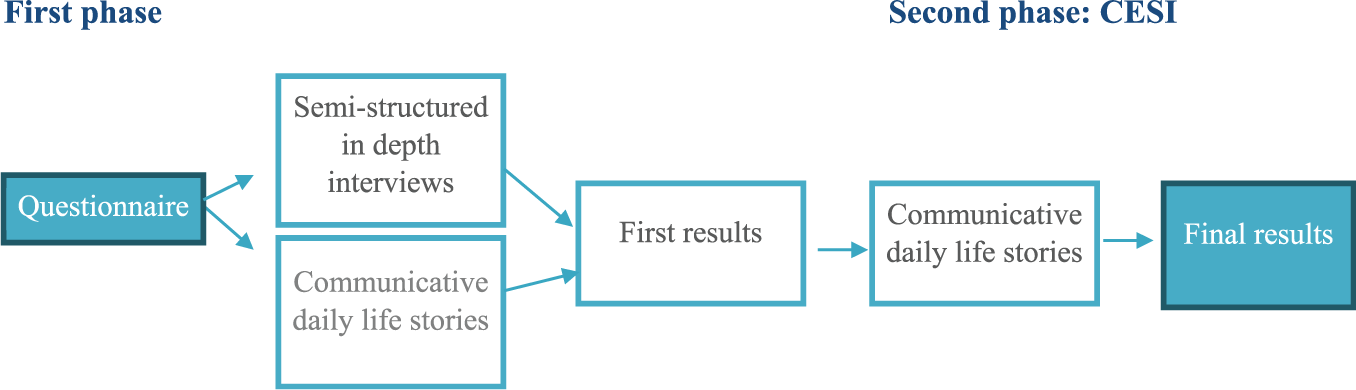
Research design: Sequential mixed methods.
During the first phase, data were collected to address the following two research questions: (1) What is the extent of gender-based violence in Spanish universities? (2) What measures taken in university contexts can help overcome gender-based violence? This part of the study was the convergent quantitative and qualitative phase, during which a survey was distributed to students and semistructured in-depth interviews and CDLS were conducted (A. Gómez, Racionero, & Sorde, 2010). The second phase involved a CESI, that is, a communicative assessment designed to identify the social impact of the research (Flecha, Soler-Gallart, & Sordé, 2015), particularly whether the situation of gender-based violence at universities had improved. During the second phase, data were collected by means of CDLS to address the following question: What is the social impact of the research on gender-based violence at Spanish universities?
First Phase (2006-2008): Convergent Design Using Quantitative and Qualitative Data Collection Techniques
Data Collection and Analysis
Survey
The main purpose of the survey was to provide an overview of the cases that we later recognized as gender-based violence within the university setting. The survey instrument was developed based on information extracted from our review of previous literature and in consideration of the Spanish university context (Fisher, Cullen, & Turner, 1999; Gross et al., 2006; Jaspard, Saurel-Cubizolles, & Équipe Enveff, 2003). The resulting instrument comprised 91 questions divided into 5 sections: (1) sociodemographic information, (2) recognition of gender-based violence, (3) cases of gender-based violence in the university context, (4) victim reactions, and (5) resources, including resources that are available and measures that should be taken to prevent and overcome gender-based violence in universities. All questions included in the four last sections of the questionnaire were closed-ended questions, each of which had between 2 and 14 different response options. The first section (sociodemographic information) included questions related to place of birth, place of residence, and age and did not have closed answer options. There were no open-ended questions in the other sections of the questionnaire.
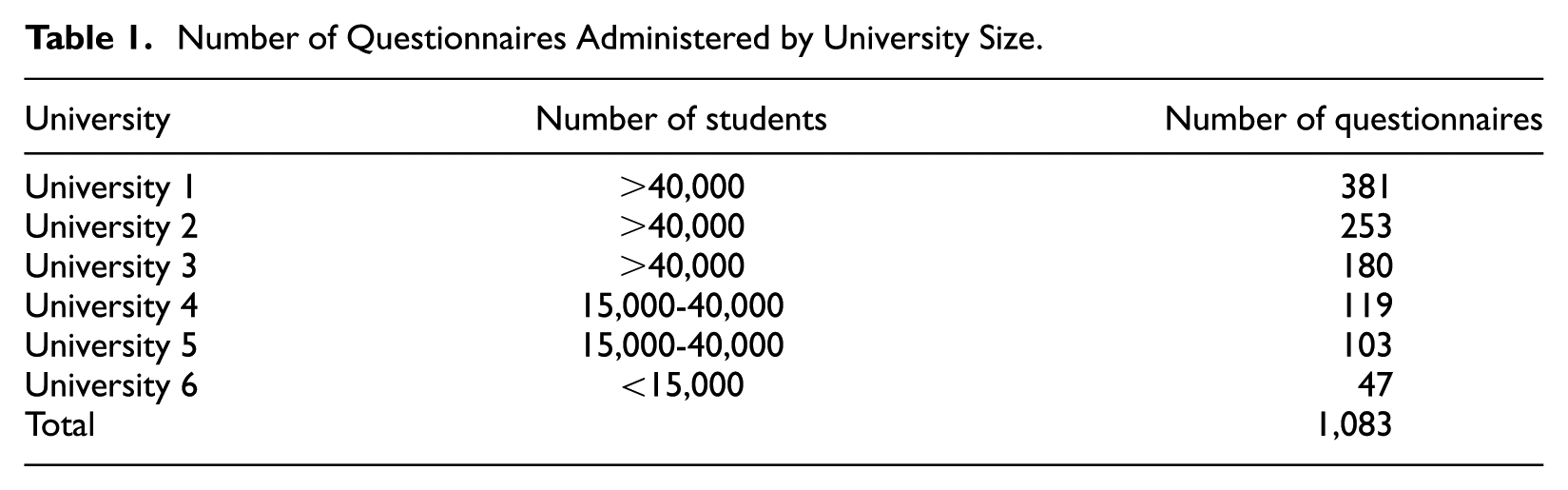
The questionnaire was distributed to students. A multistage sampling technique was employed to recruit participants (university students). Six Spanish universities in various geographic locations with diverse socioeconomic and cultural backgrounds and student body sizes were selected. Then, quotas were established to ensure a diversity of student participants by gender, knowledge area, and degree type. Specific survey dates, times, and locations were established so that students who wished to participate could complete the survey at a specified location. The survey was publicized in advance in classrooms and cafeterias and through administrative offices and student associations. The questionnaire was completed by 1,083 students, of which 67% were female and 33% were male. The mean age was 23 years, with a standard deviation of 4.7 years, a margin of error of ±2.97%, and a confidence interval of 95% (see Table 1).
Number of Questionnaires Administered by University Size.
Semistructured in-depth interviews and CDLS
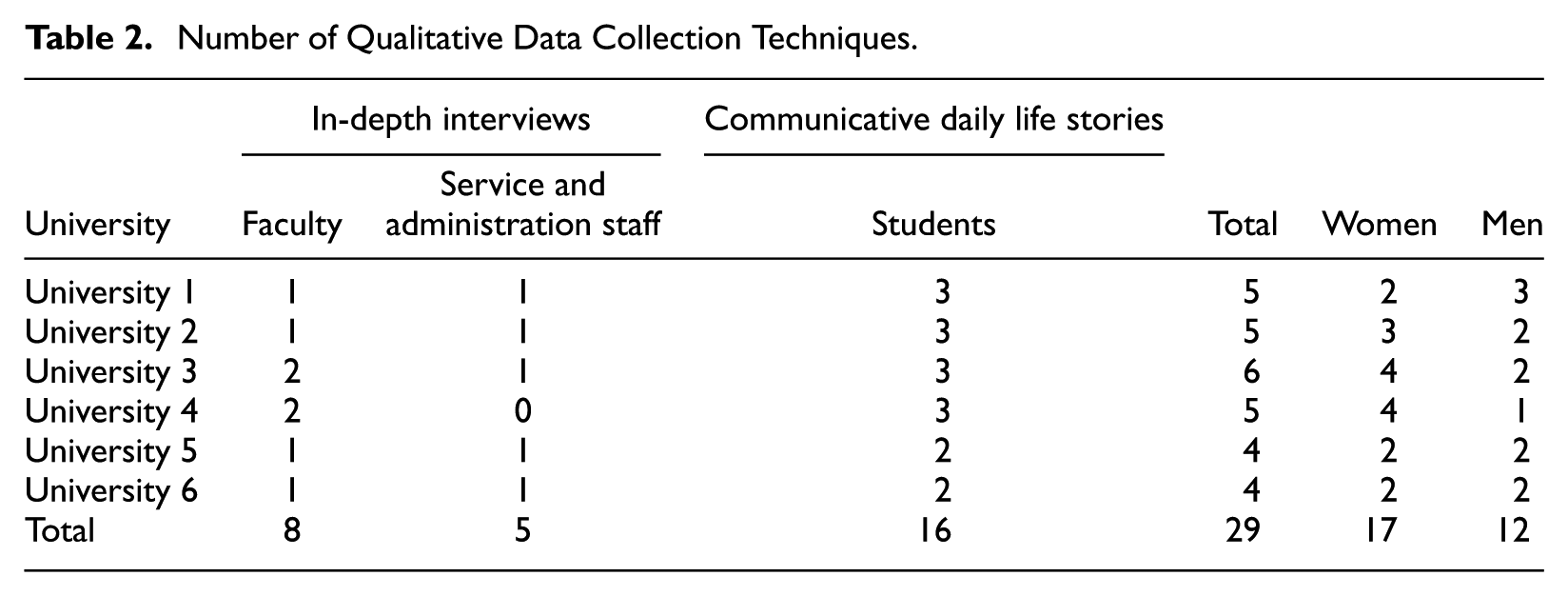
These techniques were applied among students, faculty, and administrative staff to acquire a more thorough understanding of the problem. From 2007 to 2008, 13 in-depth interviews were conducted with faculty and administrative staff, and 16 CDLS sessions were conducted with students. Seventeen participants were women, and 12 were men. In all cases, participants were affiliated with different disciplines (e.g., medicine, law, psychology, economics, education). The interviews were designed to collect the views of professionals employed at the institution and of those who represent the system, whereas the CDLS was intended to capture the views of students, who presented unique outlooks based on their life stages and personal experiences.
CDLS differs from traditional daily life stories because the former involves a dialogic process of inquiry between the researcher and the participant that seeks mutual understanding. CDLS should be conducted in the participant’s natural environment to avoid any distortion of communication. A dialogic interpretation is needed to project future participant expectations and to capture aspects of the present and of his or her immediate past, which provide an indication of how the subject lives, thinks and behaves in her or his daily life.
Semistructured, in-depth interviews and CDLS require a shared reflection on survey results, which contributes to a broader recognition of cases of gender-based violence. Consequently, more detailed information was obtained based on the interviewees’ knowledge and identification of gender-based violence cases and on the roles played by the institution. The information gathered focused on institutional responses, the effects of these responses on victims, and whether the participants knew what to do when they realized that they (or someone close to them) was a victim. Shared reflections about the types of measures participants would like to see implemented in Spanish universities were also included (see Table 2).
Number of Qualitative Data Collection Techniques.
Communicative data analysis
All the survey responses were introduced and analyzed with a statistical software package. Descriptive univariate analysis was conducted. First, we ran a frequency analysis with the main data; then, we introduced a crosstab analysis based primarily on two main qualitative variables. The purpose of this crosstab analysis was to analyze the degree to which university students identify with gender-based violence situations. The two variables were assigned to students who answered “no” to a question regarding “whether they knew of any cases of violence against women that had occurred at their university or between individuals of the university community” (first variable) and to those who indicated that they were aware of or had experienced one or several types of gender-based violence (second variable; i.e., physical aggression; psychological violence; sexual aggression; pressure to have sexual or emotional relationships; nonconsensual kissing or touching; discomfort with or fear of remarks, looks, e-mails, phone calls, persecution, or surveillance; rumors about one’s sex life; sexist remarks about the intellectual capacities of women or their role in society; or remarks with hateful or humiliating sexual connotations).
Regarding the qualitative data used, the analysis followed the double axis of transformative and exclusionary dimensions (horizontal axis) and the 12 subcategories that emerged from the literature review and questionnaire (vertical axis; Pulido, Elboj, Campdepadrós, & Cabré, 2014). For the horizontal axis, the transformative dimension refers to elements that can illuminate means to transform cases of social injustice or to analyze inequality. In this study, the transformative dimension refers to participants’ perceptions and assessments of situations of gender-based violence that were resolved through university involvement, thereby creating an environment of solidarity with the victim. Information regarding the transformative dimension refers to narratives of gender-based violence within university contexts in which participants took a stand and defended the victim.
The exclusionary dimension refers to elements that reflect barriers to overcoming social inequalities. In this case, in particular, the exclusionary dimension refers to views held by the university community about scenarios in which gender-based violence was considered “naturalized” and in which “taking a stand” was very unlikely to occur. Elements classified as exclusionary include resistance by university authorities to establish protocols against gender-based violence, which makes it difficult to report instances of violence. For the vertical axis, the 12 subcategories were grouped under two main categories: (1) measures implemented at prestigious international universities and (2) knowledge of instances of gender-based violence and of the role played by the university.
Main Results of the First Phase
This first phase yielded groundbreaking results regarding the Spanish university context. Three main findings must be highlighted: the lack of identification and recognition of gender-based violence; institutional resistance to addressing this issue; and the absence of measures to respond to this reality, especially measures to create spaces of support for and solidarity with the victims. The quantitative results showed a clear lack of identification and recognition of gender-based violence in the university context. Whereas approximately 62% of students had experienced gender-based violence within a university setting or knew someone who had experienced it, only 13% of the participants actually identified these situations as gender-based violence.
Conclusions from the qualitative fieldwork emphasize university efforts to hide or discredit cases of gender-based violence. According to the interviewees, this attitude is attributable to the hierarchical structure of Spanish universities that renders those in positions of power immune to punishment. In conjunction with the findings of previous studies, 85% of the students and qualitative fieldwork participants stressed the need to create spaces of support, assistance, and solidarity within universities to affirm victims and overcome gender-based violence. Participants also indicated that introducing the results of this study to public debate was critical to provoke a conversation on a topic that had never before been discussed publicly.
Second Qualitative Phase (2008-2014): Communicative Evaluation of Social Impact
Data Collection and Analysis
For the CESI, observations about the impact of our initial results were collected over several years through dialogue with different stakeholders. Dialogue about the first-phase results took place in diverse settings in the university community, at national and international conferences and through numerous classroom presentations; we also sent our results to various regional ombudsmen, scientific publishers, and documentary filmmakers who publicized our findings. Introducing our research to major civil society organizations that aim to eradicate gender-based violence was also crucial. We followed up on our initial contacts with meetings, exchanges, and working groups to introduce changes at higher education institutions and to develop new legislation.
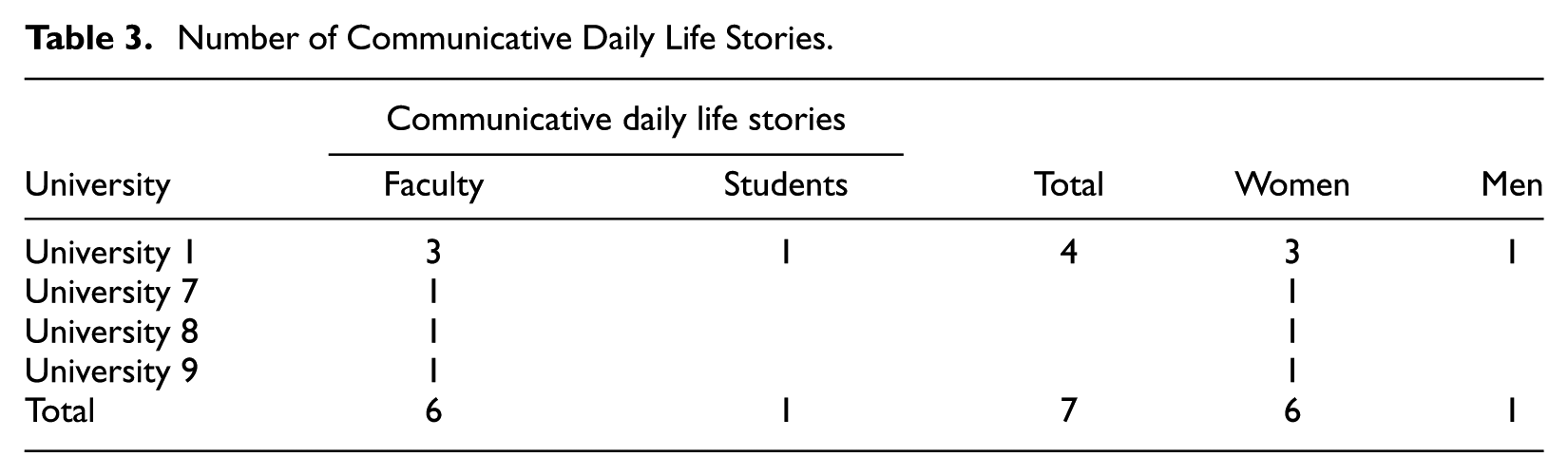
In 2014, this participatory process was contrasted with and complemented by seven CDLS conducted with faculty and students to assess the implications of the research conducted during the first phase. The key informants were selected based on the following two criteria: (1) in-depth knowledge of our study and how it had developed and (2) explicit recognition of gender-based violence in their own institutions and a commitment to addressing the problem (i.e., a history of support for the implementation of specific measures to prevent and address gender-based violence in universities). Thus, all participants had previously engaged in dialogue and reflection on the initial results and on ways to make universities safer. For example, one student interviewee had sought help from the research team and committed faculty members to address situations in which she felt unsafe. Seven participants were selected (six faculty members and one student; one male and six females).
The CDLS discussions focused on the results obtained in the first phase—particularly the repercussions of having engaged diverse social agents in the research—as part of the communicative orientation. Data collection during the second phase centered on how changes had made universities safer in terms of gender-based violence (see Table 3).
Number of Communicative Daily Life Stories.
Communicative data analysis
For our analysis of the CDLS, transcripts were transcribed and coded. On the horizontal axis, our analysis was based on the distinction between the transformative and exclusionary dimensions. Thus, we distinguished between elements that have supported gender-based violence prevention in Spanish universities and those that have hindered this process. On the vertical axis, we differentiated between systems and agency, and several subcategories were assigned to each. This categorization allowed us to identify changes made at the system level (i.e., legal systems, universities, schools, the public domain) and the agency level (i.e., attitudes toward the issue, relations to victims, networks).
These seven CDLS were contrasted with the results from the first phase using the same communicative data analysis. The social impact achieved by the first phase was taken into account in the CDLS analysis in the second phase. The interpretation of the final results was ultimately established by engaging with representatives from the different participant groups.
Results
The mixed methods approach has been shown to be fruitful not only in the analysis of gender-based violence in society as a whole but also in the study of this problem within the university context. Since this research project was started, the communicative orientation of this methodological approach has enabled major changes regarding gender-based violence in Spanish universities. In this regard, the CESI was instrumental in promoting awareness of the issue and developing solidarity with the victims in Spanish universities and in achieving relevant institutional changes for the prevention of and response to gender-based violence. Accordingly, this research has had implications at certain universities, especially due to students’ involvement in the cause. For the first time in Spanish history, students are mobilized around this cause; they are asking for effective measures to combat sexual harassment in university, demanding institutional support for victims, challenging university protection of perpetrators, and seeking to ensure that victims are not forced to enroll in classes taught by their alleged harassers. Additionally, the first peer-to-peer network providing support and solidarity to victims was established. Due to the emergence of this issue and the increased solidarity among certain faculty and peers, the first formal reports of gender-based violence were filed at Spanish universities. Without a mixed methods approach and communicative orientation to engage participants throughout the research process, the final repercussions would not have been possible.
The research described in this article also has several implications for Spain at large. The communicative process that inspired a dialogue about the present research results among members of the Spanish Parliament influenced the Law for the Effective Equality between Women and Men, 4 which passed in 2007, by compelling all universities to have “policies for the resolution of sexual harassment in public administrations.” As a result of this process, Spanish legislation acknowledged for the first time that gender-based violence occurs in higher education and made it mandatory for Spanish universities to deploy resources to address reports of gender-based violence. Thus, “equality units” have been established in all universities to develop protocols to address gender-based violence and protect the victims. Several years later, through a new dialogue process, a regional Parliament decided to address the issue by discussing how it could ensure that universities are actually implementing this legislation.
The results are also positive for the field of gender-based violence: silence is being broken, more cases are being discussed, and activism is on the rise, as observed in the implementation of training courses for the entire university community. In addition, the first conference on victims of second-order sexual harassment was organized, featuring scholars who had played key roles in this struggle in the United States; these scholars spoke about the necessity of mobilizing people from below and the importance of peer-to-peer support. In the following sections, we present a more thorough explanation of how the CESI contributed to the revelation of the manifold social impact achieved by the first phase of our study.
Breaking the Silence and Overcoming the Fear of Reporting
Data collection efforts—and the CDLS sessions in particular—served as the first means of discussing gender-based violence in the university setting. Participants’ narratives showed that the communicative methodology created conditions for dialogue that encouraged students who participated in the fieldwork to report abuse. The methodology also succeeded in creating a safe environment that avoided the traditional hierarchy between researchers and participants, making it possible to engage in an extended conversation on an issue that was previously considered “taboo” within the academic realm and to attach a name to a problem that had always existed.
Moreover, these dialogue spaces involved not only research participants but also other relevant stakeholders who were involved in subsequent dissemination activities. Thus, recommendations for a “zero violence” policy were reiterated during public events and in private conversations with various stakeholders, including politicians.
A concrete example relates to a seminar held in November 2009 at the Women’s Institute, a governmental body that focuses on women’s issues. Researchers presented data regarding victims’ reactions to cases of violence, noting that 91% of victims decided not to report incidents but that a high percentage (66%) of them described the incidents to someone else. Among those who reported incidents, the vast majority (69%) felt uncertain about receiving support from the university (Valls et al., 2016). For many university administrators attending this seminar, these data revealed student perceptions of institutional “passivity” regarding cases of gender-based violence. Therefore, these events were of great importance because they prompted university representatives to take a public stand and commit to recognizing the existence of gender-based violence in their universities. Consequently, individuals from several universities across Spain contacted the research team to obtain more information, especially about what can be done in universities to address this issue. Additionally, many professors have requested more information or have even invited the researchers to their respective universities to explain the results of the study in order to justify attention to this issue at their institutions. Meetings, workshops, and even follow-up conferences were organized to widely disseminate the results and to raise awareness at their regional universities. It is important that people who truly wanted to improve their universities through these mechanisms turned to us for guidance. As Gabriela, a faculty member who attended the conference, explains, The result of this pioneering research is that for the first time, when the issue comes up, many people have the sense that “I’m not alone. It’s not only happening at my university, etc.” I think it’s an unstoppable process initiated by this study being made public. It had an impact on the national press and has been widely discussed. This, in turn, has encouraged people to start bringing cases forward, and institutions have recognized the consequences and the problems. You can agree or not, but you know that legally you can be in big trouble. (Gabriela, 2014)
Thus, another important impact was the inclusion in the 2007 Law for the Effective Equality between Women and Men 5 of the obligation of all universities to establish equality units to oversee all cases of gender-based violence occurring at Spanish universities. At the time of this writing, equality units at 37 Spanish public universities have implemented protocols to combat sexual harassment. The first such protocol was approved in 2011, showing that the process of changing hierarchical university structures may be slow but change is possible and currently underway.
Overall, the data show that the first phase of the project has influenced the perception and treatment of gender-based violence by Spanish authorities and universities, indicating that the project successfully transformed gender-based violence at universities into a public issue.
Solidarity With and Among Victims
The atmosphere described above implies a turning point for university campuses. Harassers can no longer rely on silence from victims and on complicity from the university community. The situations described herein have created opportunities to file formal reports of gender-based violence. According to our analysis, the implicit law of silence has changed and sexual harassment is no longer normalized, which has promoted more solidarity with victims. As one student participant noted, “Now it is more difficult to harass” (Lucía, 2014).
Cristina, one of the interviewees, is a faculty member; during the first phase of our research, she was a postdoctoral researcher at a prestigious European social sciences institution. She explained how this research helped her when an instance of sexual harassment occurred at her dormitory. Specifically, Cristina’s response was to support the victim: When the incident occurred, I spoke with members of the research team. ( . . . ) I took care of her [the victim], and I advised her because I knew, based on your research, what campaigns were saying about gender-based violence, such as “Tell someone.” Someone must take care of the victim and protect her. So, I accompanied her to her room after all dinners and parties. (Cristina, 2014)
In her narrative, Cristina also explained that incidents of sexual harassment within the academic context are not isolated but rather occur much more frequently than commonly believed. This led her to respond and to assume that her struggle against gender-based violence was not limited to that one concrete case. Cristina realized that she needed to do something more and decided to bring the results of the investigation to the entire university campus by launching a victim solidarity campaign. Thus, Cristina’s case illustrates how she became both a protector of a victim and an agent of social transformation at her university.
Similarly, in late 2013, the Solidarity Network of Victims of Gender Violence in Universities
6
was created to provide dialogue, reflection, and support. This network was founded and has been promoted primarily by students and certain faculty members (including researchers who participated in this study) as a response to institutional passivity toward gender-based violence. This platform aims to support victims of gender-based violence in universities and to raise awareness of the problem by organizing public events and direct action. The network has been included in the “good practices” database of the Spanish Observatory of Gender Violence.
7
Lucia, one of the founding members of the network, explained how the platform has become a support mechanism: Although victims have experienced significant pressure from the university to solve this issue without making a fuss ( . . . ), they now come together and get support from certain faculty members and other students. This is really working. ( . . . ) Victims have come to speak with us. . . . We have explained to them what we have done and how we have confronted the issue. ( . . . ) For the victims, it has been very motivating to find support. We see that victims are not ugly girls or sad; on the contrary, they are very brave girls, capable of doing many things. (Lucía, 2014)
Establishing this first support network in Spain illustrates the agency of those who have participated in these dialogue spaces to transform their environment and bring attention to the struggle against gender-based violence in Spanish universities. Lucia highlights victims’ decisions to unite against passive institutional responses. These environments have empowered victims to take responsibility and speak up.
In sum, the CESI results show that using mixed methods with a communicative orientation and disseminating the initial results has raised awareness of this issue among individuals in the university community and beyond and has strengthened their agency. Creating safe spaces where gender-based violence can be discussed was crucial to allow members of the university community to reflect on their own experiences and thereby identify violent situations they may have experienced. Furthermore, conversations regarding preventative measures implemented at prominent universities have prompted action against gender-based violence within the university community. Hence, this pioneering research has proven essential for encouraging individuals to denounce gender-based violence, break the silence and organize at the regional and national levels.
Ethical Issues
The fact that gender-based violence is a highly sensitive issue—that most often cannot be discussed openly—was taken into account. Full confidentiality was guaranteed to the participants. Moreover, participants’ preferences were respected (e.g., conducting fieldwork in a setting more familiar to the participant or meeting off campus). Another crucial element involved structuring questions in the third person, asking whether a participant or someone he or she knew had experienced gender-based violence. A participant was not required to identify himself or herself as a victim if he or she did not want to do so. Consequently, victims who feared the consequences of telling their stories could explain what happened without identifying as a victim. During both quantitative and qualitative data collection, all participants were provided with contact information (telephone number and email) in case they had further questions or wanted to discuss anything related to gender-based violence at Spanish universities. Providing contact information for follow-up discussions was necessary for two reasons. First, because certain participants began to identify, throughout the research process, violent situations of which they had previously been unaware. Second, no mechanisms for addressing this issue existed in Spanish universities during the first phase of the research; therefore, the study was their first contact with the topic.
Discussion
The CESI includes a methodological design that allows researchers to gather evidence of the social impact of the research results, as well as evidence regarding the methodological aspects of the study that made this impact possible. Through CDLS and the other dialogic spaces created during the process, narratives from diverse stakeholders in the university context provided proof of concrete social impacts at both personal and institutional levels.
The present study had implications for the universities involved. The opportunity to dialogue with researchers about supposed cases of gender violence in safe spaces and with guaranteed confidentiality increased awareness and reporting. In addition, knowledge about the results of the study has led people in academia to raise awareness of the issue and to increase solidarity with the victims of sexual harassment, facilitating that others dare to take a stand and to step forward to support victims. Therefore, the dissemination of the results through academic, social, and political forums has been crucial for creating an environment within the university in which remaining silent in the face of this issue is beginning to be viewed as conspiratorial to harassment. As one scholar and activist in the field of gender-based violence in U.S. universities has stated, “If you are not part of the solution, you are part of the problem.”
There are also important implications for Spain, not only for the universities involved but also for the Spanish university system as a whole. The CESI revealed how the communicative approach to a mixed methods study on gender-based violence was crucial to sharing both quantitative and qualitative results regarding the occurrence of this problem with key stakeholders in policy making, who in turn changed the legislation. Since 2007, Spanish universities are required to have equality units and protocols for the prevention of and response to sexual harassment. Whereas there was once a code of silence about this problem—including among staff members with academic responsibility who knew about cases and did nothing about them—this study has definitively broken the silence in Spain. For instance, the governmental agency for science and technology disseminated the results of the study and asked the researchers about its consequences and implications; as a result, there has been a significant impact in the general media that reaches Spanish citizens and society as a whole. All these effects are part of the CESI process, and as a result, there is a general consensus today that gender violence is a problem that must be addressed in Spanish universities.
This study and its methodology has implications for the field of research on gender-based violence. First, this study contributes groundbreaking data about the Spanish landscape—both quantitative and qualitative—to the international literature. It also contributes to the state of the art on mechanisms and processes that are effective (or not) for overcoming this problem beyond the university context. The CESI helps gather evidence about changes and transformations achieved as a consequence of research results and processes and therefore opens up a new line of study on gender-based violence, not only on the identification of the problem but also on how to effectively address it.
Finally, the present study contributes to the development of mixed methods research. The results of CESI presented in this article show how the communicative orientation of this research helped overcome resistance while transforming personal and institutional conditions. We have shown that mixed methods research effectively creates new settings, conditions, and environments to support violence-free universities. Therefore, we present the theoretical rationale underlying the Communicative Evaluation of Social Impact as a methodological approach that helps gather evidence about both the social impact of research and the procedure and methodology that make this impact possible. Research projects often end with the publication of results in academic forums and thus researchers rarely know how society has benefited from their results. However, we have shown not only that the CESI allows the accumulation of data on the social impact of research but also that the mixed methods design and communicative approach can facilitate this impact. Mixed methods researchers can therefore reveal the social impact of their research by conducting CESI.
Through this process, we have provided evidence that change within universities is possible, so that they can become the type of institutions where we—without any doubt—want our daughters and granddaughters to study: safe spaces free of any type of gender-based violence.
Footnotes
Declaration of Conflicting Interests
The author(s) declared no potential conflicts of interest with respect to the research, authorship, and/or publication of this article.
Funding
The author(s) received no financial support for the research, authorship, and/or publication of this article.