



Abstract
Summary
An emerging field of research seeks to understand the experiences of non-offending adults who experience sexual attraction towards children. Research indicates that this largely hidden population can experience significant mental ill health and suicidal ideation, yet are reluctant to seek professional mental health support. Furthermore, mental ill health has been identified as a factor that can increase the likelihood of offending. This study, undertaken by a social work practitioner researcher, aimed to assist in understanding suicidality factors within this population, and to identify how statutory mental health services could be developed for this client group, thus contributing to child protection and suicide prevention agendas. A qualitative analysis was undertaken of data gathered from an online forum used by adults who have sexual attraction towards children, and are committed to non-offending. The data related to forum members’ experiences of suicidality, and key themes were identified through thematic analysis.
Findings
The study found that a pattern of suicidal ideation commonly appears to manifest and identified risk and protective factors that can influence suicidality. The benefits of peer support and the strengths and limitations of professional support were also identified.
Applications
The findings from this study contribute to an improved understanding of this client group for mental health practitioners. The findings also lay the foundation for further investigations, to inform the development of mental health services to facilitate improved outcomes for this client group, and for child protection.
Introduction
Research indicates that there is a population of adults who suffer disproportionately with mental ill health and suicidal ideation, who are reluctant to seek help from mainstream mental health services and to disclose their difficulties. This is the population of non-offending adults who are sexually attracted to children.
The legal age of consent for sexual activity changes over time and place, with English law in 1275 initially prohibiting sexual intercourse with those aged under 12, which has been amended over time to now being age 16 (Waites, 2005). Across Europe the age of consent varies between countries, from age 12 to 17, and non-European countries range between age 12 and 21, indicating that there remains international inconsistency (Graupner, 2000). These definitional differences contribute to the difficulties in understanding the international epidemiology of child sexual abuse, although comparative studies have confirmed it to be an international problem (Finkelhor, 1994). Indeed, the World Health Organization advise that 1 in 5 women and 1 in 13 men report having been sexually abused as a child aged 0–17 (WHO, 2020).
Societal awareness of child sexual abuse has increased over recent decades, with increased media reporting, high profile criminal cases, and increasingly visible campaigns highlighting the risks that children face (McCartan, 2010). This increased societal attention has resulted in calls for action and increased safeguards. Indeed, there have been targeted prevention programmes internationally, to raise awareness among children and families about unacceptable behaviors and how to report them (NSPCC, 2022; Prevent Child Abuse America, 2022), and increased measures to support the prevention of recidivism among those who have committed child sexual offences (Federal Bureau of Prisons, 2022; Ministry of Justice, 2017). Yet there remains a lack of preventative measures targeted towards those who may feel sexual attraction towards children, but who have not acted on this attraction.
The true prevalence of child sexual attraction within the adult population is unknown, as large-scale studies are limited by sampling difficulties, and the impact of social desirability factors (Lievesley & Harper, 2021). However, based on surveys undertaken in various countries, current estimates are that between 1 and 5% of the general adult male population experience some form of sexual attraction toward minors (Dombert et al., 2016; Lievesley & Harper, 2021; Seto, 2018). There is currently limited understanding around the needs and experiences of members of this population with current knowledge regarding child sexual attraction largely informed through research with those who have committed offences and are within the criminal justice system (Cantor & McPhail, 2016). However, this provides an unrepresentative sample, as contrary to the societal perception, there is gathering evidence that child sexual attraction and child sexual offending can be two distinct entities, with many adults who have sexual attraction to children maintaining offence-free lives (Dombert et al., 2016; Joyal & Carpentier, 2021).
Many adults who experience such attraction are neither within the criminal justice system, nor medically diagnosed with pedophilia (Seto, 2018). In medical terms, pedophilia is a paraphilic disorder (a persistent and intense pattern of atypical sexual arousal), specifically a chronophilia (an age-related sexual attraction). The diagnostic requirements for pedophilia are detailed in both the World Health Organization's (2019) International Statistical Classification of Diseases and Related Health Problems (11th ed.; ICD-11) and the American Psychiatric Association's (2013) Diagnostic and Statistical Manual of Mental Disorders (5th ed.; DSM-5). Both specify the criteria that a person has a pattern of thoughts or urges toward prepubescent children, and has acted on the thoughts or is experiencing significant distress due to them. Therefore, medical diagnosis does not require sexual contact to have occurred.
However, within society, pedophilia is often considered synonymous with child sexual abuse, with the two terms often being used interchangeably, bearing equally negative and dangerous connotations (Jahnke, 2018). Seto (2019) suggests that pedophilia is a motivating factor towards offending, but that this alone will not dictate offending without additional facilitating factors, which overcome inhibitions to offend. Cohen et al. (2018) and Jahnke et al. (2022) also identify differences in the prevalence of certain traits and experiences, between adults with child sexual attraction who do, and do not, refrain from child sexual offending, including neurodevelopmental differences, mental health experiences, personality traits and childhood trauma, which further indicates that there is not an inevitable transition from attraction to action. It therefore seems that developing a deeper understanding around the protective factors that reduce the risk of a person acting on child sexual attraction could be paramount for child protection initiatives.
One factor that has been identified as increasing the risk of offending, is mental ill health (Cantor & McPhail, 2016; Cohen et al., 2018; Seto, 2019). This is concerning given the prevalence of mental ill health experienced within this population. Indeed, surveys indicate that one in three people living with child sexual attraction experience chronic suicidal ideation (Cohen et al., 2018; Stevens & Wood, 2019). Few studies have been undertaken to explore this suicidality, but those that have investigated this phenomenon found an increased suicidality risk for those who were younger, less educated, had a psychiatric history, had experienced past child sexual abuse, and felt internalized stigma (Cohen et al., 2020; Elchuk et al., 2022). Despite the prevalence of mental ill health, studies have found that members of this population are reluctant to access professional support, due to the perceived lack of understanding and stigmatizing attitudes of professionals, and the risk of being reported to authorities despite having committed no offence (Levenson & Grady, 2018; Walker, 2021). Indeed, the preferred support option is often peer support (Walker, 2021). This can result in mental health remaining untreated, thus potentially increasing the cycle of deteriorating mental health, increasing suicidality, and increasing risk to children.
Additionally, Jahnke et al. (2015a) identify that mental health professionals are indeed often ill-equipped to deal with disclosures of child sexual attraction. Levenson et al. (2020) concur that there are gaps in knowledge and understanding amongst professionals, and a need for increased awareness among social workers and mental health professionals. Indeed, negative reactions, or those which encourage thought suppression or concealment, can be further damaging to the person's mental health (Cantor & McPhail, 2016; Elchuk et al., 2022; Lievesley et al., 2020; Seto, 2019; Stevens & Wood, 2019; Walker, 2021). It is therefore imperative for mental health services to understand the lived experiences of this population, to be receptive and responsive when they access services, and to provide appropriate support that will reduce the risk of suicide, the risk of child abuse, and will improve outcomes for this client group. An improved understanding amongst professionals could shift the focus of intervention onto preventative community support rather than forensic interventions following the commission of an offence, and would aid in both child protection and suicide prevention, which remain consistently serious global public health issues (WHO, 2006, 2021).
This study is intended to further understand the experiences of suicidality among members of this population, by examining online peer discussions between adults with sexual attraction to children, who are committed to non-offending. The purpose is to gain insight into how community mental health services can become more accessible and effective in reducing risk and improving outcomes for this client group. The study is intended as a preliminary pilot study, to form the basis of further research.
Regarding terminology, the term “pedophile” can hold negative connotations due to its commonly held alignment with child sexual offending. The term “Minor Attracted Person” (MAP) has emerged within the field, often considered less stigmatizing and more humanistic (Walker & Panfil, 2017). Some with this attraction acknowledge their pedophilia and recognize themselves as “virtuous pedophiles”, able to lead positive and offence free lives. For the purpose of this research, as data has been collected from the website “virped.org,” which is an abbreviation of 'virtuous pedophiles', the terms pedophile and pedophilia will be used throughout the article, with the acknowledgement that this includes adults who are committed to non-offending, those with or without a clinical diagnosis, and those who have a sexual interest in minors, including both pubescent and prepubescent children.
Methodology
A University ethics panel granted ethical approval for this study on 25th April 2022. Within the ethical requirements for the study, the anonymity of participants was guaranteed.
The study involved analysis of data collected from online peer discussions between adults on the “virped.org” website, who are sexually attracted to children and do not want to act on their attraction. Virped is a globally accessed, peer-led, online organization, which provides support, advice and guidance to adults who have a sexual attraction toward children. The website has an online discussion forum for those aged 18 or over. The ethos of the organization is that any sexual contact with children is wrong and that adults living with this attraction can and must learn to manage it safely, although forum membership is permitted for those who have offended in the past but are now committed to leading offence-free lives.
For the purpose of the study, the virped website moderators provided consent for researcher access to the online discussion forum, to enable data to be collected from posts relating to suicidality. This digital research strategy is considered valuable in the current technological era, and allows existing data to be used, which has been shared between members without any researcher influence (Bell & Waters, 2014). Accessing this naturally occurring online discourse enables insight into specialist and hard to reach communities, and avoids the provision of socially desirable responses, which are a limitation of self-report studies (Jones et al., 2021; Robson, 2011). Marres (2012) also comments that the tools and analytics available on online platforms are advantageous for social research, as they can facilitate the identification and analysis of relevant data from user-generated content. Such analytics proved effective in refining data within this study.
At the commencement of data collection, the forum had 7,522 members, and 300,672 posts had been written under 25,664 different topic headings. In order to refine the data to that which was relevant, the “Advanced Search” function was utilized, which enabled key terms to be located from within the forum discussions. A search was conducted for posts which contained any of the terms “suicid*,” “die*” and “kill*,” with the asterisk indicating that different letters could be used to end the word, thus broadening the search for relevant terms. The search was conducted in all forums and subforums, to ensure that no relevant data was omitted. From this, 5,982 results were obtained. To further refine the data, the results were arranged in descending order of time, enabling identification of the posts containing the search terms that had been written between 01/01/2021 to 31/12/2021. This yielded 939 results. Restricting the data to posts made in 2021 enabled the collection of recent data in a static format. Furthermore, as membership of the forum has grown annually since 2012, this timeframe optimized variation in the sample more effectively than previous years when there were fewer members, as the increased number and variety of members provided increased size and variety in the sample for data to be collected from.
The 939 results were reviewed and data from 524 posts was collected. This further refinement was influenced by a number of factors. Some of the 939 results were duplicates, containing multiple search terms within one post, and therefore yielding multiple results. Others were unrelated to suicidal ideation, with the search terms being used in different contexts. Also, to avoid bias and misrepresentation of findings, the frequent contributors who conveyed the same message on multiple threads were used only once. This data collection process resulted in the 524 posts being collected from 128 different discussion threads, with up to 251 different contributors (251 different usernames assigned to the posts). These results were considered sufficient for the purpose of the pilot study. Due to the nature of the study, the participants’ background details such as age, ethnicity, employment, and family situation, were not available and were therefore not included in the analysis.
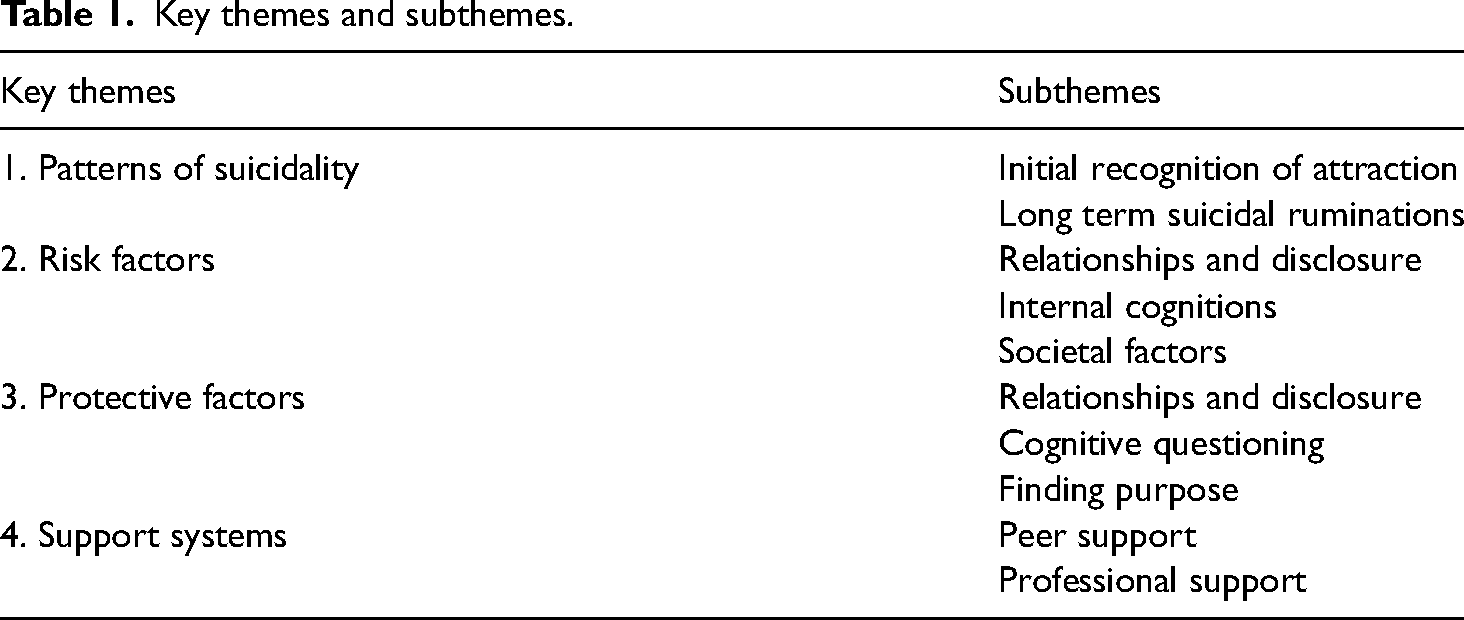
Thematic analysis was undertaken by the researcher, to identify the key themes and patterns across the data sets, following the method proposed by Braun and Clarke (2006). After familiarization with the data, including removal of any personal or demographic data that featured in the text, an inductive approach to coding was adopted, in which important features and concepts were identified and labelled. Reviewing these codes enabled the identification of broader patterns of meaning and themes, which were reviewed and refined by the researcher, resulting in the identification of four main themes and ten subthemes.
This inductive approach to developing the codes and themes is recommended when investigating under-researched subjects (Bryman, 2016; Richards, 2021). NVivo software was used to assist with the thematic analysis process, which is a computer-assisted qualitative data analysis software (CAQDAS) program. This enabled a flexible analytical approach, which was an important factor within the inductive research strategy.
Results
Inductive thematic analysis enabled the identification of four key themes, within each of which further subthemes were identified, as shown in Table 1.
Key themes and subthemes.
Theme 1: patterns of suicidality
The collective data obtained from the study was able to provide a narrative account of forum members’ shared experiences in relation to suicidality, illustrated in Figure 1 and explained below.
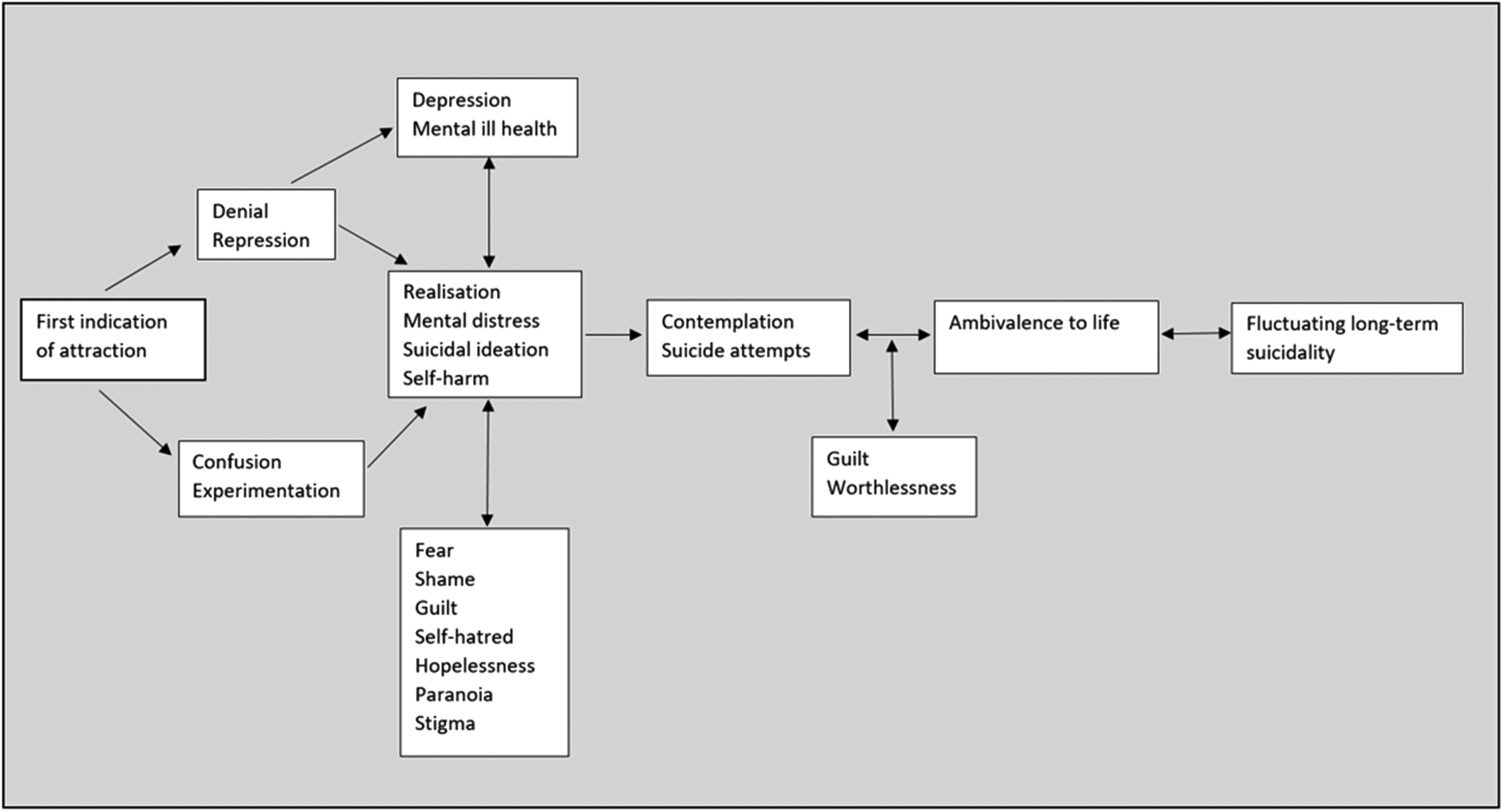
Patterns of suicidality: a narrative of shared experiences.
Initial recognition of attraction
Members frequently described recognizing their initial attraction towards children as starting at a young age, typically by the mid-teenage years. An often-cited experience at this stage was denial, with the data indicating that repressing this component of the self subsequently impacted members’ mental wellbeing. There was also frequent confusion expressed regarding self-identity at this stage. For some, this was a dangerous time in terms of boundary crossing, with members reporting experimentation in viewing child sexual imagery or having sexual contact with younger children, reporting this as a means of understanding this emerging sexual interest and hoping to nullify their concerns around pedophilia.
There was then a common experience identified from the data, in which members realized that their attraction had not subsided or passed. This point of realization appears to be a significant trigger for suicidality. Existing mental health conditions that some members experienced during adolescence could become exacerbated, and for those without existing mental health issues, this realization could be a trigger point for their emergence, with many members describing extreme mental distress, self-harm, suicidal ideation and manifestations of mental and physical pain.
The data indicated that the key factors contributing to this pivotal time were feelings of fear, shame, guilt, self-hatred and hopelessness. A primary fear was that of offending, with the internalized assumption that pedophiles are child sexual abusers fueling fear of an inevitability of this outcome for them, which they did not want to actualize. Fear of people becoming aware of their attractions was also expressed, with the stigma associated with pedophilia inciting feelings of anxiety and paranoia, that if their secret became known they would become vilified and ostracized. Members also expressed fear at being destined for a life alone, with hopes for the future now seeming unobtainable. This was particularly pertinent to those with exclusive attraction to children.
The feelings of shame and guilt that members expressed at this emerging sense of identity were a significant trigger toward suicidality. Members expressed shame at having these ongoing thoughts towards children and at becoming a person that they did not want to be, with the data indicating that this conflicted with their self-concept. Members indicated that the guilt was fueled by the harboring of this secret, and feeling that they were creating a false narrative to the people around them. Feelings of guilt, regret and self-hatred at this point were also intensified if indeed boundaries were crossed during the stage of identity confusion, with the recognition that they are pedophiles and have also acted in a harmful way toward children. This factor further increased suicidality.
Indeed, although the majority of members within the dataset had not reported entering into offending behavior, the sense of self-hatred and hopelessness at this stage nonetheless culminated into a belief for many, that suicide was a favorable option, to protect children from future harm, to protect their families from shame, and to save themselves from the psychological distress that they expressed.
Long term suicidal ruminations
An ongoing narrative timeline was then identified through analysis of the posts, whereby many members contemplated and attempted suicide, feeling that they did not deserve to be alive and had nothing to live for. Unsuccessful suicide attempts, or suicidal ruminations without actions, appeared to trigger further feelings of guilt, in that they felt that they should end their life but were unable to. Indeed, the data indicated that many did not actually want to die, but did not want to live a life with pedophilia. There followed a pattern of long-term suicidality and ambivalence to life. During this time, having recognized themselves as pedophiles, there was a frequently reported belief that they should not be alive and that there was no worth to their existence. There was a common wish for hope and for help, but without this, death remained a viable and considered option. When active suicidal intent reduced, many members continued to consider incidental or accidental death as being favorable, believing that they had little to lose by dying.
The data indicated that this suicidality and ambivalence to life could be ongoing for many years, with fluctuating intensity influenced by a number of risk factors and protective factors.
Theme 2: risk factors
Relationships and disclosure
The most frequently highlighted trigger toward suicidality was that of disclosure, or of being “outed.” For many, it was a hypothetical fear, and presumption that they would be rejected by loved ones, resented and left ostracized, ashamed and alone. Members frequently affirmed that if they were “outed,” they would end their lives. Other members had taken the decision to disclose their attraction to loved ones, in the hope that they would receive support and acceptance, but had received negative reactions from the recipients of this information, triggering urges toward suicide due to the sadness and fear that they had caused loved ones, and the relationship breakdowns that had subsequently occurred.
With the passage of time, members also reported increasing difficulty in watching others around them settle into age-appropriate relationships, which further exacerbated the isolation that they themselves felt, and their lack of hope for any such future. Additionally, for those who established new relationships, or maintained existing ones, there was a self-deprecating sense of deceit described, in that they were harboring a secret and those who showed them fondness or love did not know the real person beyond the false narrative that they presented.
Internal cognitions
The degree of internalized critical thinking about self-identifying as a pedophile influenced the intensity of suicidality. For those who had attempted to rid themselves of the attraction, and had subsequently found that it could not be “cured,” this realization could act as a further trigger point.
Suicidal intent also increased when thoughts became more intrusive and obsessive, and as the fear that they would act on their urges intensified. Such cognitive shifts made members feel less in control, and more inclined toward suicide as a protective measure. Those who felt a shift in attraction toward younger children, or more exclusively toward children than adults, also began considering themselves as more dangerous, which heightened suicidality.
For those who had acted in some way on their thoughts, the regret and shame of this further triggered suicidality. This was not limited to those who had acted illegally, but included those who had become sexually aroused by legal child imagery, or who had masturbated to their thoughts. Members expressed guilt and shame when recalling this, which heightened suicidal ideation.
Societal factors
The common belief that pedophilia and child sexual abuse are synonymous can lead to vehement hostility from the public. Media and social media could increase expressed suicidality in this regard, as members noted the stigma and hatred directed toward people with pedophilia and internalized this further. Social media discussions encouraging pedophiles to “kill themselves” were particularly triggering toward suicidal intent. Social media was also identified as emphasizing the meaningful and successful existences of others, which could serve to accentuate the lack of purpose, enjoyment, and fulfillment that members felt in their own lives.
Many members referenced using alcohol as a means of escaping the reality of their situation, and it was identified that suicidal thoughts were often acted upon after alcohol intake. Additionally, social stressors such as employment and finances could act as pivotal triggers to an existing suicidal ideation.
Theme 3: protective factors
Relationships and disclosure
Despite relationships and disclosure being a risk factor, this was also identified as a protective factor, with the key difference between the risk and protective elements of disclosure, being the response received. Disclosure to a friend, family member, professional or a peer who also experienced minor attraction could bring immense psychological relief, if the response was one of acceptance and compassion. Protective benefits were gained from receiving positive responses and support, which reaffirmed that they were not a bad person, they could lead an offence-free life and were not defined by their attractions. This acceptance from others aided considerably with self-acceptance, which was deemed by members to be pivotal in reducing suicidality.
Furthermore, the most prevalent preventative factor against suicide was the impact that it would have on family members and others. Although many members reported wanting to die, they did not want their loved ones to experience their suicide.
Cognitive questioning
Despite the frequent suicidal ideation, many members were afraid of dying, afraid of the act of suicide, and fearful of it being unsuccessful. Members often expressed feeling trapped between not wanting to live and not wanting to die. They wanted their distress to end, but wanted a life in which their pedophilia did not dominate their being. This cognitive process and the distant hope of a better life was often cited as preventing members from completing acts of suicide.
Finding purpose
Faith and spirituality were protective factors for some members, both in preventing the act of suicide and in finding purpose and meaning in life, with comfort being found in meditation, emotional self-healing and religion.
Suicidality frequently reduced after finding a focus and purpose to life, setting goals and developing interests, for example through employment, adult learning, and hobbies, and shifting from negative thoughts and ruminations onto more purposeful and beneficial activities. Although considered unachievable to those suffering active suicidal ideation, it was considered a helpful measure in managing the long-term mental challenges of living with pedophilia.
Theme 4: support systems
Peer support
The forum members were at a spectrum of stages of living with pedophilia, which enabled a wealth of knowledge and shared experiences, clearly valued by those seeking help. Having an online discussion forum as a support mechanism was frequently cited as being a significant help for members in managing their attraction and their wellbeing.
Members experiencing emotional distress valued the opportunity to express this safely on virped, whilst protecting themselves and their loved ones from such difficult conversations. Members expressed gaining immense comfort through recognizing that they were not alone, valuing the sense of community, in which there is a collective compassion for one another. Individual support away from the forum was frequently offered to those in distress and peer support was commonly recognized among members as reducing suicidality. Indeed, many of the posts relating to suicidal intent were within the “Requests for Support” section of the forum, which is indicative of the value that members place on peer support.
Those who were more experienced in managing their pedophilia offered reassurance to those who were confused and afraid, offering understanding and perspective, and encouraging recognition of self-worth. They offered reassurance that the mental distress could ease, that the suicidal ideation could pass, and that safely managing pedophilia could get easier. Reassurance was offered to those who feared offending, that this was not inevitable, that actions could be controlled, and choices made not to offend.
Professional support
It was commonly agreed amongst members that seeking professional help is an anxiety inducing process. Many members had experienced interactions with mental health professionals throughout their journey, often in relation to symptoms of depression and anxiety, and also for psychiatric support following suicide attempts. In these circumstances, few had disclosed their underlying attraction and the impact that this was having on their mental health, although it was evident that disclosures to professionals were more likely within an established therapeutic relationship.
When members expressed active suicidal intent, their peers responded with appropriate advice regarding contacting emergency services, crisis support, and professional help. However, this came with the warning that professionals should be approached with caution, and that help should be sought regarding immediate clinical mental health symptoms primarily, rather than making a hurried disclosure about pedophilia.
Disclosure to professionals was a complex issue, with members often taking several attempts and considerable time before finding the “right” professional to disclose to. Finding the “right” professional was felt to make a difference, whereby the relief of disclosure being met with acceptance and support could significantly help with self-acceptance and could reduce depression and suicidality.
Although no specific mention was made of “social workers” within the analyzed data, terms such as “professional,” “mental health worker” and “therapist” were used interchangeably in the context of the professional services that deliver health or social care support. A “good” professional was considered one with whom members felt safe in being honest and open about their attraction, who would understand that their attraction did not equate to them having acted illegally or intending to do so. Such professionals would want to help the person in understanding their attraction and in learning to coexist with it. They would recognize the person as being more than a pedophile and would support them to recognize this in themselves. They would be accepting, non-judgemental and someone who they could trust. It proved challenging for members to find such a professional, due to their limited availability, with the cost of accessing some professional services being additionally restrictive.
Unhelpful professionals were considered those who presented as judgemental, hostile, who were uneasy about pedophilia and who may make reports to authorities despite no offence being committed. Unsuccessful engagements with professionals were reported to negatively affect members’ sense of self and sense of hope and to increase feelings of suicidality.
Medication was identified as aiding mental health management, with selective serotonin reuptake inhibitors (SSRIs) commonly being used to treat depression and deemed helpful in managing low mood. However, the side effects of reduced libido and erectile dysfunction were highlighted, with some considering it positive in supressing sexual impulses and urges, but others finding that this added to the negative sense of self, and being troubled that their sexual thoughts toward children remained. Furthermore, members highlighted the possibility that some SSRIs can increase suicide risk, urging caution in using them if already feeling actively suicidal.
Limitations
There are limitations to the findings of this research. The pilot study involved the thematic analysis of a data set that was collected from online posts. On such an online forum, members may not be completely honest in their peer discussions, and people may alter their self-presentations in their online profiles, for the purpose of impression management (DeAndrea & Walther, 2011). Furthermore, although the study seeks to understand suicidality, the data was collected from those who have not completed suicide and who are members of a help-seeking organization. Therefore, this sample of forum members cannot be considered as representative or generalizable for the wider population of non-offending adults with pedophilic interest and suicidal ideation. It is also acknowledged that a wider timeframe for data collection and inclusion of additional search terms may have yielded additional data, which may have influenced the findings.
A further limitation is that the data collection method provided a data set of limited depth. Collecting data from existing online discourse does not allow for interactive discussion and probing between researcher and participants, which could have generated more detailed and rich data to support theoretical saturation. Im and Chee (2006) note that data collected from online forum discussions lacks the non-verbal cues and contextual information that can be obtained through face-to-face interactions. It is also acknowledged that illustrating examples of raw data through using direct quotations from members’ posts, would assist in supporting the study's findings. However, such citations cannot be made, in accordance with the study's ethical requirements.
Discussion
This study highlights the complexity of inter-relating mental health and pedophilic risk management factors, and provides some valuable insights into lived experiences of suicidality and risk management.
The patterns of suicidality identified in the study support the findings of Cohen et al. (2018) and Walker (2021), whereby people begin to recognize their attraction to children by their mid-teenage years, when their age of attraction is not advancing with their own age progression and is not in line with that of their peers. The feelings of shame and guilt at this emerging sense of identity are identified in this study as being a significant trigger towards suicidality, supporting Elchuk et al.'s (2022) findings.
This indicates that targeted psychoeducational and preventative work may be beneficial for people at a younger age, prior to adulthood, when they may initially feel their attraction emerging. Indeed, this early intervention work could potentially reduce the damaging impact of suppression, and also reduce the risk of experimentation during identity confusion, thus reducing harm to children and subsequent suicidality. Houtepen et al. (2016) interviewed 15 males with pedophilic interest and found similar results regarding participants’ difficulties in acknowledging and accepting pedophilic interests during adolescence, and the heightened risk of offending during this time.
Cohen et al. (2020) suggest that managing pedophilia could become easier over time, as coping skills and impulse control develop with maturity, and sexual urges reduce with age. Within this study, this was demonstrated through the peer support, guidance and reassurance offered by those who had managed their attraction safely over time. However, conversely, an earlier study by Cohen et al. (2018) indicated that among a sample of people experiencing child sexual attraction, those who reported acting on their attraction were older and had a longer duration of attraction, than those who did not. This was acknowledged by the researchers as potentially being due to sampling and data limitations, for example, younger people who had acted on their attraction may have had less interest in participating in research than their older counterparts. However, this remains an area that requires further research.
The current study highlighted the value of peer support in promoting mental wellbeing and supporting risk management. This aligns with the work of Houtepen et al. (2016) and Mitchell and Galupo (2018), who reported that social support can be beneficial in managing pedophilia and reducing the risk of offending.
The study's findings relating to professional support offer further insight for health and social care professionals, into effective practice with this client group. Jahnke et al. (2015b) highlighted that this is an area in need of attention, as their study in Finland found that 65% of psychotherapists would not work with pedophiles due to their lack of knowledge on the subject, and 38% because of personal attitudes. Indeed, the data from the current study indicates that disclosure to professionals can elicit negative responses, which are considered to be further detrimental to mental wellbeing. Conversely, disclosure to a trusted individual who responds with acceptance and compassion can be psychologically and emotionally beneficial. In line with previous research, this study found that identifying a professional to make the disclosure to can be difficult, and is more likely within an established and trusted therapeutic relationship (Elchuk et al., 2022; Levenson & Grady, 2018; Walker, 2021).
The attributes described in the study as making a “good” professional to whom a disclosure could be made, are strongly aligned to core social work values and skills. Social workers provide strengths-based, person-centered support and build trusted relationships with those who access services. Being non-judgemental, inclusive and accepting are core qualities of social workers. Although there are currently limitations in knowledge and confidence in working with non-offending adults with sexual attraction toward children, social workers are in a prime position to support opportunities for disclosures to be made, and to use their transferrable knowledge, values and skills to ensure that the profession becomes receptive and responsive to such disclosures. Therefore, whilst this study is focused on mental health practitioners, the findings are also important for the wider social work profession.
Whilst it seems that relationship-based practice is more likely to elicit trusted-disclosures, it also appears important for those conducting brief interventions to develop their knowledge in this area. It is apparent that during crisis episodes, there is an interface between those in mental distress due to pedophilia, and mental health professionals, and it is therefore important that awareness is raised to ensure that professionals are receptive and responsive to any such concerns and potential underlying factors.
The indicated priority areas of support for those who access mental health services are to provide psychoeducation around pedophilia, to provide cognitive therapy, to support the person in accepting the attraction as an aspect of the self and in committing to manage it safely, to develop social support networks (including peer support), and to set life goals. These findings align with those obtained through qualitative interviews with people with pedophilic interest, regarding seeking help and treatment (Levenson & Grady, 2018; Walker, 2021) and highlight the importance of professional understanding among both health and social care professionals, who are likely to have different roles to play within these areas of support. It also appears important that medical professionals develop an understanding of this client group, to support disclosures that will enable open discussions regarding the implications of prescribed medication use.
While there have been some advances internationally toward specialist support for this population, the resource is sparse and access is limited. Initiatives such as the “Prevention Project Dunkelfeld” in Germany, “Talking for Change” in Canada, and “Stop It Now” in the UK operate as targeted prevention programmes, demonstrating small but positive steps toward supporting those who are experiencing child sexual attraction (Jackson et al., 2022). B4U-Act is another organization in which mental health professionals, researchers, and adults with sexual attraction to children, collaborate to generate understanding and support. However, when experiencing the active suicidal ideation highlighted within this study, there is an increased likelihood that members of this population will encounter non-specialist mental health service interventions, for example through community mental health teams or psychiatric hospital admission.
An increased understanding of this client group therefore appears paramount across health and social care services, as it seems that enabling safe and supported disclosure can be a key factor in reducing risk. However, as highlighted by Jackson et al. (2022), the mandatory reporting laws which differ across the globe, should also be considered when reviewing mental health practice in this area. Mandatory reporting laws stipulate the statutory duties of those in particular positions of trust (for example in health and social care professions) to report suspected or confirmed instances of child sexual abuse. These laws are implemented through a spectrum of different approaches globally, which can leave professionals unsure of how to respond to disclosures of minor-attraction, particularly when no specifically identified child is at risk. Indeed, Christofferson (2019) highlights the uncertainty amongst professionals regarding mandatory reporting laws, which can be problematic when considering prevention initiatives.
To follow on from this study of existing discourse, further research would be beneficial in which first-hand accounts are obtained through in-depth interviews with members of this population. This would enable open dialogue to gather more specific and detailed data regarding the interplay between pedophilia, suicidality, and mental health services. Such research will enable a deeper understanding of the mental health challenges experienced by members of this population, regarding mental illness, suicidality, risk management and access to appropriate support. By triangulating such knowledge with the identified limitations of practitioner understanding, a targeted training programme could be developed that would improve knowledge, skills and understanding amongst health and social care professionals, regarding these key interlinking factors. The study indicates that this could enable preventative interventions to support child protection and reduce the risk of suicide, for people living with pedophilia.
Implications for practice
There is considerably more research required within this subject area, to fully understand the implications for mental health services. However, from this preliminary study it seems paramount that mental health practitioners develop an increased awareness of this subject. It seems important to ensure that the staff within child and adolescent mental health services, as well as adult mental health services, are adequately trained to understand the needs and experiences of this client group. Until more detailed studies are undertaken, initial awareness raising sessions are recommended across all mental health services, to promote an understanding around people with pedophilic interest, the prevalence of their mental challenges and suicidality, and their potential interactions with mental health services. In view of the challenges highlighted, regarding making disclosures to professionals, this initial awareness raising could serve to improve professionals’ receptiveness and responsiveness to such disclosures, enabling open and honest discussions which could assist with risk management and mental health recovery. This concurs with Cohen et al.'s (2020) conclusions, that improving access to services could reduce the risk of harm to children and to mental wellbeing. Such training would also address Jackson et al.'s (2022) recommendations, that those working in health and social care should receive education that will reduce the barriers currently preventing members of this population from accessing resources.
For those adults with child sexual attraction who access mental health services, individual assessments of need and of risk should always be conducted. It appears that useful treatment options may include therapy, medication, goal setting and engagement in activities, although these should always be considered on an individual basis. A further recommendation from the study would be that mental health services promote the organizations that offer support to people who are experiencing child sexual attraction, including those which offer peer support.
Footnotes
Ethical approval
Ethical approval was received from the University of Central Lancashire School of Social Work, Care and Community Ethics Committee on 25th April 2022.
Funding
The author disclosed receipt of the following financial support for the research, authorship, and/or publication of this article: This work was supported by the National Institute for Health and Care Research [grant number NIHR 302062]. Rachel Murphy (NIHR Pre-Doctoral Local Authority Fellowship, NIHR 302062) was funded by the NIHR for this research project. The views expressed in this publication are those of the author and not necessarily those of the NIHR, NHS, or the UK Department of Health and Social Care.
Declaration of conflicting interest
The author declares that there is no conflict of interest.
Acknowledgements
The author acknowledges the following for their contribution to this article: Professor Aidan Worsley from the University of Central Lancashire for his support with the research project, and Dr Mark Wilberforce from the University of York, for support with the manuscript preparation. The author also wishes to thank the site moderators at Virped.org, who have supported the research in its entirety.
