



Abstract
Introduction
Disabled children and their families in England are among the most disadvantaged groups, often struggling to obtain the necessary support. The Independent Review of Children's Social Care in England, set up by the government to make sure children and young people get the support they need, highlighted this saying: “Throughout the review, we have heard consistently from families of disabled children about their struggle to access support and their frustration navigating services” (MacAlister, 2022, p. 59).
In recent years, there has been a rapid increase in the proportion of children who have a disability classification, which rose from 7% of children in 2013 to 11% in 2023 (Department of Work and Pensions, 2024a). Alongside this, there has been an increased demand for support in schools for children with special educational needs, with the numbers receiving this support increasing 140% between 2015 and 2024. However, the extent to which this reflects growing numbers of disabled children is not clear.
The Centre for Educational Neuroscience (2022) suggests that the rise in special educational needs (SEN) numbers may be due to historical trends, increased awareness, improved diagnostic practices, and changes in assessment criteria. They point out that, after a decline from 2010 to 2015—linked to government concerns about over-diagnosis and SEN reform challenges—the recent increase may reflect a “catching up” process. Greater media attention, improved teacher training, and increased social awareness may have led to earlier identification, particularly for autism and language development. Advances in diagnostic tools, early intervention programs, and medical care (especially higher survival rates of premature babies) have also contributed to more diagnoses. Finally, changes in diagnostic criteria, such as the broadening of the autism spectrum in 2013, have expanded classifications.
Children's social care is unlikely to be immune to these trends. This article draws on data from the government's Annual Children in Need Census to identify whether there are changes in the number of assessments by children's social care in which social workers identified a concern about the child's disability or mental health. It also considers the focus of the support offered to these children following their assessment.
Legislative and Policy Background
Local authorities in England have a duty to safeguard and promote the welfare of children in need, under the 1989 Children Act. This includes all disabled children and those requiring services to maintain a reasonable standard of health or development (Section 17(1), 1989 Children Act). The Act also requires authorities to investigate families if there is reasonable cause to suspect a child is suffering or likely to suffer significant harm (Section 47(1), 1989 Children Act). These child protection investigations, known as section 47 enquiries (s47), can lead to child protection conferences and child protection plans if harm is substantiated.
The process for carrying out assessments and deciding to undertake s47s is laid out in a combination of national and local authority guidance. National guidance is contained in Working Together to Safeguard Children (DfE, 2023), which was amended following the Independent Review of Children's Social Care's recommendations and the report on the highly publicized deaths of Arthur Labinjo-Hughes and Star Hobson. This statutory guidance promotes reforms which have been criticized as being overly influenced by governmental responses to child deaths from abuse, leading to a focus on the elimination of risk and increasing control of social work practice (Bain & Harris, 2024; Warner, 2015).
Increasingly Investigative Orientation
The Department for Education (DfE) gathers data for an annually published Children in Need Census. This census provides information from all English local authorities on referrals to children's services, assessments conducted, children who became “in need,” and those formally investigated under section 47 of the 1989 Children Act and placed on child protection plans.
The Children in Need Census shows that there has been a long-term increasing trend of s47 investigations starting in 2005. By 2024, the number of s47s more than tripled, while the proportion leading to a child protection plan fell from 45% to 28% (DfE, 2024).
Table 1 shows the trends during the period of this study. Between 2015 and 2024, the rate of child protection investigations increased by 34.5%, while the rate of child protection plans, referrals, and new child in need plans all fell (DfE, 2024). This indicates that an increasing proportion of referrals led to an s47, increasing from 25.2% in 2015 to 36.1% in 2024 and that s47 investigations, which are counted as an element of child in need plans, increased from 39.7% to 56.8% showing that social work responses are increasingly focused on investigating abuse and neglect. The rate of child protection investigations that did not lead to a child protection plan increased by 58.9% during this period, with 162,400 investigations, fully 72% of s47s, not leading to a child protection plan in 2024 alone (DfE, 2024).
Rate of Referrals, Episodes of Need, s47 Investigations, and Child Protection Plans Per 10,000 Children Aged 0–17.
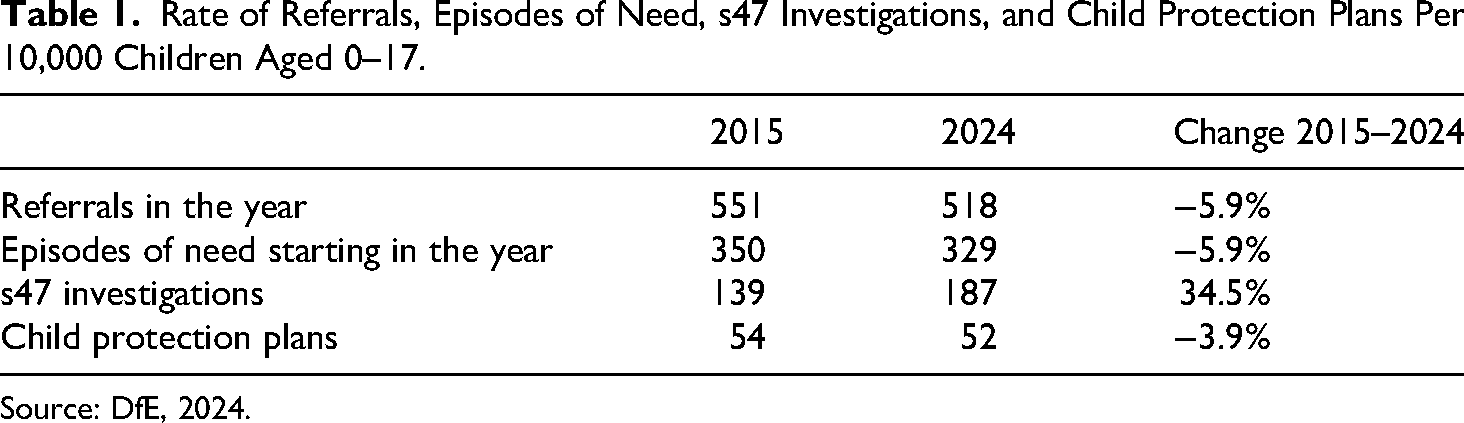
Source: DfE, 2024.
There is little evidence that this investigative orientation is successful in preventing maltreatment (Gilbert et al., 2012; Harries et al., 2015; Higgins et al., 2022) and Parton (2020, p. 29) argues that child protection policies and practices “operate quite independently of the phenomena that they are supposed to be trying to prevent.”
Child in Need Assessments and Disabled Children
The 1989 Children Act defines disability broadly, including children with physical, sensory, or mental impairments (Section 17(11), 1989 Children Act). Local authorities have additional duties to support disabled children in need, such as providing direct payments and services to help them lead normal lives. If a parent carer has support needs, the local authority must assess and address these needs. Following the findings of the Independent Review of Children's Social Care, the Department for Education asked the Law Commission to review disabled children's social care law. The Law Commission states that the law is potentially unfair because it requires local authorities to create eligibility criteria which take into account their budgetary constraints rather than the needs arising from the child's disability (Law Commission, 2024, pp. 2–3). This suggests that children with similar disabilities may be given different levels of support depending on where they live rather than the nature of their needs.
The Working Together to Safeguard Children statutory guidance provides the procedural framework for children's services. It dedicates only five paragraphs to disabled children within its 111 pages. This limited inclusion does little to redress the default focus on investigating parental failings found in the guidance's overall approach (Bain & Harris, 2024; MacAlister, 2022) and provides little help or guidance for workers aiming to assess the support required due to disability.
The guidance requires local authorities to produce protocols for how assessments will be undertaken. Research into these local authority protocols found they often require intrusive safeguarding measures, such as inspecting bedrooms and interviewing children alone, regardless of whether the assessment is based on any concern about neglect or abuse, further alienating families seeking support (Clements & Aiello, 2021).
Cuts to children's services expenditure on children in need and preventive services have compounded these problems, particularly for children with disabilities who are legally entitled to be treated as children in need. Funding for early intervention and family support has fallen sharply, with some of the steepest reductions in services relevant to disabled children, including Children's Centres and Family Hubs (Centre for Young Lives, 2024; Children's Society, 2023). These cuts have reduced the availability of supportive provision and left families more exposed to crisis before help is offered. As recent analysis has shown, total expenditure on children's services has risen mainly because of the escalating costs of out-of-home care placements, rather than investment in early help or disability services (Institute for Government, 2023). In practice, this means that families of disabled children often struggle to access the support envisaged in legislation, while encountering increasingly investigative approaches that reframe structural pressures such as poverty, high care demands, and inadequate services as parental neglect.
Background From National Statistics
The published statistics for children in need show trends relevant to this study. Social workers are asked to choose a primary need for each child in need plan from a limited list.
Fall in Disability or Illness as Primary Need
Amongst children in need on March 31 across England, there was a
Geographic Variations
The rate of children in need on the March 31, 2023, where the child's primary need was the child's disability or illness, varied widely between local authorities, ranging from
Parent Blame
Parents of disabled children surveyed about their experience of contacts with children's social care overwhelmingly found assessments intrusive and unsatisfactory, focusing on finding evidence of abuse rather than assessing the child's needs (Clements & Aiello, 2021; Ferguson & Hollingsworth, 2024; Running & Jata-Hall, 2023). The Independent Review of Children's Social Care also noted that families with disabled children feel they are navigating a system designed for child protection rather than support (MacAlister, 2022, p. 29).
In the lead up to the Law Commission's (2024, p. 3) consultation, parents and carers again reported problems in the way the law is applied and that there was too much focus on safeguarding disabled children from potential harm at the expense of meeting their needs.
This orientation of a focus on parental failings which particularly focuses on mothers (Colker, 2015; Francis, 2012) has been termed parent blame (Clements & Aiello, 2021; Colker, 2015; Ferguson & Hollingsworth, 2024; Francis, 2012; Hollingsworth et al., 2023; Mitra, 2022; Robinson et al., 2015).
This study aims to identify the extent to which responses by children's social care focus on suspected parental abuse and whether this has changed over time.
Method
This study utilizes Freedom of Information (FoI) requests to the Department for Education (DfE) to obtain national data from the annual Children in Need Census on all local authorities. The census records factors identified at the end of assessments, which are “currently an issue of concern” (DfE, 2020, p. 42). Each year, around three-quarters of recorded assessments included factor information, with the number of assessments rising from 550,810 in 2015 to 655,540 in 2023. Three factors specifically relate to the child's disability or mental health, and these are defined in the child in need census guidance (DfE, 2020) as follows:
a significantly reduced ability to understand new or complex information, to learn new skills (impaired intelligence); with a reduced ability to cope independently (impaired social functioning); which started before adulthood, with a lasting effect on development. (p. 62).
The factors following assessment recorded by social workers do not show that the child had a formal diagnosis of a disability, illness or mental illness. The DfE guidance states that such factors “do not need to be confined to medically defined ‘conditions’” (DfE, 2020, p. 39). However, the guidance instructs the social worker to only report them where they feel they are currently an issue of concern. There may thus have been other disabled children or children with a mental health disorder who were assessed, but disability/mental health was not felt to be a concern at the end of the assessment. If this is the case, it would lead to underestimates of the number of children with disability or mental health disorders within the findings.
Although collected for several years, these data were published only for the years from 2018. The first FoI request sought information on assessment episodes on these three factors over a longer period (2015–2021). Children can be assessed multiple times, and more than one factor may be present. Information was also requested on assessments finding one or more of the three factors on disability or mental health and whether these assessments with mental health or disability factors were combined with factors showing the social worker had concerns about abuse or neglect.
In a second stage, further FoIs were made to track outcomes following these assessments. This phase focused on children who began an episode of need associated with an assessment conducted in the first six months of each year from 2015 to 2023, and data included whether assessments led to a child protection investigation or plan before the end of the recording year. This analysis thus excludes children assessed under section 17 or section 47 who were not placed on a child in need plan. The first six months of each year were selected to allow sufficient time to track whether s47s resulted in a child protection plan within the annual collections held by the DfE. Due to this focus, the figures for section 47 enquiries and plans are not comparable to annual national statistics.
The data provided redacted categories with numbers between 1 and 5 and rounded many categories to the nearest 10. To include the former, these values were replaced with the mean (2.5). This means there may be discrepancies with some columns not adding up to the given totals due to this rounding. In the first part of this analysis, the data are being totaled at the national level, so discrepancies caused by substituting the mean for numbers between 1 and 5 should be minimal.
Data used for population calculations in the study were sourced from the Office for National Statistics (ONS) publication “Population estimates—local authority based by single year of age” downloaded from https://www.nomisweb.co.uk/datasets/pestsyoala on 14/09/2024. Data on the number of disabled children estimated by age and local authority on the census date of March 21, 2021 were from the ONS publication “Disability in England and Wales, 2021” downloaded on 31/03/2025 from https://www.ons.gov.uk/peoplepopulationandcommunity/healthandsocialcare/healthandwellbeing/bulletins/disabilityenglandandwales/census2021.
As data accessed by freedom of information is in the public domain, it does not constitute personal data and its use does not require ethical approval.
Findings
This section will now present the findings of the study. Possible explanations will be explored in the discussion section which follows.
Factors at Assessment Across England
Across England, assessments with factors recorded increased by 19.6% between 2015 and 2023 (see Table 2). Each factor associated with disability or mental health increased over this period. Concerns about a child's mental health increased by 152.5%, a child's learning disability increased by 81.0%, while physical disability increased by 19.8% (Table 2).
Factors at Assessment England* 2015–2024.
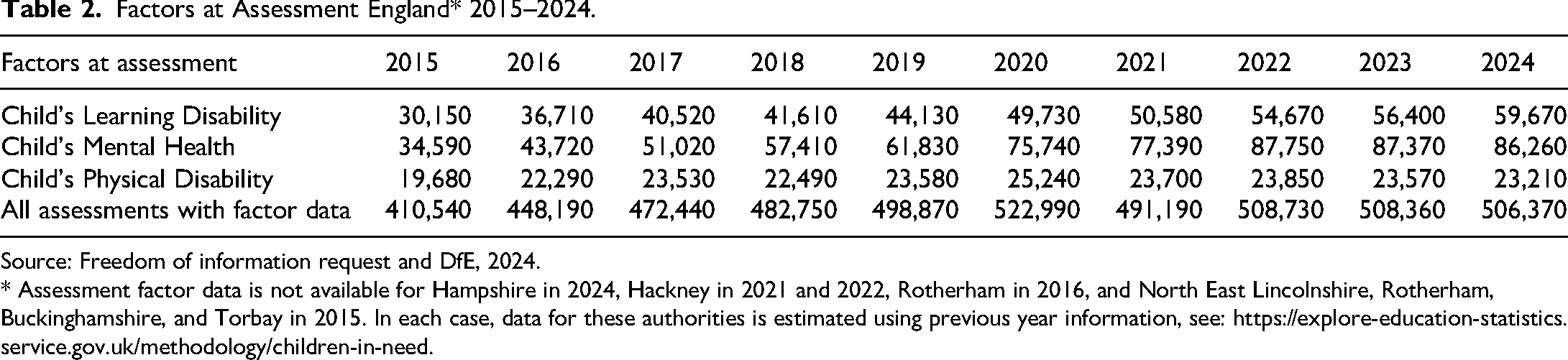
Source: Freedom of information request and DfE, 2024.
* Assessment factor data is not available for Hampshire in 2024, Hackney in 2021 and 2022, Rotherham in 2016, and North East Lincolnshire, Rotherham, Buckinghamshire, and Torbay in 2015. In each case, data for these authorities is estimated using previous year information, see: https://explore-education-statistics.service.gov.uk/methodology/children-in-need.
Assessments with concerns about one or more of these three factors (hereafter disability/mental health concerns) increased by 77.0% between 2015 and 2021 (see Table 3). Assessments in which a social worker found there were both disability/mental health concerns and concerns about some form of abuse or neglect also increased by 76.4% (Table 3). In contrast, assessments which did not find a disability/mental health concern increased by only 7.9%. Assessments with disability/mental health concerns increased from 16.9% to 25.0% of all assessments over this period.
Assessments With a Child's Disability/Mental health as a Factor in England.*
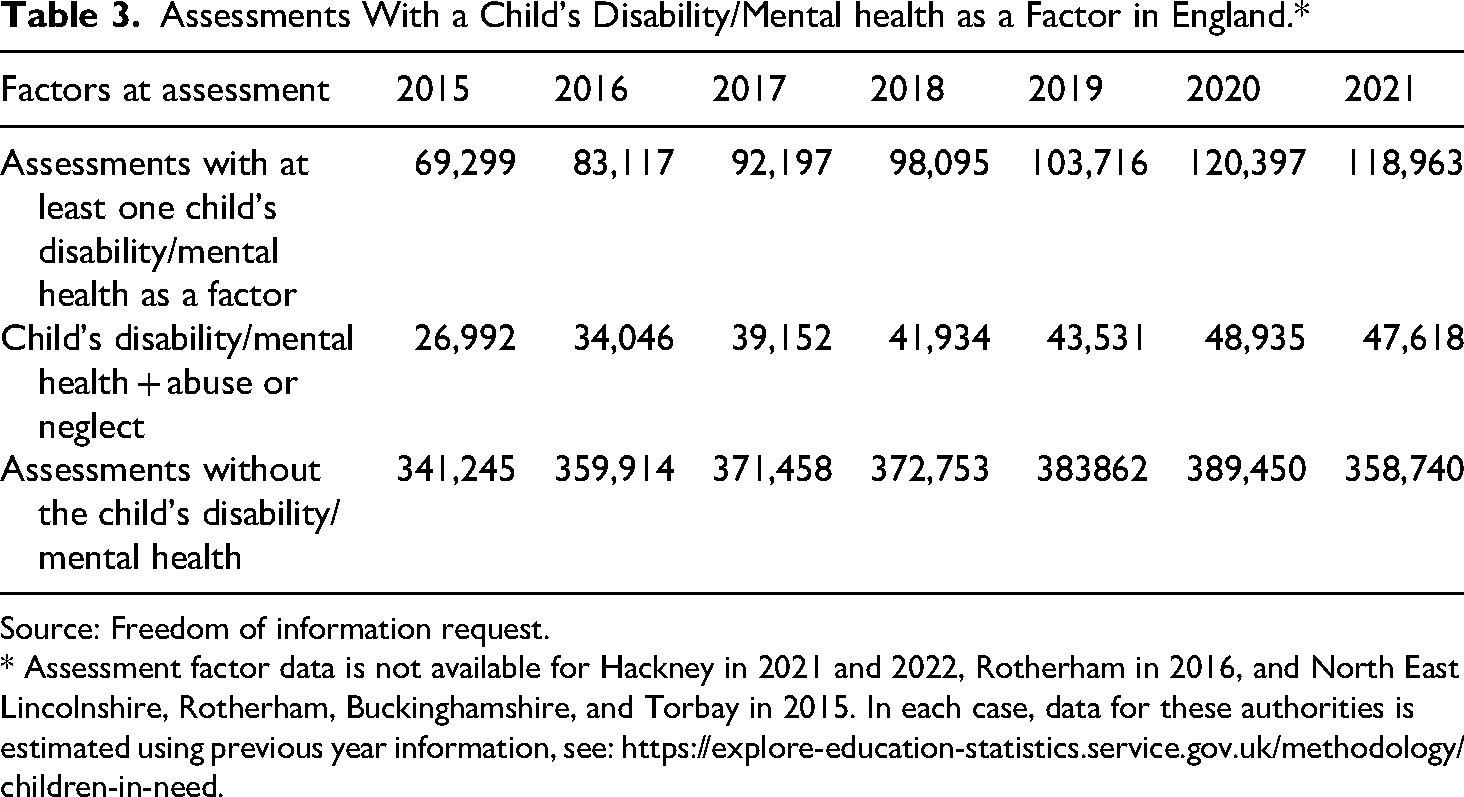
Source: Freedom of information request.
* Assessment factor data is not available for Hackney in 2021 and 2022, Rotherham in 2016, and North East Lincolnshire, Rotherham, Buckinghamshire, and Torbay in 2015. In each case, data for these authorities is estimated using previous year information, see: https://explore-education-statistics.service.gov.uk/methodology/children-in-need.
Between 2015 and 2021, there was an increase of 80,650 assessments with factor information, two-thirds (66.4%) of which were associated with increases in assessments identifying disability/mental health concerns.
Interventions Following Assessment
This section considers the results of the latter FoI, which counts children rather than assessments and covers the data collection years from 2015 to 2023. This gathered data about children who were assessed between April 1 and September 30 and who became a child in need before the end of the year. The number of these children increased overall by 20.9% between 2015 and 2023 (Table 4).
Children Who Became a Child in Need in England* by March 31 Following an Assessment Between April 1 and September 30.

Source: Freedom of information request.
* Excludes North East Lincolnshire, Rotherham, Buckinghamshire, and Torbay in order to compare 2015 and 2023.
Increase in Children With Disability/Mental Health Concerns
Children where social workers identified disability/mental health concerns increased by 77.1%, substantially more than the 12.2% increase in children who did not have disability/mental health concerns (Table 4).
Table 5 shows the categories collected by the children in need census under the heading “primary need.” It is apparent that they mainly represent challenges or problems identified through assessments, rather than inherent child needs and are evidence of the focus of the government data collection on concerns about abuse rather than child-focused support. Social workers increasingly classified the “primary need” of children with disability/mental health concerns as “abuse or neglect” or “family dysfunction.” The latter category being used for children (DfE, 2020, p. 52) “whose safety is in concern because of family dysfunction, but for whom there is not yet hard enough evidence to invoke child protection measures.” The number of children with these abuse-focused primary needs doubled (100.7%) between 2015 and 2023 and increased from 60.6% to 69.5% of children with disability/mental health concerns (Table 5). Over the same period, the proportion of children with disability/mental health concerns whose “primary need” was “child's disability or illness” fell from 17.2% to 10.1% of these disabled children in need.
Primary Need of Children in England* Following an Assessment in Which Disability/Mental Health was a Factor.
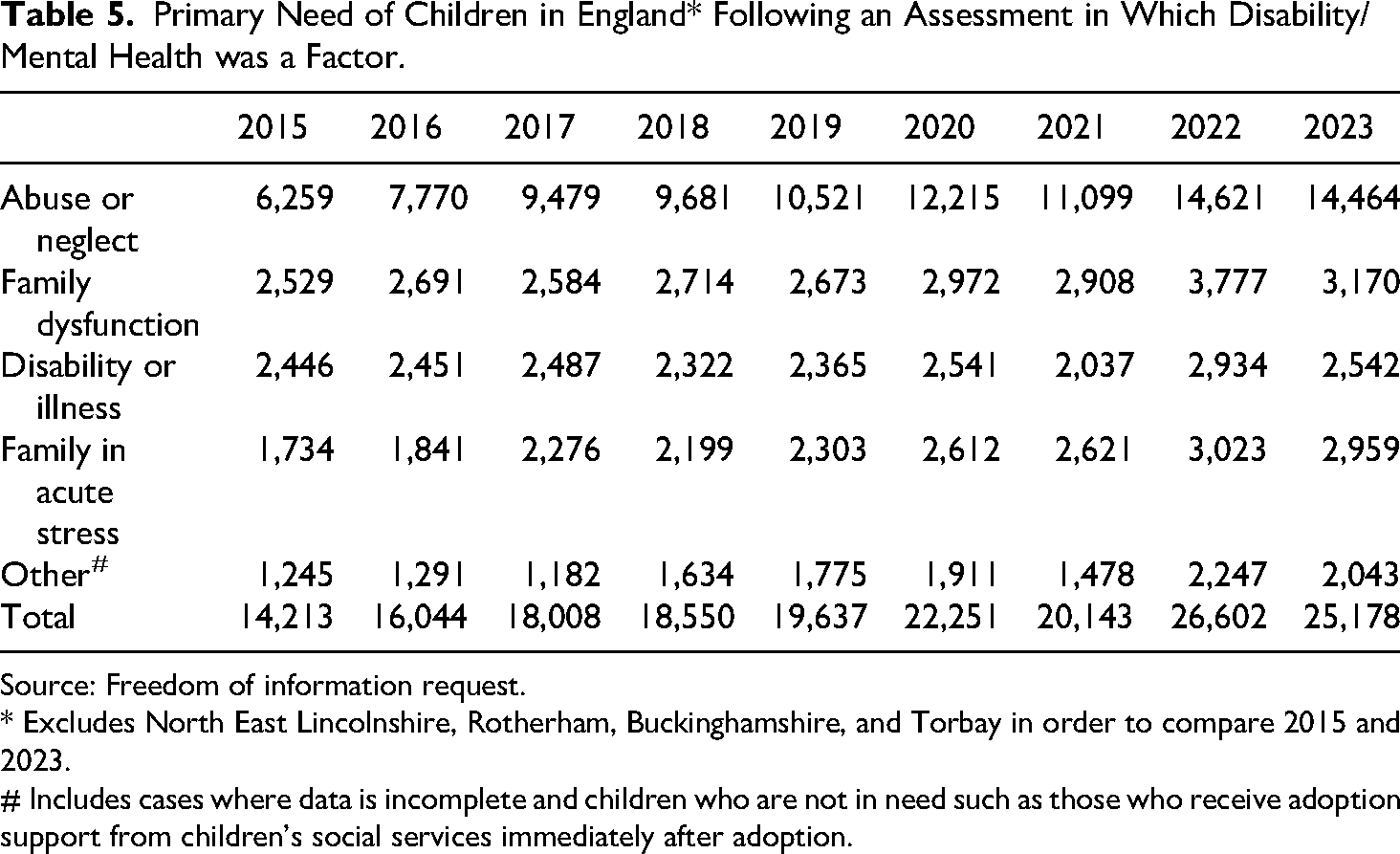
Source: Freedom of information request.
* Excludes North East Lincolnshire, Rotherham, Buckinghamshire, and Torbay in order to compare 2015 and 2023.
# Includes cases where data is incomplete and children who are not in need such as those who receive adoption support from children's social services immediately after adoption.
Rapid Increase in Section 47 Enquiries
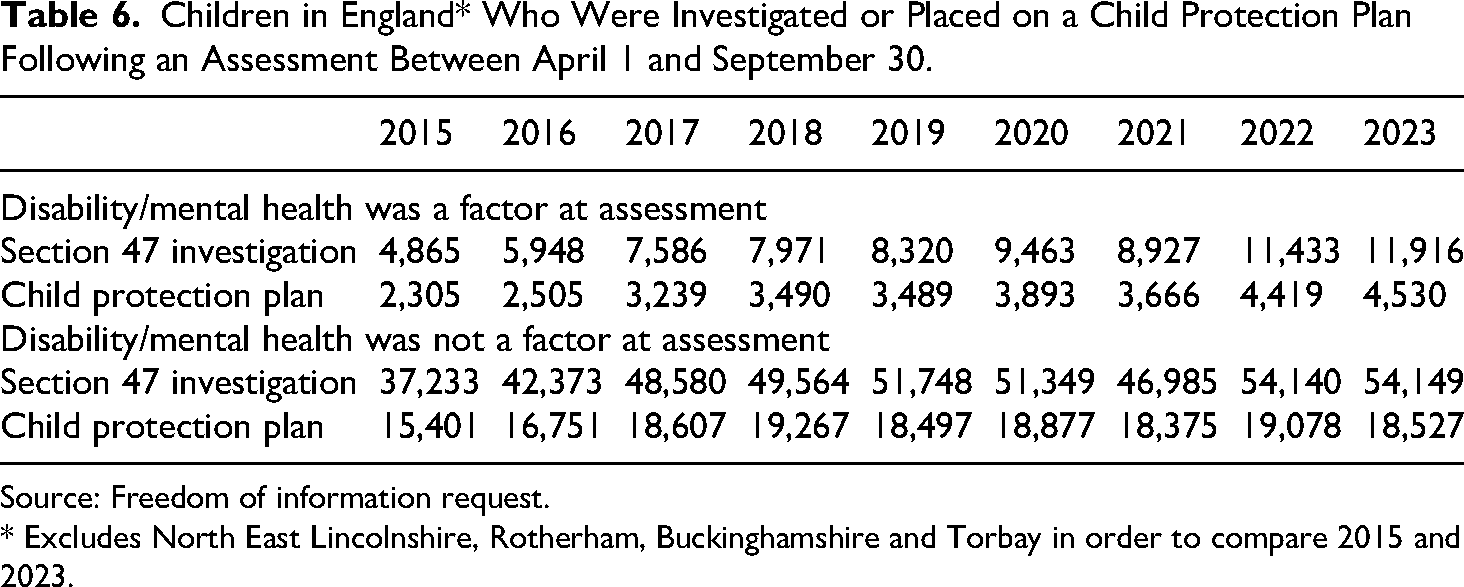
A key finding is that, between 2015 and 2023, there was an increase of 145.2% in children with a disability/mental health concern who were investigated under section 47. For those without these factors at assessment, s47s rose by much less (45.4%).
Child protection plans did not rise so steeply with a 32.2% increase for those with disability/mental health concerns and 20.3% for those without these concerns (Table 6). A lower proportion of these child protection investigations resulted in a child protection plan—a fall from 47.4% in 2015 to 38.0% in 2023 for children with a disability/mental health concern and from 41.4% to 34.2% for those without this concern.
Children in England* Who Were Investigated or Placed on a Child Protection Plan Following an Assessment Between April 1 and September 30.
Source: Freedom of information request.
* Excludes North East Lincolnshire, Rotherham, Buckinghamshire and Torbay in order to compare 2015 and 2023.
Using the census data on the number of children with a disability, it was calculated that 144 per 10,000 disabled children were subjects of a section 47 investigation and 56 per 10,000 were placed on a child protection plan. This is more than three times the rates for children without a disability (17 and 47 per 10,000 non-disabled children).
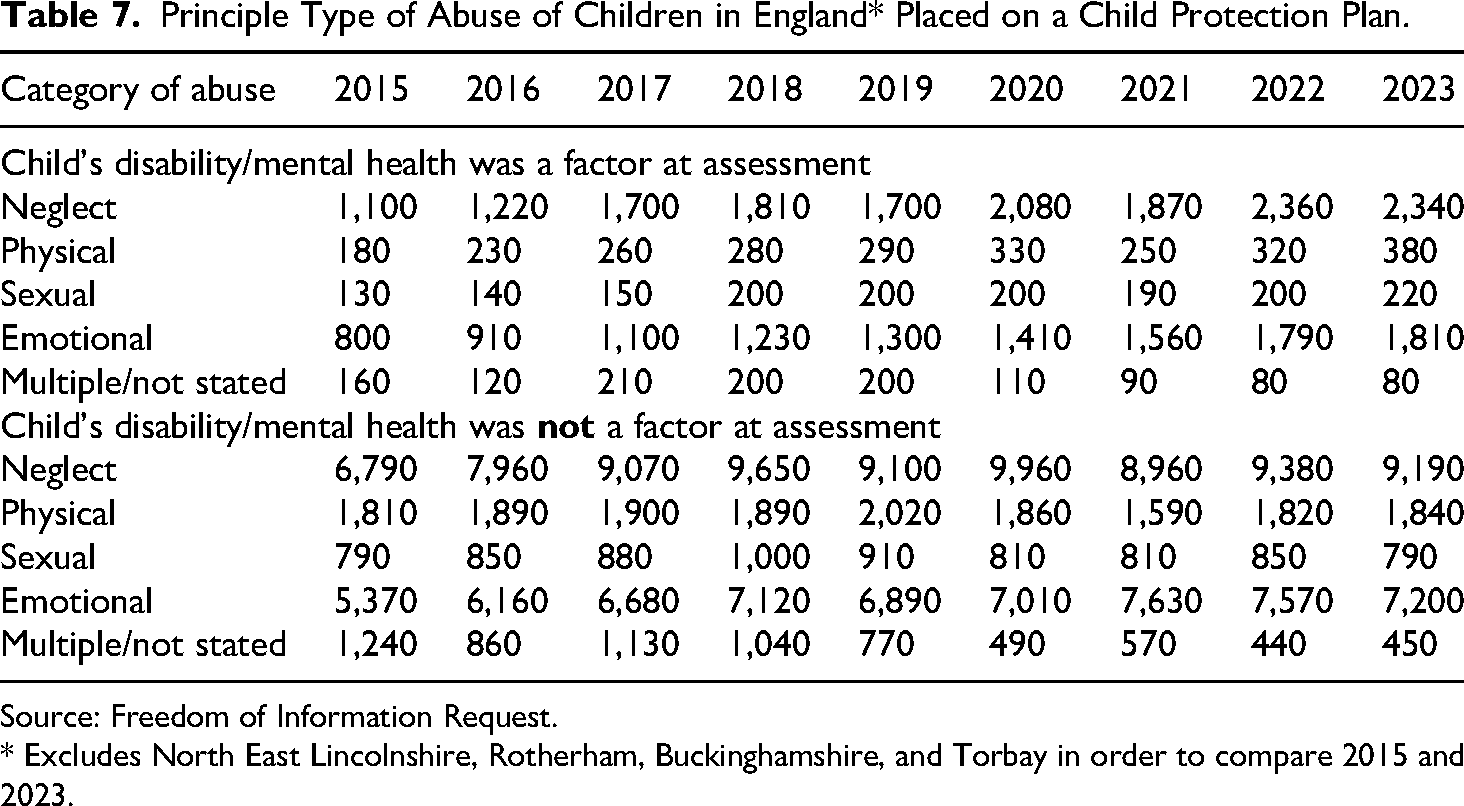
Children suffering neglect and emotional abuse constituted 85.9% of the reasons that children with a disability/mental health concern were placed on child protection plans in 2023, a similar proportion to children without these concerns (84.2% Table 7).
Principle Type of Abuse of Children in England* Placed on a Child Protection Plan.
Source: Freedom of Information Request.
* Excludes North East Lincolnshire, Rotherham, Buckinghamshire, and Torbay in order to compare 2015 and 2023.
Local Authority Disparities
There was a wide range in rates of children with assessments with disability/mental health concerns who became a child in need in the first 6 months of 2023. This ranged from
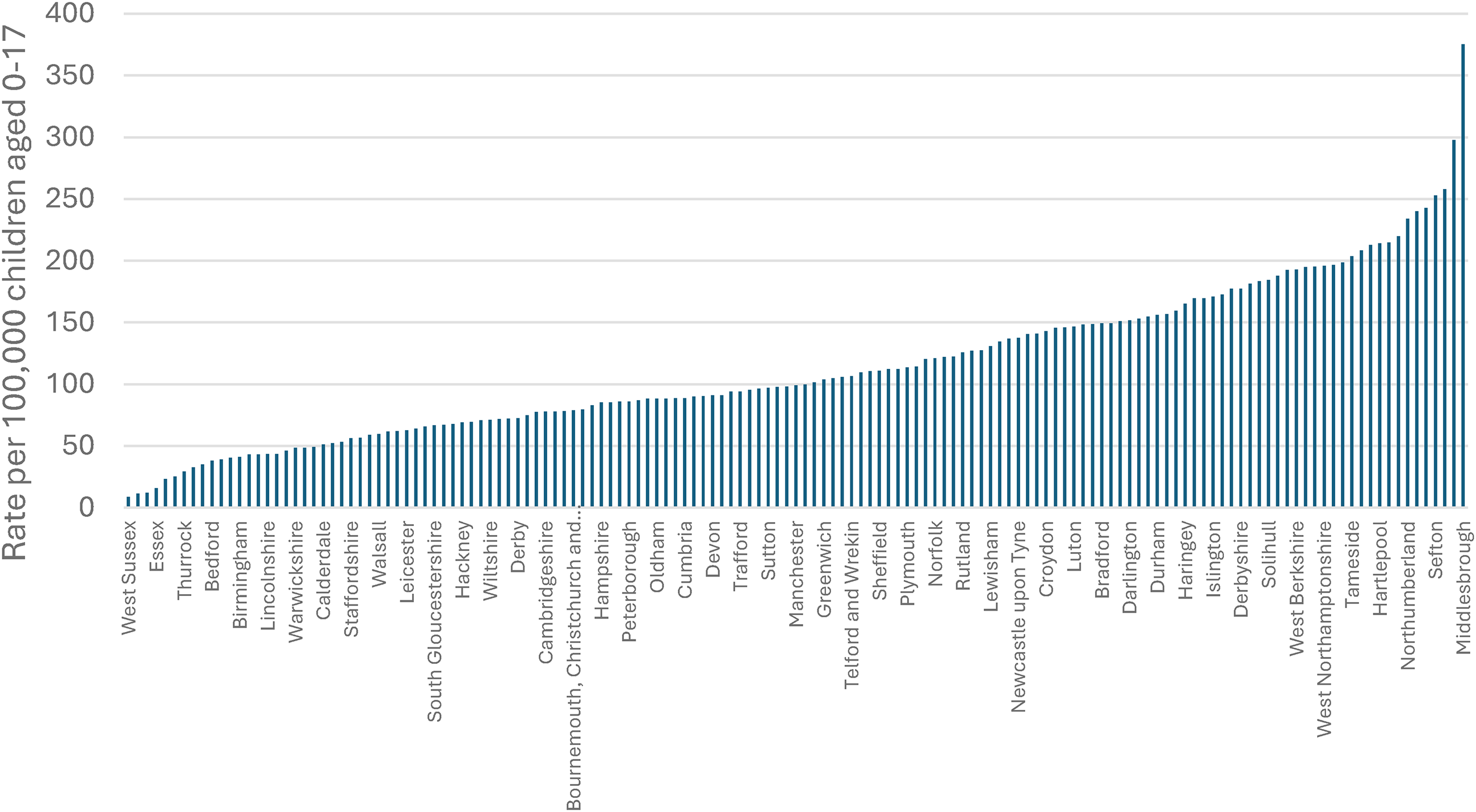
Rate of Children with Disability/Mental Health Concerns per 100,000 Children Aged 0–17 Subjected to s47 Investigations by the Local Authority..
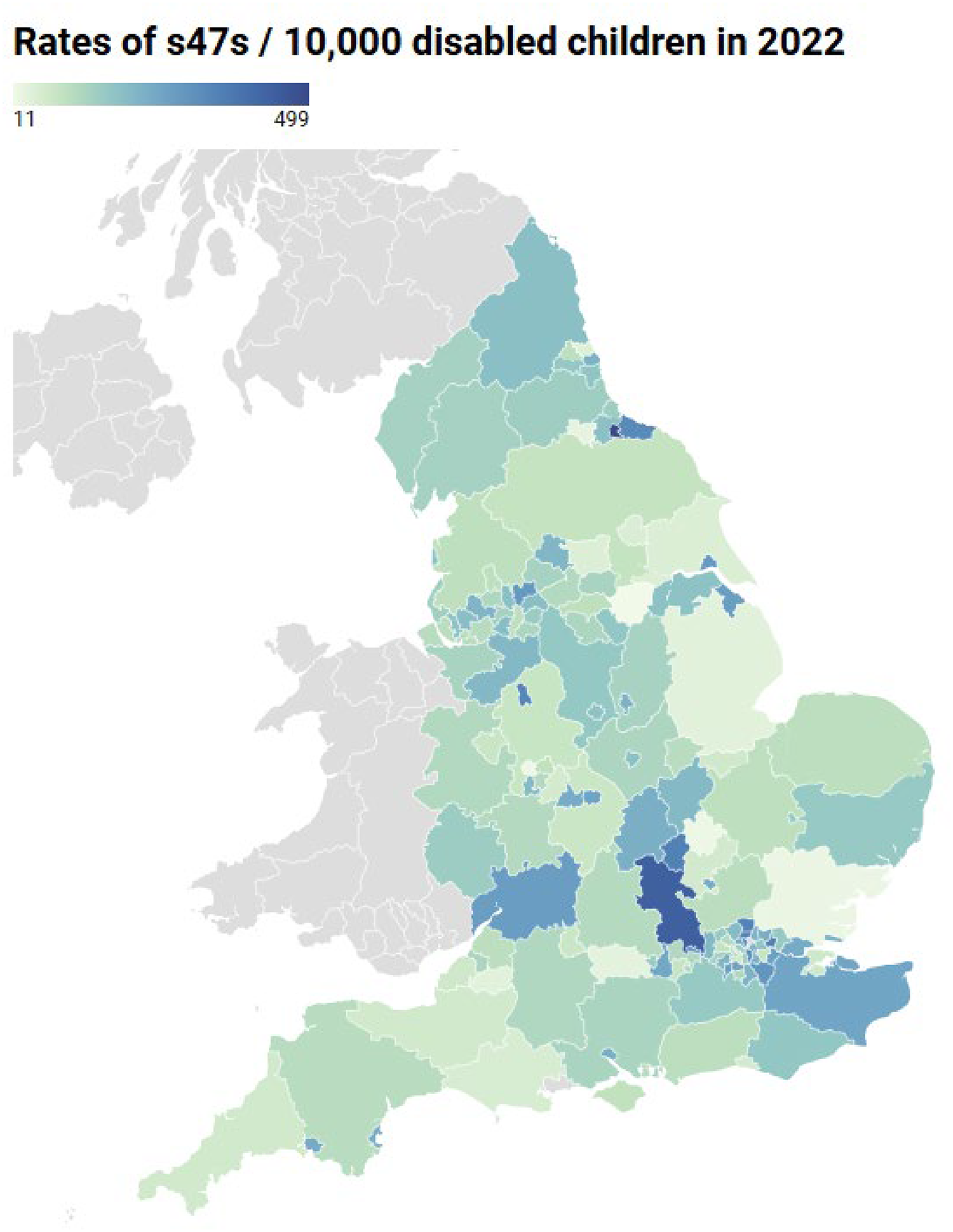
Rate of s47s/10,0000 Disabled Children in 2022.
There was also a wide variation in the proportion of children in need with a disability/mental health concern who went on to a s47 in 2023, ranging from
Discussion
A key strength of this study is that it provides an analysis of interventions covering a 100% sample of children involved in children's social care in England over a lengthy period. It shows a high and growing rate of child protection-oriented responses to the needs of disabled children over a nine-year period. Its findings add significant support to the earlier studies, which relied on surveys of the views of parents and carers of disabled children that responses to them focus on parent blame rather than on the needs of their disabled children. The findings thus answer the criticism of these surveys that they drew on a minority of disaffected voices.
The findings highlight significant and concerning trends in the assessment and responses to disabled children and children with a mental health disorder within the English social care system. The article will now discuss the increase in assessments identifying concerns about children's disability or mental illness, whether the findings provide evidence for what has been called parent blame, issues in human rights raised by these trends, and recommendations for policy and practice.
Large Increase in Assessments Finding Disability or Mental Illness in Children
Firstly, the study provides evidence of a substantial increase in social workers identifying children as having a disability or mental health disorder, similar to the trend in children with SEN in the education sector. It found a 77.0% increase in assessments where children's disabilities or mental health issues were identified as factors of concern between 2015 and 2021. By 2021, a quarter of all children's social care assessments identified these concerns.
However, even though legislation says that all children with a disability are in need, the ratio of assessments to children becoming a child in need is significantly lower for children with concerns about disability/mental illness than for other children. Assuming half the assessments in 2021 occurred in the first half of the year, the ratio of assessments to children becoming a child in need was 33.9% for assessments finding concerns about disability/mental illness, compared to 51.7% for those without these concerns.
Increasing Parent Blame
Surveys of parents’ experiences of children's social care consistently report that families feel the system is focused on determining whether they have abused or neglected their child, even when they are seeking help (Clements & Aiello, 2021; Colker, 2015; Ferguson & Hollingsworth, 2024; Francis, 2012; Hollingsworth et al., 2023; Mitra, 2022; Robinson et al., 2015). Clements and Aiello (2021) showed that local authority assessment procedures required social workers to carry out investigative actions such as checking food in fridges and inspecting children's bedrooms in all cases, including those where there was no reason to assume the child was at risk of significant harm. These routine practices communicate suspicion and make parents feel they are under investigation rather than partners in meeting their child's needs.
Findings from this study provide clear evidence of these issues. Parents of disabled children were more than three times as likely to be investigated under section 47 or to have their child placed on a child protection plan than parents of non-disabled children. Crucially, the finding that the ratio of assessments to children actually receiving a child in need service was significantly lower when concerns about disability or mental illness were identified demonstrates how families of disabled children were less likely to access supportive services and more likely to face investigation.
By 2023, among children with disability or mental health concerns who received a child in need service, 69.5% were recorded as having a primary need relating to abuse or neglect, while only 9.8% were categorized under “child's disability or illness.” Almost half (47.3%) had been subject to a section 47 investigation. The rise in investigations for this group (145.2%) far exceeded both their increase in numbers (77.1%) and the growth in investigations of children without these concerns.
While social care has a duty to protect children, these patterns show how the additional pressures of parenting a disabled child are being reframed as neglect or emotional abuse. The Sense report From Crisis to Care (2025) highlights the reality of these pressures: families of disabled children are disproportionately affected by poverty, higher living costs, barriers to employment, and the demands of constant caring. Similarly, government statistics show that 43% of families with a disabled child live in poverty (Department for Work and Pensions, 2024b). Instead of recognising these structural disadvantages, social care interventions often attribute responsibility to parents and treat them as the problem. This not only fuels a culture of parent blame but also undermines the legal duty to provide support to disabled children as children in need.
Violation of Human Rights
The increasingly investigative response to children with a disability/mental illness has profound negative implications for families. Bekaert et al. (2021) identify a substantial body of evidence that highlights the negative impact of child protection investigations on families. Parents often feel punished and harmed, experiencing anger, conflict, powerlessness, and a sense of injustice. Investigations can also lead to loss of social capital, including social isolation, job loss, and damaged relationships with services, including schools and health services (Clapton, 2020). Additionally, researchers have noted the shame and humiliation often associated with these investigations (Gibson, 2020), which can result in long-lasting harm and mistrust of services, even when the investigations are carried out sensitively (Davies, 2011). These issues were identified in surveys of the experience of parents of children with a disability who had child protection involvement (Clements & Aiello, 2021; Ferguson & Hollingsworth, 2024; Running & Jata-Hall, 2023).
The research findings thus expose concerns regarding potential violations of disabled children's and their families’ rights within the children's social care system in England. The study identifies significant geographic disparities in investigation and support rates, inconsistent application of safeguarding thresholds, and a growing reduction in services focused on meeting needs stemming from the child's disability or illness. This indicates possible breaches across several legal and human rights frameworks, including the Human Rights Act 1998 (HRA), the UN Convention on the Rights of the Child (UNCRC), and the UN Convention on the Rights of Persons with Disabilities (CRPD).
Furthermore, more detailed research is needed to explore whether HRA, key protections are undermined. Article 8—the right to respect for private and family life—is potentially violated through safeguarding interventions that are experienced as unnecessarily intrusive or lacking in justification, disrupting family autonomy without clear cause. Article 3, which prohibits degrading treatment, is engaged where families report feeling humiliated, stigmatized, or harmed by the process. Article 14, protecting against discrimination, is implicated where uniform investigative practices fail to account for the specific needs of disabled children, resulting in unequal treatment. Similarly, Article 23 of the UNCRC, which affirms the right of disabled children to special care and assistance, may be breached by the diminishing focus on services aimed at responding to the needs of the disabled child. The CRPD highlights multiple areas of concern. Article 5 on equality and non-discrimination and Article 7 on the rights of children with disabilities suggest that treating disabled children identically to their non-disabled peers, without recognition of their additional needs, constitutes systemic inequity. Article 23 on respect for home and family life is relevant where safeguarding interventions strain or undermine family relationships rather than support them.
How Might Things be Improved?
The findings point to a need for significant changes to policy and practice. The current approach, which conflates support needs with safeguarding concerns and exaggerates risk, fails to adequately support disabled children and their families. The increasing investigative focus of responses to families with a disabled child shows the outcome of child protection policies institutionalising “parent blame.” Policymakers should consider the following recommendations to combat this problem.
A Separate Assessment Process for Section 17—Children in Need
The current combined assessment pathways for situations where the child is at risk of significant harm and those who need services to improve their well-being need to be separated. Government guidance could create a separate assessment process that focuses on identifying and meeting support needs without defaulting to a focus on identifying risk unless there is clear evidence of abuse or neglect. Harries et al. (2015) provide evidence through a longitudinal study that such a change in practice can provide better support to families without increasing harm to children. This could be achieved by changes to the DfE national guidelines Working together to safeguard children (DfE, 2023) and consequently to local policies. These guidelines could also stress the need to understand and respond to the additional pressures of parenting a disabled child without framing them as abuse or neglect.
Ensuring Workers Have the Necessary Skills, Knowledge, and Competence
Parents of disabled children complain that workers carrying out assessments often do not understand or respond appropriately to their child's specific medical condition (Clements & Aiello, 2021; Ferguson & Hollingsworth, 2024; Running & Jata-Hall, 2023). Guidance could introduce a similar approach to that taken with adults with a disability. This requires assessors to have “the skills, knowledge and competence to carry out the assessment” and appropriate training to undertake disabled person's assessments, and states that: Where an assessor does not have experience in a particular condition (such as autism, learning disabilities, mental health needs or other conditions), they must consult someone with relevant experience. (Statutory Guidance to the Care Act 2014 para 6.90)
Reducing Over-reaction
There is currently no system laid out in policy to specifically reduce the overuse of s47 investigations. This is despite the large increases in investigations and the increasing proportion of investigations that do not lead to a child protection plan. The annual plans required by government guidance (DfE, 2023) could be expanded to include a duty to monitor and improve the targeting of s47 investigations, aiming to reduce the 162,400 investigations that did not lead to a child protection plan last year alone. Similar guidance could be applied to Ofsted practice reviews. A successful change in this practice could free up significant resources to support families in need.
Properly Fund Child in Need Services
This study shows that disabled children are less likely than other children to receive a child in need service following assessment, despite their legal entitlement, and far more likely to be subject to intrusive child protection investigations. Most plans for disabled children were categorized under neglect or emotional abuse, placing responsibility on parents rather than recognizing the wider pressures families face. The Sense report (2025) reinforces these findings, documenting how poverty, higher living costs, barriers to employment, and the intensity of caring responsibilities create additional strain for families of disabled children. Without adequate support, these structural disadvantages are too often reframed as parental failure. Properly funding child-in-need services would help address this imbalance by ensuring families receive timely support, reducing reliance on child protection investigations, and strengthening trust between parents and professionals. Investment in support would improve wellbeing for children, ease pressure on families, and generate long-term savings by preventing unnecessary escalation and family breakdown.
Limitations to the Study
The data collected for this study were provided using freedom of information requests and have the strength that they cover all interventions with children across England over a considerable period using data already collected and tested over time. However, this approach provides a limited ability for the author to check accuracy. It also means that the study is unable to analyze information outside of the administrative data already collected.
The Department for Education (DfE) was not able to provide information on the number of children assessed who did not become a child in need, some of whom will have had disability/mental illness factors and have been subject to s47s, which did not lead to a child protection plan or child in need services. So, the information on the number of children found to have these factors who were investigated may underestimate the total number of these children put through a s47.
In 2015, four of the 152 local authorities were unable to provide factor data to the DfE. Data on these local authorities have been excluded from the data provided in totals of Tables 4 to 7 to ensure that comparisons over time are made on the same geographical areas. This means that these totals will be lower than the English total due to this exclusion.
Conclusion
This study provides a crucial insight into the systemic harm facing families of disabled children in England. The increased identification of disabilities and mental health issues in social care assessments has not been matched by appropriate support measures. Instead, an overemphasis on safeguarding investigations has emerged, exacerbating the challenges these families face. Addressing these issues requires a fundamental shift in policy and practice toward a more supportive and less punitive approach to social care for disabled children.
Footnotes
Ethical Approval
As data accessed by freedom of information is in the public domain, it does not constitute personal data and its use does not require ethical approval.
Funding
The author received no financial support for the research, authorship, and/or publication of this article.
Declaration of Conflicting Interests
The author declared no potential conflicts of interest with respect to the research, authorship, and/or publication of this article.
Acknowledgements
The author acknowledges Professor Luke Clements and Dr. Ana Laura Aiello for their support in the production of this article and the Children's Services Statistics Team at the Department for Education for their work on the freedom of information responses.
