



Abstract
Although the influence of environmental stimuli on tourist behaviour has been studied extensively in relation to the experiences in tourism, it remains a reality and needs to be fully addressed. This paper presents a systematic literature review of peer-reviewed articles on tourism’s environmental stimuli using three main search streams: atmospherics; servicescape; and experiencescape. Scopus and Web of Science databases were searched, and 66 papers referring to the stimuli elements in the tourism setting were identified and classified into three dimensions: physical; social; and experience. The results indicate that environmental psychology is complemented by marketing to explain the servicescape from the experience economy perspective. Based on the topic’s gaps and trends, the authors propose the novel construct of a “holisticscape” as an extension of the servicescape to influence tourists’ holistic health (body, mind, and spirit). Furthermore, a research agenda with three propositions is proposed to deepen the knowledge on holisticscape. The systematisation of the setting stimuli developed in this study can guide researchers and practitioners to design and operationalise the experiences for positive post-consumption behaviour.
Keywords
Introduction
Holisticscape is a novel concept proposed by the authors to comprehend the environmental stimuli that influence tourists’ holistic health. Since the pandemic’s emergence, scholars’ (e.g. Chen et al., 2022; Lin and Mattila, 2022) and practitioners’ interest in holistic health and wellness tourism has increased due to the sector’s demand to return to solid economic growth (Global Wellness Institute, 2022). Holistic health is a healthcare approach that considers the person as a whole (Dunn, 1959). The interconnection between body, mind and spirit is equally essential to achieve optimal health and well-being (Global Wellness Institute, 2022). Therefore, holisticscape research is necessary to understand how environmental stimuli elements are perceived and meaningful to the tourist’s holistic health experience. Understanding these environmental stimuli elements provides tourism suppliers with a deeper knowledge to design and accomplish experience programmes that significantly impact tourists’ holistic health during vacations or even afterwards (Sthapit et al., 2022).
Despite the various perspectives presented over the past decades, that is atmospherics (Elmashhara and Soares, 2022; Han et al., 2019a; Loureiro et al., 2021), servicescape (Mody et al., 2020; Morkunas and Rudiene, 2020; Pytharoulakis and Zouni, 2020) and experiencescape (Fossgard and Fredman, 2019; McLeay et al., 2019; Mei et al., 2020), they have mainly focused on the environmental stimuli effect on the tourists’ emotional experiences and behaviour and have not included the tourists’ holistic health benefits. Although some studies have been focused on psychological health (Han et al., 2019a), restorative health care (Mody et al., 2020) and emotional well-being (Han et al., 2019b), the tourist’s holistic health achievements from the tourism experience perspective are not fully addressed. Therefore, studies on the environmental stimuli effects on the tourist experience with holistic health benefits are still scarce (Chen et al., 2022; Dillette et al., 2021). Thus, further investigation is needed to capture these benefits through the holisticscape construct.
In this context, the objective of this study is to provide a systematic literature review (SLR) to identify the main elements of environmental stimuli affecting the tourist experience, considering the theories and methods used, their processes and outcomes, and the gaps and trends for a research agenda. Hence, the study’s main research questions are: - Which environmental stimuli elements affect the tourist experience? Moreover – what are the topic’s gaps and trends?
The contribution of this study to the tourism and hospitality experience literature is fourfold. First, this study considers three search terms, atmospherics, servicescape and experiencescape, allowing a multidisciplinary approach to the construct, reinforcing the predominant role of environmental psychology, followed by the marketing and the experience economy fields.
Second, identifying the setting stimuli elements through thematic coding based on the critical assessment of the existing literature allowed the systematisation of the stimuli into three dimensions and 14 subdimensions. Third, the study’s processes and positive outcomes provide professionals with theoretical knowledge on designing positive and memorable experiences, along with practical insights on operationalizing tourism businesses to induce favourable post-consumption behaviour.
Fourth, the gaps and trends analysed highlight three main propositions for future research to deepen the knowledge of the new construct – holisticscape. The first proposition suggests using other theories that can also contribute to explaining the environmental stimuli on the tourist holistic health experience. The second one proposes critically measuring the setting stimuli elements that may influence tourists’ holistic health and wellness experience to explore the holisticscape construct. The third proposition advises the study of the potential outcomes of the holisticscape construct.
To accomplish this objective, the paper is divided into an introduction, a literature review, the method (SLR), the findings (including the main research disciplines and theories, the environmental stimuli dimensions and subdimensions with processes and outcomes, the methods and research approaches), and the discussion and conclusions with future lines for research.
Literature review
Kotler (1973) was among the first scholars to use the term ‘atmospherics’ in marketing, calling the attention of scholars and industry managers to the importance of the built environment’s stimuli (e.g. size, colour, sound, and shapes) in the consumer decision-making process and buying behaviour. In 1992, Bitner used the term “servicescape” to emphasise the impact of the physical environment (e.g. ambient conditions, space/function, signs, symbols and artefacts) in which a service process takes place on the tourist’s emotions and approach/avoidance behaviour through the stimulus-organism-response (S-O-R) model of Mehrabian and Russell (1974). On the other hand, Tombs and McColl-Kennedy (2003) and Rosenbaum and Massiah (2011) expanded Bitner’s (1992) servicescape to a more inclusive and holistic approach, including the social and natural dimensions.
For instance, the social dimension comprises social interaction in the experiential setting. It includes the different individuals’ interactions that influence the tourist’s involvement and experience, the social density or crowding, the others’ emotions, and the employee and tourist’s characteristics (Rosenbaum and Massiah, 2011).
The natural dimension refers to the stimuli from the surrounding natural environment on tourists’ psychological levels, improving their health and quality of life through therapeutic qualities – for example, interior nature helps reduce stress in commercial spaces and facilitates the hospital patient’s recovery when they can visualise appealing landscapes (Rosenbaum and Massiah, 2011).
Despite the different compilations of the term ‘-scape’ – such as accommodationscape (Agapito et al., 2021), lobbyscape (Pytharoulakis and Zouni, 2020) or pubscape (Martin et al., 2019) – by several researchers in different fields, the servicescape concept was expanded by Pizam and Tasci (2019) into the experienscape term to add the cultural and hospitality dimensions and to include other stakeholders’ perceptions of experiential consumption. Tourists’ passive posture affected by environmental stimuli in the servicescape was modified into their active role in the experienscape within a multistakeholder approach (Tasci and Pizam, 2020). Thus, the experienscape concept, also supported by the Stimulus-Organism-Response model of Mehrabian and Russell (1974), encompasses the sensorial, functional, social, natural and cultural stimuli in the hospitality experience regarding the product or service environment’s influence on cognition, affection and behavioural outcomes (Pizam and Tasci, 2019; Tasci and Pizam, 2020).
Even though much has been added to the impact of environmental stimuli on the tourism experience, and a few studies have already conceptualised the experience in holistic wellness tourism (Chen et al., 2022; Dillette et al., 2021; Kotur, 2022), the influence of environmental stimuli on tourists’ health is not yet fully addressed. The holistic health concept rooted in Dunn’s (1959) work is an approach to life where the whole person is contemplated as more important than the specific body parts or illness. It recognises that each person requires an individualised approach to health optimisation. The physical, emotional and spiritual needs must be considered, emphasising the importance of self-care, stress management and a healthy lifestyle to support the body’s natural healing processes (Global Spa Summit, 2010).
The holisticscape refers to “holistic-” as the experience that enhances the tourist’s holistic health (body, mind and spirit) without medical intervention during vacations, and “-scape” as the tourist’s perception and interpretation of their surroundings (Chen et al., 2022; Sthapit et al., 2022).
Methods
Systematic literature review – the method
The study intends to identify the setting stimulus that affects the tourist experience. To achieve this aim, an SLR is carried out. SLR is a methodology widely used by scholars to systematise and critically appraise the literature under a specific topic following guidelines (Pickering and Byrne, 2014). It has been employed in many tourism studies, allowing us to understand what is known and unknown when investigating specific issues (Pickering et al., 2014; Pickering and Byrne, 2014). SLR is considered an accurate method as it is transparent in searching, collecting and selecting articles. Reporting the number of excluded and included articles at different stages increases its rigour and allows the comparison of results when replicated (Moher et al., 2016; Pickering and Byrne, 2014). This method was chosen for this study, as it allows the synthesis of extensive and dissimilar research in the diversified tourism contexts to outline the extent of the latest research regarding the environmental stimuli that influence the tourist experience (Pickering and Byrne, 2014).
Systematic literature review – the process
Specific terms were searched to investigate the environmental stimulus on the tourist experience, considering leading vocabulary such as – atmospheric cues” OR “atmospherics” OR “servicescape” OR “experiencescape” AND “touris*.” The chosen words take into consideration the topic’s evolution in the literature and intend to identify the environmental stimuli elements that affect the tourist experience. Thus, after defining the review aim and the research questions, the search procedure explains the included search terms and inclusion and exclusion criteria, which are essential to the literature’s relevance and quality (Pickering and Byrne, 2014).
According to the topic’s evolution in the literature, the experienscape concept was brought to academia by Pizam and Tasci in 2019, who scanned the literature relative to atmospherics and servicescape and expanded the servicescape concept to the experienscape. Due to the emergence of the experienscape in 2019, this SLR included the articles published between January 2018 and February 2022 in the Web of Science (WoS) and Scopus databases. These databases were selected due to their being among the leading research databases with diverse interdisciplinary areas suggested by Agapito (2020) and deMatos et al. (2021).
Furthermore, only peer-reviewed articles with full-text access written in English were included. Virtual cues or e-atmospheres were excluded as their concept differs from the physical atmosphere. Moreover, one of the search terms such as “atmospherics,” “atmospheric cues,” “servicescape,” or “experiencescape” is mandatory to be in the title or keywords or the abstract, and the term touris*.
The selection process begins with the screening of inclusion and exclusion articles. This search showed 187 results from both databases (WoS – 157, Scopus – 30). The Prisma flowchart (Figure 1) frameworks the number of articles screened and excluded at the different steps of this review. Prisma flowchart. Source: adapted from Moher et al. (2009).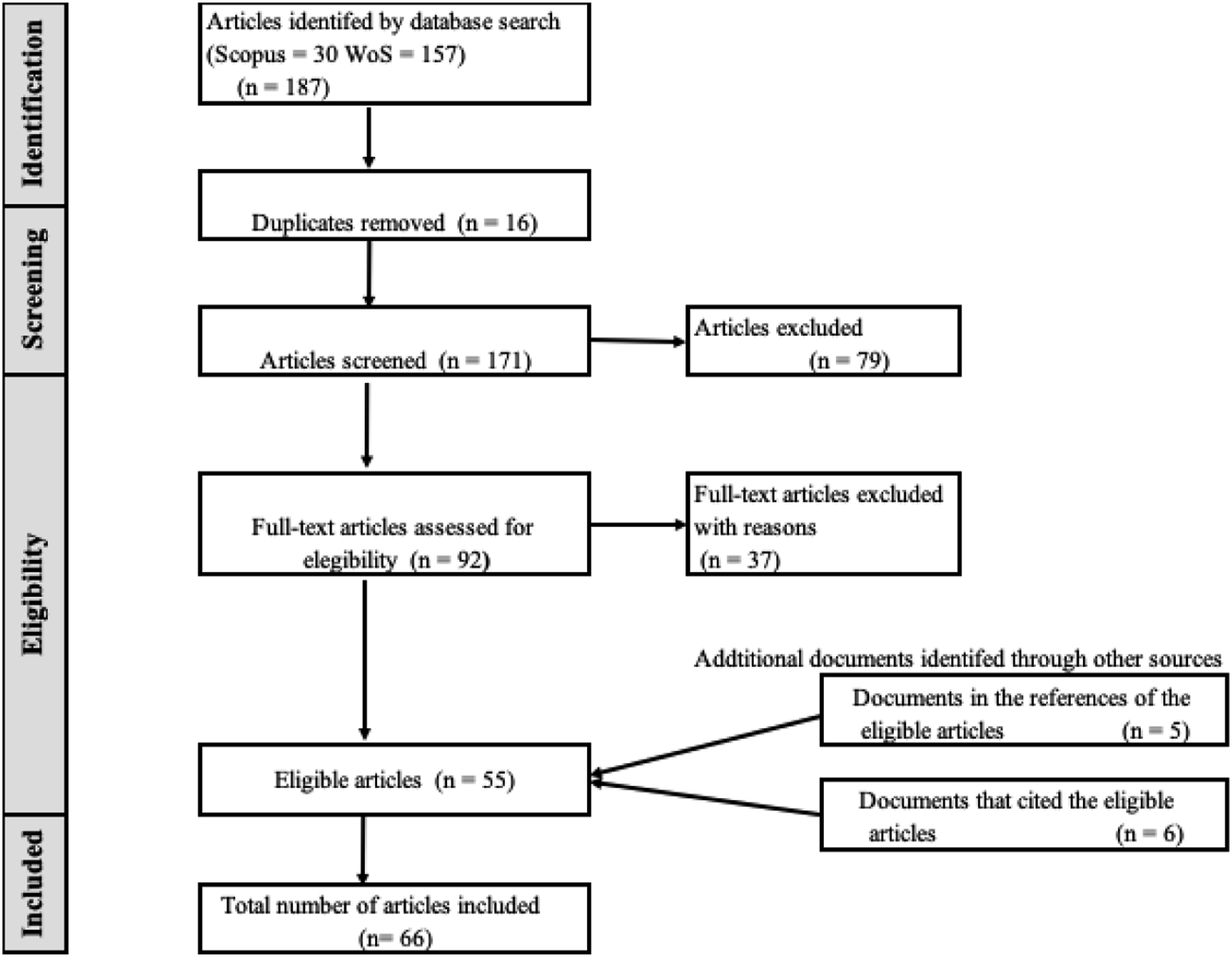
The following section presents the findings, including the research disciplines and theories, the environmental stimuli dimensions and subdimensions with processes and outcomes, and the research methods used in the final sample of 66 articles (Appendix A).
Findings
Research disciplines and theories
Disciplines and theories.
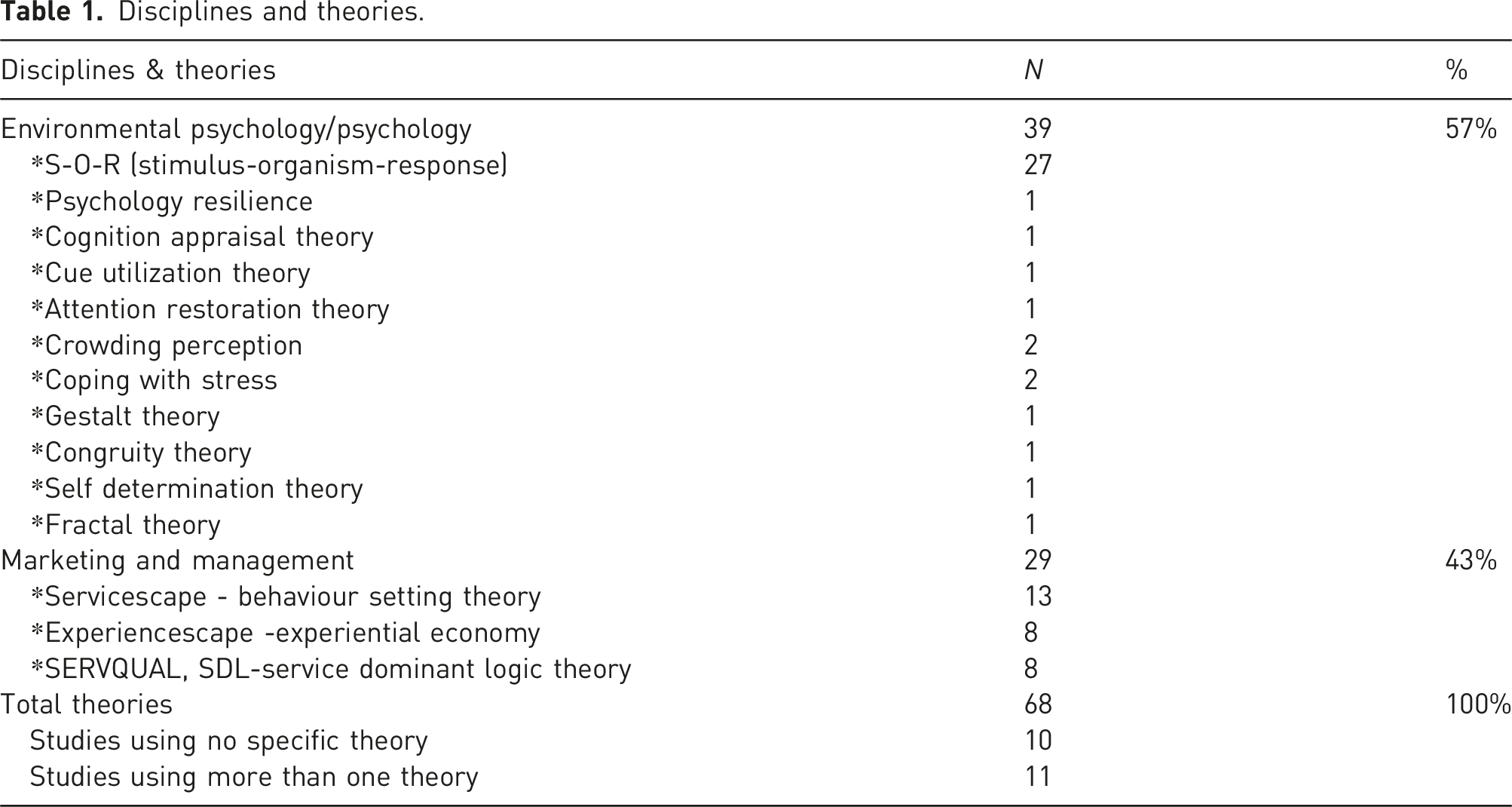
Moreover, the S-O-R theory from environmental psychology is predominant in explaining the effect of a setting stimulus on tourists’ behaviour in different contexts, such as accommodation (Khalil-ur-Rehman et al., 2021; Line and Hanks, 2019; Pytharoulakis and Zouni, 2020), retail (Elmashhara and Soares, 2020; Ndengane et al., 2021; Ong et al., 2018) and destination (Kucukergin et al., 2020; Loureiro et al., 2021). The marketing field mainly uses Bitner’s (1992) servicescape and experiencescape framework through the experience economy of Pine and Gilmore (1998) to explain the economic value of staging experiences (Mody et al., 2019; Piramanayagam et al., 2020).
A reduced number of theories (e.g. psychology resilience, attention restoration, coping with stress) have been used to explain the influence of environmental stimuli on tourists’ psychological health (Han et al., 2019a), restorative health care (Mody et al., 2020) and emotional well-being (Han et al., 2019b; Song et al., 2021). However, this SLR has not considered other theories (e.g. settings-based health promotion from public health) that could explain the influence of environmental stimuli on the tourist’s holistic health.
Environmental stimuli dimensions and subdimensions
In a holistic approach, the environmental stimuli are multidimensional and based on full-sensory perception (Elmashhara and Soares, 2020, 2022; Lockwood and Pyun, 2020).
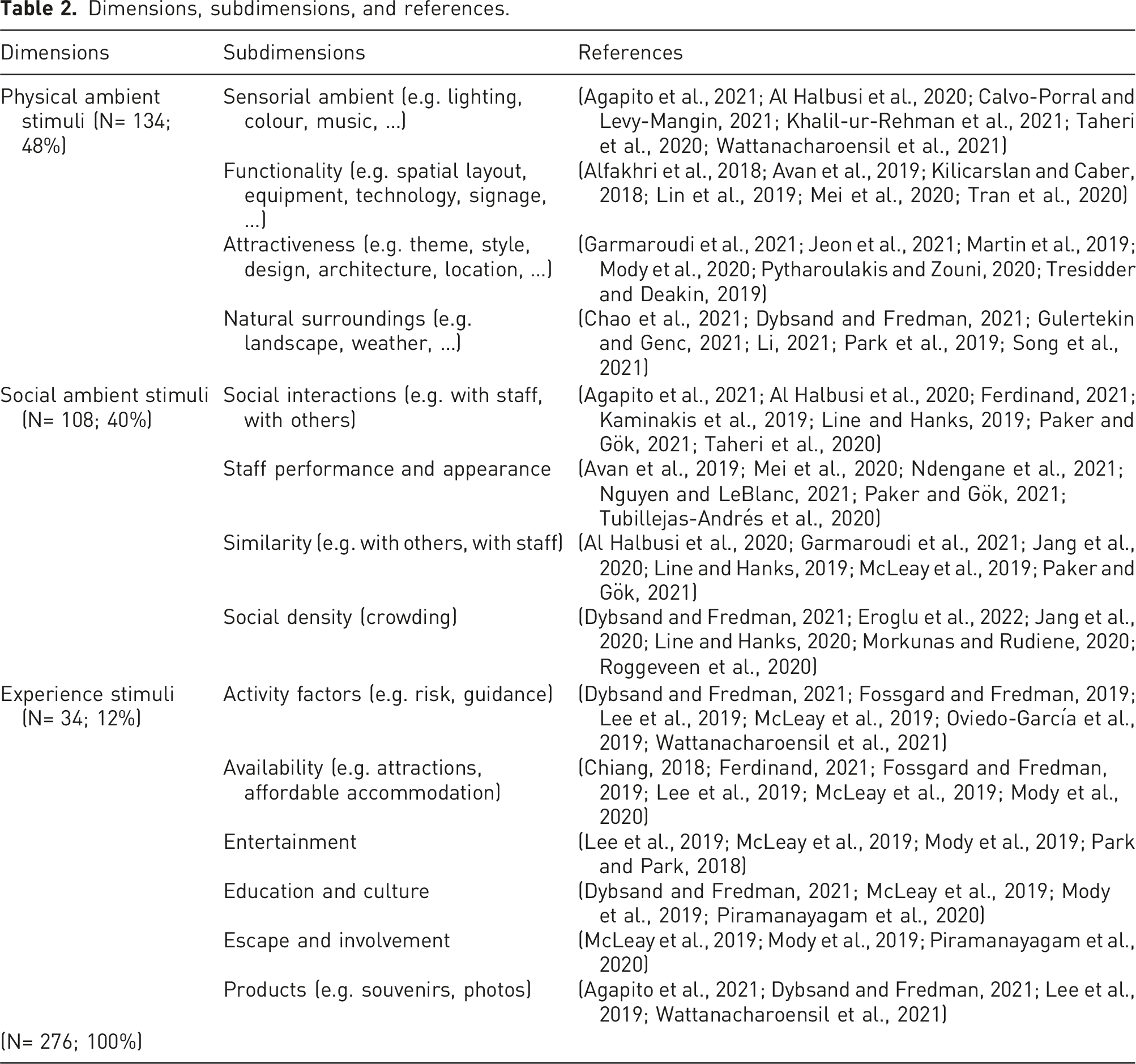
Dimensions, subdimensions, and references.
Physical ambient dimension
Physical stimuli concern the space’s sensory ambience, functionality, attractiveness and natural surroundings. The sensorial ambience has been predominantly studied, highlighting the effect of one or more cues on tourist behaviour. Pleasant lighting, colour scheme and music generate positive emotions that significantly affect tourists’ satisfaction (Alfakhri et al., 2018; Dedeoglu et al., 2018; Pytharoulakis and Zouni, 2020), improve purchase behaviour (Elmashhara and Soares, 2020, 2022; Rabbow, 2021; Roggeveen et al., 2020) and enhance the positive word-of-mouth (Dedeoglu et al., 2018; Khalil-ur-Rehman et al., 2021).
Functionality is another subdimension mainly represented by the spatial layout of a space that allows an uncrowded flow of tourists. Good functionality contributes to the tourists’ positive emotions (Jeon et al., 2021; Ong et al., 2018), providing a more immersive experience (Jeon et al., 2021; Line and Hanks, 2020; Sthapit et al., 2019). Additionally, it increases tourists’ satisfaction (Calvo-Porral and Levy-Mangin, 2021; Taheri et al., 2020) and loyalty (Alfakhri et al., 2018; Buxton and Michopoulou, 2021; Lee et al., 2019; Sthapit et al., 2019).
The attractiveness of the place, namely the interior design, decoration and sensory ambience, helps to communicate the brand image by differentiating the service business and how tourists perceive quality, influencing their emotions (Dedeoglu et al., 2018; Ndengane et al., 2021; Pytharoulakis and Zouni, 2020) and servicescape loyalty (Al Halbusi et al., 2020; Avan et al., 2019; Lee et al., 2019). For instance, it has been found that the surroundings are an essential counterpart of the built environment. Natural and green landscapes with good air quality and light are among the most valuable aspects of outdoor tourist experiences, providing them with stress relief and well-being (Han et al., 2019a).
Social ambient dimension
Social stimuli are perceived by social interaction, staff performance and appearance, similarity, and density. Tourists’ interaction with staff increases loyalty through their perceived value of being treated with respect and politeness (Li, 2021). Employees play a significant role in affecting satisfaction, even when not interacting directly with tourists, as they are constantly observed and evaluated while on duty (Line and Hanks, 2019). Thus, the interaction between employees is also significant as it helps mitigate the adverse effects when customer–employee communication fails to reflect the brand appropriately (Garmaroudi et al., 2021). Managers should teach customer-oriented skills to enhance employees’ performance and impact the tourist experience. They play a particular responsibility in the social servicescape and are compensated for their role (Li, 2021; Line and Hanks, 2019, 2020). However, tourists also assess others regarding their appearance and behaviour, stimulating or restricting human interaction. The tourist’s similarity in appearance and behaviour with others strongly influences satisfaction and word of mouth to friends and family, as they prefer that others are like them, behave appropriately and have a good appearance (Line et al., 2018; Line and Hanks, 2020). Also, the similarity between employees affects tourist satisfaction, even when the employee is not directly interacting with the tourist (Hanks and Line, 2018; Line and Hanks, 2019; Morkunas and Rudiene, 2020). Thus, social servicescape directly or indirectly influences the experience evaluation affecting tourist satisfaction and behaviour (Line and Hanks, 2019; Tran et al., 2020).
Social density encompasses the tolerance to perceived crowding. It negatively affects satisfaction only for those who do not tolerate crowds in hedonic shopping (Calvo-Porral and Levy-Mangin, 2021). However, it is essential for fast-casual dining to share the dining experience and drive satisfaction (Line and Hanks, 2020).
Experience dimension
The experience stimuli include the activity factors, availability, entertainment, education and culture, escape and involvement, and products. The activity factors contain essential aspects of the tourist experience, such as nature requirements like sight and sounds, as the most valuable aspects of nature-based tourism experiences (Fossgard and Fredman, 2019). These activity providers can experience impasses when deciding on nature’s connection for attraction maintenance or risk running for activity development (Fossgard and Fredman, 2019). Also, the availability of information (e.g. brochures, blogs) is essential to facilitate the decision to experience and the affection for a place as it may lead to a positive memory after the visit of all support provided (Ferdinand, 2021).
The experience subdimensions, such as entertainment, education and escape, strongly impact the tourist experience by positively influencing their satisfaction and contributing to memorable experiences and behavioural intentions (Piramanayagam et al., 2020). The pleasure-seeking activities for tourist entertainment facilitate brand loyalty through the tourists’ interaction with staff, as employees represent the greater part of a brand in evoking affection and memories through their hospitableness (Mody et al., 2019). Similarly, the education subdimension highly depends on the employees’ performance. For instance, the guides have a crucial role in the learning process of tourists by providing information, selecting points of interest and enhancing their experience satisfaction (Dybsand and Fredman, 2021). Likewise, the sharing of knowledge and co-creation, virtually and non-virtually, between tourists and providers produce practical learning (McLeay et al., 2019).
Moreover, local food experiences teach about a destination’s culture, positively influencing the tourist experience through its uniqueness and leading to memorable experiences (Piramanayagam et al., 2020). Also, the escape experience encompasses the sense of adventure, adrenaline, fearful feelings and excitement with such emotional involvement that triggers tourist memories and nostalgia, motivating future involvement (Kandampully et al., 2022; McLeay et al., 2019). Furthermore, memories are recalled through souvenirs, regional products and photos after the trip. These products are external attributes essential to measuring tourist satisfaction, enhancing their recommendations to others and their revisiting intentions (Agapito et al., 2021; Dybsand and Fredman, 2021; Lee et al., 2019).
Thus, the experience stimuli are the sum of sensorial, emotional, rational, behavioural and social elements resulting from encountering, undergoing or living situations of tourist participation in designed activities (Zehrer, 2009).
Methods and research approaches
Methods and research approaches.
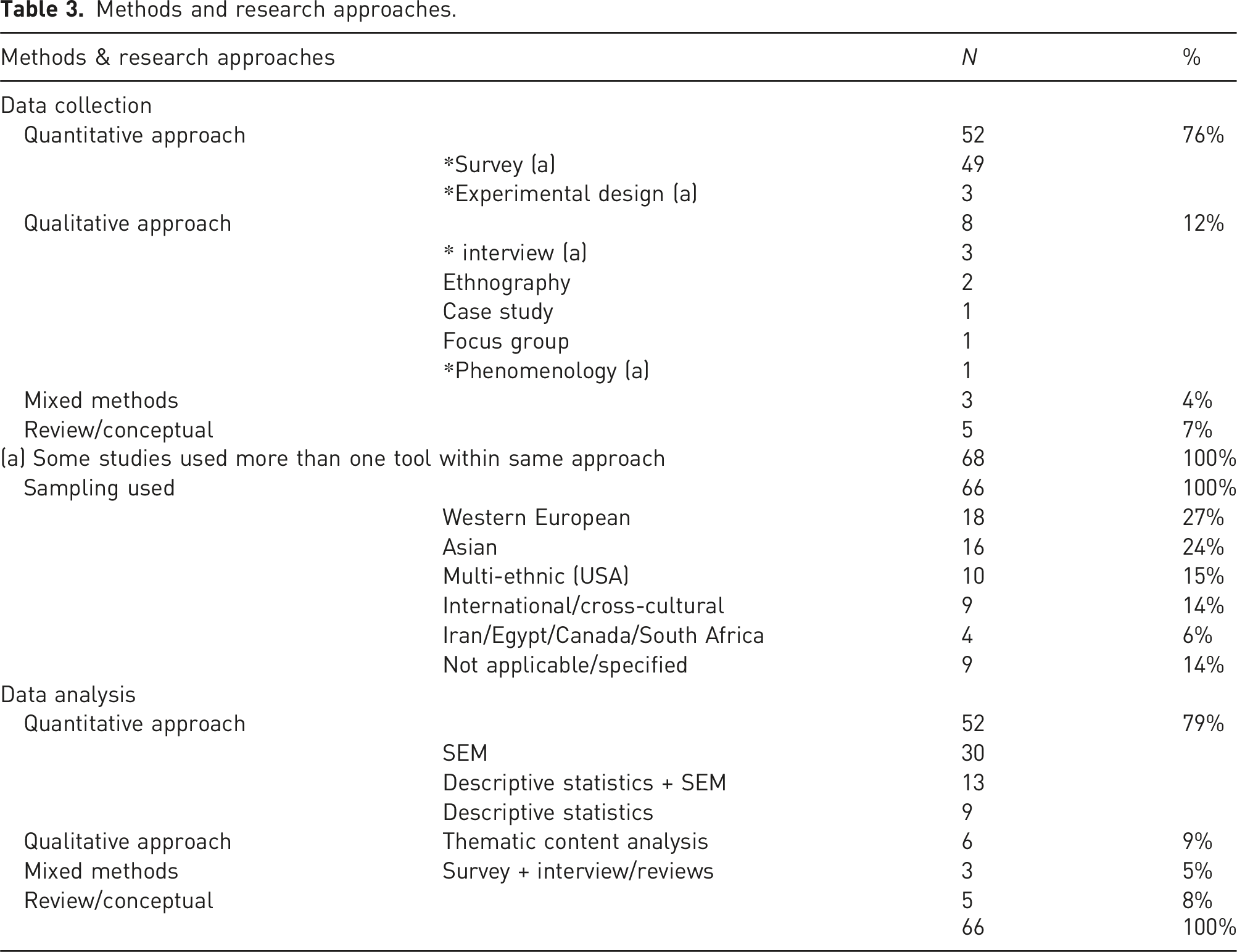
Most quantitative studies used Western European and Asian tourist samples for atmospherics and servicescape research. In contrast, for experiencescape, Fossgard and Fredman (2019), and Mei and colleagues (2020) studied the suppliers, and McLeay and colleagues (2019) studied tourists and suppliers. To deepen the experiencescape construct, qualitative and mixed research was used to understand the multistakeholder perspectives through interviews and surveys for data collection, thematic content analysis, and SEM for data analysis.
Despite the amount of research that has been developed and the evolution of the topic from atmospherics to experiencescape, only two papers on the development of scales for the accommodation servicescape were found in this review (Lockwood and Pyun, 2020; Xu and Gursoy, 2021).
Thus, developing and validating critical measurements to fully understand the complexity of environmental stimuli influencing the tourist experience would be valuable to deepen the knowledge of tourism businesses and academia.
Discussion and conclusions
This paper provides the state of the art about environmental stimuli on tourist experience over three main search streams – atmospherics, servicescape and experiencescape. The SLR allowed us to identify three environmental stimuli dimensions and 14 subdimensions that mainly influence positive emotions and tourist behaviour representing business economic advantages. Furthermore, the study addresses the strong interest of scholars and professionals in environmental stimuli. The theme has evolved from the influence of built environments on consumer behaviour with Kotler’s atmospherics term (1973) to the holistic servicescape of Bitner (1992) to fully capture the significance of the setting stimuli in the tourists’ service under Gestalt psychology. In 2019, the theme was expanded to the newer concept of experienscape by Pizam and Tasci (2019), which requires a marketing approach that captures the holistic meaning of the servicescape for all stakeholders of a cultural organisation. This includes all the sensations and feelings that occur in the experiential environment.
In addition, based on the research gaps identified, we identified three main research proposals for future investigation. Although the study underpinned the positive psychology and marketing theories using the S-O-R framework to explain the environmental stimuli in tourism experience research, the hospitality services and products offering holistic health and wellness experiences require other supportive theories. We suggest using theories based on the public health approach, which could better explain a tourist’s health improvement through the setting stimuli in addition to psychology, people management, organisational behaviour, architecture and other related subjects. For instance, the settings-based health promotion under the public health approach argues that healthy settings play a vital role in holistic health improvement and should be enlarged to all sectors (e.g. tourism), embracing those unrelated to healthcare services (Dooris, 2004, 2009). According to Nutbeam (1998: p. 362), the “setting for health” is “where people engage in daily activities including environmental, organisational, and personal factors that interact to affect health and well-being” and “where people actively use and shape the environment to create or solve problems related to health.”
Furthermore, the settings offer practical opportunities to implement strategies and logical organisational infrastructures for health promotion. Our study framework was mainly based on accommodation and food experiences. However, the spas in hotels and resorts are critical providers of wellness tourism, offering a leading study field for wellness tourism research besides promoting health, social and economic development (Chen et al., 2022; Dooris, 2004).
Therefore, we propose the novel concept of holisticscape (Figure 2) to identify the effect of the setting stimuli on the tourists’ holistic health (body, mind, and spirit). Holisticscape framework. Source: own elaboration.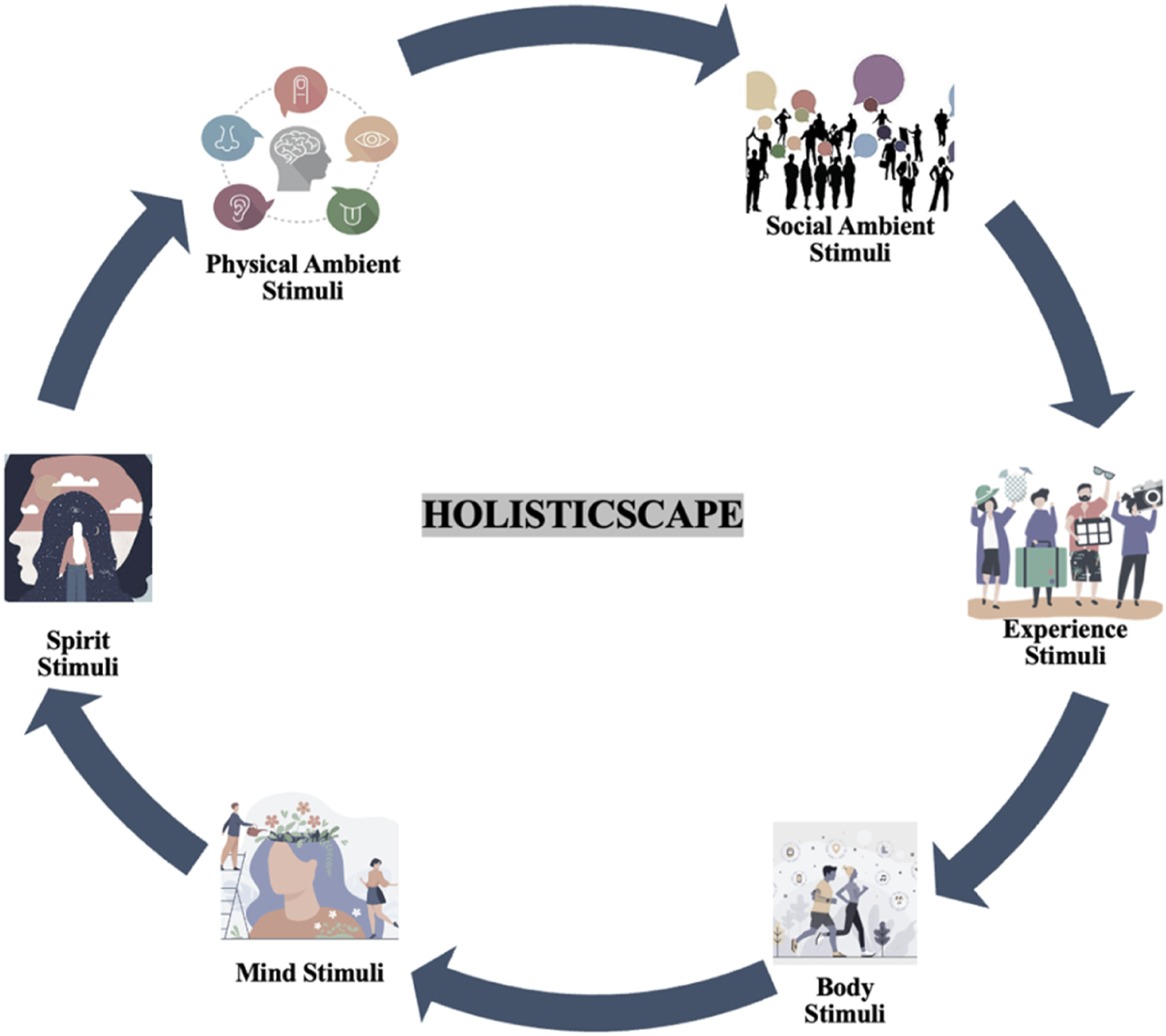
A multidimensional perspective of the holisticscape construct must address the dimensions of the physical environment, social environment, experiential setting, body, mind and spirit. It must encompass all activities related to tourists’ lifestyle preferences and options to promote and balance their health, including their awareness, emotions, decisions and behaviour (Yeung and Johnston, 2020).
Thus, tourism organisations and businesses can embrace the comprehensive holisticscape concept to affect tourists’ holistic health and well-being because health is not merely the absence of a disease or infirmity but a complete state of physical, mental and social well-being (WHO, 2022a). Also, the health concept allows tourists to cope with stress, carry out their work using their abilities, learn, and contribute to their community for personal, public and socio-economic development (WHO, 2022b). Hence, the holistic health and wellness concept comprehends the harmony, connection and dependence between the physical, mental, emotional, spiritual, social and environmental dimensions (Dunn, 1959; Lin and Mattila, 2022; Teixeira, 1996; Yeung and Johnston, 2020).
In summary, the holisticscape concept requires an interdisciplinary research network that integrates the significant stakeholder constructs for future research. Thus, the authors posit that:
The holisticscape encompasses the environmental stimuli that tourists experience, influencing their holistic health and wellness.
Second, the environmental studies used several scales for setting stimuli measurement through adaptations of Bitner’s (1992) physical servicescape, Brocato et al.’s (2012) social servicescape and Oh et al.’s (2007) experiencescape in different contexts and perspectives. Most experiencescape studies measure the setting stimuli based on the experience economy dimensions of Pine and Gilmore (1998) (Mody et al., 2019; Piramanayagam et al., 2020). However, to the best of the authors’ knowledge, the setting stimuli on tourists’ holistic health remain understudied in the tourism experience. To deepen the understanding of holisticscape, developing a parsimonious scale is necessary to capture the critical features of the environmental stimuli that influence the tourists’ holistic health and wellness experience, considering the different stakeholders’ perspectives. Thus, the authors posit that:
Developing a holisticscape scale is necessary to measure the influence of environmental stimuli on tourists’ holistic health and wellness experience.
Third, several environmental stimuli studies have explored different causes, means and outcomes to understand the stimuli’s influence on the tourist experience (e.g. Avan et al., 2019; Dedeoglu et al., 2018). Environmental stimuli rooted in the (a) atmospherics, (b) servicescape and (c) experiencescape terms are mainly studied as exogenous variables concerning positive emotions and behavioural intentions (Figure 3). S-O-R model. Source: own elaboration.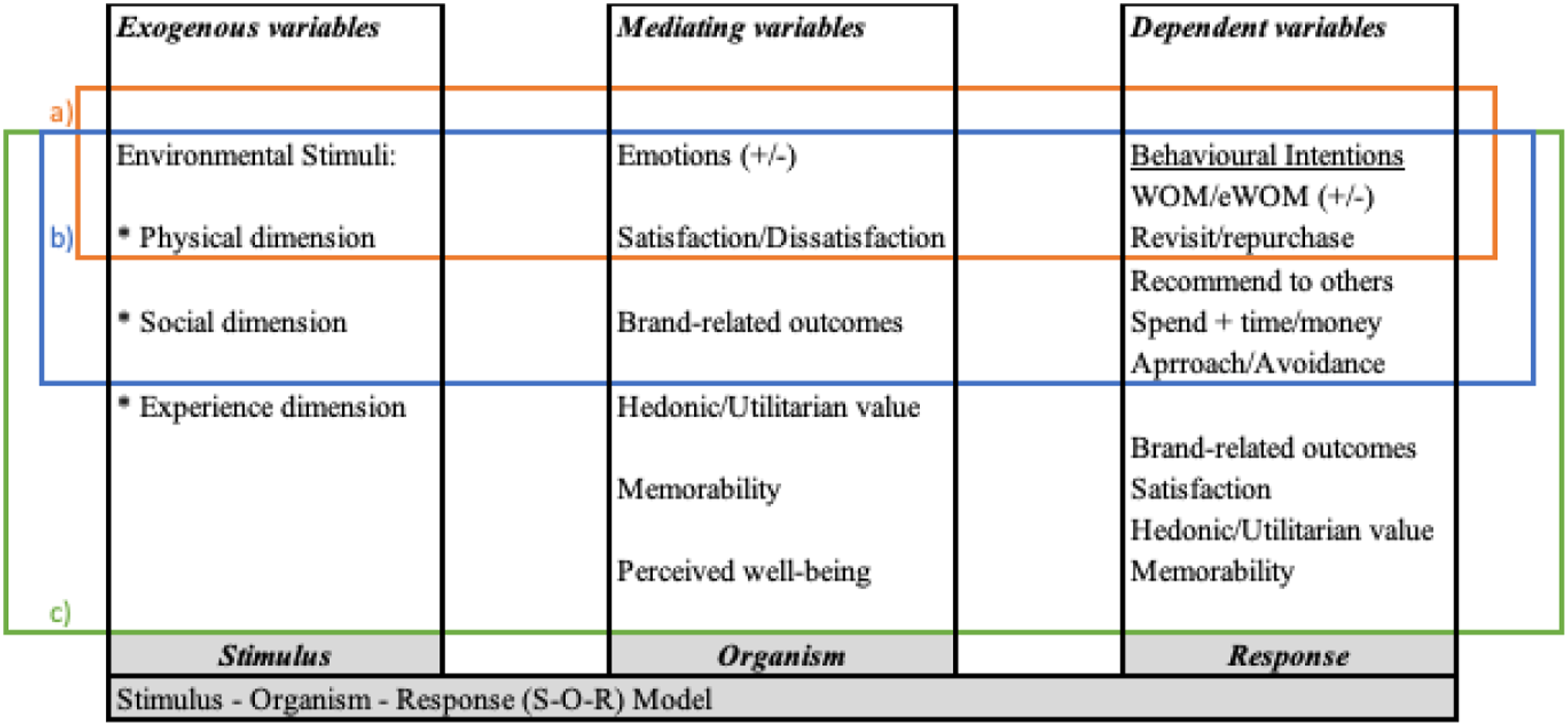
Positive emotions such as pleasure and arousal mainly mediate behavioural intentions such as word of mouth and revisit intention (Dedeoglu et al., 2018; Elmashhara and Soares, 2022; Oviedo-García et al., 2019). Although some studies have examined both emotions, scholars have found that negative emotions have less explanatory power for the experiential value of the servicescape, increasing the relevance of positive emotions (Chao et al., 2021; Eroglu et al., 2022; Vigolo et al., 2020). Furthermore, positive emotions better explain the tourists’ intentions, such as satisfaction, hedonic value and loyalty (Chao et al., 2021; Hanks et al., 2021; Lockwood and Pyun, 2020).
Regarding the outcomes, behavioural intentions such as word of mouth and revisit intentions are among the most studied, as they represent the economic interests of businesses. Even though Tasci and Pizam (2020) have highlighted other outcomes with an indirect economic interest, such as personal transformation and quality of life, their research still needs to be more extensive. Few studies investigated experiential outcomes related to perceived well-being, personal growth, wellness, and happiness in tourism. These hedonic and eudemonic outcomes are of increasing research interest (Agapito et al., 2021).
Thus, further research is necessary to explore other less-studied S-O-R.
Based on the findings, the study proposes to examine the holisticscape effect on the hedonic and eudaemonic well-being outcomes. Thus, the authors posit that:
The holisticscape positively influences the hedonic and eudemonic well-being outcomes.
In conclusion, this SLR presents the primary environmental stimuli in tourism experience contexts and a research agenda to investigate the concept of holisticscape proposed by the authors. This study aimed to identify which environmental stimuli elements affect the tourist experience. Our findings allowed the identification of three environmental stimuli dimensions: the physical, social and experience. The physical dimension comprises four subdimensions: the sensorial ambient; the space’s functionality; the place’s attractiveness; and the natural surroundings. Also, four subdimensions outline the social dimension: social interactions; staff performance and appearance; similarity; and density. Six subdimensions embrace the experience: the activity factors; availability; entertainment; education and culture; escape and involvement; and products.
Despite the research including the terms “atmospherics,” “servicescape” and “experiencescape,” the environmental stimuli in the tourist experience have not yet been fully captured in the previous literature. Thus, we propose the holisticscape construct to embrace the physical, social, experiential, body, mind and spiritual dimensions of the environmental stimuli in the tourist experience, considering a multistakeholder and multidisciplinary approach.
Although marketing provides a theoretical foundation for understanding the experience other multidisciplinary approaches and theories are required to explain the holisticscape thoroughly. We propose the holisticscape as an extension of the servicescape, with an interdisciplinary approach contributing to the tourists’ holistic health. Furthermore, empirical studies will better explain the holisticscape concept from a multiperspective regarding the experiential setting stimuli.
The management of tourism businesses can use the S-O-R framework and the systematisation of the settings’ stimuli identified in this study to better design experience programmes and increase their economic and competitive advantages in the tourism sphere. On the other hand, the scholars have a research agenda for future investigation under the new concept of holisticscape in addition to the S-O-R provided by the study.
Finally, future studies may consider expanding the critical review through other data set requirements and other databases.
Supplemental Material
Supplemental Material - Holisticscape – the extended servicescape to influence tourists’ holistic health. From a systematic literature review to a research agenda
Supplemental Material for Holisticscape – the extended servicescape to influence tourists’ holistic health. From a systematic literature review to a research agenda by Cristina Valente-Pedro, Nélson de Matos and Patrícia Pinto in Journal of Tourism and Hospitality Research.
Footnotes
Acknowledgements
The authors are thankful for the support from the CinTurs - Research Centre for Tourism, Sustainability and Well-being and FCT - Foundation for Science and Technology.
Declaration of conflicting interests
The author(s) declared no potential conflicts of interest with respect to the research, authorship, and/or publication of this article.
Funding
The author(s) disclosed receipt of the following financial support for the research, authorship, and/or publication of this article: This paper is financed by National Funds provided by FCT-Foundation for Science and Technology through project UIDB/04020/2020.

Supplemental Material
Supplemental material for this article is available online.
Author Biographies
References
Supplementary Material
Please find the following supplemental material available below.
For Open Access articles published under a Creative Commons License, all supplemental material carries the same license as the article it is associated with.
For non-Open Access articles published, all supplemental material carries a non-exclusive license, and permission requests for re-use of supplemental material or any part of supplemental material shall be sent directly to the copyright owner as specified in the copyright notice associated with the article.
