



Abstract
This study aims to analyse the research involving the evolution and development of digital transformation and the new combinations in tourism development. To this end, a systematic literature review was conducted in the Scopus and Web of Science databases, which gathered 167 studies published between 1997 and 2023, representing the final sample analysed in this review. The results allow the identification of three main findings: i) there are four thematic groups - Digital Marketing, Digital Economy, Education and Hospitality and Free Digital; ii) there is a growing interest in the research of this topic and the use of available technologies for the development of tourism companies and their businesses and the respective wider economy; and, iii) digital transformation tends to be a positive factor when applied to the tourism sector. This research further proposes a framework that provides a detailed description of these studies with key issues and contributions from the available literature.
Introduction
Technological advancement has completely changed the interrelationship between supply and demand in the travel industry and largely affects customers' travel patterns. New technologies and digitalisation have recently significantly impacted, generating enormous amounts of data, information, and knowledge (Cuomo et al., 2020; Minghetti and Buhalis, 2010). From the perspective of AL-Mulali et al. (2021), digitalisation is an important factor for the tourism industry as it has revolutionised tourism initiatives, products, experiences, business ecosystems, and destinations, as well as changing the ways of interaction (Jingen Liang and Elliot, 2021).
These changing interactions have affected behaviour in the tourism market and established new connections with visitors, which tend to a greater appreciation of experiences and promote the growth of such activities as a key factor in destination choice and consequent behaviours during such experiences (Hadinejad et al., 2021).
In this scenario, researchers argue that adopting tourism tools based on information and communication technologies (ICTs) can facilitate travelers' experiences in planning and managing their trips (Yoo et al., 2017). Thus, ICTs stimulate improvements in social and economic impacts that can benefit both developing and already developed countries.
According to Klimova et al. (2020), there is another advantage to the wide adoption of digital services and platforms within tourism and hospitality, as they can develop tourism businesses with technologically intelligent combinations. In this sense, improving technology applied to tourism seems to foster competitive advantages and overcome traditional modes favouring better results and developing countries and regions (Nikolskaya et al., 2019).
From the perspective of Cuomo et al. (2020), this drives the need to deepen our knowledge about the contribution of the usage of digital technologies beyond a focus on tourism services. Furthermore, these authors stress the need to carry out scientific research able to illuminate how tourism is evolving concerning these technological advances, which open up spaces and opportunities for studies approaching how the digital dimension associates with tourism and enriches the literature on this field.
Within this framework, the present study seeks to advance the evolution and development of research on digital transformation and new combinations for tourism development. To this end, this aims at complementing the literature by (i) identifying the increase in research on the application of technology to tourism activities and (ii) identifying the main thematic areas in this field of study.
Hence, we opted to undertake a systematic literature review (SLR), making recourse to the Scopus and Web of Science databases as search platforms for articles. The results identified four key themes (clusters) relating to this field of knowledge: Digital Marketing, Digital Economy, Education and Hospitality and Digital Free. This study contributes to the literature by identifying the main trends in digital transformation, and new combinations in tourism on behalf of the growth of regions, locations, and tourism businesses have, given that this may highlight the potential advantages of the joint deployment of digital means and tourism within the objective of consolidating, were not dynamically boosting these activities.
The remainder of this paper is structured as follows. First, the literature review section covers the relevant literature on the topic contemplated. Second, the method section explains the scope and systematic review process. Next, the results of the qualitative analysis, discussion, main trends, and research agenda are presented. Finally, the paper outlines the conclusions and limitations of the study.
Theoretical background
Digital tourism
Society is experiencing a period in which it is strongly influenced by technological advances (Jiang et al., 2022). This digital transformation radically changes the structure of industries due to the spread of technologies such as artificial intelligence, big data, cloud computing, virtual reality, augmented reality and others (Maki et al., 2022).
Digital technology is an essential and integral part of many businesses worldwide, enabling the enhancement of major economic segments and markets to improve their capabilities (Zheng et al., 2022; Yeung and Galindo, 2019). It can be said that digitization is a positive intermediary for the development of companies and innovation in market performance, as seen in the work of (Suder et al., 2022).
Among these industries, tourism stands out as a relevant economic activity with accelerated growth (Hateftabar, 2022), an employment generator responsible for the development of regions and the improvement of the economy of these spaces in the modern world (Rajamanicam et al., 2018).
This activity is increasingly adapting to new digitalisation trends (Băltescu, 2021) and has focused on a digital economy characterised by the effort of companies to be agile and competitive (Alford and Jones, 2020).
However, some events have directly affected this potential Park et al. (2022) and Lebrun et al. (2022), in which highlight such as the pandemic of COVID-19, which has intensely compromised the entire value chain of global tourism (Ndou et al., 2022).
In this understanding, it is identified that tourism is an activity shared with public agencies, with the participation of a significant number of actors involved in developing a place Acevedo-Duque et al. (2022) and Ruiz-Ballesteros (2022).
This scenario reinforces the need to adapt to a newly configured reality and the expansion of new technologies (Oncioiu and Priescu, 2022) that can assist tourism activities and add value to the customer experience Ito et al. (2022) and Ahn and Back (2019).
Currently, technological expansion in tourism has been vital to supporting the recovery of the activity in the post-COVID period for: (1) restructuring spaces and capacities, (2) redesigning tourism experiences, (3) adopting new standards, regulations and (4) new ways of carrying out activities and interactions in spaces (Ndou et al., 2022).
In the perception of some researchers, Ndou et al. (2022) and Melián-Alzola et al. (2020), this is an opportune moment to renew the tourism offer and adopt technologies and innovations. The combination of digital and tourism, amidst market transformations, is necessary as it sustains and increases the value of tourism (Okafor et al., 2022).
Regarding digital technologies in offering customised experiences to visitors, tourism destinations seek to digitally transform both the tourism experience (Băltescu, 2021) and the tourism products offered worldwide. This new practice opens up space for marketing personalised digital souvenirs or digital gifts for each route or tourist destination (Zhao et al., 2022a). It can also benefit graphic designers, photographers, tourism agents, software developers and visitors to have a memorable digital gift personalised from their visit (Mantas et al., 2021).
Thus, the development of technology and information technology can become a solution for the survival of the tourism industry (Camilleri and Kozak, 2022). Even the use of augmented reality as a tool in virtual tourism is an option consequent to the advancement of technology that aims to facilitate and enhance the user experience of exploring destinations (Akhtar et al., 2021; Busulwa et al., 2022).
Methodology
The present work proposes developing a conceptual framework for a simultaneous digital transformation and tourism approach. To this end, a systematic literature review (SLR) was used, a method that allows analysing, summarising, presenting and discussing the studies that somehow contributed to the literature (Tranfield et al., 2003) through content analysis of scientific articles related to the object of study.
As regards data collection, this took place through the Scopus database – a selective and indexed database that makes use of “cutting-edge software to eliminate data inconsistencies and guarantee that over 99% of the citation references and articles cited correspond with accuracy” (Boyle and Sherman, 2006). The choice of the Scopus database is justified by the quality of the results and its ability to assist the researcher in accurately identifying the necessary relevant information. This database combines progressive technology and human experience (Boyle and Sherman, 2006; Rosário and Dias, 2022), a task fundamental to the development of RSL, for example. Data were also collected from the Web of Science (WoS) base, a multidisciplinary platform that allows tracking historical articles published before 1960 (Marx, 2012) and contains thousands of academic journals with their respective bibliographic information (Ferreira et al., 2021).
We opted for a type of research that associated the keywords and the titles of the articles (“Digital”; “Tourism”).
In addition, we applied the “Area of Study” filters (Business, Administration and Accounting; Economics, Econometrics and Finance) in English and with the content/structure of academic articles to the Scopus database. In the Web of Science database, the filter “Study Area” was applied (Hospitality; Leisure; Sport, Tourism; Management and Economy). The search occurred in February 2023 and originally returned a single database of 249 articles. In methodological terms, to meet the objectives of this study, the data processing phase included all the articles that connected with the central theme, specifically digital technologies applied to tourism. This analytical procedure excluded 56 articles due to their objective not featuring tourism development through digital transformation.
Furthermore, another twenty-six articles were excluded, given their repetition within the database. Following this data processing, a total of 167 indexed articles were obtained, representing the sample applied in this study. The analysis of these articles grouped them into four clusters in keeping with the similar information contained in the respective articles: Digital Marketing, Digital Economy, Education and Hospitality, and Digital Free. Figure 1 provides the methodological structure of the database analysis process. Methodological structure applied in the SLR.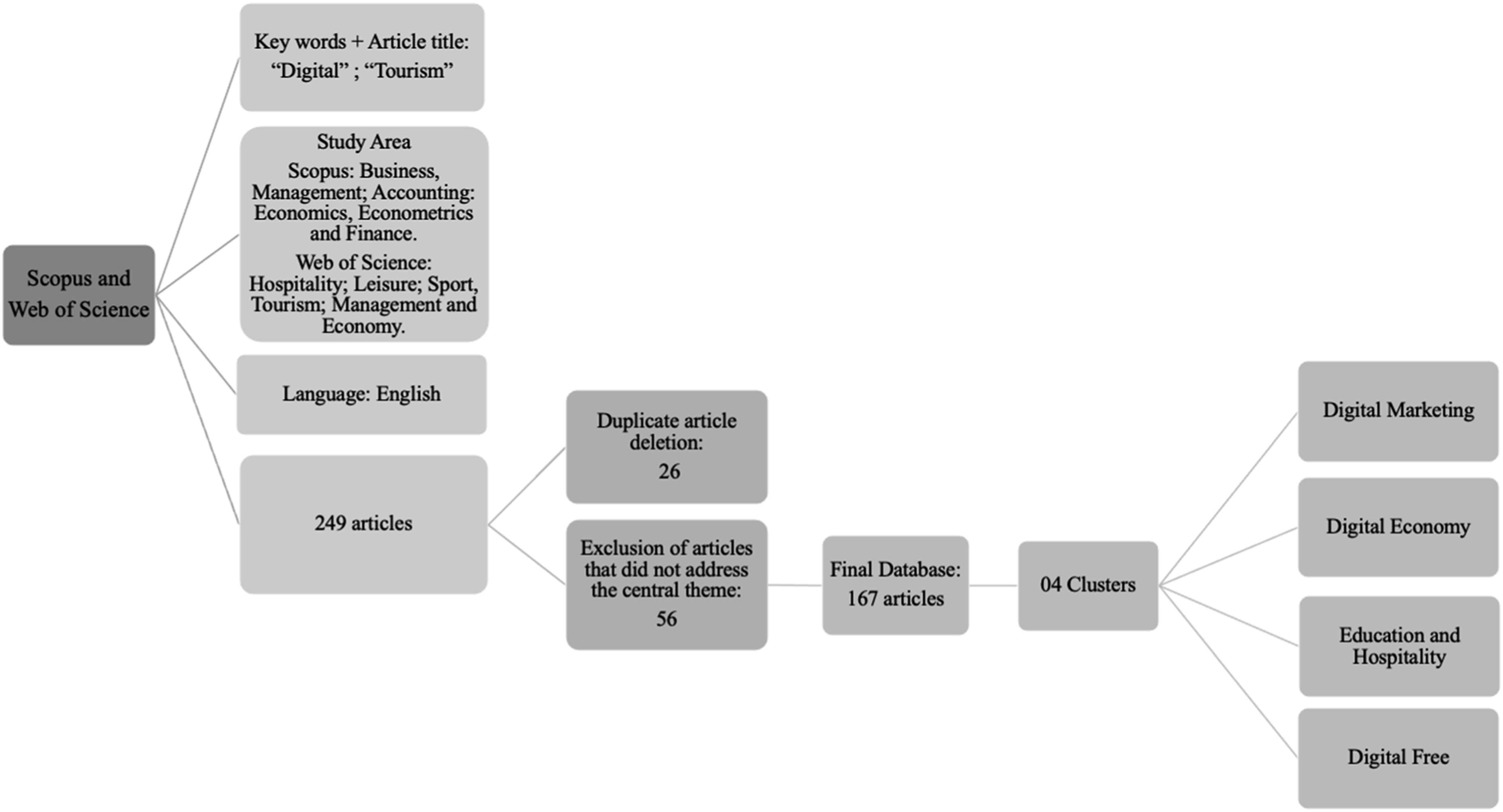
To achieve the study objectives, in the first analytical phase, we made recourse to exploratory, descriptive statistics to process the data, especially to produce tables with their absolute and relative frequencies within the scope of identifying the evolution of the research outputs in quantitative terms, tracing the trends in the interest in this field and verifying the composition of the clusters by field of study. Remaining within the scope of drafting the conceptual model, we also applied content analysis to detail the evolution and development of the literature on this theme.
Results
This section details the growth and development of research carried out on digital transformation and the new combinations for developing tourism within the scope of the quantity and trends in publication, the methodologies deployed, leading journals, clusters and key fields of study.
Descriptive results
The study first identified a rising level of research on the involvement of technology in tourism activities, as portrayed in Figure 2. This demonstrates how, out of the 167 articles published, 129 appeared in the period between 2020 and December 2022. The number of studies has risen and reached its peak in 2021, with 59 publications/year. Furthermore, no studies were published on this theme between 1998 and 2009. Number of publications and citations per year.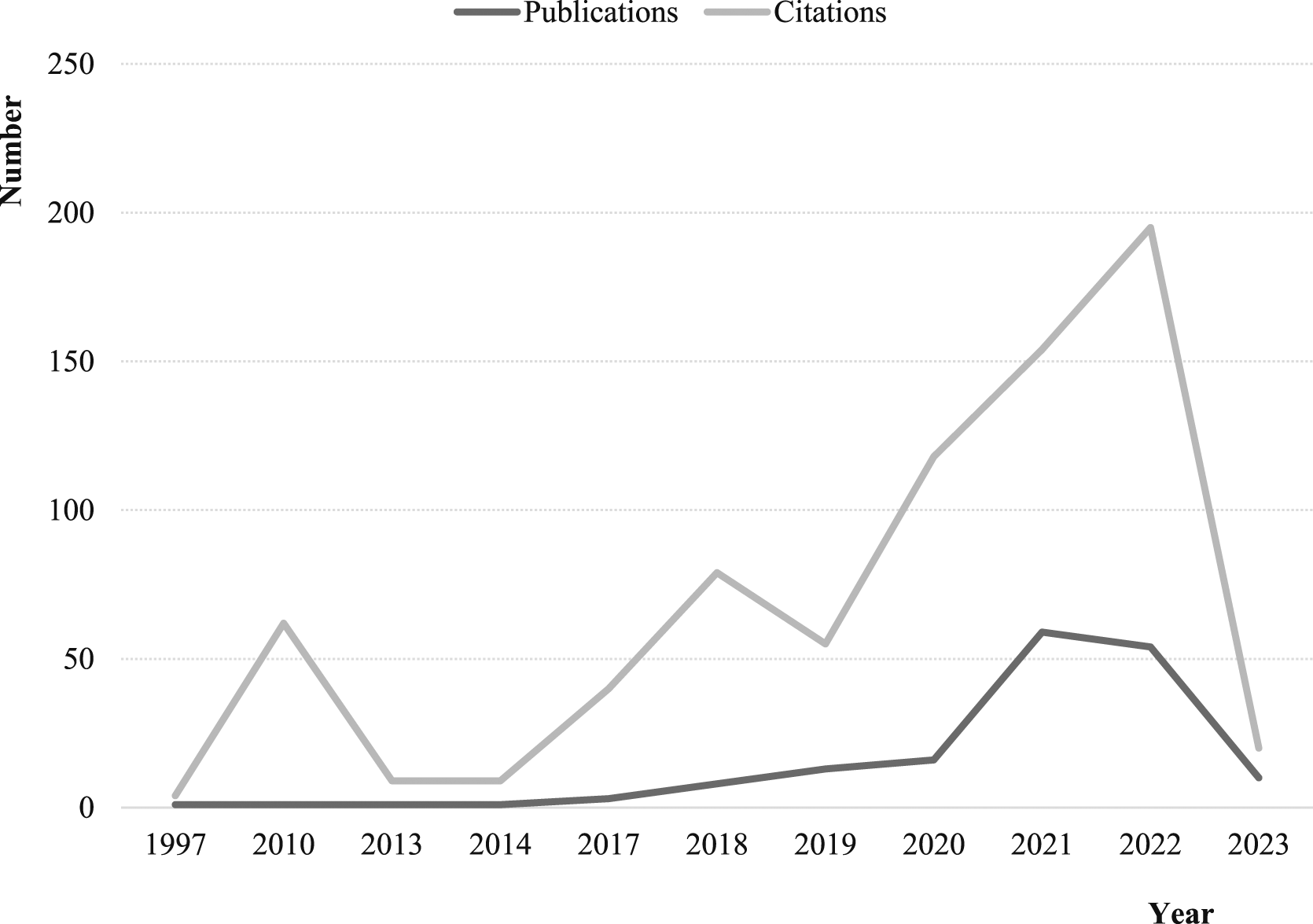
As for the number of citations, the years of 2020 stand out, with 102 citations, including the article “The digital revolution in travel and tourism industry” published in the “Information Technology & Tourism” by Pencarelli (2020) and the year 2022, with 141 citations in total, of which 32 stem from the article “International tourism, digital infrastructure, and CO2 emissions: fresh evidence from panel quantile regression approach” published in “Environmental Science and Pollution Research” by Wei and Ullah (2022).
To identify the main trends in the approaches made in research on tourism and technology (Figure 3), we may report that 41.3% opt for quantitative empirical methodologies while 29.9% are qualitative empirical studies. Furthermore, 22.2% of the articles published apply a conceptual study method, and only 6.6% are mixed studies, thus using quantitative/qualitative approaches. Approaches applied in the articles published.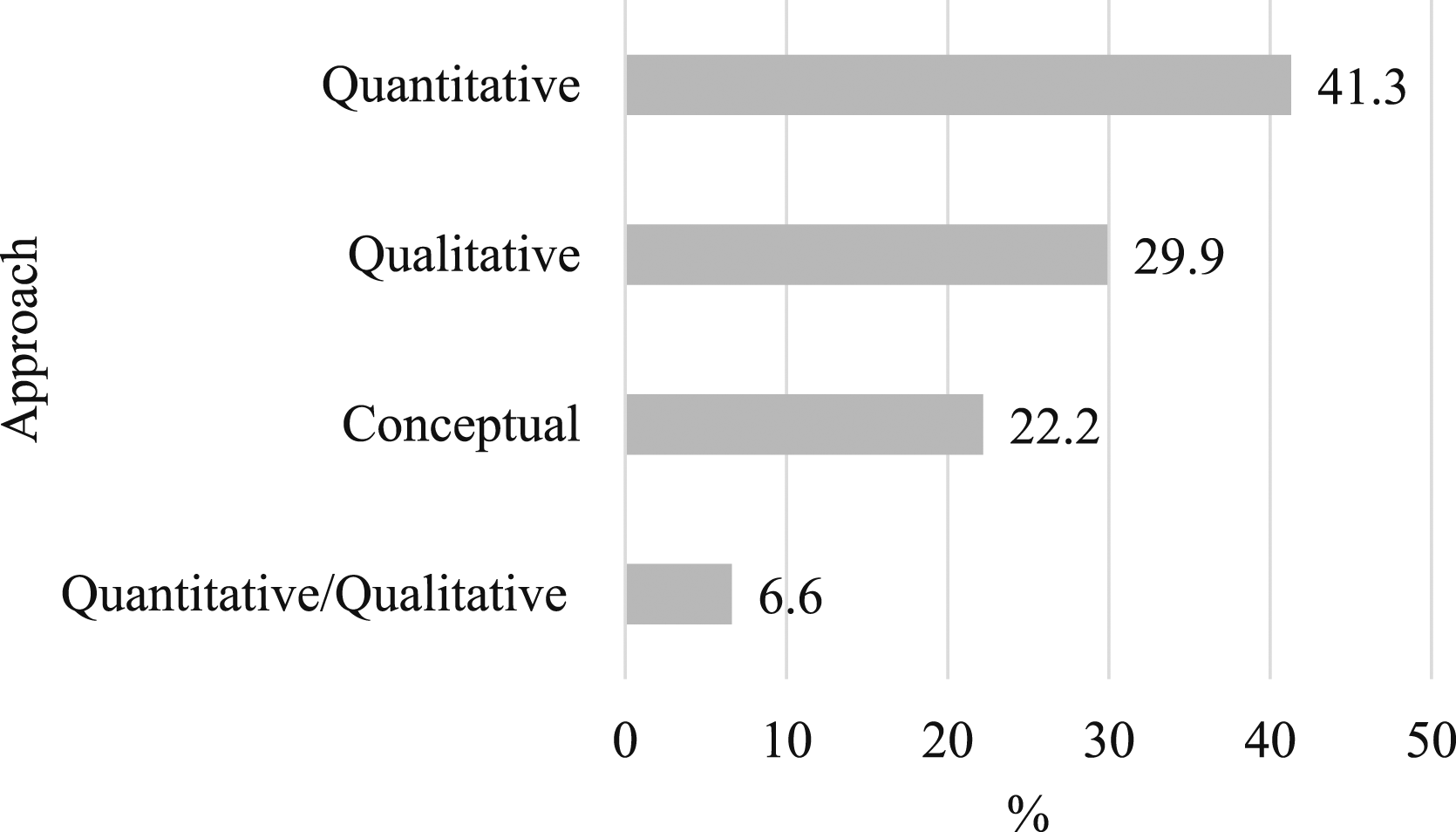
Quantity of articles per cluster.
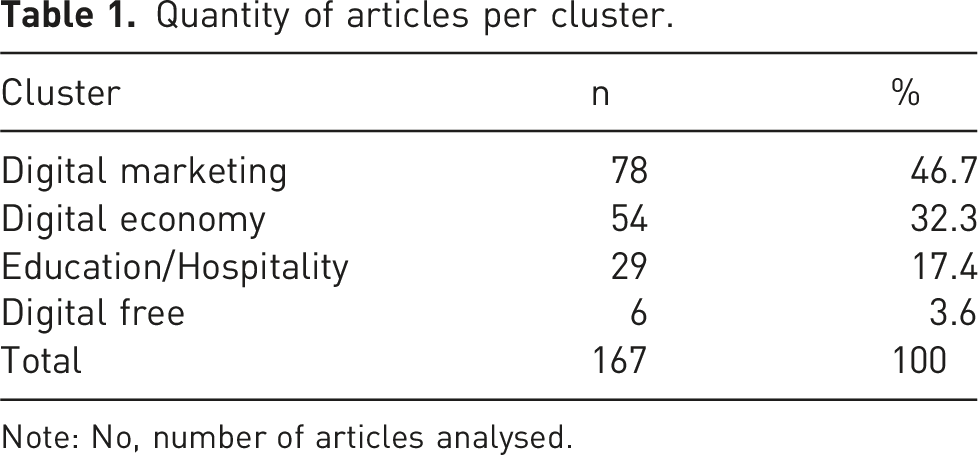
Note: No, number of articles analysed.
Figure 4 portrays the annual evolution in the number of publications per cluster. Analysing the number of publications annually, the first article came out in 1997 and falls within the Education and Hospitality cluster, followed by the first Digital Economy article published in 2010. In turn, 2018 saw the first publication in the Digital Free cluster and four articles in Digital Marketing, reflecting the recent nature of these themes. Annual evolution in the number of publications per cluster.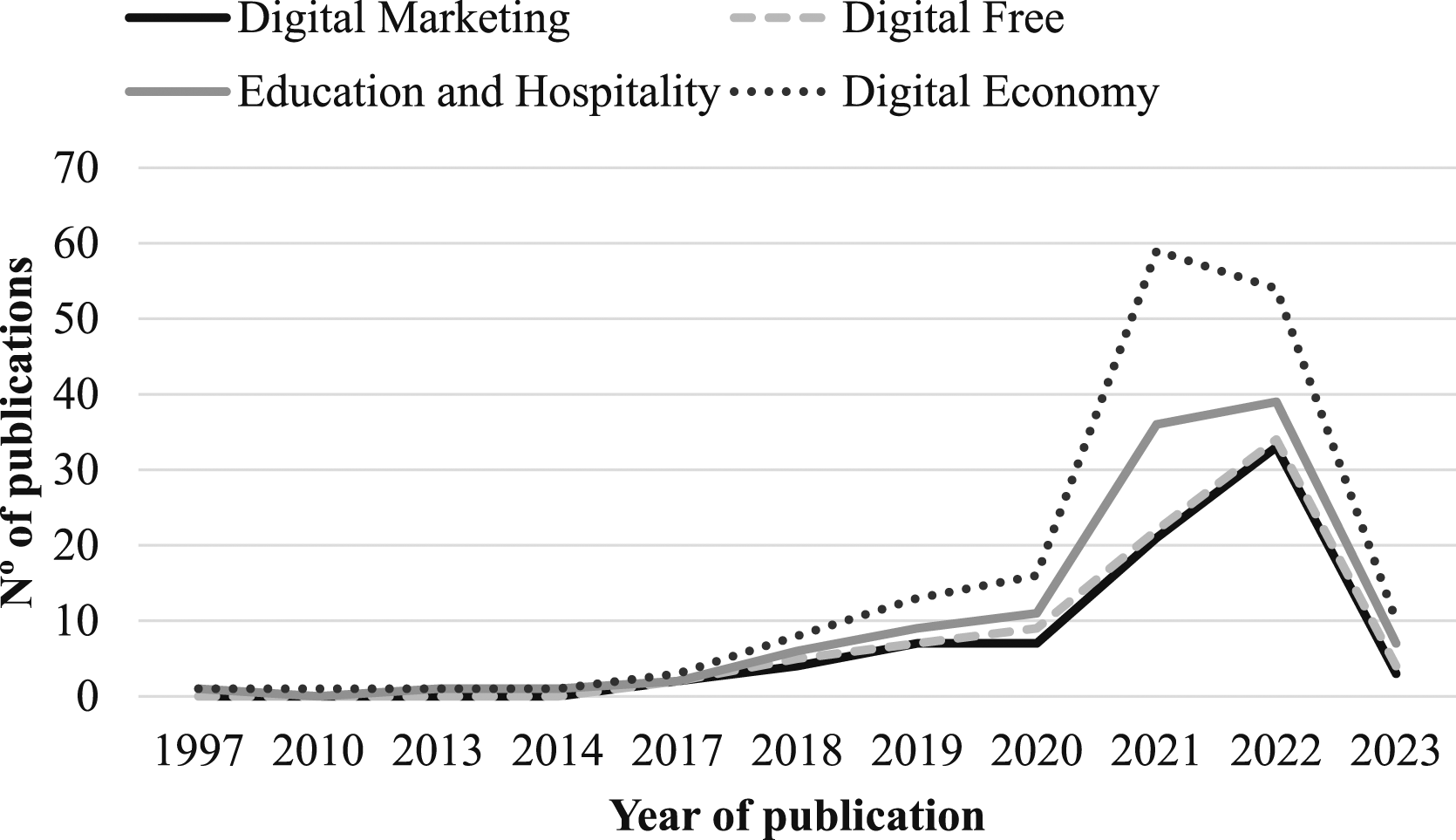
2020 saw a sharp spike in the level of articles published on the association between tourism and technology, with sixteen articles. This should highlight that 2021 is an outstanding year as articles were published on each cluster and 59 publications thus far this year.
This details how the first article on this theme dates back to the year 1997 and belongs to the “Education and Hospitality” cluster and was published in the “Journal of Sustainable Tourism” under the title of “Saving cultural information: The potential role of digital databases in developing cultural tourism,” by Shackley (1997).
Digital transformation and the new combinations in tourism: Key trends
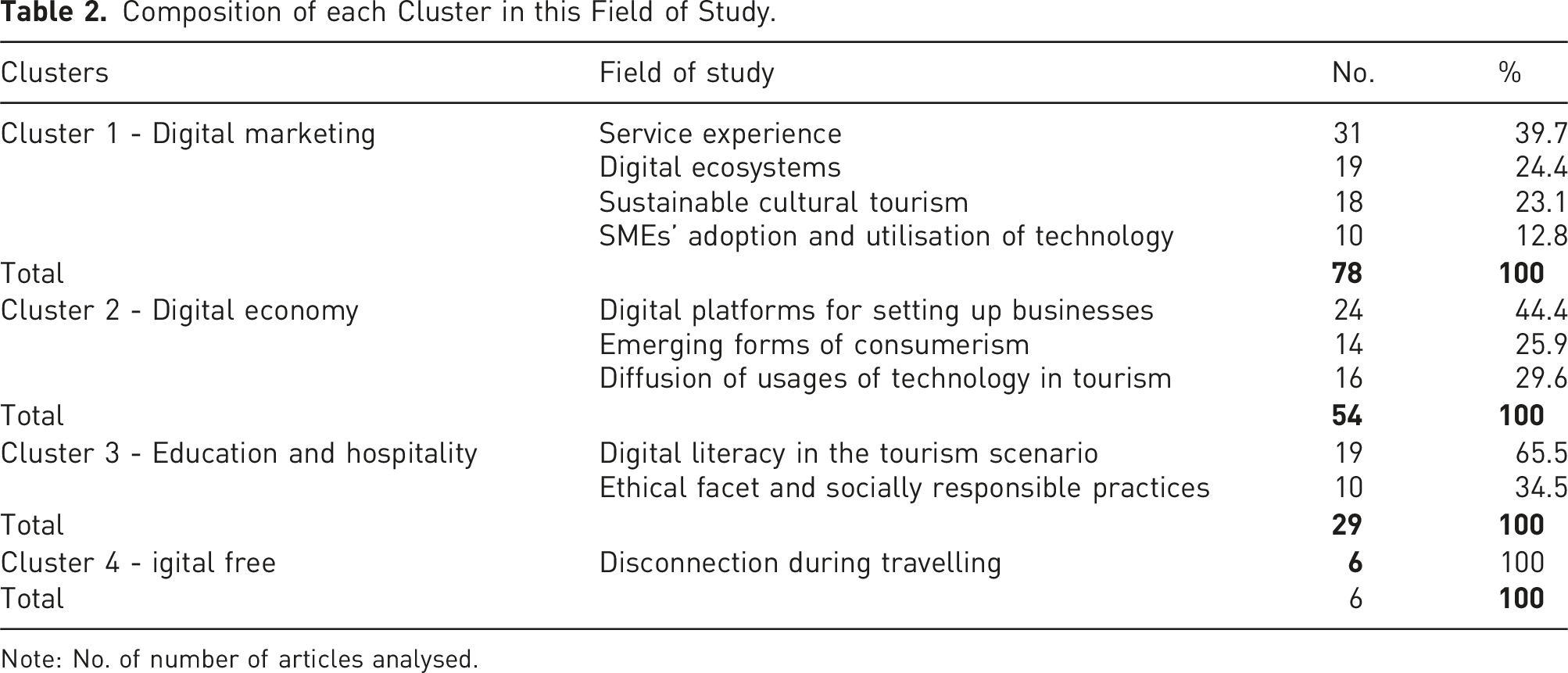
Composition of each Cluster in this Field of Study.
Note: No. of number of articles analysed.
Cluster 1 (No.=78): Digital marketing
The first cluster, entitled Digital Marketing, includes a total of seventy-eight articles. The systematic review of the articles enabled the identification of four sub-fields within this cluster, service experience, digital ecosystems, small and medium-sized companies (SMEs), adoption and utilisation of technology and sustainable cultural tourism.
The first field groups thirty-one stories from the seventy-eight publications in this cluster and contains the core objective of analysing the service experience. This covers the extent that the adoption of technologies completely transforms the structure of the tourism industry as they enable visitors (tourists and excursionists) to share their experiences of travel destinations and supply information through recourse to digital platforms. However, this technological adoption enables the user (visitor) to assist other individuals in making better decisions in selecting destinations and the services on offer. In this context, the penetration of mobile phones and the advances of the Internet have increasingly driven the development of tourism and motivated both economic and social development (Adeola and Evans, 2019; Almeida-Santana et al., 2020; AL-Mulali et al., 2021; Belonozhko et al., 2018; Bu et al., 2020; Christou et al., 2023; Frenzel et al., 2022; Grundner and Neuhofer, 2021; Mathew and Soliman, 2021; Magano and Cunha, 2020; Sun and Guo, 2022; Saini and Arasanmi, 2021; Yaşarsoy et al., 2022). In keeping with the same perspective, the authors Sakas et al. (2022), Preko et al. (2022); Escandon-Barbosa and Salas-Paramo (2021), Gon (2021), Tripathi and Wasan (2021), Hasan et al. (2020), Ivanova (2021), Martí et al. (2021), Lim et al. (2017), Prokopenko et al. (2020), Myat et al. (2019) and Tsourgiannis and Valsamidis (2019) detail how digital marketing tools, when understood as of strategic importance to promotion, may generate more dynamic campaigns with correspondingly more positive effects through the utilisation of tourism applications and websites that lead visitors to convey their preferences and interact with the services on offer in the sector. Finally, this considers the need to implement specific marketing strategies for enhancing the images of places and regions that experience the effects of a reduction in visitors brought about by natural disasters, pandemics and even in cases of acts of terrorism (Avraham, 2021; Do et al., 2021; Giovanis et al., 2022; Kitsios et al., 2022; Ketter and Avraham, 2021; Lebrun et al., 2021; Susanto et al., 2022).
The second field integrates nineteen studies of seventy-eight publications analysing digital ecosystems, hence, the co-creation ongoing between communications, tourism and technology. In the perspective of Anuj et al. (2023), Chernbumroong et al. (2022), Niziaieva et al. (2022), Dewantara et al. (2022), Cassia et al. (2020) and Marques and Borba (2017), the digital ecosystems help in democratising communications and contribute to more accurate and easier communications with visitors; expanding the scope of participation to an extent capable of involving a set of interconnected and interactive actors, rendering the locations and tourism information more accessible. In turn, the authors Kerdpitak et al. (2022), Fernández-Díaz et al. (2022), Kalia et al. (2022), Gračan et al. (2021), Cavalheiro et al. (2021), Hristoforova et al. (2019), Pencarelli (2020) and Bassano et al. (2019) add to this understanding by setting out how digital ecosystems foster new forms of interaction and new opportunities for the usage of digital technologies to empower regions in the search for economic development, fostering the process of construction and incentivising people to interact with tourism and hotel businesses and thereby generating networked communities. Several authors (Cassia et al., 2020; Fernández-Díaz et al., 2021; Guedes et al., 2022; Rahmoun and Baeshen, 2021; Yu et al., 2022; Yang et al., 2022) discuss the perspective that enriches the studies of digital ecosystems in addition to the utilisation of assistive technology, thus providing high-quality tourism experiences to persons experiencing physical and mental challenges. Consequently, this trend is heading towards the growing deployment of technology to make life easier, generate equality, and foster both social inclusion and quality of life. This research represents an important contribution to the analysis of this cluster and differentiates this field from other authors in approaching the adoption of technology as favouring accessible tourism.
The third field combines eighteen studies of seventy-eight articles analysing sustainable cultural tourism. According to the authors Nassanbekova and Yeshenkulova (2022), Neumann and Mason (2022), Luo et al. (2022), Costantino et al. (2022), Camilleri (2018), Njovo and Makacha (2018), Misso et al. (2018) and Mitova et al. (2021), the capacity to appropriately apply digital systems does not require major additional financial investment to generate development and partnerships for sustainable tourism management. Sustainable cultural tourism can also nurture interactivity and mutually complementary relationships among tourism professionals and clients. Furthermore, Kerdpitak (2022), Yeniasır and Gökbulut (2022) and Hofman et al. (2021) add the experience of issues related to the management of tourism practices that foster the capacity and ability to transition from existing business models towards a circular configuration in addition to how experiences of nature may inspire visitors to adopt conservation behaviours and protect natural environments. Another tourism experience arises from religious motivations and pilgrimages that also need consideration within the local management framework, given that they also ensure sustainable practices and social and economic growth (Alebaki et al., 2022; Deb et al., 2022; Mantas et al., 2021; Maquera et al., 2022; Romanelli et al., 2021; Wei and Ullah, 2022).
The fourth dimension unifies ten studies on seventy-eight publications in this cluster to evaluate the adoption and utilisation of technology by small and medium-sized companies. This field recognises how digital platforms potentially enable SMEs to benefit from the application of digital technologies and online marketing in keeping with their more urgent need to stand out among their competitors' clashes with the limits in effect on their promotional budgets when compared to their larger peers, major companies located in the leading cities and countries (Alford and Jones, 2020; Dyachenko et al., 2021; Hernández Sánchez and Oskam, 2022; Kurniawati et al., 2022; Melović et al., 2022; Minor et al., 2019; Pérez et al., 2022; Styvén and Wallström, 2019; Suder et al., 2022; Tiago et al., 2020).
Cluster 2 (No.=54): Digital economy
Digital economy constitutes the name attributed to cluster 2, which contains fifty-four articles. The contents of this cluster span three facets of study: digital platforms for setting up businesses, emerging forms of consumerism and spreading technology in tourism.
The group incorporates twenty-four studies of fifty-four publications that analyse digital platforms for setting up businesses. According to Zhou et al. (2022), Kontis and Skoultsos (2022), Huda (2022), Tang et al. (2022), Gössling (2021), Van Nuenen and Scarles (2021), Kazandzhieva (2021), Klimova et al. (2020), Opute et al. (2020), Ramos et al. (2021), Shrestha et al. (2020) and Frolova et al. (2019), these digital platforms can drive the economic development of tourism companies and lead to the implementation of new businesses and investments, generating profits for tourism professionals. Furthermore, they can cover tourism routes through mobile applications and online purchases and, with an intelligent combination of technology, able to drive revenues and overcome the traditional restrictions on the tourism sector (Curto et al., 2021; Dell'Era et al., 2021; Marino and Pariso, 2022; Mariani et al., 2021; Nikolskaya et al., 2019; Pardo Abad and Fernández Álvarez, 2020; Verhun et al., 2022; Wilson et al., 2021).
Within this framework, attention goes to expanding additive manufacturing or 3D printing to provide collaborative market souvenirs, thus involving visitors in creating their designs (Anastasiadou and Vettese, 2021; Gupta et al., 2018; Hu et al., 2022; Kurniati and Suryanto, 2023; Marino et al., 2022).
The second field integrates fourteen studies of fifty-four publications that approach the emerging forms of consumerism. Part of the premise derives from the swift emergence of new configurations and interests, and digital technology may act as an important tool able to leverage and enhance the value of institutions, whether public or private, highlighting heritage tourism through means of tourism practices of different types, such as cultural tourism and tourism in eccentric spaces for example (Alvarado-Sizzo, 2021; Elshaer et al., 2022; Hamid et al., 2021; Kim et al., 2022; Król, 2020; Lennon, 2017; Munjal, 2021; Navarrete, 2019; Schuhbauer and Hausmann, 2021; Zollo et al., 2021).
Within this perspective, there is a need to identify the different tourism publics to provide visits and tours of interest to the respective niches. Within this scope, Tang (2023), Bareither (2021), Lennon (2017), Amalia and Hanika (2021) and Valls and Roca (2021) differ from the other authors in this cluster in highlighting dark tourism and reviewing the concept in this type of tourism as regards the visit, the understanding and the educational process. In the view of these authors, this constitutes an important means of remembering the past and that, for many visitors, provides a form of pilgrimage. This, therefore, overcomes the belief that cemeteries would only ever be places for rites and moments of loss and sadness. Consequently, this association of technology and socio-cultural spaces contributes to the essence of the creative processes necessary to contemporary societies.
The third field unifies sixteen studies of fifty-four publications that evaluate the spreading usage of technology in tourism. To grasp this facet, Marchesani (2022), Ammirato et al. (2022), Zhao et al. (2022b), Li et al. (2022), Ye et al. (2022), Tang (2022), Tarazona et al. (2020), Zhou (2019), De Lucia et al. (2021), Cheung et al. (2021), Al-Thoblany and Alyuosef (2021), Paül i Agustí (2021), Wijaya et al. (2021), Watkins et al. (2018) and Minghetti and Buhalis (2010) state that the usage of mobile technologies brings about greater autonomy within an ambience of globalised tourism and the failure to make recourse to digital means within this environment impacts on the economic development of countries and regions.
Cluster 3 (No.=29): Education and hospitality
The third cluster, designated Education and Hospitality, covers a total of twenty-nine articles. Their systematic structure returns two fields of study in this cluster: digital literacy in the tourism sector and ethical and socially responsible practices.
The first field integrates nineteen studies of twenty-nine articles that approach digital literacy in tourism. Several studies (Adeyinka-Ojo et al., 2020; Atadil et al., 2021; Alrawadieh et al., 2021; Carlisle et al., 2021; Choi et al., 2022; Gkoumas, 2018; Munjal and Singh, 2021; Mariani and Borghi, 2021; Parsons et al., 2023; Shackley, 1997; Soliman et al., 2022) highlight the relevance of applying digital databases to value heritage and safeguard cultural information as well as for developing digital literacy and hospitality capacities among tourism professionals through fostering the new perspectives necessary to deal with the changes arising in the emerging digital economy. Furthermore, Cheng et al. (2023), Oncioiu et al. (2022), Kumar and Khan (2021), Zaragoza-Sáez et al. (2021), Smith (2021), Singh and Munjal (2021), Gričar et al. (2021), Wee et al. (2019) highlight the importance of boosting the qualifications of tourism students and educators so that there is greater integration of digital reading habits through digital libraries and thereby generating a more intelligent society heading into the future.
The second field unifies ten studies out of the twenty-nine articles that consider ethics and socially responsible practices. The authors Ingrassia et al. (2022), Stankov and Gretzel (2021), Rydzik and Kissoon (2021), Guerreiro et al. (2019), Morellato (2014), and Munar and Gyimóthy (2013) develop the understanding that following the means of tourism practices undergoing constant evolution, there is a need for teaching programs that reach beyond technical competences and endow a deeper ethical level and greater responsibilities on technology users and the next generation of tourism students.
Another facet illuminated by Munar and Ek (2022), Seraphin (2021), Dutta et al. (2021), and Gholamhosseinzadeh et al. (2021) approaches the ethical role of bloggers and influencers and grasping their authority in the interests of consumers as, after having established relations of trust with their followers, these individuals wield increasing powers of influence over their purchasing habits.
Cluster 4 (No.=6): Digital free
The final cluster identified goes by the name of Digital Free and incorporates but one field of study. Six research papers contribute toward understanding the theme of sharing and disconnecting while travelling, with the authors Cai and McKenna (2023), Li et al. (2020), Egger et al. (2020) and Li et al. (2018) from the same perspective analysing the scope for disconnecting while engaging in tourism and the potential benefits from not using digital technology.
This facet foresees visitors turning off the technological world within the framework of exploring experiences and relationships within tourism contexts without such connections. Floros et al. (2021) and Egger et al. (2020) state that there is a need to take a stance against mobile devices and warn on aspects interrelating with health and technological dependence, even when travelling for pleasure. In addition, Li et al. (2018) inform on just how this disconnection may come about at the time of travelling in which the current profiles of travellers tend to assume constant access to applications and technology-based services.
It is emphasized in this cluster that offline tourism is important, as it increases the chances of enjoying nature and the sense of adventure. Although it may become an obstacle for visitors, as it generates a lack of social communication, especially from social media fans Syvertsen (2022).
To portray the considerations made on the topic and identify new combinations of digital tourism, an integrative framework (Figure 5) was designed to illustrate the relationships between the four different clusters identified and explained previously. An integrative framework for the digital in tourism.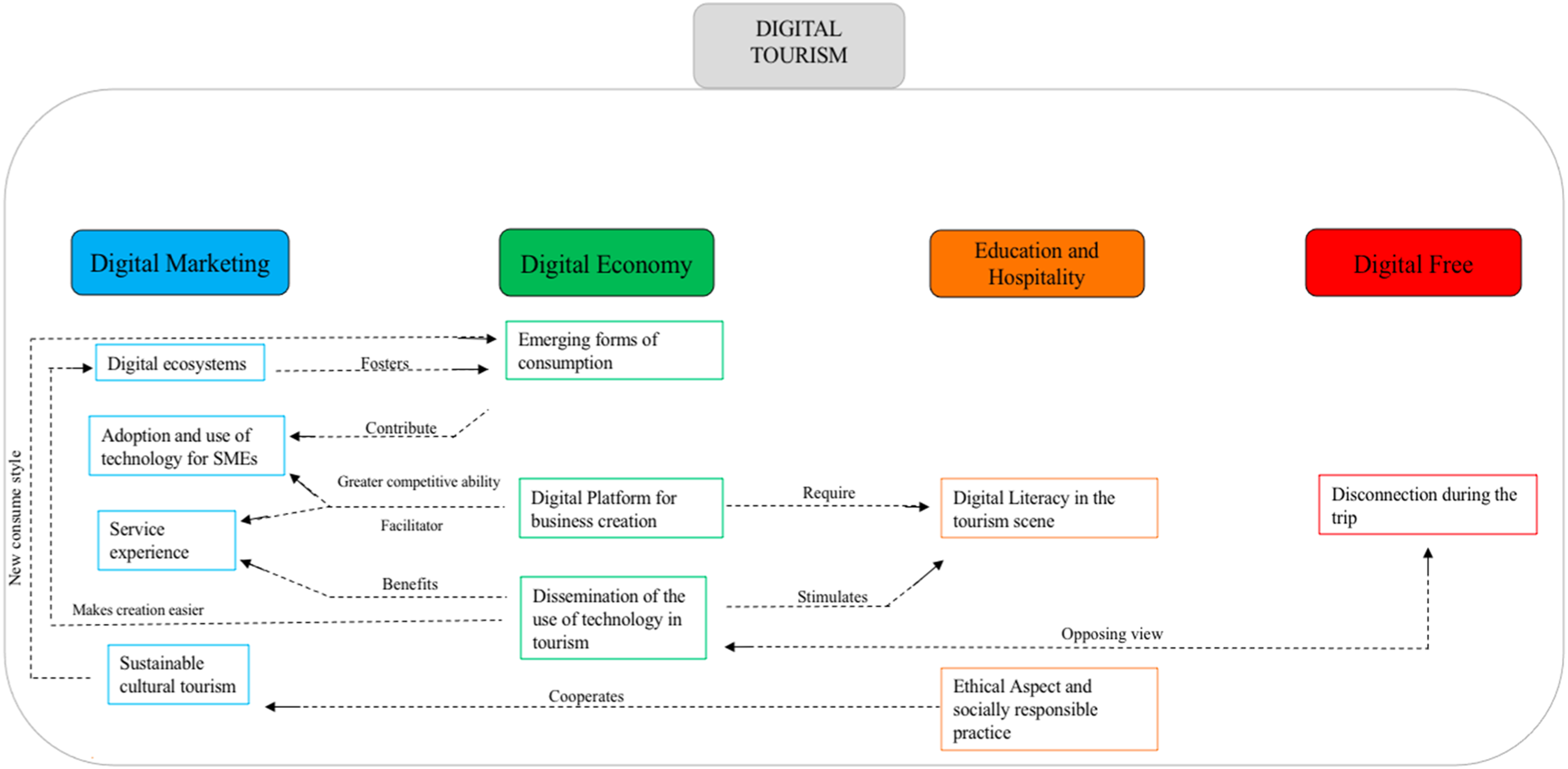
Discussion and research agenda
In the past, technologies were used to generate savings in operating costs. Currently, their evolution and application are perceived in situations that facilitate business, productivity and quality of work, as well as assisting the ecosystem in tourism. The digital transformation in tourism and the present systematic literature review contribute to advancing our understanding of this evolution and the development of the literature on digital transformations and new combinations for the tourism sector.
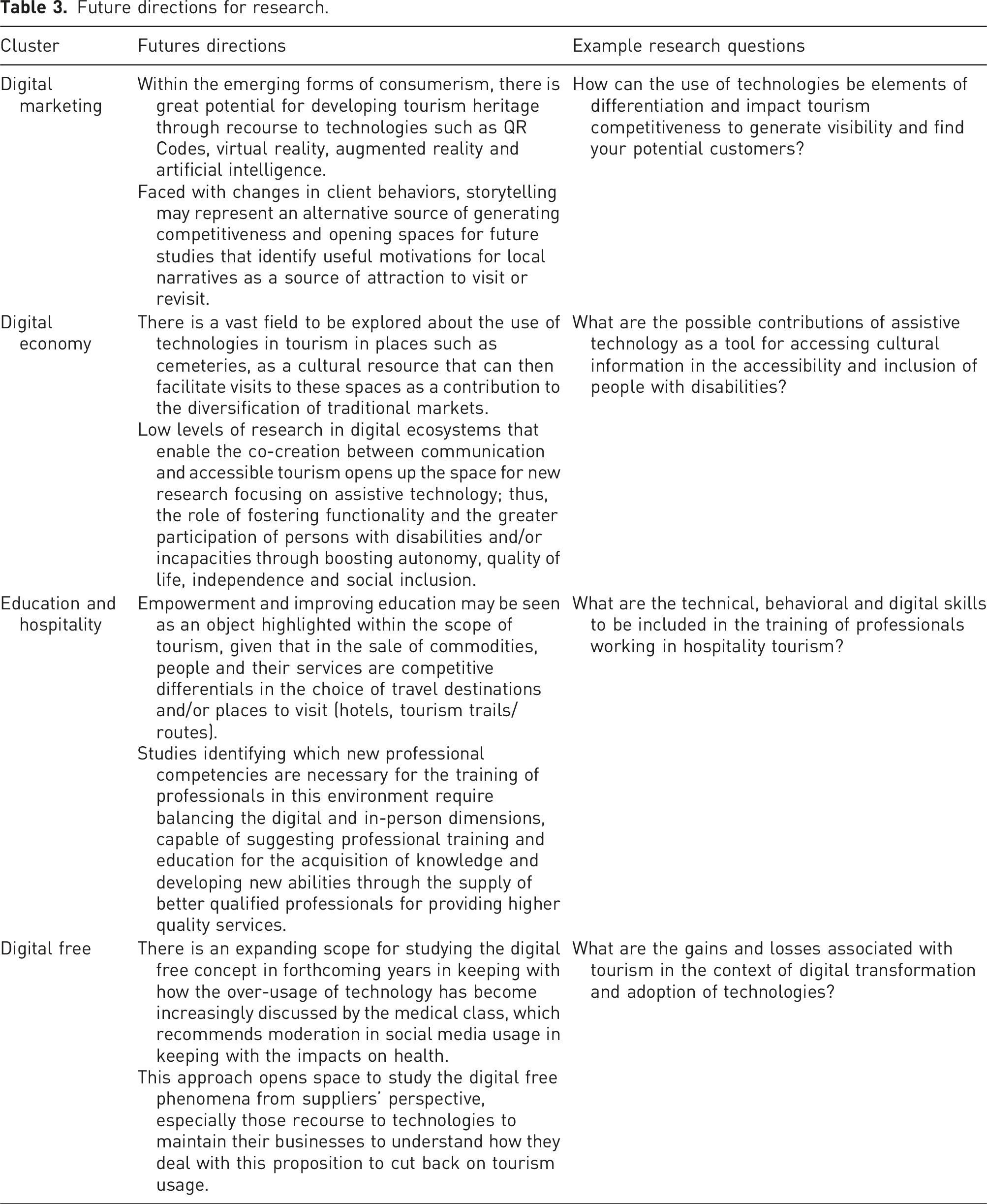
Future directions for research.
Digital marketing
The “Digital marketing” cluster clarifies the gains and the scope for promoting both the companies and the places and regions to attract visitors and thus positions communications as key to implementing such processes.
The relationship between digital marketing and tourism is positive in clarifying that regions and places can come to disclose their spaces, curiosities, and culture and excite people to raise the flow of visitors. This means that when well used by public and private companies, this opportunity can establish a dialogue with the general public, even in scenarios of low-budget communication and marketing.
Digital economy
In turn, the “Digital economy” cluster examines the importance of appropriately applying technologies to the tourism sector and casts light on the benefits for developing countries and regions. This emphasises how digital exclusion in a globalised tourism context leads to inequalities, impacting the economy and causing disparities in the usage and access to technology among visitors. The rise of the internet added by mobile devices and their easy use present changes in the usual travel market and travellers' consumption. Thus, this interaction movement reflects a positive way to think globally and act locally, offering greater development to the tourism sector.
Education and hospitality
The major contribution of the “Education and Hospitality” cluster stems from its consideration of the strategic challenge of the tourism industry, illuminating the threats deriving from this digital era and their impacts on businesses in this area, such as hotels, restaurants and travel agencies, from the perspective of the need for the empowerment and development of the professionals employed by these companies in a digitally focused literacy process. Publications of this nature are relevant and provide practical implications as they alert to one of the inherent requirements of tourism development, education. Business models increasingly depend on technology in their various activities, and the automation of processes requires a new human role. The definition of tasks performed by machines versus men involves bringing schools and industries closer together, including specific courses to expand business skills, especially digital skills and communication.
Digital free
As regards the “Digital Free” cluster, this emerges from an understanding that contrasts with the other clusters in proposing the non-usage or at least control over digital technology in tourism spaces alongside the advantages for visitors engaging in the offline exploration of contemporary relationships and experiences. Despite being shy about the number of publications, this current makes one reflect on the advantages and disadvantages of using technology. This opens space for conjecture about the need for online versus offline relationships in tourism. It is necessary to discern the implementation of technology and the automation of processes to facilitate adherence to spaces, from the promotion of moments and travel experiences that also promote mental well-being mindfulness for the benefit of psychological health on holiday.
Theoretical and practical contributions
This study makes several related contributions. Firstly, the study identifies and illustrates the relationships between the four different clusters, in which a framework has been elaborated to portray the considerations made on the topic and identify new combinations of digital tourism (see Figure 5). This structure results from the articles reviewed and explains the digital media applied to tourism according to the four clusters identified and characterised in the previous section.
Secondly, building on this overview, including the fields of study identified at the core level contained in the studies that make up this systematic review, specifically, service experiences, digital ecosystems, technology adoption and utilisation by SMEs, sustainable cultural tourism; emerging forms of consumerism, digital platforms for launching businesses, diffusion of technology in tourism; ethical facets and socially responsible practices, digital literacy in tourism and disconnection while travelling.
This study has practical implications for tourism organizations. Specifically, the study reinforces that technology in tourism can be equally valuable to private and public businesses and visitors. In a highly competitive environment, many tourism organisations need to be more agile and flexible to adapt to changing market conditions. Various forms of technologies have emerged to facilitate their operations, and many tourism-related businesses are increasingly turning to digital to enhance the tourism offer based on the natural, cultural and social elements that make each territory unique and increase their revenues.
In this research, questions are raised about the application of technology in business and the need to understand these changes in the supply and tourism adaptation environments.
Conclusion and limitations
The study concluded the vital role of technologies in accelerating the sustainable development of regions and places and in contributing to visitor behaviour. Furthermore, it can be observed from the framework presented that, despite being a topic only recently addressed in the literature, it is of great importance to the academic community, as reflected in the growing number of studies in this field. This trend requires looking at how such studies corroborate ongoing activities in a business sector of great importance for the social development of emerging economies.
Despite its novelty and contribution, this study has limitations. Noteworthy is the fact that we used it until February 2023, which may have limitations on the scope of the literature review with the non-inclusion of studies on this topic after that date. Therefore, it can be suggested to expand the range of databases considered to see if the same patterns remain or if there is an increase in the number of clusters and fields of study. In addition, another proposition extends to research that seeks to expand technology-focused research fields to the diverse fields of the tourism sector.
Thus, one can highlight how tourism intensifies the social inclusion of people with different types of disabilities (assistive technology) and eccentric tourism, which caters to people with different tastes and opinions than usual and generates new curiosity among visitors, such as tourism that takes place in more unusual circumstances, such as cemeteries, for example.
Footnotes
Declaration of conflicting interests
The author(s) declared no potential conflicts of interest with respect to the research, authorship, and/or publication of this article.
Funding
The author(s) disclosed receipt of the following financial support for the research, authorship, and/or publication of this article: This work is financed by national funds through FCT - Fundação para a Ciência e a Tecnologia, I. P., under the projects “UIDB/04630/2020”, “UIDB/04752/2020” and through the individual research grant UI/BD/151538/2021 of Ives Emídio Gutierriz.
