



Abstract
Attitudes towards immigration are among the core predictors of attitudes toward the European Union. However, even though most citizens learn about immigration through the media, we lack a comprehensive account of how media coverage of immigration influences support for the European Union. In this study, we use a combination of European Social Survey and Media Claims data to investigate the effects of the visibility and valence of immigration and refugee media coverage on political trust in the European Union in 18 countries between 2012 and 2016. Our results show that media coverage of immigration and refugees influences trust in the European Union; however, the effects depend on citizens’ ideological leaning and content characteristics. Furthermore, we find that the impact of immigration attitudes on trust in the European Union becomes more important over the course of the refugee crisis.
Introduction
‘A democratic political system cannot survive for long without the support of a majority of its citizens’ (Miller, 1974: 951). In the European Union (EU), support for democracy and political trust in the EU have fluctuated considerably over the last decade (Armingeon and Guthmann, 2014). Even though levels of trust have recently recovered, still less than half of the European citizenry trust the EU (European Commission, 2018). EU trust, like political trust in general, is a form of evaluation (Kasperson et al., 1992). Extant literature suggests that trust in the EU is based on rational evaluations, identity considerations, and cues from national politics (Harteveld et al., 2013). The recent electoral successes of anti-European political actors are often attributed to a particular subset of identity considerations: anti-immigration stances (Hobolt, 2016). Even though these are usually conceptualized as a part of citizens’ identity, these attitudes might also relate to policy and performance evaluations, particularly in times of increased immigration to the EU and shared European responsibility for immigrants.
Most citizens learn about political developments through the media; this applies to information about immigration flows and policies as well as to broader EU politics. However, there is no comprehensive account of the kind of media content that may change trust in political institutions, and particularly the EU. Following the European refugee crisis, Eurobarometer (European Commission, 2018) trends show that immigration has become the citizens’ leading concern at the EU level. Media reports about the EU’s important role for issues surrounding immigration, such as general border control, the Dublin Regulation, or the 2015 Refugee Relocation Scheme, have arguably made immigration more salient and thus a central issue for evaluations of the EU. Our study sets out to investigate the impact of media coverage of immigration on political trust in the EU, studying changes in the information environment across 18 countries and over three time points (2012–2016). By combining European Social Survey (ESS) data with the ESS Media Claims dataset, we are able to explore the effects of media coverage over the period of the European refugee crisis, when immigration to the EU changed considerably. This set-up allows us to make three major contributions: First, we distinguish between the effects of media coverage of general immigration and the particular effects of the coverage of refugees and asylum seekers. This is an important, yet overlooked distinction, given that citizens can have vastly different attitudes towards different types of immigration. Second, we distinguish between sheer visibility of immigration media coverage and its valence in order to assess which features of immigration coverage are of consequence. Third, we consider the differential effects of media coverage for different groups of citizens, as these effects are likely to be conditional upon pre-existing ideological stances.
Overall, this study shows that the visibility and tone of immigration in the media can impact trust in the EU. Yet, the nature of this impact depends on the content of the coverage – and particularly whether it is about general immigration or about refugees in particular – as well as on the recipient’s pre-existing attitudes. The implications of these findings are addressed in the discussion.
Theoretical background
Immigration attitudes and trust in the EU
Trust in the EU has been conceptualized as an attitude directed at the existing system of political institutions. It is situated between the ideal types of diffuse (i.e. directed at the principles of the regime and political community) and specific (i.e. directed at the incumbents or specific policies) political support (Easton, 1965; see also Norris, 1999 for a more fine-grained conceptualization). Trust in the EU is driven by three main factors: cues from national politics, rational considerations of EU performance, and identity-based considerations (e.g. Harteveld et al., 2013). The latter two are often referred to as ‘hard’ and ‘soft’ factors (Hooghe and Marks, 2005; McLaren, 2002).
Within the identity-based (or ‘soft’) explanatory model, attitudes towards immigration are often considered a key variable, as they reflect a negative out-group bias. According to this model, citizens distrust the EU because they identify exclusively with their nation-state. The EU facilitates immigration, which in turn is perceived as a threat to the national identity. Yet, immigration could also play a role in rational performance evaluations, to the extent that citizens evaluate the EU in terms of how well it succeeds in handling immigration-related issues. Research has repeatedly shown that anti-immigration attitudes are related to Euroscepticism (de Vreese et al., 2008; Lubbers and Scheepers, 2007; McLaren, 2007) and to attitudes towards EU enlargement (de Vreese and Boomgaarden, 2005). In addition, some recent studies show that not only attitudes but also real-life events related to immigration have an impact on citizens’ opinions about the EU: an influx of refugees (Harteveld et al., 2018) or immigrants from newer to older EU member states (Toshkov and Kortenska, 2015) increases Euroscepticism.
Media effects on trust in the EU
The present study focuses on trust as a comparatively stable measure of support for political institutions (Wessels, 2009). Trust in the EU, as a supranational institution, is a particular case of political trust. Since the EU is more distant and removed from its citizens’ everyday lives, their opinions should depend on information from the media to a greater extent, with positive EU coverage making citizens less Eurosceptic (van Spanje and de Vreese, 2014). Media coverage of the EU also impacts political knowledge and blame attributions; however, these effects do not apply to all citizens and depend on medium characteristics (Hobolt and Tilley, 2014). In principle, general political trust can be influenced by media use and content; however, findings are mixed with regard to the direction of this effect (Avery, 2009; Ceron, 2015; Gross et al., 2004). One possible reason for this is the extent to which differential media effects on trust are conditional upon pre-existing attitudes (Ceron and Memoli, 2015) and media content and tone (Kleinnijenhuis et al., 2006; Mutz and Reeves, 2005).
Even though citizens can experience increasing immigration directly, they receive a large part of their information on immigration issues from the media. However, media coverage of immigration does not always reflect actual developments (Jacobs et al., 2018); furthermore, the tone of the coverage is typically rather negative (Jacobs et al., 2018; Schlueter and Davidov, 2013). That means that media coverage of immigration may have an influence on opinions independent of actual immigration numbers. For example, increased visibility of immigration in the news media can increase anti-immigration sentiments (Boomgaarden and Vliegenthart, 2007). Since higher numbers of refugees (Harteveld et al., 2018) and increased immigration to a country (Toshkov and Kortenska, 2015) are related to amplified Euroscepticism, we hypothesize that increased visibility of immigration and refugees in the media could have an analogous effect. Multiple studies which have compared the effect of media coverage and real-world immigration metrics have found stronger effects of media coverage, and particularly the tone of the coverage, on immigration attitudes (e.g. Schlueter and Davidov, 2013). Regarding EU attitudes, Harteveld et al. (2018) found that the negative effect of the number of asylum applications – i.e. real-world developments – is fully mediated by media coverage of refugees. Even though this study only considered visibility, and not the tone of the coverage, it emphasizes the important role of media coverage of immigration on EU attitudes.
Alongside tone and visibility, another under-explored aspect of immigration coverage concerns the distinctions between general immigration and asylum seekers. Experimental evidence shows that simply interchanging the words ‘refugees’ and ‘immigrants’ does not affect people’s perception of them (Hoewe, 2018). However, in real-world media coverage, the two expressions are likely tied to different narratives and content. Anthropological research argues that framing an individual as a ‘refugee’ rather than a ‘migrant’ makes that individual seem more deserving of various rights, since the term ‘refuge’ stresses the involuntary displacement (Holmes and Castañeda, 2016). In line with this, media exposure to refugees drowning in the Mediterranean Sea during the phasing out of the ‘Mare Nostrum’ operation lead to reduced xenophobic attitudes (De Poli et al., 2017). Europeans are also more willing to accept asylum seekers with severe vulnerabilities (Bansak et al., 2016).
On the other hand, anti-immigration attitudes are strongly driven by concerns about the impact of immigration on a country’s overall economy, the welfare state (Fietkau and Hansen, 2018; Hainmueller and Hiscox, 2010), and culture (Hainmueller and Hopkins, 2014). Consequently, the public typically prefers well-educated, highly skilled immigrants with good chances of integration into the labor market (Fietkau and Hansen, 2018; Hainmueller and Hiscox, 2010; Turper et al., 2015). 1 The potentially higher ‘expected economic costs’ (Turper et al., 2015: 254) of integrating refugees, as opposed to labor migrants, might lead to more negative perceptions. There is little research on how the coverage of either refugees or immigrants emphasizes these aspects; therefore, it is also unclear how the coverage of immigration and refugees may affect attitudes towards the EU differently. However, based on the outlined economic considerations, we might expect a similar, albeit more pronounced effect, for the coverage of refugees on EU trust as for general immigration coverage. Refugee coverage may also have a stronger effect because it is a newer development particularly connected to a ‘crisis’, whereas citizens may be more used to the coverage of ‘regular’ immigration.
Generally speaking, media information can affect knowledge and attitudes through two different mechanisms: through individual media consumption (van Spanje and de Vreese, 2014), but also through changes in the general media environment (Azrout et al., 2012). The latter takes place because large-scale shifts in public opinion are reflected in most media coverage and citizens are thus very likely to encounter it, regardless of their individual media use. For example, it is not necessary to be exposed to a specific medium or type of content to learn about an important and impactful event such as the refugee crisis. The amount and the tone of coverage that is generally available in a certain place at a certain time can thus influence citizens’ opinions.
In sum, tone and visibility of political media coverage can have differential and complementary effects on political attitudes and voting behavior (Geiß and Schäfer, 2017). While Harteveld et al. (2018) have found an effect of media visibility of immigration on Euroscepticism, there is no research on media effects on EU trust in particular. Furthermore, previous studies have not distinguished between tone and visibility, or different kinds of immigration, namely ‘regular’ immigration and refugees. Synthesizing the different strands of literature, we hypothesize the following: H1: In media environments in which (a) immigration and (b) refugees are covered more often, citizens trust the EU less. H2: In media environments in which (a) immigration and (b) refugees are covered more negatively, citizens trust the EU less. H3: The negative effect of a higher media visibility of (a) immigration and (b) refugees media coverage on EU trust is stronger for right-wing citizens than for left-wing citizens. H4: The negative effect of more negative coverage of (a) immigration and (b) refugees on EU trust is stronger for right-wing citizens than for left-wing citizens. H5: The effect of anti-immigration attitudes on trust in the EU becomes stronger (a) over the course of the refugee crisis, and (b) in countries with more coverage of immigration and refugees or (c) more negative coverage of immigration and refugees.
Method
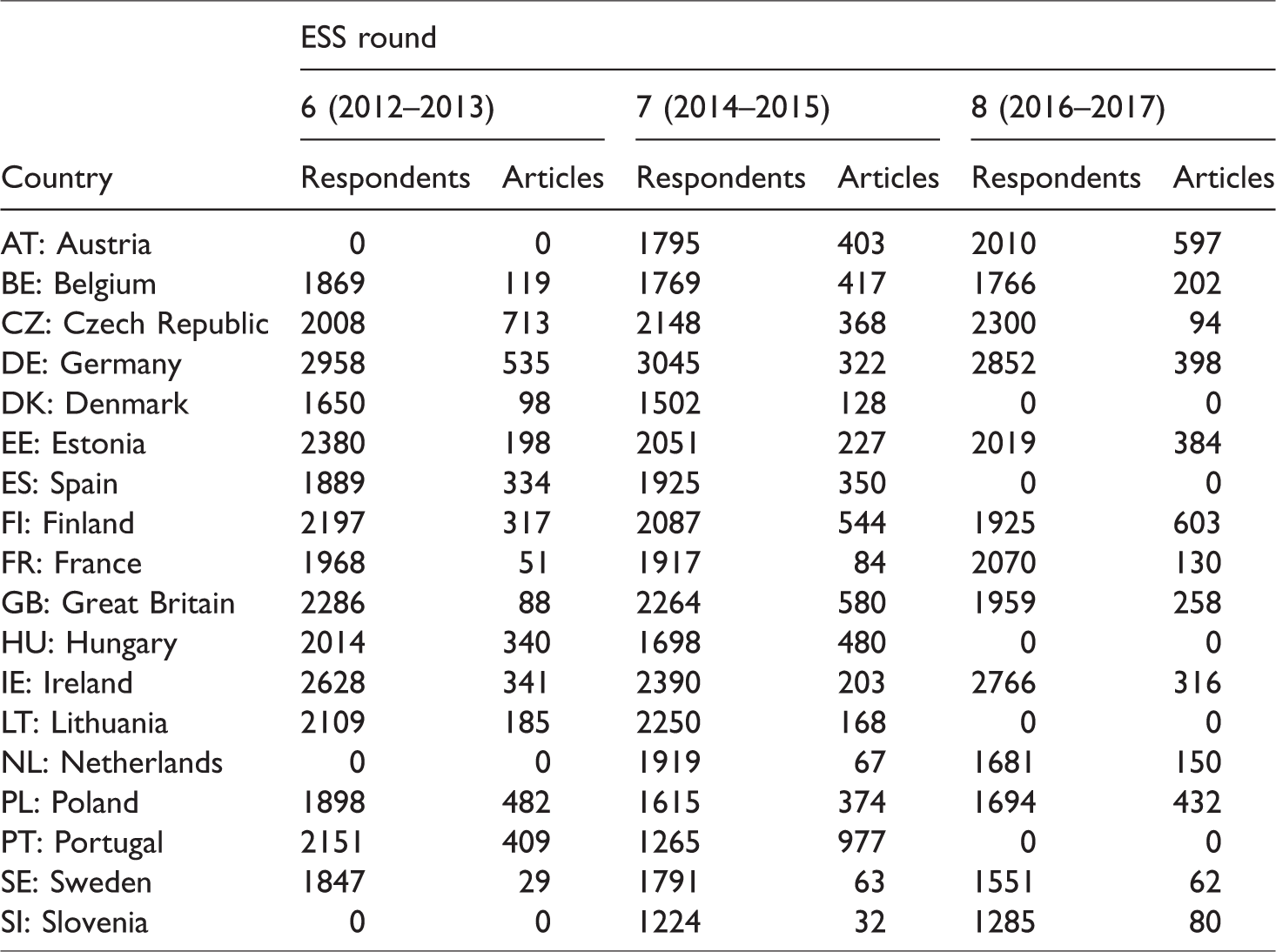
The study combines data from rounds 6 (2012–2013), 7 (2014–2015), and 8 (2016–2017) of the ESS and its corresponding Media Claims dataset in 18 countries. Table 1 shows the distribution of respondents and newspaper articles per country and time point. Table 2 shows descriptive statistics for all variables used in the analysis.
Respondents and articles per country and ESS round.
Descriptive statistics.
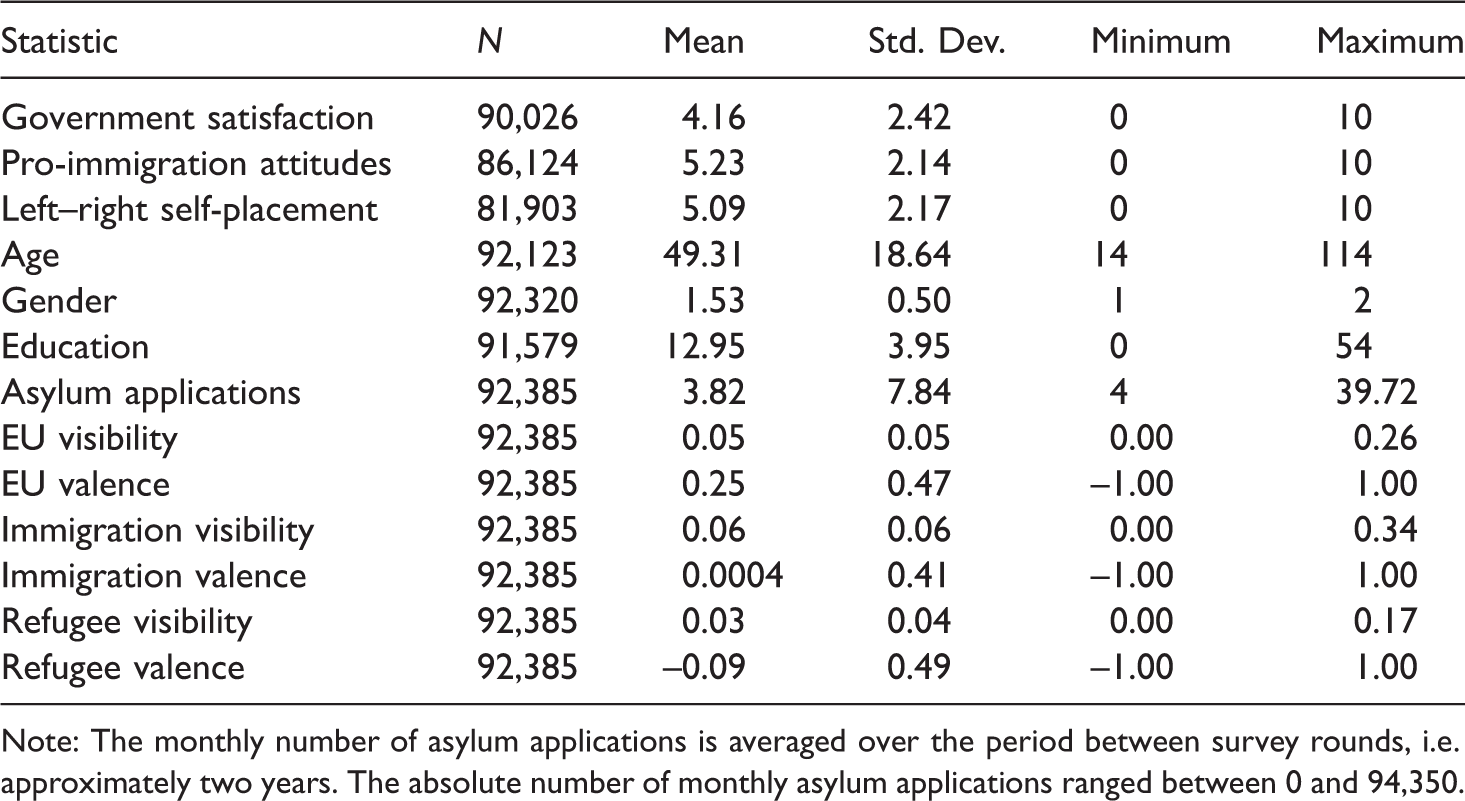
Note: The monthly number of asylum applications is averaged over the period between survey rounds, i.e. approximately two years. The absolute number of monthly asylum applications ranged between 0 and 94,350.
Media data
The Media Claims dataset includes data about the media context in each country during the time of the survey fieldwork, but for a minimum of 10 weeks if fieldwork was shorter than 10 weeks. It does not include information about a respondent’s individual news consumption, but rather systematic changes in their larger media context. In each country, two 2 national quality newspapers are selected, if possible one left- and one right-leaning. This approach makes it more likely to capture different types of immigration news coverage, which can vary for newspapers of different ideological leanings (Fryberg et al., 2012; Roggeband and Vliegenthart, 2007). We use Edition 4.0 of the Media Claims dataset for round 6 and Edition 1.0 for round 7 and round 8.
The most important and most salient news – typically on the front page and the domestic news section – were coded. Country and newspaper-specific characteristics were taken into account when identifying the most important news. The unit of analysis was so-called ‘claims’ – ‘the expression of a political opinion’ (European Social Survey, 2016: 8). An article could contain multiple claims. Each claim was analyzed individually with regard to its main topic and its direction or valence. Three of the topics are related to immigration: general immigration, the economic impact of immigration, and the impact of immigration on cultural diversity. For each, a positive value (1) for the ‘direction’ variable connotes a positive evaluation of immigration, i.e. that the statement or action in the claim is in favor of immigration. A negative value (–1), on the other hand, connotes that the statement is against immigration. A neutral value (0) stands for ‘neither for nor against’. The claim is thus interpreted based on the position taken towards immigration, and not on the tone of the statement. For instance, a claim that ‘policy X has been successful in reducing immigration’ is coded as ‘against immigration’, even if the word ‘successful’ suggests a positive tone. For the present study, the visibility of immigration and EU issues was computed as the share of claims relating to one of the immigration topics relative to the total amount of claims coded. When there were no claims relating to these issues in a country during the period of data collection, visibility was coded as zero and valence was coded as neutral.
However, this variable captures any topic related to immigration, whereas we are also specifically interested in the effect of the refugee crisis. Therefore, in addition to the variable coded by human coders, we also included an automatically coded variable indicating whether words relating to refugees or asylum seekers were mentioned in the claim as well as a variable indicating the human-coded valence of each statement. 3 Finally, we also included the coverage of the EU itself as a control variable. Visibility of the EU is the share of articles that relate to EU integration or enlargement (as categorized by the coders); a positive value for the ‘direction’ variable indicates that the claim is in favor of stronger EU integration.
Since the ESS does not provide measures of intercoder reliability, we replicated their coding procedure for the variables and categories we use with a subsample of N = 102 random articles. Inter-coder reliability between our results and the original codes was calculated using Krippendorf’s alpha. For the main topic (whether it was about immigration, the EU, or a different topic), reliability was α = .90 (with a percentage agreement of 98%) and for the direction of the claim, based on the ESS coding instructions for the given main topics, it was α = .77 (with a percentage agreement of 85.3%). We deem the measurement instrument reliable for both the visibility estimate and the tone estimate.
Survey data
We used data from Edition 2.3 of ESS round 6, Edition 2.1 of round 7, and Edition 1.0 of round 8. The survey was conducted as face-to-face interviews among representative samples of the population in more than 30, mostly European countries. Variables used in this study include age in years, education in years, and gender. Trust in the EU is operationalized as trust in the European Parliament (EP), which is measured on an 11-point scale ranging from ‘no trust at all’ to ‘complete trust’. Trust in the EU and the EP correlate highly, and trust in the EP has been used as a proxy for EU trust in previous studies (e.g. Muñoz et al., 2011). Government satisfaction (‘extremely dissatisfied’ to ‘extremely satisfied’) and left–right self-placement were measured on 11-point scales. Immigration attitudes are operationalized as the mean answer to three items measured on an 11-point scale: ‘Immigration is good or bad for the country’s economy’, ‘The country’s cultural life is undermined or enriched by immigrants’, and ‘Immigrants make the country a worse or better place to live’ (Cronbach’s α = 0.86). A higher value stands for more positive immigration attitudes.
Asylum application numbers were obtained from Eurostat. We connected the survey data to the average number of asylum applications per month during the period that respondents were surveyed (i.e. a period of approximately two years). This way, the numbers can be directly compared to the media environment. The absolute numbers of applications were divided by 1000 in order to make the scale easier to interpret.
We only included EU countries for which media context data are available for at least two points in time. The 18 countries that meet these criteria are Austria, Belgium, Czech Republic, Denmark, Estonia, Finland, France, Germany, Great Britain, Hungary, Ireland, Lithuania, the Netherlands, Poland, Portugal, Slovenia, Spain, and Sweden. Our sample consists of N = 92,385 respondents. However, some respondents did not answer all questions. Therefore, the total number of respondents included in the analyses is somewhat reduced (Table 2 shows the number of valid respondents per variable; Table 3 shows the number of respondents per analytical model). The media environment estimates are based on a total of N = 13,732 newspaper articles.
Results.
*p < 0.05; **p < 0.01; ***p < 0.001.
Analysis
The data are nested in 18 countries and three survey rounds. Following Shehata and Strömbäck (2011), who work with the same data structure and a similar research question, we analyzed the data using a multilevel model in R (Bates et al. (2015); Hlavac (2015); Solt and Hu (2015) and Wickham (2009) R Core Team, 2016). Individuals are at the first level; countries are at the second level. In addition to the random intercept, we also include random slopes for the variables that are used in cross-level interaction: immigration attitudes and left–right orientation. These variables were group-mean centered (Enders and Tofighi, 2007; Kreft et al., 1995). Dummies account for the different ESS waves that respondents were interviewed in. However, we acknowledge that our sample of a low number of non-randomly selected countries does not fulfill all assumptions of multi-level modeling (Bryan and Jenkins, 2016). As a robustness check, we thus also estimated the model as a fixed effects analysis. This model leads to highly similar substantial conclusions. However, a conservative model specification including country–wave clusters at the second level in combination with country and wave dummies in the same model shows much fewer significant effects, even though the effects sizes and directions generally remain consistent. This highly demanding approach, however, exhausts much of the available degrees of freedom and runs the risk of creating an overdetermined model, especially in combination with multiple second-level explanatory variables. The fact that we could not replicate the results in this strict specification limits generalizability to countries and time points that are not included in our sample. We report both alternative models in the Online appendix. We control for the effects of gender, age, education, government satisfaction, and the visibility and valence of EU coverage in all models.
Results
Figure 1 shows how visible the issue of immigration was in different countries and whether the coverage was pro- or anti-immigration. In most countries, visibility of immigration increased between 2012 and 2016. The pattern for valence, however, is more mixed, with some media environments becoming more positive about immigration and others becoming more negative. The results for the coverage of refugees are similar; the corresponding data are visualized in the Online appendix.
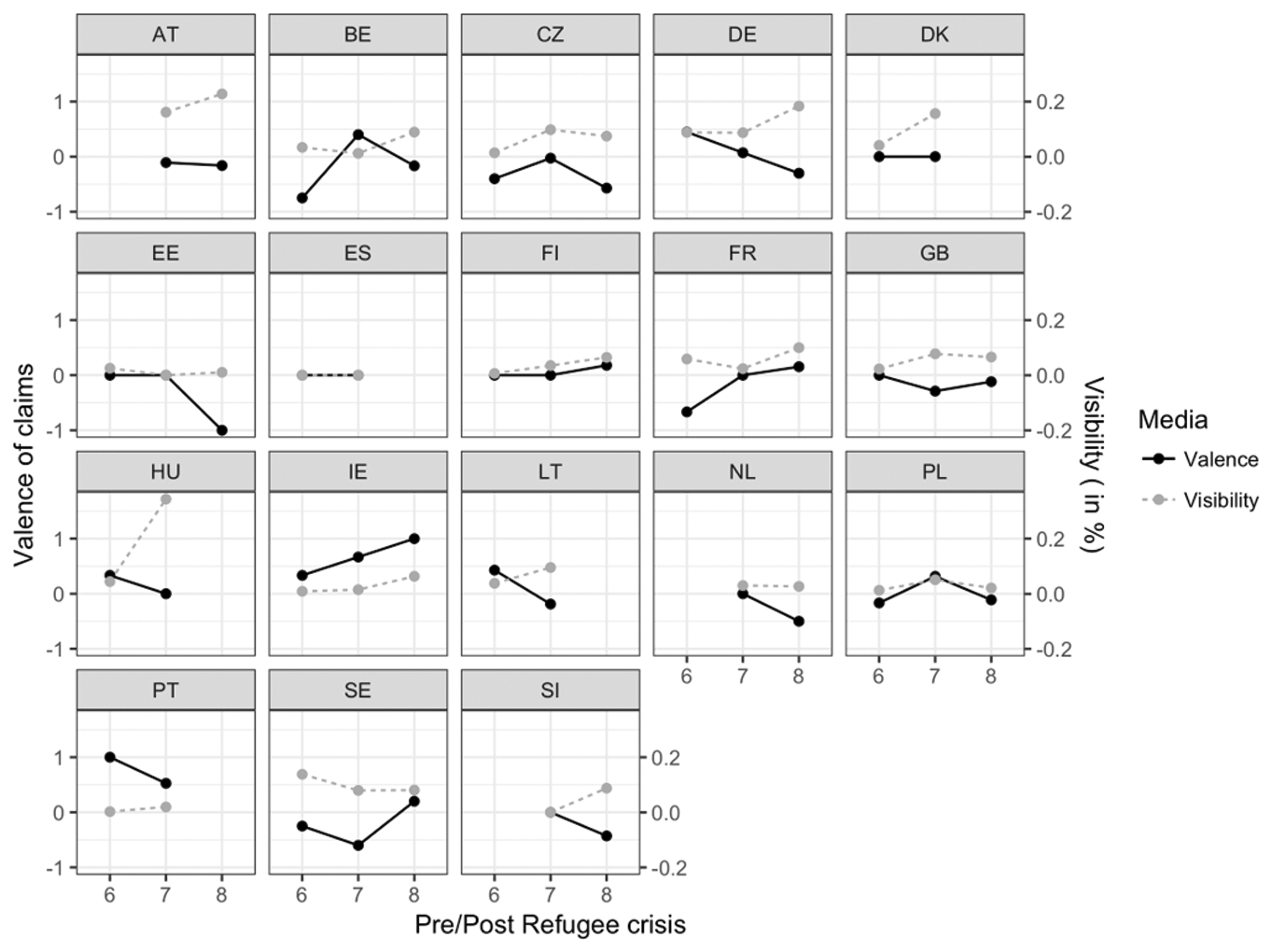
Development of media visibility and valence of immigration related issues.Note. The x-axis shows the ESS waves 6 (2012), 7 (2014), and 8 (2016). The right y-axis shows the visibility of immigration coverage as the percentage of all claims relating to immigration (see dotted line). The left y-axis shows the average valence of the immigration-related claims (see solid line) on a scale ranging from –1 (negative or against immigration) to 1 (positive or in favor of immigration).
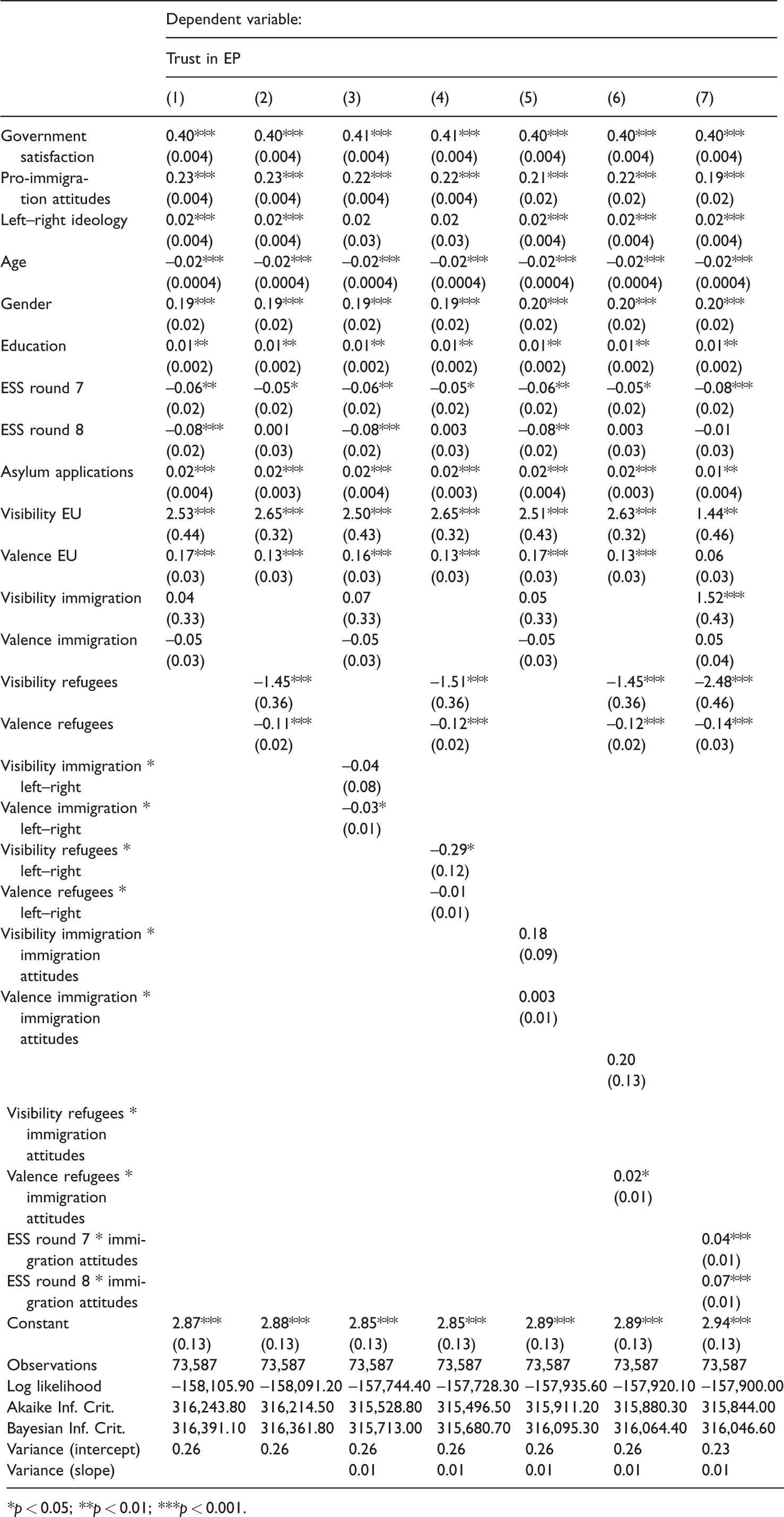
Table 3 shows the results of the analysis. The control variables exhibit the anticipated effects. Government satisfaction and more positive attitudes towards immigration are strong predictors of trust in the EU. Right leaning, younger, more educated citizens, and women trust the EU more. EU coverage also influences trust in the EU: when the EU is more visible and covered more positively, citizens trust it more.
H1 and H2 predict main effects; therefore, we interpret the results of Models 1 and 2, which do not yet include any interaction effects. H1 predicted that citizens would show lower levels of trust in the EU when immigration and refugees were covered more often. Refugee coverage has the expected negative effect on EU trust, in support of H1b; general immigration coverage, however, has no significant effect on EU trust, not supporting H1a. Concerning H2, the results show that there is no significant main effect of the valence of the coverage of immigration on trust in the EU; however, there is a negative effect of the tone of refugee coverage: when refugees are covered more positively, citizens trust the EU less. This does not support our expectations for H2.
H3 and H4 state that these effects of media coverage would be different for citizens with different ideological stances. Models 3 and 4 show the interaction effects of immigration and refugee coverage with left–right ideology. As Figure 2 illustrates, the negative effect of media visibility of refugees on EU trust is strongest for right-wing citizens and becomes weaker to non-existent for left-wing citizens; this confirms H3b. However, we find no support for H3a: While the coefficient shows the same pattern for immigration coverage, it is not statistically significant and the effect is considerably smaller.
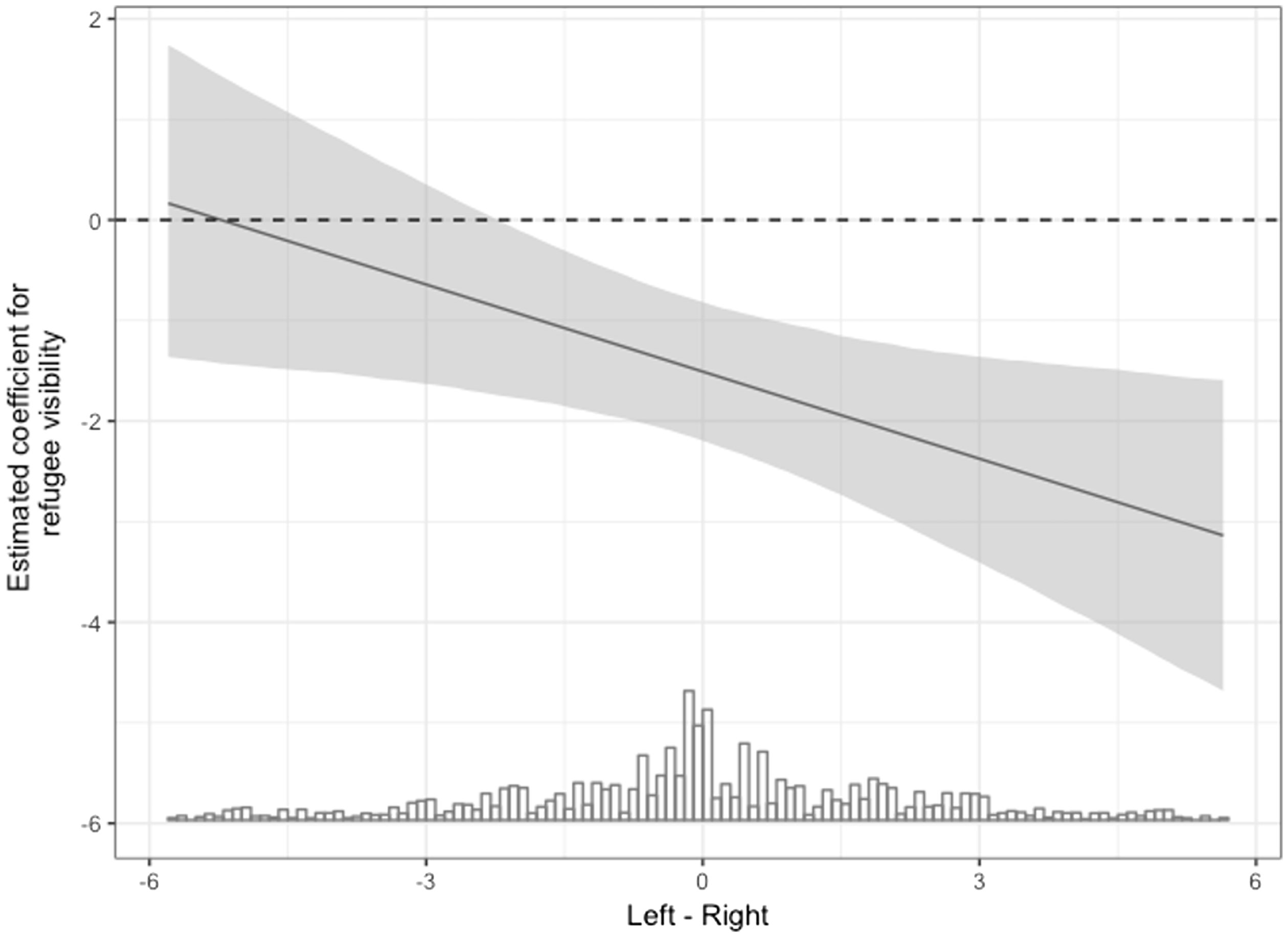
Effect of media visibility of refugees on EU trust for different ideological groups.
Political positions also moderate the effect of the valence of immigration coverage. As displayed in Figure 3, positive valence of immigration news is not associated with changes in EU trust for left-wing citizens, whereas the effect is negative for right-wing citizens. While the interaction effect of the valence of refugee coverage follows an almost identical pattern, it is not statistically significant.
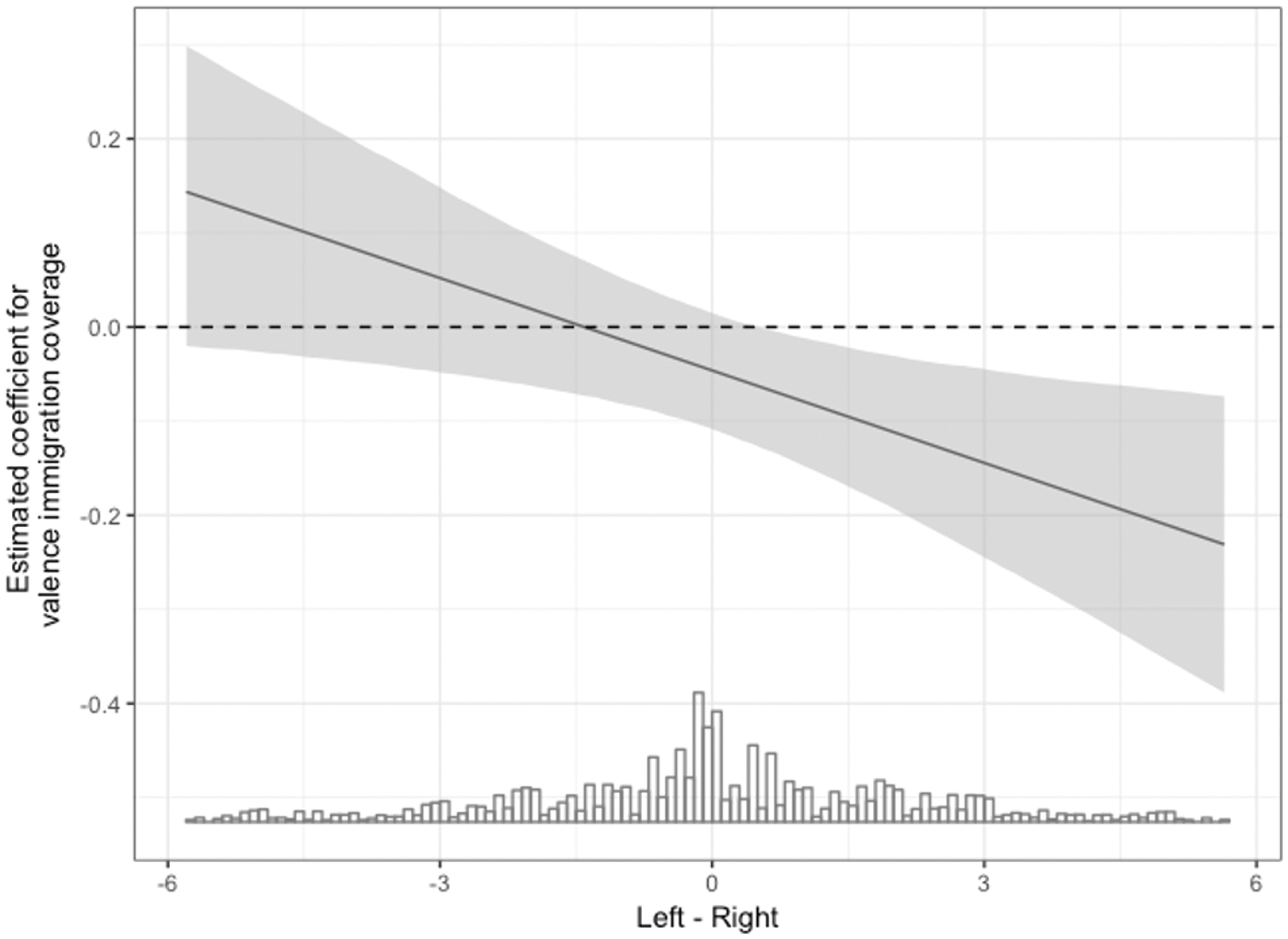
Effect of the valence of immigration coverage on EU trust for different ideological groups.
Our last hypothesis stated that attitudes towards immigration would become more important for EU trust over the course of the refugee crisis, as the topic becomes more visible in media coverage and its evaluation becomes more negative. Indeed, as Model 5 shows, the effect of immigration attitudes becomes more important in 2014 compared to 2012, and even more so in 2016, indicating support for H5a. However, we find no support that the predictive importance of immigration attitudes on EU attitudes increases when coverage of refugees and immigration becomes more frequent or more negative.
Robustness checks
As laid out before, we conducted two alternative analyses: First, a simple regression model (see the Online appendix) confirms all effects that we found in the reported model; directions and effect sizes are similar, and all reported results remain significant. The second model, a multi-level model with country-wave combinations at the second level and country- and wave-fixed effects (see the Online appendix), barely contains any significant effects. However, most relevant effects remain very similar in size and direction. One exception is the interaction effect of immigration attitudes and the valence of refugee coverage. Aside from that, the main effects of refugee coverage remain negative, while the main effects of EU coverage remain positive. Also, in line with the main model, the interaction effects of valence of immigration coverage and visibility of refugee coverage with left–right ideology are negative and the interactions of ESS rounds 7 and 8 with immigration attitudes are positive (and statistically significant in the case of ESS round 8).
Discussion
The present study investigated the effects of media coverage of refugees and immigration on trust in the EU in 18 different European countries between 2012 and 2017. Even though immigration attitudes are among the most important predictors of EU attitudes, there is very little previous research on the role of the media – the main source of information about immigration – in this mechanism. We find that both the visibility and valence of refugee coverage have effects on EU trust. These effects are dependent on citizens’ political ideology. Furthermore, immigration attitudes become a more important predictor of EU trust over the course of the European refugee and migrant crisis.
We found partial support for our first two hypotheses, as only increased coverage of refugees, but not coverage of general immigration, was associated with reduced trust in the EU. This is in line with the results of Harteveld et al. (2018), which show that increased media attention to refugees increases Euroscepticism. Furthermore, favorable coverage about refugees was associated with reduced trust as well. This may suggest that EU citizens are not satisfied with the way in which the Union handled the refugee crisis, rather than a simple association between anti-immigration and anti-EU attitudes. At the same time, coverage of general immigration did not affect EU evaluations overall. This is an important insight for the literature on the relationship between immigration and attitudes towards the EU and suggests that it may be necessary to differentiate between different types of immigration.
In addition to these general effects, we also take into account how citizens of different ideologies respond to media coverage of immigration. Left-wing citizens – who are, generally speaking, more in favor of immigration and granting asylum – do not show remarkable changes in their evaluation of the EU when immigration is covered more often or more positively. For right-wing citizens, on the other hand, coverage that is in favor of immigration may spark a reactance effect and decreases their trust in the Union. Increased coverage of refugees also has a stronger negative effect on right-wing citizens’ EU trust. Overall, the analyses show that trust in the EU is more dependent on the coverage of immigration and asylum issues for right-wing citizens than for left-wing citizens. This is in line with previous research that found political–cultural aspects of the EU to be more important for right-wing citizens (van Elsas and van der Brug, 2015). Typically, such reactions on the right are conceptualized as a consequence of cultural threats to national identities (McLaren, 2002). However, since we find that changes in attitudes towards the EU may in part be caused by media coverage, i.e. new information on immigration issues, this opens up an interesting new perspective on the conceptualization of immigration attitudes as a ‘soft’ predictor of EU attitudes. If the changes in fact occur as a reaction to information, they may not solely be a response to identity-concerns but could also be conceptualized as an evaluation of the EU’s policy performance. For example, right-wing citizens may be unsatisfied with policies such as those implementing refugee relocation quotas, which obligate member states to accept the relocation and resettlement of a certain number of refugees. The trust-as-evaluation approach relies on the idea that trust in political institutions is dependent on perceptions of performance of the institution, but has mostly focused on economic performance (see van der Meer and Hakhverdian, 2017). Our results suggest that the performance evaluations relevant to political trust might extend to other policy domains as well. These questions warrant further investigation to disentangle the evaluation criteria for political trust.
Our results also show that, as expected, immigration attitudes became a more important predictor of trust in the EU over the course of the migrant and refugee crisis; however, this effect was not dependent on media coverage. This implies that at least the type of media coverage that we considered in this study is not the sole source of information for citizens.
Finally, a pattern that emerged from the analysis is the influence of our control variable ‘EU coverage’ on EU trust. Visibility of European integration in the media coverage exhibits a positive influence on trust. One speculative explanation is the ‘mere exposure’ effect (Zajonc, 2001): increased exposure to an object, when not connected to negative cues, leads to more favorable evaluations of said object. In the case of political institutions, news about them may also lead to increased transparency (Moy and Hussain, 2011) and result in increased political trust as well (Norris, 2001). However, recent findings (Wojcieszak et al., 2018) show that simple exposure to EU news can polarize citizens further, rendering the positive more positive and the skeptical more skeptical. Further research is needed to disentangle the effects of media visibility of an institution on political trust in it. Finally, our results show that the valence of EU coverage also matters for EU trust. When the coverage is more favorable for European integration, citizens trust the EU more. This is in line with previous studies showing that citizens, that are exposed to more positive media content about the EU, are less likely to vote for Eurosceptic parties (van Spanje and de Vreese, 2014).
Limitations
The data used in this study are publicly available. While the ESS facilitates answering our research question in a cross-national setting with high data quality and a large number of respondents, the data were not collected specifically for the purpose of this study and therefore have several limitations. First, the data, even though collected over a period of more than six years, are cross-sectional in nature and therefore, strictly speaking, do not allow for causal inferences. This concerns media effects in particular. Even though there are strong reasons to assume that changes in the media environment precede changes in public opinion, the opposite causal mechanism is also possible. Furthermore, we assume a causal effect of anti-immigration attitudes on trust in the EU. Anti-immigration attitudes have been conceptualized as a predictor of other EU attitudes in multiple previous studies (e.g. Lubbers and Scheepers, 2007; McLaren, 2007). However, given that most of these studies are based on survey data, there is no clear evidence for this causal assumption. On the other hand, our finding that the significance of immigration attitudes for shaping trust in the EU increases over the course of the migrant and refugee crisis provides some cautious confidence in this causal mechanism. Finally, unlike the media content measures, the immigration attitude items of the ESS do not allow for a distinction between refugees and other kinds of immigrants; future research could extend the findings by using more refined measures of immigration attitudes (see Kentmen-Cin and Erisen, 2017).
Our estimates for developments of the media environment are also based on data provided by the ESS. This implies that in some countries, the media environment may not always be perfectly reflected in the choice of newspapers. However, this is outweighed by the benefit of being able to conduct a retrospective analysis of a time in which the importance and magnitude of immigration to the EU changed considerably.
We rely on measures of the media environment, as previous studies showed that the media environment in and of itself can change attitudes, particularly in the context of public opinion about the EU (Azrout et al., 2012). Due to data limitations, we could not include media exposure at the individual level – which is, however, a likely moderator of these effects. For instance, a previous study found that political events influence EU opinions to a higher extent if citizens are more attentive to political news (Semetko et al., 2003). Furthermore, the associations, that we found in this study, might be exacerbated for individuals who use more partisan media sources. Previous research indicates that simple media use measures have different, contradictory relationships with political trust (Avery, 2009; Ceron, 2015; Gross et al., 2004). To disentangle these mechanisms, an encompassing design would need to consider both pre-existing attitudes (Avery, 2009; Ceron and Memoli, 2015) and media content features, such as the ones investigated in this study, and incivility (Mutz and Reeves, 2005) or negativity (Kleinnijenhuis et al., 2006).
Notwithstanding these limitations, the present study makes an important contribution to the literature on the impact of immigration issues for EU public opinion. It highlights how the information environment can affect trust in the EU, or political institutions more generally, especially when considering citizens’ pre-existing ideological stances. Future research should disentangle the mechanisms that may explain why left- and right-leaning citizens respond differently to the coverage of refugees and immigration, for example by investigating whether this relation is in fact mediated by negative evaluations of EU policies during the refugee crisis, which then decrease EU trust. Most importantly, our research emphasizes the significance of media coverage for EU trust. It shows that not only coverage of the EU itself but also of specific policy areas like immigration can have an impact on how much citizens of different ideological leanings trust the Union.
Supplemental Material
Supplemental Material1 - Supplemental material for How media shape political trust: News coverage of immigration and its effects on trust in the European Union
Supplemental material, Supplemental Material1 for How media shape political trust: News coverage of immigration and its effects on trust in the European Union by Anna Brosius, Erika J van Elsas and Claes H de Vreese in European Union Politics
Supplemental Material
Supplemental Material2 - Supplemental material for How media shape political trust: News coverage of immigration and its effects on trust in the European Union
Supplemental material, Supplemental Material2 for How media shape political trust: News coverage of immigration and its effects on trust in the European Union by Anna Brosius, Erika J van Elsas and Claes H de Vreese in European Union Politics
Footnotes
Funding
The author(s) disclosed receipt of the following financial support for the research, authorship, and/or publication of this article: This research is funded by a grant from the European Research Council (ERC), grant number 647316.
Notes
Supplemental Material
The Supplemental Material for this article is available online.
References
Supplementary Material
Please find the following supplemental material available below.
For Open Access articles published under a Creative Commons License, all supplemental material carries the same license as the article it is associated with.
For non-Open Access articles published, all supplemental material carries a non-exclusive license, and permission requests for re-use of supplemental material or any part of supplemental material shall be sent directly to the copyright owner as specified in the copyright notice associated with the article.
