




Abstract
Water, energy and food security are critical for realizing the Green Economy initiative. This article aims to assess the implications of climate change on the Water–Energy–Food Nexus in Tanzania within the Southern Agricultural Growth Corridor of Tanzania (SAGCOT) context. It analyses smallholder livelihoods in terms of access to and control over resources and investigates how their livelihoods are impacted by contested access to and control over land and water. We review relevant empirical knowledge and policy context in Tanzania and analyse the extent to which the policy environment promotes (or does not promote) smallholder adaptive capacity.
I. Introduction
Climate change impacts increasingly threaten dominant economic sectors in the sub-Saharan African region (SSA) such as agriculture, hydropower and infrastructure (Pardoe et al., 2018). The region is regarded as one of the areas highly vulnerable to climate change. Also, it has experienced the most adverse climate change impacts of any region (Serdeczny et al., 2017; Sewando et al., 2016). These include water stress in the region’s agricultural and energy (hydropower) sectors (Pardoe et al., 2018). Additionally, this increasing uncertainty in water availability and its distribution across space and time will render rural populations in the region increasingly vulnerable to ongoing climate change impacts (Dickerson et al., 2022; Dalla Fontana et al., 2020; Zobeidi et al., 2022). In Tanzania, water resources are already stressed by climate change impacts such as reduced rainfall, altered rainfall seasons and intensified droughts. These have adverse effects on agriculture and dependent smallholder farmers’ livelihoods (Aid, 2018; Bezabih et al., 2010; Kangalawe et al., 2017; Pauline et al., 2017). Also, such impacts are likely to intensify competition for water between smallholder farmers and other users, such as large-scale farmers and hydropower generation. Therefore, the situation poses immense implications for the region’s economic development and sustainable growth.
Given this, the Water–Energy–Food Nexus (hereafter the Nexus) approach was put forward by the World Economic Forum (WEF) in 2011 to create pathways to strengthen the sustainable use of water, energy, and agricultural resources in the context of a changing climate (Nhamo et al., 2018). The overall aim of the Nexus approach is to enhance water, energy and food security and promote the inextricable links that characterize the use of these resources at a macro level (Hoff, 2011). This, it is argued, can be attained by strengthening resilient food systems, reducing water scarcity and enhancing access to renewable energy (Mabhaudhi et al., 2019; Mohtar, 2016). However, since its inception in 2011, the Nexus approach has largely promoted a holistic approach to thinking about sustainable development initiatives especially regarding cleaner and more efficient production processes in the agriculture, water and energy sectors (Olawuyi, 2020).
Following from this, the overall objective of this article is to assess the implications of climate change on the Nexus in Tanzania by focusing on the Southern Agricultural Growth Corridor of Tanzania (SAGCOT). It does so by analysing the implications for smallholders’ access to and control over resources and investigating how their livelihoods (farming) are impacted within a broader agribusiness environment characterized by contested access to and control over resources, particularly water and land. We review relevant empirical knowledge and policy context in Tanzania and analyse the extent to which it promotes (or does not promote) smallholders’ climate change adaptive capacity. The article addresses two specific questions: (i) How does climate change drive the Nexus in Tanzania’s SAGCOT region? (ii) How does the national adaptation policy framework address climate change impacts on the Nexus and especially smallholders’ livelihoods in terms of access to water and land resources?
This article is organized into five sections. Section II provides a theoretical and empirical overview of the Nexus approach by tracing its origins and the extent it influences natural resource governance. Section III briefly describes SAGCOT, shows how it is underpinned by the Nexus approach and contrasts SAGCOT’s emphasis on large-scale commercial agriculture within the predominance of community ownership of agricultural land ownership in Tanzania. Section IV reviews how climate change has affected the Nexus in the SAGCOT region of Tanzania. Section V analyses how Tanzania’s adaptation policy within the water, energy and agriculture sectors enables or frustrates smallholder farmers’ livelihoods and their adaptive capacity. Section VI concludes by drawing together the threads of the analysis to propose a way forward.
II. Theoretical and Empirical Overview of the Nexus Approach
In this section, we review the theoretical and empirical literature on the Nexus. We focus on the motive behind the Nexus and how it seeks to achieve its objectives. We also review its applicability to water, energy and agricultural resource governance challenges encountered at the local level as well as its use as an analytical framework.
The Nexus was originally conceived by the WEF during the Bonn Conference on water, energy and food security in 2011. The ideas were driven mainly by resource scarcity and supply crises, by the failure of the sector-based management approach, as well as by the need to bring about a balance between socio-economic and environmental dimensions of sustainable development (Al-Saidi and Elagib, 2017; de Andrade Guerra et al., 2021). The Nexus was generally established to promote sustainable development and resource management optimization. The idea is to attain these goals by securing rights to water, energy and food security as well as promoting the inextricable links that characterize the use of these resources at a macro level (Biggs et al., 2015; Galaitsi et al., 2018). The framework emphasizes the interconnection of various sectors and promotes integrated approaches that allow inter-sectoral feedback, trade-offs and synergies (Pardoe et al., 2018; Stein et al., 2014). According to Hoff et al. (2011), the Nexus approach is guided by three main principles: (a) ecosystem service sustenance, with a particular focus on improving poor people’s livelihoods; (b) increased resource use efficiency, that is improving productivity at the same or lesser units of resources consumed and reducing resource wastage in production processes; and c) equitable resource access for various users, including the poor. The Nexus approach is deemed important in reconciling competing demands for water to address water, energy and food security in the context of a changing climate. As such, this perspective is increasingly being recognized in the climate change literature, as the impacts of climate change adversely affect water availability, which is a key resource in dominant economic sectors in the SSA region, particularly in the agriculture and energy generation fields (Pardoe et al., 2018).
The Nexus perspective emerged from the shared commonalities among these resources of water, energy and food, as action in one sector could inevitably exert an impact on the others. When conceived in 2011, the main idea of Nexus was to develop policy solutions to attain sustainable management of the three interrelated resources. The links between water, energy and food manifest in several ways. Water and energy interactions arise in the production of fuels, cooling in thermal power and hydropower plants. Additionally, the promotion of alternative fuels in the transport sector has intensified the demand for water (and land) to produce biofuels. Even a shift towards groundwater sources for irrigation has seen an increasing demand for energy to obtain water on the surface. The interaction between water and food is even clearer. For instance, water is necessary for food production, preparation and even consumption. Energy and food interaction is common in food processing industries that consume a substantial amount of energy for processing, storage, heating and cooling. Similarly, agricultural and food supply chains constitute approximately 30% of total energy consumption globally (Abdul Salam et al., 2017).
Nexus thinking has been born out of the argument that treating water resource management discretely is incompatible since all water decisions impact the possibility of energy and food security, especially within an era of globalization and in the context of climate change (Swatuk and Cash, 2018). This approach implies that water is at the heart of the Nexus. Therefore, the Nexus presents a new kind of environmental policy paradigm whose focus has been quite successful in influencing policy debate (Swatuk and Cash, 2018).
Climate treaties, particularly the United Nations Convention Framework on Climate Change (UNFCCC) and the Paris Agreement, reflect aspects of the Nexus, which reinforces the right to water and food as well as energy security and climate change adaptation and mitigation (Olawuyi, 2020). Therefore, the Nexus offers a framework within which to understand how initiatives to promote energy access can impact food security and supply and the implications of agricultural intensification for water and energy consumption. As a tool to promote climate change adaptation, the Nexus is said to enable the identification of priority areas for adaptation as well as to promote synergies and minimize trade-offs that are necessary for building resilience among rural communities (Mabhaudhi et al., 2019).
Nonetheless, given the global nature of Nexus governance, its practical application within the national policy context is still faced with legal and institutional challenges such as conflicting regulatory frameworks within the water, energy and food sectors and an intricate network of rules, regulations and laws across these sectors. Furthermore, there are challenges in obtaining intersectional data for the Nexus across diverse spatiotemporal dimensions (Egieya et al., 2022). Another challenge is the lack of a clear institutional setup to coordinate diverse stakeholders and institutions within the water, energy and food sectors; scant resources and competing budget priorities (Olawuyi, 2020). The need to work on multiple scales and the lack of clarity characterising rights and responsibilities pose immense challenges in implementing the Nexus at the local level (Sušnik et al., 2022).
Consequently, the implementation of the Nexus approach at the local level is hindered by several barriers. First, the Nexus is still an elite-driven agenda as state and private sector elites (actors) dominate management decisions that largely aim at the marketization and commodification of resources in the water, food and energy sectors (Dalla Fontana et al., 2020; Swatuk and Cash, 2018). Second, its focus has shifted from the need to secure access rights to focus on resource extraction and use and this shift has been coupled with neglecting local community-based resource management and security (Dalla Fontana et al., 2020; Neubert, 2019). Third, the Nexus resource sustainability imperative does not consider local livelihood enhancement or access to and control over resources (Biggs et al., 2015; Neubert, 2019; Swatuk and Cash, 2018). As a result, not only does this forestall consideration of the broader drivers for the Nexus resources such as subsidies, trade agreements, global value chain trends, aid and geopolitics, but it also poses the danger of overlooking the resulting depletion of the resource base and intensification of climate risk to smallholder resource users. Therefore, one of the options to address these limitations is by considering local socio-political and economic dynamics, the need for strengthening institutional capacity and creating awareness (Albrecht et al., 2018; de Andrade Guerra et al., 2021; Swatuk and Cash, 2018).
Apart from policy-making, the Nexus has been applied widely as an analytical framework for understanding environmental resources with water as a central aspect (Albrecht et al., 2018; Endo et al., 2017; Liu et al., 2017; Wang et al., 2021). However, the framework is still faced with some methodological challenges including (a) use of specific and reproducible methods, (b) limitations in capturing water–energy–food interactions, (c) bias towards quantitative approaches and limited use of social sciences methods, (d) confinement of Nexus methods in disciplinary silos and (e) lack of attention to local socio-political issues (Albrecht et al., 2018; Dalla Fontana et al., 2020; Endo et al., 2017; Wang et al., 2021).
Spatially, Nexus analyses tend to focus on regional or national levels due to the availability of data and policy instruments at those levels (Albrecht et al., 2018; Endo et al., 2017). However, there still is a need to connect the Nexus issues vertically from local to national, regional and global levels and horizontally entailing how a Nexus event in one area can affect a Nexus event in another area. On a temporal scale, there is a need to understand the impact of current events on the future Nexus resources (Endo et al., 2017).
Overall, the Nexus approach’s influence on policy formulation has been criticized as leading to adverse livelihood effects on smallholders (Buseth, 2017). One way in which smallholders’ disfranchisement occurs is through the so-called natural resources protection, control and management embedded in current agricultural investment programs. Political ecologists term this as ‘dispossession through formalisation’ (Buseth, 2017; Maganga et al., 2016). It is this type of approach that largely characterizes the SAGCOT initiative as we show in the next section.
III. The Policy Context of SAGCOT in Tanzania
The WEF played a key role in conceiving the SAGCOT initiative and, unsurprisingly, SAGCOT’s vision shares many commonalities with WEF’s Nexus approach. First, both SAGCOT and Nexus thinking are framed to address the overarching global challenge of poverty reduction. Second, they strive to promote resource use efficiency and overall environmental sustainability. Third, they claim to promote equitable resource access. Therefore, implicitly, SAGCOT’s core business is buttressed by Nexus thinking. The SAGCOT initiative is a public–private partnership whose ultimate objective is to boost agricultural productivity, improve food security, reduce poverty and ensure environmental sustainability through the commercialization of smallholder agriculture. It was initiated in Dar es Salaam in 2010 at the WEF Africa Summit. Its implementation will run up to 2030. The initiative is organized into six clusters which constitute geographical concentrations of investors in agribusiness, suppliers and service providers. Currently, three clusters namely Ihemi, Mbarali and Kilombero are operational (Figure 1).
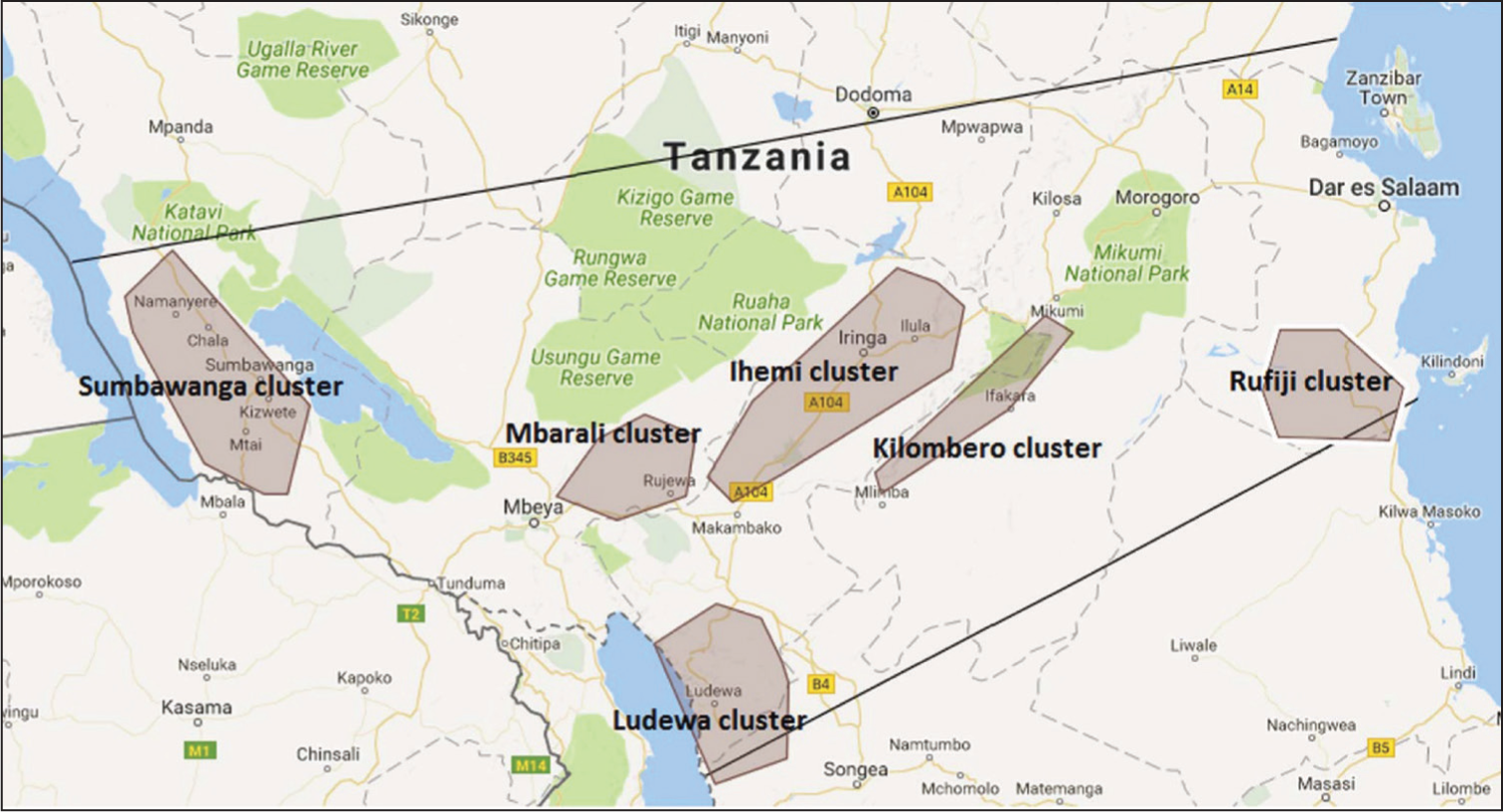
Although the SAGCOT initiative has been viewed as an agri-business model with a top-down approach dominated by foreign interests (Buseth, 2017), there is a local policy imperative that makes it relevant in Tanzania. Development policy in the country has been characterized by the narrative that smallholder producers are less efficient and do not contribute substantially to national development, thus indicating a need for transformation toward large-scale commercial agriculture (Bergius et al., 2018). This approach requires guaranteed availability and accessibility to critical resources, that is land and water, for large-scale investments. Despite claims by the Government of Tanzania and the SAGCOT initiative that there is sufficient land available for agricultural investments, the largest proportion of the land is composed of village lands primarily used for smallholder agriculture, thus it poses a threat to smallholders (Bergius et al., 2018).
Official records indicate that village lands in Tanzania constitute 70% of the country’s total land. However, recent studies have claimed that this figure might have decreased due to different forms of land grabbing for large-scale investments and by political and government elites for private gain. Such possibilities already raise concerns about the future of smallholder peasantry farming and agriculture-dependent livelihoods (Chung, 2019). The increasing demand for biofuels and climate change mitigation in the Global North, on the one hand, and the need for capital and expertise to modernize the agricultural sector (as the engine of the economy) in the Global South (Tanzania inclusive) on the other hand brought with them a massive rush for land for large-scale agricultural investments (LSAIs) in the mid-2000s (Chung, 2019). Therefore, the rush for resources (water and land) and their subsequent grabbing substantially drive the vulnerability of smallholder livelihood to climate change. We expound on this in the next two sections, by highlighting empirical evidence of climate change impacts on the Nexus resources and analysing relevant sector climate adaptation policies.
IV. Climate Change and the Nexus in the SAGCOT Region
Below we review the existing empirical literature on the impact of climate change on the Nexus in the SAGCOT region (Figure 1) and what is known about its impacts on smallholder livelihoods. We begin by briefly outlining the national situation before focusing on studies of the Great Ruaha River Basin, the Kilombero Valley and the Southern Highlands, all of which lie within the SAGCOT region.
Climate change is a global phenomenon, but the poor feel its impacts more due to their high natural resource dependence and low adaptive capacity (Kangalawe, 2017). Africa is particularly vulnerable to climate change impacts due to multiple stressors and low adaptability. Natural resources in Tanzania are already stressed, which makes the country highly vulnerable to climate change (Pauline et al., 2017). Similarly, the Southern Highlands of Tanzania are affected by the on-going impacts of climate change in the form of reduced rainfall, altered rainy seasons and intensified droughts (Kangalawe et al., 2017; Pauline et al., 2017). Climate change impacts on the country’s water resource quality and quantity cause adverse livelihood implications among smallholder farmers (Kangalawe et al., 2017; Richards, 2019). It is projected that the impacts will affect crop yields, especially in rain-fed agriculture dominated by smallholder farmers (Aid, 2018; Bezabih et al., 2010). This is likely to place further stress on already scarce resources and heighten the vulnerability of smallholders, particularly as competition with other users, such as large-scale farmers and hydropower generation intensifies.
Despite abundant water resources in Tanzania, such as lakes, rivers and wetlands, their vulnerability to climate change has the potential to exacerbate this situation (Aid, 2018). For example, the study by Pauline et al. (2017) in the Great Ruaha River Basin found that smallholders employ intercropping to adapt to prevailing climate change impacts, but limited access to water for irrigation makes this strategy difficult to maintain.
A study on land-use change in Tanzania’s Kilombero Valley found that LSAIs are the dominant driver of land-use change (Johansson and Abdi, 2020). It projects that the land-use change will lead to a change in the organization of production resulting in a shift from a smallholding to a labour-based livelihood system in large-scale agriculture. Such changes are happening as the southern highlands of Tanzania undergo increasing demand for land, thereby pushing ecosystems to the limit and reducing their resilience and provisioning services such as food, water (for drinking and domestic use) and pasture (Kangalawe, 2017). For example, the acquisition of 5,800 ha of land for large-scale rice farming for Kilombero Plantations Limited (KPL) in SAGCOT’s Kilombero Cluster saw the dispossession of 630 families who were driven from their land, rendering them landless. Likewise, increased water scarcity for the smallholders who remained in the Kilombero Valley was partly linked to the abstraction of river water by the KPL during the operation of their rice irrigation systems (Johansson and Abdi, 2020).
Large-scale farming is cited as one of the key drivers of these trends, alongside rapid population growth, the influx of people and livestock and the expansion of conservation activities (Johansson and Abdi, 2020). These drivers have pushed smallholders to marginal lands: in particular, smallholders are pushed to farm and sometimes even live, in wetlands where they are vulnerable to flooding in extreme rainy events (Johansson and Abdi, 2020; Kangalawe, 2017). The evidence presented from the SAGCOT region indicates that increased pressure on water resources and the land is negatively affecting the availability and accessibility of these resources among local communities.
V. The Nexus and Climate Adaptation Policy in Tanzania
This section presents an analysis of Tanzania’s climate adaptation policy environment by looking at how it promotes (or inhibits) smallholder adaptation, especially regarding access to key resources namely water and land. We argue that given the intensified competition for these resources as a result of climate change, the current policy framework does not provide a systematic mechanism through which smallholder climate adaptation can be guaranteed. This is echoed by Galaitsi et al. (2018) in their assessment of Nexus-relevant scholarship, where they found no evidence of the Nexus’s intended benefits of sustainable development and resource management optimization being realized. They point out a lack of evidence for workable policy and management prescriptions.
We begin by looking at the overarching framework for promoting climate adaption in Tanzania, the National Adaptation Programme of Action (NAPA), move on to investigate the specific policy for climate resilience in agriculture, the Agriculture Climate Resilience Plan (ACRP) and end by looking at three important programmes with implications for the Nexus and smallholders, namely the Tanzania Climate Smart Agriculture Programme, the second phases of the Agricultural Sector Development Strategy (ASDS) and Programme and the National Irrigation Master Plan (NIMP).
NAPA—2007
Since being initiated in 2007, the NAPA has formed a framework for Tanzania to integrate climate adaptation into sectoral policies alongside the National Climate Change Strategy (NCCS), the National Climate Change Communication Strategy and national guidelines to achieve the integration aim. The NAPA framework and guidelines have formed the basis for subsequent climate policy priorities (Pardoe et al., 2018). In 2012, the NCCS (NAPA implementation framework) was rolled out. Among other things, it was meant to guide all climate-sensitive sectors in incorporating climate change adaptation strategies into their respective policies and plans (URT, 2007, 2012). The strategy is strongly biased towards economic growth challenges, which are partly driven by climate change impacts on a resource-dependent economic system.
Examining this approach from the standpoint of LSAIs such as SAGCOT, it is unclear whether and how such a policy will guarantee access rights to smallholder resource users. Similarly, strategic objectives and interventions in the water resources sector hardly indicate whether a deliberate initiative should exist to safeguard access to and control over water resources by smallholder producers. This lack of consideration is a substantial drawback in terms of building local community adaptive capacity. Both strategic objectives and interventions in agriculture, food security and livestock sectors are biased towards market-based and technological solutions such as climate-suitable crop varieties, trade competitiveness of export-led farming and irrigation technology and systems. For example, while the NAPA’s framework notes the importance of ‘promoting appropriate indigenous knowledge practices’, one of the strategic objectives for the agricultural sector is to ‘promote the use of appropriate technologies for production, processing, storage and distribution’ (URT, 2012: 57). Local communities have been using indigenous knowledge and practices to undertake farming activities. The selective use of traditional seeds that have hitherto sustained local food systems is almost impossible now given the bold push by the government for the use of hybrid seeds controlled by multinational seed corporations (Moore, 2019).
The climate vulnerability assessment mentions sectors that are vulnerable to climate change impacts including smallholder farmers and herders. However, structural and systemic factors that drive such vulnerability and respective adaptive measures are rarely identified. For example, among the eight specific objectives of the strategy, only one touches directly on local communities. Moreover, that objective focuses mainly on creating public awareness of climate change. We argue that although this intervention is crucial in creating awareness for smallholders to prepare accordingly and adjust their activities, it leaves much to be desired regarding building their long-term adaptive capacity.
Notably, water and energy—which are key Nexus sectors—form part of climate-sensitive sectors covered in the NAPA framework. There is an existing collaboration between Tanzania’s Energy and Water Ministries aiming at ensuring that water demand for the energy sector is safeguarded. This entails, among other things, working closely with basin water boards to regulate upstream water use to ensure there is enough water flowing downstream where hydroelectric power plants are located alongside other water uses such as irrigation. However, there is no coordinated effort between these ministries to manage agriculture, which is arguably the dominant water user (Abdul Salam et al., 2017; Pardoe et al., 2018). Consequently, such approaches could neglect smallholders’ water needs upstream or restrict their access altogether.
Tanzania’s climate adaptation policy has been criticized for lacking a clear strategy on how cross-sectoral policy objectives will be achieved and merely providing guidance on mechanisms to form committees (Pardoe et al., 2018). Furthermore, the current policy and action still lack local ownership, as they are largely regarded among most grassroots communities as impositions from above by global climate adaptation initiatives, driven by the UN and other multilateral organizations such as the Global Environmental Facility. The formulation of NAPA only rarely demonstrated the active involvement of local communities during its creation (Pardoe et al., 2018). As a result of little horizontal integration between different ministries, there is also a lack of coordination for effective climate change adaptation.
ACRP 2014–19
The ACRP forms part of the implementation strategy for the NCCS, with a focus on climate change responses in the crop subsector. The plan recognizes agriculture as the largest contributor to rural livelihoods and as constituting 25% and 24% of GDP and exports, respectively.
To promote smallholders’ adaptive capacity, the ACRP states (URT, 2014: v):
Adaptation measures need to consider how to reduce climate shocks to smallholder farmers, promote agricultural practices that boost productivity and safeguard natural resources, and appropriately target vulnerable areas.
This statement points to policy emphasis on technological solutions and innovations to ensure adaptation and climate resilience but does not acknowledge the importance of property rights issues and how relations of production are managed, especially among the government, private sector and smallholders. Such neglect is explicit in the plan as indicated below (URT, 2014: iv):
The strategic direction of the agriculture sector is to modernize through promoting large-scale commercial farms, irrigation expansion, strengthening value chains, and improving linkages with smallholders.
Surprisingly, and contrary to Coulson (2015), the plan still regards smallholders as mere subsistence producers of food crops, which forms part of the rationale for intervention to improve their productivity, especially in the context of large-scale farming. Smallholders are still considered backwards, with inadequate technological applications in farming and dependence on rain-fed agriculture (URT, 2014: iv):
Though the Tanzanian economy and the agriculture sector have experienced economic gains, little has translated to the poor, who still depend on rudimentary technologies and erratic rainfall for their livelihood and food security.
Consequently, the plan has four main action items aimed at promoting resilience in the crop subsector including improving water and land management, increasing yields through Climate Smart Agriculture, protecting the most vulnerable against climate shocks and strengthening climate knowledge and systems. For instance, to protect the most vulnerable against climate shocks, the plan proposes financial instruments like the use of farmland title deeds for loan collateral and loan repayment grace periods. However, this is more likely to cause maladaptation by leading to farmers’ indebtedness and appropriation of their land by lenders. Apart from resilience-building actions laid out in the plan, it acknowledges potential maladaptation among smallholders. For instance, this may result from overreliance on irrigation which is equally vulnerable to climatic risks such as erratic rainfall patterns and droughts.
Overall, the plan put across elaborate actions to promote smallholder climate resilience. However, it implies that this resilience can be attained mainly through integrating smallholder farmers into large-scale farming. In contrast, the evidence that we have reviewed underlines that this integration poses a threat of lost livelihoods for smallholders and increases their climate vulnerability.
Tanzania Climate Smart Agriculture Programme 2015–25
This programme aims at three core issues namely increasing productivity, enhancing climate resilience and promoting food security. As regards climate change and the Nexus, the programme explicitly notes the impact of climate change on water resources (URT, 2015: 15):
Increased intensity in the frequency of storms, drought, flooding, may alter the hydrological cycles while variable precipitation may have implications for food, pasture, and water availability.
Overall, the programme is strongly biased towards the management of water and land as key agricultural resources for the benefit of large-scale farming and respective climate resilience. It places this responsibility on the private sector which is expected to transform and modernize the sector. Smallholder livelihood welfare aspects are only mentioned in passing in the programme. For instance, it notes gender objectives but does not specify how these can be attained. Similarly, the programme does not pay particular attention to smallholders’ socio-economic and livelihood issues apart from claiming that these are likely to be assured as part of the programme’s outcomes in agricultural transformation. This is reflected in the programme’s aim to promote sustainable water harvesting involving 700,000 households spanning 500,000 ha of integrated farming systems. In this way, the programme places importance on smallholders mainly due to their potential agency in transforming and modernising agriculture (URT, 2015: 25).
As regards building climate change resilience, the programme focuses on promoting private sector involvement in modernising smallholder farming (URT, 2015: 29):
Enhance the capacities of private sector service providers and farmer-based organizations to support farmers’ adoption of existing/new/improved CSA and SLM technologies and practices.
Apart from recognising energy as a key component of the Nexus, the programme remains silent on the potential implications of water demand for hydroelectric generation and how the demand would impact climate change adaptation and resilience, especially among smallholder water users. In terms of promoting smallholder livelihoods, the programme mentions the SAGCOT’s agribusiness investments and that these will increase employment as well as income generation among smallholders. The rest of the programme focuses on laying out strategies for modernising small-scale farming, especially through integrating it into large-scale value chains.
Principally, the overall programme focus regarding building climate change resilience is on promoting private sector involvement in the modernization of smallholder farming. Smallholders come into play largely due to their agency in transforming the sector.
ASDS II 2015/2016–24/25
The second phase of the ASDS II was launched in 2015 and is expected to last until 2025. It aims to accomplish three main goals: creating a conducive environment for agricultural modernization, increasing agricultural productivity and competitiveness and strengthening institutional capacity and coordination. The strategy notes water-related challenges facing the sector, especially increasing scarcity and respective competition for water (and land) among various sectors, which is compounded by climate change. To address climate change impacts, the strategy seeks to promote irrigated agriculture that will ensure efficient use of water resources, management of water catchment areas and diversifying to underground water sources to release the current pressure on surface water resources. Similarly, the strategy’s resilience enhancement objectives include promoting early warning systems, preparedness and response mechanisms for climate disasters. Smallholders are recognized as commercial farmers constituting 84% of Tanzania’s agricultural output. Thus, the strategy acknowledges the role of smallholder farmers in bringing about desired changes in the sector and the need to empower them.
Agricultural Sector Development Programme II 2017/2018–22/23
The second phase of the Agricultural Sector Development Programme (ASDP-II) was launched in 2017 and will last until 2023. ASDP-II focuses on agricultural transformation, especially by converting smallholder farmers into sustainable commercial farmers. This approach also entails the modernization of the sector through technological innovation and application as well as market and value chain management systems. Targeted outcomes are improved livelihoods, enhanced productivity and nutrition security.
Sustainable water- and land-use management form one of the programme components. The strategy aims at land-use planning, watershed management, irrigation development and Climate Smart Agriculture. The initiatives are also meant to promote climate change adaptation alongside agroforestry and livelihood diversification. The strategy emphasizes that irrigation alone cannot guarantee climate change adaptation and long-term resilience, thereby highlighting the need to incorporate other approaches. Disaster early warning and response mechanisms to extreme climatic events such as floods and droughts are also prioritized in the programme.
Smallholders’ access to land is noted under the section on the promotion of the appropriate business environment. The programme acknowledges the challenge of land scarcity and indeed ‘land grabbing’ by the private sector-based large-scale farmers. Therefore, it proposes land-use planning as a strategy to address the problem, as stated below (URT, 2017: 49):
Increasing scarcity of land requires land use planning for diverse purposes, all aiming to optimize land resource uses to avoid deteriorations and land use conflicts as well as other consequential problems such as famines and wars.
The programme further notes:
It will also contribute to addressing land/resource tenure issues, avoiding land ‘grabbing’ and mitigating its consequences.
Desired policy outcomes in the ASDP-II in terms of land tenure entail the following (URT, 2017: 106):
Promote land tenure policy that strengthens land use rights with minimal disruption to pastoralists and the landless poor, to stimulate smallholder investment in both land-based and non-agricultural income generating assets.
Despite these admirable goals, the approach to accomplishing them, particularly the main goal, poses a challenge. For example, policy actions such as fast-tracked procedures for land access by investors and the designation of the Rufiji Basin Development Authority 1 as the land bank authority for the SAGCOT region may cause detrimental impacts to smallholders.
Significantly, the programme places more emphasis on securing access and ownership of resources but does not consider how those secured resources will lead to adaptive capacity. It broadly stresses transforming and modernising agriculture will follow from ensuring that there are adequate resources for that.
NIMP 2018
According to the NIMP framework, app- roximately 83% of irrigation schemes in Tanzania are managed by smallholders, leaving only 16% under private sector operators and only 1% under the government (URT, 2018). Given the overall goal of the plan of contributing to agricultural GDP growth and poverty reduction, this implies two main things. Either the role of private sector operators should be increased, or smallholders should be supported to grow and expand into large-scale irrigation farmers as it appears productivity is still low despite their occupying the largest percentage of irrigation schemes. This argument is based on the policy context since 2009 that put more emphasis on large-scale farming by private investors who involve smallholders through outgrowing schemes aimed at supplementing what is produced on a central farm. This goes alongside the NIMP (URT, 2018: 247) which stresses that:
Traditional irrigation areas widely exist that have low irrigation efficiency because of earth canals and need to be modernized to reduce water losses to secure water resources. Water storage such as small-scale dams and water harvesting dykes are seen somewhat in arid lands, but they are still limited.
However, the question of protecting smallholders’ property rights (particularly against land grabbing) is noted as something to adhere to in future irrigation development (URT, 2018). Similarly, the main drive for reviewing the 2002 Irrigation Master Plan was the need to address poverty and promote climate change resilience. As the current NIMP notes, for instance (URT, 2018: 221):
The situation surrounding water resources has become more difficult due to the climate change effect as well as an increase in water demands for various sectors. It is important to consider managing the water demands to ensure the sustainability of water resources.
Ultimately, the NIMP provides supportive mechanisms for promoting smallholders’ adaptative capacity especially by guaranteeing access to water. It also stresses the protection of their property rights. However, it disregards the role that can be played by smallholders to transform agriculture and place that on medium and large-scale irrigation farmers.
Therefore, based on the overall analysis presented in this section, it is apparent that whatever the Nexus policies aim to achieve, they do not represent the interests of smallholder resource users but rather those of the powerful agro-industrial multinationals who backed the Nexus in the first place. This is done in the guise of the agriculture modernization narrative but as shown by Coulson (2015) and Maganga et al. (2016), it is the cause of the loss of smallholders’ livelihoods. This has happened through displacement without compensation, encroachment on smallholders’ land by investors, rise in conflicts and eviction of smallholders and pastoralists.
VI. The Way Forward
This article set out to analyse the livelihood implications for smallholders of the Water–Energy–Food Security Nexus approach within the context of the SAGCOT initiative in Tanzania and how it is situated within the broader national climate change adaptation policy framework. The Nexus approach seems promising in mediating resource use and management challenges but lacks practical strategies and mechanisms that can address the realities of the local policy and environmental context. In addition, the lack of a clear integration among the Nexus-relevant policies, that is those related to water, energy and agriculture, poses a substantial challenge in implementing the resource management framework, including the avowed objective of building smallholder climate change resilience.
While most of the agricultural area in the SAGCOT region is under smallholders, the national policy is primarily focused upon the involvement of large-scale private investors, technological innovation in the agricultural sector and commercialization of smallholder farming by integrating smallholders into global agricultural value chains dominated by large-scale agricultural investors. The policy trajectory is moving away from smallholder farming, which currently dominates the agricultural sector in Tanzania, to climate change adaptive capacity of smallholder farmers.
If smallholders’ climate change adaptive capacity is to be realized and sustained, they must be assured access to and control of critical natural resources, especially water and land. One way in which this could be attained is through the introduction of farmers’ cooperatives that could shield them from the risk of lost livelihoods caused by the entry of private large-scale farmers (Kumar et al., 2015). A further challenge to smallholder adaptive capacity is the fact that the management of key Nexus resources (i.e., water, energy and food) is currently done on an uncoordinated sectoral basis (de Andrade Guerra et al., 2021). Effective management of the resources could be realized if there was a convergence between key ministries and sectors at the central level (de Andrade Guerra et al., 2021; Wang et al., 2021). This is crucial given that the adaptation policy environment in Tanzania, as discussed here, is not conducive to smallholders’ welfare, thereby adversely affecting their climate change adaptive capacity. For appropriate access and control to occur, we recommend policy action that places smallholders’ welfare at the centre of the development agenda and includes other actors linked to the production processes and associated resource governance.
We acknowledge and support the strong arguments for considering the interactions between water–energy–food in thinking strategically about building climate resilience. However, our investigation of how Nexus thinking has been interpreted and operationalized within Tanzania has revealed a strong bias in practice towards commercialized large-scale agriculture at the expense of consideration of smallholder farmers. We have shown that smallholder farmers sit at the sharp end of climate change and its impact on water, energy and food in Tanzania. While some elements of climate adaptation policy state that they recognize the importance of building smallholder climate resilience, our review shows that these words are not translated into policy actions with potentially disastrous implications for the resilience of smallholder livelihoods. There is an urgent need to develop a serious and thorough-going approach to smallholder resilience within Nexus thinking and to ask searching questions about how far other national climate responses that draw on the Nexus approach are supporting smallholder resilience in practice.
Footnotes
Acknowledgements
This work was supported by the Nordic Africa Institute as part of its thematic focus on climate change and sustainable development.
Declaration of Conflicting Interests
The authors declared no potential conflicts of interest with respect to the research, authorship and/or publication of this article.
Funding
The authors received no financial support for the research, authorship and/or publication of this article.