




Abstract
Climate change is expected to affect the poor in low- and middle-income countries most, particularly in the next few decades, through increased flooding and droughts. A very large number of these poor live in informal urban settlements, where they rely on water kiosks and pit latrines and where there is usually inadequate provision for drainage. Despite an abundance of publications on climate change, there is little advice that is specific to those providing water and sanitation services to the urban poor in these countries. This paper presents a Rapid Climate Adaptation Assessment (RCAA) for water and sanitation providers that generates recommendations on climate proofing for local service providers, utilities and local governments. Overall, the RCAA converts regional climate predictions into recommendations for local adaptations. The methodology was developed through fieldwork with communities in Lusaka (Zambia), Naivasha (Kenya) and Antananarivo (Madagascar). The paper describes the methodology, summarizes the results of its application (and the implications for adaptation) and discusses its wider application and limitations. In most cases, the proposed adaptations are not new actions, and could be described as “good water management”.
I. Introduction
There is a wide range of uncertainties associated with predictions of anthropogenic climate change;(1) however, the scientific community now widely accepts that it is a reality.(2) Water is one of the primary media through which climate change will influence the Earth’s ecosystems(3) and people’s livelihoods.(4) Changes in rainfall patterns, amounts and intensity will increase the risk of flooding and droughts(5) and exacerbate current stresses on water resources. Africa is the continent most vulnerable to climate change(6) and the poor are more vulnerable to climate change than the population as a whole.(7) The majority of these poor live in ecologically fragile zones, and are heavily dependent on natural resources and sectors that are vulnerable to climate variability; for example, one-third of the African population lives in drought-prone areas.(8) The Stern Report(9) predicted that by 2100, 145–220 million additional people in South Asia and sub-Saharan Africa could fall below the US$ 2 a day poverty line, and every year an additional 165,000–250,000 children could die compared to a world without climate change.
In Africa, climate change impacts will be compounded by population growth,(10) and the damage to livelihoods and resources is widely expected to increase migration into the cities,(11) although this is disputed by Potts.(12)
Since 1990, the urban population of sub-Saharan Africa has more than doubled, yet the proportion of people without access to improved drinking water sources (17 per cent) and sanitation facilities (57 per cent) has remained constant.(13) The poor who lack access often live on marginal land in flood-prone areas.(14) Where safe and legal water supplies do exist, these are often provided by water kiosks, which, in turn, are supplied by the main water utility or a local source. The kiosks can be operated by a local service provider and have independent management, but are supported and regulated through the city’s main utility. Water kiosks are still a compromise compared to household connections, as water still needs to be carried to and stored in the home, and this has its own time penalties and water safety risks for the families involved. However, household connections require more complicated legal and financial arrangements,(15) which are undesirable to water utilities. The “local service providers” who operate the kiosks are better able to cope with the informal nature of peri-urban and informal areas although they are limited by lack of finance and technical capacity. Similarly, the urban poor are rarely connected to the sewage network and so are forced to use on-site sanitation such as pit latrines. Depending on national and local regulations, this may fall under the responsibility of the utility or the municipality, or it may fall between them and rely on the informal sector. Again, there is limited finance and technical capacity.
Climate change will severely impact these service providers, and current water management and sanitation practices may not be robust enough to cope with the impacts.(16) Sub-Saharan African utilities’ adaptations have mostly been ad hoc, only addressing short-term concerns, and have yet to address climate vulnerability more systematically.(17) Many practitioners argue that it is not yet possible for water managers in low- and middle-income countries to take climate change into account(18) because they are struggling to cope with day-to-day management. However, adapting to present climate variability (increasing resilience, reducing vulnerability) is already an integral part of water management – the efficiency and success depends upon the utilities’ governance(19) – and longer-term adaptation can build on this.
There are efforts underway at many levels of government, and within international institutions, to initiate adaptation to climate change,(20) especially in the water resources sector.(21) However, a thorough vulnerability analysis and impact assessment to enable appropriate design and implementation of adaptation measures is lacking in almost all low- and middle-income countries.(22) There needs to be a shift from generic global impact assessments to more locally focused adaptation and response mechanisms,(23) and adaptations need to focus on increasing the resilience of water providers to climate variability.(24) Adaptation policies work best when climate change initiatives link adaptation and development and address the structural conditions that cause vulnerability.(25) It also needs to be recognized that future long-term changes can introduce new unexpected risks to projects.(26)
So far there has been little focus on water supply and sanitation for the urban poor. The most relevant studies are the DfID WHO Vision 2030(27) review, the CRiSTAL(28) methodology and the USAID methodologies.(29) Vision 2030 gives a comprehensive overview of the resilience of water and sanitation technologies but lacks information on replication or assessing vulnerability. The other methodologies overview community vulnerability and adaptation but lack a water or sanitation focus. To fill the gap, this paper presents a Rapid Climate Adaptation Assessment (RCAA), developed specifically for water and sanitation supply for the urban poor. The RCAA assesses how changes to climate interact with existing vulnerabilities in peri-urban and informal areas, and then recommends adaptations to the existing plans of water providers to increase their climate resilience.
II. Method
The RCAA was developed in Lusaka, Zambia, then trialled in two other case study cities: Naivasha, in Kenya and Antananarivo, in Madagascar. These cities were selected because they are part of the international programme of Water and Sanitation for the Urban Poor (WSUP), a tri-sector partnership between the private sector, civil society and academia focused on addressing the increasing global problem of inadequate access to water and sanitation for the urban poor.
The RCAA consists of five stages, which are discussed in turn:
a literature review, to identify the impacts of climate change;
fieldwork, to assess the existing vulnerabilities of communities and water providers;
preparation of hydrological scenarios;
assessment of the impact of these scenarios on the community; and
identification, selection and recommendation of adaptations for climate proofing water and sanitation services. The research also allowed an opportunity to assess the overall awareness of climate change among the different stakeholders, as well as their current plans for adaptation.
a. Literature review
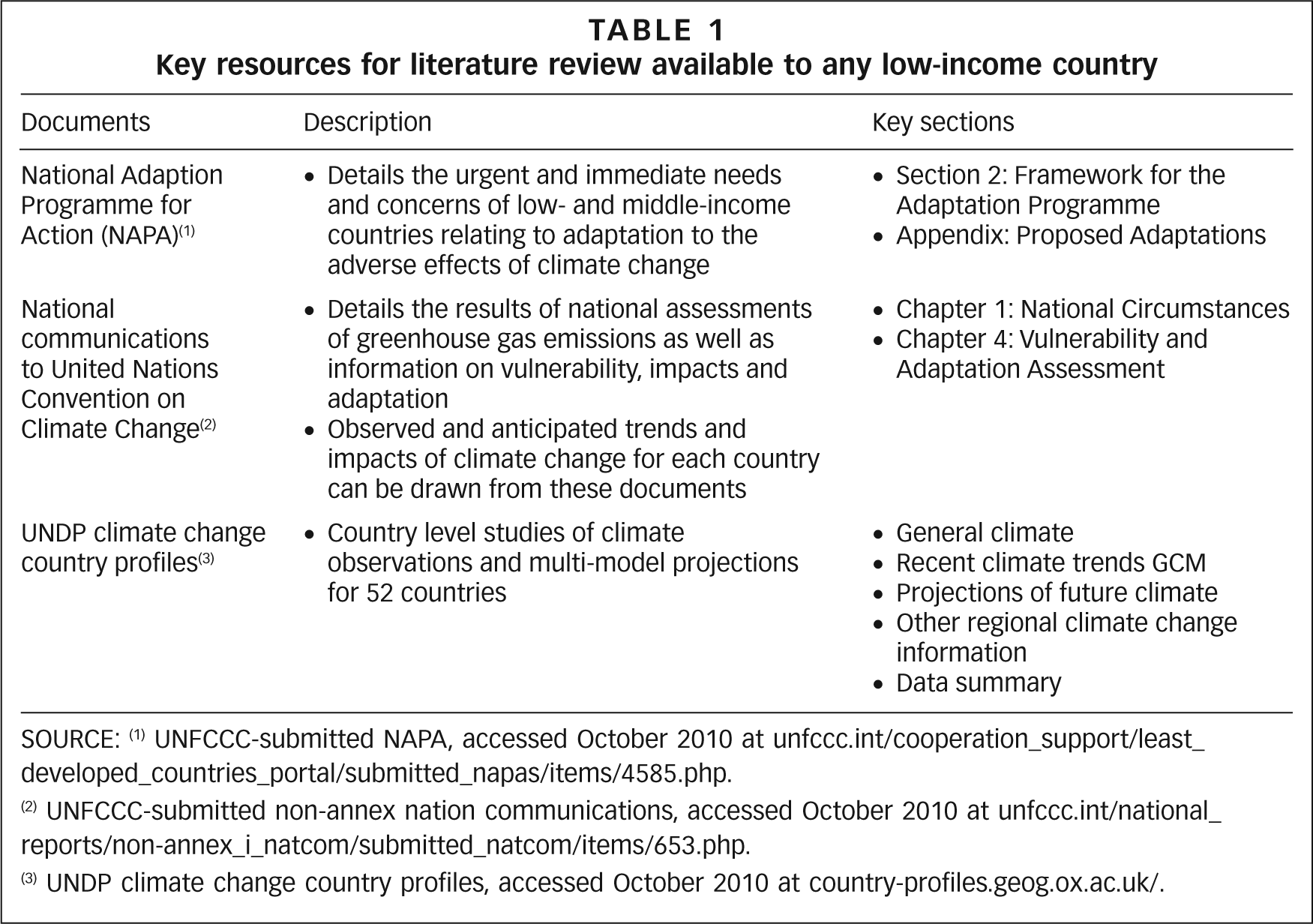
A literature review was undertaken first for each city using key climate change resources. Sources such as those outlined in Table 1 are likely to be available for most localities; country-specific resources were used where they were available. The purpose was to identify the likely changes to climate and the resulting impacts upon water resources, health, livelihoods and biodiversity, as these changes will all impact the population’s access to water and sanitation services.
Key resources for literature review available to any low-income country
SOURCE: (1) UNFCCC-submitted NAPA, accessed October 2010 at unfccc.int/cooperation_support/least_developed_countries_portal/submitted_napas/items/4585.php.
UNFCCC-submitted non-annex nation communications, accessed October 2010 at unfccc.int/national_reports/non-annex_i_natcom/submitted_natcom/items/653.php.
UNDP climate change country profiles, accessed October 2010 at country-profiles.geog.ox.ac.uk/.
b. Fieldwork – vulnerability assessment
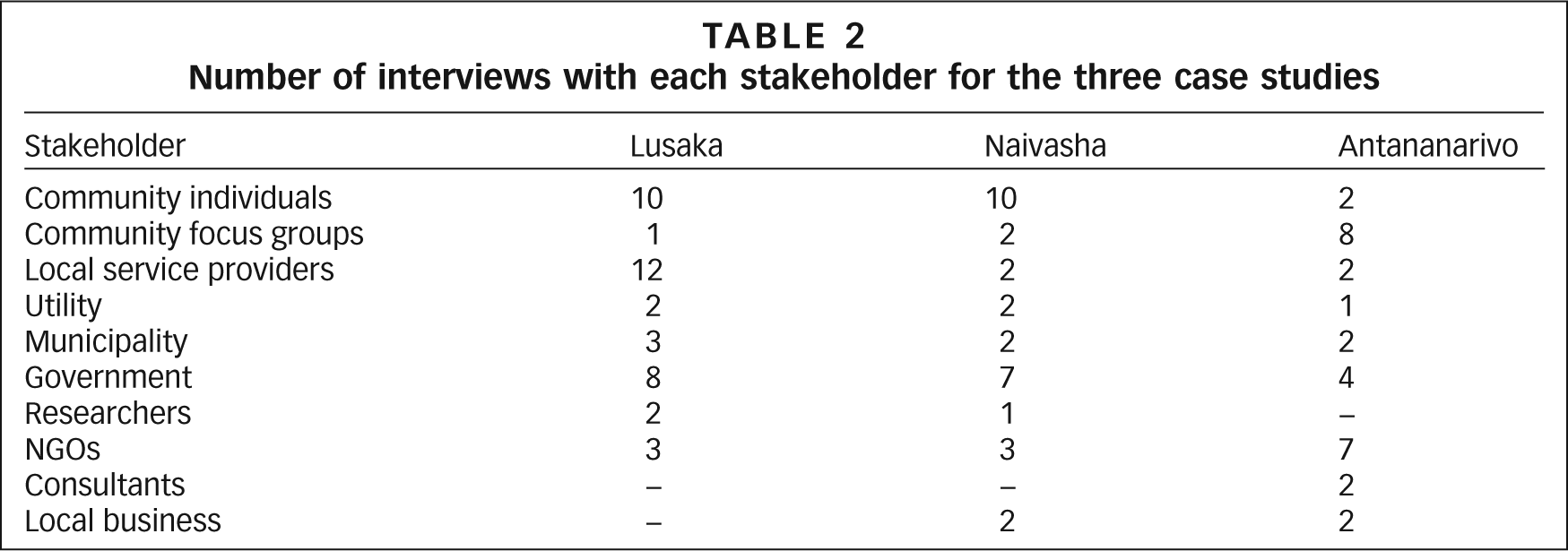
Semi-structured interviews, community focus groups and direct observation were undertaken during two weeks of fieldwork in each of the cities. The initial interviews were arranged with representatives of the local water and sanitation service providers, the water utility, meteorological organization and municipality, and with researchers identified in the literature review. During these interviews, stakeholders were asked to name other stakeholders who might provide useful insights; these included representatives from regional government, the scientific community and NGOs. The total numbers interviewed are detailed in Table 2.]
Number of interviews with each stakeholder for the three case studies
The questions varied with regard to the level of technical detail and the topics covered, depending on the stakeholders’ roles. A priority was to clarify the local causes and impacts of floods and droughts, the adaptations required and any existing development plans. The topics discussed included:
the interviewees’ understanding of climate change, its impacts and adaptation;
the interviewees’ understanding of the predicted changes for their locality;
the impacts of changes in temperature, mean hydrological parameters (e.g. amount or intensity of rainfall) and extreme hydrological events (e.g. floods, droughts) on the water and sanitation technologies and services for these communities;
the impacts of climate change not directly related to water and sanitation;
current water resources, including abstractions, discharges and management, and whether the current level of abstraction is sustainable;
the current procedures and future plans of the water providers; and
how the community and local service providers adapt during current extreme events.
Community focus groups were organized with 8–16 people (the aim was for 8–10, but more attended), using a translator. The groups were asked to discuss floods first (where they occurred), then droughts (where they occurred), and then the events prior to and during past floods (or droughts). This included questions on when the last event took place, how often the events occurred, how much warning there was, event duration and whether there had been any noticeable changes in their frequency or nature. The impact on the community was then discussed, including livelihoods, education, water supply, sanitation, health, buildings, women, food prices, fuel prices and the community as a whole. The focus groups were then asked to identify the biggest problem, following which, adaptation was discussed, debating the best ways to adapt, reviewing who is responsible and the perceived role of local government, CBOs and NGOs.
Direct observation was used to verify the responses in interviews and focus groups. This included general surveillance of hygiene practices, drainage and buildings, for example checking the quality of drainage channels, construction of latrines, hygiene standards and looking for water marks and other indicators of flooding.
c. Development of hydrological scenarios
Rarely are there hydrological models that can easily show how predicted climate changes would impact the local hydrology of the areas under consideration, and developing them in a rapid assessment would be impractical due to the cost, lack of data and the time required. Simple conceptual hydrological models for each city were therefore developed based on the field data, and a small number of key scenarios were then tested based on the climate change predictions for the region. These scenarios show qualitatively the potential effects on any rivers, lakes and groundwater and runoff levels. For example, in Antananarivo runoff is already high, which indicates the infiltration capacity is frequently exceeded; therefore future increases in rainfall intensity are likely to further increase runoff.
This analysis was used to assess whether there was a local risk from any of the following:
increased flooding;
increased groundwater recharge and a rise in groundwater levels;
increased runoff with more erosion;
decreased surface water availability; and
decreased groundwater levels.
d. Impact assessment
The effects of these hydrological scenarios on existing vulnerabilities in water and sanitation were first reviewed qualitatively using Vision 2030 reports. For example, Vision 2030 identified that a borehole may be vulnerable to increased groundwater contamination from lateral flow in the soil or inundation of the well as a result of an increased risk of flooding, and then lists the possible adaptations. Then the impacts not directly related to water and sanitation, such as changes in food prices, electricity prices or employment, were assessed. Finally, the existing plans were analyzed in order to identify new risks, those areas lacking resilience and aspects of the plans that could be vulnerable.
e. Climate proofing
Finally, a set of recommended adaptations was developed for service providers. Suggested adaptations from the focus groups and interviews were reviewed together with the adaptations recommended for the specific technologies from Vision 2030. Adaptations were sought that improved the systems’ current resilience to climate variability, that were appropriate to the service providers and addressed actual risks. Adaptations were made specific to the local service provider, water utility or municipality and were sub-divided according to timescale(30) and between the following categories:(31)
capital expenditure;
operational expenditure;
monitoring; and
socioeconomic.
III. Results from the Case Studies
This section summarizes the findings and recommendations resulting from the three case studies in Lusaka, Naivasha and Antananarivo. For more details, the comprehensive country reports can be downloaded.(32)
a. Lusaka – Zambia
In contrast, Kanyama is most vulnerable to an increase in rainfall, resulting in an increase in flooding; the 2009–2010 flood lasted for three months. Flooding causes kiosks and buildings to collapse, contaminates water supplies (particularly the shallow wells used in the areas unserved by the kiosks) and affects livelihoods, education and health. Flooded latrines and contaminated water increase the risk of cholera and diarrhoea. A decrease in rainfall could be beneficial for Kanyama, reducing the likelihood of flooding.
In Kanyama, reducing localized flooding should be the priority. This entails working with the council and utility to develop the drains and clear them of rocks and debris. The main health risks come from latrines being inundated by floodwater and overflowing. Possible adaptations are assistance with emptying and raising latrines, and in the longer term installing decentralized sewerage; however, all the adaptations would rely on improved drainage and the worst latrines are owned by the poor who cannot afford to upgrade. To improve drainage, the local water utility (Lusaka Water and Sewage Company) needs to provide technical support and assist in mobilizing finance, while the council needs to establish better planning and zoning legislation. In addition, to improve the health of the community, the water kiosk network needs to be expanded to ensure that every household is close enough to a water kiosk so that they can access safe water during floods.
b. Naivasha – Kenya
As the lake is very shallow, the lake area decreases as the level drops, leading to conflicts over abstraction between pastoralists and the commercial farms. Without adequate water, the commercial farms would become unprofitable and would reduce their workforce, leading to unemployment. When the volume of the lake decreases, water quality also deteriorates.
An increase in flash floods would also create problems for the community, as they wash solid waste and silt into the lake, they cause latrines to collapse and overflow, expose pipes, damage houses and crops and inundate roads, which disrupts local businesses and schools. The community emphasized that flash floods are only an inconvenience, but a health professional reported an increase in diarrhoea, typhoid and dysentery during floods.
c. Antananarivo – Madagascar
The upland peri-urban areas may experience increased surface runoff, while the lowlands and rice paddies could experience flooding from the drains or the river. The impacts would be similar to the urban areas, with the addition of damage to crops and livestock, and greater livelihood vulnerability. However, in the peri-urban areas there is typically more space to implement local coping mechanisms.
d. Climate change awareness
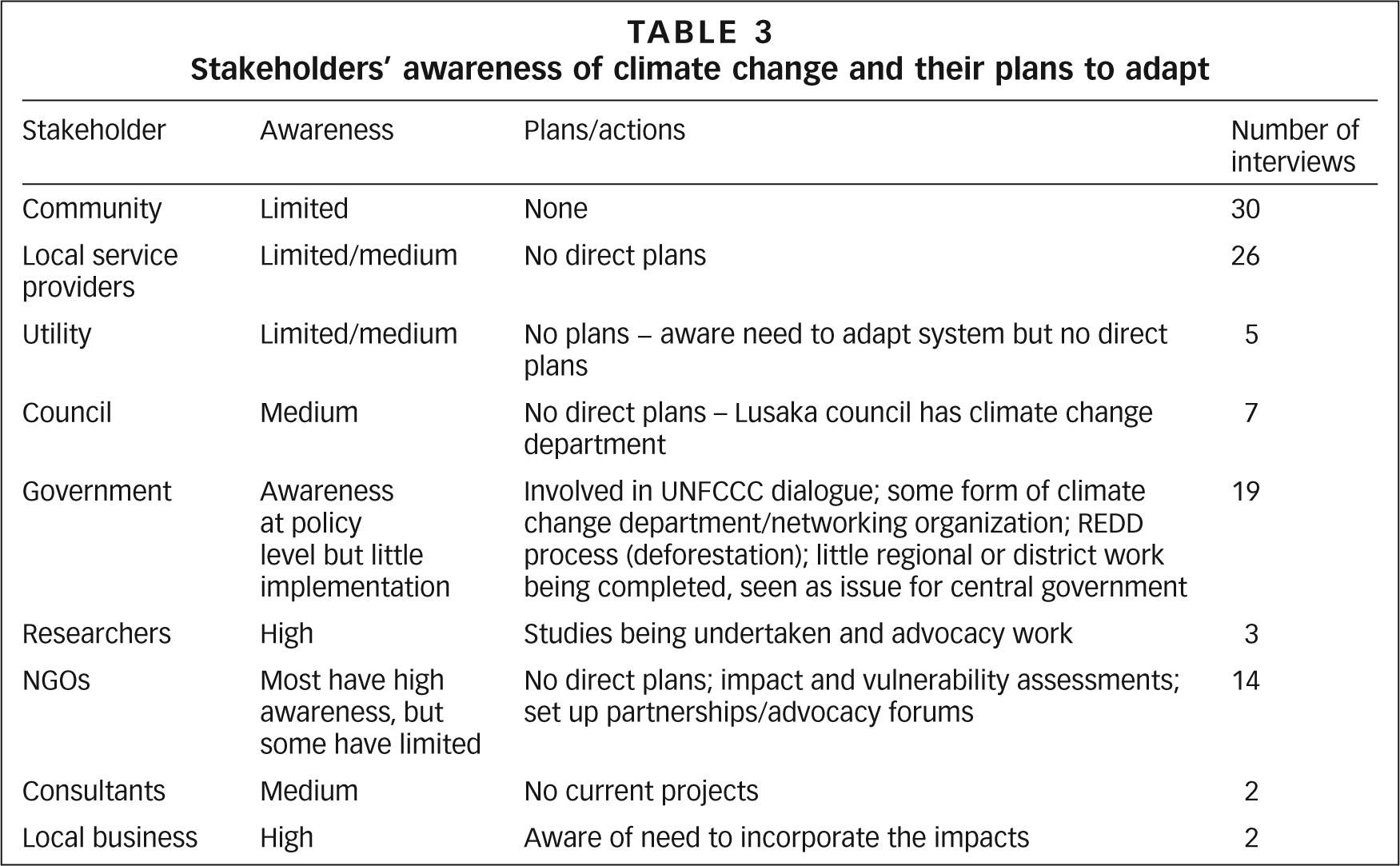
During the three case studies, the overall awareness of climate change was qualitatively reviewed and the results for the different stakeholder groups are summarized in Table 3. Local institutions, water utilities and communities in the three cities were mostly unaware of climate change and have few plans to adapt. In government, there is generally some awareness at the policy level but little impact on the ground. However, even in high-income countries, awareness of climate change can be lacking at all levels; for example, Tompkins et al. found that in the UK, climate change adaptation had been dominated by national government initiatives and little had trickled down to local government level.(42)
Stakeholders’ awareness of climate change and their plans to adapt
IV. Discussion
a. Commonalities between case studies
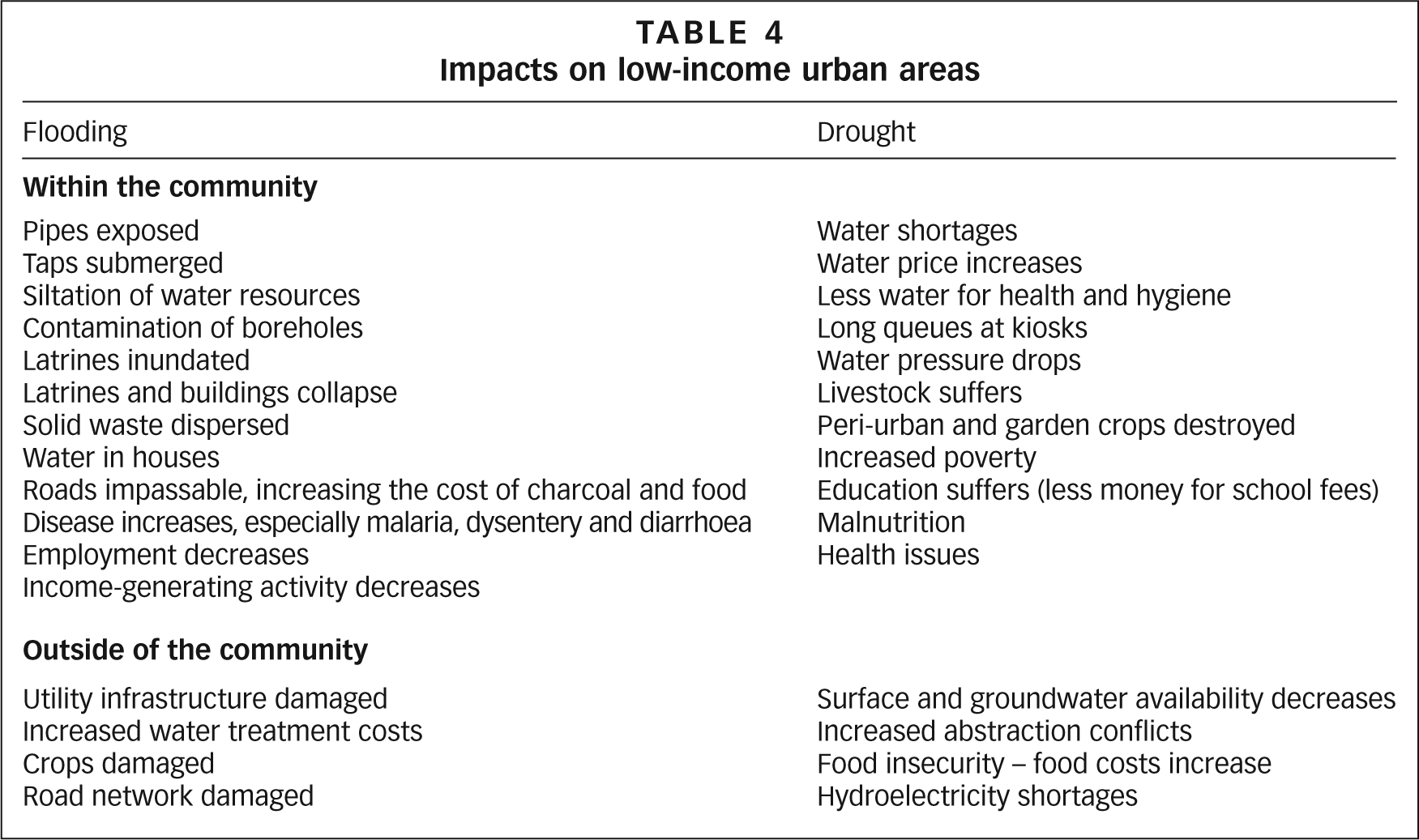
In all the case studies, floods had a bigger impact than droughts, and the interviewees’ perception was that changes in mean temperature would have no impact on water and sanitation. Of the 11 communities visited, eight were vulnerable to flooding and four to water shortages. Table 4 presents impacts common across the communities, divided into impacts within the community and impacts outside the community (on a citywide, regional or national scale). The impacts outside the community can have a larger overall effect as they affect more people, cause more damage and often need action by governments and institutions; for example, during a regional drought everyone is impacted by food price increases.
Impacts on low-income urban areas
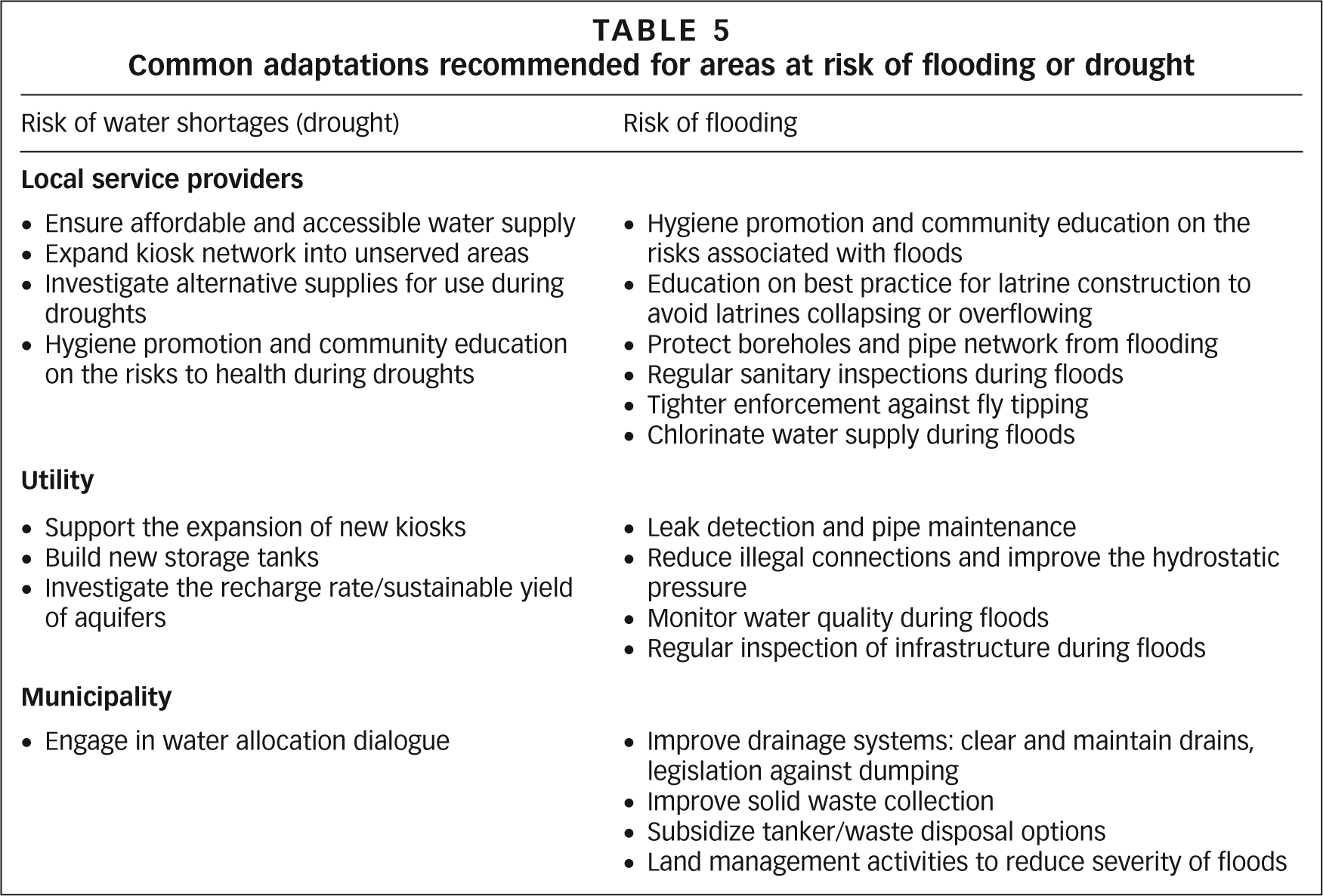
The recommended adaptations can be split between adaptations to droughts and floods, and whether they should be undertaken by local service providers, utilities or municipalities. They are specific to each city and can be found in full in the city specific reports.(43) These common adaptations are a mixture of infrastructure, monitoring programmes and education (Table 5). They demonstrate that adapting to climate change does not involve many new processes – most adaptations could equally be described as good practice in flood or drought-prone areas.
Common adaptations recommended for areas at risk of flooding or drought
b. Implications of findings
Figure 1 synthesizes how changes in rainfall (identified as the most significant climate change) impact upon flood and drought-prone areas. There will be some benefits associated with climate change, for example increased rainfall will have a positive impact on communities in drought-prone areas; however, in most cases the negative aspects will be more significant. And even in drier futures, if the frequency and intensity of extreme storms increase, flooding may not reduce.
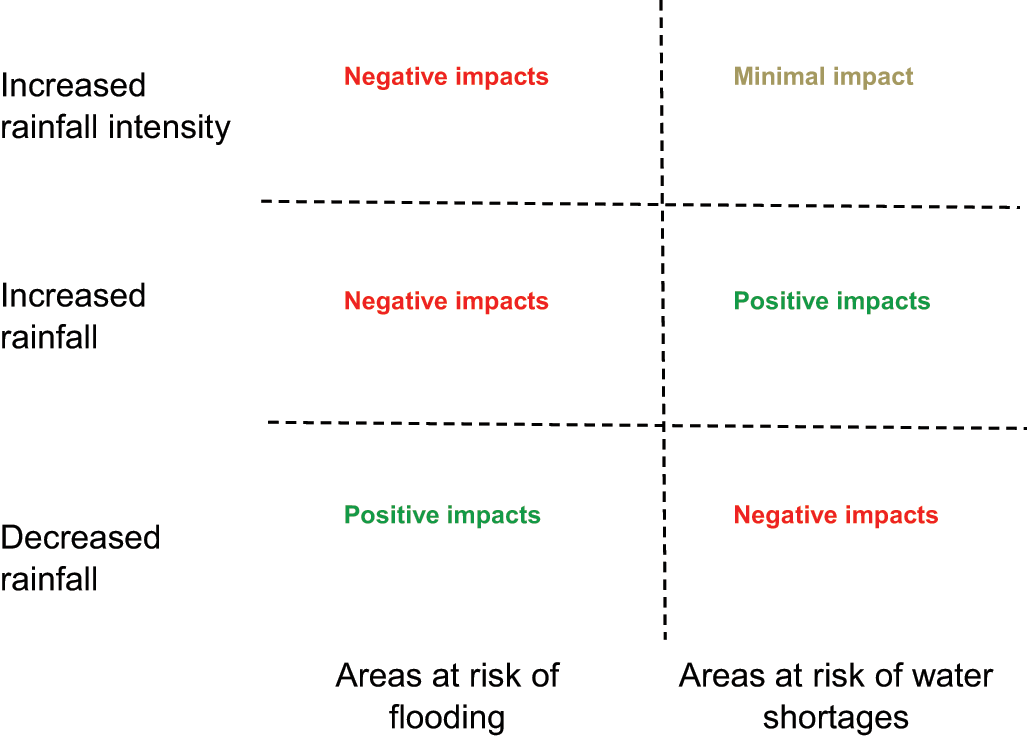
Impacts of climate change on flood and drought-prone urban areas
The results indicate that it is increases in extreme events rather than changes in averages that will cause the most damage to communities and infrastructure, at least in the next few decades. This conclusion is shared with the CAPNET(44) climate change adaptation guide, which emphasizes building capacity to deal with unpredictable events, managing risk and prioritizing no-regret measures. An increased frequency of extreme events will introduce risks to projects for which current infrastructure is not designed. In particular, increases in rainfall intensity are likely to affect flooding and drainage, for example there may be a higher risk of borehole contamination after heavy rainfall. Examples from regions with experience of more extreme climates will be increasingly helpful to organizations planning adaptations, as they can provide details of potential risks and also design features.
The results support the findings of Sanchez-Rodriguez(45) and Simon(46) that for adaptation to be successful it needs to be integrated within existing plans and prioritized alongside other risks. For example, the sanitation master plan in Antananarivo provides a comprehensive overview of how to adapt to flooding, and the roles of the different stakeholders, based on detailed research. If adaptations are developed externally, they are unlikely to capture the more nuanced details of a locally prepared plan and may introduce competition and confusion. Many adaptation practices are simply good water management. In Lusaka, in particular, service providers have been advised to make such changes for decades; climate change may prove to be the catalyst for making this happen.
Allen et al.(47) found that the poor have a certain level of built-in resilience (preventative and impact-minimizing economic strategies, asset accumulation, social support networks) that must be recognized and better supported by planning initiatives. However, for the communities visited it was found that the level of built-in resilience was minimal due to limited assets and resources. This is compounded by the poor services they receive with respect to water, sanitation, drainage and solid waste collection. A limited education also traps people into a cycle of poverty and sentences them to life in informal settlements.
The limited climate change awareness among stakeholders reinforces the need for a rapid and affordable method to assess the impacts of climate change at both the vulnerability and modelling level, in order to identify pragmatic and rigorous adaptations to climate change. This is supported by the findings of Satterthwaite et al.(48) that local government fails to address efficiently the impacts of climate change. Sanchez-Rodriguez(49) similarly found that a thorough vulnerability analysis and impact assessment for enabling appropriate design and implementation of adaptation measures is lacking in almost all low- and middle-income countries; and Muller(50) found that few countries have begun to review their design standards from a climate change perspective. Adaptations that also help to reduce vulnerability to current problems will help mitigate opposition to spending on adaptation for the longer term, and will allow a quicker start. This is especially important as the infrastructure built today locks providers into patterns of behaviour for many years to come.(51)
c. Evaluation of the RCAA method
Essentially, the RCAA identifies the adaptations that local service providers should implement to increase their climate resilience, and the adaptations required by the utility and municipality to support them. Its main strengths are that it applies regional climate modelling to local vulnerabilities; it is based on multiple scenarios describing the possible impacts of possible futures; and it was developed and trialled based on fieldwork, ensuring that it is workable and relevant. The RCAA draws heavily upon the Vision 2030 overview of the vulnerabilities of water and sanitation technology and potential adaptations, but integrates them within the context of the existing vulnerabilities. The RCAA incorporates the community approach used in CRiSTAL and the assessment of existing climate vulnerabilities used by USAID. However, the RCAA does have limitations and these are outlined for each stage below.
i. Limitations
The uncertainties associated with climate modelling make it difficult to quantify the climate changes at local level, and dangerous to rely on detailed scenarios. Changes to tropical precipitation are particularly uncertain because of uncertainties with the positioning of the Inter-tropical Convergence Zone.(52) Climate predictions are ideally given as probabilities or as most likely values with wide ranges. This uncertainty is often magnified when calculating the impacts, and the climate uncertainty is even greater at the city scale as there has been little downscaling of the models and the predictions are based on interpolations. The exception for this study was in Madagascar, where there had been detailed modelling and analysis of the region.
In Lusaka and Naivasha, community data were collected using individual interviews, while focus groups were used in Antananarivo. The questions asked were the same throughout, but the focus groups proved to be a more efficient way of getting information: a broader range of impacts was identified and groups often verified their answers through the discussions. With both methods it was difficult to explore the impacts of possible new risks, as the community had direct experience. However, it is worth noting that Adelekan(53) successfully obtained specific data on flooding impacts in Lagos (Nigeria) through individual interviews, using local enumerators. Similarly, Douglas et al.(54) used a technique developed by ActionAid called Participatory Vulnerability Analysis, which explored the reasons for flooding and what community action is possible. Their local representatives obtained some vivid descriptions of how individuals reacted to the flooding. From these examples, it becomes clear that local interviewers can obtain better information than external ones; however, training local interviewers may not be possible within the short timescale of an RCAA commissioned by an external agency. Yet, it was difficult to explore the impacts of possible new risks as the community had not directly experienced the effects.
The interviews with more educated individuals, including community leaders, were more insightful, requiring less probing to highlight secondary issues. The main limitation was that more relevant concepts emerged as interviews progressed, so that discussion of these was missed with early informants. To address this, some of the stakeholders were interviewed again at the end of the fieldwork.
Converting climate changes into local impacts is the most uncertain aspect of the RCAA, largely due to the lack or low quality of hydrological and climate data. A conceptual hydrological model based on hydrological principles was developed and used to define scenarios for the various climate projections. However, great uncertainty remains in estimating the effect on infiltration (affecting both recharge and runoff) due to the interrelated nature of hydrological processes, especially when rainfall volume is predicted to decrease while its intensity increases. This is significant, as small changes in rainfall and/or intensity are amplified in the catchment response, often leading to large changes in stream flow.(55)
The assessments of the impacts of the various scenarios provided a clear insight into the nature of the risks; however, sometimes the intensity of the impacts was difficult to clarify. Likewise, most of the climate-proofing process effectively identified appropriate adaptations; but for some impacts there was insufficient knowledge of the system design, layout and soil structure, or insufficient information on existing plans to be able to provide detailed specifications. This could be addressed by focusing on these aspects during subsequent fieldwork.
The main external limitations are that the water and sanitation services that are to be climate proofed are mostly in informal settlements in urban or peri-urban areas, where there are lower income levels and deficient basic services. The tariffs collected often do not cover operation and maintenance costs, let alone provide revenue for future investment. Therefore climate change adaptations will often be secondary to providing basic supplies and meeting current needs. However, it should be noted that when populations migrate to cities from areas experiencing extreme environmental change, this may present opportunities for them to receive better services and become less vulnerable overall.(56)
V. Conclusions
The lack of climate change awareness in low- and middle-income countries means that it is essential to have a simple method to climate proof water and sanitation services for the urban poor in these countries. The main risks to water and sanitation provision are from changes to the frequency and intensity of extreme hydrological events, especially an increase in floods or droughts. The RCAA is an effective tool for climate proofing, as it converts regional climate predictions into local adaptations. In addition, by dividing adaptations between the stakeholders, awareness is raised at the appropriate levels.
Applying the RCAA highlighted the fact that adapting to climate change does not necessarily involve many entirely new processes or techniques; instead, it requires a combination of capacity building and technological and managerial measures. Water providers should not consider climate change in isolation but should rank and prioritize it against other sources of change, risk and uncertainty. They need to focus on increasing the environmental resilience and disaster preparedness of projects and the robustness of existing systems. It should, however, be made clear that this is not an argument for “business as usual”, and climate change adaptations should not simply be “bolted on” to existing plans. In particular, risks arising from increases in rainfall intensity and more frequent extreme events should be considered.
Footnotes
Acknowledgements
We are grateful to Water and Sanitation for the Urban Poor (WSUP) and the Technology Strategy Board (Grant Number KTP 1000074) for funding this project. We would like to thank WSUP staff in Kenya, Zambia, Madagascar and the UK for their facilitation of the field visits, and the two anonymous reviewers for their comments, which have improved and clarified the paper.
1.
UNWATER (2009), The United Nations World Water Development Report 3. Chapter 5 Climate Change and Possible Futures, WWDR 021609.indd 68, UNESCO World Water Assessment Programme, UNWATER, accessed June 2010 at  .
.
2.
Royal Society (2010), “Climate change: a summary of the science”, accessed October 2010 at .
3.
UNESCO–WWAP (2009), “Climate change and water: an overview from the World Water Development Report 3: Water in a Changing World”, a World Water Assessment Programme Special Report SC-2010/WS/5, accessed October 2010 at .
4.
UNWATER (2010), “Climate change adaptation: the pivotal role of water”, Policy Brief, accessed October 2010 at .
5.
Hadley Centre (2005), “Stabilizing climate to avoid dangerous climate change – a summary of relevant research at the Hadley Centre”, accessed October 2010 at ; also Laukkonen, J, P K Blanco, J Lenhart, M Keiner, B Cavric and C Kinuthia-Njenga (2009), “Combining climate change adaptation and mitigation measures at the local level”, Habitat International Vol 33, No 3, pages 287–292; and Parry, M, C Osvaldo, J Palutikof, P van der Linden and C Hanson (2007), Climate Change 2007: Impacts, Adaptation and Vulnerability, Contribution of Working Group II to the Fourth Assessment Report of the Intergovernmental Panel on Climate Change, Cambridge University Press, Cambridge and New York, 986 pages.
7.
Africa Partnership Forum (2008), “Climate challenges to Africa: a call for action”, [cited 15 March 2009], accessed October 2010 at www.africapartnershipforum.org; also World Bank (2009a), World Development Report 2010: Development in Changing Climate: Concept Note, [cited 16 April 2009], accessed October 2010 at www.worldbank.org; Nyong, A (2009), “Climate change impacts in the developing world: implications for sustainable development”, in L Brainard, A Jones, N Purvis (editors), Climate Change and Global Poverty: A Billion Lives in the Balance?, Brookings Institution Press, Washington DC, pages 43–64; and see reference 5, .
8.
Hope Sr, K R (2009), “Climate change and poverty in Africa”, International Journal of Sustainable Development and World Ecology Vol 16, No 6, pages 451–461.
9.
Stern, N (2006), Stern Review: The Economics of Climate Change, Cambridge University Press, Cambridge, 712 pages.
10.
Carter, R C and A H Parker (2009), “Climate change, population trends and groundwater in Africa”, Hydrological Sciences (Journal des Sciences Hydrologiques) Vol 54, No 4, Special Issue: “Groundwater and climate in Africa”, pages 676–689.
11.
Barrios, S, L Bertinelli and E Strobl (2006), “Climatic change and rural–urban migration: the case of sub-Saharan Africa”, Journal of Urban Economics Vol 60, No 3, pages 357–371.
12.
Potts, D (2009), “The slowing of sub-Saharan Africa’s urbanization: evidence and implications for urban livelihoods”, Environment and Urbanization Vol 21, No 1, April, pages 253–259.
13.
15.
WSUP (2011), “Helping people connect to water networks: good for business, good for the poor?” Practice Note 7, accessed January 2012 at .
16.
Bates, B, Z Kundzewicz, S Wu and J Palutikof (editors) (2008), “Climate change and water: IPCC technical paper VI”, IPCC Secretariat, Geneva, accessed October 2010 at .
17.
Danilenko, A, E Dickson and M Jacobsen (2010), “.
19.
Batchelor, C, T Schouten, S Smits, P Moriarty and J Butterworth (2009), “Climate change and WASH services delivery – is improved WASH governance the key to effective mitigation and adaptation? Perspectives on water and climate change adaptation”, IRC International Water and Sanitation Centre, World Water Council, accessed October 2010 at .
20.
The Heinz Centre (2006), “A survey of climate change adaptation planning”, The H John Heinz Centre for Science, Economics and the Environment, Washington DC, accessed October 2010 at .
22.
Nath, P K and B Behera (2010), “A critical review of impact of and adaptation to climate change in developed and developing economies”, Environment, Development and Sustainability Vol 13, No 1, pages 141–162.
24.
Muller, M (2007), “Adapting to climate change: water management for urban resilience”, Environment and Urbanization Vol 19, No 1, April, pages 99–113.
25.
Sanchez-Rodriguez, R (2009), “Learning to adapt to climate change in urban areas. A review”, Current Opinion in Environmental Sustainability Vol 1, pages 201–206; also Simon, D (2010), “The challenges of global environmental change for urban Africa”, UNU–Wider Working Paper 51, accessed August 2010 at .
26.
USAID (2007), “Adapting to climate variability and change; a guidance manual for development planning”, accessed October 2010 at .
27.
Howard, G, K Charles, K Pond, K Brookshaw, R Hossain and J Bartram (2010), “Securing 2020 vision for 2030: climate change and ensuring resilience in water and sanitation services”, Journal of Water and Climate Change Vol 1, pages 12–16.
28.
IISD (2009), “CRiSTAL: Community-based Risk Screening Tool – Adaptation and Livelihoods”, International Institute for Sustainable Development, Stockholm Environment Institute, Intercooperation: Swiss Foundation for Development and International Cooperation, International Union for Conservation of Nature, accessed June 2010 at .
30.
Venton, P, J Cacouris and C Cabot (2010), “How to integrate climate change adaptation into national level policy and planning in the water sector: a practical guide for developing country governments”, Tearfund, accessed October 2010 at tilz.tearfund.org/webdocs/Tilz/Topics/watsan/Water%20Adaptation%20Guide_Web.pdf
31.
Charles, K, K Pond and S Pedley (2010), “Vision 2030: the resilience of water supply and sanitation in the face of climate change”, Technology Fact Sheets, University of Surrey, accessed October 2010 at .
32.
Heath, T, A Parker and E Weatherhead (2010a), “How to climate proof water and sanitation services in the peri-urban areas in Lusaka”, WSUP, Cranfield University, London, accessed October 2010 at ; also Heath, T, A Parker and E Weatherhead (2010b), “How to climate proof water and sanitation services in the peri-urban areas in Naivasha”, WSUP, Cranfield University, London, accessed October 2010 at www.wsup.com/sharing/Resources.htm; and Heath, T, A Parker and E Weatherhead (2010c), “How to climate proof water and sanitation services in the informal areas and peri-urban areas in Antananarivo”, WSUP, Cranfield University, London, accessed October 2010 at www.wsup.com/sharing/Resources.htm.
33.
Zambia: National Adaptation Plan for Action (2007), “UN-supported process to identify priority activities and immediate needs with regard to adaptation to climate change”, accessed May 2010 at .
34.
Heath, T (2010), “Zambia climate change briefing”, WSUP, Cranfield University, accessed October 2010 at www.wsup.com/sharing/Resources.htm; also Ministry of Tourism, Environment and Natural Resources (2007), “Formulation of the national adaptation programme of action on climate change”, UNDP, Zambia, accessed March 2012 at .
35.
Becht, R, E O Odada and S Higgins (2005), “Lake Naivasha: experience and lessons learned”, in International Lake Environment Committee Foundation (ILEC), Lake Basin Management Initiative: Experience and Lessons Learned Briefs, including the Final Report: Managing Lakes and Basins for Sustainable Use, A Report for Lake Basin Managers and Stakeholders, ILEC, Kusatsu, pages 277–298, accessed August 2010 at .
36.
See reference 35.
37.
38.
See World Bank (2009b), “Climate variability and water resources degradation in Kenya: improving water resources development and management”, Working Paper No 69 34854, accessed October 2010 at www.wds.worldbank.org/external/default/main?pagePK=64193027&piPK=64187937&theSitePK=523679&menuPK=64187510&searchMenuPK=64187283&siteName=WDS&entityID=000090341_20060110161654.
39.
Library of Congress – Federal Research Division (2007), “Country profile: Kenya”, accessed January 2012 at .
40.
Conservation International and WWF (2008), “Assessing the impacts of climate change on Madagascar’s biodiversity and livelihoods”, Workshop Report, MEEFT, Conservation International, WWF, MacArthur, USAID, accessed October 2010 at .
41.
42.
Tompkins, E, N Adger, E Boyd, S Nicholson-Cole, E Weatherhead and N Arnell (2010), “Observed adaptation to climate change: UK evidence of transition to a well-adapting society”, Global Environmental Change Vol 20, No 4, pages 627–635.
43.
See reference 32, Heath et al. (2010a); also see reference 32, Heath et al. (2010b); and see reference 32, .
44.
CAPNET (2009), “IWRM as a tool for adaptation to climate change. Training manual and facilitator’s guide”, REDICA, CAPNET Brazil, APFM/WMO and UNESCO–IHE, accessed March 2010 at .
47.
Allen, A, C Johnson and H Jabeen (2009), “Built-in resilience: learning from grassroots coping strategies for climate variability”, Environment and Urbanization Vol 22, No 2, October, pages 415–431.
48.
Satterthwaite, D, S Huq, M Pelling, H Reid and P Romero Lankao (2007), Adapting to Climate Change in Urban Areas: The Possibilities and Constraints in Low- and Middle-income Nations, IIED, London, accessed January 2010 at .
50.
See reference 24.
51.
See reference 24.
52.
McSweeney, C, M New, G Lizcano and X Lu (2010), “The UNDP climate change country profiles: improving the accessibility of observed and projected climate information for studies of climate change in developing countries”, American Meteorological Society Vol 2, pages 157–166.
53.
Adelekan, I (2010), “Vulnerability of poor urban coastal communities to flooding in Lagos, Nigeria”, Environment and Urbanization Vol 22, No 2, October, pages 433–450.
54.
Douglas, I, K Alam, M Maghenda, Y McDonnell, L McLean and J Campbell (2008), “Unjust waters: climate change, flooding and the urban poor in Africa”, Environment and Urbanization Vol 20, No 1, April, pages 187–206.
55.
See reference 24.