




Abstract
The water–energy–food nexus approach to the sustainable management of resources emphasizes chains of interdependence and contingencies of their elements. As these concepts are increasingly relevant for research and policy, educational institutions seek to add materials about them into curricula. This article aimed to identify issues and relevant points for education for sustainability in undergraduate higher education, based on a combined analysis of research results regarding the perceptions, experiences and participation of undergraduates in the water–energy–food nexus in São Paulo, Brazil. The analyses enabled an exploration of the contexts in which education for sustainability is set at higher education institutions by taking into account the perceptions of students. It was observed that university students perceive that their knowledge of issues and topics related to the nexus elements is either limited or sufficient, without remarkable distinctions between responses for public and private institutions, although public ones are viewed as superior in educational level terms.
Introduction
Education for sustainability (EfS) or for sustainable development (EfSD) aims to develop skills and abilities by instructing people to reflect on their actions, given the current and future economic, cultural, social, and environmental impacts in a local and global scenario. EfS is aimed at enabling students to make decisions and adopt responsible actions, thus ensuring environmental integrity, economic viability, and the development of a fair society (United Nations Educational, Scientific and Cultural Organization [UNESCO], 2017).
Although its mechanisms and impacts are debated, EfS should be an integral part of quality education throughout life—from elementary to higher education—at all academic levels, and institutions can and must consider it their duty to adapt teaching to sustainable development issues, thus developing skills and abilities essential to sustainability, in addition to responding to current and future challenges (UNESCO, 2017).
Recognizing the importance of considering the ‘nexus’ of water, energy, and food is recent in the field of sustainability. This approach characterizes water, food, and energy as fundamental elements of human development that arise from complex interdependent chains. Such a water–energy–food nexus stems from a proposal that seeks systemic efficiency across, rather than within, particular sectoral ‘silos’. Because ‘nexus’ itself denotes ‘connectivity’, its study is one of the connections between its multiple constituent elements, together with the combinations, conflicts, and exchanges arising from their management (Simpson & Jewitt, 2019).
In countries such as Brazil, where this research was done, the concepts of nexus and EfS are becoming increasingly relevant, and consequently, more institutions, especially those within higher education, have sought to integrate such knowledge into course curricula (Stough et al., 2018). Brazil has an educational system that comprises both public and private universities, with public institutions considered the gold standard of the higher education system (Binelli & Menezes-Filho, 2019). In recent years, there has been an expansion of racial and social quota policies aimed at facilitating public university access for students who were previously unable to enrol in higher education (Silva & Sampaio, 2023). This expansion has also enabled students from socioeconomically vulnerable backgrounds to attend private institutions without facing financial obstacles, such as monthly fees (Silva & Sampaio, 2023). Successful integration of EfS into existing educational institutions demands, however, an analysis that may indicate optimal ways and strategies to approach information about the nexus and sustainable behaviours.
Young people (up to 24 years old) represent around 36% of the Brazilian population (Instituto Brasileiro de Geografia e Estatística [IBGE], 2021). In multiple contexts, these young people play critical roles in providing access to water, energy or food and in helping to ensure cohesion and resilience in their communities. Many of them will assume social leadership in short and medium terms. EfS should aim at enlarging their capacity to create innovation and to make choices and decisions, in order to prepare them to act as future professionals and as citizens.
In a study concerning young engineering students, Araujo (2021) remarks that these professionals are going to play transformative roles in sustainable development using values and skills such as creativity, initiative, citizenship, entrepreneurship, strategic vision, and leadership, to encourage sustainable development now and into the future. Newly graduated young people will play a central role in ensuring a global transition towards sustainable development and renewable energy generation (Ciriminna et al., 2016). Backman et al. (2019) emphasize the need to take in account the students’ perspectives and experiences while developing higher education approaches to education for sustainable development. Their perceptions and the various influences affecting them are fundamental to develop a grounded EfS and for sustainable development.
This is also true about the experiences and perspectives about the food, water, and energy nexus. Much of the recent research on the relationship between water, energy and food resources tend to address issues such as new technologies and engineering systems, security and climate change, resources governance, environmental management, and the Sustainable Development Goals (Opejin et al., 2020; Walker & Coles, 2022). Many of those studies eventually neglect, however, the roles that different social groups play in relation to the WEF nexus regarding the topic, as well as their understanding of, experience with, and participation in the nexus in their daily lives (although there are some exceptions, as can be seen in Walker, 2020; Kraftl et al., 2019; Zara et al., 2022; Leal et al., 2018).
Considering the daily real relationship of people with the nexus elements facilitates the discussion of crucial issues such as equal access to resources, resilience to resources stress, and the role of education in responding to the needs and aspirations of diverse communities. EfS should not avoid to address issues such as inequality, social tensions, and social mobility in terms of access to nexus resources.
This article aimed to deal with some aspects of the context in which EfS occurs in undergraduate higher education courses, by exploring the perception of university students about their own knowledge of the water–energy–food nexus. It is based on a combined analysis of results of a research regarding the perceptions, experiences, and participation in the water–energy–food nexus of young people aged 10–24, living in the Metropolitan Region of Paraiba Valley and North Coast, São Paulo, Brazil (MRPVNC). It is based specifically on part of the results of a survey of 3,700 respondents, the most relevant data from the subsample of ‘higher education young undergraduates’. This article aimed thus to contribute by better articulating the context in which sustainability education takes place in higher education institutions (HEIs) and the extent to which it can adequately inform students’ knowledge, practices, and reflections about resource nexuses.
Theoretical Framework and Literature Review
EfS is quite important to promote values, and develop knowledge and competencies for working towards sustainable development (UNESCO, 2005), with higher education playing a fundamental role in it. HEIs are complex systems in interact with their external environment, to get inputs to assess the effectiveness of their activities, as well as about where (and how) their graduates work, in order to be able to develop skills required for existing and future challenges to be overcome (Mainginski et al., 2017).
Redman and Redman (2014) remark that educating for sustainable consumption and for conscious decision-making is an important step in the way to altering production, consumption and discard systems, but that the educational system frequently reinforces unsustainable practices and neglects the need to consider differences of perceptions, beliefs and wishes while searching for methods and approaches for an effective EfS, because, as Leal Filho et al. (2018) stress, a successful implementation of EfS requires faculty commitment and students engagement.
Several recent studies have addressed the issue of integrating EfS in higher education, by assessing proposals and practices of different universities in different geographical contexts, thus producing an overview of challenges faced during the implementation of EfS, as well as suggestions for improvement and for future initiatives. Buckley and Michel (2020) have used data from 47 institutions to analyse the content and context of EfS experiences at HEIs in the United States, as well as learning outcomes obtained.
Warr Pedersen et al. (2017) analysed the implementation of a bicycle parking facility at the University of Tasmania and observed that it led to behaviour and promoted engagement of stakeholders from the whole institution towards increasing sustainability on campus. Earl et al. (2018) presented an interpretative case study on EfS using Van Wynsberghe and Herman’s adaptive education as pedagogy.
Through a combined method of case study and interviews, Shawe et al. (2019) mapped sustainability policies and initiatives of a select number of Irish and international HEIs, investigating, in each case, the degree of the sustainability integration on campus, the testing of new ideas and technologies, and the dissemination of lessons learned across society and economy. Singh and Segatto (2020) observed the main challenges faced by three different HEIs while implementing EfS. Cavalcanti-Bandos et al. (2021) explored the development of EfS and the degree of literacy in sustainability in three Latin American business programmes in Peru, Brazil, and Colombia.
Rodríguez-Solera and Silva-Laya (2017) used standardized questionnaires and semi-structured interviews to investigate the experience of a Central American university to promote an educational model focused on sustainability. Khan and Henderson (2020) used documental analysis and semi-structured interviews to evaluate whether and how professors were incorporating EfS in the University of Michigan course curriculum, and how well it aligned with institutional EfS policy and objectives. Bibliographic research, hermeneutics and grounded theory were used to analyse competencies development and educational approaches and connect them in a framework formed of twelve competencies and twelve pedagogical approaches (Lozano et al., 2017).
The previously mentioned articles present different types of approaches to EfS: the promotion of sustainable actions on campuses; specific programmes for teaching sustainability; debates; project-based learning; classroom discussions; integrating sustainability teaching with research activities and partnerships. It seems evident that a single form of approach or isolated initiatives do not adequately develop the competencies, skills and attitudes necessary to achieve sustainability. More effective implementation of EfS demands the integration of institutional initiatives with the cooperation of the community, of educators and students.
Education for Sustainability and the Water–Energy–Food Nexus
EfS must encompass issues concerning food, water, and energy systems, which are among the most complex global challenges. Addressing them requires interdisciplinary or even transdisciplinary approaches, to be found in and across engineering, biological, physical, and social sciences (Rodríguez et al., 2019).
In terms of the water–energy–food nexus, recent research tends to focus on issues of governance, management, technology, and engineering. Few works relate these concepts to EfS challenges, or, as noted above, to the experiences of social groups who grapple with nexus concerns in their everyday lives (in the case of this article, young undergraduates). However, several of the studies that do explore EfS propose approaches and strategies towards EfS using concepts and aspects of the water–energy–food nexus.
Kilkis¸ and Kilkis¸ (2017) present a case study on creating a three-phase strategy to incorporate circular economy principles into an energy policy course. Platts et al. (2022) examined a research project that assessed the education of future researchers on the water–energy–food nexus and examined how much these programmes instilled a particular understanding of the nexus’s significance in students. Wade et al. (2020) examined an initiative of educating leaders in water, energy, and food systems developed by professors and students of nexus-oriented, interdisciplinary postgraduate training programmes, while Zhuang et al. (2022) focused on a framework for entrepreneurial research to encourage transdisciplinary and a top-down quantification of relationships between food, energy, and water, as well as economic, environmental, and social systems. Murray et al. (2021) used questionnaires to evaluate a new experimental course that emphasized communication skills and transdisciplinary training.
Those studies reveal that resources and methodologies involving issues and concepts of the nexus can be useful to form young people to face the challenges of sustainable development and integrate EfS into courses.
Perceptions and Experiences of University Students
Getting a better comprehension of students’ experiences and understanding of the water–energy–food nexus may support improvement initiatives of EfS programmes in higher education courses. A small number of works about the use of students’ perceptions as the basis for improving EfS was found.
Mainginski et al. (2017) used questionnaires to obtain students’ perceptions about how the topic of sustainability had been approached throughout their professional formation. Costa et al. (2017) also used questionnaires to evaluate students’ environmental awareness and this perspective on the approaches to environmental education in their universities. Zamora-Polo et al. (2019) assessed students’ knowledge of Sustainable Development Goals, while Eppinga et al. (2020) have examined an approach intended to include sustainability in a course aimed at developing practice-oriented research competencies.
The previously mentioned studies indicate the relevance of acknowledging students’ experiences and perceptions about sustainability and environmental education to form a foundation from which to develop improved pedagogical methods and approaches to better form professionals and citizens, able to tackle present and future challenges.
Method
This article is based on an analysis of a subset of data from a large-scale, interdisciplinary research project including the participation of geographers, educators, and engineers with a range of backgrounds. Its main objective was to investigate the understanding, experiences, and participation of children and youth (aged between 10 and 24 years old) residing in the Metropolitan Area of Paraiba Valley and North Coast, in relation to the water–energy–food nexus. The subset here analysed is that of young undergraduates attending higher education at the time of data collection.
Data are derived from a survey-type questionnaire that was part of wider research project. Most of the respondents answered the questionnaire using an online form, but some who did not have good quality internet had to use a paper form. After quality checks, around 3,700 registers were available to be analysed. For this study, the sample selection was carried out based on the stratum of ‘higher education young undergraduates’. This data subset was composed of respondents that checked he options ‘undertaking higher education’ or ‘undertaking a postgraduate course’. In total, there were 433 respondents from 30 cities in the region of different higher courses. These sample and subsample sizes were sufficient to apply the following statistical tools: chi-squared independence tests, two proportions Z-test in R, and Cramer’s v (Costa Neto, 2002; Triola, 2017).
The questionnaire was composed of approximately 270 questions, most of them closed questions, grouped into seven sections (introduction and consent; personal profile; questions about housing; questions about food; questions about water; questions about energy; questions related to water–energy–food nexus). This article analyses exclusively some questions of the sections about food, water, and energy, and more specifically on questions concerning the level of knowledge or understanding that respondents believed to have about each element of the nexus, a total of 39 questions. For each of those questions, the possible answer alternatives were ‘I understand it very well’, ‘I understand it well or well enough’, ‘I understand it little’ and ‘I know nothing about it’. The respondents were told to selected the most suitable one, that expressed the perception of their own knowledge of each issue presented. ‘Non-answers’, i.e. when the respondent left the question blank or chose the alternative ‘I don’t care about it’, were disregarded.
Data analysis was performed using Sphinx and MS Excel using uni-, bi-, and multivariate tools, the main ones being descriptive statistics, chi-squared independence tests, two proportions Z-test, Cramer’s v, and principal component analysis. To carry out the tests and make comparisons, data from responses in the ‘About you’ section were used, such as educational stage, type of university, age, and hometown. The main comparisons are related to correlated questions, nexus elements, and differences between public and private universities. The choice of that type of comparison was due to the widespread notion in Brazil that the finest educational path begins in private high schools, preparing students for entrance tests into public universities, which are the elite of the higher education system (Binelli & Menezes-Filho, 2019).
Results and Discussion
Figure 1 presents some of the characteristics of the group of 433 respondents. They were aged between 17 and 24 years old: 55% were 17–20 years old and 45%, above were above 20 years old. Only 4% of them were graduates undertaking a post-graduation course, and the majority (96%) were young undergraduates undertaking a higher education course.
Information Extracted From the Sample Correspondent of the Stratum of ‘Higher Education Young Undergraduates’.
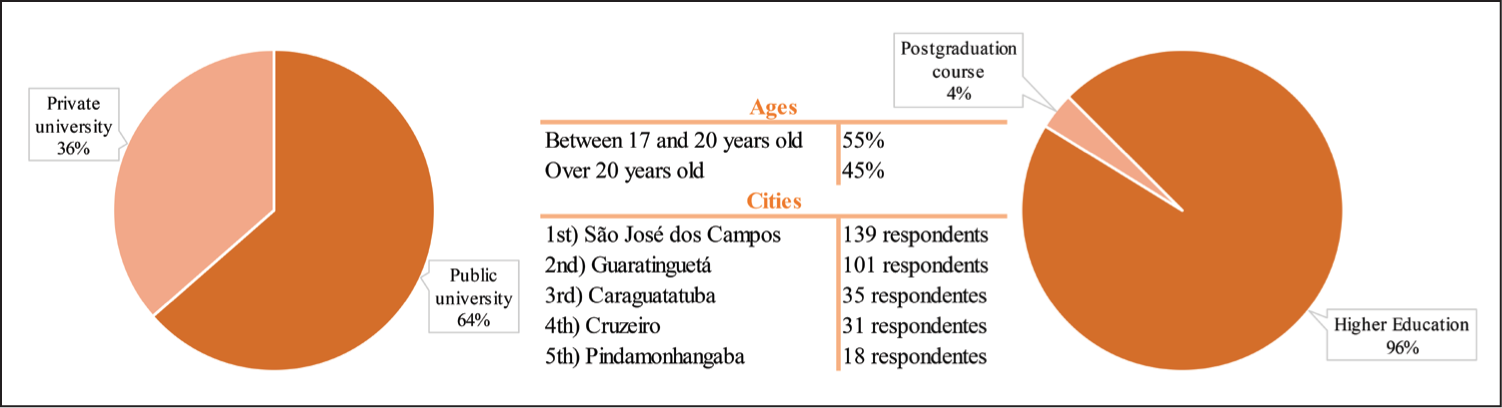
Respondents lived in one of a group of 30 cities in the MRPVNC area, but the largest number of them lived in São José dos Campos, Guaratinguetá, Caraguatatuba, Cruzeiro, or Pindamonhangaba. Within the sample, 64% of the respondents answered that were studying at public universities or colleges; the remaining (36%) studied at private universities or colleges.
Perceptions of Own Knowledge About Food Issues
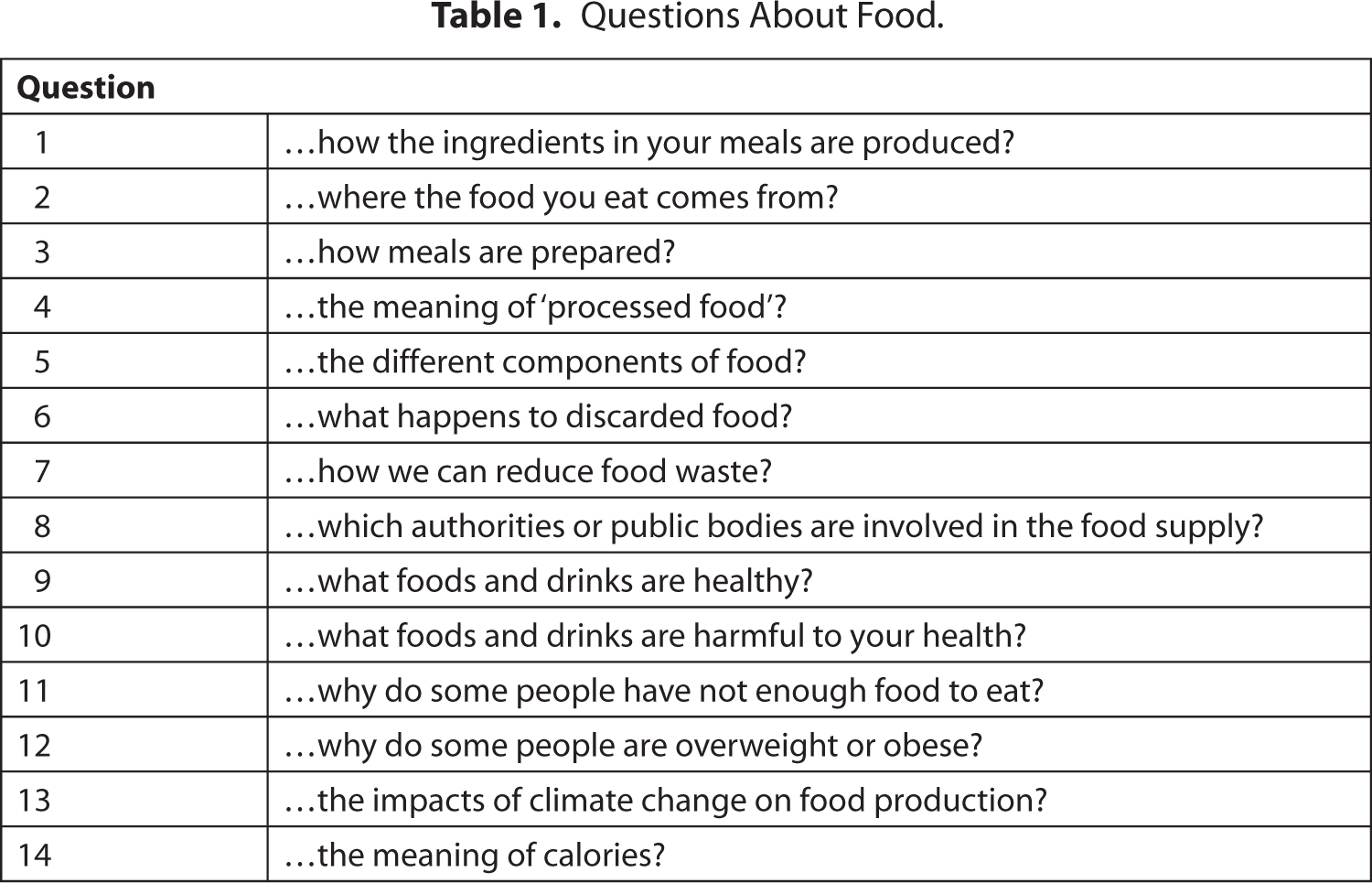
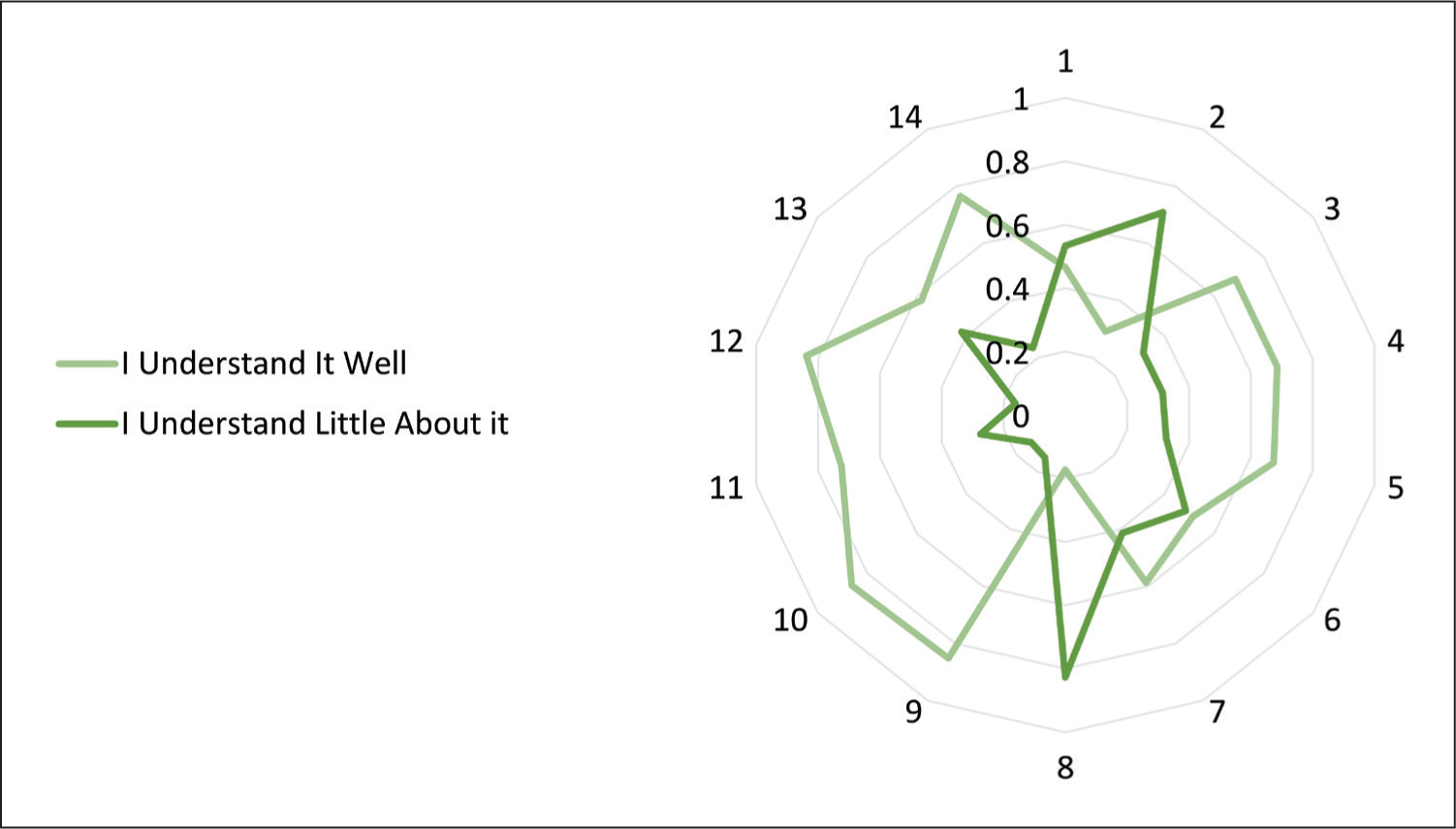
Of the 39 questions analysed, 14 were related to food issues and are presented in Table 1. They all began with the phrase ‘Do you have any ideas about…?’. Each question’s answers were analysed in two different ways. First, by considering the four alternatives of answers presented in the questionnaire—‘I understand it very well’, ‘I understand it well or well enough’, ‘I understand little about it’ and ‘I know nothing about it’. Then, the analyses considered the combination of the answers in only two groups: ‘I understand it well’ (the combination of ‘I understand it very well’ and ‘I understand it well or well enough’), and ‘I understand little about it’ (a combination of ‘I understand a little about it’ and ‘I know nothing about it’). Independence tests (Chi-square test) and two proportions Z-tests were carried out. Figure 2 presents the percentages of answers ‘I understand it well’ and ‘I understand little about it’ to questions about food.
Questions About Food.
Analysing the results and observing the graph shown in Figure 2, questions 2 and 8 stand out. In these questions, the answer ‘I understand little or nothing about it’ was predominant, as opposed to what is observed in the remaining questions. Respondents believed they had little knowledge the origin of the food they consumed, and about the authorities our public institutions involved in food supply. Questions 1 and 6 are also worth mentioning, as each group of alternatives had roughly the same proportion of answers. Respondents were almost equally divided into the two possible groups.
The Chi-square and two proportions Z-tests were carried out to verify whether there is a dependence between the chosen alternative of answer and the type of institution at which the respondent was studying, with a P-value of 5% being considered. The table in Figure 3 presents the P-values found for the test applied to all food-related questions, in two different situations: by analysing the questions considering the four alternative answers presented in the questionnaire (first column of the table) and by considering the answers in two groups (second column). The values highlighted in red indicate that the P-value was less than 5% and that, therefore, there is dependence was found. The values highlighted in yellow reveal that the P-value was close to 5%, therefore revealing that the result deserves some attention.
Graph Containing the Percentages of ‘I Understand It Well’ and ‘I Understand Little About It’ Answers to Questions About Food.
P-Values and Percentages For Questions About Food.
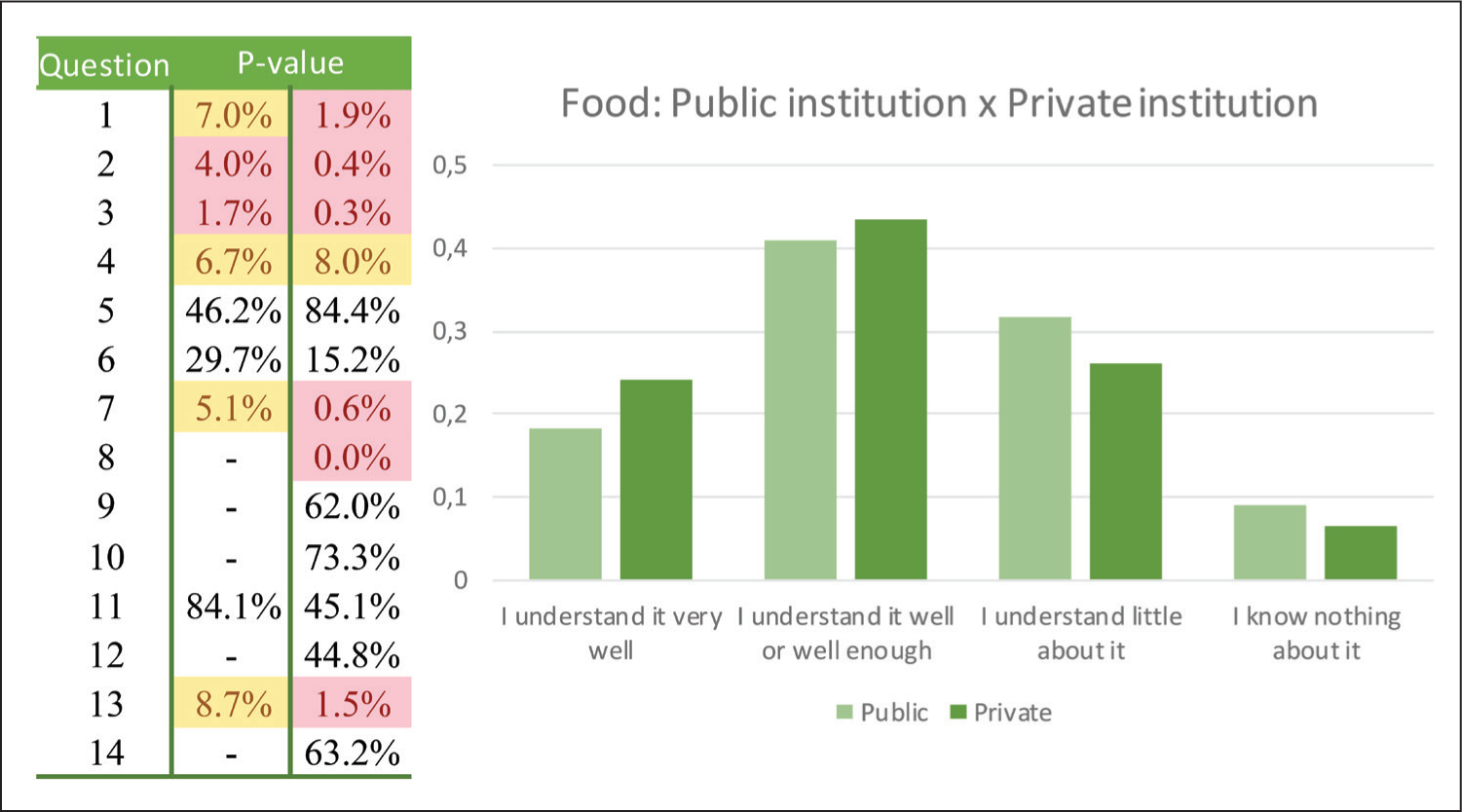
When the four answer alternatives are considered (first column), the majority of the observed frequencies are the same as the expected ones, no dependence was found between the type of higher education institution attended and the perception of their own knowledge, except for questions 2 and 3. When answers were assembled in only two groups; however, considering the answers ‘I understand it well’ or ‘I understand a little about it’, dependence between the type of university and their perception of knowledge about food was found for a greater number of questions—almost half of them. These are questions 1, 2, 3, 7, 8 and 13. The frequency of answers in the group ‘I understand it well’ was greater than expected for the group of students of private institutions.
The graph in Figure 3 depicts the percentages referring to the perception of their own knowledge about food-related issues (answers to all 14 questions analysed together) for each group of respondents. It was observed a dependence between the type of higher education institution attended and the perception of their own knowledge about food-related issues (χ2 = 43.521; d.f. = 3; P = 1.91.10–09) 1 . Differences are observed in proportions referring to students from private institutions, who tended to choose the alternative of higher level of knowledge about the food-related issues included in the questionnaire.
The two proportions Z-test was carried out at a 5% significance level and, consequently, a Z-value of 1.96 was found. The test showed that there were differences between the proportions of answers ‘I understand it very well’, ‘I understand a little about it’ and ‘I know nothing about it’ (Z-value = 4.93; 4.30 and 3.21, respectively) by comparing the answers of respondents from public institutions and private institutions.
Cramer’s V was also calculated with the aim of verifying the level of association between the variable ‘type of institution’—public or private HEIs—and the answers selected for questions about food. The test resulted in a v-value of 0.09 which, according to Cohen (1988), implies a weak, but significant association.
Perceptions of Own Knowledge About Water Issues
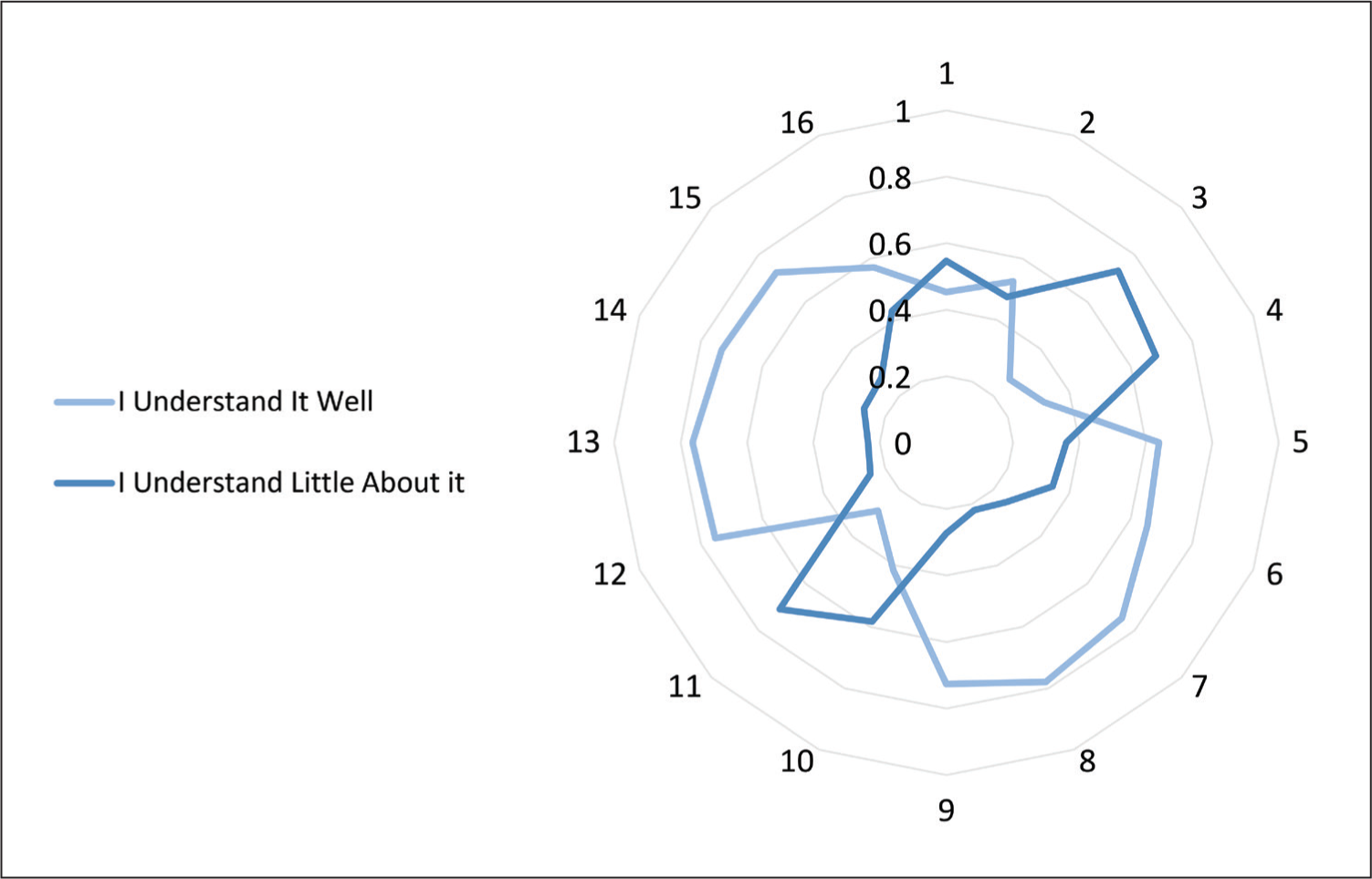
Sixteen of the questions analysed were related to water, as shown in Table 2. All the questions began with the phrase ‘How much do you know about…?’. These questions were analysed in the same way as those about food. Chi-square and two proportions Z-tests were carried out. Figure 4 presents the percentages of answers ‘I understand it well’ and ‘I understand little about it’ to questions about water.
Questions About Water.
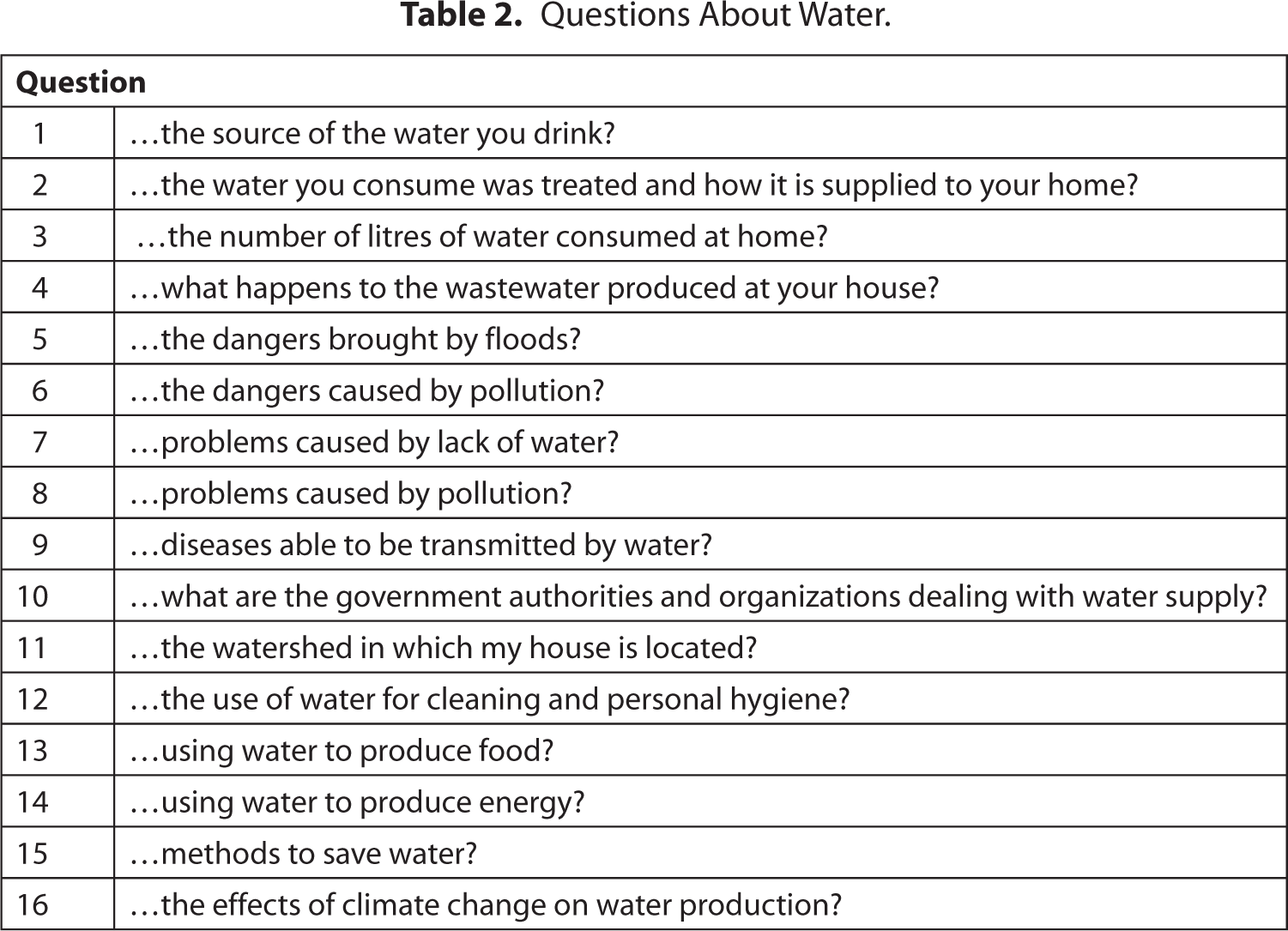
Analysing the results and observing the graph shown in Figure 4, questions 1, 3, 4, 10 and 11 stand out. In these questions, the answer ‘I understand little about it’ is predominant, as opposed to what is observed in the remaining questions. Respondents believed they knew little about matters related to the source of the water they drank, the volume of water consumed at home, the disposal of wastewater, the organizations involved in water supply, and watershed their house is located. Furthermore, it is worth mentioning that question 2 has, similar proportions between responses, that is, the answers were divided between the two groups of alternatives.
Graph Showing the Percentages of Answers ‘I Understand It Well’ and ‘I Understand Little About It’ to Questions Concerning Water.
P-Values and Percentages of Questions About Water.
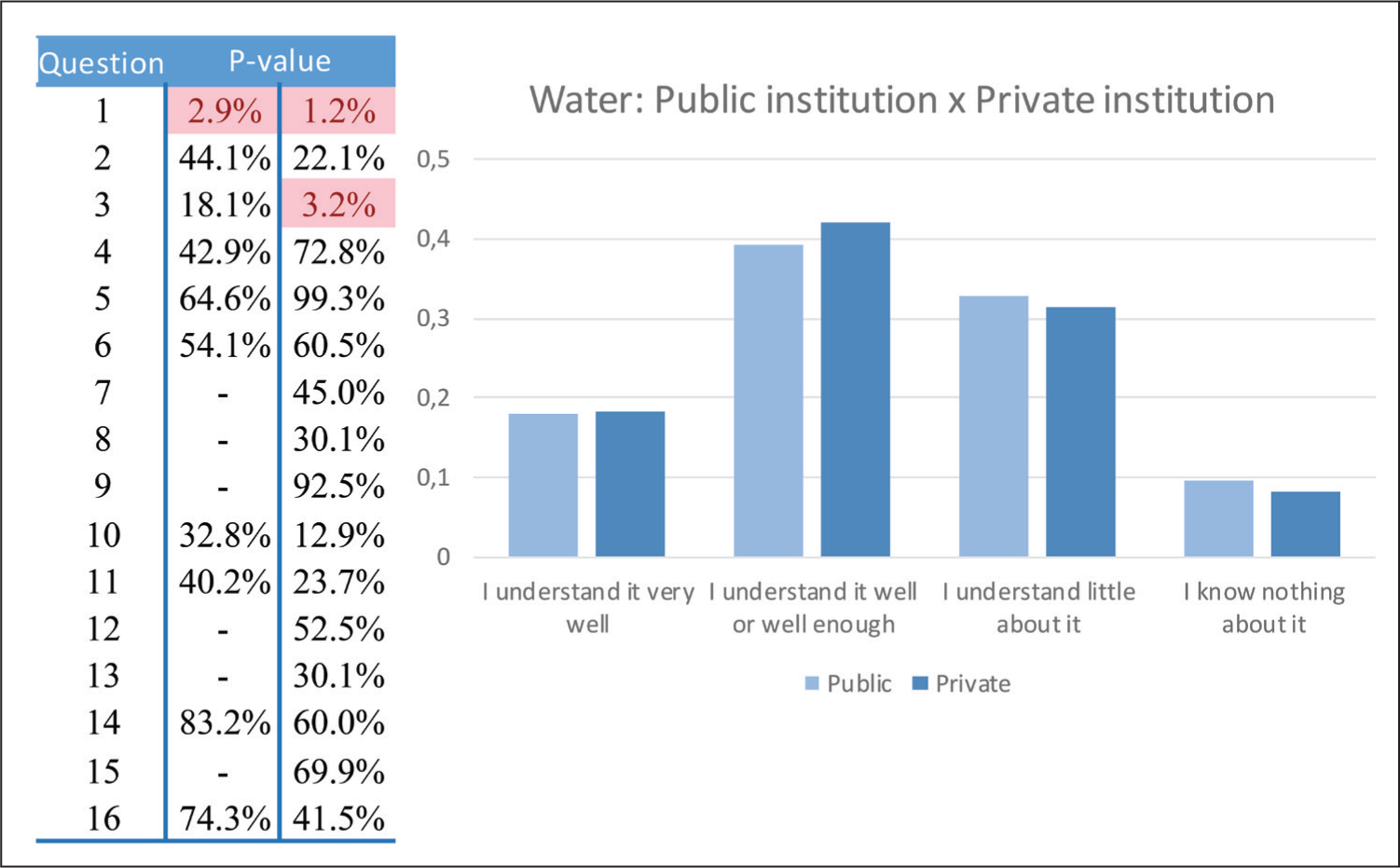
In the same way as with questions concerning food, the Chi-square and two proportions Z-tests were used, in order to verify whether there was a dependence between the chosen alternative of answer and the type of institution at which the student was studying. The table in Figure 5 contains the P-values found for the test applied to all water-related questions, in two different situations: by analysing the questions considering the four alternative answers presented in the questionnaire (first column of the table) and by considering the answers in two groups (second column). The values highlighted in red indicate that the P-value was less than 5% and that, therefore, there is dependence was found. The values highlighted in yellow reveal that the P-value was close to 5%, therefore revealing that the result deserves some attention.
As indicated in Figure 5, for the majority of questions, the results showed that observed frequencies are the same as expected frequencies. When the four answer alternatives are considered (first column), the majority of the observed frequencies are the same as the expected ones, no dependence was found between the type of higher education institution attended and the perception of their own knowledge, except for question 1. Thus, there is no dependence between the type of university attended by the young individual and their perception of the level of knowledge about water. When answers were assembled in only two groups, considering the answers ‘I understand it well’ or ‘I understand a little about it’, dependence between the type of university and their perception of knowledge about water was found for questions 1 and 3. The frequency of answers in the group ‘I understand it well’ was greater than expected for the group of students of private institutions.
The graph in Figure 5 depicts the percentages referring to their perception of their own knowledge regarding water-related questions (answers to all 16 questions analysed together) for each group of respondents. There is no significant dependence between the type of institution and the respondents’ level of understanding of the questions concerning water (χ2 = 7.208; d.f. = 3; P = 0.065). In general, respondents believe they understand questions concerning water well.
As with the questions concerning food, the two proportions Z-test was applied at a 5% significance level. The test revealed differences only between the proportions of answers ‘I understand it well enough’ and ‘I know nothing about it’ (z-value = 2.04 and 2.07, respectively).
Energy
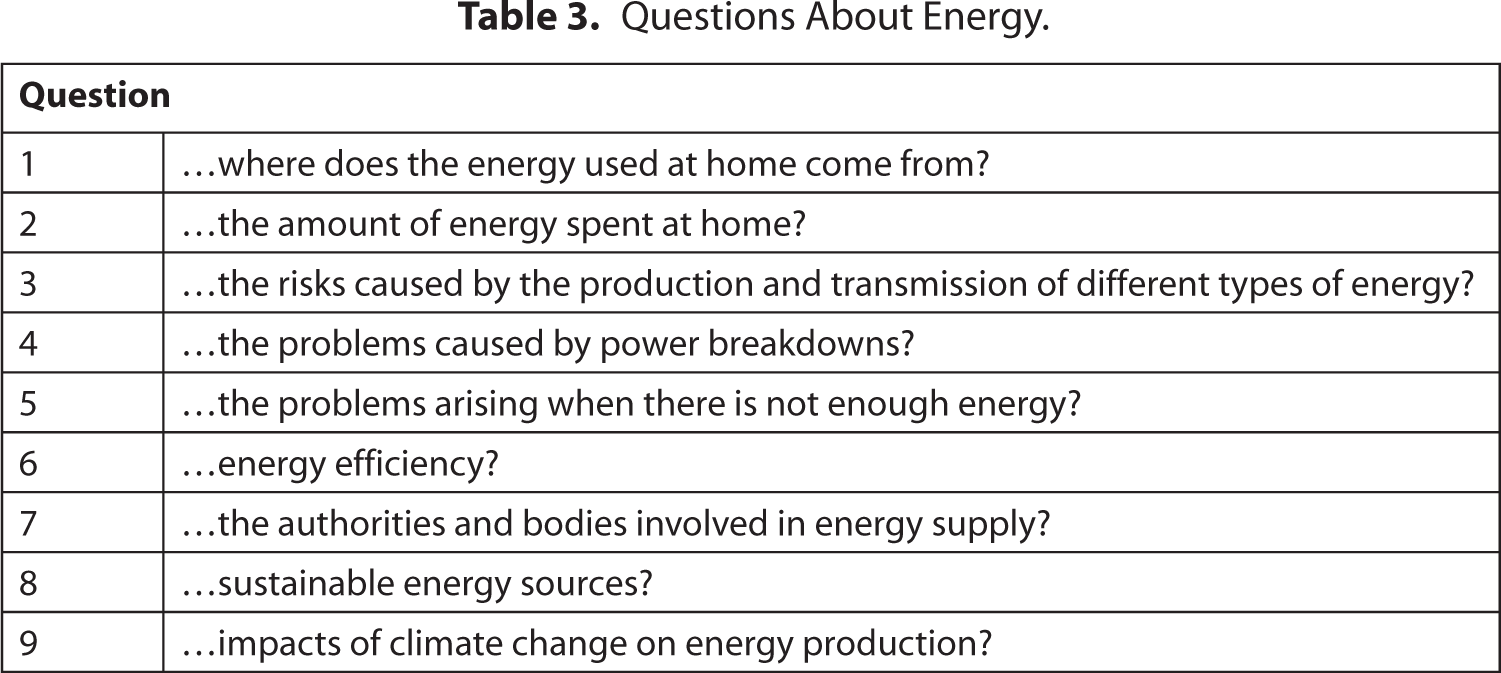
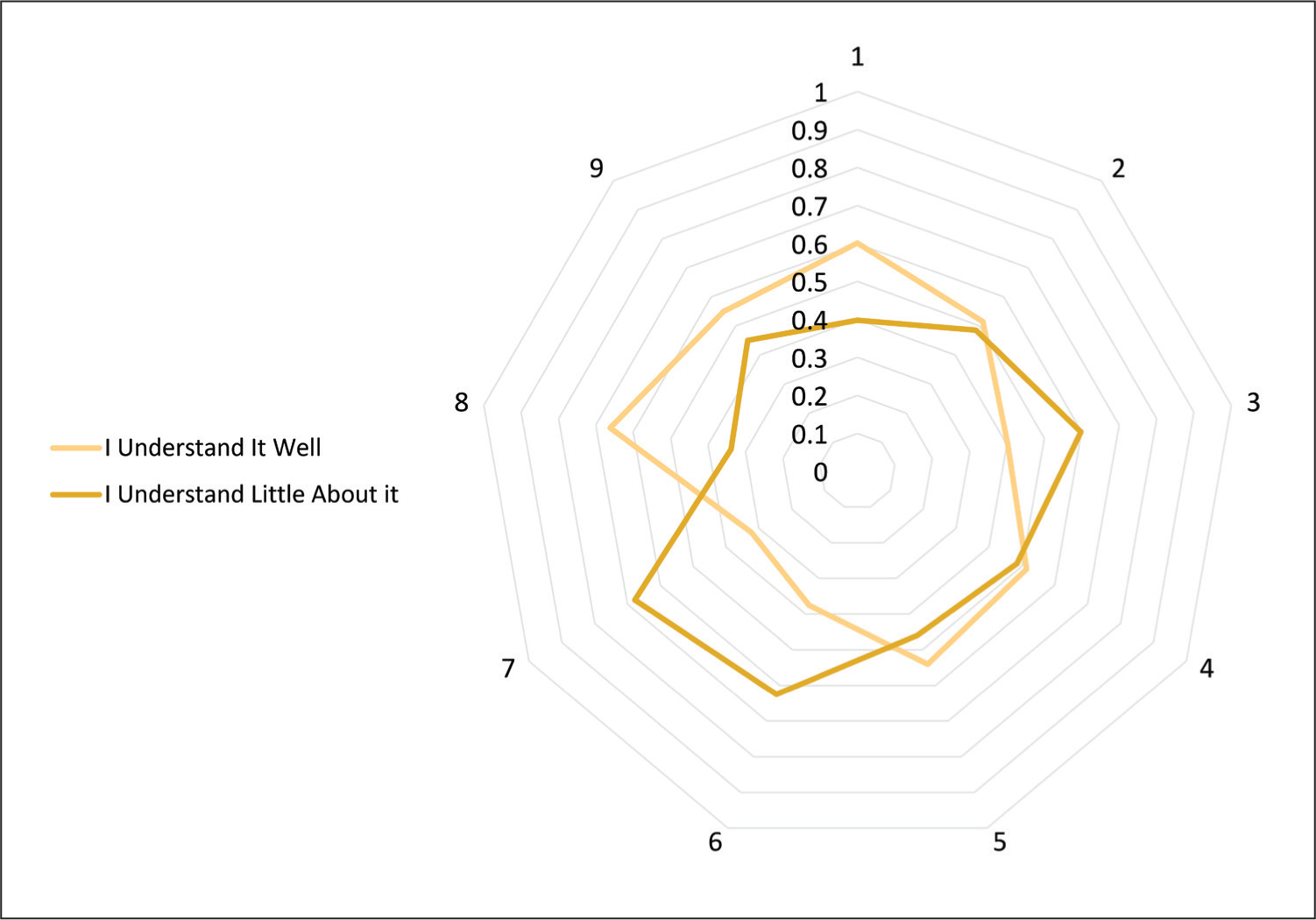
Nine of the 39 questions analysed were about energy and are listed in Table 3. They all start with ‘How much do you know about…?’. The same type of analyses were performed. Chi-square and two proportions Z-tests were carried out. Figure 6 presents the percentages of answers ‘I understand it well’ and ‘I understand little about it’ for questions about energy.
Analysing the results and observing the graph in Figure 6, questions 3, 6, and 7 stand out. In these questions, the answer ‘I understand little about it’ is predominant, as opposed to what is observed in the remaining questions. Respondents believed that they knew little about matters related to the risks involved in energy production and transmission, energy efficiency, and authorities and organizations involved in energy production and transmission governance. It is worth observing that questions 2 and 4 have had similar proportions between answers, that is, the answers were almost equally divided between the two groups of alternatives.
Questions About Energy.
In the same way as with the questions referring to food and water, Chi-square and two proportions Z-tests were used, in order to verify if there was a dependence between the selected alternative of answer and the type institution attended by the respondent. Figure 7 shows a table containing P-values found for the chi-squared test applied to all questions about energy. In this case, the test was also applied in two different situations: by analysing the questions considering the four alternative answers presented in the questionnaire (first column of the table) and by considering the answers in two groups (second column). The values highlighted in red indicate that the P-value was less than 5%, which means that a dependence was found. Values highlighted in yellow reveal that the P-value was close to 5%, therefore revealing that the result deserves some attention.
Graph Showing the Percentages of Answers ‘I Understand It Well’ and ‘I Understand Little About It’ to Questions About Energy.
For most questions, as can be seen in Figure 7, observed frequencies are the same as the expected frequencies (P > 5%). Thus, it was found no dependence between the type of university attended by the young students and the perception of their own level of knowledge on those questions about energy topics. The exceptions are found in questions 1, 2, and 8. For those questions, therefore, there were statistically significant differences between the answers of undergraduate students attending public institutions or private institutions.
P-Values and Percentages of Questions Concerning Energy.
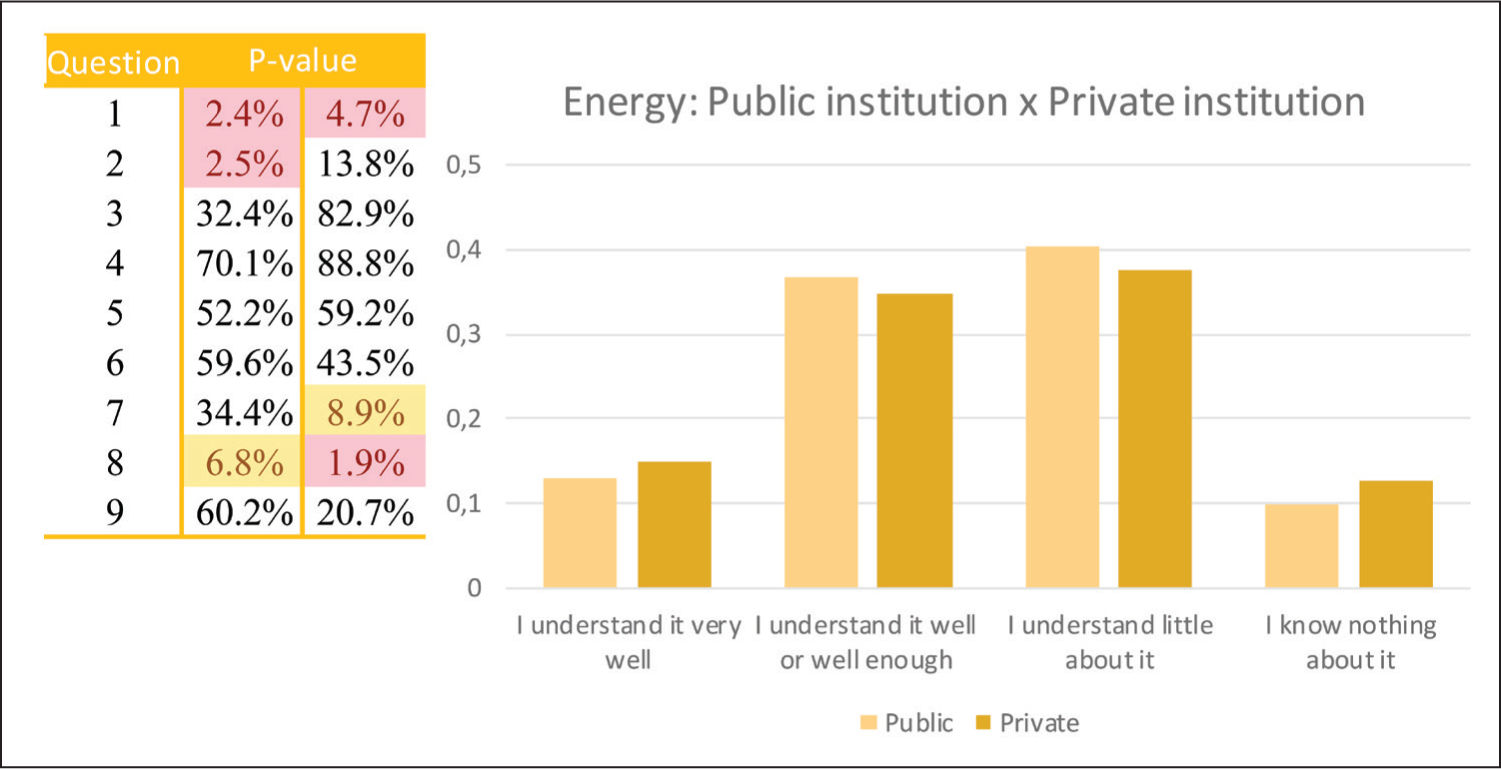
Figure 7 also contains a graph with the frequency distribution for the four alternatives of answers about the perception of their own knowledge of energy-related issues (answers to all nine energy-related questions analysed together) according to the type of institution attended. In this situation, the chi-squared test shows that there is a dependence between the type of institution and their level of knowledge about questions concerning energy (χ2 = 9.641; d.f. = 3; P = 0.021). Dependencies are observed in ‘I know nothing about it’ answers. In general, respondents declared that they knew little about energy-related topics.
As with the questions concerning food and water, the two proportions Z-tests were applied at a 5% significance level. The test showed differences only between the proportions of the answer ‘I know nothing about it’ (z-value = 2.48). By calculating Cramer’s v, a v-value of 0.06 is found which indicates, according to Cohen (1988), a weak, but significant association.
Comparisons
In order to have a comparative perception of their own perception of knowledge about each element, food, water and energy, the questions which were present in the three sections of the questionnaire were selected. Answers to those questions were grouped for each element. Figure 8 presents a graph with the frequency distributions for alternatives of answer for questions about each element: water, food or energy. The chi-squared test demonstrated that there is a dependence between the nexus elements and the respective perception of knowledge of the young individuals (χ2 = 139.873; d.f. = 6; P = 1.066.10–27). Therefore, the level of knowledge that the respondents believed to have was different for the three elements.
Comparison of Students’ Perception of Knowledge About Each Element of the Nexus.
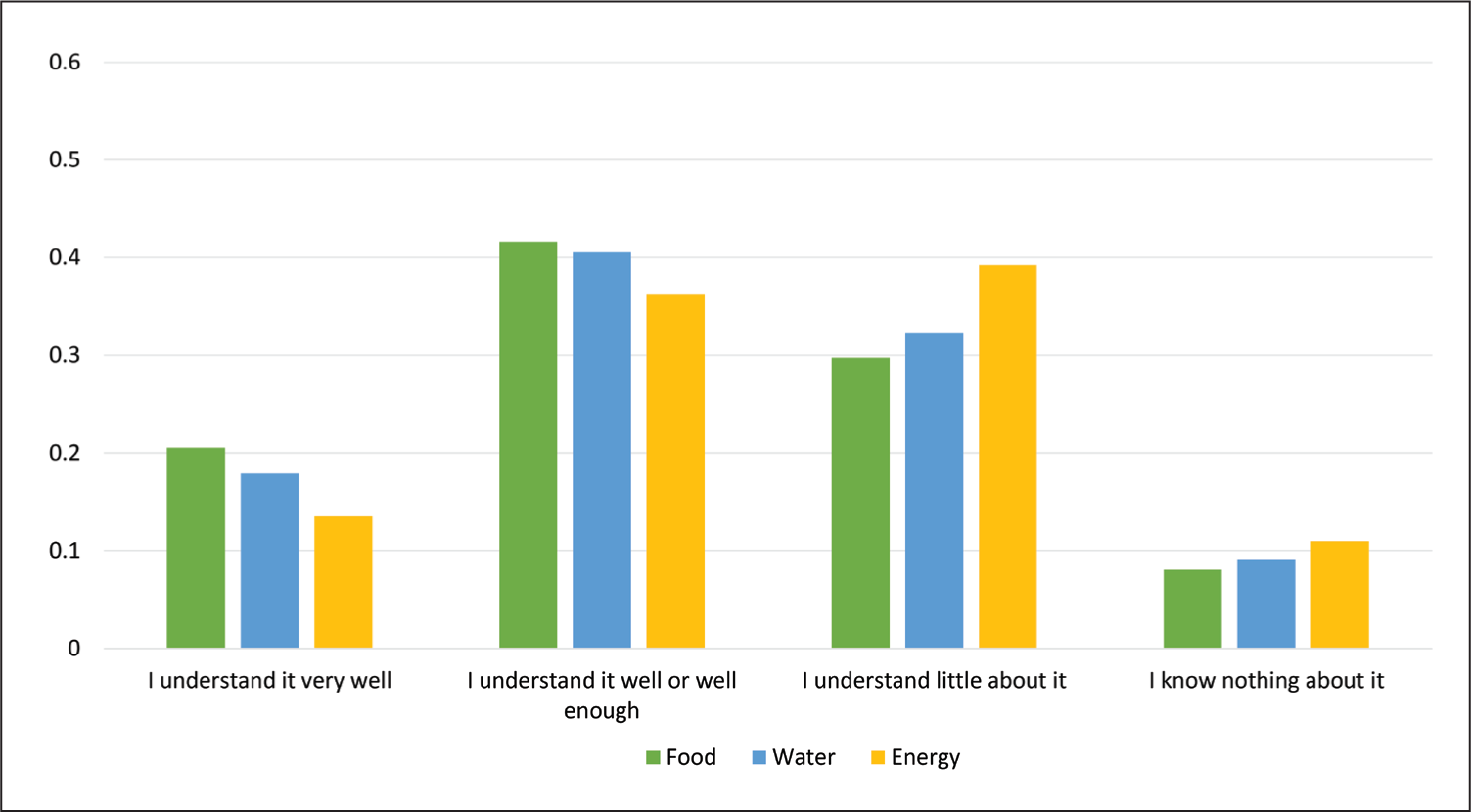
Dependencies are observed in answers ‘I understand it very well’ and ‘I understand little about it’ to questions about food and energy. In addition, it may be observed that more respondents believed to know well about food, followed by water and energy. Calculating the Cramer’s V, a v-value of 0.07 is found, which indicates a weak, but significant association.
Figure 9 presents graphs that help to compare the respondents perception of own knowledge in questions about the authorities responsible for the governance of supply and/or distribution of the nexus resources, and about the impacts of climate changes on the availability of those resources.
Perception of Knowledge About Authorities Involved in the Supply and/or Provision of Nexus Resources ad About the Impacts of Climate Change on the Production of Nexus Resources.
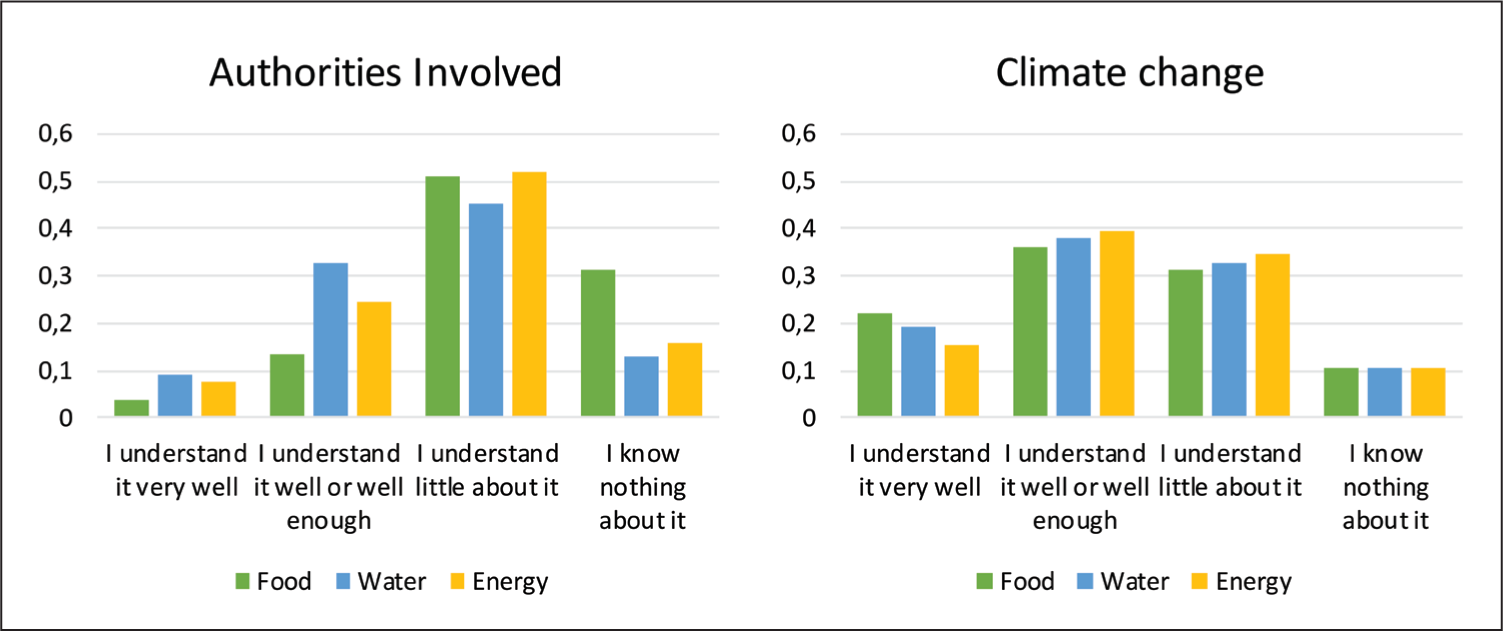
For the questions related to authorities and organizations responsible for the governance of the resources provision, the chi-squared test demonstrated that there was a dependence between the nexus element and the perception of knowledge declared (χ2 = 75.699; d.f. = 6; P = 2.755.10–14). Dependencies are observed in food-related questions. It was also found a predominance of the answer ‘I understand little about it’, for the three elements. There is a greater perception of understanding well the governance of water provision. By calculating the Cramer’s v, a v-value of 0.19 is found which indicates a strong and significant association.
Analysing the questions related to the impacts/consequences of climate change on food/water/energy production, the chi-squared test indicated no dependence between the nexus element and the respective perception of knowledge (χ2 = 5.194; d.f. = 6; P = 0.519). The respondents’ perception of their own level of knowledge on the topic of ‘climate change impacts’ was basically the same for the three elements. It was also observed a greater predominance of ‘I understand it well’ concerning this topic.
Figure 10 presents graphs with the distribution of frequencies of answers to questions related to the origin of nexus resources and to sustainable use of nexus resources.
Perception of Knowledge About the Origin of Nexus Resources and to Sustainable Use of Nexus Resources.
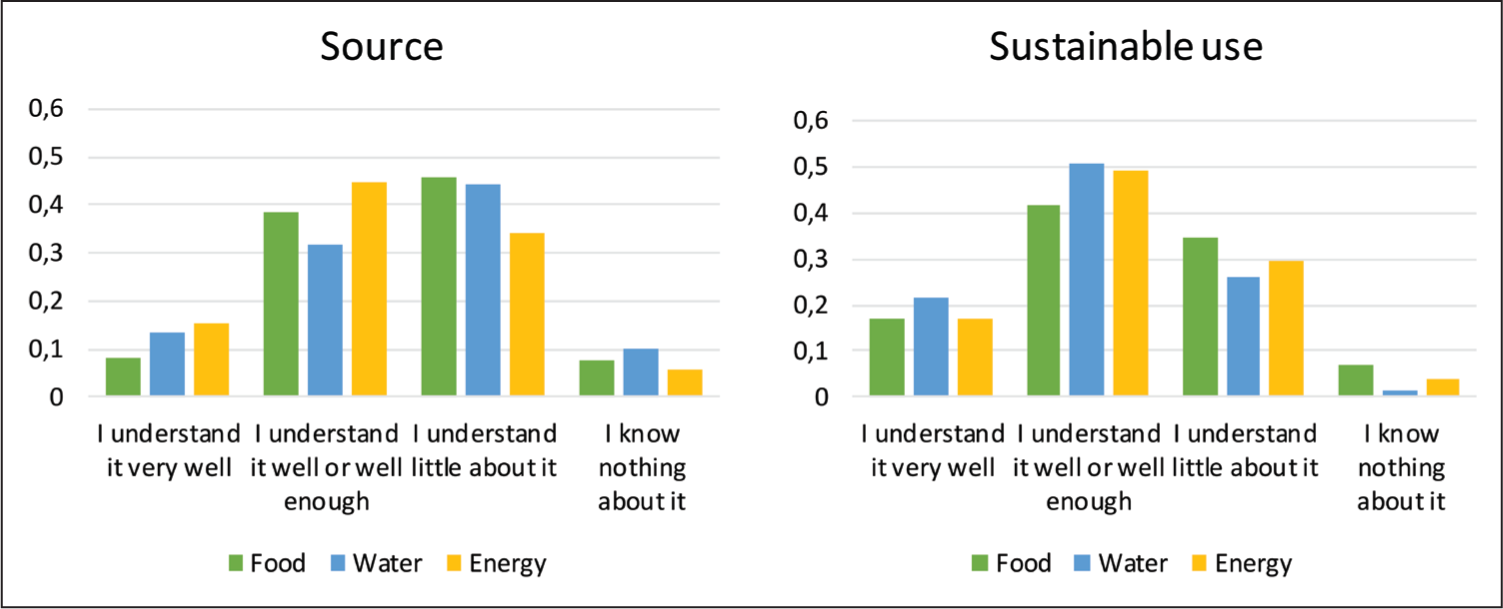
As for questions related to the origin of elements (‘How are food ingredients produced?’, ‘The source of drinking water’ and ‘Where does the energy used at home come from?’), the chi-squared test revealed that there is a dependence between the nexus element and the respective perception of knowledge that young individuals have about the origin or production of elements (χ2 = 28.112; d.f. = 6; P = 8.948. 10–5). The dependencies are found in the answer ‘I understand it very well’ for the origin of food and for the source of energy. It can be observed in Figure 10 that answers ‘I understand it well or enough’ regarding energy and ‘I understand little about it’ concerning water and food are predominant. By calculating Cramer’s v, a v-value of 0.11 is found which indicates a moderate and significant association.
In relation to sustainable use and methods to reduce consumption or waste (‘How could we reduce food waste’, ‘Methods to save water’ and ‘Sustainable sources of energy’), the chi-squared test revealed that there is dependence between the nexus element and the respective perception of knowledge that young individuals have about methods to save or reduce the waste of elements (χ2 = 23.703; d.f. = 6; P = 0.001). Dependencies are observed in the answer ‘I know nothing about it’ to questions concerning the sustainable use of water and methods to avoid food waste. By analysing the graph in Figure 10, there is a predominance of ‘I understand it well or enough about it’ for energy and water and ‘I understand little about it’ for food. By calculating Cramer’s v-value, a v-value of 0.10 is found, which indicates a moderate and significant association.
Discussions
In general, those undergraduate students’ perception of their own knowledge about water, energy and food is that it is fairly limited or just sufficient, rather than good or very good. For some topics, there was a perception of greater understanding, and the perception of their own knowledge about each of the nexus elements was not the same.
Answers to questions concerning energy revealed that the respondents perception was that they understood less about the it, while answers to questions about water and food revealed that the respondents believed to have a good or moderate knowledge about these topics. Questions related to authorities and organizations involved in decision-making about nexus resources, the origin or production of nexus elements, and the destination of waste water or food revealed a perception of more limited knowledge than those about the sustainable use of nexus resources, problems due to excess or lack of any of the nexus resources, and climate change impacts over them.
The analyses indicated no significant differences between the answers of the two sub-samples—respondents from private institutions and from public institutions, when analysing the answers to all the questions together. For some specific questions, it was found some dependence on the type of HEI attended by the respondents—most of them in food-related questions. However, although some questions demonstrate statistically significant dependencies, others express very low or practically no dependencies. Therefore, while analysing the clustered questions about each element (mainly regarding food and energy) it is found that the dependencies observed are caused by the increased dependencies observed in a few questions. When Cramer’s V is used to assess these dependencies (graphs containing clustered questions), it is found that there is an association, but it is low. Differences are observed in some specific topics, not necessarily on the whole. It is not possible to say that relevant differences between the answers of the two groups were found.
Final Considerations
This article offers a combined analysis of survey results carried out in the MRPVNC, in São Paulo, Brazil, regarding the perceptions of young undergraduate students about the level of their own knowledge about water, energy, and food. The intention was to know the understanding of those young people about several relevant issues related to the water–energy–food nexus, in order to provide contributions to the development of EfS programmes and actions in undergraduate courses that take into account the students’ experiences and understandings.
It was worrying to notice a perception of low level of knowledge about issues such as the origin of the resources, the organizations and authorities responsible for the resources governance, the destination of after-consumption wastes, efficient use of resources, and the hydrographic basin in which they live. Although young, a great part of the respondents (45%) were at least 20 years old and had already some educational background and life experience. It was expected a better level of understanding of those topics. Their perception of a low level of knowledge about those issues reveals a disturbingly insufficient preparation to participate as citizens in decisions about water, energy and food governance and about public policy formulation concerning those matters. This indicates the need for robust EfS initiatives in undergraduate courses that take in account the background and experience of students, in order to prepare them to tackle problems and take decisions as professionals and as citizens.
Footnotes
Acknowledgements
We thank the young people and professionals who gave so much of their time, energy and expertise to taking part in our research.
Data Availability
Due to the sensitive nature of this research, only a subset of participants consented to their anonymized data being retained and shared. Anonymized survey data from participants who provided consent, other supporting data, metadata, and further details relating to the restricted data, are available from the UK Data Service archive (persistent reference 10.5255/UKDA-SN853398).
Declaration of Conflicting Interests
The authors declared no potential conflicts of interest with respect to the research, authorship and/or publication of this article.
Ethical Approval and Informed Consent Statements
The research was applied to and approved by the Ethical Review Committee both in England and in Brazil. All respondents have received the project information sheets and formally consented to participate.
Funding
The authors disclosed receipt of the following financial support for the research, authorship, and/or publication of this article: This work was supported by the Fundação de Amparo à Pesquisa do Estado de São Paulo and Economic and Social Research Council (grant number 15/ 50226-0, ES/K00932X/1).