




Abstract
This paper examines the gendered dynamics of climate change adaptation in a rapidly urbanizing area of the global South. As climate change adaptation gains increasing prominence in global environmental policies and development strategies, there is a tendency to conceptualize adaptation as a technical process, disconnected from the everyday reality of how adaptation is practised by people facing negative climate change impacts. We present evidence from a small-scale case study of a flood-prone informal settlement in Dar es Salaam, Tanzania to provide a contextually grounded contribution to a growing body of literature on gender, climate change and cities. We argue that the way climate change impacts are perceived, experienced and adapted to on an everyday level is characterized by gendered differences (among others). We demonstrate that a greater understanding of these gendered nuances highlights the disconnect between everyday gendered realities and a high-level technical notion of adaptation deployed at strategic and policy levels.
I. Introduction
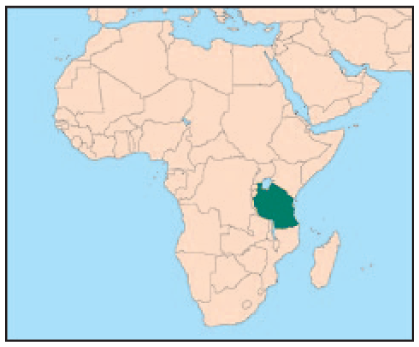
Attention to climate change adaptation has become central to global environmental policies and development strategies in the last decade, as the focus on the impacts of climate change has increased. Actions taken to reduce damage caused by detrimental effects of climate change (such as increased flooding or temperature changes) are paramount for those living in negatively impacted localities. Yet the everyday reality of adaptation in these localities may bear little resemblance to the technical, depoliticized notion of adaptation that is predominant in policy and planning. We argue in particular that the gender-related nuances of such adaptation must be understood as part of everyday life, and explore these nuances through a case study from an informal settlement in Dar es Salaam,(1) Tanzania.
In Section II we open with an overview of gaps in attention to urban areas and gender in literature on climate change, and situate this piece within an emergent body of work on climate change, cities and gender. After describing our focal city and the informal settlement of Jangwani (Section III), we frame our examination theoretically (Section IV), using the concepts of Urban Political Ecology (UPE) and the “gender-urban-slum interface”.(2) After describing our methodology (Section V), we present findings from a grounded case study (VI), drawing on these to illustrate gender dynamics of adaptation. We conclude in Section VII with implications for climate change adaptation policy and programming, with specific reference to the 6th Assessment of the Intergovernmental Panel on Climate Change (IPCC).(3)
II. Climate Change, Informality, Urban Adaptation and Gender
Although it can be difficult to specify the contribution of climate change to specific weather events, it is a very real phenomenon with effects that are changing, increasingly prevalent, and acutely felt by many.(4) From flash flooding in Dhaka to decreased crop yields across the Sahel, the effects of climate change are a global reality,(5) particularly in the global South, where the majority of urban growth is occurring.(6)
As cities house an increasing portion of the world’s population facing climate change-related impacts, urban areas will be key locales for addressing climate change.(7) Research by Artur and Hilhorst stresses that the success of adaptation hinges on “cultural and political realms of societal perceptions”.(8) Yet a gap persists between how the effects and risks of climate change are encountered as everyday realities by people experiencing them, and how they are addressed by high-level techno-managerial governing bodies and institutions.(9) This under-examined gap is particularly salient for underserved urban areas, like informal settlements,(10) because those residing in such areas have historically been excluded from planning processes.
Informality plays an important role in shaping cities and is agrowing trend in African cities, trend in African cities, where, by 2050, 56 per cent of the continent’s population will live.(11) Given the prevalence of informality in Dar, and the significance of the interface between informal settlements and climate change, it is useful to briefly establish what we mean by “informal”.
Spatial (like economic(12)) conceptualizations of informality are more complex than a binary distinction between regulated and unregulated. Early dualist framing of informality has been critiqued,(13) and structuralist scholarship(14) has made efforts to move the conceptualization beyond an “idealized bifurcated form”.(15) We recognize the nuances of urban forms in Africa—and elsewhere. We understand informality as, in Roy’s words, a “convergence of legality and extra-legality in the same process”,(16) not solely within the “bounded space of the slum”.(17) While we primarily refer to “informal settlements”, we occasionally use the term “slum”. In doing so we acknowledge that the term – although sometimes self-identified by residents – is disputed.(18) We do not seek to reinforce or perpetuate pejorative(19) or derogatory(20) associations. Rather, we acknowledge that “slums” are strongly associated with informality and this holds relevance for urban planning and policy.(21)
Discussions of adaptation, as noted, must consider the reality of everyday existence in urban informal settlements, which can differ within and between cities.(22) As Myers points out, “everyday realities are often normalized for residents [of informal settlements], regardless of the poverty, hardship, or grief that that form of ‘normal’ might be”.(23) Historically, informal settlements were not conceptualized as such until modern codification systems organized urban land and housing. In Africa this organization was heavily influenced by European colonial governance practices.(24) Governance continues to be important, as informal settlements are often characterized by lack of attention from government.(25) Deprivations in informal areas have implications for their vulnerability. In informal settlements, environmental risks intersect with other manifestations of systemic exclusion(26) – such as gender and racial discrimination, low incomes, and paucity of service provision – to compound vulnerabilities and perpetuate marginalization.(27) While informal does not necessarily mean low-income,(28) low-income populations tend to reside in these areas of deprivation and are disproportionately vulnerable to a range of risks, including those related to climate change.
Many informal settlements are located on floodplains(29) exposing residents to environmental hazards,(30) making them physically vulnerable. Yet vulnerabilities are multifaceted and, as Moser and Stein highlight, “can be economic, political, social, and psychological in nature, and can affect different groups, especially women and children”.(31) It is important to recognize well-established gender-related vulnerabilities.(32) While acknowledging that women in low-income areas often experience particular vulnerabilities related to gender-based inequalities,(33) the nuances in how gender-related vulnerability is manifested – and in turn how it shapes adaptation – are important. Moser and Stein argue that highlighting the tendency for low-income women to be vulnerable to climate change can be helpful to inform policy formulation and significantly increase attention to gender-related vulnerability.(34)
Yet the gender dynamics of climate change vulnerability are far from universal.(35) Attention to differences within populations and between locations and contexts is as necessary as the recognition of vulnerability in the first instance. An understanding of the multidimensionality of gender-related climate change vulnerabilities can help inform policy, just as scholarship on the perceived “feminization of poverty” has worked to expand understandings of experiences of poverty.(36) Additionally, asset accumulation, which serves as a way to reduce vulnerability, needs to be understood through gender dynamics; e.g. men may prioritize assets that generate monetary income, whereas women may focus on household items related to reproductive tasks.(37) The potential for assets to be destroyed through climate change(38) poses risks to both human and social capital, as well as financial and productive assets.(39)
While gender disparities in the context of climate change are increasingly documented, there are gaps in the examination of the multidimensionality of gender dynamics in the context of climate change, particularly in urban settings.(40) Early literature on gender and climate change largely focused on women in rural areas.(41) The result was a siloed emphasis on female vulnerability to the exclusion of a consideration of male roles in response to climate change(42) and a failure to consider relations between genders and across social groups.(43) While rural-oriented scholarship on climate change remains important in addressing gaps in attention to women, given their predominance in rural agriculture,(44) it is worth noting the relative scarcity of attention to gender-differentiated experience of climate change in urban settings. This is an important gap to fill given the historic neglect of gender in city-making processes in the global South, as highlighted by Chant and McIlwaine.(45)
Linkages between micro-level planning at the neighbourhood level and strategic macro-level planning at the city level are often absent in planning for climate change adaptation, especially with regard to urban poor and informal contexts.(46) Further, discourse on climate change tends to be framed by assumptions of gender neutrality, which are either gender-blind,(47) or technocratic and highly masculinized, drawing on conceptual origins within the scientific establishment.(48) Thus, we apply a gender lens here to unpack some of these complexities, recognizing intersectional inequities and moving an analysis of gender in urban areas beyond that applied to women in rural areas.(49) The gendered quality of climate change discourse – whether in its shortcomings or its inattention to gender – has consequences for climate change policy.(50)
The IPCC, the leading global institution addressing climate change under UN auspices, has been key in producing and aggregating knowledge on climate change. This knowledge contributes to technical discourse and to setting the direction for what needs to be done by practitioners to address climate change. As acknowledged by the IPCC 5th Assessment Report (AR5) Working Group II,(51) assessments of climate change adaptation have largely failed to draw on social contexts and everyday aspects of adaptive actions. They have focused on technologies, policies and tools that are a key part of addressing climate change, largely ignoring everyday experiences and structural inequalities. Thus, there have been gaps in the examination of adaptation at an everyday level,(52) resulting in development discourse and practice on climate change that is at times disconnected from the concrete reality of the issues it seeks to address.
Despite its shortcomings in attention to these everyday realities, the IPCC’s AR5, published in 2014, did devote a chapter to urban areas for the first time, recognizing the inexorable growth of human settlements and their instrumental role in addressing climate change. This was a significant step, yet one that should be taken forward. By foregrounding local urban historical and geographical insights in this paper, and adding the gender perspective, we aim to reveal what technical jargon in planning and policy may often obscure. Recognizing the heterogeneity between and within urban areas, we do not generalize about cities globally or throughout Tanzania. Rather, we provide a snapshot of a specific context of urban climate change adaptation, examined through a gender lens, and attempt through this snapshot to tether discourse to everyday reality. This is a particularly relevant exercise in the lead-up to the IPCC’s 6th Assessment Report (AR6).
III. Context: Dar’s History, Climate and Future
Evidence increasingly points to Africa’s cities as the epicentres of climate change impacts in coming decades,(53) with rising sea levels compounding other climate change risks for coastal cities like Dar.(54) The city, 8 per cent of which is more than 10 metres below mean sea level,(55) experiences frequent flooding exacerbated by climate change effects such as increasing precipitation rates and a rising average temperature. Looking ahead to the future of cities like Dar, it is important to consider their historic legacies, which have implications for the spatial arrangements of human activity.(56) In this section we provide an overview of Dar’s history to better understand its current growth and implications for its future.
Tanzania is one of nine countries projected to see the largest share of population growth globally.(57) Its de facto capital, Dar, situated on the coast, is currently home to 4.4 million people,(58) and is expected to become a “megacity” with a population in excess of 10 million by 2030, rising to 70 million by the end of the century.(59) Dar was established by Sultan Majid of Zanzibar in the 1860s. In 1887 the German East Africa Company established direct rule over the city. An aspect of German (and subsequently British) colonial rule was the town–country divide, in which rural areas were designated for the black African population, while non-blacks resided in towns.(60) The black population already living in Dar was segregated by the colonial administration, with non-black races strongly privileged by urban land policy.(61) Neutral Zones 1–2 were allocated for Europeans and Indians and Zone 3 for the black population,(62) a separation justified by purported “public health concerns” and the need for sanitary buffers.
Upon Tanzania’s independence in 1961, Dar acquired official city status. Racial segregation was formally prohibited, but existing land use patterns remained. The 1956 Town and Country Planning Ordinance reflecting colonial legacies is still in effect, with only minor amendments.(63) With the 1967 Arusha Declaration, Tanzania’s first president, Julius Nyerere, ushered in a range of socialist policies. A strong government apparatus claiming to promote public interest and self-reliance resulted in state consolidation of political power and pursuit of economic growth, with little reference to human or environmental development.(64) A defining aspect of Nyerere’s socialism (ujamaa) aimed to increase economic productivity through Operation Vijiji. This operation carried out “villagization”, forcing relocation to rural areas between 1973 and 1978, and resulting in approximately 90 per cent of the Tanzanian population living in villages.(65) When this policy was later abandoned in the 1980s, Dar’s population grew substantially without sufficient capacity for planning.
Both post-independence development plans and subsequent ujamaa policies largely ignored urban planning. The first national urban development framework in 1980 underscored Nyerere’s efforts to reform and empower the agricultural sector and to steer growth away from Dar to the new capital, Dodoma.(66) Hence Dar, as Myers explains, has largely “grown up ignored in plain view”.(67) As a consequence of immense public debt from investment in social projects previously disregarded by colonial administrations, international financial institutions forced Tanzania to adopt structural adjustment programmes in the 1980s. Tanzania’s current environmental policies have been shaped by forced trade liberalization and decentralization post-independence, and have mainly focused on nature conservation important to the tourist industry.(68) As a consequence of decentralization, local governments today bear the main brunt of environmental management but rarely possess adequate resources.(69) This disconnect between local and national authorities complicates attention to climate-related challenges.
The Tanzanian government’s approach to climate change adaptation is framed by the 2007 National Adaptation Programme of Action (NAPA) – compiled under the UN Framework Convention on Climate Change (UNFCCC) to identify immediate climate change needs – and the 2012 National Climate Change Strategy (NCCS). Both have been critiqued for replicating former approaches and masking them in new terminology. While NAPA has been credited with mainstreaming attention to climate change into sectoral policies,(70) it is seen as being hampered by international bureaucracy. Meanwhile, the NCCS is marked by its failure to integrate local ways of coping with climate change.(71) Urban areas are deprioritized throughout both policies.(72) Shemdoe et al. identify a disconnect between the formulation of Tanzanian adaptation policy and its implementation, with the former taking place at national and international levels and the latter carried out by local officials.(73) Pardoe et al. find that although national sectoral policies, specifically on water and agriculture, have increased attention to climate change, “practical coordination on adaptation remains relatively superficial”.(74) Environmental policies have largely failed to consider political factors and heterogeneous population characteristics, thereby propelling structural trends that exacerbate unequal distribution of urban environmental pressures. As sea levels and precipitation rates rise and Dar’s population rapidly grows, the livelihoods of more people are becoming increasingly precarious, along with the urban space they navigate. Accumulating climate-related risks, combined with the historically rural focus of Tanzania’s environmental policy, underline the importance of better understanding urban climate change adaptation in Dar.
One area of Dar under such environmental pressure is Jangwani. Located in the low-lying Msimbazi Valley(75) in Ilala District, Jangwani is home to 15,000 people, of which the majority engage in informal economic activity in adjacent areas. Its proximity to the city centre is a major pull factor and explains why the area is becoming increasingly crowded.(76) The part of the neighbourhood we focus on houses approximately 6,000 people.(77) In response to recurring and ravaging floods in Jangwani, the City Council and the National Environment Management Council (NEMC) rolled out resettlement plans in December 2015, marking many houses with a red sprayed-on “X” identifying them for demolition. This was frequently observed during fieldwork on both sides of the Morogoro Road. Across the Msimbazi Valley a total of 8,000 houses have been identified for demolition.(78) Jangwani is one of the higher-risk sites in the valley. Demolitions across the valley as of 2016 had left 1,384 residents without adequate housing.(79) This heightens the relevance of the debates around flooding and adaptation in Jangwani.
Map 1(80) shows the location of the Msimbazi River Basin (framed in a red box). Jangwani is located directly on either side of the main road, Morogoro Road (depicted by a white line), which cuts across the valley and connects the west side of the city with the city centre.
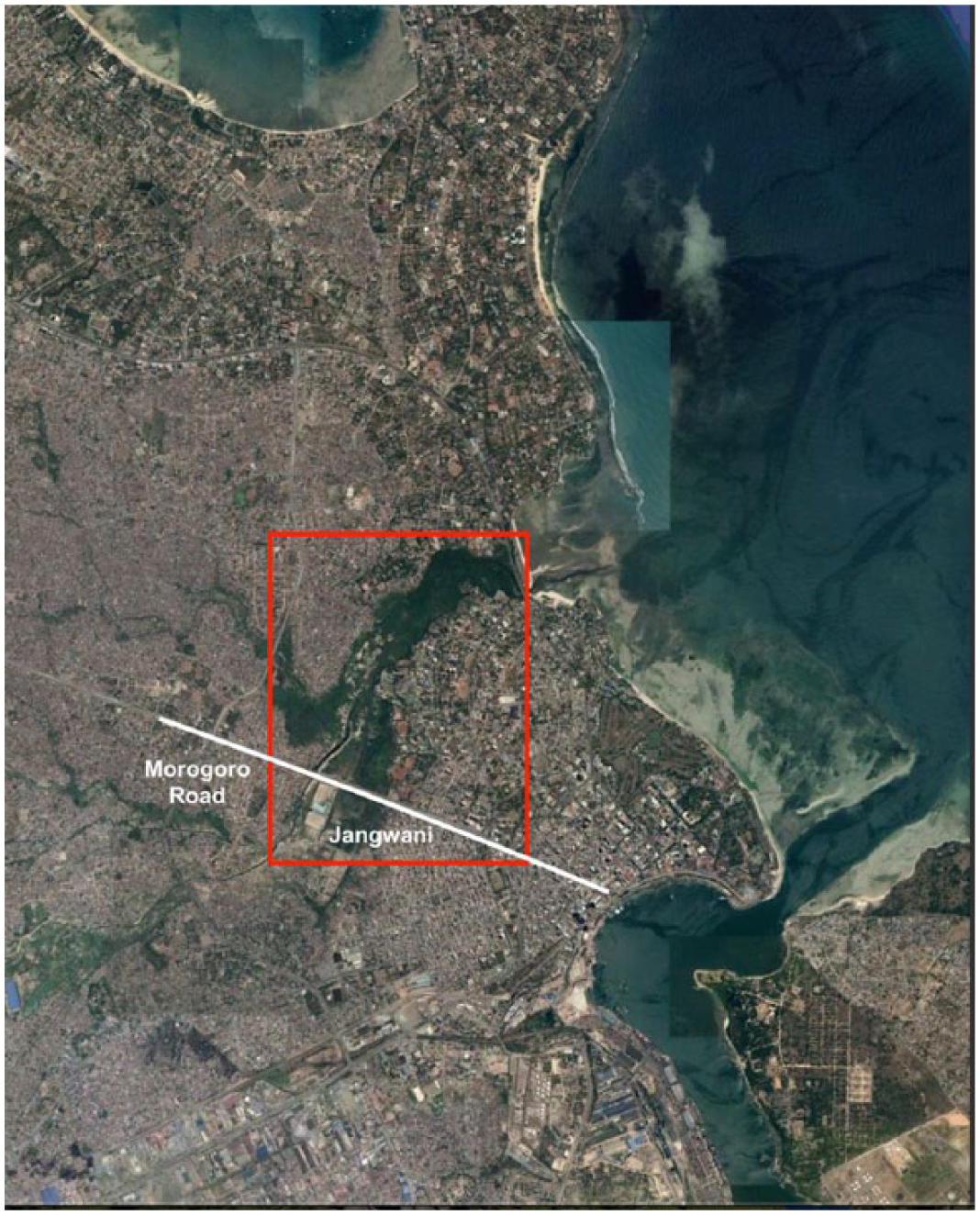
Msimbazi River Basin
IV. Conceptual Basis
Adaptation is a complex phenomenon rooted in social practices, which makes it challenging to unpack. Hence many studies focus on a lack of adaptive capacity rather than on what the practice of adaptation means on an everyday basis. We use empirical evidence of the variation in everyday practice to illustrate the mismatch between the concept and the reality of adaptation. This section explains how we draw on urban political ecology (UPE), as well as the concept of the “gender-urban-slum interface”,(81) to frame our case study.
a. Urban Political Ecology
UPE provides a wide framing for examining the urban and the environmental simultaneously. According to Swyngedouw and Heynen, UPE posits that “cities are dense networks of interwoven sociospatial processes that are simultaneously local and global, human and physical, cultural and organic”.(82) We find UPE’s use of traditional political ecology(83) helpful in considering why some urban spatialities have greater exposure to environmental hazards, and in illuminating power imbalances that reproduce inequitable urban power relations. In providing this insight, UPE questions socioenvironmental processes of urban landscapes, and can be used to examine how individuals and groups are impacted by these processes.(84) The outcome of increased city size and severe climate effects includes, in Parnell and Walawege’s words, “very real politics”(85) that need to be accounted for, yet are often not integrated into adaptation discussions.
We acknowledge UPE’s weaknesses: its origin in Western urban theory(86) and its focus on cities to the exclusion of an analysis of urbanization(87) or of the urban as a process. (88) UPE should also be better situated in everyday reality,(89) and in Africa specifically it must draw to a greater extent on African urban voices beyond those of “experts” or the homogenized “poor”.(90) Bearing these critiques in mind, we find UPE a useful framework in understanding how adaptation strategies – whether externally or internally initiated – are shaped by an existing sociospatial order and how adaptation unfolds. Inclusion of stories from urban residents themselves can help to move our understanding beyond a reductionist political economy analysis and to problematize homogeneous notions of slum dwellers.(91) Adopting a UPE framework interwoven with differentiated local perspectives allows us to look beyond effects of climate change as a purely environmental phenomenon and to examine adaptation strategies, bearing in mind underlying political, economic and historic drivers of urban spatial injustice.
b. Gender-urban-slum interface
Looking at cities as the locations of human–nature interactions, it is crucial to understand the gendered and interconnected dynamics of these interactions. We find the concept of the “gender-urban-slum interface”, as articulated by Chant and McIlwaine,(92) a helpful perspective in orienting our examination of the crosscutting nature of climate change in informal urban settlements. The “gender-urban-slum-interface” is rooted in feminist geographic scholarship,(93) which has worked to understand women’s positioning within urbanizing areas of the global South. While urbanization is often heralded as beneficial for economic development and women’s opportunities,(94) there is often a failure to recognize the disparity between women’s contributions to urban development and prosperity and the benefits they receive in return for these inputs.(95) The concept of the “gender-urban-slum interface” provides a way of examining urban gender inequality “through a multidimensional, multi-spatial and multiscalar lens”(96) and a basis “for thinking through policy and programme interventions that can begin to address the widespread neglect or marginalisation of gender in urban planning to date”.(97)
Attention to the gendered dynamics of climate change in informal areas is important to ensure consideration of nuances of gender-related vulnerability, particularly for women and girls,(98) as outlined in Section II. However, understanding climate change impacts and adaptation beyond vulnerability is similarly important, as is conceptualizing adaptive practices as relational between males and females. The “gender-urban-slum interface” concept not only helps us to understand gender dynamics of informal settlements. In its multifaceted construction it also works toward an “‘en-gendering’ of research on cities and slums”(99) and identification of opportunities for urban transformation by addressing entrenched power structures that disadvantage women and men alike.
V. Methodology: Data Collection and Research Approach
In order to unpack complex phenomena, we need, in Günel’s words, to ask “how and why questions that delve into the social, political and economic context” surrounding climate change adaptation.(100) We aim to do this by addressing these questions: How does the concept of adaptation relate to notions and practices of adaptation in Jangwani, as undertaken by individuals living there? What does the application of a gender lens to these everyday practices tell us about the concept of adaptation?
Data for the case study were gathered by the second author through 12 semi-structured interviews and observations with Jangwani residents in June/July 2016 as postgraduate fieldwork to inform a dissertation (see Table 1 for the overview). Jangwani was selected for its position as an informal, low-lying, under-researched area of Dar. While many areas of Dar flood regularly, by situating this study in an informal area the intention was to unpack and provide contextual variation to flattened stereotypes of homogenized “slum dwellers”.
Overview of interviews
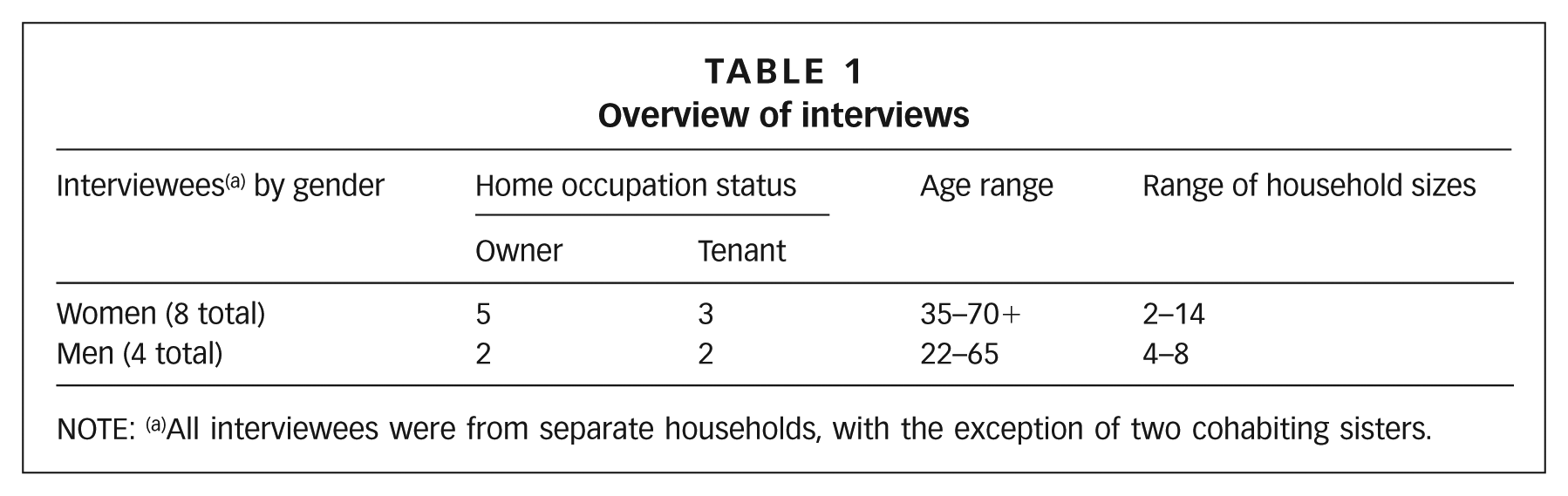
NOTE: (a)All interviewees were from separate households, with the exception of two cohabiting sisters.
Interviewees were purposively selected (with the aid of a Tanzanian research assistant and permission from a local ward leader) by approaching Jangwani residents near their houses, and ensuring a range in the age and gender of interviewees. Interviews were conducted in or near residents’ homes. Interviews varied in length, but lasted for no longer than 30 minutes. The semi-structured interview format covered a list of topics and guiding questions informed by an in-depth literature review.(101) Interviews were open-ended to allow residents to articulate their experiences in their own terms. This was done to avoid limiting concepts of analysis upfront, and instead allowed iteration between induction and deduction(102) during analysis.
This open-ended approach, in which residents articulated their own narratives, provided the opportunity for the additional analysis presented here. Although gender was not a primary focus of the original data collection, references to aspects of sex and gender were captured in fieldwork observations and interview transcripts.
In 2018, we jointly returned to the data and reanalysed it using a gender lens, drawing on feminist geography and methodology.(103) The gender analysis was done by emergent coding, followed by using pre-identified gender-related themes. This analysis was conducted with careful attention to the language used by interviewees. While we seek to employ research techniques that amplify voice of under-researched populations, we are conscious of the value-laden nature of knowledge production(104) and do not claim to speak for Jangwani residents.
VI. Jangwani: Where Climate Change Meets the Everyday
Hadija,(105) 39, is the mother of two daughters and has lived in Jangwani for most of her life. She is a tenant in a house shared with 13 others, less than two metres from a stream that cuts through the settlement. Her front step has been raised to prevent floodwaters from flowing into the house, but this hardly suffices. Hadija and the other occupants wait to see how long the rain lasts before taking action. “If it rains for an hour or two hours, we know that we have to take our things, for example electronic stuff, outside the house”, she explained. Hadija spoke about people from the community once attempting to clean Jangwani’s waterways, but being unable to do this adequately without government support. The only government intervention she recalled is an attempt to evict and demolish houses in Jangwani. Her house is marked with an “X”.
The adaptations Hadija describes to flooding in Jangwani are common throughout the area. But even when individuals live in the same location and face the same challenges, their experiences can be different because of gender, including the inequitable distribution of resources such as food,(106) women’s disproportionate burden of reproductive labour,(107) and property and inheritance rights (de jure or de facto) that favour men, as documented in urban Tanzania.(108)
Our discussion here is two-pronged: First, adaptation cannot be conceptualized as a practice that happens separately from other aspects of everyday life. The intersection of these compounded factors determines how adaptation occurs at a micro-level. Secondly, a recognition of the gender difference amongst those experiencing climate impacts in Jangwani is necessary to understand the differentiated responses and adaptation options available to an individual, as part of this everyday practice.
a. Adaptation in everyday urban life
The experience of adaptation for Jangwani’s residents, as noted, cannot be separated from their everyday existence. Climate change is a geographic issue intersecting with other aspects of urban life, and connecting human and environmental domains. Yet the human side of the story is often overshadowed by technical concerns – metrics of environmental performance, forecasting scenarios and planning strategies. As individuals respond to the effects of climate change, multiple areas of their everyday urban lives are impacted to varying degrees of severity. These areas include income generation, education, service provision, and transport, as articulated by a woman from Jangwani who participated in a World Bank-funded urban resilience programme:(109) “The water is endangering our lives. There’s a lot of contamination and many people get sick as a result. The flooding also affects our children’s studies as their books, clothes, and mattresses get spoiled. It is making it harder, especially for women, to look after their families.”(110)
Why do people live in a location like Jangwani, given the risks? Its central location and access to transport were frequently reported as reasons for opting to live there. When flooding occurred, one interviewee described safely relocating his family to a guesthouse – a costly adaptation unaffordable to many other respondents. But this adaptation resulted in his displacement from Jangwani, a location he had selected specifically due to its proximity to work in the city. Lived experiences are highly important to understanding the reality of how climate change exacerbates challenges across these areas for those residing in flood-prone urban areas.
As individuals experience adverse climate change impacts, past experience may leave them more accustomed and more flexible in dealing with them.(111) Yet increased experience does not lessen the destructive potential of climate change impacts, which do not simply damage one aspect of an individual’s life, leaving others unaffected. For example, flooding may directly impact housing, requiring households to relocate, as reported by Jangwani residents, and this in turn restricts the ability to engage in income-generating activity. The intersection between climate change adaptation and income generation is a particular area that merits further investigation.
Growing density is another concern affecting the intersection of climate change adaptation and everyday life. Multiple residents noted the increased number of households in Jangwani over time, and attributed the severity of flooding to the increase in the number of housing structures and the consequent blocking of drainage routes to waterways (Photos 1A and 1B). According to one local leader: “The impact of floods is higher now because the number of houses has increased, which prevents the rainwater from lowering.”
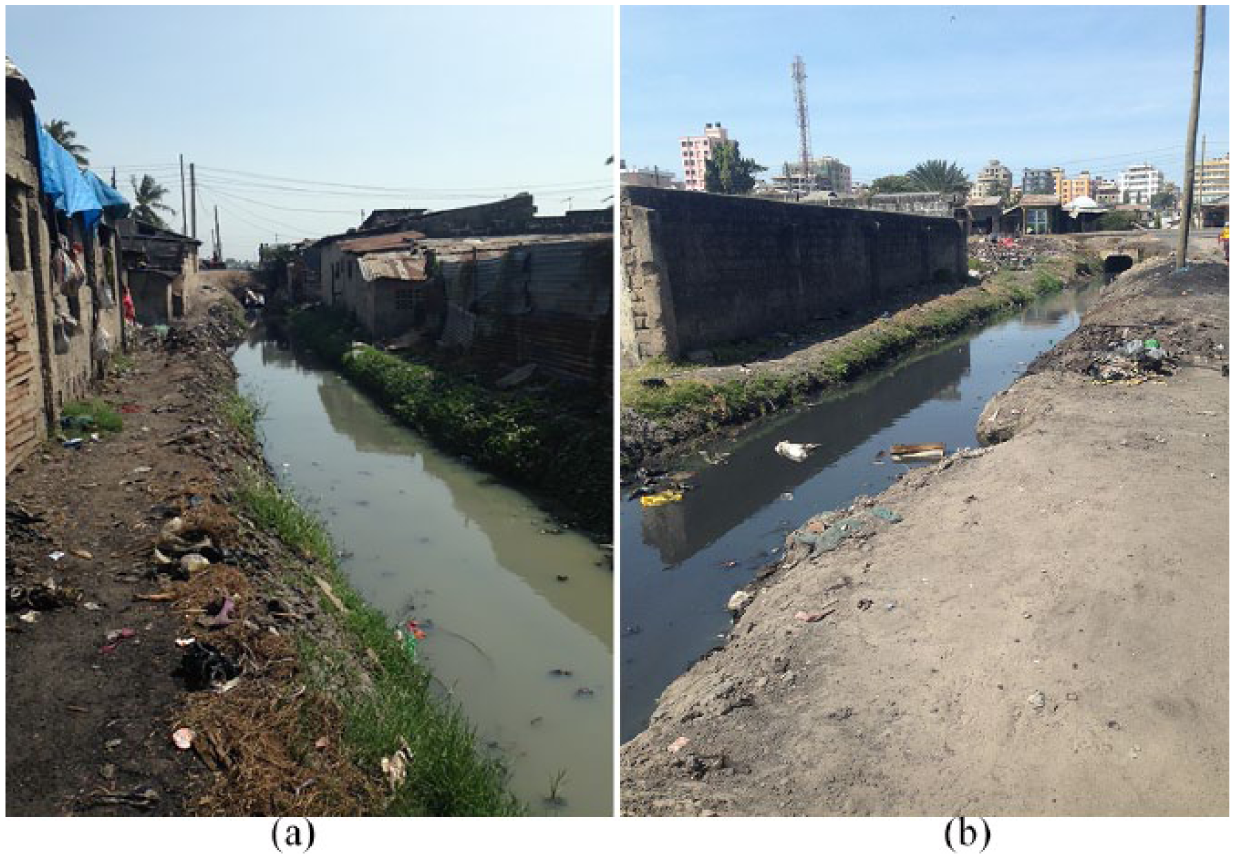
Waterways in Jangwani
Rapid population growth will likely increase the number of houses in Jangwani further, due to its central location, meaning climate impacts will affect a growing number of residents.
b. Gender differentiation of climate change experiences and adaptation
From people’s decisions to live in flood-prone locations, to their requirements to undertake caring roles and/or fulfil roles as breadwinners, climate change actions are shaped by gendered aspects of everyday existence.
Both men and women in Jangwani reported the increasing severity of flooding in recent years, and the predominant adaptation response they described was leaving their houses and relocating while waiting for flooding to recede. The description of fleeing floodwaters varied between genders, however. Men spoke of moving out of Jangwani, while the majority of women spoke of moving to a location close to their house (e.g. a high road or an unaffected neighbour’s home). While our sample is too small to be representative, this speaks to gender-related differences in adaptation. Women spoke of being unable to leave Jangwani due to their lack of networks for alternative shelter or resources to pay for transport or accommodation elsewhere. One woman, for instance, a 47-year-old widow, spoke about how she and her daughters could only escape flooding by walking up to the main elevated road.
“Every time it rains, this place floods and we have to run to the road and stay there for a while before we can go back to our house.”
In line with this response, other sources have also mentioned the establishment of an informal flood camp (see the Flood Victims Camp on Map 2 and Photo 2) on the nearby elevated Bus Rapid Transit (BRT) stop where families stayed until they were able to return to their houses.(112)
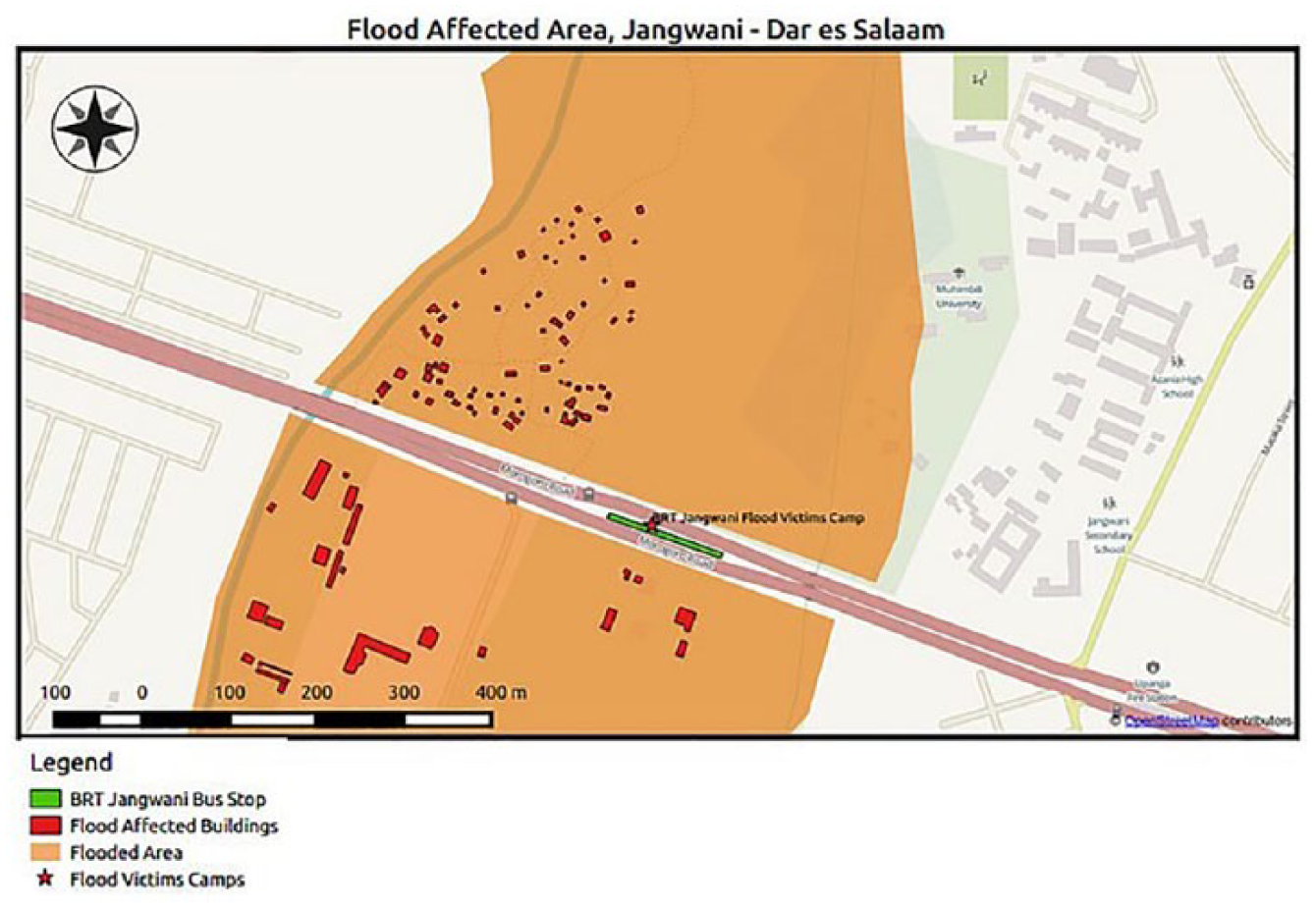
Flood-affected area, Jangwani
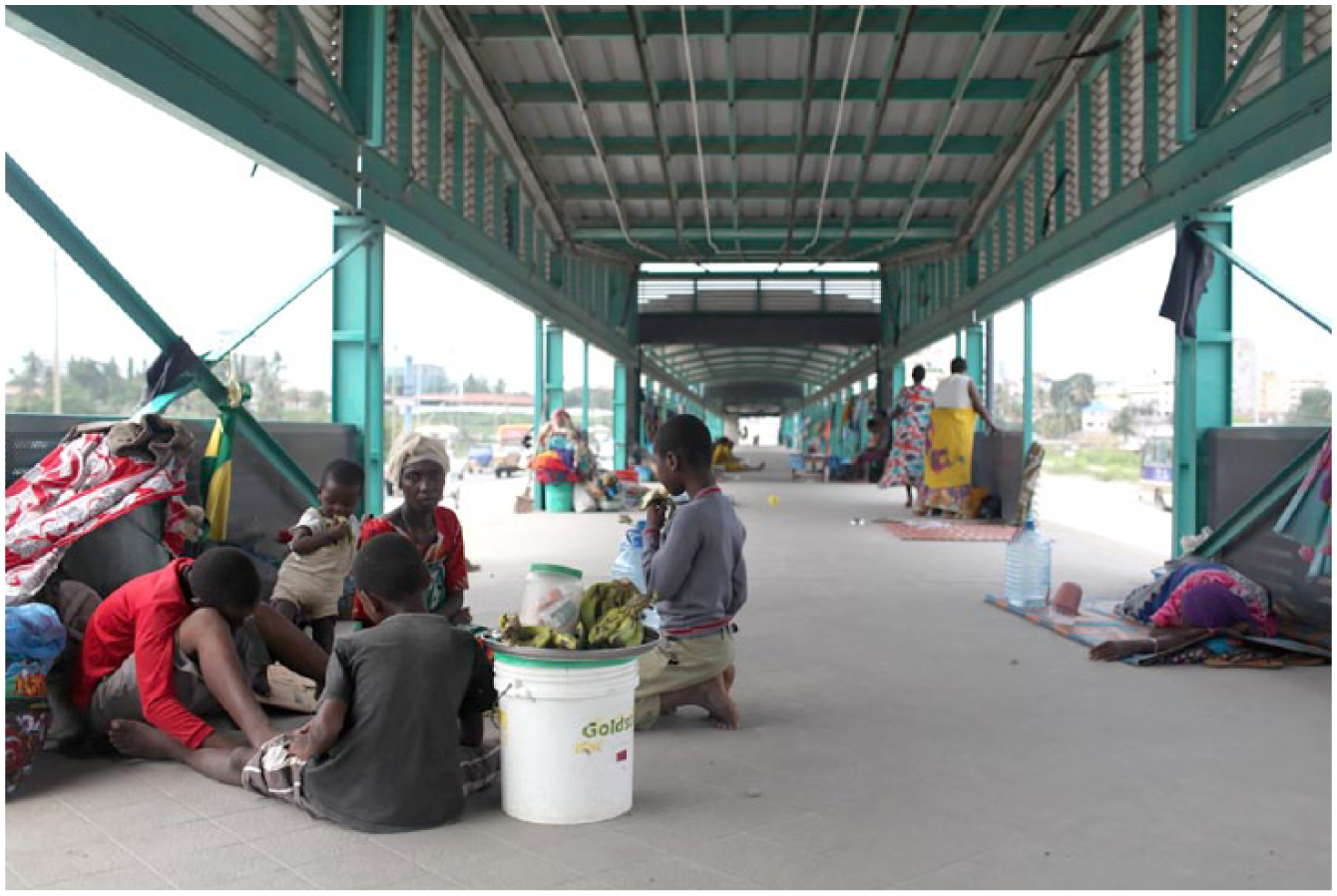
Jangwani residents seek refuge from flooding in a BRT shelter
Respondents all framed their ability to flee (beyond Morogoro Road) as something requiring capital, either in terms of money to pay for transport and accommodation, or in terms of social networks (i.e. family, religious communities) to turn to for temporary shelter. A father of two who had lived in Jangwani for over a decade described the cost of fleeing the 2015 floods: “Last year the floods forced us to move to a guesthouse. My youngest daughter was 40 days old so I had to pay 30,000 [Tanzanian shillings, or US$ 13.44 as of July 2016] per day in a guest house for us to survive for the next three days.”
Three of the women interviewed specifically phrased their continued presence in Jangwani as a result of having “nowhere else to go”. Two of these women said if they had resources to move elsewhere they would do so “immediately”. Constraints on financial resources were not mentioned by men in the same way, yet the strain of relocation on finances was also evident in the experiences of men (Table 2 on page 106).
Adaptation type by gender
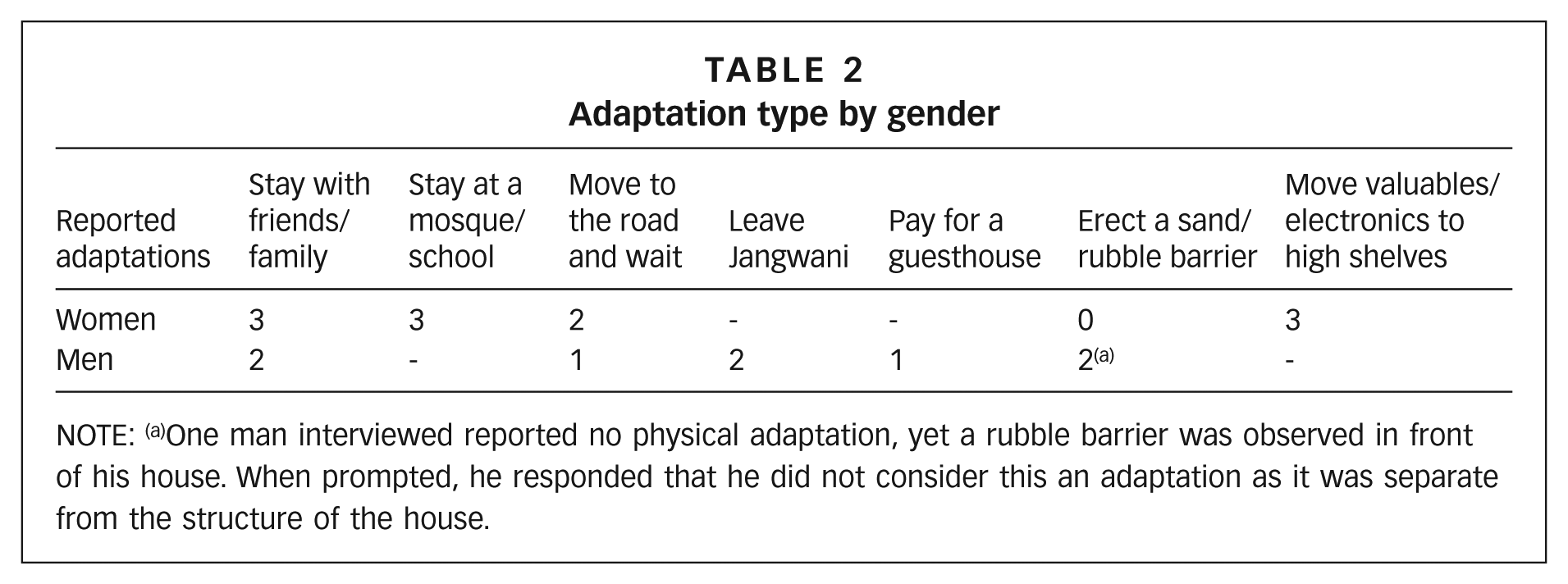
NOTE: (a)One man interviewed reported no physical adaptation, yet a rubble barrier was observed in front of his house. When prompted, he responded that he did not consider this an adaptation as it was separate from the structure of the house.
Age, like gender, is also an important factor in this regard. One elderly woman over 70 years of age, a former food vendor, was able to leave her home during flooding, but only to go to a more protected neighbour’s house. She was not able to take her possessions with her, but stated, “almost everything in the house will be taken by the water”. While this account may support the assumption that women and the elderly are most vulnerable, other accounts illustrate that not all older women are similarly vulnerable or disadvantaged. Two other women, sisters in their 60s, living together in their female-headed household, explained they stayed in Jangwani due to a lack of resources to permanently relocate elsewhere. However, unlike their older neighbour, they were able to pay to have their possessions moved: “We are forced to stay here because we do not have money to build in another area…This place floods every year around March and April, which becomes unsafe for us…We have to rent a truck to carry stuff to another location. That costs about 100,000 shillings [US$ 44.80].”
By contrast, a man in his 20s who, like the sisters, removed his possessions, reported that when flooding occurred he was able to leave Jangwani to stay with friends for two or three days, then return when the flooding subsided.
“Whenever it floods, I have to take everything out and return after three days. So far the most valuable thing I have lost is my TV that costs 280,000 [Tanzanian shillings, or US$ 125.40].”
The details mentioned by these individuals underscore the importance of an understanding of vulnerability informed by experience rather than assumption, along with the importance of disaggregating data for this purpose. Had all three of these older women been lumped into a single age cohort of “60+”, the potentially significant difference in their adaptive responses would have been lost.
Another prominent adaptive action reported by respondents was constructing barriers out of rubble, or “pouring debris”, to prevent floodwater from entering structures. Notably, however, only men spoke of proactively undertaking such adaptive actions. Although creating physical barriers (Photos 3A and 3B) may be an effective solution preventing floodwaters from entering one housing structure, it also has a secondary effect of diverting water elsewhere, exacerbating flooding in nearby structures.
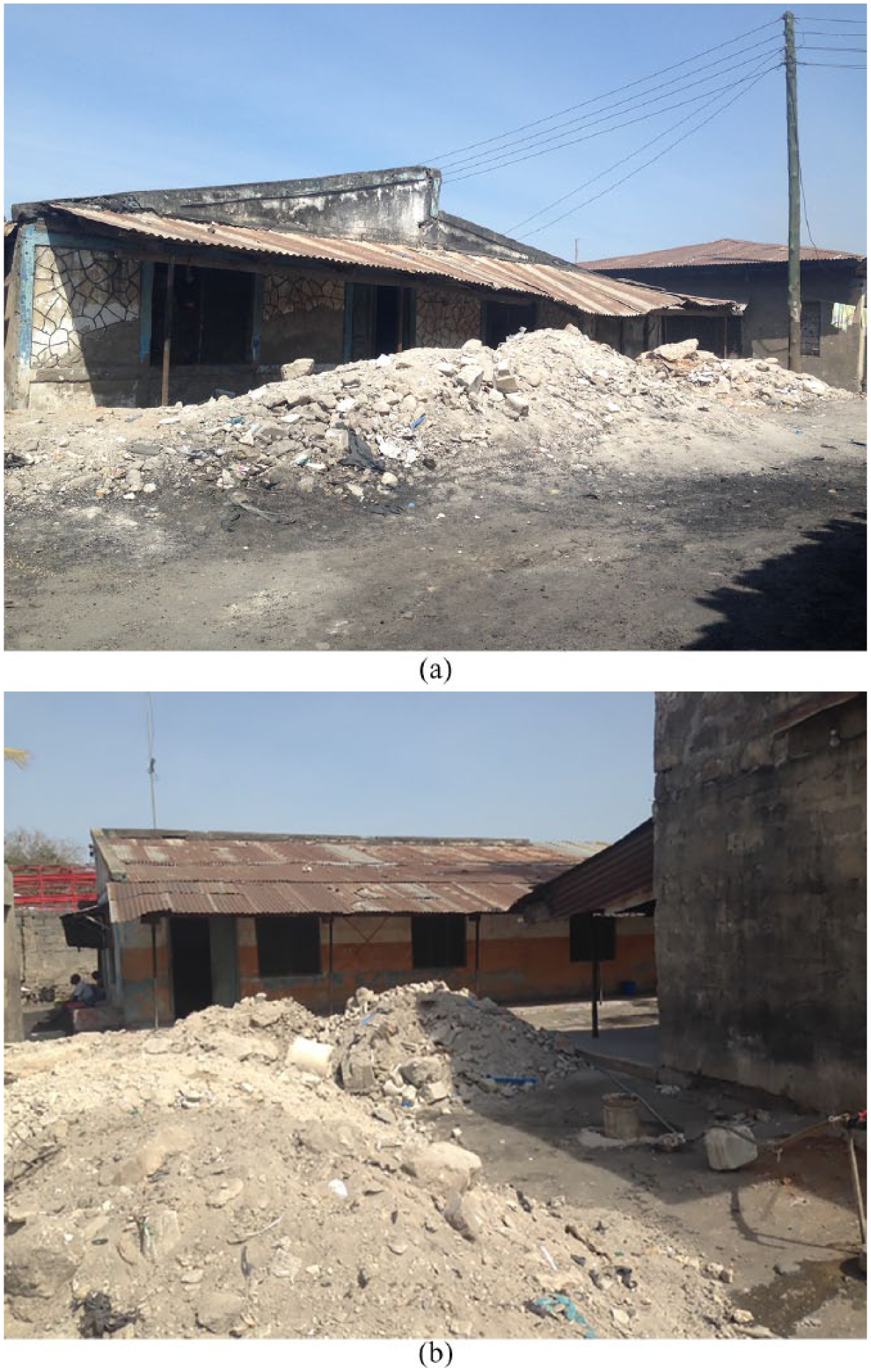
Rubble and sand barriers in front of houses in Jangwani
One male resident who had lived in Jangwani for over 30 years had constructed a barrier of sand and rubble in front of his own house, yet acknowledged that such physical structures were compounding the severity of flooding.
“The problem we have here is infrastructure. The infrastructure in this place blocks the water and it pours into Jangwani.”
Gender differences also emerged with regard to the reporting of these physical measures. Men in homes with evident rubble or sand barriers reported having built them (whether or not they perceived the barriers as adaptations to the structure of the house; see the note on Table 2). In contrast, women interviewed never reported making such physical adjustments to their structures, some citing lack of money as a cause. The two sisters mentioned above did actually have a protective sand wall but had not constructed this personally, and did not recognize it as an adaptive feature of their house. This discrepancy illustrates the difference between what is conceptualized as adaptation by individuals and households and what action is actually undertaken.
Other reported adaptations included pre-emptively sleeping on roofs, moving valuable possessions to higher shelves, and taking shelter in nearby mosques or schools – the latter only stressed by women.
Climate change also interacts with and often exacerbates other issues, including sexual and gender-based violence, and increases females’ caring responsibilities.(113) These were not focal areas of the fieldwork, yet these concerns were mentioned by respondents and have clear gender implications.
The decision to actually live on this floodplain also demonstrates a gender difference. Again men used proactive language, speaking of specific reasons for the decision. This may point to differences in socialization of boys and girls.(114) The father described above decided to be based in Jangwani due to its proximity to work in the city centre. Previously he had lived in the urban periphery and prohibitive transport costs forced him to walk into the city at times. Women seldom spoke of making an active choice in this regard. Several women had come to the area as trailing spouses. One woman came to Jangwani with her late husband to be closer to the city for his work and inherited their house upon his death. She reported staying on only because she had no place else to go. Another woman, born in Jangwani, resided in a house she occupied after its owners fled flooding and did not return.
VII. Discussion: From the Everyday to Policy
Although there are some proactive measures here, the everyday responses to climate change discussed above are largely reactive in nature. This can be expected from people who live in circumstances of structurally compounded inequality, and possess little education and forewarning of adverse weather. This is not to say that adaptation on other levels is not also sometimes a reactive response to situations. But even when it is proactive, it often falls short on other fronts as well.
Adaptation is undertaken by multiple actors on different scales; mediated by diverse institutional arrangements; and reflective of different agendas, politics, and visions of what effective adaptation and sustainable urban development mean. Hulme makes the point that a technical and overly simplistic view of climate change misses the importance of the context in which decisions are made, contributing to the “de-culturating of climate”.(115) This can legitimize policies and interventions – such as evictions or demolition – that overlook complex realities and fail to meet the needs of residents of informal urban settlements. Similarly, Whitehead has argued that adaptation policies are often expressed in a rhetoric of safeguarding to mask implicit market-based strategies.(116) For example, the location of Jangwani adjacent to the city centre and on the new BRT line makes it an area of interest for developers, who could put flood-proof infrastructure in place and develop the land to the potential exclusion of current inhabitants. At present, plans for further funding and programming to enhance urban resilience in the Msimbazi Valley have been pipelined.(117)
It has been argued that we have entered a “postpolitical” era,(118) characterized by Zeiderman as “consensus building and policymaking, and the triumph of technocratic, managerial liberalism”.(119) Swyngedouw asserts that this seeming consensus necessitates “radical” change but “
By understanding adaptation as a sociopolitical construct with different manifestations on different scales, it becomes clear that the social context and gendered dynamics of everyday life, responses, and realities need to be considered when formulating high-level policy. Urban planning policy in Dar has historically failed to give voice to non-elites. McAuslan summarizes this as a “continuation of colonial style planning under a colonial style planning law”,(122) which lasted from Tanzania’s socialist regime through the mid-1980s.(123) The shift away from ujamaa to the structural adjustment policies of the 1980s and introduction of multi-party politics in the 1990s, along with Dar’s subsequent economic growth, does not seem to have addressed what Brennan and Burton describe as the “perennial struggles between planning authorities and squatters over the rights of the latter to occupy unused public land, such as Jangwani and other floodplains along the Msimbazi Creek”.(124) The city, according to these authors, “appears inextricably linked to its vicious cycle of environmental and infrastructural deterioration”.(125)
Currently, Dar does not have a specific climate adaptation plan, and the focus on climate change as a national policy issue has decreased since the 2015 election ushered in a government focus on industrialization, with an emphasis on exploiting fossil fuels.(126) Still, entry points do exist for increasing the policy focus on climate change and informing technical approaches to adaptation and urban development with attention to gendered realities. For example, the Msimbazi Charrette – a multi-stakeholder(127) participatory exercise to design a management framework for the Msimbazi River basin(128) – offers an opportunity to take on a gender lens in its solicitation of stakeholder views.(129)
Participatory approaches(130) can examine the gendered dynamics of the impact of flooding, which require technical responses to be developed accordingly. The empirical findings presented in Section VI show that men and women prioritized different adaptive activities. They also demonstrate that gender is one among multiple dimensions, and factors such as age must also be considered. The oldest female respondent was not able to adapt successfully, the two sisters prioritized the protection of their accumulated possessions, whereas younger women looking after their children were more concerned with family safety. Therefore, any intervention, even with a focus on gender, would have to target not only the upgrading of housing or infrastructure, but also the provision of safe spaces where flood victims could take shelter.
The application of a gender lens in projects offers an entry point for more nuanced high-level responses to climate change. However, uptake of gendered understandings of climate change gathered through multi-stakeholder consultation risks being confined to projects rather than mainstreamed throughout national policy, as a result of institutional constraints identified by Pardoe et al. Their examination of climate change policy coherence in Tanzania emphasizes a need for inter-sectoral collaboration and financing of climate change for effective adaptation strategies, acknowledging that such changes would “require political will and trade-offs”.(131) It is key for any cross-sectoral, cross-level action to be informed by gender considerations based on lived experiences of climate change and adaptation, so that policy and planning respond to the needs of Tanzania’s citizens.
Beyond the city and national levels, global policy discourse also must be informed by everyday realities and tailored to them in order to effectively and equitably address climate change. As outlined in Section II, the IPCC has an opportunity ahead of AR6 to improve its analysis through increasing its sources to include those reporting everyday realities. Although the AR5 process did include consideration of gender, most richly through Working Group II’s cross-chapter box on “Gender and Climate Change”,(132) which recognized the need to address gender disparity in education and land/natural resource use, such attention to gender was primarily rural. The chapter does not address urban areas, which speaks to a need for increased attention to urban gender-related experience at a micro-level. Vitally, despite the chapter’s strength, its richness was not carried through to the 2014 Synthesis Report.
VIII. Conclusions
We sought to examine here how climate change adaptation relates to the notions and adaptive practices of individuals living in Jangwani, and what the application of a gender lens can tell us about adaptation. Adaptation should be regarded as more than a response to climate change; adaptation is a multifaceted micro-level process, one that is sculpted by and reveals existing structural inequities. As climate change is considered across geographies and scales, the variety of its causes, consequences and adaptations – and the contextual power dynamics shaping these – should be taken into account. Climate change adaptation is not a technological, power-free phenomenon, and viewing it as such further entrenches inequalities.
We hope the empirical account of adaptation presented in this narrow, context-specific case study will serve as grounded evidence to stimulate additional research. Specific areas for further investigation include: climate change and masculinities, particularly when livelihoods are disrupted due to effects like flooding; the relationship between climate change and gender-based violence; the role of civil society in informing the government about everyday realities faced by those living in flood-prone areas and advocating for better policies;(133) and understanding how barriers to women’s property ownership (formal and de facto) are affected in environmentally precarious urban locations that offer low-cost entry points into cities. We hope this research in turn informs climate change policy and aligns more closely with the realities faced by people like those living in Jangwani.
Footnotes
Acknowledgements
The authors appreciate the valuable feedback of the journal editors and anonymous reviewers. We would also like to thank the Tanzania Commission for Science and Technology (COSTECH) for granting permission to carry out this research and Winnie Itaeli Kweka for her research assistance during fieldwork.
Funding
Fieldwork was partially supported by the Royal Geographic Society (with Institute of British Geographers) in the form of a Graduate Fieldwork Grant made in 2016 to the Everyday Dar team.
1.
Dar es Salaam is referred to as Dar from here forward.
3.
The three Working Group contributions to the IPCC Sixth Assessment are due to be delivered in 2021. The Synthesis Report will be finalized in April 2022.
7.
11.
UN-DESA (2014); also see Myers (2011); Grant (2009);  .
.
12.
Hart (1971); ().
13.
16.
Roy (2009), page 84, cited in , page 16.
24.
Al Sayyad (2004), cited in .
31.
Moser and Stein (2016), page 182, citing .
32.
34.
Moser and Stein credit quote, “Within low-income populations women often have particular vulnerabilities as a result of gender-related inequalities”, with influencing high-level policy dialogue to include the mention of women’s vulnerability to climate change. Specific cases are the UN-Habitat resolution on Cities and Climate Change (22nd session of the UN-Habitat Governing Council) and UN-Habitat’s Climate Change Strategy 2010-2013.
36.
38.
Moser and Stein (2016), citing .
42.
58.
UN DESA (2014), page 24; .
61.
75.
The Msimbazi Valley (also referred to as the Msimbazi River Basin) is a low-lying basin in Dar where water from the Msimbazi River connects with the Indian Ocean (Map 1).
80.
Google Earth.
93.
105.
The name has been changed for anonymity.
109.
The Tanzania Urban Resilience Program (TURP).
111.
Ahmed et al. (2018), citing Adelekan (2010); Manda (2014); N.
118.
122.
McAuslan (2007), page 175, cited in ,
127.
The World Bank list of stakeholders for Msimbazi Charrette include: the Tanzanian President’s Office Regional Administration and Local Government (PO-RALG), engineers, planners, community leaders and high-level government officials.
128.
The Msimbazi Charrette is part of the Tanzania Urban Resilience Program (TURP), funded by the World Bank.