



Abstract
Constant connectedness and social media overuse have prompted disconnection practices like quitting and digital detoxing. Besides these approaches, mindfulness stands as a promising quality to benefit from social media without being overwhelmed by their drawbacks. Accordingly, this study investigates whether mindful technology use (MTU) can help manage social media use. Based on the Affordance-Use-Reflection-Automaticity Model, MTU was proposed as a means to regulate the effects of social media affordances (i.e. hedonic and utilitarian content gratification), habit, satisfaction, and system use. The research model was tested on three different social media—Facebook (n = 220), Instagram (n = 132), and Twitter/X (n = 123)—using a cross-sectional survey. The results show that MTU is associated with lower habit and system use, and a stronger positive link between hedonic content gratification and habit. These findings indicate that MTU can be a disconnection strategy by supporting mindful consumption and weakening habitual use.
Keywords
Introduction
“How do we consume as much of your time and conscious attention as possible?” explained Sean Parker—the first president of Facebook—regarding the thought process of shaping Facebook back in his day (Solon, 2017). Daily-use habits and the amount of time users spend on social media are a metric of success for these services, and, in fact, the business plans of many social media services are based on compulsive use (Newport, 2020). To that end, they implement features that reinforce active participation and frequent and prolonged use (e.g. Shao and Kwon, 2019). For instance, infinite scroll is a feature inspired by the bottomless bowl experiment and induces swiping through content endlessly (Andersson, 2018). Feedback types, such as likes, retweets, and tagging, provide unpredictable dopamine hits for our Paleolithic brains that drive for social approval (Newport, 2020). And they have been successful: recent statistics show that the average daily social media usage of Internet users worldwide has increased steadily over the years, and it peaked at 151 minutes—in other words, more than 3½ hours—in 2023 (Dixon, 2023).
However, this strategy based on prolonging use times has started to backfire. A growing number of users are developing ambivalent orientations, particularly toward social media (Lomborg and Ytre-Arne, 2021; Ytre-Arne et al., 2020). As a result, different forms of digital disconnection practices such as taking breaks, avoiding or quitting social media, switching platforms, and using management tools have become common among users (Jorge, 2019; Nassen et al., 2023). Among these practices, mindful technology use (MTU) is another growing wave aimed at managing technological distractions and reducing technology use (Vanden Abeele and Nguyen, 2022; Vanden Abeele et al., 2022). MTU follows the same principles as mindfulness and is about being attentive and conscious of one’s technology use and of self during the use. Considering the benefits of general mindfulness for cognitive and affective outcomes (e.g. sustained attention) and health behaviors (e.g. reducing smoking, altering dietary behaviors) (Creswell, 2017), its application as a disconnection strategy can help regulate social media use without diminishing the value users get from these services.
Thus, this research studies whether MTU can promote more effective use of social media—supporting users in attaining their desired goals—rather than defaulting to habitual responses triggered by technical cues embedded in platform interfaces. At the interface level the focus is on hedonic and utilitarian content gratifications (HCG and UCG)—key affordances of social media that can induce mindless scrolling by offering variable and often unpredictable rewards (de Segovia Vicente et al., 2023; Montag et al., 2019). At the response level, we focus on the psychological processes induced by social media affordances: habit, defined as an automatic, cue-driven impulsive process; satisfaction, reflecting users’ evaluative responses to platform affordances; and system use, capturing the frequency, duration, and intensity of social media use as a behavioral outcome. This focus is grounded in the understanding that technology use is not only reasoned and intentional but also emotional and habitual, with habit and satisfaction serving as key antecedents of sustained technology usage and success (e.g. Bhattacherjee and Lin, 2014).
Guided by this focus, the research addresses three research questions: (1) “How are HCG and UCG associated with habit, satisfaction, and system use in the social media context?” (2) “How is MTU associated with habit, satisfaction, and system use in the social media context?” and (3) “Does MTU moderate the relationships between HCG and UCG and habit and satisfaction in the social media context?” To answer these research questions, this article introduces the Affordance-Use-Reflection-Automaticity (AURA) Model to provide a dual-process account of how technological affordances elicit reflective or automatic cognitive responses, ultimately shaping user behaviors such as system use, and investigates MTU’s interaction with this model. The research data is based on respondents’ use of three different social media services (Facebook, Instagram, and Twitter/X), as reported through survey responses, and it was analyzed using structural equation modeling and moderation and multigroup analysis.
Mindfulness and mindful technology use
With roots in 2500-year-old Buddhist tradition, mindfulness is about the cultivation of conscious awareness and attention (Brown and Ryan, 2003; Siegel et al., 2009). The word itself is the translation of the Pali word, sati, which implies awareness, attention, and remembering (Siegel et al., 2009). In Southern Buddhism it is defined as “not floating away,” in other words, “an awareness which does not drift along the surface of things, but is a thorough and undistorted observation” (Harvey, 2013: 322). The most common definition of mindfulness is “the state of being attentive to and aware of what is taking place in the present” (Brown and Ryan, 2003: 822).
The mechanism of mindfulness was proposed to work in a cyclic and simultaneous process that involves intertwined workings of intention, attention, and attitude (Shapiro et al., 2006). Intention provides a personal vision as to why one is practicing mindfulness, and it is a dynamic aspect of mindfulness; in other words, it changes over time as the person evolves. Paying attention, in the context of mindfulness, involves the observation of how internal and external experiences function by suspending any form of interpretation. In this way, one learns to listen to the contents of their moment-to-moment consciousness, disidentify from these contents, and see them with greater clarity and objectivity. That is to say, the person is able to stand back and witness their experience instead of getting lost in it. “This dispassionate state of self-observation is thought to introduce a ‘space’ between one’s perception and response” (Bishop et al., 2004: 232). Attitude is about the qualities one brings to the act of paying attention. Despite mindfulness being linked with bare awareness, it is essential to have a positive attitude to achieve equanimity and acceptance.
Mindfulness can be applied in many situations where mental processes contribute to emotional distress and maladaptive behavior, as well as in contexts that provoke emotional reactions—provided that skills such as sustained attention and an accepting attitude have been learnt (Bishop et al., 2004). Accordingly, it has been applied in various contexts (e.g. workplaces, schools, the military) and domains (e.g. depression, addiction, chronic pain) (Creswell, 2017). By the same token, mindfulness is relevant in the technology context, given the habitual and potentially addictive nature of technology use (e.g. Montag et al., 2019), and their documented effects on well-being such as body-image dissatisfaction (Tiggemann et al., 2018).
Hence, we define MTU as the ongoing practice of paying attention to and maintaining awareness of one’s technology use and oneself on a momentary basis, with an attitude of acceptance. It entails continuous awareness of external stimuli (technological triggers such as notifications) and internal stimuli (bodily sensations, thoughts, and emotions) and their effects in the technology use process. As such, it facilitates a heightened awareness of both the nature of one’s engagement with technology and the motivations driving such use. Drawing on Eastern perspective of mindfulness (Weick and Putnam, 2006), this view complements prior research that has primarily adopted a Western view of mindfulness in technology contexts by emphasizing technology’s innovative use (Thatcher et al., 2018).
Taken this perspective, MTU is particularly relevant for social media use considering their pervasive and habit-forming design, which often leads to mindless engagement (Damico and Krutka, 2018). Moreover, MTU has the potential to enhance user agency in these contexts (e.g. Vanden Abeele et al., 2022). Interestingly, however, the only two studies looking at the effects of general mindfulness on habitual use of social media showed conflicting results. Specifically, Throuvala et al. (2020) found no effect of an online mindfulness intervention on habitual use, whereas Harvey and Aikman (2025) reported that the describing and non-reactivity facets of mindfulness were negatively correlated with habitual use, while the non-judging facet was positively correlated. Their contradictory findings may stem from methodological differences between cross-sectional surveys and intervention studies. Cross-sectional studies capture individual differences, whereas intervention studies test short-term change and may therefore yield different results. This interpretation aligns with the current study’s cross-sectional approach, which reflects associations based on existing individual variation.
Dual processing of technological affordances: AURA model
Considering social media’s common design principle of eliciting automatic user responses, social media use is conceptualized as a three-step process that integrates the theory of affordances with the reflective-impulsive model (RIM). Building on previous affordance research (e.g. Norman, 2013; Treem and Leonardi, 2013), social media affordances are defined as the perceived—actual or imagined—properties of social media platforms that arise from the interaction between technological features, social dynamics, and contextual factors, and that enable or constrain specific patterns of use (Ronzhyn et al., 2023). As a prominent dual-process model, RIM posits that behavior arises from the interaction of two systems: an impulsive system that activates learned behavioral schemata in response to contextual cues, and a reflective system that guides behavior through deliberate reasoning about goals and outcomes (Strack and Deutsch, 2004). In this framework, habits are seen as automatic activations within the impulsive system, whereas reflective behavior depends on conscious evaluation of feasibility and desirability (Strack and Deutsch, 2004).
Particular social media affordances can be linked to the dual processing systems described in RIM, which are at work during technology use as well (Gwebu et al., 2014; Turel and Bechara, 2016). For example, variable reinforcement and hedonic gratifications work to increase habitual and automized use (Reinecke et al., 2022). Hence, they primarily engage the impulsive system, triggering automatic reward-driven behaviors such as checking or scrolling. By contrast, affordances such as browsing others’ content and communication (Karahanna et al., 2018) may activate the reflective system, as users deliberately evaluate and pursue different goals such as information seeking. As such, social media affordances instigate psychological processes that, in turn, drive behavioral outcomes, as observed in gamification (Koivisto and Hamari, 2019).
Behavioral outcomes refer to the actions that result from reflective or impulsive processing during social media use. They can be both related to social media use and outside of social media use. For example, repeat use of social media due to anticipated dopamine release (e.g. because of received “Like”s to a post) is a behavioral outcome related to impulsive social media use. Yet, starting a diet after seeing pictures of a very fit social media connection (e.g. friend, celebrity, social media influencer) is a reflective behavioral outcome outside of social media use. This dual processing of technological affordances, referred to as the AURA model, is illustrated in Figure 1.
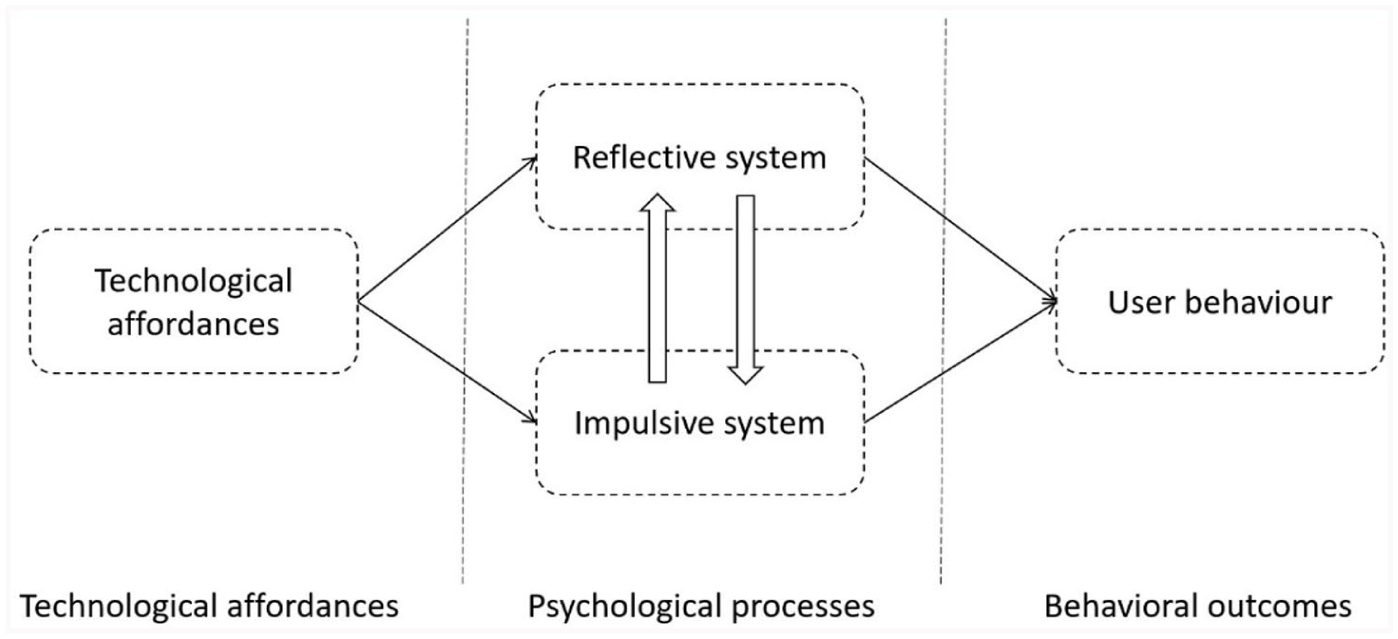
The affordance-use-reflection-automaticity model.
Research model and hypotheses
The research model investigated in this study is presented in Figure 2. It has HCG and UCG on the technological affordances side, satisfaction on the reflective process side and habit on the impulsive process side, system use as the behavioral outcome, and MTU interacting with this (AURA) model.
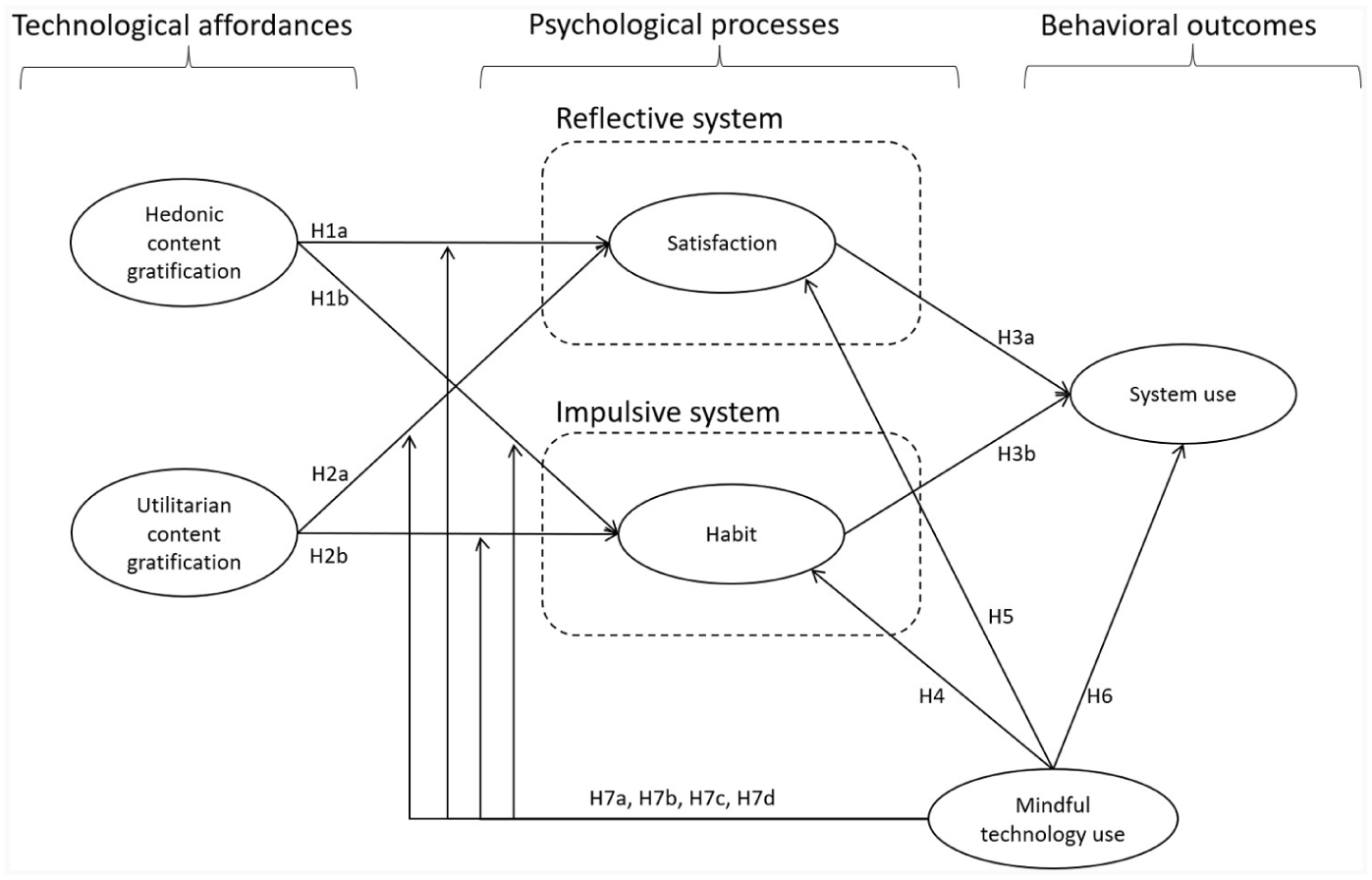
Research model.
Social media services commonly afford both HCG and UCG via features such as timeline and newsfeed (e.g. Fadel et al., 2023). HCG is afforded when consumed content is inherently interesting to the user and is perceived as fun, relaxing, or pleasurable in other ways. It can influence users emotionally and evoke historic or fantasy imagery. Examples may be cat videos, likes that induce dopamine release, parodies, and memes. UCG is afforded when consumed content is useful to an end, such as work, studies, or daily tasks. In other words, UCG is not an end in contrast to HCG. Instead, their consumption serves a purpose and works toward task completion and goal achievement. Examples may be event information, profile information for businesses, and how-to tutorials on social media.
Impulsive and reflective processes are operationalized as habitual use and satisfaction, respectively. In the context of technology, habitual use was defined as the degree to which individuals engage in technology use automatically as a result of prior learning (Limayem et al., 2007). Like any other habit, habitual use is also learned by repetitive past use (Turel, 2015; Turel and Serenko, 2012) and this learning is supported by triggers and variable rewards embedded in the technology design (Eyal, 2014). Satisfaction is seen to be associated with the reflective system because it is based on the reflections regarding whether the technology meets the expectations (Turel and Bechara, 2016). It assesses users’ confirmation of their prior expectations regarding technology use and reflects the discrepancy between expected and actual performance (Bhattacherjee and Lin, 2014).
Regarding behavioral outcomes, the focus of this study is on system use, operationalized along three dimensions: use frequency (the number of times the system is used within a given period), use duration (the total clock time spent using the system in a given period), and use intensity (users’ self-assessment of how much they use the system) (Venkatesh et al., 2008). MTU interacting with the AURA model is viewed as a part of the psychological processes.
HCG and UCG are a function of users’ previous use patterns (e.g. their likes, shares, navigation habits) that feed the recommender systems, which are designed to increase user satisfaction to prolong use time of these services (Montag et al., 2019). This is because, satisfactory experiences lead to repeat behavior as a result of the strengthening link between the activity and the initial hedonic or utilitarian pursuits (Aarts et al., 1998). HCG may increase satisfaction by providing enjoyable experiences in different forms such as fun comments, stories, or videos. UCG may increase satisfaction by being useful to the users’ tasks, activities, or goals. Likewise, the positive relation between different types of interaction with digital content and satisfaction was shown in both social media and gamification research (e.g. Dumlao and Ha, 2013; Gladkaya and Deters, 2024; Hassan et al., 2019). Therefore, the following hypotheses were formed:
H1a. HCG is positively correlated with satisfaction.
H2a. UCG is positively correlated with satisfaction.
Repeated HCG and UCG in similar situations can foster habit formation by providing contextual cues at the interface level, which manifest in responses such as checking, browsing, posting, and messaging (Bayer et al., 2022). This process is reinforced through various rewards and repeated goal-directed behavior (i.e. actions undertaken with the expectation of achieving a desired outcome) (Eyal, 2014; Wood, 2024). Consequently, such content may be consumed automatically when triggered by certain internal or external stimuli. Social media content combines different habit-forming rewards to different degrees. For instance, HCG provided by likes and comments induce habitual use with rewards that provide social validation in the form of being accepted, important, included, and attractive (Ryan and Deci, 2000). In addition, getting information on how one is perceived by their social network is one type of UCG that provides social comparison and induces social media revisit (Montag et al., 2019). Another example is the social media newsfeed/timeline that brings together limitless amounts of relevant and mundane content making it unpredictable when the user sees particularly interesting content. This variability of content—offering both HCG and UCG—provides irregular rewards that make users scroll endlessly (Eyal, 2014; Montag et al., 2019). Previous research found supportive results of these arguments, showing positive correlations between content gratifications and habitual use (e.g. Chen et al., 2022; Köse, 2020). Therefore, the following hypotheses were formed:
H1b. HCG is positively correlated with habitual use.
H2b. UCG is positively correlated with habitual use.
Social media use is driven by both habitual responses and reflective evaluations such as satisfaction, also depending on whether users conceive the platform as fun- or utility-oriented (e.g. Köse et al., 2019). For instance, some users may engage automatically in routine behaviors like checking or scrolling, while others base their use more on the satisfaction they gain from meaningful interactions or content. Previous research has also confirmed positive correlations between habit and social media use, as well as between satisfaction and social media use (e.g. Kuem et al., 2017; Turel and Bechara, 2016). For instance, satisfaction was shown to positively correlate with continuance commitment and, in turn also with active participation on Facebook for American users (Kuem et al., 2017). And the comprehensiveness of technology usage (i.e. the diversity of use purposes) and usage duration per day were shown to be positively related with habitual technology use (Turel, 2015; Turel and Serenko, 2012). Therefore, the following hypotheses were formed:
H3a. Satisfaction is positively correlated with system use.
H3b. Habit is positively correlated with system use.
MTU entails self-observation of what initiates technology use, what happens during technology use, and what stops technology use—“what” comprising both internal and external states. The clarity and objectivity afforded by self-observation offer users insights into their habitual engagement with technology, enabling more intentional and directed use (Hefner and Freytag, 2024). In other words, MTU can discipline interaction with technology by giving the steering wheel to the user. As a result, users become conscious of their triggers for technology use (e.g. notifications, feelings of boredom), what they are doing with technology (e.g. scrolling social media feed endlessly), and how it affects them (e.g. feelings of envy) (e.g. Hefner and Freytag, 2024). This introduces a space between the user and their technology interaction, through which users become the subject instead of the object of their technology use. As a result, they can refrain from automatic, reactive, and reflexive responses to technology and start using it in a more reflective manner. Supporting this argument, previous research has shown negative associations between general mindfulness and both habitual social media use (Harvey and Aikman, 2025) and automatic mobile phone checking (Hefner and Freytag, 2024). This more reflective usage, in turn, can enhance user satisfaction by fostering more focused engagement with social media and thus increase the perceived benefits. Moreover, such focus can minimize distractions from peripheral cues (e.g. notifications or internal cues) (Hefner and Freytag, 2024) that typically prolong use. Consistent with these arguments, higher general mindfulness was linked with lower overall and problematic smartphone use (e.g. Regan et al., 2020; Volkmer and Lermer, 2019). Thus, the following hypotheses were formulated:
H4. MTU is negatively correlated with habitual use.
H5. MTU is positively correlated with satisfaction.
H6. MTU is negatively correlated with system use.
Similarly, MTU can interact with the association of HCG and UCG with habitual use and satisfaction. For HCG, users can self-observe their emotional triggers and the reward loops they are in, interrupt these automatic patterns, and become more intentional in their engagement. Meanwhile, this heightened awareness can make users more attuned to the experience and enhance the depth of enjoyment; hence enabling users to derive greater subjective satisfaction from the same content. For UCG, users can reflect on the alignment of their behavior with their intentions regarding their social media use. This self-regulatory mechanism can interrupt habits that are not serving a purpose (e.g. being side-tracked by funny content). Moreover, MTU can promote conscious engagement allowing users to appreciate practical benefits of the content and hence increase their sense of being informed and accomplished. This can strengthen the satisfaction derived from UCG. Previous research has showcased users’ mindful content consumption strategies (Baym et al., 2020) and is supportive of how mindfulness can facilitate awareness and consciousness against for instance fake news consumption (Rodrigo et al., 2022). Therefore, the following hypotheses were established:
H7a. The HCG–habitual use association is weaker at higher levels of MTU.
H7b. The HCG–satisfaction association is stronger at higher levels of MTU.
H7c. The UCG–habitual use association is weaker at higher levels of MTU.
H7d. The UCG–satisfaction association is stronger at higher levels of MTU.
Methodology
Data
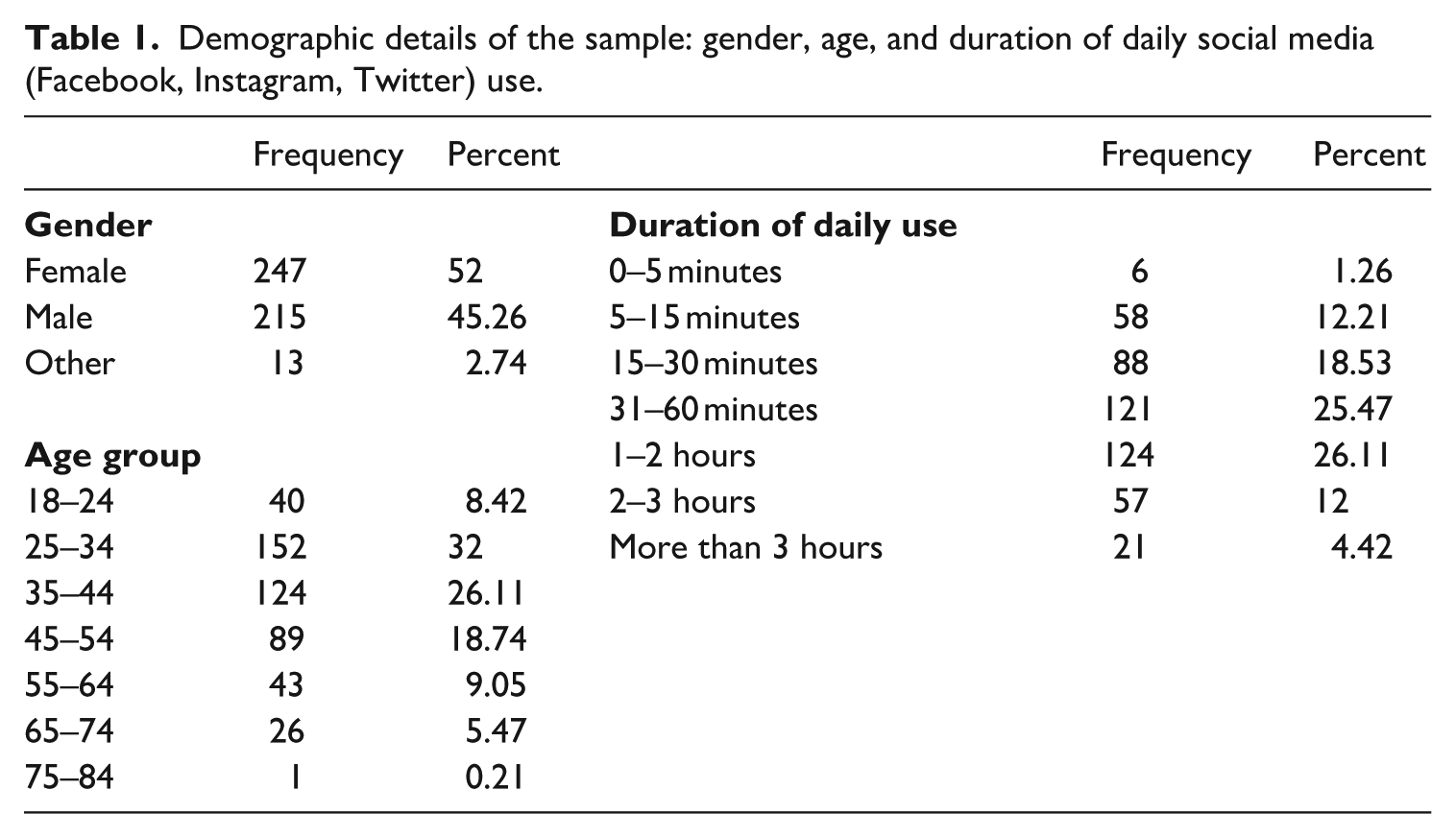
The data were collected via Prolific (2024) using a cross-sectional survey. The respondents were selected from mobile social media users residing in the United States using Prolific screeners that specified current country of residence (United States), age (18–100), first language (English), devices with screens (mobile phone), and social media (e.g. Facebook, YouTube). The respondents answered the questions based on the social media service that they used most often on their smartphones. The data used in this study focused on participants that chose Facebook (n = 220), Instagram (n = 132), and Twitter/X (n = 123). These three platforms were chosen because they are the most widely used mobile social media services in both the United States and Europe (Ceci, 2022; Statcounter GlobalStats, 2023). From an initial 482 respondents, those who failed attention checks (n = 6), gave invalid answers (n = 2), or completed the survey too quickly (n = 0) were removed. The demographics of the respondents are presented in Table 1.
Demographic details of the sample: gender, age, and duration of daily social media (Facebook, Instagram, Twitter) use.
The survey items were adopted from previously validated instruments. The mindfulness scale was adapted to the technology context from the dispositional Mindful Attention Awareness Scale (MAAS) (Brown and Ryan, 2003). MAAS focuses on attentional component of mindfulness and is one of the most widely used mindfulness assessment scales (Bunjak et al., 2022; Sauer et al., 2013). HCG and UCG items were adopted from (Köse, 2020). The habit items were adopted from (Bhattacherjee and Lin, 2014; Limayem et al., 2007). System use was operationalized as a composite of its most common conceptualizations—use frequency, duration, and use intensity (Venkatesh et al., 2008). All the items except for MAAS, satisfaction, and system use were measured on a 7-point Likert-type scale ranging from strongly disagree to strongly agree. Satisfaction was measured as a semantic scale. MAAS items were measured on a frequency-based 7-point Likert-type scale (1 = almost always . . . 7 = almost never); hence a higher score reflected more mindful use instead of mindless use. The full item set is presented in the Supplementary Material (section C).
Validity, reliability, and overall fit
The data analysis was carried out using partial least squares structural equation modeling (PLS-SEM) on SmartPLS 4 software following recent guidelines (Benitez et al., 2020). PLS-SEM was chosen because it allows unrestricted use of single-item and formative measures and it is more suitable for exploratory research as is the case in this study (Hair et al., 2019). The convergent validity of the constructs was assessed using composite reliability (CR), average variance extracted (AVE), and Cronbach’s alpha (alpha). CR and alpha values greater than 0.7 (Hair et al., 2019; Kline, 2016) and AVE values greater than 0.5 (Fornell and Larcker, 1981; Hair et al., 2019) were suggested to provide empirical evidence for convergent validity. Discriminant validity was assessed using the heterotrait-monotrait ratio, which should be lower than 0.85 (Benitez et al., 2020). Two items were dropped from the MTU construct as explained in section B of the Supplementary Material. The results showed that convergent and discriminant validity was established, as presented in Table 2. The cross loadings of the item set are presented in the Supplementary Material (section B).
Convergent and discriminant validity.
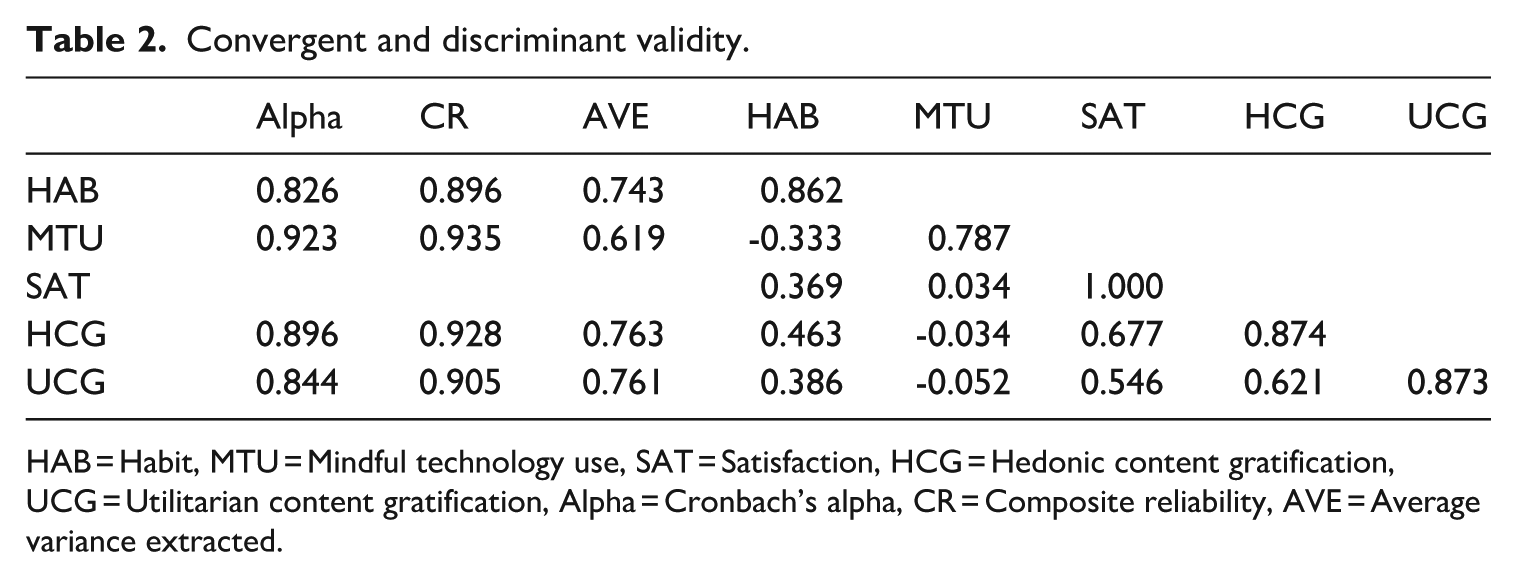
HAB = Habit, MTU = Mindful technology use, SAT = Satisfaction, HCG = Hedonic content gratification, UCG = Utilitarian content gratification, Alpha = Cronbach’s alpha, CR = Composite reliability, AVE = Average variance extracted.
System use was measured as a formative construct. Hence, its measurement fit was assessed separately by checking its indicators’ outer weight significances and outer loadings (Hair Jr et al., 2016). Use duration’s outer weight was not significant; however, its outer loading was high (i.e. above 0.50). This shows that use duration is absolutely important but not as relatively important. Therefore, use duration was retained in the model. In addition, variance inflation factor (VIF) values were also checked to confirm that the indicators of system use did not show excessive multicollinearity.
Common method bias was also checked because the data were collected using a cross-sectional survey, which might create a source of measurement error (Podsakoff et al., 2003). Accordingly, multicollinearity was checked by confirming that all the VIF values were lower than 5 (Hair et al., 2016).
The overall model fit was assessed via the standardized root mean squared residual (SRMR) value, which should be lower than 0.080 (Benitez et al., 2020). With a value of 0.056, the SRMR indicated an acceptable model fit.
Results
The results of the PLS-SEM algorithm analysis are in line with the theoretical expectations. The model explained 48.6% of the variance in satisfaction, 32.9% of the variance in habit, and 46% of the variance in system use. The size and significance of the path coefficients (β and corresponding p-values) as well as their effect sizes (f2) were assessed. Guidelines state that f2 values 0.02, 0.15, and 0.35 represent small, medium, and large effects respectively (Cohen, 2013), and f2 values smaller than 0.02 indicate that there is no effect (Hair et al., 2016). HCG was positively associated with satisfaction with a large effect size (β = 0.553; p < .001; f2 = 0.367) and positively associated with habit with a small effect size (β = 0.352; p < .001; f2 = 0.114). Hence, hypotheses H1a and H1b found support. UCG was positively associated with satisfaction with a small effect size (β = 0.202; p < .001; f2 = 0.049) and positively associated with habit with an unsubstantial effect size (β = 0.144; p < .01; f2 = 0.019), showing support for H2a and H2b. Satisfaction was positively associated with system use with a small effect size (β = 0.188; p < .001; f2 = 0.055) and habit was positively associated with system use with a large effect size (β = 0.547; p < .001; f2 = 0.415), showing support for H3a and H3b. And finally, MTU had a negative and medium-size association with habit (β = −0.318; p < .001; f2 = 0.152) and a negative association with system use with small effect size (β = −0.114; p < .01; f2 = 0.021), showing support for H4 and H6. However, its positive association with satisfaction was not at a significant level; hence H5 was not supported. Regarding the moderation effects of MTU, only H7a was significant, but in opposite direction and negligible effect size (β = 0.113; p < .05; f2 = 0.010).
Summary of the results of the PLS-SEM algorithm and the bootstrapping with 5000 subsamples can be seen in Figure 3 and Table 3. In addition, difference between Facebook, Instagram, and Twitter users were checked via multigroup analysis; however, this analysis showed no significant differences in path coefficients (please see section A in the Supplementary Material for the detailed results).
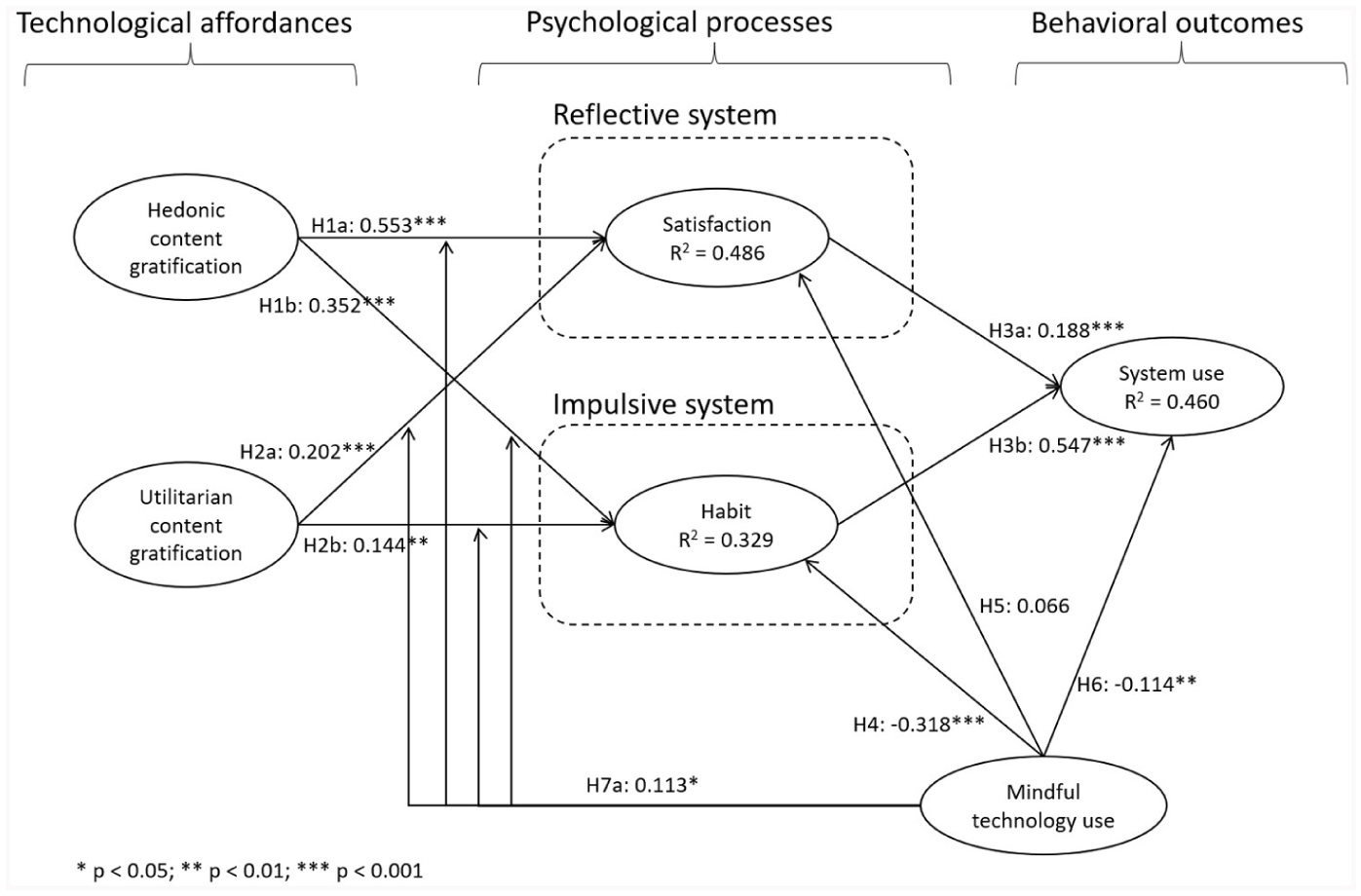
Analysis results of the structural model.
Summary of the results of the PLS-SEM algorithm and the bootstrapping.
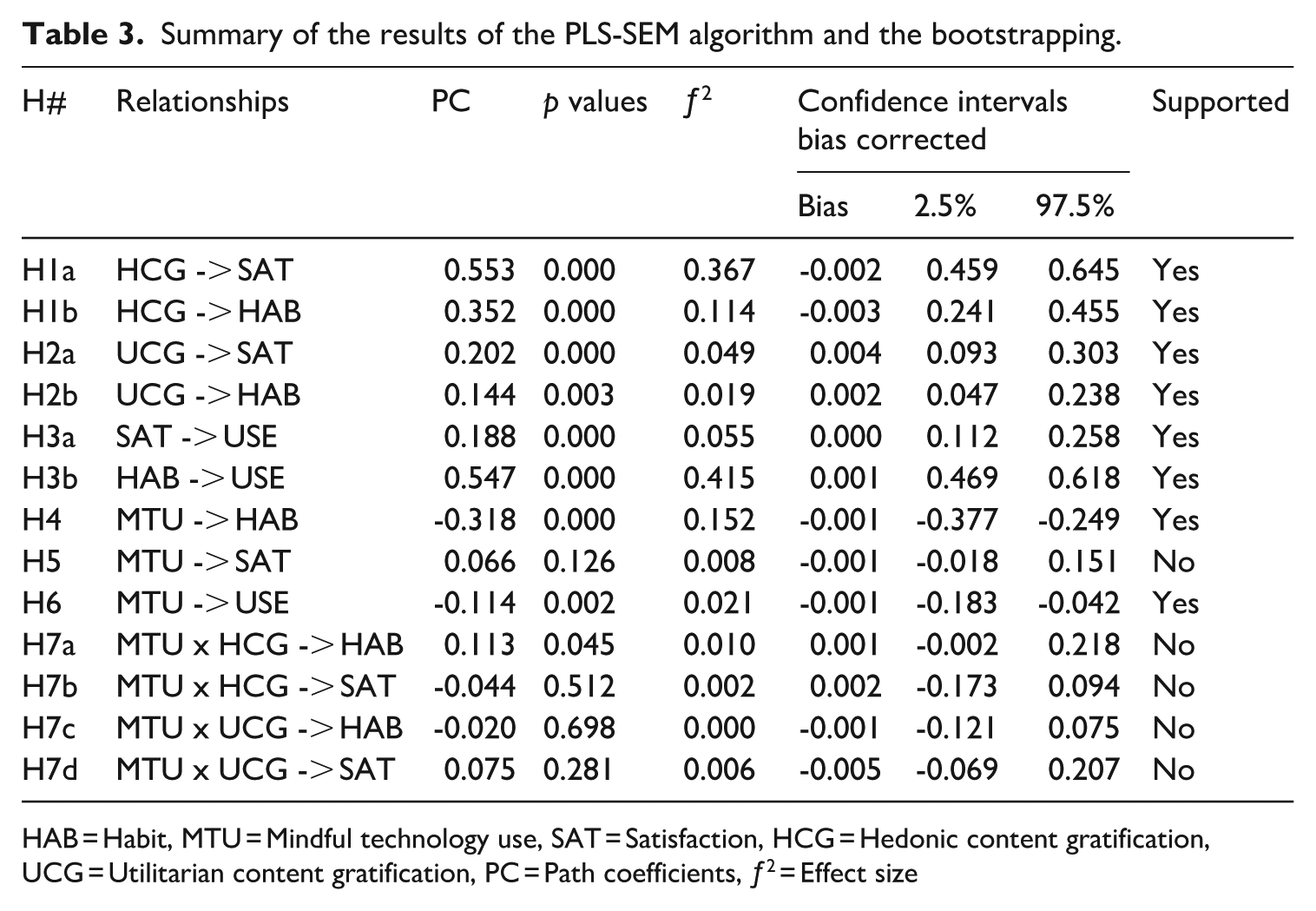
HAB = Habit, MTU = Mindful technology use, SAT = Satisfaction, HCG = Hedonic content gratification, UCG = Utilitarian content gratification, PC = Path coefficients, f2 = Effect size
The results also showed that habit mediated the association between MTU and system use. It had a complementary mediation effect that strengthened the association between MTU and system use. Different from habit, satisfaction did not have a mediating effect for the relationship between MTU and system use. The total effect of MTU on system use was significantly negative (β = −0.276; p < .001). Table 4 presents the mediation effects.
Mediation effects.
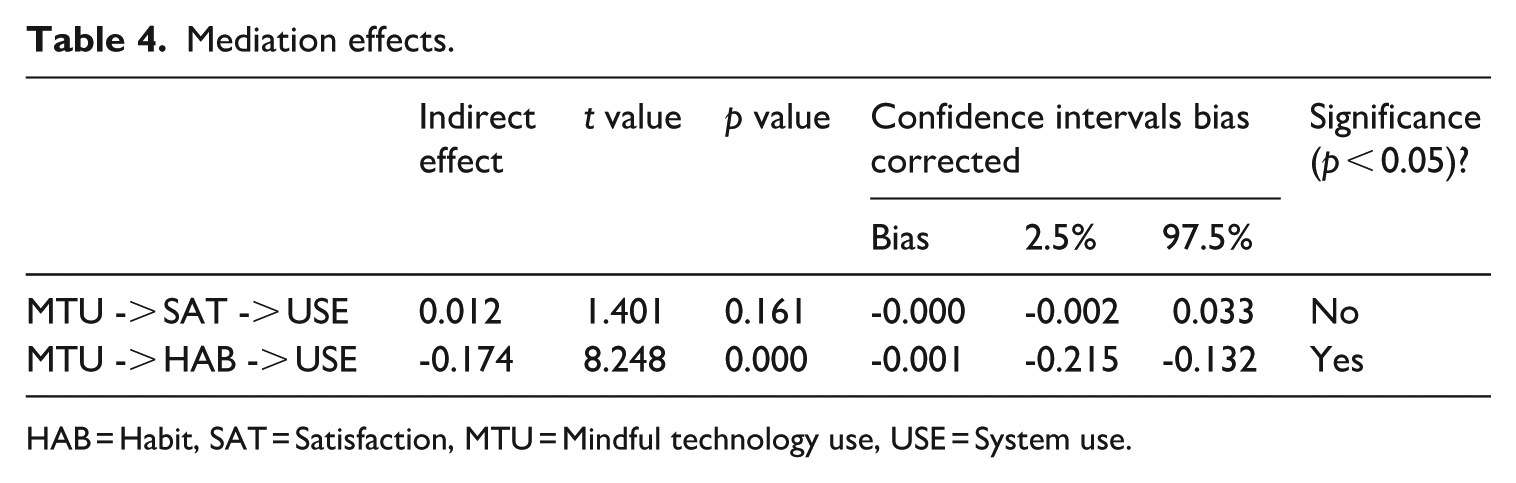
HAB = Habit, SAT = Satisfaction, MTU = Mindful technology use, USE = System use.
Discussion
This study makes three main contributions. First, the study of MTU answers the call for investigating mindfulness as a factor associated with increased digital well-being amid pervasive intrusive media (Schneider et al., 2022; Vanden Abeele et al., 2022) and hence contributes to the disconnection research stream. Second, the results support the applicability of Eastern perspective of mindfulness in the domain of technology use. Third, it introduces the AURA model that theorizes how technological affordances trigger reflective and impulsive processes in user cognition and as a result effect user behavior. Hence, it extends the affordances perspective by extending the psychological processes into the dual processes of conscious and unconscious processes. The AURA model offers a holistic perspective on the effects of technological affordances and potentially complements models of problematic technology use (e.g. I-PACE) by elucidating how these affordances may contribute to such behaviors (e.g. Brand et al., 2022).
The negative relation between MTU and habit means that the more mindful a person is in their social media use, the less habitually they use social media. This might be because of the awareness brought by MTU of the impulsive, automatic reactions to triggers of social media. With the distance users gain to their user experience, they are empowered to better regulate their responses to urges related to social media. MTU also showed a direct negative association with system use. This means that people who use social media more mindfully, generally use them less. These results align with previous research linking higher mindfulness and mindfulness-based interventions to lower problematic technology use (e.g. Regan et al., 2020; Thomas et al., 2025). Regarding the relationship between MTU and habitual social media use, our finding aligns with Harvey and Aikman’s (2025) results suggesting a potential overlap between general mindfulness and MTU, but contrasts with Throuvala et al.’s (2020) results, likely due to the short duration of their intervention and its focus on general mindfulness. These results may also indicate that MTU reflects a dispositional tendency rather than a learned skill, given the consistent findings observed in cross-sectional studies.
The positive interaction of MTU with the relation between HCG and habit means that the more mindful a user’s interaction with social media, the more will be the positive association between HCG and habitual use. This result contradicted H7a. One possible explanation is that users with higher MTU sustain more awareness and attentiveness during content consumption, which can enable them to fully engage with and enjoy hedonic content while decreasing their consumption in a numb or unconscious manner. Thus, MTU may reinforce habitual use if the rewards from HCG are seen useful (Hefner and Freytag, 2024). However, this interpretation should be treated with caution due to the cross-sectional data, which limits causal claims. The finding also contradicts theoretical expectations that mindfulness reduces habit, suggesting a more complex relationship. One explanation involves threshold dynamics, where moderate mindfulness may reduce automatic engagement by promoting reflective attention, whereas very high mindfulness could heighten sensitivity to rewarding content, increasing use. Another involves user motivations—for instance, MTU may attenuate habitual use among those seeking connection but not among users driven by avoidance or escapism. Future research can test these alternative explanations using, for example, experience sampling.
The results highlight the prominent associations of technological affordances with users’ cognitive processes. More specifically, they show the associations of HCG and UCG with reflective and impulsive processes. Both HCG and UCG showed positive associations with satisfaction with the chosen social media services. Yet, the correlation of HCG was stronger than UCG. This can be explained intuitively given that these services were initially built to connect people and for use in leisure; yet in time they transformed into multi-purpose systems in an emergent manner (e.g. Aichner et al., 2021; Schulz et al., 2024). However, it also points out the importance of providing a blend of fun and informative content to meet user expectations. Regarding habitual use, again, both HCG and UCG showed significant positive associations, with HCG having a stronger correlation. A possible reason for HCG’s predominant correlation might be that pleasurable experiences induce repeat behavior more than utilitarian benefits, and hence increasing the likelihood of habit formation. For example, pleasurable content can be more potent in terms of inducing repeat behaviors (Aarts et al., 1998) via hits of dopamine with features such as likes, infinite scroll, and temporarily available snaps and statuses when users seek validation, attention, or distraction (Ali et al., 2018; Andersson, 2018; Waters, 2021).
Both satisfaction and habit showed significant positive associations with system use. This implies that social media use is not only driven by unconscious automatic behavior but also by conscious evaluations that are formed by reflections on the past performance of technology. However, habit had a predominant correlation with system use in comparison to satisfaction. This result aligns with previous research (Limayem et al., 2007; Turel and Serenko, 2012) and can be explained by how habitual behavior that takes place with minimal or sporadic cognitive processing, which results in a lack of perception regarding the behavior and its context (e.g. time spent using social media, social companies).
Limitations and future research
As with all research, this study also has its limitations, which provide avenues for future research. First, the data comprises a cross-sectional survey of users’ perceptions of their own behaviors and not their actual behaviors. Therefore, no causal claims can be made from the results. In addition, heterogenous discrepancies between logged and self-reported digital media use is a general methodological issue; however, usage tracking has also its own limitations (e.g. inadvertent logging of background activities as instances of active usage) (Parry et al., 2021). Therefore, inclusion (and comparison) of usage logs via tracking methods could produce further insights and make the results more robust in future research.
A second limitation stems from the use of Prolific as a source for hiring respondents. Although Prolific provides high-quality responses, its pool might not reflect the user pool of social media users. For instance, some groups, such as social media influencers, digital marketing professionals, or other types of users that employ social media for specific use purposes, might not be represented well in Prolific.
A third limitation of the study stems from the method chosen to study MTU. Mindfulness as a concept is difficult to capture through self-reflective surveys because there is the question of whether people can accurately rate their attention lapses (Grossman, 2011). Considering the limitations of MAAS and other measures of mindfulness (Van Dam et al., 2010), future research can consider long-term and technology-focused mindfulness interventions, which can establish causality through experimental manipulation. Nonetheless, cross-sectional results should not be interpreted as evidence of similar effects in intervention-based MTU.
It is also important to consider that HCG and UCG may overlap in practice, particularly given the rise of infotainment and community-based sharing practices that blend informational value with entertainment and social interaction (e.g. Dai and Wang, 2023). These hybrid forms of engagement may contribute to pleasurable experiences and habit formation in ways not fully captured by a strict dichotomy between HCG and UCG. Furthermore, investigating how affordances of specific forms of content—such as ephemeral content, group messaging—may differentially relate to habitual use and time spent on platforms can provide avenues for future research.
Considering the confounding moderation effects of MTU regarding HCG, future research using longitudinal or experimental designs would be necessary to clarify these dynamics and better understand how MTU interacts with HCG in shaping habitual use. In that regard, the interaction between MTU and digital nudge-based interventions (e.g. Kumar Purohit and Holzer, 2021) can also be explored. Considering positive effects of mindfulness on well-being (Johannes et al., 2018), future research can investigate the effectiveness of MTU in reducing the negative effects of social media (e.g. body-image dissatisfaction; Tiggemann et al., 2018). In addition, an increasing number of mobile services aim to foster habitual user engagement (Eyal, 2014); thus, studying MTU across different digital media can advance understanding on different benefits of digital disconnection.
Supplemental Material
sj-docx-1-nms-10.1177_14614448251391358 – Supplemental material for Scrolling social media with the third eye: Mindful technology use as a disconnection strategy
Supplemental material, sj-docx-1-nms-10.1177_14614448251391358 for Scrolling social media with the third eye: Mindful technology use as a disconnection strategy by Dicle Berfin Köse in New Media & Society
Footnotes
Data availability
The data underlying this article cannot be shared publicly due to participants’ privacy under the Norwegian Personal Data Act (Personopplysningsloven), which incorporate the General Data Protection Regulation (GDPR). The data will be shared on reasonable request with a legal basis for this processing to the corresponding author.
Declaration of generative AI and AI-assisted technologies in the writing process
During the preparation of this work the author used ChatGPT in order to improve the readability of several sentences. After using this tool/service, the author reviewed and edited the content as needed and takes full responsibility for the content of the published article.
Funding
The author disclosed receipt of the following financial support for the research, authorship, and/or publication of this article: This work was supported by the Foundation for Economic Education (Liikesivistysrahasto) (Project Number 18-10417) and the Basic Research Fund provided by BI Norwegian Business School, Oslo, Norway (Project Number 80434).
Ethical approvals
Ethical approvals were done by two institutions: (1) Norwegian Agency for Shared Services in Education and Research (Sikt) (Reference number: 149976) and (2) BI Ethics Review Board (ERB reference: 009).
Consent to participate
The respondents agreed to participate in the study and gave their consent for the processing of the data they provide and its use in research and publications via informed consent. Informed consent form was presented to the participants in a written format at the beginning of the survey.

Supplemental material
Supplemental material for this article is available online.
Author biography
References
Supplementary Material
Please find the following supplemental material available below.
For Open Access articles published under a Creative Commons License, all supplemental material carries the same license as the article it is associated with.
For non-Open Access articles published, all supplemental material carries a non-exclusive license, and permission requests for re-use of supplemental material or any part of supplemental material shall be sent directly to the copyright owner as specified in the copyright notice associated with the article.
