




Abstract
Despite TikTok’s extensive popularity among children below the age of 12, there remains a significant gap in our understanding of how they use this platform for social purposes. We therefore ask how children between the ages of 8 and 12 shape their peer relations through their uses of TikTok. Through longitudinal observations of children (n = 84) in the context of afterschool care, we found that children use TikTok to develop and employ digital, cultural and social practices. Examples of such practices are referencing popular content to connect with weak tied peers, managing their online presence to prevent scrutinization in offline social contexts and using humoristic trends and knowledge of TikTok to achieve social status and popularity. Employing these practices across on- and offline spaces can support and facilitate their development of social capital. Following these findings, we argue for initiatives and methodologies that support and explore children’s social and digital development.
Keywords
Introduction
The short-video platform TikTok has quickly become one of the most popular social media platforms among children around the world. On the platform, users can consume videos as well as upload videos, remix existing content and share or like content made by other users (Montag et al., 2021). Especially children below 12 are found to be active in producing content (Bucknell Bossen and Kottasz, 2020), driving sociality on the platform (Zulli and Zulli, 2020) and off the platform (e.g. by recreating dances with peers on the playground; De Leyn et al., 2022). While TikTok does not provide any insight in the number of users in this age group, a survey study carried out on behalf of the Dutch Ministry of Health, Welfare and Sport indicates that 57% of children are using the platform in the Netherlands, where this study was conducted (Netwerk Mediawijsheid, 2021; Panteia, 2021).
Despite TikTok’s popularity, there remains a significant gap in our understanding of how children use the platform. Although some studies (e.g. De Leyn et al., 2022; Pomerantz and Field, 2021) have examined children’s use of TikTok, there still is limited understanding of how children actively engage with the platform as a space for social interaction. Existing literature often overlooks children’s perspectives, focussing primarily on adolescents (e.g. Zeng and Abidin, 2021). This gap is especially pressing given growing global concern and policy responses – such as TikTok bans in India and proposed restrictions on social media platforms in Australia—that are often shaped by moral panic rather than empirical evidence (Robards et al., 2025). In addition, prior studies indicate that children use TikTok to connect and interact with peers (Bucknell Bossen and Kottasz, 2020; De Leyn et al., 2022; Sarwatay et al., 2022), but they offer limited insight into how these interactions shape and are shaped by children’s peer relationships. This leaves a critical gap in understanding how children actively use TikTok to build, maintain and navigate peer relations in everyday contexts. This study addresses these omissions by centring children’s voices to offer a more nuanced understanding of their digital experiences. Further insight into this issue is crucial to support children in the development of their social skills and digital literacy, as previous findings from social media research are unlikely to be transferable to TikTok. The unique design and functionality of the platform shape users’ experiences and interactions in unique ways (Montag et al., 2021).
To address the research gap stated above, this study asks how children between the ages of 8 and 12 shape their peer relations through their on- and offline uses of TikTok. This age group is important to study because children in this demographic are at a formative stage in which lifelong media habits begin to take shape (Zilka, 2016). Moreover, in this developmental stage children are becoming more independent and active in exploring the world around them, including social ties. They are also developing the ability to understand perspectives beyond their own. These processes are instrumental in learning to understand media production and content, and in developing social skills and friendships (Lemish, 2015).
Although the platform restricts use to those aged 13 and older, research shows that children below 13 often find ways to access TikTok and circumvent platform and parental restrictions by using tactics, such as making their profile private (De Leyn et al., 2022; Sarwatay et al., 2022). By adopting a child-centred approach and employing longitudinal observations with children (n = 84) in the context of the afterschool care, we gain insight in the ways in which digital tools and online virtual environments are integrated into children’s everyday social interactions (Kaplan-Berkley, 2022; Kennedy and Lynch, 2018). Finally, we build understandings of the ways in which different uses, such as active and creative use of the platform and/or passive use for entertainment purposes, play a role in children’s efforts to build, maintain, and navigate their peer relations. In doing so, we contribute to a body of literature that considers the role of digital media in children’s social development and interpersonal relations.
Theoretical framework
Building, maintaining, and navigating relations in peer groups
Peer relations play a pivotal role in children’s social development. The equality of power assertion and dominance between peers allows children to experiment with conflicting ideas and to negotiate, discuss, compromise, and reject notions held by others (Piaget, 1932). Children’s peer relations become increasingly complex and multifaceted between the ages of 8 and 12 as social interactions become less supervised and peer groups grow in size (Rubin et al., 2008). Peer groups offer children a context to learn about themselves and others and assist them in their development of social skills (Vaughn and Santos, 2009). In addition, children establish social norms and navigate social dynamics and status to form peer groups, but also to enforce processes of in- and exclusion (Rubin et al., 2008).
When attempting to integrate into peer groups, children strive to conform to these established norms and uphold a positive image among the members of the peer group (Rubin et al., 2015). Successful entry attempts can then lead to friendships, and consequently, social capital (Schaefer-McDaniel, 2004). Unsuccessful entry attempts can lead to rejection, exclusion, and even teasing by the successful peer group members (Rubin et al., 2015). Examples of entry strategies include nonverbal entry in play (e.g. by standing close to others who are engaging in a playful activity), encirclement (e.g. by circling the playing field) or by asking established peer group members if they can join (Corsaro, 2003; Trawick-Smith, 2015).
Besides employing physical entry strategies, children also use media to gain access to peer groups. This is described by Pugh (2009) as the ‘economy of dignity’. This concept describes children using particular goods and experiences that are valued by the peer culture to enter peer groups and connect with peers in different social contexts. In addition, by remixing media during play, children can show media knowledge, creating power dynamics in peer groups. Incorporating digital media in play, furthermore, allows children to display their friendship, negotiate social rules of peer groups, and go along with or challenge dominant views (Willett, 2016). In addition, blurring boundaries between offline and online social spaces increasingly complicates social relationships. Kennedy and Lynch (2018), for example, discuss the ways in which digital experiences, such as watching YouTube videos, provide the foundation for conversations between peers in the classroom and show that social status and popularity in offline relationships are intricately intertwined with the online activities of children.
Children’s use of social media in the context of peer relations
The growing use of digital media and social media platforms has changed the opportunities for children to create and build relationships, allowing them to keep in touch with peers without relying on face-to-face contact (Johansen and Lundtofte, 2023). Through online gaming and social media networks, children are able to increase meaningful and mature connections with peers, in particular those they know from the physical contexts of their everyday lives (Antheunis et al., 2016; Dredge and Schreurs, 2020). These digital activities, that allow children to communicate with friends over time and distance, provide them with opportunities to develop their social and communicative skills (McPake et al., 2013) and bypass the social and spatial boundaries imposed by the adults in their lives (Ruckenstein, 2013). Children are furthermore highly active in the ongoing process of renegotiating meanings, functions, and representations of digital and social media within their peer groups (Thulin et al., 2020).
Through the public nature of social media platforms, children participate in processes of inclusion and exclusion by showcasing friendships and affiliations with peer groups, while also leveraging the platform to present themselves attractively and adhere to established peer group norms (Dyer, 2018). At the same time, research has shown that social media could expose children to a range of risks, including cyber bullying, friendship fallouts and peer pressure (Stahl and Literat, 2022). Because of the complex interplay of factors, research regarding the impact of social media on offline interpersonal outcomes, including peer relations has produced mixed results (Dredge and Schreurs, 2020). While some studies found positive associations between the use of social media and relationship quality with friends (for an overview, see Dredge and Schreurs, 2020), Chabrol et al. (2017) found a negative association between social media use and peer attachment.
Children’s use of digital media in their peer relations is integrated within children’s offline social contexts and peer relations (Kaplan-Berkley, 2022). Children use and remix popular online media content in the offline contexts of their everyday lives (Swart et al., 2023). By displaying media artefacts, such as bringing lunchboxes to school with Minecraft characters on them, children signal their membership in – in this case – the Minecraft fandom, as well as affiliation with social relations, such as other Minecraft enthusiasts and gamers in their primary school class (Willett, 2016). Carter et al. (2020) describe how children engage with the popular videogame Fortnite as an extension of their offline social worlds by playing online with peers they know from offline social contexts, but also by introducing elements of the digital game, such as the dances, in offline play contexts. This incorporation of popular (digital) media in offline social settings plays a part in children’s efforts to build social networks (Marsh et al., 2005). By remixing media during play children show media knowledge and create power dynamics in peer groups. Incorporating digital media in play, furthermore, allows children to display their friendship, negotiate social rules of peer groups, and go along with or challenge dominant views (Willett, 2016).
Exploring TikTok
Despite the popularity of TikTok among children in middle childhood, there is currently a limited body of research that explores how users within this age group use the platform. A study by Bucknell Bossen and Kottasz (2020) shows that while adolescents use TikTok to expand their social networks, children mainly use the platform to engage with known peers and friendship groups (Bucknell Bossen and Kottasz, 2020); they actively employ the platform to interact with and stay connected to their peers online (De Leyn et al., 2022; Montag et al., 2021). In addition, Pomerantz and Field (2021) show that the use of the platform allowed for conversations between parent and child about socio-cultural issues, which children could in turn use to reflect on their experiences with friends. Children are furthermore found to be more active in producing and posting content themselves, as opposed to adolescents who more often used the platform to watch videos of others and not post themselves. Producing and posting videos are found to be drivers for sociality on the platform (Bucknell Bossen and Kottasz, 2020). This creative aspect of the platform, that encourages users to contribute by producing their own content, in turn translates into practices in the physical contexts of children’s lives as children create videos in their home, perform dance acts they have seen on TikTok and integrate performances into playful activities with their friends (De Leyn et al., 2022; Sarwatay et al., 2022).
While previous research shows that users employ the platform in the context of their interpersonal relations, little is known about how the features of TikTok are used to build, maintain and navigate peer relations. For example, while the platform does offer ways to interact with other users (e.g. by sharing, commenting, and liking), Bhandari and Bimo (2022) argue that the default ‘For You’ page on which users can scroll through content mainly enables intrapersonal connections. They argue that as the content on the ‘For You’ page corresponds to users’ interests and engagement habits, it essentially functions as a mirror, allowing users to interact with algorithmically curated versions of themselves. Other authors argue that the platform drives social interaction, particularly through its creative features that enable users to participate in and contribute to ongoing trends (Schellewald, 2023; Zulli and Zulli, 2020). These creative features, which are focal points of the platform, often result in videos characterized by their cringeworthy, funny, playful, and meme-driven nature (Collie and Wilson-Barnao, 2020), gratifying entertainment and affective needs (Bucknell Bossen and Kottasz, 2020). This is further supported by an interdisciplinary body of research which underscores the platform’s growing significance as a space for youth self-expression and social interaction (Schellewald, 2021; Stahl and Literat, 2022).
Observations of how users, and more specifically children, use these features and employ TikTok is lacking (De Leyn et al., 2022; Schellewald, 2023). Considering TikTok’s growing significance as a space for social interaction, this study explores the ways in which children use TikTok in their peer relations. In doing so, this study sheds light on children’s social development, their development of social capital and the role of TikTok use in these processes.
Methodology
To understand the ways in which children use TikTok to shape their peer relations, this study employs longitudinal participant observations, including in-depth conversations, with children (n = 84) at afterschool care locations. Through a two-phase research design, we build on insights from the initial participant observations to inform further participant observations. This allows us to follow up on our observations and contextualize our findings.
The study was conducted across four distinct afterschool care locations that are all part of the same non-profit childcare organization in Groningen, the Netherlands. We selected the context of afterschool care to observe children in an informal space in which they encounter a range of peers. Afterschool care can be conceptualized as a ‘third space’, bridging the formal and structured context of the school and the informal unstructured context of the home (Vered, 2008). Opposed to activities within the context of school, activities in afterschool care are mostly child-led, meaning that children themselves initiate activities that they are interested in. This makes it possible to observe how children discuss and engage with TikTok in a social setting, including the use of the platform itself, as well as discussions surrounding or activities following engagement with the platform through activities in the physical space of the afterschool care context.
As previous research indicates that socioeconomic status impacts how children use digital media (Livingstone et al., 2023), we selected four afterschool care locations in four different neighbourhoods in Groningen with different socioeconomic compositions. Socioeconomic status was based on level of education, prosperity (disposable income and capital), and recent employment history (CBS - StatLine, 2022). The demographic statistics of all four neighbourhoods can be found in Figure 1. The demographic characteristics of participants can be found in Figure 2.
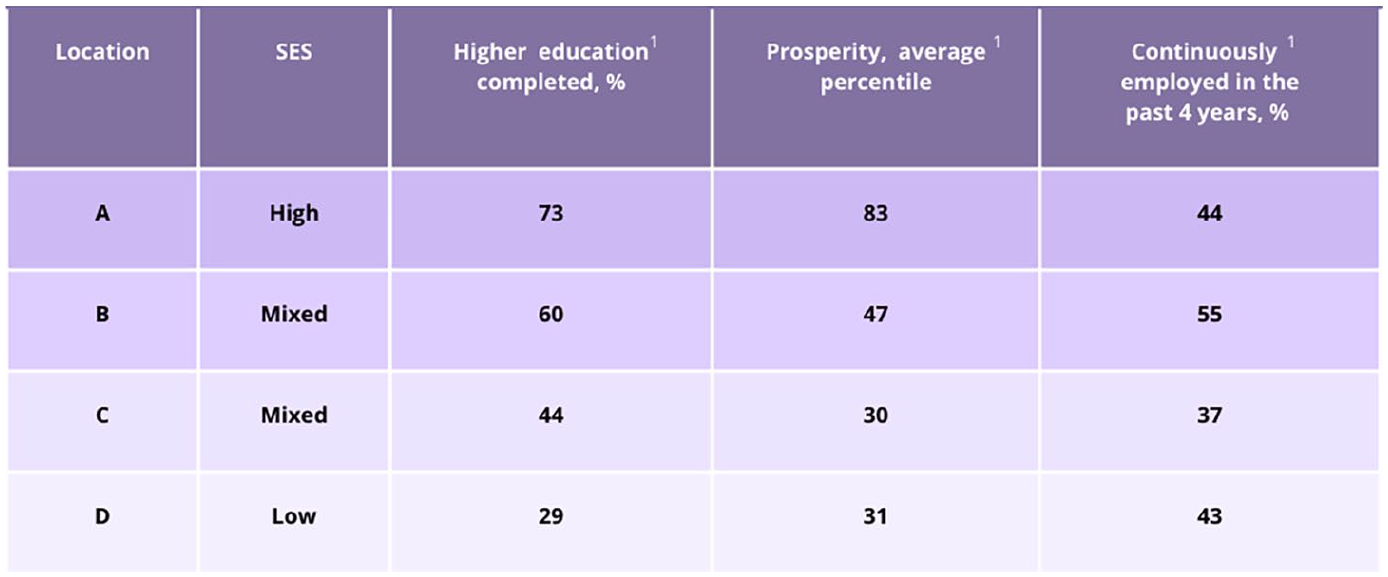
Demographic characteristics of neighbourhoods afterschool care locations.
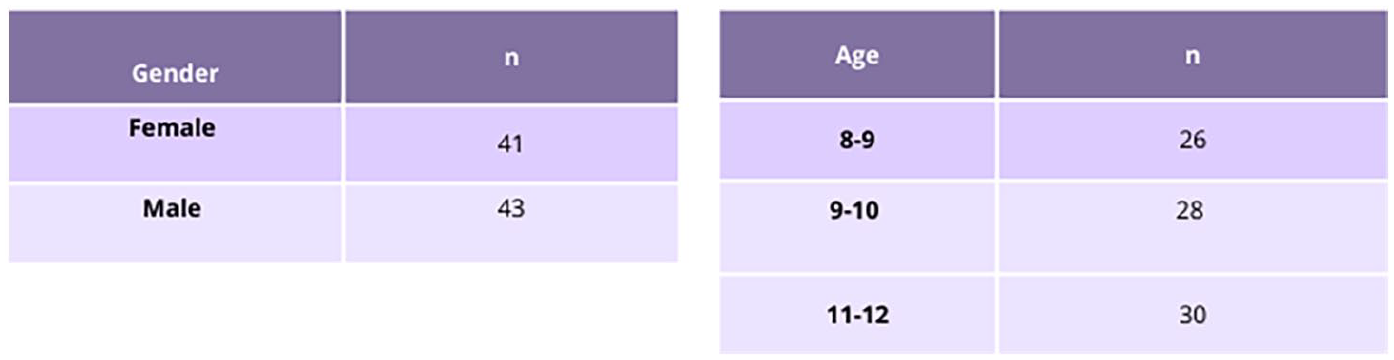
Demographic characteristics of children who participated in the participant observations.
Participant observations took place over the course of almost 3 years, from April 2021 until February 2024. Such a longitudinal approach allows for in-depth contextual insights through repeated cycles of observation and analysis that shaped subsequent phases of research. The first phase of the research consisted of longitudinal bi-weekly participant observations between April 2021 and March 2022. The observations took place in group rooms where children, aged 8 to 12, attended. To incorporate children’s own perspectives on their digital media use, our observations started from the everyday experiences of children with media. Fieldnotes were initially documented by the first author in a physical notebook and subsequently elaborated upon immediately after exiting the research setting, in order to capture nuances and contextual details that might otherwise be lost. During this initial phase, fieldnotes focused on temporal and spatial elements, general uses of (digital) media, and child-specific elements, such as age, gender and peer relations. After inductively discerning the theme ‘use of TikTok in peer relations’ during the first round of data analysis of fieldnotes, the observations became more focused on aspects of TikTok use. During the second phase, which took place immediately after the first phase between April 2022 and March 2023, more focused participant observations were conducted during which the researcher would ask questions when children used TikTok at the locations and follow up when children discussed TikTok with their peers or incorporated TikTok content in their play, allowing for in-depth conversations surrounding their use of the platform. The researcher also participated in play initiated by the participants.
Data analysis
All data were uploaded in Atlas.ti and coded using inductive thematic analysis (Corbin and Strauss, 2015). To ensure a coherent coding strategy and enhance analytical and procedural rigour, the first author coded all documents and held frequent discussions with other authors. In addition, iterative coding helped reduce coding inconsistencies as codes were continuously refined. Finally, throughout the project, the first author wrote initial and advanced memos to document analytic insights, track the development of codes and themes, and support higher-level interpretation of the data. These memos were also discussed with the co-authors to further refine the analysis.
Using several rounds of inductive and focused coding of the fieldnotes, we distinguished ‘the use of TikTok in peer relations’ as an important theme (among other ones). As observations became more focused, further cycles of coding resulted in three categories: (a) building and maintaining peer relations that may lead to peer groups, (b) navigating processes of in- and exclusion within peer groups, and (c) achieving social status and power in peer groups.
Ethical considerations
For this study, ethical approval was received by the Research Ethics Committee of the University of Groningen (no. 61991802). Children were invited to participate in the research project through an invitation letter sent by the respective afterschool care locations. Parents were approached at the afterschool care locations to discuss any questions they might have about their children’s participation in the study. The first author explained to the children what participation would entail and reassured them that they could withdraw at any time. Informed consent was obtained from the parents and/or caretakers of each child. Pseudonyms are used to ensure confidentiality and anonymity.
Results
Despite age-based platform restrictions, TikTok was a popular pastime for children at all afterschool locations. Although some children mentioned strategies to bypass the platform’s age restrictions, such as avoiding showing their face on videos or asking their parents to create an account, these tactics were not commonly discussed among the children or afterschool care employees. Generally, afterschool care employees restricted digital media use on shared devices based on content (e.g. violence). However, this was more difficult to effectuate at location B, where children were allowed to use their own smartphones. This was also the only location where children used the app TikTok itself. At locations A, C, and D, children were not permitted to use TikTok at the afterschool care location and instead engaged with videos from TikTok creators on other platforms, such as YouTube, or incorporated elements of the platform or the content they had seen on TikTok in their offline play. This offline extension of their TikTok use was apparent at all four locations. Regardless of these different digital uses that were dependent on the rules at the different afterschool care locations, children at all locations leveraged their experiences with and knowledge of the platform in offline social contexts and found non-digital ways of integrating TikTok in play with peers in similar ways. The following section will explore the interplay between online and offline, public and private, and individual and social interactions, underscoring the nuanced ways in which children use TikTok to build, maintain and navigate peer relations. This section discusses three categories of social processes and practices in which children engage, which are depicted in Figure 3.
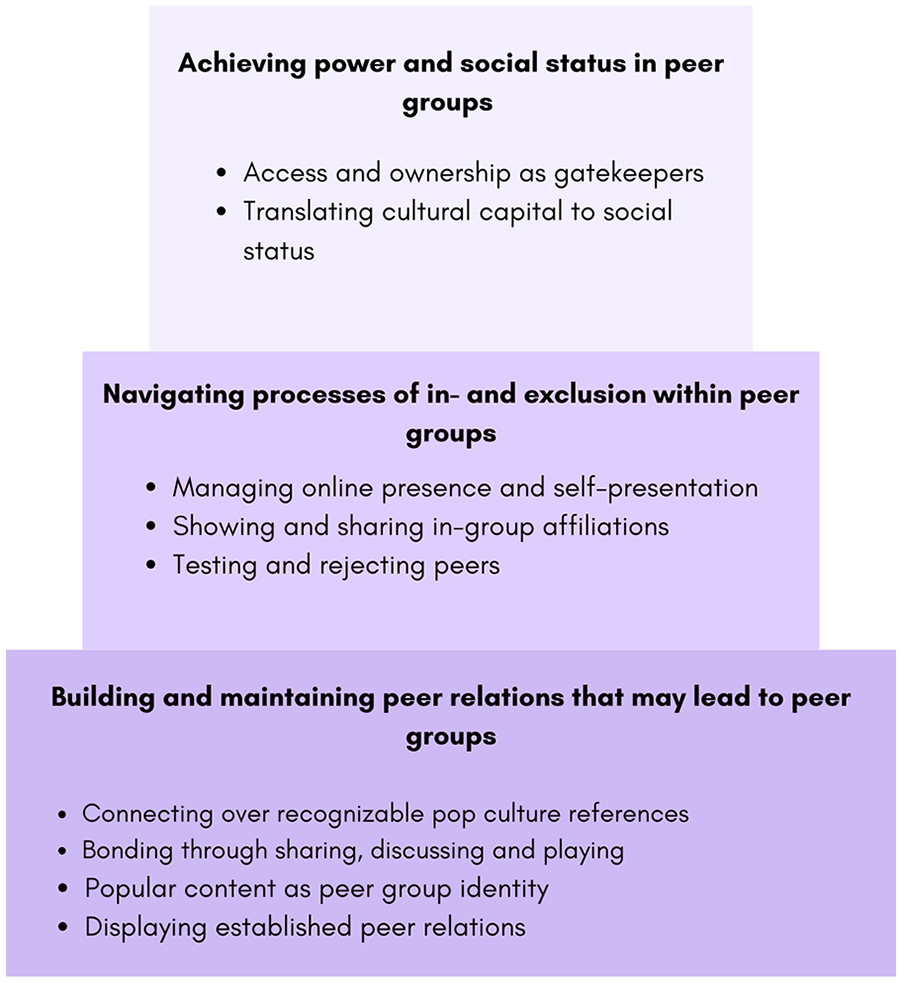
Children use TikTok to build, maintain, and navigate peer relations, and achieve power and social status in peer groups.
Building and maintaining peer relations that may lead to peer groups
While TikTok, like other platforms, allows children to connect and interact with each other online (Johansen and Lundtofte, 2023), children did not only use the platform for online interaction. Instead, children regularly incorporated TikTok in their playful practices in offline social contexts. Through these playful practices, children explored interpersonal relationships with peers in afterschool care. In line with the findings from Marsh et al. (2005) who showed that children use popular media to build social networks, TikTok was an entertaining activity through peers that already considered each other ‘friends’, further developed their relationships with each other by bonding over shared interests, working together in creating content and sharing knowledge and insights on the platform. It furthermore presented opportunities for children to explore the platform offline through mimicking TikTok users and playfully incorporating popular references. Willett (2016) has found that this process of remixing popular media, and referring to media texts in their play, does not necessarily mean that children are fans or even have direct access to the source. Instead, media content provides a platform for play and their display of friendship.
Interestingly, in addition to connecting with strong tied peers, the use of popular TikTok content also offered opportunities for children to connect with weak tied peers (Granovetter, 1973): A large group of children is playing and drawing at the table upstairs. Some of the boys are playing with building blocks and making structures, while there are multiple girls drawing at that same table. While they are drawing, one of the children says: ‘Drinking boiling hot tea from a glass’. It is a reference from a popular TikTok video currently going around. Immediately, Katy (aged 9) looks up from her drawing and looks at the girl who said it. While she did not have any contact with the other girls before and mostly focused on the boys building and her own drawing, she finished the reference and states: ‘I find that veeeery strange!’. The girls laugh loudly. They continue the reference and recite all the statements made in the original video. They quickly move on and discuss both of their drawings. (Location C. 18012024)
The introduction of TikTok content, and the recognition of the specific content allowed the two ‘weak tied’ peers, who did not have regular contact, nor did they play together in this instance, to bond over something they both knew and found funny. This eventually resulted in a shared activity that was not specifically related to the content through which they connected.
Exploring popular content and trends with friends in turn affected the ways in which children used TikTok in other social contexts. By making videos together and sharing them on the platform, children made their established peer relationships public and displayed their shared interests, increasing the connections with peers they knew from non-digital spaces, such as school and the afterschool care (Antheunis et al., 2016; Dredge and Schreurs, 2020). Using the platform in this way facilitated both the formation of new peer groups as well as defining and signalling the identity of these peer groups towards others (Dyer, 2018): Serena (aged 11) discusses TikTok with her friend Florence (aged 11). They are talking about the number of followers they have and tell me that they all know every follower they have. Serena goes on to state that she often gets tagged by her followers. When I ask what that means, she explains that they mention her in the comment section of videos that state ‘Tag your BFF’ or ‘tag your best friends’. She says that she really likes that and that it makes her happy when she gets tagged. She also tags her best friends in the comment section. (Location B. 15112022)
In particular, the public nature of the platform and the trending videos that revolve around friendship and encourage users to tag others they consider to be part of their inner circle contributes to the formation of peer groups and encourages users to showcase their friendships and affiliations (Dyer, 2018). Building on this online ‘status’ as best friends, children regularly mentioned that they had tagged each other as ‘BFFs’ in the afterschool setting, making the online best friend and peer group affiliation also public in the context of the afterschool care location.
Navigating processes of in- and exclusion from peer groups
As children used TikTok to form peer groups with children who shared common interests, these processes also involved selection mechanisms prescribing which of the children could join the group and which children could not. By employing building on their knowledge of the platform and employing digital practices, children could manage their online presence and self-presentation to prevent exclusion from offline spaces: The group of children is gathered around the table. Popular music is playing, but Aaliyah requests the childcare worker if he can play a playlist with TikTok music from 2023. She says that these are the songs she knows. This elicits a conversation among the children about TikTok and Rose (aged 11) tells me quietly that she likes to ‘do Gacha’ on TikTok. She explains that Gacha is a game and that she takes screenshots of scenes in the game and then edits them in TikTok to form a video through which she tells a story. She goes on to explain that she has created a separate TikTok account to share her Gacha videos on. She uses her personal account to connect with friends and share her drawings and videos from vacations. She does not want her friends to find her Gacha account, as they would make negative comments about it and make fun of her. (Location D. 17102023)
Rose uses the separate accounts to actively manage which aspects of her identity she wants to share with the peers she knows from school and afterschool care. The practice employed by Rose resembles the practices that adult content creators employ to navigate context collapses between audiences, as explored by Marwick and boyd (2010). Rose imagines two different audiences; the peers she knows from offline social contexts such as school and afterschool care, and other TikTok users who share her hobby of creating Gacha videos. Keeping these two audiences separate prevents the two contexts from collapsing (Marwick and boyd, 2010). In Rose’s case, a context collapse could lead to scrutinization and exclusion from the peer groups she plays with at school or afterschool care. Children used their understanding of popular content as entry attempts to establish peer groups (Willett, 2016). However, besides being able to use their understanding of popular content as an entry attempt, the content children referenced furthermore needed to align with the social identity of the group they wanted entry to. If this was not the case, entry attempts were rejected, leading to exclusion from the group (Rubin et al., 2015). Emma (aged 11) at location B experienced this when she asked her peers to join in on their performance of popular TikTok dances: Emma is scrolling through her TikTok feed. Two other children who attend the location join her and watch the video’s together in silence. Emma does not move or interact with them as they join, but closely watches how they respond to the videos on her personalized feed as she is scrolling. After a few minutes, they engage in short conversations about the videos. After around 15 minutes, Emma is instructed to put her phone back in her bag and she leaves the room to do so. When she comes back, the peers who had joined in on watching the videos are performing TikTok dances and Emma asks if she can join in on this activity. They reply that she probably does not know the same TikTok dances as they do. She asks again, but the other children tell her again that she likes very different videos than they do and that it would be better if they play just the two of them. Emma does not reply and wanders around the room by herself before joining another group of her peers outside. (Location B. 07112023)
The content that Emma had liked and interacted with was used by her peers to exclude her from their play as they argued that this content differed from the interests of the group. A possible factor that could enhance this exclusion is the personalized ‘For You’ page, that may align with, but does not always represent the users’ interests (Bhandari & Bimo, 2022). This was also reflected in conversations that children had about the ‘For You’ page, which they described as ‘private’, prohibiting peers from watching with them. If peers did join in on watching the videos, children warned them that their ‘For You’ page was ‘cringe’ (a popular term for embarrassing), signalling that the videos shown did not reflect their interests.
Achieving social status and power in peer groups
Once part of an established peer group, children’s use of TikTok content in peer talk and activities, their undertaken TikTok-related activities, and their access to the platform itself could allow them to establish a position of power and higher social status within the group. Children often did this by leveraging their device ownership and access to the social media platform. By doing so, they could essentially act as gatekeepers to the popular content that was discussed in the peer group and over which children bonded: On the couch, Emma (aged 11) is seated with two of her friends. Using Emma’s phone, the three girls make a TikTok video. Sam (aged 10) does not join the girls but is taking next to them on the couch to read his Donald Duck book. Incidentally, he looks up from his book to watch the girls, who in turn seem embarrassed. Emma says that she would like him to leave and celebrates once he does. Then, she stands up from the couch and performs a dance while lip-syncing to a popular song. The other girls look at her, and in turn, perform for her when she is done. Emma is leading these activities and when she says that she wants to sit down again and watch videos, the other girls are quick to join her. Emma is holding the phone so close to her face when scrolling through the TikTok videos so that the other girls cannot see them. Only when she decides to share the video she sees, she actively shows them the phone, inviting a conversation about the video. (Location B. 07032023)
In this case, that happened a few months before being excluded by peers because of her differing interests, Emma is the one who is determining what the members of the group do. They all remix the videos they see on TikTok in their offline play, showing how this content interacts with and extends their offline interests (Siibak and Nevski, 2019). But while this seems like a group activity, Emma decides when and who to involve in her TikTok use. This position of power does not last, however, for as soon as the children have to hand over their phones as their screentime in afterschool care is over, Emma seems to have lost her temporary position of power.
Social status and popularity in non-digital contexts are intricately intertwined with children’s online engagement (Kennedy and Lynch, 2018), as well as with their capacities to employ cultural and digital practices in offline social contexts. Popular content on TikTok provides a key site for children to share their cultural capital with each other and demonstrate common interests (Marsh et al., 2005). In addition, children’s knowledge of the platform and their online use of it were admired by peers and could lead to higher perceived social status. However, the ways in which children used TikTok to achieve social status and popularity was different between genders (Bucknell Bossen and Kottasz, 2020; Huk, 2016). While girls often did this by proving (and testing) their extensive knowledge on the platform, boys were more likely to draw upon humour to achieve social status. They engaged in exaggerated performances by singing popular ‘funny’ songs and reiterating humorous references they had previously seen on TikTok. These efforts constitute a type of social play (Martin, 2007), which can promote group cohesion and strengthen social bonds: In the large room, James and Ethan are using the iPad together. They are using YouTube to listen to music from ‘Demon Slayer’, an anime series on Netflix. As more children enter the room, they start to discuss what type of music they will play now. As soon as James chooses a song, both boys look around the room and seem to be watching the reactions of the other children. While the song is playing, Ethan is already looking for a new funny video to trump the one James has chosen. He plays ‘Never Gonna Give You Up’ by Rick Astley, a meme trend that has recently resurfaced on TikTok. ‘You’ve been Rickrolled!’ he exclaims loudly. The other children in the room all laugh. (Location C. 21092023)
Both James and Ethan aim to select entertaining songs and try to make the other children at the location laugh by drawing upon popular content and trends, which their peers recognize and find funny. Consequentially, these practices can lead to higher perceived social status among the peers in the group (Huuki et al., 2010).
Conclusion
This article has analysed the ways in which children between the ages of 8 and 12 use TikTok to shape social relations with their peers. In doing so, our study contributes to a body of work that has explored children’s social practices on social media platforms (for an overview, see Orben, 2020), as well as to the field of TikTok studies that until now has primarily been focused on the ways in which adolescents use the platform (for an overview, see Kanthawala et al., 2022). Our findings demonstrate that children below the age of 12 already actively employ a wide range of practices in which they use TikTok to build, maintain and navigate peer relations in their everyday lives. These findings are particularly relevant given that such relations play an increasingly significant role in this stage of children’s development (Rubin et al., 2008). For 8- to 12-year-olds, TikTok is not only a source of entertainment, but also a space through which they explore and negotiate peer relations. The practices that we observed in the context of afterschool care can be understood as social, digital and cultural practices through which children can support and facilitate their social capital. This process is visualized in Figure 4.
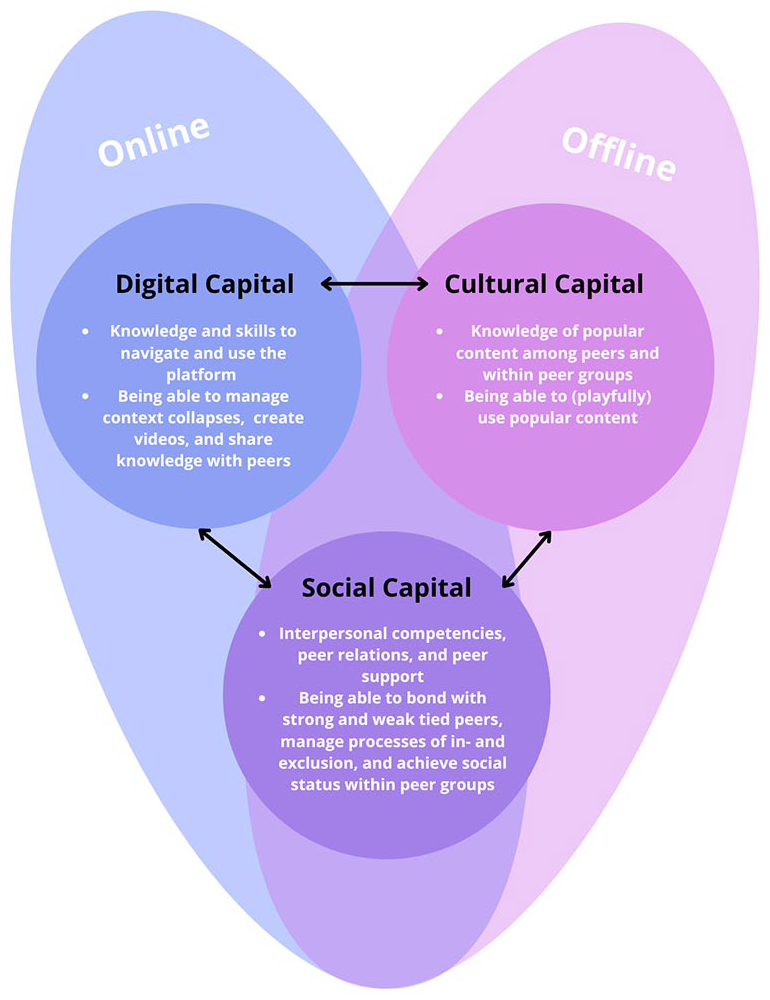
Visualization of the continuous interplay between digital, cultural and social practices that children employ through their uses of the social media platform TikTok.
Our findings show that the observed digital, cultural, and social practices allow children to (a) build and maintain peer relations that may develop into peer groups, (b) navigate processes of in- and exclusion within such groups and (c) achieve power and social status in peer groups. To employ digital practices, children need the digital competencies to effectively navigate, use, and benefit from digital media (Merzlikina and Mogharbel, 2022), in this case TikTok. Examples of such competencies that we observed include the ability to manage imagined audiences (Marwick and boyd, 2010), understanding the platform’s functionalities, and editing their own videos and exploring the content on the platform in the ways they want. These digital skills and attitudes are important when navigating processes of in- and exclusion, as they allow children to prevent context collapses, possible scrutinization and loss of social capital.
To employ TikTok-related cultural practices, children need to have an understanding of cultural norms, trends, popular content, and (shared) identities. By referencing funny videos their peers knew, and initiating play that revolved around current trends, children demonstrated their understanding of popular culture, making TikTok and TikTok-related activities a key site to showcase their cultural capital. These practices could in turn support their, often unconscious, connection with peers they normally had little contact with, supporting their development of bridging social capital (Schaefer-McDaniel, 2004). In addition, the affordances of TikTok, which centre humorous and creative content on the platform (Collie and Wilson-Barnao, 2020), further promote children to incorporate popular content into their offline playful activities. By being able to bond over these shared interests through fun and playful activities, children facilitate the development of bonding social capital (Schaefer-McDaniel, 2004).
It is important to note that while the three types of practices are presented separately in Figure 4 to enhance the clarity of the figure, these are not rigid categories; rather they are interrelated and continuously overlap. While the focus of this article is on the ways in which children use their cultural and digital knowledge and practices surrounding TikTok for social purposes, these processes also operate the other way around. Through social practices, such as employing entry strategies to access peer groups (Corsaro, 2003; Trawick-Smith, 2015), cultural and digital knowledge and practices can be supported. For instance, children who do not have access to the platform rely on their peer networks to stay informed about popular content and phrases. In addition, the practices and social processes discussed show the intricate ways in which children’s TikTok-related practices are embedded within the offline and online social contexts of their everyday lives, demonstrating the disappearing distinction between on- and offline for children (Marsh, 2014).
While children’s use of cultural, digital and social practices can facilitate and support their development of social capital, it is crucial to address a number of challenges and complexities that should be taken into account when understanding these processes. First, the features and affordances of the platform present specific challenges for children to employ cultural and digital practices to support the development of social capital through their uses of TikTok. The memetic nature of the platform, characterized by rapidly changing and fleeting trends and content, also referred to as hyper-narrativity (Vizcaíno-Verdú & Abidin, 2022; Wagener, 2019), results in a wide array of media texts which circulate at a fast pace. These platform characteristics make it challenging for children to discern which texts to employ to connect with peers, further reinforcing the pressure they may feel to keep up with the latest trends, popular content and content from friends. This can furthermore lead to fear of missing out and feelings of exclusion and anxiety if they are unable to keep up with rapidly changing popular content and cannot understand content-related references of their peers (D’Lima and Higgins, 2021). In addition, the algorithms that curate the ‘For You’ page may further amplify this. While the personalized content may align with users’ interests, it does not always accurately reflect them (Bhandari and Bimo, 2022). As a result, children may feel disconnected when they realize they are not viewing the same content as their peers, making it challenging to engage in shared experiences. Moreover, when the content diverges from the prevailing interests of the peer group, it can become a tool for social exclusion, as children can interpret the algorithmic output as a direct reflection of the user’s interests.
Second, children’s employment of cultural and digital practices for social benefits is dependent on the recognition of such practices by their peers. In line with research on gendered use of social media platforms (Bucknell Bossen and Kottasz, 2020; Huk, 2016), our findings show that boys and girls employ different digital and cultural practices within their TikTok-related play and activities. For example, while girls appreciated the knowledge their peers had on current trends and the ways in which the platform worked, boys more often employed humoristic cultural resources to enhance social connections (Huuki et al., 2010). Consequently, these findings could imply that children’s use of TikTok is more likely to facilitate and support the development of social capital when their peers are of the same gender.
Finally, it is important to understand these findings in the context of current societal and scientific debates surrounding the potential negative impact of TikTok on children’s wellbeing and developmental processes (Bergman et al., 2020; Kasteleijn, 2023; Montag et al., 2021). A growing number of studies have explored the risks that social media platforms can pose to children and young people. Examples include engagement with problematic content, cyberbullying, and heightened feelings of anxiety (Dyer, 2018). In addition, the use of TikTok is discouraged for children younger than 13 by the platform itself (TikTok, 2024), as well as by the European Commission and the governments of European Union (EU) member states, the United Kingdom, and the United States, that have adopted regulation to implement age verification methods to limit access to social media platforms for children below the age of 13 (Kosters and Gstrein, 2024). However, in practice, children find ways to circumvent age restrictions by themselves or with parental consent (De Leyn et al., 2022). These developments underscore the need to understand the ways in which children in middle childhood engage with social media platforms, both on- and offline, and the ways in which children’s uses of the platforms facilitate or hinder their peer relations and social development. By exploring these processes, our study could enrich academic and societal discussions that aim to promote a safe and empowering digital environment for children.
This study has several limitations. First, while the longitudinal research design allowed for a deep understanding of how children shape their peer relationships through TikTok, the participant group changed over time because children entered and left the afterschool care locations every year. This caused changes in peer dynamics and platform use, complicating efforts to contextualize shifts in platform use over time. Moreover, while 84 children participated over the course of 3 years, the number of children who participated at the same time fluctuated. A second limitation is related to the nature of the method: the presence of the researcher could pose a potential risk of disrupting children’s usual activities and interactions. This risk was partially mitigated by the longitudinal nature of the study. This allowed the first author to build rapport with the participants over the years and made it possible for the participants to get used to the researcher being at the afterschool care location. Finally, while our study allowed us to tease out patterns in children’s use of TikTok and the mechanisms that guided these, our findings need to be interpreted in light of the characteristics of the (national) setting in which the research was conducted, and the participants involved.
Further research into children’s development of interpersonal competences and peer relationships is needed to better understand the complexities of contemporary peer dynamics. Our findings show that children’s use of social media platforms in the context of their peer relations extends beyond online interactions, incorporating cultural and digital practices in online and offline TikTok-related activities. Future research efforts thus require methodologies that transcend traditional dichotomies that oppose online and offline social practices to understand the social implications of children’s social media use (Marsh, 2014). In addition, these findings underscore the need for initiatives aimed at promoting prosocial behaviour on social media platforms that transcend the offline social contexts in children’s lives, thus involving social actors from school, the home and third spaces such as afterschool care. Moreover, future research could explore the interplay between the platform’s affordances, shifting trends and popularity, and children’s diverse on- and offline uses of TikTok.
Finally, our findings demonstrate the significant role of contemporary youth culture in children’s efforts to build, maintain and navigate peer relations. These findings underscore the need for situated methodologies in which children are consulted and involved in the research process as the experts of their own lives (boyd, 2015; Hine, 2015; Mason and Danby, 2011). Understanding the role of contemporary youth culture in children’s efforts to build, maintain and navigate peer relations using social media platforms furthermore aids parents and other adults in children’s lives in supporting children’s interpersonal development. Previous research has found that parents’ attitudes regarding their children’s TikTok activities are shaped by parents’ perceptions of online youth culture, matching technopanic narratives (De Leyn et al., 2022) and impeding open dialogue between children and parents about children’s social interactions with peers. Consequently, understanding contemporary youth culture and the role it plays in children’s social efforts with peers can foster parental support in children’s efforts to build, maintain and navigate (online) peer relations.
Footnotes
Acknowledgements
We would like to extend our gratitude to the children who participated in our research, their parents and caretakers and the afterschool care locations which facilitated it.
Data availability statement
Due to privacy and ethical concerns, supporting data are not available.
Declaration of conflicting interests
The author(s) declared no potential conflicts of interest with respect to the research, authorship and/or publication of this article.
Funding
The author(s) disclosed receipt of the following financial support for the research, authorship and/or publication of this article: This work was funded by the Dutch Research Council (NWO) under grant number 410.19.008 and supported by Stichting Kinderopvang Stad Groningen (SKSG), National Library (KB) and the Ministry of the Interior and Kingdom Relations (BZK).

Author biographies